Let’s face it—most budget cars are built to move you from point A to point B without draining your wallet. But here’s the kicker: not all budget cars are created equal. Some surprise you.
They punch above their weight class with premium touches, tight handling, and comfort that makes you do a double take at the price tag. They feel like something your nephew might piece together in a video game, light, plastic-laden, and about as confidence-inspiring as a shopping cart with a wobbly wheel.
This article breaks down both ends of the spectrum. On one side, we’ve got five budget-friendly cars that drive like they’re sipping espresso with the European elite, refined, responsive, and way more sophisticated than their price tag suggests.
On the other, we’re calling out five that look decent on paper but crumble when you actually get behind the wheel, flimsy interiors, toy-like steering, and ride quality that makes potholes feel like craters.
Budget Cars That Drive Like Premium
Because if you’re shopping on a budget, you deserve the truth—not marketing fluff. Whether you’re a first-time buyer, a downsizing veteran, or just hunting for value without sacrificing the driving experience, this is the no-BS guide you need before you head to the dealership.
1. Mazda3
The Mazda3 consistently blurs the line between economy and luxury. Its taut chassis, precise steering, and quiet, refined cabin give it a distinctly premium feel.
From the exterior styling to the interior materials, it rivals far more expensive European compacts.
Even base models feel planted and well-balanced, and the optional 2.5L engine adds a real dose of performance. Mazda’s attention to driving dynamics makes this a standout.
The Mazda 3 stands out in the compact sedan category as a car that delivers far more than its price tag might suggest. It verges on premium territory, especially in its higher trim levels, which feature interiors finished with upscale materials that bring a genuine sense of luxury—something competitors like the Hyundai Elantra and Honda Civic struggle to match.
Available as either a four-door sedan or a five-door hatchback, the hatchback is considered the more refined of the two. Interestingly, even though the hatch is shorter in overall length compared to the sedan, it carries a higher price.
Under the hood, the Mazda 3 is powered by a 2.5-liter four-cylinder engine, offered with or without a turbocharger. It can be paired with either a six-speed automatic or a six-speed manual transmission, although the manual is restricted to non-turbo, front-wheel-drive versions. If you’re looking for all-wheel drive, it’s only available with the six-speed automatic.
As is typical of Mazda, the 3 maintains a strong focus on driving dynamics. It offers a lively, engaging experience behind the wheel while still delivering a ride that remains impressively smooth and composed. The sleek exterior design and refined cabin help shape a compact car that’s significantly more appealing than its price point would indicate.
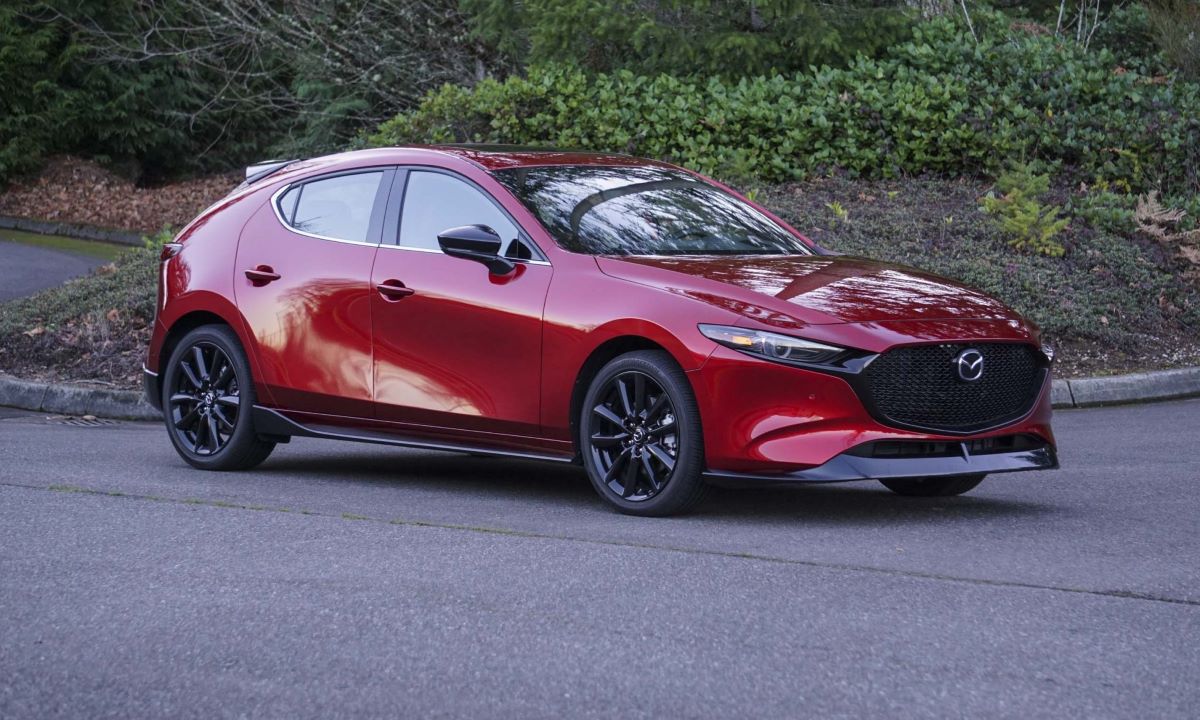
Mazda has now made the base model of the Mazda 3 available as both a sedan and a hatchback. Previously, the base trim came only in sedan form. Additionally, all trims above the base level now come equipped with embedded Alexa functionality as part of the infotainment suite.
The Carbon Edition returns this year with the naturally aspirated engine, standard all-wheel drive, a Polymetal Gray exterior, 18-inch black aluminum alloy wheels, gloss-black heated side mirrors, a red leather interior, and wireless phone charging.
The Carbon Turbo trim from last year is also making a comeback. Meanwhile, a Bose premium sound system is included as standard on Premium and Turbo Premium Plus trims, and available as an option on others.
Mazda gives buyers two engine options for the 3. The standard offering is a 191-horsepower 2.5-liter four-cylinder, which can be configured with front- or all-wheel drive. If you’re after a manual transmission, it’s only available on front-wheel-drive hatchbacks.
Choosing all-wheel drive means you’ll be driving with a six-speed automatic. A more potent 250-horsepower turbocharged 2.5-liter engine is available exclusively on the top-tier Turbo trims. These versions automatically include all-wheel drive and the automatic transmission.
Every version of the 3 reacts swiftly to throttle inputs, but the turbocharged variant adds the kind of urgency and responsiveness that enthusiasts will appreciate.
Regardless of body style, the Mazda 3 maintains a composed, confident demeanor whether cruising or tackling twisty back roads. The ride remains refined and stable, even when the pavement gets rough. We continue to applaud Mazda for preserving the spirited handling and driver engagement that defined the outgoing model.
With sharp steering, excellent body control, and a suspension that smooths out imperfections without becoming floaty, the Mazda 3 remains one of the most enjoyable compact cars to drive.
2. Hyundai Elantra (Newer Models)
Hyundai has turned a corner in the last few years, and the latest Elantra proves it. With its sharp exterior design, intuitive tech features, and solid road manners, the Elantra feels far more upscale than its price suggests.
Even on the base trim, you get features like wireless Apple CarPlay and a surprisingly composed suspension. The cabin materials are modern and the design is sharp more like an entry-level luxury car than a budget commuter.
The 2025 Hyundai Elantra may be easy on the wallet, but it doesn’t skimp on style or features. With its sharp, eye-catching design and a solid list of upscale equipment, this compact sedan comes off as far more expensive than its sub-$30,000 price tag would suggest. And honestly, no one will guess what you actually paid.
Buyers can choose from three available powertrains, starting with a 147-horsepower base four-cylinder engine. If you’re looking for more performance, the N Line trim swaps that out for a turbocharged engine delivering 201 horsepower.
For those prioritizing fuel efficiency, there’s also a hybrid version, capable of achieving up to 58 mpg on the highway. All trim levels are reasonably well-equipped, but the more desirable options include the dual-screen infotainment setup, adaptive cruise control, and convincingly upscale faux-leather upholstery.
While the Elantra’s driving dynamics aren’t quite as engaging as those found in the Honda Civic or Mazda 3, it holds its own when compared with rivals like the Nissan Sentra or Toyota Corolla. In fact, we think shoppers cross-shopping those alternatives may find the Elantra more appealing overall.
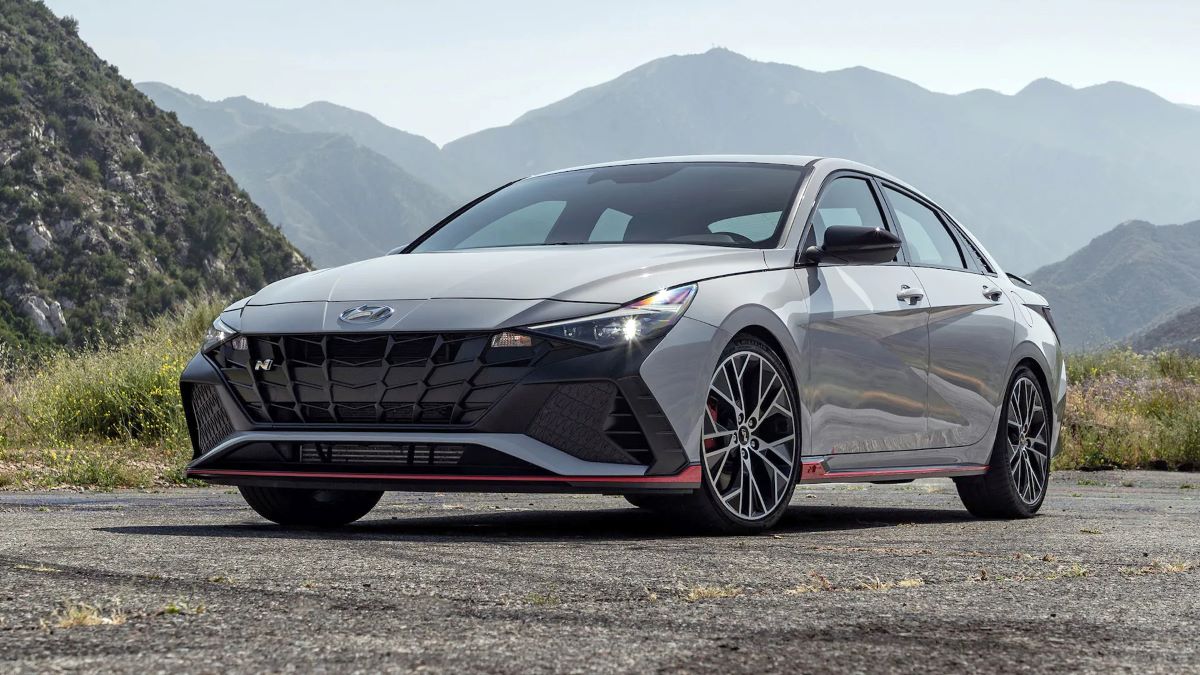
The standard engine for non-hybrid Elantra models is a naturally aspirated 2.0-liter four-cylinder, producing 147 horsepower and 132 pound-feet of torque.
This engine powers the SE and SEL trims. Moving up to the sportier N Line swaps in a turbocharged 1.6-liter four-cylinder, which produces a much livelier 201 horsepower and 195 pound-feet of torque.
The hybrid versions also use a 1.6-liter four-cylinder engine, but pair it with an electric motor instead of a turbo. This setup delivers 139 horsepower, slightly less than the base engine, but torque output matches that of the N Line at 195 pound-feet.
In terms of transmissions, models equipped with the standard 2.0-liter engine use a CVT (continuously variable transmission). The turbocharged N Line and hybrid models use a DCT (dual-clutch transmission) instead. The N Line features a seven-speed DCT, while the hybrids make do with a six-speed version.
Enthusiasts will want to take note of the high-performance Elantra N, which is reviewed separately. For those who like the idea of added performance but aren’t ready to commit to the full N model’s price tag, the N Line serves as a more accessible, toned-down alternative.
3. Honda Civic
The Civic has matured. Its latest generation features clean, premium styling and a calm, composed driving experience. Interior quality is class-leading, with soft-touch materials and a logical, upscale layout.
Honda tuned the suspension and steering to deliver a planted, confident ride. The result is a compact car that doesn’t feel like a compromise. It’s one of the few in its class where the driving experience feels deliberate and refined.
For 2025, the Honda Civic gets a handful of visual updates designed to keep its design looking modern and sharp. Subtle tweaks like refreshed headlamps and a reworked bumper help distinguish the new model year from its predecessor. But the more significant change lies under the hood: the Civic Hybrid makes its debut.
This new hybrid setup is now available as an option on the Sport trim and comes standard on the top-tier Sport Touring model. Meanwhile, the nonhybrid Civic is now restricted to just two trim levels, LX and Sport, and both are offered solely with the naturally aspirated 2.0-liter four-cylinder engine.
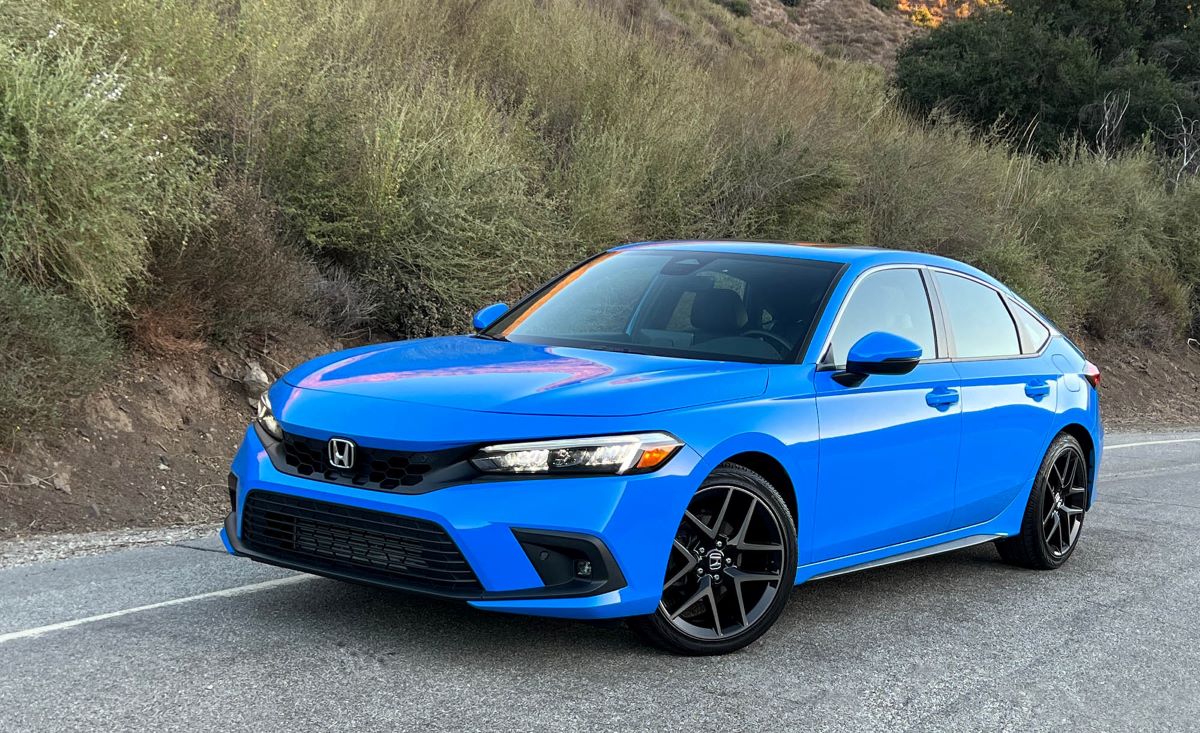
The previously available turbocharged 1.5-liter engine has been dropped. Also gone is the manual transmission for the Civic hatchback, meaning those seeking a stick shift will now need to look at the performance-focused Civic Si or Civic Type R.
The entry-level, nonhybrid Civic is equipped with a 150-hp 2.0-liter four-cylinder engine paired with a CVT, and it powers only the front wheels.
While it’s the least powerful variant in the lineup, it doesn’t feel sluggish in city traffic. Its agile handling and well-tuned suspension give it enough energy to stay composed and responsive around town.
The Civic Hybrid, on the other hand, delivers a noticeable step up in power. Its setup pairs a 2.0-liter four-cylinder gasoline engine with two electric motors, resulting in a combined output of 200 horsepower.
In our test drive of the Civic Hybrid, we found the car to be quick, smooth, and nearly as enjoyable to drive as the more performance-oriented Civic Si.
4. Toyota Corolla Hatchback
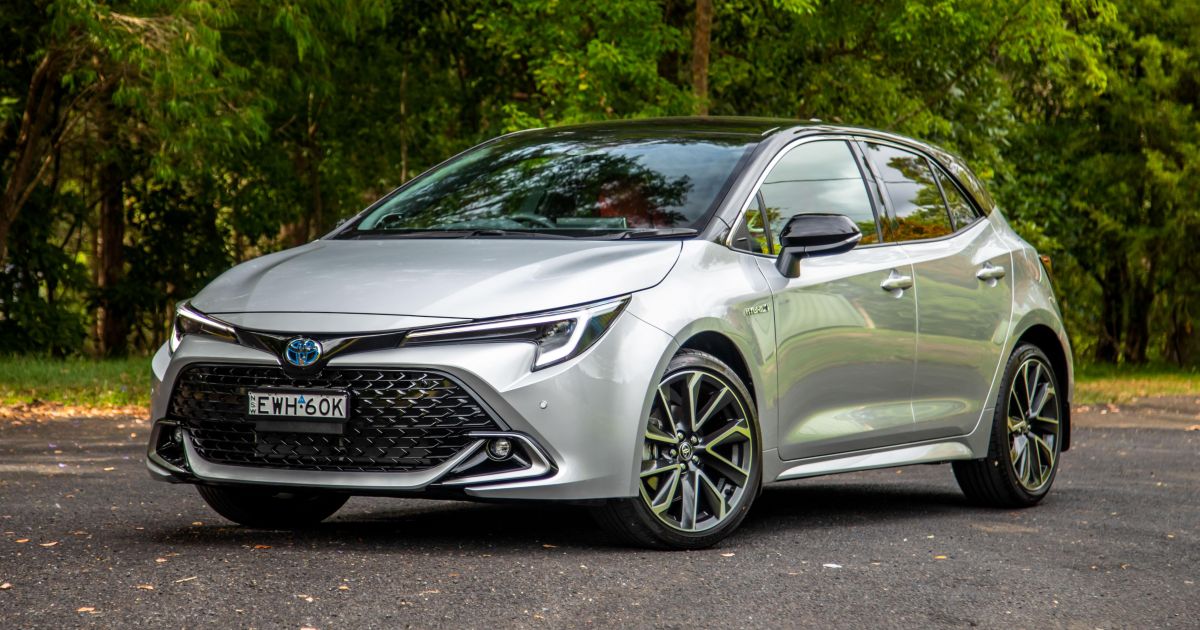
Toyota’s Corolla Hatchback isn’t just practical it’s fun to drive. The build quality is outstanding for its price point, with a solid-feeling cabin and a well-insulated ride.
Its CVT transmission mimics gear shifts for a more natural feel, and the steering is precise. The sporty SE and XSE trims in particular deliver great feedback, and Toyota’s infotainment system is easy to use without feeling outdated.
For 2025, the Corolla Hatchback remains unchanged, continuing in the same form it has maintained since the current generation was introduced back in 2019.
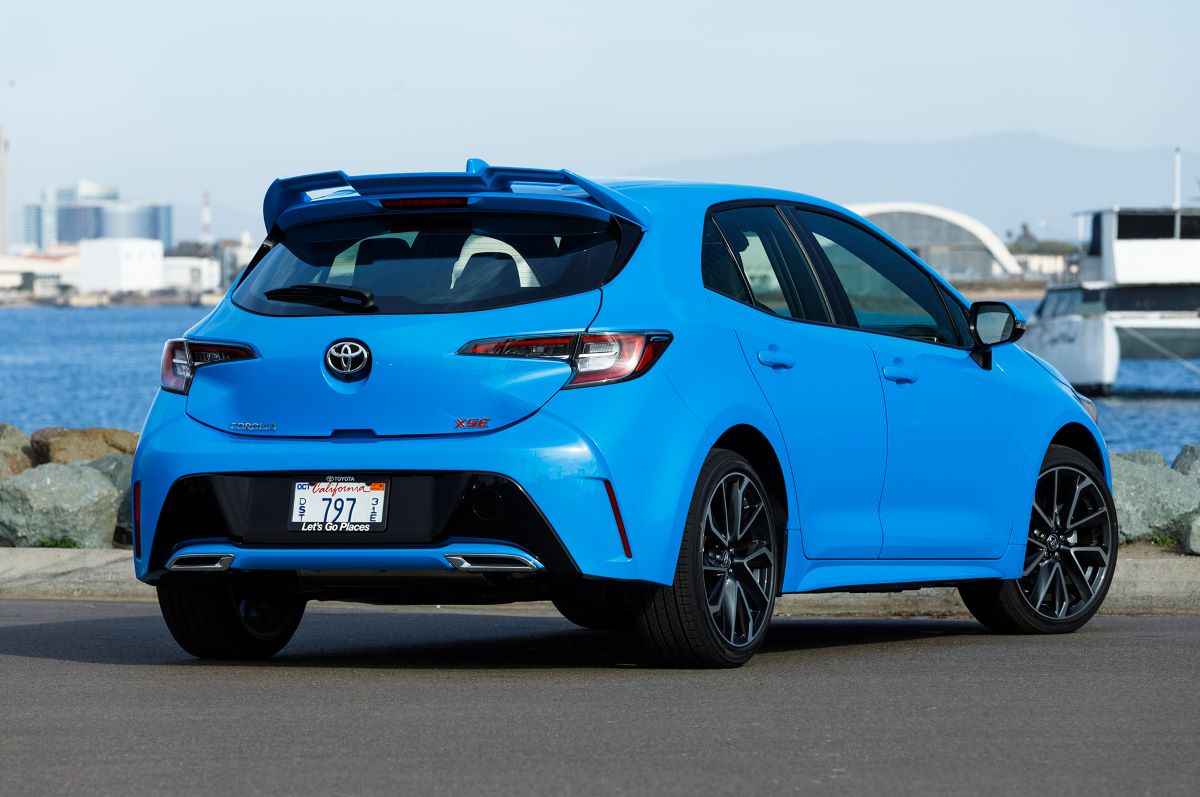
While it’s beginning to show its age, Toyota appears content to keep the model in the lineup for at least another year. A new FX Special Edition has been announced for 2025, but that variant is exclusive to the Corolla sedan. As for the Corolla Hatchback, no updates have been made.
As compact SUVs increasingly dominate the small car segment, interest in hatchbacks and small sedans has waned, but they still have their place.
The key rivals in this category include the Hyundai Elantra, Honda Civic, and Mazda 3. Of these, only the Civic and Mazda 3 are available in hatchback body styles, like the Corolla. The Honda Civic stands out as the roomiest, while the Mazda 3 leans most heavily into a premium feel.
Both of those competitors also offer a more engaging driving experience than the Corolla Hatchback. Still, Toyota’s more affordable pricing will undoubtedly appeal to plenty of buyers who are looking for value over flash.
5. Kia Forte GT
The GT version of the Kia Forte brings turbocharged power and sport-tuned suspension into the budget segment.
With 201 horsepower, paddle shifters, and dual exhaust, it drives like something out of a much higher price bracket.
Inside, the flat-bottom steering wheel and bolstered seats give it a sporty, premium vibe. Kia has packed in creature comforts like ventilated seats and wireless charging, helping the Forte GT exceed expectations.
The average new-car transaction price has been climbing to unprecedented heights in recent years, making it harder than ever to find a brand-new vehicle that’s also genuinely fun to drive. Fortunately, Kia defies that trend with the Forte GT, the highest-performance version of its compact sedan.
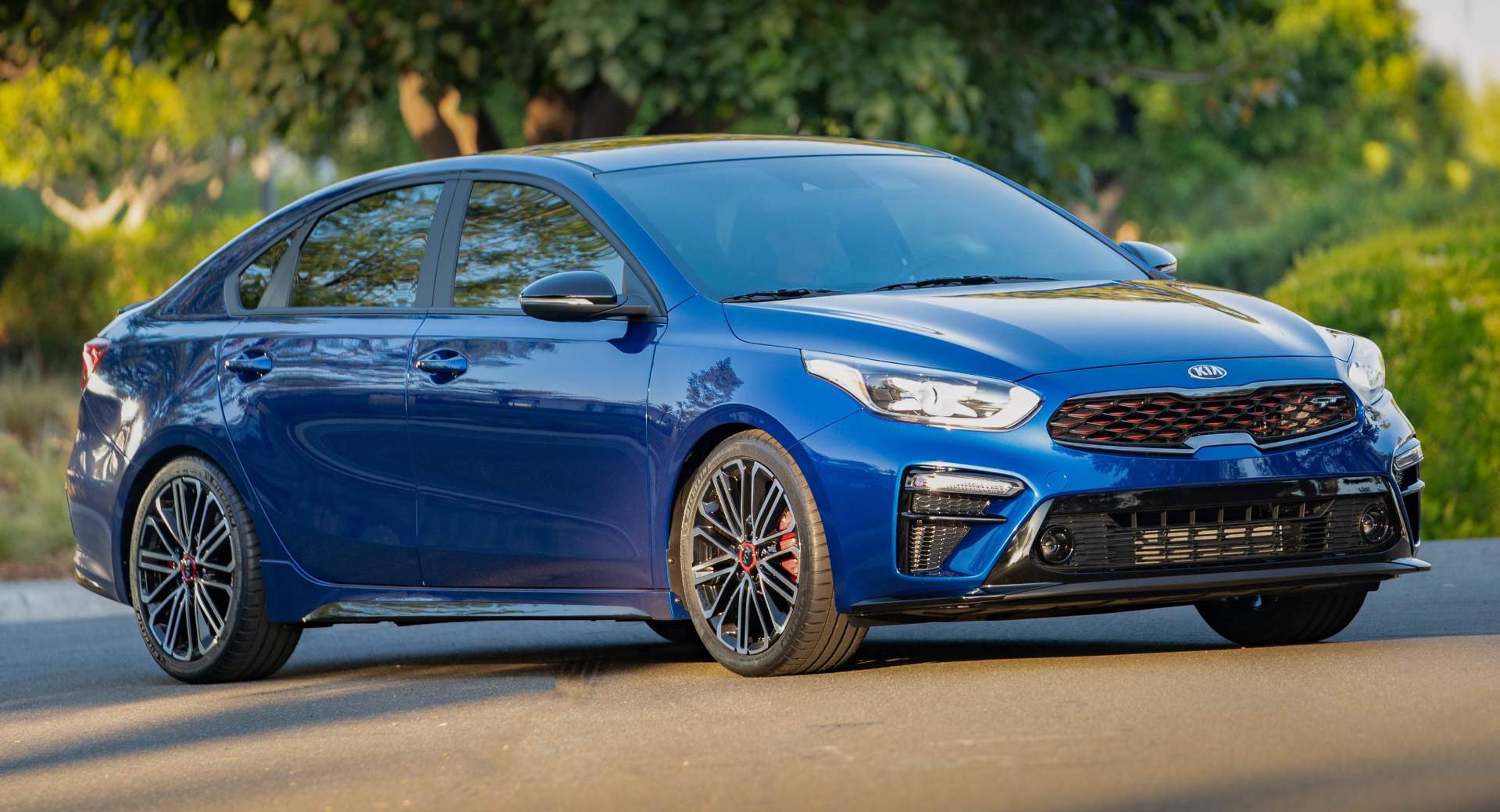
The Forte GT is part of Kia’s GT lineup, which represents the sportiest trim levels across its model range. This variant is powered by a turbocharged 1.6-liter four-cylinder engine, producing 201 horsepower and 195 lb-ft of torque.
It comes standard with 18-inch alloy wheels, a stiffer sport suspension, and a sport exhaust system. That dual-exit exhaust is surprisingly loud on cold starts—an attention-grabber that will likely appeal to buyers in search of a compact car with more attitude than your average Forte.
The version we tested came fitted with a seven-speed dual-clutch automatic transmission, but Kia also offers a GT Manual model. That trim swaps in a six-speed manual gearbox and Michelin Pilot Sport 4 summer tires for an additional $1,000—a compelling option for enthusiasts who want the full hot-compact experience.
Budget Cars That Feel Like Toys
Not all budget cars are built equal, some cut so many corners, they forget they’re supposed to be real cars. These are the ones that feel flimsy, unrefined, and borderline unserious behind the wheel.
Sure, they’ll get you where you need to go, but don’t expect comfort, confidence, or any kind of driving joy. If you’re after a car that feels solid and grown-up, these are the ones to avoid.
1. Mitsubishi Mirage
The Mirage is one of the cheapest new cars you can buy and it feels every bit of it. The three-cylinder engine struggles to keep up with traffic, and the CVT groans loudly under pressure.
The ride is bouncy, the cabin is filled with hard plastic, and the driving experience is vague and uninspired. It may be fuel-efficient, but it’s hard to ignore the toy-like sensation when you’re behind the wheel.
The Mitsubishi Mirage remains one of the most affordable new cars on the market today. It appeals to buyers with tight budgets, but it’s also a textbook example of when spending a bit more—or even considering a used alternative—might be the smarter move.
The Mirage simply doesn’t have much going for it. Its underpowered three-cylinder engine struggles to keep up with traffic, the interior is as bare-bones as it gets, and excessive road noise seeps into the cabin.
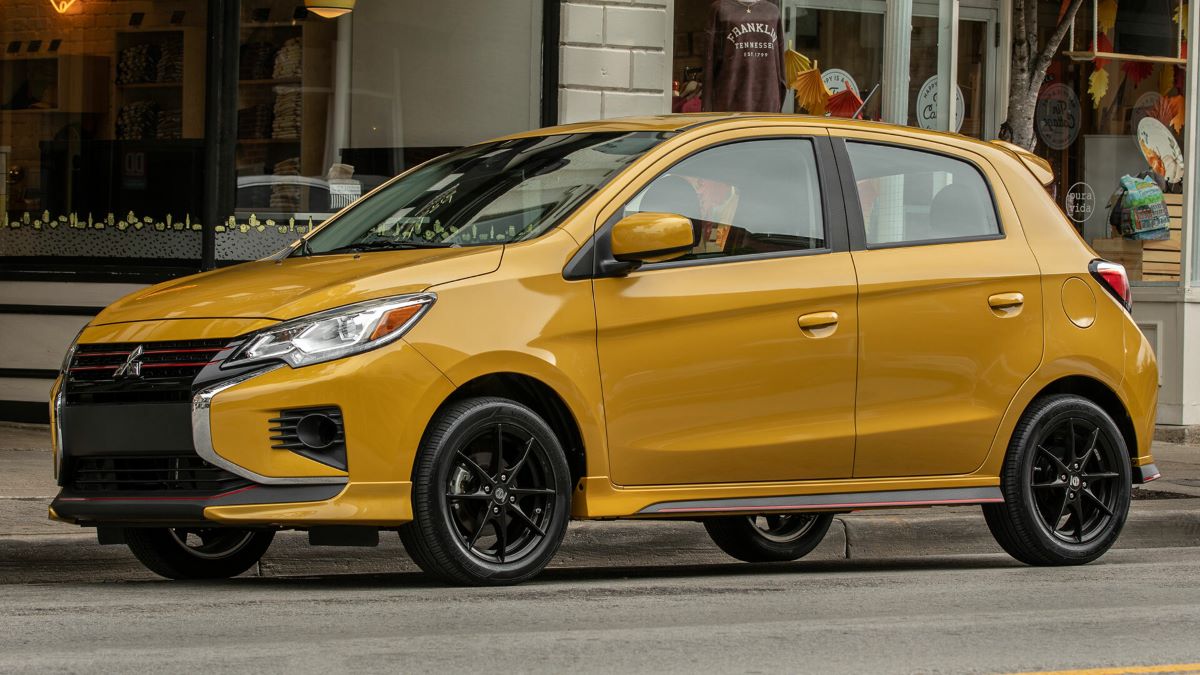
That said, this little hatchback does deliver hybrid-like fuel economy, and it comes standard with Apple and Android connectivity along with automatic emergency braking. But honestly, there are better options out there.
Despite its no-frills interior and sparse feature list, the Mirage’s bold grille and tight proportions lend it some subcompact character. Its fuel efficiency is its strongest asset—rated at 39 mpg combined and 43 mpg on the highway, it’s more efficient than the Nissan Versa and even comparable to certain hybrids.
But that level of efficiency doesn’t come free—it’s powered by a tiny engine paired with a continuously variable transmission (CVT) that both work hard (and loud) just to keep up with daily driving.
There aren’t many updates for 2024. The midlevel LE trim gains automatic headlights, rain-sensing wipers, and a driver’s armrest, and it still comes in at a modest $18,500. Even so, that money could land you a more refined competitor or a better-equipped used car.
2. Chevrolet Spark
Although marketed as a city car, the Chevrolet Spark doesn’t do much to hide its bargain-basement status. The steering lacks feedback, and the engine feels anemic on the highway.
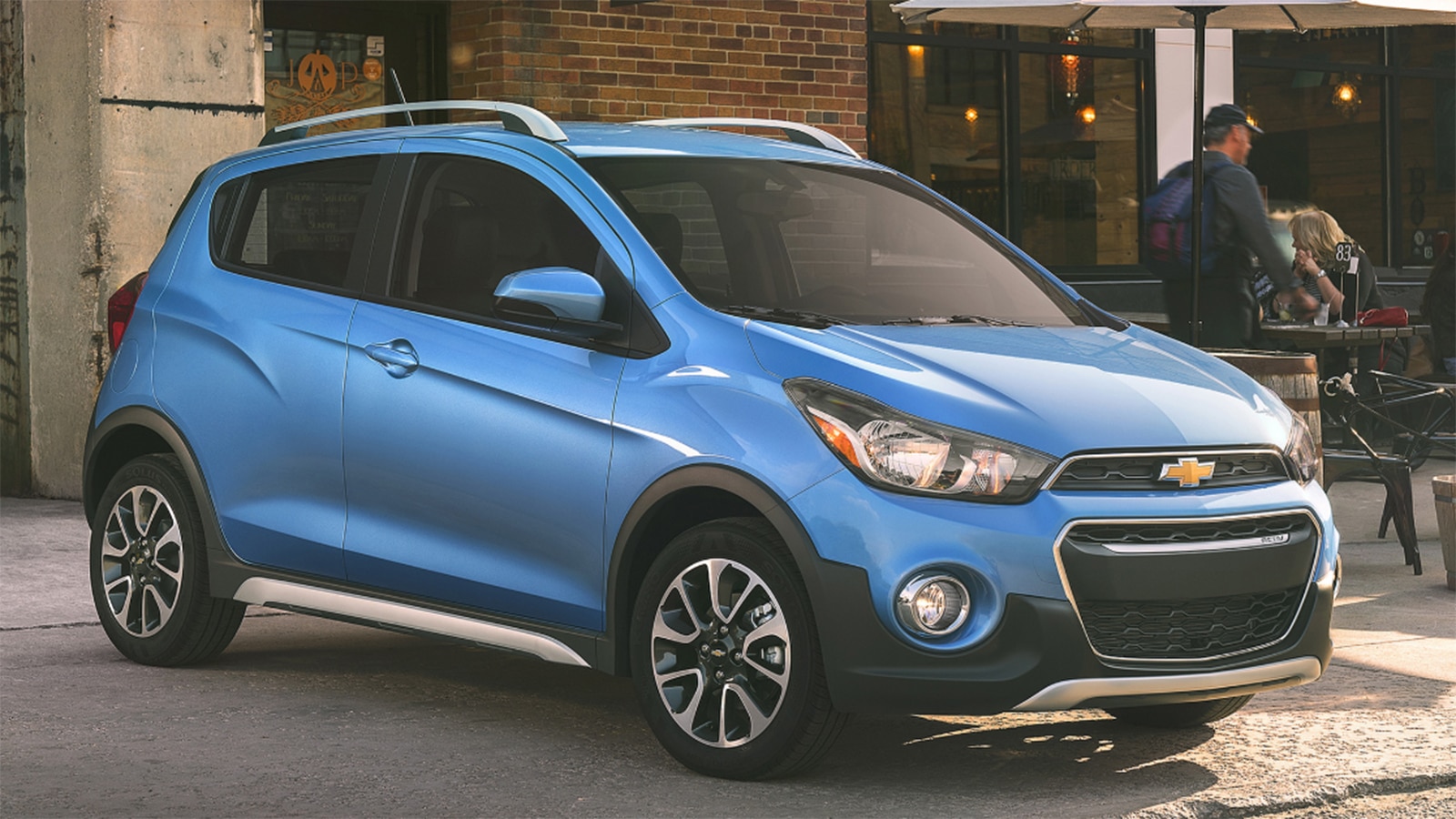
Inside, the seats are thin and uncomfortable on long drives, and while the infotainment system is decent, the materials and noise insulation make it feel more like a toy than a real car.
A new car priced under $15,000 might sound like a one-way ticket to punishment behind the wheel, but the 2022 Chevy Spark proves that assumption wrong.
The harshest criticism we can level at this subcompact hatchback is its minuscule rear seat and the awkward process of folding the back seats. Small rear quarters are common in this segment, but competitors like the Hyundai Accent and Kia Rio do offer a bit more space.
The Spark’s cabin isn’t flashy, but it avoids the cheap, questionable materials found in alternatives from Mitsubishi. On top of that, Chevy’s infotainment system stands out with its user-friendly interface and generous feature set.
While every 2022 Spark uses an engine that struggles at highway speeds, it’s well-suited to urban driving, where its agility and compact size give it an edge.
There are no major updates for the 2022 Spark, which carries forward mostly unchanged. Its main selling point remains its ultra-low price tag, undercutting even the budget-friendly Mitsubishi Mirage by about $1500. Unfortunately, Chevrolet has confirmed that the Spark will be discontinued after 2022, with production ending in August.
While no Spark trim could be described as “fully loaded,” stepping up to the 1LT does bring genuinely useful additions like satellite radio and keyless entry. We don’t recommend the $1100 continuously variable automatic transmission (CVT).
All Spark models are powered by a modest four-cylinder engine that sends power to the front wheels via either a five-speed manual or a continuously variable automatic transmission (CVT). Fortunately, the CVT delivers smooth power without the annoying drone you often get from gearless automatics.
In city driving, the Spark is peppy enough, though on the highway, you’ll notice it takes its time getting up to speed. Long-distance driving isn’t this car’s strength, but in dense urban settings, it proves itself with tight handling and quick reflexes.
The short wheelbase improves maneuverability in tight spots, and although ride comfort suffers over rough roads, the Spark handles bumps better than some rivals. Cabin noise and vibrations are more subdued compared to other budget cars.
Steering feels precise and connected, giving the driver a clear sense of the road. It’s also stable at highway speeds, making lane changes smooth and drama-free. The firm brake pedal provides strong, consistent stopping power, helping the Spark scrub off speed confidently.
3. Nissan Versa (Older Models)
The current Versa has improved, but previous generations were known for flimsy construction and dull performance. The base models especially felt hollow, with spongy brakes, sluggish acceleration, and a cabin that buzzed on rough roads.
The steering was vague, the body control poor, and interior materials clearly on the low end. It served its purpose as cheap transportation but without any sense of refinement.
The 2023 Nissan Versa stands out as a strong contender in the subcompact car segment, delivering more comfort, features, and tech than you might expect at this level.
It’s also fresh enough to reflect Nissan’s latest design language, featuring sharp creases and textured surfaces that give it one of the more visually engaging looks among small sedans.
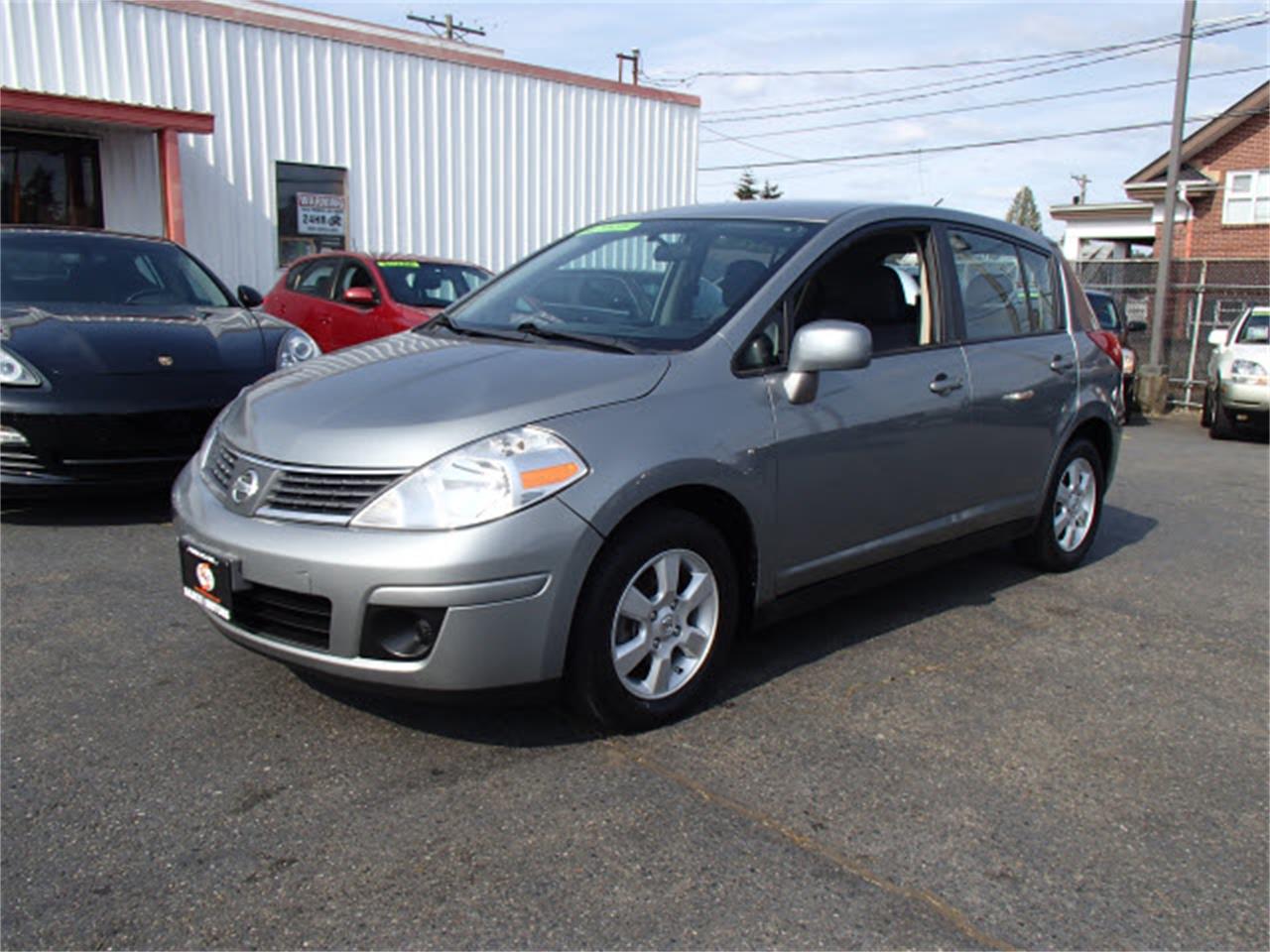
Inside, the Versa offers a spacious cabin and a sizable trunk, rivaling what you’d find in some entry-level European models. It’s also one of the few vehicles in its class still available with a manual transmission.
That five-speed gearbox, however, is limited to the base trim — which is unfortunate, as it helps squeeze a bit more response from the underpowered four-cylinder engine. What the engine lacks in performance, though, it makes up for in fuel efficiency, returning up to 35 mpg combined.
The Versa remains a smart buy, especially if you’re focused on value and efficiency. Still, it’s worth cross-shopping with rivals like the Hyundai Accent and Kia Rio, both of which are also economical, small, and a little more enjoyable to drive.
4. Fiat 500 (Base Trims)
The Fiat 500 may have retro charm, but the base trims often feel like novelty items rather than serious vehicles. The driving position is awkward, the interior space cramped, and the suspension too firm for daily comfort.
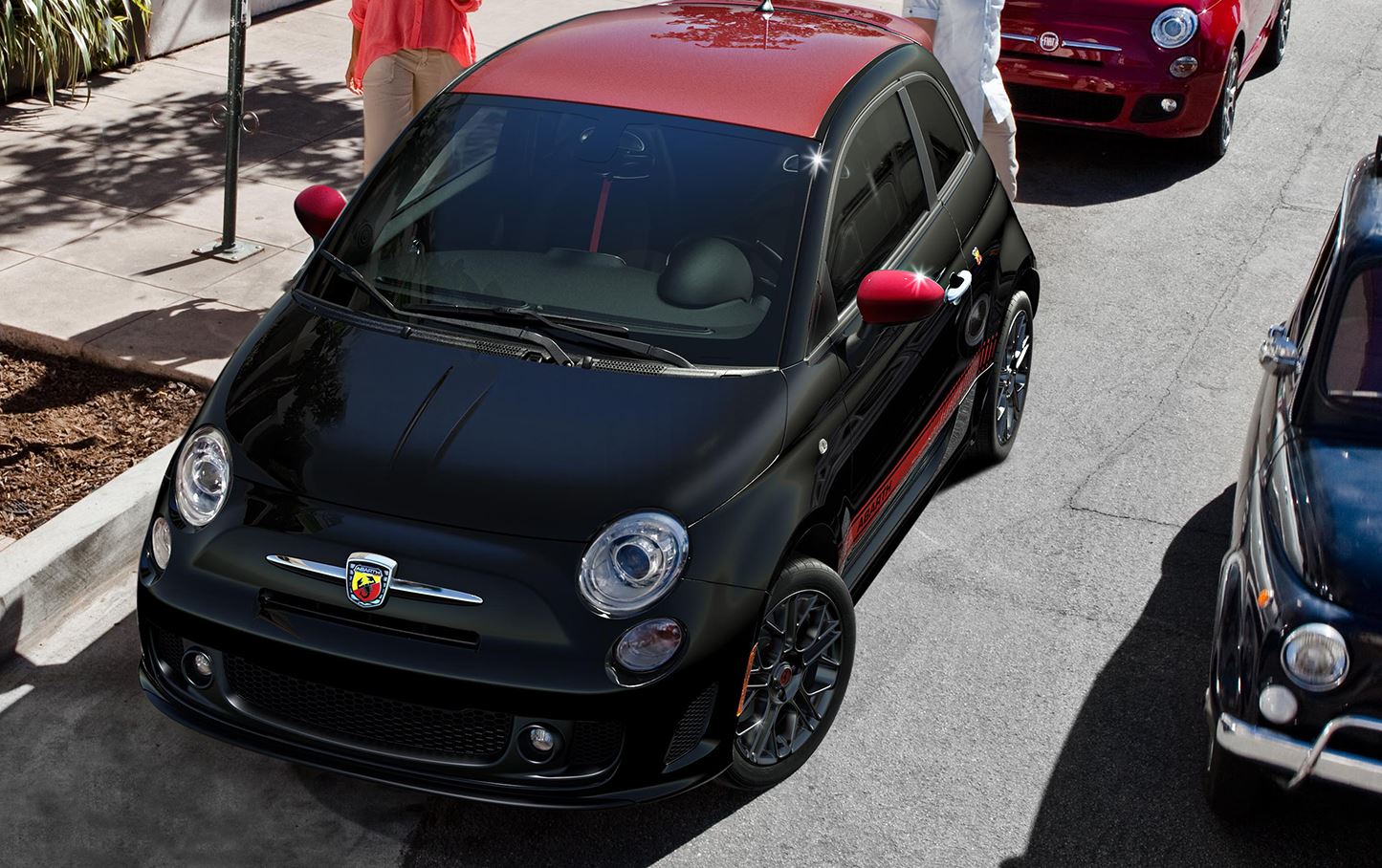
Add in inconsistent build quality and buzzy engines, and it often feels more like a fashion statement than a functional car especially when compared to better-engineered competitors in the same price range.
The Fiat 500 is no longer just a car—it’s a cultural icon within the European automotive world. Over six decades ago, it played a pivotal role in Italy’s postwar growth.
The original model has since been reimagined, and much like a black-and-white classic that’s been colorized, the 500 was reborn in 2007 and reintroduced to the modern automotive landscape. Today, the little Italian city car is offered exclusively with an electric powertrain.
Fiat has phased out internal combustion engines for the 500, replacing them with an 87 kW electric motor powered by a 42 kWh lithium-ion battery.
The charging port is located at the rear of the car, and the battery offers a range of up to 320 km (199 miles) based on the WLTP cycle. That’s enough to launch the 500 from 0 to 100 kph (0–62 mph) in 9 seconds, with 0 to 50 kph (0–31 mph) taking just 3.1 seconds. Its top speed is electronically capped at 130 kph (93.2 mph).
Sustainability is a core part of the new 500’s identity, reflected in its cabin where many materials are recycled. The dashboard setup includes a 7-inch TFT digital cluster, which works in tandem with a 10.25-inch touchscreen infotainment display for a modern user experience.
Charging flexibility is another strong point. The Fiat 500 includes a standard portable charging device that can be plugged into a regular 220V household outlet. For quicker charging at home, an optional wall-box is available. When connected to a fast-charging public station, the battery can reach 80% charge in just 35 minutes.
5. Smart Fortwo
The Smart Fortwo was designed for tight urban environments, but driving it outside of a city reveals its flaws. Its short wheelbase makes for an extremely choppy ride, and it lacks power, stability, and practicality.
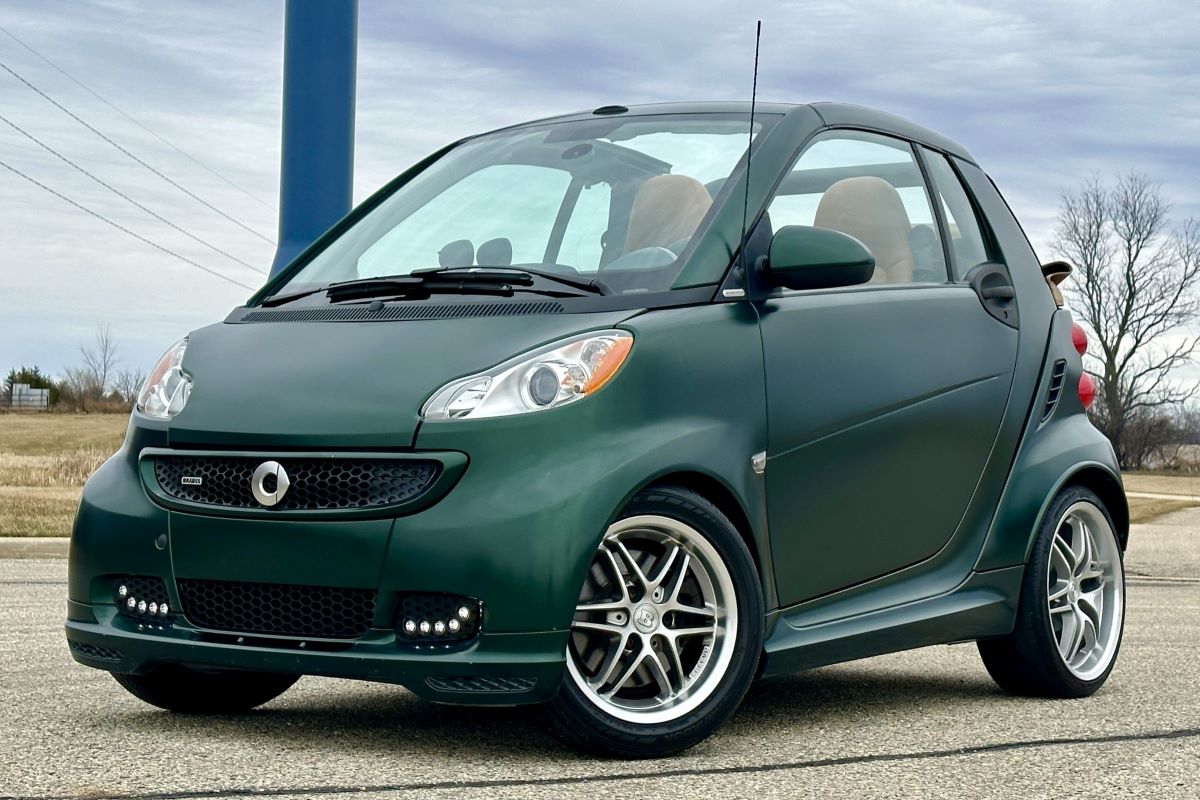
The plasticky interior and minimal space make it feel more like a golf cart than a real car. Even as a second vehicle, many drivers found the Smart to be too compromised for regular use.
Its ultra-compact dimensions and sharp maneuverability make it a natural city car for two. For 2017, Smart sweetened the deal with more standard equipment, adding even more appeal to this already nimble runabout.
The Fortwo Coupe makes smart use of hard plastics and average-quality materials by emphasizing a playful design and eye-catching color accents, which help offset the otherwise basic interior.
Despite its tiny footprint, the cabin cleverly maximizes space, offering ample head- and legroom—even for taller drivers. Numerous small storage compartments make it practical, too.
The seats aren’t heavily cushioned, but that’s fine—this isn’t a car built for long road trips. The trunk, while small, is actually competitive with some larger subcompacts, and the fold-flat passenger seat adds flexibility for hauling larger items.
In the city, the Fortwo is lively and maneuverable, with a super-tight turning radius that makes it feel perfectly at home in tight urban environments. At higher speeds, though, its eagerness can turn into twitchiness, and the already firm suspension becomes noticeably harsh on the highway.
Keep it in its element, dense urban streets, and you’ll appreciate its responsive brakes and willing little engine. It’s a textbook case of “right tool for the job,” and this one excels at darting through alleys and claiming the smallest of parking spots.
Under the hood is a 0.9-liter three-cylinder engine producing 89 horsepower and 100 lb-ft of torque. Power is sent to the rear wheels via either a 5-speed manual or a 6-speed dual-clutch automatic.
While the output may sound modest, the Fortwo’s light weight allows for a 0–60 mph time of 10.1 seconds. That’s not quick by any stretch, but the car’s size and responsiveness make it feel faster than the numbers suggest.
Highway overtaking is a bit sluggish, but around town, it delivers more than enough performance. Fuel economy is another strong point, with the manual model averaging 34 mpg and the dual-clutch setup offering an extra mile per gallon.
The Fortwo Coupe comes in four trim levels, all sharing the same engine and two-seat coupe layout. The base Pure trim includes standard features like cruise control, climate control, LED running lights, Bluetooth, and a multi-function steering wheel. Safety features like crosswind assist and eight airbags are also included.
Stepping up to the Passion trim adds conveniences like a center console bin, cargo cover, heated power mirrors, height-adjustable driver’s seat, and 15-inch alloy wheels.
The Prime trim enhances comfort and style with fog lights with cornering function, heated seats, leather upholstery, a panoramic sunroof, and LED taillights.
But for short, urban commutes, the Fortwo Coupe shines brightest—especially in a mid-range trim, which hits a nice balance between value and equipment without edging into the territory of more well-rounded competitors.
Budget cars can be wildly different experiences. Some offer unexpectedly premium features, solid performance, and everyday comfort proving that great driving doesn’t always require a hefty price tag.
Others, however, cut so many corners that they barely feel roadworthy. Whether you’re looking for value or just trying to avoid disappointment, knowing which budget cars go above and beyond and which feel like toys can make all the difference.