
Not all sports cars are created equal especially when it comes to reliability. While the segment is known for performance, many models suffer from high-maintenance engines, complex electronics, and expensive repairs.
But a few standouts deliver excitement and longevity, with owners reporting well over 200,000 miles on the odometer.
Below, we look at five sports cars that prove dependable over the long haul, and five that are more likely to empty your wallet before they hit six figures.
Let’s be real—owning a sports car is every gearhead’s dream. The sleek curves, the adrenaline-pumping acceleration, the sound of a finely-tuned engine roaring to life, it’s pure driving bliss.
But behind all that speed and style lies a cold, hard truth: some sports cars will stick with you for the long haul, while others will bleed your wallet dry long before they hit 100,000 miles.
It’s easy to get seduced by horsepower numbers and exotic badges, but if you’re not careful, you’ll end up with a temperamental machine that spends more time in the shop than on the road.
Not all sports cars are built equal. Some are engineered to last, machines that can easily surpass 200,000 miles with proper care, proving that performance and reliability can go hand in hand.
They’re rolling financial disasters. Fragile transmissions, electrical nightmares, overpriced parts, and insane labor costs turn these beautiful machines into regret on wheels. And unless you’re made of money or love wrenching every weekend, that’s not the kind of thrill anyone’s looking for.
Sports Cars That Hit 200,000 Miles
In this article, we’re drawing a hard line between the two. We’ll spotlight five sports cars that have proven themselves as long-haul legends, cars that enthusiasts proudly drive well past the 200k mark.
Then we’ll call out five wallet-draining divas that might wow you on day one, but will leave you broke and bitter by year three. If you’re planning to buy, own, or dream about a sports car, this list is your no-nonsense reality check.
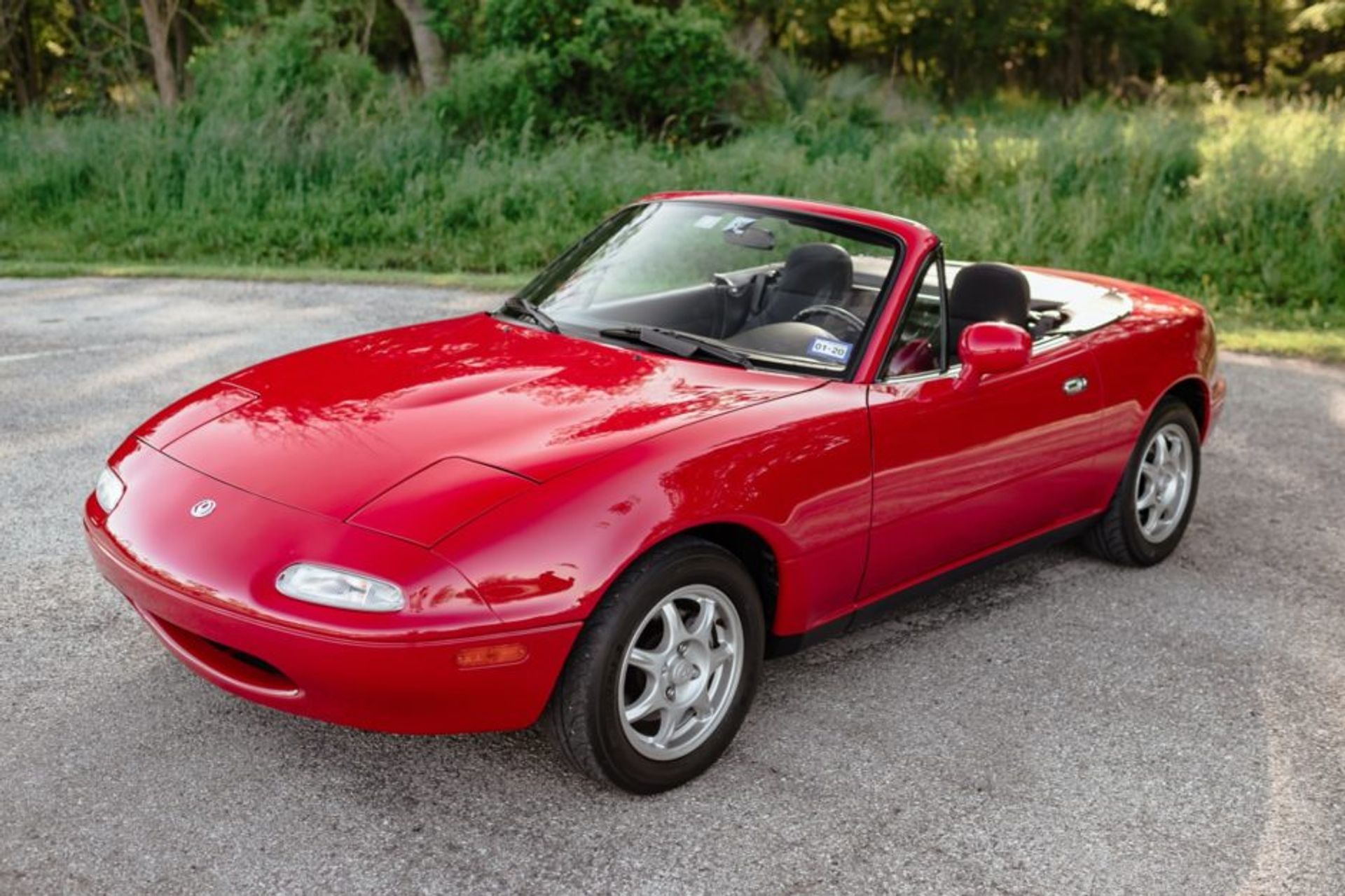
1. Mazda MX-5 Miata (NA/NB/NC Generations)
The Mazda Miata is a legend for good reason. Its simplicity is its superpower. From the early NA to the NC generation, these cars are light, nimble, and mechanically straightforward.
The engines particularly the 1.6L and 1.8L variants are famously durable, and thousands of Miatas have surpassed 200,000 miles with minimal intervention beyond regular oil changes and timing belt replacements.
With a huge U.S. enthusiast community and dirt-cheap parts, it’s no surprise the Miata has become the go-to sports car for budget-conscious thrill-seekers.
The Mazda MX-5 Miata is a compact, two-seat convertible offered in four trim levels: Sport, Club, Grand Touring, and the 35th Anniversary Edition.
All variants are powered by a 2.0-liter four-cylinder engine that produces 181 horsepower and 151 lb-ft of torque. Power is sent to the rear wheels through a standard six-speed manual transmission, while a six-speed automatic is available exclusively on the Grand Touring trim.
The base Sport trim includes 16-inch black alloy wheels with high-performance tires, LED headlights and taillights, a black manual convertible top, keyless entry with push-button start, and a leather-wrapped steering wheel, shift knob, and parking brake.
It also features cloth seats, an 8.8-inch touchscreen infotainment system with Alexa integration, Apple CarPlay and Android Auto compatibility, and a six-speaker audio system.
On the safety front, it offers forward collision mitigation, which warns of potential frontal collisions and can apply brakes in certain situations, as well as blind-spot warning with rear cross-traffic alert and lane departure warning systems.
Moving up, the Club trim is the most performance-focused version of the Miata. It builds on the Sport by adding 17-inch black alloy wheels, a sport-tuned suspension with Bilstein shock absorbers, a shock tower brace to enhance structural rigidity, and a limited-slip differential for improved traction during acceleration.
It also features a Track mode for the stability control system, a black front lip and rear spoiler, exterior color-matched upper door panel trim, and gray contrast stitching on the seats. Comfort and tech upgrades include heated seats, wireless Apple CarPlay (with wired Android Auto), and a nine-speaker Bose premium sound system.
The Club trim also offers an exclusive Brembo/BBS Recaro package, which includes Brembo front brakes with red front and rear calipers, 17-inch dark gray forged alloy BBS wheels, an aerodynamic body kit, and heated Recaro sport seats.
For those who prefer comfort and luxury over raw performance, the Grand Touring trim delivers a more refined experience. It builds upon the Club trim but omits the front and rear spoilers.
The Grand Touring adds 17-inch metallic black alloy wheels, automatic headlights with high-beam assist, and adaptive headlights that swivel with the steering to improve visibility through curves.
It also includes automatic rain-sensing windshield wipers, heated side mirrors with auto-dimming for the driver’s side, an auto-dimming rearview mirror, automatic climate control, and full leather upholstery.
Other enhancements include a built-in navigation system, road sign assistance (which displays detected road signs on the instrument cluster), and adaptive cruise control—though the latter is only available with the automatic transmission.
However, it’s important to note that if you opt for the automatic, you lose access to key performance features like the sport-tuned suspension, Bilstein shocks, limited-slip differential, and the shock tower brace.
Finally, the 35th Anniversary Edition stands as a limited-production model based on the Grand Touring trim, and it adds several exclusive styling elements. These include 17-inch bright finish alloy wheels, an exclusive Artisan Red Metallic exterior paint, a beige soft top, and a body-color rear spoiler.
Inside, it features unique anniversary badging, tan leather upholstery with “35th Anniversary” embossed on the seats, and special Artisan Red Metallic interior trim. This trim blends the luxury and features of the Grand Touring with distinctive visual cues that celebrate the Miata’s long-standing heritage.
Also Read: 5 Sedans With the Best Biometric Entry and 5 With Only Key Fobs
2. Honda S2000
The S2000 may rev to 9,000 rpm, but it’s still built like a classic Honda reliable to the core. The F20C and F22C1 engines can routinely last over 200,000 miles when properly maintained.
Unlike turbocharged competitors, the S2000 relies on a high-revving naturally aspirated setup that puts less thermal stress on internal components.
Paired with one of the most durable 6-speed manual transmissions ever made, the S2000 delivers both exhilarating driving and long-term peace of mind.
Clichés are usually worth avoiding at all costs, but sometimes you really don’t realize what you had until it’s gone. We knew the Honda S2000 was a sweet-handling little two-seater sports car when it was new, but many of us didn’t realize just how much we’d yearn for it after it was discontinued in 2009.
This isn’t a case of mid-engined Ferraris or Porsche 911s with a “GT” somewhere in their name, cars we’d expect to appreciate for all the obvious reasons. However good the S2000 was, at its core it was no exotic, but rather a rival for the Porsche Boxster and 20-year-old Boxsters aren’t changing hands at a hefty premium.
You can pick one of those up for as little as $10,000 these days, and few of the more potent S models touch $20,000. So is the Honda S2000 worthy of all the praise enthusiasts heap upon it, and what made it so special in the first place?
To answer that, we need to go back a few years. The Honda SSM Concept made its debut at the Tokyo Auto Show in 1995. After several years of development and refinement, the production version—now called the S2000—launched in April of 1999.
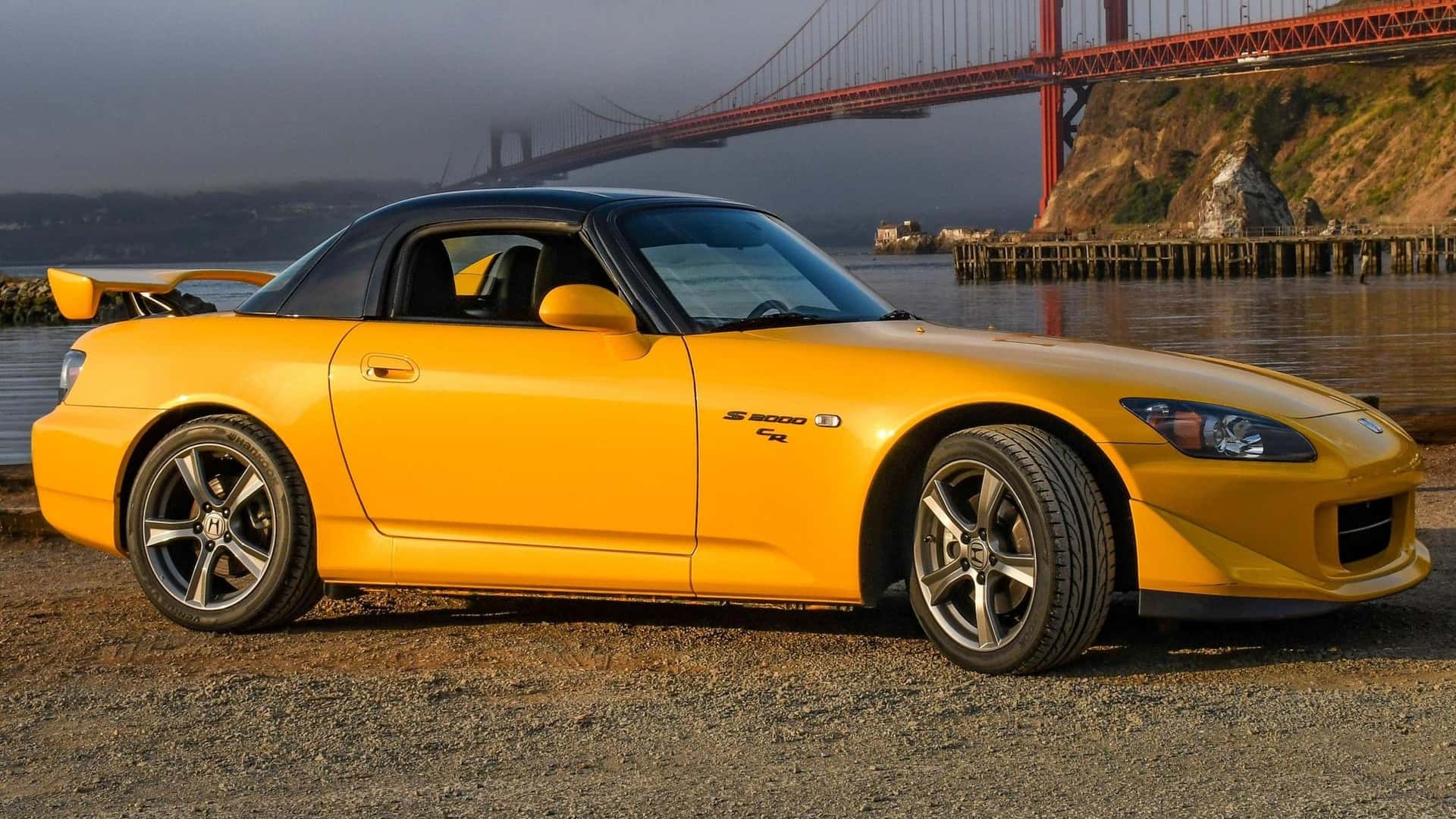
The formula was deceptively simple: it featured a naturally aspirated 2.0-liter engine (hence the “2000” in its name, representing cubic centimeters of displacement) positioned up front, a slick six-speed manual gearbox mounted in the center, and rear-wheel drive to complete the setup.
While that layout may sound reminiscent of the Mazda Miata, the S2000 was notably more expensive and technically advanced than its Mazda counterpart.
Adjusted for inflation, a new S2000 would ring in at just under $55,000 in today’s money. In contrast, a brand new Miata today starts at just $27,775. That price difference alone highlights just how premium the S2000 really was—something many may have forgotten over time.
The car’s pricing wasn’t just for show, either. The S2000 packed serious performance credentials to justify its cost. The first-generation model, known as the AP1, came with a naturally aspirated inline-four engine that delivered 240 horsepower at an astronomical 8,300 RPM, with a redline that stretched all the way to a mind-bending 9,000 RPM.
As impressive as that redline was, the car’s real engineering feat was its specific output: 120 horsepower per liter without forced induction, the stuff of pure race engines
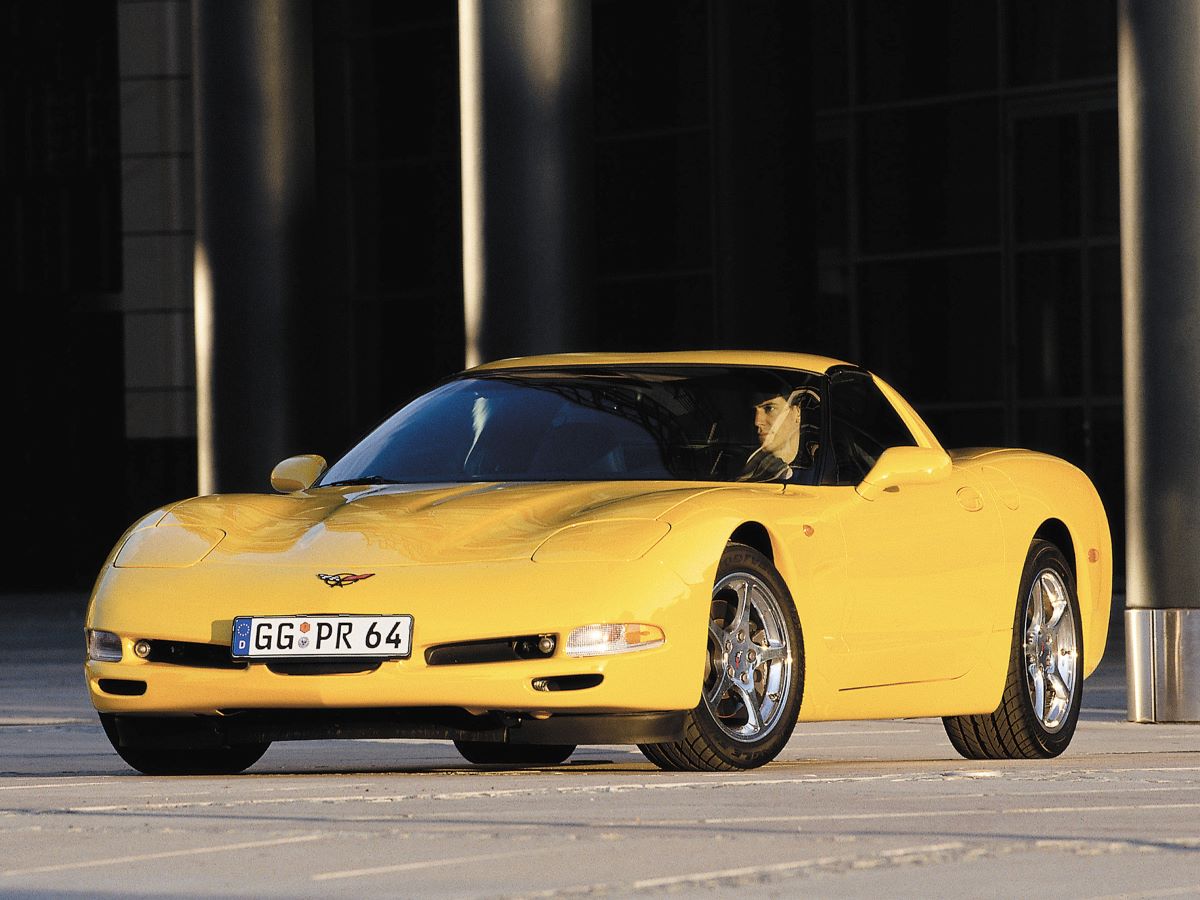
3. Chevrolet Corvette (C5 and C6)
Corvettes from the C5 and C6 generations have proven they’re more than just muscle they’re mechanically resilient too.
Thanks to their LS1 and LS3 pushrod V8s, which are simple and rugged, many of these models have surpassed 200,000 miles without needing major engine work.
They’re also relatively easy to maintain, with a huge supply of parts and a strong DIY community. As long as they’re not abused on the track, these ‘Vettes offer reliable American performance at a reasonable cost of ownership.
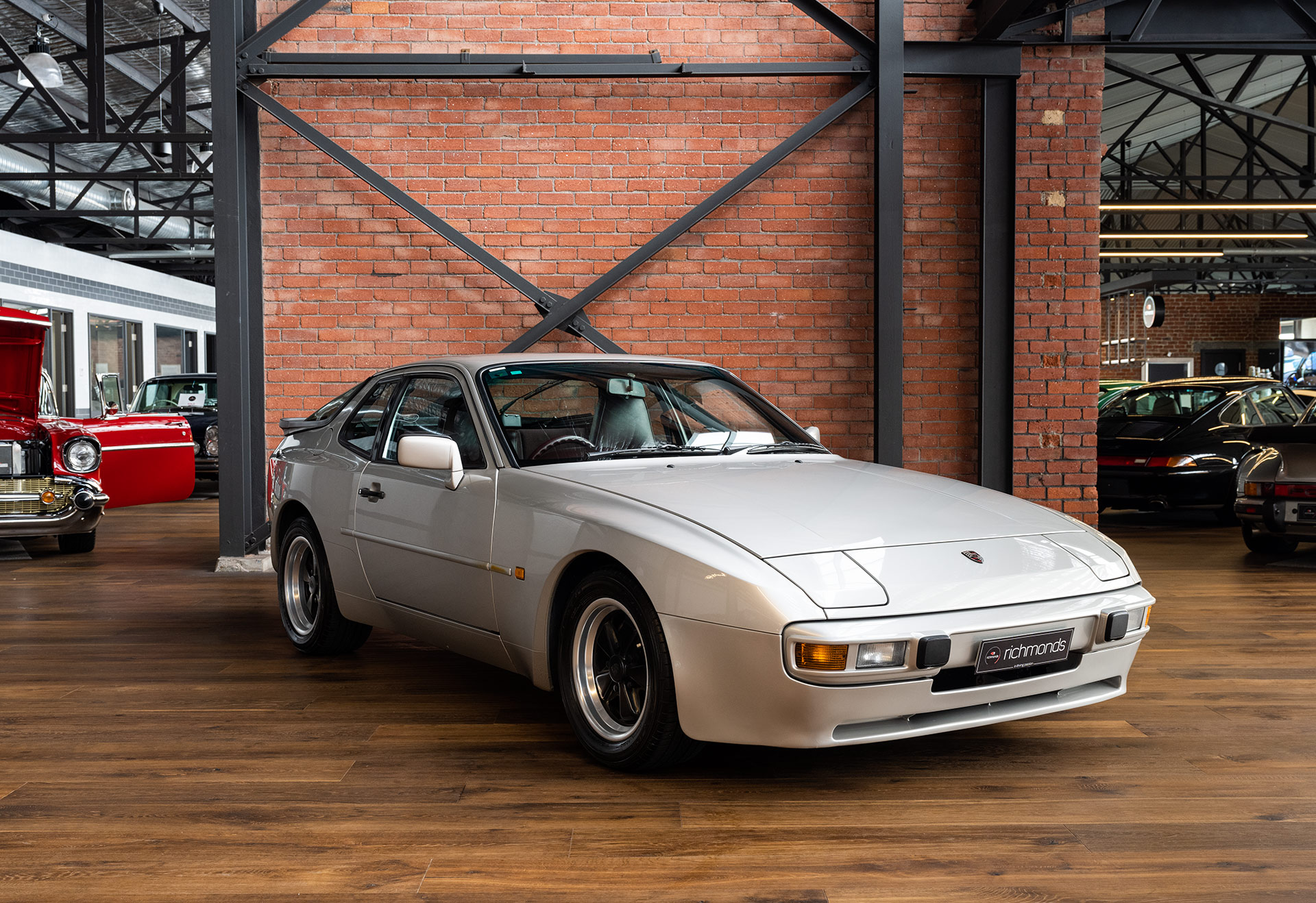
4. Porsche 944/968
Unlike modern Porsches with complex turbo setups, the 944 and 968 offer a refreshingly analog sports car experience with overbuilt mechanicals.
These cars feature strong naturally aspirated inline-fours and a transaxle layout for balanced weight distribution.
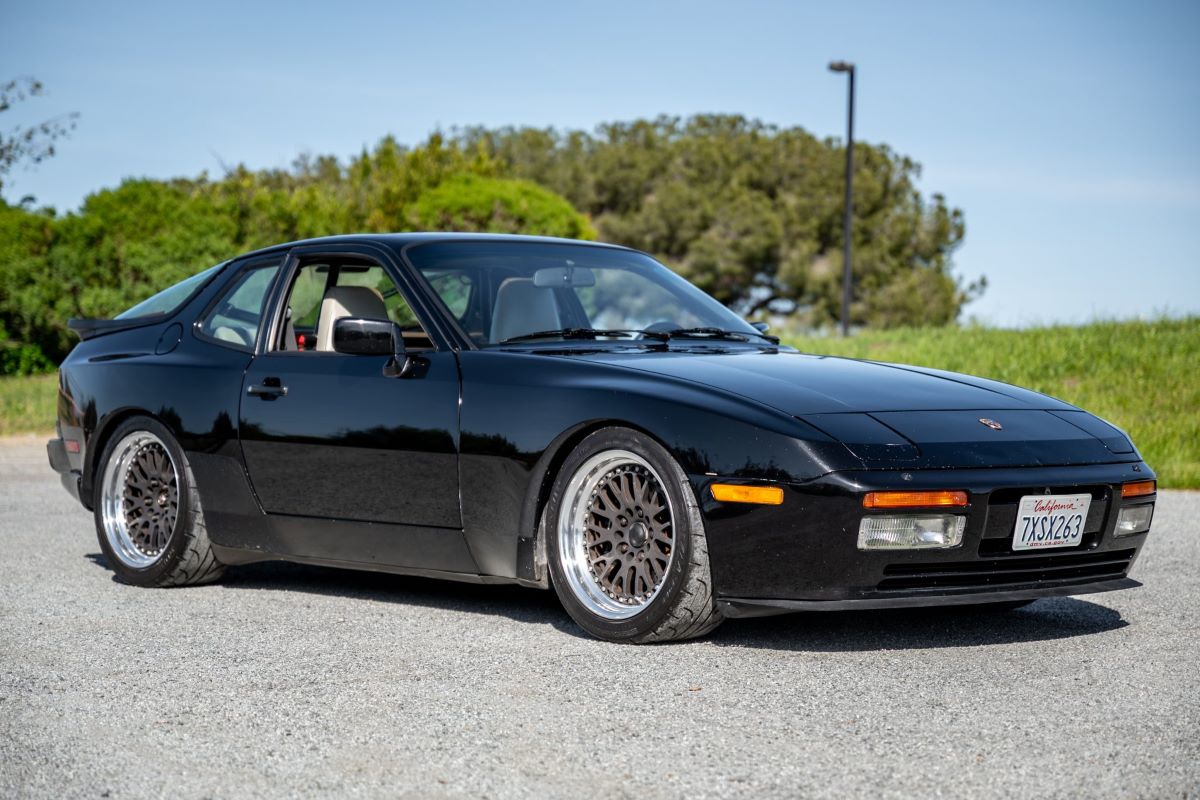
Owners regularly see mileage north of 200,000, especially when timing belt intervals are respected.
Parts are more affordable than you’d expect from a Porsche, and many units remain on U.S. roads today thanks to their mechanical simplicity and timeless handling.
5. Lexus SC300 (Manual)
While not a purebred sports car, the Lexus SC300 earns its spot thanks to its bulletproof 2JZ-GE inline-six engine the non-turbo cousin of the Supra’s legendary motor.
Paired with a manual transmission, it delivers silky smooth performance with an engine that can easily crest 250,000 miles.
Toyota’s reputation for reliability holds strong here, and the SC300’s rear-wheel-drive layout makes it a sleeper hit among enthusiasts seeking both comfort and long-term durability.
In 1991, Lexus made its entrance into the premium coupe market with a sleek, U.S.-designed two-door that fully embraced the rising biodesign trend, characterized by its flowing lines and curvaceous form.
This first-generation SC Coupe marked a bold move for Lexus, a calculated risk aimed at carving out space in the American luxury coupe segment of the ’90s.
While it was originally intended to compete with domestic rivals, the SC ended up being more aligned with the likes of the BMW 6-Series (E24) and the Mercedes-Benz E-Class Coupe (W124), finding itself in a more refined and performance-oriented category.
The SC’s exterior design stood apart thanks to several unconventional choices. Most notably, it omitted a traditional grille for the radiator altogether. Instead, engine cooling was managed solely through openings in the lower portion of the front bumper, an engineering challenge that Lexus had to overcome.
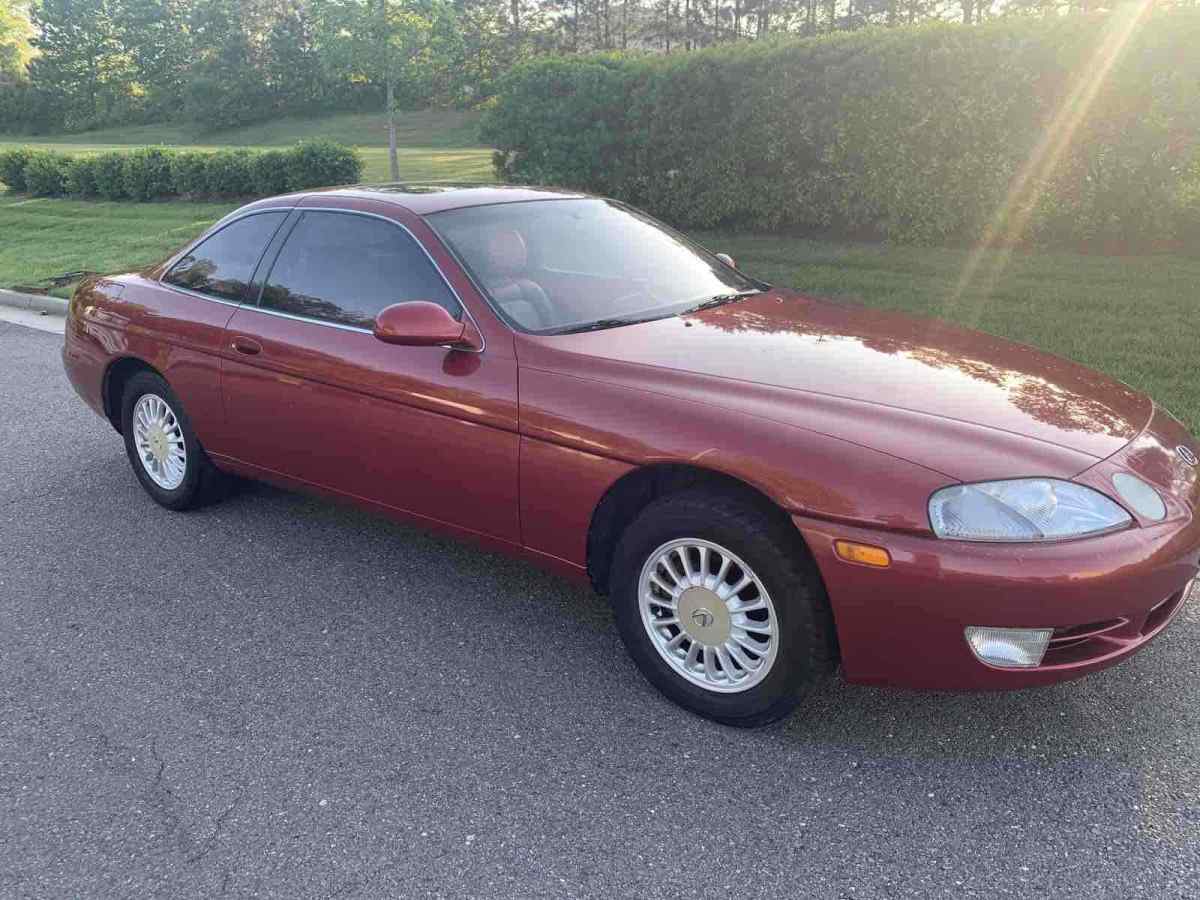
The front end also featured dual headlights, with the high-beam lights placed on the inside, offering a distinctive look. Another notable innovation was the use of double-hinged doors, which improved rear-seat accessibility and added a unique touch to the car’s design.
Inside, the SC was equipped with high-end technology for its time, especially when it came to its audio system. Lexus partnered with Nakamichi to offer a premium cassette player and paired it with a six-disc CD changer—an impressive setup for 1991.
The cabin was trimmed in rich leather and real wood, creating an atmosphere of genuine luxury and attention to detail.
Beneath the hood, the SC came with a solid lineup of engine options. Buyers could choose between a 3.0-liter inline-six and a more powerful 4.0-liter V8.
The SC 300, equipped with the legendary 2JZ engine, was the only version offered with a 5-speed manual transmission as standard, making it a favorite among enthusiasts. The SC 400, which housed the V8, was mated exclusively to a 4-speed automatic transmission.
Also Read: 12 Sports Sedans That Outlast SUVs With Top Endurance
Sports Cars That Drain Your Wallet
In this article, we’re diving into the sports cars that look like a thrill on paper but often turn into a financial sinkhole in the real world. These aren’t necessarily bad cars, in fact, some are among the most beloved in the enthusiast community.
But if you’re not prepared for what comes after the purchase, these money pits can leave your bank account begging for mercy.
1. BMW M3 (E92 – V8)
The E92 M3 is beloved for its high-revving 4.0L V8 and sharp handling, but it’s a mechanical nightmare for the long haul.
The S65 engine is infamous for rod bearing failure, VANOS (variable timing) problems, and costly throttle actuator malfunctions.
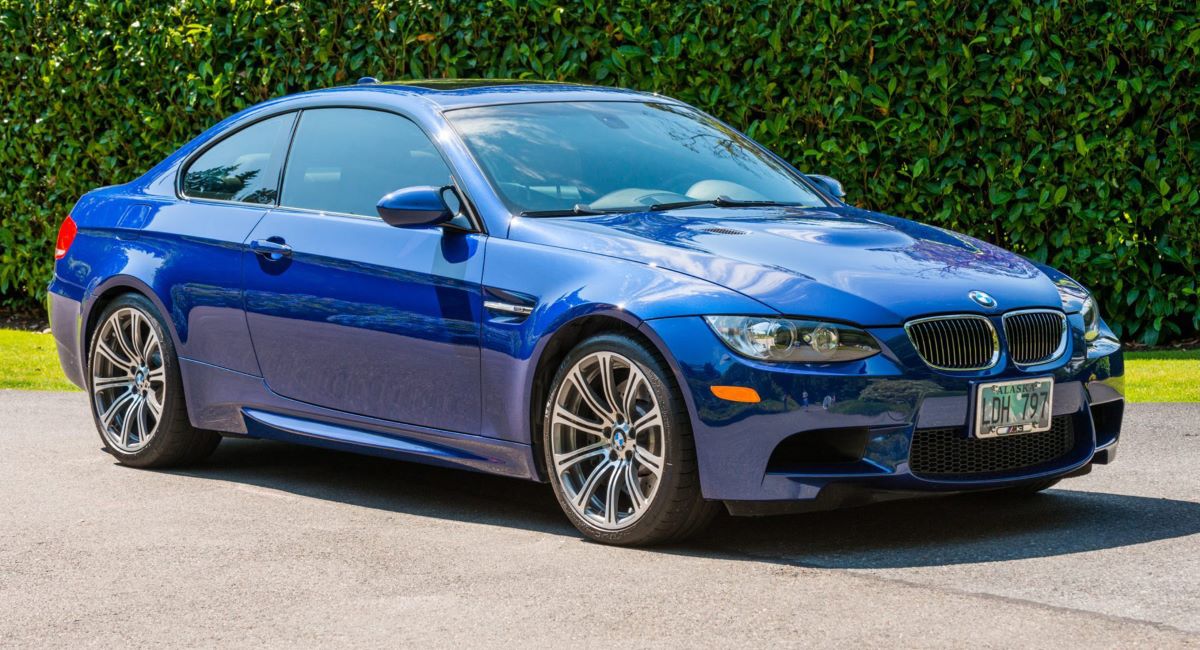
These issues often surface before 100,000 miles and can cost thousands to fix. Add in wear-prone suspension components and high maintenance costs, and this M3 becomes a recurring expense even with modest mileage.
2. Maserati GranTurismo
Few cars match the GranTurismo’s elegance and sound, but beauty comes at a steep price. The Ferrari-derived V8 may be thrilling, but it demands constant upkeep from leaky gaskets to failing electronics and transmission woes.
Even simple maintenance tasks like oil changes can cost hundreds, while deeper issues may require exotic parts and specialized labor.
Ownership beyond 60,000 miles becomes a gamble unless you have access to a Maserati specialist and a flexible budget.
The Maserati GranTurismo comes equipped with a slightly detuned version of the lively twin-turbo V-6 engine found in the MC20 sports car.
In the base Modena trim, this powerplant delivers 483 horsepower, while stepping up to the Trofeo model increases output to an impressive 542 horsepower. Both trims are designed to cruise comfortably and quietly when needed, yet still deliver strong performance when called upon.
The engine stands out for its unique character and a rich, sonorous exhaust note, thanks in part to its innovative twin-combustion design—technology with roots in Formula 1 racing.
Topping the lineup is the all-electric GranTurismo Folgore, the most powerful version, which produces a massive 818 horsepower through a trio of electric motors.
All gasoline-powered GranTurismo variants are equipped with an eight-speed automatic transmission and standard all-wheel drive. A manual gearbox is not offered. The standard air suspension impresses in Comfort mode, absorbing road imperfections with ease and providing a smooth, composed ride.
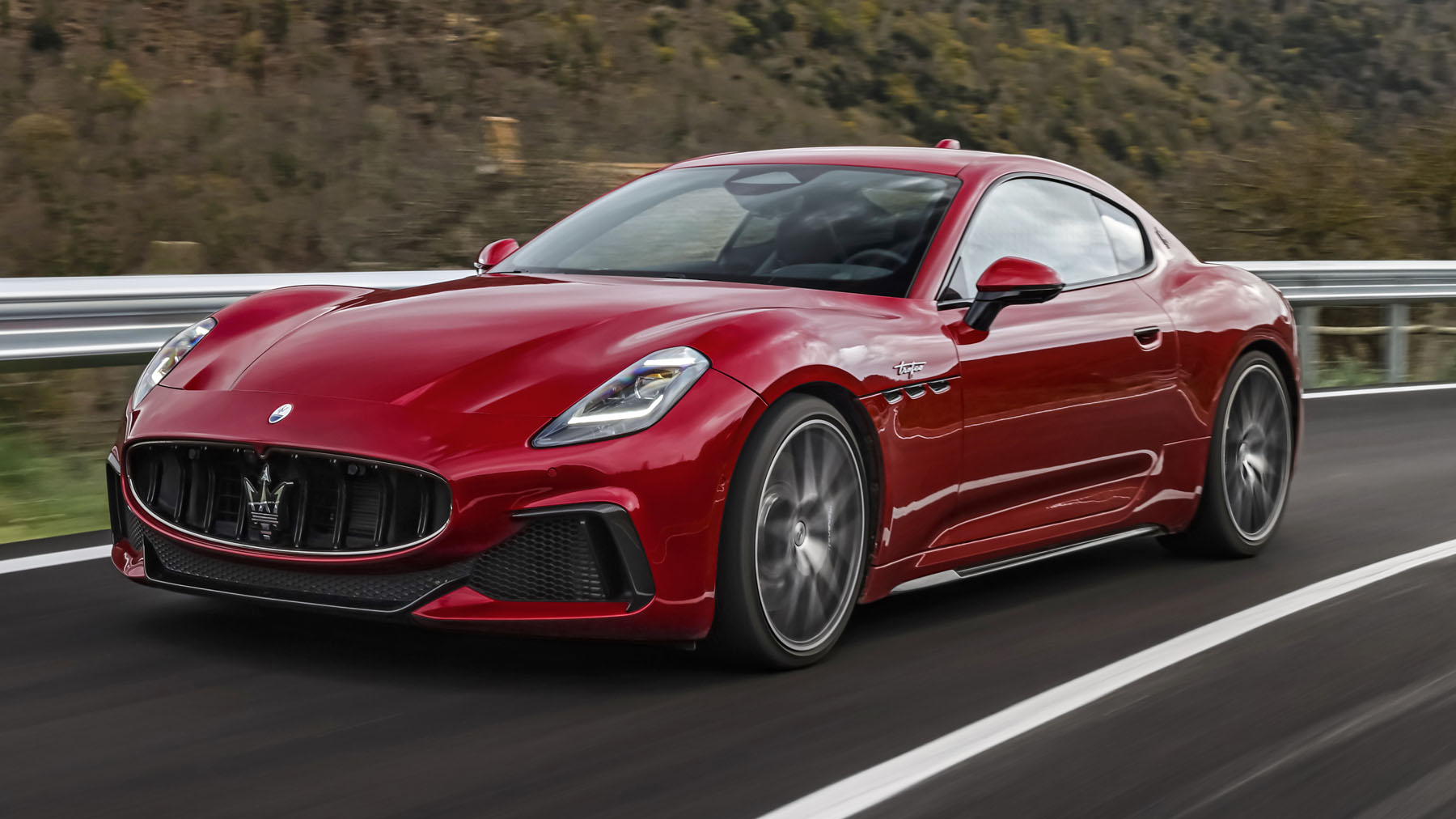
In Corsa mode, however, the GranTurismo reveals its performance edge with firmer suspension calibration, heavier steering feedback, and a more pronounced, baritone exhaust tone resonating from the tailpipes. That said, the GT mode proved to be the most balanced and versatile for everyday driving during our experience.
While the chassis is well-tuned and handles dynamically with confidence, we did note that the braking system left something to be desired—the car tested lacked immediate bite at the top of the pedal travel. Still, the numbers don’t lie: in our instrumented testing, it came to a stop from 70 mph in just 148 feet.
As for performance, our tests showed that the 542-horsepower Trofeo version could sprint to 60 mph in a mere 3.2 seconds. It also cleared the quarter-mile in 11.5 seconds at a speed of 121 mph.
Fuel efficiency is reasonable given the GranTurismo’s performance pedigree. According to EPA estimates, the car should achieve 18 mpg in the city and 27 mpg on the highway.
Once we have the opportunity to run it through our 75-mph highway fuel economy loop, we’ll report back with real-world numbers. For additional details, visit the EPA’s website for official ratings and updates.
Inside, the GranTurismo offers a luxurious and thoughtfully appointed cabin. As a two-door, two-plus-two coupe, rear-seat space is understandably limited, though this generation provides slightly more legroom than its predecessor. Still, the rear seats are best suited for children or small items.
High-end materials and refined finishes cover every surface, and Maserati has included a generous mix of technology and comfort features throughout.
The front seats are supportive and comfortable, visibility is excellent, and overall, the GranTurismo is easy to live with on a daily basis. The trunk appears spacious enough for a weekend getaway, though we’ll confirm its practical capacity with our carry-on suitcase test once a model arrives at our offices.
3. Nissan 350Z/370Z (Neglected or Abused Units)
On paper, the Z lineup seems reliable. But in practice, many used 350Z and 370Z models in the U.S. suffer from years of neglect or abuse.
High-rev driving, poor maintenance, and cheap modifications have taken their toll on the used market. Common issues include oil consumption (especially in early 350Zs), clutch hydraulics failure, and noisy differentials.
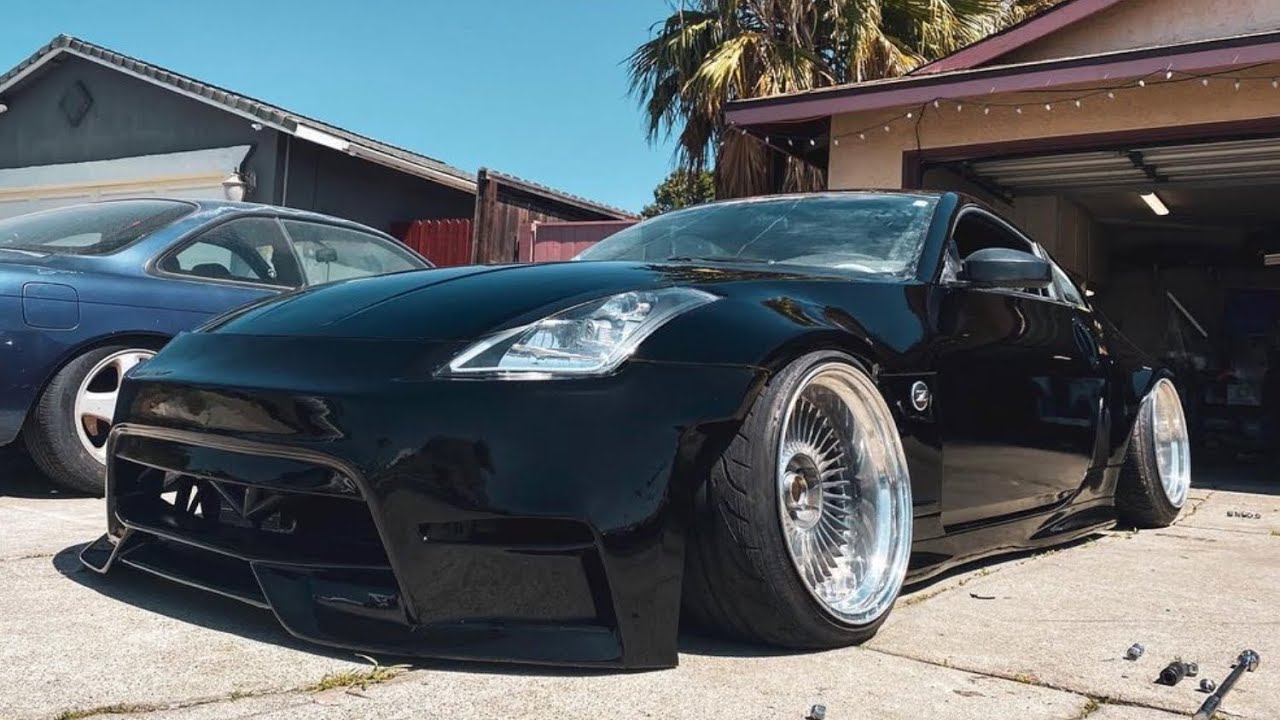
While some units do last, you’ll need to search carefully and budget for repairs if buying secondhand.
We’ve always had a soft spot for the first-generation Toyota GT 86. When it debuted in 2012, it quickly earned a reputation as one of the best bang-for-your-buck sports cars on the market—and to this day, it remains a blast to drive.
Now listed for sale on Yahoo! Auctions in Japan, this oddball 350Z does offer a few redeeming qualities. For starters, the shimmering metallic purple paint is a definite eye-catcher, and the widened wheel arches aren’t too bad either. Still, as is often the case in the world of custom tuning, once someone starts modifying a car, it’s hard for them to know when to stop.
The original Nissan front fascia is gone, replaced entirely by the nose of a Toyota GT 86. That swap includes the headlights, fog lights, bumper, and grille. A vivid red splitter has been added below, matching the red side skirts along the flanks. Then there’s the wheel setup.
While the stance is decent and the wheels sit well within the fenders, the candy apple red finish clashes hard with the purple paint. On top of that, the bronze-painted brake calipers feel out of place and don’t help the aesthetic.
The back half of the car takes the visual madness even further. A redesigned rear window sits lower than stock, and a prominent lip spoiler has been mounted on the decklid.
Above that, a massive rear wing with vertical supports extends directly from the rear bumper. Rounding it all off is a custom diffuser bolted to the bottom, completing a rear end that’s arguably even more over-the-top than the front.
4. Audi TT RS (Mk2)
The second-generation TT RS hides a potent turbocharged 2.5L engine under its small frame, but it’s far from a long-term bargain.
Owners report turbo failures, carbon buildup due to direct injection, and quirky DSG transmission issues.
The Haldex all-wheel-drive system also demands regular servicing or risks failure. With limited technician availability and expensive parts, even minor issues can spiral into major repair bills.
For 2022, Audi introduces a new, limited-production TT RS Heritage Edition. This special model will be offered in five distinct color combinations, with only ten units available in each—bringing the total production to just 50 cars.
Each of these final-edition cars comes equipped with exclusive 20-inch wheels, OLED exterior lighting, a sport exhaust system, and “Heritage Edition” logos etched into the rear windows as a nod to the car’s send-off.
That said, the standard TT RS is still an outstanding package and comes at a lower price point. It’s offered exclusively as a coupe and keeps the options list relatively lean
Beneath the hood, the TT RS packs a 2.5-liter turbocharged five-cylinder engine that pumps out 394 horsepower, an engine configuration that’s both rare and captivating.
Paired with Audi’s Quattro all-wheel drive system and a rapid-fire seven-speed dual-clutch automatic transmission, the TT RS delivers a performance experience that borders on addictive.
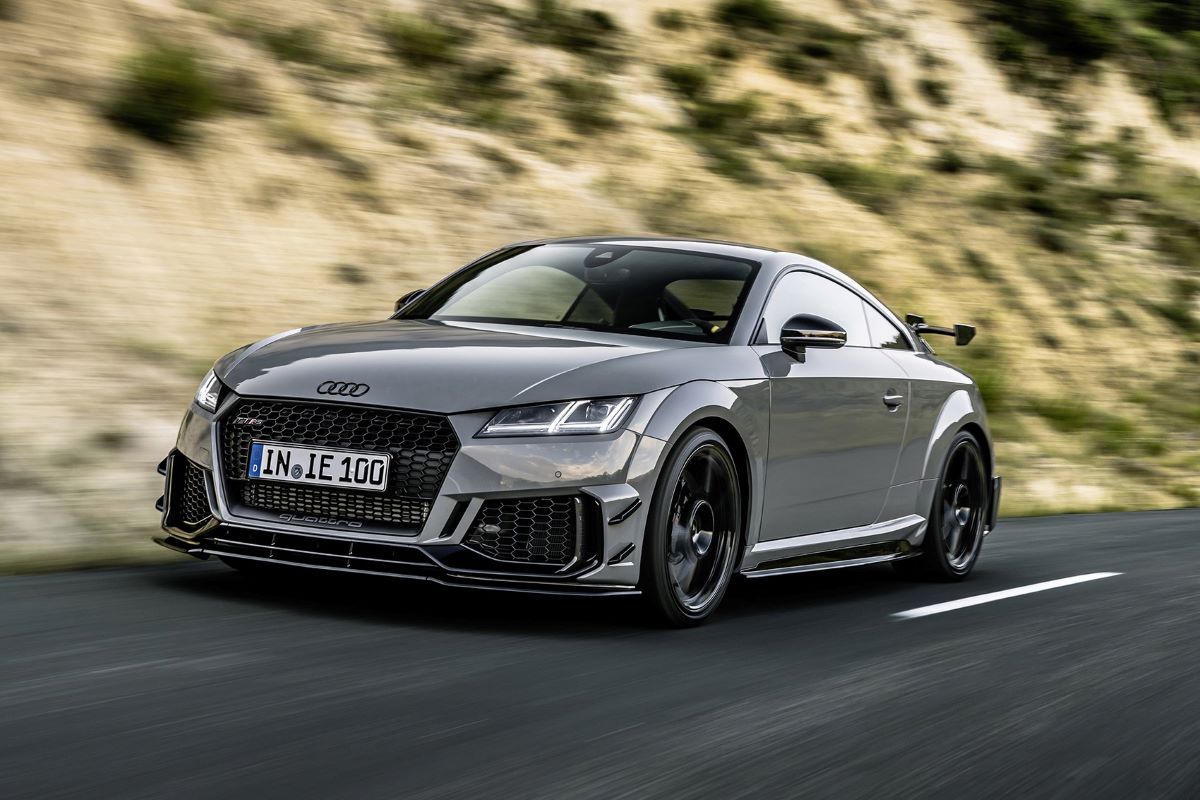
Passing power is downright explosive: the transmission eagerly downshifts at the slightest hint of throttle pressure, launching the TT RS forward with ferocity that feels like slipping into a wormhole.
Despite its firepower, the TT RS can transform into a composed, comfortable cruiser with some light throttle finesse. The standard adaptive dampers do an excellent job of balancing stability and compliance, keeping the car planted even on tight, technical roads, giving even novice drivers the confidence to push harder.
The version we tested stayed composed up to its performance threshold, though it’s worth noting that the TT RS doesn’t quite match the dynamic limits of rivals like the Chevrolet Corvette or Porsche Cayman.
Audi does offer a firmer suspension setup via the Dynamic Plus package, which removes the adaptive dampers, but we found that this configuration sacrifices too much feedback.
It makes it harder to feel when the car is approaching its limits—something you don’t want on a twisty road unless you’re tracking the car regularly. Unless track days are your weekend routine, we recommend skipping that particular option.
5. Jaguar F-Type (V6 and V8 Models)
The Jaguar F-Type delivers curb appeal and intoxicating engine sounds, but it struggles to maintain British composure over time.
Cooling system failures, leaky superchargers, failing electronics, and suspension wear are all common by 60,000 miles.
Even minor components like infotainment screens or sensors can cost hundreds to fix. And with depreciation hitting hard, many owners find themselves underwater financially just as repairs start piling up.
The 2024 Jaguar F-Type remains one of the most visually striking cars in the sports car segment, but its appeal goes far beyond aesthetics. Under the hood, a supercharged V-8 delivers a soundtrack that’s pure mechanical theater.
While its handling isn’t as razor-sharp as the Chevrolet Corvette or Porsche 718 Cayman, it’s still plenty capable of putting a smile on an enthusiast’s face. The ride quality leans more toward comfort, making it a refined performer rather than a hard-edged track machine.
Inside, the cabin is cozy and finished in high-quality materials, although the design and technology haven’t been significantly refreshed in quite some time. If you opt for the convertible, the power-operated soft-top stows away neatly in the trunk, creating a clean, elegant silhouette when lowered.
The coupe version is equally beautiful and provides a bit more practicality thanks to its larger cargo area. Whichever body style you choose, the F-Type stands as one of the best-looking sports cars available—guaranteed to elevate the appearance of any driveway while still offering plenty of joy behind the wheel.
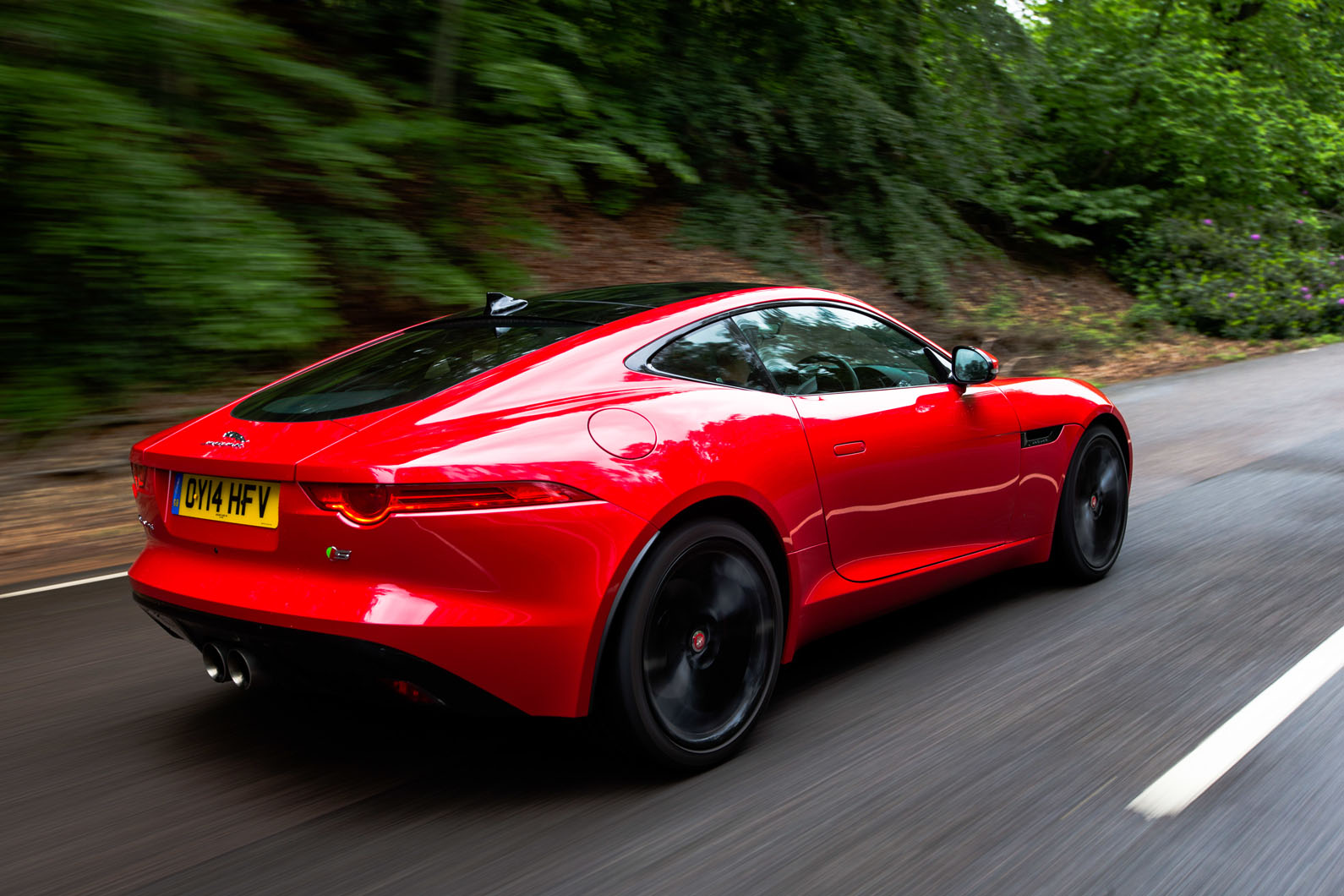
2024 marks the final model year for the Jaguar F-Type, coinciding with the brand’s 75th anniversary. To celebrate, Jaguar is offering two special editions: the 75 and the R 75.
These farewell trims will be available in both coupe and convertible form. The R 75 is the only option for buyers who want the most powerful engine configuration—a supercharged 5.0-liter V-8 producing 575 horsepower.
All special editions come standard with all-wheel drive. For those who prefer rear-wheel drive, the entry-level R-Dynamic P450 is still in the lineup. The 75 and R 75 variants set themselves apart from the R-Dynamic models with exclusive badging, unique 20-inch wheel designs, and a special Giola Green exterior paint option.
The base price of the 2024 Jaguar F-Type is $79,175, with the most expensive trim reaching $116,275 depending on configuration and features.
The P450 R-Dynamic starts at $79,175, as does the base R-Dynamic. The R-Dynamic P450 Convertible is listed at $81,175. Both the P450 75 and 75 trims are priced at $91,175, while the 75 P450 Convertible bumps up to $93,175. If you want the 575-hp R75, expect to pay $114,275, with the R75 Convertible topping out at $116,275.
Although the high-output R75 is undeniably appealing, the P450’s 444-hp V-8 still offers a fantastic driving experience and sounds just as intoxicating.
We’d go with the coupe for its sleek looks and practicality, but if open-top driving is your thing, the convertible is hard to beat. A wide palette of paint and interior trim options are available, but we’d spec ours in British Racing Green with tan leather—classic and timeless.
Rather than downsizing like many other manufacturers, Jaguar now exclusively offers the F-Type with a supercharged 5.0-liter V-8. This engine produces 444 horsepower in P450 models and a muscular 575 horsepower in the R P575 version.
No matter which you choose, you’re in for a show; the exhaust is full of visceral snaps, crackles, and growls that elevate the driving experience. The F-Type handles well with confident steering and a ride that’s composed even when pushed.
It may not be as surgically precise as its most track-focused rivals, but it still delivers plenty of excitement. If you’re planning to hit the track or carve up mountain roads, just know that its reactions aren’t quite as dialed-in as those from Porsche or Chevrolet.
