
For years, station wagons have been the go-to vehicles for families seeking the practicality of an SUV with the driving dynamics of a car.
While they’ve largely been overshadowed by crossovers, wagons still have a strong following among buyers who value utility, handling, and, most importantly, longevity.
But not all wagons are created equal. Some go the distance with minimal fuss, while others drain your wallet with frequent repairs and sky-high maintenance costs.
Here’s a look at five station wagons that are celebrated for their incredible durability and five that tend to be money pits.
5 Station Wagons Known for Incredible Longevity
If you’re looking for a wagon that’ll go the distance without constantly landing in the shop, some models have built a reputation for being seriously tough and dependable.
These aren’t just roomy family haulers, they’re the kind of cars that keep running for hundreds of thousands of miles with just regular maintenance.
Whether it’s smart engineering or just good old-fashioned build quality, these five wagons have earned their place as some of the most long-lasting on the road.
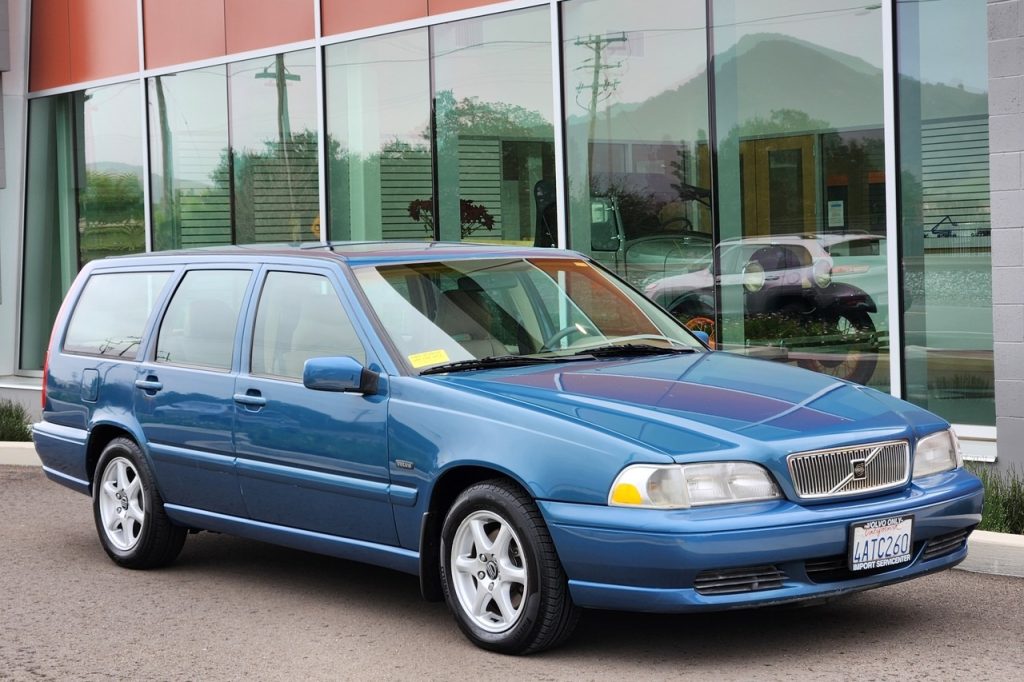
1. Volvo V70 (1998–2010)
Volvo’s reputation for durability is well-earned, and the V70 is a prime example. Known for its tank-like build, the V70 offers robust safety features, straightforward mechanicals, and engines that routinely surpass 200,000 miles with basic maintenance.
The non-turbocharged models are especially reliable, and many owners report decades of trouble-free ownership. It’s a favorite among drivers in harsh-weather regions thanks to its available all-wheel drive and solid construction.
With good reason: Volvos have long been known for their extensive safety features and solid build quality, giving the impression that they were carved from a single block of iron. But is there more to owning a Volvo than just safety and durability?
Absolutely. One compelling reason is turbo power. While the engine might lag slightly until the turbocharger spools up, once it’s engaged, the car surges forward with enough force to pin you back in your seat.
The brakes are top-notch, and the steering is precise and linear. Every mechanical system in the car communicates clearly with the driver, making it easy to feel exactly how the vehicle is responding at any given moment.
Another major benefit of driving a Volvo is comfort. These Swedish cars are equipped with seats that are arguably the best in the world.
You can drive one for hours on end and still feel refreshed, unless, of course, you happened to spend too much time with Jose Cuervo the night before.
These are just a few of the reasons why Volvo owners keep coming back, year after year, to buy new versions of their favorite cars, whether it’s the sedan or the wagon.
They’re willing to live with minor ergonomic quirks and conservative styling because of the comfort, performance, and safety that Volvo consistently delivers.
For 1998, Volvo added even more reasons to stop by their showrooms. Designers and engineers gave the 850, Volvo’s bread-and-butter model, a comprehensive overhaul.
The result is more power, greater safety, enhanced comfort, and a touch of updated styling, all built into an already impressive package. To mark the transformation, Volvo also introduced new names: the S70 for the sedan and the V70 for the wagon.
Buyers can choose from three trim levels. The Base and GT models carry over the same powertrain from the 1997 850, which features a 2.4-liter inline five-cylinder engine that generates 168 horsepower.
This engine can be paired with either a five-speed manual or a four-speed automatic transmission. The GLT sedans, Base AWD wagons, and Cross Country AWD wagons are equipped with a light-pressure turbocharged version of the same engine, boosting output to 190 horsepower.
These versions come exclusively with a four-speed automatic transmission that includes a second-gear winter start mode.
The T-5 is the high-performance 2WD variant, fitted with a high-pressure turbocharged 2.3-liter inline five-cylinder engine producing 236 horsepower, the same engine found in the AWD R wagon. Performance enthusiasts will appreciate that the T-5 now offers a manual transmission option.
Volvo has also improved side-impact protection by reinforcing the B-pillars, which gives the side airbags more time to deploy in a crash. Seatbelt tensioners have been upgraded, and the steering column has been redesigned for better crash protection.
Inside, the cabin has been completely reimagined. Power mirror and window switches are now located on the driver’s door panel, and the dashboard has a more rounded and modern look.
The exterior received a subtle but effective makeover. Designers streamlined the front and rear ends, adding body-colored trim to help the sedan and wagon appear smaller.
They also borrowed the front styling from the upcoming C70 coupe to give the cars a sportier and more contemporary appearance.
Well done, Volvo. The only thing the S70 and V70 still need is an all-speed traction control system. As it stands, the current low-speed traction control setup only works up to 25 mph. Once the turbo kicks in and speeds climb beyond that point, the front wheels tend to lose grip all too easily.
Also Read: 5 Best-Sellers That Deserve Their Popularity vs 5 That Surprise With Reliability Issues
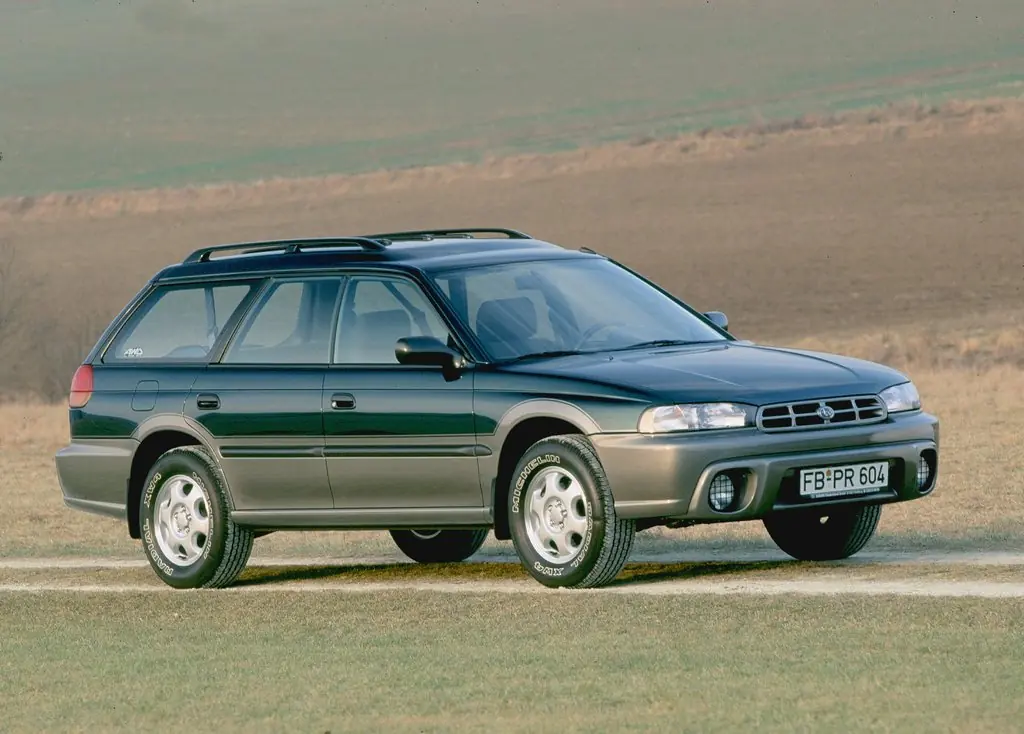
2. Subaru Outback (1995–present)
While technically a crossover in its most recent forms, the Subaru Outback started as a lifted wagon and still retains much of that DNA. Outbacks are beloved for their all-wheel-drive system, rugged capability, and engines that can reach 300,000 miles when properly cared for.
Models from the mid-2000s onward improved in reliability, especially with the 2.5-liter non-turbo flat-four engine, which proved more durable than the more complex turbocharged versions.
While its exterior proportions lean more toward the wagon side, its elevated ground clearance and higher seating position give it a crossover-like feel.
Though not particularly exciting to drive, the Outback earns points for its reasonably efficient powertrains, standard all-wheel drive, and a wide range of available advanced safety features.
These qualities make it a versatile and comfortable five-passenger utility vehicle that fits well into the daily lives of many drivers.
For 2017, Subaru introduces a new top-tier trim level called Touring. This version is available with either the 2.5i four-cylinder or the 3.6R six-cylinder engine and stands out with a dark-gray grille, unique 18-inch wheels, special roof rails, and lower body cladding.
Inside, it adds premium touches like a heated steering wheel, piano black trim, and wood-grain inserts exclusive to the Touring.
Additionally, both Touring and Limited trims equipped with the EyeSight active safety system now feature reverse automated emergency braking and automatic high-beam headlights.
Pricing for the 2017 Outback originally started at $26,520 for the base model, with the Premium trim listed at $28,570. The Limited trim came in at $33,265, while the new Touring model topped the range at $36,870.
The Outback is offered with two engine options, each representing a compromise. The base 175-hp 2.5-liter four-cylinder provides underwhelming performance, while the more powerful 256-hp 3.6-liter six-cylinder is only available on the higher trims and comes with a significant price increase.
Both engines are horizontally opposed (flat) and come mated to a continuously variable automatic transmission (CVT) that routes power to Subaru’s standard all-wheel-drive system.
While the Outback’s dull handling might be disappointing for those looking for a true wagon replacement, its more carlike ride and handling characteristics give it an edge over clumsier crossovers.
3. Toyota Prius V (2012–2017)
Although it’s technically a hybrid wagon, the Prius V has proven to be a standout when it comes to longevity. The combination of Toyota’s hybrid powertrain and station wagon practicality makes it an economical and reliable choice.
Battery replacement is a concern for any hybrid, but Toyota’s hybrid systems are among the most dependable in the business. Many Prius V owners report exceeding 250,000 miles with little more than routine maintenance.
The Prius V belongs to a relatively small segment, but within that category, we tend to favor the Ford C-Max Hybrid. While the C-Max doesn’t offer as much cargo space as the Prius V, it delivers better acceleration and handling, a more refined cabin, and a more attractive design.
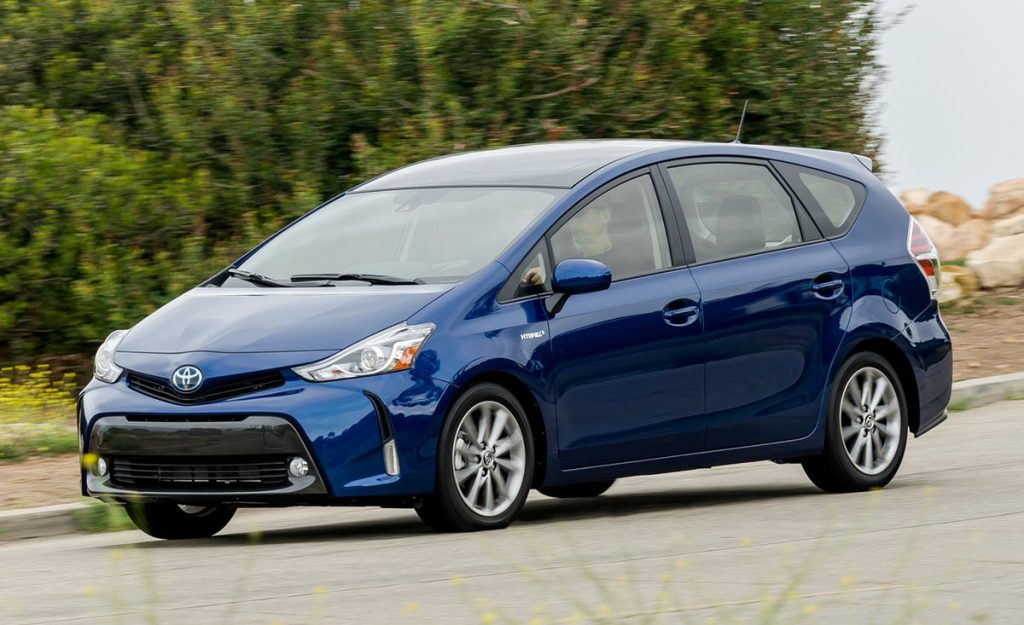
That said, the Toyota Prius V still holds its own and remains a solid choice among its peers. It might not be the most exciting car to drive, but its strong blend of fuel economy and practicality could easily make it the right fit for you.
All 2017 Toyota Prius V models come equipped with standard features such as antilock disc brakes, stability and traction control, front side airbags, side curtain airbags, a driver knee airbag, and a rearview camera.
The Prius V Five model with the Advanced Technology package adds a pre-collision safety system which tightens the seatbelts and initiates braking when a collision is deemed unavoidable and Toyota’s Safety Connect telematics system, which includes emergency assistance and a stolen-vehicle locator.
4. Mercedes-Benz W123 Wagon (1977–1985)
The W123 is an icon among enthusiasts of classic, long-lasting cars. Known for their bulletproof diesel engines and simple, analog engineering, these wagons can easily run for half a million miles if cared for.
Though older, the cost of upkeep is relatively low for a vintage European car, thanks to a loyal fanbase and decent parts availability. These wagons are still seen on the road today, particularly in rural areas or enthusiast circles.
Mercedes-Benz launched the W123 four-door executive car in January 1976, as the successor to the W115.
The new model featured increased overall dimensions and a longer wheelbase, along with a more modern design that moved away from the angular styling of its predecessor.
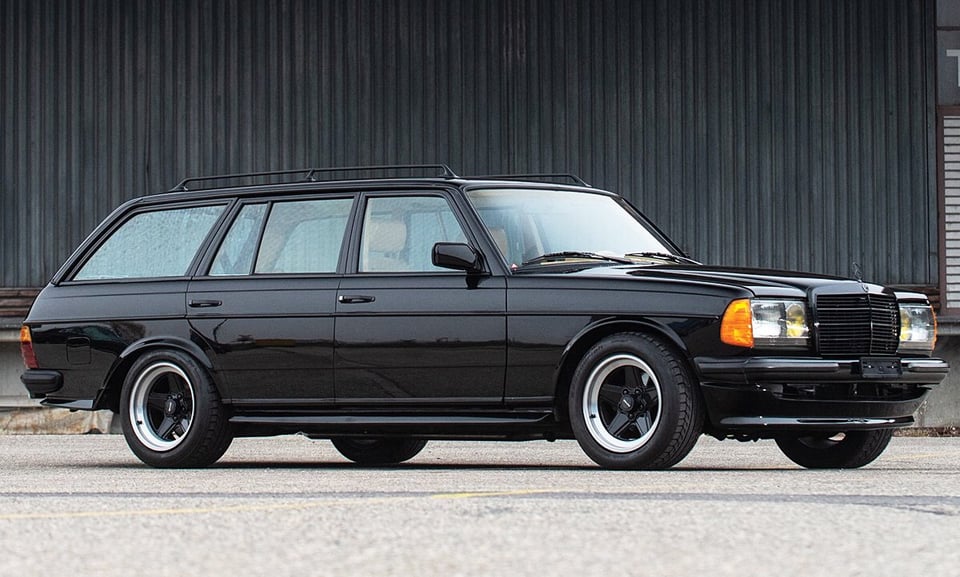
This updated look included round headlights paired with inboard fog lamps on all models, except for the 280 and 280E, which were equipped with large rectangular headlights. Eventually, all European models adopted the rectangular headlight design, while North American versions continued with the round headlight configuration.
The engines from the W115 were carried over into the W123 lineup. The 3.0-liter 5-cylinder diesel, previously labeled as “240D 3.0,” was renamed “300D” in European markets to align with the naming convention already used in North America (where “240” referred to the 2.4-liter 4-cylinder version).
The 250 models received a new 2525 cc inline-six engine (Type M123), which was a short-stroke version of the 2.8-liter Type M110 six-cylinder. This new engine replaced the earlier 2496 cc Type M114 six-cylinder.
In the spring of 1976, Mercedes-Benz introduced a coupe variant of the W123. Built on a shorter wheelbase than the sedan (2,710 mm or 106.7 inches compared to 2,795 mm or 110.0 inches), this W123C/CE was offered as the 230C (later renamed 230CE) and the 280C/CE in most global markets. For North America, a 300CD version was also available.
5. Honda Accord Wagon (1991–1997)
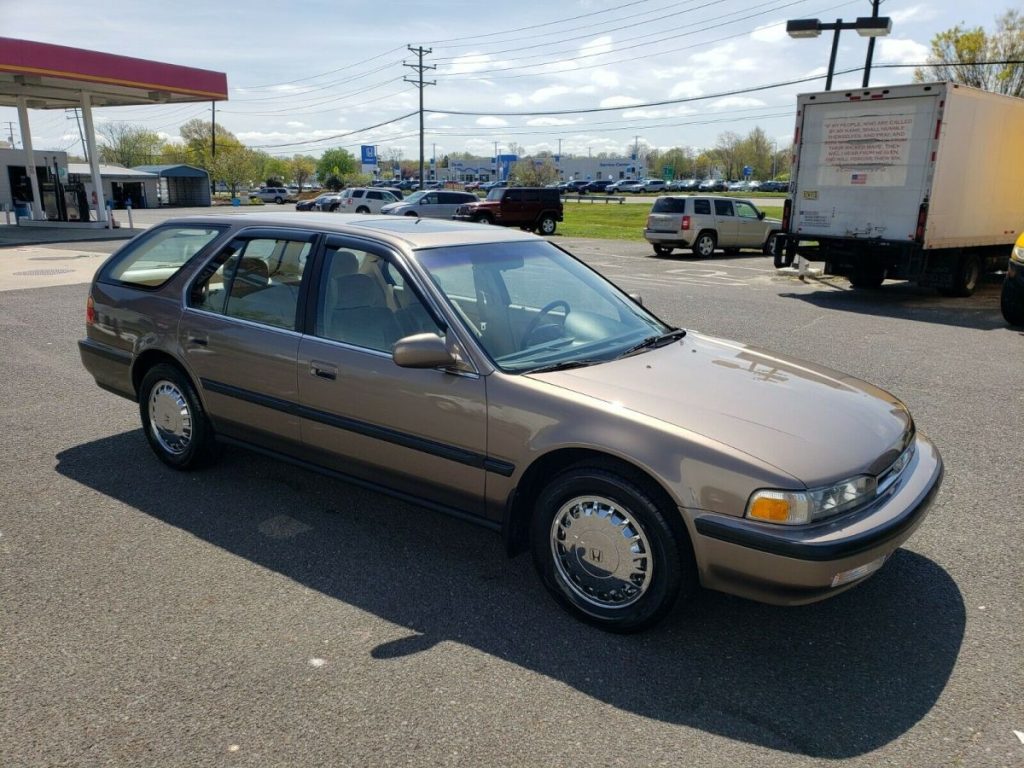
Though discontinued decades ago, the Honda Accord Wagon left a legacy of reliability. It shares many components with the sedan, which is one of the most reliable platforms Honda ever built.
Owners frequently report driving these wagons well past 250,000 miles. The naturally aspirated four-cylinder engines are legendary for their longevity, and the overall simplicity of the design makes DIY repairs feasible.
In the 1995 model year, the Accord sedan was finally offered with a V6 engine. However, it doesn’t quite match the performance of certain four-cylinder Accord variants.
The added weight, different tires, and the inclusion of an automatic transmission combine to make the V6 version slower and less agile than the five-speed manual Accord EX. Additionally, critics argue that the V6 powertrain doesn’t feel like a natural fit for the Accord.
They describe the engine and transmission response as smooth but uninspiring, giving the car a bland personality that feels at odds with the typically engaging nature of other Honda models.
By 1997, Honda had eliminated a few models from the lineup, including the LX five-speed with antilock brakes and the EX coupes that came with leather interiors.
The Accord EX with the VTEC engine is fast, efficient, and well-equipped. As a bonus, it’s genuinely enjoyable to drive.
And considering that the real-world cost of ownership ends up being about half of the sticker price, the decision becomes pretty simple. The Accord stands as the definitive choice among family sedans, coupes, and wagons.
Also Read: 5 Cars With Reliable Infotainment Systems and 5 That Glitch Nonstop
5 Station Wagons That Are Money Pits
Station wagons can be a great choice if you’re looking for space, comfort, and versatility. But not every wagon is a smart buy. Some might seem like a solid deal at first, only to hit you with constant repair bills, expensive maintenance, and frustrating reliability issues down the road.
If you’re thinking about getting one, it’s worth knowing which models tend to cause more headaches than they’re worth. Here are five station wagons that have a habit of turning into money pits.
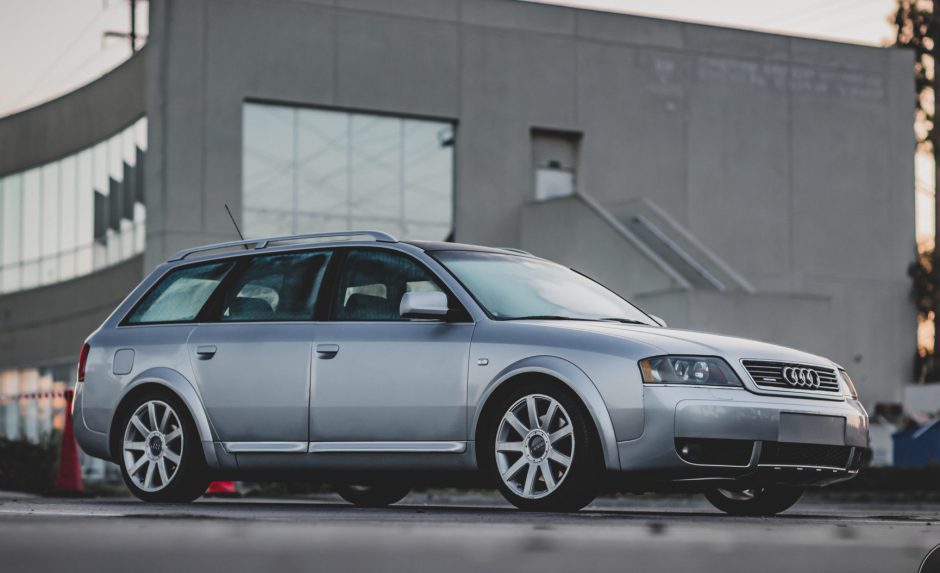
1. Audi Allroad (2001–2005)
The early 2000s Audi Allroad is infamous for its complicated air suspension system, problematic turbocharged V6 engines, and high cost of ownership.
While it looked great on pape, offering AWD and luxury trappings, it turned out to be a maintenance nightmare. Many owners have reported electrical gremlins, transmission failures, and suspension issues that can cost thousands to repair.
The allroad’s 250-horsepower 2.7-liter V6 engine is a well-established performer, previously featured in Audi’s A6 2.7T. This engine is designed with five valves per cylinder and employs twin turbochargers to produce 258 foot-pounds of torque across a wide rpm range.
It’s paired with either a six-speed manual transmission or an optional five-speed Tiptronic automatic, which lets the driver choose between full automatic mode or manual gear changes.
Power is delivered to all four wheels through a system equipped with traction-sensing technology that detects wheel slippage and automatically adjusts distribution for stable, confident handling.
What truly sets the allroad apart is its four-position variable-height pneumatic suspension, which allows the vehicle’s ground clearance to be adjusted by up to 2.6 inches. This system also includes load-leveling capabilities to compensate for the number of passengers or the weight of the cargo.
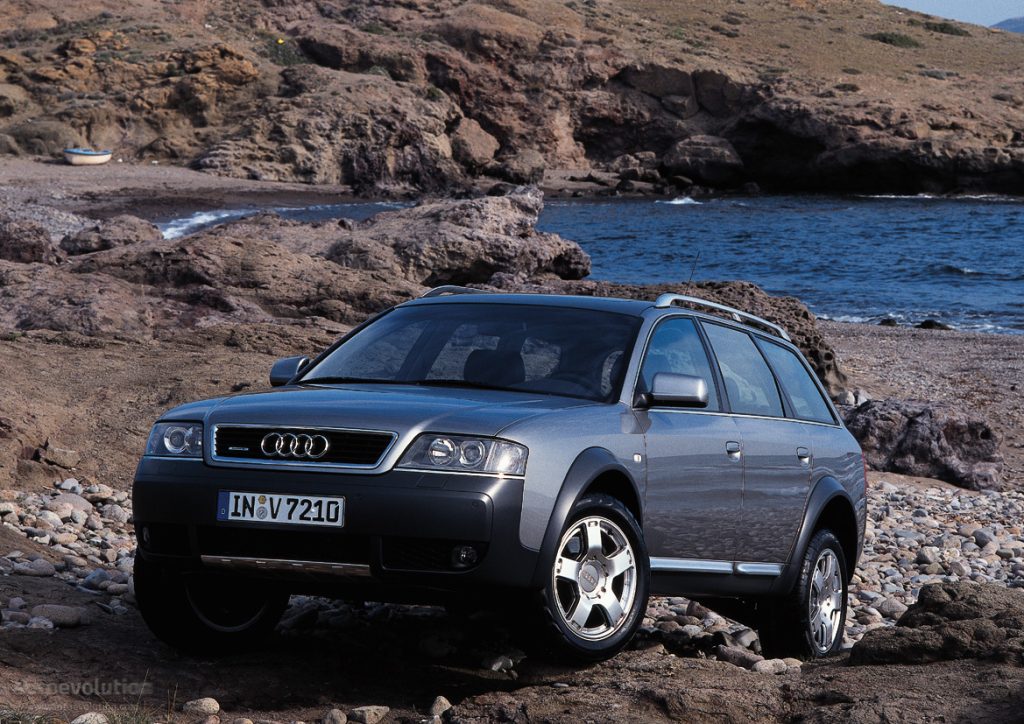
For instance, when parked, the car rests in the second-highest setting for easier entry and exit. At speeds above 50 mph, it automatically lowers by one inch, and drops another inch at 75 mph to improve aerodynamics.
Drivers can also manually override these settings using a dashboard switch. When set to its highest position, the allroad achieves a ground clearance of 8.2 inches, enabling it to handle rough or uneven terrain far better than a typical station wagon.
In addition to the standard front airbags, Audi includes Sideguard curtain airbags that deploy downward to protect passengers’ heads and necks from impact with roof pillars. These airbags remain inflated for five seconds, providing continued protection in the event of secondary impacts or rollovers.
Moreover, when any airbag deploys, the system automatically shuts off the fuel supply, unlocks the doors, and turns on the interior lights for added safety. When installed, the rear-facing third-row bench seat also includes its own three-point seatbelts and headrests.
Audi offers the allroad with several optional packages. The Premium package adds memory functions for the front seats, electronically folding exterior mirrors, and auto-dimming features on both the rearview and side mirrors.
The Convenience package includes heated seats in both the front and rear, a HomeLink transmitter, and a heated multifunction steering wheel.
For warmer climates, the Warm Weather package features a solar-powered sunroof that operates interior cooling fans when the car is parked in the sun, along with sunshades for the rear windows. The Guidance package includes a GPS navigation system and a rear parking assist system for added convenience.
2. Jaguar X-Type Sportwagon (2005–2008)
Jaguar’s attempt to enter the compact luxury wagon market didn’t go as planned. The X-Type Sportwagon was plagued by the same reliability issues that dogged the sedan version: weak automatic transmissions, faulty electronics, and expensive repair bills.
It had elegant styling but didn’t hold up well over time. Owners often found themselves dealing with repeated mechanical issues that made long-term ownership unappealing.
The styling of the X-Type is unmistakably Jaguar, just scaled down to fit the compact proportions of this model. Its hooded oval headlights, rectangular grille, and gracefully arched roofline are reminiscent of the original, timelessly elegant 1969 XJ sedan.
However, the reduced dimensions diminish some of the design’s impact, and many observers detect hints of Ford Taurus in the X-Type’s appearance. On a deeper level, the engineering reflects substantial input from parent company Ford.
The car’s underlying steel platform and numerous drivetrain and suspension components are shared with the Ford Mondeo, and that mainstream character sometimes shows through, even beneath the layers of plush leather and high-gloss wood trim.
All X-Type models come standard with all-wheel drive and are powered by a transverse-mounted, Ford-sourced 3.0-liter DOHC 24-valve V6 producing 227 horsepower.
This engine is exclusively paired with a five-speed automatic transmission operated through Jaguar’s signature “J-Gate” shifter. The suspension system consists of MacPherson struts in the front and a multilink independent setup at the rear.
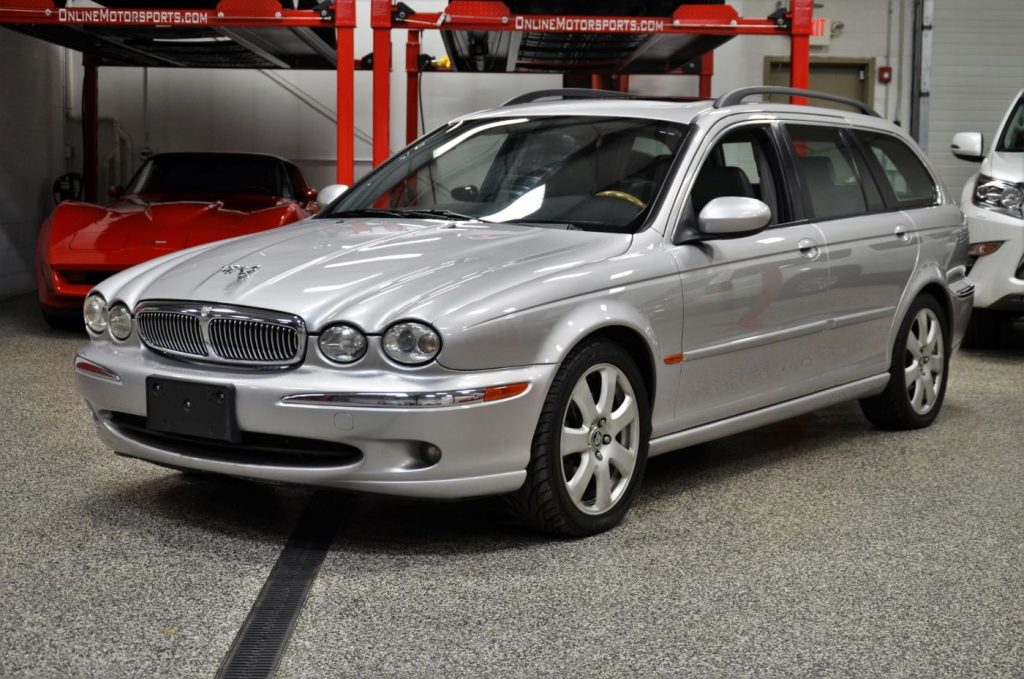
Four-wheel disc brakes with ABS come standard, housed behind 16-inch alloy wheels on the 3.0 sedan (with optional 17- and 18-inch wheels), while the Sportwagon rides on standard 17-inch wheels, with 18s also available as an option.
Inside, the X-Type 3.0 sedan offers sufficient space for four adults to sit comfortably, and the seats themselves are well-contoured.
However, accommodating five passengers is a tight squeeze. The rear door openings are somewhat narrow, which can make getting in and out of the back seat a bit tricky.
The Sportwagon variant provides a little extra rear headroom compared to the sedan and offers up to 50 cubic feet of cargo space when the split-folding rear seats are lowered.
If owning a new Jaguar, complete with the iconic “leaper” on the hood, is what you’re after, the X-Type represents the most affordable way to do so. And, in some respects, it shows.
The only engine available in the Jaguar X-Type is a 227-horsepower 3.0-liter V6. It’s coupled with a five-speed automatic transmission, which sends power to all four wheels through Jaguar’s Traction-4 all-wheel-drive system. In a previous test of the Sportwagon model, the vehicle achieved a 0-60 mph time of 8.2 seconds.
3. Saab 9-5 Wagon (1999–2011)
While Saab has a cult following and the 9-5 Wagon offered solid performance and safety, its long-term reliability was suspect. Issues with the turbochargers, electrical systems, and crankcase ventilation systems were common.
After Saab’s bankruptcy in 2011, parts and service became harder to find, making ownership even more expensive. Many buyers eventually abandoned these wagons due to rising repair costs.
Saab has introduced a new model and wants to make sure you notice. It’s called the 9-5—pronounced “nine-five,” not “ninety-five.”
This new line of premium sedans is designed to compete with a range of vehicles, from near-luxury models like the Lexus ES300 and Cadillac Catera to full-fledged sport sedans such as the Mercedes-Benz E430 and BMW 540iA.
Because it’s a Saab, you can expect the 9-5 to stand apart from the typical offerings you’d find at Cadillac or BMW dealerships.
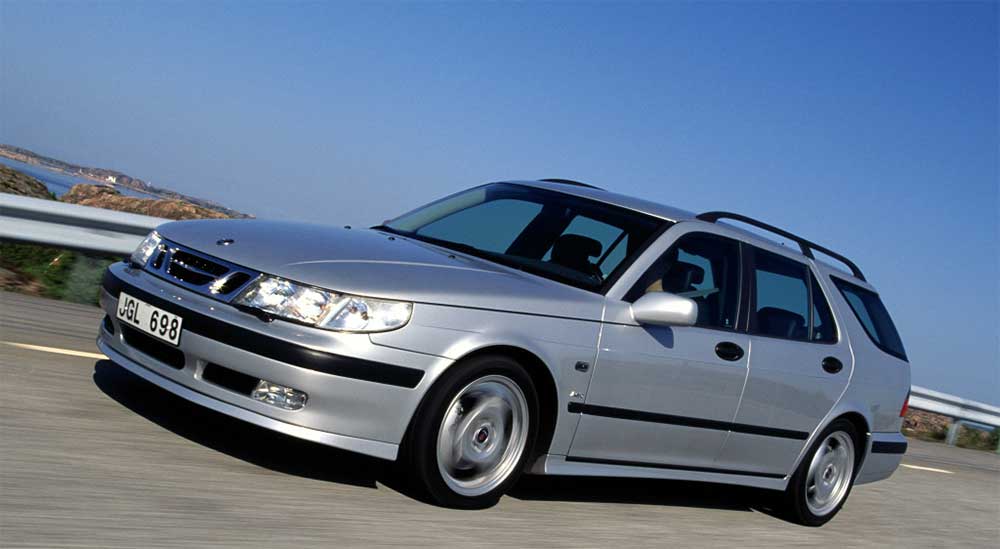
Every 9-5 in the lineup comes equipped with a turbocharged engine. The base model features a 2.3-liter inline four-cylinder engine producing 170 horsepower at 5,500 rpm and 207 foot-pounds of torque at just 1,800 rpm.
The mid- and top-tier versions both use a 3.0-liter asymmetrically turbocharged V6 that generates 200 horsepower and 229 foot-pounds of torque.
The entry-level four-cylinder version comes with a standard five-speed manual transmission, while the V6 variants are paired with a four-speed automatic transmission that allows the driver to manually select gears.
The 9-5 sedans come well-equipped, offering a generous list of standard features that go beyond the basics.
These include antilock brakes, traction control (on V6 models), automatic climate control, a premium audio system, side-impact airbags, and an active head restraint system. Options are limited, but those that are available add genuine value.
4. BMW 5 Series Touring (E61, 2004–2010)
The E61-generation 5 Series wagon looks fantastic and drives even better, but it’s an expensive car to maintain. Common problems include leaky valve cover gaskets, failing electronic modules, and transmission issues.
The 5 Series Touring models with the N54 twin-turbo engine are especially troublesome. Air suspension components on the rear also tend to fail prematurely. Routine maintenance costs alone can rival those of luxury SUVs.
The only changes that set the 2007 BMW 5 Series apart from the previous year’s model are related to added equipment.
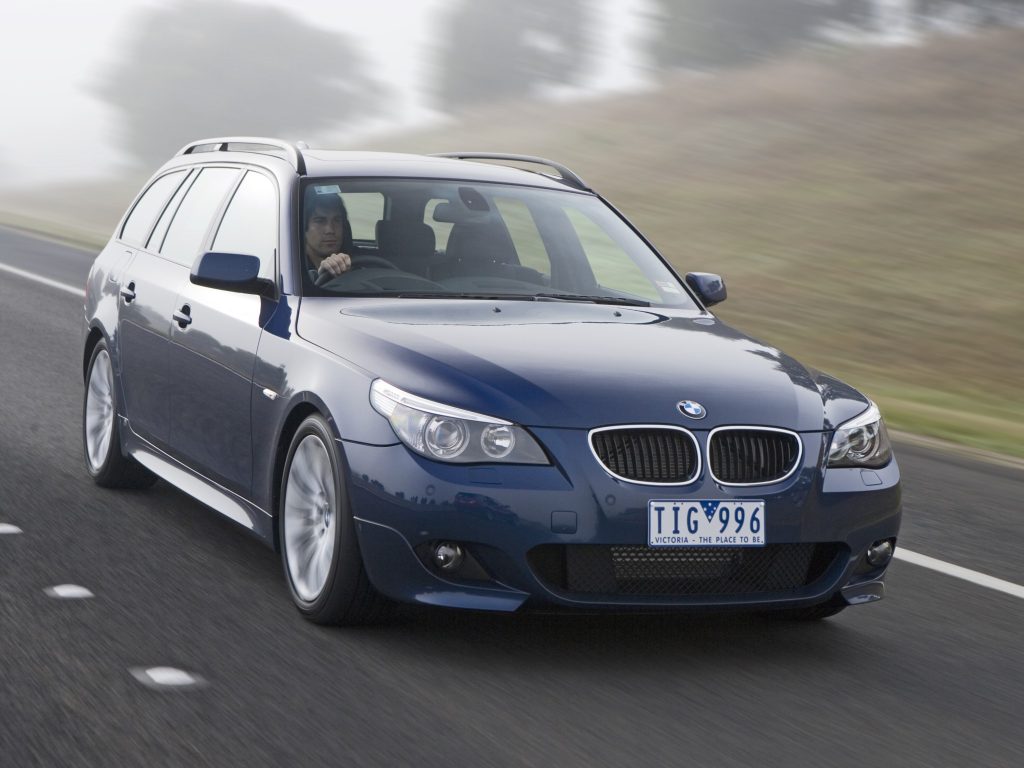
Leading the list of updates is a standard four-year subscription to BMW Assist, a communications system that automatically alerts your BMW dealer when your vehicle requires service and contacts emergency services in the event of a collision.
Also new is an auxiliary input jack for MP3 players, along with an optional high-definition radio that delivers CD-quality sound on FM stations that support HD broadcasting. Vehicles equipped with the Sport package now feature a redesigned steering wheel and new 20-way adjustable multicontour front seats.
Additionally, 5 Series buyers can opt for BMW’s Night Vision system, which employs a thermal imaging camera to identify obstacles up to 1,000 feet ahead of the vehicle.
5. Chrysler Town & Country Wagon (early 1980s)
Chrysler experimented with wagon variants of its K-platform vehicles in the early ’80s, but they didn’t hold up well. These wagons were plagued by poor build quality, underpowered engines, and rust issues.
While they were affordable when new, most didn’t last more than a few years before requiring significant repairs. Their legacy is more about missed opportunities than endurance.
Station wagons may not dominate American roads the way they once did, but they still offer a unique blend of style, utility, and driving satisfaction. If longevity is your goal, it pays to know which wagons have stood the test of time and which ones tend to drain bank accounts.
The Chrysler Town & Country has been a long-standing icon in the minivan segment, celebrated for its innovative features, luxurious appointments, and family-focused design.
Originally introduced in 1941 as a high-end station wagon, the model evolved significantly over the decades, eventually transforming into a full-size minivan in the 1990s.
Its journey through automotive history includes numerous model changes, trim upgrades, and design overhauls that reflect shifting market demands and technological advancements.
The Town & Country name first appeared in 1941 as a premium wood-paneled station wagon built on Chrysler’s senior car platform. It was aimed at the growing number of Americans embracing weekend travel and came in both two-door and four-door configurations.
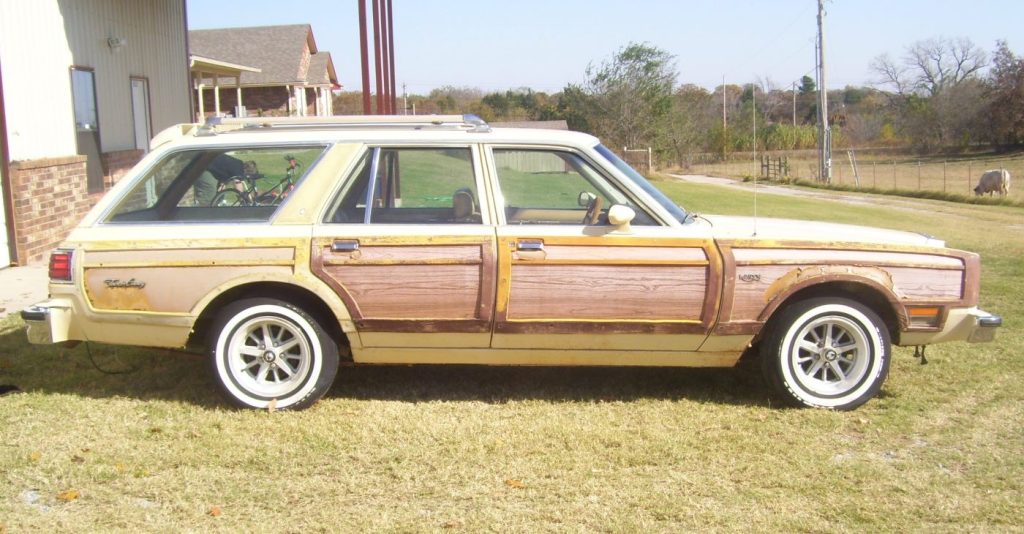
Luxury features like leather seats and carpeted floors were standard, reinforcing Chrysler’s upscale image. From 1941 to 1942, it was powered by a flathead six-cylinder engine. After World War II, from 1946 to 1950, the model returned with a more powerful inline-six and later a V8 engine.
The period from 1951 to 1965 saw a series of redesigns and the introduction of features like power windows and optional air conditioning. By 1966 and 1967, the vehicle had adopted a more classic wagon shape and dropped the distinctive wood paneling.
When Chrysler ended wood-body production in 1967, the Town & Country shifted to a traditional all-metal construction, signaling the end of its original era.
In 1989, Chrysler revived the Town & Country nameplate for its entry into the minivan market, joining the Dodge Caravan and Plymouth Voyager. Unlike its siblings, the Town & Country was designed to offer a more upscale experience, combining minivan utility with Chrysler’s luxury heritage.
The initial 1989 model came in both short and long wheelbase versions, and was available in base, LE, and high-end Limited trims. Features included sliding side doors and a removable center seat.
By 1991, engine options had expanded to include a 3.3-liter V6 and a 3.8-liter V6. The Limited trim featured premium upgrades such as leather upholstery and wood trim. In 1993, the second generation debuted with a sleeker, more aerodynamic design and introduced an extended-length version for greater passenger and cargo space.
The 1994–1995 models continued to raise the bar for minivan luxury with amenities like a premium sound system, advanced climate control, and multiple seating configurations.
The Town & Country’s evolution reflects Chrysler’s ability to adapt to market trends while preserving its commitment to comfort and innovation.
From its beginnings as a wood-paneled wagon to its place as a luxurious family minivan, the Town & Country carved out a legacy of blending practicality with premium features.
Whether you’re hunting for a dependable family hauler or a nostalgic ride with a reputation for reliability, the list above gives you a solid starting point. Choose wisely, and your wagon could easily go the distance.
