
Continuously Variable Transmissions (CVTs) have gained traction over the past two decades due to their promise of fuel efficiency and smooth acceleration.
Unlike traditional automatic transmissions, CVTs use a belt-and-pulley system that provides infinite gear ratios, helping engines stay in their optimal power band.
However, not all CVTs are created equal. While some manufacturers like Toyota and Honda have refined the technology, others have struggled with long-term reliability, leading to costly repairs and driver frustration.
Below are 10 cars sold in the U.S. market that are often criticized for CVT-related issues and are best avoided if you value long-term dependability.
1. Nissan Altima (2013–2018)
Nissan was an early adopter of CVTs, but the company’s aggressive rollout came at a cost. The 2013–2018 Altima is notorious for transmission issues, with many owners reporting jerking, hesitation, or complete transmission failure before 100,000 miles.
Extended warranties and class-action lawsuits reflect the widespread nature of these problems, making it a top CVT-equipped vehicle to avoid.
Nissan has a reputation for taking bold steps in the automotive world, but the 2014 Nissan Altima plays things safe. After a full redesign the previous year that aligned its appearance more closely with the larger, more upscale Maxima, the Altima returns for 2014 with only a few minor equipment tweaks.
It’s a calculated decision and a smart one. The Altima is Nissan’s best-selling sedan and remains one of the top contenders in the competitive midsize family sedan segment.
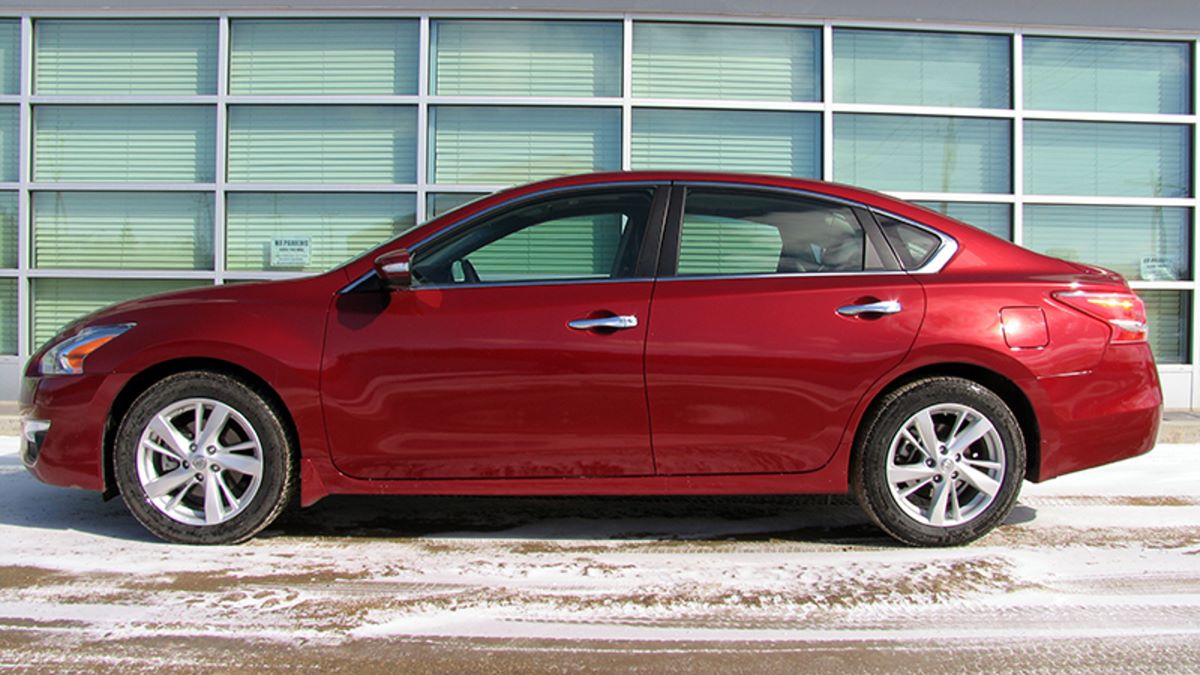
A key factor in the Altima’s ongoing appeal is its well-balanced ride and handling. It feels more precise and engaging than many of its competitors, yet still manages to deliver a comfortable driving experience without jarring over rough surfaces. This kind of well-rounded road behavior tends to stand out on a test drive.
Another highlight is the Altima’s continuously variable transmission (CVT), which not only contributes to a smooth and consistent power delivery but also plays a big role in the car’s impressive fuel economy, 31 mpg combined with the four-cylinder engine.
Inside, the Altima continues to impress with an inviting and well-crafted cabin. For 2014, the addition of NissanConnect Apps enhances the interior tech with smartphone integration, allowing access to services like Pandora.
As expected, every Altima is equipped with upscale interior materials and a sporty, visually appealing dashboard design. The only real drawback, and it’s relatively minor, is the limited rear headroom, which may be a slight inconvenience for taller passengers on regular drives.
2. Jeep Compass (2014–2016)
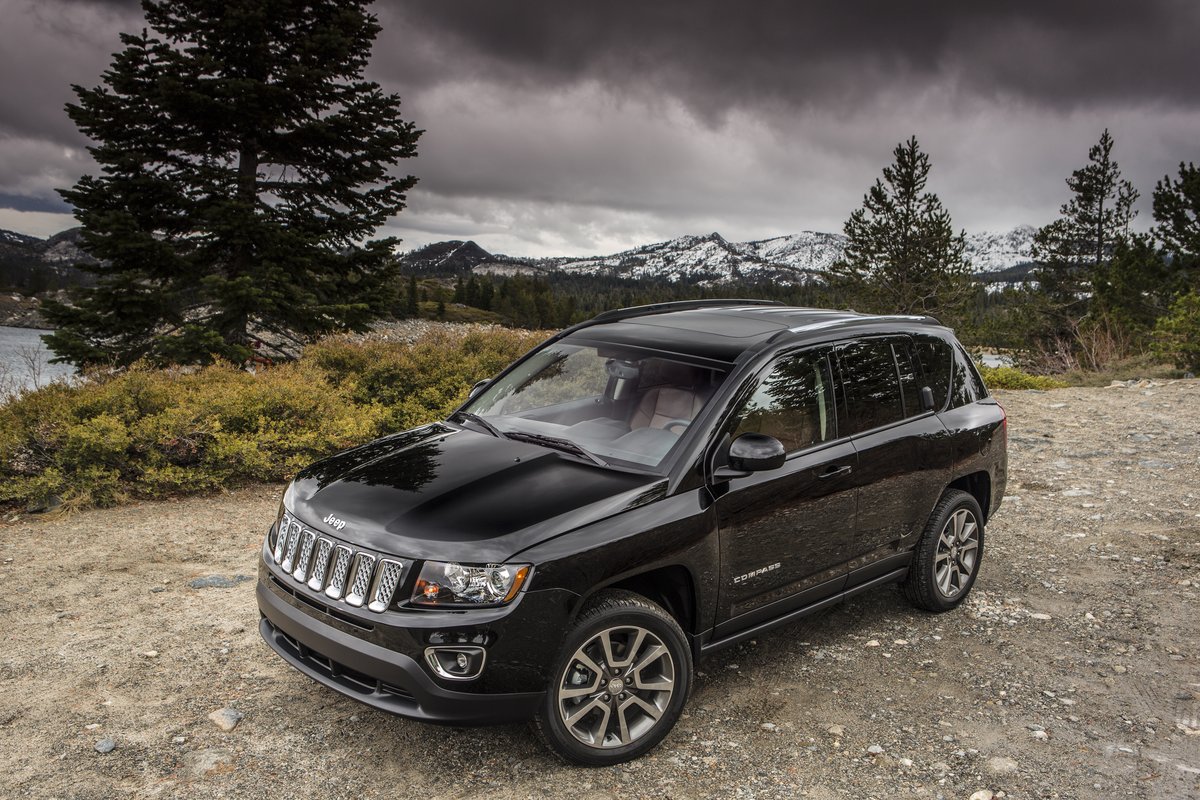
The Jeep Compass used a CVT transmission supplied by Jatco (also used by Nissan), and reliability suffered as a result.
Owners frequently complained about overheating transmissions, rough shifting, and poor acceleration performance.
With few redeeming features to balance the transmission woes, this compact SUV is a poor choice for buyers concerned with durability.
For the 2014 Jeep Compass, front-wheel-drive Sport and Latitude trims come equipped with a 2.0-liter four-cylinder engine that generates 158 horsepower and 141 pound-feet of torque. Buyers have three transmission options depending on configuration.
The Sport model includes a five-speed manual transmission as standard, while both a six-speed automatic and a continuously variable transmission (CVT) are available as options.
The Latitude trim comes standard with the six-speed automatic. However, when opting for the Altitude or High Altitude packages on either the Sport or Latitude, the CVT becomes a mandatory addition.
In terms of fuel efficiency, the EPA estimates that a front-wheel-drive Compass powered by the 2.0-liter engine and paired with the five-speed manual achieves 26 mpg combined (23 mpg city/30 mpg highway).
A 2.4-liter four-cylinder engine, producing 172 horsepower and 165 pound-feet of torque, is optional for the front-wheel-drive Sport and Latitude trims but comes standard on all-wheel-drive variants, referred to by Jeep as four-wheel drive—as well as all Compass Limited models.
With the 2.4-liter engine and five-speed manual transmission, the front-wheel-drive Compass is rated at 25 mpg combined (23 mpg city/28 mpg highway). When paired with the six-speed automatic, fuel economy is estimated at 24 mpg combined (21 mpg city/28 mpg highway).
3. Mitsubishi Outlander (2014–2017)
While the Outlander offers three-row seating and a decent price point, its CVT undermines long-term reliability.
Owners have cited early transmission failure, slipping, and shuddering sometimes even during normal driving. Mitsubishi extended its CVT warranty for several years in response, but reliability concerns still linger.
The 2016 Mitsubishi Outlander is available with two engine options. The ES, SE, and SEL trims come equipped with a 2.4-liter four-cylinder engine that produces 166 horsepower and 162 pound-feet of torque. This engine is paired with a continuously variable automatic transmission (CVT).
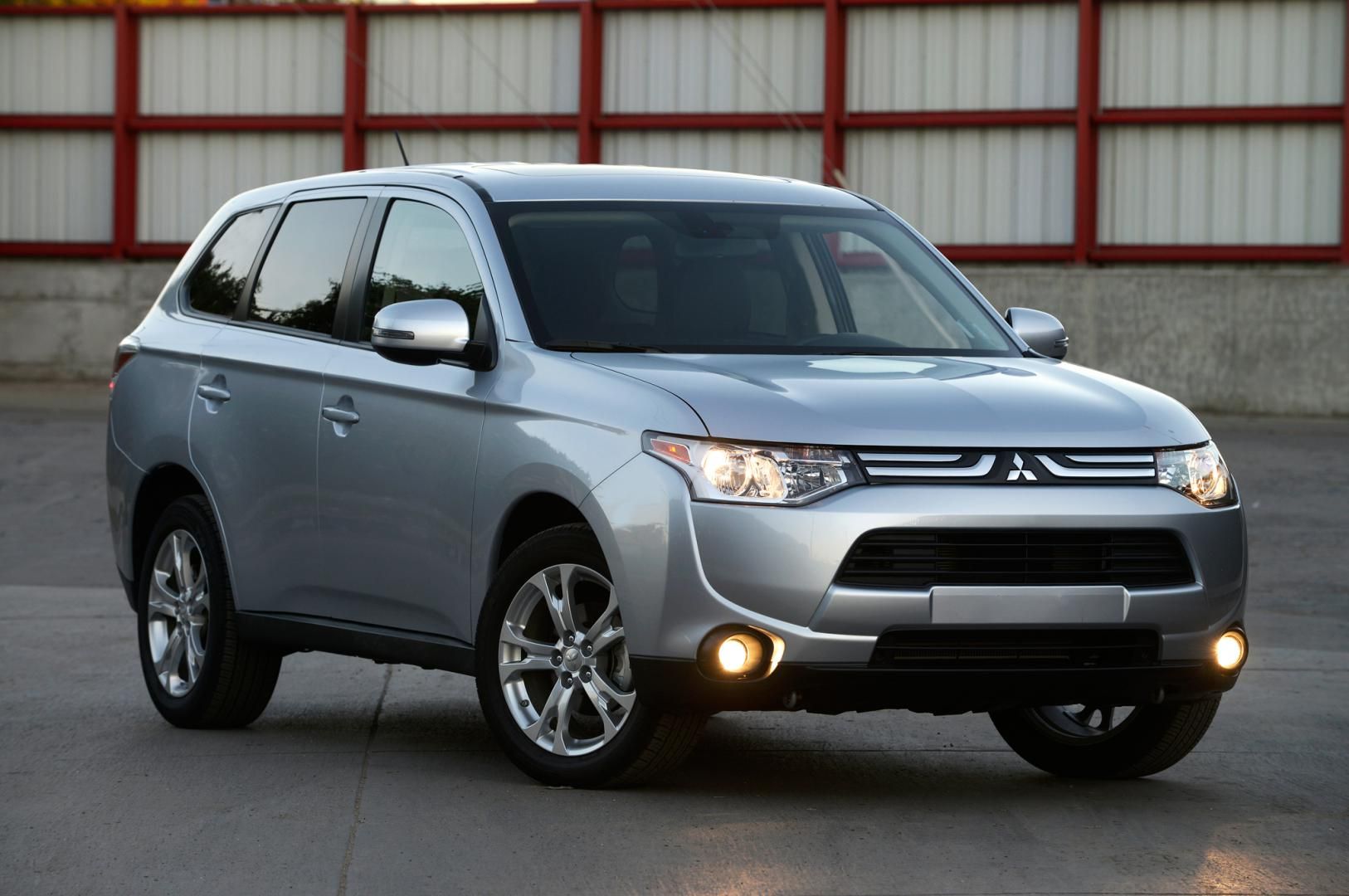
While the ES trim is exclusively front-wheel drive, both the SE and SEL trims offer a choice between front-wheel and all-wheel drive. The all-wheel-drive SEL model accelerated from 0 to 60 mph in 9.2 seconds, which is slower than many competing vehicles in the same segment.
Opting for the GT trim upgrades the powertrain to a 3.0-liter V6 engine that delivers 224 horsepower and 215 pound-feet of torque.
This version comes standard with a conventional six-speed automatic transmission featuring shift paddles, along with all-wheel drive. In Edmunds testing, the Outlander GT achieved a 0-60 mph time of 7.6 seconds, a performance that falls in line with the average for crossovers equipped with a more powerful engine.
Also Read: 10 Best Car Models That Improved in New Generations
4. Subaru Legacy (2010–2014)
Subaru’s Lineartronic CVT, used in the Legacy during this era, was prone to whining noises, delayed engagement, and in some cases, complete failure.
Subaru eventually extended the CVT warranty for many of its vehicles, including the Legacy, but that was a response to widespread reliability complaints rather than proactive quality assurance.
Still, Subaru is banking on consumers warming up to this fresh appearance because beneath the surface, there are numerous compelling improvements to the revamped midsize sedan.
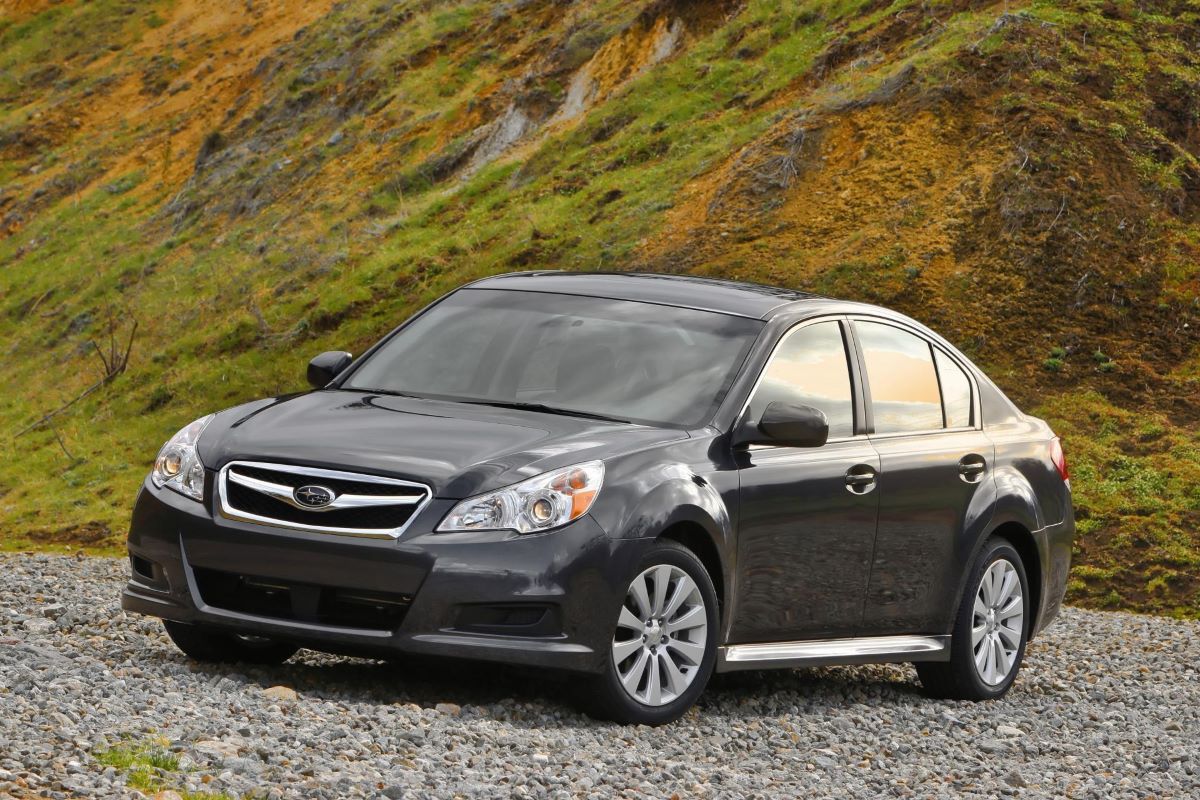
As is typical for the brand, all 2010 Legacy models come equipped with standard all-wheel drive, an essential feature that has long endeared Subaru to drivers in snowy regions across the U.S. Also anticipated is the car’s larger footprint, addressing the compact interior of its predecessor.
In line with redesign trends seen in the Honda Accord and Mazda 6, the new Legacy has grown in key dimensions: it’s 3.3 inches taller, 3.5 inches wider, and boasts a 3.2-inch longer wheelbase compared to the 2009 model.
These increases translate to significant improvements in headroom, shoulder room, hip room, and legroom. Despite the added size, the overall length increases by just 1.4 inches, and the car gains roughly 50 pounds in curb weight, meaning the Legacy retains much of its traditionally strong agility and maneuverability.
5. Nissan Rogue (2014–2017)
The Rogue’s popularity doesn’t protect it from criticism. This compact SUV’s CVT transmission is particularly failure-prone, with reports of surging, whining, and laggy acceleration.
Even under light driving conditions, many owners experienced transmission replacements before 80,000 miles. Combined with underwhelming build quality, the Rogue from these years is best avoided.
The sleek and eye-catching 2015 Nissan Rogue is a compact crossover that provides seating for either five or, optionally, seven passengers.
It brings several family-friendly features to the table, yet given the sheer number of high-quality contenders in the compact crossover segment, it’s increasingly difficult for any one vehicle to truly stand out.
The Rogue definitely earns points for comfort and interior space. Its cabin is appointed with materials that feel refined and upscale, particularly on higher trims. Uncommonly for this class, it offers an optional third-row seat, which, while tight, adds flexibility.
Overall, storage is a strong suit, with multiple cargo configurations available. When both the second and optional third rows are folded flat, the Rogue delivers a generous 70 cubic feet of cargo room, on par with top competitors in its class.
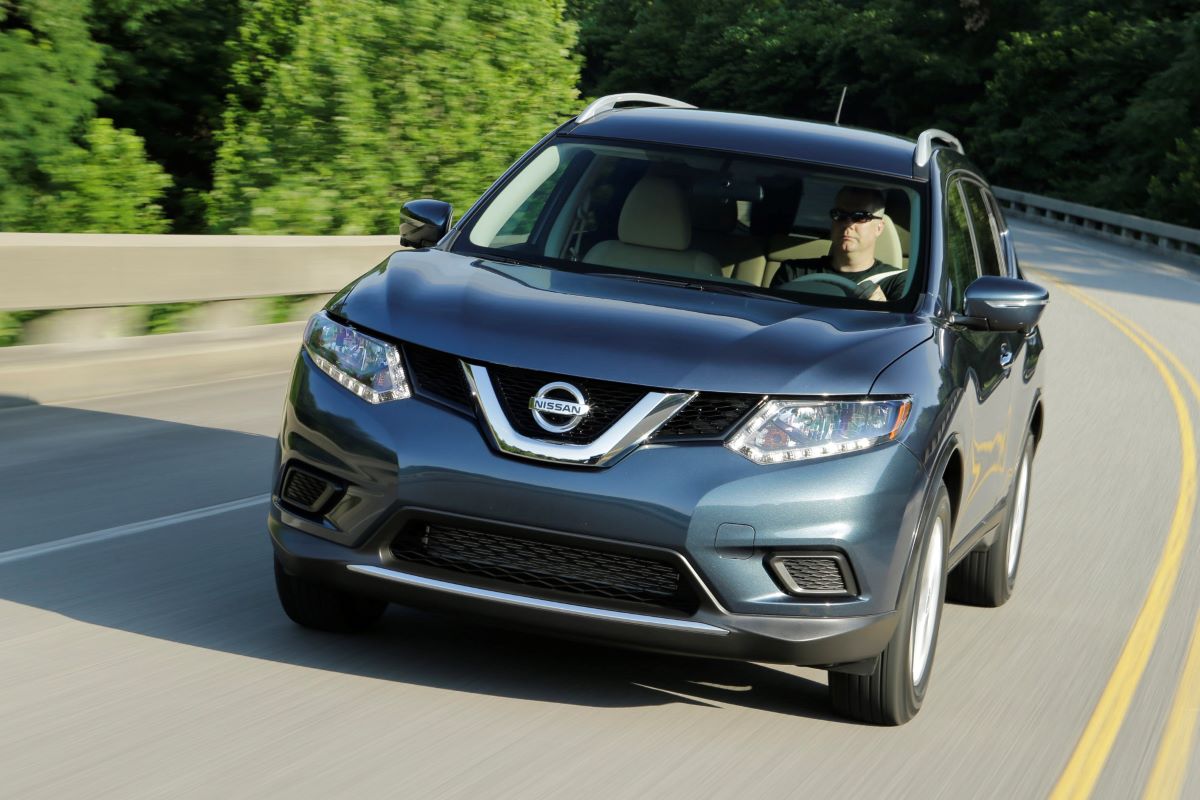
Another highlight is the Rogue’s suspension, which is tuned for comfort. It soaks up rough pavement, ruts, and potholes with ease, offering a smooth ride over uneven roads. However, that same soft suspension tuning results in uninspired driving dynamics.
The Rogue doesn’t offer a particularly engaging experience behind the wheel, its handling feels heavy, and performance is underwhelming. The four-cylinder engine, combined with a continuously variable transmission (CVT), struggles to deliver brisk acceleration.
The drivetrain can become noisy under load, especially when carrying extra passengers or cargo. In long-term testing, the Rogue also fell short of its advertised EPA fuel economy ratings, with real-world results proving difficult to match.
Essentially, the vehicle’s effort to get up to highway speed negates much of its promised fuel efficiency. Making matters worse, Nissan doesn’t offer a more powerful engine upgrade, something that many competitors provide, including turbocharged four-cylinders or V6s.
Fortunately, the compact crossover segment is brimming with capable alternatives, each catering to different priorities. The 2015 Mazda CX-5 is the Rogue’s dynamic opposite, providing sharp handling along with plenty of refinement and practicality.
For excellent cargo room and better real-world fuel economy, the 2015 Honda CR-V and Subaru Forester are both well-rounded choices. If three-row seating is a must, and you’re not ready to jump to a significantly larger SUV, the Kia Sorento stands out as the most practical alternative in this price range.
6. Dodge Caliber (2007–2012)
The Dodge Caliber was Chrysler’s attempt to break into the compact hatchback market, but its CVT was one of the model’s most criticized components.
Frequent overheating, noisy operation, and early failures were common. Dodge eventually dropped the CVT in favor of more traditional transmissions, but these model years remain a cautionary tale.
The 2012 Dodge Caliber presents an interesting concept from the outset: that a small sedan can take on the role of a practical utility vehicle, moving beyond the confines of being just a basic mode of transportation.
It’s a compelling idea, but in practice, the Caliber doesn’t quite deliver the level of execution needed to compete effectively within the highly competitive segment of compact cars.
At first glance, this compact four-door hatchback appears to check all the right boxes. It’s equipped with a four-cylinder engine that delivers decent fuel economy, and it features an interior packed with a solid selection of standard equipment.
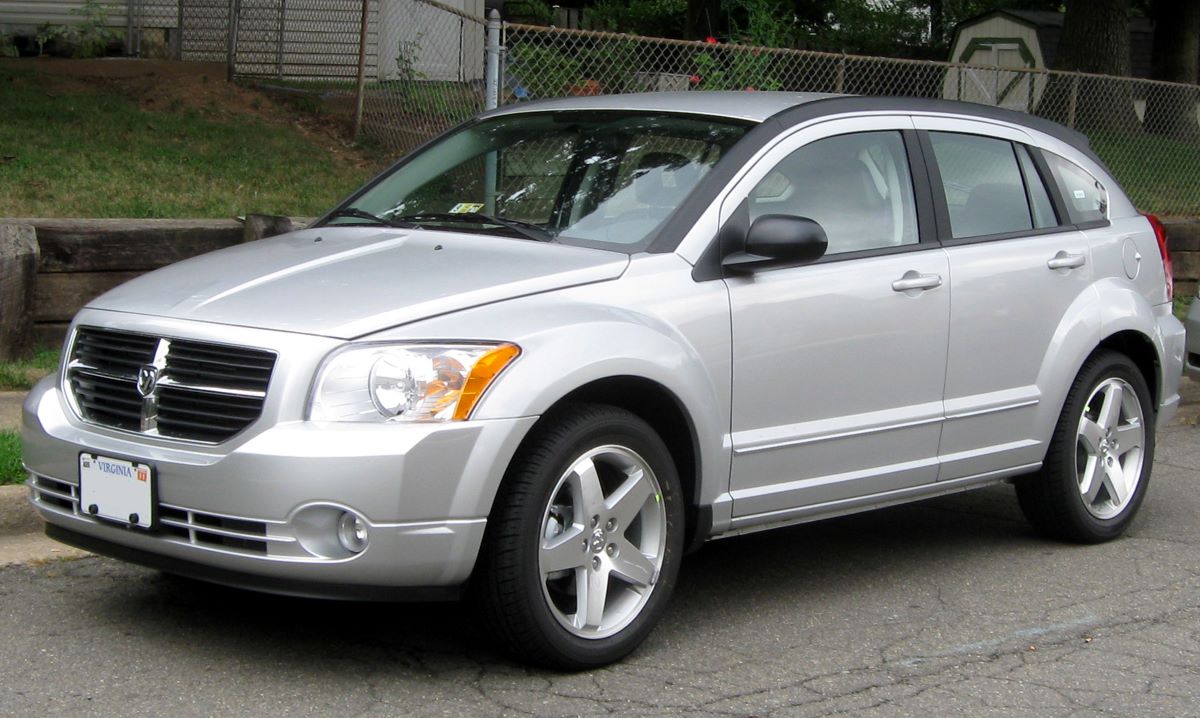
However, the Caliber’s on-road performance falls flat. The issue isn’t a lack of sportiness, after all, not every small car needs to be exciting to drive, but rather a noticeable deficiency in mechanical refinement across the board.
The interior is another area where the Caliber struggles to meet expectations. On a practical level, its hatchback layout offers real benefits, including split-folding rear seats and easily accessible cargo space, both valuable traits in a compact vehicle.
There are even some clever features, such as an integrated beverage cooler and available tailgate-mounted speakers designed to enhance social outings like picnics or sporting events.
Yet despite these innovations and the updates made since the car’s debut, the overall quality of the cabin materials and construction still lags behind that of its more polished competitors.
Also Read: 5 Hybrids With the Best Traction Off-Road and 5 Slipping Behind
7. Honda Civic (2016–2018 1.5L Turbo CVT)
While Honda generally builds reliable CVTs, the 1.5L turbocharged Civic from these years had unique issues when paired with the CVT.
Owners experienced delay in engagement, shuddering, and power delivery inconsistencies, especially in colder climates.
These problems, combined with reports of engine oil dilution in the same powertrain, make these Civics less than ideal for long-term ownership.
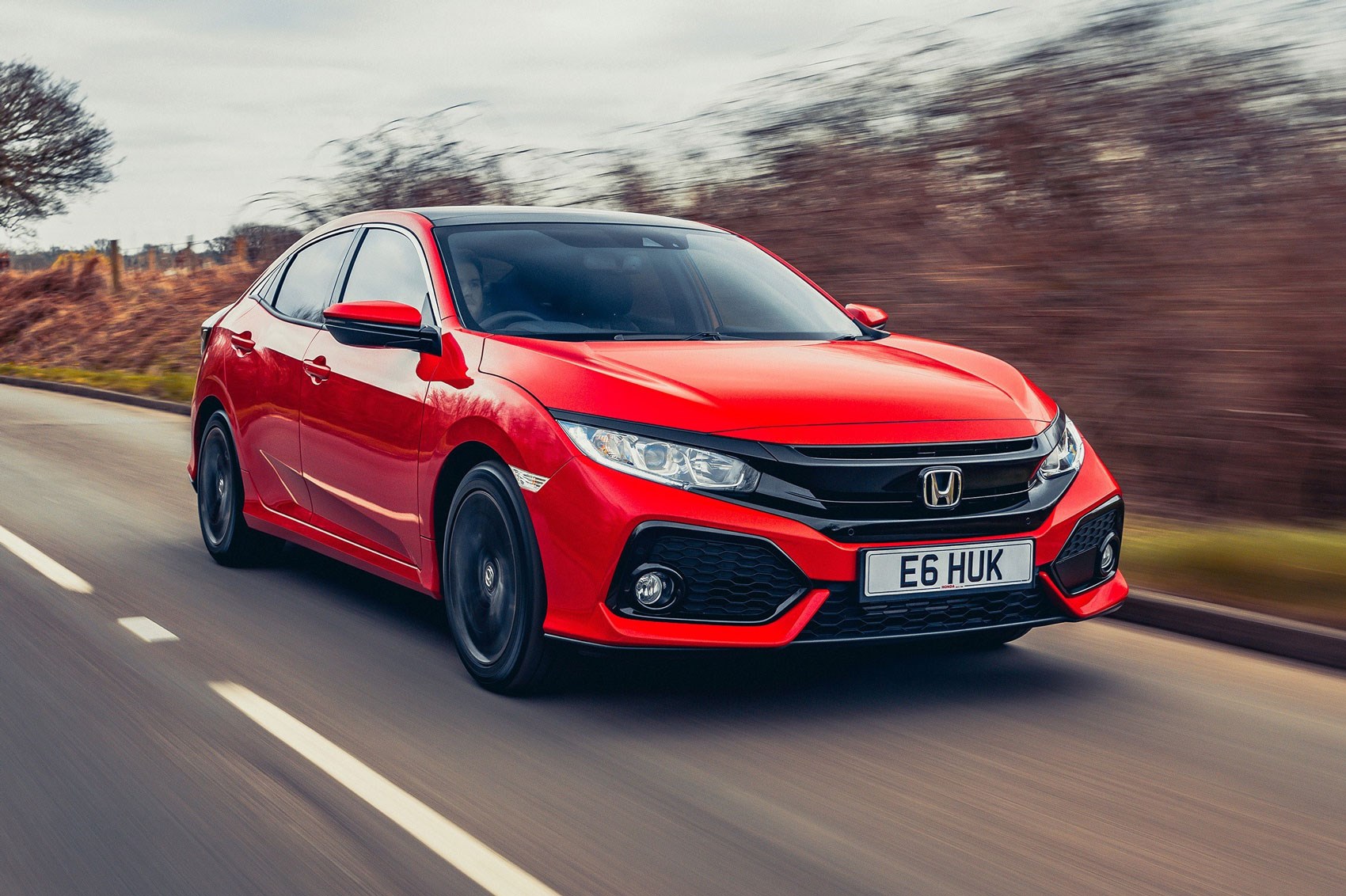
The 2016 Honda Civic, equipped with front-wheel drive, offers a four-cylinder engine across all trim levels, but the specific engine type depends on the version you select. The LX and EX trims are powered by a naturally aspirated 2.0-liter four-cylinder engine that delivers 158 horsepower and 138 pound-feet of torque.
This engine comes paired with either a six-speed manual transmission or a continuously variable transmission (CVT), which simulates the operation of a traditional automatic. For the LX trim, the CVT is available as an option.
For those opting for more premium variants, the EX-T, EX-L, and Touring trims, the Civic comes with a more powerful turbocharged 1.5-liter four-cylinder engine. This upgraded powerplant produces 174 horsepower and 162 pound-feet of torque. In these trims, the CVT is the sole transmission offered.
8. Subaru Forester (2014–2016)
The Subaru Forester’s CVT shares much of the same design and issues as the Legacy’s. Premature transmission wear, delayed acceleration, and jerky driving characteristics plague these model years.
Despite Subaru’s loyal fan base, the CVT troubles in this generation hurt the brand’s otherwise strong reputation for reliability.
All 2015 Subaru Forester models come equipped with standard all-wheel drive, reinforcing the brand’s reputation for rugged, go-anywhere capability.
The 2.5i Touring, 2.5i Limited, and all 2.0XT versions also feature a driver-selectable mode designed to optimize various vehicle systems for improved traction in slippery conditions. Additionally, these trims are fitted with hill descent control to enhance stability on steep declines.
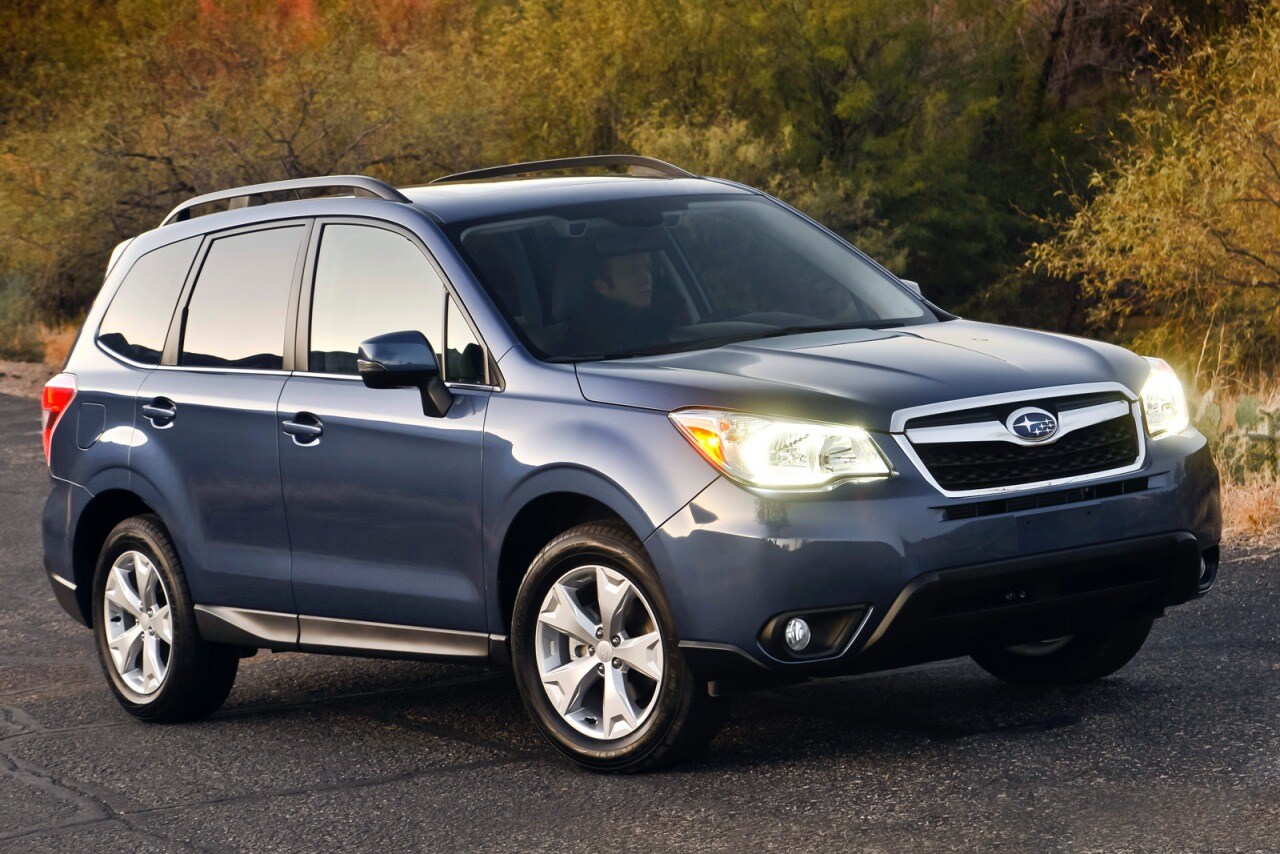
The 2015 Forester 2.5i is powered by a 2.5-liter four-cylinder engine that generates 170 horsepower and 174 pound-feet of torque. A six-speed manual transmission is standard on the 2.5i and 2.5i Premium trims, while a continuously variable transmission (CVT) is offered as an option. Higher trim levels are available only with the CVT.
According to EPA estimates, 2.5i models equipped with the CVT achieve an impressive 27 mpg combined (24 mpg city/32 mpg highway), making it one of the more fuel-efficient choices among all-wheel-drive crossovers.
Every 2015 Forester is outfitted with a comprehensive suite of safety features, including antilock disc brakes, traction and stability control, front side airbags, side curtain airbags, a driver’s knee airbag, and a rearview camera.
Buyers can also opt for the Driver Assist Technology package, which adds advanced safety features such as lane departure warning, frontal collision warning, and a frontal collision mitigation system with automatic emergency braking.
The Forester 2.0XT came to a stop from 60 mph in just 119 feet, a strong performance for its class. The Forester 2.5i, when equipped with 17-inch wheels, completed the same stop in 126 feet, which is slightly below average for a compact crossover.
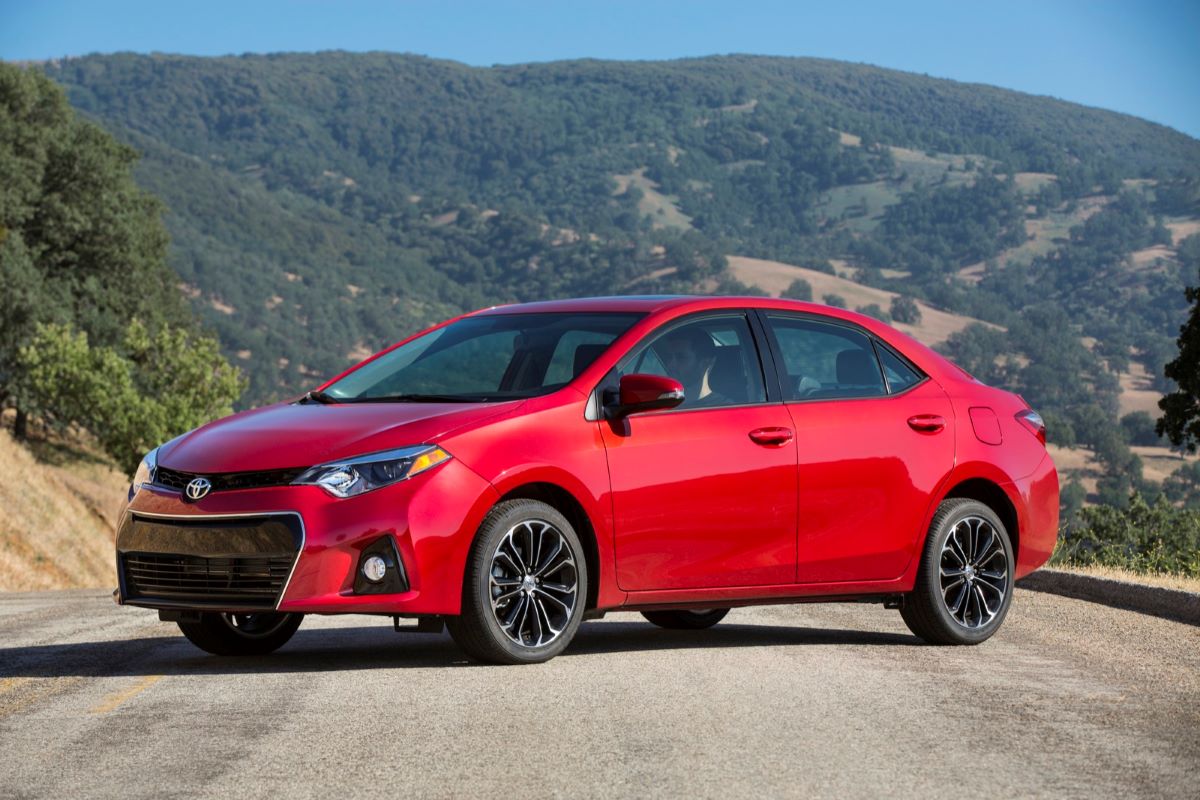
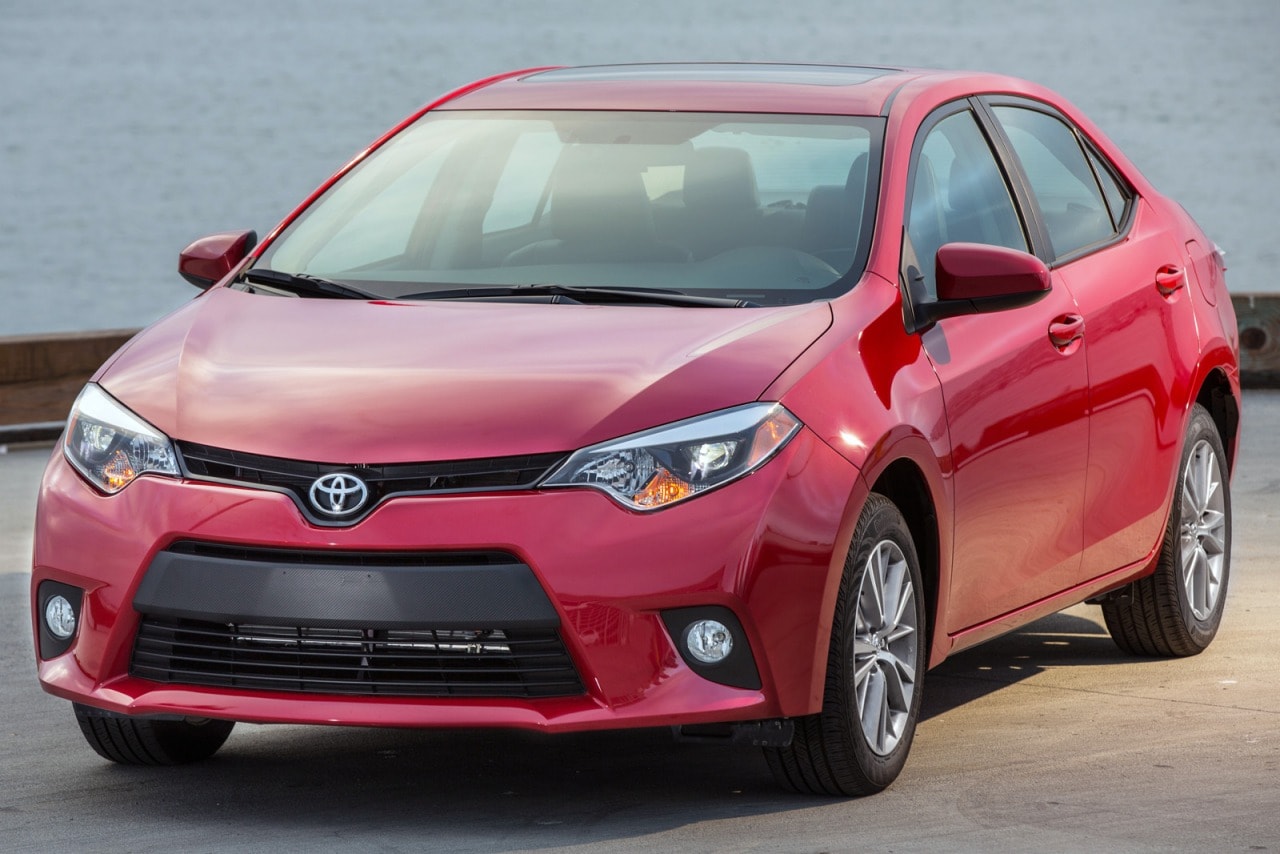
9. Toyota Corolla (2014–2016)
While Toyota usually gets CVTs right, the early implementation in the 11th-generation Corolla faced teething problems. Hesitation, slow acceleration, and noise were common complaints.
Though less catastrophic than Nissan’s issues, these early Toyota CVTs still left many drivers dissatisfied especially considering Toyota’s usual gold standard for dependability.
First launched in the U.S. in 1968, the Corolla has evolved into one of the most consistently top-selling vehicles in its segment.
Much of what makes the current Corolla successful is found inside the cabin. The interior design is modern, adding, believe it or not, a hint of style to a segment not usually known for it. The infotainment system stands out for its intuitive layout, clean graphics, and easily accessible controls.
One of the Corolla’s biggest assets is its spacious rear seat, which offers more legroom than you’ll find in some midsize sedans. When you factor in its strong crash-test ratings, impressive fuel economy, and outstanding resale value, it’s easy to understand why so many people walk away satisfied with this car.
However, if you’re looking for a lively driving experience, the Corolla doesn’t hide what it is. The criticisms about dull driving dynamics aren’t wrong, it won’t quicken your pulse behind the wheel.
If driving enjoyment is high on your list, the Mazda 3 delivers engaging performance while still being fuel-efficient, and the Ford Focus offers a solid blend of frugality and fun. While the Hyundai Elantra leans more toward value and style than sportiness, it remains a compelling choice.
Powering the 2016 Toyota Corolla is a 1.8-liter four-cylinder engine offered in two versions. Most trims — including the L, LE, and S, get the standard version, which produces 132 horsepower and 128 pound-feet of torque.
The LE Eco model gets a slightly different engine tuned for efficiency, featuring Toyota’s Valvematic variable valve timing system and producing a marginally higher output of 140 hp and 126 lb-ft of torque.
The base Corolla L comes with a six-speed manual transmission, though a four-speed automatic is also available. All other trims use a continuously variable transmission (CVT), with the exception of the S Plus, which can also be paired with the six-speed manual.
10. Nissan Sentra (2013–2017)
Rounding out the list is another Nissan model with a problematic Jatco CVT. The Sentra’s transmission frequently suffers from jerking, poor throttle response, and early breakdowns.
Despite solid fuel economy, the overwhelming rate of transmission-related complaints makes this compact sedan one to steer clear of.
While CVTs can offer fuel savings and smoothness, not every manufacturer has mastered the technology.
The Nissan Sentra hasn’t been a standout in the small-sedan class for quite some time. Its previous generation, which was last redesigned in 2007, gradually fell behind the competition in areas like styling, available features, and fuel efficiency.
However, the fully redesigned 2013 Nissan Sentra represents a significant turnaround, introducing major enhancements that aim to elevate this once-overlooked sedan into a more competitive position.
The 2013 Sentra rides on an all-new platform. Its overall length has increased by approximately 2 inches, yet despite the growth in size, Nissan reports that the vehicle is 150 pounds lighter than its predecessor. The exterior design has matured notably, showcasing a sleeker, more refined aesthetic.
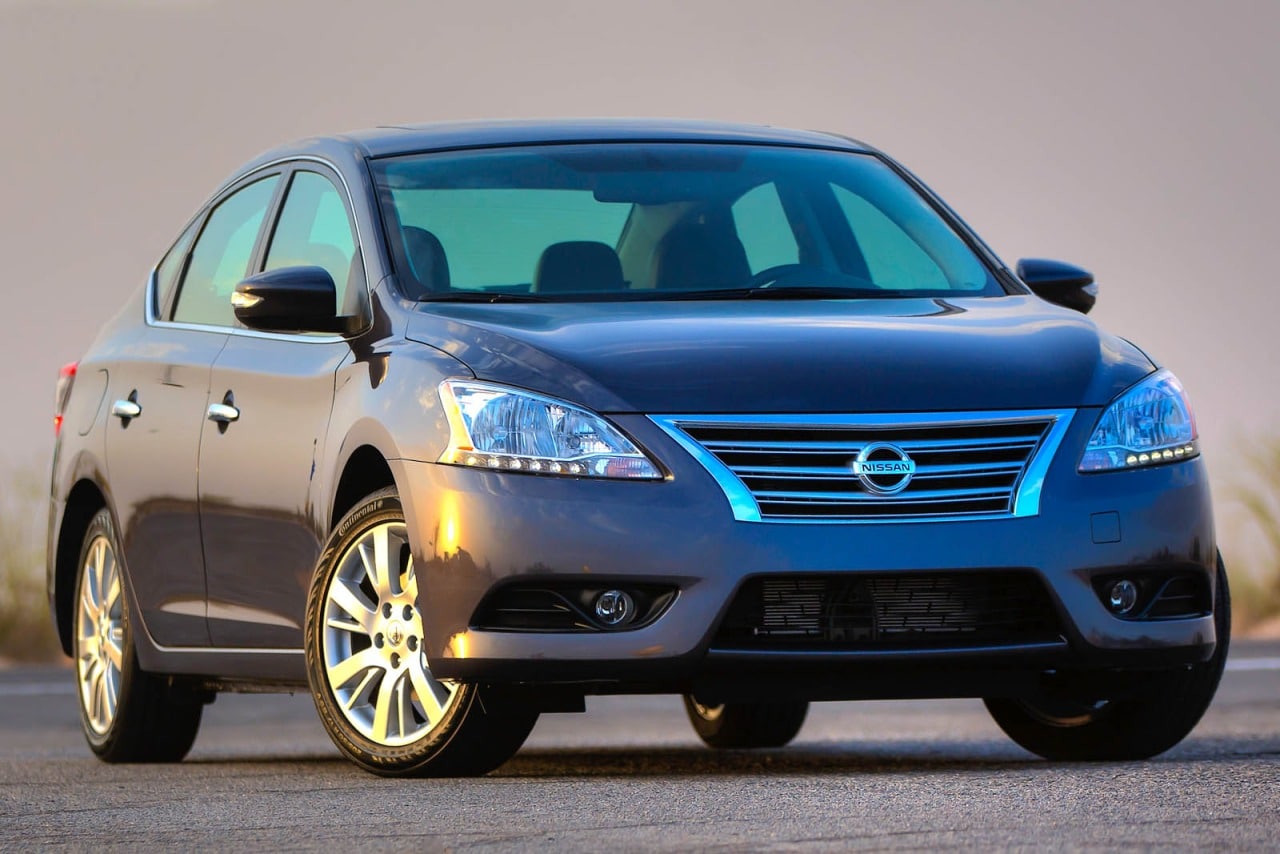
This upscale feel extends to the interior, which features improved materials and a more attractive overall design. The additional length also translates into greater rear-seat legroom and expanded trunk space, adding to the car’s practicality.
Beneath the hood lies a new 1.8-liter engine, replacing the previous 2.0-liter. While it produces less peak horsepower, 130 compared to the prior 140, this change aligns with Nissan’s strategy to boost fuel efficiency, a key concern for buyers in this segment.
The Sentra FE model, for example, is rated for an impressive 40 mpg on the highway, placing it squarely among the top fuel-savers in its class.
Fuel economy across the entire Sentra lineup is commendable as well. Most versions come equipped with a newly refined continuously variable transmission (CVT), while the base model is outfitted with a standard six-speed manual transmission.
Nissan and other automakers that rushed CVT adoption have suffered reliability setbacks, leaving many owners to face expensive repairs or complete transmission replacements.
If you’re in the market for a used vehicle, especially with a CVT, thorough research and a pre-purchase inspection are critical.
In many cases, opting for a traditional automatic or a manual transmission may be the better path to long-term satisfaction.
