
The hybrid coupe segment isn’t huge in the U.S., but the models that exist punch above their weight. They combine sharp styling, engaging handling, and the kind of instant torque electric motors excel at. Here’s a rundown of the top 10 hybrid coupes that keep the drive fun while helping you save at the pump.
The days when hybrid cars were seen as dull, eco-only commuters are long gone. Automakers have stepped up their game, proving that efficiency doesn’t have to kill excitement.
Enter the hybrid coupe, a sweet spot where sharp handling, sleek design, and electrified powertrains come together to deliver both thrills and responsibility. These aren’t your grandma’s hybrids; they’re engineered to hug corners, launch off the line, and still sip fuel like a minimalist.
From luxury brands pushing the envelope with plug-in performance to mainstream players balancing style and smarts, today’s hybrid coupes give you the best of both worlds.
They pack enough punch to make every drive feel alive, while keeping emissions (and fuel bills) in check. Whether you’re after razor-sharp acceleration, head-turning aesthetics, or a tech-packed cockpit, there’s a lively hybrid coupe out there waiting to hit the road with you.
In this roundup, we’ll break down the Top 10 Hybrid Coupes that prove going green doesn’t mean sacrificing fun. Buckle up because these hybrids bring the heat.
1. Honda CR-Z
Although discontinued, the CR-Z remains a cult favorite. It blends sporty two-seater design with a hybrid drivetrain, offering manual transmission options and nimble handling. Used models are affordable and still fun to drive.
Honda wants you to believe the 2011 CR-Z channels the spirit of the sporty, now-iconic CRX from the glory days of the ’80s. In reality, the CR-Z shares more DNA with the two-seat Insight, making it the true spiritual successor to the original Insight, ironically now a highly sought-after classic.
Compared to the Insight, the CR-Z’s wheelbase is trimmed by 4.5 inches, coming in at 95.9. Its overall length, at 160.6 inches, is a full foot shorter, yet it gains width, measuring 68.5 inches, 1.8 inches broader than its sibling.
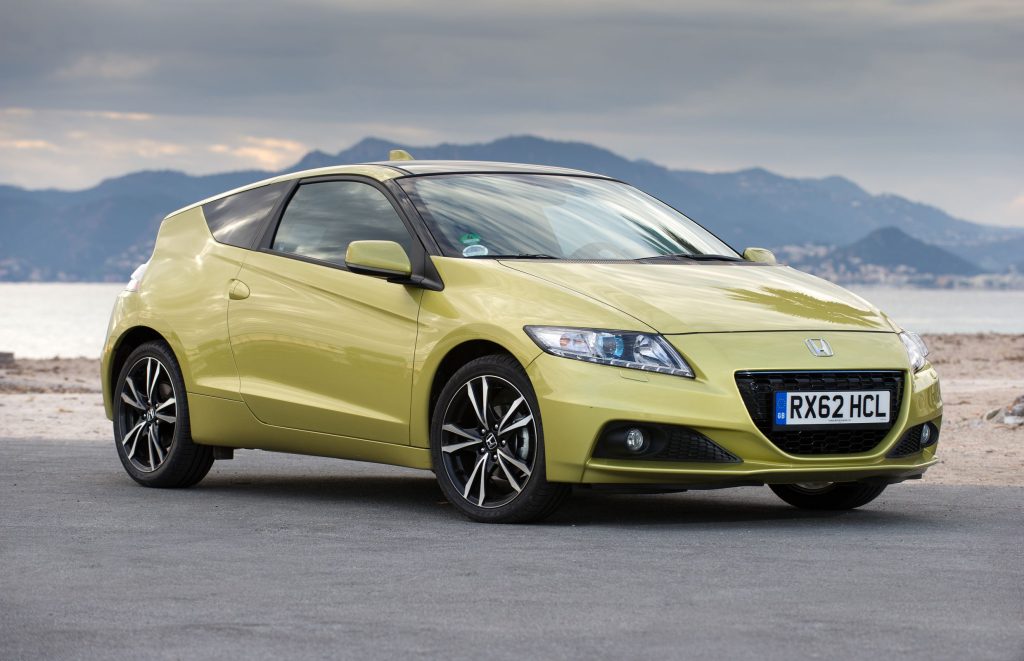
Still, there are hints of the CRX’s DNA scattered throughout the new Z. Both cars are two-seat, three-door hatchbacks, and in other markets, they’ve been offered (or once were) as two-plus-two-seaters. The CR-Z’s bold, attention-grabbing design also borrows cues from the original X, keeping the connection alive.
At its core, this hybrid’s powertrain combines an electric motor with Honda’s well-known Integrated Motor Assist (IMA) system, wedged between a 113-hp, 16-valve SOHC 1.5-liter four-cylinder engine (as opposed to the 1.3-liter used in the current Insight and Civic hybrids) and the transmission.
Adding to its uniqueness, the CR-Z comes with a six-speed manual, the only hybrid to offer a three-pedal setup. For those who prefer it, a CVT is available for an extra $650.
Also Read: 10 Best Cars That Feel Expensive But Cost Pennies
2. BMW i8
This futuristic plug-in hybrid coupe blends a turbocharged three-cylinder with an electric motor, delivering 369 hp and exotic car looks. Its lightweight carbon-fiber construction makes it a real performer while still offering decent fuel efficiency.
Hybrid sports cars are becoming more prevalent as manufacturers harness electricity’s ability to boost performance, yet the 2020 BMW i8 leans more toward looking fast than actually delivering blistering speed.
That said, it never fails to make an entrance, whether those dramatic dihedral doors swing open on the sleek hardtop coupe or the striking convertible roadster.
Its plug-in hybrid powertrain offers commendable performance, outpacing many lesser hybrids, but you’re far more likely to spot an i8 gliding through a Whole Foods parking lot than tearing up a racetrack.
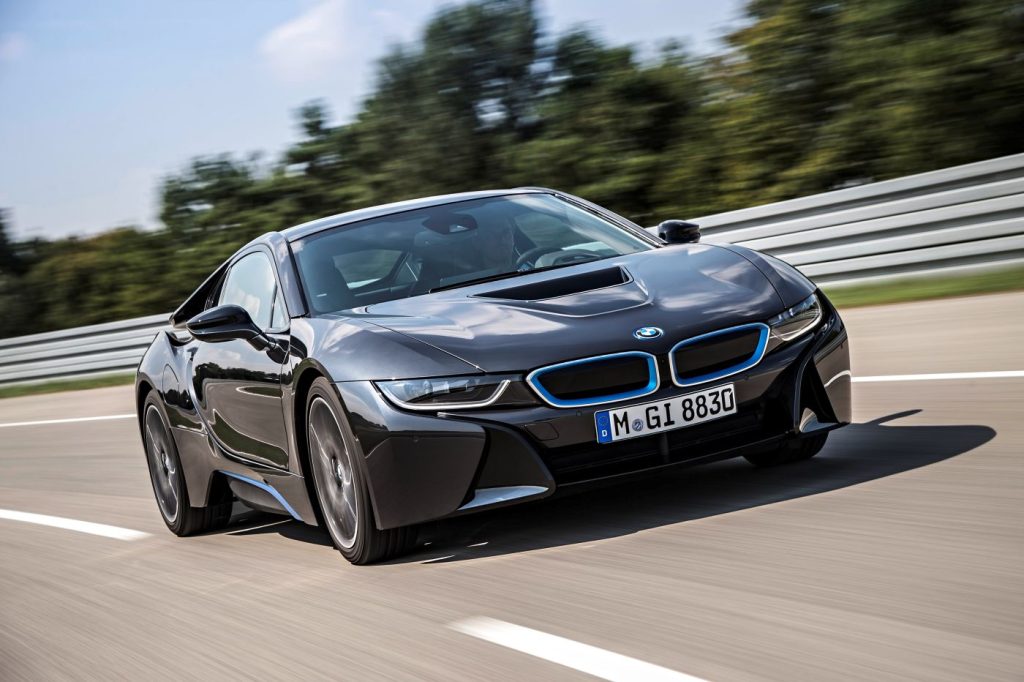
Thanks to its compliant ride and supportive front seats, the 2020 i8 is comfortable enough for daily driving; however, its minimal cargo capacity and awkward cabin entry might make some buyers think twice.
After receiving a subtle facelift in 2019, which brought improved battery technology and introduced the convertible roadster, the 2020 i8 lineup remains unchanged.The 2020 BMW i8 starts at $148,495 and climbs to $164,295 depending on trim and selected options.
We’d gladly shell out the extra for the roadster, as it’s the only way to enjoy the open-air thrill this car promises. With standard all-wheel drive and a single powertrain choice, those decisions are already set in stone.
Each i8 comes generously equipped, featuring leather upholstery, a head-up display, heated front seats, a Harman/Kardon audio system, and Apple CarPlay integration.
For added flair, the Tera World package is worth considering, it adds ceramic controls, black brake calipers, blue seatbelts, and an exclusive brown interior. Most exterior colors come at no additional cost, except for the Crystal White paint with blue or grey accents. To fully amplify the i8’s wow factor, the optional adaptive LED headlights with Laserlight are a must-have.
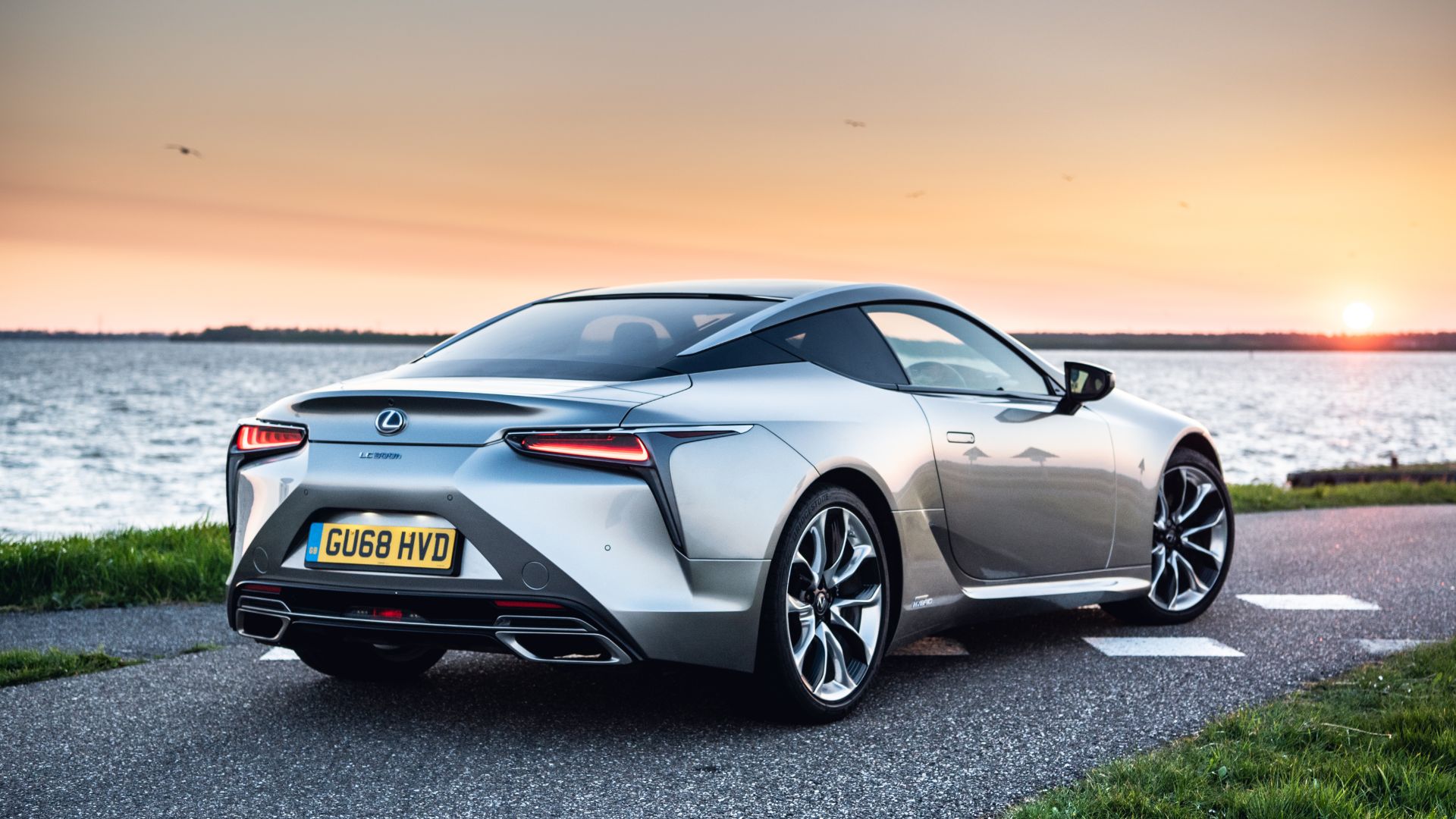
3. Lexus LC 500h
The LC 500h is a luxury hybrid coupe that proves hybrids can be exciting. With its multi-stage hybrid system and 354 hp, it offers a thrilling drive wrapped in one of the most stunning designs on the road.
Some sports cars dominate with raw, blistering performance, delivering brutal acceleration, razor-sharp steering, and cornering that defies physics. The 2025 Lexus LC is not that kind of machine.
Instead, Lexus has crafted a breathtaking two-door that embraces a more refined grand touring character, blending jaw-dropping style, an opulent interior, and a ride that prioritizes comfort. Still, don’t mistake the LC for being slow. While it may not be as aggressive as rivals such as the BMW M8 or Mercedes-AMG SL-class, it’s far from timid.
Under the hood of the LC500 sits a naturally aspirated 5.0-liter V-8 engine producing 471 horsepower, enough to launch the car from 0 to 60 mph in 4.6 seconds. Along the way, it belts out a thunderous, spine-tingling soundtrack that enhances the thrill.
For those who prefer a more understated experience paired with better fuel efficiency, Lexus offers a hybrid option powered by a smooth V-6, delivering ample speed while sipping fuel more conservatively.
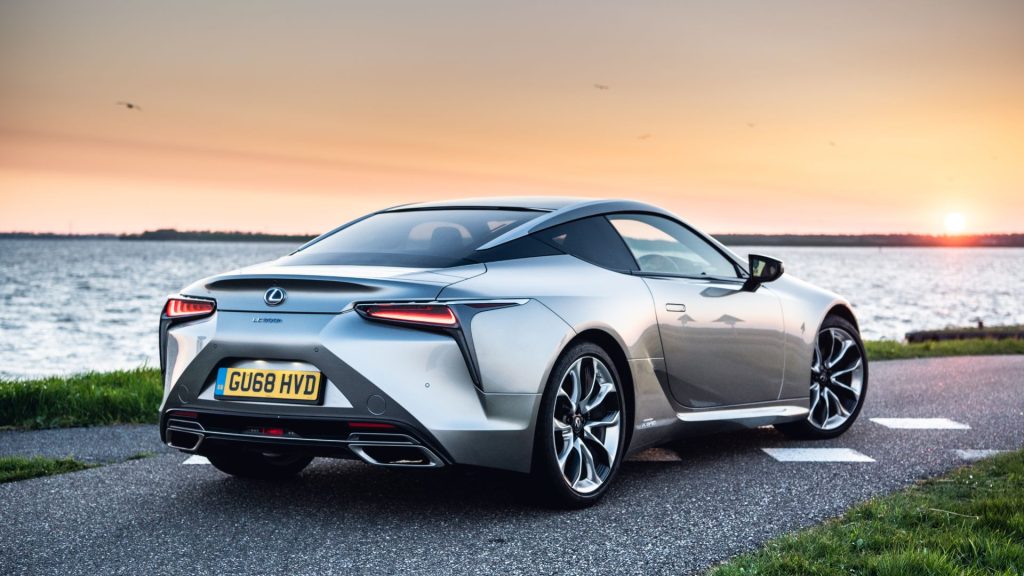
For open-air enthusiasts, the LC is also available as a convertible, offered exclusively with the V-8, for that wind-in-your-hair driving experience. To make the LC truly your own, Lexus’ Bespoke Build program allows for extensive personalization, giving this luxury two-door a tailored touch.
The LC may not carve corners with the precision of some competitors, but it wins over drivers with its striking looks and serene, elegant demeanor that makes every trip feel like a special occasion.
Following the infotainment overhaul in 2024, the 2025 Lexus LC arrives with only minor updates. The LC500 coupe now features new front and rear underfloor braces to enhance structural rigidity.
A fresh exterior color, Iridium, replaces Atomic Silver, while the seats gain updated upholstery. Lexus has also reorganized certain options in the Bespoke Build package, with the convertible’s red and blue soft tops now available as standalone choices.
Pricing for the 2025 Lexus LC starts at $101,100 and climbs to $107,800 depending on the model and selected features.
4. Toyota Supra (Hybrid Rumors)
While the current Supra doesn’t have a hybrid variant in the U.S. (yet), Toyota has teased hybrid tech for future iterations. Enthusiasts eagerly await a Supra that blends its iconic performance with electric assistance.
Toyota has built its reputation on reliability and practical value, but the brand isn’t afraid to show its wild side. Leading that charge is the GR Supra, an unapologetic two-door sports car built purely for performance and driving excitement.
The Supra isn’t about long-distance road trips anyway, it’s at its best on winding back roads and sweeping corners, with the occasional track day thrown in to really let it stretch its legs. Its thrilling driving dynamics have earned it a well-deserved spot on our Editors’ Choice list for 2025.
For 2025, the GR Supra carries over almost unchanged but drops the four-cylinder engine option entirely, leaving the six-cylinder as the sole powertrain. The 2025 Toyota GR Supra starts at $57,445 and tops out at $60,595 depending on trim and options.
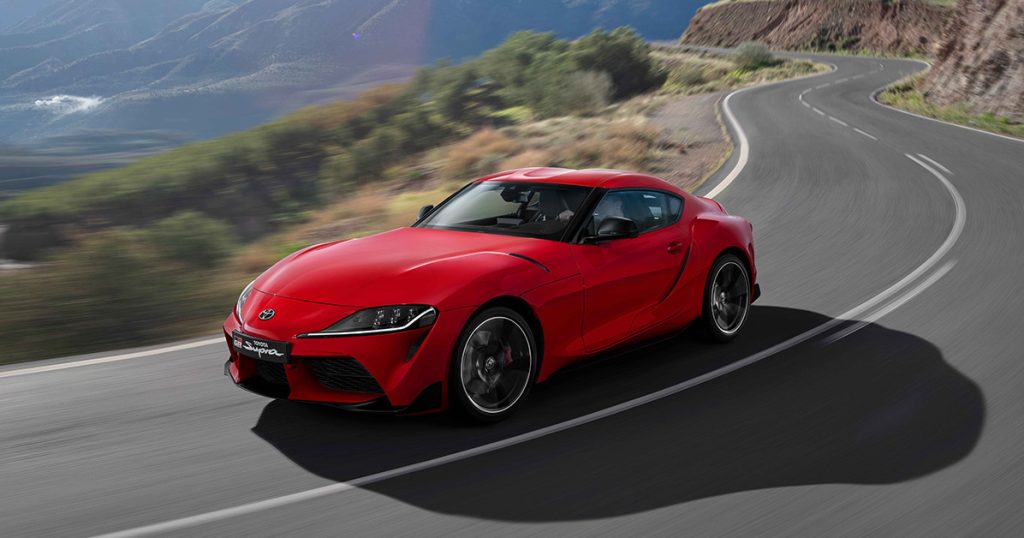
With the four-cylinder gone, every Supra now comes with the 382-hp six-cylinder engine. The no-cost manual transmission adds to the car’s appeal, perfectly aligning with its enthusiast-focused character.
Every model also includes a complimentary one-day session at a high-performance driving school and a one-year membership to the National Auto Sport Association.
We’d skip the Driver Assist package, which adds adaptive cruise control, blind-spot monitoring, and lane-keeping assist, features that feel more intrusive than helpful. Save that cash for more track time and a fresh set of tires.
The turbocharged 3.0-liter inline-six has always been the heart of the GR Supra, and for 2025 it remains the only engine available. We won’t miss the four-cylinder, as the six delivers everything you could want, strong power, smooth delivery, and an intoxicating exhaust note.
Whether you choose the base model or the Premium trim, you have the option between an eight-speed automatic or a six-speed manual. While the automatic is quicker on paper, the manual adds a level of engagement statistics can’t capture.
Rear-wheel drive keeps the experience pure, and the suspension is compliant enough for daily use. The steering is direct, well-weighted, and precise, contributing to the Supra’s fun-loving personality.
5. Audi TT Offshoots (Hybrid Concepts)
Audi hasn’t released a production hybrid TT in the States, but their concept versions hint at what could be. Keep an eye on future electrified TT models, as Audi pivots to more EVs and hybrids.
It’s not the TT, and it’s not the R8, but Audi insists its upcoming EV will be “something in between” these two legendary models. Here’s everything we know so far about the new electric sports car set to redefine Audi’s future. Audi is gearing up for a significant transformation as the German automaker searches for a fresh spark in the electric age.
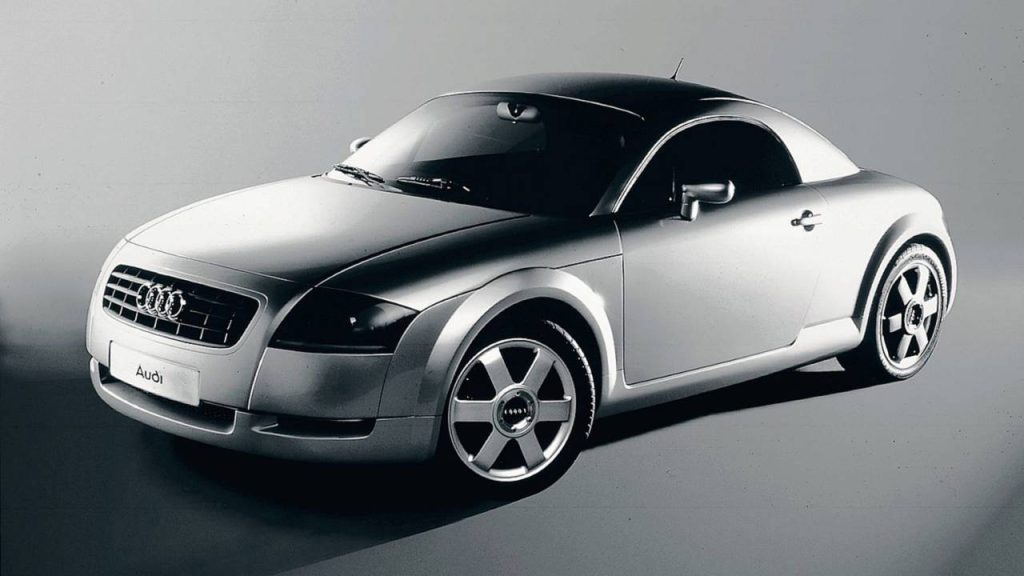
Döllner confirmed the EV will make its first public appearance in September, just ahead of the Munich Motor Show. While it will initially be shown as a concept, he assured fans, “the car will be built,” with a production launch scheduled for two years from now.
Although Audi remains tight-lipped on specifics, expectations are high. The car is anticipated to deliver more performance than the outgoing TT while sporting a fully electric powertrain. Positioned as a core pillar in Audi’s comeback strategy, it’s expected to embody both innovation and driving emotion.
Audi has been struggling to keep pace as the industry rapidly pivots to electrification. Döllner was blunt about the stakes, stating, “I don’t want to beat around the bush; we have to get back on track now.” This new EV is designed to be “an identity builder” as the brand seeks to reestablish its dominance in the electric performance space.
Also Read: 5 Vehicles With Top Sound Insulation and 5 With Loud Road Noise
6. Infiniti Emerg-E (Concept)
Although it never made it to production, the Emerg-E showcased Infiniti’s potential for a mid-engine hybrid coupe. Think of it as a “what could have been” that still influences the brand’s hybrid strategy.
While I’ve never been the biggest fan of EVs or plug-in hybrids, the Infiniti Emerg-e concept is one electrified machine that still gets my heart racing, in the best way, more than a decade after its debut.
Sure, we all get why emissions need to be slashed and why the industry is chasing ever-greener solutions. But for some of us old-school gearheads, the thrill of a rumbling V8 and the tactile joy of rowing through gears with a manual transmission is something we’ll never willingly let go of.
That said, just because we love the old ways doesn’t mean we can’t admire what electrified cars bring to the table, especially when they manage to look stunning and deliver a truly exhilarating, driver-focused experience.
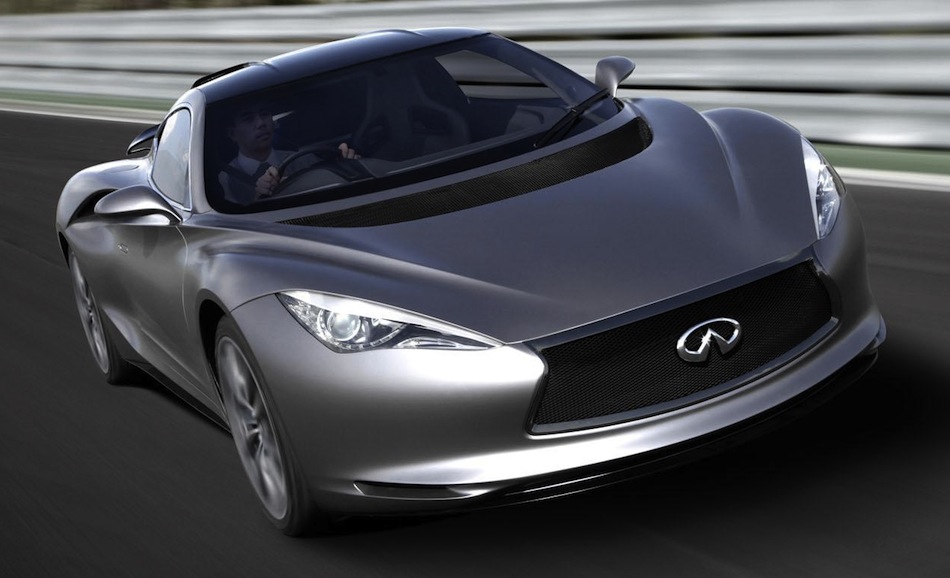
The Emerg-e is one such example. This concept deserves a standing ovation even from the most conservative enthusiasts. It’s a captivating sports car that Infiniti unveiled at the 2012 Geneva Motor Show, and it continues to turn heads for all the right reasons.
Infiniti, launched in the fall of 1989, was Nissan’s answer to the growing luxury market. Its mission was clear: take on Honda’s Acura and Toyota’s Lexus in North America.
While Infiniti eventually expanded globally, it never quite reached the level of success Nissan had envisioned. This was particularly obvious in the 2000s, a period when the brand seemed to lose its sense of identity.
To reignite interest, management doubled down on creating fresh, attention-grabbing products, including several bold concept cars.
Among those was the Emerg-e, a jaw-dropping sports car that emerged from Nissan’s European technical center in the UK, developed in collaboration with Lotus and Jaguar-Land Rover.
Built using cutting-edge technology sourced and manufactured in England, the Emerg-e was designed to showcase Infiniti’s evolving design language, its passion for driver engagement, and its commitment to electrification.
This was a small, featherweight sports car already celebrated for its razor-sharp handling and pure driving dynamics, and it gave the Emerg-e the perfect foundation to build upon.
7. Karma GS-6
Successor to the Fisker Karma, the GS-6 is a luxury plug-in hybrid with dramatic coupe-like styling. It combines EV driving range with a gasoline generator, offering unique appeal for drivers wanting something different.
There’s some context to address before getting into the details, but here’s the headline: very few people even know this car exists. Its roots trace back to the original Fisker Karma from over a decade ago, and this current version is essentially an evolved take on that sleek plug-in hybrid sport sedan.
The latest GS-6 carries an extended-range plug-in hybrid powertrain that combines dual electric motors with a 28-kWh battery pack, producing 536 horsepower and 550 lb-ft of torque, all sent to the rear wheels.
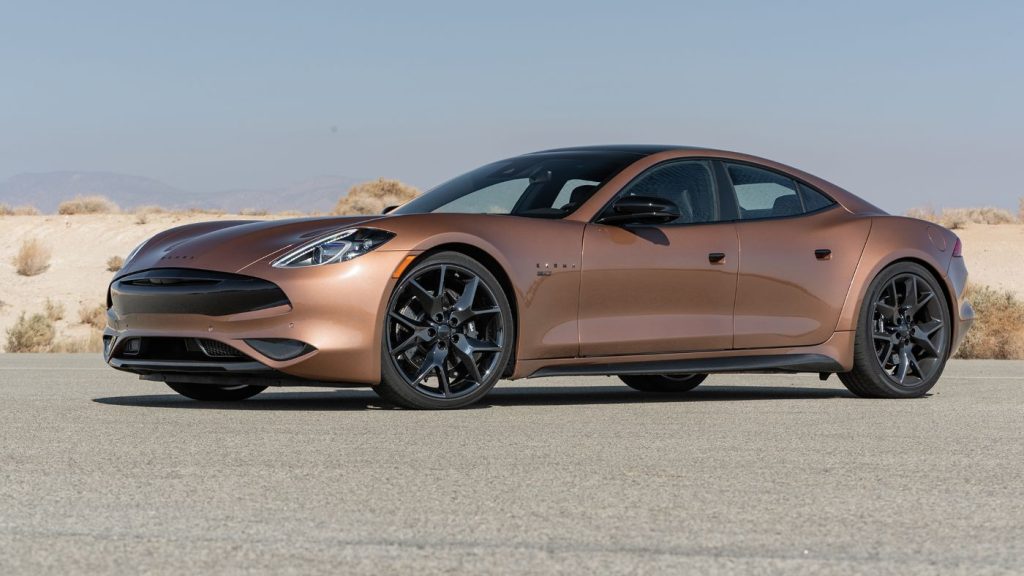
Finding one isn’t easy, but there are a few 2021 Karma GS-6 models on the market. Listings include examples like a Sport Sedan priced at $58,900 with 9,200 miles and another at $56,498 with just 4,888 miles.
Both offer around 54 miles of electric range, average 27 City/ 25 Hwy MPG, and come loaded with features like Bluetooth, leather seats, keyless entry/start, upgraded headlights, and blind spot monitoring.
The GS-6 is definitely an interesting proposition. There’s a unique charm to owning something this rare, and its impressive electric range gives it an edge over many plug-in hybrids.
Still, its quirks and limitations make it a somewhat puzzling choice, appealing mostly to those who value exclusivity and are willing to overlook its drawbacks.
8. Ferrari SF90 Stradale
Yes, it’s expensive, but the SF90 is proof hybrids can dominate. This plug-in hybrid supercar churns out nearly 1,000 hp, using electric motors to enhance both performance and efficiency.
At the heart of the SF90 lies a ferocious combination of gasoline and electric power. The twin-turbocharged 4.0-liter V-8 produces 769 horsepower on its own, while three electric motors contribute an additional 217 horsepower.
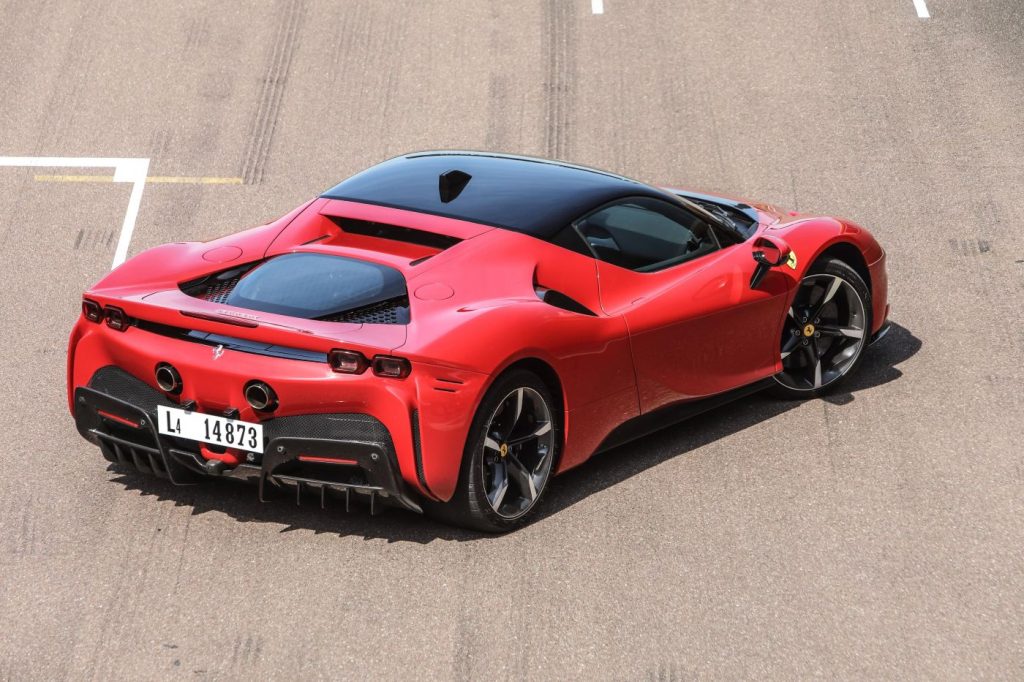
Together, they deliver a combined output of 986 horsepower and 590 pound-feet of torque. Step up to the SF90XX, and you’ll unlock an extra 30 horsepower for a jaw-dropping 1016 total, along with an Extra Boost feature that temporarily surges power to help catapult the car out of corners.
All that power is routed to all four wheels, marking this as the first mid-engine Ferrari to feature all-wheel drive. The eight-speed automatic transmission ensures lightning-fast gear changes, while multiple drive modes, EV Only, Hybrid, Performance, and Qualify, allow you to tailor the car’s character to your driving intent.
In Qualify mode, the SF90 reveals its full potential, unleashing a performance experience that’s nothing short of breathtaking.
9. Acura NSX (Second Gen)
The second-generation NSX uses a hybrid system with three electric motors paired to a twin-turbo V6. Supercar performance, precision handling, and hybrid tech that actually makes it better.
The NSX Type S delivers thrilling performance and will easily satisfy any craving for speed, but it still falls short of outperforming major competitors like the Audi R8 and McLaren 570S.
In our testing, it demonstrated blistering acceleration, hitting 60 mph in just 2.9 seconds. What sets it apart, however, is its electric-only Quiet mode, offering a level of discretion that its rivals simply can’t match.
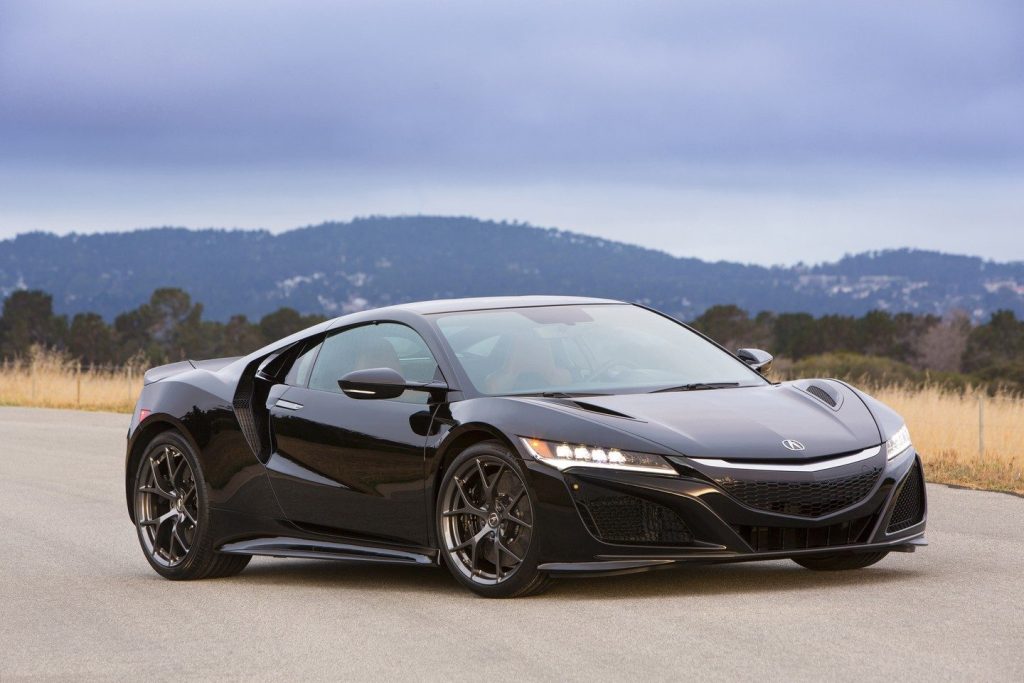
Power comes from a combination of a V-6 engine, a nine-speed dual-clutch automatic transmission, and one of the electric motors, all working together to drive the rear wheels. Two additional electric motors independently power the front wheels, effectively giving the NSX all-wheel-drive capability.
In Quiet and Sport modes, the steering is precise and accurate but notably light, seemingly tuned to enhance day-to-day maneuverability. While this may make city driving easier, it feels somewhat out of character for a car built with performance at its core.
Switch to Sport Plus or Track mode, and the electric power steering adds more weight, delivering a more engaging feel. No matter which mode you choose, the steering remains sharp, and the car reacts instantly to even the slightest driver input.
10. Polestar 1
Technically a hybrid GT, the Polestar 1’s sleek coupe design and plug-in system delivering over 600 hp make it impossible to ignore. With limited numbers and Scandinavian style, it’s a collector’s dream.
At the front, the Polestar 1 plug-in hybrid pairs a turbocharged and supercharged 2.0-liter four-cylinder engine with an electric motor, producing a combined 375 horsepower to drive the front wheels.
At the rear, two electric motors, each generating 114 horsepower, power the back wheels. Together, this setup delivers all-wheel drive and an impressive total system output of 619 horsepower and 738 pound-feet of torque.
In EV mode, power is sent exclusively to the rear wheels, while in gas-only mode, the front wheels take over. The engine works in conjunction with an eight-speed automatic transmission to manage power delivery.
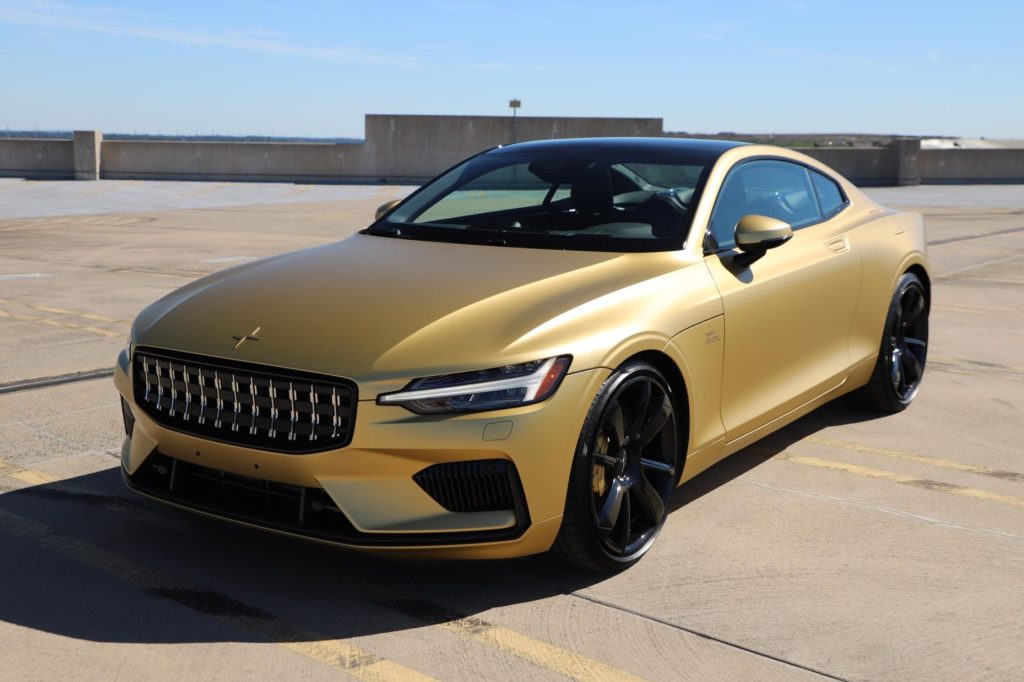
Adding to its performance credentials, the Polestar 1 comes equipped with ultra-grippy 21-inch Pirelli P Zero tires, an electronically controlled suspension, a torque-vectoring rear differential, and robust brakes sourced from Akebono. During our time behind the wheel, the car’s dynamic abilities stood out, showcasing remarkable agility without any trace of understeer.
While owners can tweak the damper settings for a more customized ride, doing so requires popping the hood and lifting the rear end. Even after adjustments, the dampers have a hard time softening the 1’s inherently firm ride.
The hybrid coupe field in the U.S. is a mix of discontinued gems, current icons, and exciting rumors. These cars prove hybrids don’t have to be boring – they can be downright exhilarating. As electrification spreads, expect more sporty hybrids to hit the market. For now, these ten keep the drive lively while pointing toward a thrilling future.
