
When it comes to off-roading, few brands carry the same weight as Jeep. The name itself conjures images of rock-crawling Rubicons, mud-slinging Wranglers, and rugged trails where few vehicles dare to tread. But here’s the catch: not every Jeep is created equal.
While some models dominate the wild and emerge unscathed from brutal terrain, others falter where you’d expect them to shine, on ordinary pavement. For U.S. drivers considering a Jeep, it’s crucial to understand which models live up to their adventurous legacy and which ones stumble during daily driving.
5 Jeeps That Survive Harsh Trails
When the terrain gets rough, only a handful of vehicles can rise to the challenge and Jeep has built its reputation on being one of them. From rocky mountain passes to deep mud pits, certain Jeep models are engineered to take a beating and keep pushing forward.
These are the Jeeps that thrive where pavement ends, proving their worth with rugged hardware, advanced 4×4 systems, and a legacy of trail dominance. Here are five models that consistently deliver when the going gets tough.
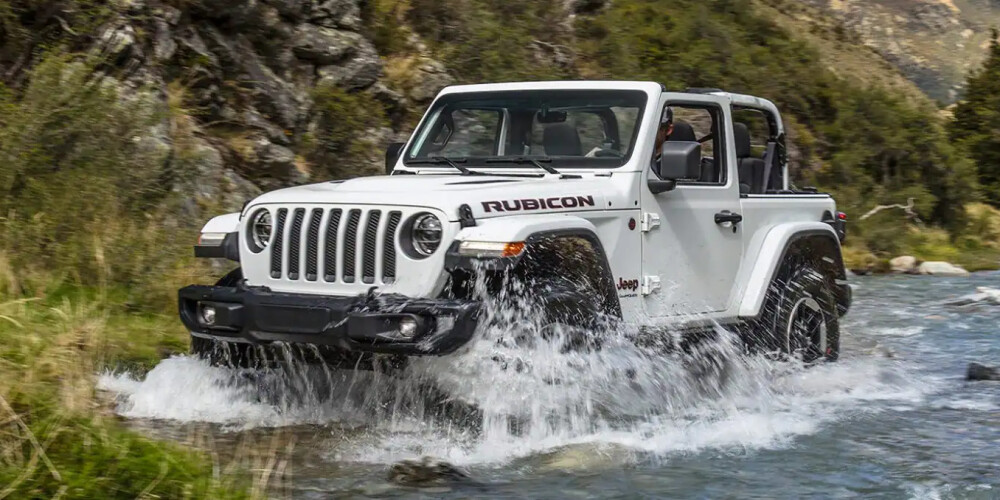
1. Jeep Wrangler Rubicon
If there’s a king of the trail, the Wrangler Rubicon wears the crown. Equipped with locking differentials, disconnecting sway bars, and aggressive all-terrain tires, the Rubicon is built to chew through rocks, sand, and mud with ease.
The high ground clearance and solid axles make it unstoppable in places where other SUVs would surrender. While it’s not the quietest ride on the highway, it’s hands-down one of the most capable off-road vehicles available to U.S. buyers.
There’s no getting around the fact that the Jeep Wrangler embodies the character of an old-school off-roader. Its large, heavy axles exaggerate every bump and ripple in the road, causing the body to shimmy in ways you won’t encounter in the more refined and composed Land Rover Defender.
You’ll also notice a fair amount of suspension noise when hitting potholes or raised drain covers. On top of that, the chunky tires create significant road roar at higher speeds, adding to the wind noise generated by the Wrangler’s boxy shape, a trait especially pronounced in hard-top versions. Even the somewhat utilitarian Toyota Land Cruiser manages to provide a quieter ride over long distances.
That said, when compared with the Ineos Grenadier, which suffers from an almost total absence of steering feel—the Wrangler surprisingly comes across as more confidence-inspiring.
While even moderate cornering speeds can exceed the grip limits of its tires, the steering communicates clearly, giving you a good sense of how much traction you have to work with.
Only one engine is offered for the Wrangler in the UK: a 268bhp 2.0-liter turbocharged petrol paired with an eight-speed automatic transmission as standard.
It may not deliver the same rich soundtrack as the six-cylinder engines found in the Ford Ranger Raptor or the Grenadier, but with an official 0–62 mph time of 7.2 seconds, it’s actually quicker than both. Additionally, it’s smoother than the diesel-only Land Cruiser.
The only factor that slightly hampers on-road performance is the gearbox, which can be slow to react to accelerator inputs. However, you can easily bypass this by switching to manual mode and taking control of gear changes yourself via the sturdy gear lever.
Also Read: 5 Once-Popular Cars Now Selling Below MSRP vs 5 That Still Sell Above Sticker
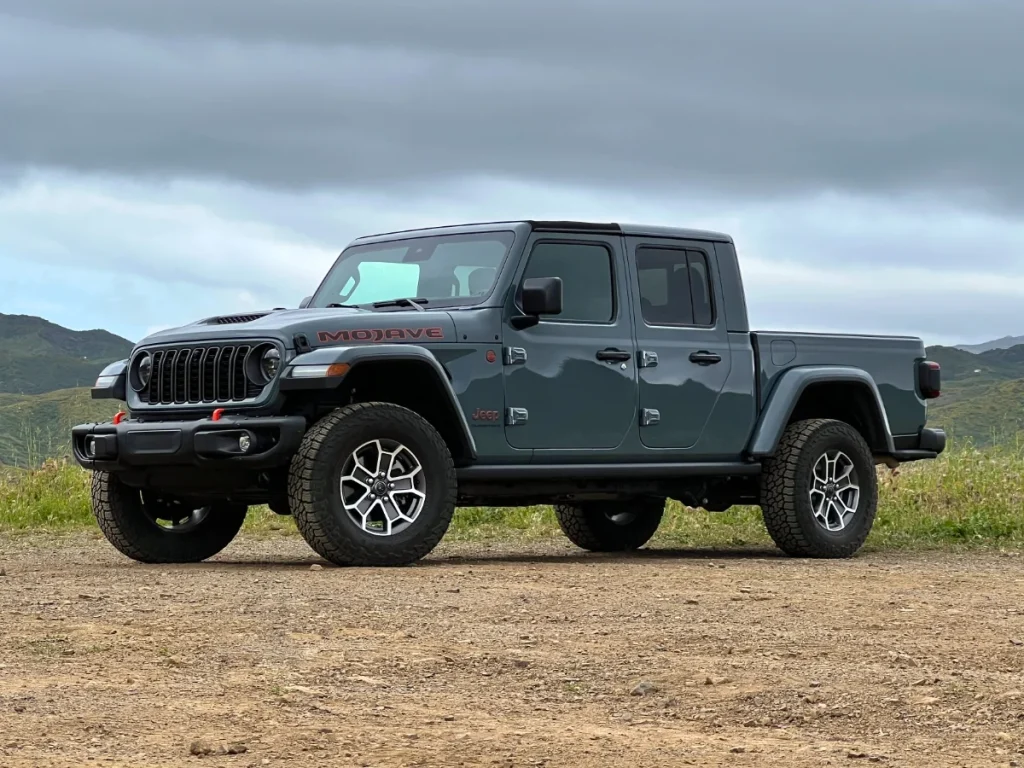
2. Jeep Gladiator Mojave
The Gladiator Mojave is the desert runner of the lineup. Built with reinforced suspension components and Fox shocks tuned for high-speed sand driving, it thrives in environments like the dunes of Glamis or Moab’s slickrock. It’s rugged, functional, and perfect for those who need pickup utility with serious off-road chops.
The Gladiator’s cabin remains an inviting environment, featuring clear, easy-to-read gauges, supportive sport seats, and a well-organized layout of controls.
The long-awaited 12.3-inch infotainment display finally makes its debut, significantly enhancing the overall user experience. This screen is now standard across all trims, with built-in navigation included on the Mojave X and Rubicon X models and offered as an option on others.
We also spent time experimenting with the Jeep Adventure Guide, developed in partnership with Trails Offroad. This feature comes preloaded with a selection of Jeep Badge of Honor trails, while a subscription grants access to a comprehensive database of over 3,000 trails.
More than just a basic navigation tool, it allows users to input updates on closures or changes, provides difficulty ratings for each trail, and sometimes offers background information or historical context about the area. An added bonus is the ability to download trail data for offline use when venturing into areas with no cellular service.
The system functions smoothly once you get the hang of its commands and learn how to accurately track your progress. That said, we still found ourselves preferring to simply take in the breathtaking scenery outside the windows. After all, there are far worse places to lose your way than the rugged beauty of Moab.
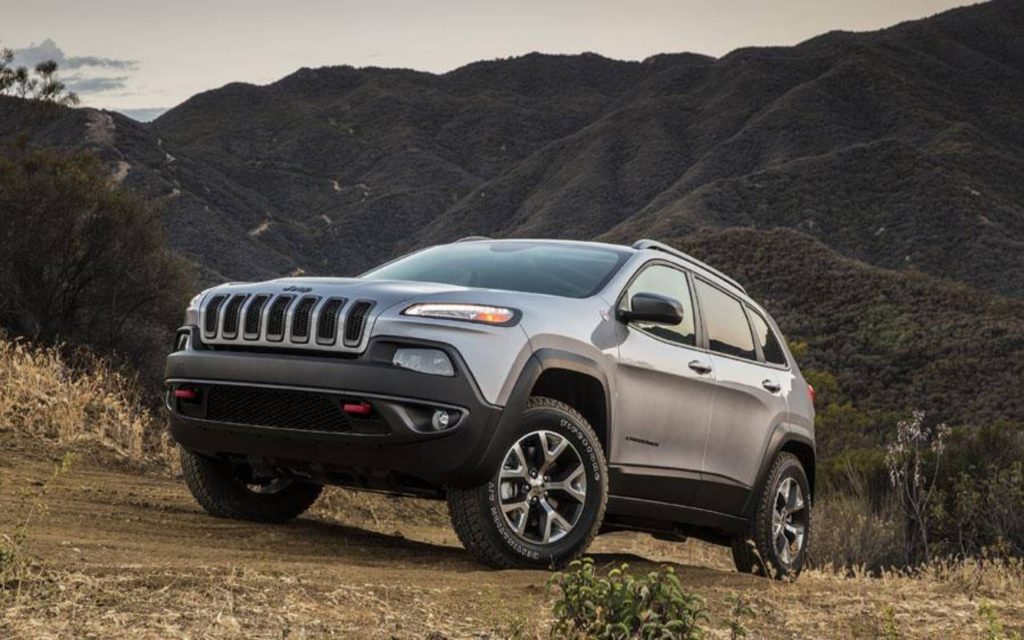
3. Jeep Cherokee Trailhawk
The Cherokee Trailhawk doesn’t just slap on a badge and call it a day. It comes with Jeep’s Active Drive Lock 4×4 system, a locking rear differential, and increased ground clearance. While it’s a unibody crossover rather than a body-on-frame brute, the Trailhawk configuration proves surprisingly competent on rocky trails and muddy paths.
Jeep takes a bold step in reshaping the trim levels and powertrain offerings for the 2023 Cherokee compact crossover. For this model year, the lineup has been simplified to just two trims, Altitude Lux and Trailhawk, eliminating the previously standard front-wheel-drive base Cherokee altogether.
This change has had a notable impact on the vehicle’s starting price. In addition, the 271-hp V-6 has been discontinued, replaced by a 270-hp turbocharged 2.0-liter inline-four that’s exclusively available with the off-road-focused Trailhawk.
Meanwhile, the Altitude Lux comes equipped with premium touches like leather seating, a heated steering wheel, and remote start as standard. Production of the current Cherokee, which has remained largely unchanged in its KL generation since its 2014 debut, will come to an end in 2023.
The 2023 Jeep Cherokee starts at $39,290 for the Altitude Lux and climbs to $42,890 for the Trailhawk, depending on options. While the Trailhawk is the pricier option, it’s also the most capable and well-rounded.
Its turbocharged four-cylinder not only offers more towing capacity but also achieves a better EPA rating than the naturally aspirated 2.4-liter engine in the Altitude Lux. Beyond performance, the Trailhawk backs up its rugged appearance with serious capability, thanks to standard Jeep Active Drive Lock.
This system adds a locking rear differential and a specialized traction mode to tackle muddy or rocky conditions with ease. It also features nearly an inch more ground clearance, more aggressive tires, and a larger infotainment display, making it the ultimate Cherokee for adventurous drivers.
The Altitude Lux trim is powered by a 180-hp 2.4-liter inline-four engine, while the Trailhawk gets the more spirited 270-hp 2.0-liter turbocharged engine with 295 pound-feet of torque. Both engines are paired with a nine-speed automatic transmission and come standard with all-wheel drive.
Although neither powertrain has been tested extensively, the 2.0-liter turbo is just one horsepower shy of last year’s V-6, suggesting strong performance credentials. True to Jeep’s heritage, the Cherokee drives with a sense of heft and solidity, giving it a larger feel compared to its competitors.
The suspension is tuned firmly enough to control body roll in corners, yet it maintains a comfortable ride by absorbing bumps without excessive reverberation. On the highway, it remains composed and never feels floaty.
While the steering could benefit from more road feedback, it’s well-weighted and precise. The brake pedal offers a reassuringly firm feel during emergency stops, and the Cherokee’s 70-mph-to-zero braking performance falls right in line with the average for its class.
4. Jeep Grand Cherokee Trailhawk
This midsize SUV blends luxury with legitimate off-road capability. The Grand Cherokee Trailhawk comes with Quadra-Drive II, skid plates, air suspension, and off-road tires.
It’s a plush daily driver during the week, but on the weekends it can tackle trails that would leave most luxury SUVs stranded. This balance makes it an excellent choice for U.S. drivers who need both refinement and ruggedness.
The Jeep Grand Cherokee Trailhawk stands as the toughest, boldest, and most off-road-focused version of the Grand Cherokee to date. Joining the smaller Renegade and the mid-sized Cherokee in the Trailhawk family, this model reconnects the American brand with its heritage of dominating rugged terrain.
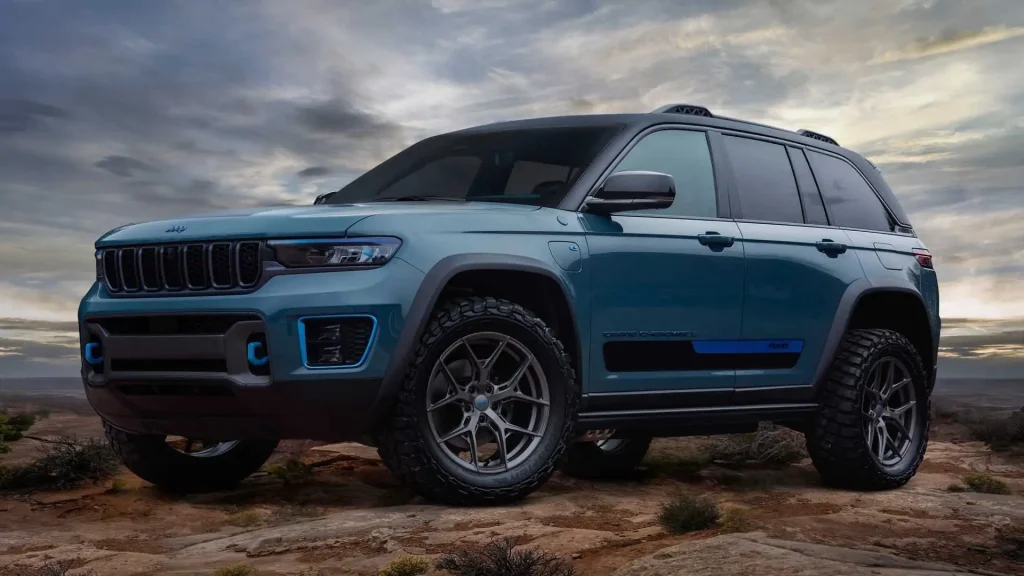
The Trailhawk is the sixth trim in the range, positioned between the luxurious Summit at one end and the performance-driven SRT at the other. It’s purpose-built for off-road enthusiasts who thrive on muddy boots and challenging trails.
Starting with the freshly facelifted Grand Cherokee, which features a redesigned lower front fascia, updated fog lights, and a more aggressive seven-slot grille, Jeep engineers have enhanced it with a suite of all-terrain upgrades designed to take on the harshest environments.
Key to its capability are the new 18-inch Kevlar-reinforced Goodyear Adventure off-road tires that dig into unpredictable surfaces with ease. Alongside them are solid steel rock rails lining the side sills, quarter-inch sump and skid plates for underbody protection, and a refined air suspension system.
With these enhancements, the Trailhawk now boasts 10.8 inches of ground clearance and improved articulation, half an inch more, allowing it to crawl over logs, rocks, and uneven surfaces with confidence.
Also Read: 5 Cars With Best Visibility and 5 With Major Blind Spots
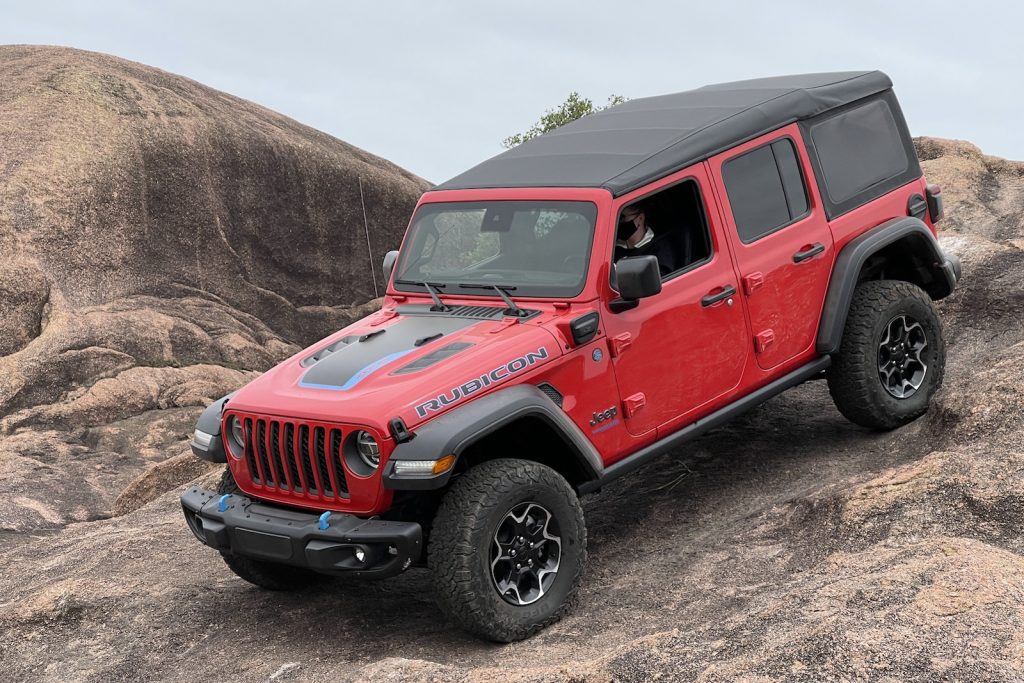
5. Jeep Wrangler 4xe
Don’t let the plug-in hybrid badge fool you—the Wrangler 4xe is still a trail monster. It retains the Wrangler’s legendary off-road hardware while adding instant electric torque, which can be a game-changer when crawling over obstacles. The hybrid aspect even allows for near-silent off-road exploration, perfect for adventurers who want to enjoy nature without the roar of an engine.
The Wrangler 4xe’s hybrid powertrain closely mirrors the setup found in the Jeep Grand Cherokee 4xe. At its core is a turbocharged 2.0-liter four-cylinder engine, delivering 270 horsepower and 279 pound-feet of torque, handling the internal combustion duties.
Supplementing this are two electric motors: a motor/generator that takes the place of the alternator, producing 44 horsepower and 39 pound-feet of torque, and a larger motor mounted to the transmission, generating 134 horsepower and 195 pound-feet. Power for these motors comes from a 14.0-kWh battery pack.
Altogether, the system churns out a combined 375 horsepower and 470 pound-feet of torque, giving the 4xe a notable advantage over the standard Wrangler’s 3.6-liter V6, which offers 285 horsepower and 260 pound-feet. The hybrid also matches the Rubicon 392’s 470 pound-feet of torque, though it falls short of that model’s 470 horsepower.
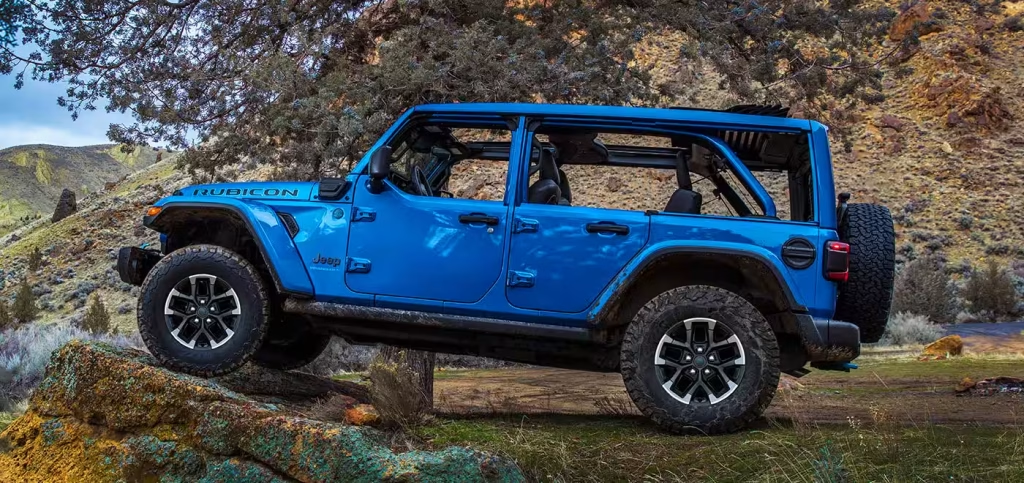
While the current JL Wrangler shows considerable improvements in handling and on-road comfort compared to its predecessors, it still retains a trucklike character when stacked against today’s more refined SUVs and pickups.
The four-door model delivers a ride that’s acceptably smooth over rough terrain, but its braking lacks consistency, and the steering demands frequent corrections at speeds above 25 mph, issues that will come as no surprise to seasoned Wrangler drivers.
Additionally, testing has shown that the transition between the gasoline and electric powertrains can sometimes feel clumsy, slightly diminishing the otherwise impressive hybrid driving experience.
5 Jeeps That Struggle on Pavement
Not every Jeep that shines off the beaten path translates that success to smooth asphalt. Some models, despite wearing the iconic badge, stumble when it comes to everyday driving.
Whether it’s harsh ride quality, poor handling, or lackluster refinement, these Jeeps remind us that capability on the trail doesn’t always equal comfort on the road. Here are five Jeeps that have a tough time where most driving actually happens, on pavement.
1. Jeep Wrangler (Non-Rubicon Trims)
Even standard Wranglers, while extremely capable off-road, can feel compromised on paved roads. The ride is bumpy, steering is vague, and wind noise is unavoidable at highway speeds. For U.S. drivers who mostly stick to urban commutes, this can be a daily annoyance rather than an adventure.
The 2015 Jeep Wrangler is powered by a 3.6-liter V6 engine that delivers 285 horsepower and 260 pound-feet of torque. Standard across the lineup is a four-wheel-drive system equipped with both high- and low-range gearing.
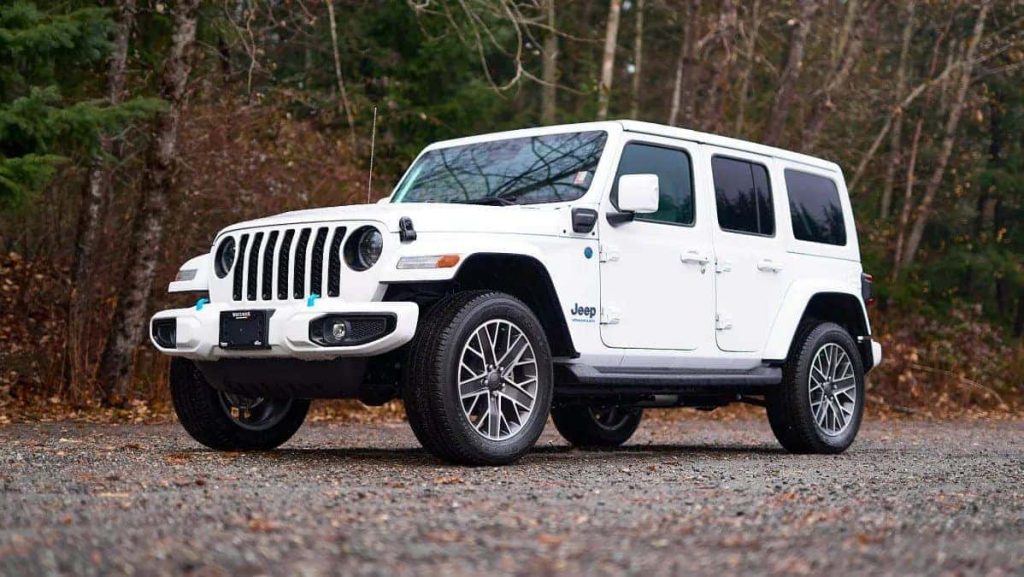
The Rubicon trim stands out with its uniquely short gearing and an enhanced transfer case featuring an extra-low crawl ratio, making it particularly adept in demanding off-road conditions. A six-speed manual transmission with hill start assist comes standard, while a five-speed automatic transmission, also offering hill start assist along with hill descent control—is available as an option.
Despite its rugged persona, the Wrangler’s towing capability falls short of expectations. The four-door Wrangler Unlimited can tow up to 3,500 pounds, whereas the two-door model is limited to a maximum of 2,000 pounds.
2. Jeep Compass
The Compass has seen improvements over the years, but it still lacks the refinement and handling precision of rivals like the Toyota RAV4 or Honda CR-V. On pavement, it often feels underpowered and jittery over bumps, with a transmission that struggles to deliver smooth performance.
The 2016 Jeep Compass starts with a 2.0-liter four-cylinder engine that delivers 158 horsepower and 141 pound-feet of torque. For this engine, the Sport trim comes equipped with a five-speed manual transmission, while the Latitude trim pairs it with a CVT. Front-wheel drive is the only configuration available with the base engine.
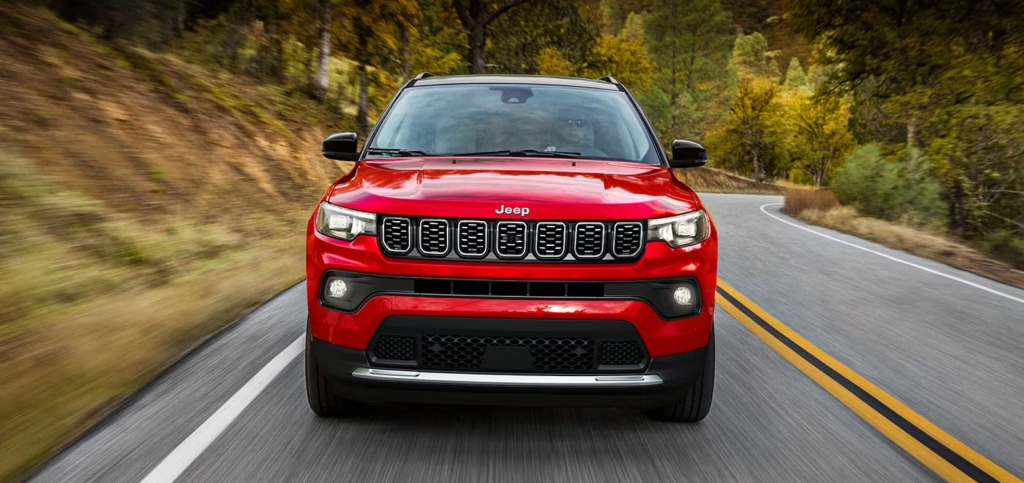
According to EPA estimates, the 2.0-liter Compass with the five-speed manual achieves 26 mpg combined (23 mpg city/30 mpg highway). Opting for the CVT reduces fuel efficiency slightly to 24 mpg combined (22 mpg city/26 mpg highway).
A more powerful 2.4-liter four-cylinder engine, producing 172 horsepower and 165 pound-feet of torque, is available as an option on front-wheel-drive models and comes standard with all-wheel drive.
The Sport trim with this engine retains the five-speed manual, but in most cases, a six-speed automatic transmission is used. However, choosing the Freedom Drive II package replaces the automatic with a CVT that features a crawl mode, simulating the low-range gearing of a traditional 4×4 system.
3. Jeep Patriot (Discontinued)
The Patriot was marketed as a budget-friendly Jeep, but it was plagued with rough CVT behavior, lackluster acceleration, and an overall unrefined road feel. While some versions offered basic off-road capability, it never felt at home on highways or in city traffic, which contributed to its eventual discontinuation.
The Jeep Patriot is not the right choice for buyers seeking a modern interior, best-in-class fuel efficiency, a cushioned ride, or cutting-edge in-car technology. However, it does offer certain advantages. As noted earlier, when equipped with the Freedom Drive II system, the Patriot handles off-road obstacles better than many rivals.
It also comes with an attractive price tag, often costing thousands less than other small crossover SUVs when purchased new. On the downside, the base Sport trim lacks several features that most buyers now consider standard, such as power accessories and air-conditioning, which would need to be added as options.
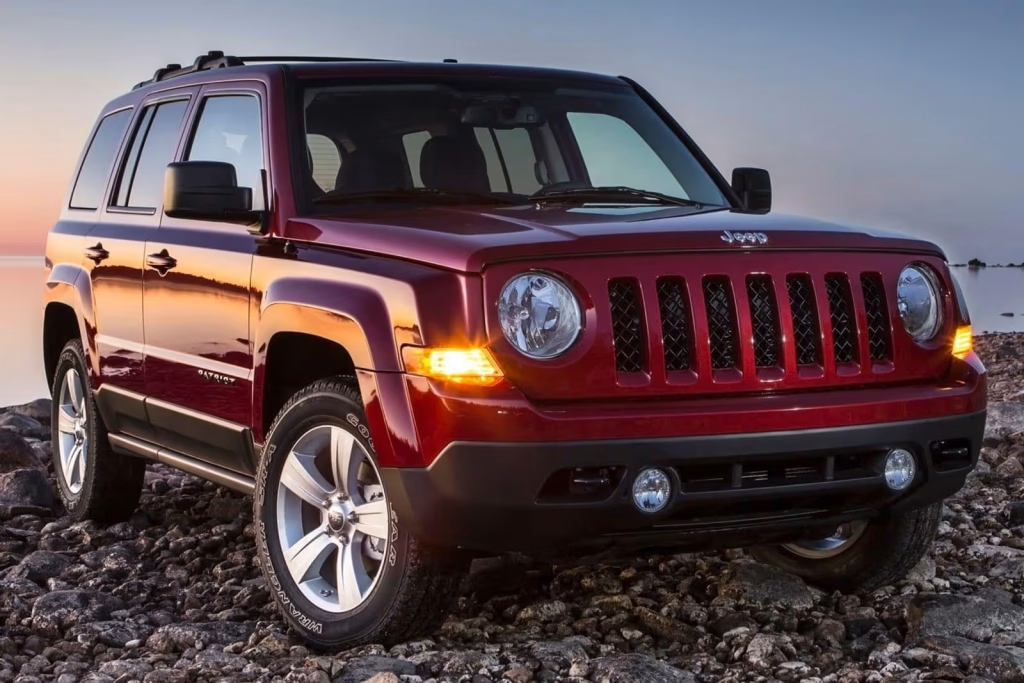
For those shopping in the small SUV segment, there are many alternatives worth considering. Jeep’s own Renegade is a more stylish and contemporary choice, while the Trailhawk version maintains impressive off-road capability.
If you prefer a crossover primarily for on-road driving, the 2017 Honda HR-V is an excellent option, offering a spacious cargo area and standout fuel efficiency.
Another solid contender is the 2017 Mazda CX-3, known for its sporty handling and upscale interior materials. These models may carry a higher initial cost than the Patriot, but as the saying goes, you get what you pay for.
In terms of safety, the front-wheel-drive Sport and Latitude trims come standard with antilock brakes featuring front discs and rear drums.
Patriots equipped with Freedom Drive I or Freedom Drive II benefit from disc brakes on all four wheels. Regardless of the configuration, traction and stability control come standard, along with front side airbags and full-length side curtain airbags.
4. Jeep Renegade (Base Models)
While the Trailhawk version of the Renegade is surprisingly trail-ready, the base trims are a different story. They ride harshly, have a cramped cabin for their class, and suffer from sluggish engines. On pavement, they struggle to compete with more polished small crossovers in terms of comfort and drivability.
Under the hood of every 2023 Jeep Renegade sits a turbocharged 1.3-liter four-cylinder engine that, while neither refined nor particularly quick, offers a key advantage: strong low-end torque. This torque delivery makes it easier for the Renegade to pull away from a stop with confidence.
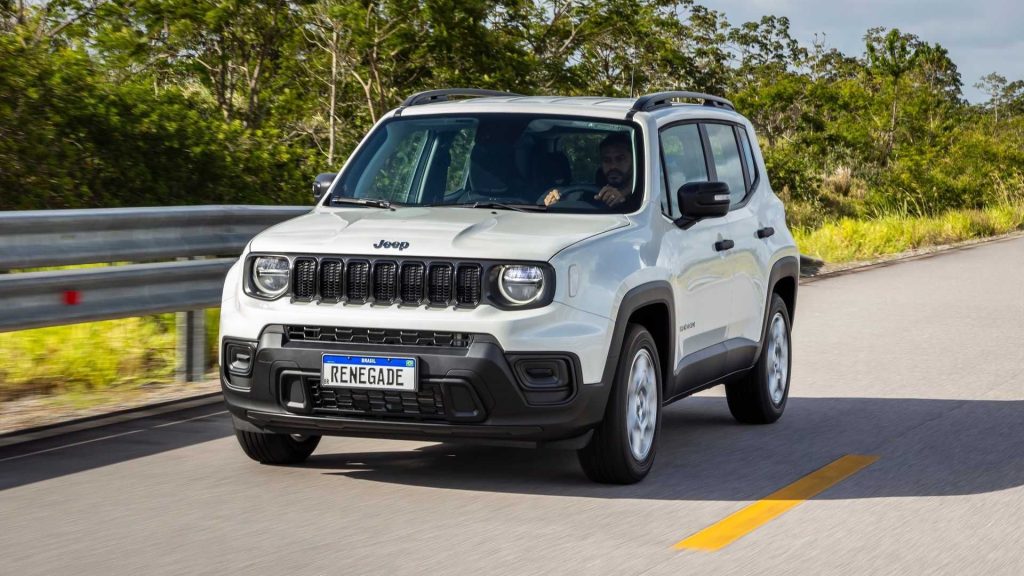
The engine is paired with a nine-speed automatic transmission and comes standard with all-wheel drive. The Renegade isn’t built to be a performance powerhouse, yet it performs better than you might expect and even boasts a towing capacity of up to 2,000 pounds.
The off-road-focused Trailhawk trim tends to have a firmer suspension setup, which can feel stiff on uneven roads, but other versions of the Renegade deliver a ride that is generally smooth and comfortable.
The steering responds quickly to driver inputs, and despite its boxy, almost ornament-like shape, there is less body roll through corners than anticipated. However, if an engaging driving experience tops your list of priorities, options like the turbocharged Kia Soul and the Mazda CX-30 provide superior performance and a significantly more enjoyable drive.
5. Jeep Liberty
The Liberty had off-road potential, but its road manners were disappointing. It suffered from poor fuel economy, clumsy handling, and a ride that felt unsettled even on smooth asphalt. U.S. drivers looking for an everyday SUV often found the Liberty to be a frustrating choice, which is why it was eventually phased out.
For U.S. Jeep enthusiasts, the brand’s reputation for off-road dominance is well-earned—but not every model lives up to it in everyday driving scenarios.
The Jeep Liberty made its debut six years ago as the slightly larger successor to Jeep’s original Cherokee compact SUV. Featuring an expansive greenhouse, high roofline, and pronounced wheel arches, its design marked an evolutionary step away from the Cherokee’s boxy profile while still nodding to the classic Jeep Willys off-roader.
Unlike many car-based SUVs that only mimic rugged styling, the Liberty was engineered to back up its appearance with real capability. Thanks to extreme approach and departure angles, impressive suspension articulation, and robust 4WD systems, it was built to tackle off-road challenges with confidence.
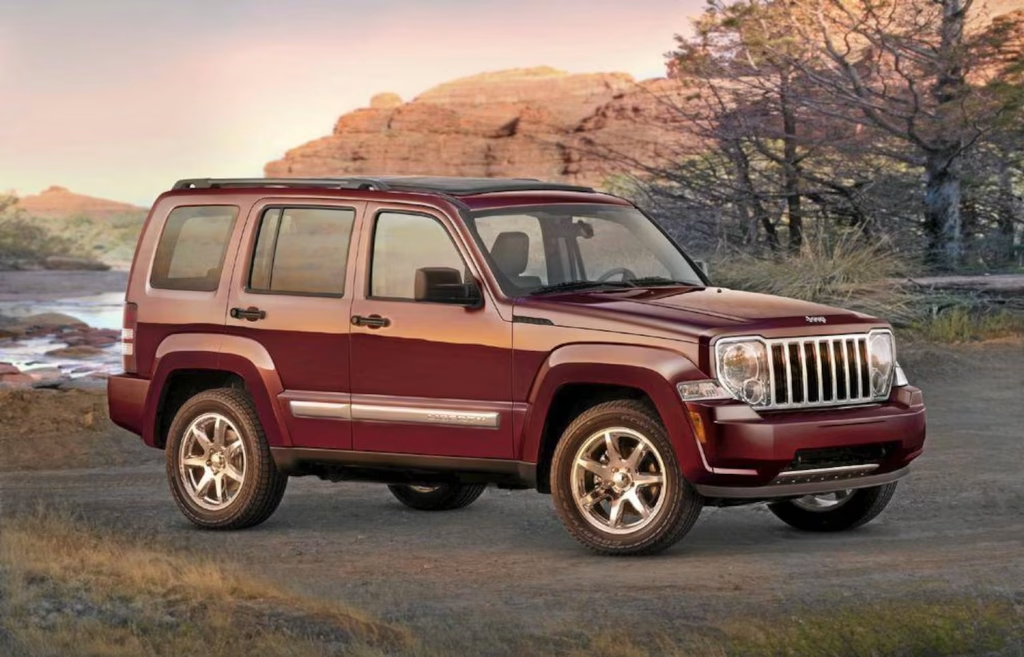
Despite these off-road strengths, the first-generation Liberty was generally outperformed in terms of comfort, on-road handling, and overall refinement, especially as it aged. For 2008, Jeep redesigned the Liberty to address these weaknesses while giving it a more rugged aesthetic that many enthusiasts felt was missing before.
Beneath the refreshed exterior, which strongly resembles the larger Jeep Commander lies an updated platform shared with the Dodge Nitro. This platform incorporates an improved independent front suspension, a five-link rear suspension, and a power rack-and-pinion steering system, all of which contribute to better ride quality and more composed handling on paved roads.
Models like the Wrangler Rubicon and Grand Cherokee Trailhawk deliver exceptional trail performance while still holding their own on pavement. Meanwhile, older and less refined models such as the Liberty or Patriot remind us that capability off-road doesn’t always translate to comfort on the road.
When choosing a Jeep, ask yourself where you’ll spend most of your time—on rocky backroads or on smooth highways. The answer will tell you which Jeep truly fits your lifestyle.
