When it comes to trading in a vehicle, most car owners expect depreciation to take a significant bite out of their car’s value.
For many vehicles, a few years on the road can slash the trade-in price by thousands of dollars. However, some cars defy expectations and maintain a trade-in value that surprises even seasoned dealers.
Whether due to high demand, brand reputation, reliability, or limited production, these vehicles hold their worth far better than many would anticipate. Here are five vehicles that consistently deliver trade-in values that catch owners and buyers off guard.
1. Toyota Tacoma
The Toyota Tacoma has long been known as a reliable and durable midsize pickup. What surprises many owners is how well it holds value when it comes time to trade it in.
Even models with higher mileage maintain strong demand in the used market, largely due to the Tacoma’s reputation for long-term reliability and its versatility as both a work truck and everyday vehicle.
In the U.S., Tacomas often retain up to 70% of their original value after five years, which is remarkable for a pickup, making them a smart investment for those considering long-term ownership.
The 2024 Toyota Tacoma finally steps up to challenge refreshed mid-size competitors like the Ford Ranger and Chevy Colorado head-on. The all-new Tacoma boasts muscular exterior styling and, for the first time in years, a cabin that feels truly up to date, complete with a sharp, modern design and clear, high-quality digital displays.
Its lineup is broader than most rivals, offering two different cab and bed combinations. Under the hood, a new turbocharged four-cylinder comes in multiple output levels, with the most powerful being the 326-hp hybrid version.
The Tacoma has been completely redesigned for 2024, marking the debut of its fourth generation. Built on a version of Toyota’s body-on-frame TNGA-F platform, shared with the recently overhauled Toyota Tundra, the new Tacoma gains fresh powertrain options, upgraded technology, and a broader range of trims. Among them is the brand-new Trailhunter, specifically designed for overlanding enthusiasts.
Toyota has not yet revealed pricing for the top two trims. The best value sits with the SR5, which comes with the 278-hp version of the turbocharged four-cylinder, 17-inch aluminum wheels, blind-spot monitoring, fog lamps, integrated bed tie-downs, push-button start, and an auto-dimming rearview mirror.
Every 2024 Tacoma is powered by a turbocharged 2.4-liter four-cylinder engine, offered in two power outputs. Buyers can pair it with either an eight-speed automatic or a six-speed manual transmission, and both rear-wheel and four-wheel drive are available.
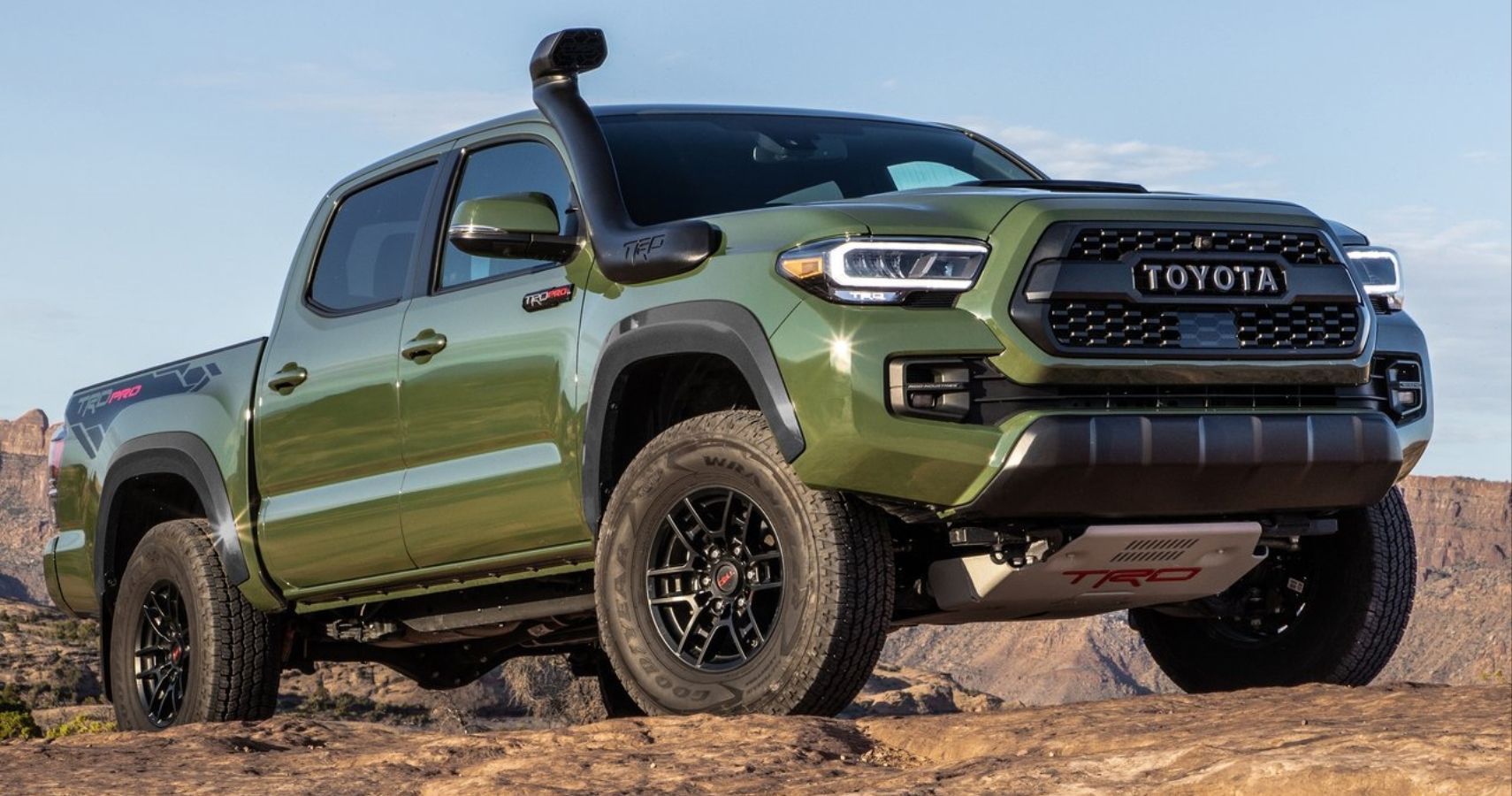
The base 228-hp version is exclusive to the entry-level SR, while higher trims get i-Force variants producing up to 278 horsepower and 317 pound-feet of torque.
While all Tacomas use a body-on-frame design, rear suspension varies. The SR, SR5 extended cab, and TRD PreRunner retain old-school leaf springs, but the rest of the lineup benefits from coil springs for a smoother, more refined ride.
During testing, a nonhybrid Tacoma with the 278-hp engine hit 60 mph in 7.0 seconds. Around town, the powertrain feels responsive, with confident acceleration for highway merges and passes. Off-road-focused trims are equipped with the hardware to handle serious trail work, fitting for a truck with such a strong reputation for off-road performance.
The 2024 Tacoma can tow up to 6500 pounds and carry a payload of 1705 pounds. The hybrid variant (covered in a separate review) offers a maximum tow rating of 6000 pounds and a payload capacity of 1709 pounds.
According to the EPA, the two-wheel-drive Tacoma can achieve up to 21 mpg city and 26 mpg highway. Four-wheel-drive versions return up to 20 mpg city and 23 mpg highway. These figures are similar to the previous-generation Tacoma’s V-6 offerings.
The redesigned Tacoma’s cabin is a significant leap forward in both style and function. The dashboard features higher-quality materials, modern layouts, and high-resolution screens alongside physical controls.
Most trims come with a 7.0-inch digital gauge cluster, while TRD Off-Road and higher trims get a fully digital 12.3-inch unit. The Limited trim and above also include a head-up display, plus heated and ventilated front seats.
A higher seating position and increased headroom make the driving experience more comfortable, while a more adjustable steering column improves ergonomics for a wider range of drivers.
The Tacoma continues to offer two body styles: the extended-cab “XtraCab,” which comes only with a six-foot bed, and the crew-cab “Double Cab,” which can be paired with either a five-foot or six-foot bed.
Also Read: 5 SUVs With the Most Durable Carpeting and 5 That Stain Easily
2. Subaru Outback
Subarus have carved out a niche among buyers who value all-weather capability and practicality. The Outback, in particular, commands surprisingly high trade-in values, thanks to its AWD system, safety features, and overall durability.
Many buyers in regions with harsh winters actively seek used Outbacks, meaning trade-in offers are often higher than expected.
Owners are often pleased to find that their five-year-old Outback can fetch a solid fraction of its original price, especially compared to other mid-size SUVs in the market.
The Subaru Outback is a vehicle you buy with a clear purpose in mind. If the average family SUV is like a flashy hiker with all the latest gear but little real skill, the Outback is the seasoned outdoorsman who can scale any peak armed with nothing more than a sturdy walking stick, a well-worn pair of brogues, and some tweed.
This is because, unlike many modern SUVs that sacrifice capability for style, the Outback delivers genuine off-road credentials, plenty of ground clearance, solid grip, and standard four-wheel drive, while wrapped in the body of a practical estate car. It’s not chasing trends, but it’s absolutely built for the job.
Over the past few years, most rivals to the Outback have quietly disappeared from manufacturer lineups. A handful of four-wheel-drive estates still exist, but they’re typically tuned for better road handling rather than tackling rough terrain.
That leaves the Outback’s closest competition in the SUV camp, from options like the Land Rover Discovery Sport to more affordable choices such as the Dacia Bigster.
The most recent refresh came for 2024, with a subtly reshaped front grille and some interior tech upgrades.

On the outside, the Outback still looks like a conventional estate car that’s been through boot camp, its ride height is taller than most cars (though a bit lower than a standard SUV) and its rugged lower-body cladding not only boosts its off-road resilience but also helps it shrug off parking lot dings.
Inside, the Outback holds onto a more traditional vibe. While many competitors push toward panoramic displays, compact gear selectors, and a mix of upscale materials, Subaru opts for classic analogue dials, a substantial automatic gear lever, and a palette of black plastic and black leather.
A large 11.6-inch infotainment screen sits at the center of the dash. It’s bright and clear, but its interface isn’t the most intuitive, and the font choices look a little dated. On the plus side, wireless Apple CarPlay and Android Auto come standard, so drivers can bypass Subaru’s system for something more user-friendly.
Space is one area where the Outback shines. While it’s not oversized, the front seats offer armchair-like comfort, the back seats have ample room for two adults over six feet tall, and the boot is generously sized. The slightly raised driving position also makes entry and exit easy without leaving you feeling perched like in some SUVs.
Where the Outback falters is under the hood. The 2.5-liter naturally aspirated petrol engine makes just 169 hp, and when paired with the CVT gearbox, it feels both sluggish and thirsty, especially compared to more efficient hybrid or plug-in hybrid options.
It’s not a car that encourages sporty driving, either. There’s noticeable body lean through corners, but the permanent four-wheel-drive system provides excellent grip on the road and exceptional ability off it. The Outback can handle terrain that would stop most SUVs short of a Land Rover, which is a big part of its appeal.
Still, the Limited trim is well equipped, offering heated front seats with electric driver’s adjustment, keyless entry, LED lighting, privacy glass, roof rails, and Subaru’s full Eyesight driver-assist package.
The CVT transmission, with its continuously variable gearing, makes for smooth, effortless progress at low speeds and feels more responsive at junctions than some dual-clutch gearboxes, like the one in the Volkswagen Passat. Its suspension, tuned for serious off-road use, absorbs potholes and speed bumps with ease. The relatively small 18-inch wheels with tall sidewalls further help smooth the ride.
Visibility is strong, and while you don’t get the commanding height of a full SUV, you still sit higher than in most cars. Downsides include a mediocre turning circle, grainy camera resolution, and a noisy engine under heavy acceleration.
The engine’s modest output means you’ll often need to press harder on the accelerator to maintain pace, which sends the CVT into noisy high revs.
Aside from that, the Outback excels as a motorway cruiser, offering excellent ride comfort, minimal road and wind noise, and plush, supportive seats. Subaru’s Eyesight suite, featuring lane-keeping assist and adaptive cruise control, performs admirably, making long drives less taxing.
Drivers seeking engagement will find the Outback lacking. While it has plenty of grip thanks to the full-time four-wheel drive, and steering that’s accurate and well-weighted, the CVT and the limited power output dull the experience.
Even in ‘Sport’ mode, the gearbox tends to hold revs awkwardly high or simulate gear changes without much benefit. Add in noticeable body roll, and it’s not a car that encourages spirited cornering.
Take it off the tarmac, however, and the Outback comes into its own. With high ground clearance, well-calibrated off-road settings, and a capable AWD system, it will outpace nearly any other estate and many SUVs on challenging terrain.
3. Honda CR-V
Compact SUVs have become a mainstay in the U.S., but the Honda CR-V stands out for its strong resale performance. Reliability, fuel efficiency, and a reputation for low maintenance costs contribute to trade-in values that often exceed initial expectations.
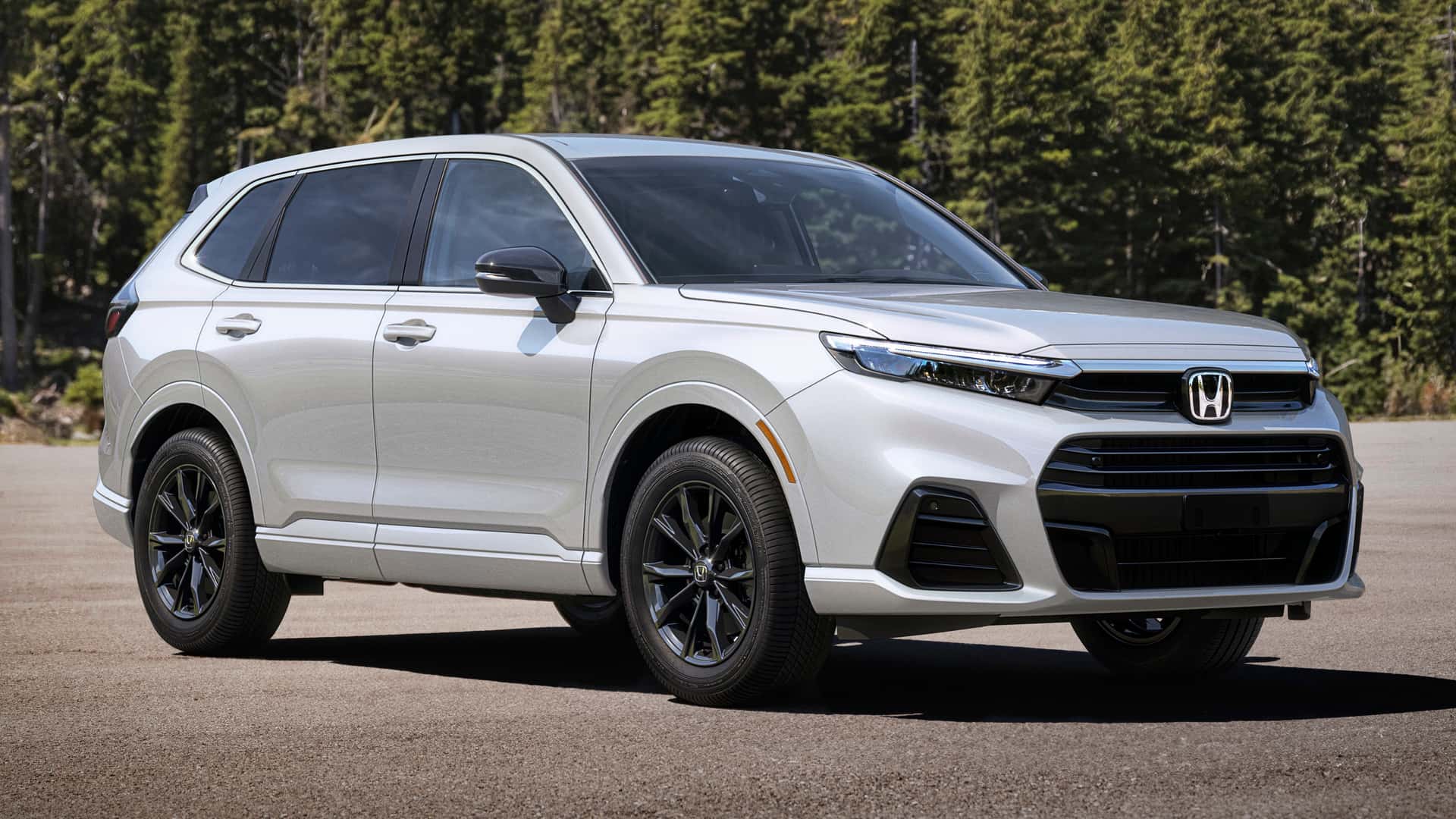
Dealers know the CR-V is in high demand among used car buyers, which translates into competitive offers for trade-ins. Many CR-V owners are pleasantly surprised to see their vehicle retain over 60% of its original MSRP after several years of use.
First launched in the mid-1990s, Honda’s top-selling CR-V has been fully redesigned for 2023. Now in its sixth generation, this well-known compact crossover receives updated exterior styling, a roomier cabin, and upgraded tech and driver-assistance systems.
Slightly larger than the outgoing model, the 2023 CR-V appears poised to continue the strong track record that has made the nameplate a mainstay in its segment.
Honda’s task with the latest CR-V wasn’t just to outshine its competitors, it had to improve upon its own exceptional predecessor. The previous generation was a consistent winner in comparison tests, earned the top spot in our compact crossover rankings, and took home our SUV of the Year award in 2018. The big question: is this the best CR-V yet?
Overall, the 2023 CR-V is attractive, even if it doesn’t break new ground. The exterior plays it safe, but the Civic-inspired interior design strikes a good balance of style and function. Technology and driver-assist updates add to its appeal.
On the road, it’s pleasant to drive, unsurprising given that it shares a platform with the excellent Civic. The turbocharged engine delivers adequate power, and the combination of precise steering, responsive brakes, and a composed ride results in a confident, connected driving experience.
Still, it’s missing a certain spark. Honda seems to have avoided bold moves, perhaps to avoid alienating loyal CR-V buyers.
As a result, it remains a dependable and competitive choice in the compact crossover market, but one that could have benefitted from more excitement and innovation. In essence, it’s a familiar formula, only now with a higher price tag.
4. Jeep Wrangler
Few vehicles are as iconic as the Jeep Wrangler, and its unique appeal translates into exceptional trade-in value. The Wrangler’s off-road capability, customizable options, and loyal fanbase mean demand rarely wanes.

Even older models can fetch impressive trade-in prices, particularly if they are well-maintained and include popular trims or accessories.
The Wrangler’s value retention defies the typical depreciation curve, proving that a niche vehicle with strong brand loyalty can outperform expectations in the used market.
The Jeep Wrangler delivers a distinctly old-school off-road experience. Its heavy-duty solid axles transmit the impact of uneven terrain directly into the cabin, causing the body to shimmy in a way you won’t feel in more refined alternatives like the Land Rover Defender.
There’s also a fair amount of suspension noise when traversing potholes or raised drain covers, and the chunky tyres create a constant hum at higher speeds.
Add in the wind noise from the Wrangler’s squared-off shape, particularly noticeable on hard-top models, and even the rugged Toyota Land Cruiser feels more serene on long drives.
That said, compared with the Ineos Grenadier, whose steering offers little feedback, the Wrangler feels reassuringly responsive.
While moderate cornering speeds can overwhelm the grip of its tyres, especially the off-road-focused rubber on Rubicon versions, the steering communicates grip levels clearly, helping you judge your limits with confidence.
In the UK, the Wrangler is offered with a single engine choice: a 268bhp 2.0-litre turbocharged petrol paired with an eight-speed automatic transmission.
It lacks the characterful soundtrack of the six-cylinder engines in the Ford Ranger Raptor or Grenadier, but with an official 0–62mph time of 7.2 seconds, it’s quicker than both. It’s also smoother than the diesel-only Land Cruiser.
The only drawback to its road manners is the transmission’s slow response to throttle inputs. This can be worked around by switching to manual mode and making shifts yourself via the chunky gear lever.
True to its heritage, the Wrangler retains a separate lever on the centre console for engaging four-wheel drive and selecting various 4×4 modes. It’s noticeably stiffer to operate than the gear selector, but that adds to its rugged, mechanical feel.
Once in four-wheel drive, you can lock the centre differential to split power evenly between the front and rear axles. The low-range gearbox offers finer throttle control at slow speeds and increases torque for climbing steep gradients.
On our heavily rutted off-road course, this setup allowed the Wrangler to maintain momentum where the Grenadier and Defender faltered, sailing up a rough hill that stopped both rivals.
The Rubicon trim takes things even further. Alongside more aggressive tyres, it adds locking front and rear differentials for improved traction in slippery conditions.
Jeep has made their operation refreshingly simple: flip a rocker switch to lock both, and press a large red “Off” button to disengage them. By contrast, the Grenadier’s system demands multiple steps, and mistakes can prevent it from engaging properly.
Perhaps the Rubicon’s standout feature is its detachable anti-roll bar, which allows greater suspension articulation. Once disengaged, the sensation is unusual, keeping the body remarkably level over wildly uneven ground.
No competitor offers this capability, and when combined with its other off-road hardware, it cements the Wrangler’s position as the most capable off-roader you can buy today.
Also Read: 10 Hybrid Supercars That Combine Power and Sustainability
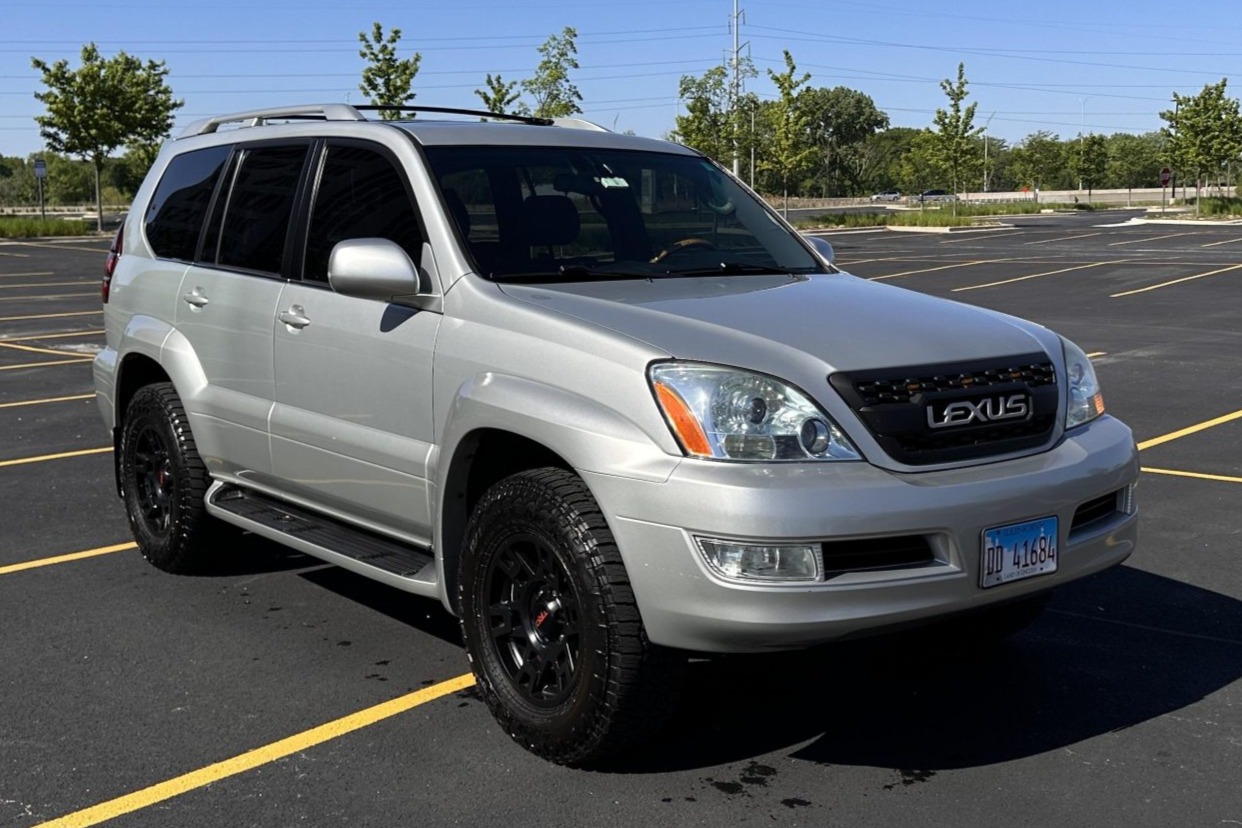
5. Lexus GX
Luxury SUVs often depreciate rapidly, but the Lexus GX surprises many owners with trade-in values that remain remarkably high.
Its combination of off-road capability, luxury features, and the brand’s reputation for reliability make it a sought-after vehicle in the pre-owned market.
Buyers know they’re getting a premium SUV built to last, which keeps trade-in offers healthy even years after purchase. For those looking to invest in a luxury SUV that holds its value, the Lexus GX consistently proves to be a smart choice.
The GX remains an unapologetically traditional SUV, with a robust four-wheel-drive system and a naturally aspirated V-8 that set it apart from most luxury competitors. This classic approach brings both strengths and weaknesses.
Off-road, the GX is one of the most capable luxury SUVs available. Its 4WD system features a low-range transfer case for extra torque at low speeds, while the height-adjustable air suspension provides generous ground clearance.
Terrain-specific traction modes and protective skid plates further enhance its trail-readiness, and it can tow up to 6,500 pounds. On paved roads, however, its age and truck-based roots show.
The interior feels tight compared to rivals, fuel economy is dismal, and the ride and handling lean heavily toward ruggedness rather than refinement. The updated infotainment system introduced for 2022 is a welcome improvement, but it can’t mask the dated overall feel.
For buyers who value durability, off-road prowess, and a certain old-school charm, the GX holds appeal. Still, competitors like the Land Rover Defender deliver similar capability with a more refined touch, while crossovers such as the Lincoln Aviator offer far more interior space, stronger drivetrains, and a more modern driving experience.
The GX is powered exclusively by a naturally aspirated 4.6-liter V-8 paired with a six-speed automatic transmission and full-time four-wheel drive.
The engine produces 301 horsepower and 326 lb-ft of torque, enabling a 0–60 mph run in 6.9 seconds in our testing. Fuel efficiency is a significant drawback, rated at just 15 mpg in the city and 19 mpg on the highway.

While depreciation is an unavoidable reality for most vehicles, certain models stand out by defying expectations. Factors such as brand reputation, reliability, niche appeal, and strong market demand help maintain trade-in values that can pleasantly surprise owners.
Vehicles like the Toyota Tacoma, Subaru Outback, Honda CR-V, Jeep Wrangler, and Lexus GX showcase how the right choice can result in a higher-than-expected return when it’s time to trade in.
For car buyers and sellers alike, understanding which vehicles hold their value can make a significant difference in long-term ownership costs and resale potential.