
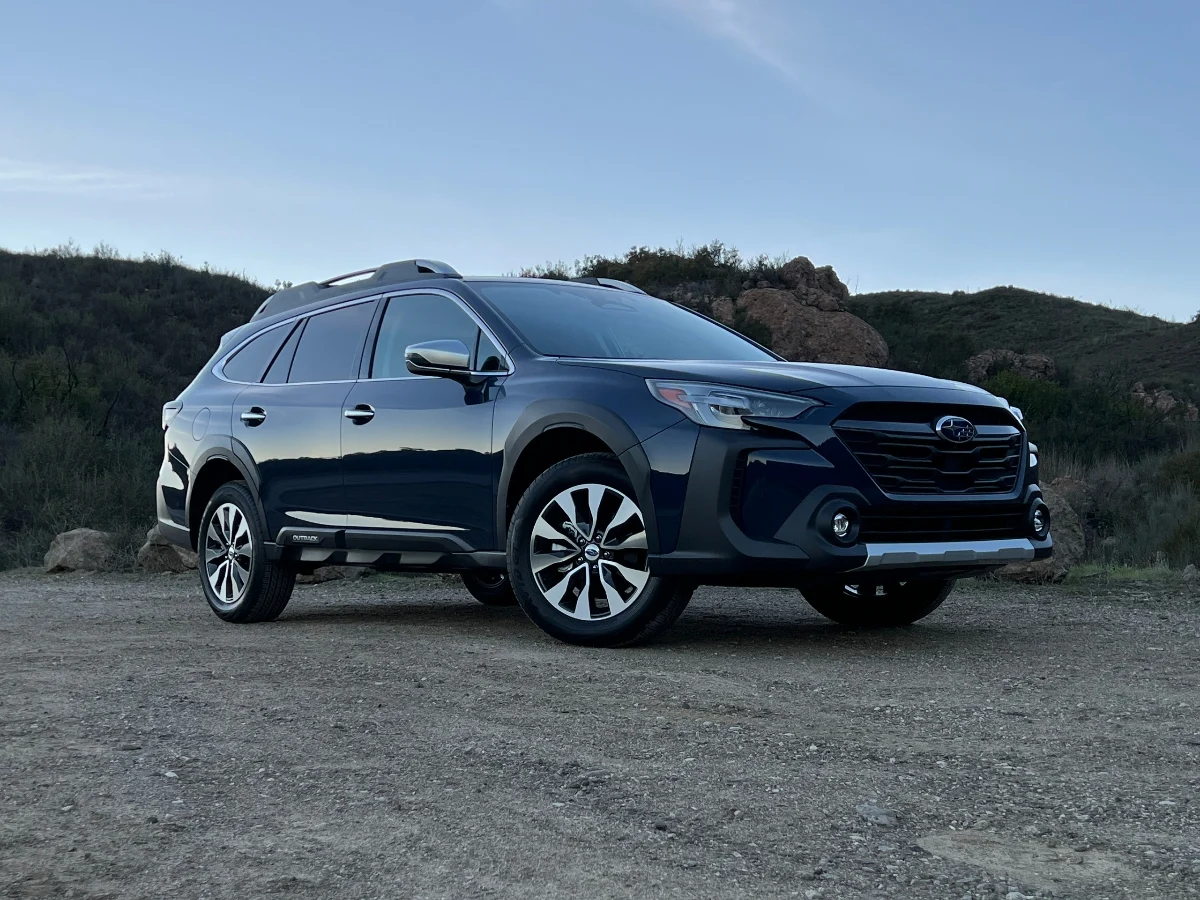
The Subaru Outback has built a reputation for blending wagon-like practicality with SUV-level capability, earning loyal fans worldwide. Known for their durability, these vehicles often log hundreds of thousands of miles with proper care.
However, not all Outback model years are created equal some shine as paragons of reliability, while others are plagued by frustrating and costly issues. In this guide, we spotlight five Subaru Outback models that have proven to be long-lasting, dependable choices, offering excellent performance, safety, and value.
We’ll also identify five model years that owners and used car shoppers should approach with caution. Whether you’re after a rugged family hauler or a comfortable adventure companion, this breakdown will help you choose an Outback built to go the distance.
5 Subaru Outback Models That Run Forever
1. 2023 Subaru Outback: Safety, Versatility, and Comfort in the BT Generation
The 2023 Subaru Outback, part of the sixth-generation BT lineup (launched in 2020), stands out as one of the best and most reliable recent model years. With few reported issues, it blends Subaru’s safety legacy with modern refinements.
It scored top marks in NHTSA and IIHS crash tests, including “Good” ratings in both moderate and small overlap frontal tests. Remarkably, it was the only midsize car in its segment to pass the IIHS’s updated, tougher side-impact test.
This makes it an excellent choice for families seeking a dependable, safety-focused vehicle. Straddling the line between wagon and SUV, it offers a lower roof for easier loading, along with SUV benefits like standard all-wheel drive and 8.7 inches of ground clearance for tackling varied terrain.
For 2023, styling updates include new plastic cladding under the headlights and around the wheel arches, mirroring the rugged Wilderness trim. Inside, tech upgrades improve usability, with wireless smartphone integration via the 11.6-inch touchscreen.
The Onyx Edition now offers both the base engine and a more powerful turbocharged option, making it the most affordable turbo in the lineup. The Outback’s driving dynamics favor comfort and control, though acceleration with the base four-cylinder is modest at 0–60 mph in 8.8 seconds.
The turbo engine remedies this, offering performance comparable to rivals like the Honda Passport and Ford Edge. Steering is responsive, and the Outback remains composed even on rougher trails, supported by its generous ground clearance and AWD system.
Inside, the Outback excels in space, headroom, and visibility, though touchscreen-heavy controls can be distracting. The ride quality is balanced and comfortable, the seats supportive for long trips, and climate control effective despite requiring multiple steps for certain adjustments.
Cargo capacity is slightly less than taller SUVs, but the flat load floor and low roof rails enhance usability. Clever storage solutions are included, though volume is modest. Fuel efficiency is another strong point, with the base engine returning an EPA-estimated 28 mpg combined better than many competitors.
Even the turbo maintains above-average efficiency for its class, making the 2023 Outback a well-rounded option for safety-conscious, adventure-ready buyers.
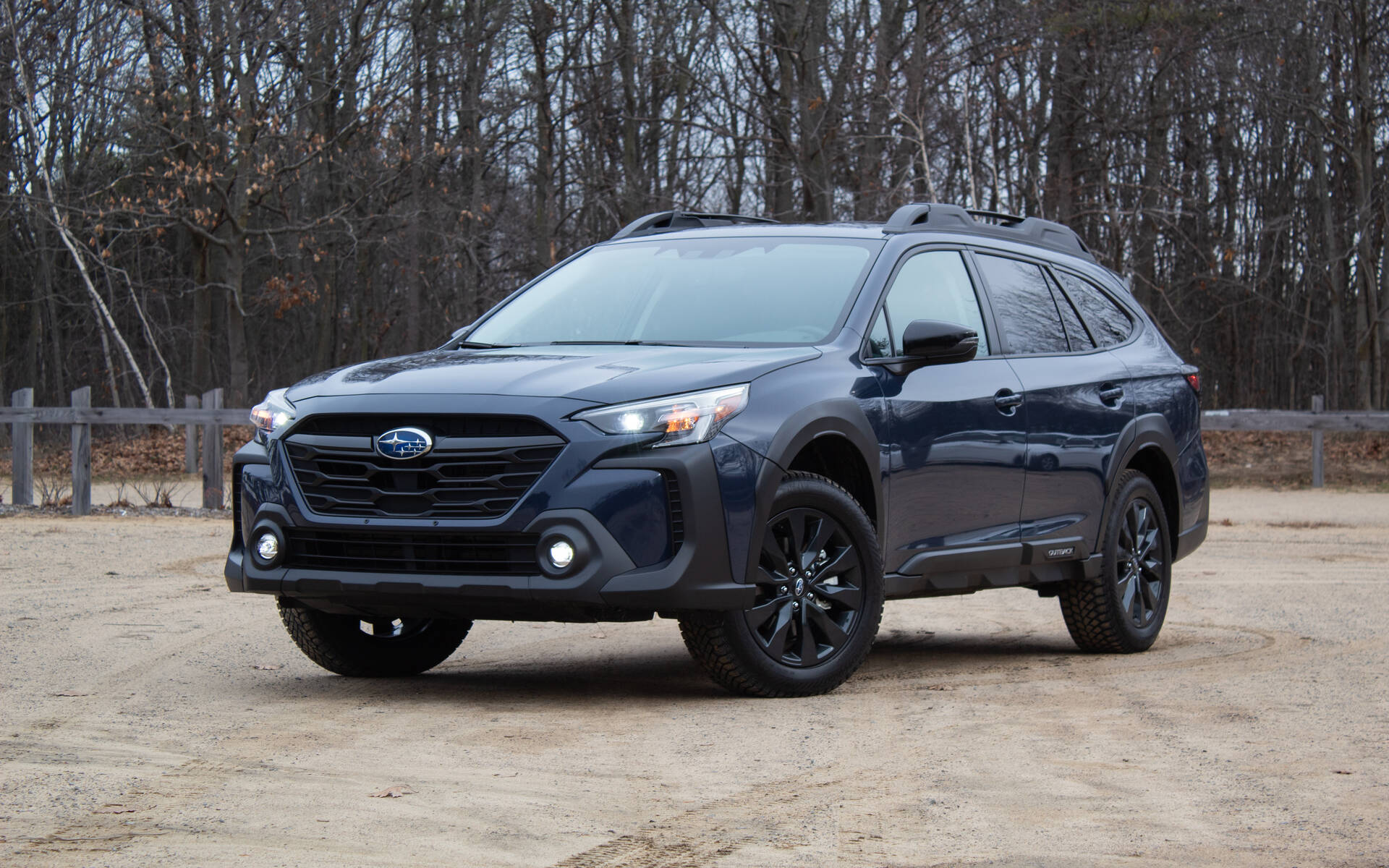
2. 2012 Subaru Outback: Final Year of the BR Generation with Big-Engine Appeal
The 2012 Subaru Outback marked the last year of the fourth-generation BR lineup and remains a top pick for used buyers, especially those seeking the now-discontinued 3.6L H6 engine.
Paired with a robust five-speed automatic transmission, the H6 avoids the reliability concerns sometimes associated with the four-cylinder’s Lineatronic CVT, which can suffer from slipping or costly failures.
This model year offers strong versatility, from a fuel-efficient 2.5L four-cylinder to the powerful 256-hp flat-six, and was one of the last Subarus to feature the larger engine. Updates for 2012 included standard Bluetooth and iPod integration on the Premium trim, plus an available Harman Kardon audio system.
The Outback’s combination of 8.7 inches of ground clearance, standard all-wheel drive, and balanced ride comfort makes it an attractive blend of wagon practicality and crossover capability.
Performance options cater to different needs: the 2.5L boxer-four produces 170 hp and achieves up to 29 mpg highway, while the 3.6L flat-six delivers brisk acceleration 0–60 mph in 7.3 seconds with average fuel economy of 20 mpg combined.
Ride quality favors comfort over sharp handling, with some body roll and light steering feel. Still, the Outback feels more carlike than many SUVs and can confidently handle snow, graded trails, and light off-road terrain.
Safety is a strong suit, with the Outback earning top IIHS “Good” ratings and solid government crash test scores, though braking distances were average to slightly long depending on the model. The larger brakes on the 3.6R improved stopping performance noticeably.
Inside, the 2012 Outback offers generous passenger and cargo space, with rear seatbacks that recline for comfort. Cargo capacity ranges from 34.3 to 71.3 cubic feet, surpassing many midsize SUVs. The cabin design is functional, though hard plastics detract from its premium feel.
Base audio is basic, making the upgraded system worthwhile for better sound quality. Practical touches like a clever roof rack with fold-out crossbars enhance utility.
While it faces competition from models like the Honda CR-V, Nissan Murano, and Ford Edge, the 2012 Outback’s mix of space, capability, and available H6 performance make it a compelling used choice especially for those who value a balance of comfort, ruggedness, and reliability.
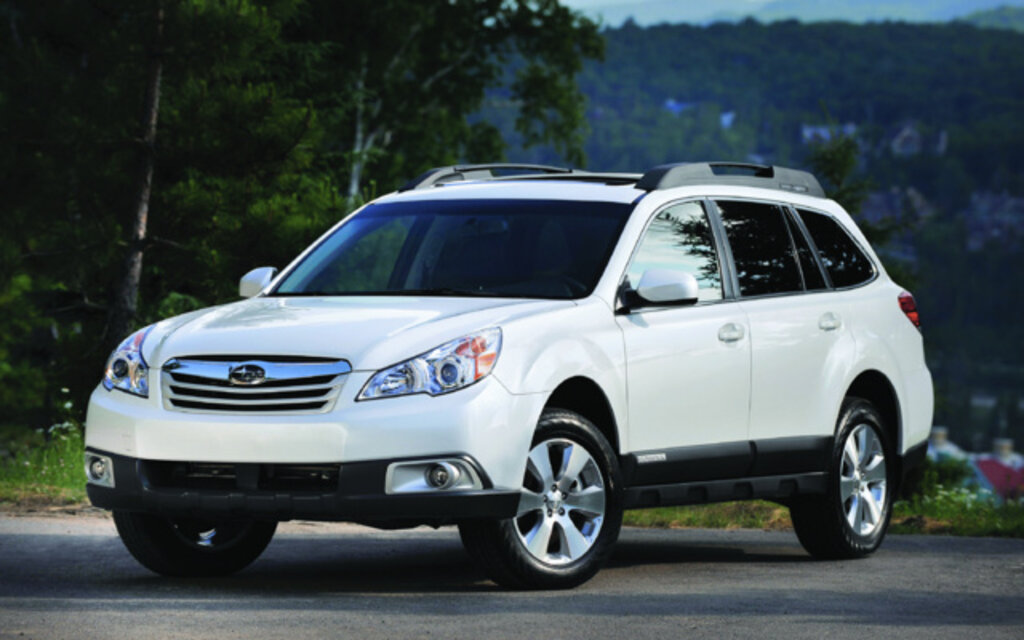
3. 2009 Subaru Outback: Final Year of the BL/BP Generation with Balanced Versatility
The 2009 Subaru Outback marked the end of the third-generation BL/BP lineup and is a strong choice for used buyers, especially given it records the lowest number of owner complaints of the generation.
It features a refreshed front grille and fascia that help it maintain a modern, sharp look, and some models were available with a desirable manual transmission. Stability control became standard across the range this year, and a new 2.5i Special Edition joined the lineup. Higher trims gained an upgraded nine-speaker audio system.
Positioned between a midsize wagon and a crossover SUV, the Outback offers better off-road ability than other wagons and more agile handling than many crossovers, though it lacks a third-row seat.
Three engines were available: a 170-hp 2.5L four-cylinder, a turbocharged 243-hp 2.5L, and a 245-hp 3.0L six-cylinder. Transmission choices included a five-speed manual or four-speed automatic for most trims, while upper trims were automatic-only.
Fuel economy ranged from 20–22 mpg combined for the base model to 20 mpg for the turbo and six-cylinder options. On-road, the Outback delivers sure-footed handling, sharp steering, and a comfortable ride, feeling much like the Legacy sedan it’s based on, but with 8.4 inches of ground clearance for light off-roading.
The turbocharged and six-cylinder models offer strong acceleration, while the base four-cylinder is adequate but sluggish with the automatic. Safety is excellent, with perfect five-star government crash test scores and standard stability control, ABS, and a full suite of airbags.
Inside, the 2009 Outback’s cabin is well-built and tastefully styled with faux wood or aluminum accents. Controls are straightforward, and seat comfort is good, though rear passenger space is tighter than in most crossovers.
Cargo capacity measures 33.5 cubic feet with the seats up and 66 cubic feet when folded practical, though not class-leading.
While it faces competition from wagons like the Volkswagen Passat and Volvo V70 or crossovers like the Toyota Venza and Honda CR-V, the 2009 Outback’s mix of style, handling, available power, safety, and all-weather capability make it one of the best years of its generation for buyers seeking a versatile, well-rounded vehicle.
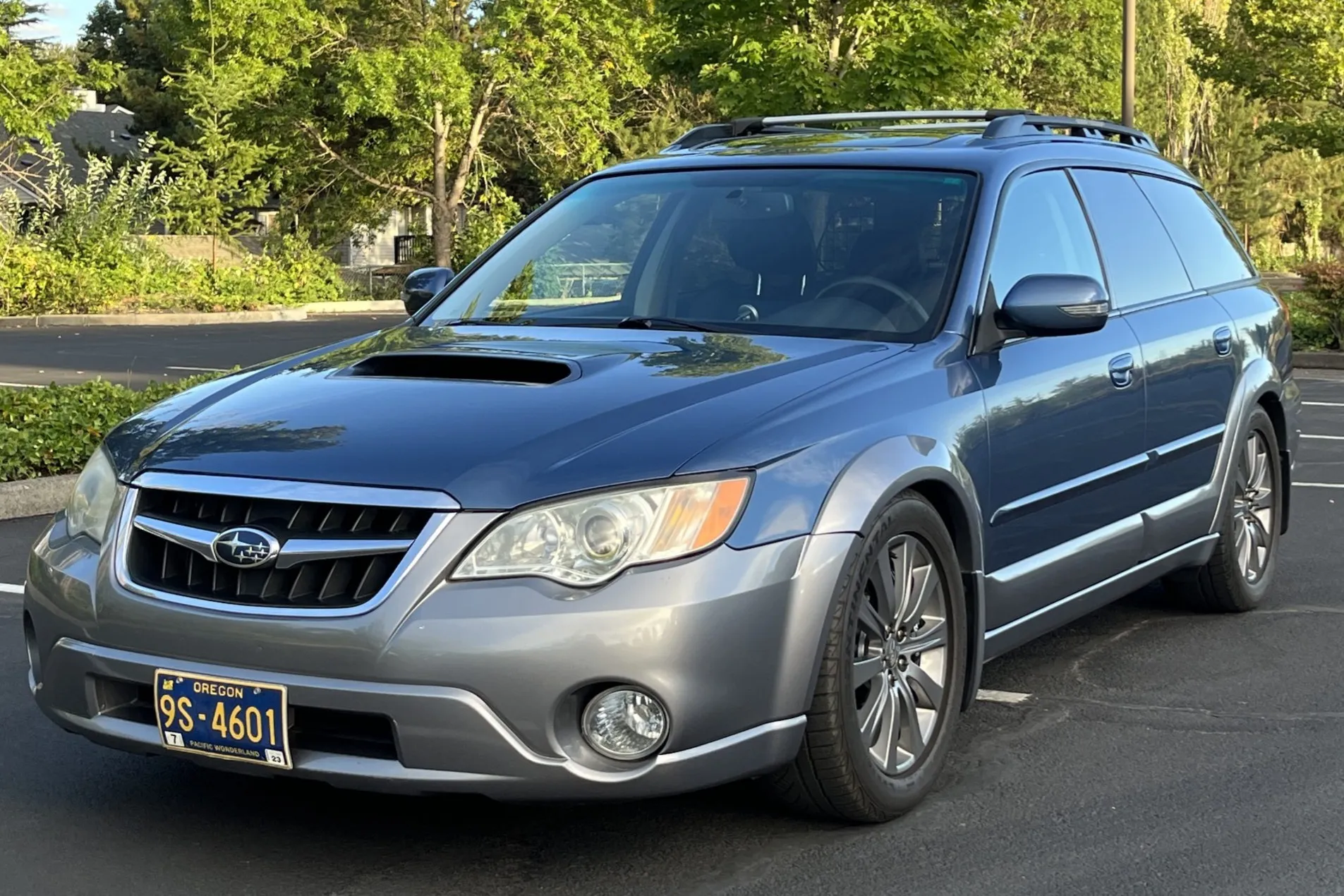
4. 2007 Subaru Outback: Affordable, Reliable, and All-Terrain Capable
For buyers seeking a budget-friendly yet capable all-wheel-drive vehicle, the 2007 Subaru Outback offers strong reliability, solid performance, and the rugged versatility Subaru is known for.
This model year introduced trim updates, including a new entry-level 2.5i Basic, upgraded audio features across all trims, and optional XM Satellite Radio. Higher trims gained SRS WOW audio technology, while the turbocharged XT Limited received Subaru Intelligent Drive (SI-Drive), allowing drivers to select from three performance modes.
The 2007 Outback maintains 8.7 inches of ground clearance, giving it a moderate off-road edge and excellent snow capability. While competition from crossovers like the Mazda CX-7, Nissan Murano, and Toyota Highlander offered more space, the Outback remained a unique choice for buyers wanting wagon handling with SUV-like versatility.
Performance options included a 175-hp 2.5L flat-four in base and mid-level trims, a 243-hp turbocharged version in the XT Limited, and a 245-hp 3.0L flat-six in the 3.0 R L.L. Bean model. Transmission choices ranged from a five-speed manual to four- or five-speed automatics, depending on trim.
The base engine provided adequate power for daily driving, but the turbo and H6 engines delivered far quicker acceleration. SI-Drive on automatic XT models improved responsiveness in “Sport Sharp” mode, though other automatics tended to upshift early, reducing performance.
On-road handling was composed and sure-footed, while off-road or in poor weather, the Outback excelled compared to most wagons and crossovers. Safety was a strong suit, with five-star NHTSA crash ratings, standard ABS, side and curtain airbags, and anti-whiplash head restraints. Stability control, however, was limited to higher trims.
Inside, the 2007 Outback offered a clean, high-quality cabin with straightforward controls. Materials and build quality were solid, and seats were comfortable, though rear passenger space was tighter than most rivals in the midsize segment.
Cargo capacity in wagon form measured 33.5 cubic feet with seats up and 66 cubic feet folded practical for most needs. While not the value leader against roomier crossovers, the 2007 Subaru Outback remained an appealing choice for buyers prioritizing reliability, AWD capability, and a balanced blend of carlike handling and rugged utility.
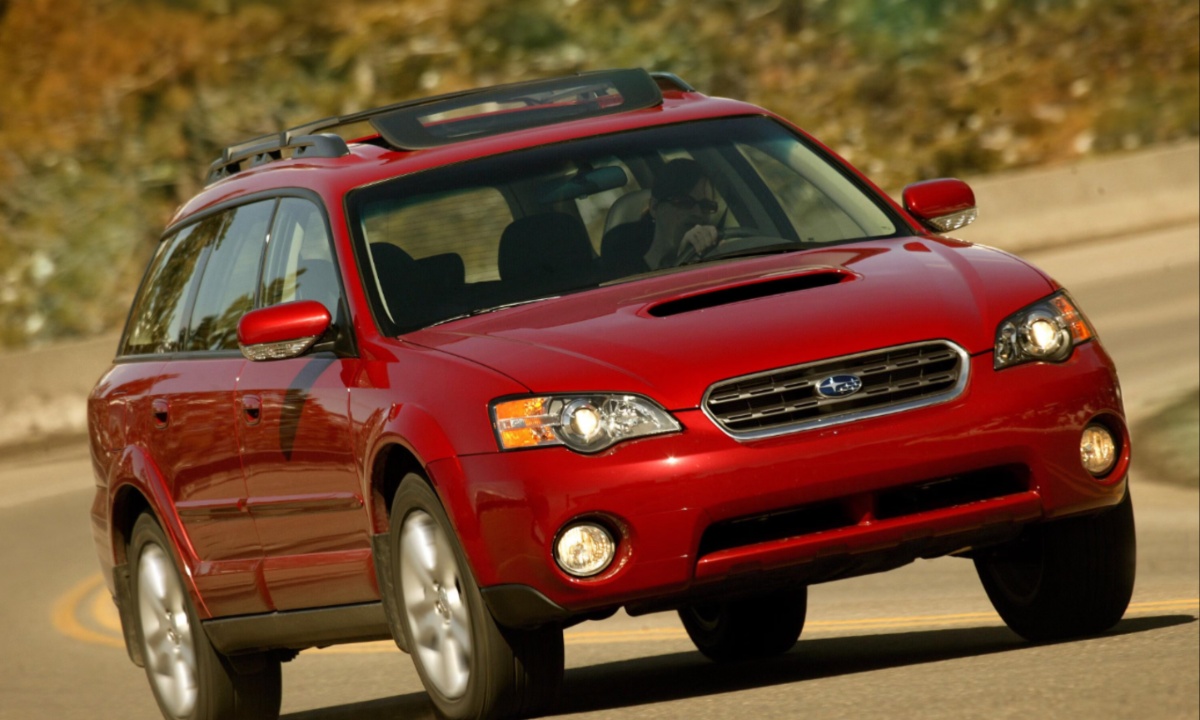
5. 2014 Subaru Outback – Safety, Versatility, and Outdoor Capability
The 2014 Subaru Outback remains a top choice for drivers seeking a combination of safety, reliability, and utility. Equipped with Subaru’s EyeSight driver-assist system, it introduced advanced features such as adaptive cruise control, lane departure warning, and pre-collision braking, further elevating its safety credentials.
With top crash-test scores from the NHTSA and the prestigious IIHS Top Safety Pick+ rating, the Outback offers strong peace of mind for families.
For 2014, updates were modest but useful: 2.5i Premium models gained standard heated seats, and the base 3.6R trim was dropped. Staying true to its heritage, the Outback continues to be a practical alternative to SUVs, performing well on both pavement and rougher terrain.
Under the hood, the Outback offers two engine choices: a 2.5-liter four-cylinder with 173 horsepower, paired with either a six-speed manual or a CVT, achieving up to 30 mpg highway, and a 3.6-liter six-cylinder producing 256 horsepower with a 3,000-pound towing capacity, though with reduced fuel efficiency at 20 mpg combined.
Standard all-wheel drive and 8.7 inches of ground clearance give it impressive capability for light off-road use, whether on snowy mountain roads, muddy country lanes, or dirt paths.
While not designed for extreme rock-crawling, it delivers 71.3 cubic feet of cargo space, a roof rack with folding cross rails, and a comfortable ride, making it ideal for road trips and outdoor adventures.
Inside, the Outback’s cabin feels spacious and family-friendly, offering ample rear legroom and reclining seatbacks. Its cargo versatility rivals competitors like the Toyota Venza and Honda CR-V, but the interior materials especially in higher trims can feel basic, and the available touchscreen navigation system may be frustrating to use.
The 2.5i Premium trim provides the best balance of comfort, features, and value, avoiding the base model’s underwhelming stereo. With few direct rivals that match its blend of ruggedness and refinement, the 2014 Subaru Outback stands out as a capable and practical crossover-wagon hybrid. It may not be the most luxurious choice, but for those who value durability, safety, and all-weather confidence, it’s a standout option.
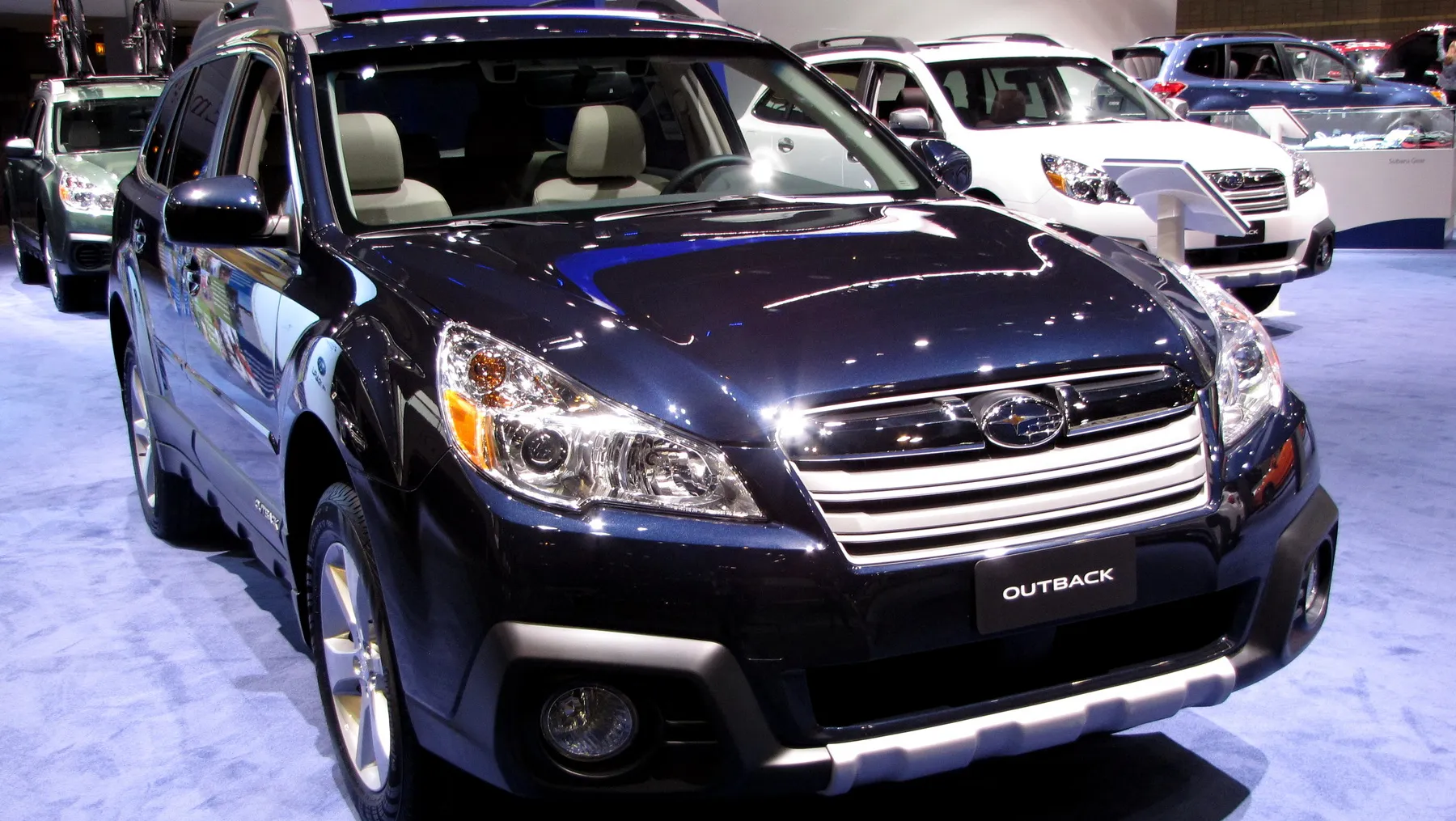
Also Read: 5 Cars That Rarely Need Warranty Claims and 5 That Max Them Out
5 With Major Issues
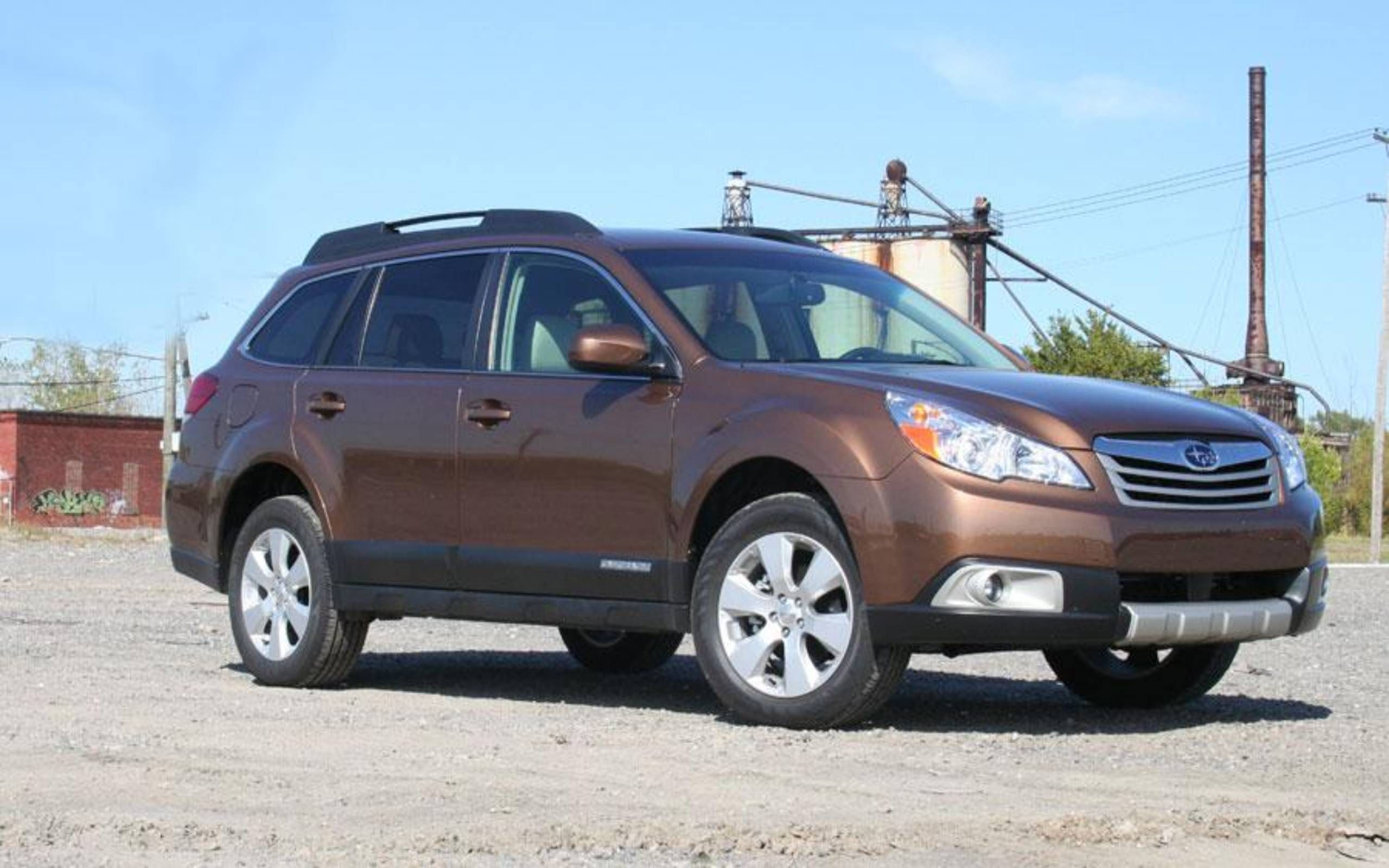
1. 2011 Subaru Outback – Reliability Challenges and Costly Maintenance
The 2011 Subaru Outback carried over much of the design and features from its predecessor but failed to improve on its most pressing issues. Transmission problems persisted, with many owners reporting hard shifts or complete failures, leading to expensive repairs.
Electrical faults, especially with the headlights, were widespread bulbs often burned out quickly, requiring frequent replacements. This model year was also impacted by the Takata airbag recall, posing serious safety concerns.
Another significant problem was excessive engine oil consumption, which left many owners needing constant top-offs between oil changes. Combined with higher-than-average maintenance costs, these problems greatly diminished the 2011 Outback’s long-term value and reputation in the used car market.
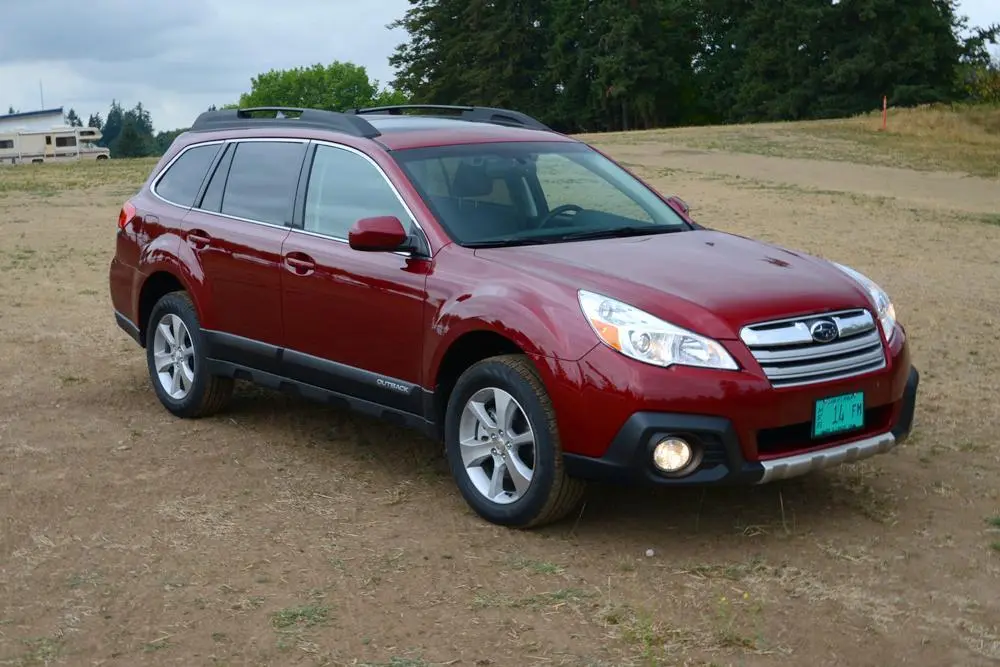
2. 2013 Subaru Outback – Severe Engine and Steering Problems
The 2013 Subaru Outback gained notoriety for excessive oil consumption caused by defective piston rings, which allowed oil to leak into the combustion chamber. This defect sparked a class-action lawsuit against Subaru and often resulted in premature engine failure, particularly after 75,000 miles.
Many owners faced escalating maintenance bills as oil-related problems worsened over time. Transmission issues also remained a problem, with reports of jerking or slipping during gear changes.
Additionally, steering complaints including stiffness and lack of responsiveness were common, raising safety concerns. These combined mechanical and operational flaws made the 2013 Outback one of the least reliable model years, and one that potential buyers were urged to approach with caution.
3. 2015 Subaru Outback – Electrical Issues and Performance Shortcomings
The 2015 Outback, part of Subaru’s fifth generation, brought design updates and improved safety features but was plagued by new frustrations. The infotainment system often froze or became unresponsive, complicating navigation and entertainment functions.
Electrical faults, particularly those draining the battery prematurely, left many owners stranded. While these problems seemed minor compared to engine defects, they caused significant inconvenience for daily driving.
On the performance side, the 2015 model faced criticism for weak acceleration, especially with the base four-cylinder engine, and uneven handling that compromised ride stability. These factors combined to reduce driving enjoyment and, for some, raised concerns about overall safety during highway travel.
4. 2017 Subaru Outback – Battery Failures and Structural Weaknesses
By 2017, Subaru still struggled to address recurring electrical issues, with widespread reports of dead batteries linked to faulty alternators. Owners frequently experienced being stranded as a result.
Another common problem involved the windshield, which often cracked spontaneously without any visible cause, leading to costly replacements and raising safety concerns. The infotainment touchscreen also suffered from malfunctions, including freezing and inaccurate touch response.
Steering pull issues further frustrated drivers, as the vehicle would veer slightly to one side, making it more tiring and potentially dangerous to operate on long trips. These persistent and varied flaws made the 2017 Outback a questionable choice for long-term ownership.
5. 2018 Subaru Outback – Persistent Flaws in a Modern Package
Despite being one of the newer models, the 2018 Subaru Outback carried forward several reliability problems from previous years. Electrical issues remained a leading complaint, with rapid battery drainage continuing to affect owners.
The windshield cracking issue also persisted, with some owners reporting multiple replacements within a short period. Steering pull problems remained unresolved, causing concerns about vehicle control at higher speeds.
While the 2018 model offered advanced safety features and modern technology, these benefits were overshadowed by its recurring mechanical and structural faults. For many, these defects compromised confidence in the vehicle’s durability, making this model year one that many advised avoiding despite its updated styling.
Choosing the right Subaru Outback can mean the difference between years of trouble-free driving and frequent, costly repairs. The models on our “forever” list demonstrate Subaru’s best qualities durability, all-weather confidence, and a balance of comfort and utility.
On the other hand, the years to avoid show how recurring mechanical flaws, electrical problems, and structural weaknesses can tarnish the ownership experience. By understanding the strengths and weaknesses of each generation, you can make an informed decision that matches your needs and budget.
In the end, a well-chosen Outback can serve as a dependable partner for road trips, outdoor adventures, and daily commutes for years to come.
Also Read: 10 Cars With Tricky Seatbelt Buckles for Elderly Passengers
