

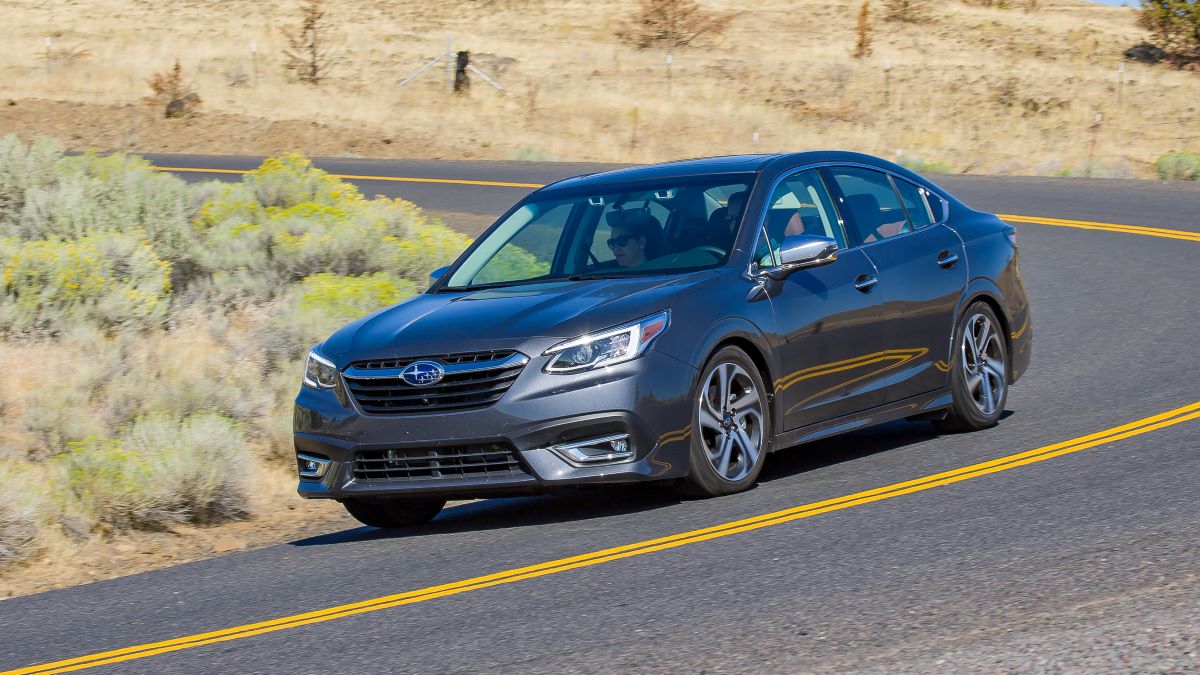
The Subaru Legacy has long been celebrated for its reliability, safety, and all-weather capability, making it a popular choice for families and commuters alike across the United States.
Known for its symmetrical all-wheel drive, practical design, and reputation for longevity, the Legacy can easily reach high mileage without significant issues provided it’s properly cared for.
However, like any vehicle, certain habits and neglect can drastically shorten its lifespan. Many drivers unknowingly engage in behaviors that put unnecessary stress on the engine, transmission, and overall structure, turning what could be a long-lasting car into a costly headache.
Here, we explore seven habits that are particularly damaging to the Subaru Legacy and provide insights on how to avoid them.
1. Ignoring Regular Oil Changes
One of the most common and destructive habits among Subaru Legacy owners is skipping or delaying oil changes. Subaru engines, particularly the flat-four (boxer) engines found in many Legacy models, rely on consistent lubrication to function efficiently.
Over time, oil breaks down and becomes less effective at reducing friction and heat in the engine. Neglecting oil changes can result in sludge buildup, increased wear on engine components, and even catastrophic engine failure.
For U.S. drivers who experience both hot summers and cold winters, oil quality becomes even more critical. Following Subaru’s recommended oil change intervals typically every 6,000 miles or six months, whichever comes first can significantly extend engine life and maintain performance.
Fresh motor oil is essential for keeping your engine clean, regulating its temperature, lubricating moving components, and protecting against rust and corrosion. However, even the best quality motor oil isn’t designed to last indefinitely, and delaying oil changes for too long can create serious problems.
Neglecting this basic service can cause increased engine troubles, as oil plays multiple roles in the engine, with lubrication being one of the most vital. When moving parts inside your engine aren’t properly lubricated, they grind against each other, which leads to premature wear and damage. Even if your oil levels appear sufficient, old or dirty oil can still create this issue.
Over time, the risks of major problems, including engine seizure, grow significantly, and you may face costly repairs such as rebuilding or replacing the engine, sometimes even replacing the entire vehicle.
Another consequence of neglecting oil changes is reduced fuel efficiency. When oil loses its lubricating ability, the engine is forced to work harder, consuming more fuel in the process. That means higher costs at the pump for drivers who fail to keep up with this service. Along with poor fuel economy, old oil can also impact your vehicle’s overall performance.
As oil ages, it becomes less effective at managing engine heat and keeping the engine clean, leading to sluggish performance and increased wear. Regular oil changes, therefore, not only protect your car from future damage but also ensure that it performs at its best every day.
There’s also the issue of warranty protection. Many new or certified pre-owned vehicles come with a manufacturer’s or dealer’s warranty, which can save owners significant money on repairs.
However, these warranties often require drivers to follow the recommended maintenance schedule, and skipping something as simple as an oil change can be enough to void the coverage. To avoid this, drivers should always follow the guidelines set out in their car’s manual, which outlines the best schedule for oil changes based on the vehicle’s needs.
When it comes to scheduling oil changes, there’s no universal answer. While many drivers assume that every 3,000 miles or three months is the rule, the reality is that each vehicle has its own requirements. The most reliable source of information is your vehicle’s manufacturer, but other factors also play a role.
For example, newer engines are more efficient with oil use than older engines, while the type of oil you choose has a major impact as well. Full synthetic oil, for instance, lasts longer than conventional oil and provides superior protection.
Your choice between conventional and full synthetic oil is another important consideration. Conventional oil, which is refined from crude, is the most commonly used due to its affordability. However, it doesn’t perform as well as other options and has a shorter lifespan.
Full synthetic oil, on the other hand, is manufactured to deliver superior performance. It offers enhanced heat resistance, better engine protection, and a much longer service life. Although it costs more upfront, many drivers find the benefits worth the investment, especially since synthetic oil can reduce the frequency of oil changes.
2. Using the Wrong Fuel or Low-Quality Gasoline
Fuel quality is another overlooked factor that can accelerate damage to a Subaru Legacy.
While the Legacy’s engine is designed to run on regular unleaded gasoline in most trims, using lower-quality or contaminated fuel can lead to carbon deposits, reduced fuel efficiency, and engine knocking.
In regions where ethanol-blended fuels are common, excessive use of high-ethanol blends can also affect engine components over time.
Consistently using top-tier or at least reputable fuel brands helps maintain engine cleanliness and prevents premature wear, keeping your Legacy running smoothly for hundreds of thousands of miles.
One of the first red flags is engine knocking or pinging noises, especially when accelerating. This sound often points to pre-ignition, which occurs when the air-fuel mixture ignites too early inside the cylinder. High-compression engines are particularly sensitive and usually require premium fuel, so filling them with regular gas can lead to long-term damage.
That knocking sound is essentially your engine begging for the right fuel. Poor acceleration is another warning sign. If your car feels sluggish when you hit the gas, the wrong fuel type may be interfering with combustion.
Engines designed for higher-octane fuel need it to prevent misfires and maintain power. Opting for cheaper gas can rob your car of horsepower, place extra stress on the internals, and ultimately shorten the life of your engine.
Lower fuel economy is another issue tied to using the wrong gas. If you find yourself making more trips to the pump, it may be because the engine isn’t burning fuel completely, forcing it to work harder.
What seems like a small savings per gallon often translates to more money wasted in the long run. Rough idling or stalling is also common, especially if ethanol-heavy fuel blends are used in older cars not designed for them. Instead of running quietly and smoothly, your vehicle may shake, stall, or idle unevenly, which eventually leads to expensive repairs in the fuel system.
Even your dashboard can reveal the problem. A check engine light that keeps coming back could signal combustion issues tied to poor fuel quality. Mechanics often trace these alerts to misfires, sensor problems, or emissions failures caused by the wrong gas. Exhaust smoke is another symptom to watch for.
Thicker, darker, or unusual-colored fumes can mean the fuel isn’t burning completely, leaving behind carbon buildup and dirty emissions. Ideally, your exhaust should be nearly invisible, so if it’s not, your fuel choice could be to blame.
Hard starts, especially in the morning or right after refueling, are another subtle clue. Fuels with high ethanol content tend to absorb moisture, which can separate inside the tank and make ignition more difficult.
This often feels like a minor annoyance at first but is usually a bigger problem in disguise. Along with that, a strong fuel odor around your car, especially when it’s turned off, can be a sign of fuel lingering in the exhaust or system. Beyond harming your engine, this creates a fire risk that shouldn’t be ignored.
Mechanics also frequently discover dirty or clogged spark plugs in cars running on the wrong type of fuel. Residue left behind by poor combustion coats the plugs, interfering with how they fire and leading to hesitation or stalling. If your spark plugs appear dirtier than expected for your mileage, the fuel is likely the culprit.
3. Aggressive Driving and Frequent Hard Acceleration
Many Legacy owners enjoy the car’s responsive handling and all-wheel-drive capability, but aggressive driving frequent hard acceleration, high-speed cornering, and sudden braking places significant strain on the engine, transmission, and suspension.
The continuously variable transmission (CVT) found in many modern Legacy models is particularly sensitive to aggressive use.
While the CVT is designed for smooth and efficient operation, repeated hard acceleration can cause overheating and premature wear.
Maintaining moderate driving habits, avoiding unnecessary high-speed bursts, and using engine braking can protect both the transmission and engine over the long term.
4. Neglecting Transmission Maintenance
Subaru’s CVTs are known for their smooth operation but require careful maintenance.
Many owners make the mistake of treating the transmission as “maintenance-free,” which can be a costly oversight. Regular transmission fluid changes are essential, even if the manufacturer labels the fluid as “lifetime.”
Over time, transmission fluid degrades, losing its ability to cool and lubricate the system properly. Neglecting this maintenance can lead to slipping gears, overheating, and eventually total transmission failure a repair that can easily cost thousands of dollars.
For Legacy owners, especially those driving in stop-and-go city traffic or hilly terrain common in parts of the U.S., adhering to transmission service intervals is crucial.
5. Overloading the Vehicle
Subaru Legacy models are designed to carry passengers and cargo within a safe weight range, but regularly exceeding this capacity can wreak havoc on the car’s suspension, brakes, and tires.
Overloading increases wear on struts, shocks, and wheel bearings, while also reducing braking efficiency and fuel economy.
For drivers who frequently transport heavy loads or travel with full families, it’s important to respect the vehicle’s gross weight limits. Ignoring this can lead to premature suspension failure and compromise vehicle safety during emergency maneuvers.
Understanding your car’s weight limits is essential for both safe and legal driving. Unfortunately, many drivers pay more attention to how many passengers a vehicle can carry while overlooking the actual weight capacity.
Exceeding these limits can bring about serious consequences, including accelerated wear and tear, increased accident risk, and even costly fines. Overloading isn’t just about carrying too much, it creates a chain reaction of problems that affect how your car performs, how safe it is on the road, and whether you are operating within the law.
One of the most immediate dangers of going beyond your car’s weight limit is compromised handling and stability. A vehicle’s suspension system is engineered to operate within a specific range, and when that range is exceeded, the suspension compresses and loses its ability to absorb bumps or maintain proper contact with the road.
This directly impacts steering responsiveness, making it harder to react quickly in emergencies, and often leads to increased body roll during turns, raising the likelihood of a rollover.
Braking also becomes less effective under heavy loads, requiring significantly longer stopping distances, an especially dangerous problem in wet or slippery conditions. Tires are put under additional strain as well, which increases their chances of overheating and blowing out, creating yet another potential loss of control.
The damage caused by overloading doesn’t stop at handling, it accelerates the wear and tear on several key components of your car. The suspension can suffer permanent damage, leaving shocks, struts, and springs in need of costly replacements. Brakes, forced to deal with the extra weight, wear out faster, as do pads, rotors, and calipers.
The transmission has to work harder, which makes it prone to overheating and early failure, while the engine itself experiences greater stress that reduces both its efficiency and its overall lifespan. Tires, already at risk of blowouts, degrade more quickly under excess weight, making them unreliable far sooner than expected.
Fuel economy is another hidden casualty of overloading. A heavier vehicle simply requires more energy to move, which leads to reduced efficiency at the pump.
The extra gas expenses pile up over time, and the added strain contributes to higher emissions, making the problem both costly and environmentally unfriendly.
The risks become even more severe in the event of an accident. Overloaded vehicles have longer stopping distances, increasing the chances of a collision. The additional weight also alters the crash dynamics, meaning your car may not behave as expected in an impact and could cause more severe injuries to those inside.
Rollovers are more likely as well, particularly during sudden maneuvers, while unsecured or poorly loaded cargo can shift violently during a crash, further destabilizing the vehicle and posing a serious hazard to both passengers and others on the road.
Beyond the safety implications, there are also legal ramifications for exceeding your vehicle’s weight limit. Laws vary depending on the jurisdiction, but drivers caught with overloaded cars can face fines, penalties, and in some cases even impoundment of their vehicle.
To stay compliant, it’s vital to understand the weight ratings provided by the manufacturer, which are usually listed on a sticker in the driver’s side doorjamb or in the owner’s manual.
6. Ignoring Warning Signs and Dashboard Lights
A common mistake among Legacy owners is ignoring warning lights and unusual sounds. Subaru vehicles are equipped with sensors that alert drivers to potential issues, from low tire pressure to engine problems.
Ignoring these signs can allow minor issues to escalate into major repairs. For example, a simple check-engine light could indicate anything from a loose gas cap to a failing catalytic converter.
Addressing these warnings promptly not only prevents further damage but also saves money in the long run.
Routine diagnostics at a trusted mechanic or Subaru service center are particularly important in the U.S., where temperature extremes and long highway drives can exacerbate underlying problems.
Most cars today use a red, amber, and green system for dashboard lights, a simple setup that drivers easily recognize. These lights are not to be ignored, as they serve as critical warnings about the health and safety of your vehicle. Understanding what these signals mean can save you from costly repairs, or worse, a dangerous breakdown.
Engine warning lights are some of the most important to pay attention to. If a red engine symbol appears, you should pull over as soon as possible and call for roadside assistance. One common issue is an overheating engine, often caused by low coolant levels. If the coolant is suddenly low, it may point to a leak in the system or even a failing head gasket, both of which can quickly make it unsafe to continue driving.
Another critical warning is the red engine oil light, which signals that oil pressure is either too high or too low. In both cases, pulling over immediately is necessary, as driving further risks catastrophic damage to the engine. Ignoring these red engine lights can cause serious, long-term harm to your car.
Brake-related warning lights are also common. The simplest cause is a handbrake that hasn’t been fully released, which is easy enough to fix. However, if the light appears frequently, it could mean low brake fluid or worn components.
If the general brake system warning symbol illuminates, it often points to worn-out brake pads that need replacing. In such cases, arranging repairs promptly is crucial, and you should avoid long trips until the issue is resolved.
The anti-lock brake system (ABS) warning light is another important indicator. When it appears, it means something is wrong with the ABS or the electronic stability program (ESP). While the brakes themselves may still function, this safety feature plays a vital role in sudden stops and on slippery roads. For that reason, the car should be taken to a garage as soon as possible to resolve the issue.
Battery-related warnings are fairly straightforward. It’s normal for the battery symbol to flash when you first start the engine, but if it remains lit, there’s a problem.
A dead battery will be obvious if the engine refuses to start, but if the light stays on while the car is moving, it suggests the battery isn’t charging properly. This could be caused by a failing alternator, a weak battery, or a faulty electrical connection that needs attention.
Finally, seatbelt and airbag warning symbols highlight safety issues inside the car. The seatbelt light is a simple but effective reminder that someone in the vehicle has not buckled up properly.
Once the belt is fastened, the light disappears. Airbag warnings, however, require immediate attention. If the symbol appears, it could mean that an airbag may not deploy in a collision—or worse, that it could deploy unexpectedly. Either way, it’s a serious risk, and the airbags should be inspected by a garage without delay.
7. Skipping Tire and Brake Maintenance
Tires and brakes are critical to the Legacy’s performance and longevity. Failing to rotate tires regularly, maintain proper tire pressure, or replace worn brake pads can lead to uneven tire wear, decreased fuel efficiency, and increased stress on suspension components.
In the U.S., where driving conditions vary from snowy northern states to hot southern highways, keeping tires in good condition is essential for traction and safety.
Regular brake inspections prevent not only performance issues but also costly rotor or caliper replacements.
Simple habits like monitoring tire tread, checking brake responsiveness, and maintaining proper alignment can prevent a cascade of problems that shorten the vehicle’s lifespan.

The Subaru Legacy is a robust and reliable vehicle when treated with care, but it is not immune to neglect or poor driving habits.
Ignoring essential maintenance, using low-quality fuel, driving aggressively, overloading, overlooking warning signs, and neglecting tires and brakes are all behaviors that can significantly reduce the life of your Legacy.
For U.S. drivers, where road conditions, climate, and driving patterns vary widely, paying attention to these seven areas can mean the difference between a Legacy that reaches 200,000 miles or one that fails far too soon.
By adopting good maintenance habits, driving responsibly, and addressing small issues promptly, Subaru owners can enjoy the comfort, safety, and performance of their Legacy for years to come preserving both their investment and peace of mind.
