

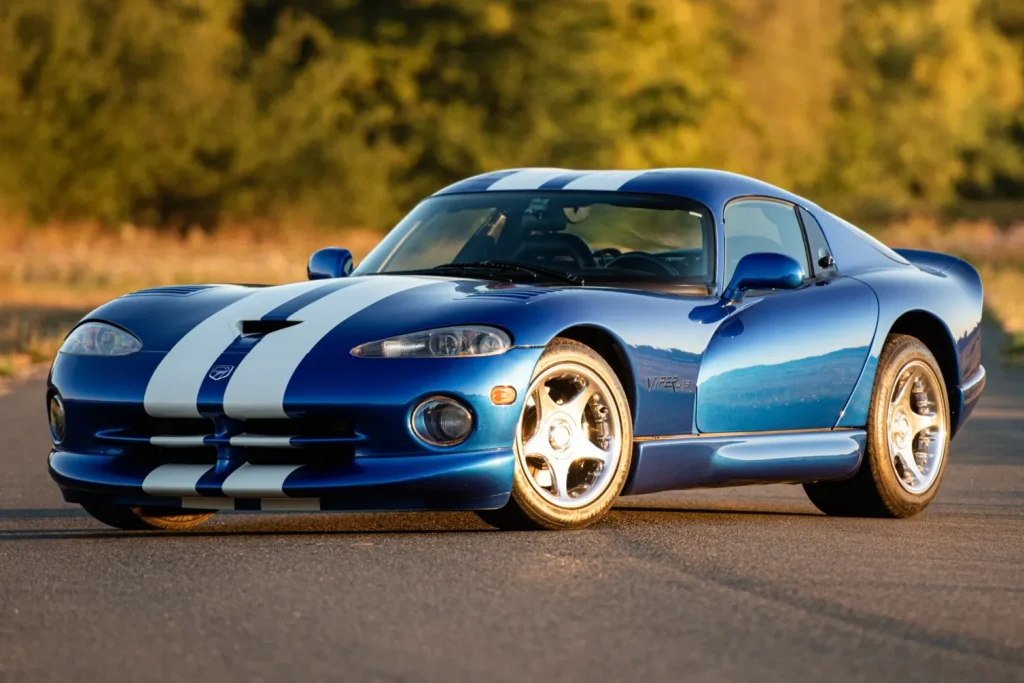
The Dodge Viper has always stood as an uncompromising symbol of raw power and mechanical purity.
Unlike many high-performance cars that rely heavily on electronic aids, turbocharging, or hybrid technology, the Viper has remained loyal to its distinctive formula: a massive naturally aspirated V10 engine, rear-wheel drive, and styling that screams presence on the road.
This machine doesn’t just carry a name, it carries a reputation that demands respect, both from drivers and from those tasked with maintaining it. Yet, while the car is engineered to deliver spine-tingling performance, its longevity is not invincible.
Many owners unfortunately shorten the lifespan of their Vipers, often unknowingly, by falling into basic oversights that can take a toll on the car’s mechanical health.
Owning a Dodge Viper isn’t just about enjoying bursts of acceleration or taking sharp corners with ferocity. It is also about understanding what it needs to continue performing at its peak long after its odometer surpasses the early milestones.
Neglecting certain practices or skipping essentials can set the stage for costly breakdowns, and in some cases, irreversible damage.
From routine care to driving etiquette, every decision made by an owner contributes toward whether this aggressive beast stays reliable or becomes plagued with problems.
The truth is, the Viper responds best to disciplined ownership. Like a precision-crafted instrument, it thrives when given attention and falters when taken for granted. That is why it is important to recognize the common mistakes that often cut short its potential lifespan.
Addressing these oversights does not just mean saving money on repairs, but it also means preserving the thrill that this machine delivers like no other.
With that foundation in mind, let’s look at the most frequent missteps and how they affect the Viper’s endurance over time.
Also Read: 10 Pro Tips That Keep a Chevy HHR Reliable for Daily Driving
1. Ignoring Regular Oil Changes
The Dodge Viper’s massive V10 engine is unlike typical high-performance engines, not only in size but also in the unique stresses it faces under heavy loads.
With so much displacement and heat generated, its lubrication system plays a vital role in keeping all components working smoothly. Skipping or delaying oil changes is among the quickest ways to compromise this machine’s endurance.
Some owners assume that because they drive the car occasionally, they can stretch the time between services. In reality, even if the vehicle sees fewer miles, the oil continues to age. Factors like moisture buildup, fuel dilution, and debris accumulation reduce oil quality over time.
The Viper responds best to high-quality synthetic oil designed for extreme heat cycles. If this maintenance step is neglected, the oil’s protective qualities deteriorate. This increases friction within the engine, leading to premature wear on bearings, lifters, pistons, and cylinder walls.
Once internal wear starts, the integrity of the powerplant declines and often results in costly rebuilds. For a car as torque-heavy as the Viper, every ounce of lubrication matters.
Another problem that stems from infrequent oil changes is sludge formation. Sludge clogs small passages, preventing oil from reaching critical points inside the engine.
Once flow is restricted, hot spots develop, which can crack seals and accelerate mechanical damage.
Consistently respecting oil-change schedules prevents this fault. Beyond frequency, the choice of filter is equally important. Using budget filters to save money will backfire when unfiltered debris circulates through the engine.
Owners who stick to disciplined oil maintenance often see their Vipers run strong for decades. It may feel routine, even mundane, but this practice forms the foundation for protecting the V10’s health.
What’s at stake is not just avoiding immediate breakdowns but preserving the thrill of raw performance that defines the car. Skipping oil changes might seem minor in the short term, but over years of ownership, it is the most damaging oversight.
2. Overheating Due to Cooling Neglect
Cooling is vital in a vehicle that produces massive horsepower from a naturally aspirated V10. The Viper has always had a reputation for running hot, and if that heat is not controlled, it severely shortens the life of the powertrain.
Owners who overlook the cooling system often experience problems that could have been prevented with consistent checks and timely service.
The radiator, coolant hoses, and water pump all work together to keep temperatures within acceptable limits. If coolant is left unchanged for years, its ability to protect against corrosion diminishes.
Corrosion inside the cooling passages is destructive because it weakens aluminum components and restricts flow. A restricted passage means the engine runs hotter than intended, raising the likelihood of head gasket issues or even warp damage to metal components.
Another common mistake is ignoring the radiator fans and their relays. These cars rely heavily on fan operation when idling during traffic or warm days. A fan failure often results in sharp temperature spikes.
By the time the driver notices the temperature gauge climbing, the engine may already be under serious stress. The thermostat also deserves attention, as a stuck unit can lead to circulation failure, leaving the engine without proper control over its heat cycle.
Flushing the cooling system regularly, checking for hose integrity, and using the right coolant mixture preserves the engine’s ability to stay cool.
High-output engines are unforgiving when exposed to consistent overheating, and once a Viper’s V10 experiences such cycles, its service life is inevitably cut short.
Drivers need to understand that heat is the greatest enemy of longevity. The Dodge Viper rewards proactive care of its cooling system with years of stable performance.
A neglected cooling system, on the other hand, is almost guaranteed to lead to irreversible engine issues that no amount of belated maintenance can reverse.
3. Using Poor-Quality Fuel
The Dodge Viper’s compression ratios and engineering demand fuel that meets specific octane ratings to operate at peak efficiency.
Yet many owners occasionally cut corners by filling up with lower-grade fuel to save money. Doing this repeatedly causes more than just a small performance drop; it actually harms the long-term health of the engine.
Lower-octane fuel creates pre-ignition or knocking under heavy load. This constant knocking acts like a hammer against pistons, bearings, and connecting rods.
Over time, the accumulation of these stresses can lead to internal damage that shortens engine life. Given how much torque the V10 produces, even mild detonation can translate into severe mechanical wear.
Beyond octane rating, some poorly maintained stations have fuel contaminated with water or debris. Contaminated fuel clogs injectors and damages sensors within the engine’s management system.
Once injectors are clogged, mixture delivery becomes uneven, leaving some cylinders running lean. Running lean in a high-output car like the Viper leads to overheating and carbon buildup, both costly to fix.
It is also important to remember that modern fuels come with varying levels of detergent additives. High-quality premium fuels contain essential detergents that clean valves and maintain injector spray patterns.
When owners constantly run low-grade or no-name fuel, deposits accumulate in the combustion chamber, hurting fuel economy and acceleration.
The best approach for maintaining longevity involves consistently using fuel that meets the manufacturer’s recommended octane requirement.
This ensures not only proper combustion but also protection against internal wear. Even if the car is not driven frequently, it is wise to use stabilizers when storing it for long periods to prevent varnish or gumming inside the tank.
Compromising on fuel quality is a false economy. The money saved per gallon pales compared to the repair bills triggered by damaged pistons, valves, or injectors.
Viper owners who respect this principle protect both performance and durability every time they fill the tank.
4. Neglecting Tire Condition and Alignment
Some may not immediately associate tires with longevity of a powerful sports machine, but they directly affect how every component downstream wears.
For the Dodge Viper, with its immense torque and aggressive handling dynamics, improper tire maintenance quickly leads to suspension strain, uneven power distribution, and increased risk of accidents.
Neglecting tire health comes in several forms. Running on worn tread greatly reduces grip, pushing the electronic systems and suspension components to work harder under acceleration or braking.
Worn rubber also forces the differential and axles to manage more slipping, which builds unnecessary stress. The result is accelerated wear throughout the drivetrain.
Alignment is equally important. A Viper with alignment issues forces the suspension to fight constant resistance from the tires.
Not only does this cause uneven tread wear but it also stresses bushings, ball joints, and steering components far earlier than intended. The sharper geometry of these cars means that even small deviations in alignment create significant handling instability.
Another overlooked issue is tire pressure. When pressure strays too far from recommended values, excessive heat builds up in the rubber.
That heat not only shortens tire life but also transmits more shocks into the suspension and chassis. Both underinflation and overinflation distort the intended handing of the V10 beast, making it harder for the vehicle to distribute loads evenly.
Owners who take tire maintenance seriously not only enjoy safer driving but also extend the lifespan of related mechanical components.
Regular checks, keeping proper inflation, and ensuring alignment within factory specs keep the car’s handling sharp while reducing unnecessary strain.
Ignoring tires may seem minor compared to mechanical neglect, but it creates a chain reaction of wear.
A Viper relies on strong tire grip to transfer its brutal torque safely to the ground. When that connection falters, it disrupts balance across the entire system, slowly eroding the car’s ability to perform reliably.
5. Skipping Brake Maintenance
Brakes provide far more than safety; they protect multiple systems by ensuring that the car can manage its extreme performance responsibly.
For the Dodge Viper, braking strength matches its acceleration. When an owner neglects servicing the brakes, wear spreads beyond the discs and pads, spilling into calipers, ABS systems, and even suspension integrity.
Old or worn pads damage rotor surfaces. Once scoring sets in, every stop becomes harsher, sending vibrations through the entire system. If left unchecked, these vibrations fatigue suspension bushings and ball joints.
Calipers also suffer since pushing unevenly worn pads over damaged surfaces causes seals to overstretch, eventually leaking fluid. A leaking caliper not only lowers braking efficiency but also allows air to enter the system, which is disastrous for performance.
Brake fluid itself is easy to overlook, yet it is highly hygroscopic, meaning it absorbs moisture over time. Moisture lowers the boiling point of the fluid, causing fade under hard stops.
In the Viper, fade is more pronounced because of the high level of force its brakes endure. A car regularly pushed to aggressive driving will quickly expose any weaknesses in the braking system.
Owners should consistently renew brake fluid every couple of years and make sure the lines are free from leaks. High-quality pads and rotors built for performance driving are not optional; they are essential for the car’s long-term health.
Cheaper components wear faster and compromise the very stopping power required to preserve the Viper’s integrity.
Neglecting brake care not only risks personal safety but also accelerates wear across tires, suspension, and driveline.
A car as powerful as this one depends on balanced braking to stay mechanically sound. Long-term durability relies just as much on stopping systems as it does on the engine itself. Ignoring this fact is one of the gravest mistakes a Viper owner can make.
6. Improper Storage Habits
Many Vipers spend extended periods unused in garages, especially during winter months. While storing a car seems safe, improper storage is another silent enemy of longevity.
When an owner simply parks and forgets the vehicle, multiple parts begin deteriorating silently over time.
One of the most immediate issues is battery drain. Without a proper trickle charger, the battery weakens during storage. Deep discharges severely shorten battery life.
Beyond that, fluids settle in place, leading to corrosion within cooling systems, brake lines, or fuel components. Tires develop flat spots when left resting on one position for months, which not only creates vibrations but also weakens the structure of the rubber.
Moisture is another problem. Garages that are not climate-controlled allow condensation to form on metal surfaces, leading to rust or electrical corrosion.
The exhaust system, being exposed to internal and external moisture, is particularly vulnerable. Fuel lines and tanks are also at risk if the tank is left partly empty, since exposed surfaces inside accumulate rust.
Basic steps such as filling the tank, adding stabilizers, lifting the car slightly off its tires, and using covers to control dust help prevent those issues.
Disconnecting or properly managing the battery ensures it stays strong after periods of non-use. Similarly, gently rolling the car every few weeks prevents flat spotting and keeps internal components lubricated.
Owners sometimes underestimate how harmful neglectful storage practices are. They assume the car is safe as long as it is parked indoors. In reality, improper storage sets off a slow aging process that undermines components in silence.
Protecting a Viper properly during downtime is just as critical to longevity as day-to-day maintenance. Those who treat storage with discipline are rewarded with a car that feels fresh and responsive even after months of rest.
7. Aggressive Driving Without Mechanical Sympathy
The Dodge Viper is engineered as a raw driver’s machine, but its components are not indestructible. Some owners believe the car’s reputation for toughness means it can endure endless abuse. In truth, pushing the vehicle hard without understanding its limits shortens life across multiple areas.
One common oversight is running the engine hard before it reaches proper operating temperature.
High revs on a cold engine accelerate wear dramatically because cold oil does not lubricate efficiently. Pistons and valve components endure metal-on-metal stress during these early moments, which leaves lasting scars internally.
Another form of abuse comes from repetitive aggressive clutch dumps or burnouts. While dramatic, this practice overheats the clutch, differential, and half shafts. Replacing these parts is not only expensive but also often unnecessary if mechanical sympathy were respected.
Track driving without preparation is another pitfall. The Viper is capable of delivering thrilling track sessions, but systems such as brakes, cooling, and suspension must be properly inspected and prepared beforehand. Entering multiple hard laps without adjustments results in overheating, fade, and stress fractures across components.
Owners need to practice restraint even though the car tempts spirited driving. Gradually warming up, respecting cooldown periods, and avoiding needlessly harsh maneuvers keep the car sharp for years.
Driving aggressively within limits and with preparedness is different from reckless abuse. Cars that are treated kindly often last close to original strength decades later, while abused ones demand costly overhauls far earlier than expected.
The truth is, the Viper thrives on respect. Giving the machine mechanical sympathy honors its design and engineering. Failing to do so transforms an extraordinary car into a money pit far too soon.
8. Overlooking Transmission and Differential Fluids
The Viper’s drivetrain is more than just its powerful engine. The transmission and differential handle extreme torque levels, and both depend heavily on fresh fluids to function reliably over the long haul.
Many owners overlook these systems, focusing instead on the obvious needs of the engine. This neglect often leads to premature failures.
Transmission fluid protects gears, synchronizers, and bearings. When it becomes old, it loses viscosity and fails to properly coat surfaces.
This results in grinding, shifting issues, and eventual gear damage. The Viper’s manual gearbox takes heavy loads during spirited driving, making clean, high-quality fluid a must.
Similarly, the differential is constantly exposed to enormous stress given the engine’s torque output.
Old or insufficient fluid cannot protect the ring gears and bearings against heat buildup. Once surfaces are scarred, the wear only accelerates until the unit needs a rebuild. This neglect becomes one of the costliest repair bills on the car.
Another mistake is using the wrong type of lubricant. Owners sometimes replace fluids with generic options not designed for high-performance tolerances.
While the car may run temporarily, the long-term consequences are severe. Using lubricants that meet or exceed factory recommendations ensures effective load protection.
Routine checks and fluid changes are the key. Even if mileage is low, fluid still degrades with time, meaning that cars stored frequently also need attention. Ignoring this schedule almost guarantees drivetrain weakness will surface earlier than expected.
For a machine as torque-heavy as the Dodge Viper, protecting the components tasked with channeling that power is just as important as safeguarding the V10 itself.
Failing to service the transmission and differential is simply accelerating the car’s journey toward costly repairs and shorter life.
9. Skipping Professional Inspections
Many enthusiasts enjoy working on their own cars, and while the Dodge Viper allows for certain levels of personal care, relying solely on DIY maintenance is risky.
These cars benefit from periodic professional inspections that go beyond basic checks. Skipping expert eyes on the vehicle is an oversight that undermines its longevity.
Professionals often spot wear patterns or small leaks that regular owners overlook. For example, minor seepage around valve covers or rear main seals can be identified early, before turning into large financial burdens.
Suspension geometry shifts, early differential play, or heat-warp signs in brake rotors are other flaws that a professional inspection reveals.
Diagnostics tools also play a key role. Skilled technicians can scan the vehicle’s computer systems for stored error codes that may not trigger an immediate check-engine light.
These small signals tell a story about developing issues in sensors, ignition, or fuel delivery systems. Left unnoticed, they grow into bigger failures.
Another advantage of professional inspections lies in the technical service updates issued by manufacturers.
Owners unaware of certain updates sometimes miss preventive repairs that preserve reliability. Experienced service centers keep up with these bulletins, ensuring that issues get addressed before they result in mechanical decline.
The cost of inspections is far less than the burden of replacing major systems prematurely. Trusting expertise doesn’t take anything away from the enjoyment of self-maintenance. Instead, it provides an essential safety net that keeps the car at its best.
Overlooking this step means potential threats quietly grow until they cause sudden breakdowns.
For a car as specialized as the Dodge Viper, professional oversight is not an option but a necessity. Owners who appreciate this principle safeguard their machine for many years, while those who don’t often face shortened life spans and mounting expenses.
Also Read: 10 Weekend Projects That Keep a Dodge Durango Running Strong
