The Mazda6 has long been a standout in the midsize sedan category, offering a rare combination of style, engaging performance, and everyday practicality. Known for its sleek design and driver-focused dynamics, the Mazda6 has often been praised as one of the most enjoyable sedans to drive in its class.
Yet, with over two decades of production, not every model year has delivered the same level of consistency. Some years earned a reputation for reliability and refinement, while others were marked by costly issues that frustrated owners.
For buyers exploring the used-car market, knowing which Mazda6 model years stand the test of time is key to making a smart purchase.
This article highlights five of the most dependable and rewarding Mazda6 model years that not only hold up mechanically but also continue to deliver the sporty personality and upscale feel that Mazda has built its reputation on.
5 Mazda6 Years That Hold Up
1. 2015 Mazda6
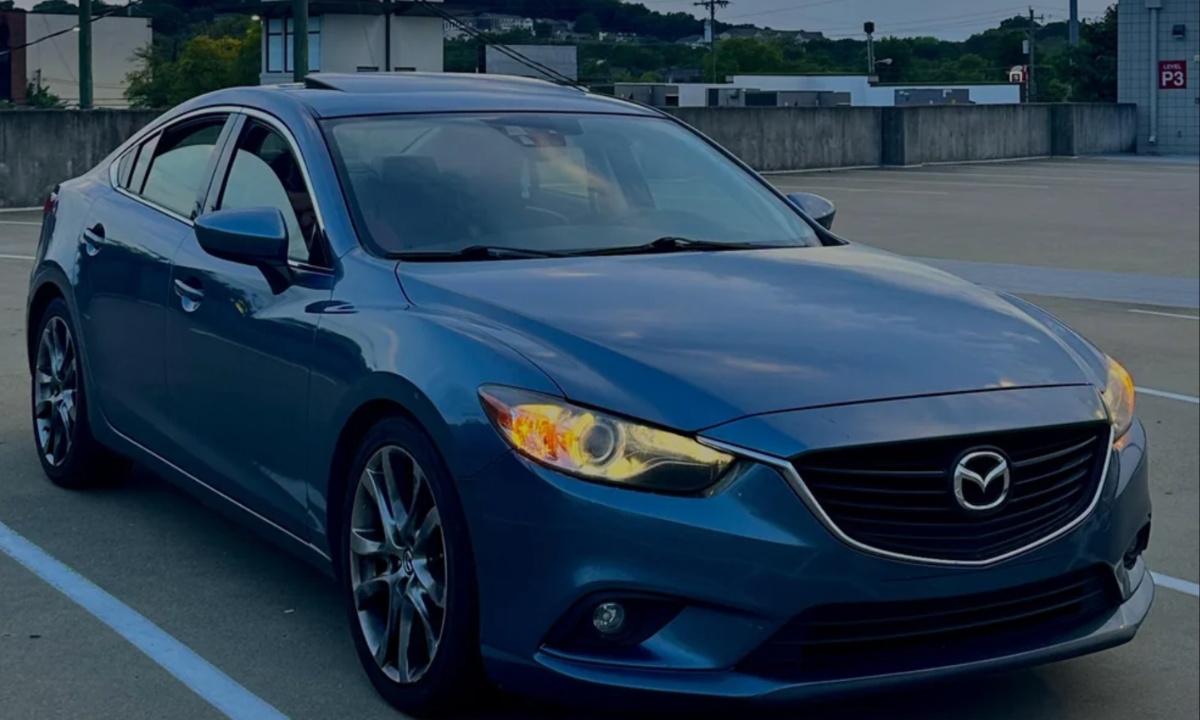
The 2015 Mazda6 stands out in the crowded midsize sedan market by combining style, performance, and efficiency in a package that appeals to both families and driving enthusiasts.
Recognized with the J.D. Power Performance Award and scoring 80/100 for quality and reliability, this model year proved to be one of Mazda’s most well-rounded offerings. Powered by a 2.5-liter four-cylinder engine producing 184 horsepower, it can be paired with either a six-speed automatic or six-speed manual transmission.
Owners praised the automatic’s responsiveness, while fuel efficiency remained a strong selling point, achieving up to 32 mpg combined when equipped with Mazda’s i-Eloop system. Despite minor reports of electrical problems, the 2015 Mazda6 earned a reputation for dependability, with relatively few complaints compared to rivals.
Performance and handling are key strengths of the 2015 Mazda6. In Edmunds testing, it accelerated from 0 to 60 mph in 7.6 seconds, placing it among the quicker four-cylinder sedans in its class.
The steering is communicative and precise, while the firm suspension provides agile cornering dynamics that make it more engaging than most competitors. However, this sporty character comes at a cost, as the ride can feel stiffer than the Honda Accord or Toyota Camry, particularly with the available 19-inch wheels.
While rivals may offer more powerful turbocharged or V6 options, the Mazda6 impresses with its balance of efficiency, responsive transmission, and driving excitement qualities not commonly associated with family sedans.
Inside, the 2015 Mazda6 continues to impress with a spacious cabin and refined design. Rear passengers benefit from generous legroom and headroom, although the sloping roofline slightly compromises visibility and makes the cabin feel tighter than some rivals.
Trunk space measures 14.8 cubic feet, providing adequate storage for daily use. Higher trims feature upscale touches such as leather upholstery with contrast stitching, polished aluminum accents, and a driver-friendly layout.
The Grand Touring trim adds luxury features like premium audio, navigation, and optional safety technology, while the Touring trim introduced standard keyless entry and ignition.
Although the infotainment system falls short of competitors with its lower resolution and clunky interface, Mazda included a multifunction control knob that improves usability.
Safety ratings further establish the 2015 Mazda6 as a strong contender in its class. The model received a five-star crash rating from the NHTSA and high marks from the IIHS, with the small-overlap test being the only area to earn an “Acceptable” grade.
Standard safety features included antilock brakes, stability control, side curtain airbags, and active head restraints. Advanced systems like blind-spot monitoring, rear cross-traffic alert, Smart City Brake Support, and lane-departure warning were available on higher trims, enhancing driver confidence.
While alternatives like the Honda Accord, Nissan Altima, and Ford Fusion offer slightly more comfort or stronger engine options, the Mazda6 distinguishes itself with its sporty personality and efficiency.
For buyers seeking a family-friendly sedan that doesn’t sacrifice driving enjoyment, the 2015 Mazda6 remains one of the most rewarding picks in its class.
2. 2016 Mazda6
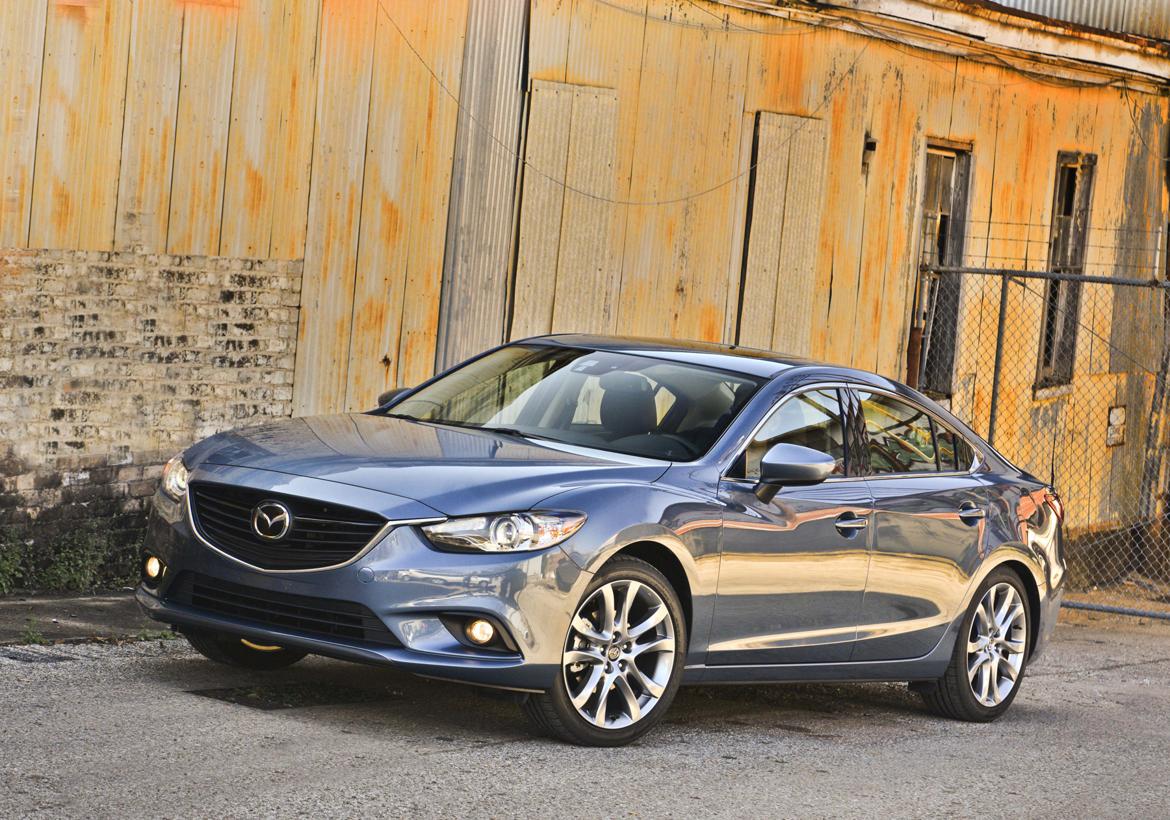
The 2016 Mazda6 stands out as a competitive choice in the midsize sedan segment, combining reliability, safety, and performance. Backed by a “great” 81/100 reliability rating from J.D. Power and an 80/100 quality score, it typically sells for between $12,706 and $16,855 on the used market.
It earned the prestigious Top Safety Pick+ designation from the Insurance Institute for Highway Safety (IIHS) due to improvements in airbag design and deployment timing, enhancing occupant protection in small overlap frontal crashes.
While the Mazda6 has received some complaints about transmission issues and minor interior accessory problems, it remains widely appreciated for its roomy cabin, refined interior design, and standout fuel economy.
Mazda made several updates in 2016 to keep the model competitive. The Grand Touring trim was refreshed with revised front and rear styling, new LED headlights, and improved interior trim for a more premium feel.
A 7-inch touchscreen infotainment system became standard on most models, along with a Sport mode for automatic transmissions and an electronic parking brake. These changes, combined with an already attractive and athletic design, made the 2016 Mazda6 one of the most visually distinctive sedans in its segment.
Despite its sporty character, the car still offered practicality through spacious seating, a well-designed trunk, and high-quality materials. However, the rear cabin’s sloping roofline slightly limited visibility and contributed to a more confined feel compared to rivals like the Toyota Camry and Honda Accord.
Performance is one of the Mazda6’s strongest attributes. Powered by a 2.5-liter four-cylinder engine producing 184 horsepower and 185 lb-ft of torque, the sedan delivers brisk acceleration, with automatic models reaching 60 mph in 7.6 seconds.
Buyers could choose between a six-speed manual or automatic transmission, with the Grand Touring trim exclusively offering the latter.
Fuel economy is exceptional, with EPA estimates of 31 mpg combined (26 city/38 highway) for the automatic, 29 mpg combined for the manual, and an impressive 32 mpg combined when equipped with the optional i-Eloop regenerative braking system.
Alongside efficiency, the sedan’s nimble handling, precise steering, and engaging chassis tuning give it a sportier personality than most competitors, though the stiffer ride may feel less comfortable on rough roads. The absence of an optional V6 or turbocharged engine remains one of its few performance drawbacks.
In terms of safety and technology, the 2016 Mazda6 is well-equipped. Standard features include antilock brakes, stability and traction control, airbags, and active front head restraints.
Most trims feature a rearview camera, blind-spot monitoring, and cross-traffic alerts, while advanced options such as Smart City Brake Support and lane departure warning are available in higher trims. In government crash tests, the sedan achieved a five-star safety rating, while the IIHS recognized it with top marks in nearly every category.
Inside, the updated infotainment system and premium finishes enhanced usability and comfort, though some limitations exist such as the touchscreen disabling while driving, leaving the console controller as the only option.
The 2016 Mazda6 strikes a unique balance of safety, efficiency, style, and driving enjoyment, making it an appealing choice for those seeking more personality in a family sedan compared to conventional rivals like the Accord, Camry, or Altima.
3. 2017 Mazda6
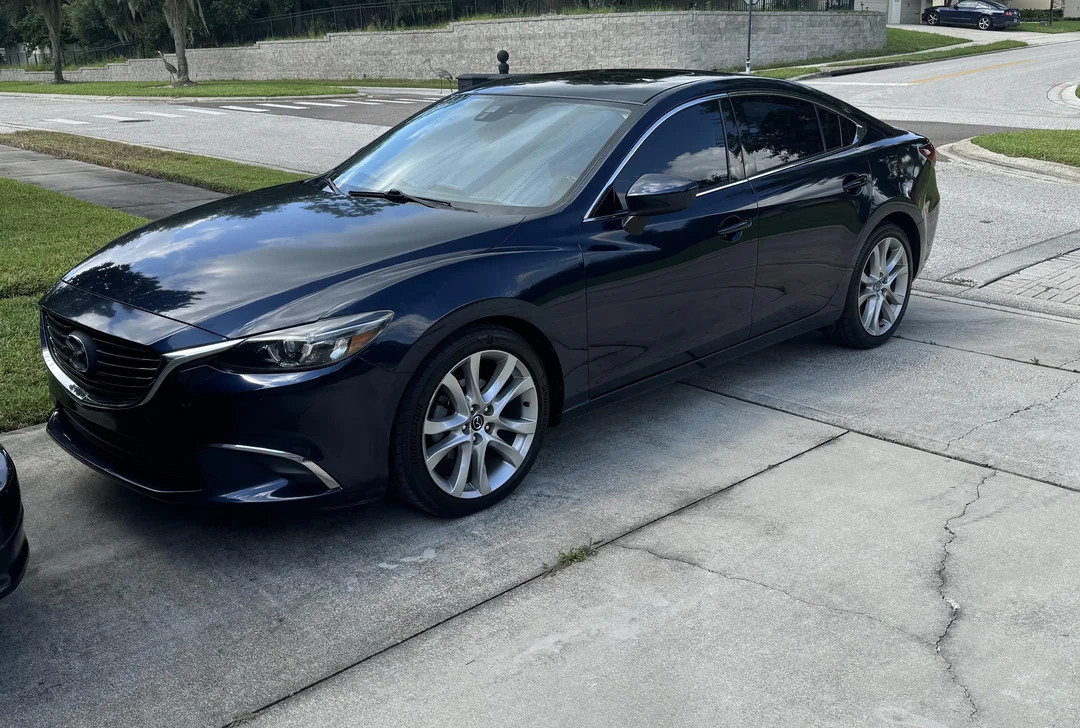
The 2017 Mazda6 solidified its place as one of the best midsize sedans of its time, earning J.D. Power’s No.1 ranking in the segment with a strong reliability score of 84/100. This rating reflected minimal defects and malfunctions reported by owners, reinforcing the Mazda6’s reputation for dependability.
Buyers in the used car market can expect to pay between $14,991 and $19,903, with well-kept examples often priced closer to the higher end. Owners praised the car’s handling, trunk space, and seating comfort, though some expressed dissatisfaction with cabin noise and the navigation system.
According to CarComplaints.com, minor issues with brakes and exterior accessories were noted, but no major widespread mechanical failures were reported, making the 2017 model a relatively safe investment compared to older, problem-prone versions such as the 2009 Mazda6.
Mazda made meaningful refinements for the 2017 model year, improving value and performance. A notable addition was the G-Vectoring Control system, designed to enhance agility and stability during cornering, reinforcing the sedan’s reputation for sharp handling.
The trim lineup also benefited from feature adjustments, with more standard equipment across models and a new Premium package that replaced the previous Technology bundle. Styling updates from prior years carried over, ensuring the Mazda6 retained its sleek, athletic look.
While crossovers were rapidly gaining popularity, the Mazda6 continued to appeal to buyers seeking a practical sedan that didn’t compromise on driving enjoyment.
Its blend of attractive design, confident road manners, and fuel efficiency made it a standout choice against stalwarts like the Honda Accord, Toyota Camry, and Ford Fusion.
Performance remains one of the 2017 Mazda6’s strongest assets. Under the hood, a 2.5-liter four-cylinder engine produces 184 horsepower and pairs with either a six-speed manual or automatic transmission. Power delivery is smooth and responsive, offering strong acceleration without excessive engine noise.
In Edmunds’ testing, braking distances were competitive, with the Touring trim stopping from 60 mph in 124 feet. Handling is especially impressive for the class, as precise steering and well-tuned suspension give the Mazda6 a sportier edge over rivals.
While its ride quality is firmer than some competitors, it avoids being harsh, especially with the standard 17-inch wheels. Drivers seeking excitement will find it engaging on winding roads, yet it remains comfortable and refined enough for long-distance family use.
The only noticeable shortcomings are the lack of a hybrid or all-wheel-drive option, which may steer some buyers toward alternatives in colder climates or those prioritizing maximum efficiency.
Inside, the Mazda6’s cabin punches above its weight, with high-quality materials and a modern design that rivals some entry-level luxury cars. Front seats provide good support for extended trips, though they may feel slightly narrow for larger occupants.
Rear passengers benefit from generous head- and legroom, making it comfortable for adults on longer drives. The Mazda Connect infotainment system enhances usability, featuring a central dial controller, tablet-like display, and intuitive menus.
Touchscreen functionality is available but restricted to stationary use, keeping driver focus on the road. Practicality is decent, with a wide-opening trunk and fold-down rear seats, though its 14.8-cubic-foot cargo space is slightly smaller than competitors.
Safety is a key strength, as the Mazda6 received a five-star crash rating from the NHTSA along with a Top Safety Pick+ designation from the IIHS. With features like blind-spot monitoring, lane-keeping assist, and collision mitigation systems, it provides peace of mind alongside its stylish looks and engaging performance.
4. 2019 Mazda6
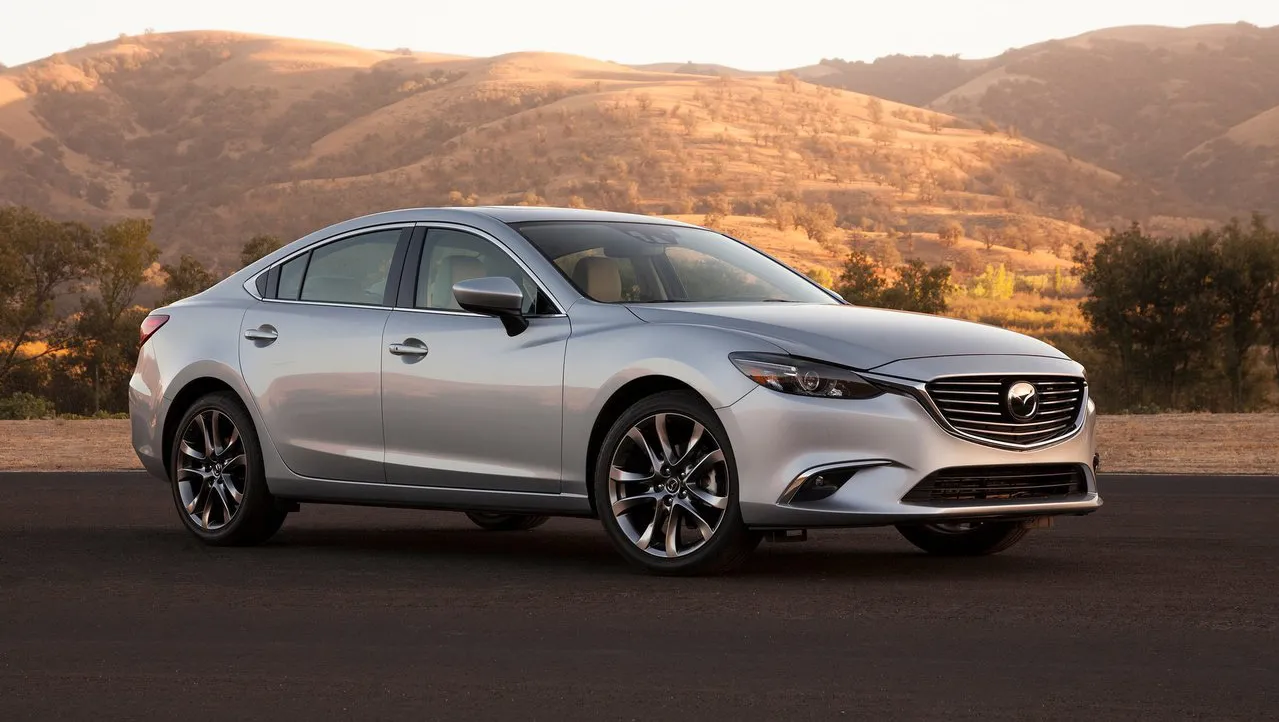
The 2019 Mazda6 continues to refine the sporty yet practical character of Mazda’s midsize sedan, offering enhancements in safety, handling, and interior refinement.
Although the six-speed manual transmission was discontinued this year, Mazda compensated by making the i-Activsense suite of safety features standard across all trims, including adaptive cruise control, lane departure warning, and automatic emergency braking.
Another notable update was the addition of G-Vectoring Control Plus (GVC Plus), a system that subtly improves cornering stability and driver confidence. Buyers who opt for the turbocharged 2.5-liter engine also benefit from larger front brakes, further improving performance.
While rivals may emphasize comfort or fuel efficiency, Mazda’s focus on driver engagement keeps the 2019 Mazda6 at the top tier of midsize sedans for those who want a more connected and stylish driving experience.
On the road, the Mazda6 excels with athletic handling and smooth power delivery. The available turbocharged 2.5-liter inline-four produces strong low-end torque, pushing the sedan to 60 mph in 6.7 seconds competitive within the class.
The six-speed automatic transmission is well-calibrated, offering responsive shifts that balance performance and efficiency. Steering is one of the car’s standout qualities, with precise feedback and heavier weighting than competitors, making cornering sharp and confidence-inspiring.
Edmunds testing awarded the car near-perfect marks for handling thanks to its planted stance, minimal body roll, and excellent composure even over bumps. The ride quality is sport-tuned, firmer than rivals like the Toyota Camry or Honda Accord, but not harsh.
Drivers who value road connection over a cushioned ride will find this balance ideal. Braking performance is solid, stopping from 60 mph in 129 feet, an average but reassuring result for the class.
Comfort and interior design are areas where the 2019 Mazda6 shows its premium ambitions. Seats are firm, supportive, and shaped to provide comfort for both long-distance cruising and spirited driving.
The cabin remains mostly quiet, though Mazda intentionally lets in some engine growl and tire noise to enhance its sporty character. Dual-zone climate control is standard, and higher trims offer ventilated seats for added comfort in warmer climates.
Interior quality rivals entry-level luxury sedans, particularly in the Signature trim, which features premium materials and excellent fit and finish. Space is competitive, with supportive front seating and adequate rear passenger accommodations, though knee room lags slightly behind segment leaders like the Honda Accord.
Cargo space measures 14.7 cubic feet, slightly below average, but a wide trunk opening and fold-flat rear seats add useful practicality.
Technology and safety further enhance the 2019 Mazda6. All trims come standard with Mazda’s i-Activsense driver aids, including blind-spot monitoring, adaptive cruise control, and forward collision warning.
Higher trims add lane-keeping assistance and a head-up display that projects safety alerts directly in the driver’s view. The infotainment system uses Mazda’s central control knob paired with a large display, offering intuitive access to audio, navigation, and phone features.
While Apple CarPlay and Android Auto are available starting on the Touring trim, the built-in navigation system feels less intuitive than rivals, with clunky menu navigation. A Bose premium audio system, however, provides strong sound quality.
The 2019 Mazda6 delivers a blend of performance, refinement, and technology that few rivals match, making it one of the most engaging midsize sedans for buyers who prioritize driving enjoyment without sacrificing everyday comfort.
5. 2020 Mazda6
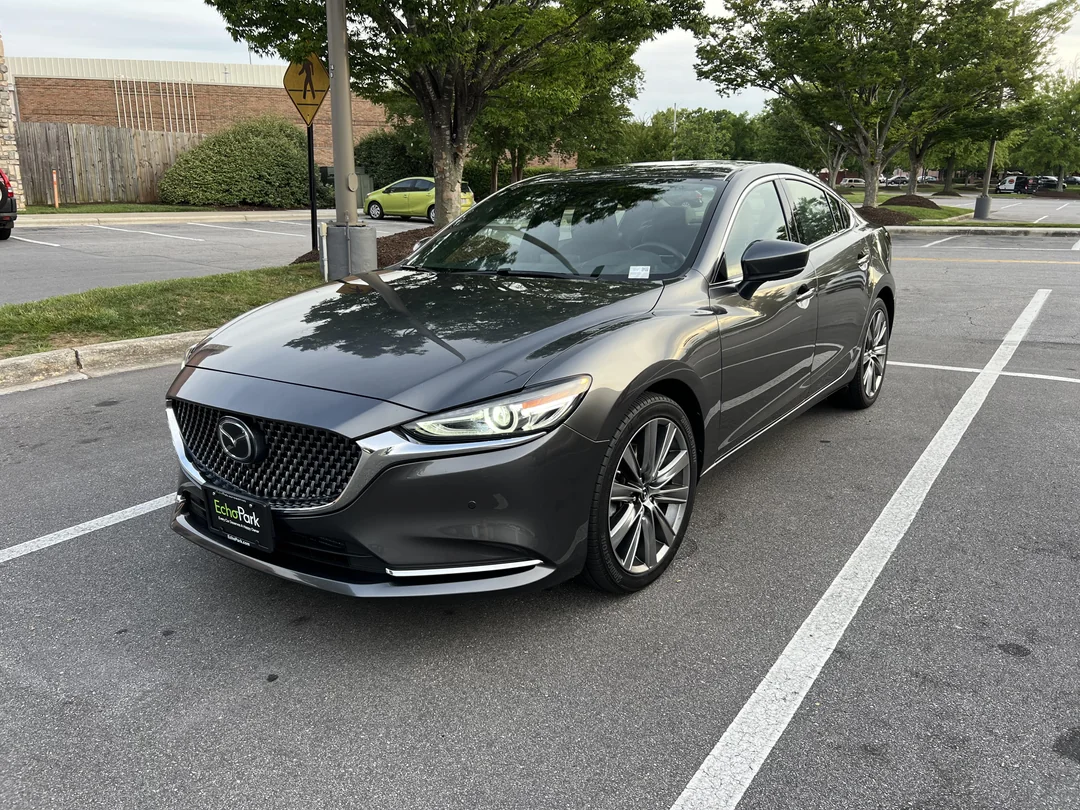
The 2020 Mazda6 carries forward without major changes but continues to stand out as one of the most engaging midsize sedans on the market. A member of the third generation introduced in 2014, the 2020 model still holds its own against newer rivals thanks to its sleek styling, well-crafted cabin, and athletic driving dynamics.
Standard features such as Apple CarPlay and Android Auto, dynamic steering, and a suite of advanced safety aids help it remain competitive despite its age.
While comfort-focused rivals like the Honda Accord or Toyota Camry may edge it out in ride softness and rear passenger space, the Mazda6 maintains its appeal by delivering a more premium and spirited driving experience at a modest price.
Performance is where the Mazda6 shines most brightly. It offers precise, communicative steering and excellent cornering ability, setting it apart from the typically softer-handling midsize sedan class. The sport-tuned suspension keeps the car composed through turns while still managing bumps with confidence.
Buyers can choose between a standard naturally aspirated engine or an optional turbocharged four-cylinder, which provides strong low-end power and a satisfying growl under acceleration.
Although the turbo engine’s power fades slightly at higher speeds and the six-speed automatic transmission feels dated compared to rivals with more gears, both deliver smooth, predictable performance.
Fuel economy is solid, with the turbo model averaging around 26 mpg combined, and real-world driving tests often meeting or exceeding expectations.
Inside, the Mazda6 blends functionality with near-luxury refinement. Wide-opening doors and supportive seats make access easy, though taller rear passengers may need to duck under the sloping roofline.
Front passengers enjoy excellent space and comfort, with leather trim and available ventilated seating in higher trims, enhancing the premium feel. Rear-seat legroom is adequate but tighter than in class leaders such as the Accord.
The interior design emphasizes simplicity and quality, with a central control knob for infotainment that is intuitive, though the lockout of touchscreen functionality while driving can be frustrating.
Cabin storage is sufficient, with a practical though modest 14.7-cubic-foot trunk. The rear seats fold in a 60/40 split to expand cargo capacity, but the release levers are only accessible from the trunk.
Technology and value complete the 2020 Mazda6’s strong package. All trims are well-equipped, with advanced driver-assistance features such as adaptive cruise control, blind-spot monitoring, lane departure warning, and collision mitigation available or standard.
Higher trims add conveniences like a head-up display and upgraded audio systems, further elevating the driving experience. While Mazda’s built-in navigation is serviceable, its interface can feel less intuitive than smartphone integration, which is why Apple CarPlay and Android Auto are welcome inclusions.
The 2020 Mazda6 succeeds as a premium-feeling sedan at an affordable price, offering refined design, strong safety, and unmatched driving engagement in its class. Though not the softest-riding or roomiest option, it remains one of the best choices for drivers who want a midsize sedan that feels exciting without sacrificing everyday practicality.?
Also Read: 5 Cars That Rarely Need Brake Pad Replacements vs. 5 That Burn Through Them
5 Mazda6 Years That Break Early
1. 2009 Mazda6: Engine Troubles and Expensive Repairs
The 2009 Mazda6 is remembered for several troubling issues that make ownership costly and stressful. One of the most concerning problems reported by owners involves the engine, which is prone to knocking noises, unusual odors, and, in some cases, total failure.
Although not every vehicle experienced this issue, repairs often came with an average bill of around $3,000, making it a significant financial burden. Alongside engine concerns, owners reported cosmetic and safety-related defects, such as dashboards that melted under heat and rusting subframes.
Mazda responded by extending the warranty for the sticky dashboard issue and recalling more than 84,000 vehicles with corrosion-prone subframes.
Safety recalls further complicate the 2009 Mazda6’s reputation. It was subject to nine recalls, including those linked to the notorious Takata airbag scandal. Faulty inflators had the potential to explode, sending metal fragments into occupants with the risk of injury or death.
Other recalls involved weak fuel canisters prone to rupturing, as well as faulty door latches and roof racks. With such a long list of recalls and mechanical risks, the 2009 model year is one that used-car buyers often avoid despite the Mazda6’s strong reputation for comfort and drivability.
2. 2010 Mazda6: An Improvement but Still Problematic
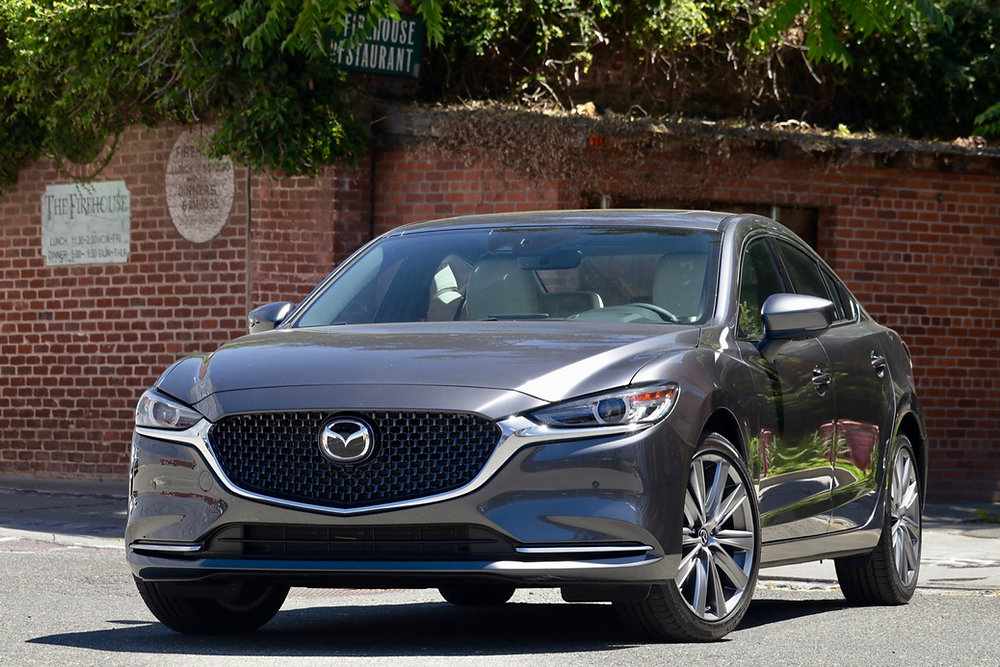
The 2010 Mazda6 showed improvements compared to its predecessor, but still carried problems that disappointed some owners. One recurring issue involves rusted subframes, which can lead to significant safety concerns if left unchecked.
Some drivers even reported losing control of their vehicles due to advanced corrosion. Electrical quirks were also common, with headlights burning out as early as 36,000 miles.
While replacement costs were minimal, about $40 per bulb, several owners complained of unusually short lifespans, with headlights lasting less than a year. These frequent replacements added up over time and created unnecessary hassles.
Interior complaints carried over from the 2009 model. Dashboards were prone to melting and cracking, with drivers reporting severe glare that compromised visibility through the windshield.
Mazda eventually offered a warranty extension to address this issue, but it still left many owners frustrated. The 2010 Mazda6 was also subject to eight recalls, overlapping with the previous year’s concerns about airbags, fuel tanks, and latches.
Interestingly, this model year gained notoriety for an unusual problem: spiders nesting inside fuel tanks, which could potentially block ventilation lines. While less severe than catastrophic engine failure, these smaller but persistent issues kept the 2010 Mazda6 from being a truly reliable sedan.
3. 2014 Mazda6: Transmission Failures and Costly Fixes
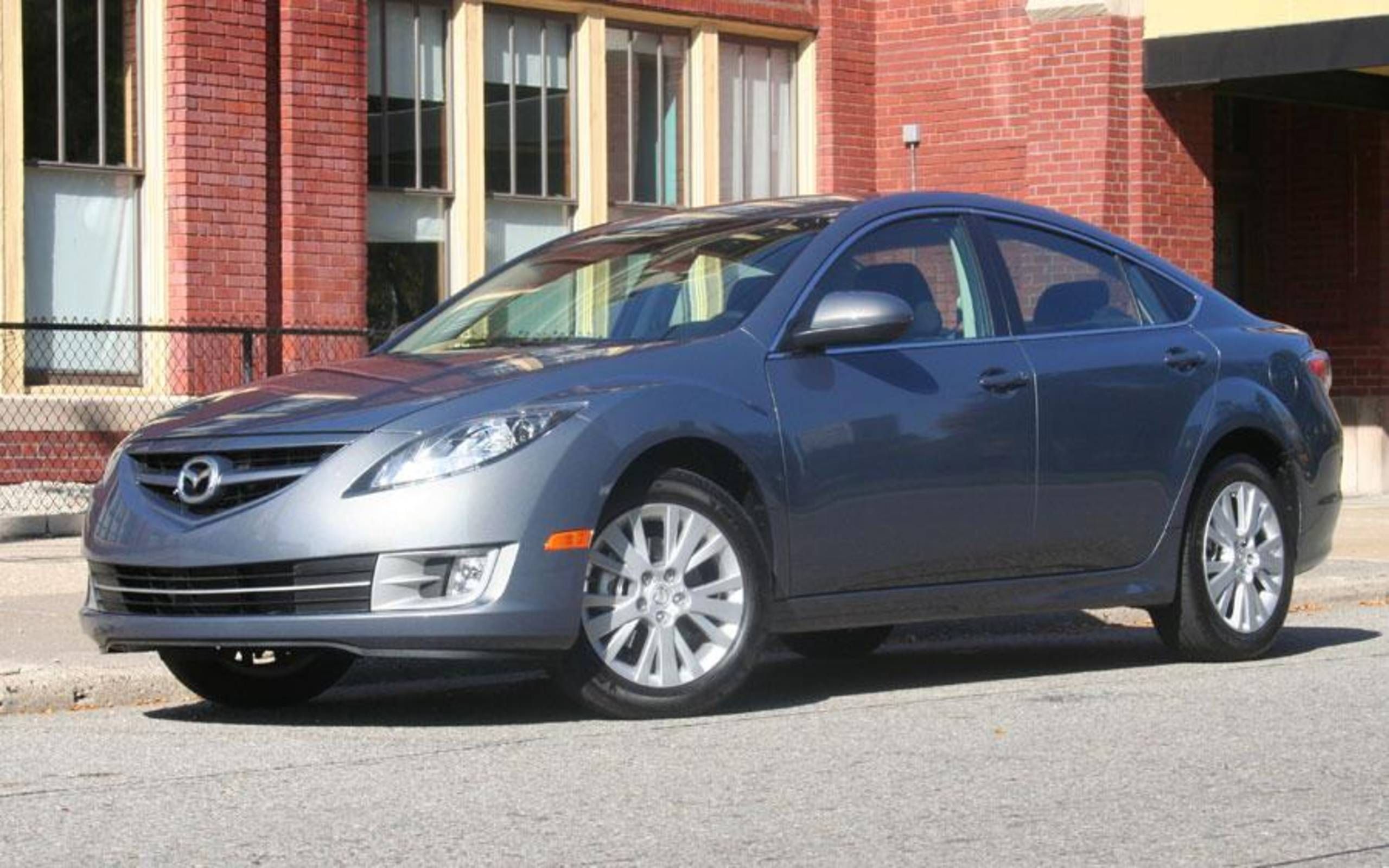
The 2014 Mazda6 is one of the most complained-about versions of this midsize sedan, largely due to premature transmission failures. Many owners reported transmission issues as early as 17,000 miles, with failures becoming more common around the 50,000-mile mark.
Warning signs often included high-pitched noises at highway speeds, followed by sudden breakdowns. Replacing the transmission was extremely expensive, with costs ranging from $3,300 to $5,600, making this one of the costliest issues in Mazda6 history. Such failures damaged the model’s reputation, as many owners expected longevity from a relatively new car.
Beyond the transmission, the 2014 Mazda6 faced other frustrating concerns. Build quality was questioned due to reports of rattling and creaking within the cabin. Another notable issue was a faulty start/stop ignition button, which could prevent the car from starting, but was relatively inexpensive to replace at about $80.
Unlike earlier years, the 2014 Mazda6 had only four recalls, the most significant addressing a corroded parking brake actuator that affected over 227,000 vehicles.
Other recalls dealt with tire pressure monitoring, fuel tanks, and power control modules. Despite its stylish design and efficiency, the 2014 model’s high repair costs make it one of the riskiest years to buy used.
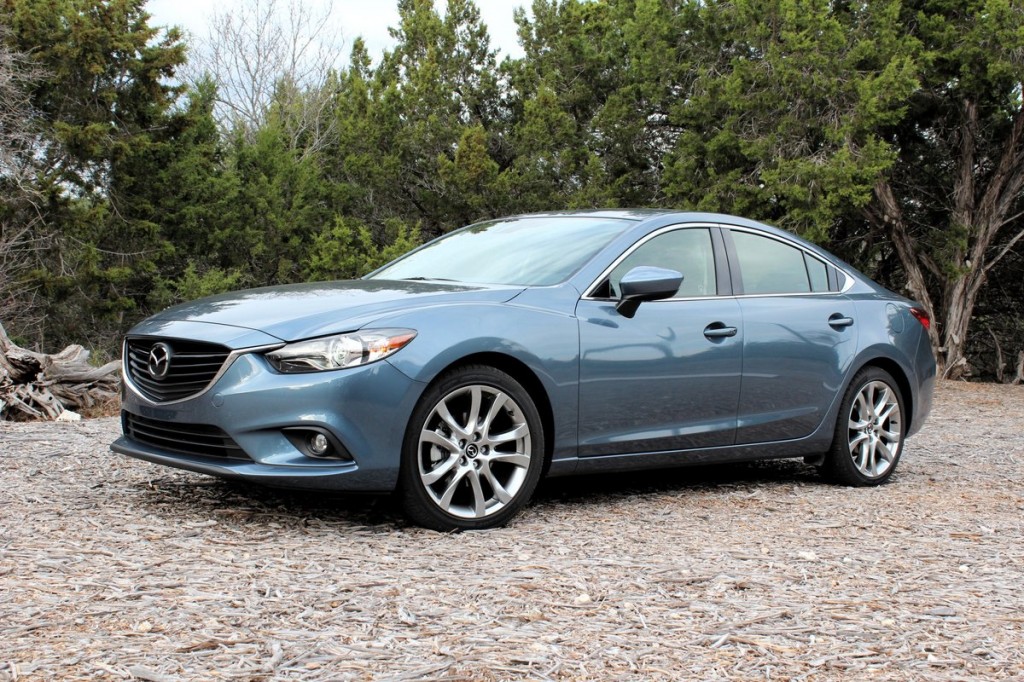
4. 2018 Mazda6: A Year of Refinement and Reliability
In contrast to earlier troubled years, the 2018 Mazda6 is widely praised for its improvements in design, quality, and performance. This model year introduced significant exterior upgrades, including a redesigned grille and standard LED headlights.
Technology and safety further enhance the 2019 Mazda6. All trims come standard with Mazda’s i-Activsense driver aids, including blind-spot monitoring, adaptive cruise control, and forward collision warning.
Seats were redesigned to offer greater comfort, giving the sedan a more luxurious and upscale feel compared to rivals. These changes reflected Mazda’s effort to move the 6 upmarket, bridging the gap between mainstream and premium sedans.
Under the hood, the 2018 Mazda6 offered a newly available turbocharged engine that enhanced driving excitement while complementing the sedan’s precise handling. Importantly, this year avoided the widespread complaints of engine and transmission failures that plagued earlier models.
Reliability improved significantly, and the 2018 Mazda6 did not suffer from recurring issues tied to airbags, rust, or costly drivetrain problems. Owners praised it as a dependable and stylish sedan that balanced sporty performance with everyday usability.
For buyers considering a used Mazda6, the 2018 model year is often recommended as one of the safest and most rewarding choices, standing out for both reliability and refinement.
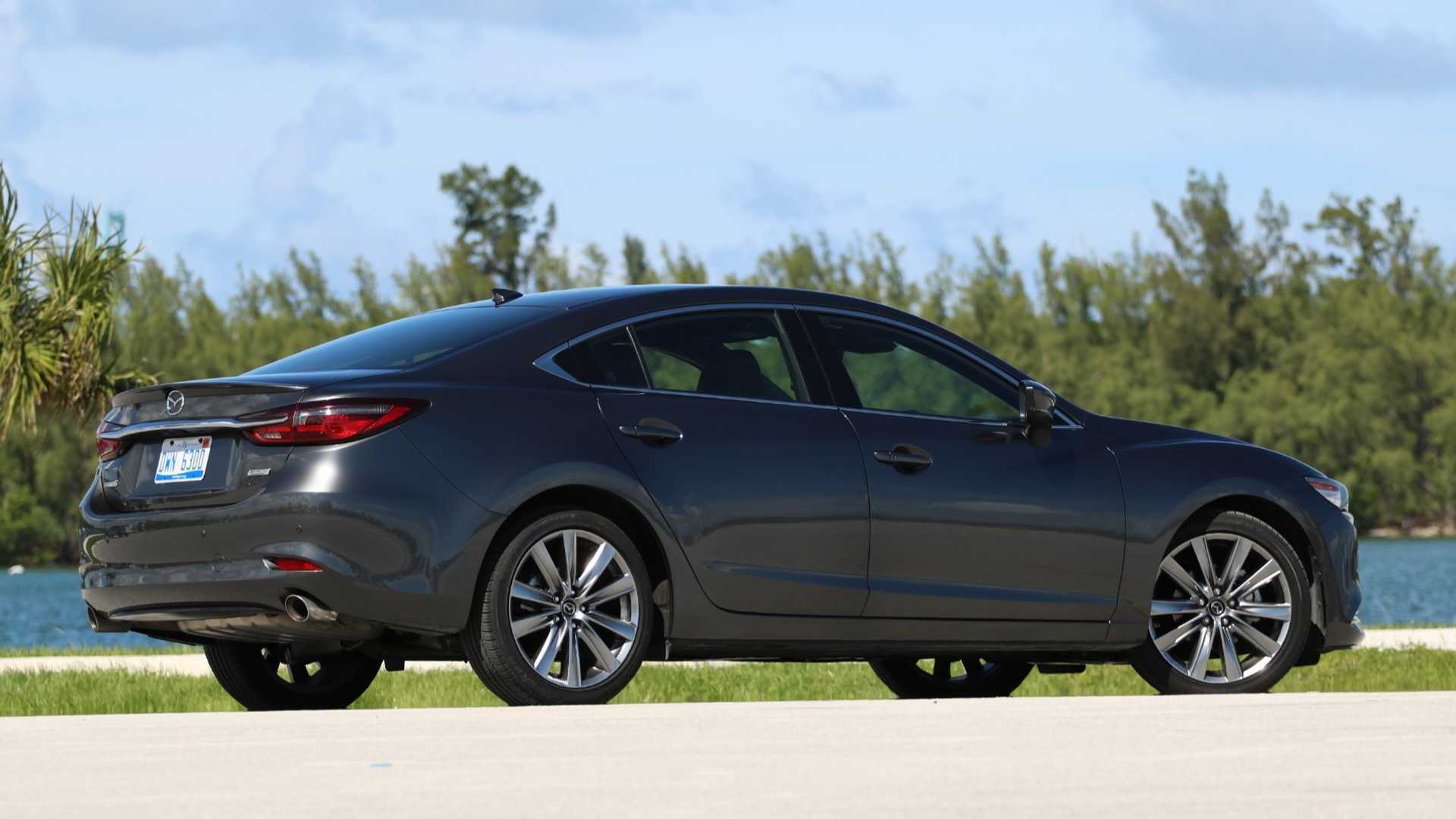
5. 2004 Mazda6: The Most Troubled Model Year
Among all Mazda6 models, the 2004 version is considered the most problematic, despite receiving a tongue-in-cheek “Seal of Pretty Good” from Car Complaints. The most significant issue was catastrophic engine failure, often occurring just before the 100,000-mile mark.
Owners faced repair bills averaging $3,800, with many forced to choose between replacing the engine or scrapping the vehicle altogether. Beyond complete failures, other engine issues, such as stalling and poor performance, were also reported.
This model also suffered from widespread airbag problems tied to the infamous Takata recalls. In some cases, airbags ruptured or failed to deploy, with incidents of crashes, injuries, and fires attributed to the defect, though no fatalities were reported.
The 2004 Mazda6 was also subject to minor recalls in 2009, involving aftermarket roof carriers, combination lamps, and replacement headlights. These defects, while less severe, added to the perception of unreliability. Some owners also reported braking issues, though they were relatively rare and caused minimal accidents.
The 2004 Mazda6’s blend of engine failures, costly repairs, and dangerous airbag defects makes it the least desirable model year to purchase. While later Mazda6s corrected many of these issues, the 2004 remains a cautionary tale for used-car buyers seeking dependable midsize sedans.
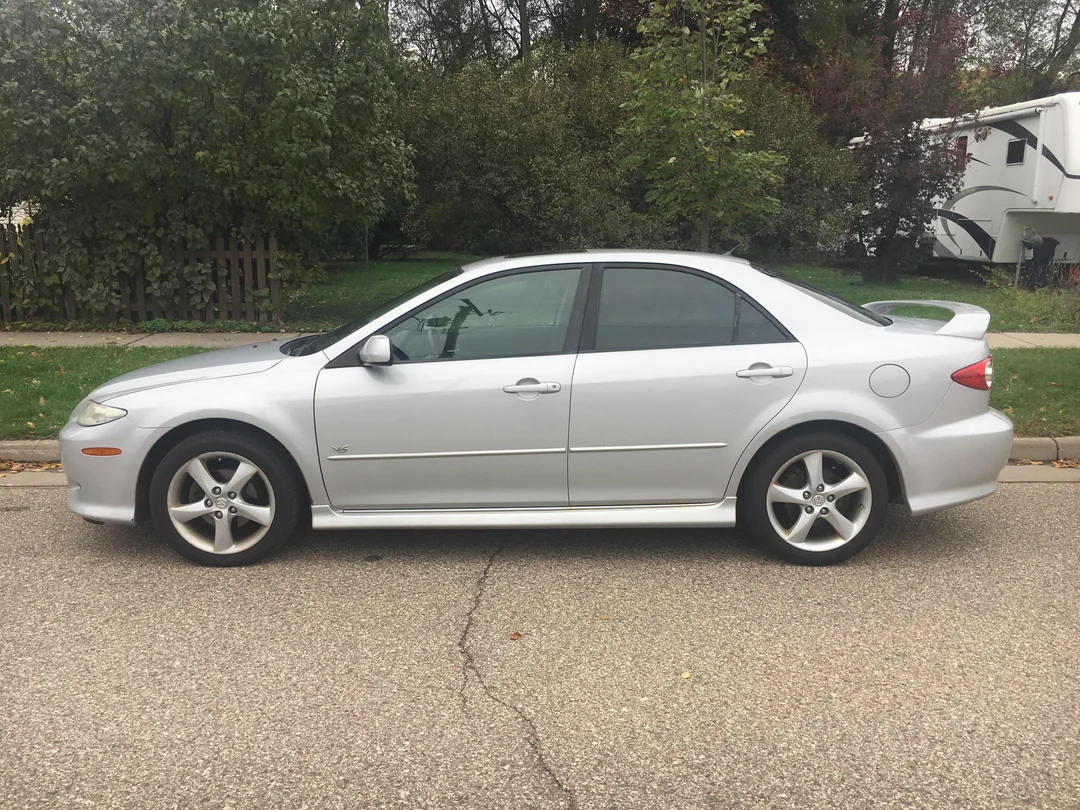
The Mazda6 proves that a family sedan doesn’t have to be dull. Across the years highlighted here, Mazda has consistently balanced dependability, safety, and engaging driving dynamics in ways that set it apart from rivals.
While some model years struggled with reliability concerns, the five included on this list represent the strongest examples of what makes the Mazda6 such a beloved choice.
Whether it’s the efficiency and refinement of the 2015 model, the updates and value of the 2016, or the premium touches introduced in later years, each delivers lasting appeal for used-car buyers.
With their blend of reliability and driver-focused design, these Mazda6 sedans remain excellent options for anyone seeking a used midsize car that holds up well over time. By focusing on these standout years, buyers can enjoy the confidence of a smart purchase along with the spirited personality that defines the Mazda6.
Also Read: 10 Cars That Rarely Sit Unsold In The Lot Due To High Demand in 2025