
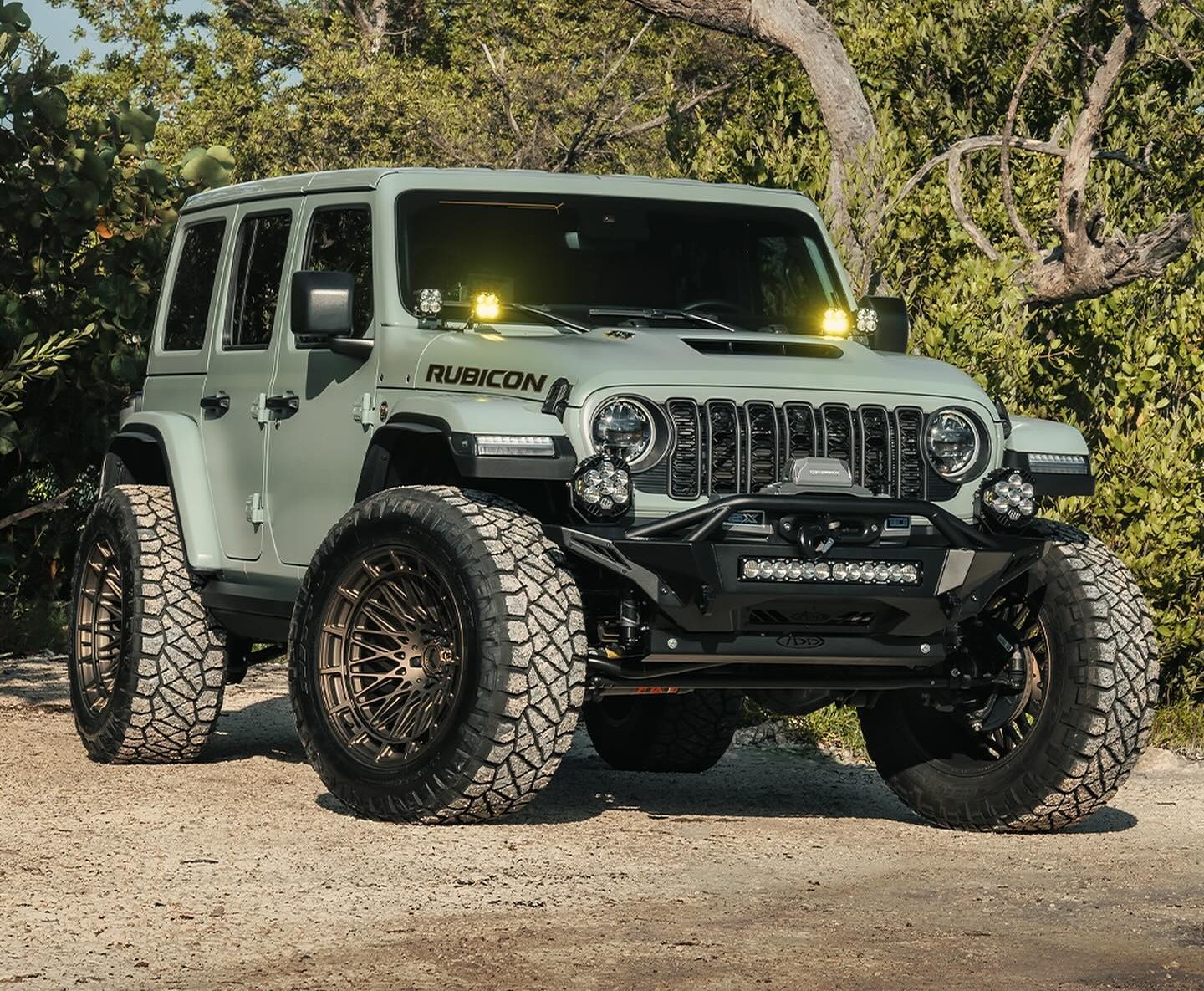
The Jeep Wrangler Rubicon 392 stands as one of the most powerful machines in the SUV segment, blending the rugged utility of a traditional Wrangler with the thrill of a V8 engine.
While most owners buy this vehicle to enjoy its unmatched off-road capabilities and raw performance, the way it is cared for significantly determines how long it will keep its edge. Just like any high-performance machine, it demands more than just basic upkeep.
Small mistakes or careless decisions can shorten its service life, turning what should have been years of fun and durability into an endless parade of costly repair bills.
Some drivers run into issues because they treat their Rubicon 392 like a standard Wrangler, thinking its toughness means it can handle just about anything without consequence.
That misunderstanding can result in damage that builds up quietly until it becomes a major setback. The 6.4-liter HEMI V8 can deliver thrilling horsepower, but it also puts unique demands on the cooling system, transmission, and suspension. Neglect in any of these areas is a recipe for early wear and tear.
What makes matters worse is that certain habits look harmless at first. Driving techniques, neglecting scheduled service, or pushing the vehicle beyond what its parts are designed to handle are all typical reasons that owners lose reliability prematurely. Knowing which actions to avoid is just as important as knowing what actions will sustain performance.
In the following sections we will look at specific moves that cause problems for the Rubicon 392 sooner than most owners expect.
Each mistake is preventable if you understand why it is harmful. With careful attention to these details, even a performance-focused vehicle like the Rubicon 392 can stay dependable for far longer than many imagine.
Also Read: 10 Tricks That Extend a Toyota Corolla Cross Road Life
Move 1: Ignoring Regular Oil Changes
The Jeep Wrangler Rubicon 392 is powered by a naturally aspirated 6.4-liter HEMI V8, an engine built for aggression and heavy workloads. However, its power is only as good as the lubrication system that keeps it running smoothly.
Many drivers underestimate the importance of timely oil changes, assuming that synthetic oil can stretch maintenance intervals indefinitely. While modern lubricants do last longer than conventional blends, they still break down under stress, especially in a high-compression engine that generates significant heat. Neglecting regular oil service is one of the quickest ways to shorten the life of this powerhouse.
As the oil deteriorates, viscosity weakens, which reduces its ability to create a protective layer between moving metal parts.
Components like camshafts, crank bearings, and pistons begin to operate with reduced protection, resulting in micro-friction that adds up over thousands of revolutions per minute.
The problem gets worse because the Rubicon 392 is often used for off-road activities such as trail crawling or dune climbing, where the engine frequently runs at high RPMs. This elevated workload accelerates oil breakdown beyond what most casual drivers imagine.
Skipping oil changes also increases the build-up of sludge and contaminants. Even if the oil filter captures larger particles, smaller impurities circulate within the system, scratching sensitive surfaces over time. When combined with extreme heat cycles, these contaminants create varnish-like deposits that reduce efficiency and distort tolerances.
The simplest way to avoid this silent killer is to commit to timely oil changes. Jeep recommends oil changes at intervals that take into account aggressive driving patterns, but many owners prefer to shorten the window further for added protection.
Using premium synthetic oil designed for high-performance V8 engines ensures maximum protection, while investing in quality filters adds an extra layer of security.
A Rubicon 392 that receives proper lubrication care will consistently outperform and outlast one that is maintained casually. What might seem like a minor expense every few thousand miles is, in truth, the best insurance policy against premature engine wear.
Move 2: Overloading the Suspension
The Rubicon 392 is built with rugged suspension components designed to withstand punishing off-road use. Coil springs, heavy-duty shocks, and reinforced control arms give it an impressive stance and the ability to handle rocky trails, steep inclines, and deep ruts.
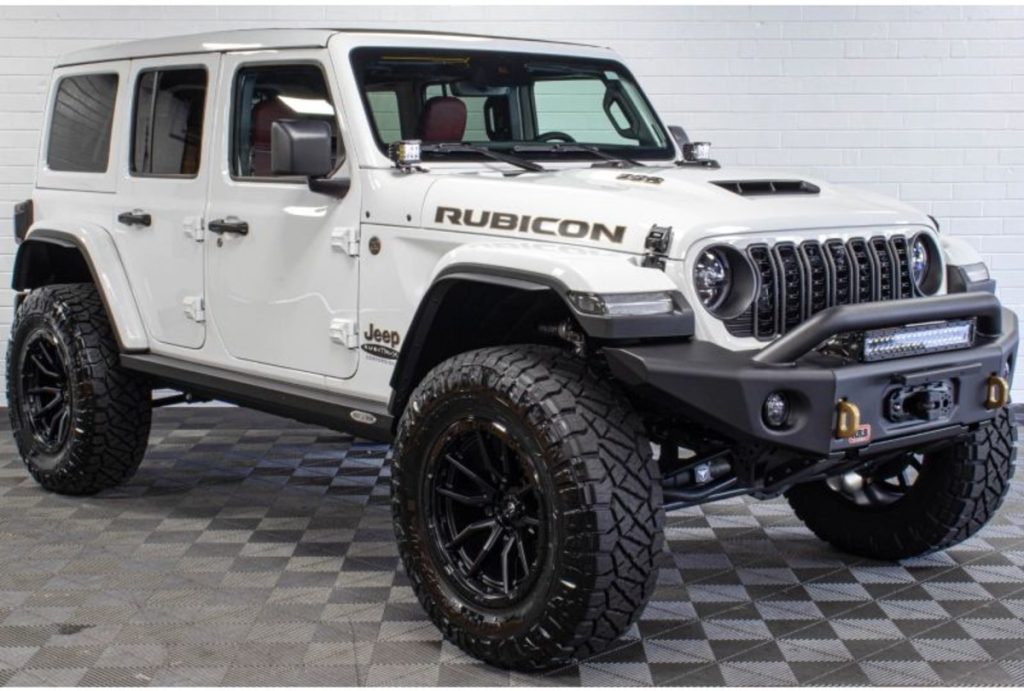
Unfortunately, many owners mistake this durability for limitless strength. Adding oversized tires, aftermarket lift kits, and heavy accessories without proper balancing creates enormous stress on the suspension system. Over time, this habit degrades performance and significantly shortens component life.
One of the biggest mistakes drivers make is piling on weight without adjustment. Larger wheels and tires not only increase unsprung mass but also put control arms and shocks under higher-than-anticipated strain.
Couple that with steel bumpers, winches, rooftop tents, and other off-road gear, and you have a suspension setup struggling to keep up. When springs are overloaded, they lose their ability to dampen impacts properly, leading to a harsher ride and misaligned geometry.
Misalignment then amplifies tire wear, worsening handling and creating dangerous instability at higher speeds.
Another overlooked issue is the effect of high-speed off-road driving. Many enthusiasts push their lifted Rubicon 392s aggressively across uneven terrain, thinking it can absorb anything thrown its way.
What actually happens is the suspension components begin to bottom out. This repeated beating reduces shock fluid efficiency, degrades bushings, and weakens mounts. Over time, control becomes sloppy and unpredictable, and costly replacements become unavoidable.
Preventing overload damage requires a balanced approach to modification. If heavy accessories are installed, compensation should follow in the form of upgraded shocks, reinforced springs, or fine-tuned suspension kits designed specifically for added weight.
Failure to recalibrate suspension systems when modifying the vehicle undermines the engineering precision that makes the Rubicon 392 so effective in its stock form.
Protecting the suspension means respecting weight limits, avoiding reckless driving over punishing surfaces, and sticking with well-designed aftermarket upgrades.
Owners who manage their suspension wisely ensure that their Jeep maintains its trademark off-road confidence without sacrificing long-term durability.
Move 3: Neglecting Transmission Care
The Rubicon 392 is paired with an eight-speed automatic transmission that transfers the power of the V8 to the ground with impressive efficiency. While robust, this gearbox is also one of the most stressed systems in the vehicle.
Continuous off-road use, towing, and spirited acceleration place heavy demand on transmission components such as clutches, solenoids, and fluid passages.
Failing to prioritize transmission care is one of the biggest mistakes owners commit, and it almost always leads to costly repairs or complete failures earlier than expected.
Transmissions operate on hydraulic principles, and fluid condition is directly tied to longevity. Transmission fluid not only cools moving parts but also ensures precise shifting. If fluid is neglected, contaminants accumulate while heat severely degrades lubricating qualities.
Once fluid loses effectiveness, the gearbox begins to slip, gears hesitate, and internal components grind against each other. With a high-torque engine like the 392’s HEMI, such small inefficiencies expand rapidly into catastrophic failures.
Another concern is ignoring proper driving practices. Aggressive throttle inputs while climbing steep terrain, frequent abrupt gear shifts, or towing loads that exceed rated capacity put strain on clutches and torque converters.
Over time, stress fractures and heat damage appear silently until a sudden breakdown occurs. For owners who off-road extensively, maintaining a stable cooling system is crucial because overheated transmission fluid is a leading cause of failure.
The preventive approach is simple yet critical. Fluid checks and replacements must be consistent with mileage intervals and driving conditions, with many owners choosing more frequent servicing if heavy loads are common.
Installing auxiliary coolers for off-road or towing-focused Rubicon 392s is also a valuable step, keeping temperatures in safe ranges during demanding runs. Gentle driving practices also go a long way, protecting the transmission from unnecessary strain.
Considering the expense of a rebuilt gearbox, giving transmission maintenance top priority cannot be overstated. It is both the bridge and buffer between engine power and road traction, and mistreating it compromises the very experience this Jeep was designed to deliver.
Move 4: Overheating the Engine
The Rubicon 392’s 6.4‑liter engine produces enormous power, and with that power comes significant heat.
While Jeep designed the cooling system to manage increased thermal load, pushing it beyond its intended operating range can trigger damage that accumulates until failure strikes.
Overheating shortens engine life by deteriorating gaskets, weakening cylinder head integrity, and even warping alloy components. Once heat damage becomes extensive, performance consistently drops, repairs become costly, and reliability is compromised.
Off-roaders often underestimate the abuse that steep climbs, thick mud, and slow-speed rock crawling can cause. In conditions where airflow is limited around the radiator, engine temperature rises quickly.
Add oversized tires or added weight from accessories, and the cooling system has to work even harder. If coolant levels are neglected or if the system develops minor leaks, the decline in efficiency accelerates.
Using the wrong coolant mixture or ignoring flushing schedules contributes to buildup inside passages, further restricting cooling capability.
Another common mistake is prolonged idling. Many owners allow their Rubicon 392 to sit running for extended periods during campsites or trail pauses.
While this may seem harmless, continuous idling at low RPM prevents adequate coolant circulation. Over time, this practice stresses thermostat operation, overheating hoses, and raises the risk of fan motor failure.
Preventing heat-related problems requires vigilance. Owners should habitually monitor coolant levels, inspect hoses, and watch for early signs of radiator stress.
Installing auxiliary cooling solutions such as upgraded radiators or stronger fans can provide an extra safety margin, especially for those who wheel frequently in extreme environments. Avoiding prolonged idling, especially in hot climates, also reduces unnecessary heat build-up.
The Jeep Wrangler Rubicon 392 rewards its driver with thrilling power when treated correctly. However, the tolerance window for heat is narrower than many realize.
Consistent monitoring, combined with proactive maintenance, ensures that excessive thermal loads never compromise one of the vehicle’s most defining features: the strength of its mighty HEMI.
Move 5: Improper Tire Choices
Tires are the only connection between the Rubicon 392 and the terrain. Selecting the wrong size, compound, or tread pattern can wear down the vehicle in ways that extend far beyond poor traction.
Oversized tires with aggressive tread patterns may look perfect for off-road bragging rights, but they can burden steering systems, axles, and differentials.
Conversely, tires that are too soft or designed primarily for street use can degrade quickly when exposed to gravel, sharp rocks, or muddy trails. Both extremes diminish overall durability.
A frequent mistake is mounting massive tires that exceed the axle’s intended design capability. Drivers may be thrilled by the aggressive look and added ground clearance, but the toll on components is costly.
Extra rolling resistance taxes the drivetrain while harming fuel economy. Steering geometry also suffers, which amplifies strain on ball joints and tie rods.
As the stress accumulates, premature wear appears, often requiring replacement of key suspension and steering hardware long before it should be necessary.
Tire pressure management is another overlooked factor. Overinflated tires provide poor grip on trails and lead to irregular tread wear, while underinflated tires overheat quickly on paved roads.
Both mistakes place unnecessary stress on the suspension and lower driving confidence. Without consistent rotation and alignment, even high-quality tires lose effectiveness rapidly while compromising the vehicle’s ride quality.
Owners should focus on balanced tire setups that align with their primary driving environment. If off-roading is frequent, all‑terrain or mud‑terrain tires designed for durability make the most sense.
On the other hand, if highway use dominates, a milder tread provides better balance without excessive strain. Pairing correct sizing with routine inspections, rotations, and pressure checks prevents many potential issues.
Selecting tires with long-term wear characteristics rather than short‑term appearances ensures that the Rubicon 392 remains confident on trails while preserving component life. The correct tire choice marks the difference between routine replacement and years of dependable service.
Move 6: Skipping Differential Maintenance
The Rubicon 392 is engineered with front and rear locking differentials that contribute to its championship-level trail capability. These components allow the Jeep to distribute torque evenly across wheels, pulling the vehicle forward even when traction seems lost.
While drivers appreciate these functions during off-road climbs, maintenance is often neglected, making differential wear one of the silent killers of reliability.
Differential gears rotate under heavy loads and rely on specialized fluid to reduce friction. Over time, this gear oil breaks down and loses viscosity, leaving metal parts exposed to increased wear.
Trail conditions make matters worse, with steep climbs, wheel spin, and sudden torque applications stressing gear teeth. If fluid replacement schedules are ignored, contamination from moisture and microscopic metal fragments accelerates deterioration.
Eventually, this creates whining noises, vibrations, and costly failures that could have been prevented easily.
Another overlooked issue comes from mismatched tire diameters or uneven wear. When front and rear tires rotate at inconsistent speeds, differentials compensate excessively, causing heat build-up inside the housing. Add heavy off-road loads to the equation, and the likelihood of early gear failure increases rapidly.
Preventing these issues requires consistent differential fluid changes according to the owner’s manual, with shorter intervals for those who spend considerable time off-road.
Choosing premium synthetic gear oil increases resistance to breakdown under high loads. Inspections of seals and housings also matter, since leaks can quickly drain fluid without the driver’s awareness.
For modifications such as larger tires and lifts, upgrading differential components may be necessary to handle the torque generated by the 392’s V8.
Ignoring this step leaves stock components struggling beyond their intended design. Careful consideration of the full drivetrain system ensures that differentials remain efficient and reliable.
Maintaining healthy differentials prolongs gear life, sustains trail performance, and protects axles. Ignoring them may not deliver immediate issues, but the compounded effects quickly surface as costly repair bills. Owners who give differentials proper care ensure the durability of their Jeep’s off-road core.
Move 7: Driving Aggressively on Pavement
The Rubicon 392 is exhilarating on paved roads, with acceleration and handling far stronger than a traditional Wrangler. Unfortunately, treating it like a sports car is a move that cuts its life expectancy short.
Aggressive lane changes, high-speed launches, and constant hard braking deliver thrills initially but weaken critical components when practiced frequently.
Despite its V8, the Rubicon 392 is still built on a solid axle platform best suited for controlled driving rather than reckless road behavior.
Hard acceleration puts significant stress on the drivetrain. Even though the eight-speed transmission and strengthened axles are engineered for torque, repeated aggressive launches result in sheared gear teeth, slipping clutches, or increased stress on driveshafts.
Heat becomes a major concern as well, both in the transmission and in the braking system. Heavy braking done repeatedly, as in stoplight racing, prematurely degrades rotors and pads, diminishing stopping power over time.
Steering and suspension components also feel the strain of aggressive cornering. A solid-axle vehicle cannot maintain the same kind of stability as an independent system designed for road racing.
Attempting to push the Rubicon 392 like a sports car produces body roll and unnatural loads on sway bars and bushings. Eventually, the result is reduced steering precision and frequent alignments.
The better approach is to drive the Jeep within its engineering limits. That does not mean stripping away enjoyment but practicing discipline on pavement.
Allowing the engine to rev enthusiastically once in a while will not hurt it when warmed up properly, but consistent abuse on pavement is entirely different. Long-term satisfaction comes from balancing spirited enjoyment with mechanical sympathy.
The Rubicon 392 represents the blend of off-road grit with V8 strength. Using it responsibly ensures it lasts, while treating it like a drag racer or track car only accelerates costly component degradation. When road excitement is tempered with discipline, the Jeep delivers thrills without shaving years off its service life.
Move 8: Skipping Preventive Inspections
Many Rubicon 392 owners invest heavily in accessories, performance upgrades, and proper fuel but neglect the smallest discipline of all: routine inspections.
Failure to catch problems early is a mistake that can reduce longevity across every major system. In a vehicle as powerful and complex as this Jeep, waiting until something breaks is the wrong strategy.
Routine inspections are vital for identifying small leaks, unusual noises, or signs of stress before they become permanent damage.
For example, a minor coolant seep at a hose connection may hardly look alarming, yet if ignored, it creates overheating events that shorten the life of the engine.
Similarly, a faint whining in the drivetrain might be dismissed until it suddenly becomes a full differential failure. These avoidable surprises stem from skipped checks.
Off-road use increases the importance of inspections due to the abuse endured by suspension, undercarriage, and protective plates.
Rocks and mud can bend brackets, tear boots, or dislodge wiring, weakening vehicle systems long before obvious symptoms appear. Without lifts or visual checks, these issues remain hidden until a breakdown interrupts a trip.
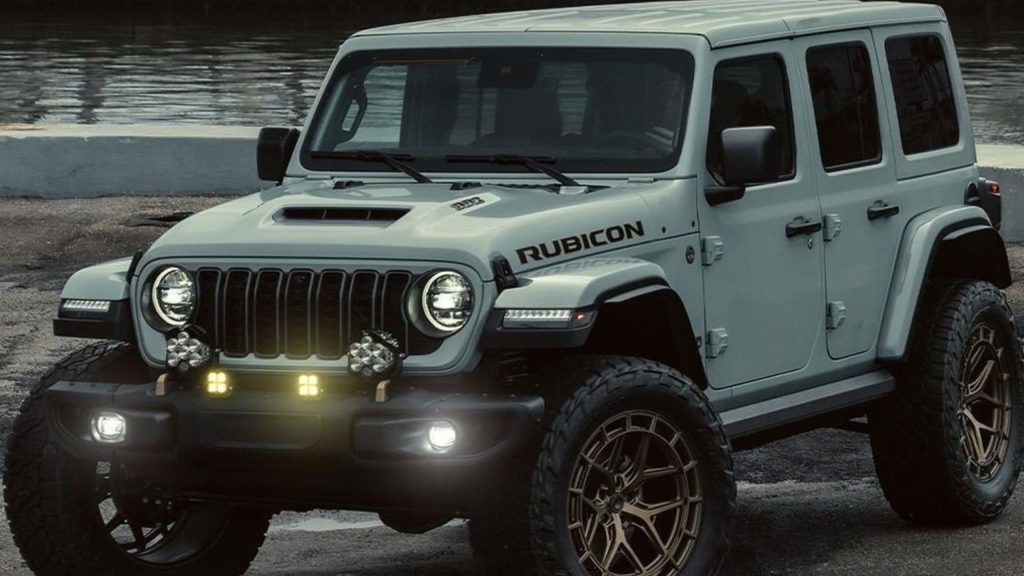
Regular inspection also extends to electronics. The Rubicon 392 integrates advanced traction controls, sensors, and monitoring systems. Dirt, water intrusion, or wiring strain may cause sensor failures that affect drivability. When such small issues are addressed early, they cost a fraction of what major repairs demand.
A solid plan includes pre-trip and post-trip visual scans, routine undercarriage cleaning, and scheduled service intervals carried out thoroughly.
Many experienced drivers set a checklist that includes checking tire wear, fluid levels, suspension joints, brake condition, and electronic sensors. Owners who treat inspections as part of driving ownership prevent the majority of unexpected expenses.
The Rubicon 392 is more than raw horsepower; it is a machine of many interconnected systems that all rely on consistent observation.
Skipping inspections is one of the stealthiest mistakes that kill long-term reliability. By maintaining a sharp eye and consistent routines, owners enjoy performance without disruption and extend the impressive abilities this Jeep was engineered to deliver.
Also Read: 10 Hacks That Extend a Toyota Corolla LE Past 200k
