

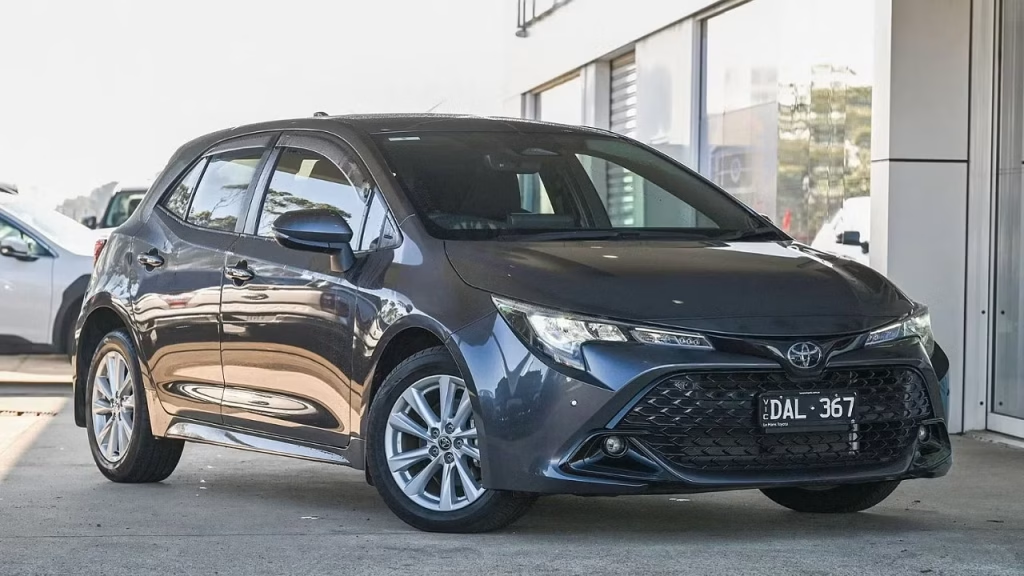
The Toyota Corolla iM is an excellent choice for drivers who want a blend of dependability, comfort, and sensible ownership costs.
Known for its efficiency and straightforward engineering, this versatile hatchback has earned a reputation for being a vehicle that stays reliable when treated with care.
Still, even though Toyota designed the Corolla iM with durability in mind, keeping one in top shape for many years requires practical routines and thoughtful attention.
Owners who commit to consistent maintenance and responsible driving habits find that their cars remain responsive, safe, and enjoyable to use, long after the newer models have arrived on the scene.
What makes a vehicle last is not only the way it was built but also how it is cared for by its driver. Regular inspections, timely fluid changes, and awareness of small issues before they grow into problems are essential.
When ignored, even simple items like tire pressure or coolant level can gradually lead to wear that negatively affects performance.
On the other hand, methodical upkeep saves money, preserves resale value, and ensures that every drive feels as smooth as it did in the first years of ownership.
This guide presents ten carefully focused practices that keep a Toyota Corolla iM running reliably for as long as possible.
Each tip carries a specific benefit, whether it reduces the burden on the engine, keeps the transmission shifting properly, or prevents strain on suspension components.
By developing these habits, owners can depend on steady performance for many years without the frustrations that come from neglect.
Reliability does not happen automatically. It takes effort, but the rewards in peace of mind, safety, and driving enjoyment are more than worth it.
Also Read: 10 Tricks That Extend a Toyota Corolla Cross Road Life
Tip 1: Stick To Regular Oil Changes
The simplest yet most powerful way to keep your Toyota Corolla iM reliable for years lies in a routine oil change schedule. Engine oil is responsible for lubrication, cleaning, and cooling components under the hood.
If this vital fluid becomes worn out or neglected, the engine has to work harder against friction, which creates more heat and wear. Over time, this can accelerate the breakdown of moving parts that should instead last well beyond 150,000 miles.
Toyota’s recommendation is to replace oil every 5,000 to 7,500 miles depending on driving habits and conditions. For city drivers with frequent stops and starts, staying closer to the lower range is best. For mostly highway miles, the upper limit can be acceptable.
Quality oil filters are just as essential because they keep dirt, carbon deposits, and metallic debris from recirculating through the system. An inexpensive oil filter change can save thousands in potential engine repairs.
It is also smart to stick to Toyota-approved synthetic or semi-synthetic oils. Using the correct grade oil prevents sluggish cold starts and maintains steady efficiency. Checking oil between changes is another healthy habit.
A simple monthly dipstick check ensures levels remain appropriate and helps detect early leaks. If you notice a dramatic drop in oil level between intervals, it often signals a gasket or seal problem that needs prompt attention.
Many drivers underestimate how such a fundamental task can influence long-term reliability. Cars with documented oil change intervals on time consistently report fewer engine complaints.
Oil-related failures are preventable, and those who stay disciplined with this maintenance task rarely face costly breakdowns. Keeping the lubrication system in top condition sets the foundation for reliability because all other parts of the Corolla iM engine depend on it.
Tip 2: Keep The Cooling System Healthy
Engines work best in a controlled temperature range. The cooling system in the Corolla iM ensures that heat leaves quickly so the powertrain performs smoothly.
When neglected, buildup within the radiator, hoses, or water pump can cause hot spots that warp metal and weaken seals. That is why monitoring coolant levels and replacing them as directed by Toyota is necessary to avoid long-term failure.
Coolant is more than just water with color. It has additives that guard against freezing, corrosion, and overheating. With time, these additives lose effectiveness, leaving the cooling channels more exposed to rust or calcium buildup.
A coolant flush every two to three years, or around 30,000 miles, helps the system work without clogging. Using the correct Toyota-approved coolant ensures compatibility with the materials used in the Corolla iM’s radiator and engine block.
Another point of focus is the radiator hoses. These flexible tubes handle extreme temperature swings, which can cause cracks. A regular look under the hood can reveal bulges, leaks, or soft spots that need replacing before they burst during a drive.
The radiator fan should also be checked. If it fails to activate during hot conditions, the system cannot push heat away from the engine. Drivers can observe this simply by letting the engine idle after a trip; the fan should kick in when heat builds up.

The thermostat and water pump play equally essential roles in regulating flow. Replacing them as preventive parts after extended mileage can avoid surprise failures. Heat stress can destroy gaskets, warp cylinders, and collapse efficiency.
By keeping coolant fresh, inspecting hoses, and ensuring electronics related to the cooling system function, the Corolla iM avoids unnecessary overheating issues. A reliable engine is one kept cool under pressure.
Tip 3: Transmission Care Matters
The Toyota Corolla iM often comes with a Continuously Variable Transmission (CVT), which requires careful maintenance. Unlike traditional gearboxes, CVTs operate with metal belts and pulleys, creating smooth transitions but needing specific lubrication.
Ignoring the fluid service intervals quickly puts stress on these systems, often leading to jerks, slipping, or early wear that could cost thousands in repairs.
Regular fluid checks are an essential habit. Transmission fluid should appear red or pink and smell clean. If it shows signs of burning or turns dark brown, it signals that the protective properties are fading.
Toyota recommends fluid replacement between 60,000 to 100,000 miles, depending on conditions. Many drivers choose to service earlier for additional safety, as fluid breakdown accelerates with heavy stop-and-go traffic.
Along with proper servicing, drivers should avoid harsh habits like sudden acceleration from a standstill, which strains the CVT belt.
Rolling gradually into throttle keeps stress to a minimum. Allowing the transmission to warm up before demanding strong power, especially in cold climates, will also extend lifespan significantly.
Software updates should not be overlooked. Automakers occasionally provide reprogramming at service centers that optimize operation. Staying informed during service visits ensures your CVT runs with the latest calibrations.
Manual-shift drivers of the Corolla iM are not excluded from attention. Clutch wear remains a factor, especially with frequent city driving. Replacing the clutch at the recommended mileage interval prevents full transmission dismantling mid-journey.
Transmission repairs rank among the most expensive failures, and they can almost always be avoided through discipline.
By protecting the CVT with correct servicing, suitable driving habits, and attention to fluid health, owners shield their Corolla iM from a major reliability hazard.
Transmission longevity directly impacts the value and durability of the entire vehicle, making this one of the most important care routines an owner can adopt.
Tip 4: Brake Maintenance For Long-Term Safety
Brakes are among the most critical safety systems, but they also play a role in protecting the Corolla iM’s reliability.
Poorly maintained brakes lead to vibration in suspension parts, strain on tires, and reduced stopping power that can cause accidents. Keeping this system in shape requires more than just replacing pads when they squeal.
Brake fluid often goes unnoticed, yet it is as important as pads or rotors. The fluid is hygroscopic, meaning it absorbs moisture over time.
Water content inside the fluid reduces its boiling point, leading to brake fade under heavy stops. Toyota recommends replacing the fluid every two to three years to prevent corrosion in brake lines and ensure consistent pressure.
Pads and rotors also deserve regular checks. Pads that run too thin scratch rotors, adding unnecessary repair costs.
Rotors with deep grooves or warping create vibrations under braking, which transfers extra stress to suspension bushings. Inspecting pads, rotors, and calipers every 15,000 miles ensures the system reacts quickly when needed.
Brake hardware like shims and clips also must be cleaned and lubricated. Neglect here creates uneven pad wear or squeaking noises. Road salt, dirt, and heat cycles gradually affect these small parts.
Pay attention to subtle signs such as pulling to one side, pulsation, or soft pedal feel. These symptoms often appear before complete failure and allow you to handle issues before they become dangerous.
Investing in quality OEM pads and rotors can improve both safety and comfort. Cheaper aftermarket parts sometimes compromise stopping distance.
In a vehicle built with the dependability of the Corolla iM, lowering breakdown risk also means choosing the best hardware. Brakes remain the last defense in emergencies, and keeping them in proper working order secures long-term reliability across the entire car.
Tip 5: Stay On Top Of Tire Health
Tires serve as the only connection between the vehicle and the road, yet they are among the most commonly neglected aspects of car ownership.
For the Corolla iM, properly maintained tires mean consistent fuel economy, reduced wear on suspension parts, and overall smoother driving.
A flat tire or sudden failure destroys confidence and can put stress on other systems, so attention here plays a direct role in long-term reliability.
Tire pressure is perhaps the most significant factor. Incorrect air pressure not only reduces miles per gallon but also accelerates wear patterns. Overinflation creates central tread wear, while underinflation wears the edges and increases rolling resistance.
Using a simple tire pressure gauge once a month prevents these issues. Always set pressure according to Toyota’s recommended values, typically found on the driver’s door frame.
Tire rotation is another habit drivers should practice. Moving tires from front to back every 6,000 to 8,000 miles ensures even wear distribution. This also allows inspection of tread depth, sidewall condition, and detection of embedded objects like nails or glass.
Wheel alignment also matters. Misaligned wheels lead to uneven tire wear, strained steering components, and even reduced safety during quick lane changes. If you feel the car pulling to one side or the steering wheel not centered after a turn, alignment service becomes necessary.
Good tires are more than tread. Age also affects condition. Rubber compounds harden with time, reducing grip even if tread depth looks fine. Tire manufacturers suggest replacement every six years regardless of appearance.
High-quality tires not only improve performance but also reduce stress on parts like struts, shocks, and bushings. Well-maintained tires deliver stability, improve braking ability, and enhance cornering balance.
A car that grips the road reliably is one that inspires confidence daily. For the Corolla iM, investing time into tire condition provides one of the highest returns for reliability and safety.
Tip 6: Battery And Electrical Care
Modern vehicles like the Toyota Corolla iM rely heavily on electronics for smooth operation. The battery, alternator, and wiring form a chain of reliability that powers ignition, infotainment, and safety systems.
When ignored, electrical issues can disable even the most dependable vehicles, making proper battery and electrical care essential.
The starting battery should be inspected regularly for corrosion around terminals. White or green buildup restricts current flow, which can cause slow cranking and eventually prevent the car from starting at all. Cleaning terminals with baking soda and a brush prevents these interruptions.
Battery life typically lasts three to five years. After this time, internal resistance increases, and the risk of sudden failure grows. Proactive replacement around the fourth year avoids unexpected problems, especially during winter when cold conditions demand higher cranking power.
The alternator also deserves attention because it recharges the battery and powers electronics when the vehicle runs.
Unusual dimming headlights or flickering dash lights often signal a weakening alternator. A quick diagnostic at a service center can measure charging voltage to confirm proper function.
Electrical reliability also includes fuses and wiring connections. Faulty fuses may prevent critical systems from responding, while loose connectors create intermittent power issues. Periodic checks can catch problems before they escalate.

Replacing worn-out wiper blades, checking bulb functionality, and ensuring the infotainment unit responds without glitches also belong to proper electrical upkeep. Small measures like these keep broader systems durable.
Without properly working electrical power, the Corolla iM cannot start or operate critical safety features. Proactive battery replacement, clean terminals, alternator verification, and basic inspection of wires and fuses ensure reliability continues without interruptions.
Owners who respect these small details often avoid bigger reliability setbacks that stem from overlooked electrical weaknesses.
Tip 7: Mindful Driving Habits
Reliability depends not only on how often a car is serviced but also on how it is driven daily. The Toyota Corolla iM is built for durability, but careless driving habits can wear out components much faster than they were designed to last.
Adopting a mindful driving style ensures parts like brakes, tires, and transmission continue working as intended.
Harsh acceleration and sudden braking are among the most common enemies of mechanical health. Accelerating smoothly instead of flooring the pedal reduces strain on the transmission and engine.
Gradual braking extends pad and rotor life while giving suspension parts fewer jolts. Maintaining a steady rhythm in traffic allows the car to flow with less stress.
Regular warm-up is crucial, especially in colder regions. Allowing a minute or two for oil to circulate before heavy demands helps moving parts adjust to temperature. This simple routine avoids premature wear and allows smoother performance.
Carrying excessive loads should be avoided. Heavy cargo strains tires, shocks, and braking distance. Sticking to Toyota’s recommended cargo limits ensures the chassis does not face premature fatigue.
Even how you handle potholes and speed bumps makes difference. Avoiding deep holes or slowing down before rough sections preserves the suspension system. Constant abuse through hard impacts wears struts and bushings sooner than necessary.
Adaptive driving styles also extend reliability. For instance, using engine braking when descending hills keeps brakes cooler. Parking in shaded areas reduces interior wear and protects paint from constant UV exposure.
A Corolla iM driven thoughtfully shows fewer complaints year after year. Mechanics often note that vehicles operated with care often outlast identical models driven roughly, even with the same service intervals.
Combining good driving etiquette with routine maintenance ensures reliability reaches its highest potential, keeping the Corolla iM dependable long after others show signs of decline.
Tip 8: Suspension And Steering Attention
A strong suspension and steering setup is critical to making the Corolla iM feel stable and predictable. While many drivers only notice these systems when something goes wrong, regular care is needed to preserve reliability.
Ignoring suspension parts causes faster tire wear, misaligned steering angles, and vibrations throughout the cabin.
Shocks and struts are the main components that absorb bumps and keep tires planted. Over time, fluid leaks and worn seals reduce their ability to control rebound.
This results in excessive bouncing after bumps or nose-diving during braking. Replacing them around 60,000 to 80,000 miles helps maintain ride quality and prevents other suspension parts from being overstressed.
Bushings also deserve attention. These rubber components connect metal parts while absorbing vibration. As they age, they crack or become loose, creating clunks and rattles. Replacing worn bushings keeps steering tight and prevents metal-on-metal contact.
The Corolla iM uses electric power steering, which depends on a motor and sensors. While it generally requires less maintenance than hydraulic systems, it can show issues if alignment is off or suspension parts wear unevenly. Keeping alignment proper preserves steering assist and makes handling consistent.
Another point is wheel bearings. These allow smooth wheel rotation, but when failing, they create humming noises or uneven wheel movement. Changing them promptly prevents extra stress on hubs and axles.

Simply paying attention to changes in comfort or stability can catch issues early. If the steering wheel vibrates, rides feel unusually harsh, or noises increase when driving over rough roads, it is time for an inspection.
Maintaining suspension and steering does more than deliver comfort. It keeps tires lasting longer, preserves even braking response, and prevents strain on the drivetrain. With consistent monitoring and timely replacement of worn components, the Corolla iM maintains strong reliability through every mile.
Tip 9: Interior And Exterior Care
Reliability often brings to mind mechanics under the hood, but the condition of the cabin and exterior plays an equally important role in maintaining long-term satisfaction.
A Toyota Corolla iM with a clean interior and rust-free body panels holds value longer, avoids hidden deterioration, and maintains a pleasant daily experience.
Inside the cabin, dirt, dust, and spilled liquids can damage electronics, seats, and air conditioning vents.
Regular vacuuming and the use of protective mats cut down on long-term wear. Wiping down the dashboard with UV protectant prevents cracking and discoloration over time.
The air conditioning system also needs attention. Clogged filters restrict airflow, make the engine work harder, and reduce fuel efficiency. Swapping cabin air filters every 12,000 to 15,000 miles keeps air circulation strong and the HVAC system free from excess strain.
For the exterior, washing and waxing regularly provides more than good looks. Road contaminants like salt, tar, and bird droppings can corrode paint and expose bare metal underneath.
Once rust develops, it spreads quickly and compromises panels, bolts, and even suspension mounts. Applying wax creates a shield while also making cleaning easier next time.
Seals around doors and windows should be cleaned and conditioned. Dry or cracked seals invite water intrusion, which not only stains the interior but also corrodes hidden electrical connectors.
Regularly checking undercarriage areas, especially wheel wells, ensures no hidden buildup of dirt or mud exists. These areas collect moisture that silently weakens structural integrity when ignored.
A Corolla iM kept fresh inside and protected outside demonstrates how cleanliness connects directly to reliability.
Owners often overlook these aspects, but neglect in these areas creates problems just as inconvenient as mechanical failures. Maintaining both finishes and cabin quality keeps the vehicle enjoyable and dependable much longer.
Tip 10: Keep Records And Service History Organized
The final piece in securing reliability for a Toyota Corolla iM focuses on organization. Many owners lose track of what was already replaced, which fluids are due, or when warranties expire.
Keeping accurate and clear records not only ensures you never miss essential service but also boosts resale value should you decide to sell in the future.
Maintaining a service log helps track oil changes, tire rotations, coolant replacements, and brake care.
Whether you record these in a notebook, an app, or a digital spreadsheet, having proof of scheduled upkeep prevents overlap and avoids missed services. This organization guarantees that the vehicle never stretches past safe intervals.
Detailed records also help mechanics diagnose problems faster. If a technician knows when transmission fluid was last changed or how long the current brake pads have been in use, troubleshooting becomes far easier. It reduces labor time and avoids unnecessary part replacements.
Another advantage is resale appeal. Used car buyers often trust vehicles furnished with a complete service history. A Corolla iM backed by logged maintenance shows responsibility and care, convincing potential buyers of its reliability.

Even small documents like tire purchases, battery replacements, or wiper blade receipts contribute to an accurate ownership record. Keeping these in a folder ensures you always have support to reference.
An organized approach is the finishing detail in a complete reliability plan. Mechanical upkeep keeps the car strong, mindful driving preserves components, and proper records tie everything together.
Cars with solid records live longer and inspire more trust because nothing about their maintenance remains uncertain.
Also Read: 10 Easy Wins That Keep a Chevy Spark Reliable for Years
