The Toyota Matrix has long been celebrated as a practical and versatile compact hatchback, appealing to buyers seeking reliability, cargo space, and fuel efficiency in a single package.
Since its debut in 2003, the Matrix has experienced a mix of strong and weak model years, with some early versions struggling with engine and transmission issues, while later models delivered remarkable durability and owner satisfaction.
This article highlights five Toyota Matrix years that have demonstrated exceptional longevity, dependability, and driver approval.
From the early improvements seen in the 2004 model to the final production year in 2013, these iterations exemplify Toyota’s commitment to building vehicles capable of enduring the demands of daily commuting, family use, and practical hauling.
By examining performance, safety, interior design, and owner feedback, we aim to provide a clear picture of the Matrix years that stand out as reliable, low-maintenance choices for long-term ownership.
5 Toyota Matrix Years With Long Life
1. 2007 Toyota Matrix
The 2007 Toyota Matrix remains a standout among compact wagons for its combination of affordability, utility, and practicality. Built on the reliable Toyota Corolla platform, the Matrix delivers the flexibility of a small SUV while retaining the maneuverability of a compact car.
Its exterior design differentiates it from the Corolla, featuring an angular front fascia, unique headlights and grille, and an S-shaped side character line that breaks up the otherwise boxy profile. The vehicle sits five inches taller than the Corolla, creating a spacious interior that comfortably accommodates adults in the rear.
Cargo versatility is a hallmark, with a durable plastic floor, adjustable tie-down tracks, and rear and front passenger seats that fold flat, allowing transportation of items up to eight feet in length.
Its roomy cabin, practical features, and sensible design make it a strong contender for families, commuters, and anyone seeking a functional, flexible compact wagon.
Powering the 2007 Matrix is a 1.8-liter four-cylinder engine producing 126 horsepower and 122 pound-feet of torque. Buyers can choose a five-speed manual transmission or an optional four-speed automatic, with fuel economy rated at 30 mpg city/36 mpg highway for manual models and 29/34 mpg for automatics.
While not designed for sporty driving, the manual transmission provides slightly sharper responsiveness, and the vehicle handles modestly well for suburban or city use. Ride quality is smooth and comfortable, making it well-suited for daily commutes or weekend road trips.
Although it lacks the sporty edge of a Mazda 3 or other fun-to-drive hatchbacks, the 2007 Matrix emphasizes utility and comfort, prioritizing a stable and reliable driving experience over high-performance thrills.
Safety is a strong point for the 2007 Matrix. Antilock brakes are optional, with four-wheel disc brakes included in the M-Theory trim and rear drums in standard trims. Front seat-mounted side airbags and full-length curtain airbags are available as options, while stability control is offered on automatic XR models.
Crash testing by the National Highway Traffic Safety Administration (NHTSA) awarded five stars for driver protection in frontal impacts and four stars for front passengers, with side-impact ratings varying based on side airbag availability.
These features ensure that the 2007 Matrix provides solid protection for both drivers and passengers, contributing to its reputation as a safe, reliable small wagon suitable for family use or daily commuting.
Inside, the 2007 Matrix delivers a practical and user-friendly interior. The dashboard and control layout are straightforward, while materials are of solid quality with good fit and finish. Taller drivers may find the driving position slightly awkward, but rear seating is spacious enough for adults.
Cargo handling mirrors that of a small SUV, with the rear hatch and independent rear glass providing convenient access. Hard plastic surfaces simplify cleaning, and the cargo-floor track with eight adjustable tie-down hooks adds versatility.
Folding the 60/40-split rear seats expands storage to 53.2 cubic feet, and the front passenger seat folds forward to accommodate items exceeding eight feet. These features make the Matrix ideal for families, outdoor enthusiasts, or anyone needing a practical, adaptable vehicle for transporting both passengers and larger cargo items.
2. 2008 Toyota Matrix
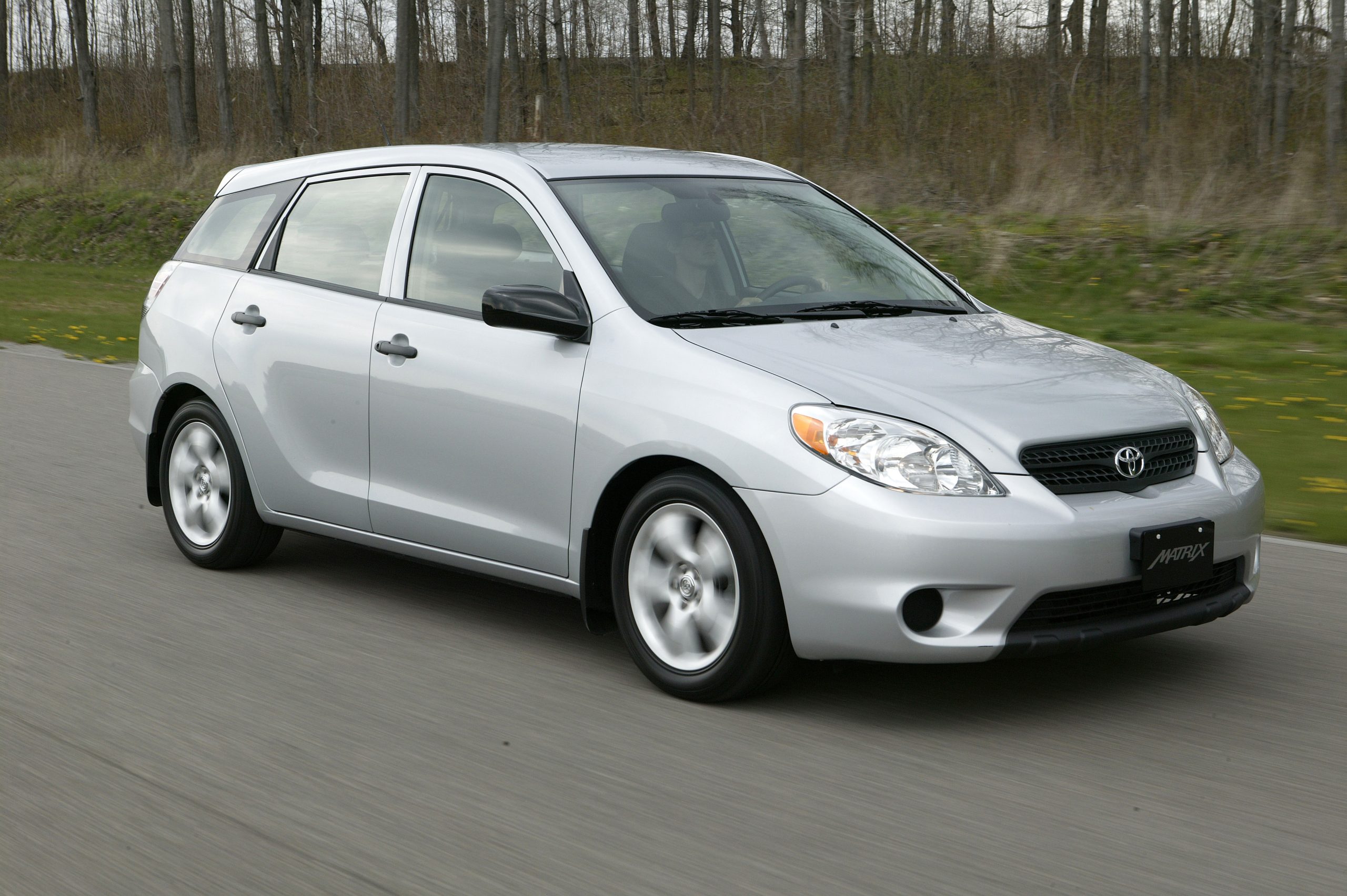
The 2008 Toyota Matrix, the final year of the first generation, is widely regarded as the most reliable of its initial run. Driver complaints were minimal, with only two reported to CarComplaints one for a noisy serpentine belt and the other for the check engine light activating in cold temperatures.
The National Highway Traffic Safety Administration (NHTSA) recorded just 38 complaints, ranging from flickering dashboard lights to a few airbag and accelerator issues, though these were isolated incidents rather than systemic problems.
Only two recalls were issued, one addressing engine stalling and the other correcting a mislabeled load capacity. With an 83 out of 100 quality and reliability score from J.D. Power, the 2008 Matrix stands out as a dependable choice for a compact wagon.
The 2008 Matrix continues Toyota’s legacy of practical, versatile compact wagons. Originally marketed as a youthful five-door hatchback, it evolved into a vehicle favored for its functionality, appealing to drivers seeking roominess and convenience.
Though shorter than the Corolla, the Matrix is taller and wider, providing six extra cubic feet of passenger volume and significantly more cargo capacity. The rear seats and front passenger seat fold completely flat, allowing transportation of items up to eight feet long.
A low-maintenance plastic cargo floor and adjustable in-floor tie-down tracks enhance utility, making the Matrix ideal for families, sports enthusiasts, or anyone needing flexible hauling capabilities.
Under the hood, the 2008 Matrix is powered by a 1.8-liter four-cylinder engine producing 126 horsepower and 122 pound-feet of torque. Standard transmission is a five-speed manual, with a four-speed automatic available on both trims.
While it offers the least power in its class, the Matrix keeps pace with most competitors, reaching 60 mph in approximately nine seconds with the manual gearbox. Fuel economy is above average for the segment, rated at 26 mpg city/33 mpg highway with a manual and 25 mpg city/31 mpg highway with an automatic.
The Matrix’s modest low-end torque is noticeable on uphill grades, but its performance is generally sufficient for daily driving and practical commuting.
Safety features include optional antilock brakes, front-seat side airbags, full-length curtain airbags, and stability/traction control on automatic models. NHTSA crash tests awarded five stars for driver protection and four stars for front passengers, improving to five and four stars respectively with side airbags installed.
Inside, the Matrix boasts a simple, well-designed interior with durable materials and solid fit and finish. Rear seats are roomy, and cargo versatility is excellent, with over 53 cubic feet of space available when seats are folded.
The driving experience is comfortable and smooth, though handling and acceleration are adequate rather than sporty. The 2008 Toyota Matrix is an affordable, well-built, and versatile small wagon that excels in practicality and reliability, making it a strong choice for families and everyday commuters alike.
3. 2013 Toyota Matrix
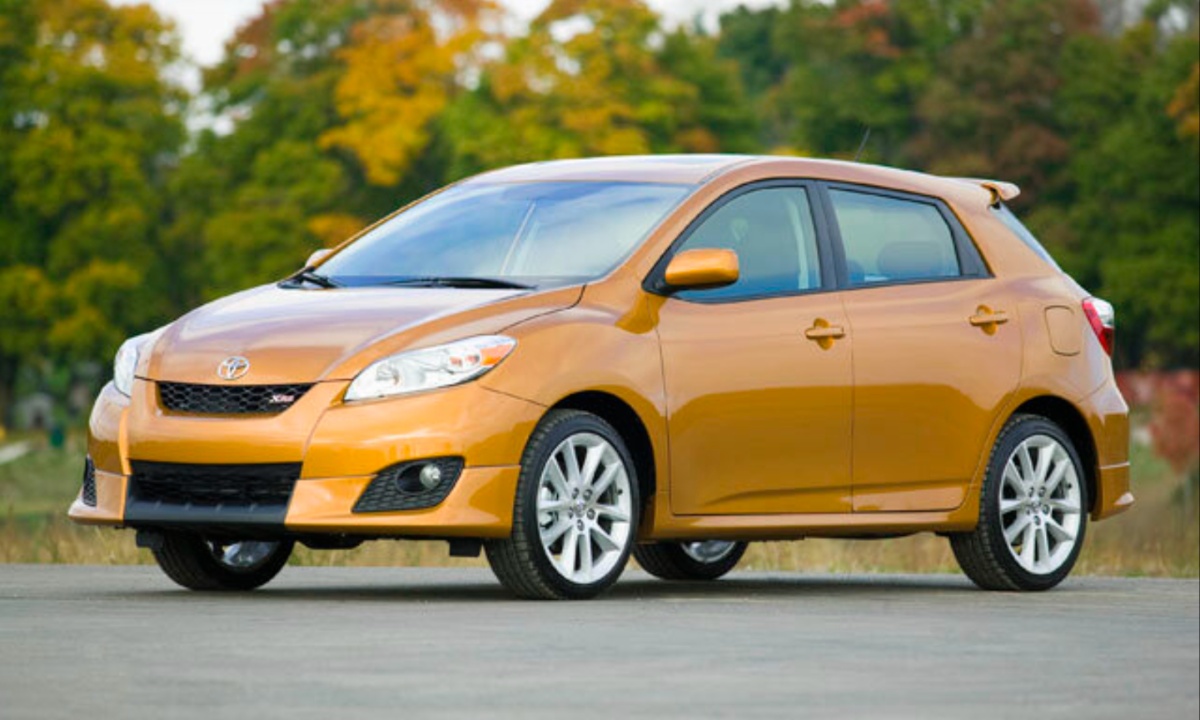
The 2013 Toyota Matrix stands out as the most reliable year of the model’s U.S. run, closing out its production with minimal issues. On CarComplaints, only three isolated problems were reported: a knocking sound when opening the trunk, a slipping clutch, and a faulty hubcap.
The National Highway Traffic Safety Administration (NHTSA) recorded no complaints at all, making it the only Matrix model year with a perfect record. Only a single recall was issued, addressing an airbag problem common across multiple Toyota vehicles.
This spotless reliability underscores that the Matrix’s discontinuation was driven by sales rather than mechanical shortcomings.
The 2013 Matrix retained the practical features that defined the model, offering a roomy interior with fold-flat front passenger and rear seats, making it capable of handling both passengers and long cargo items like surfboards.
The cabin design balances functionality and comfort, with straightforward controls and solid materials. Rear passengers enjoy reasonable space, and cargo capacity reaches 49.4 cubic feet with the rear seats folded down.
While the Matrix’s interior is functional, it feels somewhat dated compared with more modern competitors, such as the 2013 Honda Fit or Ford Focus hatchback, which offer more innovative interior layouts and additional versatility.
The 2013 Matrix offered two engine options, each paired with practical transmission choices. The base Matrix L features a 1.8-liter four-cylinder engine producing 132 horsepower and 128 pound-feet of torque, paired with a standard five-speed manual or optional four-speed automatic.
Fuel economy is estimated at 25 mpg city/32 mpg highway with the automatic and 26/32/29 with the manual. The Matrix S trim upgrades to a 2.4-liter four-cylinder generating 158 horsepower and 162 pound-feet of torque.
Front-wheel-drive S models use a five-speed manual or automatic, while all-wheel-drive versions use a four-speed automatic. Fuel economy drops slightly with the larger engine or AWD configuration, ranging from 20–24 mpg combined depending on the setup.
Safety is a strong point for the 2013 Matrix, with standard antilock brakes, stability and traction control, active front head restraints, front-side airbags, and full-length side curtain airbags. The Insurance Institute for Highway Safety awarded the Matrix top ratings of “Good” in both frontal-offset and side-impact crash tests.
On the road, the driving experience varies with the engine choice: the 1.8-liter provides adequate fuel efficiency but sluggish acceleration, while the 2.4-liter delivers better power at the expense of economy.
Ride quality is smooth, and handling is competent for city and highway driving, although it is not a sporty performer compared with competitors like the Hyundai Elantra GT or Subaru Impreza. The 2013 Matrix remains a reliable, practical, and versatile compact hatchback that closes the model’s run on a strong note.
4. 2011 Toyota Matrix
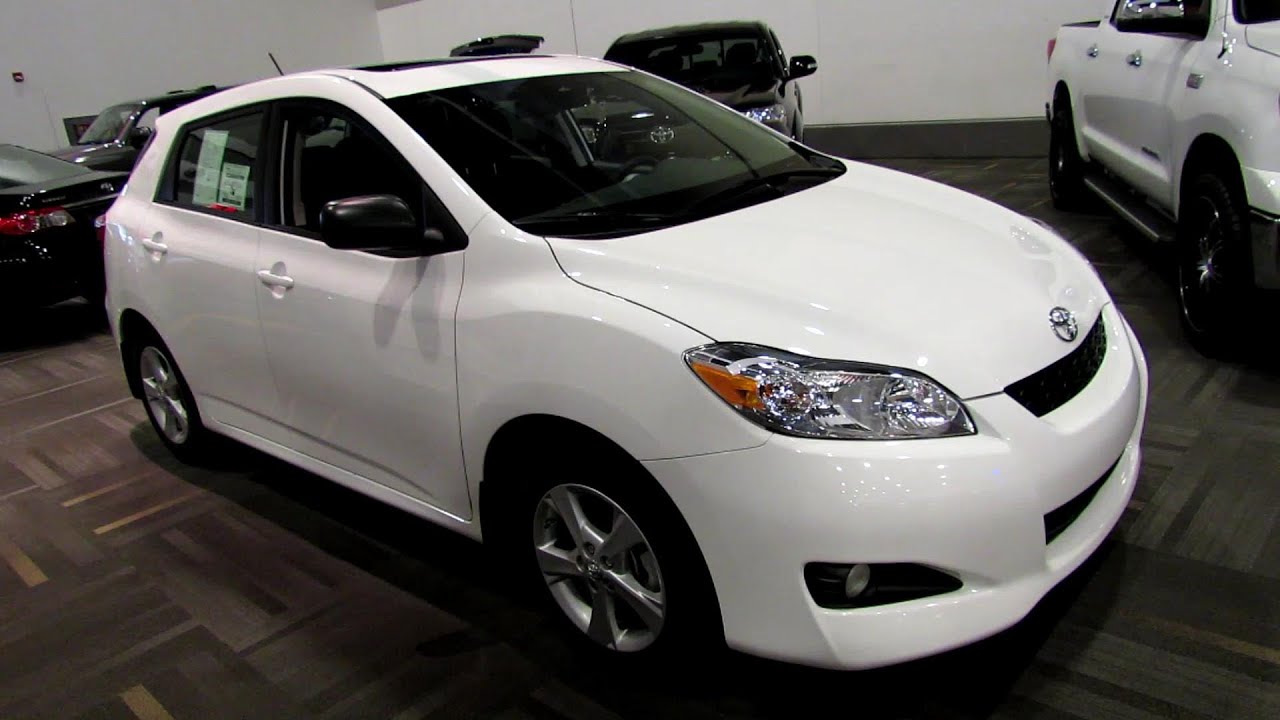
For 2011, Toyota discontinued the top-of-the-line XRS model of the Matrix, eliminating its sport-tuned suspension and additional options. The remaining trims received more standard features, including cruise control, full power accessories, heated and folding rearview mirrors, and rear-seat heat ducts.
While the Matrix’s styling is more conventional compared with quirky competitors like the Kia Soul, Nissan Cube, or Scion xB, it offers practical advantages, including a spacious interior and impressive cargo capacity for a vehicle of its footprint.
Its practicality and conventional design make it an appealing choice for buyers prioritizing functionality over unique styling.
The 2011 Matrix is powered by either a 1.8-liter four-cylinder engine producing 132 horsepower and 128 pound-feet of torque in base models, or a 2.4-liter four-cylinder engine generating 158 horsepower and 162 pound-feet of torque in the S trim. Front-wheel drive is standard, with all-wheel drive optional on the S trim.
A five-speed manual is standard, and a four-speed automatic is available for the L trim, while the S trim uses a five-speed automatic or manual depending on configuration. Fuel economy ranges from 25–28 mpg city and 31–32 mpg highway for the base 1.8-liter, while the 2.4-liter returns 20–24 mpg combined depending on drivetrain.
Acceleration is adequate for city driving, but the 1.8-liter feels sluggish, whereas the 2.4-liter provides more responsive performance at the expense of fuel efficiency.
The 2011 Matrix comes well-equipped with safety systems, including stability and traction control, antilock brakes, brake assist, active front head restraints, front-side airbags, and side curtain airbags.
Although the model had not been rated under the updated 2011 NHTSA crash-testing standards, previous 2010 ratings showed five stars for frontal and front-side impacts and four stars for rear-side impacts.
The Insurance Institute for Highway Safety awarded the Matrix “Good” ratings in both frontal-offset and side-impact crash tests, reflecting solid occupant protection for a small hatchback.
Inside, the 2011 Matrix features a slightly edgier interior than other Toyota models, though less unconventional than competitors like the Scion xB or Nissan Cube. Controls are simple and intuitive, and materials are of decent quality.
The cabin comfortably accommodates rear passengers, though taller drivers may find the front seating a bit snug. Cargo capacity is generous for the segment, offering 19.8 cubic feet behind the rear seats and up to 61.5 cubic feet with the fold-flat front passenger seat.
Ride quality is smooth and well-insulated, providing comfort over long commutes or city driving. While the Matrix no longer offers the sporty XRS trim, it remains a versatile, practical, and reliable compact hatchback suitable for families and commuters alike.
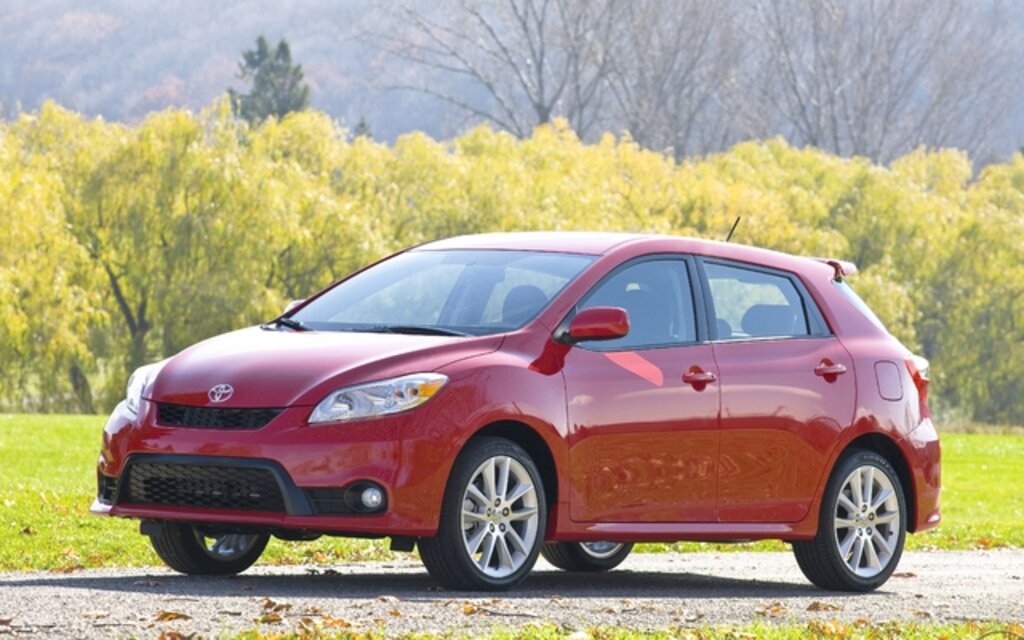
5. 2012 Toyota Matrix
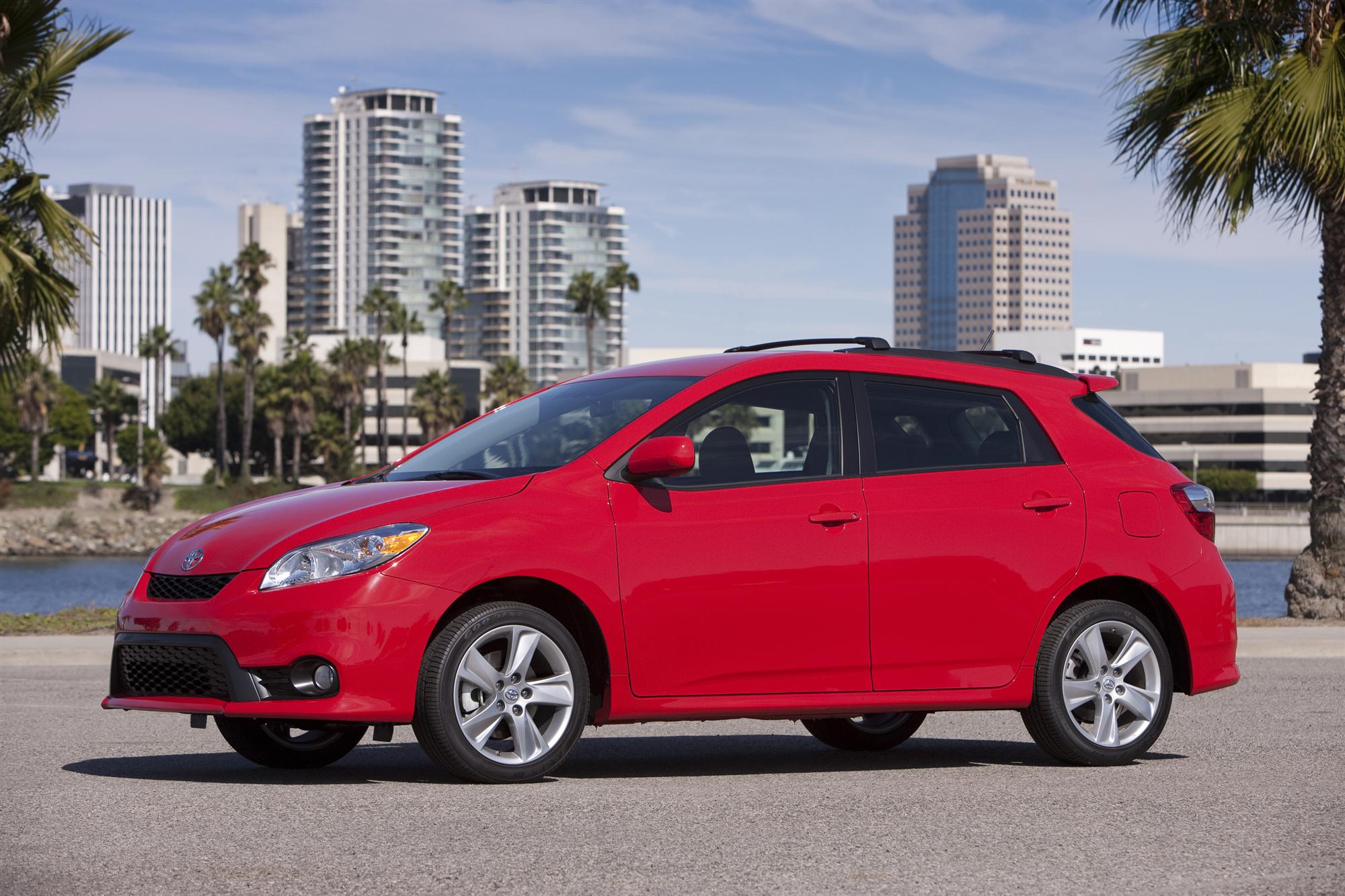
The 2012 Toyota Matrix remained largely unchanged from previous years, continuing to emphasize practicality, comfort, and Toyota reliability. Though it retains the functional traits that made it popular, such as roomy interiors and versatile cargo capacity, its appeal has waned in the face of newer, more competitive hatchbacks.
The sportiest XRS trim was retired in prior years, leaving the Matrix in a more domesticated role. Despite its aging design, the Matrix continues to offer a mechanically sound, versatile four-door hatchback experience, with smooth engine performance, a comfortable ride, and a spacious interior that rivals compact SUVs when the rear and front passenger seats are folded flat.
The 2012 Matrix comes with two engine options. The base L trim features a 1.8-liter four-cylinder engine producing 132 horsepower and 128 pound-feet of torque, paired with a standard five-speed manual or optional four-speed automatic. EPA estimates are 25 mpg city/32 mpg highway with the automatic and 26/32/29 with the manual.
The S trim is powered by a 2.4-liter four-cylinder engine generating 158 horsepower and 162 pound-feet of torque. Front-wheel-drive S models offer a five-speed manual or automatic, while all-wheel-drive versions come with a four-speed automatic.
Fuel economy ranges from 20–24 mpg combined depending on drivetrain. While acceleration is adequate for the class, the 1.8-liter feels sluggish off the line, and the 2.4-liter provides ample power but sacrifices fuel efficiency.
The 2012 Matrix includes standard safety features such as stability and traction control, antilock disc brakes, active front head restraints, front-side airbags, and full-length side curtain airbags.
The Insurance Institute for Highway Safety awarded the vehicle top ratings of “Good” in both frontal-offset and side-impact crash tests, demonstrating solid occupant protection. While newer competitors may offer more advanced safety technology, the Matrix remains a safe and reliable choice for families and daily commuters.
Inside, the 2012 Matrix blends practicality with a slightly edgier design than other Toyotas, though not as unconventional as the Nissan Cube or Scion xB. Controls are simple and user-friendly, and materials are of decent quality. Rear passengers enjoy a spacious bench seat, though taller occupants may find the front seating a bit snug.
Cargo capacity is generous, offering 19.8 cubic feet behind the rear seats and up to 61.5 cubic feet when including the fold-flat front passenger seat. The ride is smooth, well-insulated, and comfortable, making it a capable daily driver or small family wagon.
While newer competitors such as the Honda Fit, Ford Focus, Subaru Impreza, and Kia Forte offer improved versatility, fuel economy, and feature content, the 2012 Matrix remains a reliable, practical, and flexible hatchback with enduring Toyota build quality.
Also Read: 5 Cars with Climate Control That Works vs 5 That’s Just for Show
5 Toyota Matrix Years With Short Life
1. 2003 Toyota Matrix: A Rocky Debut
The 2003 Toyota Matrix marked the model’s first year in the United States, but it arrived with significant reliability issues that earned it the “Beware of the Clunker” label.
According to CarComplaints.com, the 2003 Matrix generated 387 complaints to the National Highway Traffic Safety Administration (NHTSA) and was subject to eight recalls. The most serious problems centered on the engine, which was prone to consuming excessive oil and producing ticking or rattling noises.
Many owners reported that the engine eventually failed, typically around 103,300 miles, requiring costly repairs estimated at approximately $3,400. Transmission issues were also prevalent, particularly in manual-equipped models, which often experienced grinding noises, difficulty shifting, and eventual failure.
The combination of engine and transmission flaws severely affected the car’s reputation, and these systemic problems overshadowed other positive traits such as Toyota’s hallmark reliability and functional interior.
Despite its versatility as a compact hatchback, the 2003 Matrix struggled to gain the trust of buyers due to recurring mechanical failures. This debut year set a challenging precedent for the model and highlighted the need for improvements in subsequent iterations.
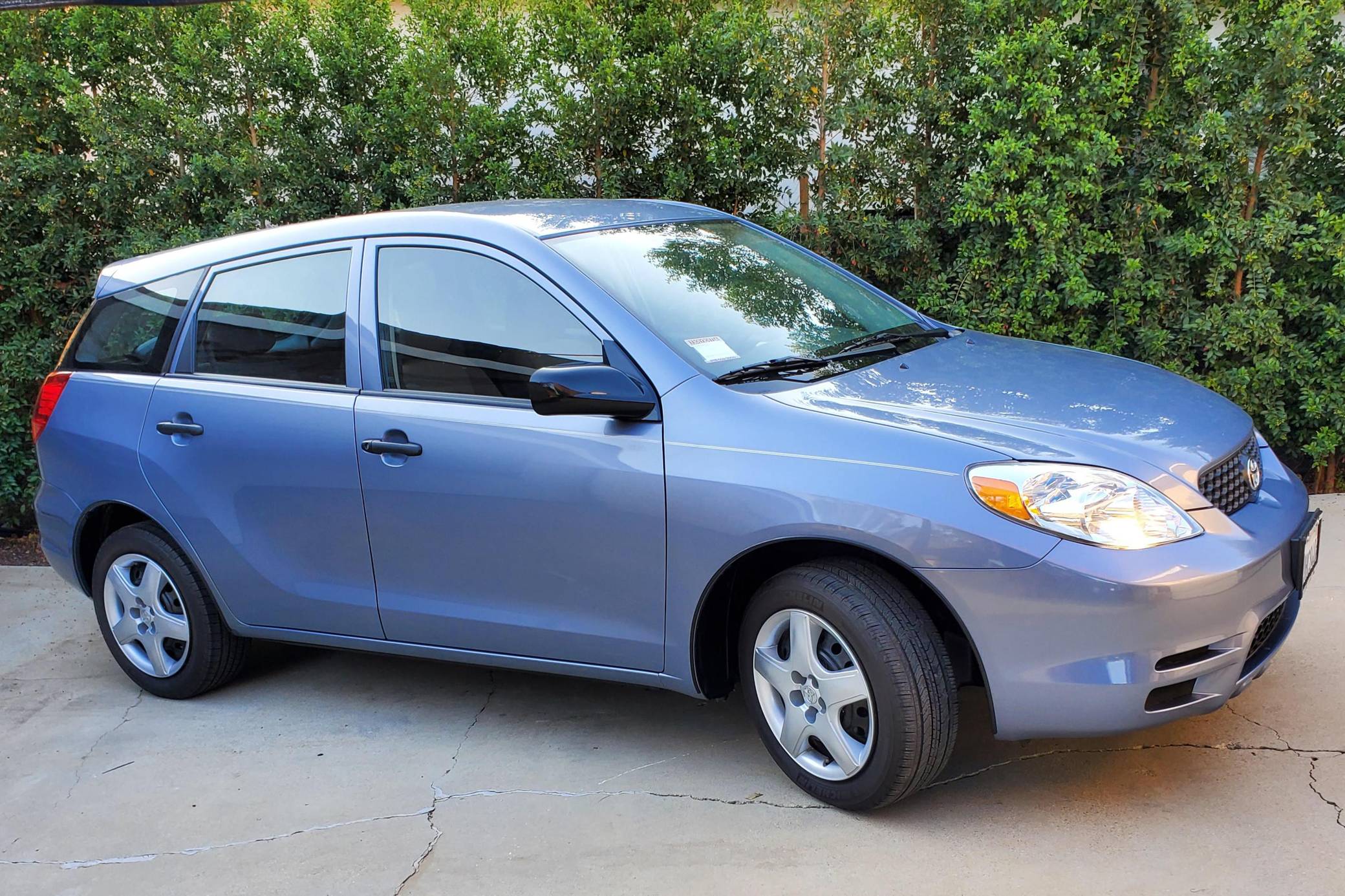
2. 2004 Toyota Matrix: Slight Improvements
The 2004 Toyota Matrix represented a modest step forward compared with the 2003 debut, though reliability issues persisted. The NHTSA recorded 209 complaints and eight recalls for this model year.
Engine and transmission problems continued to plague the first-generation Matrix, though they were reported less frequently than in the previous year. Manual transmission owners often experienced loud grinding noises, hesitation while shifting, and the inability to engage fifth gear.
Some drivers reported ticking and rattling noises from the engine, a carryover from the previous year’s mechanical issues. While these problems were significant, the 2004 Matrix showed signs of improvement, particularly in the noticeably lower number of complaints submitted.
Despite this, the vehicle still struggled to establish a solid reputation for reliability, and potential buyers were cautious about the long-term durability of the engine and transmission systems.
The 2004 Matrix’s reliability record made it slightly more acceptable than the initial 2003 model, but it remained a year buyers had to approach carefully, especially if considering a manual transmission version.
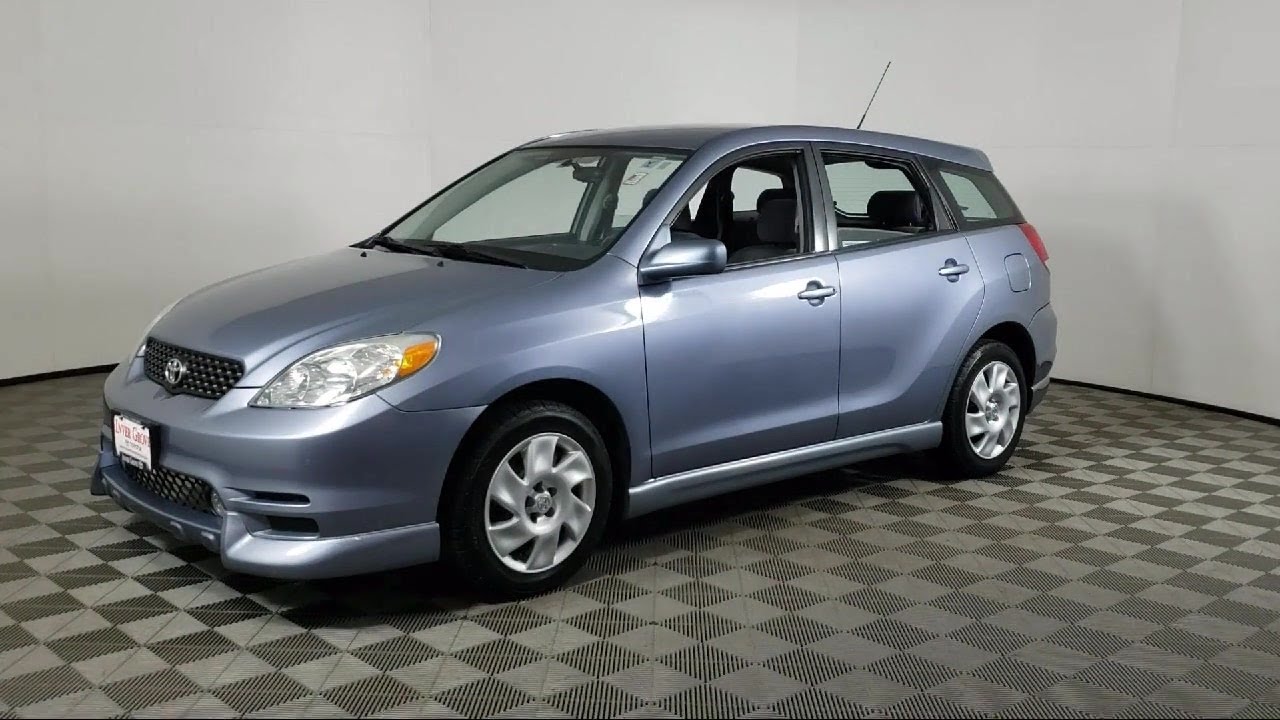
3. 2005 Toyota Matrix: Persistent Transmission Troubles
The 2005 Toyota Matrix continued to experience reliability concerns, particularly with its transmission, while the total number of NHTSA complaints increased to 372, accompanied by six recalls.
Owners frequently reported knocking noises from the transmission, erratic shifting, and whining sounds originating from the floorboard. Some manual-equipped models experienced repeated hesitation when attempting to change gears, indicating an ongoing systemic issue.
In addition to transmission problems, several owners noted that the check engine light would illuminate for no apparent reason. Diagnostic efforts often revealed a faulty oxygen sensor, which triggered unnecessary alerts and potential confusion for drivers.
While mechanical issues were not as severe as those in 2003, the 2005 Matrix still faced significant challenges that affected long-term reliability. Despite offering the same practical interior and versatile hatchback layout that characterized the Matrix line, these recurring mechanical problems reduced buyer confidence and limited its appeal in a competitive segment of compact cars.
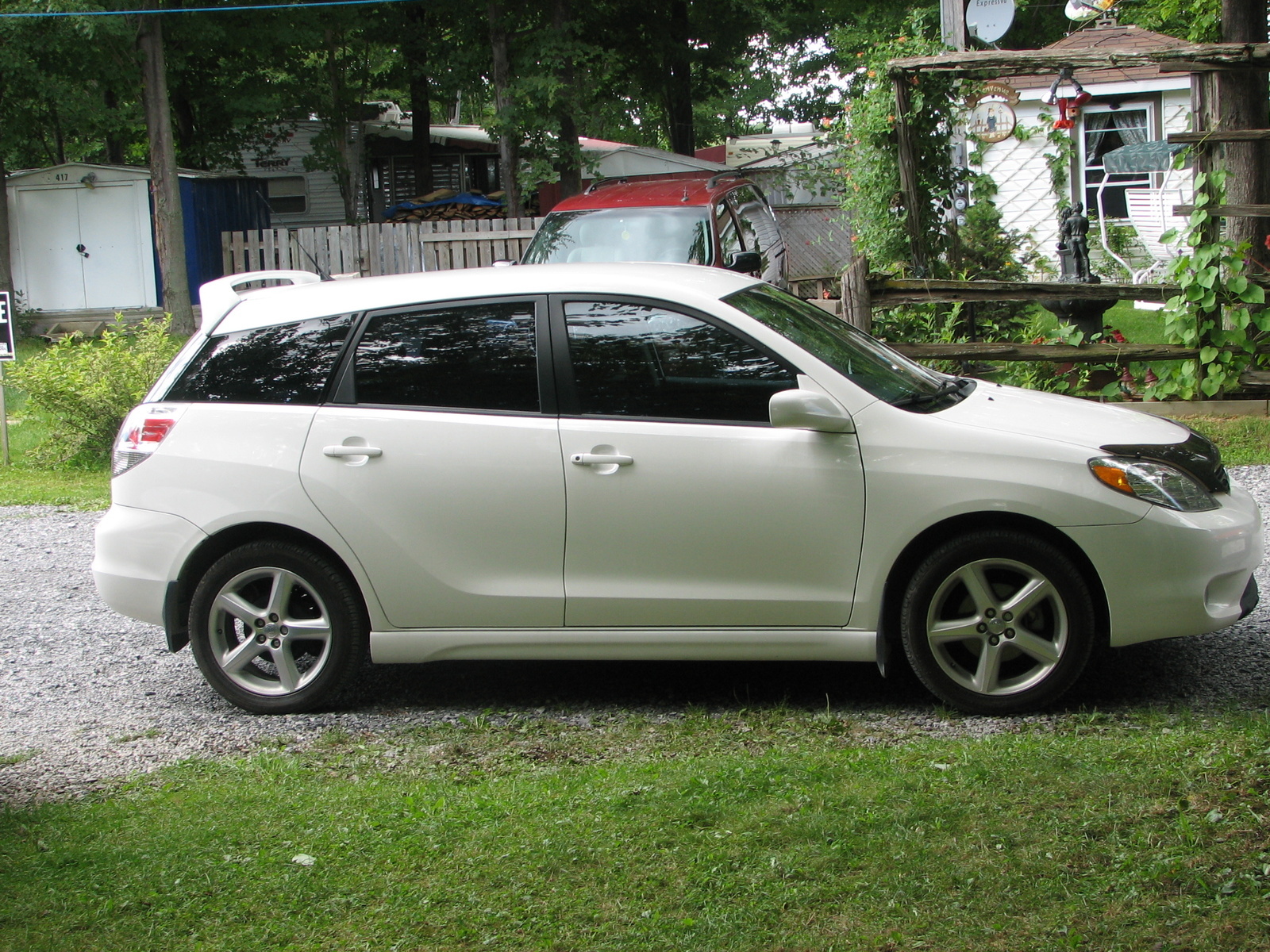
4. 2006 Toyota Matrix: Sudden Acceleration Recall
The 2006 Toyota Matrix was affected by one of the most serious safety concerns in early Matrix history: sudden unintended acceleration. According to CarComplaints.com, the 2006 model received 285 NHTSA complaints and eight recalls.
Numerous owners reported instances where the vehicle accelerated unexpectedly at low speeds, sometimes rendering braking ineffective. In some cases, airbags failed to deploy during accidents caused by this issue.
Toyota initiated a major recall to address the problem, officially described as “sudden RPM increase/vehicle acceleration due to accelerator pedal sticking.” This recall, which was part of a larger class-action settlement, resulted in a $1.2 billion payout from the automaker.
Beyond the safety concern, the 2006 Matrix still experienced engine and transmission complaints, though they were less frequent than in earlier years. While the car offered a functional hatchback design and practical interior, these safety and mechanical issues overshadowed its utility, making it a year that many buyers were advised to avoid.
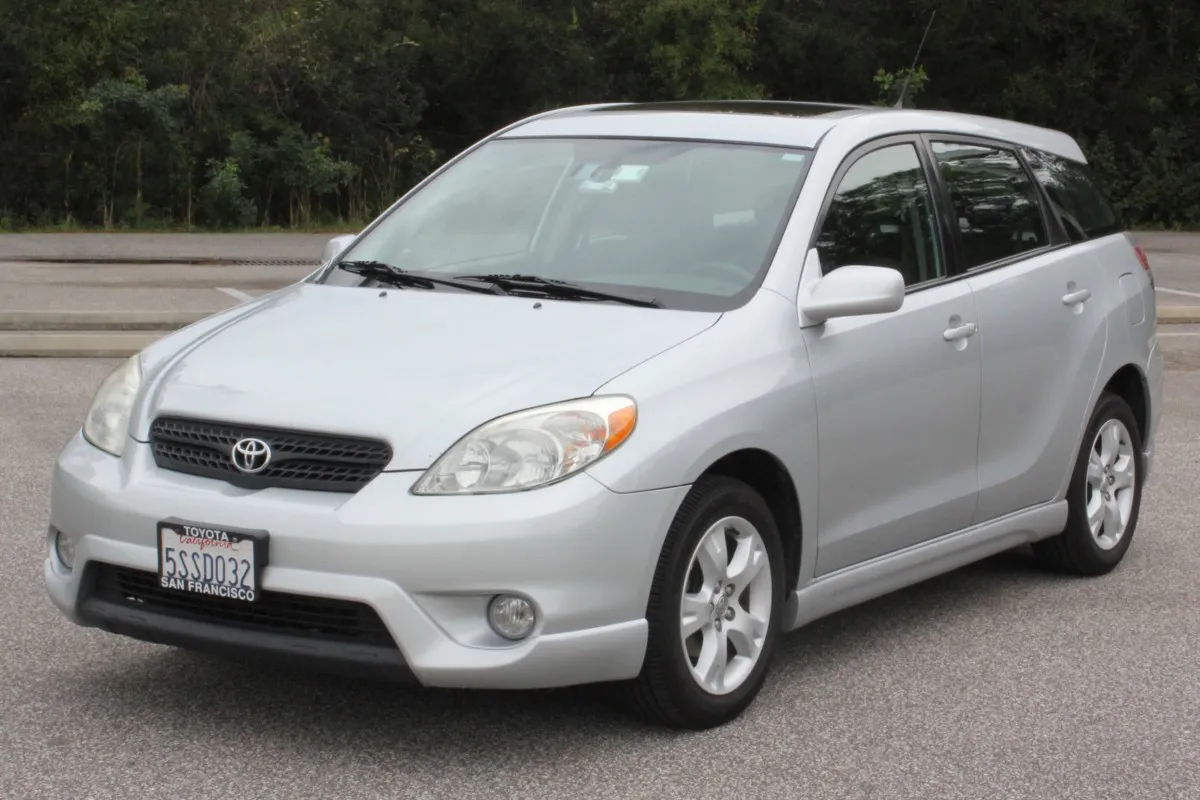
5. 2009 Toyota Matrix: Engine and Transmission Failures
The 2009 Toyota Matrix continued the trend of mechanical troubles, earning another “Beware of the Clunker” designation due to significant engine and transmission failures. Owners reported excessive engine noise, which sometimes escalated to rattling during acceleration, eventually resulting in complete engine failure at roughly 103,300 miles.
Repairs were expensive, averaging around $3,400 to replace or rebuild the engine. Manual transmission models also faced persistent problems, with symptoms like grinding, erratic shifting, and hesitation.
Fixing these issues often required transmission replacement or overhaul, costing approximately $2,290. Despite the Matrix’s practicality as a compact hatchback with ample interior and cargo space, these mechanical flaws made the 2009 model highly problematic for buyers.
Safety and comfort could not outweigh the risk of costly engine and transmission repairs, reinforcing the notion that certain early and mid-generation Matrix years carried significant reliability risks.
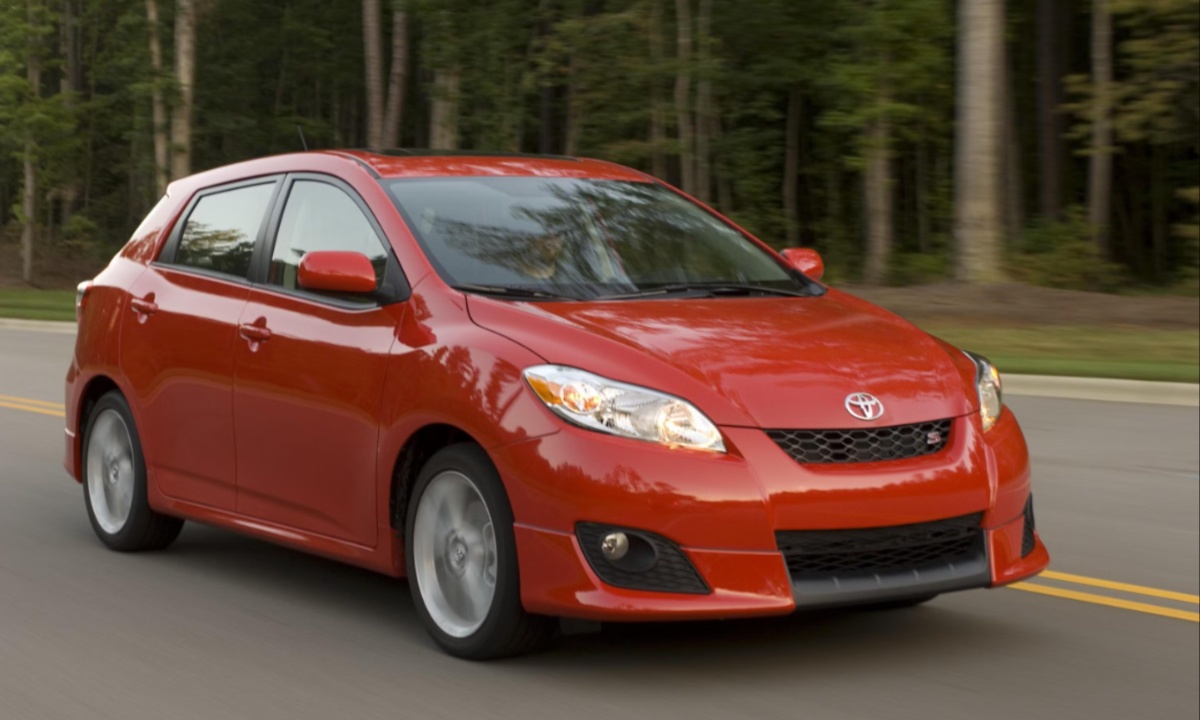
The Toyota Matrix shows how thoughtful engineering and consistent quality can produce vehicles that remain reliable over time. The featured models demonstrate a balance of comfort, cargo versatility, efficient engines, and dependable drivetrains, making them practical for a variety of daily needs.
Owners benefit from well-designed interiors, smooth rides, and features that make commuting, family transport, or hauling equipment simple and efficient. While newer cars may offer modern technology or updated styling, these Matrix models retain their appeal through long-lasting performance and low-maintenance reliability.
Their combination of durability, practicality, and versatility has allowed them to maintain value and usefulness, proving that a well-built compact hatchback can continue to deliver dependable transportation years after leaving the dealership.
Also Read: 10 Cars With Tricky Seatbelt Buckles for Elderly Passengers