When Americans shop for a new car, they often focus on performance, fuel efficiency, and technology, but one element that plays a huge role in long-term satisfaction is the interior.
A well-built interior not only makes commutes and road trips more comfortable but also stands the test of time against wear, fading, and daily use.
Some automakers pride themselves on designing cabins that can last longer than the vehicle’s mechanical components, while others still cut corners with cheap plastics and thin upholstery that age quickly.
In this article, we’ll compare five new cars praised for their long-lasting interiors vehicles whose cabins should hold up just as well as the powertrain against five models known for having more basic, short-lived interior quality.
This breakdown can help American buyers who value durability and comfort make smarter decisions before signing the dotted line.
New Cars That Should Outlast Their Seats
Modern cars are engineered to last longer than ever, engines run cleaner, transmissions are tougher, and electronics are smarter. But there’s one weak link most automakers still haven’t figured out: the seats.
Cushions flatten, leather cracks, fabric frays, and before long you’re sitting in a reminder that comfort isn’t built to the same standard as the drivetrain. In this article, we’ll spotlight new cars designed to go the distance mechanically, even if their seats tap out first.
1. Toyota Camry
The Toyota Camry has long been a benchmark for durability, and its interior is no exception.
Toyota has improved the Camry’s cabin over the last decade, introducing soft-touch materials, tightly stitched upholstery, and ergonomically designed seats that withstand years of use.
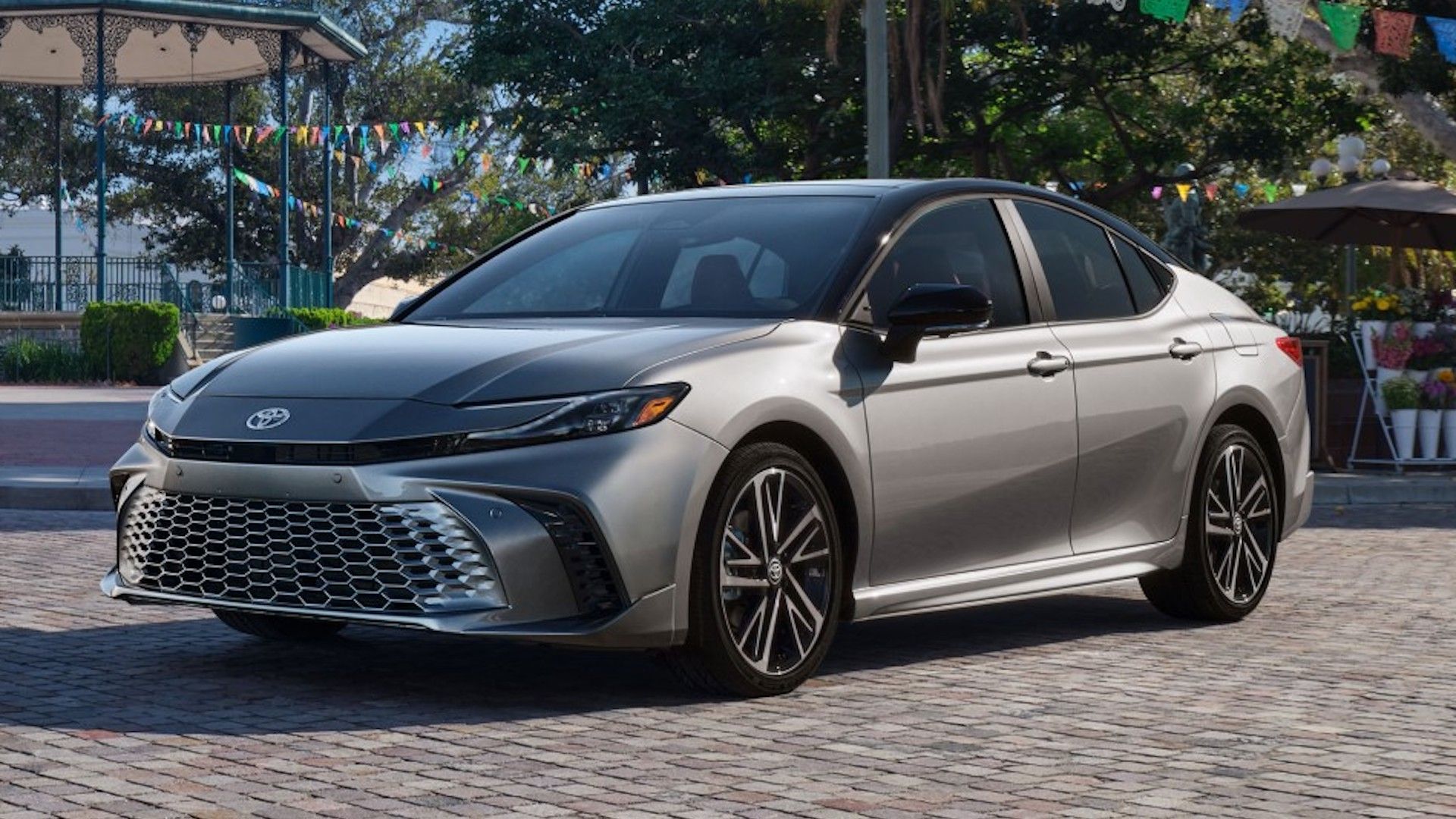
Unlike some mid-size sedans that show wear on the seat bolsters after 40,000 miles, the Camry’s fabric and leather-trimmed options are engineered to resist sagging and cracking.
Toyota’s focus on family buyers who often keep their cars well beyond 150,000 miles means that the Camry’s cabin is designed to last. Owners frequently report that even after a decade, the interior plastics retain their texture and don’t fade as quickly as rivals in hot climates.
2. Honda Accord
The Honda Accord combines refinement with Honda’s reputation for longevity. While the mechanicals are famous for lasting well into the 200,000-mile range, the Accord’s seats and dash materials also hold up remarkably well.
Honda uses high-density seat foam that resists collapsing over time, ensuring that long-distance drivers won’t suffer from a sagging cushion after a few years.
Additionally, the Accord’s mix of fabric, faux wood trim, and metallic accents is chosen with aging in mind fewer glossy finishes that scratch and more matte surfaces that hide daily wear.
For buyers in the US who want a sedan with a premium feel at a mainstream price, the Accord delivers an interior that often still looks fresh when rivals are falling apart.
3. Lexus RX
Luxury brands often face criticism for prioritizing style over durability, but the Lexus RX proves to be an exception. This SUV’s interior is crafted with Lexus’s trademark attention to detail, including supple leather, precision stitching, and durable switchgear.
While German rivals like BMW and Mercedes sometimes develop creaks or peeling buttons over time, Lexus engineers ensure that the RX’s cabin remains solid even after years of heavy commuting.
The leather seats are treated to resist cracking in sun-exposed markets like Arizona and Texas, and the climate-control system prevents premature fading or drying of surfaces.
Many US Lexus RX owners report their interiors feel “like new” even past 100,000 miles, reinforcing the brand’s reputation for long-term reliability.
The Lexus RX holds a pivotal place in the modern automotive world. When it debuted for the 1999 model year, it was the first SUV built on a unibody car platform, essentially, the industry’s first crossover.
Fast-forward to today, and the RX is still a dominant force, competing in the packed midsize luxury SUV segment while remaining one of Lexus’ top sellers. Now in its fourth generation, the 2022 RX comes in both two- and three-row configurations, with a hybrid powertrain available for buyers seeking efficiency.
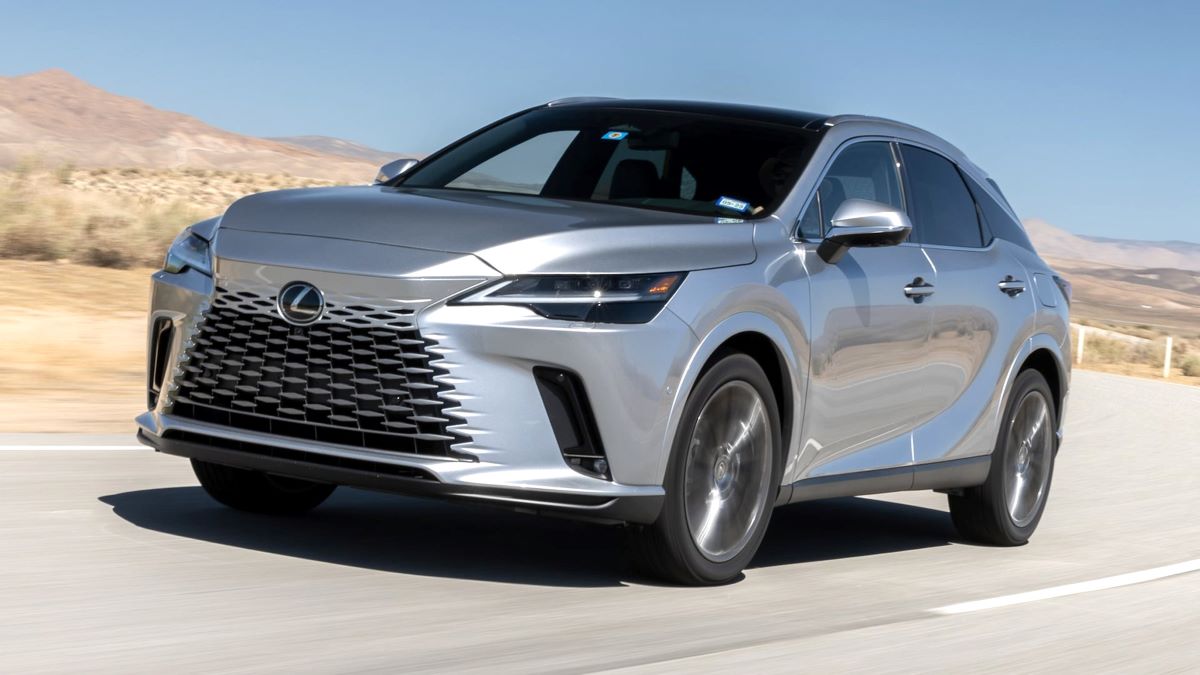
Don’t let the RX’s sleek styling fool you, this crossover leans heavily toward comfort rather than sportiness. Lexus has clearly prioritized a serene driving experience, and in that regard, the RX delivers.
The ride is calm and hushed, while the cabin is filled with soft, upscale materials that go beyond the seats. Based on our time behind the wheel, the RX450h hybrid feels smoother and more responsive than the RX350’s V-6, all while returning better fuel economy.
Interior space, however, is a weak spot. While the front row provides generous room and practical storage, second-row passengers may find things tighter than expected. The situation is even worse in the three-row RX L model, where the cramped third row borders on unusable. Cargo capacity isn’t especially impressive in either version, meaning some rivals offer greater overall utility.
For those eyeing the F Sport trim in search of extra excitement, expectations may fall short. Its firmer suspension doesn’t significantly boost handling or fun factor. Still, the RX’s commitment to laid-back luxury has its own charm. As an everyday vehicle, it’s refined, reliable, and delivers strong value, qualities that continue to make it an appealing choice in the luxury crossover market.
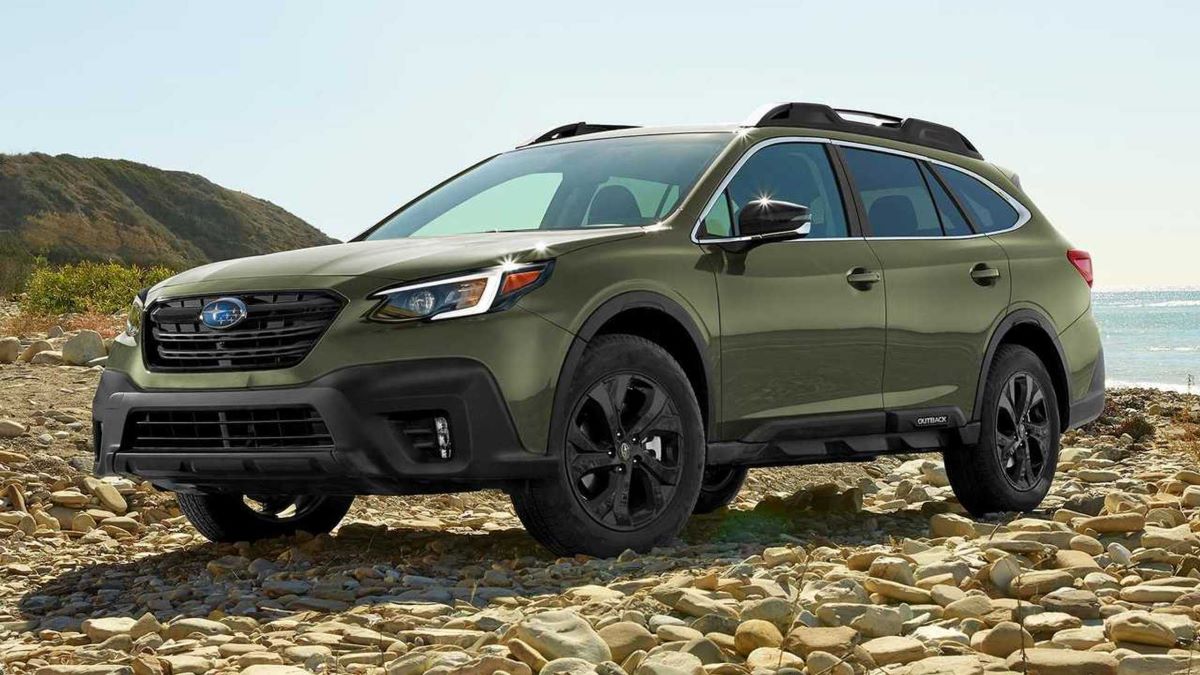
4. Subaru Outback
The Subaru Outback is built with American lifestyles in mind, often serving families, outdoor adventurers, and long-distance commuters. Its interior, while not ultra-luxurious, is designed for resilience.
The waterproof StarTex upholstery option, introduced in recent years, is particularly popular among dog owners and campers who need a cabin that can handle mud, spills, and constant use.
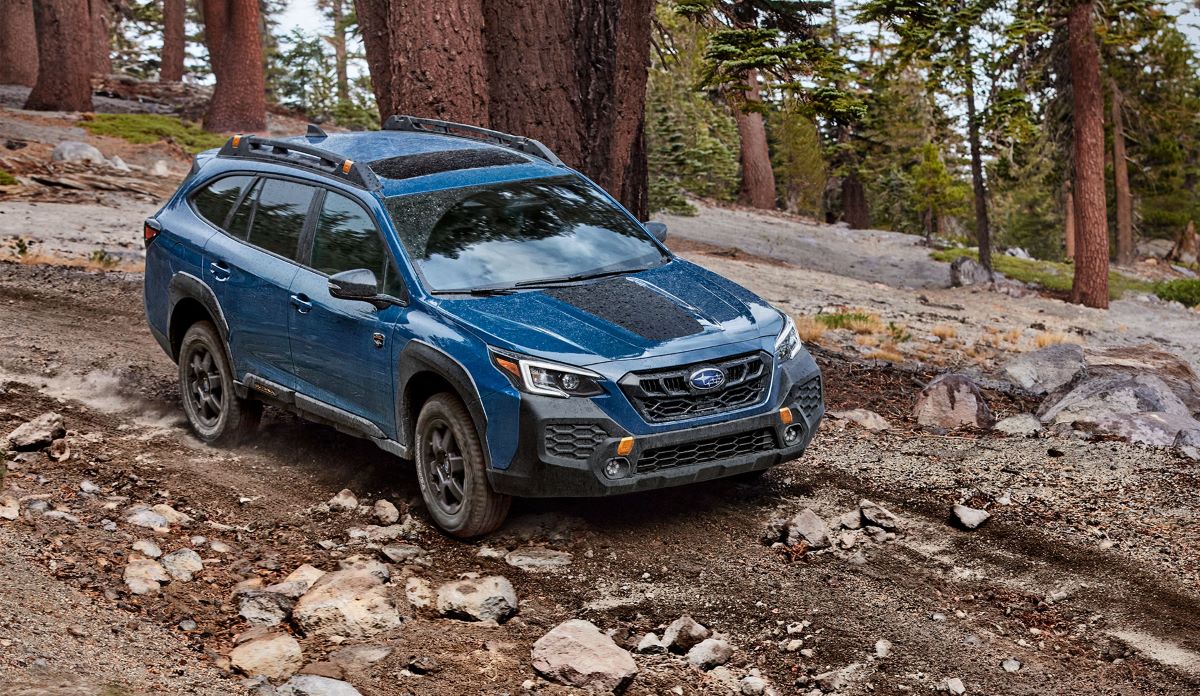
Even the standard cloth and leather options are stitched and bolstered with durability in mind, resisting the premature wear that some compact SUVs suffer.
Add in Subaru’s focus on practicality large, simple controls that don’t fade or break easily and the Outback stands as a vehicle where the interior life often matches the legendary lifespan of Subaru’s boxer engines.
5. Toyota Land Cruiser (2024 Return to US Market)
The return of the Toyota Land Cruiser to the US in 2024 brought excitement, not only for its off-road prowess but also for its nearly indestructible interior.
This is a vehicle built to handle global markets where dust, heat, and extreme use are daily realities. Toyota equips the Land Cruiser with durable leathers, rubberized switchgear, and reinforced seat structures designed to withstand constant use.
Even though it’s now marketed more toward American families and adventurers, Toyota hasn’t compromised on the toughness that made it legendary worldwide.
Buyers paying the premium price for a Land Cruiser can expect the seats and cabin trim to outlast many newer SUVs in the segment.
After a brief hiatus that had many believing the Land Cruiser’s U.S. story had ended, Toyota’s legendary off-roader made a triumphant return last year with a sharper sense of purpose.
Now powered by a four-cylinder hybrid setup producing a combined 326 horsepower, the Land Cruiser rides on the same platform as the Lexus GX but has been trimmed down, losing its third-row seat in the process. This leaner, more focused design positions it directly against other trail-proven icons like the Ford Bronco and Jeep Wrangler.
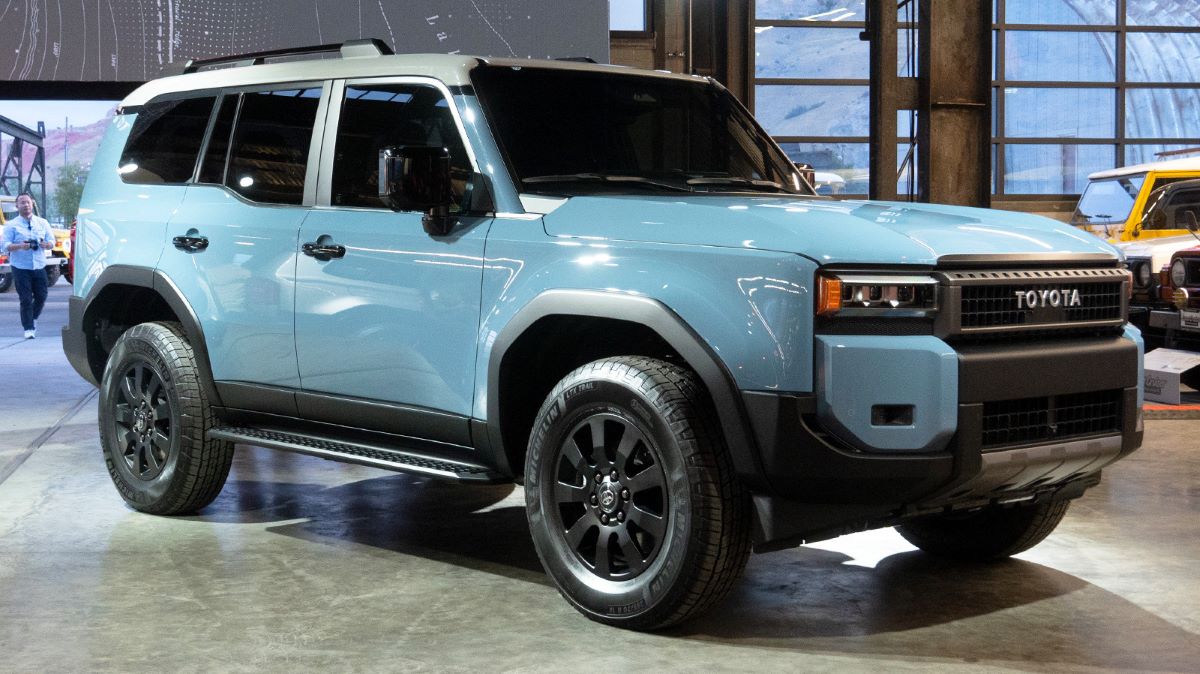
Toyota has thoroughly updated the Land Cruiser, giving it a modernized interior, upgraded infotainment tech, and a host of driver-assistance features, all while preserving the rugged four-wheel-drive hardware and heritage cues that define the model. Among those nods to tradition are the round headlights on the entry-level trim, a clear callback to early LC history.
Looking at Toyota’s SUV hierarchy, the new 4Runner arriving for 2025 slots just below the Land Cruiser, while the Tundra-based Sequoia sits above as the brand’s full-size option.
Although the 1958 model’s classic round headlights and retro appeal are tempting, the Land Cruiser trim is the smarter pick. It adds ventilated front seats, a 10-speaker sound system, a larger 12.3-inch infotainment screen, and wider all-terrain tires, among other upgrades.
This latest generation marks a dramatic shift for the Land Cruiser, as Toyota has traded its traditional naturally aspirated V-8 for a more modern hybrid setup. Under the hood is a turbocharged 2.4-liter four-cylinder paired with two electric motors, delivering a combined 326 horsepower. If it sounds familiar, that’s because it’s similar to the powertrain offered in the Tacoma pickup.
Every Land Cruiser comes standard with an eight-speed automatic transmission and a full-time four-wheel-drive system featuring a locking center differential, low-range gearing, crawl control, and hill-descent control.
During our testing, the hybrid system provided plenty of torque, though the assist from the electric motors sometimes felt inconsistent due to the compact battery pack. On the road, the Land Cruiser impresses with a smooth, composed ride and a much quieter cabin than trail-focused rivals like the Bronco or Wrangler.
New Cars With Basic Interiors
Not every new car is packed with giant touchscreens, ambient lighting, and over-the-top tech. In fact, plenty of buyers still want something simple, straightforward interiors that focus on function over flash. Whether it’s for durability, ease of use, or just plain preference, these are the new cars that keep their cabins basic and to the point.
1. Nissan Versa
The Nissan Versa is one of the most affordable new cars in the US, and that low entry price is reflected in its interior. While the Versa has improved from its previous generation, it still relies on hard plastics and basic fabric that wear out quickly with heavy use.
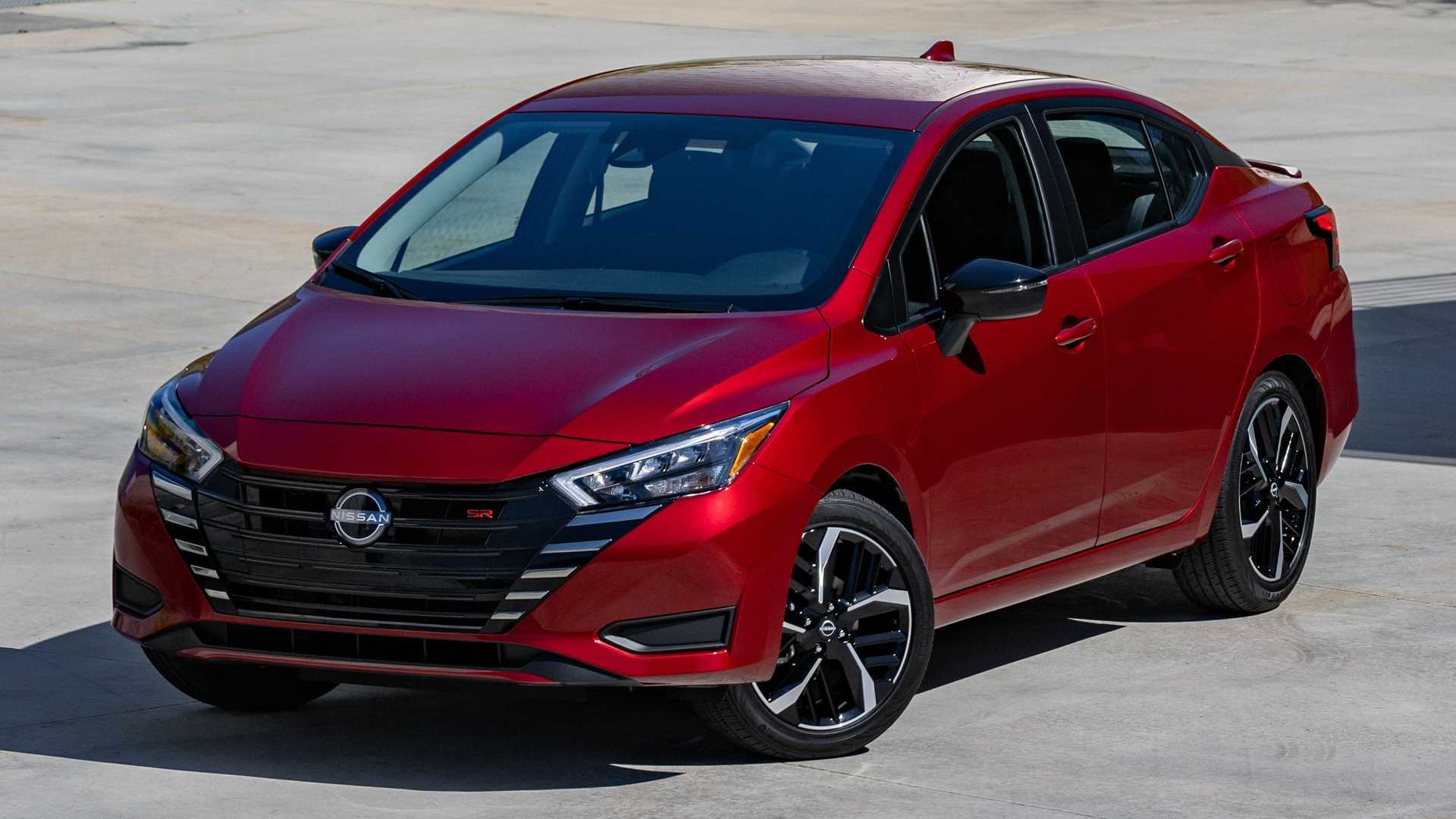
Seat padding is thinner than in rivals, meaning long-term comfort is compromised as cushions flatten out. The dashboard and door panels are also prone to scratches, and the limited use of sound insulation can make the cabin feel cheaper as the car ages.
For buyers on a strict budget, the Versa works, but don’t expect the cabin to hold up for more than a few years without looking worn.
2. Chevrolet Trax
The redesigned Chevrolet Trax has been praised for its affordability and stylish exterior, but GM cut costs in the cabin. While the design looks modern at first glance, much of the interior is made of hard, shiny plastic that quickly reveals fingerprints and scuffs.
The seat material, especially in lower trims, feels thin and less durable than what competitors like Hyundai or Kia offer.
Daily commuters who rack up miles may find the Trax’s interior showing wear sooner than expected, particularly around high-contact points like the steering wheel and seat bolsters. It’s a good budget crossover, but one where buyers trade long-term cabin quality for price.
The 2025 Chevrolet Trax delivers a surprisingly comfortable ride for a budget-friendly subcompact SUV. Its suspension smooths out most bumps, and handling feels secure across different road conditions. That said, steering response is on the slower side, and while it’s composed in corners, there’s little in the way of excitement or driver engagement.
Under the hood, every Trax comes equipped with a turbocharged 1.2-liter three-cylinder engine, producing 137 horsepower and 162 pound-feet of torque. Power is routed through a six-speed automatic transmission to the front wheels.
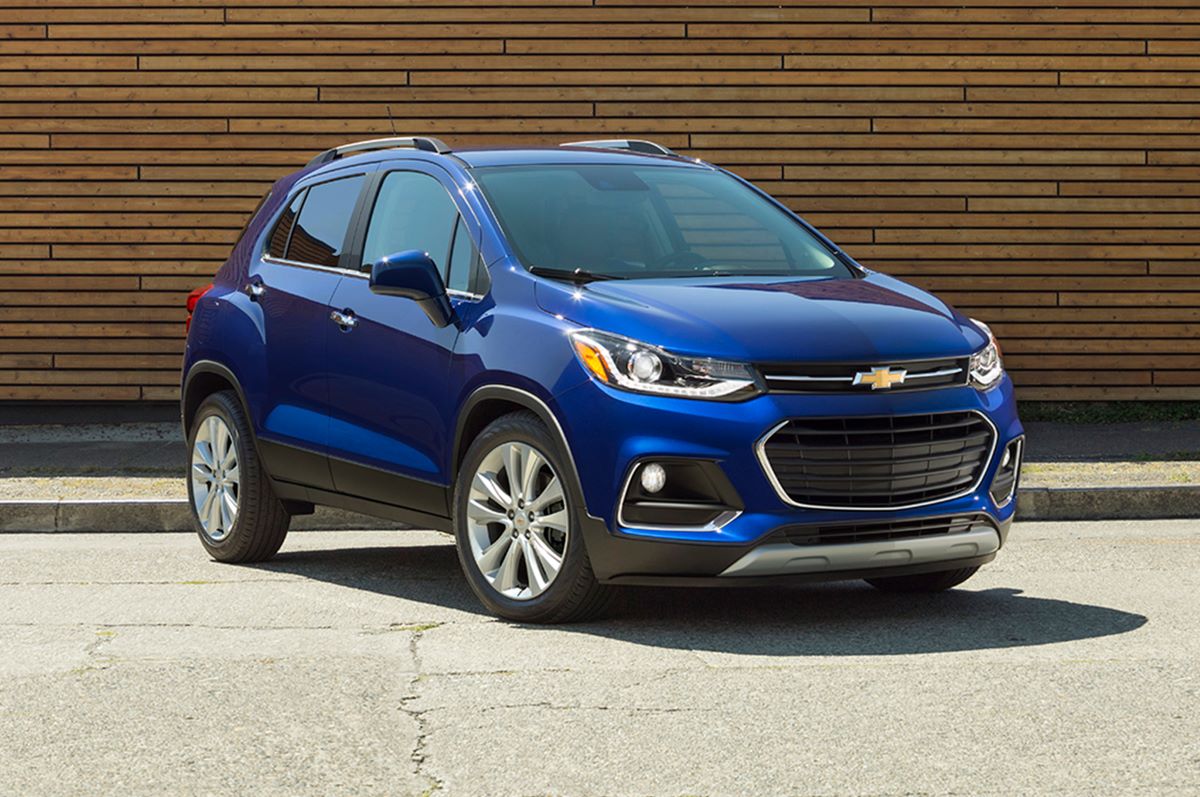
Around town, this setup feels capable, offering decent acceleration, smooth shifts, and commendable efficiency. On the highway, however, the Trax can feel underpowered when passing, and the transmission’s downshifts tend to lag behind driver inputs.
Efficiency is one of the Trax’s strong suits. The EPA rates it at 28 mpg in the city and 32 mpg on the highway, numbers that are competitive within the subcompact SUV class.
Chevy completely reworked the Trax’s cabin in 2023, and the improvements carry over for 2025. The once-bland interior now looks more modern, with upgraded materials and fewer hard plastics. Seating for five is standard. While the seats aren’t especially cushioned, both rows provide generous head- and legroom, making the Trax comfortable even for adults on longer trips.
Cargo space is another highlight: 25.6 cubic feet behind the second row and 54.1 cubic feet with those seats folded down. A low cargo floor further enhances practicality, making it easy to load larger items.
Affordability is a key part of the Trax’s appeal. Its strong value score reflects not only a competitive starting price and top-trim MSRP but also a relatively low estimated cost of ownership.
3. Mitsubishi Mirage
The Mitsubishi Mirage is one of the cheapest new cars on the US market, and unfortunately, the interior reflects that. Thin cloth seats, exposed hard plastics, and dated trim mean that wear and tear becomes noticeable within just a couple of years.
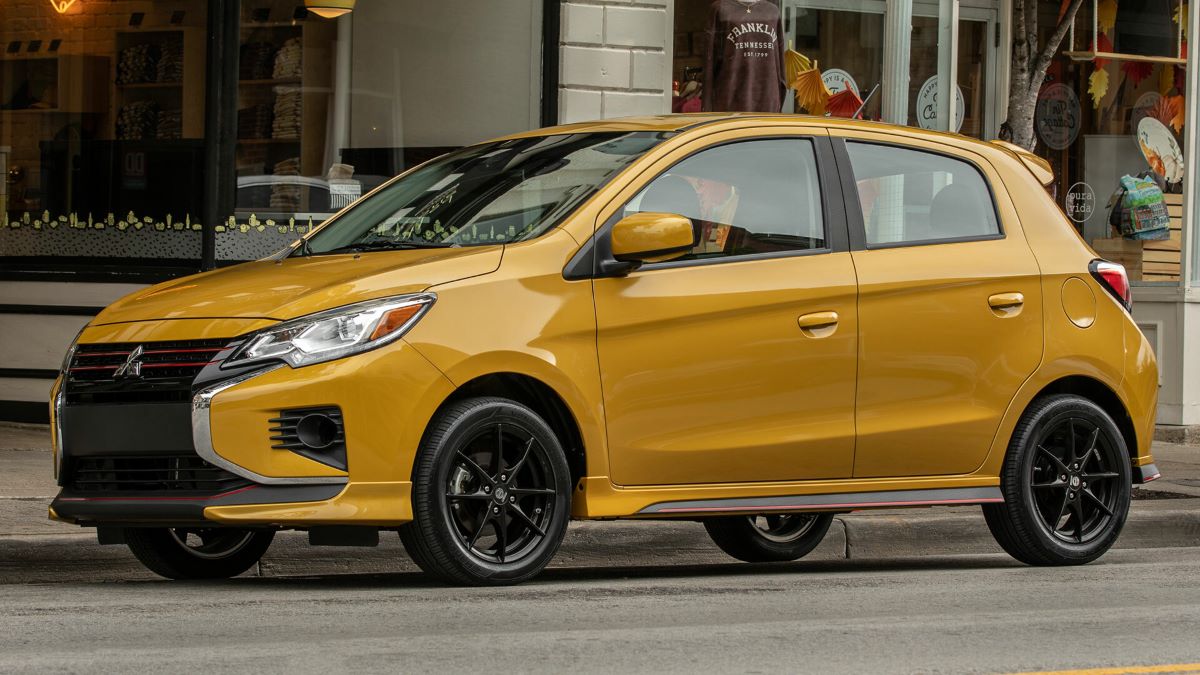
While Mirage buyers aren’t typically expecting luxury, the cabin quality lags behind rivals like the Hyundai Accent or Kia Rio, which offer more refined materials at similar prices.
Even with light use, the Mirage’s seats tend to lose shape, and the overall impression is that of a car built for cost savings above all else.
4. Jeep Renegade
The Jeep Renegade is marketed as a stylish small SUV with rugged appeal, but its interior struggles with long-term quality. Many owners report that while the Renegade looks cool initially, with Jeep-inspired design cues, the materials don’t hold up.
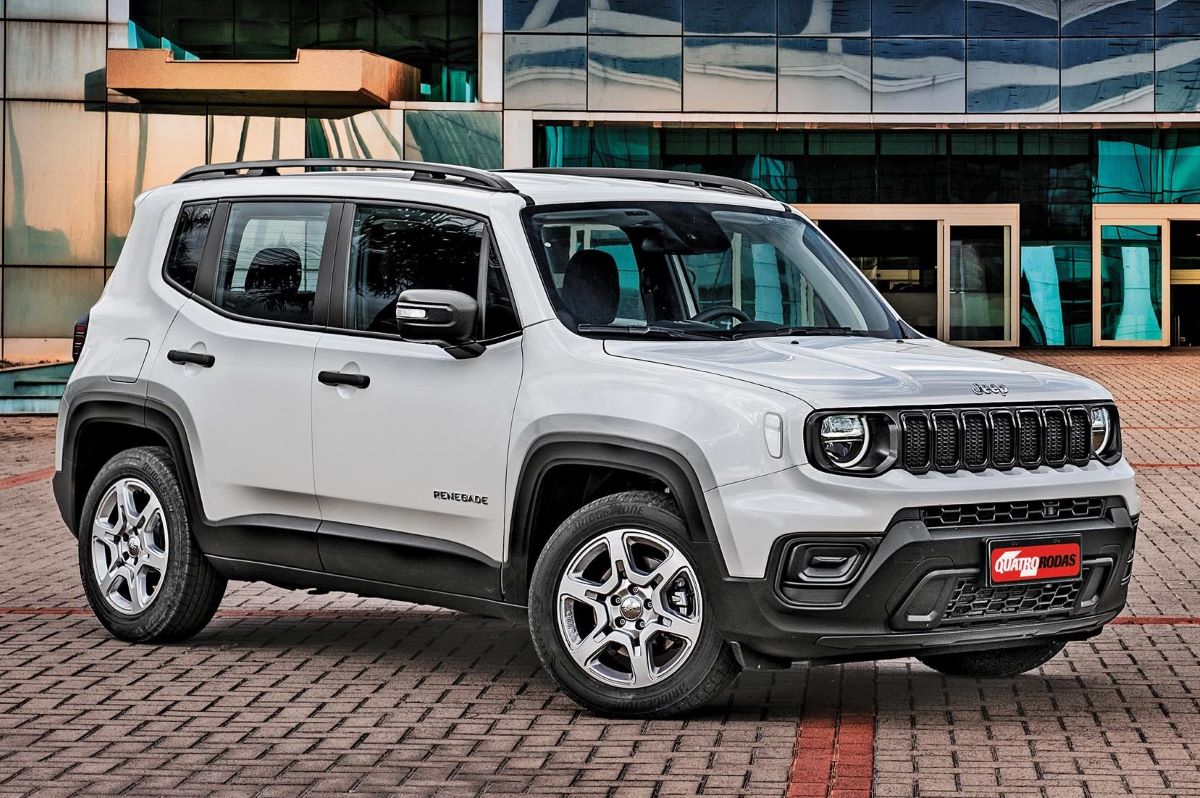
Hard plastics dominate the cabin, and soft-touch areas are limited. The seats, particularly in lower trims, use fabric that is prone to staining and flattening.
While Jeep enthusiasts may overlook this in favor of off-road capability, buyers looking for a long-lasting cabin may find themselves disappointed after a few years of ownership.
Sometimes, being spoilt for choice isn’t a bad thing, and when it comes to small SUVs, Jeep gives buyers plenty of options. The Renegade is one of three in the lineup, sitting between the compact Avenger and the slightly larger Compass.
Size-wise, the Renegade is a touch bigger than the Avenger but not as roomy as the Compass. Under the skin, it shares DNA with the now-discontinued Fiat 500X, both were even built in the same factory in Melfi, Italy, thanks to Jeep and Fiat’s shared Stellantis ownership.
Visually, though, you’d never confuse the two. The Renegade wears classic Jeep cues: upright stance, boxy shape, raised ground clearance, and the brand’s signature seven-slot grille.
The challenge for the Renegade is grabbing buyers’ attention in a crowded market. Rivals are both plentiful and polished, with the Lexus LBX leading the charge, followed closely by strong contenders like the Ford Puma and Skoda Kamiq.
Compared with its rivals, the Jeep Renegade feels rough around the edges and comes with a steeper price tag. Unless rear seat space isn’t a big concern, we’d steer buyers toward the newer Jeep Avenger, which offers a smarter cabin and sharper driving manners. If you’re set on a Renegade, the Summit trim with the e-Hybrid engine is the version to go for.
The entry-level engine is a 1.5-liter petrol with mild-hybrid tech, called the e-Hybrid. It makes 128bhp and manages 0–62mph in 10 seconds. On paper, that sounds acceptable, but in practice it feels reluctant to rev and struggles against the Renegade’s weight.
The mild-hybrid system helps out during low-speed crawling, useful in traffic or when parking, but beyond that, its role is mostly supportive.
For buyers who want more EV capability, there’s the 4xe plug-in hybrid (PHEV). This pairs a 1.3-liter petrol engine powering the front wheels with a 59bhp electric motor driving the rear, giving it proper four-wheel drive. Its 11.4kWh battery is good for an official 26 miles of electric-only range, which falls short of the Kia Niro PHEV (38 miles) and Toyota C-HR PHEV (40 miles).
The 4xe puts out a combined 237bhp and hits 0–62mph in 7.1 seconds. On paper, it looks quick, but behind the wheel, it doesn’t feel as lively as those numbers suggest. Around town, the electric motor is capable of keeping up with traffic, but once speeds climb past 30mph, the petrol engine kicks in frequently and works hard to provide mid-range power.
Unfortunately, the automatic gearbox doesn’t help matters. It reacts slowly, taking too long to downshift when you need extra acceleration, which makes overtaking more frustrating than it should be.
Handling is another weak spot. The Renegade leans heavily in corners compared to sharper rivals like the Ford Puma or Jeep’s own Avenger. Steering is feather-light and vague, leaving you second-guessing inputs on twistier roads.
Ride comfort is a mixed bag. It’s softer than the Puma, which helps on rougher roads, but sharp bumps unsettle it and the chassis never feels especially controlled. In this regard, the Skoda Kamiq does a better job of blending comfort and stability.
Refinement is also lacking. On motorways, wind noise is ever-present thanks to the upright windscreen and oversized mirrors, while the engine drones under acceleration.
5. Volkswagen Jetta (Base Trims)
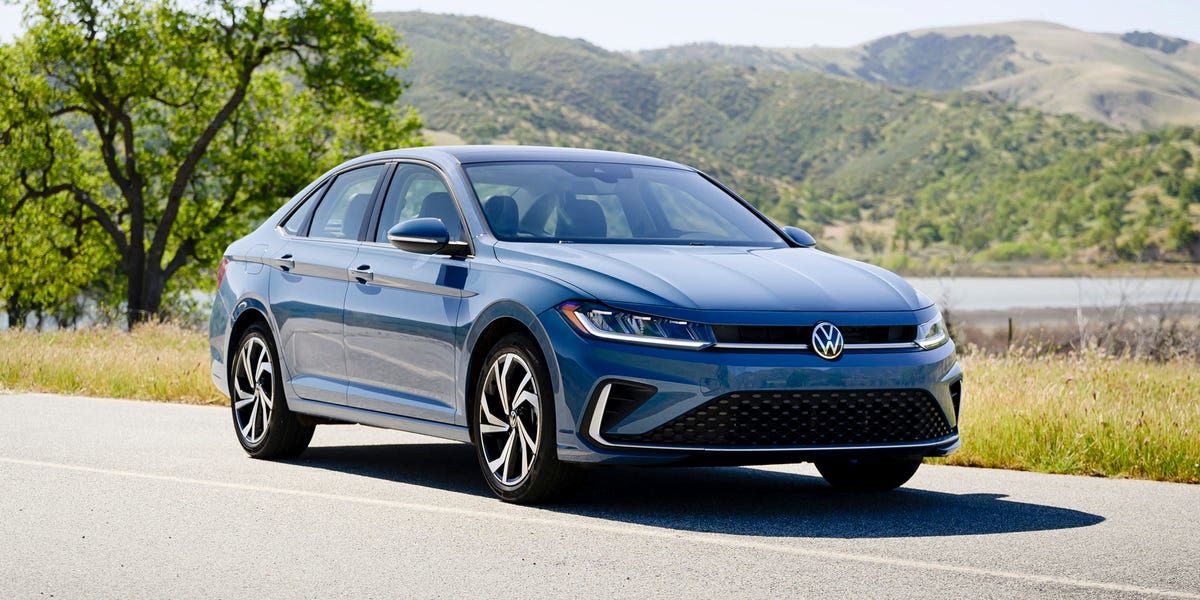
The Volkswagen Jetta once set the standard for affordable refinement, but recent base trims have shown cost-cutting measures. While higher trims offer soft-touch dashboards and quality seats, the entry-level Jetta comes with basic cloth and extensive use of harder plastics.
Over time, these surfaces can scratch and fade faster than what buyers might expect from a German brand.
The lack of reinforcement in the seat padding also means that heavy daily drivers may notice sagging sooner than in rivals like the Honda Civic or Toyota Corolla. Buyers need to step up to higher trims to get the durability VW was once known for.
When shopping for a new car in the US, it’s easy to get swayed by flashy features, touchscreens, and marketing buzzwords. But the reality is that the interior is where drivers and passengers spend all their time, and it should be built to last.
Models like the Toyota Camry, Honda Accord, Lexus RX, Subaru Outback, and Toyota Land Cruiser prove that automakers can design cabins that endure for years without losing comfort or quality.
On the other hand, budget-friendly vehicles like the Nissan Versa, Chevrolet Trax, Mitsubishi Mirage, Jeep Renegade, and base Volkswagen Jetta show how cutting corners in materials can lead to premature wear.
For buyers planning to keep their vehicles well past the warranty period, paying attention to cabin durability can make the difference between a car that feels old at 50,000 miles and one that still feels new at 150,000.