When it comes to American automakers, Dodge has built a reputation for power, performance, and bold styling. From muscle cars to SUVs and family-friendly minivans, Dodge has offered vehicles that cater to a wide range of drivers across the United States.
But while Dodge models have an enthusiastic fan base, not every car or SUV bearing the brand’s name has lived up to expectations when it comes to reliability.
For American drivers who count on their vehicles for daily commutes, long highway trips, and even heavy-duty hauling, dependability isn’t just a preference it’s a necessity.
Some Dodge models have proven themselves as reliable daily drivers that can handle years of use without constant breakdowns. On the flip side, others have frustrated owners with mechanical issues, costly repairs, and frequent trips to the shop.
In this article, we’ll look at five Dodge models that stay reliable in daily use and five that constantly break, helping buyers make smarter decisions when shopping for a Dodge vehicle.
Dodge Models That Stay Reliable in Daily Use
When it comes to daily driving, not every Dodge is built the same. Some models turn heads but demand too much attention at the mechanic’s shop, while others quietly rack up miles with minimal fuss.
If you’re looking for a Dodge that won’t let you down on your commute or family runs, these are the models that have proven to stay solid, practical, and dependable in real-world use.
1. Dodge Charger (Modern Generations: 2011–Present)
The Dodge Charger has earned a loyal following, especially with its mix of muscle-car styling and sedan practicality. Recent generations of the Charger (particularly from 2011 onward) have proven surprisingly reliable for a performance-focused vehicle.
Equipped with engines ranging from the dependable 3.6L Pentastar V6 to the more powerful HEMI V8s, the Charger handles daily commutes with ease while still offering muscle when drivers want it.
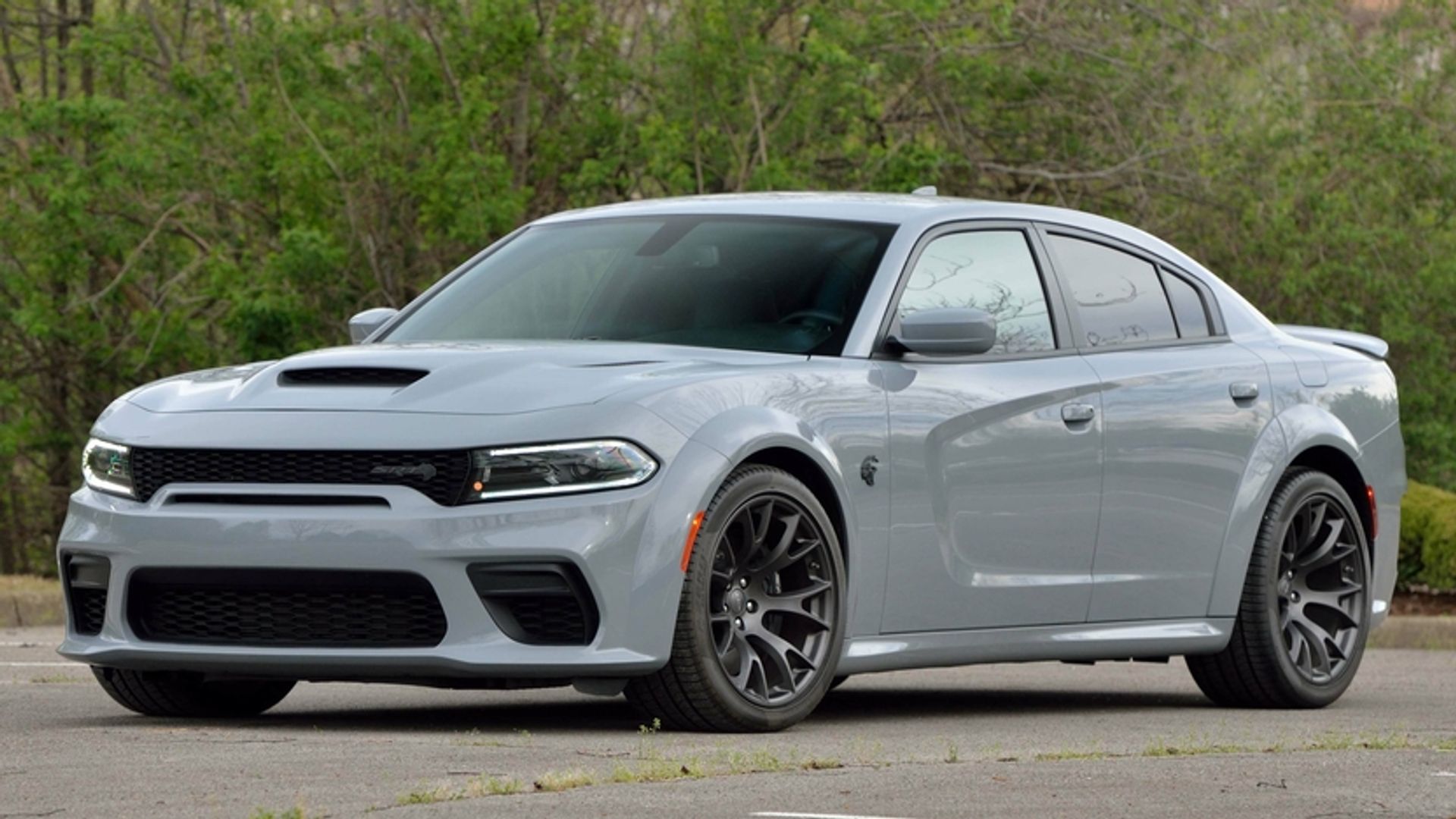
Owners often report that the V6 models are especially good for reliability and fuel economy, making them solid choices for families and professionals.
Maintenance costs are reasonable, and the Charger doesn’t suffer from chronic electrical or transmission issues that plague some other Dodge vehicles. For anyone who wants an American sedan that lasts while still delivering excitement, the Charger is a winner.
2. Dodge Durango (2014–Present)
The Dodge Durango has become a favorite among US families looking for an SUV that balances performance with practicality.
The 2014 redesign greatly improved reliability, making it one of the brand’s most dependable modern vehicles. Both the V6 and HEMI V8 options provide long-lasting engines when properly maintained.
Drivers appreciate the Durango’s versatility it can serve as a daily commuter, a family hauler, and even a towing machine for boats and trailers.
Unlike older Dodge SUVs, the newer Durango doesn’t suffer from frequent suspension or transmission breakdowns.
Many owners report that with regular oil changes and upkeep, the Durango can easily pass 150,000 miles with minimal drama, something not always guaranteed with Dodge vehicles.
ew three-row SUVs project the same bold, muscular character as the 2022 Dodge Durango. Its available V-8 engine gives it the kind of power that matches its tough image, while the standard V-6 still delivers respectable performance. One of the Durango’s biggest bragging rights is its towing capability, which outpaces most competitors.
With three rows of seating, the whole family can come along, though only kids will truly feel comfortable in the back row. Inside, Dodge equips the Durango with plenty of modern infotainment features, making it appealing to tech lovers.

However, safety-conscious buyers may be disappointed that many driver-assistance systems cost extra, something rivals like the Kia Telluride and Toyota Highlander include as standard. Still, those crossovers can’t replicate the Durango’s muscle-car-inspired presence, which sets it apart in the segment.
For the 2022 model year, the entry-level Durango SXT now includes blind-spot monitoring with rear cross-traffic alert, a power-adjustable driver’s seat, rear parking sensors, roof rails, and the previously optional third row as standard.
The GT trim adds remote start, heated front seats, a heated steering wheel, and a power-operated rear liftgate. The GT Plus receives even more upgrades, including driver memory settings, rain-sensing wipers, a rear scuff plate, leather-and-suede seating, and heated second-row seats.
Moving up to the R/T Plus brings premium touches like nappa leather with contrast stitching, a sunroof, an advanced automated emergency braking system, and a Harman/Kardon audio system. Meanwhile, Durango GT and R/T models ordered with the Blacktop package now inherit the vented hood from the high-performance SRT 392.
The sweet spot in the lineup is the mid-range GT trim. It offers the best balance of features and cost, and we’d stick with the standard V-6 instead of opting for the thirstier V-8.
Buyers chasing real performance are better served by the Durango SRT or limited-edition SRT Hellcat (covered separately). One worthwhile upgrade is the optional 10.1-inch infotainment system, available on the GT for $995, which also includes built-in navigation and a 4G LTE Wi-Fi hotspot.
Buyers who want serious muscle will appreciate the available 360-hp V-8, which increases towing capacity to an impressive 8700 pounds. The 295-hp V-6 paired with an eight-speed automatic transmission is more fuel-efficient, though still capable.
Naturally, the Durango can’t compete with four-cylinder rivals when it comes to fuel economy, but the tradeoff in towing strength and V-8 excitement may be worth it for many.
We tested both engines, each mated to the eight-speed automatic and optional all-wheel drive. The V-6 Durango hit 60 mph in 7.4 seconds, while the V-8 managed it in just 6.2 seconds. The suspension balances comfort and sportiness, but its steering and braking remind drivers they’re piloting an SUV.
Even so, the Durango’s rear-wheel-drive platform contributes to a more athletic character than you’d expect, and its muscle-car DNA shows through in everyday driving. At the same time, it remains smooth and comfortable, keeping it family-friendly while still fun to drive.
3. Dodge Dakota (2005–2011)
The mid-size pickup truck segment is filled with strong contenders, but the Dodge Dakota from the mid-2000s to its final production year in 2011 stands out for reliability. While it wasn’t the most advanced truck, it earned a reputation as a durable daily workhorse.
The Dakota’s V6 and V8 engines were relatively simple and less prone to failure compared to some of Dodge’s more complex powertrains. For tradespeople and small business owners, the Dakota provided a balance of towing capability and everyday drivability.
Many are still on the road today, proving that this Dodge pickup had the staying power that other models lacked.
When the Dodge Dakota debuted in the late ’80s, its larger-than-average size made it stand out from the more conventional compact and full-size trucks of the era.
This midsize format has carried through each generation, along with the Dakota’s well-balanced mix of power, utility, and style. For much of the 2000s, it remained one of the more appealing options in the compact and midsize truck segment.
The 2007 Dodge Dakota, now in its third generation, benefits from a hydroformed fully boxed frame that delivers eight times more torsional rigidity than the previous design. A coil-over front suspension and rack-and-pinion steering contribute to a surprisingly agile, carlike driving feel.
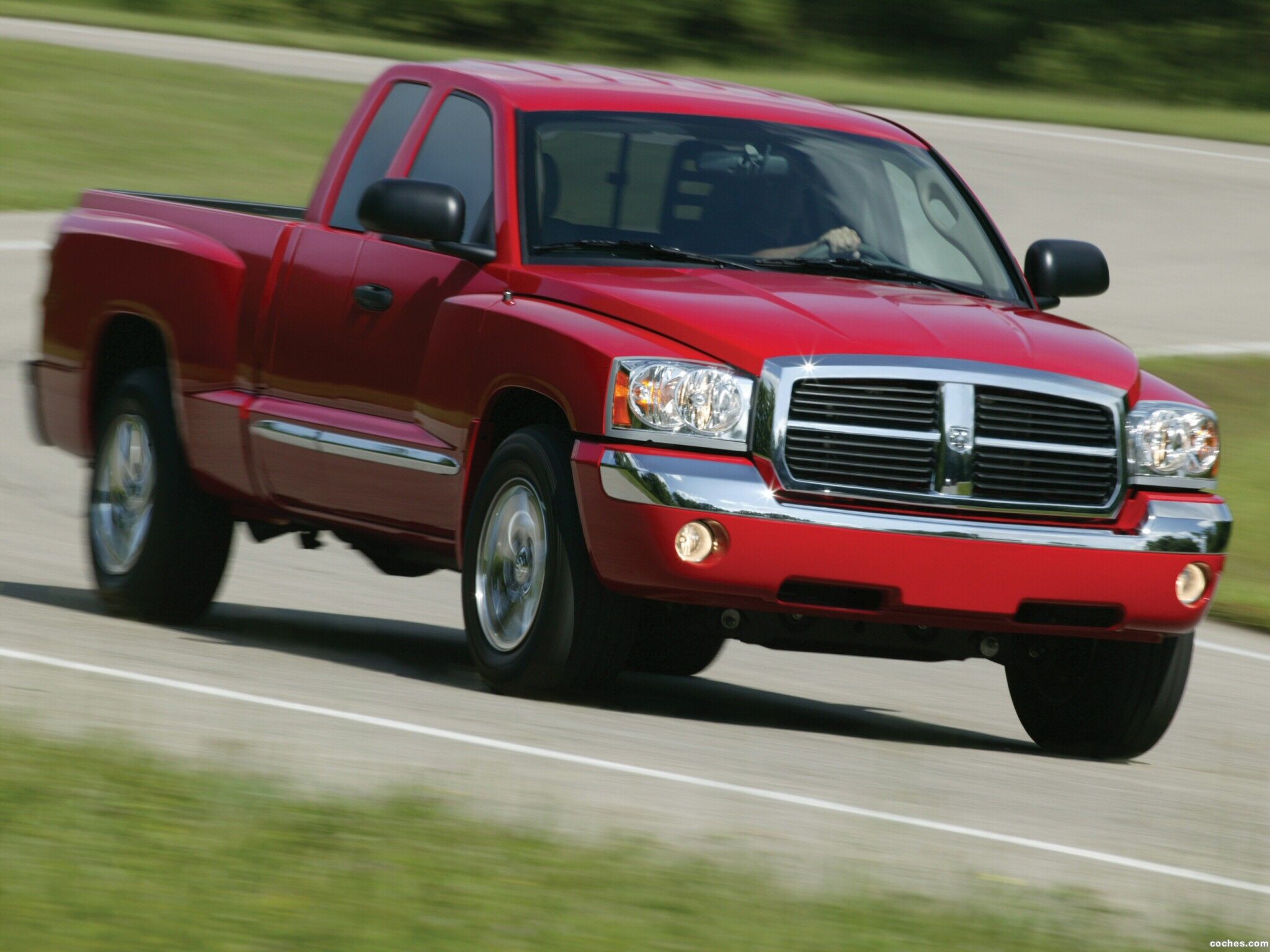
The standard Club Cab (extended cab) comes with four doors, forward-facing rear seats, and a 6-foot-6-inch bed, while the Quad Cab (crew cab) features four full-size doors and a shorter 5-foot-4-inch bed. Styling cues include a bold crosshair grille up front and the dropped-fender look that gained popularity with the previous Ram generation.
The Dakota appeals to buyers who want a pickup capable of handling both work duties and everyday driving, but without paying the premium for a full-size truck’s greater towing power and often expensive options.
In that respect, it performs well, and its aggressive styling is an added draw. Still, it has a few weak points, including a higher price, so-so interior materials, and unimpressive fuel economy. Shoppers should also take a close look at strong competitors like the Nissan Frontier and Toyota Tacoma before committing.
The 2007 Dodge Dakota is offered with three engine choices. The base 3.7-liter V6 generates 210 horsepower and 235 lb-ft of torque. Two versions of the 4.7-liter V8 are available: one rated at 230 hp and 290 lb-ft of torque, and a high-output variant producing 260 hp and 310 lb-ft of torque.
The V6 pairs with either a six-speed manual or a four-speed automatic, while the V8s are offered with a five-speed automatic. Buyers can choose between two-wheel drive, part-time four-wheel drive, or full-time four-wheel drive. With the high-output V8, towing capacity tops out at 7,150 pounds.
4. Dodge Grand Caravan (2012–2020)
While minivans don’t get much love in the excitement department, the Dodge Grand Caravan is a vehicle that many American families relied on for years. The later models of the Grand Caravan, particularly from 2012 until production ended in 2020, were much more dependable than earlier versions.

The Grand Caravan’s 3.6L Pentastar V6 is one of Dodge’s most reliable engines, known for running well beyond 200,000 miles with proper care.
Families appreciated its practical interior, Stow ‘n Go seating, and affordable repair costs compared to competitors. For daily school runs, road trips, and errands, the Grand Caravan proved to be a minivan that could take the mileage without breaking down constantly.
5. Dodge Neon (1999–2005, Second Generation)
Though the Dodge Neon isn’t the most glamorous model, its second generation (1999–2005) turned out to be surprisingly reliable for budget-conscious drivers. Affordable to buy and inexpensive to maintain, the Neon offered an easy daily driving experience.
The simple 2.0L inline-four engine was durable, and parts were widely available and cheap to replace.

While it lacked the comfort and safety tech of modern cars, the Neon became popular with commuters and first-time car buyers because it could keep running without major headaches.
Even today, some Neons are still being used as daily beaters, proving that reliability sometimes comes in unassuming packages.
Dodge Models That Constantly Break
Not every Dodge can handle the grind of daily driving. Some look great on paper but end up bleeding owners dry with constant trips to the shop.
From electrical gremlins to weak transmissions, these Dodge models have built a reputation for being more headache than horsepower. If you’re thinking about buying used, these are the ones you’ll want to think twice about.
1. Dodge Journey (2009–2020)
The Dodge Journey was marketed as a versatile crossover SUV, but it quickly earned a reputation as one of Dodge’s most unreliable vehicles. Owners complained about constant electrical issues, premature brake wear, and transmission failures.
The interior quality also left much to be desired, with components wearing out long before they should.
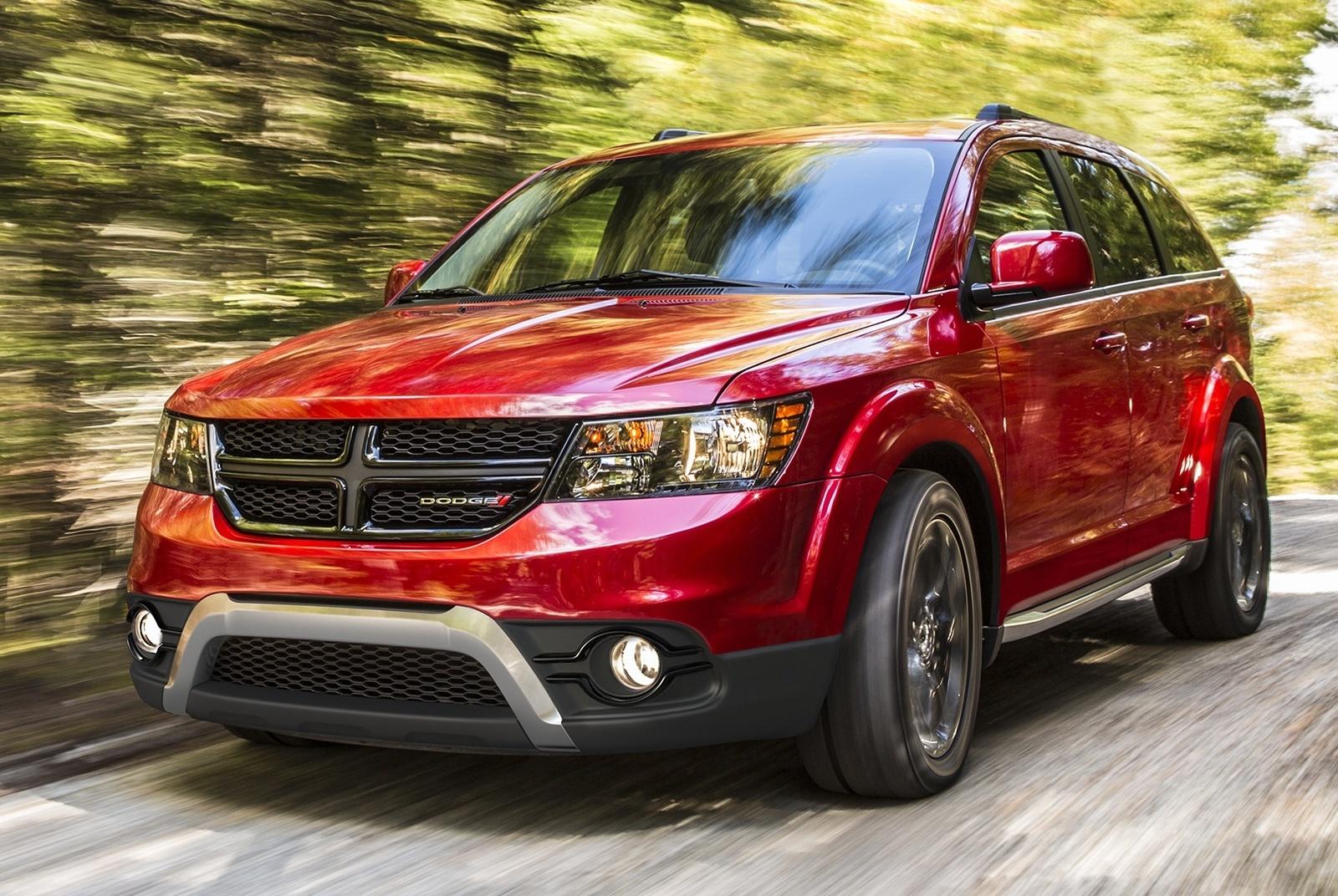
For a vehicle meant to serve families, the Journey often failed to deliver long-term dependability. Repair costs could add up quickly, and many owners found themselves trading it in earlier than expected. It’s no surprise the Journey was eventually discontinued without much fanfare.
2. Dodge Dart (2013–2016)
Reviving the Dodge Dart name should have been a success, but instead, it became one of the brand’s biggest modern failures. The Dart suffered from a wide range of issues, including weak engines, finicky transmissions, and frustrating electronic malfunctions.
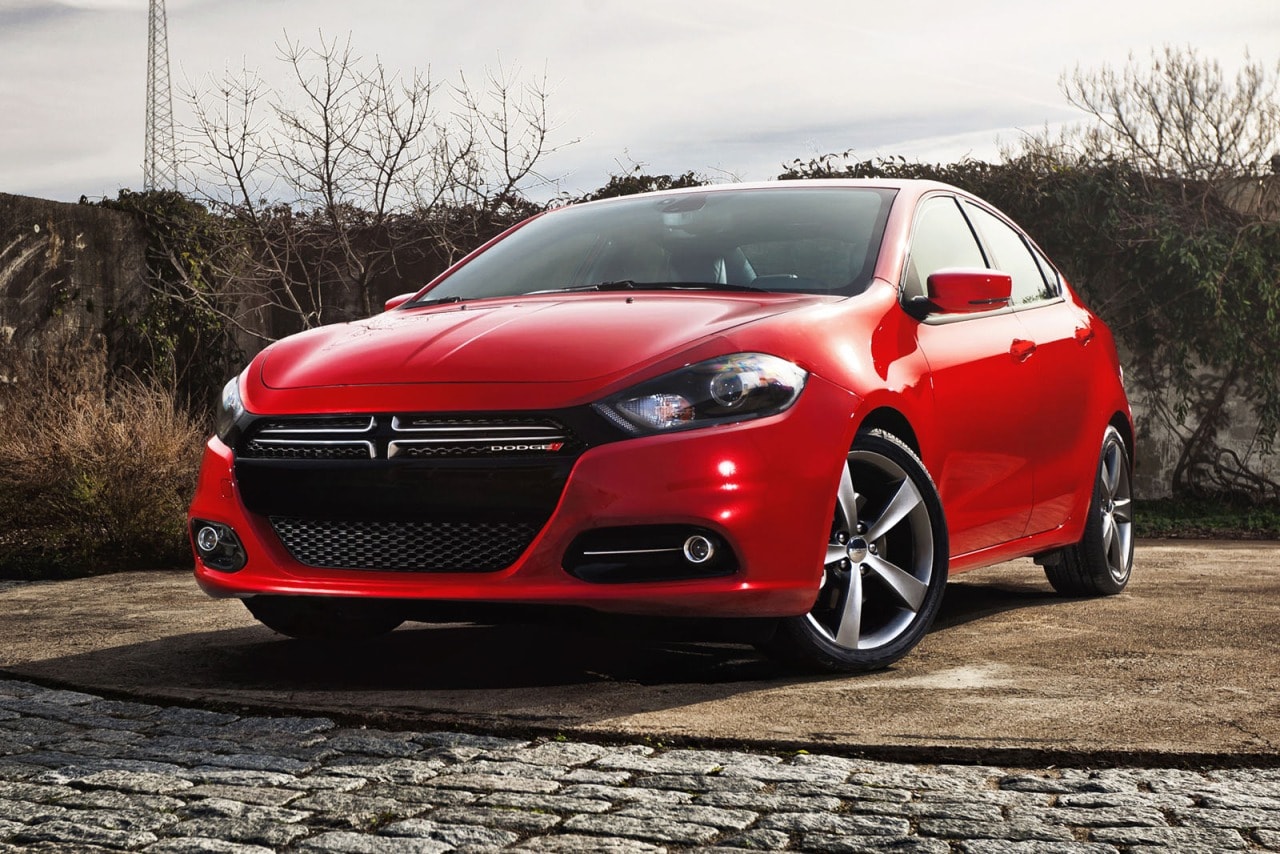
Even though it was marketed toward young buyers looking for an affordable compact car, the Dart’s poor reliability drove many customers away.
Reports of frequent breakdowns, high repair costs for a budget vehicle, and lackluster resale value cemented its reputation as a Dodge to avoid.
If you’re in the market for an affordable compact sedan, chances are you’ll come across the 2014 Dodge Dart. It’s one of many capable small cars available, standing out for its spacious cabin, sharp-looking design, and intuitive infotainment system. Whether or not it’s the right fit for you, however, will depend on your personal priorities.
On the positive side, the Dart is a comfortable daily driver. Its cabin is among the nicest in its class, and the optional 8.4-inch touchscreen infotainment system is one of the most impressive thanks to its straightforward controls and wide-ranging features.
The 2014 Kia Forte deserves attention as well, thanks to its stylish design and user-friendly infotainment system. Unlike the Dart, the Ford, Honda, and Mazda all offer base engines that are genuinely satisfying to drive and deliver superior fuel economy.
When all is said and done, the 2014 Dodge Dart lags behind the best in the class in a few key areas. But for buyers who value bold styling and stronger performance , Dodge’s compact sedan still has its place on the shortlist.
The 2014 Dodge Dart is offered with three different engines. The base SE trim comes with a 2.0-liter four-cylinder producing 160 horsepower and 148 lb-ft of torque. It pairs with a six-speed manual transmission as standard, with a six-speed automatic available.
Amanual-equipped Dart with this engine reached 60 mph in 9.9 seconds, which is on the slow side for a compact sedan. Fuel economy is rated at 29 mpg combined (25 city/36 highway) for the manual and 27 mpg combined (24 city/34 highway) for the automatic.
The Aero trim is equipped with a turbocharged 1.4-liter four-cylinder that generates 160 horsepower and 184 lb-ft of torque. A six-speed manual comes standard, while a six-speed automated manual is optional.
3. Dodge Intrepid (1993–2004)
The Dodge Intrepid, part of the LH platform sedans of the 1990s and early 2000s, had sleek styling for its time but was plagued with reliability nightmares. Chief among these was the notorious 2.7L V6 engine, which was prone to oil sludge buildup leading to catastrophic engine failure.
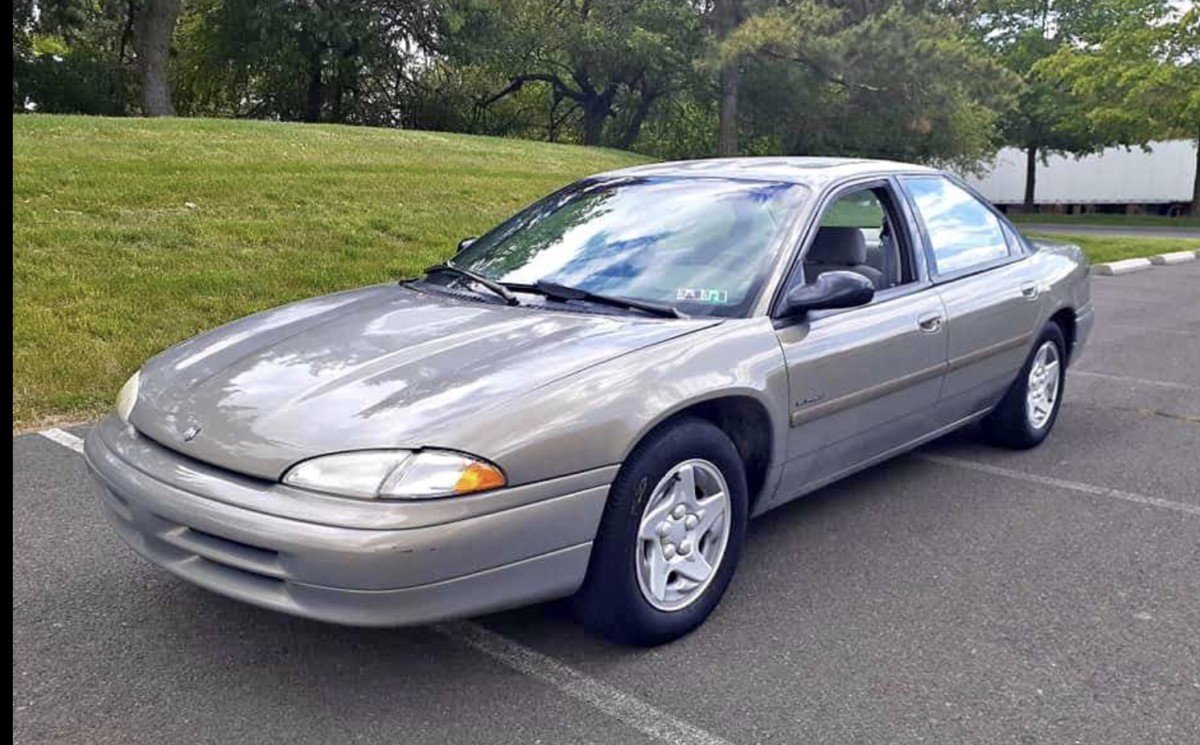
Many Intrepid owners reported their engines seizing well before 100,000 miles, and the repair costs often exceeded the value of the car.
While larger V6 options were slightly better, the damage to the Intrepid’s reputation was already done. Today, it’s remembered more for its breakdowns than its performance.
Before the Dodge Intrepid debuted in 1992, no domestic automaker had seriously challenged the Ford Taurus in the midsize family sedan market.
While the Taurus continued to dominate sales, the Intrepid made its mark with sleek styling and an impressively spacious interior, carving out its own place in this competitive and crowded segment.
For this model year, Dodge has given the aging Intrepid some updates to keep it relevant alongside the redesigned Taurus. The base version now adopts several styling elements previously exclusive to the ES, including fog lights, lower body moldings, and 16-inch wheels with upgraded tires.
Cruise control also becomes standard equipment. Both the base and ES trims benefit from quieter cabins, while a combined CD/cassette stereo joins the options list.
Seat upholstery is refreshed with new fabric, and four new exterior paint colors expand the palette. Engineers have also reworked the Intrepid to meet 1997 side-impact safety standards a full year ahead of schedule.
Among the lineup, the ES stands out as the most compelling Intrepid. It delivers strong acceleration, braking, and handling that rivals lighter, sportier cars.
Inside, the ES features seating for five, a floor-mounted shifter, and sporty black-on-white instrument gauges. Power comes from an optional 214-horsepower 3.5-liter V6, which drives the front wheels with authority.
Whether the Intrepid can maintain its edge against the newly refined Taurus remains to be seen. Still, for buyers who prioritize interior room, the Intrepid is difficult to beat.
That said, the midsize segment is packed with excellent choices, so smart shoppers should compare before committing to Dodge’s big sedan
4. Dodge Caliber (2007–2012)
The Dodge Caliber attempted to replace the Neon but turned into one of Dodge’s most problematic small cars. It suffered from poor build quality, underpowered engines, and most notoriously, issues with its continuously variable transmission (CVT).
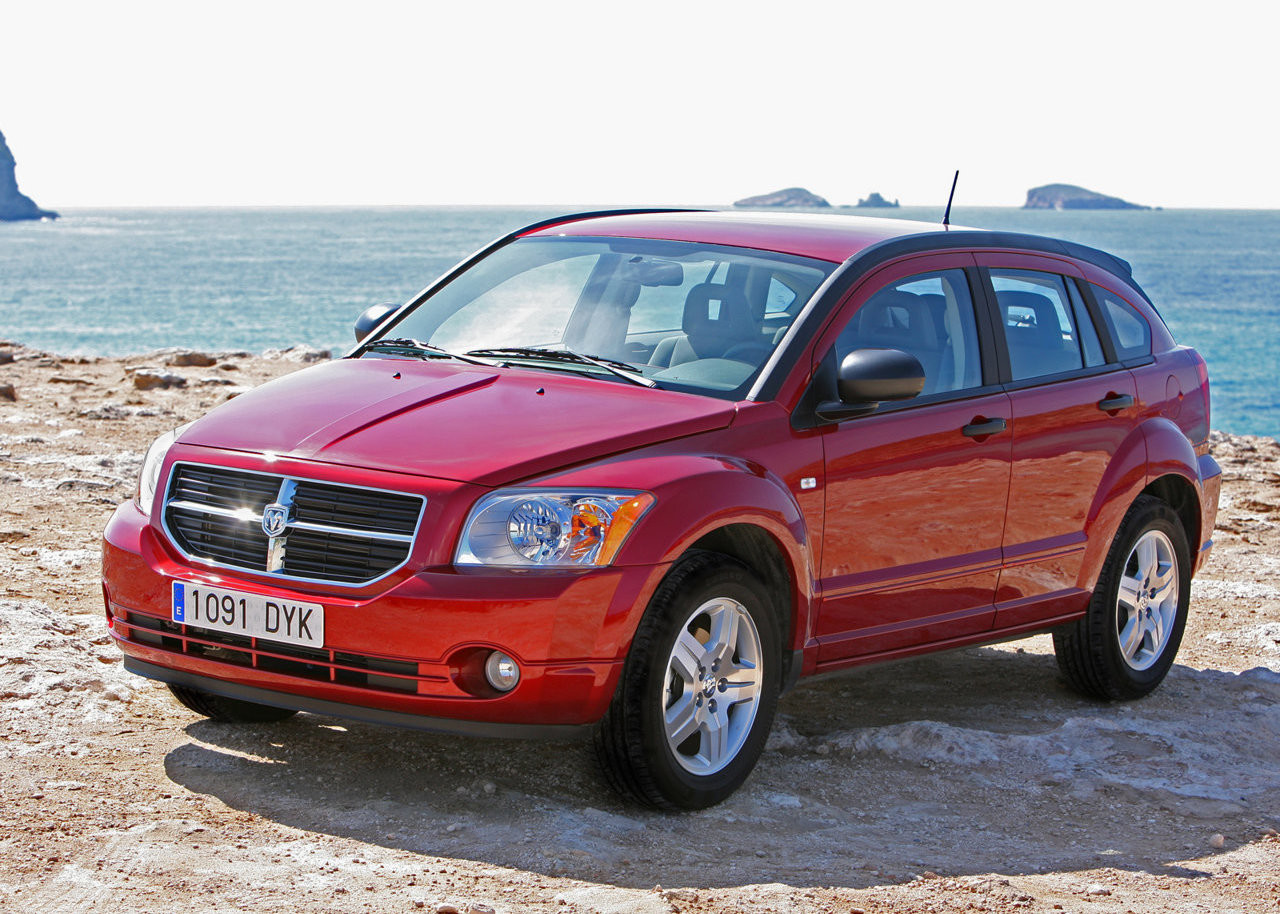
Owners frequently complained of jerky acceleration, transmission failures, and costly repairs that didn’t make sense for such an inexpensive car.
The Caliber’s interior materials also wore out quickly, making it look older than it was. For daily use, it often proved more frustrating than functional.
In Europe, small wagons and hatchbacks are a common sight, born out of necessity from tight city streets and high fuel costs. Here in the U.S., cramped streets aren’t an issue, but rising fuel prices have pushed buyers to consider these efficient, space-friendly vehicles more seriously.
Introduced last year as a replacement for the Neon, the Dodge Caliber is Dodge’s answer for shoppers looking for a four-door hatchback that offers reasonable space without guzzling gas.
The 2008 Dodge Caliber has its strengths. Drivers who appreciate bold, aggressive styling will likely be drawn to it. The oversized headlights, signature crosshair grille, and muscular fenders give it a family resemblance to the Dodge Ram, while available 18- and 19-inch wheels enhance the Caliber’s rugged look. Inside, it’s versatile enough to handle both passengers and cargo
But the Caliber comes with some significant drawbacks. Performance is the most obvious issue: the mainstream engines paired with the continuously variable transmission (CVT) lack punch.
In testing, the all-wheel-drive R/T model needed 10.1 seconds to hit 60 mph, slower than many competitors. Its fuel economy also falls short of expectations. While the smaller 1.8- and 2.0-liter engines return better mileage, they don’t improve much on acceleration.
The interior is another sore spot. The overall design feels cheap, with disappointing build quality and an abundance of hard plastics. Safety equipment is available, but Dodge makes key items like front-seat side airbags and stability control optional on most trims instead of standard.
5. Dodge Magnum (2005–2008)
The Dodge Magnum wagon had bold styling and muscle-car attitude, but unfortunately, its reliability didn’t match its looks. Early models were plagued with transmission failures, electrical gremlins, and suspension problems.
While enthusiasts still admire the Magnum’s uniqueness and practicality, owners often found themselves sinking money into constant repairs. The Magnum was discontinued after just a few years, and reliability concerns were a major factor in its short lifespan.

Dodge is a brand that inspires passion, but as history shows, not every model lives up to the same standards. Vehicles like the Charger, Durango, Dakota, Grand Caravan, and even the humble Neon have proven themselves as reliable daily drivers for Americans.
On the other hand, models like the Journey, Dart, Intrepid, Caliber, and Magnum serve as reminders that stylish designs and bold marketing can’t cover up mechanical flaws.
For US drivers considering a Dodge, the key takeaway is this: do your research, know which models and years hold up best, and prioritize proven engines and drivetrains.
Dodge can deliver dependable vehicles but choosing the wrong model might mean spending more time at the repair shop than on the road.