
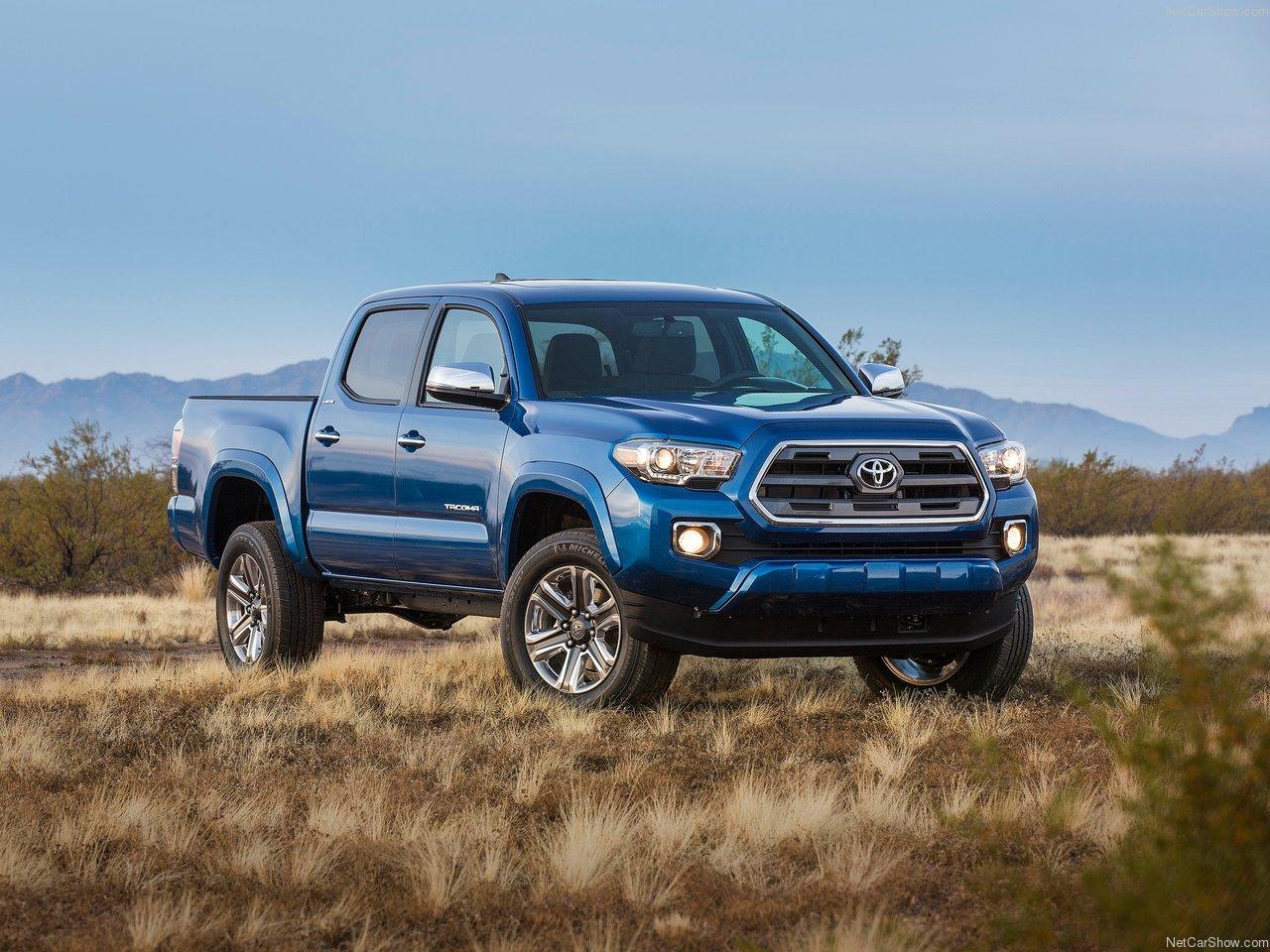
Pickup trucks have always been more than just vehicles; they are tools that carry families, workloads, and even memories. While many cars struggle to remain useful after a decade, certain trucks are still running strong after three full decades of service.
These pickups prove that durability is not simply about engineering but also about consistent performance under demanding conditions.
Their ability to survive thirty years or more shows how carefully designed engines, strong frames, and reliable parts can keep a vehicle on the road far beyond the average lifespan.
Trucks from the 1980s and early 1990s in particular are often pointed out for their toughness. Built before electronics dominated every system, they relied on simpler mechanical designs that could be repaired and maintained by owners and independent shops.
This simplicity, combined with rugged construction, gave them the reputation of being nearly indestructible when treated with care. Drivers who bought these trucks new often kept them for decades, and many of those same models are still being spotted in daily use today.
The appeal of a truck that lasts thirty years goes beyond practicality. Owners often form an attachment to a vehicle that has been with them through countless miles of work, travel, or recreation.
Seeing one of these machines still running after three decades serves as proof that reliability is not just a marketing promise but a reality. While modern pickups are more advanced, these older trucks show the value of longevity.
This article looks at twelve pickup trucks that continue to earn respect by surviving thirty years or more. Each one has its own strengths that contributed to its durability, whether it be an engine known for running endlessly, a transmission that can take abuse, or a design that resists rust and wear.
Also Read: 12 Honda Models That Rarely Break Down With Regular Use
1. Toyota Pickup (Mid-1980s Models)
The Toyota Pickup from the mid-1980s is a legend when it comes to lasting power. Known in some markets as the Hilux, this truck built its reputation on toughness. Owners quickly realized these trucks could withstand harsh treatment while still running reliably.
The compact design made them easy to maneuver, yet the frame and suspension were built strong enough to handle heavy work.
The 22R four-cylinder engine became the star of this model. Its simple design, combined with excellent reliability, allowed these trucks to run for decades with routine maintenance.
Even under severe use, these engines often exceeded 300,000 miles without major issues. For those who needed more power, the V6 options provided capability while still offering long service lives.
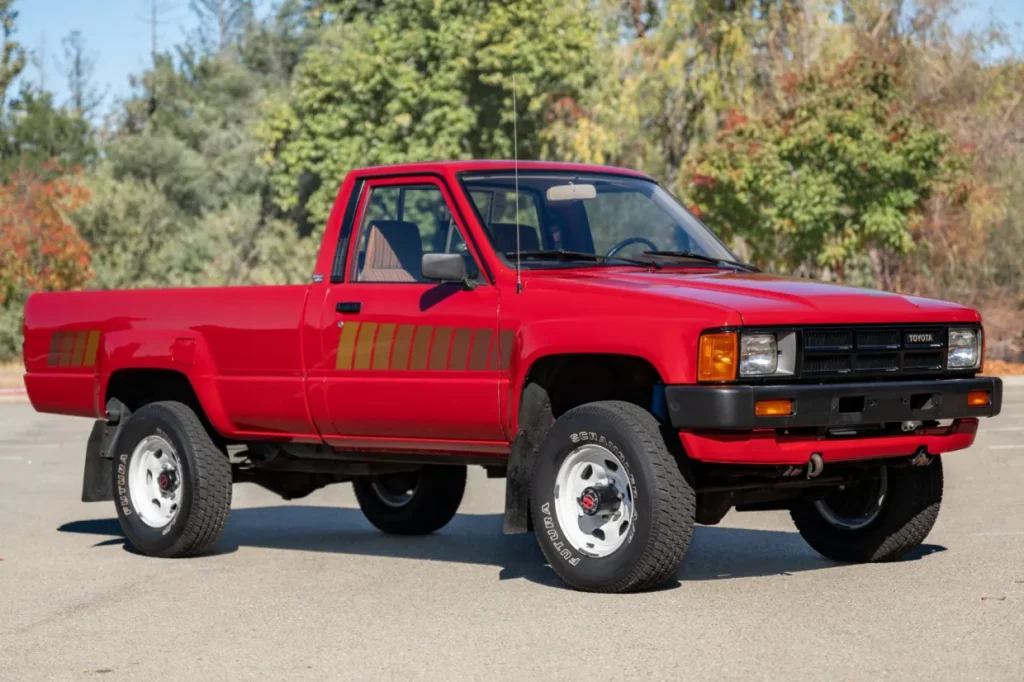
Rust protection was modest, but many trucks have survived in drier climates where frames remain solid. Owners who maintained them carefully often report that these trucks still start and run like they did thirty years ago. The simplicity of the Toyota Pickup also made it easy to repair, ensuring that parts could be swapped out without expensive labor.
While not flashy or luxurious, the Toyota Pickup became a trusted partner for farmers, tradespeople, and outdoor enthusiasts. Its reputation for reliability has become so strong that even decades-old examples remain highly valued in the used market.
Seeing one still on the road today is a reminder of how well Toyota engineered these compact trucks to stand the test of time.
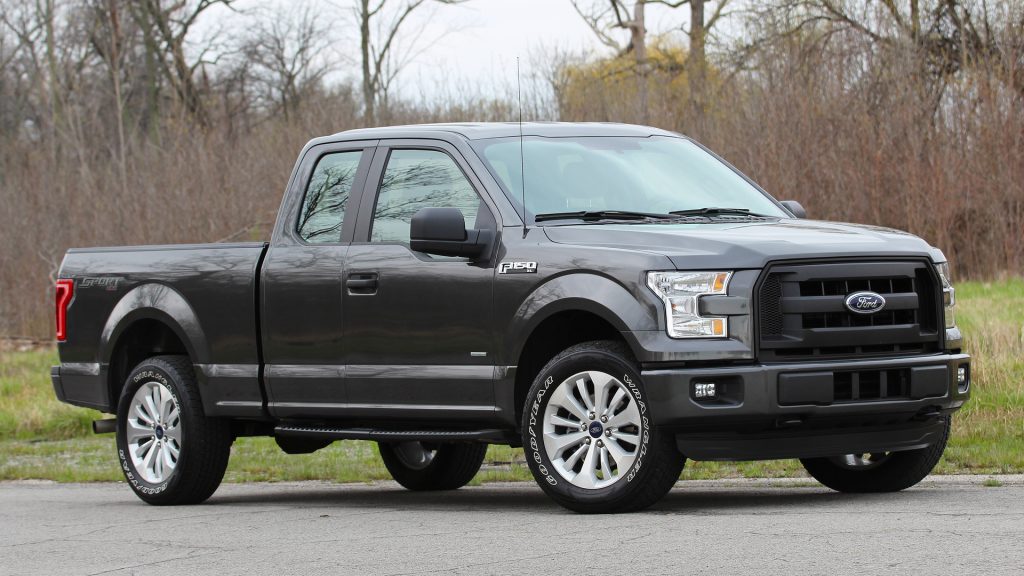
2. Ford F-150 (Early 1990s)
The Ford F-150 from the early 1990s continues to be a common sight on roads and job sites. These trucks were built during a period when Ford emphasized durability above anything else, resulting in vehicles that could endure decades of use. Many of these F-150s are still going strong after thirty years, a testament to their strength and practicality.
The engine choices available at the time contributed greatly to their longevity. The inline-six, in particular, is remembered as one of Ford’s most durable motors.
Known for its ability to run hundreds of thousands of miles with little more than regular oil changes, it became a favorite for drivers who valued long-term dependability. V8 options added more power, and when maintained properly, they too proved capable of lasting decades.
Frames and suspensions were engineered with work in mind, which explains why so many trucks remain structurally sound even after years of hauling and towing.
Interiors were basic compared to modern trucks, but their simplicity reduced the chance of costly failures. Many owners today appreciate how easy these models are to repair compared to newer, more complex designs.
The 1990s F-150 may not have the technology or comfort of current models, but its reputation for reliability is unmatched.
Trucks from this era remain popular among collectors and drivers who want a dependable workhorse. The fact that so many continue to operate daily proves that Ford’s commitment to toughness in this period paid off.
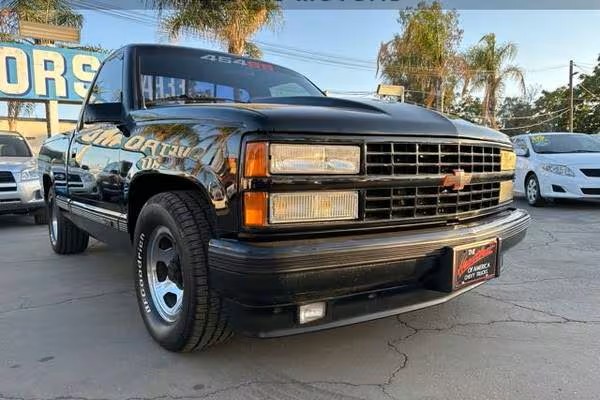
3. Chevrolet C/K 1500 (Late 1980s to Early 1990s)
The Chevrolet C/K 1500, particularly models from the late 1980s and early 1990s, is another pickup that continues to earn respect for its durability. Built on a solid platform with engines known for reliability, these trucks remain in use more than thirty years later.
Their strong presence in rural areas and among tradespeople highlights how valuable they have been over time.
The most dependable engines in this lineup were the 5.0-liter and 5.7-liter V8s. Known for their simple pushrod designs, they were easy to service and capable of lasting hundreds of thousands of miles.
Many examples are still running today with original drivetrains, proof of their staying power. Even when repairs are needed, parts availability is excellent, and costs remain reasonable.
The body-on-frame construction of the C/K series gave these trucks the durability required for demanding work.
Owners regularly used them for hauling heavy loads, and yet many still retain their original structure without major rust damage, especially in well-maintained cases. This kind of toughness made the C/K 1500 a favorite for both personal and professional use.
Comfort features were modest by today’s standards, but the basic design made them less prone to failure. The simplicity of controls and mechanical systems has also helped these trucks stay on the road, since owners can keep them going without expensive electronics.
Decades later, the Chevrolet C/K 1500 remains a symbol of practical dependability. It was built during a time when trucks were expected to last, and its continued presence proves that Chevrolet delivered exactly that.
4. Dodge Ram 1500 (Early 1990s)
The Dodge Ram 1500 from the early 1990s is a truck that has proven itself worthy of lasting decades. Before Dodge adopted the bold styling of the mid-90s redesign, these trucks carried a more traditional boxy look, but beneath the sheet metal was a platform built for toughness.
Many of these Rams are still found running strong after thirty years, a testament to their solid engineering.
One of the standout engines from this era was the 5.2-liter V8, also known as the 318. This motor earned a reputation for its long-lasting design and ability to run well over 200,000 miles.
It was simple, dependable, and easy to maintain, which made it ideal for both heavy use and long-term ownership. Dodge also offered a straight-six option that, while less powerful, was equally respected for its durability.
The early Ram trucks were also designed with rugged frames and suspensions that could handle the demands of hauling and towing.
While the interiors were basic and lacked many modern comforts, their simplicity reduced potential repair issues over time. This plain but practical approach has helped many examples survive well into their third decade.
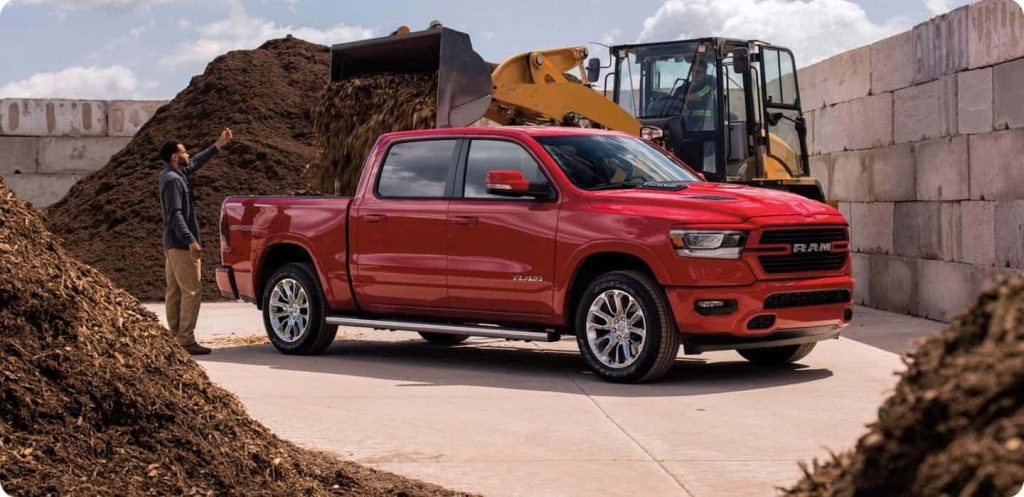
Owners today still rely on these trucks for work, farming, and personal use, and their reputation for being easy to repair helps keep them going.
The early 1990s Ram 1500 may not have been flashy, but it continues to prove that functionality and toughness are what truly define a long-lasting truck.
5. GMC Sierra 1500 (Early 1990s)
The GMC Sierra 1500 from the early 1990s shares much of its DNA with the Chevrolet C/K series, and that connection is one of the reasons it has lasted so long.
These trucks were built on the same sturdy platform, with reliable engines and frames designed for demanding work. Thirty years later, many Sierras are still on the road, continuing to demonstrate their staying power.
The V8 engines, especially the 5.7-liter, became the most respected options for long-term dependability. Known for their ability to handle high mileage without significant issues, they continue to run smoothly when maintained properly. These engines were also straightforward to work on, which gave owners confidence that repairs could be done without excessive cost.
Durability was a key focus of the Sierra. Its body-on-frame construction gave it the strength to handle heavy loads, and suspension components were built to last.
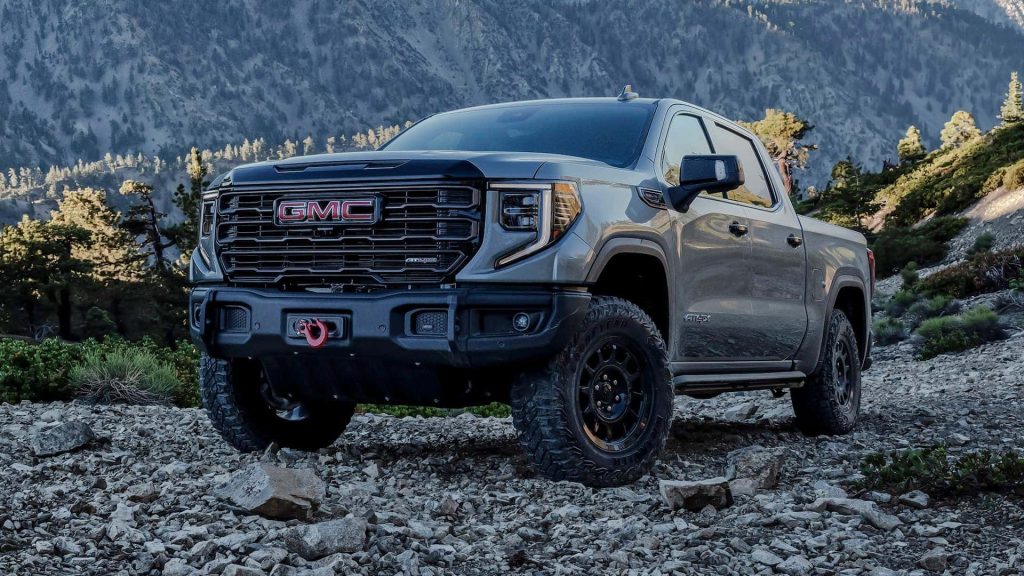
While rust has been a concern in some regions, trucks that were well cared for have survived in impressive numbers. This resilience has kept them in service as both workhorses and classic trucks appreciated by collectors.
The interiors were simple but functional, with fewer electronics to fail compared to modern trucks. This simplicity added to their long-term reliability. Many Sierra owners continue to use their trucks daily, which is proof of the model’s quality construction.
The GMC Sierra 1500 of the early 1990s may not grab headlines, but its quiet reputation for toughness and reliability has ensured its place as a truck that can survive three decades and beyond.
6. Nissan Hardbody (Late 1980s to Early 1990s)
The Nissan Hardbody pickup, produced from the mid-1980s through the early 1990s, is one of the most durable compact trucks ever built.
Its nickname came from the double-wall bed construction, which added toughness to a design already known for reliability. Many Hardbody pickups are still running today, more than thirty years after they were built.
The four-cylinder engines offered in this truck were key to its longevity. Known for being nearly indestructible, these motors could handle heavy use while delivering respectable fuel efficiency.
The V6 version provided more power and still maintained a strong reputation for durability. Both options allowed the Hardbody to stay useful long after many other compact trucks had faded from the road.
Owners appreciated the rugged construction of the frame and suspension, which held up under both work and off-road use.
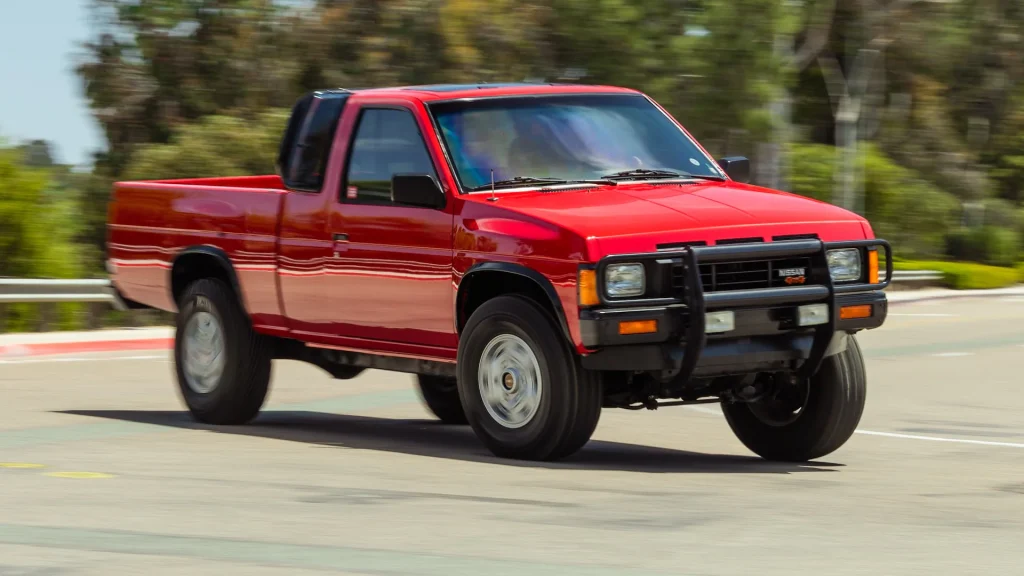
Even when subjected to rough conditions, the Hardbody’s design kept it reliable. Rust resistance was not perfect, but trucks from drier climates often remain in excellent condition decades later.
Another reason for the Hardbody’s longevity was its simplicity. Fewer electronics meant fewer failures, and parts were relatively inexpensive and widely available. For drivers who wanted a truck that was easy to maintain and repair, the Hardbody fit the bill perfectly.
Today, the Nissan Hardbody is remembered fondly as one of the toughest compact pickups of its time. Its survival after three decades proves that strong engineering and straightforward design can create a vehicle that lasts far longer than expected.
7. Toyota T100 (Mid-1990s)
The Toyota T100, introduced in the mid-1990s, often flies under the radar compared to the better-known Tacoma or full-size Tundra. Yet, it deserves recognition as one of the most dependable trucks to remain on the road after thirty years.
Built with Toyota’s reputation for quality, the T100 combined a straightforward design with reliable mechanicals that have proven their worth over time.
Under the hood, the T100 offered both four-cylinder and V6 engines, but the 3.4-liter V6 stands out as the most reliable choice. Known for smooth performance and long service life, this engine allowed the truck to handle heavy use without complaint.
Owners frequently report their T100s running well beyond 250,000 miles with only routine maintenance.
The truck’s frame and suspension were designed to be tougher than compact pickups, making it useful for light-duty hauling and towing. While it did not match the size or capacity of American full-size trucks, its durability and ease of ownership earned it a loyal following.
Rust has affected some models, but in many regions, T100s remain structurally sound even after decades.
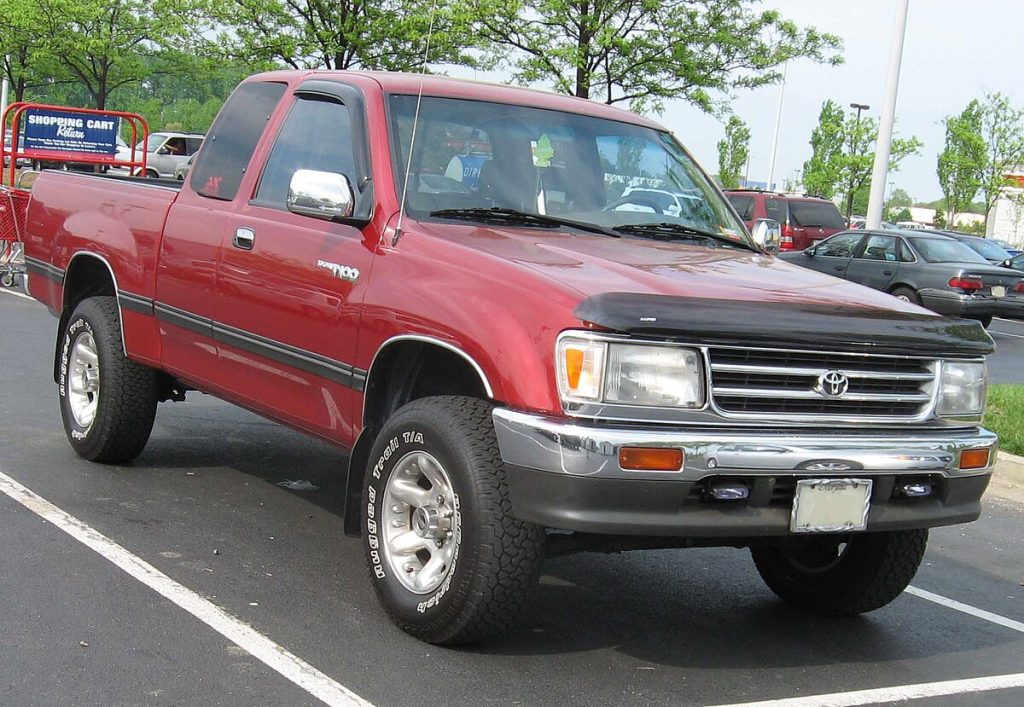
Interior features were simple, with basic controls and limited electronics, which has contributed to fewer age-related failures. This simplicity has kept the T100 reliable for daily use long after many trucks of its era were retired.
Though it never achieved massive sales, the Toyota T100 quietly built a reputation for lasting dependability. Thirty years later, it stands as proof that Toyota’s approach to quality engineering produced trucks capable of surviving decades of use.
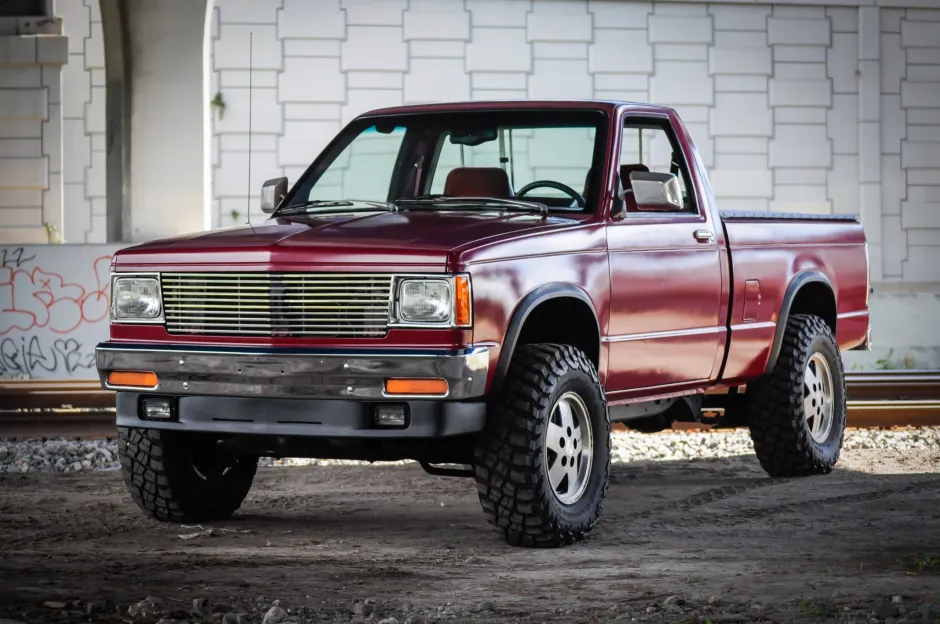
8. Chevrolet S-10 (Early 1990s)
The Chevrolet S-10 from the early 1990s is another compact pickup that continues to show up on the road three decades later.
Designed as a smaller alternative to the full-size C/K trucks, the S-10 offered practicality, affordability, and surprising toughness. Its continued presence today demonstrates how durable it was for its size and class.
The 2.5-liter four-cylinder engine was the most basic option, but the 4.3-liter V6 became the standout motor for long-term dependability.
Known for strong torque and robust design, this engine gave the S-10 enough power for work duties while also holding up well under high mileage. Many examples still run with original drivetrains after 200,000 miles or more.
The S-10’s body-on-frame construction helped it survive the wear of hauling and off-road use. Suspension components were designed to handle a mix of daily driving and work, and they proved sturdy enough to keep trucks roadworthy for decades.
Rust has been an issue in some areas, but many S-10s remain structurally solid thanks to good care from owners.
One of the reasons for the S-10’s long life is the availability of parts. With a strong aftermarket and wide compatibility with other GM models, keeping an S-10 running is both affordable and straightforward.
Owners have been able to maintain these trucks without excessive expense, which has helped them survive in large numbers.
The Chevrolet S-10 may not have the fame of larger trucks, but its combination of reliability, practicality, and ease of ownership has secured its place as a long-lasting pickup still seen on the road thirty years later.
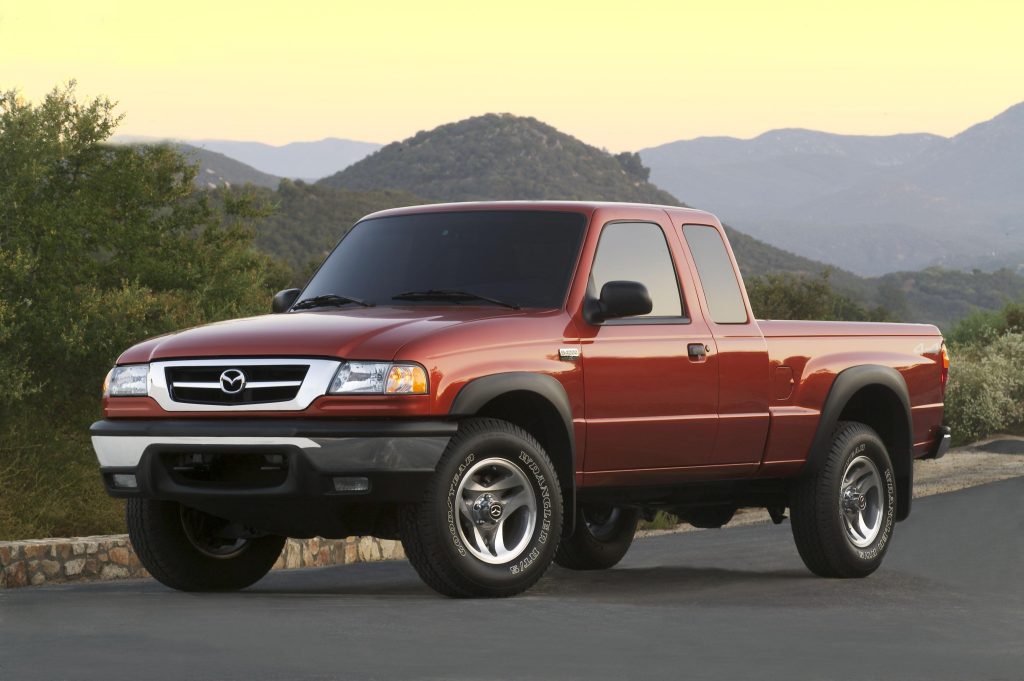
9. Mazda B-Series (Early 1990s)
The Mazda B-Series trucks from the early 1990s share much of their engineering with the Ford Ranger of the same era, and this partnership helped ensure their longevity.
Compact, affordable, and mechanically straightforward, the B-Series has proven capable of lasting thirty years or more when given proper care.
Engines like the 2.3-liter four-cylinder and 3.0-liter V6 were simple and durable. These motors were designed to be easy to maintain, and many continue to run reliably after hundreds of thousands of miles.
While they did not offer overwhelming power, they were more than sufficient for light hauling, commuting, and general utility use.
The body-on-frame design provided strength that allowed the B-Series to handle real truck duties despite its compact size.
Suspension components were solid and relatively inexpensive to replace, which has made repairs manageable even as the trucks aged. In regions with mild climates, rust has been less of an issue, leaving many B-Series trucks structurally intact.
Another factor in the Mazda B-Series’ survival is its mechanical simplicity. With fewer electronics than modern pickups, there are fewer components to fail. Owners and independent mechanics alike have been able to keep these trucks running without difficulty.
While the B-Series was eventually discontinued, its reputation for durability remains strong. Many of these trucks are still on the road, proving that even smaller pickups can last decades when built with solid engineering.
For drivers who value reliability over luxury, the Mazda B-Series has been a dependable companion well past the thirty-year mark.
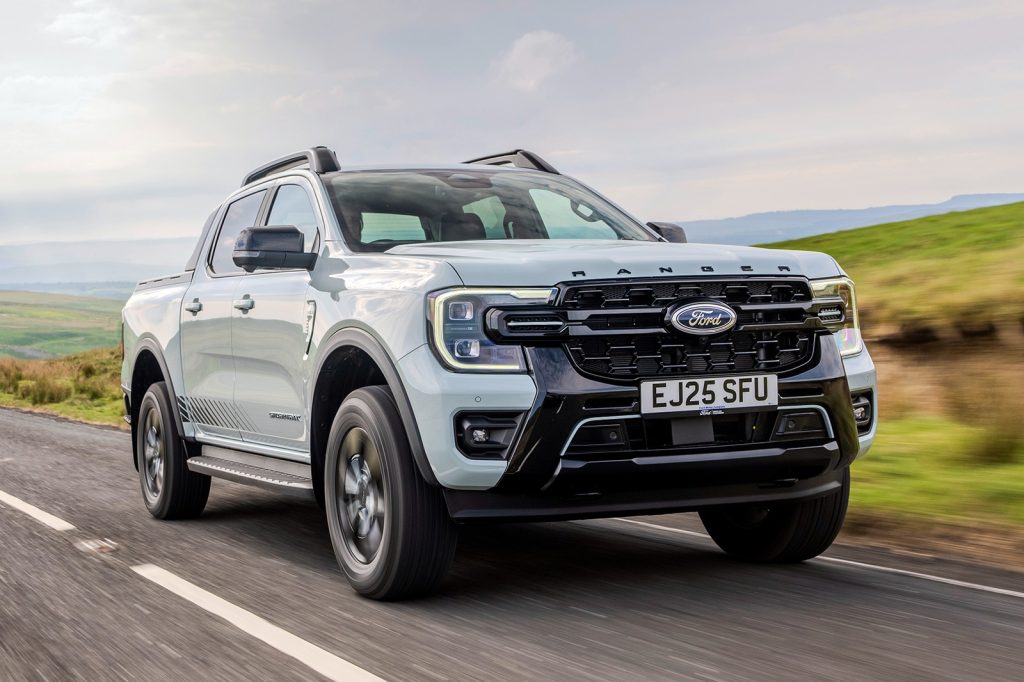
10. Ford Ranger (Early 1990s)
The Ford Ranger from the early 1990s is one of the most enduring compact pickups ever produced. Known for its affordability and rugged simplicity, the Ranger became a favorite for drivers who needed a truck that could handle work without breaking the bank.
Thirty years later, many examples are still in service, proving the toughness of this small but capable pickup.
The Ranger’s four-cylinder engines, especially the 2.3-liter, were widely respected for their ability to keep running even under heavy use. The available V6 engines, including the 3.0 and 4.0-liter versions, added more power while maintaining long-term reliability.
With regular maintenance, these motors frequently surpassed 200,000 miles, making the Ranger a dependable long-term option.
Durability was enhanced by the body-on-frame construction, which gave the Ranger the strength to haul and tow within its limits.
Suspension systems were designed to handle rough use, whether that meant farm work, job sites, or off-road trails. Rust could be an issue in harsher climates, but many trucks have survived with their frames intact.
Another reason for the Ranger’s lasting presence is ease of repair. Parts have always been widely available and affordable, and the mechanical systems are straightforward enough for owners to maintain themselves. This has kept many Rangers running long after other compact trucks disappeared.
The Ford Ranger of the early 1990s may have been considered basic at the time, but its rugged design and dependable engines have allowed it to remain a common sight on roads even after thirty years of use.
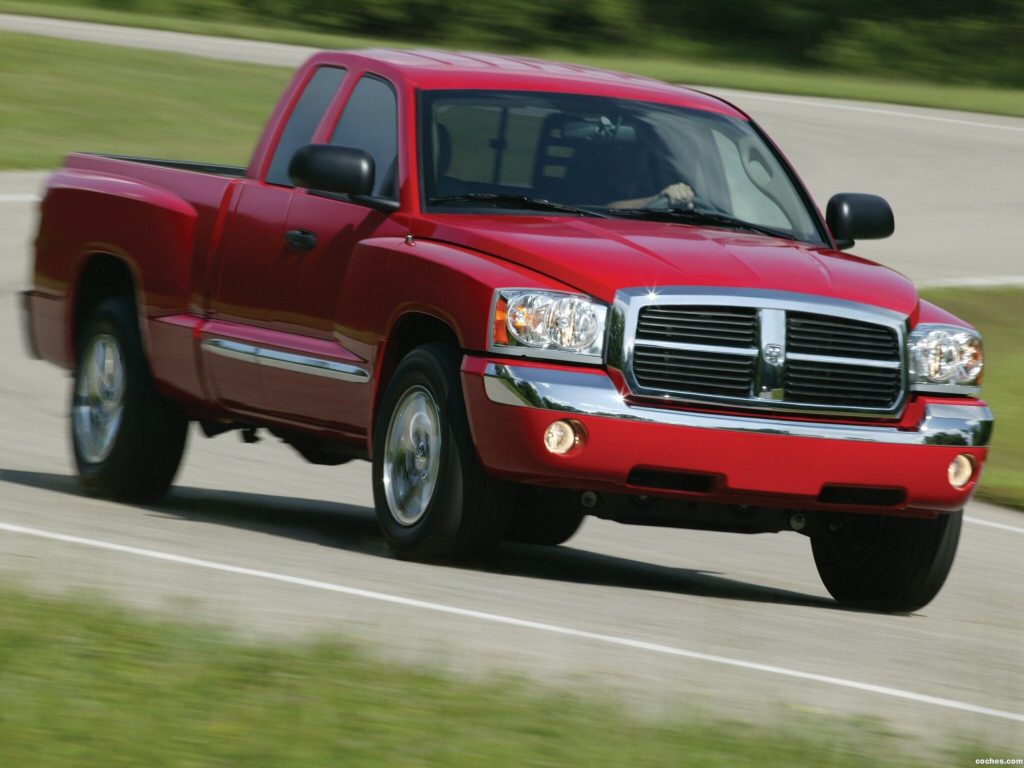
11. Dodge Dakota (Early 1990s)
The Dodge Dakota, introduced in the late 1980s and continuing strong into the early 1990s, carved out its place as a midsize pickup that blended compact maneuverability with added toughness.
Thirty years later, many early Dakotas are still on the road, a reflection of their durable design and reliable drivetrains.
The Dakota was notable for offering a wide range of engines, from four-cylinder options to durable V6s and even small V8s. The 3.9-liter V6 in particular built a reputation for being long-lasting, often exceeding 200,000 miles with routine maintenance.
The availability of V8 power gave the Dakota capabilities that smaller pickups could not match, while still maintaining durability.
A strong frame and suspension design made the Dakota more capable of handling work duties than other compact pickups of its era.
Owners frequently used them for hauling and towing, and many examples have stood up well under decades of heavy use. Rust has affected some older models, but well-kept trucks have survived impressively.
Interiors were functional and straightforward, reducing the chance of complicated failures over time. The Dakota’s mechanical simplicity also made it easier for owners to maintain and repair without excessive expense. Parts remain widely available, which has contributed to the truck’s longevity.
The Dodge Dakota filled an important niche and has proven its worth by surviving well beyond the thirty-year mark. For drivers who wanted something between a compact and a full-size truck, the Dakota was the right fit, and its continued presence today proves its toughness.
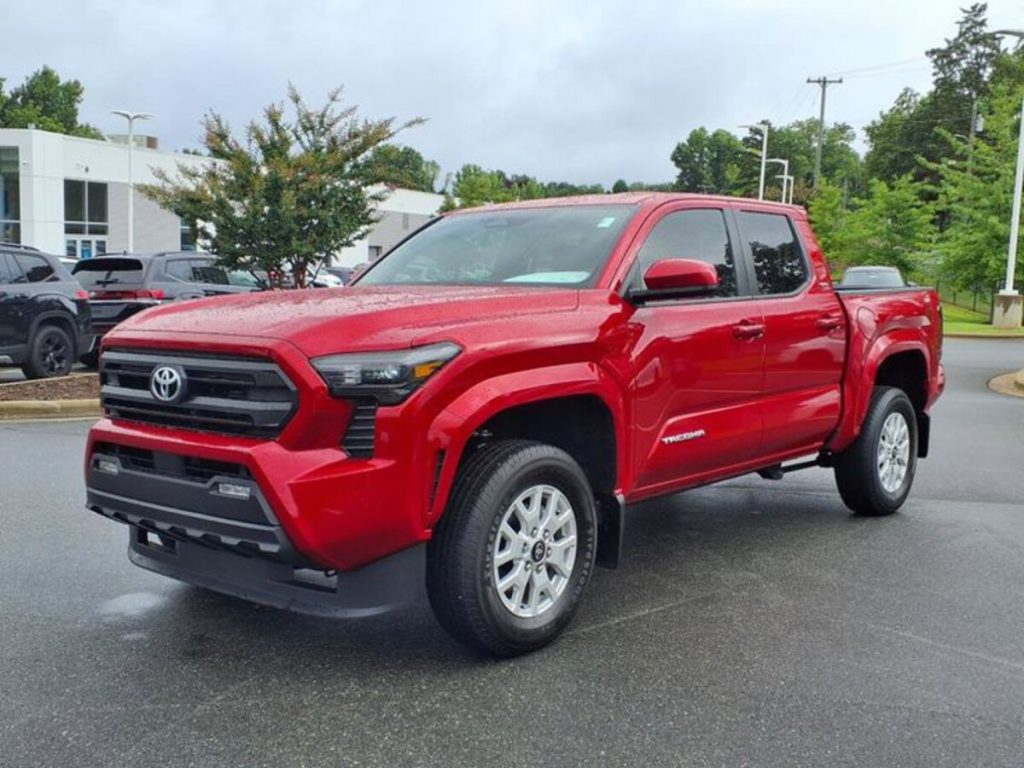
12. Toyota Tacoma (Late 1990s)
The Toyota Tacoma, introduced in the mid-1990s as the successor to the Toyota Pickup, quickly built on the reputation of its predecessor for durability.
Late 1990s Tacomas in particular have proven themselves capable of lasting thirty years, making them a frequent sight on the road even today.
One of the standout features of the Tacoma was its engine lineup. The 2.7-liter four-cylinder earned high marks for reliability and efficiency, while the 3.4-liter V6 became a favorite for those who wanted more power without giving up long-term dependability. Many of these engines are still running strong after hundreds of thousands of miles.
The Tacoma was built with a tough frame and suspension, designed to handle both daily use and demanding work.
Off-road capability was another highlight, with 4×4 models proving especially durable in rough terrain. While some frames were affected by rust in harsher climates, Toyota’s recall efforts and repairs kept many trucks safe and roadworthy.
Inside, the Tacoma was designed with practicality in mind. Controls were simple, and fewer electronic components meant fewer issues as the truck aged. Owners often report that their Tacomas continue to perform reliably decades later with only basic maintenance.
The Tacoma’s reputation for long-term durability has made it one of the most respected trucks on the used market.
Late 1990s models, now crossing the thirty-year mark, continue to demonstrate Toyota’s commitment to building trucks that last. For drivers who value reliability above all, the Tacoma stands as a proven choice.
Also Read: 12 Cars That Offer Luxury for Pennies After 10 Years
