
Movies often rely on cars to become more than just props. Sometimes they turn into characters of their own, symbols of resilience that survive against odds just as much as the heroes behind the wheel.
Whether racing through gunfire, enduring high-speed crashes, or outrunning explosions, certain cars have gained a reputation for toughness on screen. They appear battered and broken but somehow keep going, almost as if their endurance was written into the story.
For audiences, this creates a unique thrill. Watching a car get pounded in scene after scene, only to roar back to life, adds suspense and excitement. It also builds an emotional attachment between viewers and the machine itself.
These cars become more than transport; they represent persistence, survival, and sometimes defiance. Many directors use these vehicles as symbolic tools, making them visual proof that nothing not bullets, not wrecks, not fire, can stop the momentum of the story.
What makes these cars stand out is not just their on-screen toughness but how audiences remember them long after the credits roll.
While countless vehicles appear in films, only a handful earn legendary status for refusing to die, even when the plot throws everything at them.
This list highlights twelve cars that became icons of survival. From action thrillers to comedies, they endured chases, collisions, and chaos, yet remained unshaken in the minds of viewers.
These machines prove that in cinema, survival is not limited to people; sometimes, the cars steal the spotlight by lasting longer than anyone expects.
Also Read: 12 Sedans That Still Look Modern After 15 Years
1. 1968 Ford Mustang GT 390 – Bullitt (1968)
Few cars in movie history are as iconic as the Highland Green 1968 Ford Mustang GT 390 driven by Steve McQueen in Bullitt. The Mustang was more than just a muscle car; it became a symbol of persistence in one of the most famous chase scenes ever filmed.
In the movie, McQueen’s Mustang barrels through the steep streets of San Francisco in a brutal pursuit against a Dodge Charger. The car endures punishing jumps, screeching cornering, and metal-crunching collisions.
Despite the pounding, it keeps pushing forward, carrying McQueen to the climactic end of the chase. What makes the Mustang stand out is how raw and authentic the sequence feels no computer-generated tricks, just a car surviving real, bone-jarring stunts.
The Mustang’s ability to keep running under such conditions made it unforgettable. Even decades later, enthusiasts and filmmakers still look back at Bullitt as a benchmark for car chases.
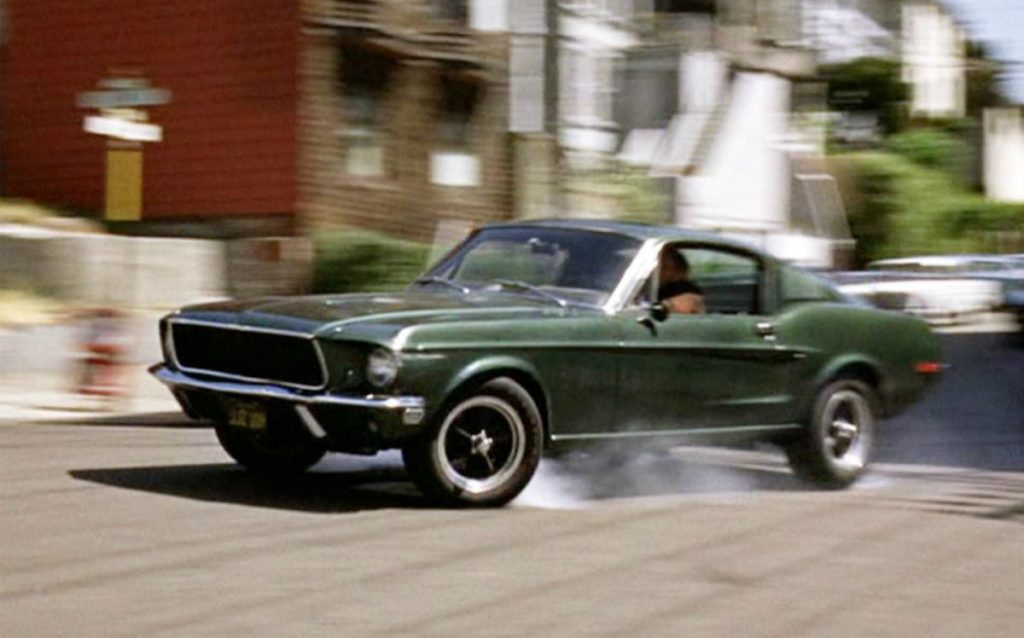
The GT 390’s endurance on screen reinforced its reputation as a tough American muscle car, embodying grit and determination in mechanical form.
The 1968 Mustang from Bullitt refused to quit, turning into a cinematic legend that still defines what a movie car should be.
2. Dodge Charger R/T – The Fast and the Furious (2001)
Dominic Toretto’s black Dodge Charger R/T is one of the most enduring cars in modern cinema. Introduced in the first Fast and Furious film, the Charger became the heart of Toretto’s character, symbolizing both family and resilience.
In the movie, the Charger is presented as a monstrous machine, boasting over 900 horsepower. Its reputation is built not just on speed but toughness. During the film’s climax, it launches into a high-speed street race against Brian O’Conner’s Toyota Supra.
The Charger takes a brutal beating, colliding with a truck and rolling after a violent crash. Yet despite the damage, the car remains a recurring figure throughout the series, rebuilt time and again.
The Charger’s repeated survival across sequels cements its legend. Each time audiences see it return, it represents persistence and loyalty, echoing Toretto’s own values.
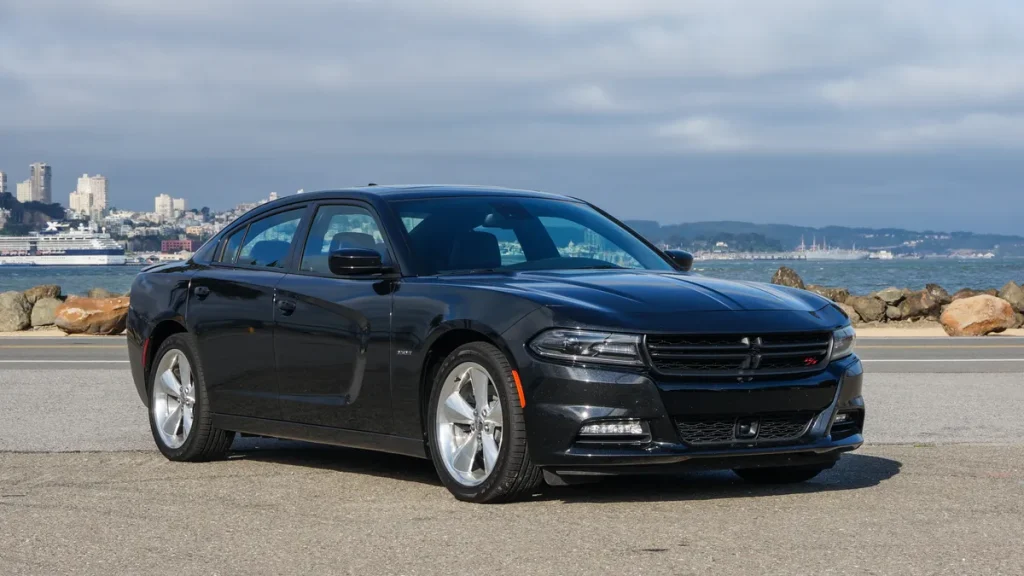
On screen, the Dodge Charger is more than a muscle car; it is a symbol of resilience that simply refuses to disappear.
The Charger’s toughness, combined with its raw American muscle presence, makes it one of cinema’s most unbreakable cars.
3. 1973 Ford Falcon XB GT – Mad Max: Fury Road (2015)
The 1973 Ford Falcon XB GT, famously known as the “Pursuit Special” or “Interceptor,” became one of the toughest cars in movie history.
In the Mad Max series, it is depicted as a machine built for survival in a brutal wasteland, and it earns that reputation with every appearance.
In Fury Road, the car returns battered, rusted, and heavily modified for war. Despite years of punishment and harsh desert conditions, it continues to roar back to life, carrying Max through relentless chases.
It survives ambushes, crashes, and near-destruction, embodying the gritty resilience of its driver. Even when stolen and abused by enemies, the Interceptor keeps running, refusing to break down completely.
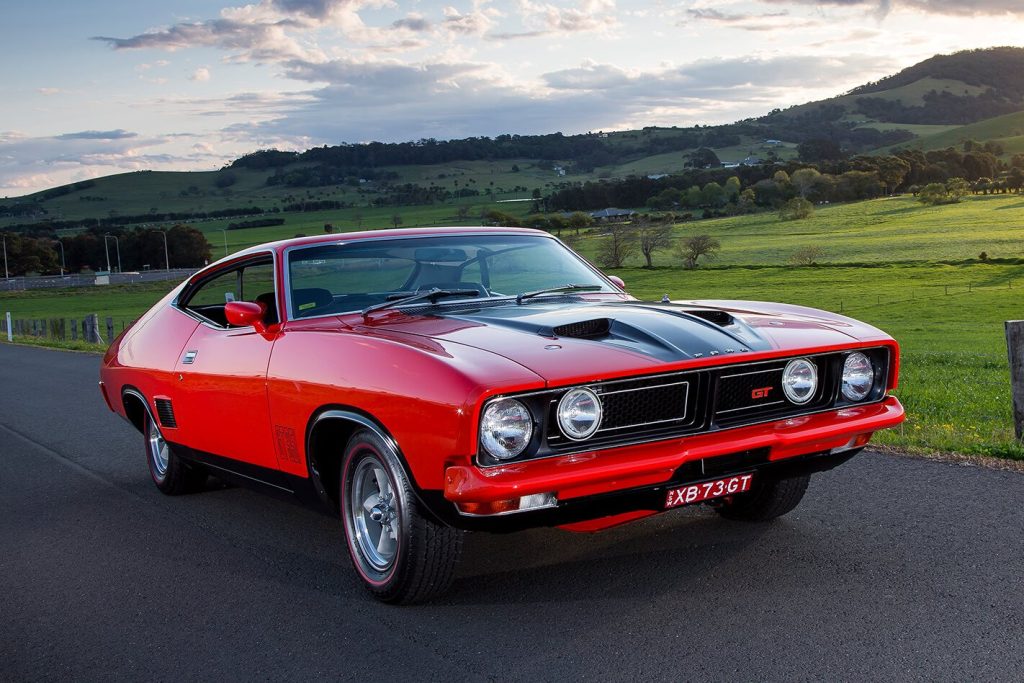
The Falcon’s cinematic power lies in its ruggedness. It is not polished or glamorous; instead, it is raw, patched together, and unrelenting, which makes it believable as a survivor in a hostile world. Fans recognize it as one of the greatest post-apocalyptic cars, one that is as stubborn as Max himself.
The Ford Falcon Interceptor stands as proof that even in the harshest movie settings, some cars are simply too tough to die.
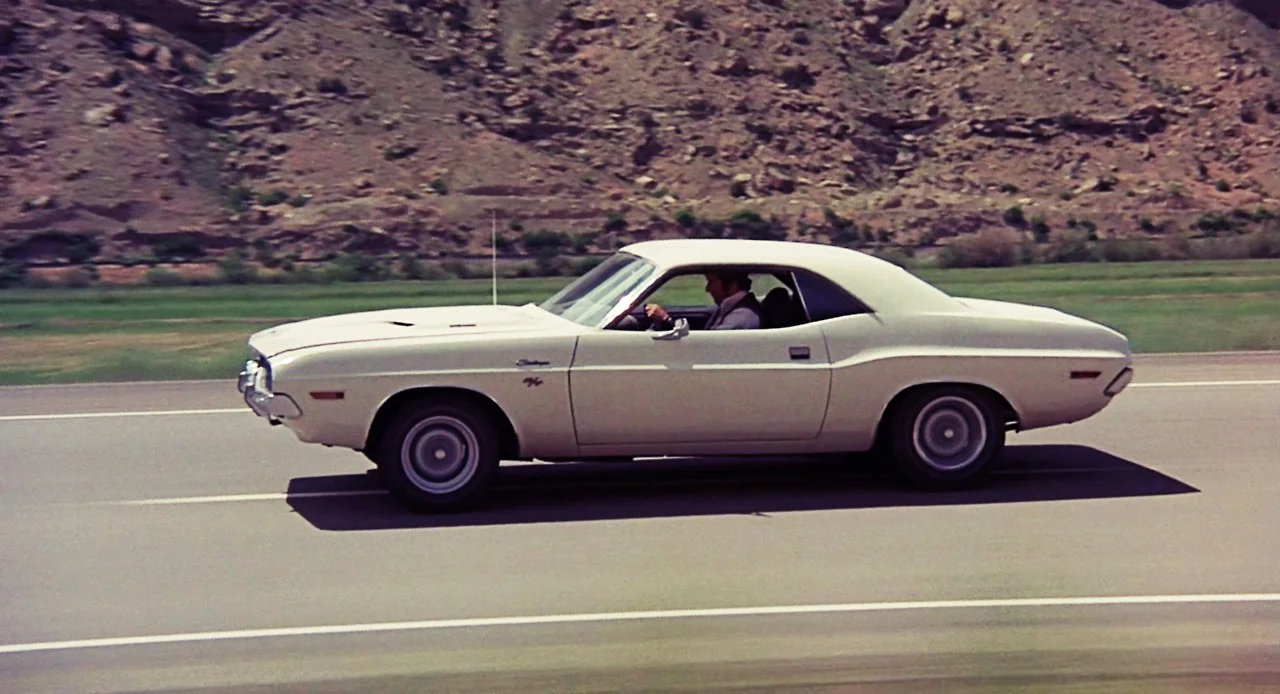
4. 1970 Dodge Challenger R/T – Vanishing Point (1971)
The white 1970 Dodge Challenger R/T in Vanishing Point became a symbol of determination on wheels. Driven by the character Kowalski, the Challenger covers a high-speed run across the American West, with police forces and obstacles trying to stop it.
The film portrays the car as nearly indestructible, enduring endless pursuit, rough roads, and constant abuse.
What makes this Challenger memorable is its refusal to break down despite the punishment. Through deserts, highways, and small towns, it maintains incredible speed and power.
Each chase sequence builds its legend as a machine that just keeps going, no matter what is thrown its way. Viewers felt like the Challenger itself was a character, representing rebellion and persistence.
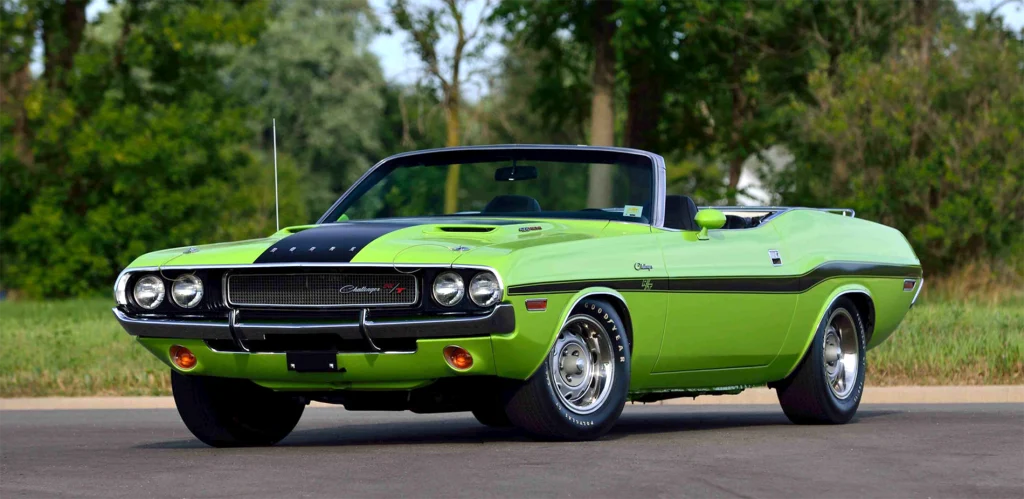
Even though the film ends with the Challenger’s destruction, the car’s resilience throughout the journey is what stays with audiences. Its refusal to falter turned it into a cult favorite, admired by muscle car enthusiasts and movie fans alike.
The 1970 Dodge Challenger in Vanishing Point shows how a car can embody toughness and spirit, surviving until its very last moment.
5. 1977 Pontiac Trans Am – Smokey and the Bandit (1977)
The black and gold 1977 Pontiac Trans Am from Smokey and the Bandit became an icon of endurance, charm, and raw American muscle. Throughout the film, Burt Reynolds’ character uses the car as a shield, decoy, and escape machine, outrunning Sheriff Buford T. Justice and his endless pursuit.
The Trans Am takes constant abuse in the form of high-speed jumps, police chases, and long-distance sprints, yet it never quits. Its sharp styling and rumbling V8 gave it both screen presence and credibility as a machine built for action.
Every time it slides around a corner or soars through the air, the car proves its toughness by continuing the journey without slowing down.
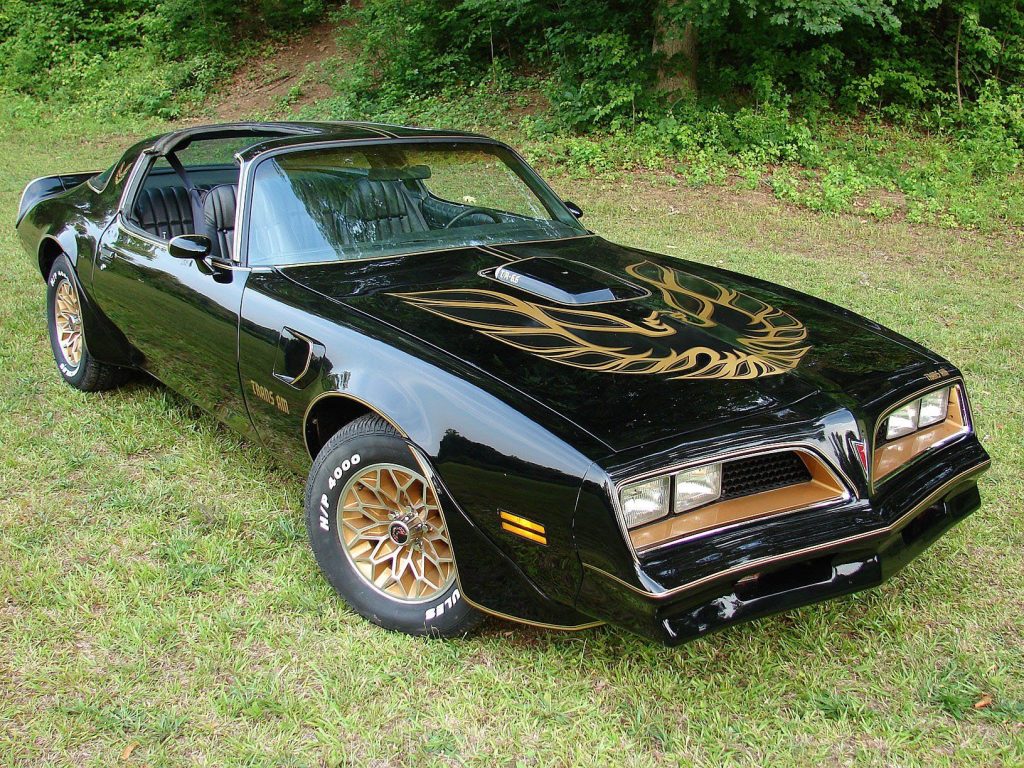
Fans came to associate the Trans Am with survival and rebellion. It looked flashy but also performed like a workhorse, refusing to break under pressure.
This combination made it one of the most memorable movie cars of all time. Even today, the Trans Am from Smokey and the Bandit stands as a symbol of a car that could handle anything thrown at it.
6. Aston Martin DB5 – James Bond Series
The Aston Martin DB5 first appeared in Goldfinger (1964) and has since become one of the most enduring cars in cinema history. Equipped with gadgets like bulletproof shields, machine guns, and ejector seats, the DB5 not only survived Bond’s dangerous missions but often came out looking untouchable.
Across multiple films, including Skyfall and No Time to Die, the DB5 returns time and again, showing remarkable resilience.
It weathers shootouts, crashes, and explosions, yet remains the quintessential Bond car. Its survival on screen adds to the sense that Bond himself is unstoppable, with the DB5 serving as his mechanical counterpart.
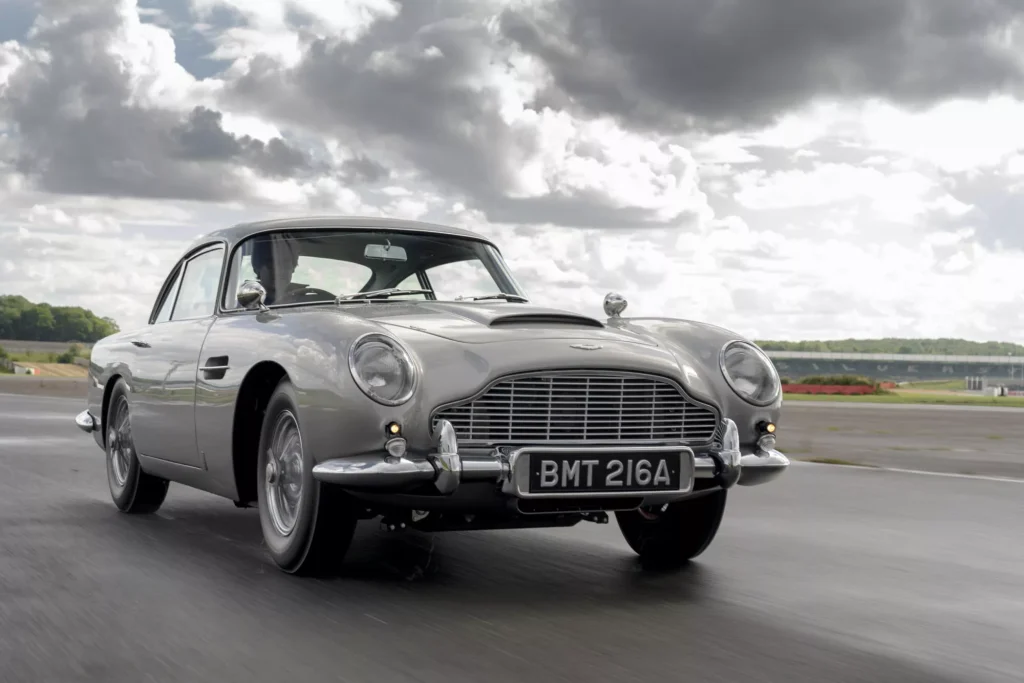
What sets the DB5 apart is that it is both elegant and tough. Its timeless design made it one of the most beautiful cars on screen, while its ability to withstand punishment gave it credibility as more than just a luxury vehicle.
Every time it reappears, fans celebrate, knowing that this car has already survived decades of cinematic danger.
The DB5 is more than a stylish accessory for Bond; it is a survivor that continues to fight another day.
7. 1974 Dodge Monaco – The Blues Brothers (1980)
The 1974 Dodge Monaco, famously called the “Bluesmobile,” is one of cinema’s most unlikely survivors. In The Blues Brothers, Jake and Elwood Blues drive the beat-up ex-police car across Illinois while being chased by police, military forces, and even a country band.
Despite its battered look and questionable condition, the Bluesmobile keeps going in situations where any ordinary car would have given up.
It performs absurd stunts, including jumping over bridges, outrunning countless squad cars, and even making sharp turns that defy physics.
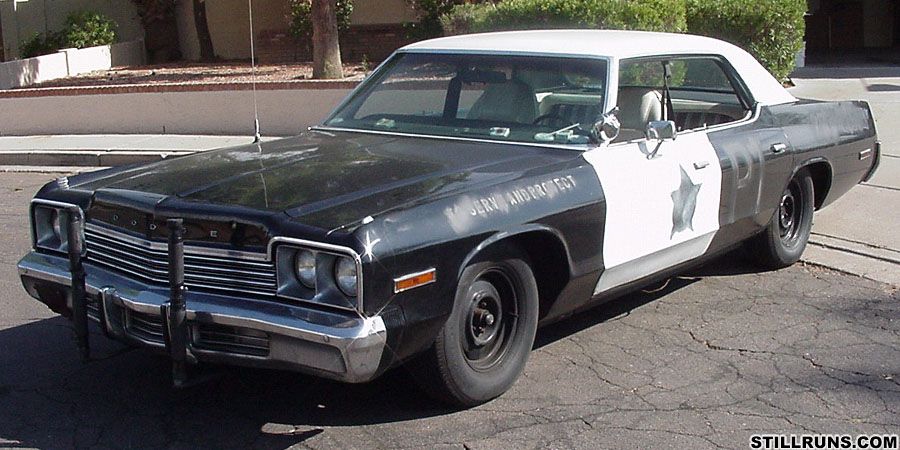
Throughout the chaos, it never fails the brothers until its final moment at the climax, when it collapses after completing its mission. By then, though, it had already proven itself as one of the most durable movie cars ever put on screen.
The charm of the Bluesmobile lies in the way it looks fragile but performs like a powerhouse. It was not sleek or flashy but instead reliable and stubbornly strong.
Fans grew attached to it not for its beauty but for its ability to survive ridiculous levels of punishment. The Monaco became legendary because it refused to die until its job was finished.
8. Chevrolet Camaro “Bumblebee” – Transformers Series
In the Transformers films, Bumblebee takes the form of a Chevrolet Camaro, and while technically an alien robot, the car itself deserves recognition for its resilience. Across battles with Decepticons, explosions, and high-speed pursuits, Bumblebee keeps returning, no matter how much damage he takes.
The Camaro survives destruction that would obliterate most cars, including being torn apart and rebuilt multiple times. Its on-screen toughness made the Camaro an instant favorite among younger audiences, reviving interest in the muscle car while also cementing Bumblebee as one of the most beloved characters in the franchise.
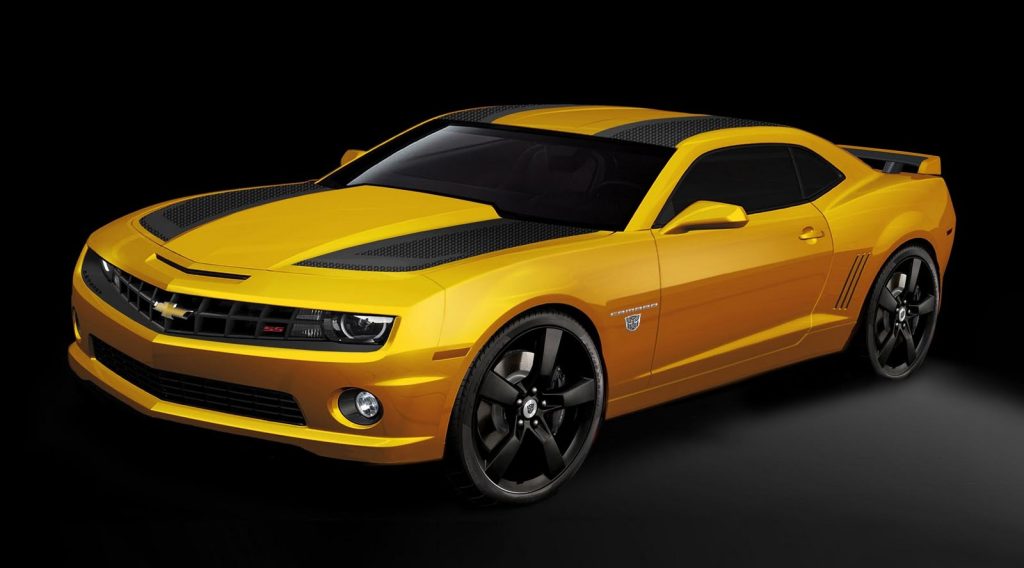
What sets Bumblebee apart is his dual role. As a car, he is a stylish, high-performance machine that can race and fight. As a character, his refusal to quit, even when badly damaged, represents loyalty and persistence. This combination made the Camaro a symbol of endurance.
The repeated survival of Bumblebee’s Camaro across sequels proves that sometimes the most unbreakable cars are those that carry a spirit bigger than themselves.
9. 1982 Pontiac Firebird Trans Am – Knight Rider
While Knight Rider was a television series rather than a movie, the 1982 Pontiac Firebird Trans Am, known as KITT, earned its place as one of pop culture’s toughest cars. KITT was designed as an indestructible vehicle with advanced technology, including an AI system, turbo boost, and bulletproof bodywork.
Throughout the series and TV movies, KITT endures explosions, gunfire, and countless crashes but always comes back ready for action. Its reputation as a car that could never be destroyed made it a cultural icon of the 1980s.
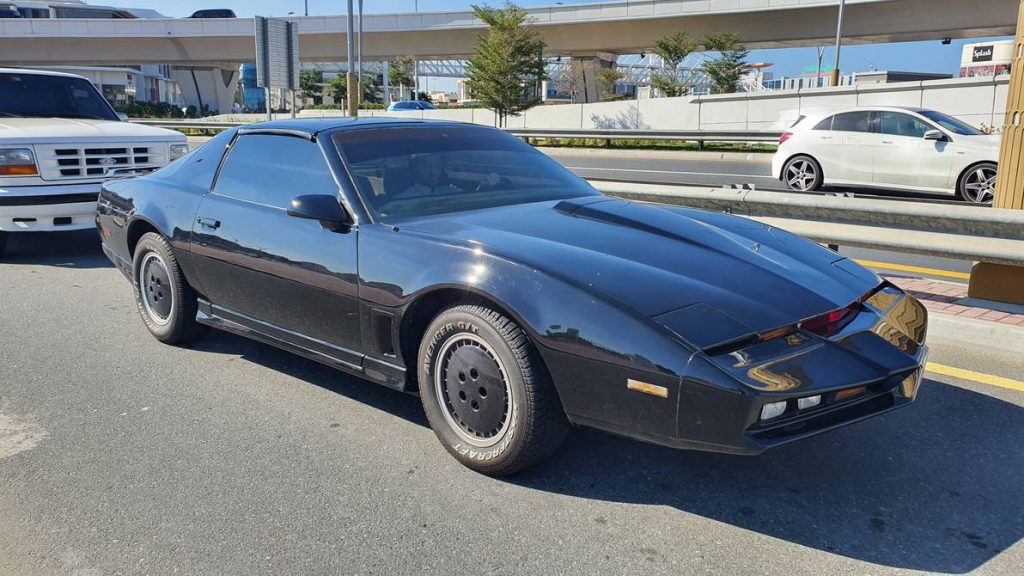
KITT’s durability was part of the appeal, but so was the sleek styling of the Firebird itself. The combination of futuristic abilities and muscle car presence gave it staying power beyond its television roots. Fans viewed KITT as more than just a car; it was a trusted ally that always survived to protect its driver, Michael Knight.
The Pontiac Firebird Trans Am stands out as a machine that refused to be beaten, even when storylines demanded extreme levels of destruction.
10. Toyota Supra Mk IV – The Fast and the Furious (2001)
The orange Toyota Supra Mk IV from the first Fast and Furious movie remains one of the most beloved imports in film history.
Built by Brian O’Conner and his crew, the Supra was presented as a resurrected machine, restored from a broken-down shell into a high-powered racer capable of standing toe-to-toe with muscle cars.
In the film’s finale, the Supra faces off against Dominic Toretto’s Dodge Charger. It pushes through the punishing street race, enduring near collisions and extreme speeds. Even after narrowly avoiding a crash with a train, the Supra continues to run, proving its resilience in the most intense circumstances.
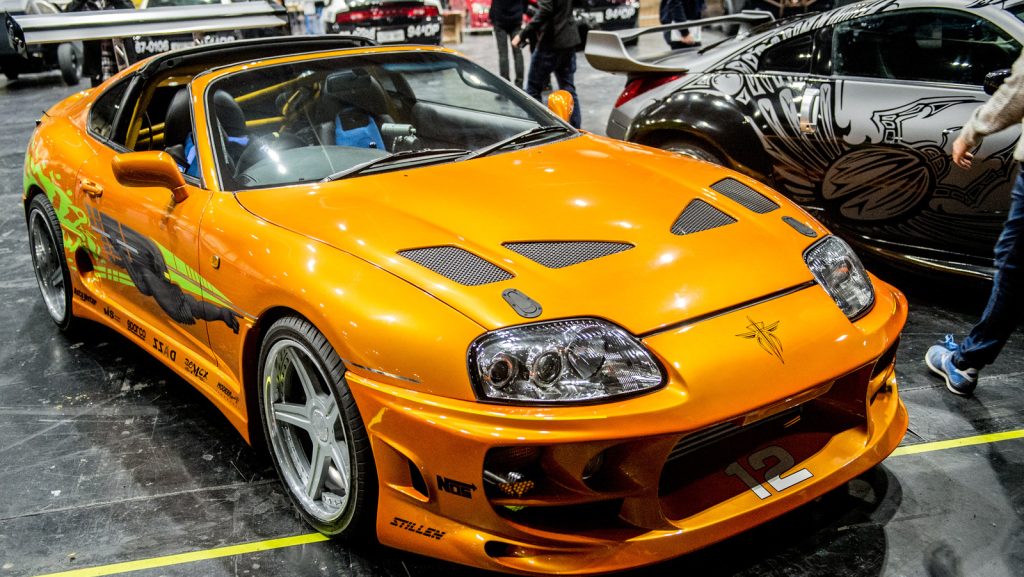
What made the Supra legendary was not just its survival in one film but its impact afterward. It became a cultural symbol of durability and performance, influencing car culture worldwide. Its ability to take punishment while still delivering thrilling speed cemented its status as a movie car that refused to quit.
The Supra remains a reminder that toughness can come in sleek, modern form just as much as raw muscle.
11. 1981 DeLorean DMC-12 – Back to the Future Trilogy
The DeLorean DMC-12 became unforgettable through its role as a time machine in the Back to the Future films. While the real-world car had a shaky reputation, the movie version proved nearly indestructible, handling time jumps, lightning strikes, and chaotic chases.
Across the trilogy, the DeLorean endures crashes, experiments gone wrong, and even being struck by a train. Yet it continues to function, carrying Marty McFly and Doc Brown through countless adventures. Its survival across decades of film storytelling gave it a legendary status that far outweighed its production shortcomings.
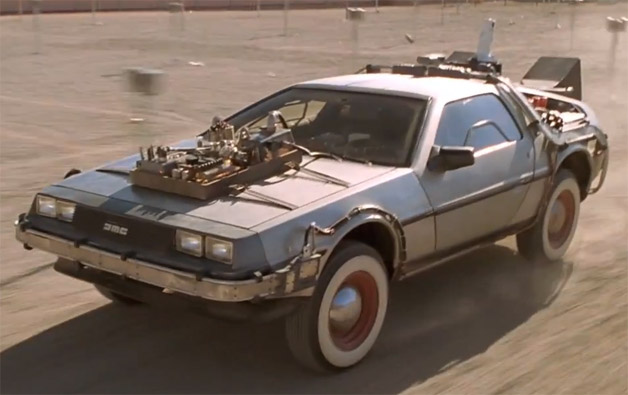
The gull-wing doors and stainless steel body gave it futuristic charm, but its refusal to stop working under outrageous conditions made it a symbol of resilience. Even when destroyed in one film, the DeLorean reappears, rebuilt and ready to continue the story.
Fans see the DeLorean as proof that in movies, cars can outlast almost anything, becoming icons of persistence and imagination.
12. 1963 Volkswagen Beetle – Herbie Series
Herbie, the 1963 Volkswagen Beetle, is perhaps the most cheerful survivor in film history. Unlike other movie cars that impress with speed and aggression, Herbie wins hearts with charm and durability.
Across multiple films, including The Love Bug and Herbie Fully Loaded, the Beetle takes on challenges from races to destruction attempts, always managing to come back stronger.
Herbie survives crashes, sabotage, and impossible stunts, often bouncing back when logic says it shouldn’t. The Beetle’s underdog nature makes its survival even more impressive, proving that toughness is not limited to muscle cars or futuristic machines.
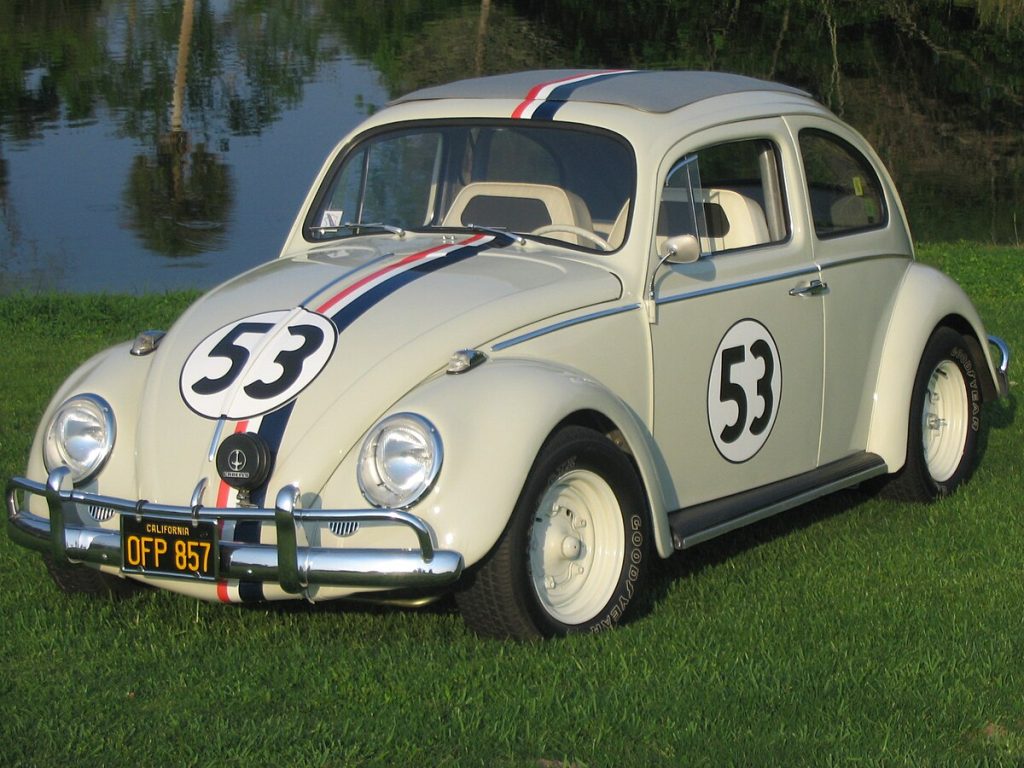
What makes Herbie special is the emotional connection audiences feel. The little Beetle is treated almost like a living character, showing determination and heart even in the face of overwhelming odds. Its ability to survive makes it both funny and inspiring, giving viewers a car they can root for.
The Volkswagen Beetle’s place in movie history shows that resilience comes in many forms, even in a small, quirky package. Herbie refused to die, and that is why fans still remember him fondly today.
Cars in movies are often designed to impress, but only a few manage to reach legendary status by surviving everything thrown at them. These twelve vehicles became far more than background props; they turned into cultural icons because of their refusal to quit.
Whether they were muscle cars, imports, luxury machines, or quirky underdogs, each one carved out a place in cinematic history by embodying endurance.
Take the 1968 Ford Mustang GT 390 from Bullitt. Its legendary chase through San Francisco defined realism in stunt driving, and the Mustang’s survival through brutal punishment cemented it as a timeless figure.
On the opposite end, Dominic Toretto’s Dodge Charger proved that strength and loyalty could be represented in a car, reappearing across multiple films as if it could never truly be destroyed. These cars not only carried their drivers but also carried the storylines, symbolizing persistence.
The Mad Max Ford Falcon Interceptor and the Vanishing Point Dodge Challenger pushed toughness to another level. Their portrayals highlighted grit and rebellion, showing that even in chaotic or dystopian conditions, certain cars were simply too rugged to die.
Similarly, the Pontiac Trans Am in Smokey and the Bandit balanced flashiness with durability, becoming a star in its own right by refusing to buckle under relentless pursuit.
Then there is elegance combined with resilience, best seen in the Aston Martin DB5. This Bond icon proved that survival is not only about raw power but also about outlasting decades of cinematic danger.
It has been shot at, blown apart, and relentlessly pursued, yet it always returns. The DB5’s survival mirrors Bond himself, with both refusing to stay down.
Some cars gained fame for surviving absurd levels of punishment, like the Bluesmobile in The Blues Brothers. Outrunning entire fleets of police cars, crashing through malls, and leaping over impossible gaps, it stayed alive long enough to fulfill its purpose.
On the more fantastical side, Bumblebee’s Camaro in Transformers blurred the line between machine and character. Its repeated survival in the face of destruction showed that resilience can be woven into a car’s very identity.
The list also reminds us of cultural icons from television that transitioned into film lore, such as KITT from Knight Rider. The indestructible Pontiac Firebird became a symbol of futuristic endurance, inspiring fans to see cars as more than mechanical objects.
Similarly, Brian’s Toyota Supra Mk IV blended sleek import styling with unexpected toughness, cementing its reputation both on screen and in the real-world car community.
Perhaps the most surprising survivors came from unexpected corners. The DeLorean from Back to the Future overcame its real-world reputation as unreliable by proving nearly unstoppable on screen. Lightning, crashes, and even time itself could not keep it down.
And then there is Herbie, the lovable Volkswagen Beetle, whose survival was portrayed with humor and heart. Unlike the roaring muscle cars or explosive supercars, Herbie reminded audiences that toughness can also come in small, cheerful packages.
What ties all these cars together is the way they connected with audiences. Survival on screen becomes more than spectacle; it builds emotional investment.
Viewers root for these vehicles just as they do for the human characters. The cars become trusted allies, extensions of their drivers, and representations of values like loyalty, determination, and grit.
These machines also shaped car culture beyond the screen. The Mustang from Bullitt boosted muscle car admiration for generations.
The Charger and Supra influenced entire communities of car enthusiasts, while the DB5 kept Aston Martin tied forever to Bond’s brand of sophistication and toughness.
The Bluesmobile, KITT, and Herbie gained fan followings that outlived their franchises, proving that resilience makes cars as memorable as people.
In every case, these cars refused to fade quietly. They faced explosions, crashes, sabotage, and even time travel.
Yet they remained standing, often returning across sequels or cultural revivals as if to prove they could never truly be destroyed. That ability to survive is what gives them staying power in our memories.
Movies remind us that cars can be more than metal and wheels. They can embody spirit, character, and determination. These twelve cars stand as proof that survival itself can be a story worth telling.
Whether it was the roar of a Mustang, the loyalty of a Charger, the humor of a Beetle, or the futuristic strength of KITT, each vehicle carried a message of resilience. And that message is why they continue to live on, long after the cameras stopped rolling.
Also Read: 12 Jeep Wrangler Years That Still Rule the Trails
