
If you’re in the market for a reliable truck that can endure long hauls, tough terrain, and years of heavy use, one of the last things you want to worry about is a blown head gasket. This dreaded issue can be costly, labor-intensive to fix, and often a sign of deeper engine trouble. Luckily, not all trucks are created equal when it comes to this specific problem.
Certain models have earned a reputation for durability, particularly in their engines, making them a safer bet for long-term ownership. Here’s a closer look at ten trucks that rarely blow head gaskets, vehicles that combine performance with peace of mind.
1. Nissan Frontier
The Nissan Frontier is a midsize pickup that has stayed remarkably consistent over the years. Its 4.0L V6 engine is simple, durable, and rarely prone to head gasket problems. This truck is particularly appealing to buyers who value straightforward, long-lasting mechanics without a lot of bells and whistles.
With styling inspired by the original 1980s Nissan Hardbody compact pickup, the boxy Nissan Frontier is in the best shape it has been in years. While it competes with newer mid-size pickups like the Ford Ranger and Honda Ridgeline, the Frontier maintains a more classic truck appearance and driving experience.
Every model comes equipped with a 310-hp V-6 engine paired with a nine-speed automatic transmission, available in either rear-wheel or four-wheel drive. Buyers can choose between the extended King Cab or four-door crew-cab configuration, with bed lengths of 5.0 or 6.0 feet.
From the work-focused base Frontier S to the gravel-ready Pro-4X off-roader featuring Bilstein dampers and skid plates, Nissan’s midsize truck continues to offer solid value. Although its towing capacity doesn’t match that of the Toyota Tacoma, the Frontier stands out in today’s market thanks to its robust suite of standard safety features and modern LED lighting.
Entering its third generation last year, the Frontier receives only minor updates for 2023. A new Midnight Edition appearance package is now offered exclusively on the crew cab SV trim, featuring 17-inch black wheels, black exterior mirrors, and other darkened accents inside and out.
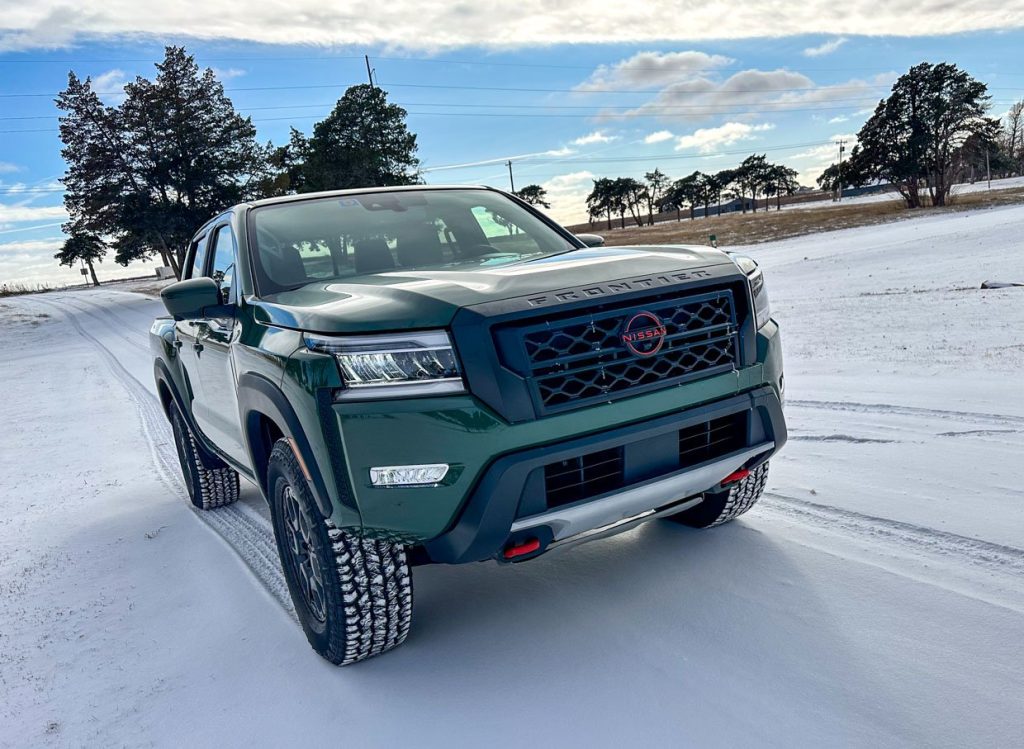
Additionally, the SV Crew Cab with the long bed now includes the previously optional SV Convenience package as standard. This package adds a heated leather steering wheel, heated front seats, a spray-in bed liner, and under-rail bed lighting. Wireless Apple CarPlay is now standard on Pro-X and Pro-4X trims, and Lava Red contrast stitching is included in the Pro Premium package.
The 2023 Nissan Frontier starts at $30,700 and tops out at $40,230, depending on trim and options. We consider the SV trim the sweet spot for balancing features and value. Our ideal setup is the crew cab, the larger of the two cab options, with four-wheel drive. Standard equipment includes an 8.0-inch touchscreen with Apple CarPlay and Android Auto, and a six-way power-adjustable driver’s seat.
Adding the Convenience and Technology packages is recommended, as they bring adaptive cruise control, blind-spot monitoring, rear cross-traffic alert, rear automated emergency braking, heated front seats and steering wheel, a trailer hitch, cargo-bed lighting, and a spray-in bed liner.
Under the hood, the Frontier features Nissan’s new naturally aspirated 3.8-liter V-6, introduced on the 2020 model. This engine produces 310 horsepower and 281 pound-feet of torque, paired with a nine-speed automatic transmission and either rear- or four-wheel drive. In our initial drive, the V-6 delivered smooth, adequate power.
We tested the off-road-ready Pro-4X, which handles rugged terrain capably, though not quite on par with the Jeep Gladiator. The Frontier also benefits from quicker, more responsive steering and numerous chassis upgrades, giving it a more composed and refined feel on the road.
Also Read: 12 Cars That Went From Unpopular to Everyday Sight
2. Toyota Tundra
For a full-size option, the Toyota Tundra shines. Its V8 engines, especially the 5.7L variant, have a strong track record for durability. While fuel economy isn’t its strong suit, owners can trust that head gasket failures are uncommon, making it an ideal truck for heavy-duty tasks and towing.
The Toyota Tundra approaches the full-size truck segment differently than its American competitors. Toyota provides two four-door cab options, medium and large, essentially, with all models wrapped in sharply chiseled sheetmetal.
Rather than chasing the highest towing and payload numbers, the Tundra focuses on moderate capacities that should satisfy most light-duty truck buyers. Its coil-spring rear suspension contributes to a more comfortable ride, while a range of off-road trims and packages ensures capable performance when venturing off pavement.
The latest cabin is a significant upgrade from previous models, especially in the higher-end trims, though it still doesn’t quite match the refinement found in Ram or Ford trucks.
For 2025, Toyota has made some changes to the Tundra lineup. The TRD Sport package, which was the rear-wheel-drive version of the TRD Off-Road, has been discontinued, and the Solar Octane paint option will no longer be offered.
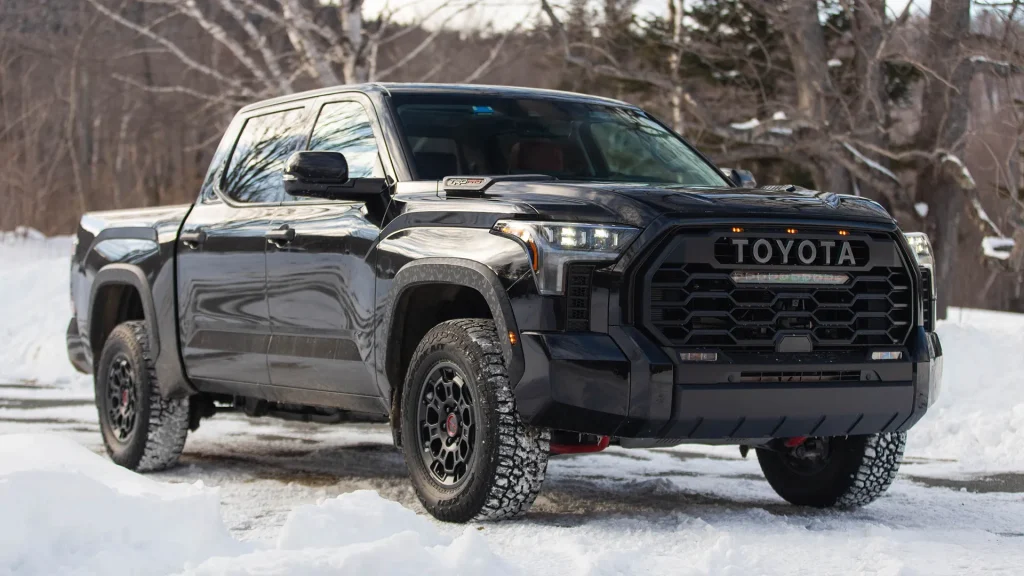
On the plus side, there is a new TRD Rally appearance package, and the SR5 trim now comes standard with eight-way power-adjustable front seats. The power tailgate is available on the SR5 and standard on all higher trims, massaging front seats are added to the Platinum and Capstone models, and the 1794 Edition receives its own uniquely embossed tailgate.
The 2025 Tundra ranges in price from $42,185 to $66,455 depending on trim and options. The entry-level SR model comes with the 348-hp twin-turbo V-6 and is available as either an extended cab (Double Cab) or crew cab (CrewMax, in Toyota terminology).
While it delivers strong performance, the SR is limited in comfort and convenience features, including manually adjusted seats, steel wheels, a required upcharge for a basic class IV trailer hitch, and no advanced driver-assistance options beyond the standard Toyota Safety Sense 2.5 suite.
The SR5 corrects these shortcomings with additional standard or available equipment, including a power increase to 389 horsepower and torque to 479 pound-feet. Adding the TRD Off-Road package provides a lifted suspension with Bilstein dampers and a variety of enhancements designed to handle occasional off-road use.
Under the hood, the Tundra offers three powertrain options, all based on the twin-turbocharged 3.4-liter V-6. The base SR is tuned for 348 horsepower and 405 pound-feet of torque, while the other non-hybrid configurations produce 389 horsepower and 479 pound-feet.
All engines are paired with a smooth-shifting 10-speed automatic transmission. Four-wheel-drive Tundras use a part-time system, unlike some competitors that offer full-time setups. Similar to the Ram 1500, the Tundra’s coil-spring rear suspension contributes to a more supple and comfortable ride during everyday driving.
3. Honda Ridgeline
Honda’s entry into the truck market might surprise some, but the Ridgeline stands out for reliability. With a transverse-mounted V6 engine shared with the Honda Pilot, it’s engineered with longevity in mind. Head gasket issues are exceedingly rare, and the truck delivers smooth handling with car-like comfort—a unique bonus in the pickup segment.
Transcending typical pickup-truck conventions, the Honda Ridgeline breaks tradition with a focus on comfort and clever design features. For those seeking a crossover-like experience, it offers a spacious, comfortable cabin and refined road manners, yet it still embraces truck utility.
Its towing capability, coupled with an innovative cargo box that includes an in-bed trunk and an optional integrated audio system, enhances traditional pickup functionality in clever ways. The Ridgeline comes with a single powertrain: a 280-hp V-6 paired with a six-speed automatic transmission.
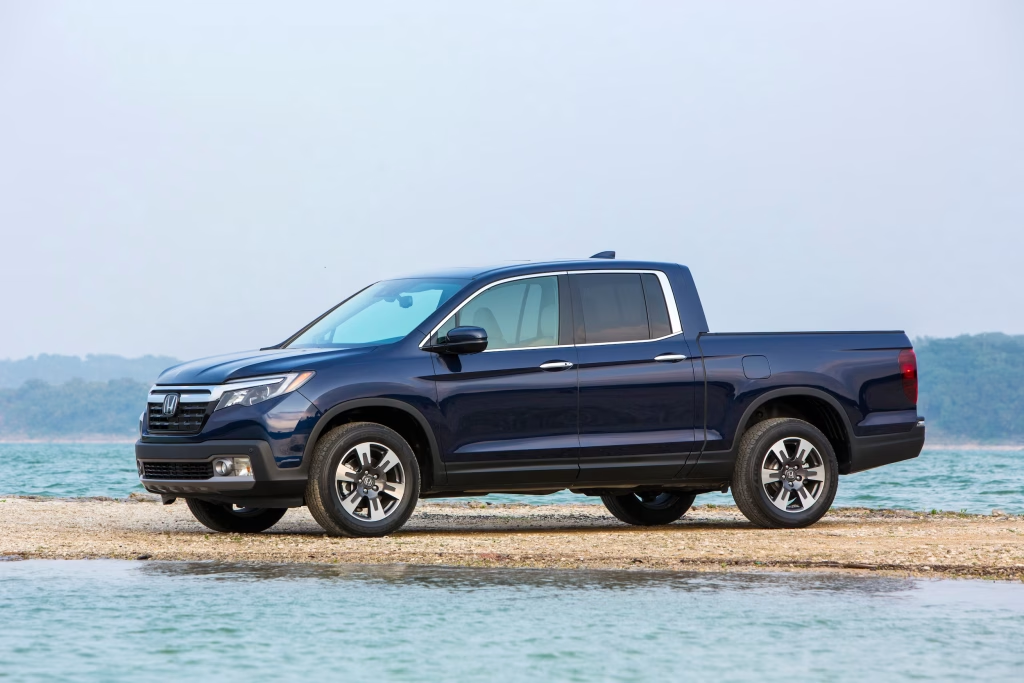
Front-wheel drive is standard, while all-wheel drive is optional. Although it is only available as a crew cab with a 5.3-foot bed, the Ridgeline appeals to a broader audience than most of its competitors, a factor that has helped it earn 10Best honors for three consecutive years.
For 2019, Honda applied only minor updates to the Ridgeline. The RT, Sport, and RTL trims now come with a second USB port, while the RTL and RTL-T trims gain a power sunroof and power-sliding rear window, features that were previously exclusive to the top-tier models.
Pricing for the 2019 Ridgeline ranges from $31,110 to $44,540 depending on trim and options. The model is available in a single body style with one powertrain, and all-wheel drive is available for $1,900 on all but the base RT trim, while it is standard on the top-tier RTL-E and Black Edition.
Our recommendation is the mid-level RTL with all-wheel drive, which increases the tow rating from 3,500 to 5,000 pounds. Compared to the lower Sport trim, the RTL adds a number of comfort features, including a leather-trimmed interior, heated front seats, and power-adjustable front seats.
4. Ford F-150 (2015 and newer)
The Ford F-150 has been America’s best-selling truck for decades, and newer models have benefited from advancements in engine engineering. Particularly, the 3.5L EcoBoost V6 and 5.0L Coyote V8 engines are known for reliability and longevity. While older F-150s had occasional head gasket problems, recent generations have largely eliminated these concerns.
The Ford F-150 is a full-size pickup truck that can be configured in countless ways, ranging from a basic work truck to a luxurious toy hauler or an extreme off-road machine. Its exceptional versatility makes it our favorite light-duty truck available today. The 2023 F-150 continues to offer a broad range of drivetrain options, impressive towing and payload capabilities, and a modern, comfortable interior.
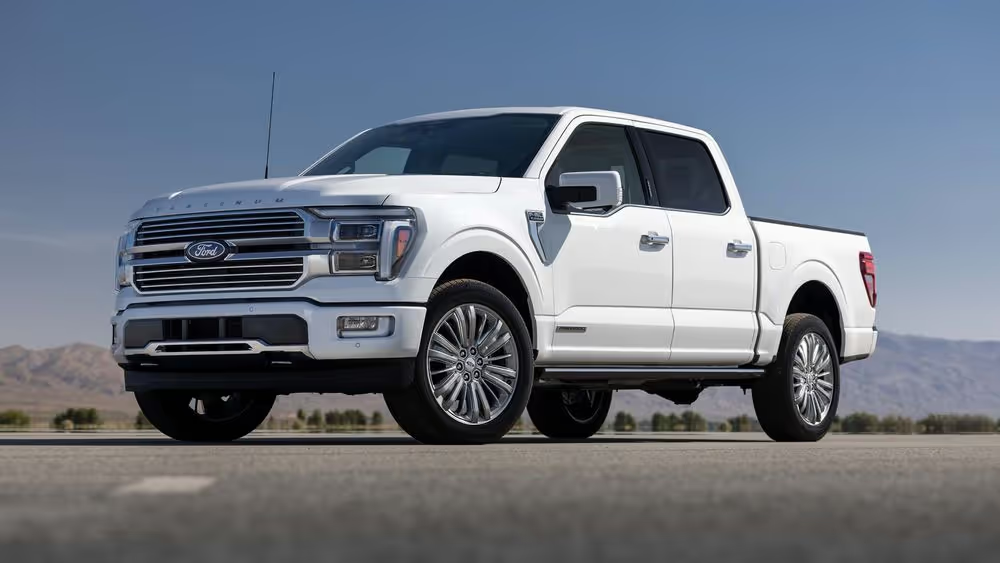
One of the most advanced options in the lineup is Ford’s PowerBoost hybrid system, which delivers a balanced combination of power and fuel efficiency. In addition to its performance, the hybrid system can also function as a backup generator for your home, similar to the all-electric Ford F-150 Lightning.
Having undergone a redesign in 2021, the core F-150 lineup sees only minor changes for 2023. The biggest news this year is the introduction of the new Raptor R. Building on the off-road capabilities of the standard Raptor, the Raptor R swaps out the turbocharged V6 for the supercharged V8 from the Shelby GT500.
This eight-cylinder powerhouse produces 700 horsepower and 640 pound-feet of torque, giving the F-150 enough performance to compete directly with the Ram 1500 TRX.
Also Read: 5 Chevrolet Malibu Models With Rock-Solid Engine
5. Chevrolet Silverado 1500 (2007 and newer)
Chevy’s full-size pickup is another staple in the U.S. truck market. The 4.8L and 5.3L V8 engines are praised for their durability and low maintenance needs. Head gasket failures are rare compared to older small-block generations, making the Silverado a solid choice for anyone looking for dependable American engineering.
America’s second most popular vehicle in 2023, the Chevrolet Silverado 1500 has long played the role of bridesmaid to the Ford F-150, the U.S.’s bestselling vehicle for decades.
Despite that, the Silverado remains what it has always been: a hardworking, full-size pickup truck ready to handle jobs wherever it’s needed, whether at construction sites, warehouses, or ranches.
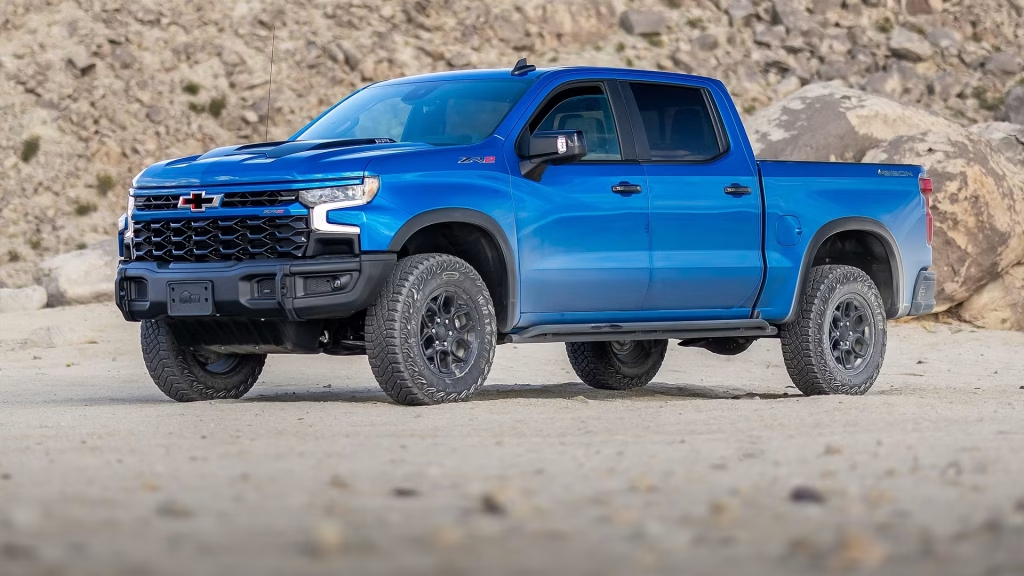
It can also tow boats, trailers, or other recreational toys while doubling as a practical family hauler, or it can perform all of these roles simultaneously. Buyers can choose from a range of engines, including a turbocharged four-cylinder, one of two V-8s, or the efficient Duramax diesel.
The Silverado is a true pickup truck, delivering a ride that can be fairly rough at times, though its larger V-8 engines are powerful and surprisingly refined. Inside, the cabin ranges from spartan to indulgent, though even the upper trims do not quite match the lavishness of a Ram 1500.
For those who spend their time navigating mud and rugged terrain, there is the Silverado 1500 ZR2, reviewed separately, and for buyers seeking a zero-emissions option, Chevrolet also offers the battery-electric Silverado EV.
6. GMC Sierra 1500 (2007 and newer)
The GMC Sierra shares much of its mechanical DNA with the Chevrolet Silverado. With similar engines and build quality, the Sierra also enjoys a reputation for rarely experiencing head gasket issues. It offers a slightly more premium trim experience without sacrificing reliability.
The Sierra comes with a choice of four engines, two transmissions, and either rear- or four-wheel drive. Its base powertrain is a turbocharged 2.7-liter four-cylinder delivering 310 horsepower and 420 pound-feet of torque, paired with an eight-speed automatic transmission. For those wanting more power, there are two popular V-8 options: a 355-hp 5.3-liter and a 420-hp 6.2-liter.
Additionally, a torque-rich, light-duty diesel six-cylinder produces 305 horsepower and 495 pound-feet of torque. All three of these engines are mated to a 10-speed automatic transmission. The Sierra 1500 can also be equipped with adaptive dampers and wheels up to 22 inches in diameter.
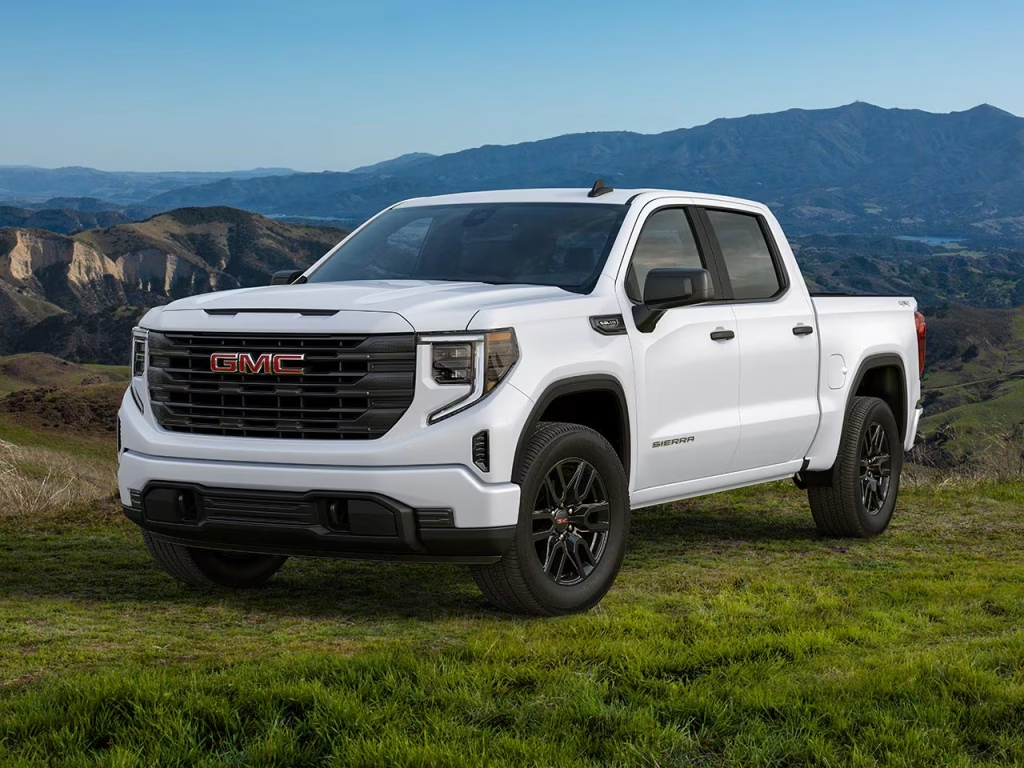
While the standard Sierra has a slightly rougher ride compared with the Ram 1500, it still performs impressively thanks to responsive steering and minimal body roll.
Although it doesn’t match the extreme off-road capabilities of the high-flying Ford F-150 Raptor, the Sierra does offer two dedicated off-road variants. The rugged AT4 model features a 2.0-inch suspension lift and other legitimate trail-ready equipment.
The AT4X shares many components with the Silverado ZR2, including advanced spool-valve dampers, electronic-locking front and rear differentials, additional skid plates, and aggressive off-road tires on black 18-inch wheels. An AT4X AEV package takes off-roading even further, adding serious accessories such as a steel front bumper with a winch, AEV 18-inch wheels, and steel rock sliders.
7. Toyota Tacoma
The Toyota Tacoma has long been a favorite in the midsize truck segment, not just for its off-road capability but also for its reliability. Its 2.7L four-cylinder and 3.5L V6 engines are well-known for handling high mileage without catastrophic failures like head gasket issues. Regular maintenance is key, but Tacomas consistently demonstrate longevity, even under daily driving stress.
The midsize pickup segment has been steadily expanding, yet the Toyota Tacoma remains the top choice for many buyers. Offering everything from a no-frills work-truck version to luxury-focused or off-road-oriented trims, the Tacoma stands out as one of the most versatile pickups available today.
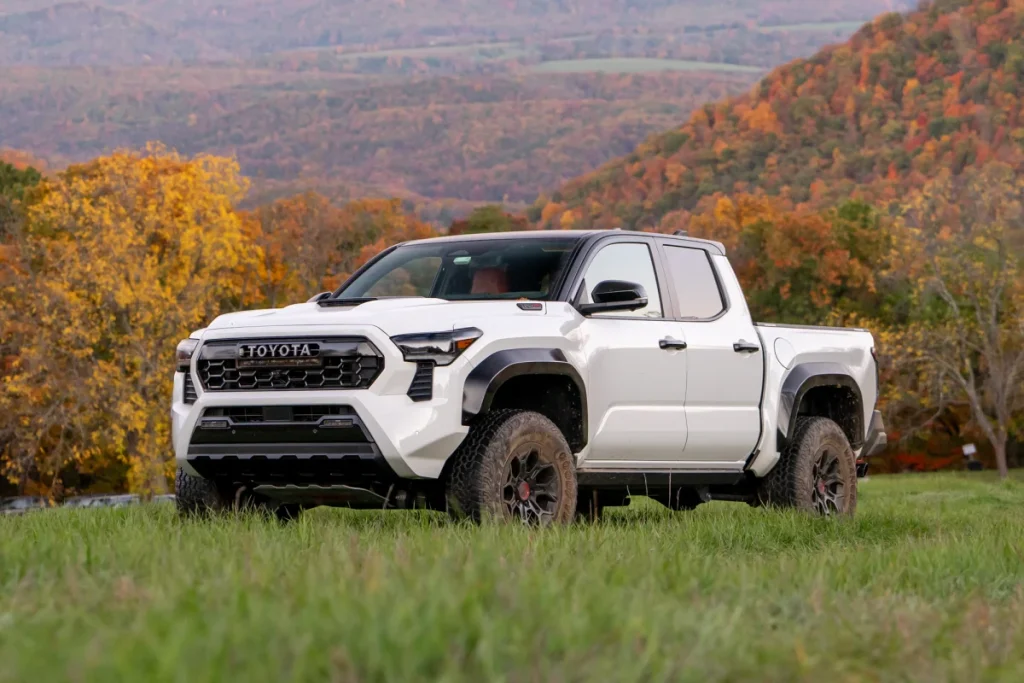
With updates for the 2020 model and historically strong resale values, this year’s Tacoma presents an even more compelling value. It begins inside, where the Tacoma now features a larger touchscreen and a refreshed infotainment system that finally supports Apple CarPlay and Android Auto.
These upgrades make it far easier to bypass Toyota’s proprietary Entune software, which has often been criticized for its unintuitive design. Other improvements include a recalibrated automatic transmission, which addresses the sluggishness noted in last year’s model, and a power-adjustable driver’s seat for enhanced comfort on longer drives.
8. Ford Ranger (2019 and newer)
The reintroduced Ford Ranger brings a modern take to a classic nameplate. Its 2.3L turbocharged four-cylinder engine balances efficiency with performance and shows a solid track record for reliability. Compared to some other small engines in the market, head gasket failures are uncommon, making the Ranger a dependable midsize option.
Under the hood of the 2022 Ford Ranger sits a turbocharged 2.3-liter four-cylinder engine, producing 270 horsepower and 310 lb-ft of torque. This powertrain delivers enough performance to make the Ranger XLT we tested feel impressively quick, with a smooth, refined output.
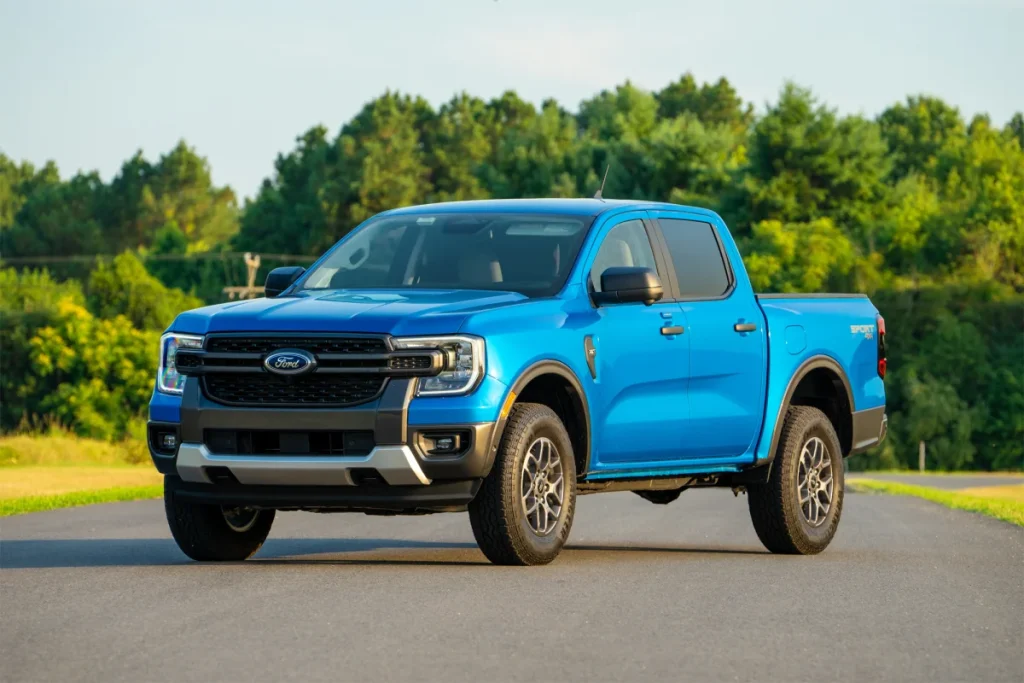
The lighter Ranger XL proved even more agile, impressing us with its responsiveness and speed during track testing. All Ranger models come paired with a 10-speed automatic transmission, which provides shifts that are both swift and seamless.
Ground clearance varies depending on the drivetrain: rear-wheel-drive models offer 8.4 inches, while four-wheel-drive versions provide 8.9 inches. The Ranger also features a Terrain Management System, which adjusts factors such as engine responsiveness and transmission gearing to optimize performance across different surfaces.
9. Ram 1500 (2013 and newer)
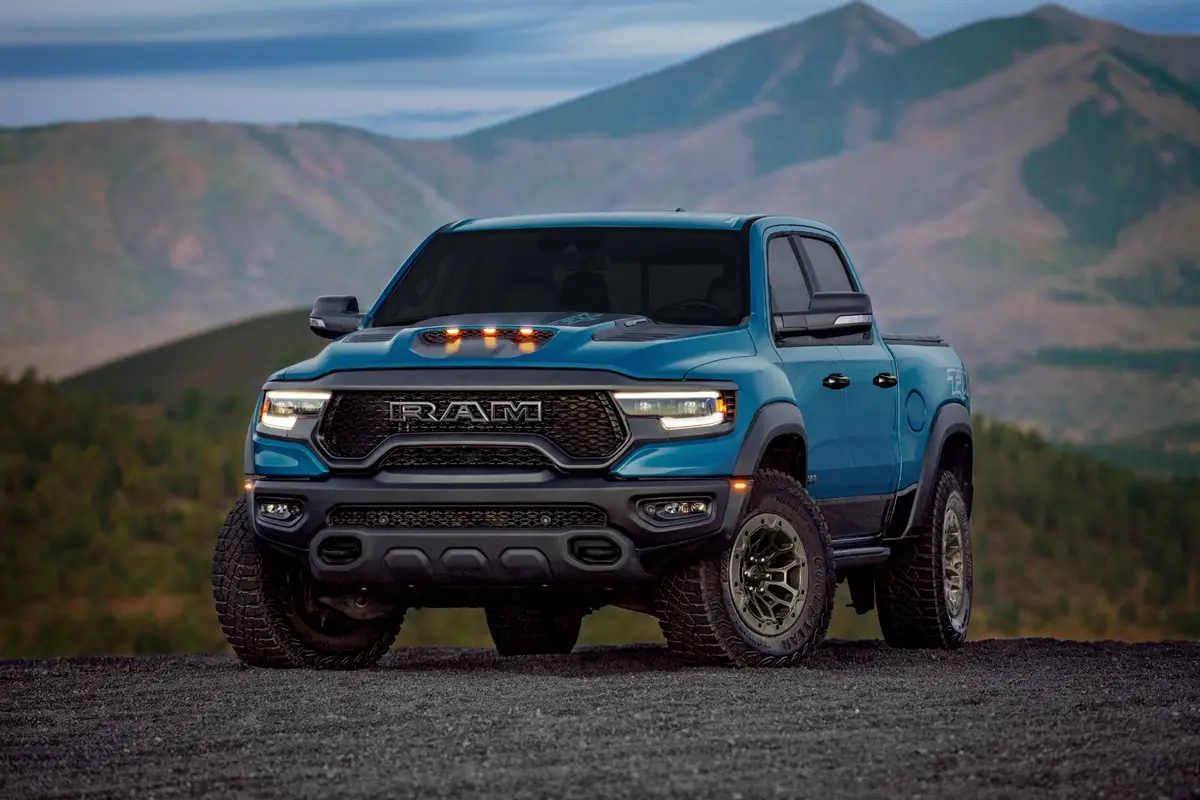
The Ram 1500 has undergone significant improvements in both design and engineering over the last decade. The 5.7L HEMI V8 is particularly known for durability, and head gasket issues are rare when the truck is properly maintained. With its smooth ride and strong towing capabilities, it’s a practical yet reliable full-size truck.
The 2020 Ram 1500 sees only minor updates for this model year following the significant overhaul in 2019. One of the highlights is a more powerful version of the truck’s turbodiesel V-6 engine, now rated at 260 hp and 480 lb-ft of torque.
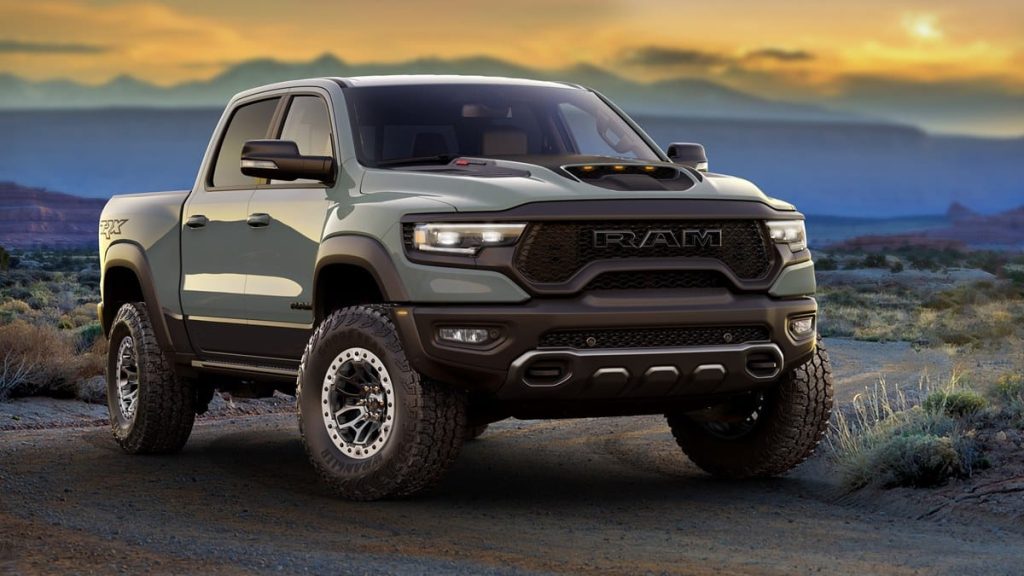
This engine joins a 3.6-liter V-6 producing 305 hp and a 5.7-liter V-8 generating 395 hp. Both gas engines feature a unique 48-volt mild-hybrid system, which comes standard on the V-6 and is optional on the V-8. All powertrains are paired with an eight-speed automatic transmission.
The Ram 1500 is particularly distinguished by its exceptionally refined cabin in the higher trim levels, spacious interior, coil-spring rear suspension that delivers a smoother-than-average ride, and an optional air suspension system.
While regular cab Rams are still available, they utilize the previous-generation architecture and are marketed as the Ram Classic. Production of updated two-door Rams is scheduled to begin in 2020.
10. Toyota Hilux (Imported/Enthusiast Ownership)
Though not sold widely as a new vehicle in the U.S., the Toyota Hilux deserves mention for its global reputation. The 2.4L and 2.8L diesel engines are legendary for reliability and rarely suffer from head gasket issues. Enthusiasts who import these trucks swear by their ruggedness, especially in extreme conditions.
Toyota responded to the growing demand for high-spec, well-equipped pickups by offering powerful, motorway-friendly engines that maintain their performance above 50 mph. As a result, buyers can now choose a 2.8-liter engine instead of the more utilitarian 2.4-liter option.
Inside, the top-tier models feature heated leather seats, an automatic transmission, and Toyota’s latest touchscreen with full smartphone integration. Toyota has even added LED lighting and a JBL sound system, after all, long days on the farm deserve some thumping bass.
Additional features include a panoramic view monitor, an auto-dimming rearview mirror, dual-zone climate control, and systems like automatic service reminders, e-call, and remote diagnostics. And that’s just the standard version.
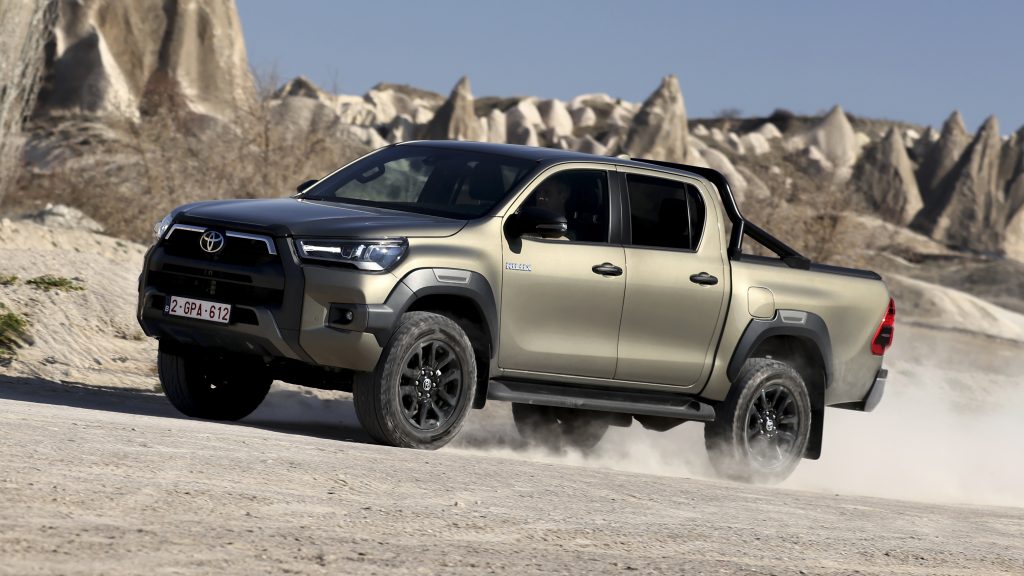
There’s more under the hood as well. New for 2025 is a 48-volt mild-hybrid system, which pairs a small electric motor-generator and compact battery with the 2.8-liter diesel. The system provides smoother acceleration, longer idling in traffic, quicker and quieter restarts, and improved fuel efficiency, with Toyota claiming up to a seven percent gain.
The mild-hybrid setup can assist the engine with short bursts of 16 bhp and 48 lb-ft of torque. However, it is strictly a helper system, there’s no pure electric driving.
Head gasket failures can turn truck ownership into a nightmare, but these ten models stand out for their durability and engineering integrity. Whether you’re hauling heavy loads, commuting daily, or tackling off-road adventures, choosing a truck with a reliable engine can save thousands in repair costs and headaches.
Toyota, Ford, Honda, Chevy, and Nissan dominate this list for a reason: they build trucks that last. With proper care, any of these models can serve as a dependable companion for years, giving owners confidence that catastrophic engine failure is unlikely.
