
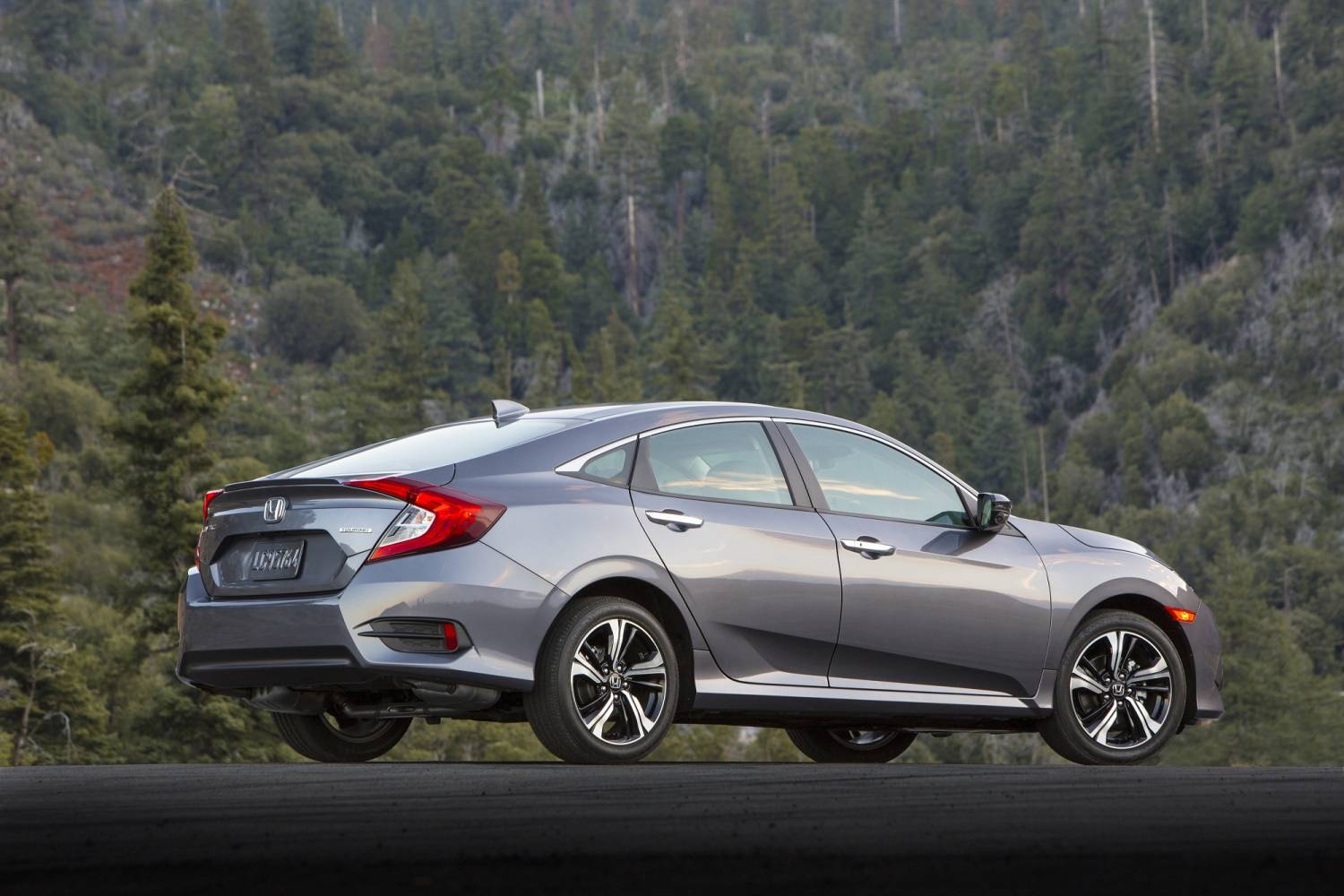
Few cars have left a mark on American roads the way the Honda Civic has. Introduced to the U.S. in the early 1970s, the Civic quickly gained a reputation for being efficient, practical, and dependable. Over time, it became a household name and a favorite for everyone from college students to suburban families.
The Civic’s secret lies in its balance of affordability, fuel economy, and surprising longevity, many examples last well beyond 200,000 miles with basic care. Even as newer models hit showrooms, certain years of the Civic continue to stand out to daily drivers who appreciate their mix of reliability, affordability, and driving enjoyment. Let’s take a closer look at 10 Honda Civic years that are still widely loved on American roads.
2000 Honda Civic (Sixth Generation)
The 2000 Honda Civic wrapped up the sixth generation and proved why the model had already become a U.S. favorite. This year offered an ideal blend of fuel efficiency, affordable maintenance, and simplicity. With a straightforward design and bulletproof four-cylinder engines, the 2000 Civic became a go-to option for students and first-time car owners.
Many of these cars are still on the road, not just because they’re mechanically sound, but also because the aftermarket support is enormous. Enthusiasts often modify them for performance, while others simply rely on them for cheap, dependable commuting.
The sixth-generation Honda Civic, introduced in 1995, represented both continuity and change for Honda’s popular compact car. It carried over the precise handling that had long been a Civic trademark, thanks to its front double wishbone suspension system inspired by Honda’s racing expertise.
However, while the fourth and fifth generations had been praised for their high power-to-weight ratios, this new version leaned more toward practicality and refinement than outright performance. This generation would also be the last Civic to feature the double wishbone suspension, as beginning in 2001 Honda switched to the simpler MacPherson strut design to reduce costs and increase cabin space.
The sixth generation Civic was sold in several body styles worldwide, including coupe, hatchback, and sedan, with additional regional variants such as the Japan-only Orthia wagon and the European-market Civic Aerodeck. A Domani-based five-door liftback was also offered in Europe, further diversifying the lineup, though none of these specialty models were available in North America.
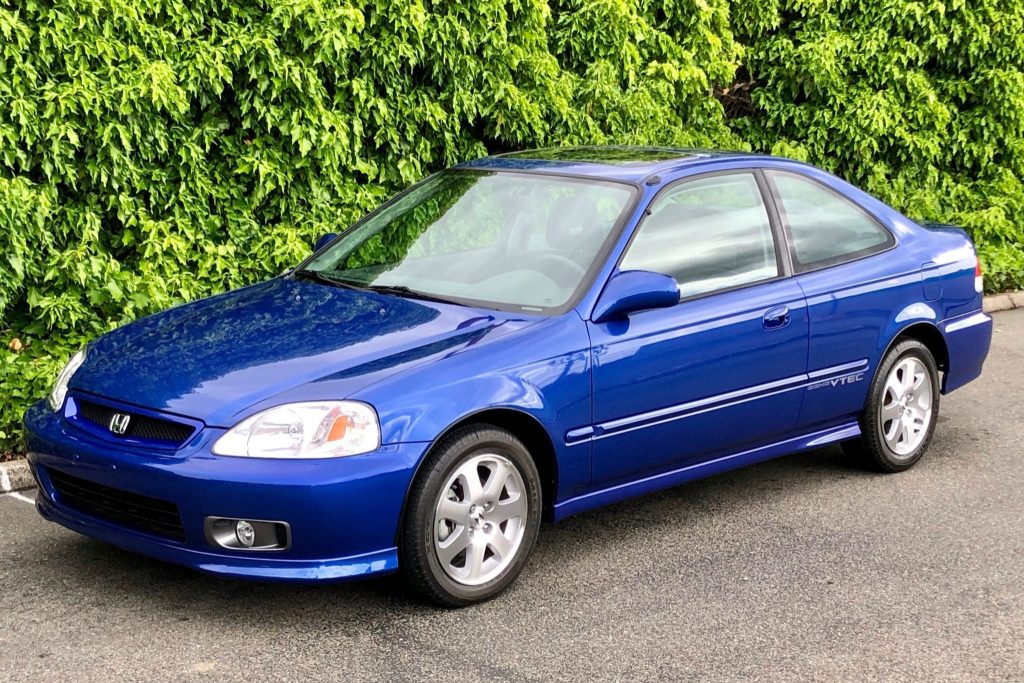
Each trim level offered its own mix of equipment. The entry-level CX, available only as a hatchback, was extremely basic and omitted features like a standard radio or power steering, though it did include dual airbags and folding rear seats. By 1997 it gained larger 14-inch wheels, and by 2000, tilt steering was also standard.
The DX was a slight step up and could be had in any body style, adding a radio and tilt steering, while sedans and automatic coupes received power steering. The LX was sedan-only and included more comfort-oriented features such as power windows, locks, and mirrors, cruise control, a front stabilizer bar, and air conditioning, which became standard in 1997.
The EX trim, available as a coupe or sedan, was aimed at buyers wanting more performance and equipment, featuring a higher-output SOHC VTEC engine, power sunroof, body-colored mirrors and trim, remote entry, and air conditioning, with ABS standard on the sedan. In 1999, a CD player was added as standard equipment for the EX.
Honda also experimented with specialized versions of the Civic during this era. The HX, offered only as a coupe, was focused on fuel efficiency and came with a VTEC-E engine, alloy wheels, and the option of a continuously variable transmission (CVT), a first for the Civic lineup.
The GX, introduced in 1997, ran entirely on compressed natural gas and was targeted at fleet buyers, reflecting Honda’s early commitment to alternative fuel vehicles.
In 1998, the VP or “Value Package” trim was added as a sedan-only model positioned just above the DX. It came equipped with automatic transmission, air conditioning, power locks, a CD player, and keyless entry, making it an attractive choice for budget-minded buyers who still wanted extra convenience features.
Interior equipment across the Civic range was consistent with Honda’s reputation for thoughtful design and quality. Most trims came standard with an AM/FM radio, while the EX added a cassette player and two additional tweeters for improved sound.
Even if a car did not come with a factory-installed stereo, Honda pre-wired the Civic with radio connections and an antenna, making aftermarket upgrades simple. Dealer-installed options included cassette and CD decks, which could be integrated neatly into the center console.
2006 Honda Civic (Eighth Generation)
When the 2006 Civic arrived, it looked futuristic compared to its predecessor. Its sleek design and two-tier digital dashboard turned heads, while its ride quality and safety features made it appealing to everyday commuters. Honda also introduced hybrid and Si performance models this year, expanding its appeal.
For daily drivers, the 2006 Civic offered an efficient and comfortable ride, solid build quality, and the dependability Honda had become known for. Today, many used buyers seek out this year specifically for its modern design and long-lasting powertrains.
2010 Honda Civic (Eighth Generation)
By 2010, the Civic had fully cemented its reputation as a smart commuter car. This model year is still popular with daily drivers because it combines low operating costs with the kind of reliability that makes 200,000 miles seem like just the halfway point.
The interior wasn’t flashy, but it was functional, and the engines were durable and fuel-efficient. For young professionals and families, the 2010 Civic remains a sweet spot in the used market, delivering both practicality and peace of mind.
The 2010 Honda Civic, available as a compact sedan or coupe, stands as one of the most recognizable and respected cars on the road, and its reputation has been rightfully earned over decades. While many vehicles that reach iconic status tend to rest on their laurels, the Civic has continued to evolve and remain a class leader more than thirty years after it first arrived in the U.S. market.
Even in its fifth year without a redesign, the current-generation Civic continues to be one of the top recommendations in the compact-car segment, demonstrating Honda’s dedication to delivering quality and dependability in this cornerstone model. With a wide range of trims and variations tailored to different buyers, the Civic remains a fixture on the shopping lists of compact-car customers.
Once known as Honda’s smallest offering, the Civic has since been surpassed in size by the Fit and the Insight, both of which are smaller vehicles. The compact class itself has shifted toward being more like a junior midsize category, and in fact, today’s Civic is nearly identical in size to the Accord from 15 years prior.
Yet, even as the Civic has grown, it continues to embody the same key qualities that earned it recognition in the first place: nimble handling, impressive fuel economy, comfort, and outstanding reliability.
Its most notable drawback is that many desirable features, such as Bluetooth connectivity, stability control, and rear disc brakes, are not available on lower trims like the popular LX, limiting access to those conveniences for budget-conscious buyers.
In terms of design, the Civic carries some unique and unconventional styling elements, most notably its dual-tiered instrument cluster that pairs digital and analog gauges in what many describe as a “Jetsons”-inspired layout. While some may find this arrangement unusual, most drivers are likely to see it as a quirky detail in an otherwise well-rounded vehicle.
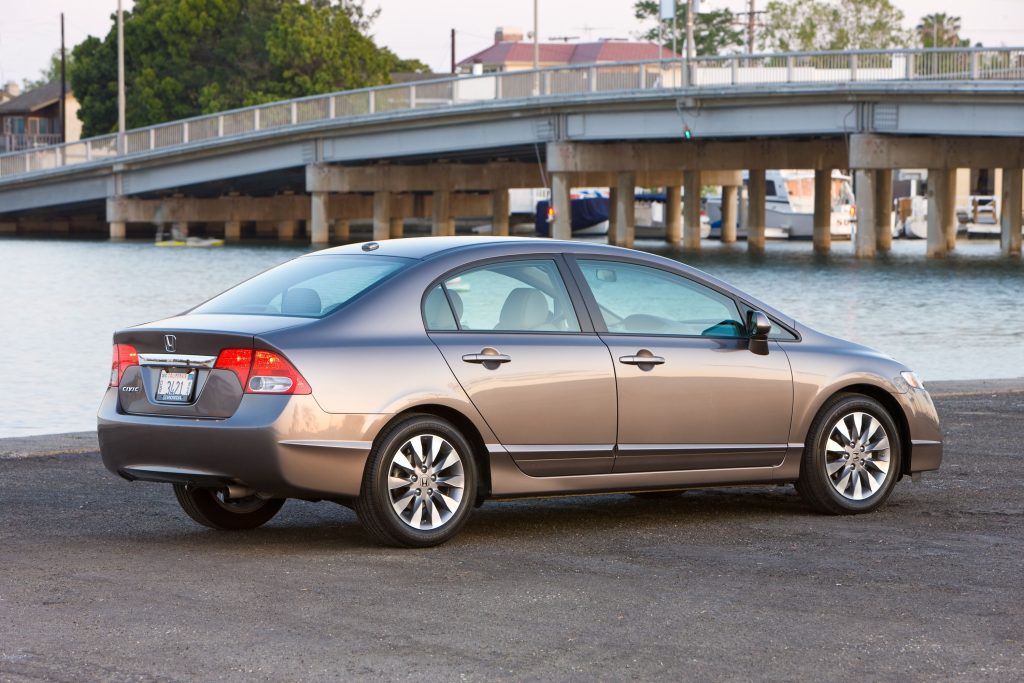
The bigger attraction is the Civic’s extensive lineup of specialized models, from the fuel-sipping yet somewhat expensive Hybrid and the clean natural-gas-powered GX to the performance-focused Si. This variety ensures that almost every buyer can find a Civic that fits their needs and driving preferences, whether they prioritize efficiency, eco-friendliness, or sportiness.
That being said, the Civic competes in an increasingly crowded and competitive compact-car field. The fully redesigned Mazda 3 stands out as its strongest competitor, delivering dynamic handling that rivals all Civics except the sporty Si, along with greater refinement and the added practicality of a hatchback.
The Volkswagen Golf and Jetta also remain strong contenders, offering a high level of polish and available hatchback or wagon versions, though their fuel efficiency, at least in gasoline-powered models, falls short of the Civic’s. The Subaru Impreza, with standard all-wheel drive, provides another appealing option, while the Hyundai Elantra serves as a more affordable and better-equipped alternative to the Toyota Corolla.
For buyers seeking a hybrid, the Toyota Prius continues to be the better choice over the Civic Hybrid, as it is more fuel-efficient and better executed overall. However, for nearly every other type of compact-car shopper, the 2010 Honda Civic remains one of the safest and smartest choices.
When it comes to performance and efficiency, the 2010 Civic offers a wide selection of engines and transmissions, each designed to cater to different driving needs. The mainstream DX, LX, and EX trims come with a 1.8-liter four-cylinder engine producing 140 horsepower and 128 pound-feet of torque.
Standard equipment includes a five-speed manual transmission, while a five-speed automatic is optional. Equipped with the automatic, the Civic sedan completes a zero-to-60 mph sprint in 9.6 seconds, which is right in line with the segment’s average. Opting for the manual transmission shaves some time off and makes the car feel livelier behind the wheel.
The GX model, which also uses a 1.8-liter engine, stands apart by running exclusively on compressed natural gas. This setup generates 113 horsepower and provides a driving range of about 200 miles per tank. Although limited in range, the GX is notable for being the cleanest mass-produced internal-combustion vehicle in the U.S. in terms of tailpipe emissions, and Honda even offered the option of a home refueling unit for added convenience.
The Civic Hybrid, designed for maximum fuel efficiency, combines a 1.3-liter four-cylinder gasoline engine with an electric motor, producing a total of 110 horsepower. It comes paired with a continuously variable transmission (CVT) to ensure optimal economy rather than outright speed. On the other end of the spectrum sits the Civic Si, which is tailored for enthusiasts.
Powered by a 2.0-liter engine delivering 197 horsepower and paired with a six-speed manual transmission and a limited-slip differential, the Si delivers sharp performance and a spirited driving experience. It sprints from zero to 60 mph in just 7.1 seconds, making it one of the most engaging choices in the compact class.
2012 Honda Civic (Ninth Generation)
The 2012 Civic was initially met with mixed reviews due to its conservative design and lower-quality interior materials. However, daily drivers quickly discovered that what it lacked in style, it made up for in dependability and efficiency.
Its strong resale value shows just how much trust people place in it. The Civic has always been about substance over flash, and the 2012 model is no exception. For commuters looking for a reliable workhorse, this year remains a cost-effective choice, especially for buyers who want low maintenance expenses.
2013 Honda Civic (Ninth Generation, Refresh)
Responding to criticism of the 2012 Civic, Honda made significant improvements for 2013. The interior received better materials, the ride became smoother, and the styling was sharpened. These updates instantly made the Civic more appealing, and many drivers who were hesitant about the 2012 found the 2013 to be a worthy alternative.
Today, this model is still widely used by students and professionals alike, thanks to its blend of improved comfort and the Civic’s trademark reliability. For buyers looking for a dependable daily driver with a bit more refinement, the 2013 Civic remains an excellent choice.
2015 Honda Civic (Ninth Generation)
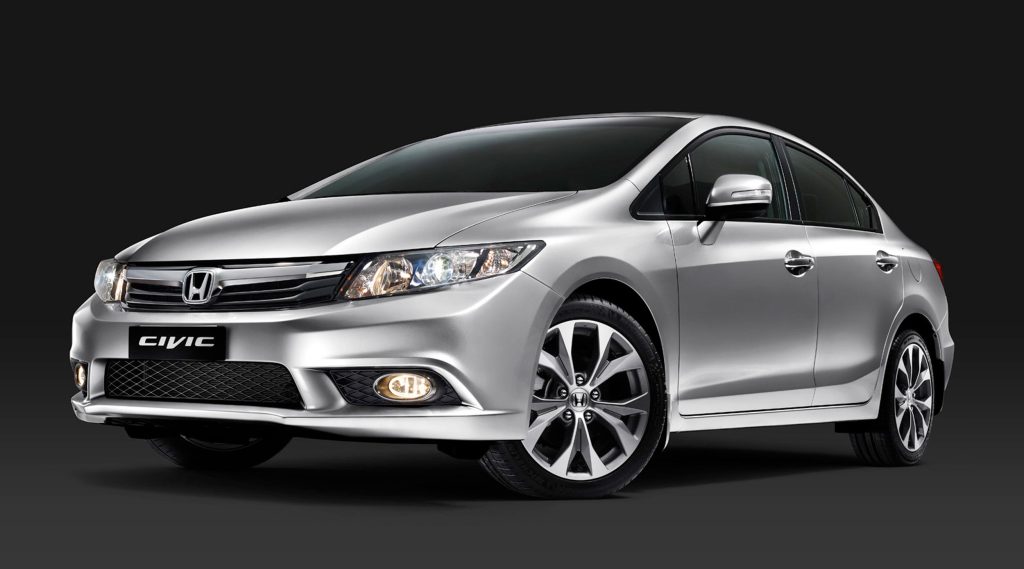
By 2015, the Civic had fully regained its footing in the compact car market. This year offered more advanced safety features, great fuel economy, and a choice of trims that appealed to different lifestyles.
Whether drivers wanted a basic commuter or a more feature-packed version, the 2015 Civic delivered. Many people who purchased this year still use it as their everyday vehicle, citing low operating costs and consistent reliability as reasons they’ve held on to it. For used car shoppers, it’s a solid option that offers modern tech without the price tag of a newer model.
The ninth-generation Honda Civic was offered with a selection of naturally aspirated engines designed to satisfy both everyday drivers and those focused on maximum fuel efficiency. At the base of the lineup sat the R18Z1 1.8-liter four-cylinder gasoline engine, which produced 140 horsepower and 128 lb-ft of torque in pre-facelift models.
Power was delivered to the front wheels, with the entry-level DX and mid-range LX trims coming standard with a five-speed manual transmission. Buyers who preferred convenience could opt for a five-speed automatic, while the higher EX and EX-L trims were paired exclusively with the automatic from the factory.
By the 2014 model year, Honda updated this engine to produce slightly more power, with output climbing to 143 horsepower and 129 lb-ft of torque. Alongside this bump in performance, the traditional five-speed torque-converter automatic was phased out in favor of Honda’s newer Continuously Variable Transmission (CVT), which was designed to improve fuel efficiency and provide smoother operation.
For drivers seeking even greater economy, the Civic Hybrid was made available as an alternative. This model employed the LEA-MF6 1.5-liter four-cylinder gasoline engine paired with an integrated starter generator and a CVT.
Together, this hybrid system delivered a combined output of 110 horsepower and 127 lb-ft of torque. Unlike the regular Civic, which was offered in multiple body styles, the Hybrid was sold exclusively as a sedan, meaning it was not available in the sportier FG coupe configuration.
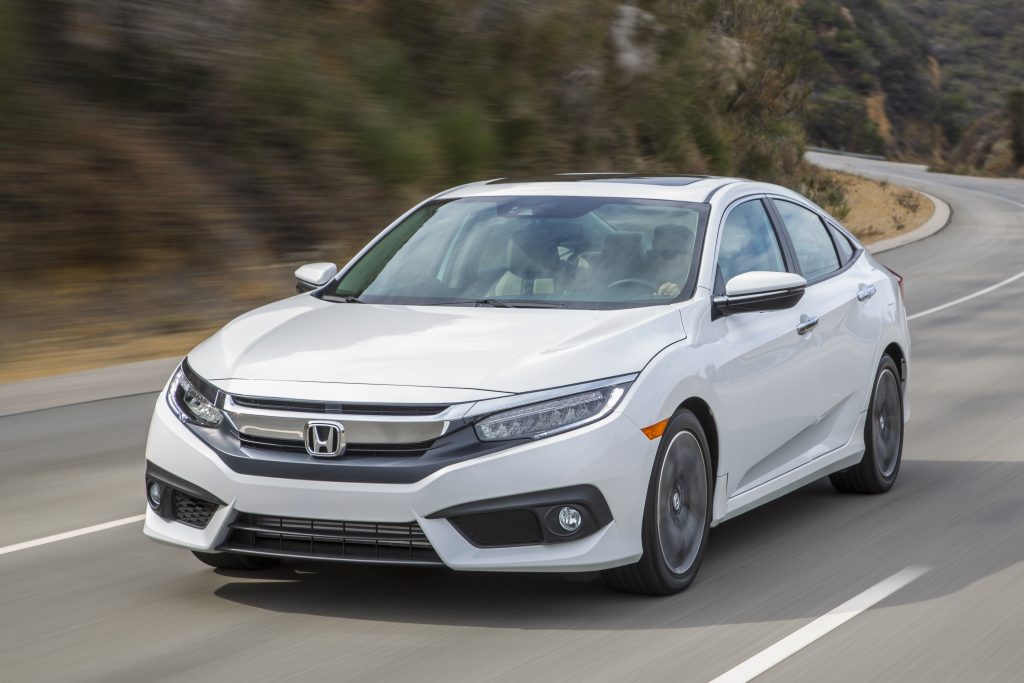
2016 Honda Civic (Tenth Generation Debut)
The 2016 Civic marked the beginning of the tenth generation and was a game-changer for Honda. It introduced a more aggressive design, higher-quality interior, and turbocharged engine options that gave it stronger performance while maintaining great fuel efficiency. For daily drivers, this meant a car that was both fun and practical.
The 2016 Civic is still highly sought after in the used market, often priced higher than some competitors because of its reputation for longevity and refinement. For anyone who wants a compact car that feels modern without paying new-car prices, this model year is a standout.
2018 Honda Civic (Tenth Generation)
By 2018, the Civic had established itself as the class leader once again. Offering coupe, sedan, and hatchback body styles, the Civic appealed to a wide audience. The turbocharged engines delivered strong performance without sacrificing fuel economy, and Honda’s suite of safety features, known as Honda Sensing, became more widely available.
Daily drivers appreciate the Civic’s balance of technology, comfort, and efficiency, making the 2018 model one of the most versatile and well-rounded in recent history. It’s no surprise that these cars still dominate the used market today.
2020 Honda Civic (Tenth Generation, Refresh)
The 2020 Civic brought subtle updates that made it even more attractive to everyday drivers. It offered an improved infotainment system, more standard safety tech, and available trims that catered to different driving preferences. Commuters loved its balance of comfort and economy, while enthusiasts enjoyed the Si and Type R variants.
For daily use, however, the 2020 Civic stands out because it combines the low running costs Civic owners expect with modern features like Apple CarPlay and Android Auto. This makes it a go-to option for younger drivers entering the workforce or families looking for an efficient secondary car.
For the 2020 model year, most versions of the Honda Civic remain largely unchanged, but the hatchback variant benefits from a number of updates, many of which were first introduced on other body styles the year prior. The Civic hatch now features refreshed front and rear styling, highlighted by redesigned foglight housings and new blacked-out trim accents across the front fascia for a sportier, more modern look.
Inside, Honda has added several new features to enhance comfort and appeal, such as a power-adjustable driver’s seat on EX trims. Additional sound insulation has also been introduced, a welcome improvement that helps reduce road noise, addressing one of the more common complaints with the current generation.
One of the most notable changes for 2020 is Honda’s decision to broaden the availability of the Civic’s optional six-speed manual transmission. Previously limited to select trims, the manual is now offered on the hatchback’s top-level Sport Touring model.
At a time when most automakers are rapidly phasing out manual gearboxes in favor of automatics, this move demonstrates Honda’s commitment to preserving a more engaging, driver-focused experience for enthusiasts who still enjoy the connection of a traditional stick shift.
These updates only add to the Civic’s established strengths, which include lively acceleration, sharp handling, and the versatile cargo capacity that makes the hatchback such a practical choice.
Even though strong competition exists, from the stylish and athletic Mazda 3 to the all-weather-capable Subaru Impreza and the value-driven Kia Forte, the 2020 Honda Civic continues to serve as the standard-bearer in the compact car segment, blending everyday usability with a driving experience that remains both enjoyable and refined.
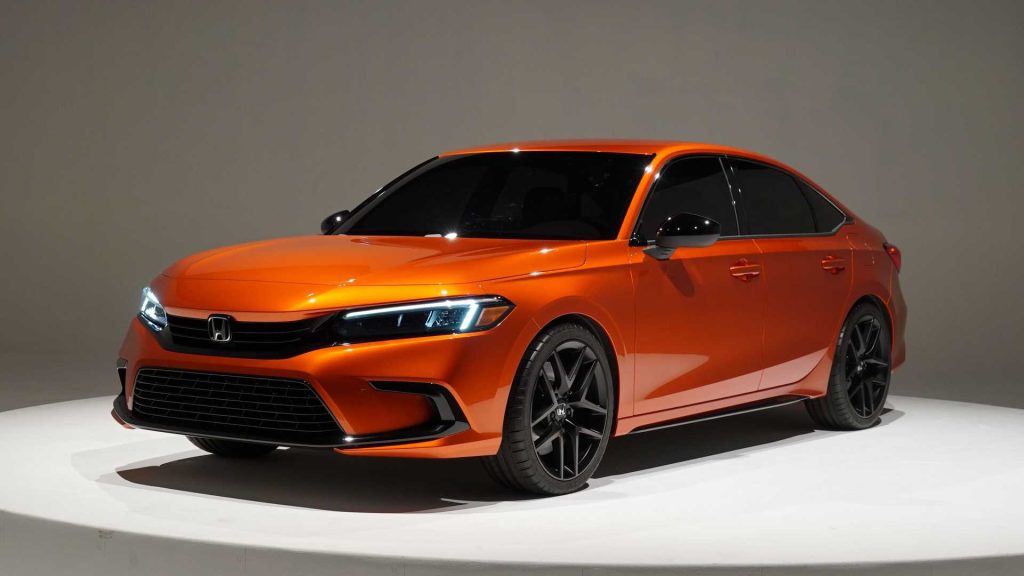
2022 Honda Civic (Eleventh Generation Debut)
The 2022 Civic debuted the eleventh generation, showcasing a more mature design, an upgraded interior, and advanced safety features as standard. It quickly became a favorite among daily drivers for its refined ride, excellent fuel economy, and advanced driver-assistance technologies.
The interior design took a leap forward, with clean lines and a more premium feel that made commuting more enjoyable. For many buyers, the 2022 Civic hits the perfect balance between modern convenience and the reliability legacy that Civic owners have come to trust.
What unites these popular Civic years is their ability to serve as reliable, affordable, and enjoyable daily drivers. Unlike many compact cars that fade from memory after a few years, the Civic has built a legacy that stretches across generations.
Some years, like 2000, are prized for their simplicity and tunability, while others, like 2016 or 2022, are admired for their modern features and refinement. Whether buyers prioritize low costs, dependable mileage, or a car that simply gets the job done, these Civic years prove why the nameplate continues to thrive in the U.S.
For daily drivers who want a vehicle that won’t break the bank, won’t spend much time in the shop, and won’t go out of style anytime soon, the Honda Civic remains one of the most trusted names on the road. From classic sixth-generation models to the modern eleventh generation, the Civic is proof that practicality and popularity can go hand in hand.
