
Most used car buyers turn away the second they spot patches of rust creeping along the wheel arches, tailgate, or undercarriage. Rust usually signals neglect, costly repairs, and shortened lifespan. But pickup trucks are a different breed.
In the United States, demand for reliable, work-ready trucks is so strong that many models still hold their value even if the body shows its age with visible rust. For rural buyers, small business owners, farmers, and even collectors, the worth of a truck often comes down to what’s under the hood and how well it performs the jobs it was built for, rust be damned.
These trucks may have rusty bedsides, frames dotted with corrosion, or surface rust around the fenders, but their reputations for strength, longevity, and usability mean people will still pay top dollar for them on the used market. Below, we’ll look through eight pickup trucks that continue to command value even when time and weather have left their mark.
1. Ford F-150 (1997–2003 “10th Gen”)
If there’s one pickup Americans can’t seem to quit, it’s the Ford F-150. Known as the best-selling vehicle in the US for decades, the F-150 has an unmatched reputation for being both a workhorse and a family hauler.
The 10th-generation F-150, built from 1997 to 2003, is particularly famous for its balance of durability and affordability. Yes, these trucks are notorious for rusting, especially around the rocker panels, cab corners, and the rear wheel wells, but their engines, including the 4.6-liter and 5.4-liter Triton V8s, are work-ready and long-lived when maintained.
Even with rust creeping up the sides, these F-150s still bring strong resale prices. Farmers and contractors appreciate their dependability, while younger buyers often scoop them up as budget-friendly entry-level trucks. Their sheer availability and massive aftermarket support also mean parts are easy to find, making rust repairs less of a dealbreaker.
Whether you’ve just picked up a 1997–2003 F-150 with the 4.6L or 5.4L engine as a fresh project, or you’ve been holding onto one since it rolled off the lot, chances are it’s ready for a performance boost and some upgrades to bring it back to life.
That’s where Stage 3 Motorsports steps in. From refreshing the interior with new floor mats and adding vent shades or side steps, to unlocking more horsepower and torque with a custom tune, we’ve got everything you need to transform your 10th-gen F-150 into a standout both on the streets and off-road.
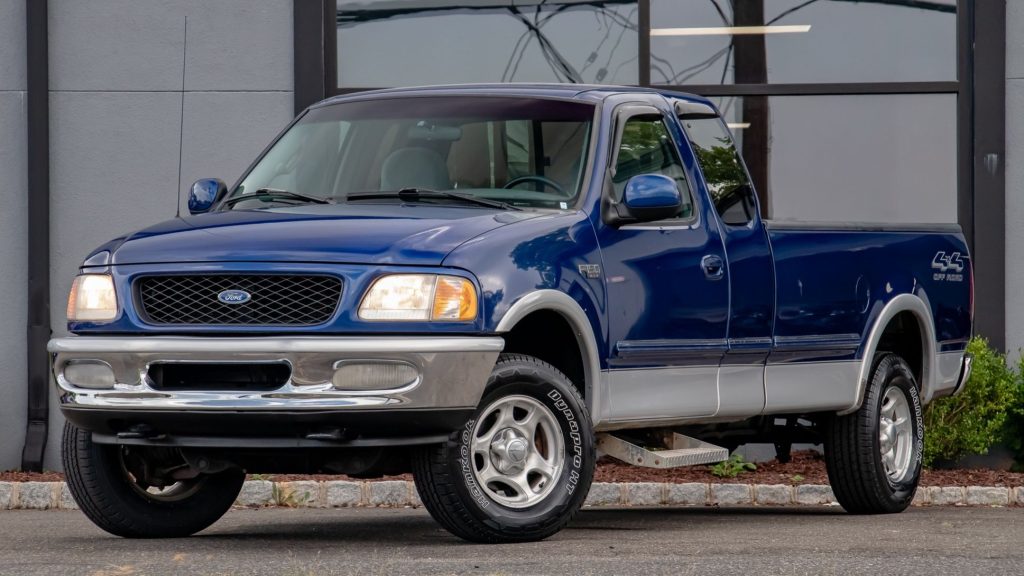
Fitments cover 1997 through 2003 Ford F-150s equipped with 4.6L or 5.4L engines, including FX2, FX4, King Ranch, Lariat, STX, XL, and XLT submodels. Some exceptions apply, so check individual product pages for exact fitment details.
It’s hard to believe the 1997–2003 F-150s are already hitting the 20-year mark, but these trucks are far from outdated. With the right care and modifications, your 10th-gen F-150 can look and perform like a whole new machine.
A cold air intake is a simple yet effective way to kick off your performance journey. Both the 4.6L 2V V8 and the 5.4L Triton V8 respond well to extra airflow, and aftermarket intake kits deliver cooler, denser charge air than stock systems.
After two decades, factory lighting components tend to look worn out. Clouded headlights and dull taillights not only age your truck’s appearance but also reduce visibility. Our 1997–2003 F-150 Lighting Section offers affordable, modern replacements and upgrades so your truck can light up the road with style and clarity again.
Twenty years is especially hard on suspension systems, and stock ride height always left limited room for larger tires. Our own 2000 F-150 5.4L project truck dealt with tired suspension parts and the need for more clearance.
The solution was a Rough Country 2.5-inch Leveling Lift Kit, which provided extra height for 17×9 Fuel Hostage wheels and 285/70R17 BF Goodrich KO2 tires while also replacing worn shocks. The result was not only improved stance but also a refreshed suspension that brought new life to the ride.
Also Read: 10 Best Steps That Keep a Hyundai Santa Fe Safe for Families
2. Toyota Tacoma (1995–2004 “First Gen”)
For Toyota enthusiasts, the first-generation Tacoma represents one of the most rugged midsize pickups ever built. These trucks are compact, reliable, and built to last for hundreds of thousands of miles, but they are also infamous for frame rust. In fact, Toyota issued recalls and buybacks in the late 2000s for severe corrosion problems.
Still, despite the rust issues, buyers line up for used Tacomas. A rusty bed or frame doesn’t scare off enthusiasts who know just how bulletproof the 2.7-liter four-cylinder and 3.4-liter V6 engines are.
Off-roaders love these trucks, and in many parts of the US, particularly in mountainous or rural regions, it’s common to see a Tacoma with visible rust still fetching top dollar. Reliability and off-road capability overshadow cosmetic flaws, keeping resale values strong.
Toyota introduced the first-generation Tacoma for the 1995 model year, replacing the long-running Pickup in North America. While the Pickup had its share of success in the U.S. and Canada, Toyota recognized a key difference in how North American buyers approached pickup trucks.
Unlike many global markets where trucks were seen primarily as workhorses, buyers in the States often used them as personal vehicles or family haulers, with only occasional demands for heavy-duty capability.
This realization shaped Toyota’s design philosophy for the Tacoma. It was built first with comfort and everyday usability in mind, while still retaining the toughness and utility expected from a pickup. Creature comforts and car-like refinement became a central part of its appeal.
Although the Tacoma was aimed at a different segment compared to the Hilux, the two models continued to share the same basic platform, along with the Toyota 4Runner of that era, a tradition that still continues.
However, the Tacoma broke away from some of the Hilux’s defining traits. Most notably, there was no diesel option. Unlike international markets where diesel engines were popular for compact and midsize trucks, North America’s preference leaned almost exclusively toward gasoline power, with diesel engines reserved largely for heavy-duty full-size models.
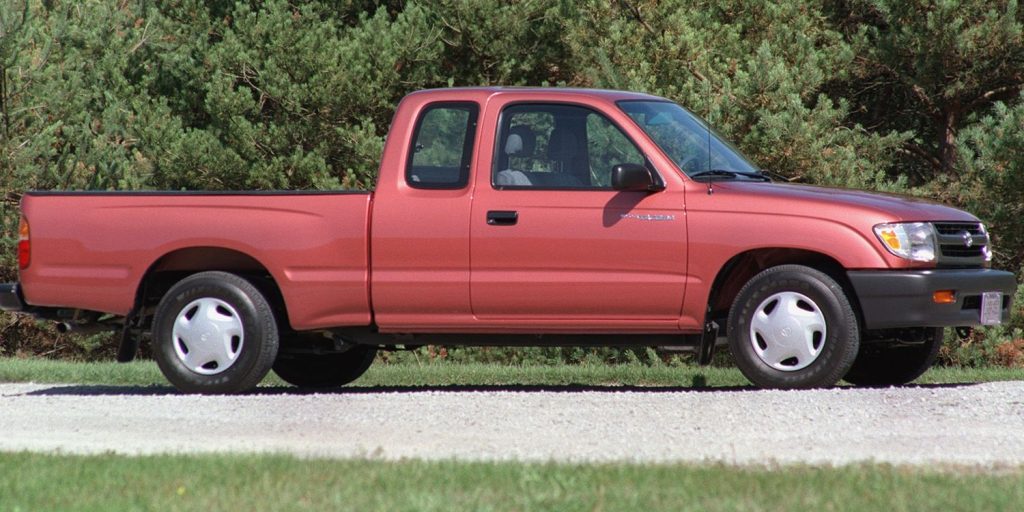
In terms of design, the first-generation Tacoma embodied simplicity. This was a period before automakers invested heavily in the styling of their pickups, and the Tacoma reflected that straightforward approach. Its front end featured a flat profile with square headlights and a modest grille, a stark contrast to the oversized, aggressive front ends seen on today’s full-size trucks like the Toyota Tundra.
From the side, the cab configuration was the clearest way to identify the model. Buyers could choose from a single cab, an extended Xtracab, or a double cab, with certain trims featuring side graphics for a sportier touch. The rear end, meanwhile, was as traditional as pickup design could be, practical and conventional without any extra frills.
Toyota gave customers a fair amount of choice with the first-generation Tacoma. It was offered in both rear-wheel-drive and four-wheel-drive setups, three cab configurations, and two bed lengths. The regular cab and Xtracab models came standard with a six-foot bed, while the double cab was paired with a slightly shorter 5.5-foot bed.
Under the hood, buyers could select from three gasoline powertrains, designed to balance efficiency and performance for different needs. While luxury-oriented trims like today’s Capstone or off-road-focused TRD Pro were still years away, the Tacoma carved its niche by delivering dependable versatility.
Competition in the compact truck market was fierce at the time. The Tacoma squared off against the Ford Ranger, Chevrolet S-10, Nissan Frontier, and Dodge Dakota, the latter of which even offered a Shelby performance variant.
Assembly of the first-generation Tacoma took place at Toyota’s NUMMI plant in Fremont, California. Production ran until 2004, when it was succeeded by the second-generation Tacoma for the 2005 model year, a model that continued to build on the strong foundation laid by its predecessor.
3. Chevrolet Silverado 1500 (1999–2006 “GMT800”)
The Silverado has always been Chevrolet’s answer to the F-150, and the GMT800 generation cemented its place as a go-to full-size pickup for work and recreation. These trucks are well-loved, especially with the legendary small-block V8 under the hood.
Unfortunately, they’re also known to rust badly, particularly along the rocker panels, cab corners, and tailgate. Owners in northern states that salt their roads have fought a losing battle against corrosion for years.
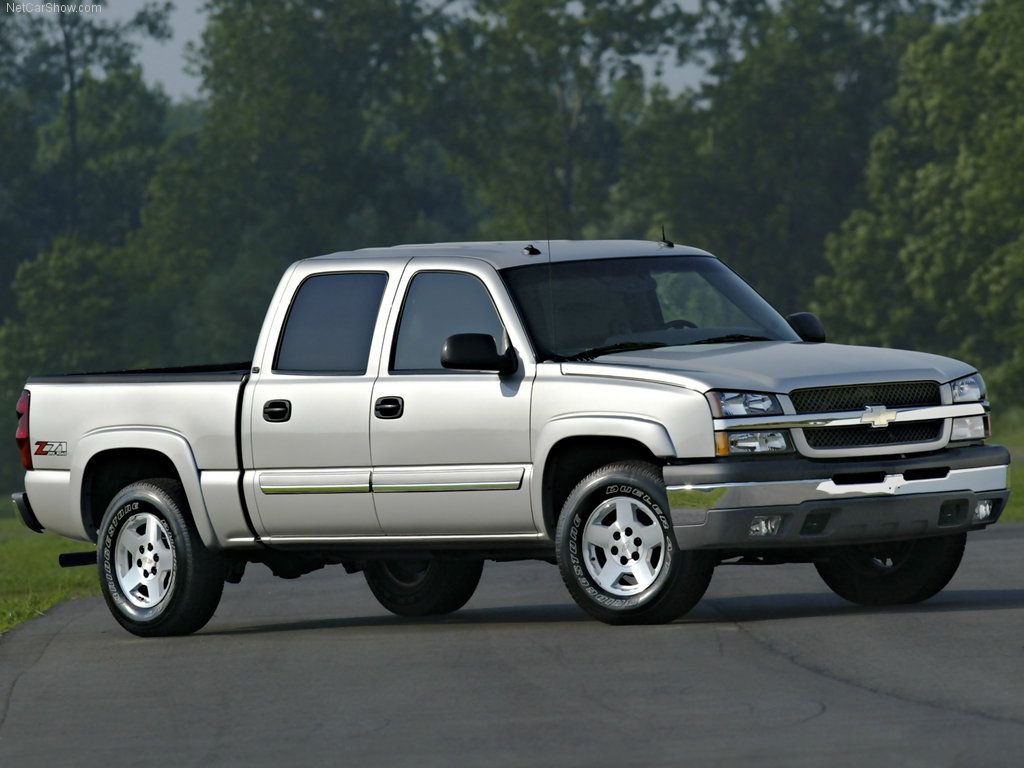
But the Silverado’s value persists. Buyers know the drivetrain is dependable, and many consider the 5.3-liter Vortec engine one of GM’s best. These trucks are also easy to fix, and parts are abundant, making them attractive even when they show their age.
A rusty Silverado 1500 can still command thousands more than you’d expect simply because it remains a strong worker, whether on a farm, a construction site, or towing a trailer.
Also Read: 5 Dodge Engines That Rarely Break vs 5 That Constantly Fail
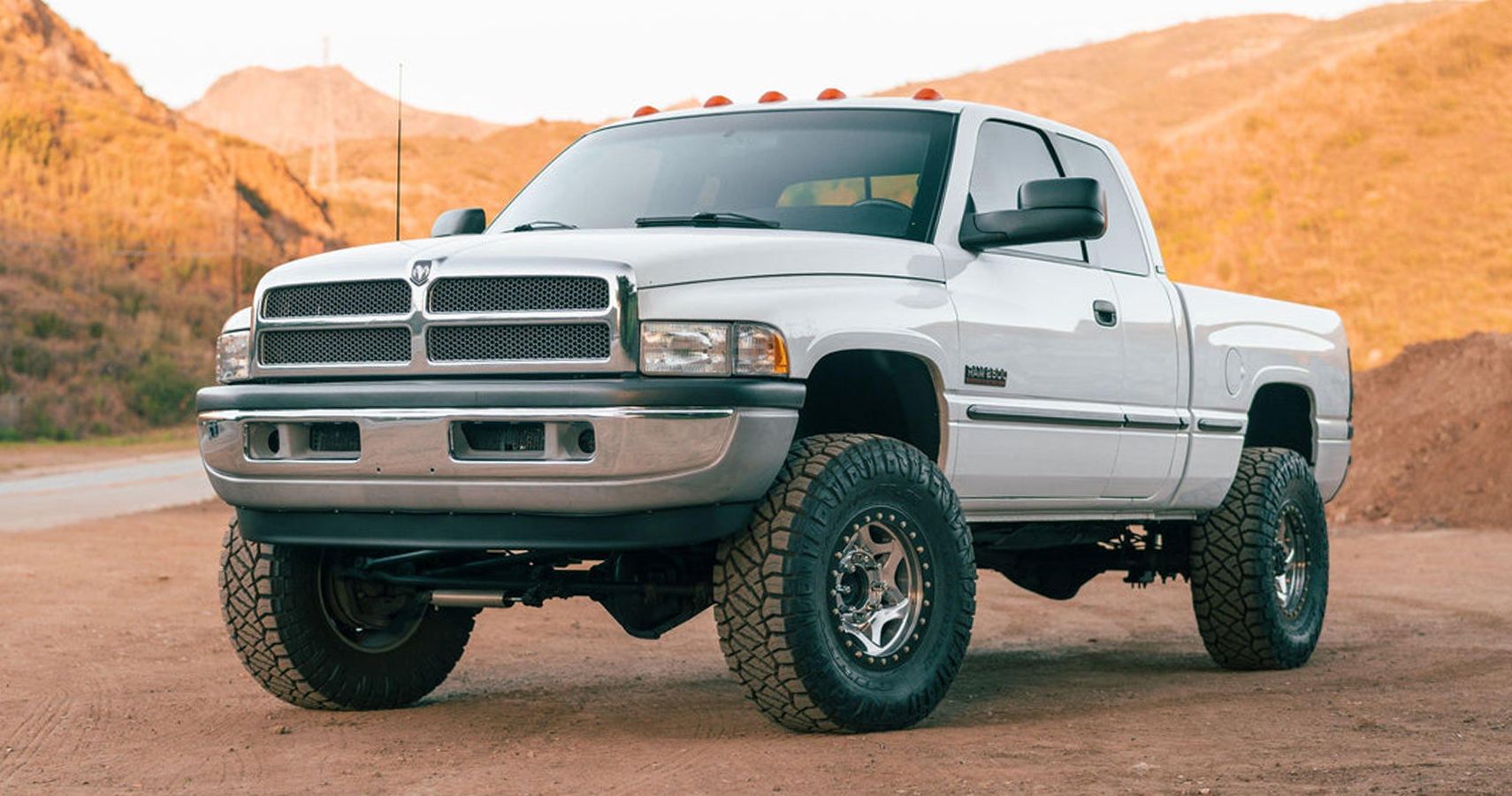
4. Dodge Ram 1500 (1994–2001 “Second Gen”)
The second-generation Dodge Ram completely changed the truck market with its bold semi-truck-inspired design and powerful engine lineup, including the iconic 5.9-liter Cummins diesel in heavy-duty models.
While the 1500 wasn’t offered with the Cummins, it still benefited from Dodge’s reputation for strength and style during this era. Rust, however, has long plagued these trucks, especially along the wheel arches and tailgates.
Yet despite the rusty panels, second-gen Rams continue to hold value, particularly with enthusiasts who love their muscular styling and rugged mechanicals. The availability of V8 options like the 5.9-liter Magnum adds to their desirability. Even in rough condition, buyers are willing to pay for a Ram that runs and drives, especially in rural areas where a bit of rust is simply part of a truck’s story.
When Dodge revealed the bold Ram Pickup for 1994, it was immediately clear the company had a winner on its hands. Few trucks have managed to command attention quite like this one, turning heads everywhere it went and sparking countless conversations.
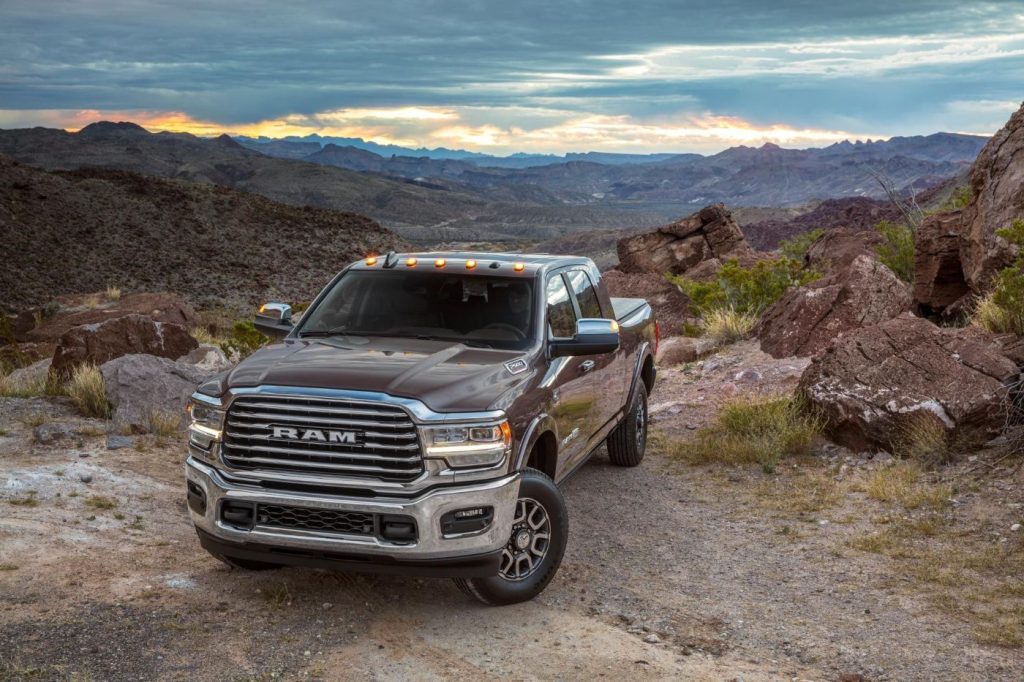
Whether dressed in Sport trim or showing off its chrome-accented, chest-thumping grille, the Ram embodied pure toughness, sculpted unapologetically in steel.
Beneath the hood, Dodge offered everything from modest to mammoth. Practical buyers could opt for the mild-mannered 3.9-liter V6, while those who wanted torque and endurance had the choice of the Cummins diesel, a powerplant whose throaty note alone could make someone grab a Stetson and head for the open road.
By 1997, Dodge continued refining the formula. Buyers could choose from four new exterior paint options and two fresh interior color schemes, while the Sport Plus package features the Sport Appearance Group with 17-inch wheels, a sport-tuned exhaust, upgraded suspension, and a 5.9-liter V8 under the hood. One of the earliest criticisms of the Ram centered on passenger space, as the regular cab version seated only three people across a bench.
Dodge countered this by introducing the Club Cab, which could carry up to six adults, though climbing into the rear still required some maneuvering. For 1997, Club Cab models gained standard rear-quarter window glass, and the 2500 could be outfitted with a Snow Plow Prep Package, further proving Dodge’s commitment to meeting the needs of both everyday drivers and hard-working professionals.
5. Toyota Tundra (2000–2006 “First Gen”)
When Toyota launched the Tundra in 2000, it aimed squarely at American full-size trucks like the F-150 and Silverado. Built in the US, the first-gen Tundra quickly gained a reputation for reliability and strong resale value. Unfortunately, like its smaller sibling the Tacoma, the early Tundra also suffered from severe frame rust issues, leading to recalls and buyback programs.
Even so, the first-generation Tundra is still highly sought after. Many buyers don’t mind the rust because they know the 4.7-liter i-Force V8 can last well beyond 300,000 miles with proper maintenance.
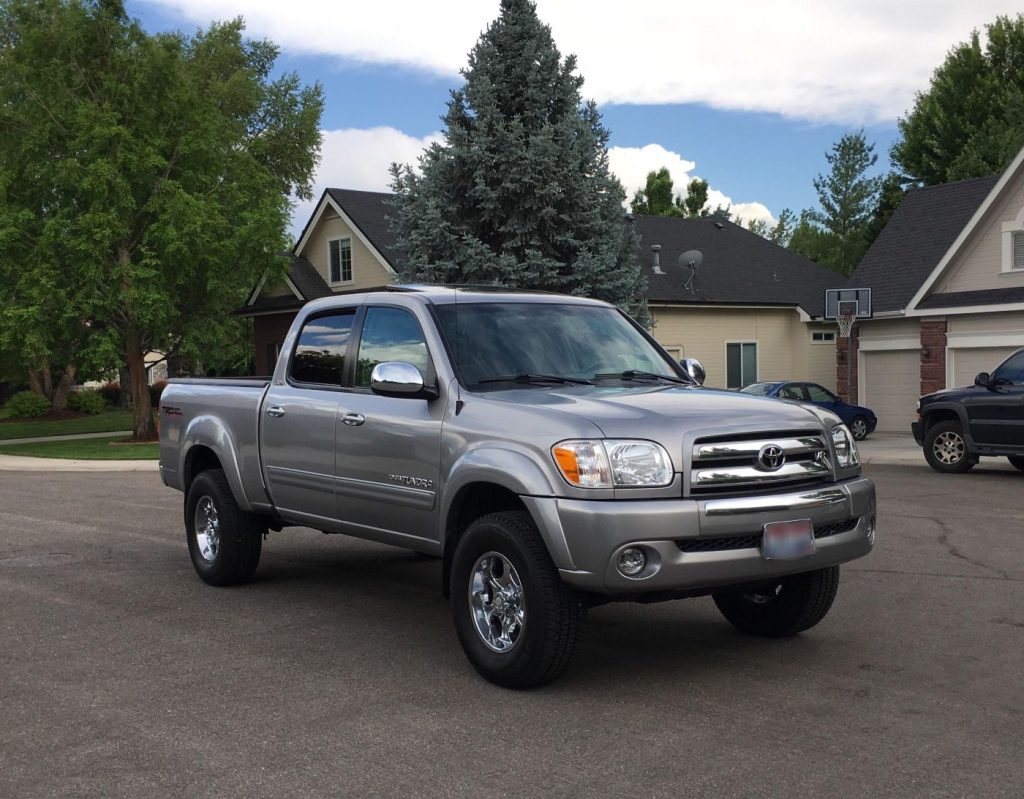
Tundras are particularly popular in the used market because they blend Japanese reliability with American truck size and capability. Despite rusted frames and bodies, they continue to fetch premium prices compared to similarly aged domestic trucks.
6. Ford Ranger (1983–2011)
The Ford Ranger was the go-to compact pickup for decades, serving as a reliable, fuel-efficient, and affordable option for truck buyers who didn’t need a full-size rig. Rust has been a problem for nearly every generation of the Ranger, especially in northern states, but that hasn’t stopped buyers from paying good money for them.
Older Rangers, especially those with the 4.0-liter V6, are valued for their durability and ease of repair. They’re also beloved by hobbyists and off-roaders who don’t mind a little corrosion on the fenders or cab corners. Even rusty examples often sell quickly because the Ranger’s reputation as a small but capable workhorse makes it one of the most enduring pickups on the used market.
The Ford Ranger has long held its reputation as a fan-favorite pickup, though many enthusiasts still look back with fondness on the original compact version.
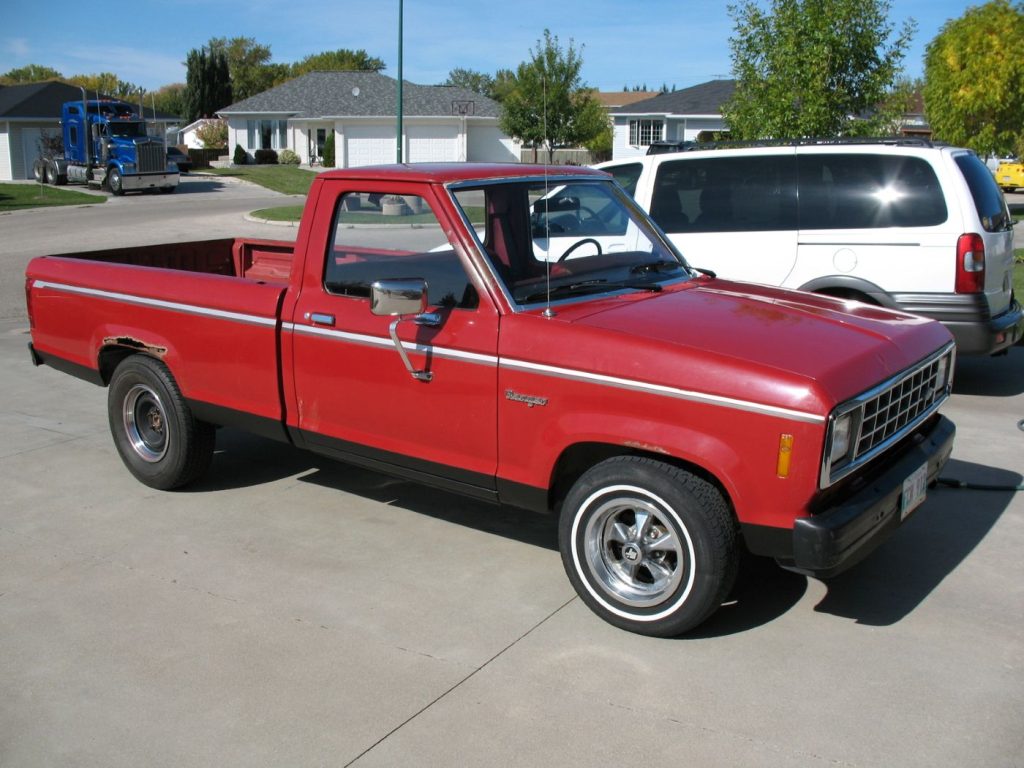
Today’s mid-size iteration is carving out its own legacy, but the early Rangers were simple, bare-bones workhorses designed with a single mission in mind, to provide buyers with a reliable truck at an affordable price. Interestingly, with just a little extra investment, even a modest 1985 Ford Ranger can be transformed into a surprisingly capable off-road machine.
Brown’s connection to these trucks runs deep, he first learned to drive in one while his family farm. As time went on, nostalgia came calling, prompting him to purchase this particular example for just $1,000.
From there, he set out to craft a budget-friendly off-roader while carefully preserving the classic qualities that made the first-generation Ranger so special to him, navigating his family farm.
Also Read: 10 Tricks That Keep a GMC Sierra All Terrain Running Strong
7. GMC Sierra 1500 (1999–2006 “GMT800”)
While mechanically similar to the Chevrolet Silverado, the GMC Sierra often appeals to buyers who want a slightly more upscale look and feel. Like the Silverado, these trucks suffer from rust along the rockers, cab corners, and wheel wells, but their reliability and capability keep them in high demand.
The Sierra’s Vortec V8 engines are a huge selling point, known for their strength and longevity. Even when rust has taken hold, these trucks remain valuable to buyers who need a dependable work rig or a solid tow vehicle. Many owners simply patch up the rust or ignore it, focusing on the Sierra’s mechanical durability and comfortable ride.
GMC’s full-size pickup has existed in various forms since the early 1960s. Now in its sixth generation, the GMC Sierra carries forward a legacy of classic styling, diverse body styles, and multiple drivetrain configurations.
Positioned as the “professional-grade” truck in GM’s lineup, the Sierra has always competed head-to-head with Ford and Dodge in the full-size segment. While its individual sales figures don’t quite reach the levels of its rivals, when combined with its corporate sibling, the Chevrolet Silverado, the duo consistently outsell the Ford F-Series.
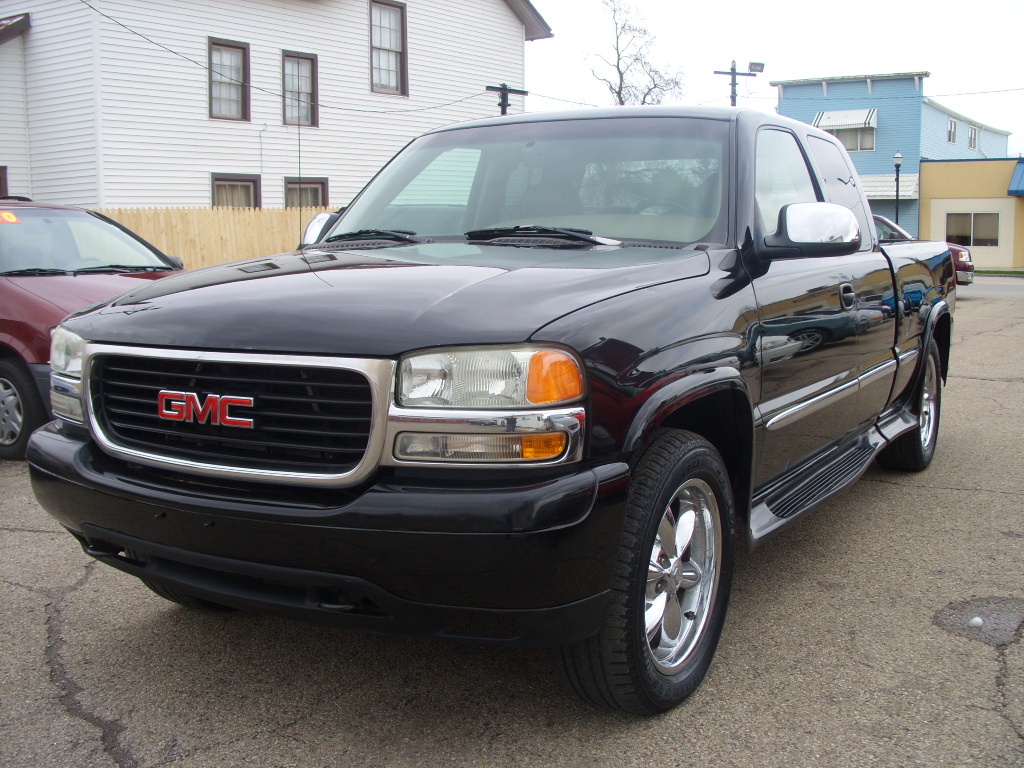
Known for being an innovator, GMC continued that tradition in 2006 with the Sierra 1500, which became the first full-size pickup to offer a hybrid-electric model nationwide. On top of that, Sierra trucks also feature the OnStar communications system, providing 24/7 assistance for everything from roadside emergencies to dinner reservations.
The 2006 GMC Sierra offers a broad selection of engines, beginning with a 195-horsepower 4.3-liter V6 and topping out with a 345-horsepower 6.0-liter V8 available in the Denali and VortecMAX package.
Between those extremes, buyers can choose from a 285-hp 4.8-liter V8, a 295-hp 5.3-liter V8, or a slightly more powerful 310-hp version of the 5.3-liter. Transmission choices include a standard four-speed automatic across most of the lineup, while V6-powered regular cabs pair with a five-speed manual.
Towing capabilities vary by configuration: models equipped with the 5.3-liter V8 can tow up to 8,300 pounds, while the Denali is rated at 8,100 pounds. Opting for the SLT extended cab or crew cab with the 6.0-liter V8 pushes maximum towing up to 10,000 pounds.
Both two-wheel and four-wheel drive are available across the range, with the Denali exclusively featuring all-wheel drive. GMC also offers a hybrid option on SLE extended cab models with the 5.3-liter V8. While the hybrid system doesn’t add power, it improves efficiency by shutting off the engine at stops and restarting it automatically. It also provides utility on job sites with four built-in 120-volt AC outlets.
Also Read: 5 Dodge Engines That Rarely Break vs 5 That Constantly Fail
8. Dodge Ram 2500/3500 with Cummins Diesel (1994–2002)
If there’s one truck where rust almost doesn’t matter, it’s the heavy-duty Dodge Ram equipped with the legendary 5.9-liter Cummins turbo diesel. Known for being nearly indestructible, these trucks can rack up half a million miles or more with proper care. The body panels, however, often don’t last as long as the engine. Rust along the beds, doors, and fenders is common, especially in northern climates.
Yet, buyers will still pay a premium for these trucks even if they look like they’ve spent years parked at the bottom of a salt mine. The Cummins engine alone is worth thousands, and enthusiasts are quick to scoop up even rusty examples to restore or use as reliable workhorses. For diesel fans, the rust is secondary, the heart of the truck is what counts.
Rust usually kills resale value for most vehicles, but pickup trucks are in a league of their own. Whether it’s the legendary reliability of a Toyota Tacoma, the workhorse durability of a Ford F-150, or the unstoppable power of a Cummins-powered Ram, these trucks continue to hold strong value even when their bodies are far from pristine.
In the US, where trucks are more than just vehicles, they’re tools, companions, and even cultural icons, buyers are often willing to look past rust as long as the engine, transmission, and frame can still handle the job.
If you’re in the market for a used truck, don’t be surprised if a rusty old pickup still carries a hefty price tag. For many Americans, the ability to haul, tow, and keep going mile after mile outweighs the shine of the paint. After all, a little rust never stopped a great truck from doing what it was built to do.
