

Fuel efficiency has become one of the most important considerations for American drivers when choosing a sedan.
With gas prices constantly fluctuating and hybrid and electric options becoming more widespread, car buyers are increasingly focused on vehicles that can stretch every gallon of fuel. Yet one overlooked factor in fuel economy is how well a sedan maintains its miles per gallon (MPG) rating as it ages.
Plenty of vehicles start strong in their first few years, only to lose efficiency as the miles rack up due to engine wear, fuel system degradation, or outdated technology.
On the other hand, some sedans have developed a reputation for consistency, delivering dependable fuel economy even after a decade on the road. These are the models that prove their engineering and design can withstand time without punishing drivers at the pump.
Below are eight sedans that rarely lose MPG over time, making them smart long-term investments for those who prioritize efficiency alongside reliability.
1. Toyota Camry Hybrid
The Toyota Camry Hybrid has been one of the most fuel-efficient midsize sedans in the US for well over a decade, and its consistency over time is what sets it apart.
Many owners report only minimal declines in MPG even after crossing the 150,000-mile mark, thanks to Toyota’s robust hybrid system and its proven Atkinson-cycle 4-cylinder engine.

Unlike some hybrids that experience battery degradation issues, Toyota’s hybrid batteries are designed with longevity in mind. It’s not uncommon for a Camry Hybrid to deliver near-original efficiency numbers even after a decade of use.
Owners frequently note they still see averages of 40+ MPG long after warranty coverage ends, making it one of the most dependable choices for budget-conscious commuters.
The 2024 Toyota Camry Hybrid demonstrates that hybrid efficiency is no longer reserved for compact or unconventional vehicles, offering remarkable fuel economy in a spacious midsize sedan. Its interior provides ample room for adults in both the front and rear seats, along with a reasonably sized trunk, making it practical for daily commuting or longer trips.
Despite the focus on efficiency, the Camry Hybrid maintains comfort, affordability, and the roomy feel of the standard Camry, ensuring drivers don’t sacrifice much in exchange for better gas mileage.
Fuel economy is a standout feature. The LE trim earns an impressive 52 mpg combined city/highway rating according to the EPA, while the slightly sportier SE, XSE, and XLE trims achieve around 46 mpg due to their larger wheels and tires.
Even with these small reductions, the Camry Hybrid remains one of the most efficient vehicles in the midsize sedan segment, offering exceptional value for drivers who prioritize fuel savings without compromising on space or comfort. Monthly driving costs are estimated at just $77 for the Camry Hybrid LE in North Dakota, significantly lower than the average midsize car, further highlighting its efficiency and practicality.
Also Read: 10 Affordable Cars That Refuse to Quit in College Parking Lots
2. Honda Accord
The Honda Accord is another household name in American driveways, with a well-earned reputation for balancing performance, comfort, and economy.
While the Accord Hybrid is an MPG champion, even the standard gas-powered models tend to hold fuel economy surprisingly well over the years.
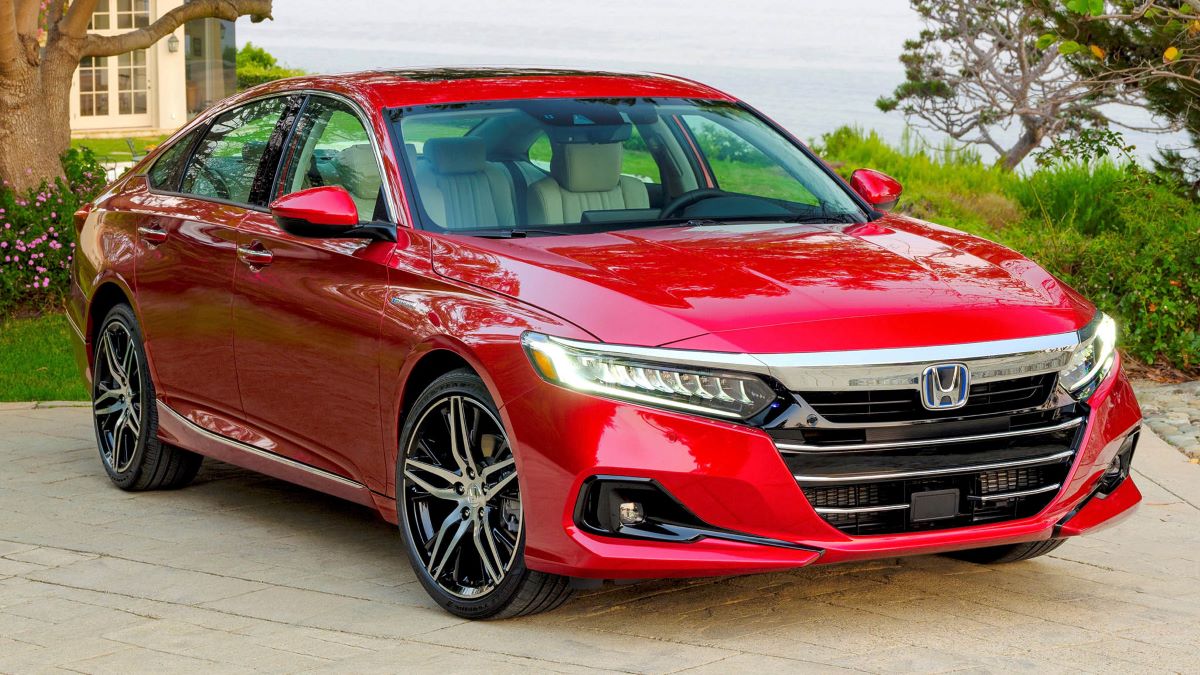
Honda’s engineering focus on smooth transmissions and efficient engines keeps wear and tear from dramatically affecting mileage.
Drivers often note that an Accord with 100,000 miles still delivers figures close to its original EPA rating. The hybrid versions, introduced more recently, are even better often maintaining high 40s MPG well into older age, especially when properly serviced.
The 2025 Honda Accord continues its reputation as one of the most well-rounded midsize sedans on the market, blending comfort, practicality, and efficiency in a sleek package.
Inside, passengers will find a roomy cabin with supportive seats, rear air vents, and now-standard USB-C ports, small but welcome touches that enhance everyday convenience. The trunk is generously sized, providing plenty of space for luggage, groceries, or family gear, making the Accord an excellent choice for both commuting and road trips.
Under the hood, Honda offers a hybrid powertrain on upper trims, which proves to be a strong advantage. Delivering 204 horsepower and up to 48 mpg combined in the EX-L Hybrid, the system provides both brisk acceleration and standout efficiency compared to many rivals in the segment.
Even the base Accord LX remains competitively priced to own, with driving costs estimated at $123 per month in North Dakota, well below the average midsize car.
Since its redesign in 2023 for the 11th generation, the Accord has leaned into refinement, adding a more modern cabin layout, smooth ride quality, and a suite of advanced driver assistance features. Altogether, it feels balanced and polished, making it one of the most compelling family sedans available today.
3. Toyota Corolla
For decades, the Toyota Corolla has been a symbol of efficiency and reliability. Compact sedans tend to be easier on fuel, but what makes the Corolla stand out is how well its MPG holds up over time.
The simple, lightweight design, combined with Toyota’s conservative engine tuning, ensures it doesn’t guzzle fuel even as it gets older.
While many older compact sedans struggle once they hit 150,000 miles, the Corolla remains steady.
Even high-mileage examples often stay within a few MPG of their original EPA estimates, which is why so many ride-sharing drivers, delivery workers, and commuters rely on it as their daily driver.
The Toyota Corolla continues to be one of the most popular compact cars on the road, a reputation built on decades of reliability, practicality, and value. That popularity, however, is a double-edged sword, as the Corolla is constantly compared to its strongest rival, the Honda Civic.
In a direct matchup, the Corolla sedan fell short of the 2022 Civic, mainly because while it rides and handles competently, it lacks the refinement and interior sophistication of its competitor.

The base 1.8-liter engine feels underpowered, and the car’s thin-sounding doors don’t exactly project quality. The upgraded 2.0-liter engine does improve acceleration to more acceptable levels, and the Corolla’s strong braking performance deserves recognition.
The Corolla hatchback adds a bit of fun to the mix. With its agile handling and available manual transmission, it provides a more engaging driving experience than the sedan. On twisty canyon roads, the hatchback showed confidence and stability, and the tall shifter offered a playful touch. However, the vague clutch feedback led to occasional stalls and unintentional wheelspin, slightly dulling the experience.
The Corolla Hybrid, on the other hand, is the real star of the lineup. It combines smooth power delivery with exceptional fuel efficiency, making it an appealing choice for drivers who prioritize economy without sacrificing too much comfort.
The hybrid’s controlled ride inspires confidence, and the cabin, enhanced with a soft-touch dashboard and a clean, uncluttered layout, feels more upscale than the other Corolla models.
That said, grabby brakes and noticeable road and wind noise remind you of its economy-car roots. The addition of a Premium Interior package helps elevate the atmosphere, offering a more refined feel for buyers who want a touch of luxury.
Overall, the Corolla remains a dependable and sensible choice in the compact car segment, though it’s not the most exciting or refined option available. Among its variants, the Corolla Hybrid stands out as the best pick, thanks to its outstanding fuel economy and smooth driving dynamics.
4. Hyundai Elantra
Hyundai has made massive strides in fuel efficiency and reliability over the past decade, and the Elantra is one of its biggest success stories. Modern Elantras, especially from 2017 onward, have shown remarkable efficiency retention.
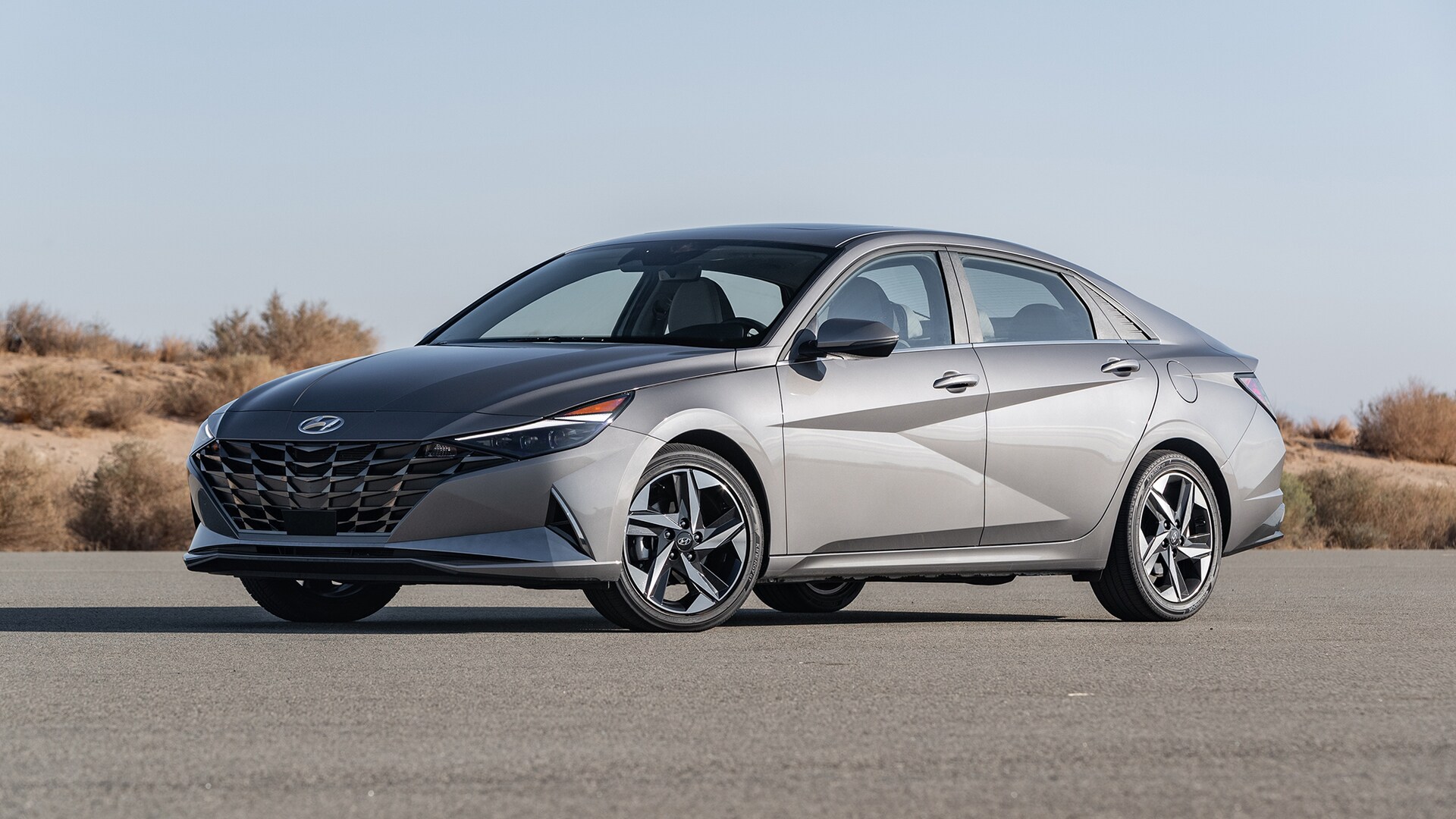
The Hyundai Elantra has been a staple in the compact sedan segment since its debut in 1992, and with the introduction of its seventh generation last year, Hyundai showed no signs of retreating from this shrinking market.
Instead, the automaker doubled down, broadening the Elantra lineup for 2022 with everything from a fuel-sipping hybrid to high-performance models like the N-Line and the new Elantra N. This expanded portfolio positions the Elantra to compete head-to-head with top rivals such as the Honda Civic, Toyota Corolla, and Volkswagen Jetta.
For 2022, the Elantra carries over largely unchanged, save for the addition of the Elantra N. Packing more than 275 horsepower, the N model directly targets enthusiast favorites like the Honda Civic Si and Volkswagen Jetta GLI, bringing legitimate performance credentials to Hyundai’s compact sedan lineup.
In our first drive, the latest Elantra impressed with a chassis that felt more refined and composed than the previous generation. The improvements were especially noticeable in the sportier N-Line trim, which maintained its poise even over imperfect roads.
Hyundai also made big strides in interior space, providing a roomy back seat that can comfortably accommodate taller passengers, a welcome advantage in this class.
The base engine, a 147-hp 2.0-liter four-cylinder paired with a continuously variable transmission, delivers adequate power for daily driving. While not thrilling, it benefits from Hyundai’s well-calibrated CVT, which keeps the driving experience smooth and efficient.
Not everything is perfect, though. Interior material quality is a weak point, with noticeable use of hard plastics on the dash and door panels that feel out of step with the otherwise sharp cabin design.
The absence of rear USB ports also seems like a missed opportunity, particularly for a car well-suited to ride-sharing duties. These drawbacks stand out even more when compared with Hyundai’s own premium-feeling interiors in models like the Palisade SUV.
Despite these shortcomings, the Elantra continues to stand out for its value. It offers a wide range of trims and powertrains, with several well-equipped versions priced below $26,000, making it one of the most affordable yet feature-rich cars in the compact segment.
While the Honda Civic still edges it out with sharper handling, stronger safety ratings, and a more upscale cabin, the Elantra’s combination of style, efficiency, and affordability ensures it remains a top contender.
The sedan’s lightweight frame and smart engine management systems minimize the loss of MPG as the years add up. Owners frequently praise the Elantra for its ability to deliver close to 35 MPG on the highway even after years of heavy use.
The hybrid variant, introduced more recently, has also proven to be one of the most consistent in its class, competing closely with long-established Toyota and Honda hybrids.
5. Mazda 3
The Mazda 3 has always stood out as a driver-focused sedan, but its efficiency often surprises people. Mazda’s SkyActiv technology, which optimizes combustion and reduces engine friction, plays a major role in preserving MPG as the car ages.
Unlike many compact sedans that start losing efficiency due to engine wear, the Mazda 3 continues to perform close to its original ratings if maintained properly.
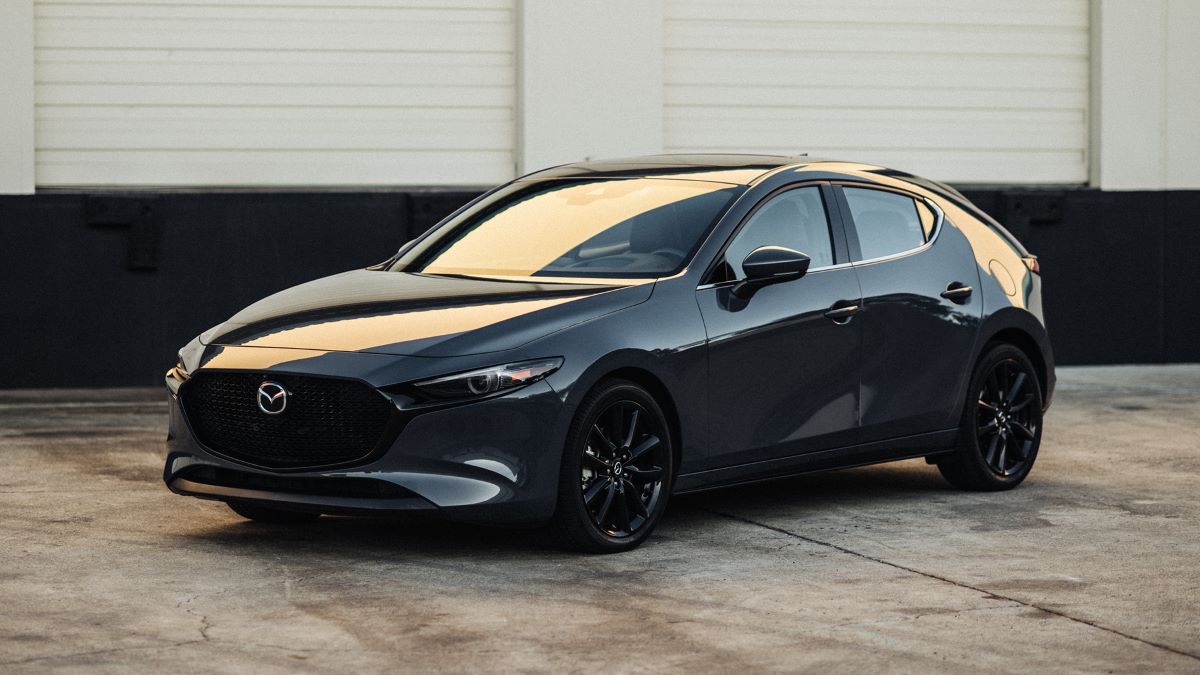
Many owners report maintaining averages in the low-to-mid 30s MPG even past the 100,000-mile mark. The Mazda 3’s ability to blend sporty handling with long-term efficiency makes it an excellent choice for drivers who want economy without giving up driving fun.
6. Honda Civic
The Honda Civic is another iconic nameplate that has built its reputation on long-term dependability and efficiency. For decades, it has consistently delivered MPG numbers that remain stable throughout its lifespan.
The Civic’s simple yet effective engineering ensures minimal efficiency loss over time. Even non-hybrid versions often sustain 30+ MPG averages long after most sedans would have declined.
The Civic Hybrid, offered in select years, has also proven to be a long-lasting contender, with many owners reporting only a minor dip in economy even after extensive mileage.
The 2026 Honda Civic continues to be one of the most appealing compact cars on the market, offering both gas and hybrid options in sedan and hatchback body styles. Affordable, stylish, and fun to drive, the Civic blends everyday usability with just enough performance to stay engaging.
Its interior is spacious, with versatile storage and generous cargo capacity, while standard driver-assist features make it a safe choice. The only drawback is the small base infotainment system compared to rivals. For 2026, there are no major changes, the Civic carries over unchanged from the previous year, focusing on delivering value and efficiency.
Pricing starts at $25,790 for the LX Sedan and goes up to $34,690 for the fully equipped Sport Touring Hybrid Hatchback. The trim lineup includes the LX and Sport for gas-only buyers, while the Hybrid is available in Sport, Sport Touring, and hatchback configurations.

The Sport Hybrid Hatchback, priced at $31,690, is the sweet spot in the lineup, offering heated front seats, dual-zone climate control, and a full suite of driver aids. For those who want wireless smartphone integration and a larger infotainment screen, the Sport Touring Hybrid makes a tempting upgrade.
Under the hood, the Civic comes with two powertrain options, both paired with a CVT and front-wheel drive. The gas engine is a 2.0-liter four-cylinder that produces 150 horsepower, offering adequate acceleration and a lively feel thanks to Honda’s well-tuned chassis.
The Hybrid model pairs a 2.0-liter four-cylinder with two electric motors for a combined 200 horsepower. This setup feels smooth, quick, and refined, making it nearly as enjoyable as the performance-oriented Civic Si while delivering excellent fuel efficiency.
On the road, the Civic shines with its nimble handling and balanced ride. Even the standard gas model feels light and composed, while the Hybrid adds extra power and smoother delivery, making it an even stronger choice for both city and highway driving.
Inside, the cabin emphasizes practicality and comfort, with roomy seating for passengers and a clean, user-friendly design. The hatchback configuration adds an edge in cargo space, with fold-down rear seats that make it especially versatile. Materials are generally high quality, though base trims lean more toward utilitarian.
7. Toyota Prius (Sedan Variant)
Though often categorized separately as a hatchback, the Toyota Prius has long blurred the line between sedan and compact hybrid.
Its sedan-like practicality and legendary fuel economy make it worth including here. More importantly, the Prius is famous for retaining MPG over time better than almost any other hybrid.
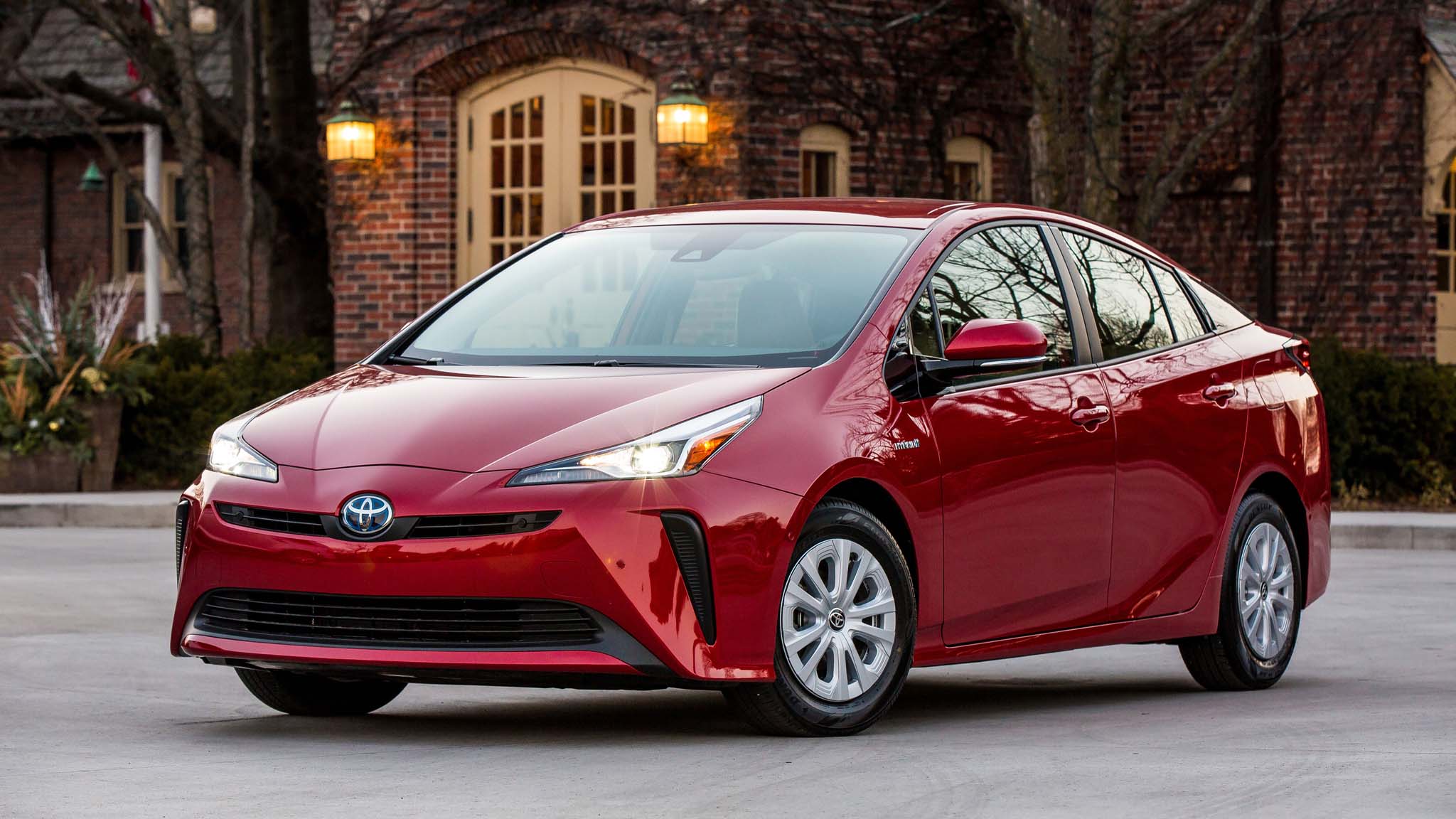
Even early models from the mid-2000s are still delivering high 40s to low 50s MPG, an impressive feat given their age.
The durability of Toyota’s hybrid system and its reputation for lasting beyond 200,000 miles without dramatic MPG loss is the reason so many Prius models still roam American roads today.
The 2021 Toyota Prius remains a standout for its fuel efficiency, but its performance leaves much to be desired. The hybrid powertrain prioritizes economy over speed, resulting in sluggish acceleration that feels underwhelming compared to rivals that manage to balance efficiency with livelier performance.
Driving enjoyment and refinement are not the Prius’s strong suits, as the car feels more utilitarian than engaging behind the wheel. Models equipped with all-wheel drive use a separate electric motor to power the rear wheels, but this addition doesn’t significantly improve the driving experience. Braking is another area where the Prius shows its weaknesses.
Like many hybrids, it blends regenerative and friction braking, which often leads to inconsistent pedal feel. In testing, the Prius exhibited numb feedback and longer stopping distances, a problem compounded by the low-rolling-resistance tires designed to maximize fuel economy. While its efficiency is world-class, the Prius still demands compromises in performance and overall driving enjoyment.
Also Read: Top 9 Durable Sports Cars That Outlast Their Rivals
8. Chevrolet Malibu Hybrid
While Chevrolet’s hybrid lineup has been smaller than Toyota’s or Honda’s, the Malibu Hybrid deserves recognition for its consistent efficiency.
The 1.8-liter hybrid engine paired with a battery system delivers a respectable 45 MPG combined rating when new, and many owners note that it continues to hit those numbers years later.
The Malibu Hybrid doesn’t get as much attention as imports, but it proves that American automakers are also capable of building hybrids that retain long-term efficiency. For drivers who want a domestic sedan with hybrid reliability, the Malibu Hybrid offers a compelling option.

For American drivers who plan to keep their cars for a decade or more, MPG retention is just as important as the initial EPA rating. The 2019 Chevrolet Malibu Hybrid represents GM’s effort to compete in the highly competitive midsize sedan segment, where practicality, efficiency, and refinement are key.
Once dominated by large American V8s, the family sedan market has shifted toward hybrids and fuel-efficient four-cylinders, and the Malibu Hybrid positions itself against heavyweights like the Toyota Camry Hybrid and Honda Accord Hybrid. Its powertrain combines a 1.8-liter four-cylinder engine with two electric motors to produce 182 horsepower and 277 lb-ft of torque, offering smooth acceleration and responsive power delivery.
The gas engine only kicks in after 55 mph or when extra thrust is required, making for efficient city driving without compromising passing power. With its refreshed design, impressive economy, and sleek styling, the Malibu Hybrid delivers a distinctly American take on the modern hybrid sedan.
On the outside, the Malibu Hybrid balances subtlety with elegance. It rides on 17-inch aluminum wheels borrowed from the LT trim and features LED daytime running lights, LED taillamps, halogen headlights, and a broad chrome grille that distinguishes it from standard models.
Its sculpted body lines sweep from the front fenders to the rear lamps, lending the car a streamlined profile, though the lack of an exhaust finisher sets it apart as a hybrid.
The steering is one of Chevrolet’s better setups, providing just enough feedback for driver engagement without being overly heavy. Where the Malibu falls short is in cabin quietness, road noise from the tires can be intrusive, especially at highway speeds, undermining the otherwise well-insulated interior. This gives rivals like the Accord Hybrid an edge in refinement.
A sedan that starts out efficient but loses fuel economy after 80,000 miles ends up costing more in the long run than a vehicle designed for long-term consistency.
The Toyota Camry Hybrid, Honda Accord, Toyota Corolla, Hyundai Elantra, Mazda 3, Honda Civic, Toyota Prius, and Chevrolet Malibu Hybrid all prove that fuel efficiency doesn’t have to fade with age.
With proper maintenance, these sedans rarely lose their MPG advantage, making them some of the smartest choices for long-term ownership.
