
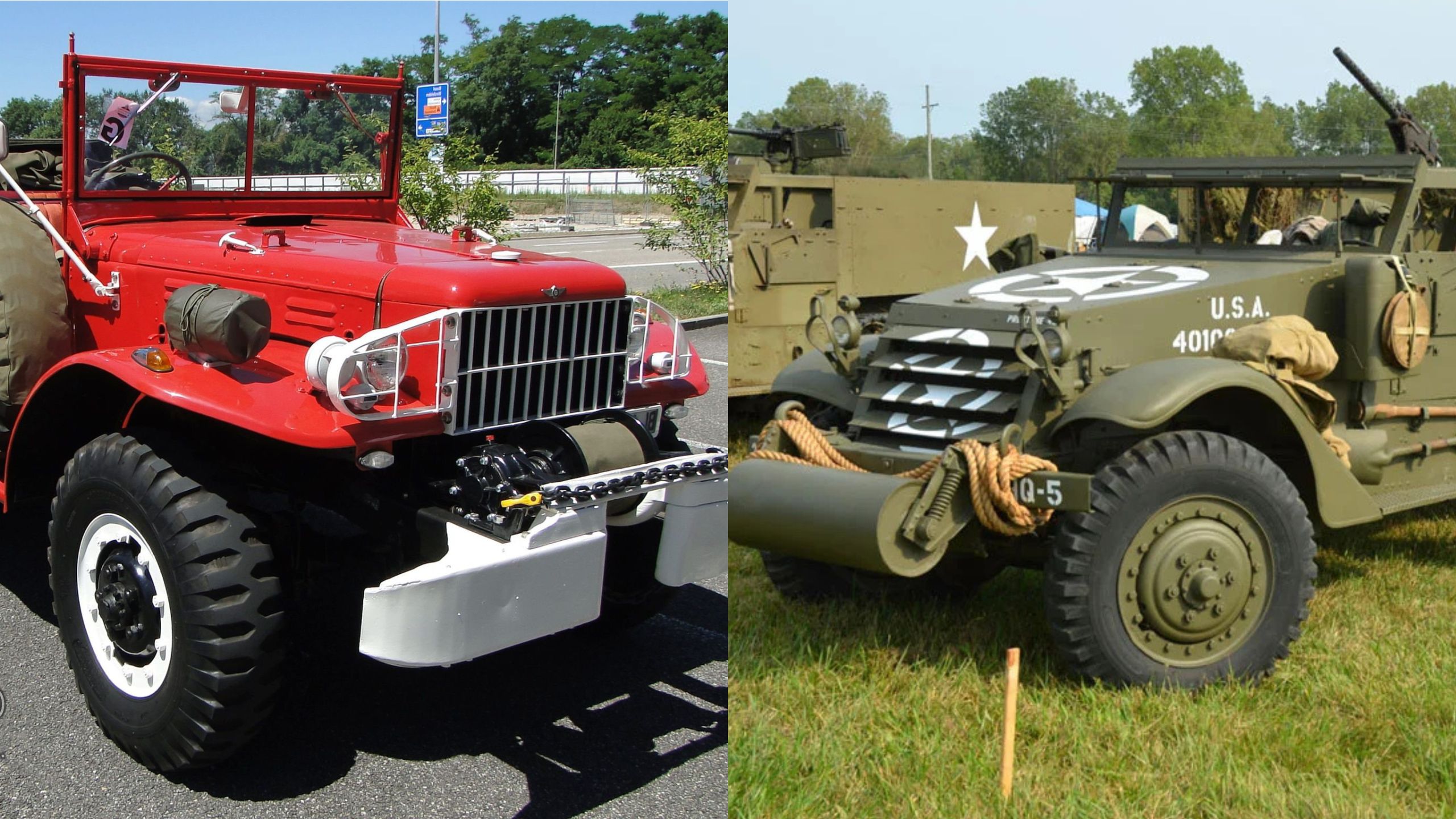
Throughout history, global conflicts have tested the limits of human engineering and ingenuity. While countless military vehicles were destroyed in the crucible of war, some remarkable machines not only survived the chaos but became legendary symbols of resilience and innovation.
These vehicles, ranging from nimble reconnaissance cars to massive bombers, weathered the storm of bullets, bombs, and brutality to emerge as testaments to both their creators’ skill and their crews’ determination.
The vehicles featured in this collection represent more than mere mechanical achievements; they are witnesses to pivotal moments in human history.
Each machine carries within its steel frame and battle scars the stories of the men and women who operated them, the missions they accomplished, and the conflicts they helped shape.
From the muddy battlefields of World War I to the vast theaters of World War II, the Korean Peninsula, and beyond, these vehicles proved their worth when survival meant the difference between victory and defeat.
What makes these vehicles truly exceptional is not just their ability to withstand enemy fire or harsh conditions, but their lasting impact on military strategy, technological development, and historical memory.
Many became the foundation for modern military vehicles, while others remain preserved in museums as reminders of humanity’s capacity for both destruction and remarkable engineering. Their survival stories offer insights into the evolution of warfare, the importance of reliable equipment, and the indomitable spirit of those who served.
1. Willys MB Jeep (1941-1945)
The Willys MB Jeep stands as perhaps the most iconic military vehicle to emerge from World War II, earning its legendary status not through overwhelming firepower or heavy armor, but through sheer versatility and reliability.
Born from a U.S. Army requirement for a lightweight reconnaissance vehicle, the Jeep became the backbone of Allied mobility, serving in every theater of the war from the beaches of Normandy to the jungles of the Pacific.
The Jeep’s survival story begins with its robust yet simple design. Powered by a 60-horsepower “Go Devil” engine and equipped with four-wheel drive, the MB could traverse terrain that would stop larger vehicles in their tracks.
Its 2,337-pound weight made it light enough to be manhandled out of mud or loaded onto aircraft, yet sturdy enough to carry four soldiers plus equipment across hundreds of miles of rough terrain.
The vehicle’s modular design meant that field repairs were often possible with basic tools and salvaged parts, contributing significantly to its survival rate.
During the war, over 600,000 Jeeps were produced, and their survival rate was remarkably high compared to other military vehicles. This wasn’t just due to their mechanical reliability, but also their tactical employment.
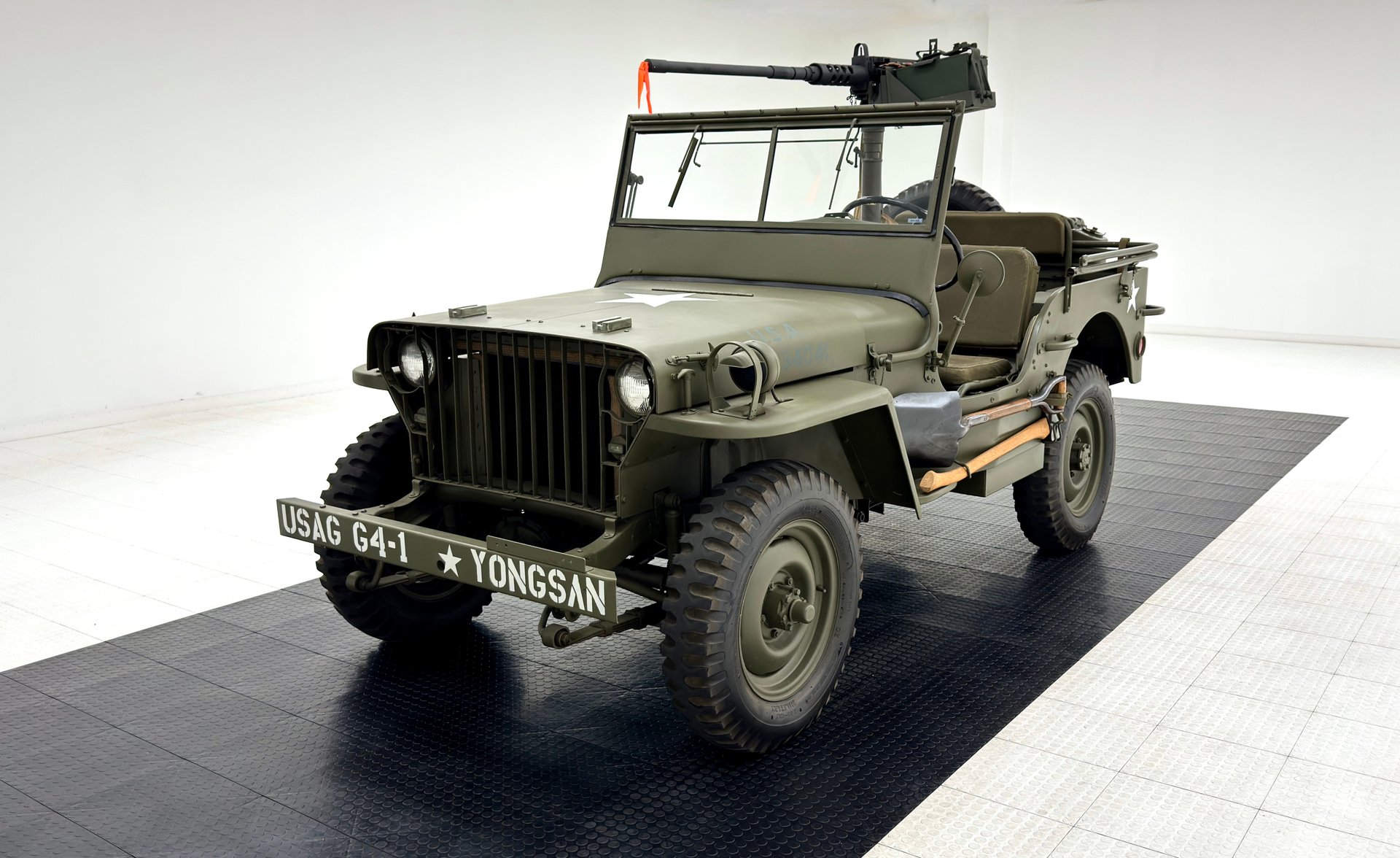
Unlike tanks or armored vehicles that were primary targets for enemy fire, Jeeps often operated in reconnaissance roles, using speed and agility to avoid confrontation rather than absorb punishment. When they did come under fire, their small profile and quick acceleration often meant the difference between escape and destruction.
Many individual Jeeps accumulated remarkable service records, with some vehicles serving continuously from 1942 through the war’s end without major mechanical failure.
Their survival often depended on the ingenuity of their crews, who modified them for specific missions, adding armor plating for dangerous areas, mounting heavier weapons for combat roles, or stripping weight for maximum speed during reconnaissance missions.
The phrase “Jeeps go everywhere” became more than marketing; it was a battlefield reality that saved countless lives and contributed to Allied victory through reliable, survivable transportation.
2. Sherman M4 Tank (1942-1955)
The M4 Sherman tank’s survival story is one of numbers, adaptability, and continuous improvement in the face of superior enemy armor.
While individual Shermans were often outgunned by German Panthers and Tigers, the tank’s survival as a weapon system stemmed from American industrial capacity, mechanical reliability, and the ability to evolve rapidly based on combat experience.
Over 49,000 Shermans were produced during World War II, making it the most numerous American tank and ensuring that losses could be quickly replaced.
The Sherman’s initial design prioritized reliability and ease of production over heavy armor or massive firepower. This philosophy proved crucial to its survival in extended campaigns.
While German tanks were often superior in individual combat, they were plagued by mechanical complexity that led to frequent breakdowns. Shermans, by contrast, were renowned for their mechanical dependability.
The tank’s Continental R975 radial engine, borrowed from aircraft applications, was well-understood by American mechanics and proved remarkably durable under combat conditions.
This reliability meant that Shermans were more likely to survive long campaigns through mechanical durability rather than enemy action. The tank’s survival was also enhanced by continuous battlefield modifications and improvements.
Early Shermans suffered from inadequate armor and a tendency to catch fire when penetrated, earning the grim nickname “Ronson” after the lighter company’s slogan “lights up the first time, every time.” However, American engineers responded quickly to these problems.
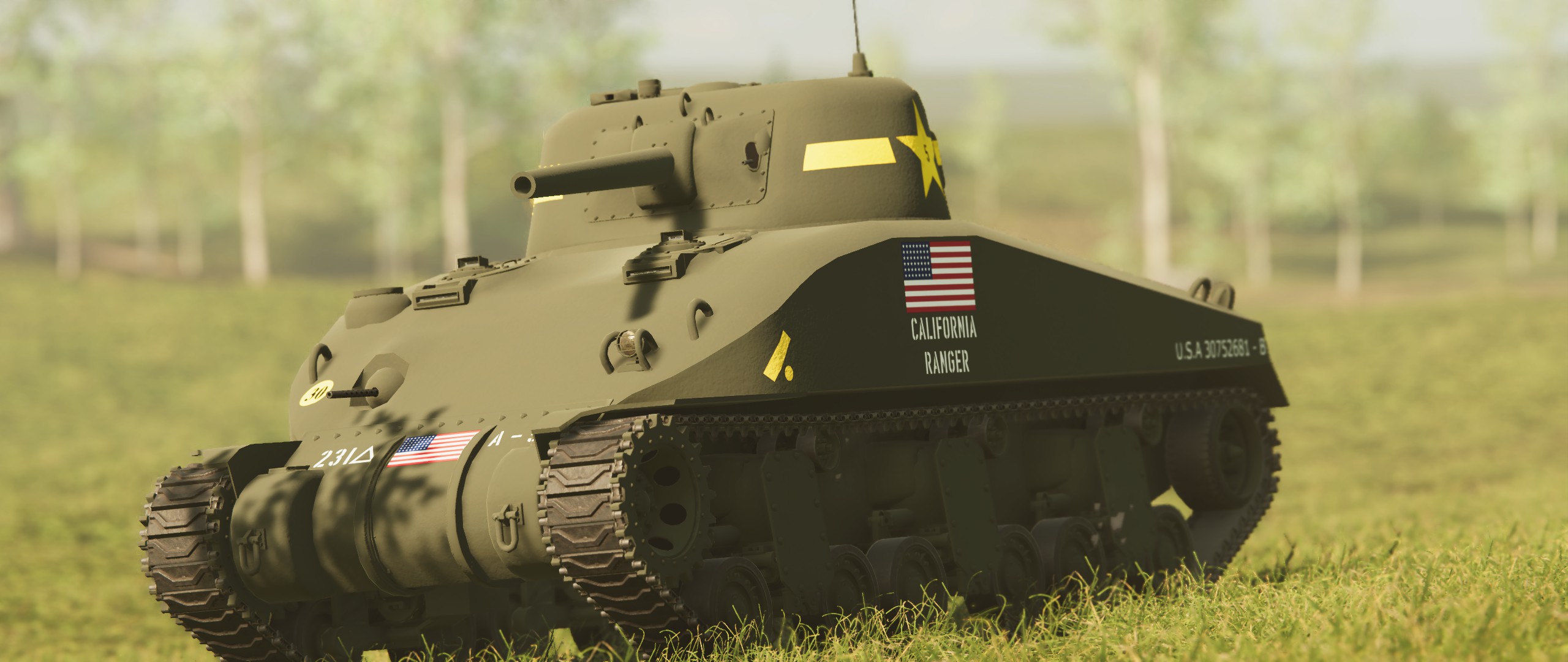
Later variants featured improved armor, wet ammunition storage to prevent fires, and more powerful guns. Field modifications became common, with crews adding sandbags, spare tracks, and concrete to increase protection.
The British developed the “Firefly” variant with a powerful 17-pounder gun, dramatically improving the Sherman’s survivability against German armor.
Perhaps most importantly, Sherman’s survival lay in its role as part of a combined arms system. Rather than fighting as lone wolves like many German tanks, Shermans operated with extensive infantry, artillery, and air support.
This integration meant that individual tank survival was less dependent on superior armor or firepower and more on effective teamwork and communication.
Many Sherman veterans credit their survival not to the tank’s protection, but to the effective coordination with supporting arms that kept them out of hopeless situations.
The tank’s excellent radio systems and crew comfort contributed to this tactical effectiveness, making communication and sustained operations possible under conditions that would have exhausted the crews of less ergonomically designed vehicles.
3. Douglas C-47 Skytrain (1935-Present)
The Douglas C-47 Skytrain, a military variant of the famous DC-3 airliner, achieved legendary survival status by becoming the workhorse of Allied air transport operations during World War II and continuing to serve in military roles for over eight decades.
Unlike combat aircraft designed for specific missions, the C-47’s survival stemmed from its exceptional versatility, rugged construction, and the simple fact that it proved irreplaceable for a wide variety of essential but unglamorous tasks that kept armies supplied and mobile.
The aircraft’s survival story begins with its civilian roots. The DC-3’s design prioritized passenger comfort, operational economy, and mechanical reliability characteristics that translated perfectly to military service.
The C-47’s twin Pratt & Whitney R-1830 engines were proven powerplants with excellent service records, and the aircraft’s all-metal construction with fabric-covered control surfaces struck an ideal balance between durability and repairability.
Unlike more sophisticated aircraft that required specialized maintenance facilities, C-47s could be serviced in the field with basic tools, contributing enormously to their operational availability and survival rates.
During World War II, over 10,000 C-47s were produced, and their survival rate was exceptional compared to other military aircraft. This was partly due to their role as transport aircraft, which kept them away from direct enemy fire most of the time, but also because of their remarkable ability to sustain damage and continue flying.
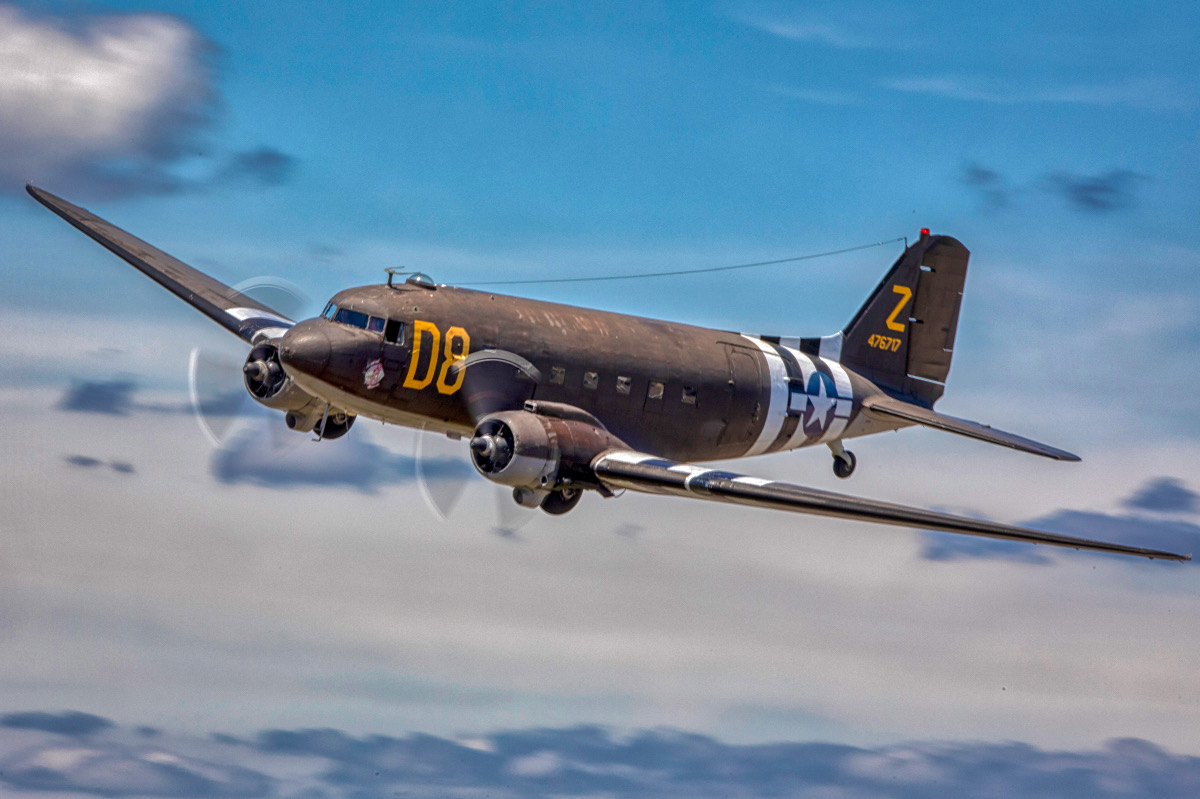
The C-47’s simple, robust design meant that it could lose an engine, suffer extensive battle damage, or operate from primitive airstrips that would ground more sophisticated aircraft.
Numerous accounts exist of C-47s returning from missions with hundreds of bullet holes, damaged control surfaces, or partial engine failures, yet still delivering their cargo and crew safely.
Perhaps most remarkably, the C-47’s survival extended far beyond World War II. The aircraft continued serving in military roles through Korea, Vietnam, and numerous smaller conflicts, with some aircraft accumulating over 40 years of continuous military service.
This longevity was due to the aircraft’s fundamental soundness of design and its ability to be modified for new roles as requirements changed. C-47s served as gunships, electronic warfare platforms, medical evacuation aircraft, and VIP transports, proving that their survival value lay not just in durability but in adaptability.
Even today, several C-47s remain in military service worldwide, making it one of the longest-serving military aircraft designs ever created. The aircraft’s survival motto might well be “reliability over sophistication,” a philosophy that kept thousands of Allied personnel supplied, mobile, and alive during humanity’s greatest conflict.
4. Dodge WC Series (1940-1945)
The Dodge WC series trucks, particularly the iconic WC-51 and WC-52 variants, represented the backbone of American military logistics during World War II, achieving remarkable survival rates through robust engineering, versatility, and sheer numbers.
These three-quarter-ton vehicles, affectionately known as “Beeps” (a combination of “big” and “jeep”), filled the crucial gap between the lightweight Jeep and heavier cargo trucks, proving their survival value in every theater of the war through reliable service under the most demanding conditions.
The WC series’ survival began with Dodge’s decision to adapt proven civilian truck technology for military use rather than creating an entirely new design.
The trucks utilized a modified version of Dodge’s civilian 230-cubic-inch flathead six-cylinder engine, which provided adequate power while being familiar to mechanics throughout the American motor pool system.
This mechanical familiarity proved crucial to survival, as field maintenance could be performed by technicians who understood the basic engine and transmission systems from civilian experience.
The trucks’ conventional ladder frame construction, while heavier than more exotic designs, provided exceptional durability and could be repaired with standard metalworking tools available in forward maintenance areas.
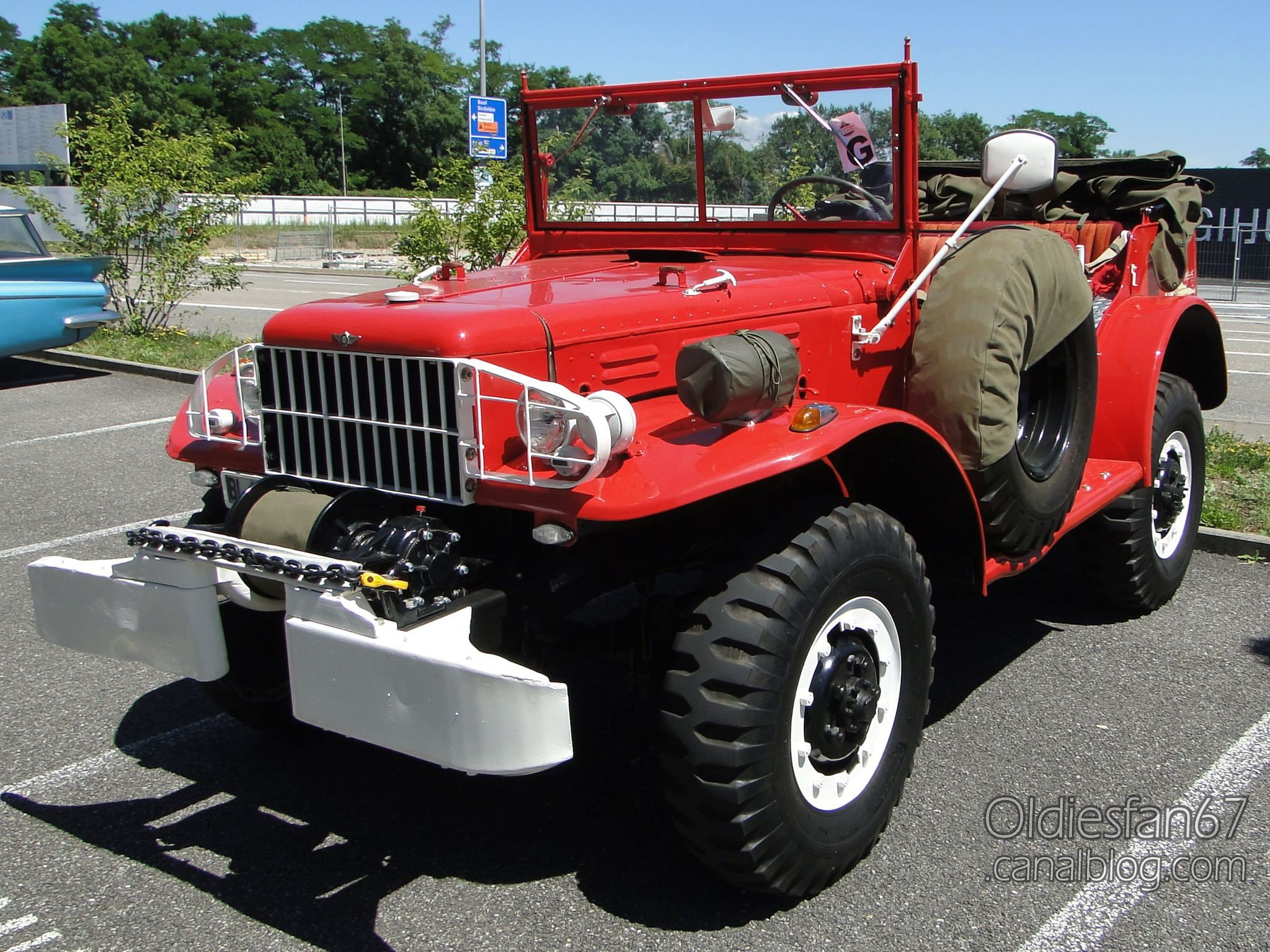
During the war, approximately 255,000 WC series vehicles were produced, and their survival rate was outstanding due to both their mechanical reliability and tactical employment.
Unlike tanks or other combat vehicles that were primary targets, WC trucks survived by being ubiquitous and essential rather than threatening. They served in roles ranging from command vehicles and ambulances to radio trucks and weapons carriers, making them valuable but not typically high-priority targets for enemy action.
Their survival often depended on crew ingenuity and the vehicles’ modular design, which allowed for extensive field modifications. Crews added armor plating for dangerous assignments, modified cargo beds for specialized equipment, and even converted some trucks into improvised tank destroyers by mounting anti-tank guns in their beds.
The WC series’ survival philosophy of “simple, strong, and serviceable” made them nearly indispensable to American military operations. Many vehicles continued serving in National Guard and reserve units well into the 1950s, a testament to their fundamental durability and the affection felt by the soldiers who depended on them for survival in combat zones around the world.
Also Read: 10 Muscle Cars That Still Affordable and Reliable
5. Supermarine Spitfire (1938-1961)
The Supermarine Spitfire’s survival story transcends individual aircraft to encompass an entire fighter design philosophy that proved adaptable enough to remain effective throughout World War II and beyond.
While many individual Spitfires were lost in combat, the aircraft’s survival as a weapons system stemmed from its exceptional design evolution, pilot confidence, and the ability to outperform enemy aircraft across multiple generations of development.
Over 20,000 Spitfires were produced in dozens of variants, making it one of the most successful fighter aircraft designs ever created. The Spitfire’s initial survival advantage lay in its advanced aerodynamic design and exceptional handling characteristics.
R.J. Mitchell’s masterpiece featured elliptical wings that provided optimal lift distribution, giving the aircraft superior maneuverability at all altitudes.
This agility translated directly into survival, as Spitfire pilots could often outmaneuver enemy fighters in dogfights, particularly the Messerschmitt Bf 109.
The aircraft’s excellent control response and forgiving stall characteristics meant that even relatively inexperienced pilots could survive encounters that would have been fatal in less sophisticated fighters.
The Spitfire’s narrow-track landing gear and tailwheel configuration made it more challenging to handle on the ground than some contemporaries, but this was offset by its superb flight characteristics once airborne.
Combat survival for individual Spitfires depended heavily on pilot skill and tactical employment, but the aircraft provided its crews with several inherent advantages.
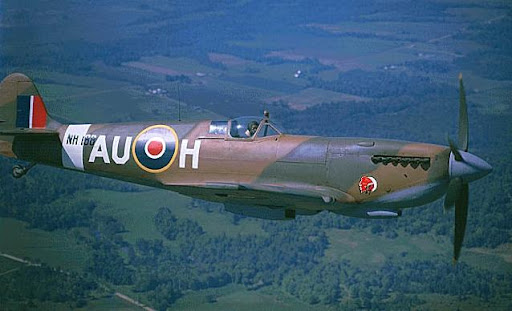
The Spitfire’s structure, while not as robust as some American fighters, was designed to absorb battle damage in critical areas while protecting the pilot.
The aircraft’s fuel tanks were self-sealing, and vital systems were distributed to minimize the effects of enemy fire. More importantly, the Spitfire’s speed and climb rate often allowed pilots to escape dangerous situations rather than having to fight their way out, a survival strategy that proved highly effective during the Battle of Britain and beyond.
The Spitfire’s distinctive elliptical wings became a symbol of British resistance during the darkest days of 1940, and this symbolic value contributed to morale factors that helped both individual pilots and entire squadrons survive the war.
Many Spitfire pilots credited their survival not just to the aircraft’s performance, but to their absolute confidence in its capabilities, a trust that was rarely misplaced during six years of continuous combat operations across multiple theaters of war.
6. Liberty Ships (1941-1945)
The Liberty ship program represents one of the most remarkable survival stories in maritime history, not because individual vessels were particularly well-protected or long-lived, but because the program’s innovative construction methods and overwhelming production numbers ensured that Allied shipping lanes remained open despite devastating submarine attacks.
These emergency cargo vessels, built to simple, standardized designs, survived as a class through American industrial might and the recognition that replaceable shipping capacity was more valuable than individually superior ships.
The Liberty ship’s survival concept was revolutionary in its simplicity: build ships faster than the enemy could sink them. Traditional shipbuilding emphasized individual vessel quality and longevity, but Liberty ships were designed as “disposable” vessels that could be constructed rapidly using prefabricated sections and semi-skilled labor.
The average construction time dropped from months to just 42 days, with some ships completed in as little as four days during publicity drives. This mass production approach meant that even heavy losses and Liberty ships that suffered significant casualties could be quickly replaced, ensuring the survival of the Allied supply line even as individual vessels were lost.
Each Liberty ship was designed around a basic EC2-S-C1 hull that displaced 14,200 tons fully loaded and could carry over 10,000 tons of cargo. The vessels used simple triple-expansion steam engines and conventional construction methods that could be accomplished in shipyards that had never built ocean-going vessels before.
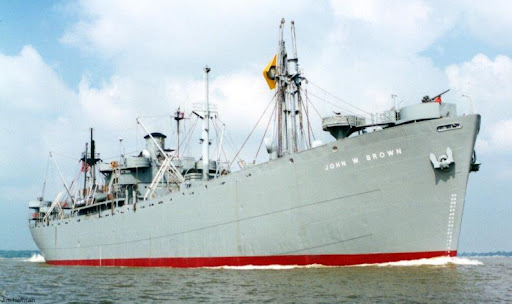
While this standardization made them relatively slow and somewhat vulnerable compared to purpose-built warships, it also made them incredibly reliable and easy to repair.
Liberty ships that survived enemy action often continued serving for decades after the war, testament to their sound basic design despite their emergency construction methods.
The Liberty ship’s true survival legacy lay in its demonstration that quantity could indeed overcome quality in wartime logistics. While German U-boats could sink individual vessels with relative ease, they could not keep pace with American production capacity once the Liberty ship program reached full operation.
The psychological impact on German submarine crews was significant they were witnessing their tactical success being overwhelmed by American industrial capacity.
Many Liberty ships survived the war to enjoy long peacetime careers, with some remaining in service well into the 1960s and 1970s. The program proved that survival in wartime often depends more on the ability to replace losses quickly than on building individual platforms that can survive any threat, a lesson that continues to influence military logistics planning today.
7. Katyusha BM-13 (1939-1991)
The Soviet Katyusha BM-13 rocket launcher survived not only the brutal Eastern Front of World War II but also continued serving in various armies around the world for over five decades, making it one of the most enduring weapons systems of the 20th century.
This multiple rocket launcher, mounted on a ZIS-6 truck chassis, achieved its legendary survival status through devastating effectiveness, mechanical simplicity, and a design philosophy that prioritized rapid deployment and withdrawal over protection or sophistication.
The Katyusha’s survival strategy was built around the principle of “shoot and scoot,” deliver devastating firepower quickly, then relocate before enemy counterbattery fire could respond.
The BM-13’s truck-mounted configuration allowed it to set up in under five minutes, fire its full load of sixteen 132mm rockets in 7-10 seconds, and then relocate rapidly to avoid retaliation.
This tactical mobility proved far more effective for survival than heavy armor, as the system could avoid confrontation entirely while still delivering massive psychological and physical damage to enemy forces.
German troops learned to fear the distinctive howling sound of incoming Katyusha rockets, often calling them “Stalin’s organs” due to their terrifying audio signature.
The weapon’s mechanical design contributed significantly to its survival and longevity. The launcher rails were simple steel guides that required minimal precision manufacturing, making them easy to produce, maintain, and repair even under field conditions.
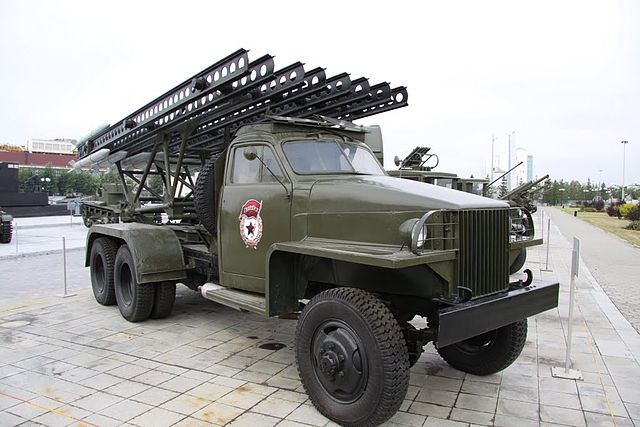
The rockets themselves used stable solid fuel that required no complex handling procedures, thereby reducing the risk of accidents that plagued some other weapons systems.
The ZIS-6 truck chassis was a proven commercial vehicle that could be maintained with standard automotive tools, ensuring that Katyusha units remained operational even when cut off from specialized maintenance support during the chaotic campaigns on the Eastern Front.
The Katyusha’s post-war survival and proliferation demonstrated the soundness of its basic design concept. The weapon system was exported to dozens of countries and saw action in conflicts from Korea to the Middle East to Africa, often in improved versions that retained the basic launcher concept while incorporating modern trucks and upgraded rockets.
Some Katyusha variants remained in active service with various armies into the 1990s, over fifty years after the original design entered combat. The weapon’s survival legacy lies not just in its mechanical durability, but in proving that simple, mobile weapons systems could be more effective than complex, heavily protected alternatives.
The Katyusha survived by being too fast to catch, too simple to break, and too effective to replace, qualities that continue to influence multiple rocket launcher designs today.
8. Consolidated B-24 Liberator (1940-1945)
The Consolidated B-24 Liberator heavy bomber survived World War II not through superior defensive armament or heavy armor, but through overwhelming production numbers, exceptional range, and the ability to absorb tremendous battle damage while completing critical missions.
With over 18,400 aircraft produced, the B-24 was the most manufactured American warplane of World War II, ensuring that losses could be replaced rapidly while maintaining the strategic bombing campaign that helped bring about Allied victory.
The B-24’s survival characteristics began with its innovative design features that prioritized range and payload capacity over speed or defensive capability.
The aircraft’s high aspect ratio Davis wing provided exceptional fuel efficiency, allowing the Liberator to fly longer missions than most contemporary bombers.
This range capability meant that B-24s could often complete missions by flying around heavily defended areas rather than through them, reducing exposure to enemy fighters and anti-aircraft fire.
The aircraft’s tricycle landing gear was revolutionary for heavy bombers and contributed to survival by making landings safer and reducing the accident rate compared to conventional tail-wheel aircraft.
Individual B-24s often survived multiple combat tours despite the aircraft’s reputation for being more vulnerable than the B-17 Flying Fortress. The Liberator’s structure was actually quite robust, with many aircraft returning from missions despite severe battle damage.
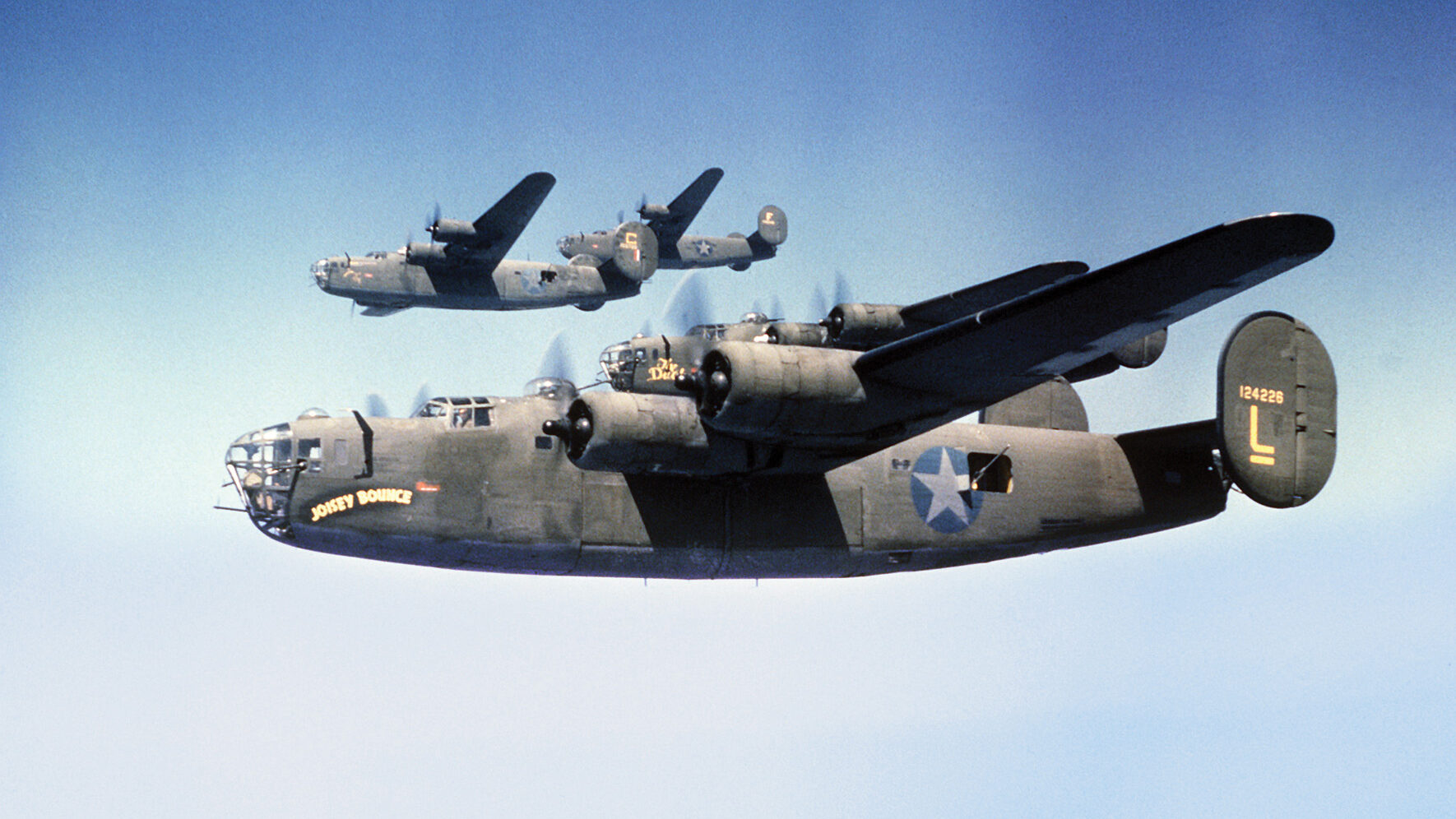
The aircraft’s four R-1830 Pratt & Whitney engines provided enough redundancy that B-24s could often complete missions and return to base with one or even two engines out of action.
The bomber’s large bomb bay doors, while sometimes criticized for structural weakness, could be jettisoned entirely if damaged, allowing the aircraft to maintain structural integrity even after severe damage to the fuselage belly.
Combat survival for B-24 crews depended heavily on formation flying and mutual defensive fire, as individual aircraft were vulnerable to fighter attack.
The aircraft’s survival as a weapons system was due largely to American industrial capacity’s ability to replace losses faster than the enemy could inflict them, but also to the bomber’s fundamental capability to deliver decisive strategic firepower over intercontinental distances.
Many individual B-24s survived the entire war and continued serving in transport and training roles well into the 1950s, a testament to their basic structural soundness despite their emergency wartime construction.
The Liberator’s survival legacy demonstrates that in total war, the ability to maintain overwhelming numerical superiority can be more important than individual platform survivability a lesson that continues to influence strategic aviation planning today.
9. M3 Half-Track (1940-1960)
The M3 Half-Track armored personnel carrier achieved remarkable survival through a unique combination of mobility, protection, and versatility that made it indispensable to mechanized infantry operations throughout World War II and beyond.
This innovative vehicle, combining the speed of wheeled vehicles with the cross-country capability of tracked machines, survived in service for over two decades through continuous adaptation to changing battlefield requirements and proven reliability under the most demanding combat conditions.
The M3’s survival design philosophy centered on balanced capabilities rather than specialization. The vehicle’s front wheels provided steering control and high road speeds up to 45 mph, while rear tracks distributed weight and provided traction in soft terrain where wheeled vehicles would bog down.
This hybrid drivetrain gave the M3 tactical mobility that was superior to either pure wheeled or tracked alternatives in most conditions. The half-track could keep pace with tanks during advances while providing more comfortable transportation for infantry than fully tracked vehicles. This mobility balance proved crucial for survival, as M3s could rapidly reposition to avoid enemy fire or exploit tactical opportunities.
The vehicle’s armor protection, while modest by tank standards, was carefully designed for its intended role. The M3’s 6-13mm armor was sufficient to stop small arms fire and shell fragments while remaining light enough not to compromise mobility.
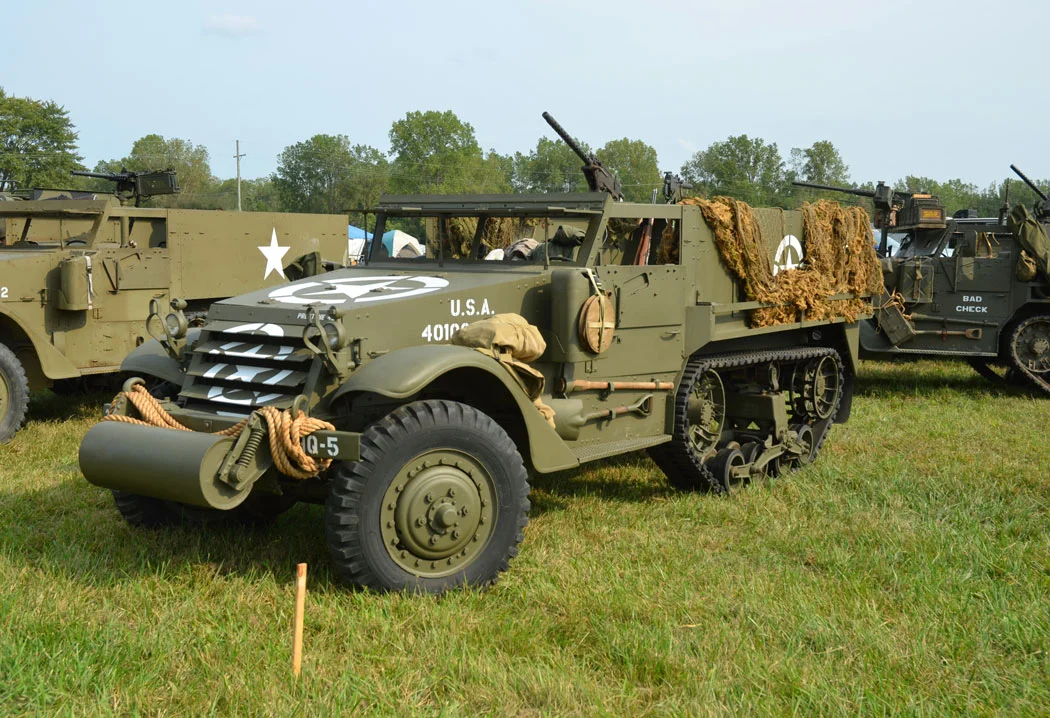
More importantly, the vehicle’s open-top design, often criticized as a vulnerability, actually contributed to crew survival by allowing rapid dismounting when under heavy fire.
Many M3 crews credited their survival to the ability to “bail out fast” when the tactical situation deteriorated, something impossible in enclosed vehicles. The vehicle’s relatively low profile also contributed to survival by making it a less obvious target than taller, more angular vehicles.
The M3’s post-war survival demonstrated the soundness of the half-track concept for many applications. While superseded by fully tracked vehicles for front-line combat, M3s continued serving in support roles throughout the 1950s and were extensively exported to Allied nations.
Israel, in particular, found the M3 ideal for desert warfare and continued using modified versions well into the 1960s. The vehicle’s survival in various armies worldwide proved that its balanced approach to mobility, protection, and versatility remained relevant long after more specialized vehicles had become obsolete.
The M3’s legacy influenced armored personnel carrier design for decades, demonstrating that survival often depends more on tactical flexibility and reliability than on maximum protection or firepower. The half-track survived by being good enough at everything it was asked to do, rather than being the best at any single capability.
10. PT-109 and PT Boat Class (1942-1961)
The PT (Patrol Torpedo) boat class, immortalized by the survival story of PT-109 and its crew, including future President John F. Kennedy, represents one of the most successful small combatant designs of World War II.
These fast attack craft survived through speed, stealth, and aggressive tactics rather than armor or heavy firepower, proving that small, well-handled vessels could be devastatingly effective against much larger warships while maintaining remarkable survival rates in extremely dangerous combat environments.
PT boats achieved survival through what naval tacticians called “mosquito boat” tactics: strike fast, strike hard, then disappear before enemy forces could respond effectively.
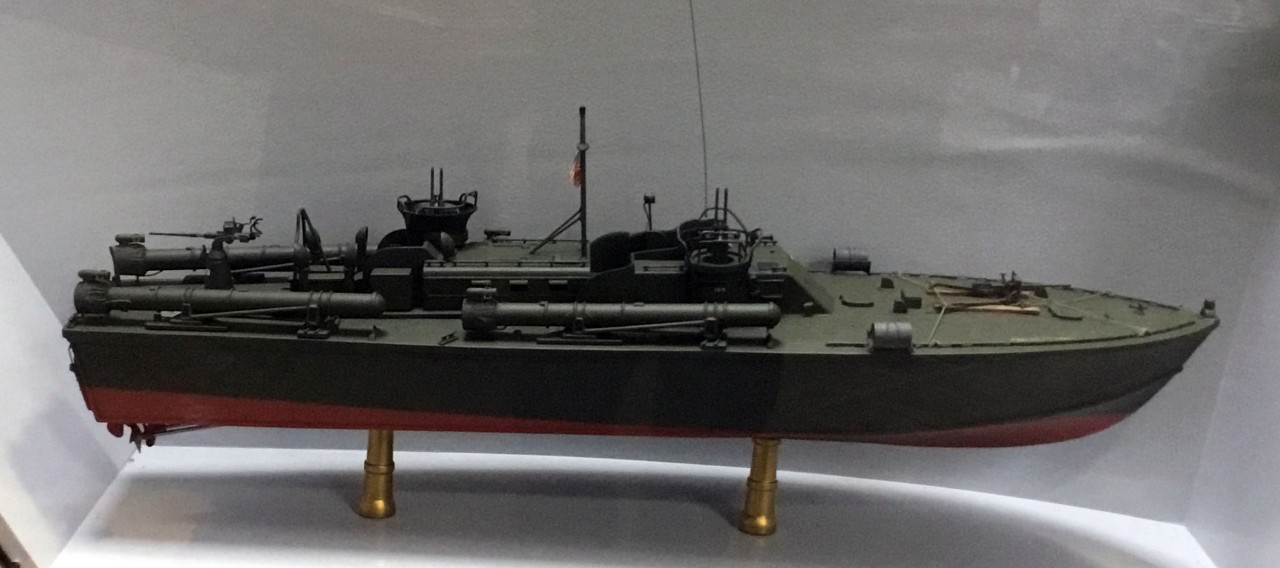
The boats’ lightweight wooden construction, typically using mahogany planking over laminated frames, provided excellent strength-to-weight ratios while remaining easy to repair with materials available at forward bases.
Their three Packard marine engines, each producing 1,500 horsepower, gave PT boats speeds exceeding 40 knots, fast enough to outrun most enemy warships and many aircraft. This speed was their primary survival mechanism, as PT boats relied on avoiding confrontation rather than surviving it through armor protection.
The most famous survival story of the class occurred on August 2, 1943, when PT-109, commanded by Lieutenant John F. Kennedy, was rammed and sunk by the Japanese destroyer Amagiri in the Solomon Islands.
Despite the boat’s destruction, Kennedy’s leadership during the subsequent survival ordeal demonstrated the esprit de corps and resourcefulness that characterized PT boat crews throughout the war.
Kennedy and his surviving crew members swam to a small island, where they survived for six days before being rescued by Australian coastwatchers and local islanders.
This incident, while resulting in the loss of the boat, showcased the survival training and determination that made PT boat crews so effective in Pacific combat operations.
Many World War II-era PT boats continued serving with various navies into the 1960s, while the tactical concepts they pioneered influenced the development of modern missile boats and fast attack craft.
The PT boat’s survival legacy lies in proving that small, professional crews in well-designed fast boats could achieve strategic impact far beyond their size, a lesson that remains relevant in modern naval warfare.
The class survived by embracing mobility and stealth over protection, demonstrating that in naval combat, the ability to avoid being hit is often more valuable than the ability to absorb damage.
Also Read: 9 JDM Legends That Rarely Need Repairs
