
Pickup trucks have long been a symbol of American strength and practicality, whether hauling tools to a job site or towing a boat to the lake. But for decades, efficiency wasn’t part of the conversation.
Trucks were expected to burn through fuel, and most owners accepted single-digit mileage as the price for capability.
Fast forward to today, and the landscape has shifted. Modern engineering, hybrid technology, and lightweight platforms have given us pickups that can deliver car-like fuel economy without losing their usefulness.
Still, some trucks remain unapologetic gas guzzlers, clinging to massive engines and heavy-duty frames that prioritize power over efficiency. To help buyers navigate this spectrum, here’s a closer look at five trucks that stand out for excellent fuel economy and five that struggle to escape single digits.
Trucks With Great MPG
Pickup trucks have long been associated with brute strength, big engines, and even bigger fuel bills. But in recent years, rising gas prices and stricter efficiency standards have pushed automakers to reimagine what a truck can be.
Modern pickups no longer force drivers to choose between capability and fuel economy, many now deliver both.
From lightweight designs and turbocharged engines to hybrid and diesel options, today’s trucks prove that hauling power doesn’t have to mean constant gas station stops.
In this article, we’ll take a closer look at trucks that stand out for their impressive miles per gallon, offering work-ready toughness without draining your wallet at the pump.
1. Ford Maverick Hybrid
When Ford reintroduced compact pickups with the Maverick, it turned the market upside down. The hybrid version is particularly impressive, returning up to 42 mpg in the city and 33 mpg on the highway, numbers unheard of in the truck world.
Despite being small compared to full-size pickups, the Maverick Hybrid still provides a 1,500-pound payload and can tow up to 2,000 pounds, making it more than capable of handling everyday duties. For buyers who want a versatile vehicle without feeling the pain at the pump, this truck is the obvious winner.
Full-size pickup trucks have expanded dramatically over the past decade, leaving a gap for drivers who don’t necessarily require something quite that large. The same can even be said for today’s midsize trucks.
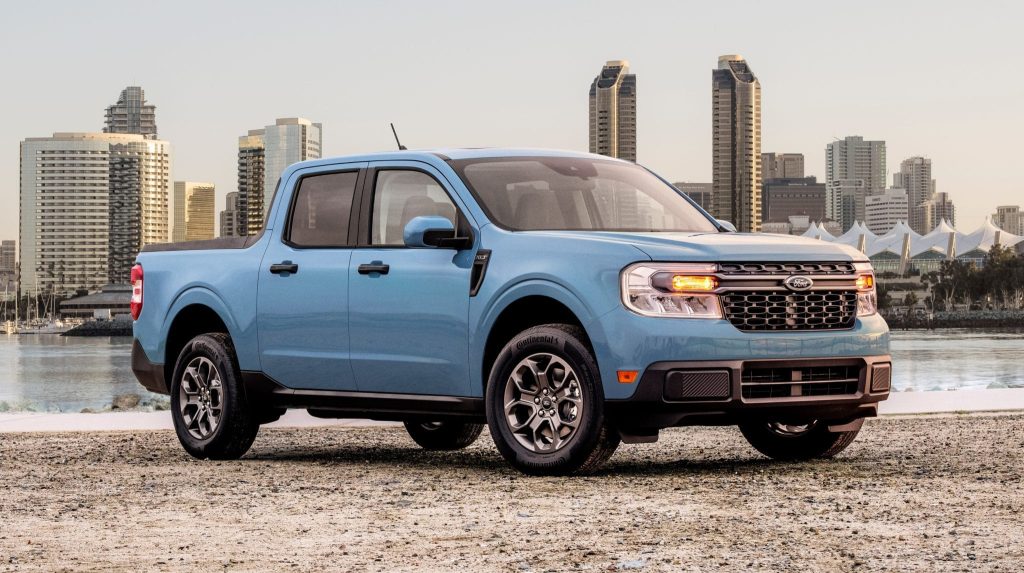
That’s exactly where the 2025 Ford Maverick steps in. More compact and more affordable than Ford’s F-150 and Ranger models, the Maverick is still built with enough utility to tackle many jobs that a typical small SUV simply can’t handle.
Buyers also have the option of a hybrid powertrain, a big advantage when it comes to keeping long-term ownership costs down. For the 2025 model year, Ford has refreshed the Maverick with a larger center touchscreen and also introduced the Maverick Lobo, a sport truck variant.
2. Ram 1500 EcoDiesel
Diesel engines have always been favored for their efficiency, and the Ram 1500 EcoDiesel delivers on that tradition. Its 3.0-liter turbo-diesel V6 produces ample torque while offering up to 32 mpg on the highway.
That combination of pulling strength and range makes it a popular choice for long-distance haulers. Even with tightening emissions regulations, the EcoDiesel has proven to be a practical alternative to thirsty gas engines in the full-size segment.
The 3.0L EcoDiesel made its first appearance as an available engine choice for the Ram 1500 and Jeep Grand Cherokee in the 2014 model year. This introduction was especially notable, as it marked the first time in over a decade that a diesel engine had been offered in a half-ton pickup truck.
Rumors have circulated that Fiat Chrysler Automobiles (FCA) had previously turned down an opportunity to adapt Cummins’ 5.0L V-8 turbodiesel for the Ram 1500, citing concerns that the larger displacement engine would fail to meet the company’s fuel economy targets.
Manufacturing of the 3.0L EcoDiesel is handled by VM Motori, an Italian engine builder and FCA subsidiary, at its facility in Cento, Italy. Although FCA merged with PSA Group in January 2021 to form Stellantis, VM Motori continues to operate as a subsidiary within the new parent company.
It became particularly well-regarded for its fuel economy, which under the right conditions could exceed 30 mpg in certain applications.
Initially, the 3.0L EcoDiesel was offered in Ram 1500 trucks and Jeep Grand Cherokee SUVs beginning with the 2014 model year. Jeep discontinued the engine option for the Grand Cherokee after the 2019 model year, likely due to sluggish sales.
By contrast, the EcoDiesel proved to be far more successful in the Ram 1500, where it remained available through the start of the 2023 model year.
In 2021, Jeep expanded the EcoDiesel lineup by adding it to select trims of the Wrangler and Gladiator. However, like the Ram 1500, production of EcoDiesel-equipped Jeep models ended early in the 2023 model year.
Throughout its run, the engine was paired exclusively with ZF eight-speed automatic transmissions, specifically, the 8HP70 gearbox from 2014 to 2019 and the updated 8HP75 transmission from 2020 through 2023.
3. Chevrolet Silverado 1500 Duramax Diesel
Chevy’s Silverado 1500 equipped with the 3.0-liter Duramax diesel inline-six strikes an excellent balance of power and efficiency.
Capable of achieving 31 mpg highway, this engine option makes the Silverado a strong contender for buyers who log thousands of highway miles each year.
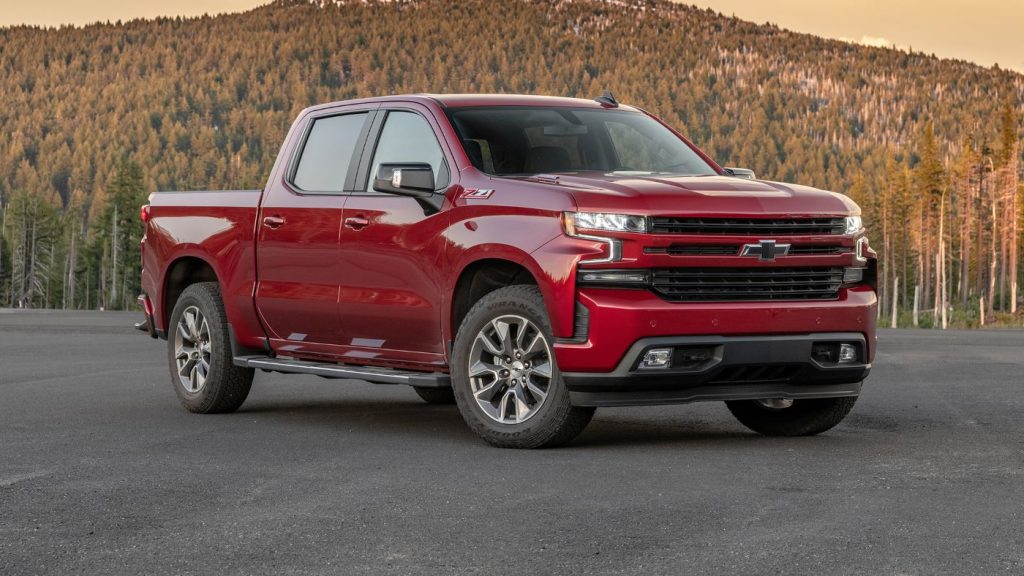
It also maintains plenty of torque for towing, reinforcing the point that big trucks don’t always have to drain your wallet at the gas station.
4. Toyota Tacoma (4-Cylinder Models)
The Toyota Tacoma has earned a reputation for dependability, and in its four-cylinder configuration, it also leans toward efficiency. While its combined rating of about 23 mpg doesn’t match hybrids or diesels, it’s still better than many V6 or V8-powered trucks.
For commuters or outdoor enthusiasts who need the utility of a truck but don’t require maximum towing power, the Tacoma’s four-cylinder setup offers a practical middle ground.
The Tacoma’s optional V-6 engine offers respectable performance and provides enough muscle for towing, while the standard four-cylinder falls short in terms of power and is generally best avoided.
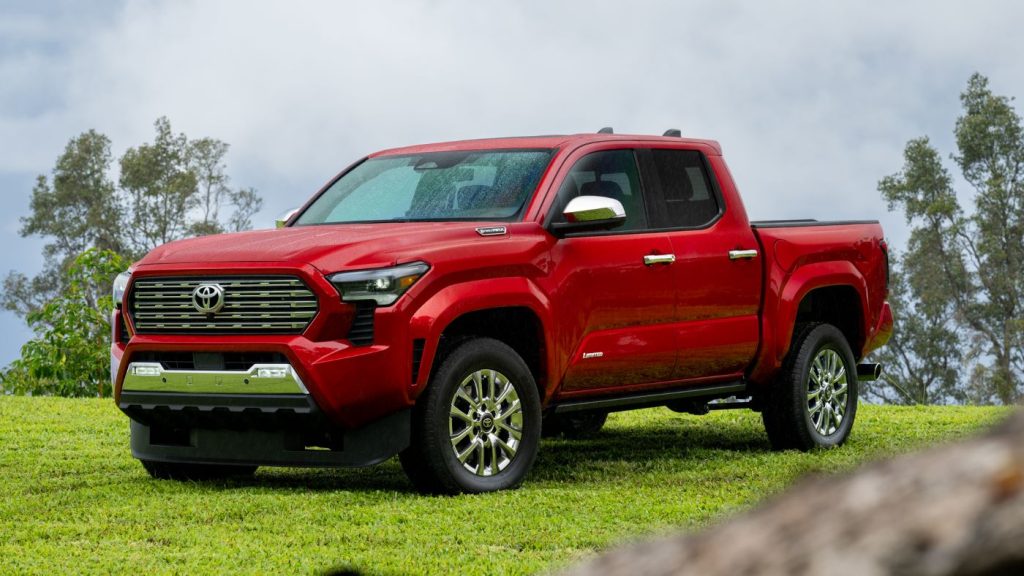
Pairing either engine with the six-speed automatic transmission is also not recommended, as it tends to be finicky and diminishes performance. The better choice is the six-speed manual with the V-6, which makes the truck far more enjoyable to drive. When paired with the automatic, the larger engine can sometimes feel burdened and sluggish.
In terms of trims, the TRD Sport and Limited models are tailored more toward urban use and city driving, while the TRD Off-Road and TRD Pro variants are designed to venture off the beaten path. Still, none of the Tacoma’s versions are particularly fast.
Ride quality and handling are not the truck’s strongest attributes either, but the Tacoma does excel when tackling trails, dirt roads, or rugged terrain. Depending on configuration, it can be built to prioritize either adventure-ready capability or everyday commuting comfort.
5. Hyundai Santa Cruz
Part pickup, part crossover, the Hyundai Santa Cruz is built on a unibody platform, making it lighter and more efficient than traditional body-on-frame trucks.
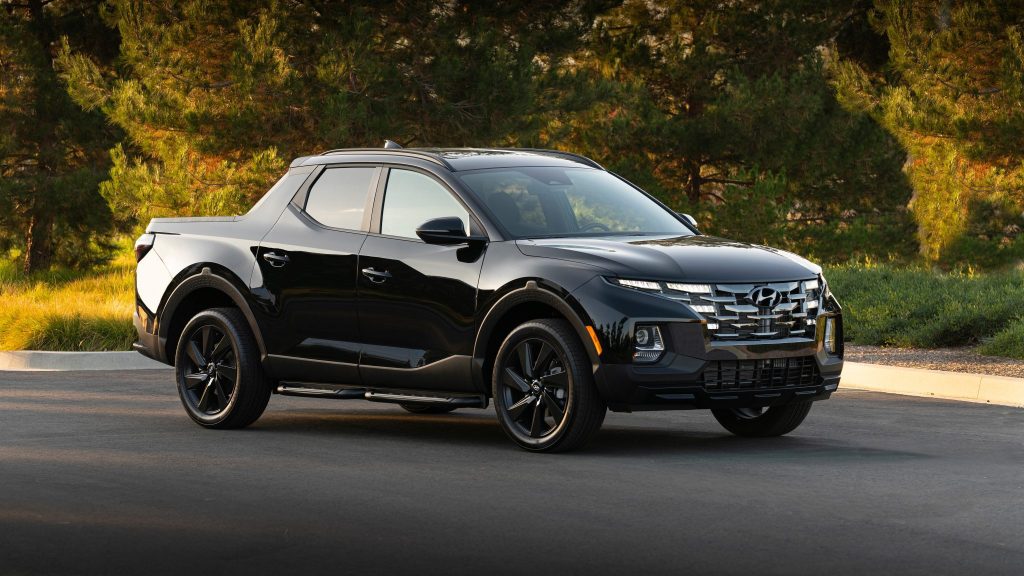
With up to 27 mpg highway from its base four-cylinder engine, it provides efficiency close to compact SUVs while adding the versatility of a small bed. It’s not designed for heavy-duty work, but for city living and weekend getaways, it’s an ideal blend of efficiency and utility.
Trucks That Struggle to Hit Double Digits
For many truck buyers, fuel economy isn’t the top priority, power, towing capacity, and ruggedness often take center stage. Still, when a vehicle guzzles gas so fast it can’t even crack double-digit miles per gallon, it’s hard to ignore.
Some of the most iconic pickups and heavy-duty workhorses on the road deliver incredible performance but at the cost of efficiency, leaving owners with frequent gas station visits and hefty fuel bills.
These trucks may have unmatched strength and presence, but they also remind us of a time when efficiency took a back seat to raw power. In this article, we’ll look at trucks that impress with capability but struggle to climb out of the single digits when it comes to MPG.
1. Hummer H2 SUT
Few vehicles embody excess quite like the Hummer H2 SUT. Powered by a massive 6.0-liter V8 and weighing more than 6,000 pounds, the H2’s real-world fuel economy often landed between 8–10 mpg.
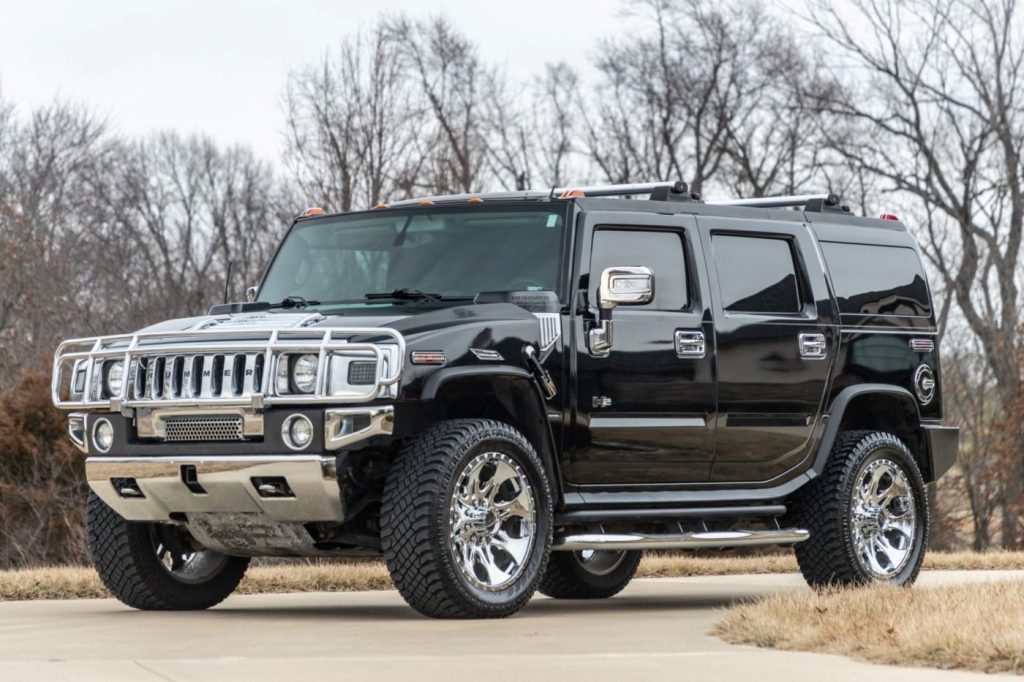
While it made a bold statement on the road, its thirst for fuel quickly became a dealbreaker for buyers as gas prices climbed. Today, it serves as a reminder of just how far the industry has come.
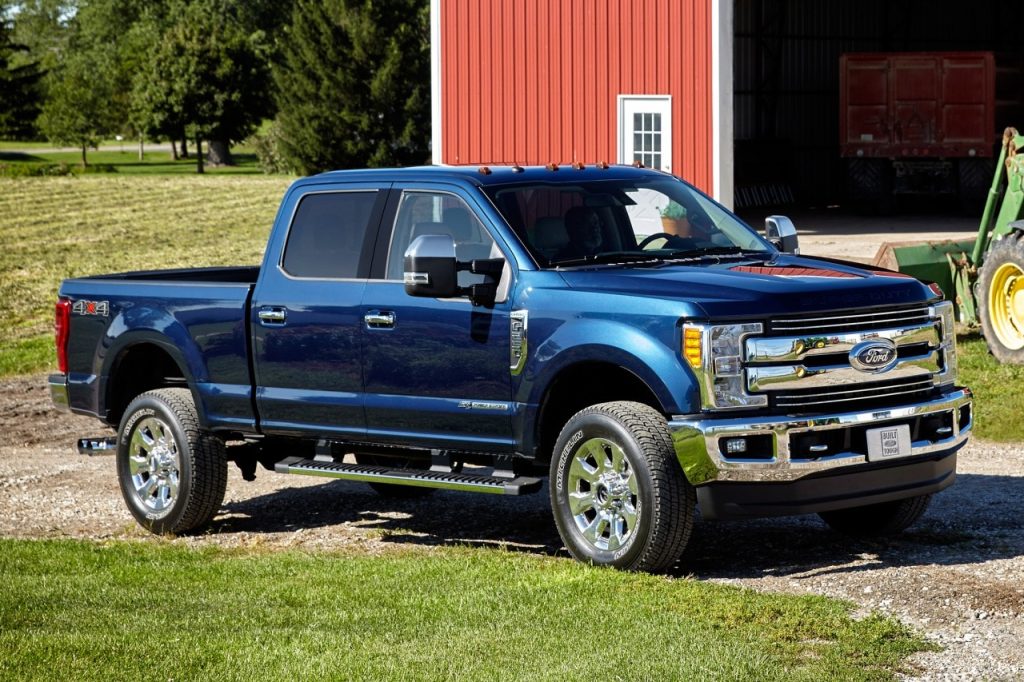
2. Ford F-250 Super Duty (Gas Engines)
The Ford F-250 Super Duty with its 6.2-liter or 7.3-liter gasoline V8 engines prioritizes brute strength over efficiency.
Owners regularly report single-digit MPG when towing and barely better numbers in city driving without a trailer. While its towing and payload capacities are unmatched, anyone using it as a daily driver will face frequent, expensive fill-ups.
Ford’s latest addition to its Super Duty lineup is the 6.8-liter V8 engine, which is taking the place of the long-running 6.2-liter V8.
This new powerplant is derived from Ford’s 7.3-liter Godzilla engine, and like its bigger sibling, it features an iron block paired with aluminum heads. While it keeps the same bore as the 7.3-liter, the stroke length has been shortened from 3.98 inches to 3.64 inches.
Compression has also been adjusted slightly upward, moving from the 7.3-liter’s 10.5:1 ratio to 10.8:1. Typically, engines with higher compression require higher-octane fuel, but Ford states that 87-octane gasoline is still recommended for this engine.
Because the 6.8-liter is still so new, Ford has not yet released its official horsepower or torque figures. For comparison, the outgoing 6.2-liter V8 was rated at 385 horsepower and 420 lb-ft of torque, while the larger 7.3-liter V8 produces 430 horsepower and 475 lb-ft of torque.
Based on this, it is reasonable to expect that the 6.8-liter will see a healthy bump in output compared to the 6.2-liter. Projections place it in the range of 400 to 420 horsepower, with torque around 460 lb-ft.
The 7.3-liter V8 remains Ford’s top gas engine option for the Super Duty series. In many ways, it is quite similar to the 6.8-liter that was derived from it.
The main distinctions come down to the compression ratio and stroke length. Both engines use sequential multi-port fuel injection and carry a more traditional pushrod design with two valves per cylinder, instead of employing overhead camshafts.
They are also naturally aspirated, though the potential addition of forced induction like a supercharger or turbocharger could easily boost their output in the future. Despite their old-school architecture, Ford has successfully kept these engines competitive and emissions-compliant.
At this point, Ford has not released updated horsepower and torque figures for the 7.3-liter either, which suggests increases may be announced compared to the 2022 model year ratings.
For over a decade, Ford’s 6.7-liter Power Stroke diesel V8 has been the cornerstone of its heavy-duty truck lineup, consistently improving in both horsepower and torque. The standard and High Output versions share many similarities, with one key difference.
The High Output version features a water-cooled turbocharger, according to turbos.com. This design cools the turbocharger’s bearings with water, which not only improves responsiveness but also extends component life. The cooling effect is especially important after the engine is turned off.
Without it, residual heat can transfer to the center of the turbo and damage the bearings over time. By dissipating this heat through water cooling, the High Output turbocharger is more durable and reliable in the long run.
That difference in turbocharger design is what sets the two Power Stroke diesel variants apart, even though their core specifications remain largely the same.
3. Ram 2500 Power Wagon
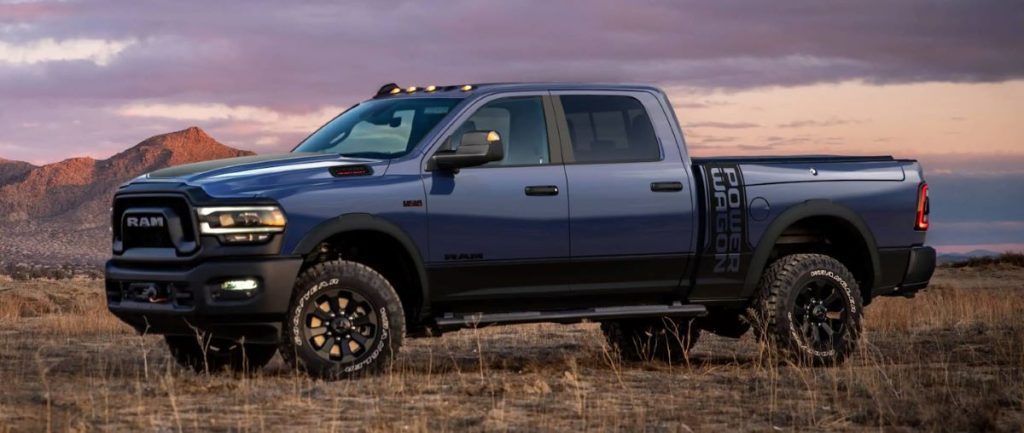
The Ram Power Wagon is a specialist truck designed for off-road enthusiasts. Equipped with a 6.4-liter Hemi V8, it has all the muscle you’d want for trails and steep climbs, but that comes at the cost of efficiency.
Real-world reports place it around 10–12 mpg combined, with spirited off-road driving dragging numbers down even further. It’s a dream toy for adventurers but a nightmare for long commutes.
The 2025 Ram 2500 enhances the appeal of one of the most respected heavy-duty pickups by introducing a wide range of upgrades, the highlight being a revised Cummins turbodiesel engine. Already known for its strong towing capabilities and advanced interior technology, the Ram 2500 raises the bar further for the new model year.
Buyers can now opt for a massive 14.5-inch tablet-style screen, while the truck continues to stand out for its relatively smooth ride and refined road manners, qualities not easily captured in a spec sheet but highly valued in everyday use.
The updated Cummins turbodiesel inline-six now generates 430 horsepower and 1,075 lb-ft of torque, a noticeable jump from last year’s 370 hp and 850 lb-ft.
It’s paired with an eight-speed automatic transmission, replacing the old six-speed, and is now operated by an electronic column shifter instead of a mechanical one.
Ram also reports that it has reduced noise, vibration, and harshness with this new engine configuration, which could solve one of the long-standing complaints about the diesel’s loudness.
Inside, the technology upgrades are just as impressive. The previous optional 12-inch touchscreen has been enhanced with Ram’s latest infotainment software, but it is no longer the range-topping display. That honor now belongs to the expansive 14.5-inch screen.
Additionally, buyers can opt for a fully digital instrument cluster and even a passenger-side display. Practical features have also expanded to include dual wireless charging pads, a 2.4-kW inverter, a trailer reverse steering control system, and a variety of new safety technologies.
4. Chevrolet Silverado 2500HD (Gasoline Models)
Chevy’s 2500HD with the 6.6-liter gas V8 is another truck built with capability in mind, not efficiency. In day-to-day use, it often returns 8–10 mpg, especially when towing. The diesel-powered version of this truck offers far better mileage, but the gas engine remains a guzzler for those who opt for it.
Just when it feels like the pickup truck segment has drifted into extremes with oversized wheels and off-road modes like Baja, the 2025 Chevrolet Silverado 2500 HD arrives to restore balance.
While it may not be the flashiest truck in terms of technology or design, the heavy-duty Silverado focuses on fundamentals. It offers immense practicality, a class-leading tow rating, and the availability of a powerful, torque-rich diesel option for those willing to spend extra for serious capability.
Ownership of the 2025 Silverado 2500 HD begins at $45,300 for the regular cab, $48,995 for the double cab, and $50,795 for the Crew Cab, all figures before the $1,995 destination fee.
The regular cab is available only with a long bed, while the double and Crew Cab models provide the option of either a standard or long bed. Rear-wheel drive comes standard, with four-wheel drive available as a $2,800 upgrade.
At the higher end of the range, the off-road-oriented ZR2 starts at $73,095 and comes exclusively with 4WD, while the premium High Country trim begins at $74,895 and also includes 4WD as standard.
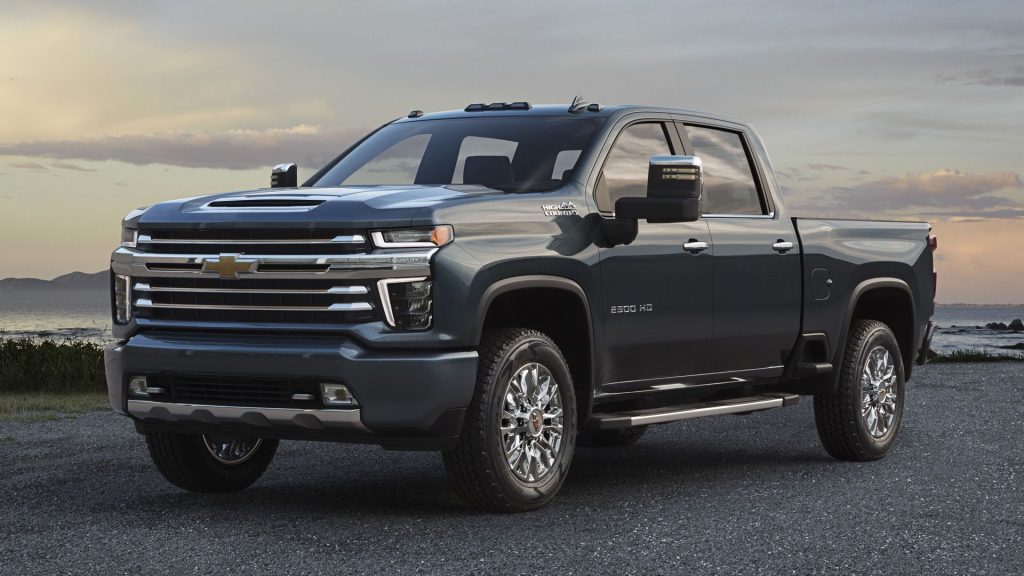
In terms of design, the 2500 HD builds on the Silverado’s recognizable styling but takes it up a notch in size and toughness. In LTZ trim for 2025, it features animated LED headlights with distinctive daytime running light signatures, LED fog lights, and 18-inch wheels.
Adding the Trail Boss package ($2,565) gives the truck a darker and more aggressive presence, thanks to 20-inch gloss black wheels, color-matched bumpers and skid plates, red front recovery hooks, and BF Goodrich off-road tires.
Under the hood, the Silverado 2500 HD comes standard with a 6.6-liter V8 gasoline engine paired with a 10-speed automatic transmission, producing 401 horsepower and 464 lb-ft of torque. For greater strength, the optional 6.6-liter Duramax V8 turbo-diesel boosts output to 470 horsepower and a massive 975 lb-ft of torque.
Towing capability reflects these powertrain choices. The gas-powered Crew Cab models are rated for between 12,000 and 16,000 pounds, while the Duramax diesel raises the maximum towing capacity to 20,000 pounds when paired with the Max Trailering package.
Those who require the full 36,000-pound tow rating will need to opt for the Duramax diesel in the Silverado 3500 HD.
On the road, the Silverado 2500 HD delivers the commanding experience expected of a heavy-duty truck. Its high driving position and well-assisted steering create the impression of cruising above traffic rather than blending into it.
However, blind spots are considerable, large enough to obscure not only small children but even adults near the massive front grille. While the truck’s slab-sided design helps drivers gauge its edges, the $1,245 Safety package with a surround-view camera feels like an almost necessary upgrade for added confidence and security.
5. Toyota Tundra (First Generation)
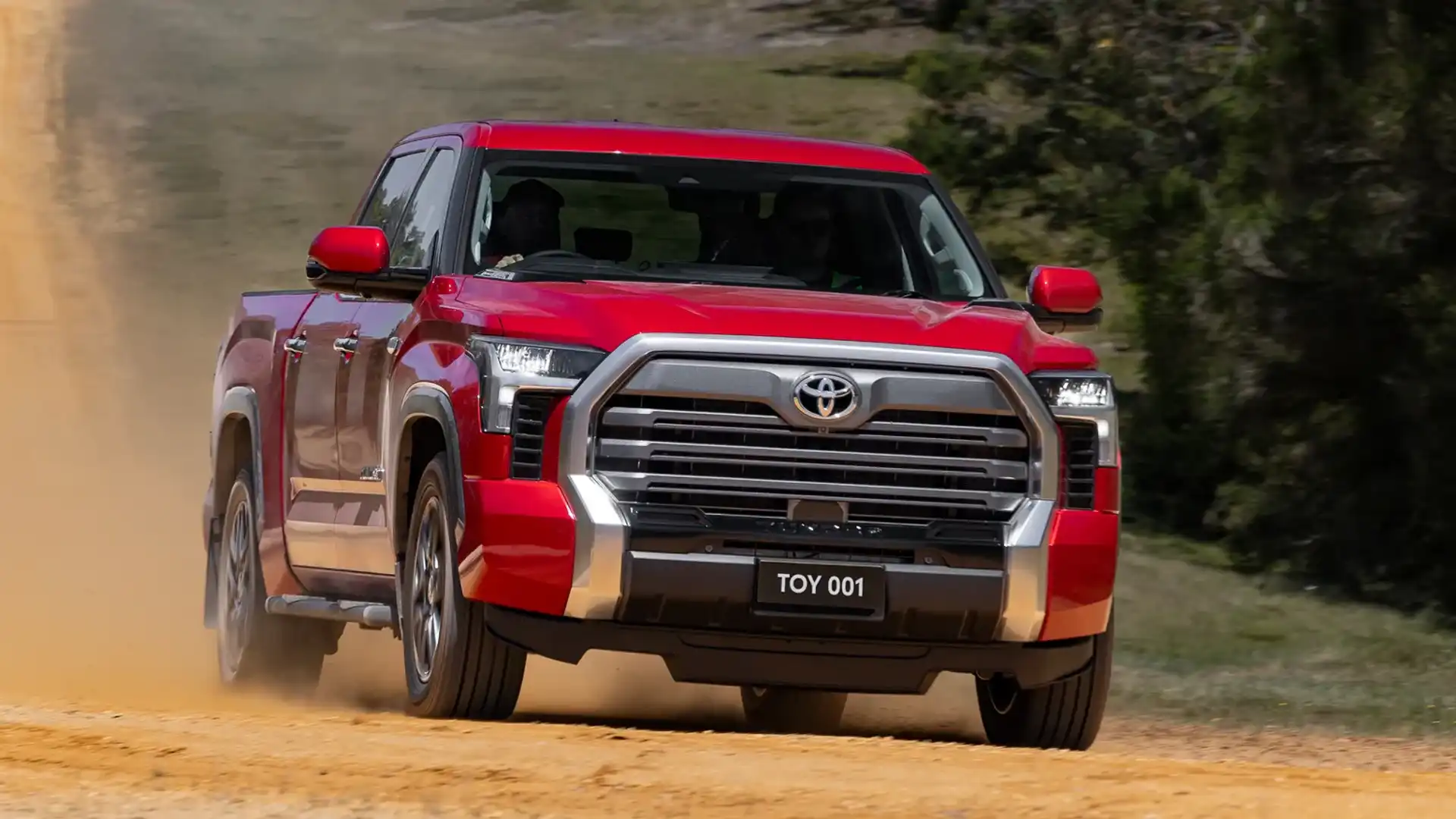
The early Toyota Tundra models may be lauded for reliability, but efficiency was never their strong suit. The 5.7-liter V8, in particular, often fell into single-digit MPG in city driving and didn’t fare much better on the highway when towing.
While modern versions of the Tundra now feature turbocharged engines and hybrid options, the original models remind us how thirsty full-size pickups used to be.
Fuel economy is becoming an increasingly important factor in the U.S. truck market. Rising fuel costs, stricter emissions standards, and the growing availability of hybrid and diesel technology have made efficiency a key selling point.
Trucks like the Ford Maverick Hybrid, Hyundai Santa Cruz, and Ram EcoDiesel prove that buyers don’t have to give up capability to save money at the pump.
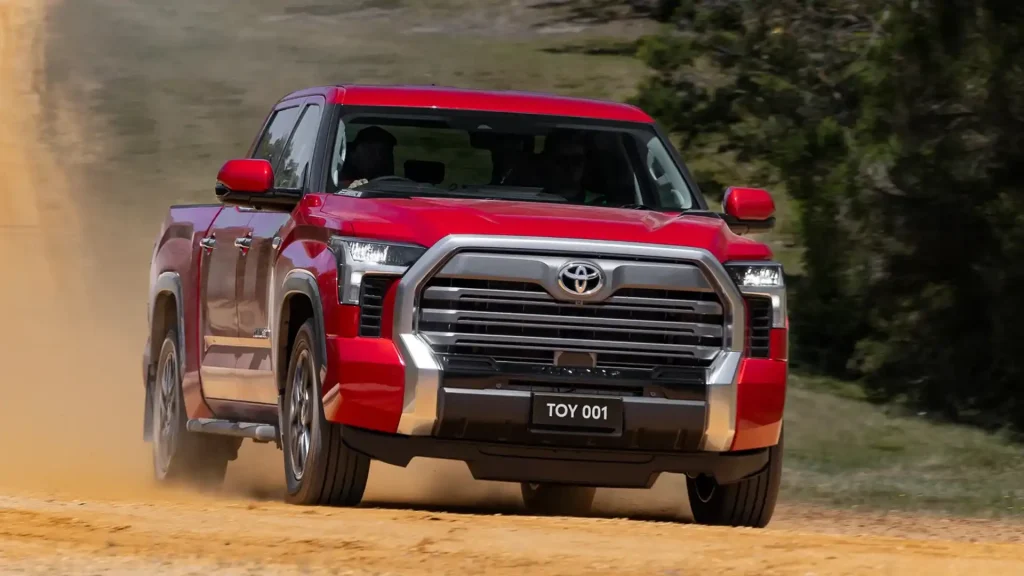
On the flip side, heavy-duty gas-powered trucks and older full-size models still highlight the compromises buyers face when maximum power is the priority. The Ford F-250, Ram Power Wagon, and Chevy 2500HD gasoline versions show that brute force often means stopping for fuel far more often than most drivers would like.
For U.S. truck shoppers, the decision comes down to priorities. If daily commuting and moderate towing are the focus, modern efficient trucks offer a smart path forward.
But if maximum towing, off-road exploration, or old-school V8 muscle is what you crave, then prepare to make peace with single-digit MPG, and more frequent visits to the gas station.
