
Car depreciation is one of the biggest costs drivers face in the United States. For most vehicles, the value drops by thousands the moment you leave the dealership, and within five years, the average car loses more than half its original sticker price. That’s why resale value is a critical, yet often overlooked, factor in car buying.
But some cars defy expectations. They stay in demand, hold their worth, and leave owners stunned when it comes time to trade in or sell. While Toyota and Honda are famous for strong resale, a handful of unique models across various brands also shock drivers with how much money they get back.
Here are nine distinctive cars that consistently outperform expectations when it comes to resale value.
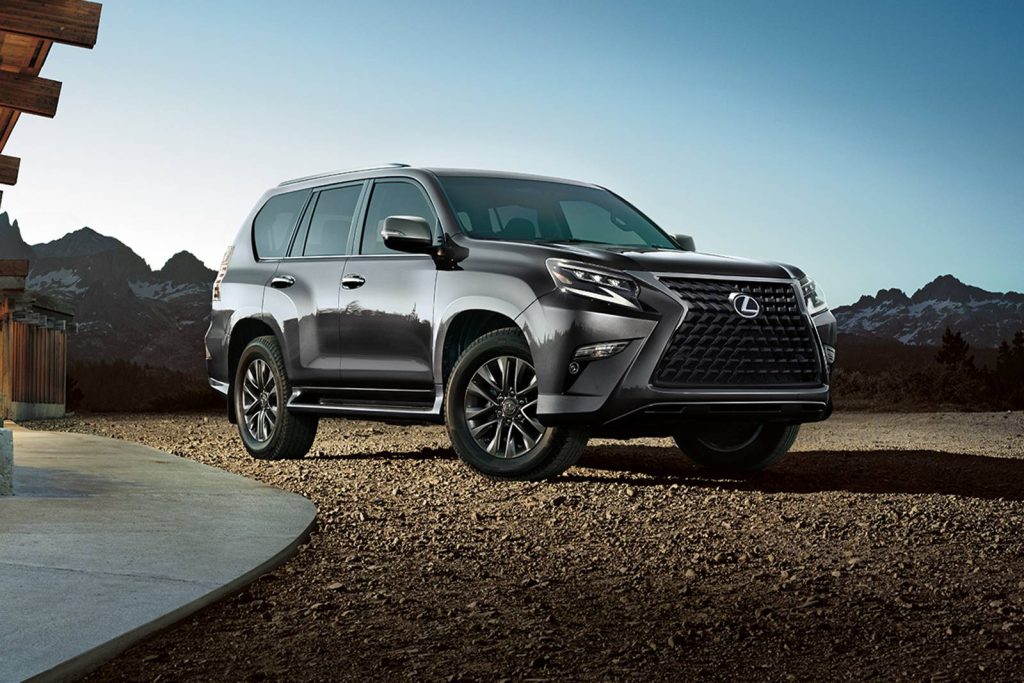
Lexus GX
Luxury vehicles usually depreciate fast, but the Lexus GX is a major exception. Built on a body-on-frame platform and sharing DNA with the Toyota Land Cruiser Prado, the GX is beloved for its rugged reliability wrapped in upscale comfort.
Buyers seeking a dependable luxury SUV often turn to used GX models, keeping prices surprisingly strong. Owners expecting “luxury car depreciation” are often shocked to find their GX has held its value more like a Toyota than a typical luxury badge.
By far the oldest vehicle in Lexus’ lineup, the GX460 is a three-row SUV built in a way that few modern vehicles are. Introduced in 2010, it rides on body-on-frame construction and features a solid rear axle, with a V-8 engine standard.
Distinctly not a crossover, the GX460 combines genuine off-road capability with luxury appointments, making it a unique choice among premium seven-seaters. For 2022, the GX460 has been updated with a new infotainment system, while the Black Line special edition adds distinctive styling and a striking green paint option.
For this year, a 10.3-inch infotainment touchscreen replaces the previous 8.0-inch unit, front and rear parking sensors are now standard, all trims include heated and power-folding side mirrors, and a rear seat reminder system has been added. The Black Line edition brings unique styling cues and exclusive paint colors.
The GX460 should not be mistaken for a crossover. It is a true SUV built the traditional way, with body-on-frame construction, a live rear axle, full four-wheel drive, and a V-8 engine. This approach comes with both benefits and compromises.
On the positive side, the GX460 is among the most off-road-capable luxury SUVs on the market today. Trail-ready features include a two-speed transfer case, low-speed cruise control, height-adjustable air suspension, multi-terrain traction settings, and underbody skid plates.
On the downside, its utility as an everyday three-row vehicle is limited. Cargo space and passenger room are constrained, and the third row is quite small.
Fuel economy lags behind more modern crossovers, and although the ride is comfortable, its truck-like construction is evident in the driving experience. The new infotainment system addresses one of the biggest shortcomings from previous years, adding much-needed modern convenience.
In 2022, luxury buyers have a wide range of urbane, three-row crossovers to choose from, including within Lexus’ own lineup. The GX460 does not fit that mold, and that is intentional.
It remains a niche vehicle for drivers who prioritize rugged capability and upscale features, even if that comes at the expense of practicality or fuel efficiency.
Under the hood, the GX460 is powered by a 4.6-liter V-8 producing 301 horsepower and 329 lb-ft of torque, paired with a six-speed automatic transmission and true four-wheel drive.
Our testing recorded a 0-60-mph time of 6.9 seconds. EPA ratings list fuel economy at 15/19 mpg city/highway, highlighting one of the model’s weaknesses, though its towing capacity is impressive at a maximum of 6,500 pounds.
Ford Bronco
When Ford resurrected the Bronco in 2021, demand went through the roof. Long waitlists pushed many buyers into the used market, where prices skyrocketed.
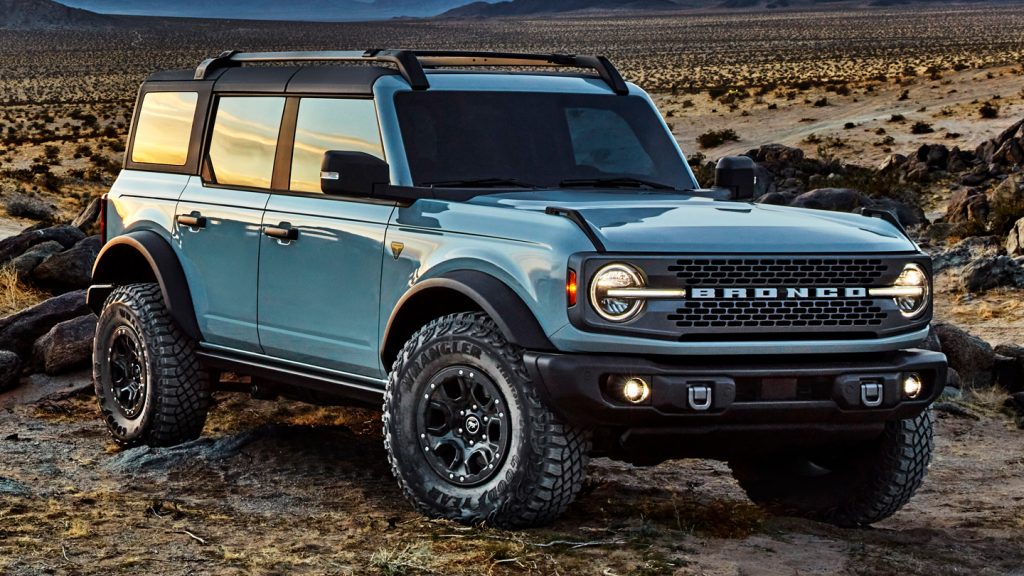
Even as production has ramped up, used Broncos still command premium prices thanks to their off-road capability, retro styling, and cult-like following. Owners are stunned when they realize that their Bronco, sometimes just a year or two old, can sell for close to or even above its original MSRP.
Toyota Prius Prime
The Prius has always been known for efficiency, but the Prius Prime plug-in hybrid has become a resale surprise. With the ability to drive short distances on electricity alone and Toyota’s reputation for hybrid durability, the Prime has attracted a strong used-car following.
Shoppers looking to save on fuel without the range anxiety of a full EV are driving resale prices up. Owners who assumed a quirky hybrid hatchback would lose value quickly often walk away very impressed.
What makes the new Prius so appealing is its multidimensional character. It’s fun to drive, it looks good, it’s relatively quick for its class, and, of course, it delivers impressive fuel economy.
While many drivers may already be aware of these qualities, what sets it apart is that they all remain consistent even after a year of real-world testing. Our long-term test vehicle, a 2024 Prius Prime XSE Premium, is now sold starting in 2025 as the “Prius Plug-In Hybrid,” but the car’s excellence has carried over unchanged.
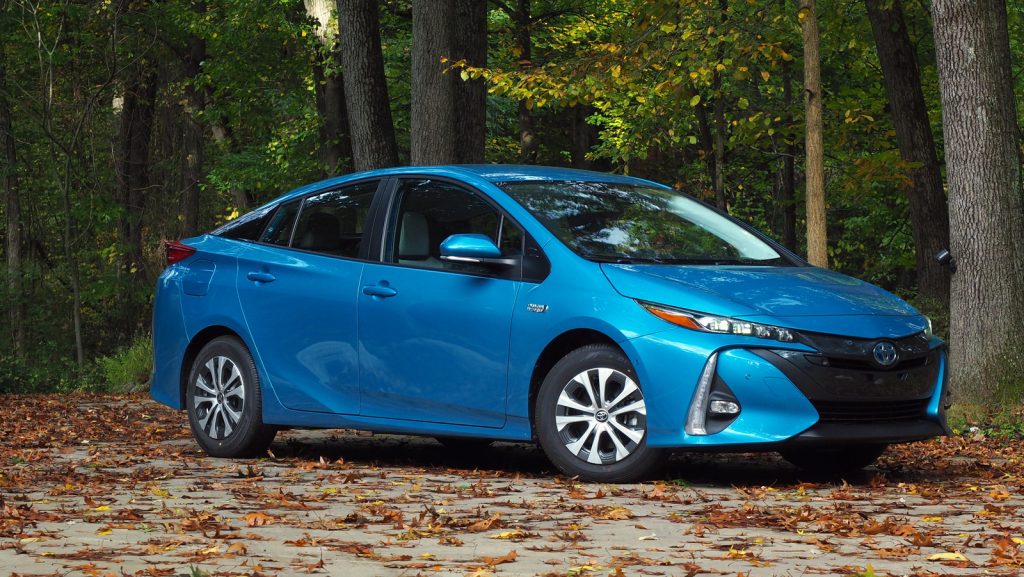
During our testing, we encountered no reliability issues, and the car often met or even exceeded its EPA-rated 39 miles of electric range under optimal conditions.
Real-world results will vary: sustained freeway driving at 75 mph on a 40-degree day with the heater running will reduce the range below 39 miles. However, in more typical driving conditions, such as stop-and-go traffic that limits freeway speeds, the Prius thrives, making the most of its plug-in capabilities.
One of the most compelling aspects is the car’s all-electric mode, which still allows for reasonably brisk acceleration. The Prius Prime, now called the Prius Plug-In Hybrid, offers tremendous flexibility for anyone looking to explore electrified driving without intimidation.
Unlike fully electric vehicles, it can recharge from a standard 110-volt outlet in just a few hours, so there’s no need to install a Level 2 home charger. This combination of efficiency, accessibility, and engaging driving makes it a uniquely versatile plug-in hybrid.
Also Read: 5 Undervalued Used Utes That Last vs 5 Popular Utes That Fail Early
Chevrolet Camaro ZL1
American muscle cars usually depreciate fast, but not the Camaro ZL1. With its supercharged V8 and track-ready performance, it has carved out a reputation among enthusiasts.
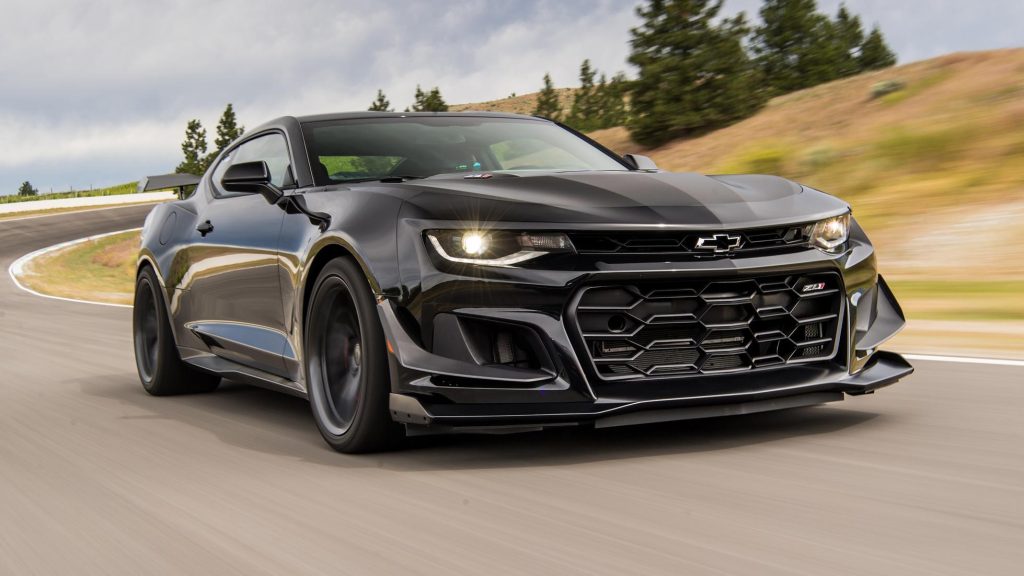
Limited production numbers and high demand from collectors have kept resale values higher than expected. Owners who buy the ZL1 thinking it’s just a fun weekend car are often shocked when they discover its value barely budges compared to a regular Camaro.
Mini Cooper
Small cars typically depreciate quickly, but the Mini Cooper is an exception. Its retro-inspired styling, fun-to-drive nature, and loyal fan base keep demand steady in the used market.
While some owners worry that quirky European cars won’t hold their value, Minis often retain surprising resale strength, especially well-maintained manual-transmission or special-edition models.
The 2022 Mini Cooper is a true icon in the automotive world, known for its playful styling, famously sharp handling, and virtually endless personalization options. Available in three- and five-door hardtop body styles as well as a convertible ragtop, the Cooper forms the backbone of the Mini lineup.
Buyers can choose between a 134-hp three-cylinder engine or a 189-hp four-cylinder, with the latter pairing best with the Mini’s fun-to-drive chassis.
Base models remain relatively affordable, but better-equipped S variants push into entry-level luxury territory, competing with small sedans and hatchbacks from Mercedes-Benz and BMW, a challenging group. Nevertheless, the Cooper remains an excellent choice for drivers who value both style and engaging driving dynamics.
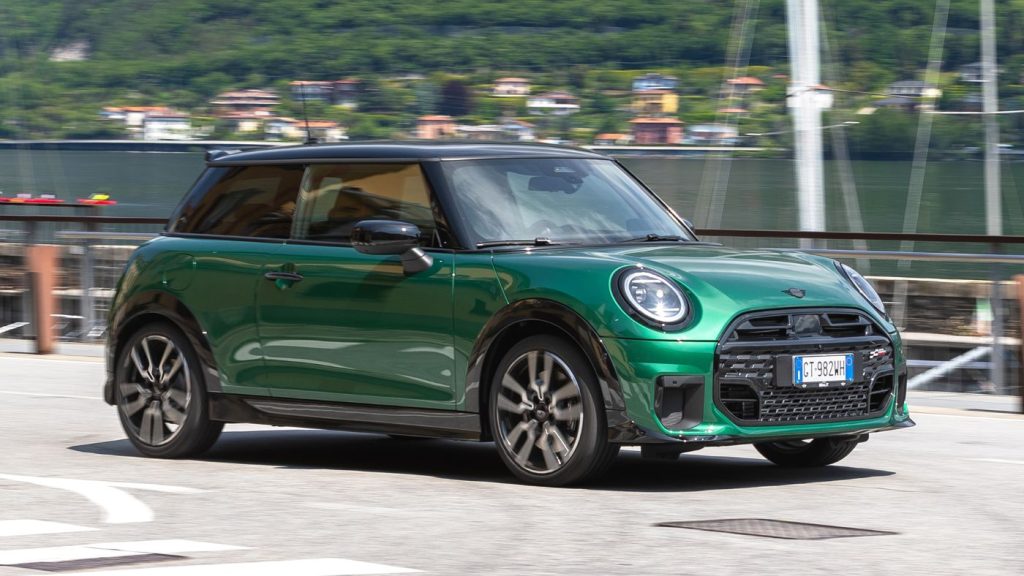
For 2022, Mini has given the Cooper a facelift that updates the front and rear bumpers, revises the grille, introduces new wheel designs, and adds some bold new colors, including a color-shifting Multitone roof option.
The interior receives several upgrades as well, such as a redesigned steering wheel, a new checker-patterned upholstery choice, and tweaked air vents. Interior trim has been refreshed, and the infotainment system now comes standard with an 8.8-inch display across the lineup.
A digital gauge cluster, lane-departure warning, and SiriusXM satellite radio are also standard. Manual transmissions return after a recent hiatus, available exclusively on the three-door Cooper and Cooper S models.
Pricing for the 2022 Mini Cooper starts at $24,250 and rises to $33,250 depending on trim and options. Among the lineup, the Cooper S Hardtop is our pick, especially with the manual transmission, to maximize the fun-to-drive experience.
The five-door Hardtop carries a slight price premium, but we’d stick with the three-door, as neither version offers abundant space. Beyond the trims, the extensive personal customization options allow buyers to create a combination of colors and accessories that reflects their taste.
Under the hood, the standard 1.5-liter turbocharged three-cylinder engine delivers 134 horsepower and plenty of pep for this small, lightweight car. All Minis come with front-wheel drive, and handling is responsive regardless of engine choice.
That said, the S models with the 189-hp turbocharged four-cylinder engine shine, outperforming the base model by more than a second in our zero-to-60-mph testing, hitting 6.2 seconds.
While the automatic transmission shifts smoothly, the six-speed manual remains our favorite for pure driver engagement. The firm suspension enhances the Mini Cooper’s enthusiast-oriented character, making it thrilling on twisty roads, though it can feel harsh over rough surfaces.
GMC Yukon Denali
Full-size SUVs usually take a depreciation hit, but the GMC Yukon Denali defies that trend. With its luxury interior, V8 power, and family-hauling capability, the Denali is constantly in demand among American buyers.
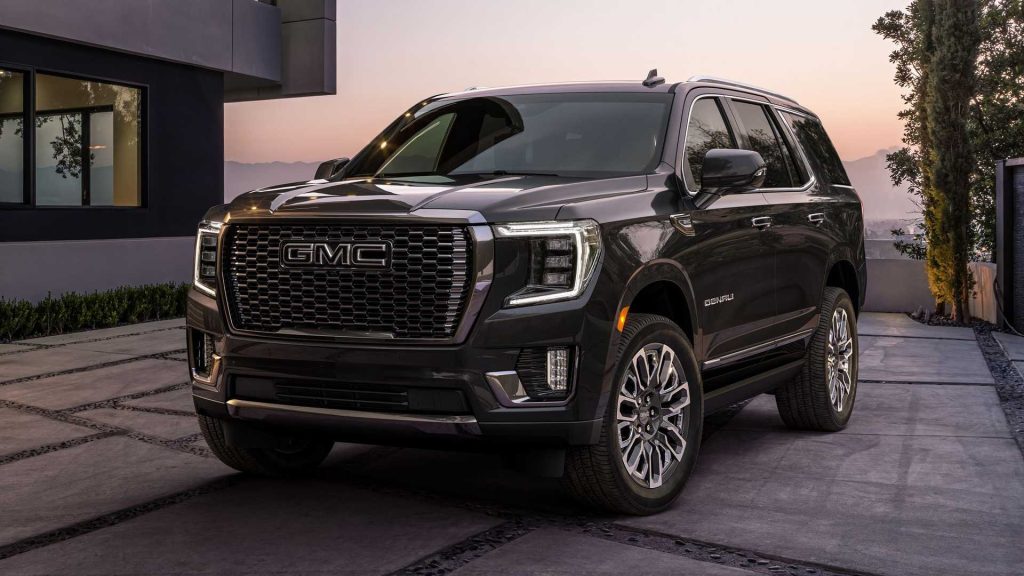
The Yukon also shares much of its DNA with the Cadillac Escalade, but often holds resale value just as well while costing less new. Owners of this big SUV are often shocked when trade-in offers remain strong, even after years of use.
Also Read: Top 6 F-150 Engines That Survive Harsh Mashups
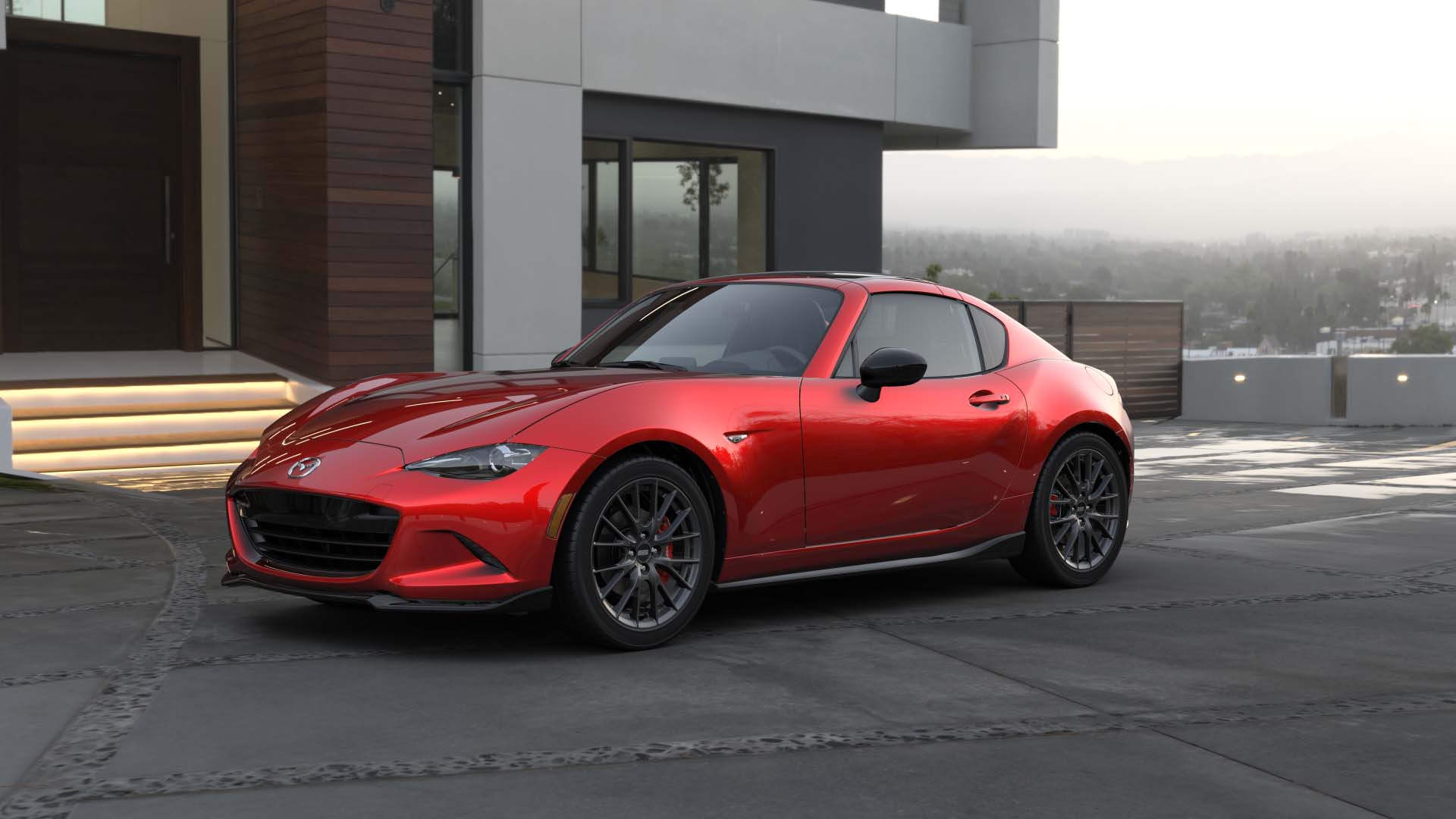
Mazda MX-5 Miata
Sports cars are notorious for plummeting resale values, but the Mazda MX-5 Miata bucks the trend. Affordable, lightweight, and universally praised for its driving dynamics, the Miata enjoys a devoted following.
Because of that demand, used Miatas often fetch higher-than-expected prices. Owners who bought it as a “fun weekend toy” are surprised to find it barely depreciates compared to pricier sports cars.
Pricing for the 2025 Mazda MX-5 Miata begins at $29,530 for the Sport trim, climbing to $33,030 for the Club and $34,830 for the Grand Touring, all before the $1,185 destination fee.
The RF variant adds a stylish but hardly essential convertible “fastback” roof to the Club and Grand Touring models, along with several thousand dollars to the price.
Mazda could easily have overcomplicated the Miata’s winning formula, but instead the brand continues to show admirable restraint.
The fabric soft top remains manually operated, and the air conditioning system uses large, simple-to-grip knobs. While no one will mistake the plastics on the pop-out cupholders, sun visors, or air vents for the premium materials found in a BMW Z4 or Mercedes CLE, they get the job done just fine.
Under the hood, the Miata stays true to its familiar setup with the Skyactiv-G 2.0-liter four-cylinder engine. Output remains a modest 181 horsepower and 151 lb-ft of torque, numbers that look small even compared to some affordable city cars.
Still, the Miata thrives on character rather than raw power. A six-speed manual transmission remains standard, while the Grand Touring trim offers an automatic option for those who prefer it.
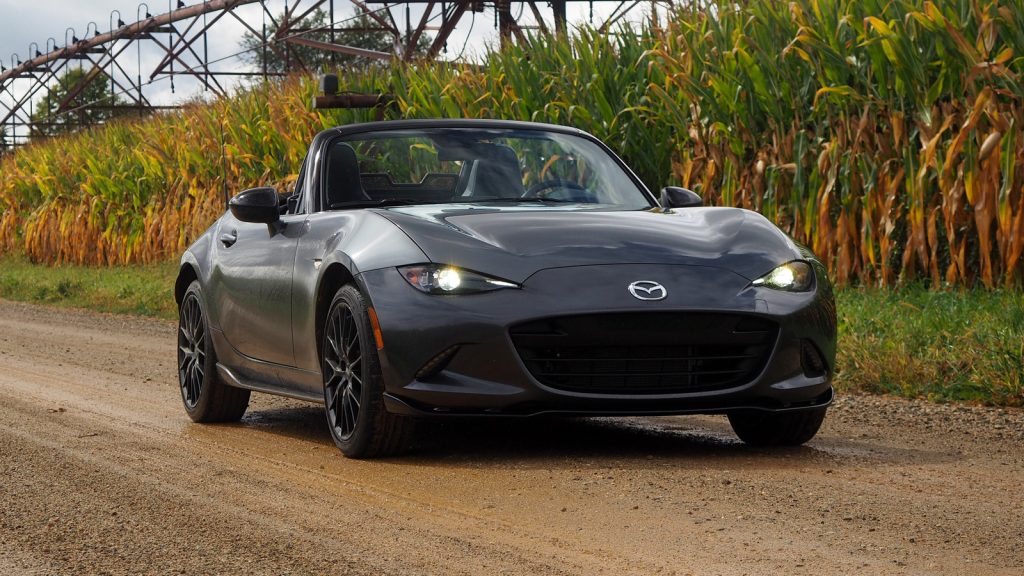
Power is sent exclusively to the rear wheels, and Mazda’s closest nod to modern drive modes is the DSC-TRACK button.
This setting allows traction and stability control systems to step further aside, making it easier to slide the car around the track. Assisting in this endeavor is the limited-slip differential, standard on Club and Grand Touring trims, which helps manage power between the rear wheels for better grip.
There is something inherently refreshing about slipping into the driver’s seat of a Miata and realizing that how fast you go, and how well you carve through corners, is determined entirely by your skill with the wheel, stick, and pedals. Importantly, “fast” in a Miata doesn’t require breakneck speeds.
Thanks to its modest output, lightweight build, and low-slung roadster design, the Miata feels lively and engaging at everyday speeds. The result is a genuine sense of swiftness that defies what its analog speedometer might suggest.
Acura Integra
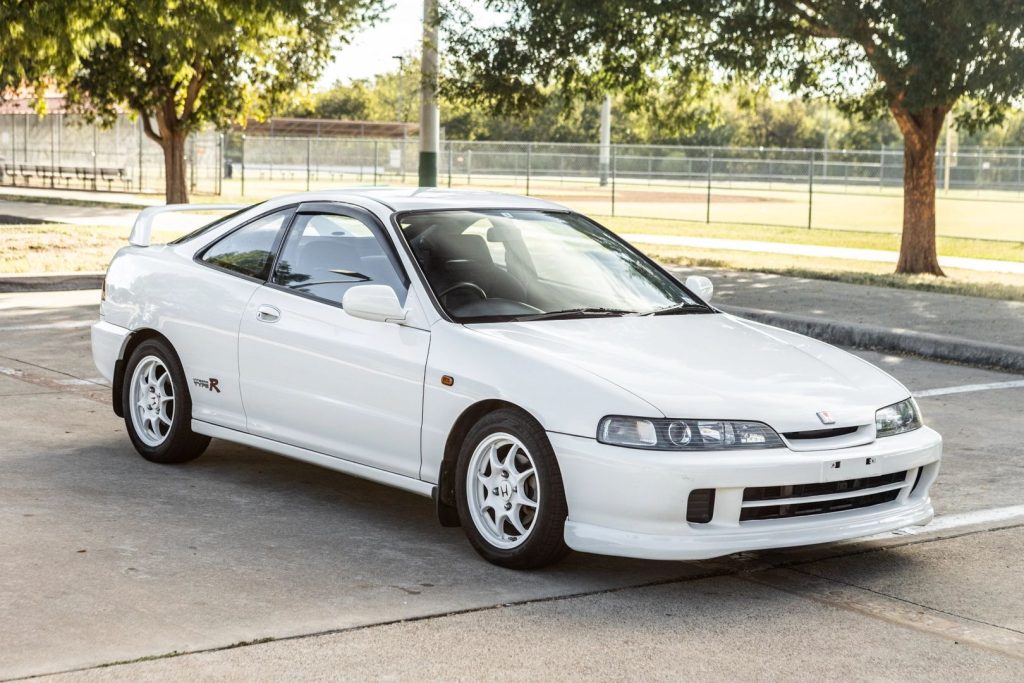
The return of the Acura Integra in 2023 reintroduced one of Honda’s most beloved nameplates. The new Integra blends performance, luxury, and efficiency, and early resale trends show it’s holding value much better than expected.
With limited availability and strong brand nostalgia, used Integras are commanding resale prices that shock owners who assumed compact luxury sedans depreciate quickly.
Acura Integras have always shared a strong connection with the Honda Civic, and the 2025 model is no exception. It continues to embody what the nameplate has long represented: a premium, sporty, four-door, front-wheel-drive hatchback.
Over the years, the Integra has become one of Acura’s most iconic models, and it will feel familiar to fans of the 1990s versions that earned the car its reputation.
Balancing an upscale demeanor with hatchback practicality, the Integra remains a favorite for its spirited driving character. While it isn’t the fastest vehicle in its class, drivers seeking more performance can opt for the 320-hp Type S, reviewed separately.
Beyond sheer speed, the 2025 Integra stands out for the overall balance of qualities it offers, creating a unique persona distinct from more expensive rivals such as the Audi A3 and Mercedes-Benz CLA-class.
For 2025, the Acura Integra remains largely unchanged, as it is still a relatively new model. Pricing starts at $34,195 and climbs to $39,195 depending on trim and options. We recommend the A-Spec Technology trim as an ideal alternative to the higher-performance Type S.
This version offers sportier styling, 18-inch wheels, and the Technology Package, which includes an adaptive suspension system, a 10.2-inch digital instrument cluster, a 16-speaker ELS audio system, and wireless smartphone charging.
Most notably, the A-Spec Technology trim can be equipped with a six-speed manual transmission, unavailable on the lower trims, preserving the Integra’s enthusiast-oriented driving experience.
Under the hood, the Integra is powered by a turbocharged 1.5-liter four-cylinder engine derived from the Honda Civic Si. The standard transmission is a continuously variable automatic (CVT), while the top trim offers a six-speed manual paired with a limited-slip differential.
All models come with front-wheel drive. Drivers can choose among Comfort, Normal, Sport, and Individual driving modes, which adjust steering assist, transmission and throttle response, idle stop, and even gauge color.
Toyota Land Cruiser
The Toyota Land Cruiser has always been known for durability, but its resale performance is astonishing. Discontinued in the U.S. after 2021, demand for used Land Cruisers has skyrocketed, driving values up even higher.
Owners who bought theirs new often find they can sell for nearly what they paid, or in some cases more. For a full-size SUV, that level of value retention is practically unheard of.
The Toyota Land Cruiser has long earned its reputation as a legendary off-roader, though the current model leans more toward luxury than raw adventure. Even so, this large SUV, available in two- or three-row configurations, remains solidly built and highly capable.
While it doesn’t offer the same level of opulence as its corporate sibling, the Lexus LX, the Land Cruiser comes equipped with an array of upscale features to justify its steep sticker price.
We aren’t particularly impressed by the interior trappings, but we do appreciate that it includes serious trail-ready equipment, such as a two-speed transfer case and a locking center differential. Its standard 381-hp V-8 engine isn’t especially remarkable, nor is it fuel-efficient, yet it propels the vehicle with authority.
The 2021 Land Cruiser may lack the prestige of similarly priced SUVs, but it outperforms most of them in off-road capability, a point worth considering for those few buyers who will actually take it off the beaten path.
Its starting price of $87,030 positions it at the top end of the segment, reflecting its combination of capability and upscale features. Our new comparison tool allows shoppers to directly compare the 2021 Land Cruiser with other top SUVs in its class, making it easier to weigh the trade-offs between capability, luxury, and price.
For 2021, the Land Cruiser remains largely unchanged. The Heritage Edition now offers the option of a third row of seats, while the top-tier model gains new Classic Silver and Magnetic Gray metallic paint options.
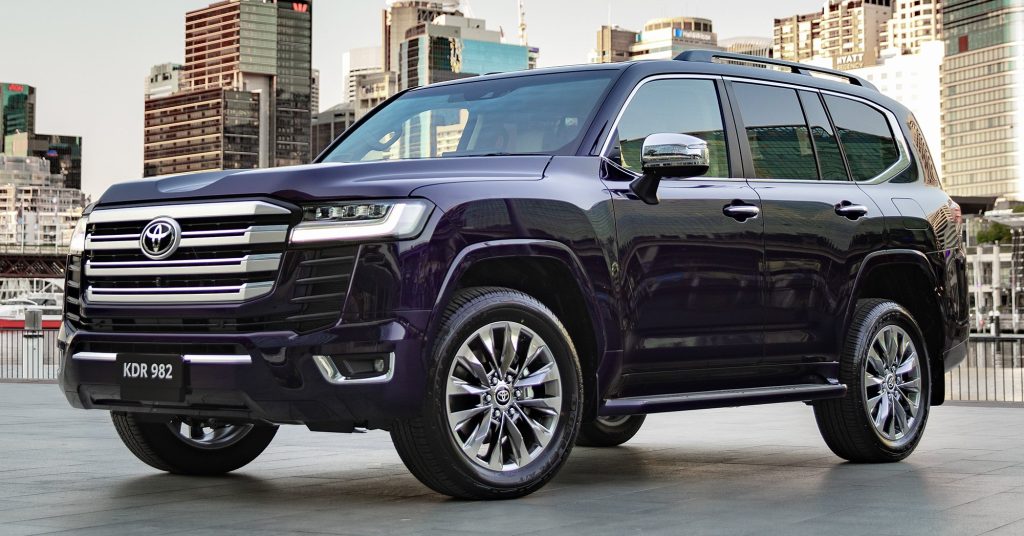
Toyota has announced that the Land Cruiser will not return for the 2022 model year but could make a comeback in the future with a more modern design, updated technology, and a more luxurious interior.
The 2021 Land Cruiser’s starting price is $87,030, rising to $89,360 depending on trim and options. Among the lineup, we would recommend the Heritage Edition, which comes loaded with desirable features, including a 14-speaker JBL audio system and a multi-view camera system for navigating obstacles.
All Land Cruisers include four-zone climate control, heated and ventilated front seats, leather-trimmed upholstery, a 9.0-inch touchscreen infotainment system, and wireless charging. The Heritage Edition also features a unique grille design, rooftop rack, bronze 18-inch BBS wheels, and dark exterior accents.
The new third-row option makes it possible to carry more passengers, which is ideal for those who plan to explore remote destinations.
Under the hood, the Land Cruiser is powered by a 5.7-liter V-8 engine paired with an eight-speed automatic transmission, producing 381 horsepower and 401 lb-ft of torque. Full-time four-wheel drive is standard, and the SUV delivers a smooth, well-planted ride that makes driving comfortable.
Steering feel is relatively light, and there is noticeable body roll, meaning some rival SUVs in this price range offer more engaging handling.
Despite its substantial size, the Land Cruiser accelerates relatively quickly and can tow up to 8,100 pounds, which is impressive, though slightly lower than competitors such as the Chevy Tahoe and Ford Expedition.
Each of these cars stands out for different reasons. Some, like the Lexus GX and Toyota Land Cruiser, lean on Toyota’s legendary reliability. Others, like the Bronco and Camaro ZL1, thrive on scarcity and enthusiast demand.
Quirky models like the Mini Cooper and Prius Prime prove that niche appeal can translate into strong resale. And vehicles like the Yukon Denali and Miata show that size or sportiness doesn’t always equal financial loss.
Car buyers in the U.S. often assume depreciation is inevitable, but these nine models prove otherwise. Whether it’s because of reliability, nostalgia, or cult-like demand, each one holds value in ways that shock their owners.
For shoppers, that means more money in your pocket when it’s time to sell, and one more reason to choose wisely at the dealership.
