
The automotive world is constantly evolving, with each generation of vehicles eventually becoming tomorrow’s classics.
While established classics like the Porsche 911, Ferrari 250 GTO, or Ford Mustang now command astronomical prices, there’s a window of opportunity for savvy enthusiasts to identify and acquire the next generation of collectible cars before their values skyrocket.
The key to spotting future classics lies in understanding what makes a car truly special. It’s not always about raw performance figures or exotic badges sometimes it’s about being the last of something, the first of something else, or simply representing a perfect snapshot of automotive history.
The most valuable classics often combine several factors: limited production numbers, innovative technology, distinctive styling, cultural significance, and that intangible quality that captures the imagination of enthusiasts decades later.
Today’s market presents unique opportunities for collectors on a budget. Many vehicles from the 1990s, 2000s, and early 2010s are currently experiencing their depreciation valley that sweet spot where they’re old enough to be considered outdated by mainstream buyers but not yet old enough to be revered as classics.
This creates a perfect storm for potential collectors who can see beyond current market trends. The cars on this list represent diverse segments of the market – from affordable sports cars to innovative hybrids, from quirky Japanese imports to European engineering exercises.
What unites them is their potential to become the classics that future generations will wish they had bought when they were affordable. Each offers something unique: advanced technology that was ahead of its time, distinctive styling that hasn’t been replicated, or simply the pure driving experience that’s becoming increasingly rare in our connected, automated world.
Smart collectors understand that the best time to buy a future classic is before everyone else realizes its potential. These twelve vehicles offer that opportunity today.
1. Honda S2000 (1999-2009)
The Honda S2000 represents the culmination of Honda’s sports car engineering prowess, embodying the company’s racing heritage in a pure, uncompromised package that may never be replicated.
As Honda’s flagship sports car during its production run, the S2000 was developed to celebrate the company’s 50th anniversary, and the engineering team was given unprecedented freedom to create something truly special without the usual corporate constraints.
At the heart of the S2000 lies its legendary F20C engine, a naturally aspirated 2.0-liter four-cylinder that produced 240 horsepower, an extraordinary 120 horsepower per liter.
This remains one of the highest specific outputs ever achieved by a naturally aspirated production engine, accomplished through advanced engineering including VTEC variable valve timing, an 11.1:1 compression ratio, and a screaming 9,000 RPM redline.
The engine’s character is intoxicating, building power linearly before exploding into a symphony of mechanical music as VTEC engages at 6,000 RPM.
The chassis engineering is equally impressive, featuring a rigid convertible platform with strategic reinforcement, near-perfect 50/50 weight distribution, and a sophisticated double-wishbone suspension setup at all four corners.
The electric power steering system, controversial when new, actually enhances the car’s balance by reducing weight over the front wheels. The six-speed manual transmission features one of the most precise shift actions ever fitted to a production car, making every gear change a tactile pleasure.

What makes the S2000 a future classic is its purity of purpose in an increasingly complicated automotive world. Modern sports cars rely heavily on electronic aids, turbocharged engines, and complex all-wheel-drive systems to achieve performance.
The S2000 achieves its thrills through fundamental engineering excellence: a high-revving engine, perfect balance, and direct mechanical connection between driver and machine. As manufacturers abandon naturally aspirated engines and manual transmissions, the S2000’s approach becomes increasingly precious.
The car’s styling has aged remarkably well, with clean lines that look contemporary two decades later. The interior, while spartan, focuses entirely on the driving experience with perfectly placed controls and supportive seats.
The digital instrument cluster, with its prominent tachometer, reinforces the car’s high-RPM character. Current market trends show S2000 values stabilizing after years of appreciation, but examples with low mileage, documented maintenance, and original condition are becoming increasingly rare.
The car’s reputation for reliability means many have been modified or driven hard, making pristine examples more valuable. As the last pure sports car from Honda, and possibly the last car to feature such an extreme naturally aspirated engine, the S2000’s future classic status seems assured.
2. Porsche Cayman/Boxster 987 Generation (2005-2012)
The 987-generation Porsche Cayman and Boxster represent a golden era in Porsche’s mid-engine sports car development, offering a level of engineering sophistication and driving purity that positions them perfectly for future classic status.
These cars emerged during a period when Porsche was hitting its stride with the water-cooled flat-six engine platform, before the transition to turbocharged powertrains that would define the following generation.
The 987 platform’s significance lies in its role as Porsche’s first truly modern mid-engine sports car architecture. While the original Boxster proved the concept, the 987 generation refined it to near-perfection.
The chassis represents a masterclass in structural engineering, with strategically placed reinforcements creating exceptional rigidity despite the convertible Boxster’s inherent challenges. The Cayman, introduced in 2006, took this platform to its logical with a fixed roof that further enhanced structural integrity.
Engine options throughout the 987’s lifecycle showcase Porsche’s naturally aspirated flat-six development at its peak. The base 2.7-liter unit produced 245 horsepower with a linear power delivery and distinctive Porsche soundtrack, while the S models’ 3.4-liter engines generated up to 320 horsepower in later iterations.
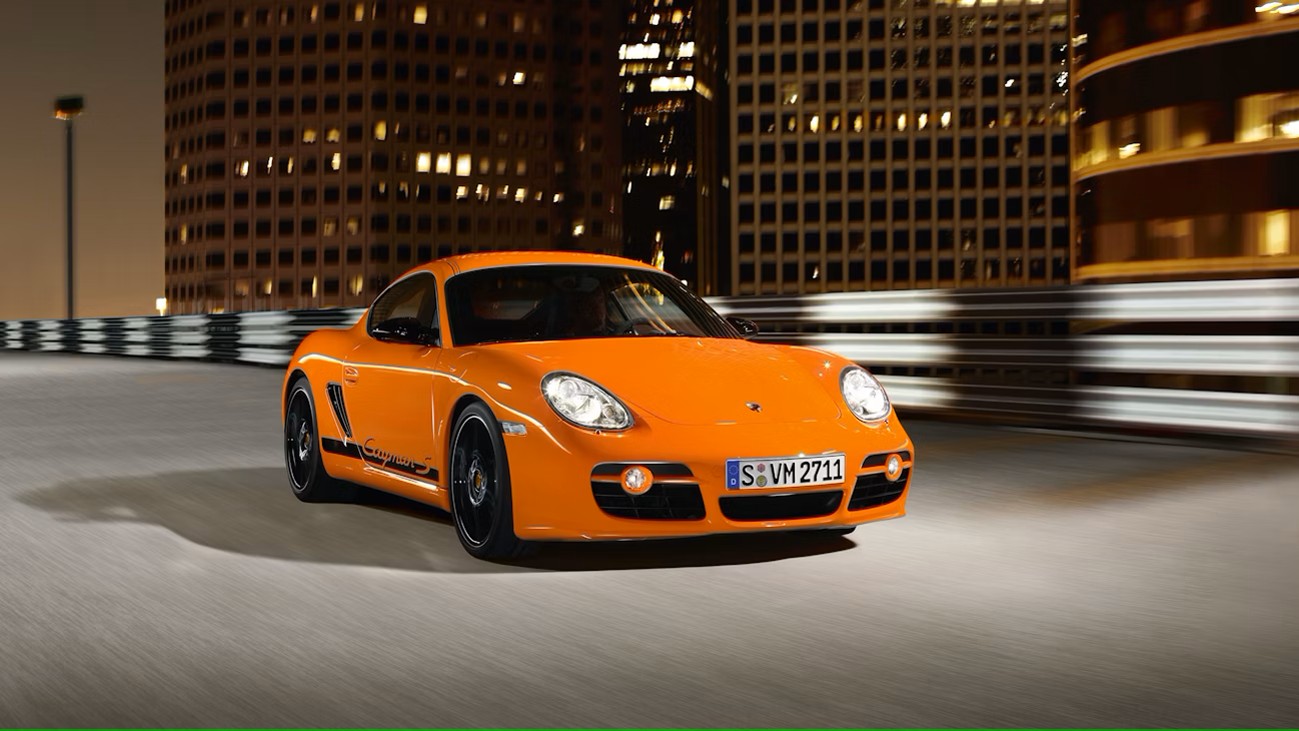
These engines represent the last generation of Porsche’s atmospheric flat-sixes before turbocharging became standard, making them increasingly precious as the marque moves toward electrification.
The driving experience defines why these cars will become classics. The mid-engine layout provides natural balance and exceptional handling characteristics that make the car feel telepathically connected to the driver’s inputs.
The steering is perfectly weighted, offering precise feedback without being overly heavy. The suspension tuning strikes an ideal balance between comfort and performance, making these cars equally capable on winding roads and daily commutes.
As Porsche’s current lineup moves toward turbocharging and eventual electrification, the 987’s naturally aspirated character becomes more significant.
These cars offer authentic Porsche engineering and driving dynamics at a fraction of the cost of comparable 911s, making them accessible entry points into serious Porsche ownership that will likely appreciate substantially as they age.
3. BMW E46 M3 (2001-2006)
The BMW E46 M3 stands as the pinnacle of BMW’s naturally aspirated M car development, representing a perfect storm of advanced engineering, motorsport heritage, and analog driving experience that will likely never be repeated.
As the last M3 to feature a high-revving naturally aspirated engine and the final model developed before BMW’s shift toward turbocharging, the E46 M3 occupies a unique position in automotive history.
The heart of the E46 M3 is its legendary S54 straight-six engine, a 3.2-liter masterpiece that produces 333 horsepower through sophisticated engineering including individual throttle bodies, aggressive camshaft profiles, and lightweight internals capable of sustained high-RPM operation.
The engine’s 8,000 RPM redline and linear power delivery create an intoxicating experience that builds dramatically as revs climb, culminating in a mechanical symphony that defines the naturally aspirated BMW character.
Beyond its engine, the E46 M3 showcases BMW’s chassis engineering expertise at its finest. The car features a completely redesigned suspension system with unique components throughout, including stiffer springs, specialized dampers, and thicker anti-roll bars.
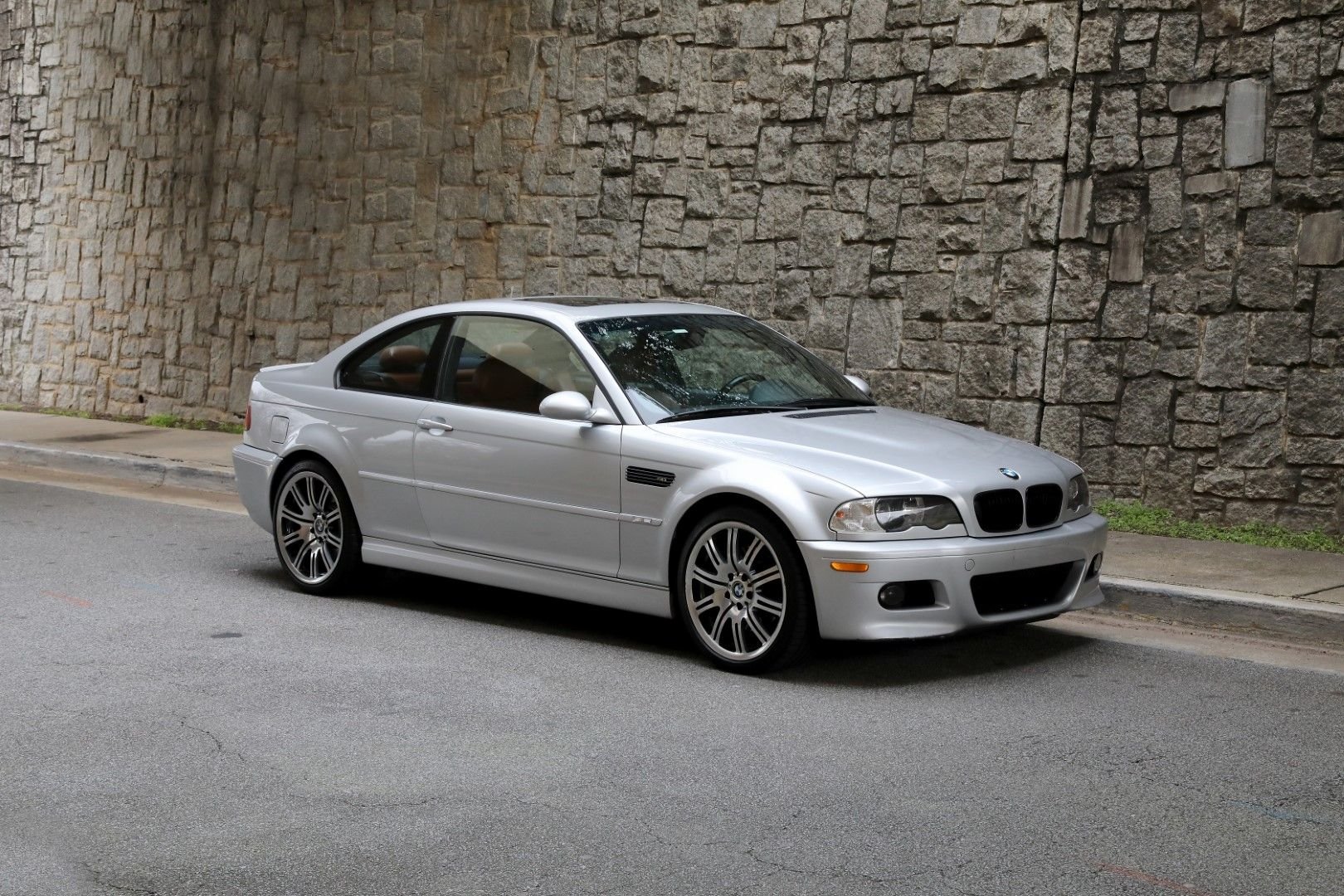
The subframe mountings were reinforced, the steering system recalibrated, and the entire package tuned to deliver the precise, communicative handling that made BMW’s reputation. The result is a car that feels completely different from standard E46 models despite sharing basic architecture.
The transmission options further enhance the car’s appeal to enthusiasts. The standard six-speed manual gearbox offers precise, mechanical engagement that connects the driver directly to the drivetrain.
The optional SMG automated manual, while controversial when new, now represents period-correct technology that adds to the car’s significance as a technological milestone in BMW’s development.
Current market trends show the E46 M3 has already begun its ascent toward classic status, with clean examples commanding premium prices.
However, the car’s reputation for requiring significant maintenance, particularly related to VANOS systems, rod bearings, and subframe mounting points, means that well-maintained examples are becoming increasingly rare and valuable.
As BMW’s M division moves toward turbocharged engines, all-wheel drive, and electrification, the E46 M3’s pure rear-wheel-drive, naturally aspirated character becomes more precious. It represents the end of an era in BMW development and the last M3 to prioritize driving purity over ultimate performance numbers.
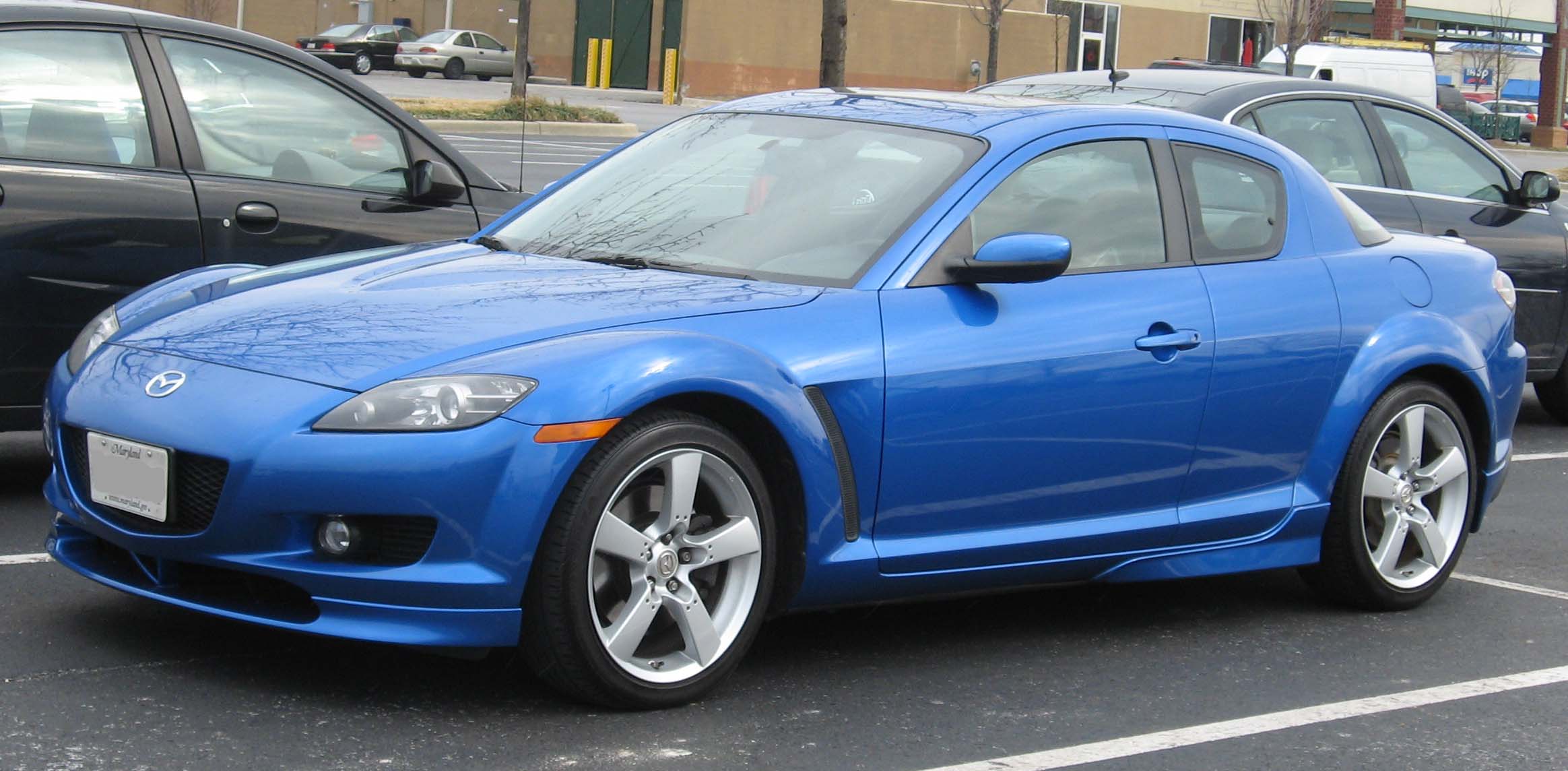
4. Mazda RX-8 (2004-2012)
The Mazda RX-8 represents one of the most unique and misunderstood sports cars of the modern era, featuring the last rotary engine ever fitted to a production car and a revolutionary four-door sports car configuration that challenged conventional automotive thinking.
As the automotive industry moves inexorably toward conventional piston engines and electrification, the RX-8’s rotary powerplant becomes increasingly significant as a technological dead end that will never be repeated.
The Renesis rotary engine that powers the RX-8 represents the culmination of Mazda’s decades-long development of Wankel rotary technology.
This naturally aspirated 1.3-liter twin-rotor unit produces 232 horsepower in its highest output form, achieving this through an ultra-high 9,000 RPM redline and unique combustion characteristics that create a distinctive power delivery unlike any conventional piston engine.
The engine’s compact size and light weight enable exceptional weight distribution and a low center of gravity that fundamentally shapes the car’s handling characteristics. What makes the rotary engine truly special is its operational character.
The smooth, vibration-free power delivery creates a unique driving experience, with the engine spinning freely to extraordinary RPM levels while producing a distinctive sound that ranges from a gentle hum at idle to a screaming wail at redline.
The lack of reciprocating parts creates mechanical smoothness that no piston engine can match, while the engine’s compact dimensions allow for optimal chassis packaging.
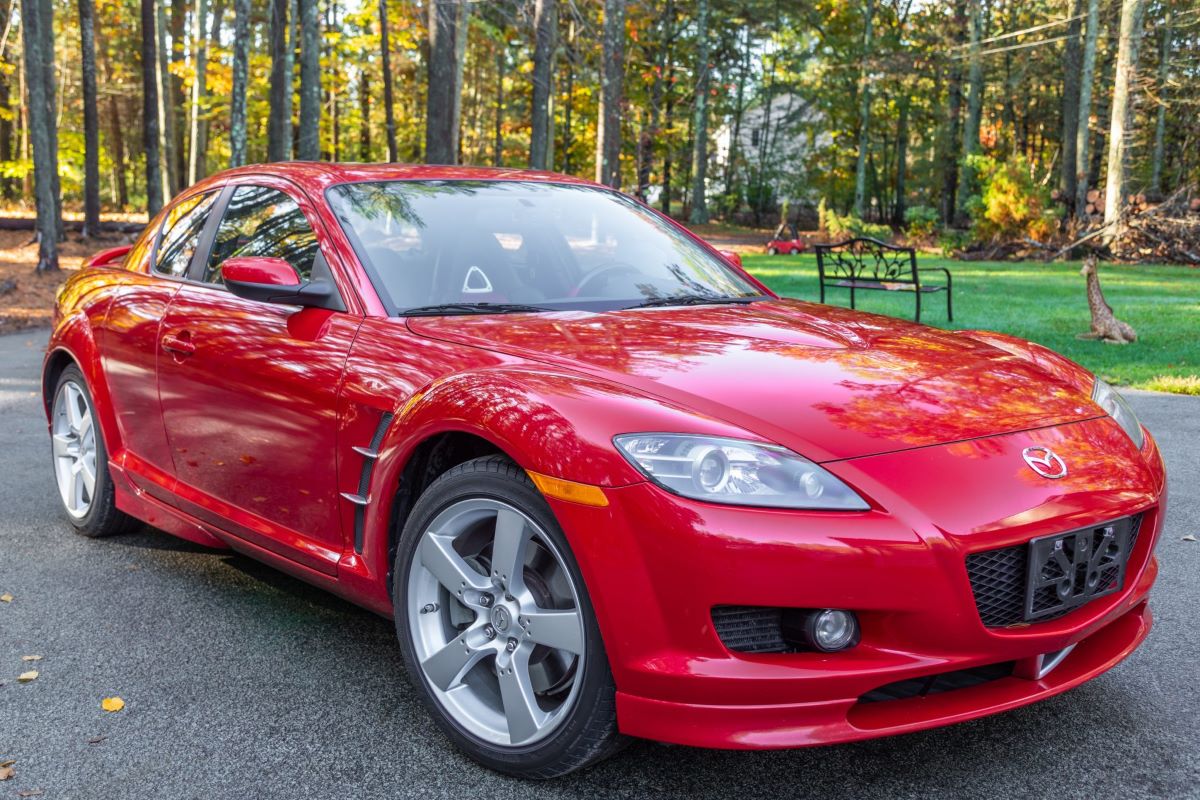
The RX-8’s innovative four-door configuration with rear-hinged “freestyle” doors challenged sports car conventions while maintaining coupe-like styling proportions.
This unique body style makes the car practical enough for daily use while preserving the low roofline and aesthetic appeal of a traditional two-door sports car. The rear seats, while compact, add genuine utility that sets the RX-8 apart from conventional sports cars.
Chassis development focused on maximizing the benefits of the rotary engine’s compact size and light weight. The near-perfect 50/50 weight distribution, low polar moment of inertia, and sophisticated multi-link suspension create handling characteristics that emphasize balance and precision over raw grip levels.
The electric power steering system, controversial when new, actually enhances the car’s nimble character by reducing weight and mechanical complexity.
The car’s design has aged remarkably well, with flowing lines and distinctive proportions that look contemporary nearly two decades after introduction. The interior, while showing some cost-cutting measures, maintains focus on the driving experience with well-placed controls and supportive seating.
Also Read: 8 Cars That Are Nightmare Money Pits After 80k
5. Toyota MR2 Spyder (2000-2007)
The Toyota MR2 Spyder represents the final evolution of Toyota’s mid-engine sports car philosophy, distilling the MR2 concept to its absolute essence in a lightweight, pure driving experience that stands as one of the last truly minimalist sports cars ever produced by a major manufacturer.
As the third and final generation of the MR2 lineage, the Spyder occupies a unique position as both the culmination of Toyota’s mid-engine development and a return to the original MR2’s lightweight ethos.
Weighing just 2,195 pounds in its lightest configuration, the MR2 Spyder achieves its performance through the classic Lotus philosophy of adding lightness rather than power.
This approach creates a fundamentally different driving experience from the heavyweight, high-power sports cars that dominate today’s market. Every component was evaluated for weight savings, from the aluminum space frame construction to the fabric convertible top that eliminates the complexity and mass of a hardtop mechanism.
The heart of the Spyder is Toyota’s 1ZZ-FED engine, a naturally aspirated 1.8-liter four-cylinder producing 138 horsepower. While this output might seem modest by contemporary standards, the engine’s light weight and linear power delivery perfectly complement the car’s character.
The power-to-weight ratio creates surprisingly brisk performance, while the engine’s high-revving nature and mechanical soundtrack provide the kind of engagement that modern turbocharged engines struggle to match.

The mid-engine layout provides inherent advantages that the Spyder exploits brilliantly. Weight distribution approaches perfect balance, creating neutral handling characteristics that make the car predictable and confidence-inspiring even at the limit.
The short wheelbase and low polar moment of inertia create exceptional agility, allowing the car to change direction with minimal effort while maintaining stability under all conditions.
Suspension development focused on maximizing the benefits of the car’s light weight and balanced architecture. MacPherson struts front and rear provide precise wheel control while minimizing unsprung weight, while carefully tuned spring and damper rates deliver impressive ride quality for such a focused sports car.
The electric power steering system reduces weight while providing excellent feedback and precise control. The car’s Japanese engineering heritage adds another layer of collectible appeal, as Toyota’s reputation for reliability and build quality ensures that properly maintained examples can provide decades of enjoyable ownership.
As the automotive industry moves away from lightweight, naturally aspirated sports cars, the MR2 Spyder’s pure approach becomes more precious and distinctive.
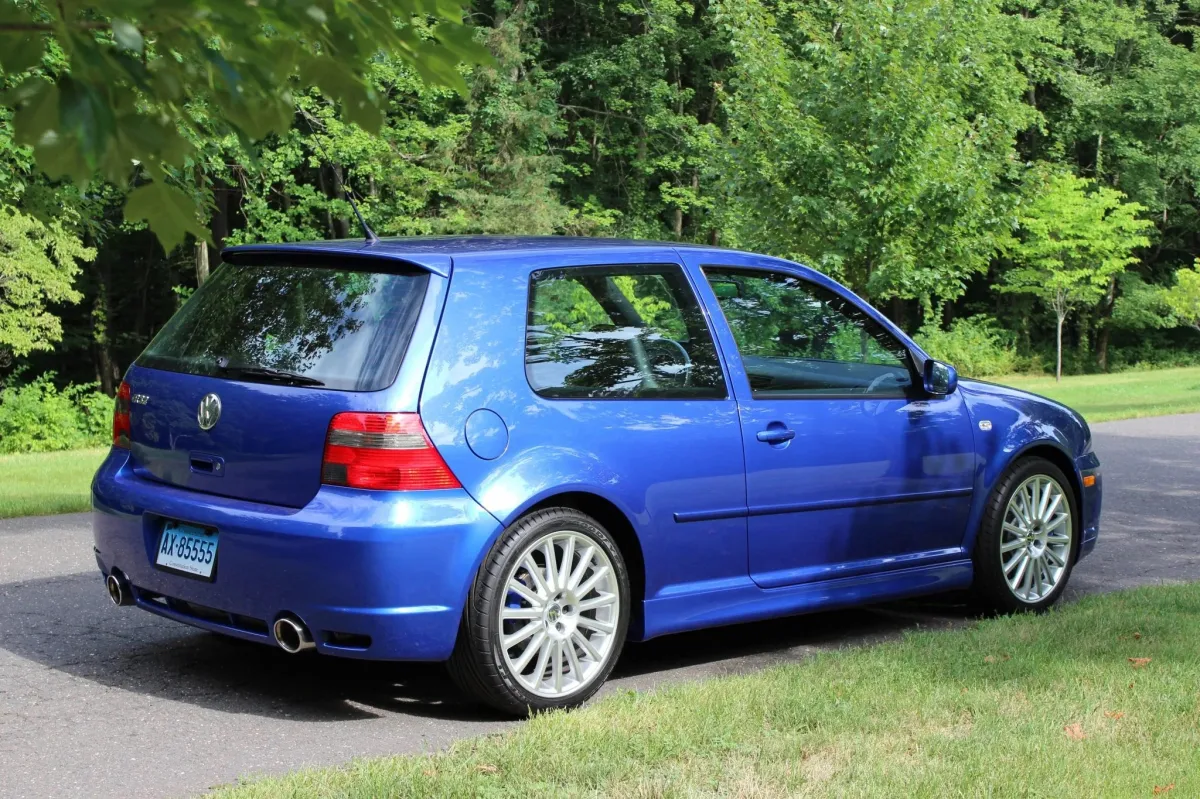
6. Volkswagen Golf R32 (2004-2008)
The Volkswagen Golf R32 represents a pivotal moment in hot hatch evolution, combining Volkswagen’s legendary VR6 engine with advanced all-wheel-drive technology in a package that defined the template for modern performance hatchbacks.
As the spiritual successor to legendary Golf variants and the predecessor to today’s Golf R lineup, the R32 occupies a unique position as both a technological milestone and the last Golf to feature Volkswagen’s distinctive narrow-angle VR6 powerplant.
The heart of the R32’s appeal lies in its remarkable 3.2-liter VR6 engine, a narrow-angle six-cylinder unit that produces 247 horsepower through sophisticated engineering and distinctive character.
The VR6’s unique architecture, with cylinders arranged in a narrow 15-degree V configuration, creates a compact powerplant that fits transversely in the Golf’s engine bay while delivering the smoothness and sound characteristics of a traditional straight-six engine.
The result is a powerplant with extraordinary character, producing a distinctive growl that builds to a mechanical symphony at high RPM. The 4Motion all-wheel-drive system transforms the R32 from a traditional front-wheel-drive hot hatch into something entirely different.
Based on Haldex technology, the system can distribute up to 100% of available torque to the rear wheels under certain conditions, creating handling characteristics that blend the accessibility of front-wheel drive with the traction and stability advantages of all-wheel drive.
This technology was revolutionary when introduced and established the template that virtually all modern performance hatchbacks follow today. Chassis development focused on managing the increased weight and power of the VR6/4Motion combination while maintaining the Golf’s inherent balance and usability.
The suspension system features unique components throughout, including stiffer springs, specialized dampers, and larger anti-roll bars calibrated specifically for the R32’s weight distribution and performance envelope.
The result is a car that feels substantially different from standard Golf models despite sharing basic architecture. The R32’s interior and exterior design elements create a distinctive identity within the Golf lineup.
Exclusive Recaro seats provide excellent support during spirited driving while maintaining comfort for daily use. The instrument cluster features unique R32-specific graphics and lighting, while exterior elements like the distinctive exhaust system, aggressive front and rear bumpers, and unique wheel designs create an unmistakably purposeful appearance.
However, this creates opportunities for knowledgeable enthusiasts to acquire well-maintained examples at reasonable prices.
As the automotive industry moves toward electrification and the unique character of naturally aspirated engines becomes more appreciated, the R32’s distinctive VR6 powerplant and advanced all-wheel-drive system position it perfectly for future classic status.
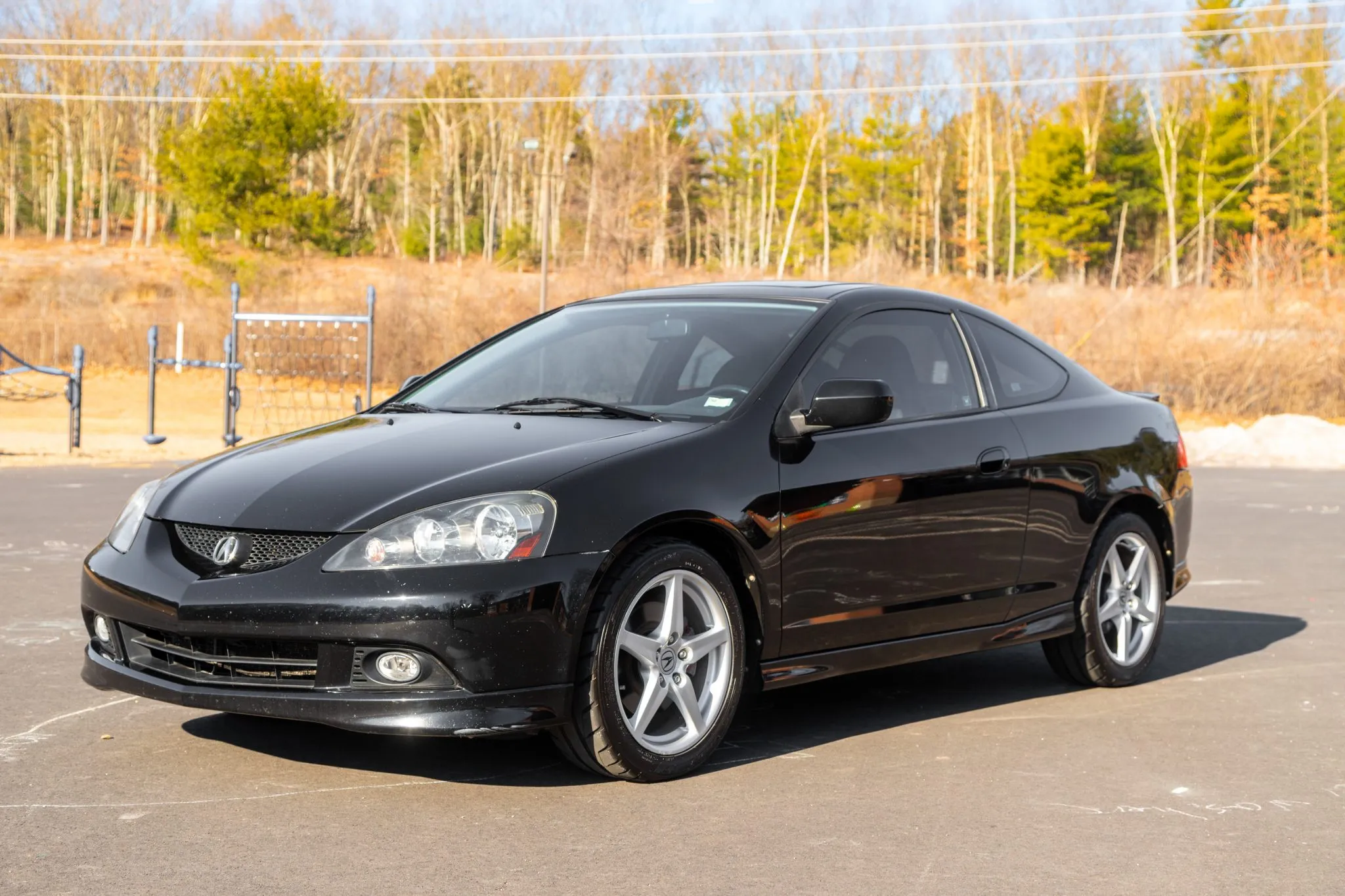
7. Acura RSX Type-S (2005-2006)
The Acura RSX Type-S, particularly in its final 2005-2006 iteration, represents the culmination of Honda’s naturally aspirated VTEC development in the compact performance segment, offering a level of engineering sophistication and high-RPM excitement that will never be replicated in the era of turbocharged engines and electrification.
As the spiritual successor to the legendary Integra Type-R and the final chapter in Honda’s naturally aspirated performance coupe story, the RSX Type-S occupies a unique position in automotive history.
The K20A2 engine that powers the final RSX Type-S represents Honda’s naturally aspirated four-cylinder engineering at its absolute peak. This 2.0-liter unit produces 210 horsepower through advanced technologies including i-VTEC variable valve timing and lift, aggressive camshaft profiles, and lightweight internal components designed for sustained high-RPM operation.
The engine’s 8,000 RPM redline and distinctive power delivery create the quintessential VTEC experience, building power linearly before exploding into a fury of mechanical intensity as the VTEC crossover point engages at 5,800 RPM.
What makes the K20A2 particularly special is its combination of high specific output and remarkable reliability. Producing 105 horsepower per liter while maintaining Honda’s legendary durability, the engine represents a perfect balance between performance and longevity that modern turbocharged engines struggle to match.
The linear power delivery and high-revving character create an addictive driving experience that rewards skilled drivers while remaining accessible to enthusiasts of all experience levels.
The RSX Type-S’s chassis development focused on extracting maximum performance from the front-wheel-drive layout while maintaining everyday usability.
The suspension system features unique components throughout, including stiffer springs, specialized dampers, and larger anti-roll bars calibrated specifically for the Type-S’s performance envelope.
Limited-slip differential technology helps manage the increased power while reducing torque steer and improving traction during aggressive driving.
The 2005-2006 model years represent the pinnacle of RSX development, incorporating lessons learned from earlier production while maintaining the pure character that defines the Type-S experience. These final examples offer the best combination of refinement and performance, making them the most desirable variants for future collectors.
8. Subaru Impreza WRX STI (2004-2007)
The 2004-2007 Subaru Impreza WRX STI represents the first generation of Subaru’s ultimate rally-bred performance car to reach American shores, bringing decades of World Rally Championship development directly to the street in an uncompromising package that prioritized performance over refinement.
As the automotive industry moves away from the aggressive, mechanical character that defines the STI experience, these early models become increasingly significant as representatives of pure rally engineering applied to road cars.
The EJ257 turbocharged flat-four engine that powers the STI delivers 300 horsepower through a sophisticated combination of forced induction, intercooling, and aggressive tuning that reflects Subaru’s rally heritage.
Unlike modern turbocharged engines that prioritize low-end torque and efficiency, the EJ257 builds power progressively through the rev range, creating an engaging driving experience that rewards committed driving and skilled throttle management.
The distinctive flat-four sound and characteristic turbo whoosh create an auditory experience that’s instantly recognizable and impossible to replicate with other engine configurations.
The STI’s symmetrical all-wheel-drive system represents one of the most sophisticated traction management systems ever fitted to a production car.
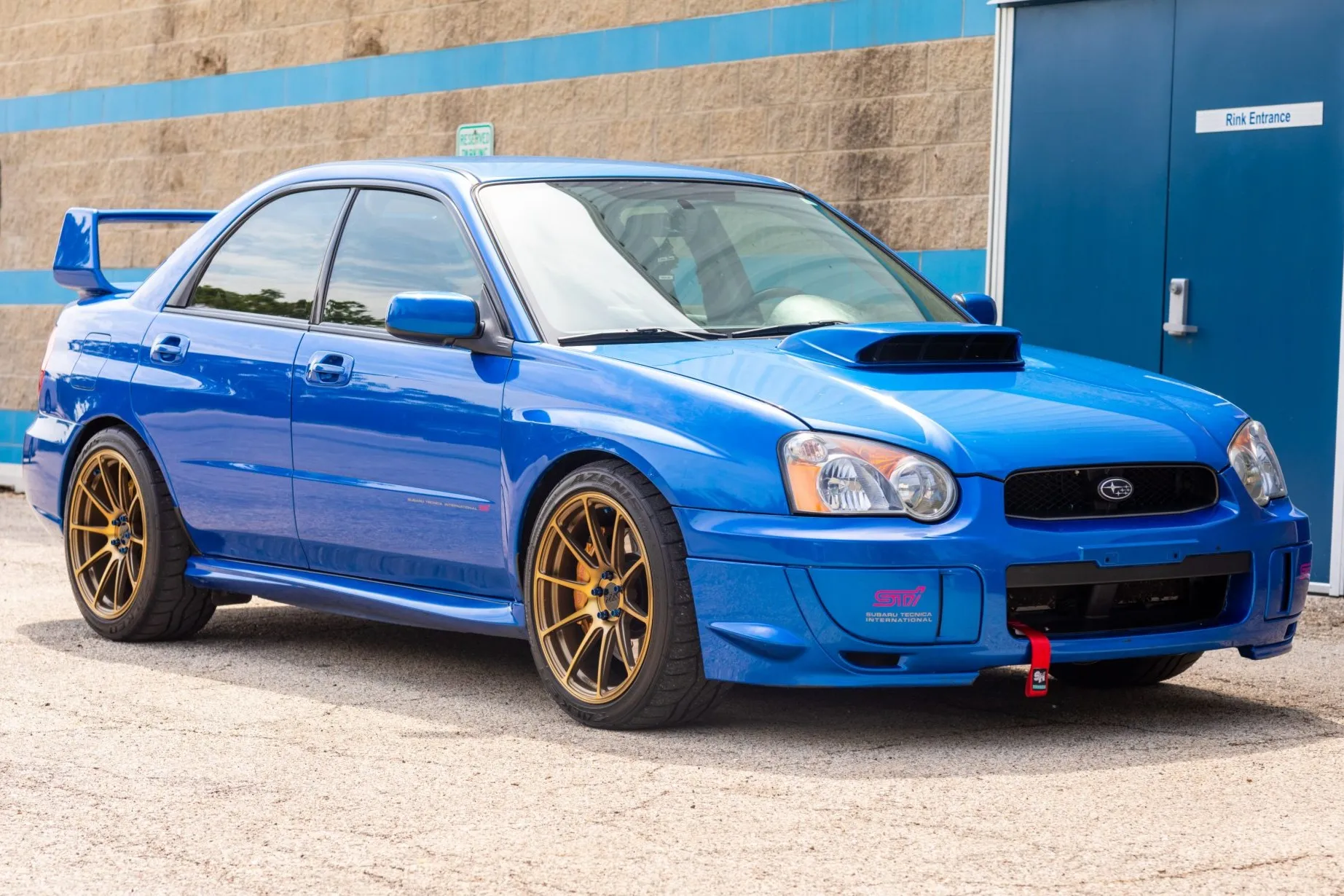
The Driver Controlled Center Differential allows real-time adjustment of front-to-rear torque distribution, while limited-slip differentials front and rear ensure optimal traction under all conditions.
This system, developed through decades of rally competition, provides exceptional capability on various surfaces while maintaining the predictable handling characteristics that make the STI accessible to drivers of all skill levels.
Suspension development focused on creating a system capable of handling both rally stages and daily driving duties. The STI features unique Bilstein dampers, stiffer springs, and larger anti-roll bars that provide exceptional body control during aggressive driving while maintaining reasonable ride quality for street use.
The suspension geometry and calibration reflect lessons learned from Subaru’s rally program, creating handling characteristics that emphasize precision and feedback over ultimate comfort.
As the automotive industry moves toward electrification and modern performance cars become more refined and electronically controlled, the early STI’s raw, mechanical character becomes more precious and distinctive.
9. Infiniti G35 Coupe (2003-2007)
The Infiniti G35 Coupe represents a watershed moment in affordable luxury performance, combining Nissan’s legendary VQ35DE V6 engine with sophisticated rear-wheel-drive architecture in a package that challenged established European competitors while establishing Infiniti as a credible performance brand.
As one of the last naturally aspirated, rear-wheel-drive coupes available at an accessible price point, the G35 occupies an increasingly unique position in automotive history.
The heart of the G35’s appeal lies in its remarkable 3.5-liter VQ35DE V6 engine, a naturally aspirated powerplant that produces 280 horsepower through advanced engineering and distinctive character.
This engine represents the culmination of Nissan’s decades-long development of the VQ engine family, featuring aluminum construction, variable valve timing, and sophisticated intake manifold design that creates both strong performance and exceptional reliability.
The engine’s high-revving nature and distinctive sound create an engaging driving experience that builds excitement as RPM climbs toward the 7,000 RPM redline.
What makes the VQ35DE particularly special is its combination of performance and refinement. Unlike many high-output engines that sacrifice reliability for power, the VQ35DE delivers its impressive output while maintaining Nissan’s reputation for durability and long-term dependability.

The engine’s naturally aspirated configuration provides immediate throttle response and linear power delivery that makes the car’s performance accessible to drivers of all skill levels while rewarding skilled driving with exceptional high-RPM excitement.
The G35’s FM platform, shared with the 350Z sports car, provides a sophisticated foundation for the coupe’s performance characteristics. The front-midship engine placement, with the VQ35DE positioned behind the front axle centerline, creates near-optimal weight distribution that enhances handling balance and steering precision.
The rear-wheel-drive configuration provides the kind of driving dynamics that have become increasingly rare in modern luxury coupes, most of which have adopted front-wheel-drive or all-wheel-drive layouts for practical reasons.
Market dynamics strongly favor the G35’s future collectibility. Production numbers were substantial, but many examples have been modified extensively or suffered from neglect as they moved through multiple owners.
The car’s reputation for reliability and performance has kept values relatively stable, creating opportunities for collectors to acquire well-maintained examples at reasonable prices.
As the luxury car market moves toward turbocharged engines, all wheel drive systems, and eventual electrification, the G35’s naturally aspirated, rear-wheel-drive character becomes increasingly distinctive and valuable to enthusiasts who appreciate traditional sports car dynamics.
10. Saab 9-3 Viggen (1999-2002)
The Saab 9-3 Viggen represents the pinnacle of Swedish automotive engineering eccentricity, combining advanced turbocharged technology with distinctive Scandinavian design philosophy in a package that challenged conventional performance car thinking while delivering genuine high-performance capabilities.
As one of the final expressions of Saab’s independent engineering culture before corporate consolidation, the Viggen occupies a unique position as both a technological showcase and a cultural artifact of Swedish automotive innovation.
The heart of the Viggen’s appeal lies in its sophisticated B235R turbocharged four-cylinder engine, a 2.3-liter powerplant producing 230 horsepower through advanced forced induction technology and aggressive tuning.
This engine represents the culmination of Saab’s decades-long development of turbocharged powerplants, featuring a large Mitsubishi turbocharger, sophisticated engine management, and robust internal components designed to handle sustained high-performance operation.
The result is an engine with exceptional power delivery characteristics, providing strong low-end torque while maintaining power output throughout the rev range.
What makes the B235R particularly special is its combination of performance and refinement that reflects Saab’s engineering philosophy of creating cars for Swedish conditions.
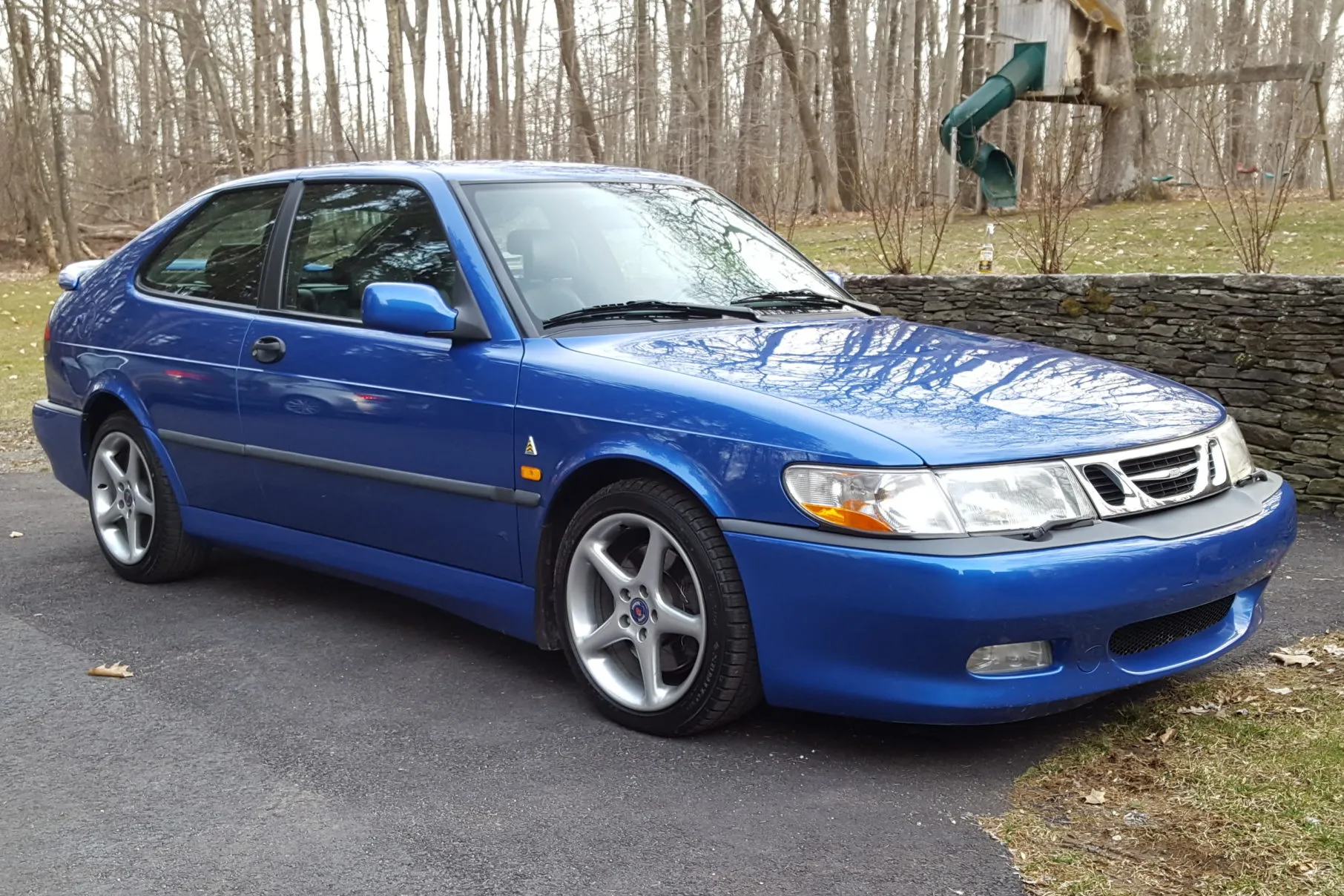
The engine provides exceptional cold-weather performance and remarkable fuel efficiency considering its power output, while maintaining the kind of reliability that Swedish drivers demand for daily use in harsh conditions.
The turbocharger’s integration creates seamless power delivery without the lag characteristics that plagued earlier forced induction systems. The five-speed manual transmission represents the only way to experience the Viggen as Saab intended, featuring robust construction designed to handle the turbocharged engine’s substantial torque output.
The gearbox provides precise, mechanical shift action that enhances driver engagement while managing power delivery effectively. The clutch system features heavy-duty components that provide excellent pedal feel while remaining manageable for daily driving duties.
As the automotive industry moves toward standardization and corporate consolidation, the Viggen’s distinctive character and engineering approach become increasingly precious.
The car represents a unique interpretation of performance car philosophy that will never be replicated, making it a cultural artifact as much as a mechanical achievement.
11. Audi TT 3.2 VR6 (2004-2006)
The Audi TT 3.2 VR6 represents the pinnacle of first-generation TT development, combining Volkswagen Group’s legendary narrow-angle VR6 engine with Audi’s sophisticated quattro all-wheel-drive system in a distinctive design package that established new standards for compact sports car luxury and performance.
As the final TT to feature naturally aspirated six-cylinder power and the last application of the classic VR6 engine in Audi’s lineup, the 3.2 occupies a unique position in automotive history.
The heart of the TT 3.2’s appeal lies in its remarkable 3.2-liter VR6 engine, a narrow-angle six-cylinder powerplant that produces 247 horsepower through sophisticated engineering and distinctive character.
This engine represents the culmination of Volkswagen Group’s development of the VR6 architecture, featuring advanced variable valve timing, refined intake and exhaust systems, and internal components designed for both performance and refinement.
The VR6’s unique 15-degree cylinder bank angle creates a compact powerplant that delivers the smoothness and sound characteristics of a traditional straight-six while fitting within the TT’s space constraints.
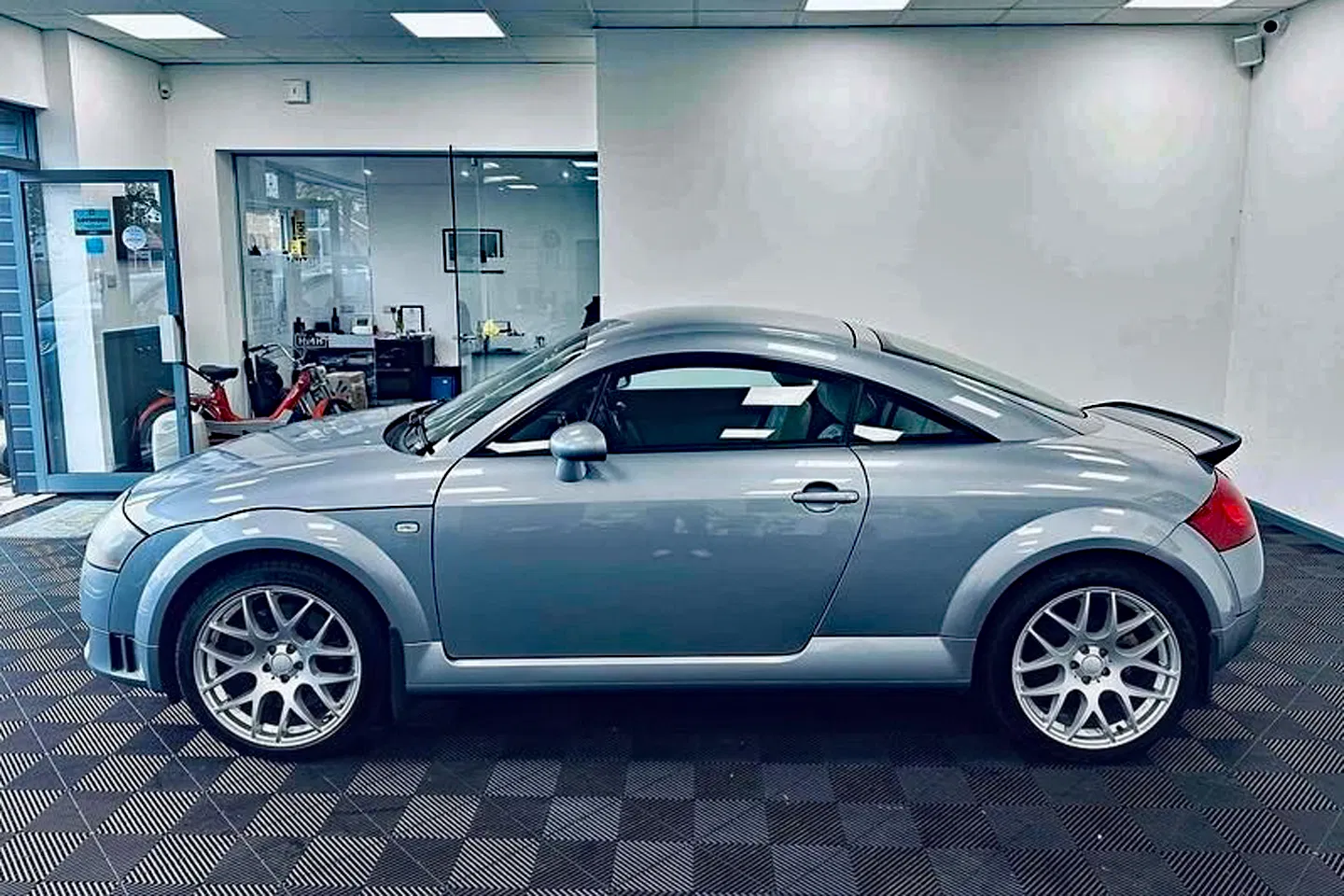
What makes the VR6 particularly special is its distinctive operational character that sets it apart from conventional engine configurations. The narrow-angle design creates a unique sound signature that combines elements of four-cylinder and six-cylinder engines, producing a mechanical symphony that builds from a gentle growl at idle to a sophisticated wail at high RPM.
This auditory experience, combined with the engine’s smooth power delivery and high-revving nature, creates a driving experience that’s impossible to replicate with other powerplants.
As Audi’s lineup moves toward turbocharged engines and eventual electrification, the TT 3.2’s naturally aspirated VR6 character becomes increasingly distinctive and valuable to enthusiasts who appreciate traditional six-cylinder performance and sound.
12. Honda Prelude (1997-2001)
The fifth-generation Honda Prelude represents the final chapter in one of automotive history’s most successful sport coupe lineages, combining Honda’s advanced VTEC technology with sophisticated all-wheel steering and distinctive Japanese design philosophy in a package that defined the template for affordable performance coupes throughout the 1990s and beyond.
As the last Prelude ever produced and the final Honda to feature the innovative Super Handling All-Wheel Steering system, the final generation occupies a unique position as both the culmination of Honda’s sport coupe development and a technological dead end that will never be repeated.
The heart of the final Prelude’s appeal lies in its sophisticated H22A4 VTEC engine, a naturally aspirated 2.2-liter four-cylinder powerplant that produces 200 horsepower through advanced variable valve timing technology and high-revving design.
This engine represents Honda’s naturally aspirated four-cylinder development at its peak, featuring aggressive camshaft profiles, lightweight internal components, and sophisticated intake and exhaust systems optimized for high-RPM performance.
The VTEC system’s engagement at 5,500 RPM creates the quintessential Honda performance experience, transforming the engine’s character from smooth daily driver to high-revving performance machine.
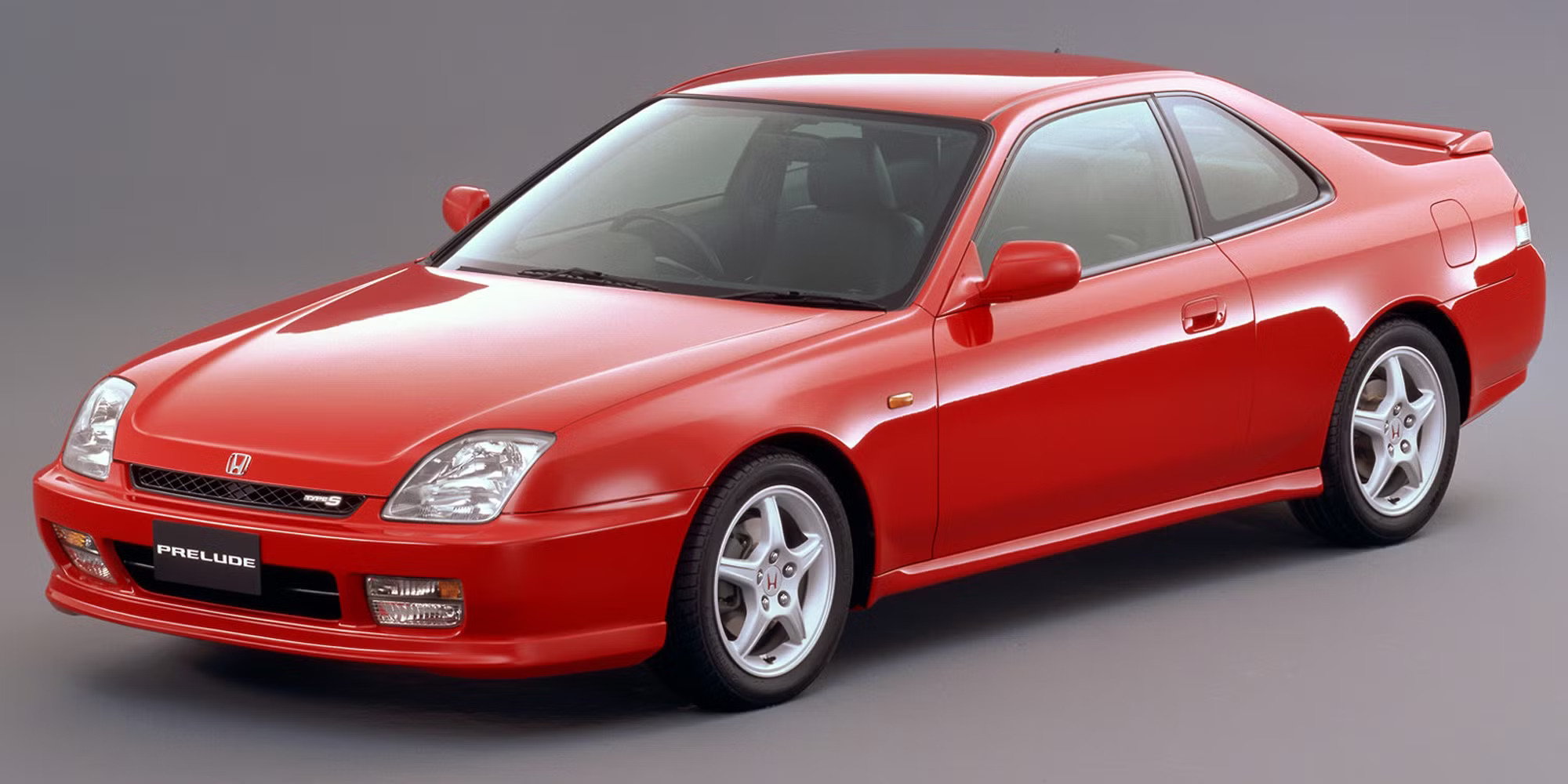
What makes the H22A4 particularly special is its combination of high specific output and remarkable reliability that exemplifies Honda’s engineering philosophy.
Producing 91 horsepower per liter while maintaining Honda’s legendary durability, the engine delivers its impressive performance through mechanical sophistication rather than forced induction, creating a linear power delivery and distinctive sound that modern turbocharged engines cannot match.
The high 7,400 RPM redline and progressive power build create an addictive driving experience that rewards committed driving and skilled throttle management.
As naturally aspirated engines and sophisticated mechanical systems become increasingly rare, the final Prelude’s combination of VTEC technology and four-wheel steering represents a unique mechanical experience that will never be replicated in future production cars, positioning it perfectly for future classic status among discerning enthusiasts who appreciate Honda’s engineering excellence at its peak.
Also Read: 11 Best Engines That Stay Smooth After Decades of Use
