
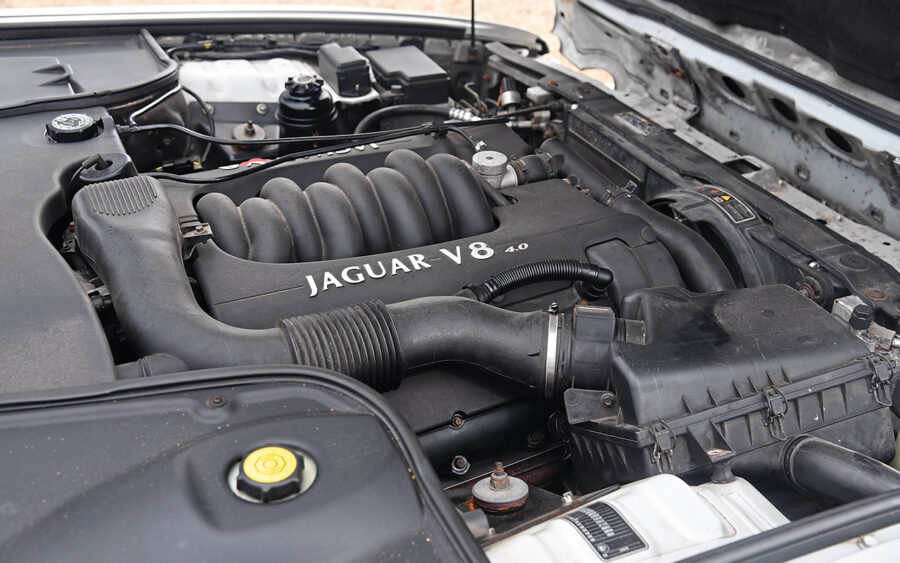
For many drivers, horsepower and torque numbers dominate the conversation when shopping for a vehicle.
But seasoned enthusiasts know that sheer output doesn’t always define a great engine. Instead, the way power is delivered often makes the biggest difference in day-to-day driving.
A smooth, consistent powerband allows for easier acceleration, refined cruising, and an overall more enjoyable experience behind the wheel.
Whether you’re merging onto the highway, climbing steep terrain, or just commuting to work, engines that prioritize seamless delivery stand out for their engineering excellence.
Smoothness often comes down to factors like cylinder configuration, balance shafts, advanced engine management, and even forced induction technology.
Over the years, automakers have built certain engines with reputations for effortless performance, the kind that blends refinement with reliability.
Here’s a closer look at ten engines known for their buttery-smooth power delivery, favorites among car lovers and practical drivers alike.
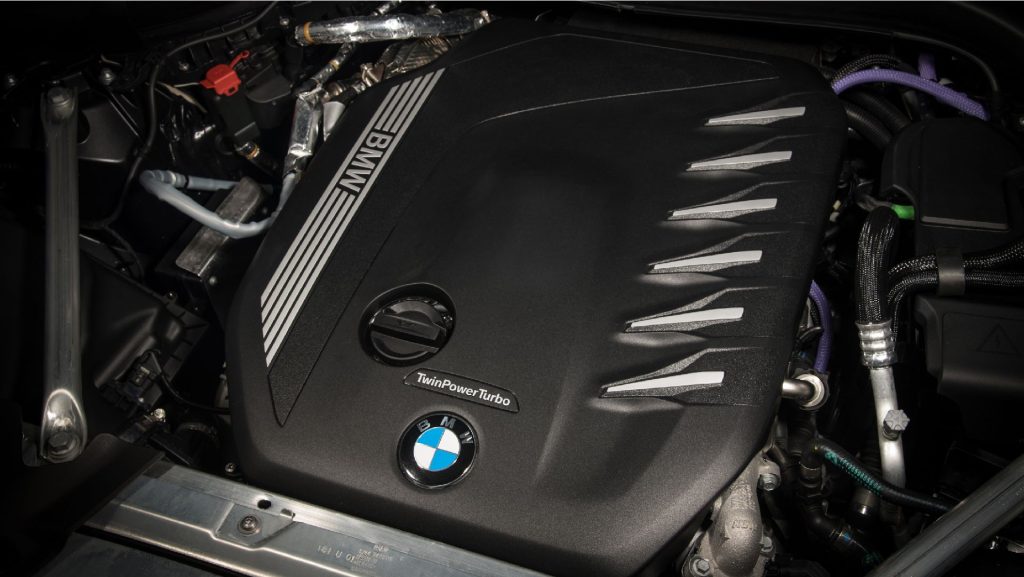
1. BMW Inline-Six (B58)
BMW has long been recognized for producing some of the smoothest inline-six engines in the industry, and the modern B58 turbocharged 3.0-liter carries that legacy forward.
Found in models like the BMW 340i, Z4, and even the Toyota Supra, this engine is celebrated not just for its output but for how gracefully it delivers torque across the rev range.
Turbo lag is minimal thanks to advanced turbocharging, and the inherent balance of an inline-six means vibrations are kept to a minimum. For American drivers who want a luxurious yet sporty feel, the B58 remains one of the most refined options on the market.
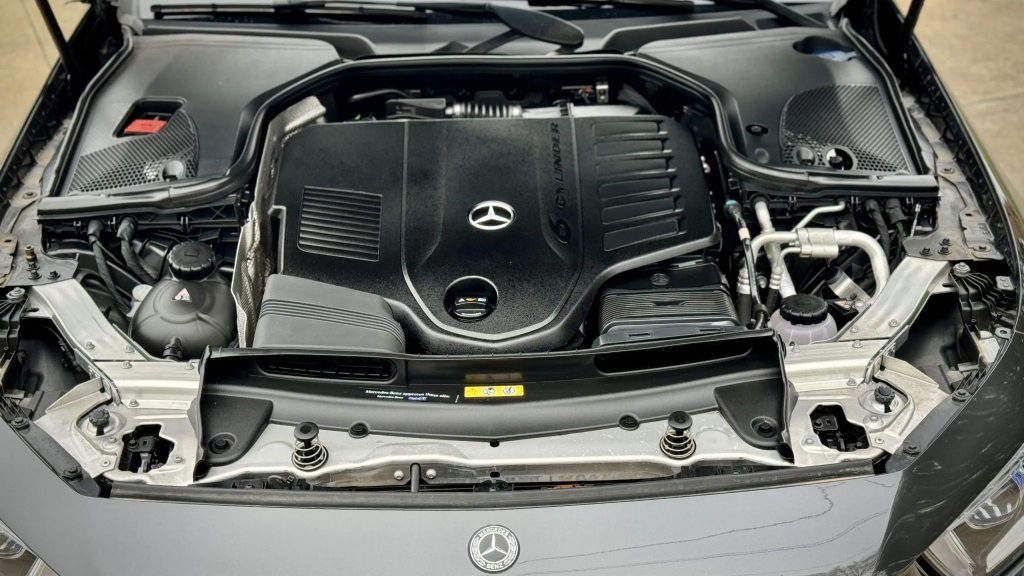
2. Mercedes-Benz Inline-Six (M256)
Mercedes-Benz returned to the inline-six layout with its M256 engine, combining smoothness with cutting-edge technology.
This 3.0-liter engine features a mild-hybrid system and an electric auxiliary compressor that fills in power gaps before the turbo spools up.
The result is linear, immediate power delivery with an almost electric-like feel. It’s a fantastic example of how modern engineering blends efficiency with refinement.
For US buyers in luxury sedans and SUVs like the E-Class and GLS, the M256 offers a polished driving experience that feels effortless on city streets and highways alike.
The Mercedes-Benz M256 is the latest 3.0-liter inline six-cylinder gasoline engine and forms part of the brand’s modular engine lineup, which also includes the four-cylinder M260/M264 units and the OM656/OM654 diesel engines.
This 3.0L M256 was first introduced in the 2017 S-Class W222, specifically in the S450 and S500 variants. For years, Mercedes had stepped away from producing inline-six engines after the discontinuation of the M104, but the arrival of the M256 marks the return of this configuration, steadily and efficiently phasing out the older M276 V6.
At the core of the M256 is a die-cast aluminum cylinder block. Its cylinder walls undergo machining using the twin-wire-arc spraying (TWAS) process, which applies a Nanoslide low-friction coating.
This patented Mercedes-Benz Nanoslide technology creates a microporous surface inside the cylinders, helping reduce friction losses when compared to traditional cast-iron liners.
The bore spacing is standardized at 90 mm across the new engine family. Supporting the block is a forged-steel crankshaft paired with forged connecting rods. Pistons are fitted with thinner piston rings and feature oil-cooling channels to keep the piston crowns at lower operating temperatures.
The cylinder head of the M256 is manufactured from an aluminum-silicon alloy. Each cylinder contains two intake valves and two exhaust valves. For the first time, Mercedes has employed sodium-cooled, hollow flat-seat exhaust valves in one of its engines.
Also Read: 10 Cars That Withstand Daily Stop-and-Go Traffic
Valve operation is controlled by dual overhead camshafts working through roller cam followers. Both intake and exhaust camshafts are chain-driven, with the timing chain positioned on the flywheel side and also responsible for driving the oil pump and the high-pressure fuel pump.
The cylinder head accommodates M10 thread spark plugs, chosen to improve cooling performance in this area. Additionally, the M256 incorporates variable valve timing for both intake and exhaust, while the intake valves also feature variable lift through Mercedes-Benz’s CAMTRONIC system.
The intake camshaft offers an extended adjustment range of up to 70 degrees of crank rotation. As with most modern powerplants, the M256 relies on a high-pressure direct fuel injection system, utilizing highly accurate piezoelectric injectors for precise fuel delivery.
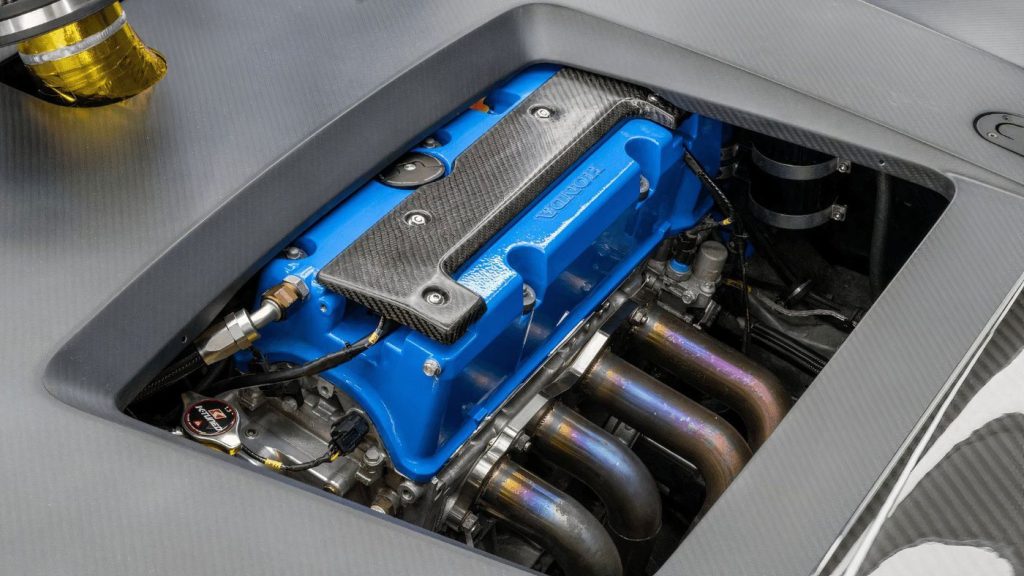
3. Honda K-Series Inline-Four (K24)
Honda’s K24 may not be as exotic as some engines on this list, but its reputation for smooth, predictable power is undeniable.
Found in everything from Accords to CR-Vs, and beloved by tuners, the K24 is known for its linear powerband and durability.
Unlike many turbocharged rivals, this naturally aspirated engine revs freely and delivers power consistently across the range, making it a favorite for both daily driving and motorsport applications.
For American drivers, it represents the perfect blend of reliability and refinement, proving that smooth power doesn’t have to come at a premium.
4. Toyota 2GR V6
The 2GR 3.5-liter V6 has been a Toyota mainstay for years, powering models like the Camry, Highlander, Lexus ES, and even the Lotus Evora.
What sets this engine apart is its silky character and predictable response, whether paired with a sedan, SUV, or sports car.
Its dual VVT-i system ensures torque delivery feels natural, with no sudden surges or dead zones. Many US families have appreciated this engine in crossovers for its quiet and refined cruising, while enthusiasts love its smooth pull in performance applications.
Toyota’s GR engine lineup is well-known for producing strong, reliable V6s, and the 2GR is perhaps the most recognizable of the family.
This 3.5-liter V6, built with a timing chain, has been widely used across the Toyota and Lexus range, from everyday family sedans and SUVs to high-performance Lexus models and even supercharged Lotus sports cars. Its versatility and durability have made it one of Toyota’s most important modern engines.
In this guide, we’ll take a closer look at the specifications and variants of the 2GR, including the FE, FSE, FKS, and FXE versions. We’ll also cover where the engine was used, its reputation for real-world reliability, the common issues owners may encounter such as water pump leaks, early FE VVT-i oil line problems, and cooling system seal failures.
Beyond reliability, we’ll also discuss its tuning potential, with stock internals capable of handling around 400 to 450 wheel horsepower, as well as the recommended maintenance practices that keep the engine running smoothly for the long haul.
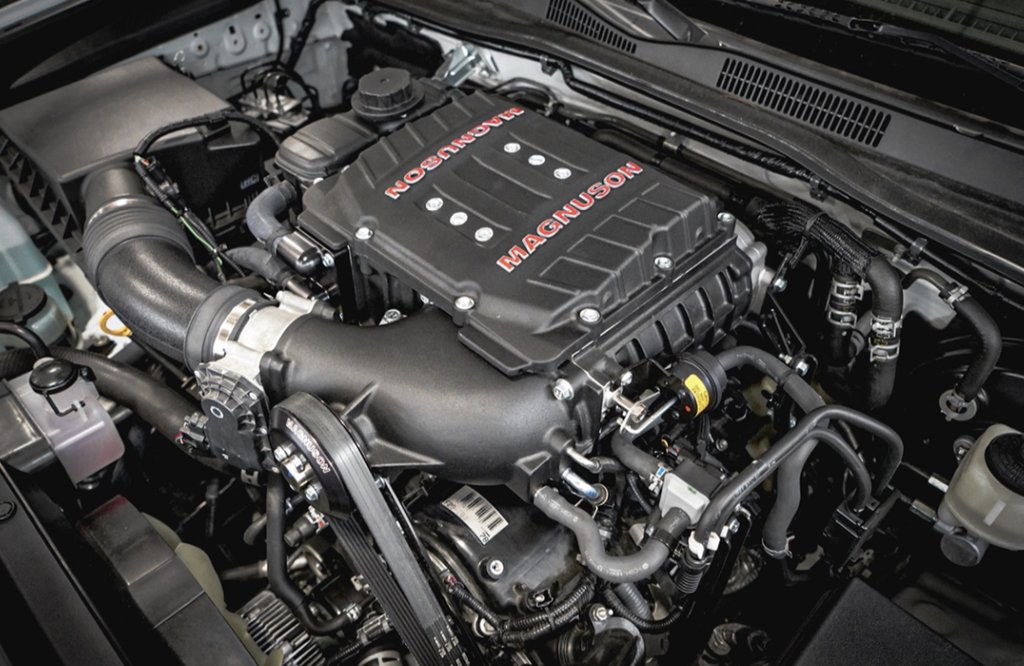
The 2GR is a 3.5-liter, all-aluminum V6 that features dual VVT and a timing chain rather than a belt. What makes it particularly interesting is the way Toyota adapted the core design to suit different needs, resulting in multiple trims.
The 2GR-FE is the most common version, using port fuel injection and powering a wide range of Toyota and Lexus models. The 2GR-FSE adds direct injection with higher compression, making it the choice for performance-oriented Lexus sedans and coupes.
The 2GR-FKS combines Toyota’s D-4S dual injection technology with VVT-iW, which allows it to operate in a more efficiency-focused combustion cycle and is found in many of the brand’s newer vehicles.
Finally, the 2GR-FXE is the hybrid-focused variant, tuned to run closer to an Atkinson cycle. While it produces less output on its own, its real strength lies in working alongside electric motors and batteries to deliver strong overall performance in Toyota and Lexus hybrid models.
5. Chevrolet Small-Block V8 (LS3)
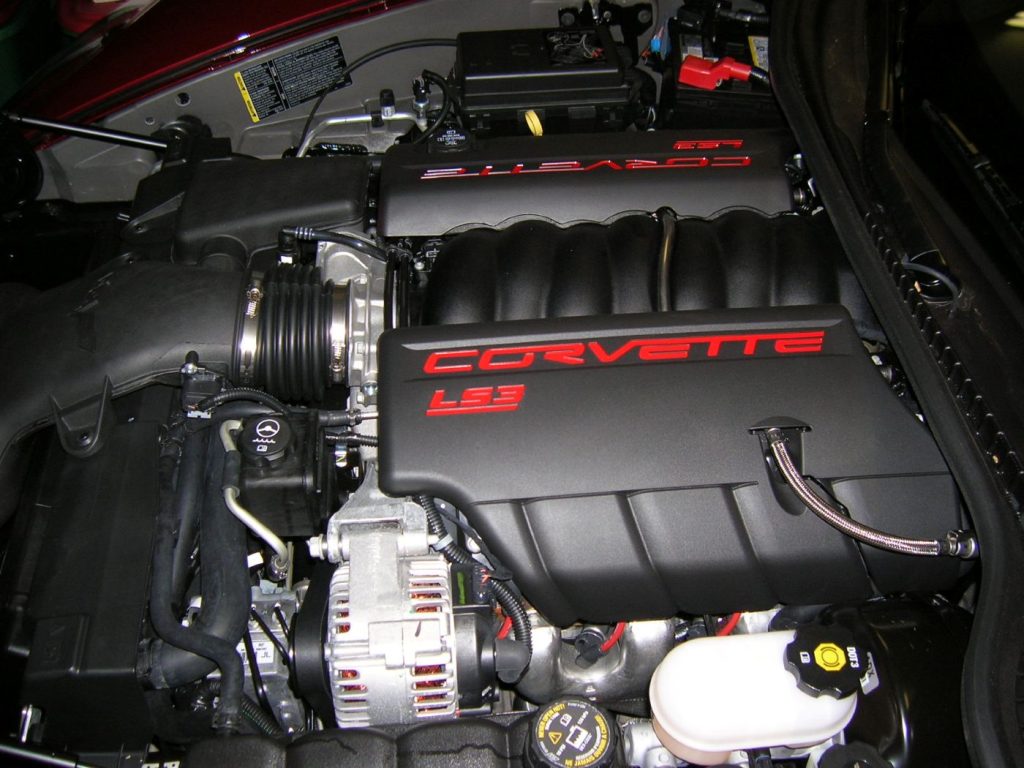
The LS family of V8s from Chevrolet is legendary, and the LS3 is a standout for smooth yet muscular power delivery. Found in the C6 Corvette and Camaro SS, the LS3 combines old-school pushrod simplicity with modern refinement.
Its broad torque curve means you never feel caught off guard, power comes on predictably, with a deep but controlled surge.
American drivers have embraced this engine for its versatility; it’s just as comfortable on a weekend cruise as it is at the drag strip. The LS3 proves that big displacement V8s can deliver muscle with civility.
6. Mazda Skyactiv-G 2.5
Mazda has quietly built a reputation for engineering engines that balance efficiency with driving enjoyment, and the Skyactiv-G 2.5 is no exception.
Found in models like the Mazda3, CX-5, and Mazda6, this naturally aspirated four-cylinder offers a surprisingly smooth driving experience for a mainstream car.
Thanks to a high compression ratio and meticulous tuning, power delivery is linear and predictable, without the “on-off” feeling some turbocharged engines exhibit.
In the US, it’s praised for giving family cars a touch of refinement usually reserved for luxury brands.
When it comes to reliability and Japanese automakers, Mazda may not be the first brand that comes to mind. While it is best known for enthusiast favorites like the MX-5 Miata and the RX-7, much of Mazda’s lineup consists of practical, everyday cars and crossovers that prioritize comfort and efficiency over excitement.
But the real focus here is not Mazda’s brand identity, it is the performance and dependability of its 2.5 Skyactiv-G engine.
The 2.5 Skyactiv-G has established itself as a highly reliable powerplant with very few reported issues. The most notable concern came in 2018–2019, when certain models equipped with the 2.5 engine were recalled due to cylinder deactivation problems.
Beyond that, the turbocharged version of the engine is known to consume some oil and experience carbon buildup, but these traits are fairly typical of modern direct-injection turbocharged engines and not necessarily a sign of poor design.
Introduced with the 2013 Mazda6 and CX-5, the 2.5 Skyactiv-G has been in production ever since, powering much of Mazda’s current lineup.
The naturally aspirated version delivers 194 horsepower and 190 lb-ft of torque, while the turbocharged model pushes output to 260 horsepower and 320 lb-ft of torque. This balance of efficiency and performance has helped cement its role as Mazda’s core engine.
After more than a decade on the market and only minor refinements along the way, the 2.5 Skyactiv-G has proven itself to be both effective and dependable. While a few owners have reported occasional part failures, these instances have not occurred frequently enough to suggest any systemic flaws.
Aside from the recall related to cylinder shutoff, the engine has shown remarkable consistency and reliability, making it one of Mazda’s strongest offerings in recent memory.

7. Ford Modular V8 (5.0 Coyote)
The Coyote V8, powering Mustangs and F-150s, exemplifies American engineering with a refined twist. Unlike older muscle car engines that could feel raw or unpolished, the 5.0-liter Coyote delivers smooth, usable power throughout its rev range.
Its dual overhead cam design and variable valve timing help it remain responsive without sacrificing refinement.
For US drivers, it provides the best of both worlds, classic V8 character combined with modern smoothness, whether you’re towing, commuting, or tearing up back roads.
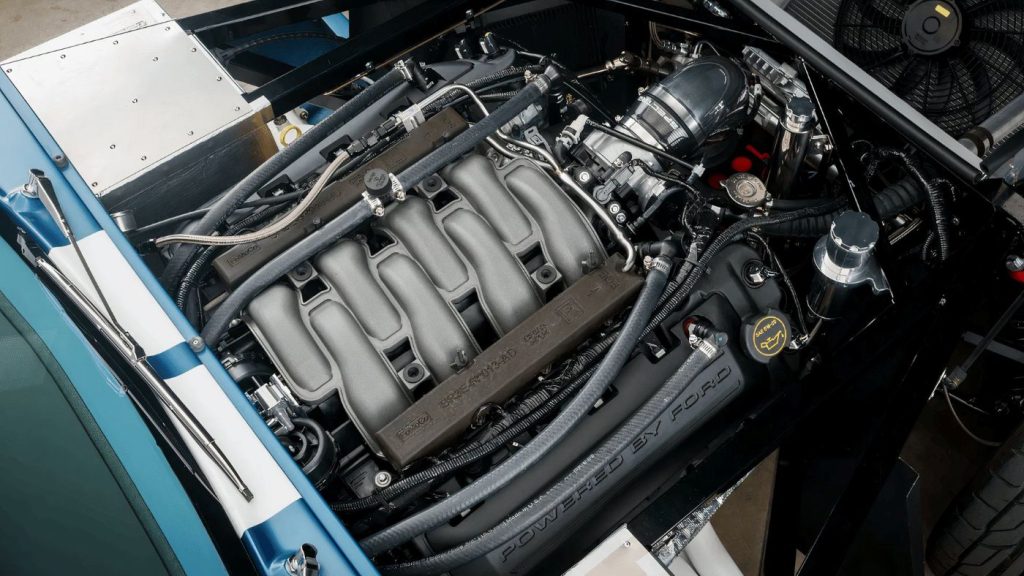
The Ford 5.0L Coyote engine is a naturally aspirated V8 developed by Ford Motor Company, designed to power performance-oriented vehicles such as the Ford Mustang as well as workhorses like the Ford F-150.
It was created as the successor to the 4.6L V8, Ford’s first modular engine, and has since become one of the most recognizable members of the Modular family.
Built in Windsor, Ontario, the Coyote displaces 5.0 liters, uses a longitudinal V8 layout, and features a dual overhead camshaft (DOHC) design with variable camshaft timing (VCT). Introduced in 2011, it has undergone several updates, with the most significant revision arriving in 2018.
Also Read: 10 Cars That Withstand Daily Stop-and-Go Traffic
The original Coyote was engineered specifically for the Mustang GT as Ford sought to deliver a powerplant capable of rivaling General Motors’ 6.2L LS3 engine found in the Chevrolet Camaro.
Engineers faced the challenge of not only improving output but also ensuring that the new engine maintained the same physical dimensions as the outgoing 4.6-liter V8.
The results spoke for themselves: between the 2010 and 2011 Mustang GT, horsepower jumped by nearly 100, marking a significant leap in performance that cemented the Coyote’s place in Ford’s lineup.
Equally important was the introduction of advanced technology within this platform. The 5.0L Coyote V8 became Ford’s first V8 to incorporate Twin independent Variable Cam Timing (Ti-VCT), an innovation that greatly enhanced efficiency and versatility.
By allowing independent adjustment of the intake and exhaust camshafts, Ti-VCT optimized both power delivery and fuel economy while at the same time reducing emissions. This combination of performance and refinement has ensured the Coyote’s relevance in both sports cars and trucks, where durability, output, and drivability remain essential.
8. Jaguar AJ-V8
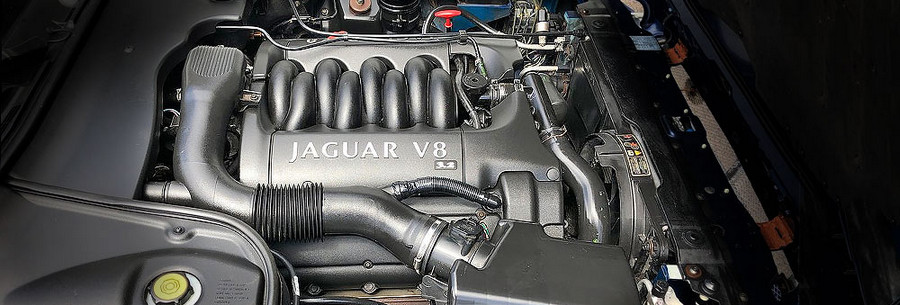
Jaguar’s AJ-V8, used in cars like the XF, XJ, and even Range Rovers, is often praised for its creamy delivery. Available in both naturally aspirated and supercharged versions, the AJ-V8 prioritizes refinement without dulling performance.
The supercharged variant, in particular, delivers torque seamlessly, avoiding the sudden bursts of power that some forced-induction engines suffer from.
American buyers looking for a luxury car that blends British character with smooth performance often find the AJ-V8 to be a hidden gem.
Jaguar’s engineering team began work on this new V8 engine with a completely fresh design, carrying nothing over from earlier powerplants.
The objective was clear: to develop a class-leading engine with minimal compromises. For the most part, they achieved their goal, and while certain weaknesses inevitably appeared over time, effective solutions were devised.
The scope of research for this project was remarkably broad. Engineers explored numerous possible engine configurations to identify the ideal design for carrying Jaguar into the 21st century.
Among the more advanced experiments was a 3.2-liter V6, two-stroke, lean-burn, supercharged prototype that employed the Orbital air-assisted injection system. This engine was capable of producing an impressive 350 horsepower, but issues with emissions and long-term durability ultimately proved insurmountable.
As development continued, it became apparent that a more traditional V8 layout was the most practical choice. Even then, details such as the number of valves per cylinder were carefully evaluated through a series of single-cylinder prototypes, echoing the approach taken during Jaguar’s V12 program three decades earlier.
While most modern engines favored a four-valve design, the team also considered alternatives such as a five-valve arrangement similar to that used by Yamaha in their high-performance motorcycles. However, no significant advantage was found in this setup, and the program proceeded with the more conventional four-valve configuration.
One of the most important design achievements was the development of a highly efficient and compact combustion chamber. This was accomplished by narrowing the angle between the valves from 47 degrees, as used in the AJ6 and AJ16 engines, down to 28 degrees, which was closer to the theoretical optimum.
The drawback was that this layout placed the head bolts directly beneath the camshafts, preventing the heads from being fully pre-assembled.
However, the narrower valve angle also offered the incidental benefit of reducing the size and weight of the cylinder heads, keeping the overall engine package more compact and lightweight.
The valve train itself received special attention, with engineers determined to keep component mass as low as possible. Valve stems were reduced to just 5 mm in diameter, which provided several important advantages. First, the reduction in friction losses led to measurable improvements in fuel economy.
Second, lighter components helped reduce mechanical noise, contributing to greater refinement. Finally, the stresses placed on the valve train were lessened, improving overall durability. The last point was especially significant, as it addressed an issue that had plagued many four-valve V8 racing engines in the past.
Purpose-built four-valve V8 racing engines typically used single-plane crankshafts, similar in layout to inline-four engines. This configuration produced evenly spaced firing impulses along each bank, allowing optimal exhaust tuning.
However, the design came with a major drawback: lateral shaking caused by unbalanced forces. Even with a standard firing order, such engines became notorious for timing gear failures caused by severe instantaneous torque reversals.
In contrast, production V8 engines almost universally employ two-plane crankshafts, with four crank throws arranged at 90-degree intervals. This design offers smoother balance but results in uneven firing intervals along each bank of cylinders.
Consequently, a production four-cam V8 must have its camshafts asymmetrically phased around the camshaft axis, a layout that can be seen in engineering diagrams. This asymmetry introduces irregular loads into the drive mechanisms linking the crankshaft to the camshafts, as well as between the paired camshafts within each cylinder head.
9. Subaru EZ36 Flat-Six
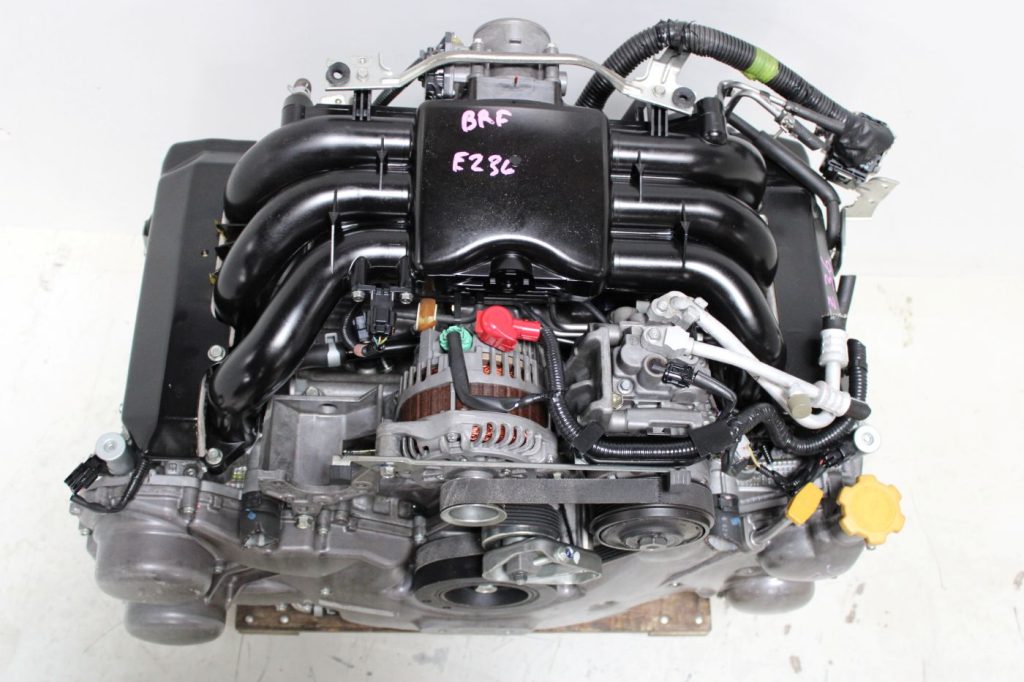
The EZ36 3.6-liter flat-six is one of Subaru’s most refined engines, used in models like the Outback and Legacy. Unlike Subaru’s smaller flat-fours, which can feel buzzy, the EZ36 offers a much smoother character, thanks to its naturally balanced layout and broader torque delivery.
It’s not a high-revving screamer, but rather a confident, consistent engine that feels comfortable on long road trips or steep mountain passes. For US buyers who value Subaru’s all-wheel-drive practicality but want a more refined driving experience, the EZ36 was a strong option.
The Subaru EZ36 engine, a 3.6-liter flat-six, was born from Subaru’s ambition to deliver greater power and performance while maintaining balance, efficiency, and everyday usability.
As a naturally aspirated unit, it quickly earned a reputation for smoothness and strong torque delivery, making it equally appealing to driving enthusiasts and commuters who value refinement in daily use.
Its horizontally opposed layout, a defining trait of Subaru engines, provides a low center of gravity that enhances handling and stability across a wide range of driving conditions.
Beyond its performance, the EZ36’s flat-six configuration produces a distinctive exhaust note that resonates with those who appreciate the unique character of a well-engineered powertrain.
10. Lexus 1UZ-FE V8
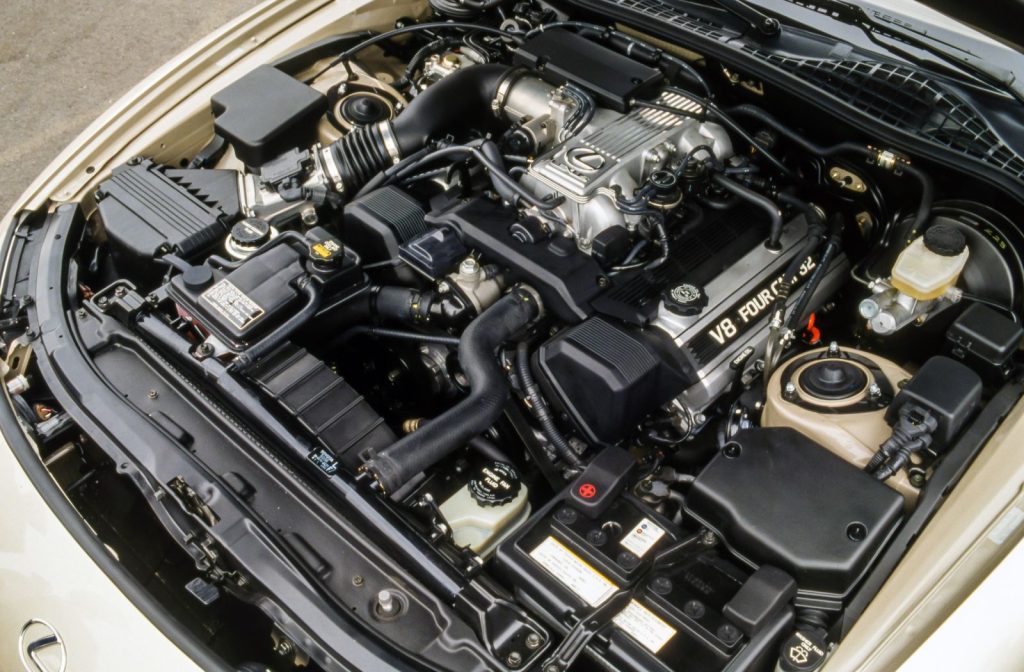
Often hailed as one of the smoothest engines ever built, the 1UZ-FE debuted in the Lexus LS400 in 1989 and set the benchmark for refinement. This 4.0-liter V8 combined Japanese precision with luxury-grade engineering, offering virtually vibration-free operation.
Even decades later, many examples run with the same silky power delivery they had when new. In the US, the 1UZ helped establish Lexus as a true competitor to Mercedes and BMW, and it remains a legend among enthusiasts for its durability and unmatched refinement.
While the auto industry often celebrates peak horsepower figures, true driving enjoyment often comes from how power is delivered. Engines like BMW’s B58 or Lexus’s 1UZ-FE remind us that refinement can be just as thrilling as raw speed.
From practical four-cylinders like Honda’s K24 to American muscle icons like the Ford Coyote V8, each of these engines proves that smoothness enhances both performance and everyday usability.
For US drivers, where commutes can be long and driving conditions vary widely, engines that keep smooth power delivery stand out as the best companions on the road.
They make acceleration feel natural, cruising feel effortless, and ownership a pleasure. Whether you’re behind the wheel of a luxury sedan, a family SUV, or a sports car, smooth power delivery is the hidden ingredient that transforms a good car into a great one.
