
The automotive world stands at a fascinating crossroads where electric propulsion meets driving enthusiasm. For decades, petrolheads have worried that the transition to electric vehicles would spell the end of engaging, spirited driving experiences.
Yet something remarkable has happened on the road to an electric future. Engineers and designers have discovered that electric powertrains don’t eliminate driving pleasure they simply redefine it.
The instant torque delivery, the perfectly balanced weight distribution from floor-mounted battery packs, and the sophisticated traction control systems enabled by electric motors have created a new dimension of performance that’s every bit as thrilling as traditional sports cars, just in a different way.
This list celebrates the electric vehicles that have successfully translated driving passion into the electric age. These aren’t just quick appliances for commuting; they’re machines that stir emotions, challenge drivers, and deliver genuine thrills.
From purpose-built sports cars to performance sedans that dance through corners, these EVs prove that the future of driving enthusiasm is not only secure it’s electrifying.
Whether you’re a track day enthusiast, a canyon carver, or someone who simply appreciates a well-sorted chassis, these ten electric vehicles will restore your faith that drivers’ cars aren’t going extinct they’re just getting a software update.
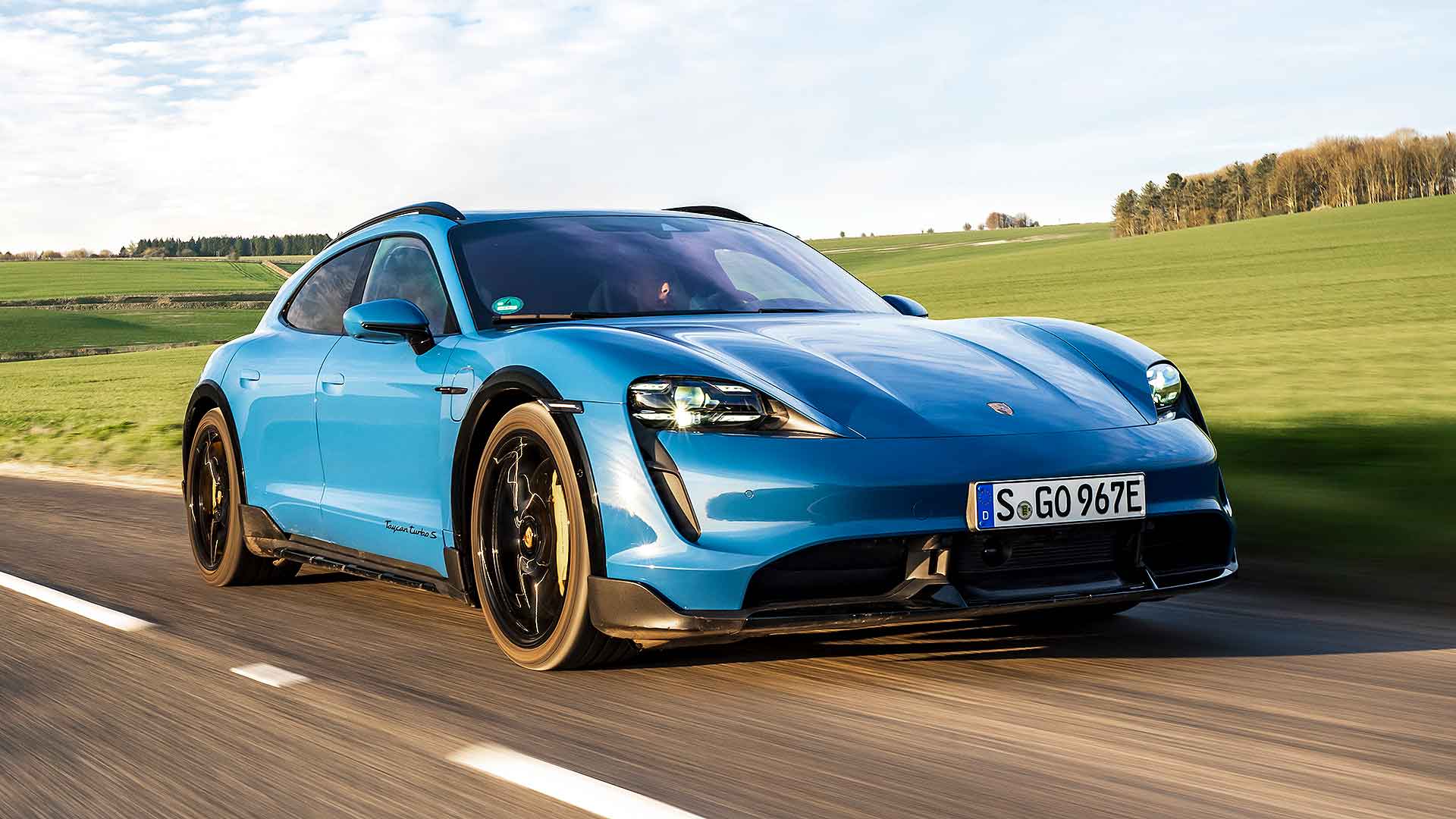
1. Porsche Taycan Turbo S
The Porsche Taycan Turbo S stands as the definitive proof that electric vehicles can deliver authentic Porsche driving dynamics. When Stuttgart’s legendary sports car manufacturer announced its first fully electric vehicle, skeptics wondered if the company could translate its decades of performance expertise into the EV world.
The Taycan Turbo S answered those doubts emphatically, delivering a driving experience that feels unmistakably Porsche despite the absence of a flat-six engine.
At the heart of the Taycan Turbo S lies a sophisticated dual-motor all-wheel-drive system capable of producing up to 750 horsepower with Launch Control engaged.
But raw power tells only part of the story. What makes this car special is how that power is delivered and managed. The two-speed transmission on the rear axle a unique feature among EVs allows for explosive acceleration off the line while maintaining efficiency and performance at higher speeds.
This engineering touch demonstrates Porsche’s commitment to creating an electric vehicle that drives like a Porsche first and an EV second. The chassis dynamics are where the Taycan truly shines as a driver’s car.
Porsche’s engineers positioned the battery pack low and centrally in the chassis, creating a center of gravity lower than that of a 911.
Combined with adaptive air suspension, rear-axle steering, and Porsche’s sophisticated torque vectoring system, the Taycan changes direction with an eagerness that belies its substantial curb weight.
Turn into a corner, and the Taycan rotates willingly, the steering providing clear, linear feedback about what’s happening at the contact patches.
With the Taycan Turbo S, Porsche hasn’t just built a fast electric car. They’ve created an electric car that drives like a Porsche, maintaining the brand’s core values while embracing new technology. It’s expensive, yes, but it delivers an authenticity that justifies its premium positioning.
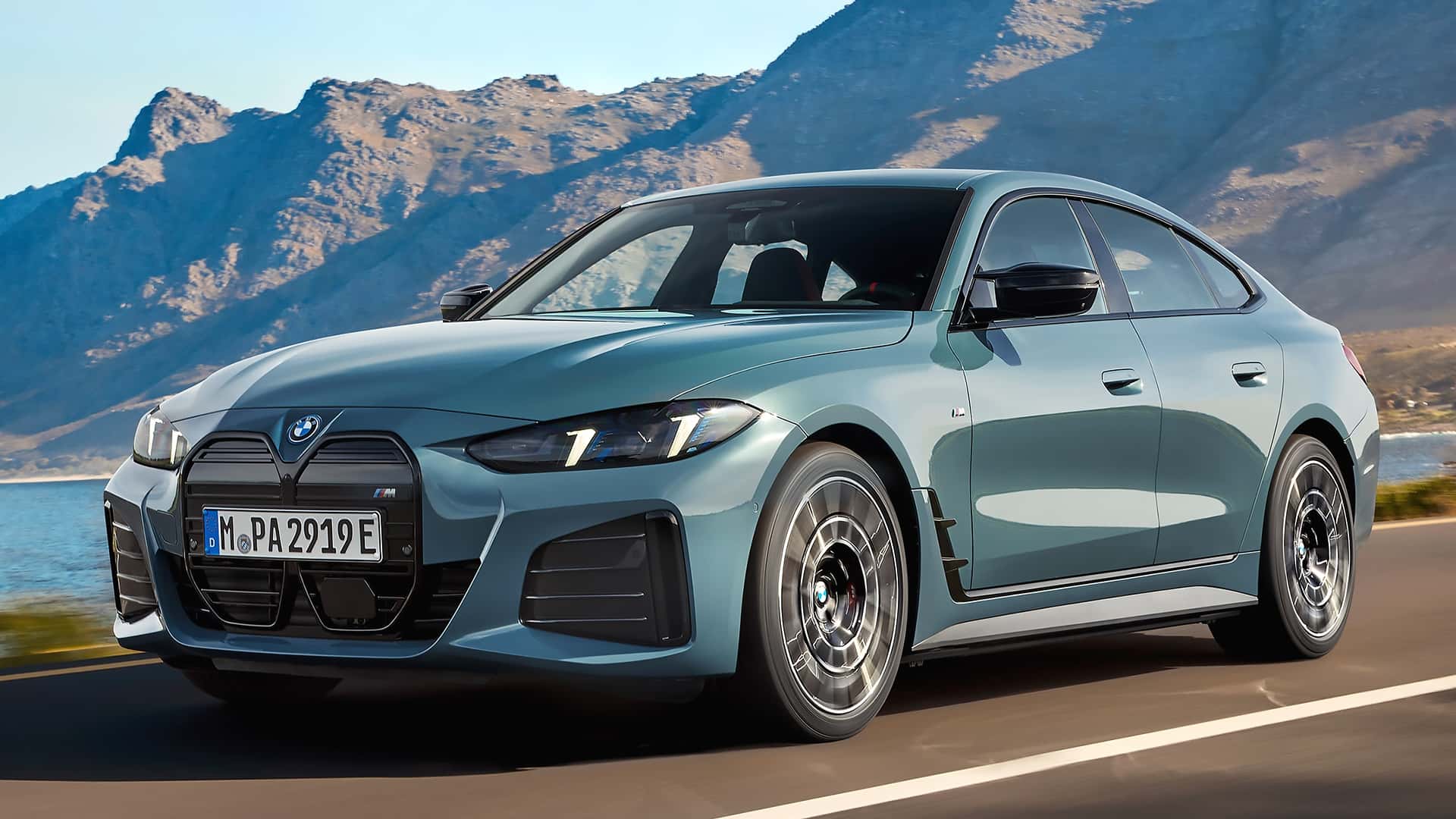
2. BMW i4 M50
BMW’s i4 M50 represents the Munich manufacturer’s vision of an electric sports sedan, and it’s a vision that successfully translates the brand’s “Ultimate Driving Machine” philosophy into the electric age.
Built on the same platform as the excellent 4 Series Gran Coupe, the i4 M50 benefits from BMW’s decades of experience building balanced, driver-focused sedans while adding the instant torque and low center of gravity advantages that electrification provides.
The dual-motor all-wheel-drive system produces 536 horsepower, propelling this sedan from standstill to 60 mph in under four seconds. But again, straight-line acceleration is merely the appetizer.
The main course is how the i4 M50 handles when the road gets interesting. BMW’s engineers have managed to mask much of the car’s weight through clever chassis tuning and adaptive suspension systems. The result is a sedan that feels eager and alive, willing to change direction quickly and predictably.
BMW’s renowned 50-50 weight distribution philosophy translates beautifully to electric platforms, and the i4 M50 proves it. The battery pack sits low in the chassis, creating a center of gravity that would be impossible with a traditional engine and fuel tank configuration.
Combined with BMW’s adaptive M suspension and near-perfect weight balance, the i4 M50 corners with precision that feels natural and intuitive. There’s genuine balance to the chassis it doesn’t understeer stubbornly like many heavy EVs, nor does it feel nervous and loose at the rear.
The steering in the i4 M50 is properly weighted and surprisingly communicative for an electric power-assisted system. BMW has always excelled at steering calibration, and that expertise is evident here.
There’s a natural, linear build-up of resistance as you add lock, and the steering provides enough feedback to inspire confidence when pushing hard through a series of corners.
It’s not the hydraulic perfection of old-school BMWs, but it’s among the best electrically assisted systems available today. The i4 M50 succeeds because BMW hasn’t tried to reinvent what makes a great driving machine.
They’ve taken their proven formula balanced chassis, communicative steering, strong brakes, and powerful engines and adapted it thoughtfully for electric propulsion. The result is a driver’s car that happens to be electric, rather than an electric car that’s been performance-tuned as an afterthought.
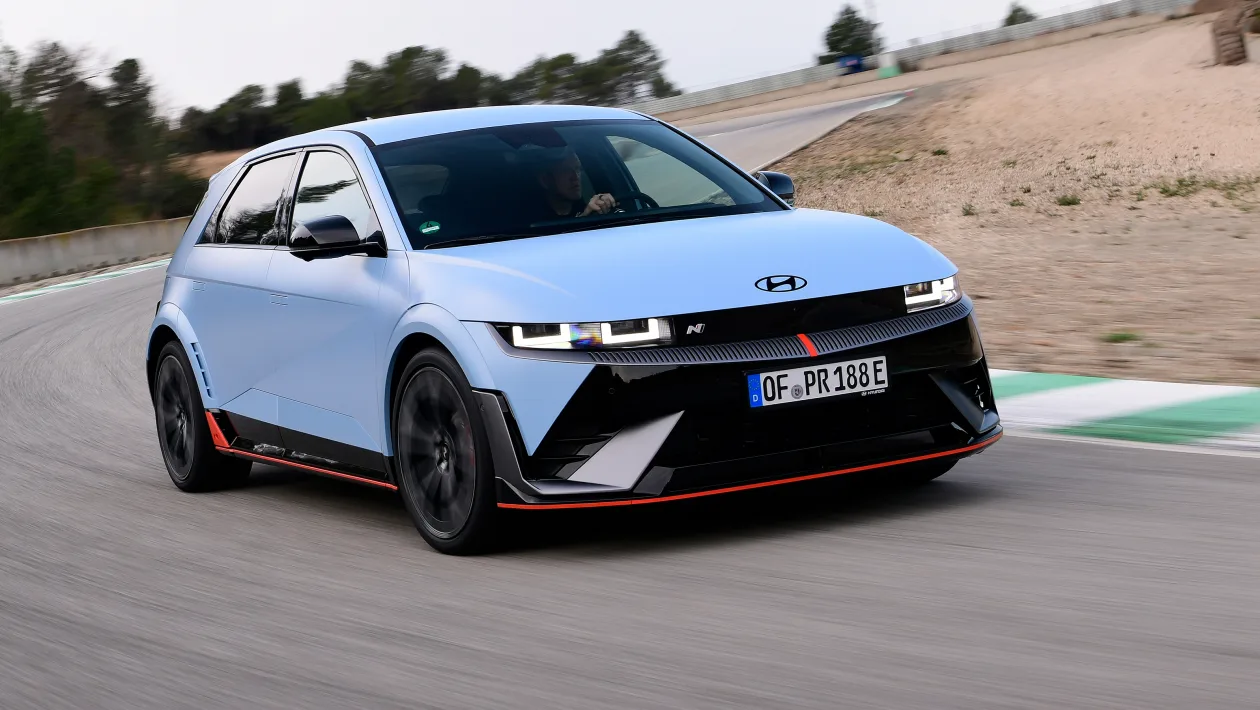
3. Hyundai Ioniq 5 N
The Hyundai Ioniq 5 N is perhaps the most surprising entry on this list, representing a manufacturer not traditionally associated with performance vehicles delivering a genuinely thrilling EV.
Hyundai’s N division, which has already impressed enthusiasts with the Veloster N and Elantra N, has translated its motorsport-inspired philosophy into an electric crossover that prioritizes driving enjoyment over everything else. The result is wonderfully unhinged in the best possible way.
With dual motors producing up to 641 horsepower in boost mode, the Ioniq 5 N is blisteringly quick. But Hyundai hasn’t simply bolted powerful motors into an existing platform and called it done.
The N division extensively modified the chassis, suspension, brakes, and cooling systems to create something that drives unlike any other electric crossover. The adaptive dampers are specifically tuned for performance, offering surprising body control considering the vehicle’s size and weight.
What truly sets the Ioniq 5 N apart is its unabashed embrace of driving fun, even when that fun comes from artificial enhancements. The “N e-shift” system simulates gear changes complete with torque interruptions that mimic a dual-clutch transmission shifting.
You can even specify how many “gears” you want (up to eight) and adjust the shift points. Additionally, “N Active Sound+” pipes synthesized engine noise through the speakers, with multiple sound profiles to choose from.
Purists might scoff, but these features are entirely optional and surprisingly effective at enhancing the driving experience. What makes the Ioniq 5 N truly special is how it doesn’t apologize for being an EV or try to exactly mimic combustion engines.
Instead, it embraces the advantages of electric power while adding theatrical elements that enhance enjoyment. It’s playful, characterful, and genuinely engaging to drive hard qualities often missing from serious German performance machines. Hyundai has created something that puts smiles on faces, and that’s what driver’s cars have always been about.
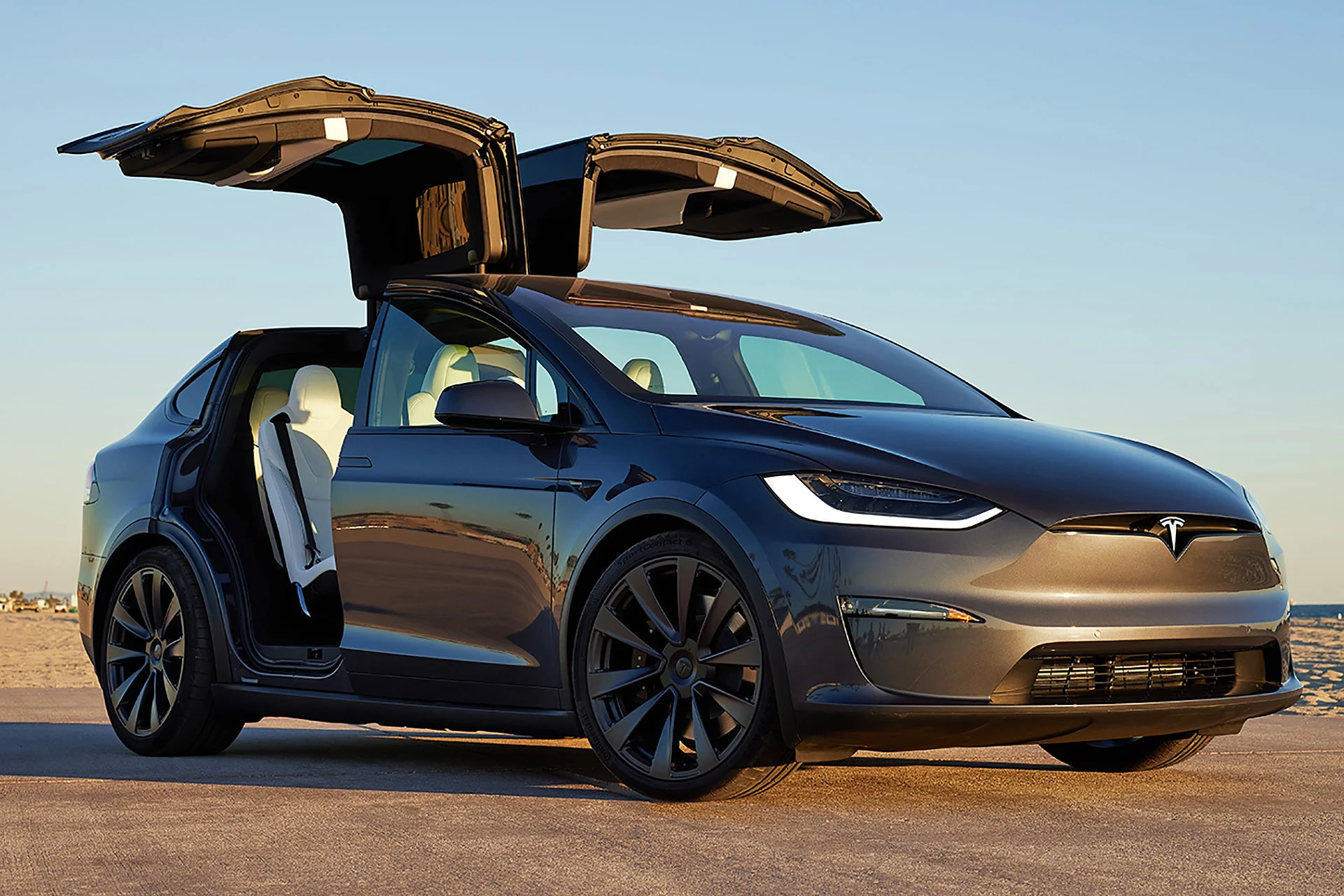
4. Tesla Model S Plaid
The Tesla Model S Plaid is a technological tour de force that delivers performance numbers that still seem impossible. With three electric motors producing over 1,000 horsepower, the Plaid accelerates from 0-60 mph in under two seconds a figure that rivals top-tier hypercars costing millions more.
But beyond the headline-grabbing straight-line speed, the Model S Plaid offers a driving experience that’s more engaging than many give it credit for.
The tri-motor setup provides sophisticated torque vectoring that helps manage the enormous power output. One motor drives the front wheels while two independent motors power the rear axle, allowing precise control of power delivery to each rear wheel.
This system helps the Plaid rotate through corners despite its substantial weight, vectoring torque to the outside rear wheel during cornering to sharpen turn-in response. The result is a large sedan that feels surprisingly agile when attacking a winding road.
The steering in the Model S Plaid is where opinions diverge. Tesla offers a “yoke” steering wheel option that lacks a traditional circular rim, which proves controversial among enthusiasts.
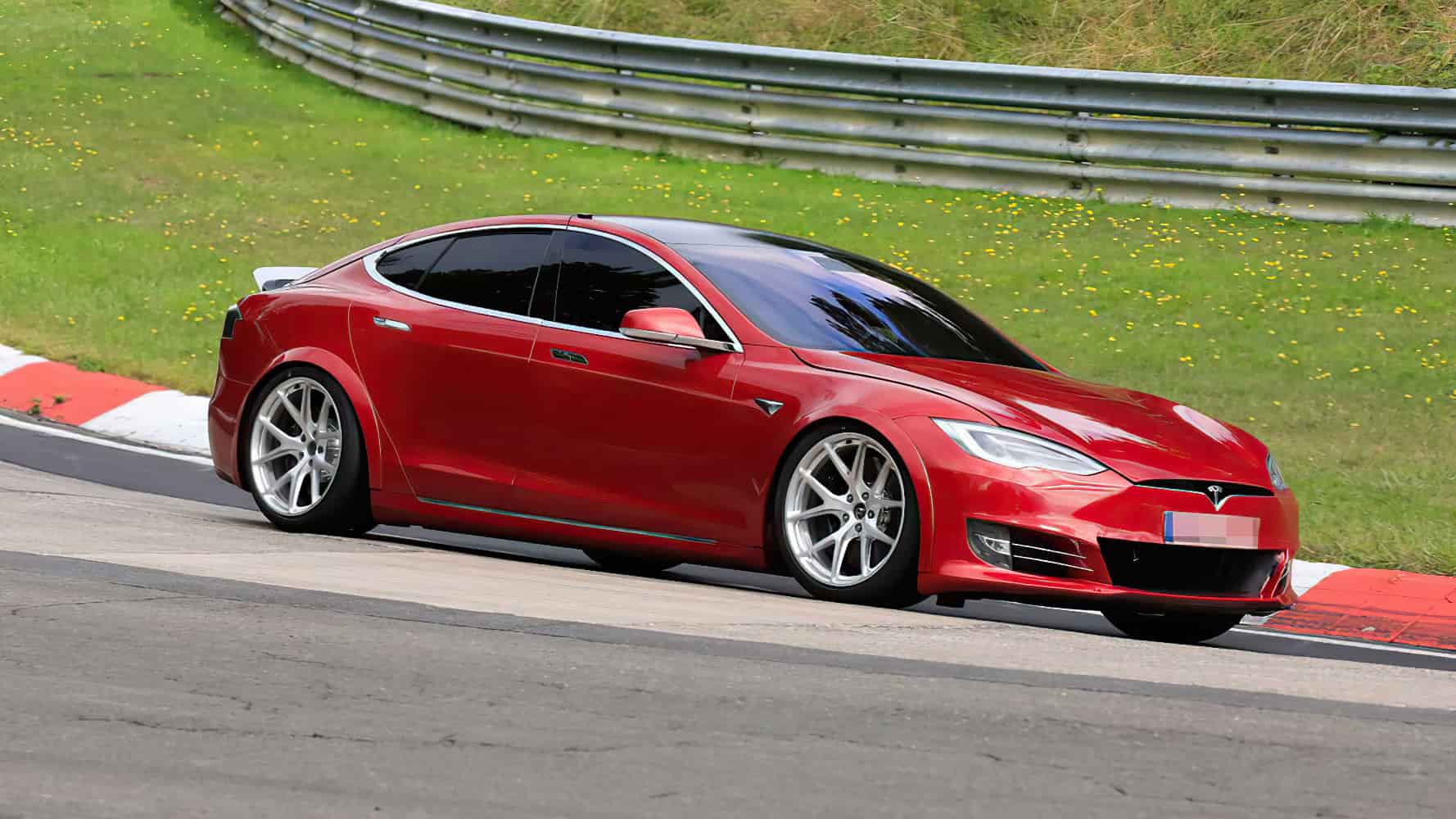
Many prefer the optional traditional steering wheel, which provides more conventional control. Regardless of which you choose, the steering itself is accurate and direct, if somewhat lacking in feedback compared to the best driver’s cars.
It’s clearly tuned more for precision than communication, which suits the car’s futuristic character. One area where the Plaid genuinely excels is its suspension tuning.
Tesla fitted adaptive dampers that offer surprisingly good body control considering the car’s weight. In Sport mode, the suspension firms up significantly, reducing body roll and keeping the chassis composed during aggressive cornering.
The low center of gravity from the floor-mounted battery pack helps tremendously, allowing the Plaid to maintain impressive cornering speeds without feeling unstable or nervous.
The brake system represents one compromise in the Plaid’s otherwise impressive performance credentials. While adequate for normal driving and even occasional spirited runs, the brakes can struggle during repeated hard stops from high speeds.
The carbon-ceramic brake upgrade helps significantly, though it comes at considerable extra cost. The regenerative braking is strong and can be adjusted, though the blend between regen and friction braking isn’t always as seamless as in some competitors.
The Model S Plaid isn’t a driver’s car in the traditional sense it doesn’t communicate through its steering or reward smooth inputs in quite the same way as a Porsche Taycan.
But it offers something different: overwhelming performance wrapped in practical, tech-forward packaging. It’s a look of what driving could become as technology advances, and while it may not satisfy traditionalists, it creates its own kind of addictive driving experience.
Also Read: 5 Engines That Don’t Mind Cheap Gas vs 5 That Fail Without Premium
5. Lotus Eletre
The Lotus Eletre represents a bold departure for the legendary British manufacturer, marking their first-ever SUV and their transition into the electric age. For a company whose founder, Colin Chapman, famously preached “simplify, then add lightness,” creating a 2.5-ton electric SUV seems almost heretical.
Yet Lotus has managed to inject genuine driving dynamics into this unlikely package, proving that their engineering expertise translates beyond lightweight sports cars.
The Eletre features a dual-motor setup producing up to 905 horsepower in the top Eletre R specification, making it one of the most powerful SUVs available.
But Lotus understood that power alone doesn’t make a driver’s car especially in a heavy electric SUV. The chassis engineering showcases decades of Lotus expertise, with active suspension systems, torque vectoring, and carefully calibrated steering that work together to create surprisingly engaging dynamics.
The adaptive air suspension is key to the Eletre’s success as a driver’s car. Lotus can lower the ride height dramatically in Sport mode, reducing the center of gravity and improving aerodynamics.
The active anti-roll system minimizes body lean during cornering, keeping the Eletre remarkably flat through direction changes. When you’re attacking a challenging road, the Eletre feels far more controlled and composed than its size suggests it should.
Lotus paid particular attention to steering calibration understandable from a company that built its reputation on communicative, precise steering.
The Eletre’s steering is appropriately weighted with decent feedback considering the electric assistance and the vehicle’s mass. It’s direct and accurate, allowing you to place this large SUV precisely on your intended line. While it can’t match the pure communication of a gas-powered Emira, it’s excellent for an electric SUV.

The torque vectoring system actively distributes power between the rear wheels to sharpen handling response. During spirited driving, you can feel the system working to rotate the car through tighter corners, partially overcoming the physics of moving such a heavy vehicle quickly.
Combined with massive Pirelli tires and powerful brakes, the Eletre can maintain impressive speeds through challenging road sections.
Aerodynamics play a crucial role in the Eletre’s design. Active aerodynamic elements adjust automatically based on driving conditions, reducing drag for efficiency or increasing downforce for stability at high speeds.
The underbody is completely flat with extensive aerodynamic management, helping the Eletre slice through the air with a drag coefficient that would be respectable for a sedan, let alone an SUV.
The Lotus Eletre proves that even in the seemingly antithetical form of a heavy electric SUV, proper engineering and attention to driving dynamics can create something engaging.
It won’t satisfy purists longing for a lightweight Elise, but it demonstrates that Lotus hasn’t forgotten how to make cars that reward skilled driving even when those cars are high-riding, battery-powered crossovers.
6. Ford Mustang Mach-E GT
The Ford Mustang Mach-E GT represents Ford’s interpretation of performance electric vehicle dynamics, wearing the iconic Mustang badge on an SUV body a controversial choice that upset purists but resulted in a surprisingly capable driver’s car.
The GT model specifically focuses on performance, with chassis upgrades, powertrain enhancements, and styling touches that distinguish it from the standard Mach-E lineup.
The dual-motor all-wheel-drive system produces 480 horsepower and 634 lb-ft of torque, delivering explosive acceleration that pushes you back into the seats with authority.
Ford claims 0-60 mph in under four seconds, and the Mach-E GT feels every bit that quick when you unleash its full power. But the GT’s appeal extends beyond straight-line performance thanks to Ford’s experience building engaging vehicles this is the company that created the Focus ST and Fiesta ST, after all.
The Mach-E GT benefits from the MagneRide adaptive damping system, which uses magnetically controlled dampers to adjust in milliseconds to changing road conditions.
This system provides excellent body control during aggressive driving while maintaining reasonable comfort during normal cruising. In Unbridled mode (Ford’s terminology for maximum performance), the dampers firm up significantly, reducing body roll and keeping the Mach-E GT impressively flat through corner sequences.
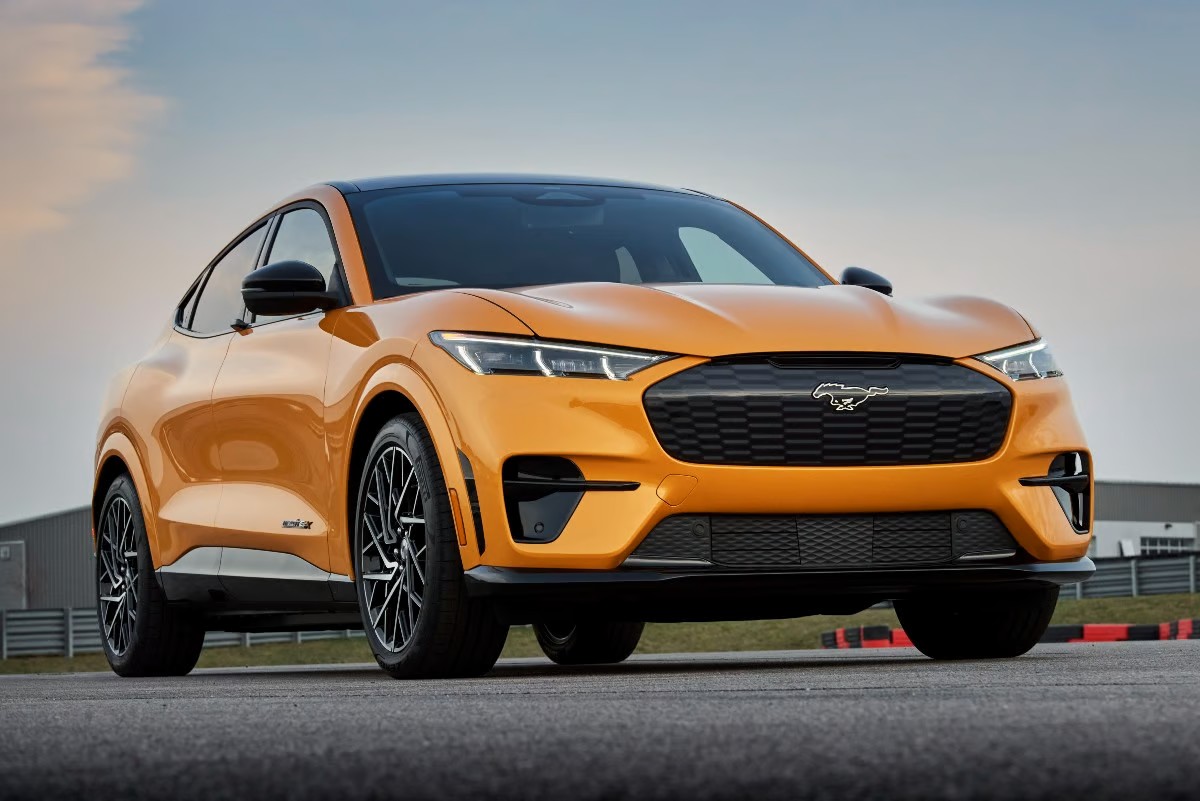
Ford calibrated the steering specifically for the GT model, and it shows. The steering weight is appropriate for a performance vehicle—heavier than the standard Mach-E with better on-center feel.
While it doesn’t provide extensive feedback about road surface texture, it communicates load information clearly enough to build confidence when driving quickly. The variable-ratio rack allows for quick direction changes without requiring excessive hand movements.
The brake system features larger rotors than standard Mach-E models, with red-painted Brembo calipers that provide strong, fade-resistant stopping power.
The brake pedal feel is commendably natural considering the complexity of blending regenerative and friction braking. Ford has tuned the system to feel progressive and predictable, making it easy to modulate brake pressure precisely whether you’re parking or hard-braking from triple-digit speeds.
One clever feature is the Unbridled Extend mode, which combines maximum performance with reduced regenerative braking. This allows for more natural coasting and gives drivers better control over deceleration, particularly important when carrying speed through a series of corners.
The reduced regen means less battery charging, but Ford recognized that sometimes driving enjoyment trumps maximum efficiency.
The Ford Mustang Mach-E GT succeeds because Ford didn’t just create a quick EV; they engineered a vehicle with genuinely enjoyable handling dynamics.
Yes, it’s controversial to wear the Mustang badge, and no, it doesn’t handle like a two-door sports car. But evaluated on its own merits as a performance electric crossover, the Mach-E GT delivers genuine driving pleasure wrapped in practical, family-friendly packaging.
7. Polestar 2 (Dual Motor with Performance Pack)
The Polestar 2 with dual motors and the optional Performance Pack represents Volvo’s performance brand at its most focused, delivering Scandinavian restraint combined with genuine driving dynamics.
While Polestar may not carry the motorsport heritage of BMW M or Mercedes-AMG, the company has created an electric sedan that prioritizes driving enjoyment without sacrificing the usability and safety for which Swedish cars are famous.
The dual-motor setup produces 455 horsepower and 502 lb-ft of torque, providing vigorous acceleration that feels appropriately quick without being overwhelming.
But the Performance Pack is where the Polestar 2 truly comes alive as a driver’s car. This option adds Öhlins manually adjustable dampers, Brembo brakes, 20-inch forged wheels, and a comprehensive set of chassis tuning modifications that transform the car’s dynamic capabilities.
The Öhlins dampers are the star of the Performance Pack. Manually adjustable with 22 clicks of rebound damping control, they allow owners to fine-tune the suspension characteristics to their preferences or specific driving conditions.
Set them soft, and the Polestar 2 rides comfortably over broken pavement while maintaining decent body control. Crank them to the firmer settings, and the car becomes remarkably composed and flat through aggressive corner sequences. This adjustability appeals to enthusiasts who enjoy personalizing their cars’ behavior.

The chassis balance is impressive, with near-perfect weight distribution creating neutral, predictable handling. The Polestar 2 doesn’t exhibit the stubborn understeer common to many electric sedans; instead, it rotates willingly through corners when you apply power properly.
The torque vectoring system is subtle but effective, helping tighten your line without feeling intrusive or artificial. There’s a naturalness to how the Polestar 2 responds to inputs that makes it feel like a well-sorted front-engine, rear-drive sports sedan despite its all-wheel-drive layout.
Steering feel is appropriately weighted and reasonably communicative. Polestar calibrated the electric power steering to provide decent feedback about what’s happening at the front contact patches, and there’s a linear, natural build-up of resistance as you add steering lock.
It’s not the most talkative steering system, but it’s better than most EVs and good enough to inspire confidence during spirited driving. The Brembo brake package provides excellent stopping power with progressive pedal feel.
The large four-piston front calipers bite hard without feeling grabby, and the blend between regenerative and friction braking is smooth.
You can adjust regenerative braking strength through the infotainment system, with options ranging from minimal regen (for a more traditional driving feel) to one-pedal driving.
What makes the Polestar 2 Performance Pack special is its focus on fundamentals good steering, balanced chassis, quality dampers, strong brakes. These elements combine to create a cohesive driving experience that feels natural and rewarding.
It’s proof that you don’t need the most power or the highest top speed to create an engaging driver’s car; sometimes, getting the basics absolutely right is enough.
8. Mercedes-AMG EQS 53 4MATIC+
The Mercedes-AMG EQS 53 4MATIC+ represents AMG’s first serious effort at creating an electric performance sedan, applying decades of go-fast expertise to Mercedes’ flagship electric platform.
With output reaching 751 horsepower with the AMG Dynamic Plus package, this luxurious sedan delivers devastating performance wrapped in technology and comfort that justifies its premium positioning among electric driver’s cars.
The dual-motor setup provides all-wheel drive with sophisticated torque distribution that can shift power between axles and, to some extent, between individual wheels.
The power delivery is immediate and relentless stepping hard on the throttle produces a wave of acceleration that seems to build and build as the speedometer needle sweeps toward license-losing velocities.
Yet despite the violence of which it’s capable, the EQS 53 delivers its performance smoothly and controllably, befitting its luxury sedan status.
AMG fitted the EQS 53 with air suspension featuring continuously adaptive damping that actively responds to driving conditions and driver inputs.
The system can firm up dramatically in Sport and Sport Plus modes, reducing body roll and creating impressively flat cornering attitudes considering the car’s significant mass.
The rear-axle steering system, which can angle the rear wheels up to ten degrees, transforms the car’s agility. At low speeds, it effectively shortens the wheelbase for tight maneuvering.
At higher speeds, it increases stability and makes the car feel more nimble through fast sweepers than its physical dimensions suggest it should.
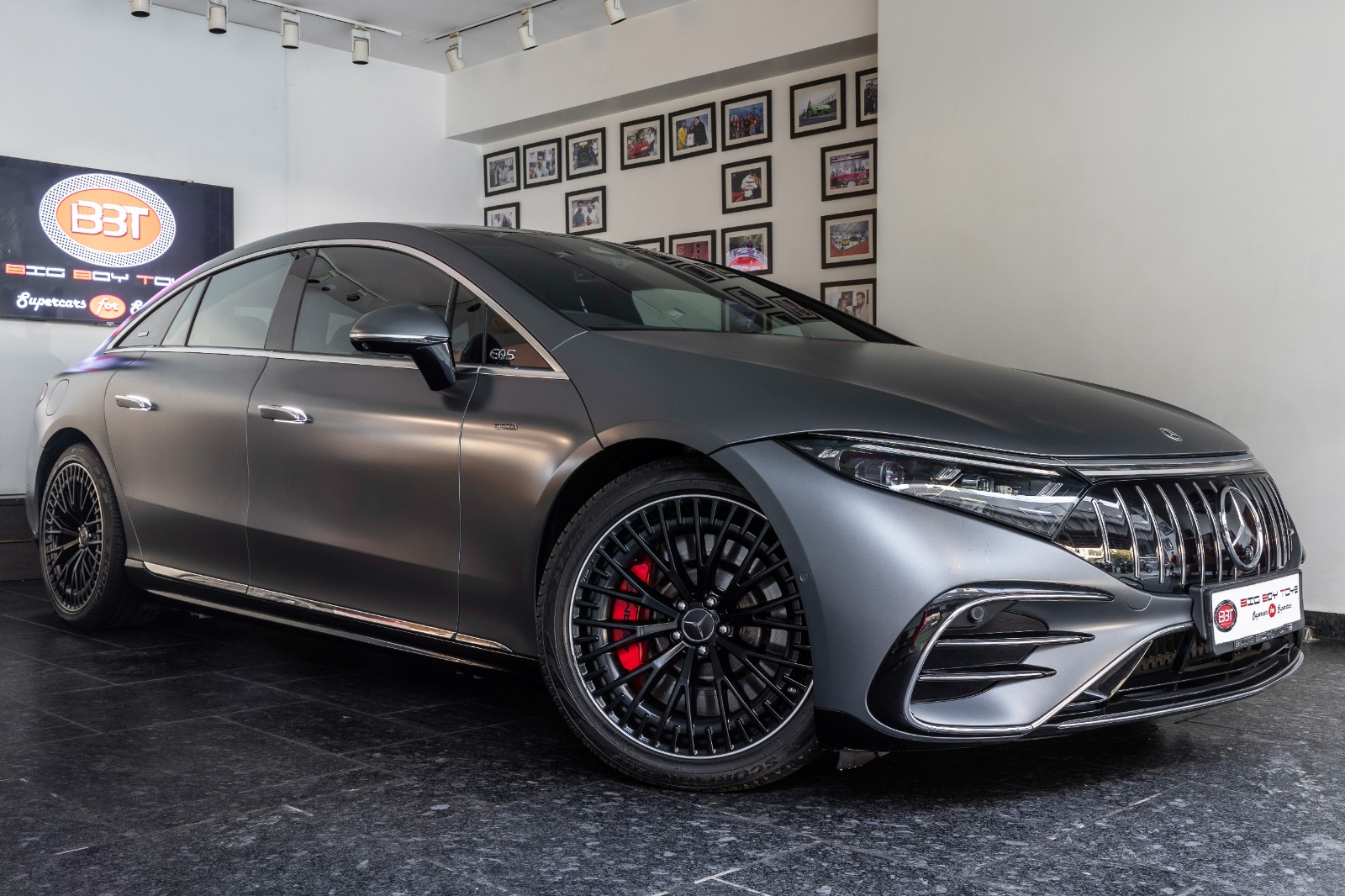
The steering in the EQS 53 is surprisingly good for such a large, heavy luxury sedan. AMG tuned the system to provide appropriate weight and reasonable feedback, creating confidence-inspiring turn-in response.
It’s not sports-car sharp, but it’s direct and accurate enough for enthusiastic driving. The variable-ratio steering requires minimal wheel movement to change direction, which initially feels unusual but quickly becomes intuitive.
Braking performance is excellent, with large discs and six-piston front calipers providing impressive stopping power. The brake pedal feel is natural and progressive, making precise modulation easy despite the complex blending of regenerative and friction braking happening behind the scenes.
AMG clearly spent time calibrating this system because it’s one of the better implementations in the EV world. The EQS 53 offers multiple drive modes that create substantial differences in character.
Comfort mode emphasizes refinement with soft suspension, gentle throttle response, and minimal powertrain noise. Switch to Sport Plus, and the car transforms throttle response sharpens dramatically, the suspension firms up considerably, artificial AMG engine sound pipes through the speakers, and the torque distribution becomes more rear-biased.
There’s even a Race Start launch control function that delivers brutally effective standing-start acceleration. Inside, the EQS 53 surrounds occupants with Mercedes’ Hyperscreen an enormous 56-inch curved glass display spanning the entire dashboard. It’s visually striking and functionally impressive, though it can feel overwhelming initially.
The AMG-specific performance seats provide excellent support with extensive adjustment and massage functions. Build quality and materials are impeccable, as expected from Mercedes’ flagship.
The Mercedes-AMG EQS 53 proves that electric performance sedans can deliver genuine driving engagement without sacrificing the luxury and refinement expected from the three-pointed star.
It’s expensive, yes, and it won’t satisfy purists who want raw, unfiltered driving experiences. But for those who appreciate sophisticated technology, devastating performance, and opulent comfort combined in one package, the EQS 53 represents the cutting edge of what electric driver’s cars can be.
It’s a vehicle that makes you reconsider what “performance” means, proving that driver engagement doesn’t require discomfort or compromise it can coexist beautifully with luxury and technology.
9. Lucid Air Sapphire
The Lucid Air Sapphire stands as the most powerful sedan in production, period. With three electric motors producing a combined 1,234 horsepower, this Silicon Valley startup’s flagship creates performance numbers that seem to defy physics.
But what’s remarkable about the Sapphire isn’t just its ridiculous power output it’s how Lucid engineered a car this powerful to be controllable, predictable, and genuinely engaging to drive rather than simply terrifying.
The tri-motor configuration places one motor on the front axle and two independent motors on the rear axle, creating a sophisticated all-wheel-drive system with genuine torque vectoring capability.
Those two rear motors can distribute power independently to each rear wheel with millisecond precision, actively helping rotate the car through corners or stabilizing it during straight-line acceleration. This system is crucial to making the Sapphire’s enormous power usable rather than overwhelming.
The acceleration is genuinely mind-bending. Lucid claims 0-60 mph in 1.89 seconds, and experiencing it firsthand feels like being shot from a cannon.
It’s faster than a Bugatti Chiron to 60 mph, faster than a Formula 1 car, faster than almost anything on Earth. And somehow, Lucid made this brutal acceleration drama controllable and repeatable you can launch the Sapphire hard repeatedly without drama or wheel spin, the traction control managing power delivery with computer precision.
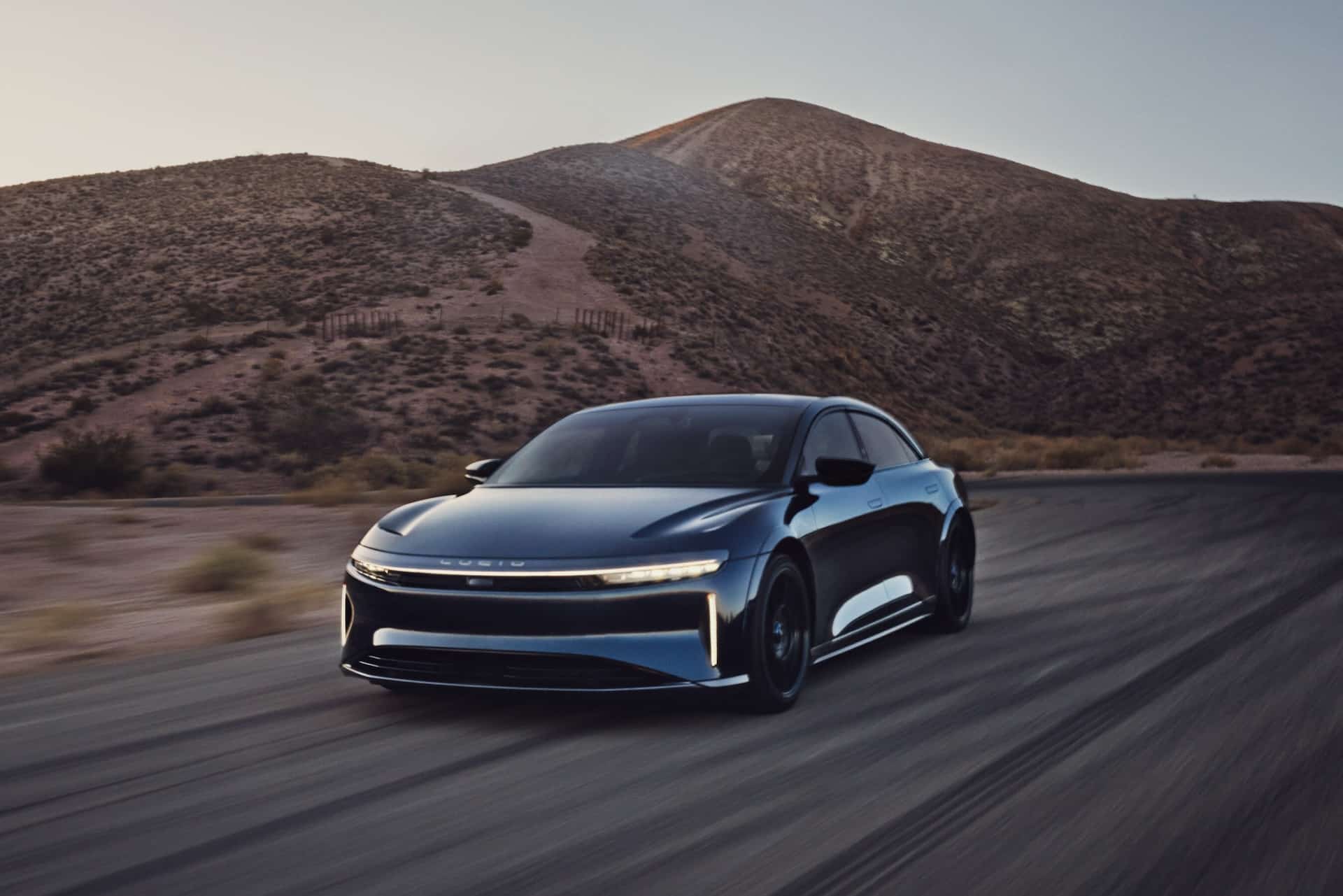
But the Sapphire’s greatness extends far beyond drag strip heroics. Lucid extensively modified the chassis compared to the standard Air, adding revised spring rates, retuned adaptive dampers, and recalibrated stability control systems.
The suspension strikes an impressive balance between control and comfort, keeping the Sapphire remarkably composed during aggressive cornering while remaining civilized over rough pavement. The car sits low with minimal ground clearance, emphasizing its performance intentions.
The steering is accurate and appropriately weighted, providing decent feedback for a car of this type. It’s not overly heavy or artificially sporty instead, it feels natural and linear with effort building predictably as you add lock.
The variable-ratio setup means you don’t need excessive hand movements to go thorugh the tight corners, making the Sapphire feel more agile than its substantial dimensions suggest.
Lucid fitted massive carbon-ceramic brake discs 16.5 inches front and 15.4 inches rear with substantial calipers that provide fade-free stopping power even during repeated hard braking from extremely high speeds.
The brake pedal feel is excellent, with progressive bite and consistent feedback. The system blends regenerative and friction braking seamlessly, making modulation precise and predictable in all situations.
The Sapphire’s party trick is its ability to dance. Despite weighing over 5,200 pounds, the torque vectoring system and sophisticated traction control allow the Sapphire to drift controllably when you provoke it.
Lucid includes a Drag Strip mode for optimal straight-line performance and a Sprint mode that balances acceleration with handling for road courses.
There’s even a sophisticated Track mode that can be customized extensively, adjusting everything from power distribution to stability control intervention levels.
Inside, the Air Sapphire showcases luxury that rivals or exceeds traditional premium sedans. The materials are exquisite real metal, genuine leather, actual wood with build quality that demonstrates Lucid’s obsessive attention to detail.
It’s not just about having the most power it’s about engineering that power to be usable, controllable, and genuinely engaging. Lucid could have created a one-trick straight-line missile, but instead they engineered a sophisticated performance sedan that handles, brakes, and corners with competence that matches its devastating acceleration.
At its stratospheric price point, the Sapphire competes with exotics and hypercars, and it delivers an experience that justifies that comparison. It’s the electric equivalent of a Bugatti or Koenigsegg a statement of technological achievement wrapped in a usable, luxurious package.
10. Kia EV6 GT
The Kia EV6 GT proves that driving excitement doesn’t require exotic badges or six-figure price tags. Built on the same E-GMP platform as the Hyundai Ioniq 5 N, the EV6 GT delivers genuinely engaging driving dynamics wrapped in striking design and surprising practicality.
Kia’s transformation from budget appliance manufacturer to creator of desirable, performance-focused vehicles continues with this electric crossover that prioritizes driver engagement.
The dual-motor all-wheel-drive system produces 576 horsepower and 546 lb-ft of torque, launching the EV6 GT from 0-60 mph in just 3.4 seconds.
That’s genuinely quick faster than many dedicated sports cars and the sensation of immediate, unrelenting acceleration never gets old.
The power delivery is smooth and controllable despite its intensity, with traction control systems managing the output effectively across various road conditions.
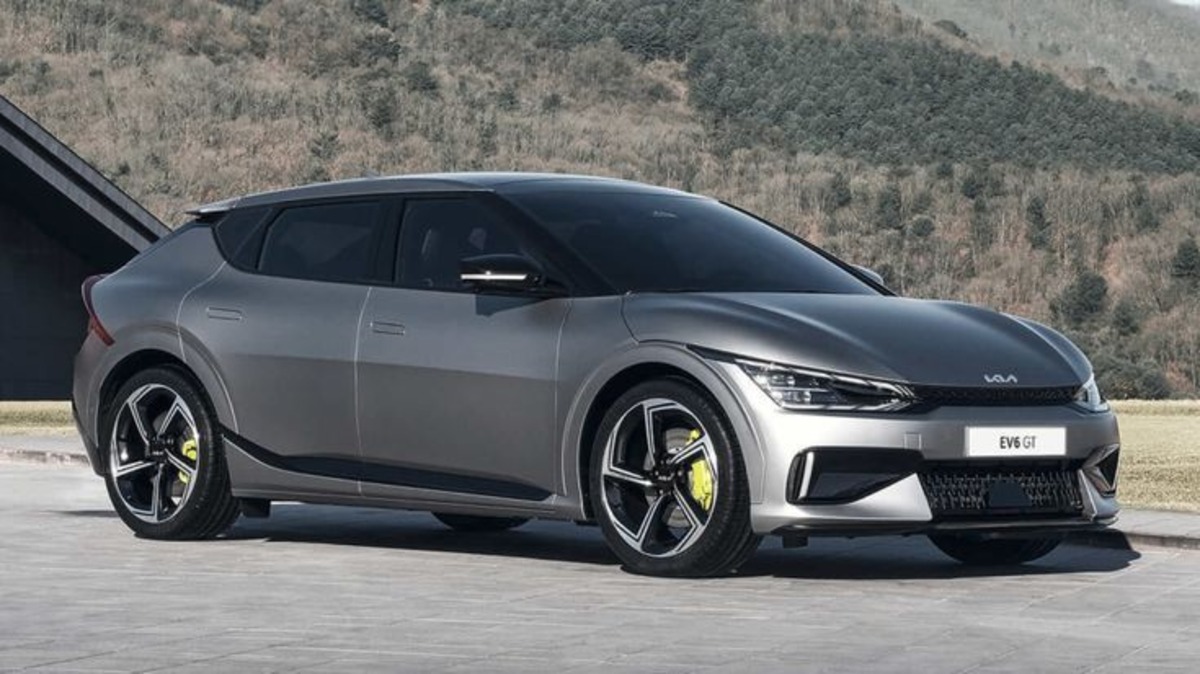
What distinguishes the EV6 GT from the standard model is comprehensive chassis development. Kia fitted electronically controlled suspension dampers that adapt continuously to driving conditions and inputs.
In GT mode, the dampers firm up significantly, reducing body roll and keeping the EV6 impressively flat through corner sequences. The ride remains tolerable even in the firmest setting, though you’ll feel more road imperfections than in comfort mode.
What makes the Kia EV6 GT truly impressive is its value proposition. It costs significantly less than German performance EVs while delivering comparable straight-line performance and genuinely engaging dynamics.
Yes, the interior materials aren’t quite Mercedes quality, and the badge doesn’t carry Porsche prestige, but the driving experience itself is compelling enough to overcome any brand snobbery.
Kia has created a driver’s car that happens to wear an unexpected badge proof that great driving dynamics can come from anywhere when engineers prioritize the right characteristics.
The EV6 GT represents the democratization of performance EVs, making genuine driving thrills accessible at more reasonable price points.
