
In the automotive world, not all heroes wear capes or in this case, not all exceptional vehicles come with flashy marketing campaigns and household names.
While mainstream consumers flock to the usual suspects when shopping for a new car, there exists a fascinating category of vehicles that quietly dominate their segments without the fanfare they truly deserve.
These are the unsung champions, the underdogs that consistently outperform their more famous rivals in ways that matter most to discerning drivers.
The automotive industry has always been influenced by powerful marketing narratives and brand prestige. Certain manufacturers have built empires on reputation alone, while others have focused their energy on engineering excellence rather than advertising budgets.
This disparity creates an interesting dynamic where some of the best vehicles on the market remain hidden in plain sight, overshadowed by competitors with bigger marketing war chests or more established brand recognition.
For the savvy buyer willing to look beyond the obvious choices, these hidden gems offer exceptional value, superior performance, and features that often surpass their more celebrated counterparts.
It’s a combination of factors that go beyond simple specifications on paper. These vehicles excel in real-world driving dynamics, offer superior build quality, provide better value propositions, and deliver ownership experiences that create passionate advocates among those who discover them.
They might not top sales charts or dominate social media conversations, but they consistently earn praise from automotive journalists, industry experts, and most importantly, the people who actually drive them daily.
From compact sedans to luxury SUVs, from practical family haulers to weekend sports cars, every automotive segment has these hidden champions waiting to be discovered. Some come from brands you know but models you might have overlooked.
Others represent manufacturers that simply don’t command the same mindshare as industry giants, despite producing vehicles that match or exceed them in every meaningful metric.
The common thread? They all represent smart choices for buyers who prioritize substance over style, engineering over image, and real-world performance over badge prestige.
Let’s explore ten remarkable vehicles that are quietly redefining excellence in their respective classes, proving that sometimes the best choice isn’t the most obvious one.
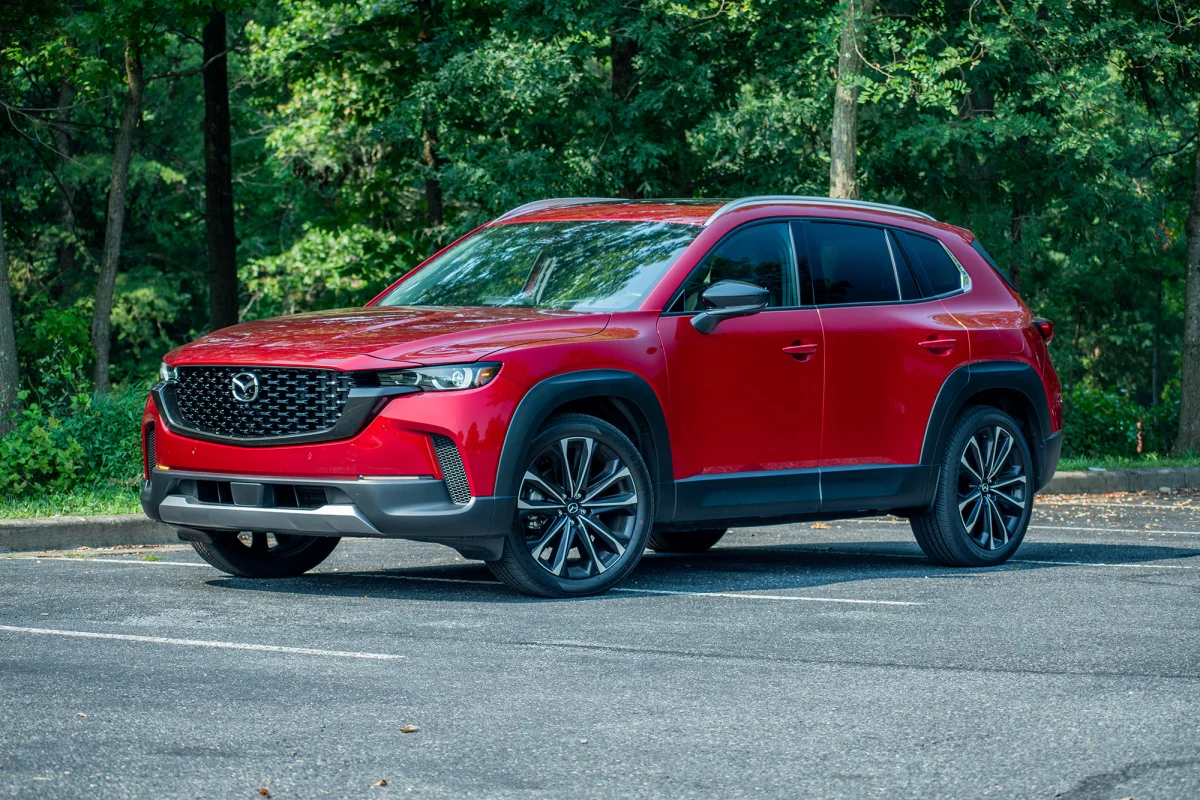
1. Mazda CX-50
In the crowded compact SUV segment dominated by household names like the Toyota RAV4, Honda CR-V, and Mazda’s own CX-5, the CX-50 has emerged as a remarkably well-rounded alternative that deserves far more attention than it receives.
While its siblings get the headlines, the CX-50 quietly delivers an experience that combines premium materials, engaging driving dynamics, and genuine off-road capability in a package that undercuts many luxury competitors.
What immediately sets the CX-50 apart is Mazda’s commitment to driving enjoyment in a segment where most manufacturers have prioritized practicality over passion.
The steering offers genuine feedback, something increasingly rare in modern SUVs, and the chassis tuning strikes an impressive balance between comfort and control.
The available turbocharged 2.5-liter engine delivers 256 horsepower, providing acceleration that embarrasses many vehicles from luxury brands while maintaining respectable fuel economy.
But it’s the naturally aspirated 2.5-liter base engine that truly impresses with its smoothness and adequate power for most situations, paired with one of the most refined transmissions in the class.
The interior of the CX-50 feels like it belongs in a vehicle costing $10,000 more. Mazda has meticulously crafted every touchpoint with materials that rival German luxury brands.
The leather feels genuine and supple, the plastic trim pieces are textured appropriately, and the fit and finish demonstrate an attention to detail that’s becoming increasingly rare in mainstream vehicles.
The infotainment system, while not the largest screen in its class, is one of the most intuitive thanks to Mazda’s excellent rotary controller and logical menu structure.
Apple CarPlay and Android Auto integration is seamless, and the available Bose audio system delivers sound quality that audiophiles will genuinely appreciate.
The CX-50’s greatest strength might be its value proposition. It delivers a driving experience and interior quality that competes with luxury brands like Audi and BMW’s entry-level SUVs, but at a price point that undercuts them by $15,000 or more.
For buyers seeking a vehicle that doesn’t compromise on quality, capability, or driving enjoyment, the CX-50 represents one of the best-kept secrets in the automotive world a true driver’s SUV that just happens to be practical enough for everyday family duty.
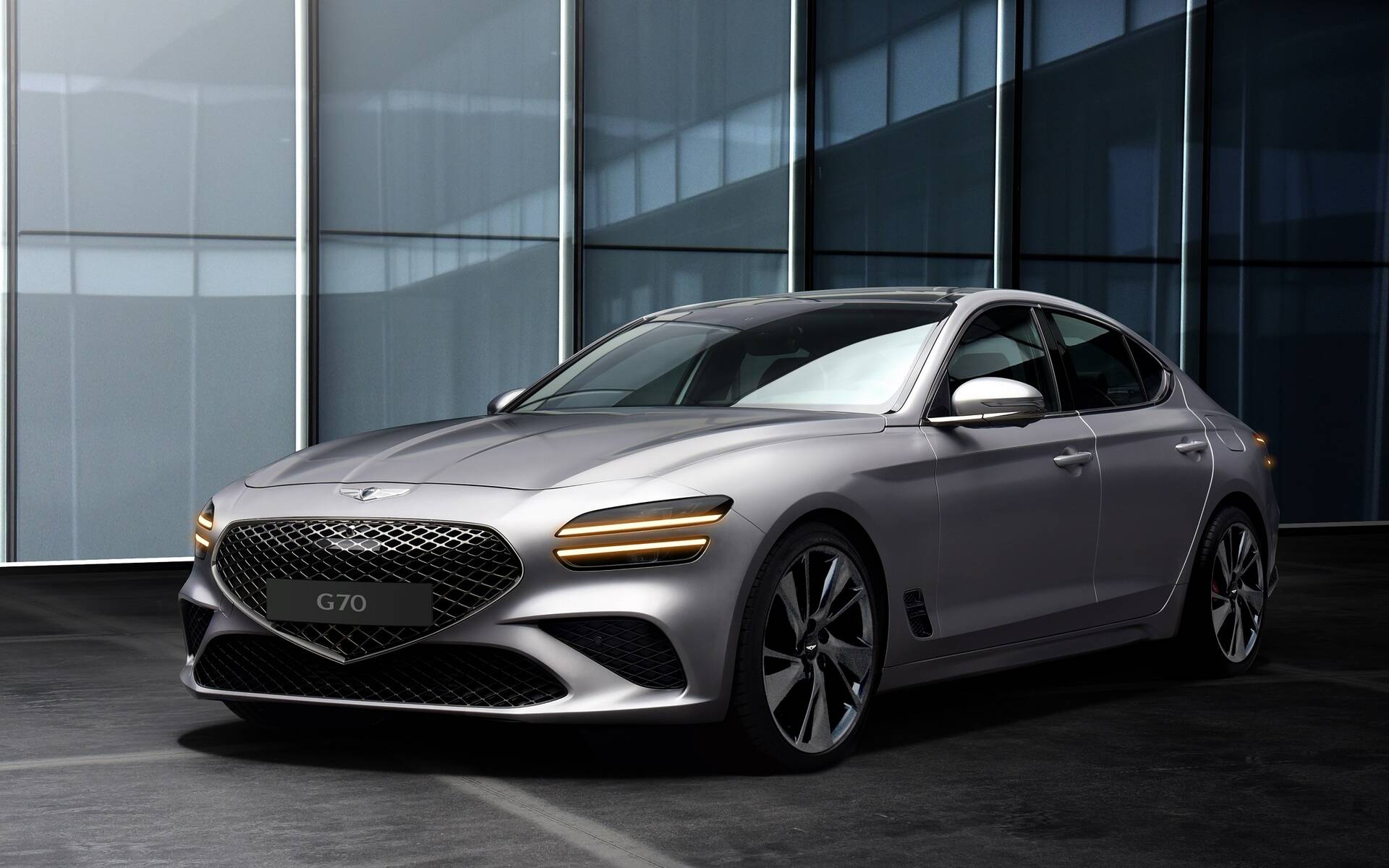
2. Genesis G70
In a world where BMW 3 Series, Mercedes-Benz C-Class, and Audi A4 dominate the conversation around compact luxury sports sedans, the Genesis G70 has quietly perfected the formula while flying completely under the radar of most mainstream buyers.
This Korean contender doesn’t just compete with the German establishment in many ways, it surpasses them while asking thousands less from your wallet.
The G70’s driving dynamics represent what happens when engineers are given the freedom to prioritize performance without compromise.
The chassis tuning, particularly in rear-wheel-drive configurations, delivers a purity of feedback that recalls the golden age of sports sedans.
The steering weight and precision feel dialed in by people who genuinely love driving, offering variable assistance that makes sense across different driving situations.
The suspension manages the difficult balance between comfort and control better than many competitors, remaining composed during spirited driving while not punishing occupants over imperfect road surfaces.
Power comes from two excellent engine options: a turbocharged 2.0-liter four-cylinder producing 252 horsepower, and a twin-turbocharged 3.3-liter V6 delivering 365 horsepower in the top-tier 3.3T trim.
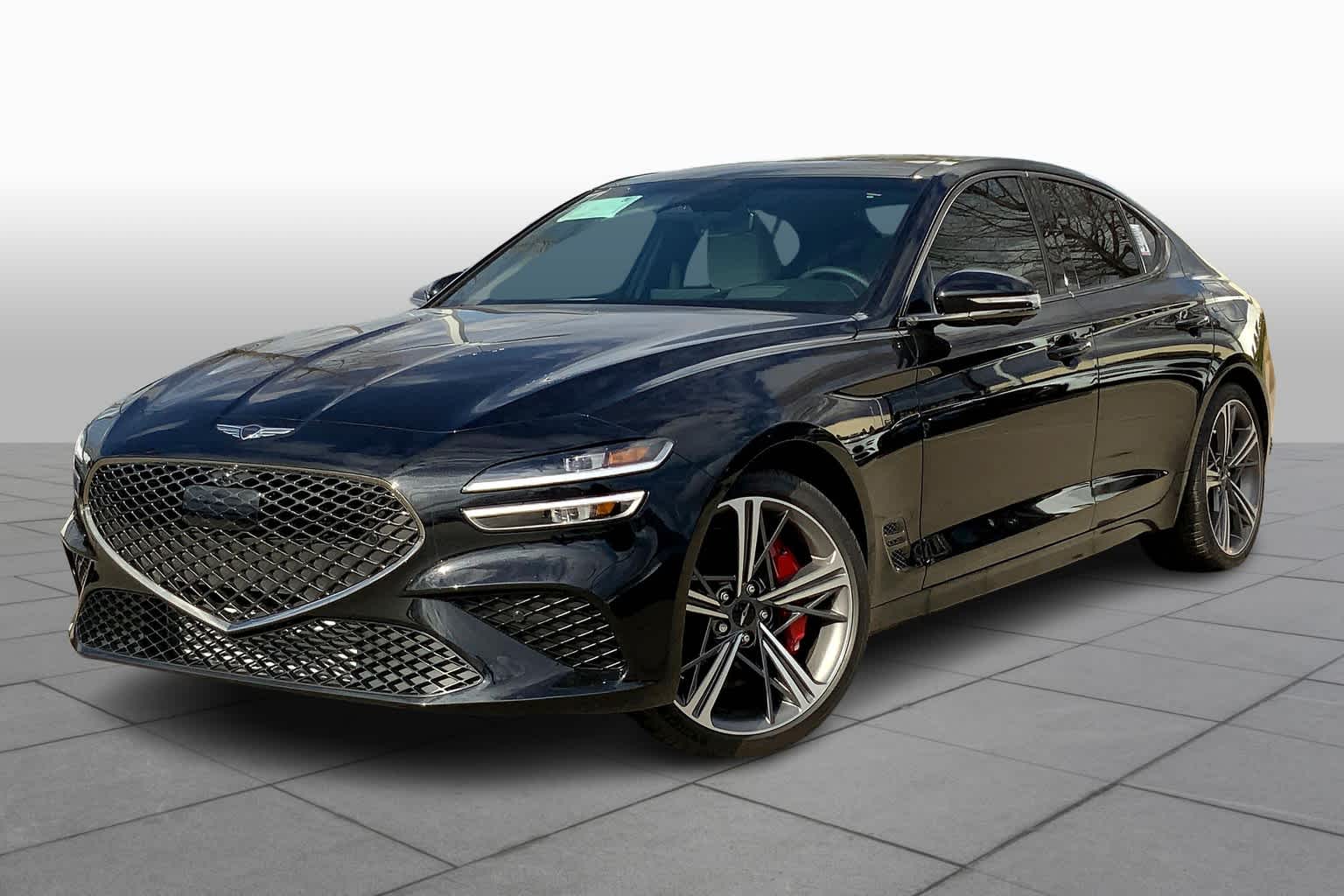
Both engines are mated to an eight-speed automatic transmission that shifts with satisfying precision, though enthusiasts can still find a six-speed manual transmission paired with the four-cylinder a nearly extinct combination in this segment.
The V6 model transforms the G70 into a legitimate performance machine that can embarrass vehicles costing significantly more, delivering acceleration that reaches 60 mph in under five seconds while producing a satisfying mechanical soundtrack.
The G70’s secret weapon is its value proposition combined with genuine performance credibility. While a comparably equipped BMW 330i or Mercedes-Benz C300 might cost $50,000 or more, a loaded G70 can deliver equivalent or superior performance, better standard features, and that transformative ownership experience for thousands less.
For driving enthusiasts who prioritize the actual experience behind the wheel over badge prestige, the G70 represents perhaps the best value in the entire luxury sports sedan segment a car that proves Korea has mastered the art of the driver’s sedan while the Germans have sometimes lost their way.
3. Kia Telluride
When the Kia Telluride launched, it faced skepticism from buyers accustomed to assuming that three-row luxury meant German or American brands.
Today, it has not only silenced critics but has created waiting lists and commanded prices above MSRP yet it remains criminally underappreciated for just how thoroughly it dominates its segment in terms of value and capability.
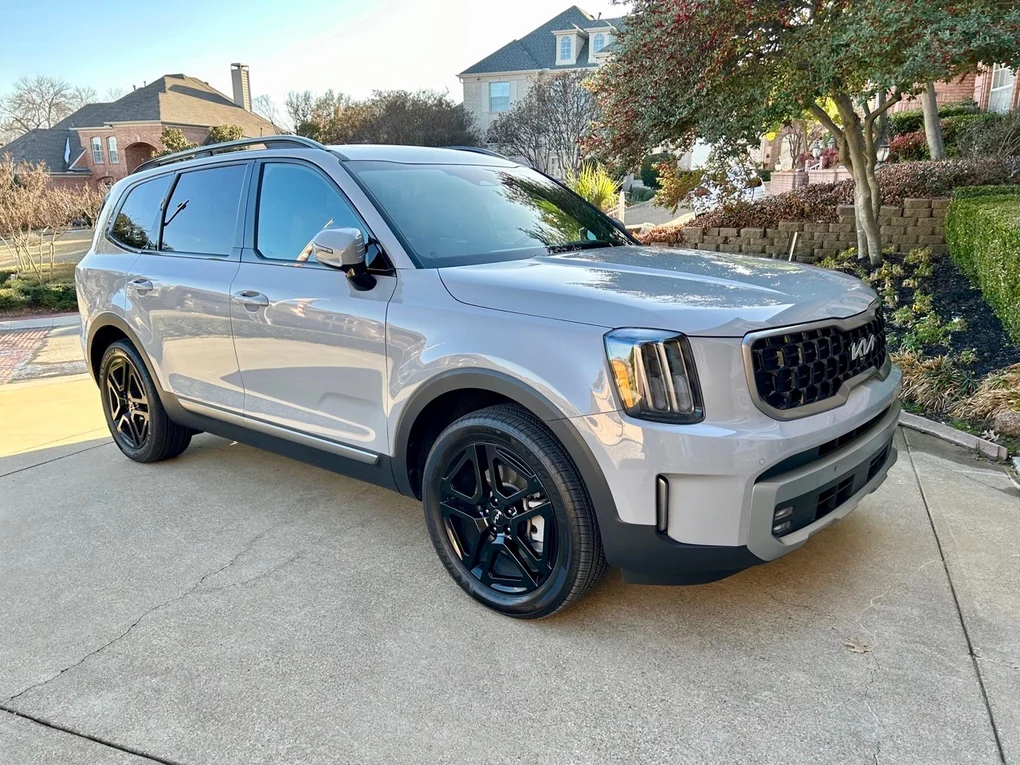
The Telluride’s exterior design strikes an impressive balance between rugged presence and refined sophistication. Its imposing front grille, muscular body lines, and well-proportioned dimensions create a commanding road presence that rivals vehicles costing significantly more.
The design has aged remarkably well since its 2020 introduction, avoiding the trendy elements that quickly date vehicles in favor of timeless proportions and details that suggest permanence.
Under the skin, the Telluride rides on a robust platform shared with the Hyundai Palisade, powered by a smooth and capable 3.8-liter V6 producing 291 horsepower.
While not breathtakingly fast, the powertrain delivers ample acceleration for a three-row SUV while maintaining respectable fuel economy.
The eight-speed automatic transmission shifts seamlessly, and the available all-wheel-drive system provides confident traction in challenging conditions.
The ride quality is impressively refined, isolating occupants from road imperfections while maintaining enough control to feel composed during emergency maneuvers.
The interior represents where the Telluride truly justifies its “secretly best” status. Kia has crafted a cabin that competes directly with luxury brands, using high-quality materials throughout and demonstrating exceptional attention to detail.
The available Nappa leather feels genuinely premium, the stitching is precise, and the fit and finish rivals anything from Lexus or Acura.
The second-row captain’s chairs in higher trims offer exceptional comfort with heating, ventilation, and generous space that makes long journeys pleasant for occupants of all sizes.
For families seeking a three-row SUV that doesn’t compromise on comfort, features, or quality, the Telluride represents an exceptional choice that punches well above its price point.
It’s a vehicle that proves badge prestige matters less than actual capability and craftsmanship a lesson more buyers are learning every day.
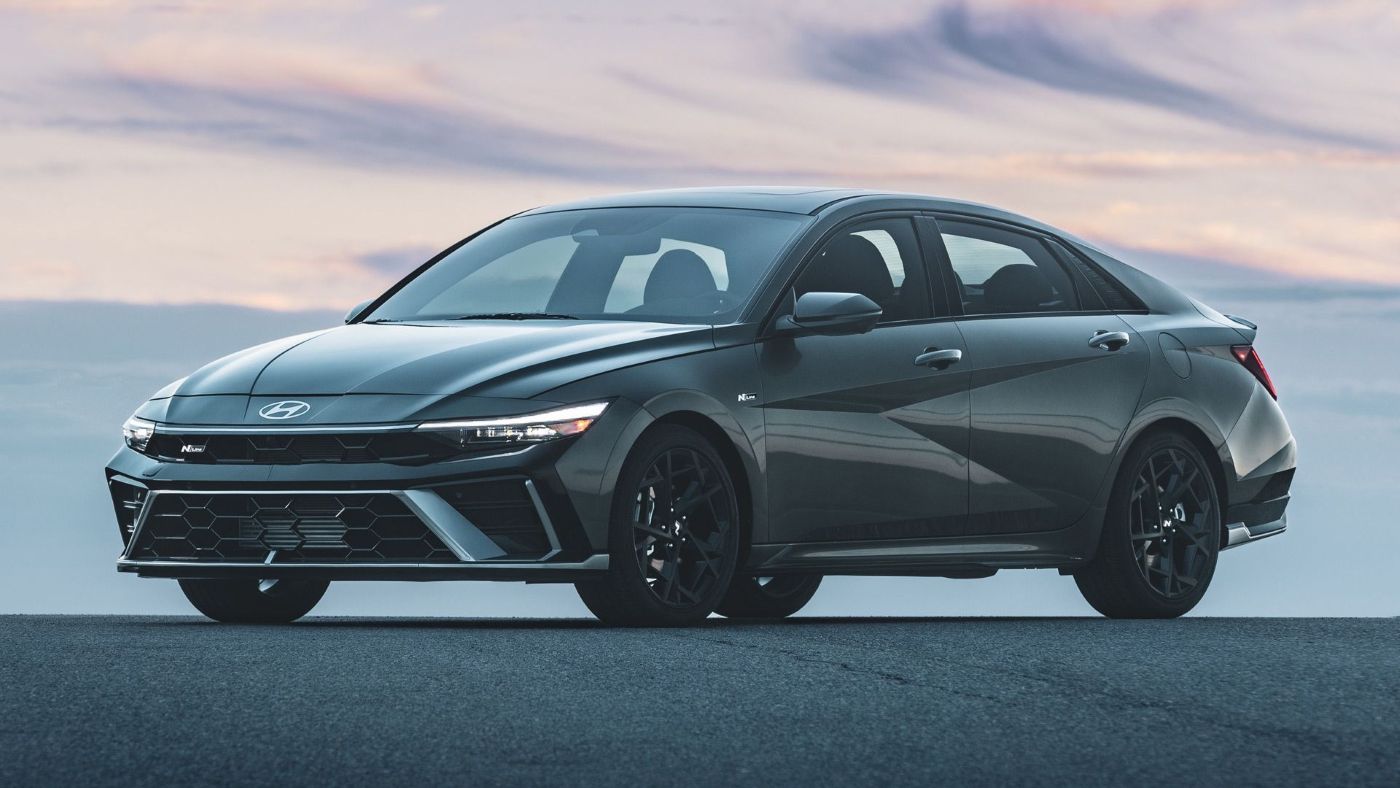
4. Hyundai Elantra N
In an era where hot hatches and compact sports sedans have either disappeared or become increasingly expensive, the Hyundai Elantra N has emerged as an absolute revelation a vehicle that delivers genuine performance thrills at a price point that seems almost impossibly low.
While enthusiasts debate the merits of the Honda Civic Type R or Volkswagen Golf R, the Elantra N has quietly become one of the most engaging and capable performance cars available at any price.
The Elantra N is powered by a turbocharged 2.0-liter four-cylinder engine producing 276 horsepower, or 286 horsepower with the available N Grin Boost function that provides temporary overboost.
This might not sound overwhelming on paper, but the engine’s character its eager responsiveness, smooth power delivery, and satisfying mechanical sounds creates an engaging experience that transcends mere numbers.
The available six-speed manual transmission is a purist’s delight, featuring rev-matching technology and a precise, mechanical shift action that’s becoming increasingly rare.
The available eight-speed dual-clutch automatic is equally impressive, delivering lightning-fast shifts that enhance the performance experience.
The chassis represents where Hyundai’s engineers truly demonstrated their expertise. The suspension tuning, even in the most aggressive N mode, remains remarkably livable for daily driving while transforming into a precision instrument when pushed hard.
The electronic limited-slip differential effectively manages power delivery, eliminating torque steer and enabling confident acceleration out of corners.
The steering is properly weighted with genuine feedback, allowing the driver to place the car with accuracy. Michelin Pilot Sport 4S tires provide exceptional grip, and the available performance brakes deliver strong, fade-resistant stopping power.
The drive mode system offers meaningful differences between settings, allowing the Elantra N to transform from comfortable daily driver to track-focused machine.
Individual settings can be customized and saved, letting drivers create personalized profiles that adjust throttle response, steering weight, suspension stiffness, exhaust sound, and even the shift patterns of the dual-clutch transmission.
The N mode button on the steering wheel provides instant access to the most aggressive settings, perfect for spirited driving on back roads.
What makes the Elantra N secretly the best in its class is the complete package it delivers at an MSRP that undercuts most competitors by $10,000 or more.
While a Civic Type R might cost $45,000 and a Volkswagen Golf R exceeds $45,000, a fully-loaded Elantra N comes in around $35,000.
For buyers seeking genuine driving thrills without compromising practicality or breaking the bank, the Elantra N represents one of the absolute best values in the entire automotive world proof that you don’t need a six-figure supercar to experience driving joy.
Also Read: 12 Nissan SUVs That Prove Durable in 2025
5. Mazda MX-5 Miata
In a world obsessed with horsepower figures, zero-to-sixty times, and technological sophistication, the Mazda MX-5 Miata represents something increasingly rare a sports car that prioritizes driving purity over bragging rights.
While buyers chase Porsche 718 Caymans and Corvettes, the Miata quietly delivers a more engaging, honest driving experience at a fraction of the cost proving that the best sports car might just be the one that makes you smile the most miles per dollar.
The current fourth-generation Miata, known internally as the ND, has refined the formula to near perfection. Its naturally aspirated 2.0-liter four-cylinder produces a modest 181 horsepower a figure that seems almost quaint in today’s market.
But power figures tell only part of the story. The engine revs eagerly to its 7,500 rpm redline with a satisfying mechanical sound that rewards spirited driving.
The six-speed manual transmission features one of the best shift actions in any car at any price, with short throws, precise engagement, and a perfectly weighted clutch.
The available automatic transmission, while antithetical to the Miata’s spirit for many enthusiasts, is actually quite good, responding intelligently to driver inputs.
The chassis is where the Miata truly transcends its specifications. With a curb weight under 2,500 pounds, the car feels alive underneath you, responding immediately to steering inputs with a precision and purity that’s missing from heavier, more powerful competitors.
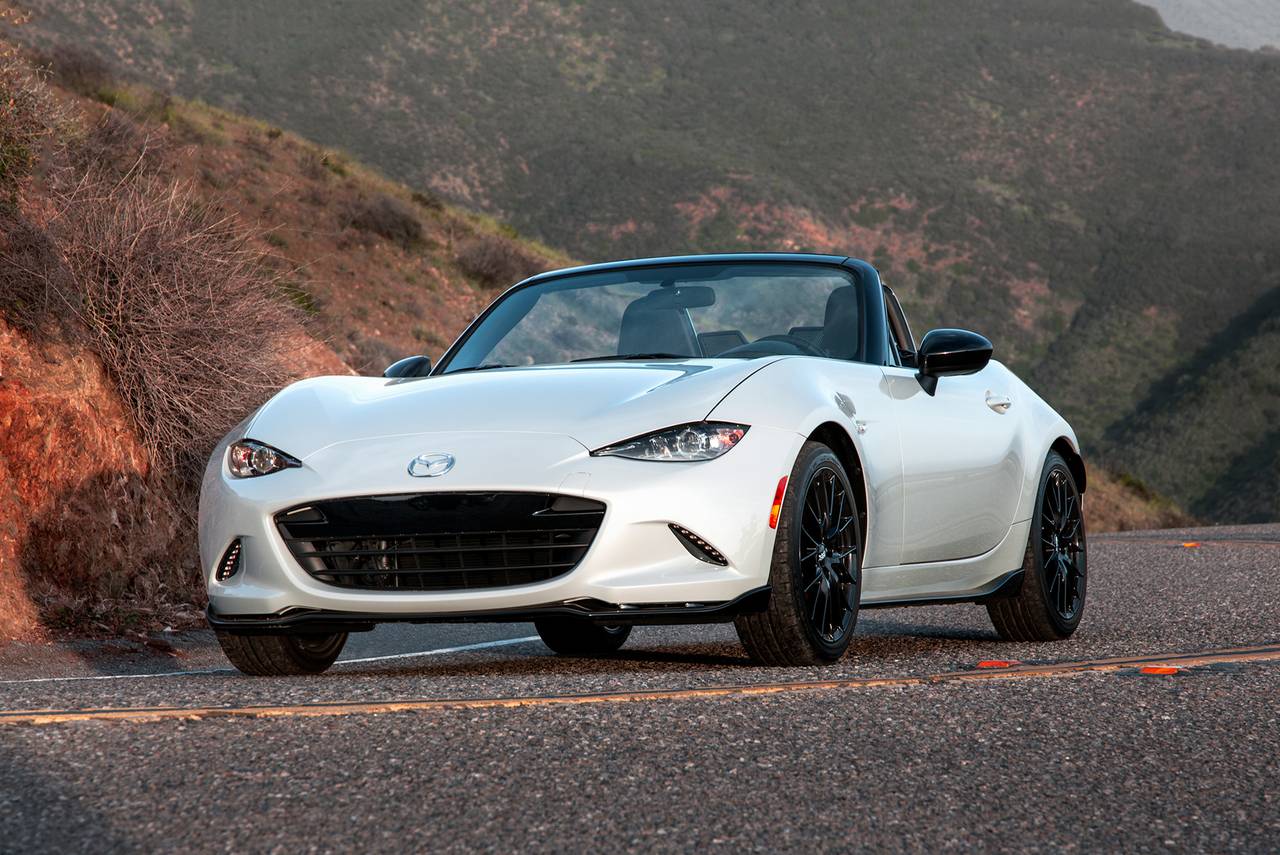
The 50/50 weight distribution and low center of gravity create a natural balance that makes the car feel connected to the road in a way that electronic aids simply cannot replicate.
The suspension tuning is firm but never harsh, communicating road surfaces clearly while maintaining enough compliance to avoid punishing rides on imperfect pavement.
The steering represents a masterclass in calibration. It’s light enough for easy maneuvering at low speeds but weights up naturally as velocity increases, providing feedback that allows you to sense grip levels through your fingertips.
There’s no artificial weighting or fake feedback just pure mechanical communication between the road and the driver. This transparency makes the Miata accessible to novice drivers while remaining engaging for experts, creating a vehicle that’s genuinely fun at any speed.
Starting at around $28,000, the Miata delivers more smiles per dollar than virtually anything on the road. It proves that the best sports car isn’t necessarily the fastest or most powerful it’s the one that maintains the purity of connection between driver, machine, and road. For anyone seeking genuine driving joy without complexity or pretension, the Miata remains the answer it’s been for over three decades.
6. Honda Ridgeline
In the testosterone-fueled world of pickup trucks where maximum towing capacity and aggressive styling dominate marketing materials, the Honda Ridgeline takes a refreshingly different approach it’s designed around how most truck owners actually use their vehicles rather than how they imagine they might use them someday.
While buyers gravitate toward the Ford F-150, Chevrolet Silverado, and Ram 1500, the Ridgeline quietly delivers a more refined, practical, and comfortable experience for the vast majority of real-world truck duties.
The Ridgeline’s unibody construction immediately separates it from traditional body-on-frame competitors. This design decision, often criticized by truck purists, delivers tangible benefits for typical users a dramatically smoother ride, better handling, superior crash safety, and a more comfortable cabin.
The ride quality is car-like in the best possible way, isolating occupants from road imperfections while maintaining enough control to feel stable and composed.
This makes the Ridgeline genuinely pleasant for daily commuting and family transportation, roles that traditional trucks fulfill with varying degrees of success.
Power comes from a proven 3.5-liter V6 producing 280 horsepower, mated to a smooth nine-speed automatic transmission. All-wheel drive is standard, providing confident traction in challenging conditions.
While the 5,000-pound towing capacity trails traditional trucks, it’s adequate for boat trailers, utility trailers, and campers that most truck owners actually tow.
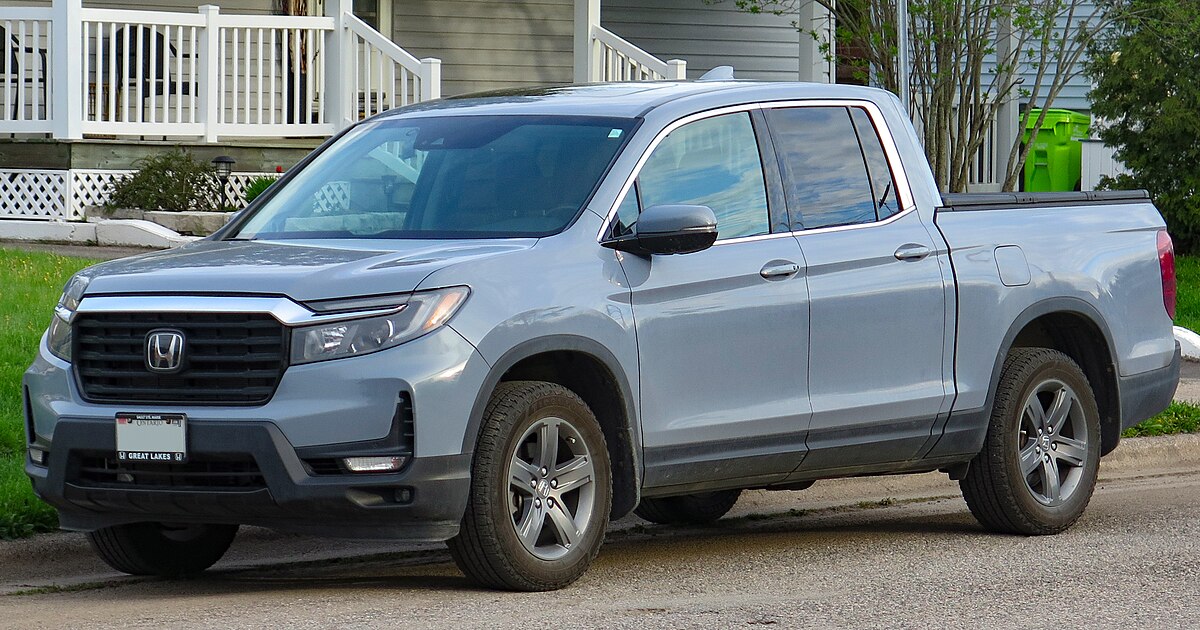
The payload capacity of around 1,500 pounds similarly handles the mulch, building materials, and furniture that constitute real-world truck bed usage.
The reality is that very few truck owners regularly approach maximum capacities they buy capability they rarely use while sacrificing daily comfort. The bed design showcases Honda’s practical innovation.
At 5 feet 4 inches, it’s shorter than many competitors but includes a dual-action tailgate that opens downward traditionally or swings out sideways, improving access and loading flexibility.
The lockable in-bed trunk is a revolutionary feature that provides secure, weatherproof storage for valuables, tools, or items you want to protect from both theft and weather.
This trunk also drains, making it perfect as a cooler for tailgating. The bed audio system allows you to enjoy music during outdoor activities without draining the main battery.
The cabin represents where the Ridgeline truly distinguishes itself. The interior feels like a well-appointed crossover SUV rather than a work truck, with quality materials, excellent sound insulation, and thoughtful ergonomics.
The rear seats are genuinely comfortable for adults, with generous legroom and a flat floor that provides three-across seating when necessary.
The seats fold up to reveal storage compartments underneath, providing secure space for items you want to keep out of sight. The infotainment system is intuitive and includes wireless Apple CarPlay and Android Auto, and the available audio system delivers impressive sound quality.
For buyers who need genuine truck capability but prioritize comfort, refinement, and daily livability, the Ridgeline represents the most sensible choice in the segment.
It’s a truck designed by people who understand how trucks are actually used rather than how marketing departments think they should be used making it secretly the best option for the vast majority of truck buyers who will never tow a fifth-wheel trailer or go through the extreme off-road terrain.
7. Subaru Outback
In an American automotive world dominated by SUVs, the Subaru Outback has survived and thrived by essentially being a better SUV than most actual SUVs.
While technically classified as a wagon, the Outback delivers the ground clearance, all-wheel-drive capability, and cargo versatility that buyers seek in crossovers, but with better fuel economy, superior handling, and a more refined driving experience.
For buyers who see through marketing categories to actual capability, the Outback represents one of the smartest choices available. The Outback’s design achieves a difficult balance: rugged enough to suggest capability without appearing overtly utilitarian.
The plastic cladding and increased ground clearance 8.7 inches, more than many SUVs give it a stance that reassures buyers seeking adventure capability.
But the wagon proportions create aerodynamic advantages that translate directly to efficiency and reduced wind noise at highway speeds. The result is a vehicle that looks the part while functioning better than the alternatives.
Power comes from two engine options: a 2.5-liter four-cylinder boxer engine producing 182 horsepower, standard in most trims, or a turbocharged 2.4-liter delivering 260 horsepower in the Outback XT.
Both engines are paired with a continuously variable transmission (CVT) that’s been refined to minimize the typically unpleasant characteristics of CVTs, with programming that simulates gear changes during acceleration.
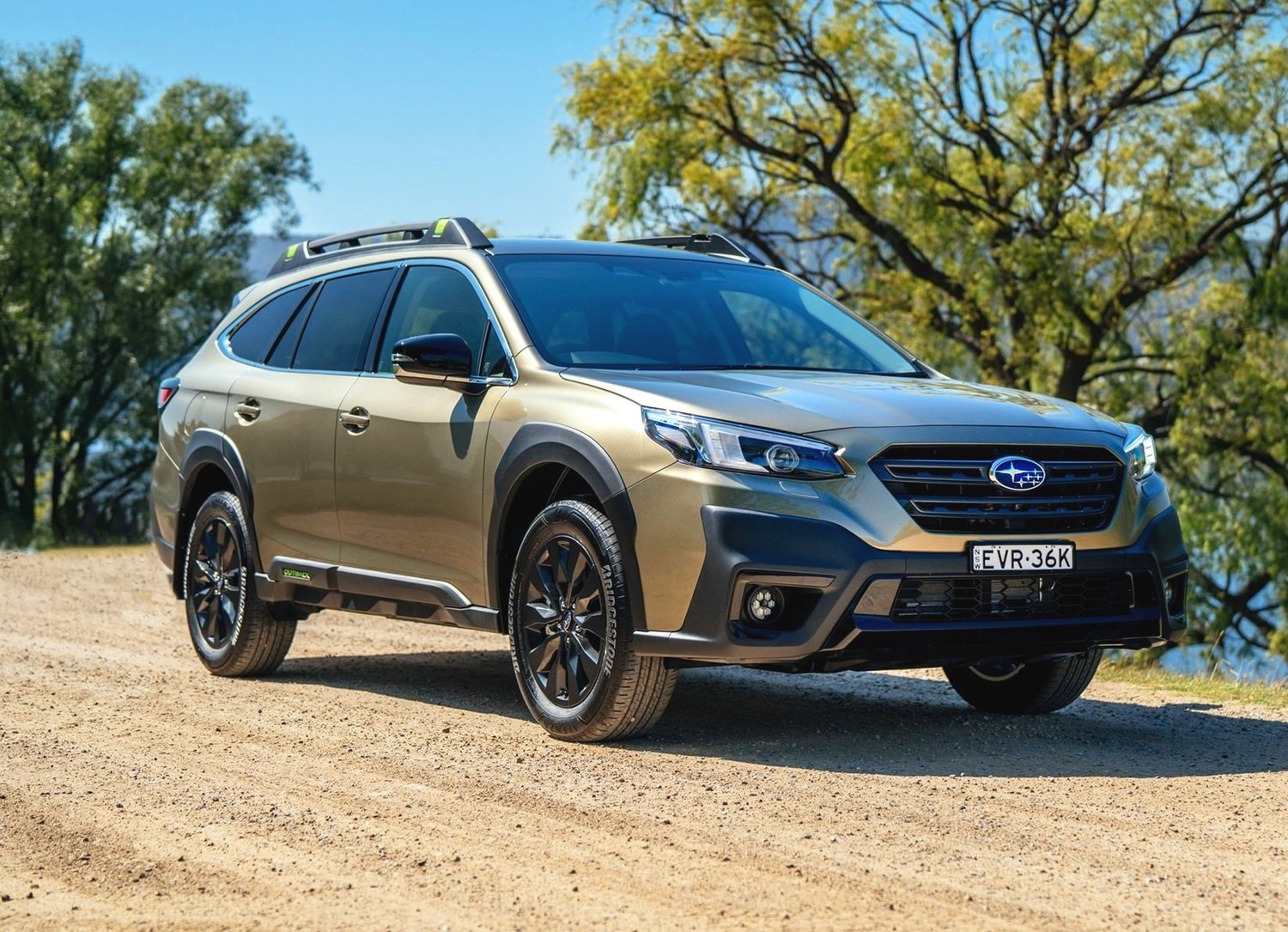
The turbocharged model transforms the Outback into a genuinely quick vehicle with acceleration that surprises unsuspecting drivers, while the base engine provides adequate power with better fuel economy.
Subaru’s symmetrical all-wheel-drive system is standard across all trims, providing consistently excellent traction in challenging conditions.
Unlike many competitors that offer front-wheel drive as standard with all-wheel drive as an expensive option, Subaru’s commitment to all-wheel drive on every Outback means optimal capability is never optional.
The X-Mode system enhances off-road performance with hill descent control and optimized traction management, making the Outback surprisingly capable on dirt roads, snow, and mild off-road situations that would challenge typical crossovers.
The infotainment system has improved significantly in recent generations, featuring a large touchscreen (11.6 inches in higher trims) with responsive performance and intuitive menus.
Wireless Apple CarPlay and Android Auto integration is standard, and the available Harman Kardon audio system delivers excellent sound quality.
The digital instrument cluster can be customized to display relevant information, including all-wheel-drive torque distribution and safety system status.
For buyers seeking SUV versatility without SUV compromises the poor fuel economy, truck-like handling, and excessive height the Outback delivers everything that actually matters.
It’s proof that sometimes the best solution to a problem is the one that redefines the question, offering capability that exceeds expectations while avoiding the drawbacks that buyers have been trained to accept as necessary.
8. Kia Stinger
When Kia announced they would build a rear-wheel-drive sports sedan to compete with BMW and Audi, skepticism was universal. When the Stinger actually delivered on that promise and in many ways exceeded expectations it should have become an industry sensation.
Instead, it’s remained a secret known primarily to automotive enthusiasts and the lucky few who’ve discovered that badge prestige sometimes matters less than actual excellence.
The Stinger represents one of the automotive world’s best-kept secrets: a grand touring sedan that delivers luxury, performance, and value in equal measure.
The Stinger’s design, penned by former Audi designer Peter Schreyer, presents a distinctly European fastback profile that stands out in a sea of anonymous sedans.
The long hood, short front overhang, and raked roofline create proportions reminiscent of classic grand tourers. The design has aged remarkably well since its 2018 introduction, avoiding trendy elements in favor of timeless sporting elegance.
The attention to aerodynamic detail is evident in features like the functional rear diffuser and integrated spoiler that enhance both performance and efficiency.
Two engine options define the Stinger’s character: a turbocharged 2.0-liter four-cylinder producing 300 horsepower (for 2025), or a twin-turbocharged 3.3-liter V6 delivering 368 horsepower in the GT and GT-Line trims.
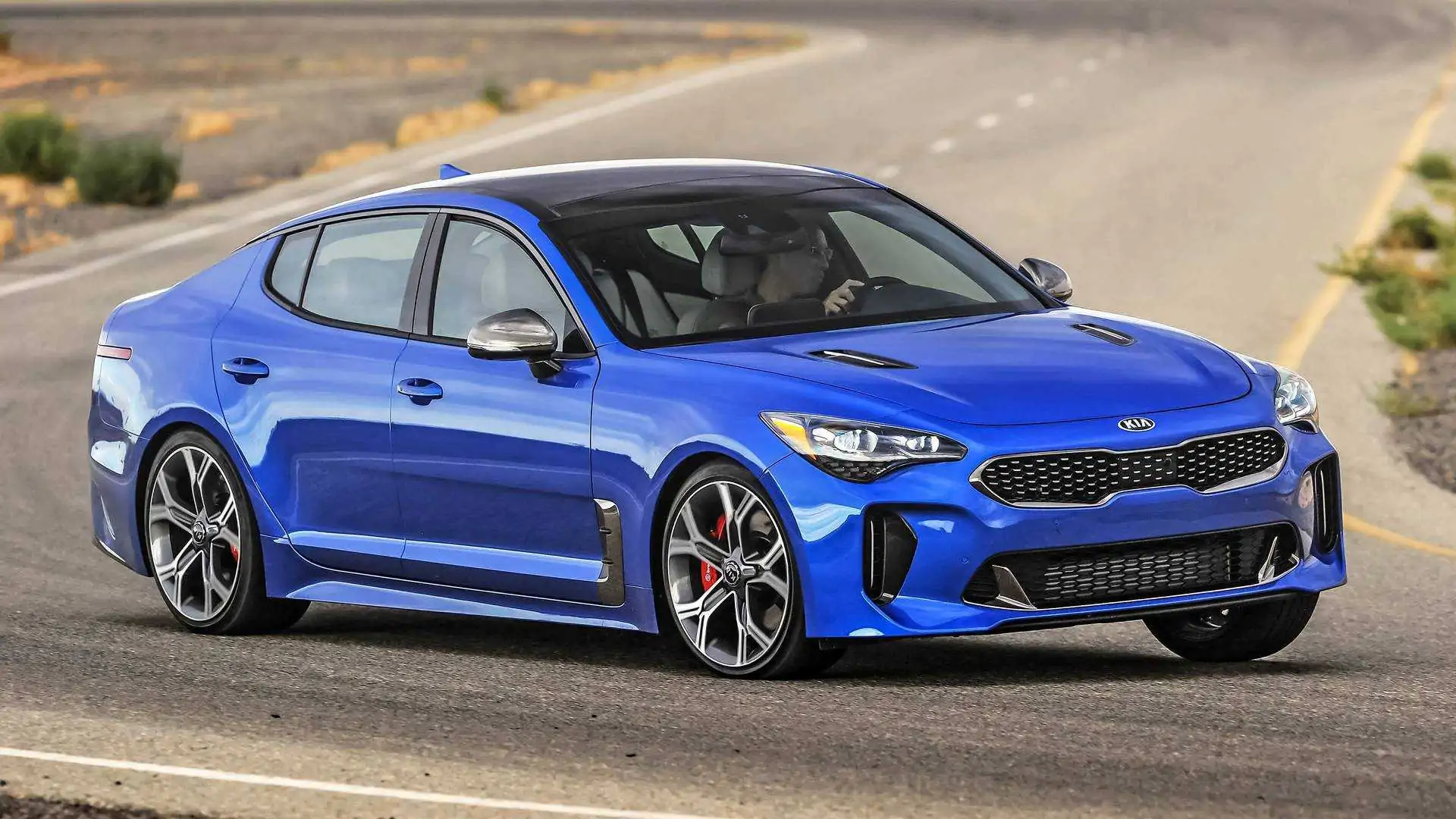
The V6 model is the revelation, providing acceleration that reaches 60 mph in under five seconds while producing a satisfying engine note that enhances the experience.
The eight-speed automatic transmission shifts quickly and intelligently, with manual mode providing genuine control. Rear-wheel drive is standard, with all-wheel drive available for buyers in climates requiring additional traction.
The chassis tuning demonstrates that Kia studied European competitors carefully and learned the right lessons. The ride is firm but not harsh, communicating road surface character without punishing occupants.
The steering is properly weighted with good feedback, allowing precise placement in corners. The available adaptive suspension adjusts damping in real-time, providing comfortable cruising when appropriate and tighter control when driving spiritedly.
The limited-slip differential effectively manages power delivery, enabling confident acceleration out of corners without drama. The interior showcases materials and build quality that rival established luxury brands.
Nappa leather upholstery in higher trims feels genuinely premium, the carbon fiber trim is real rather than fake, and the fit and finish demonstrates attention to detail.
The sport seats provide excellent support during aggressive driving while remaining comfortable for cross-country journeys the essence of grand touring capability. Rear seat space is generous, and the hatchback configuration provides exceptional cargo versatility that traditional sedans cannot match.
For buyers seeking a vehicle that combines performance, luxury, and practicality without paying the premium that badge prestige demands, the Stinger represents an exceptional choice.
It’s proof that excellence can emerge from unexpected sources and that smart buyers who look past brand assumptions can discover vehicles that deliver more than their celebrated rivals at a price that makes the decision even easier.
9. Toyota Sienna
In an automotive culture where minivans are dismissed as uncool despite being objectively superior for family transportation, the Toyota Sienna has not only survived but has redefined the segment with a hybrid-only powertrain and thoughtful features that make three-row SUVs seem like compromises.
While status-conscious buyers squeeze into Highlanders and Pilots, savvy families have discovered that the Sienna delivers more space, better fuel economy, and superior versatility proving that sometimes the best choice is the one that requires the most confidence to make.
The Sienna’s transformation to hybrid-only for the 2021 redesign was revolutionary for the segment. The 2.5-liter four-cylinder engine paired with electric motors produces a combined 245 horsepower while achieving approximately 36 mpg combined substantially better than any three-row SUV.
This efficiency advantage translates directly to thousands of dollars saved over ownership, making the Sienna not just more capable but actually less expensive to operate than alternatives buyers might consider more prestigious.
The hybrid system operates seamlessly, with smooth transitions between gas and electric power that passengers won’t notice unless they’re specifically monitoring the energy display.
The interior space is where the minivan formula demonstrates its superiority. Sliding doors provide wide openings that make child seat installation trivial and allow access in tight parking spaces where SUV doors would hit adjacent vehicles.
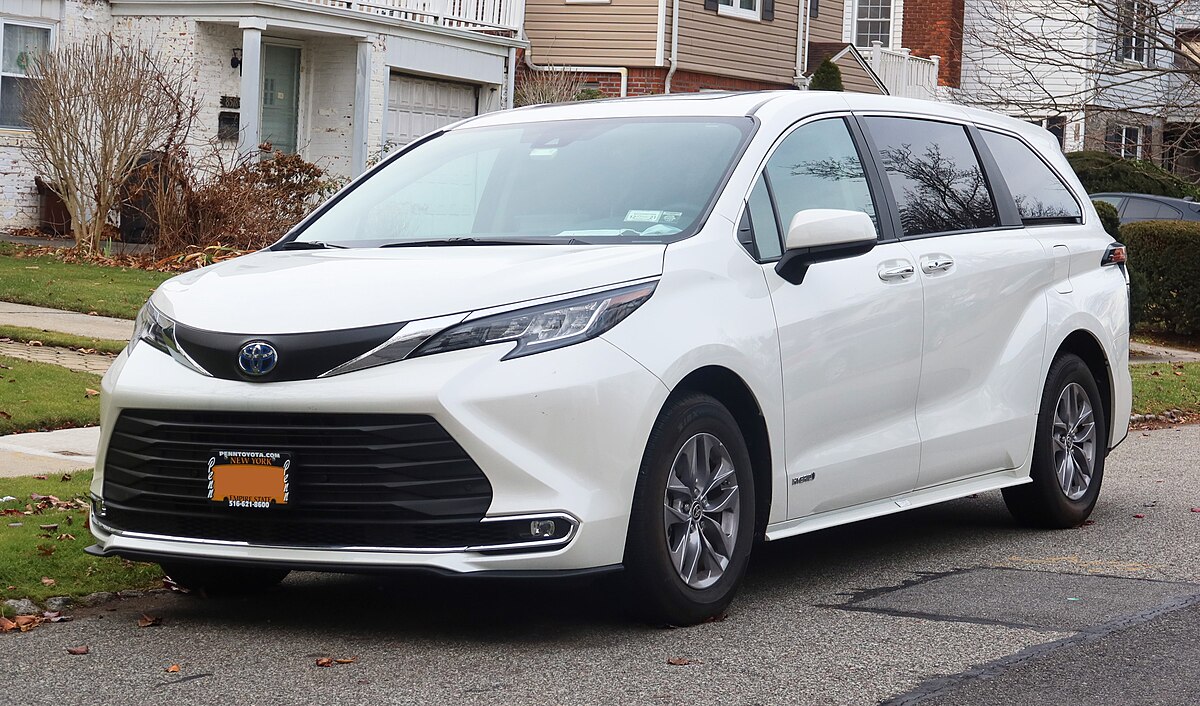
The second-row seats can be configured as captain’s chairs with an available ottoman feature that’s genuinely luxurious, or as a bench for eight-passenger capacity.
Third-row access is dramatically easier than in any SUV, with a simple button press sliding the second row forward and creating a wide aisle.
The third row itself is actually comfortable for adults, with legitimate space rather than the punishment box found in most three-row SUVs.
Cargo capacity is exceptional even with all seats in use, and with the third row folded, the space is massive and completely flat ideal for transporting furniture, sports equipment, or camping gear.
The low load floor makes lifting heavy items easy compared to high SUV liftgates. Storage solutions are thoughtful throughout: cupholders for every seating position, door pockets sized for actual belongings, overhead storage compartments, and center console space that can accommodate purses, laptops, and more.
The available refrigerator in the center console keeps drinks and snacks cold during long journeys. The infotainment system is straightforward and functional, featuring a large touchscreen with wireless Apple CarPlay and Android Auto compatibility.
The available JBL audio system delivers excellent sound quality even with a cabin full of passengers. The digital rearview mirror can display a camera view, providing an unobstructed sight line even when cargo blocks the conventional mirror view.
For buyers willing to embrace rationality over image, the Sienna proves that minivans aren’t the compromise three-row SUVs are. It’s the secret that families who prioritize function over form have known all along: sometimes the best vehicle is the one designed honestly for its purpose.
10. Acura Integra
The return of the Integra nameplate raised both excitement and skepticism among enthusiasts who remembered the legendary models of the 1990s.
Rather than simply trading on nostalgia, Acura has delivered a genuinely compelling premium compact that combines refinement, driving engagement, and value in a segment increasingly dominated by disconnected luxury appliances.
While buyers default to the BMW 2 Series, Audi A3, or Mercedes-Benz A-Class, the Integra quietly delivers a more complete package at a price that makes the decision even easier.
The Integra shares its fundamental architecture with the Honda Civic, but Acura has substantially refined and enhanced the platform to justify its premium positioning.
The exterior design presents a sophisticated appearance with Acura’s current design language, featuring the distinctive grille, LED lighting, and body sculpting that creates visual interest without resorting to aggressive styling.
The liftback configuration provides practical versatility that traditional sedans cannot match, with a cargo area that accommodates substantial loads when needed.
The base turbocharged 1.5-liter four-cylinder engine produces 200 horsepower, providing adequate performance with excellent fuel economy.
But the real revelation is the Integra Type S, powered by a turbocharged 2.0-liter four-cylinder delivering 320 horsepower. This engine transforms the Integra into a genuine performance machine that can challenge vehicles costing substantially more.
The available six-speed manual transmission features rev-matching technology and a satisfying mechanical shift action that enthusiasts will genuinely appreciate a nearly extinct option in this segment.
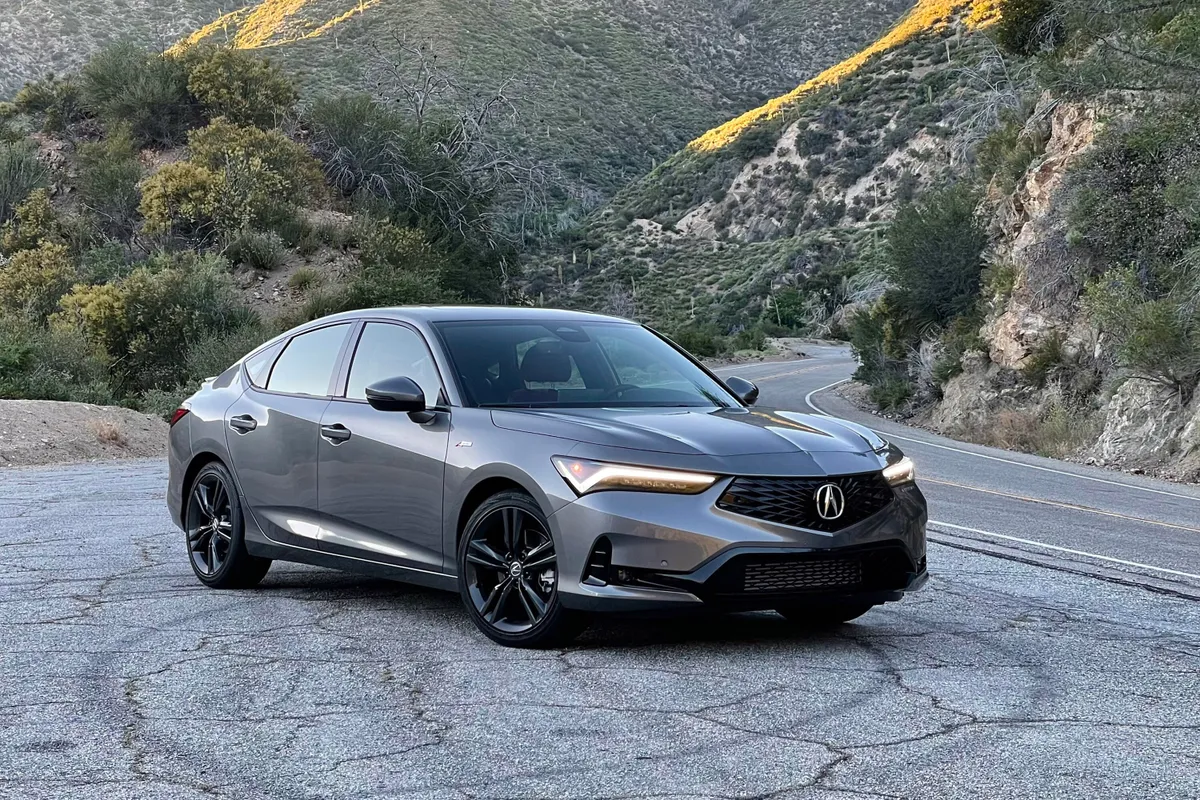
The automatic transmission option is Honda’s excellent continuously variable transmission that has been programmed to simulate gear changes, minimizing the typical CVT characteristics that many drivers dislike.
The chassis tuning demonstrates Acura’s commitment to driving dynamics. The suspension strikes an excellent balance between comfort and control, remaining composed during spirited driving while not punishing occupants over imperfect roads.
The adaptive dampers in the Type S model adjust in real-time, providing personalized ride characteristics. The steering offers good weight and feedback, particularly in the Type S, allowing precise placement in corners.
The limited-slip differential in performance models effectively manages power delivery, enabling confident acceleration without drama.
For buyers seeking a premium compact that prioritizes driving engagement without sacrificing practicality or value, the Integra represents one of the best choices in the segment. It proves that Acura’s engineering excellence remains strong and that the Integra name still means something substantial.
It’s a car that rewards drivers who look past badge prestige to discover vehicles that deliver genuine excellence proof that sometimes the best choice is the one that honors the past while confidently addressing the present.
