Sedans may not dominate the headlines like they once did, but this segment is far from dead. In fact, it is cooler than ever. “10 Sedans That Are Way Cooler Than You Remember” explores a lineup of cars that prove performance, luxury, and innovation still thrive in four-door form.
From the thundering Cadillac CT5-V Blackwing, which channels old-school American muscle through a manual gearbox, to the all-electric precision of the Porsche Taycan, these sedans redefine what it means to be exciting.
Whether it is the accessible thrill of the Hyundai Elantra N, the elegant aggression of the Alfa Romeo Giulia, or the high-tech prowess of the Lucid Air, each model reminds us why the sedan has been the cornerstone of driving enjoyment for decades. These are not just commuter cars; they are engineering statements that blend power, style, and personality in unforgettable ways.
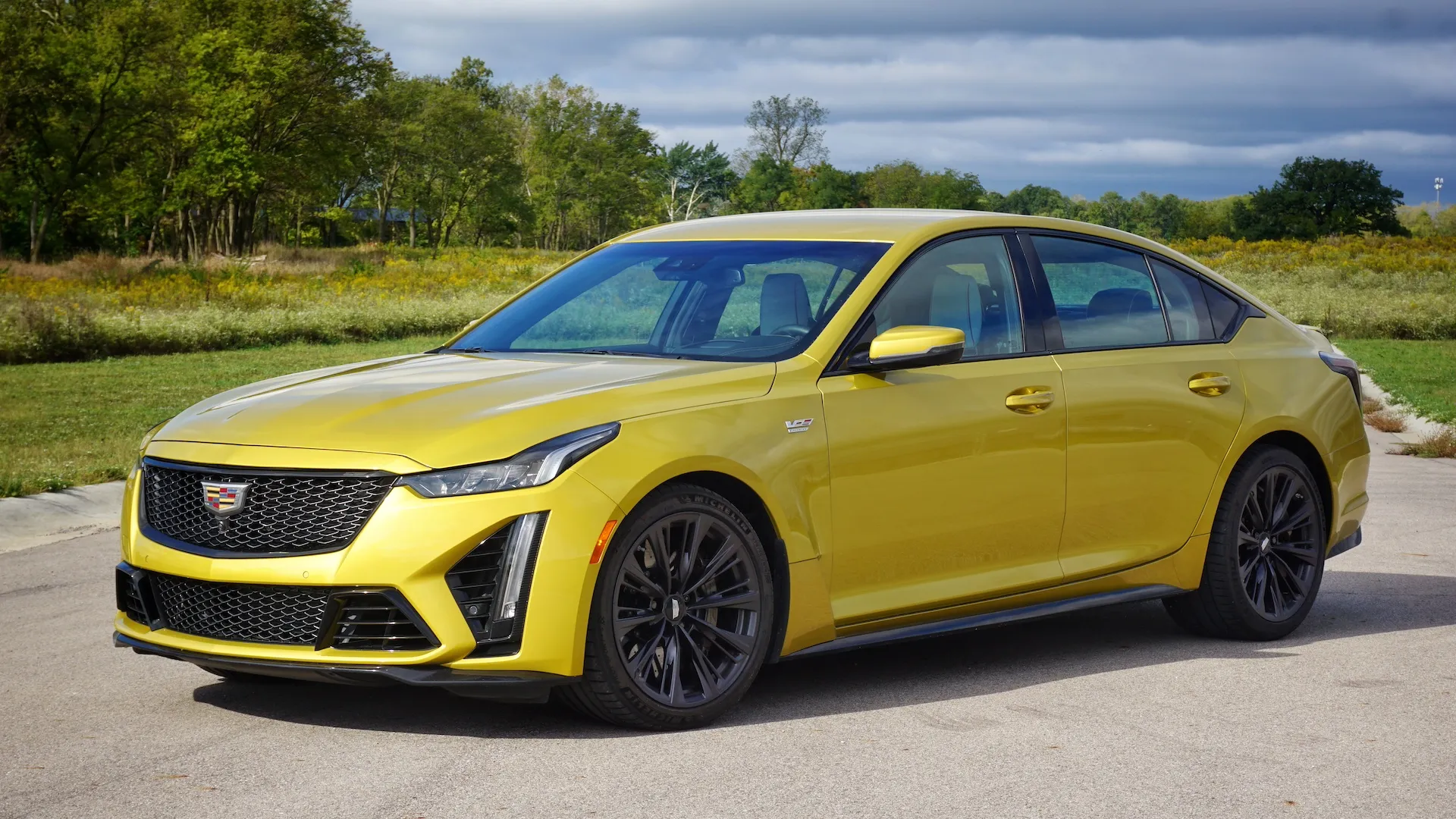
1. Cadillac CT5-V Blackwing: The Ultimate American Sports Sedan
With a base price of $99,090, the Cadillac CT5-V Blackwing offers an exceptional blend of raw power and refined comfort. Powered by a 668-horsepower supercharged V8 engine, it reaches 60 mph in about 3.5 seconds and drives through the rear wheels.
What makes it unique is the option of a six-speed manual transmission, giving drivers a rare level of engagement in a modern luxury sedan. The CT5-V Blackwing combines muscle car speed with sport-sedan balance, representing one of the last opportunities to buy a car with a V8 engine, rear-wheel drive, and a manual gearbox.
The CT5-V Blackwing is designed for driving enthusiasts. When equipped with the six-speed manual, it reaches 60 mph in 4 seconds and runs the quarter mile at 124 mph. The 10-speed automatic available as an option can achieve even faster results. The manual transmission is one of the best in the market, offering crisp shifts and an optional automatic rev-matching system.
Braking performance is strong, stopping from 60 mph in 104 feet, while handling is sharp and composed, generating 1.08 g on the skidpad. The car’s precise steering and responsive stability control system allow both skilled and casual drivers to enjoy its dynamic nature. The Precision Package adds carbon-ceramic brakes and a firmer suspension setup, turning the sedan into a serious track performer.
The Blackwing delivers impressive comfort thanks to its MagneRide adaptive suspension, which maintains control and smoothness on any surface. The heated and ventilated front seats offer excellent support for long drives. The cabin remains quiet and refined, with only a faint hint of road noise from the performance tires.
The interior features a modern 33-inch digital display that enhances usability and aesthetics. While some steering wheel controls are slightly confusing, the layout is intuitive and focused on the driver. Rear-seat space is sufficient for adults, though taller passengers may find the sloping roofline restrictive. The digital rearview mirror helps improve visibility from the back.
Cadillac’s Google-based infotainment system is simple and responsive, supporting wireless Apple CarPlay and Android Auto. The AKG premium sound system provides clear, immersive audio.
Driver-assistance features are advanced and comparable to those found in German competitors. The 11.9-cubic-foot trunk is smaller than the BMW M5’s, but practical for daily use, and the rear seats can accommodate child seats comfortably.
The manual version of the CT5-V Blackwing is rated at 15 mpg combined, with real-world results of around 18 mpg and as high as 24 mpg on highway trips. During spirited driving, consumption can drop below 5 mpg.
Despite modest fuel efficiency, the CT5-V Blackwing represents strong value. It offers similar performance to the BMW M5 and Audi RS7 while costing significantly less. For drivers who prioritize driving enjoyment, performance, and character, the Cadillac CT5-V Blackwing stands out as a true enthusiast’s sedan.
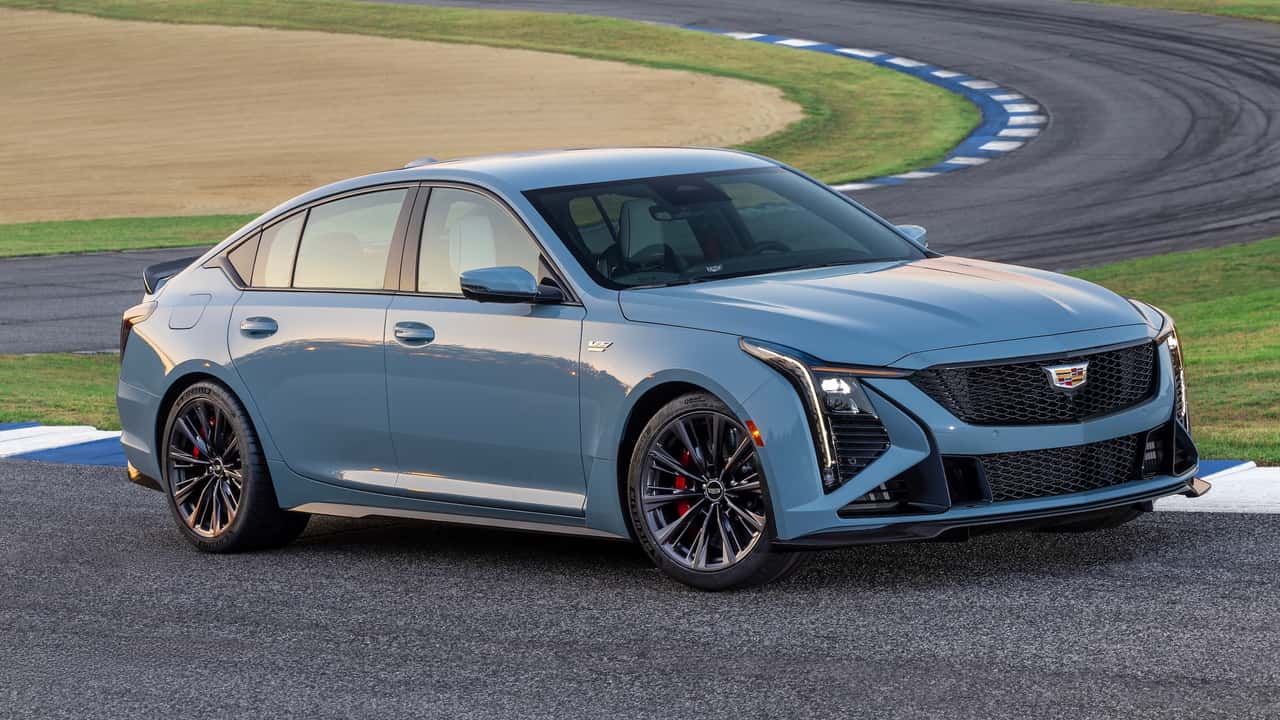
2. Porsche Taycan: Electrifying Performance with Porsche Precision
With a base price of $101,395, the Porsche Taycan represents the brand’s dedication to combining cutting-edge electric technology with the legendary handling and style expected of a Porsche. While many electric vehicles offer quick acceleration, the Taycan stands out for its sports car-like agility and refined driving experience.
Available in multiple trims, from the 402-horsepower base model to the 536-horsepower Taycan 4S, the lineup balances performance and luxury. Porsche’s 2025 updates have also improved the Taycan’s range and efficiency, making it an even stronger choice for enthusiasts seeking a dynamic EV.
The Taycan remains one of the most exciting EVs to drive. A Taycan 4S with the Performance Battery accelerates from 0 to 60 mph in 3.4 seconds and completes the quarter mile in 11.5 seconds at 115 mph, matching the pace of rivals like the Lucid Air and Mercedes EQS.
Faster Turbo and Turbo S models deliver supercar-level performance at a higher price. Despite its power, the Taycan’s handling results on the skidpad reached 0.89 g, which is less than some competitors.
For sharper performance, buyers can choose upgrades such as torque vectoring, adaptive suspension, and the Sport Chrono package. On regular roads, the Taycan feels smooth, responsive, and refined, though the lack of one-pedal driving is a notable omission compared to other EVs.
Porsche strikes a solid balance between sportiness and comfort. The ride quality is controlled yet compliant, making the Taycan more relaxing than many other electric performance sedans. Seats are supportive for long trips, with firm yet comfortable padding, and the cabin is exceptionally quiet.
However, some climate control adjustments are awkward due to their touchscreen-based design. The interior feels premium, though rear-seat space is limited because of the sloping roofline. The adjustable air suspension raises the car slightly when doors open, easing entry and exit, and visibility benefits from an optional surround-view camera.
For 2025, Porsche improved the Taycan’s efficiency and range. The 4S variant achieves an EPA range of 252 miles, while real-world testing delivered up to 307 miles. Energy use averaged 31 kWh per 100 miles, surpassing EPA estimates. Charging performance has also improved, with a peak charging rate of 320 kW, allowing faster top-ups at 350-kW DC fast chargers.
While the Taycan is more expensive than many rivals, it maintains Porsche’s signature build quality and reliability. The cabin design feels luxurious and precise, and Porsche includes a four-year/50,000-mile warranty plus an eight-year/100,000-mile battery warranty.
The infotainment system supports wireless Apple CarPlay and Android Auto, with improved responsiveness and seamless navigation. Although driver-assist features like adaptive cruise control are optional rather than standard, they work flawlessly when equipped.
The Taycan offers modest storage, including a 3-cubic-foot front trunk and a shallow rear trunk with 40/20/40 folding seats. Interior storage is limited, but it remains functional for daily use. Rear child seats fit securely, though larger ones may require the front passenger seat to be moved forward.
In essence, the Porsche Taycan blends exhilarating performance, luxury comfort, and high-end design into a uniquely engaging electric vehicle experience.
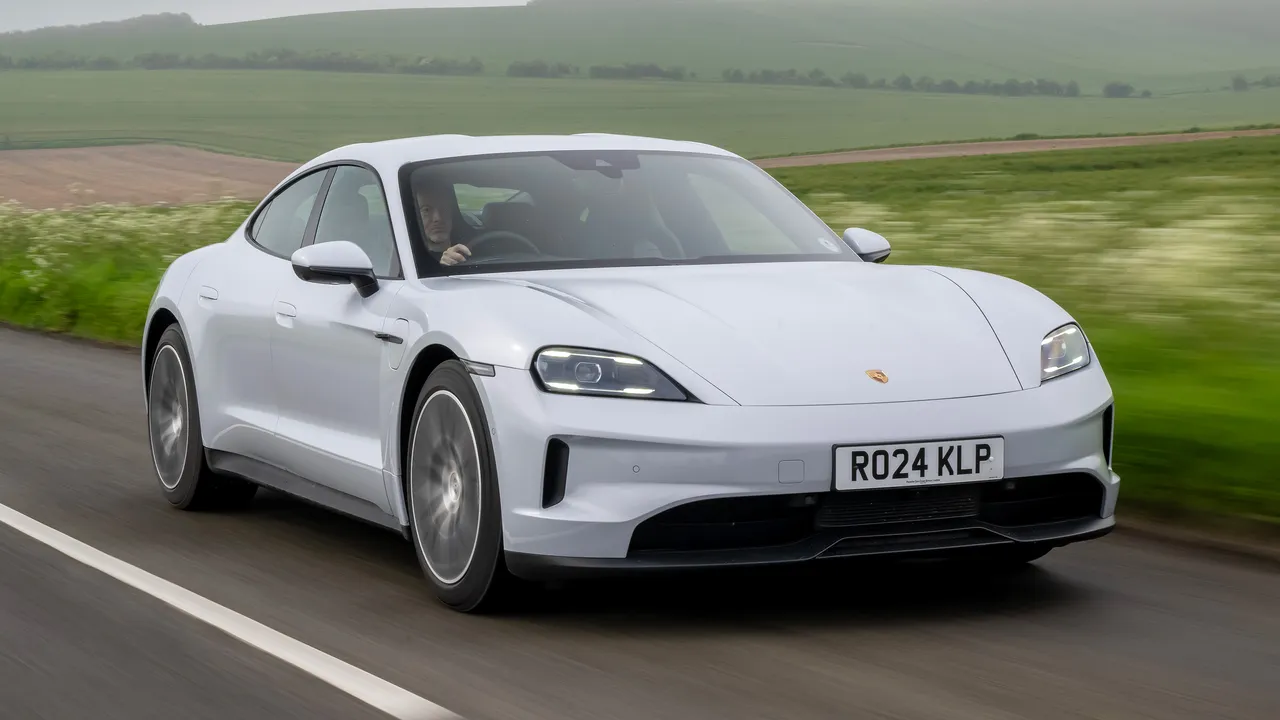
3. Cadillac CT4-V Blackwing: Compact Powerhouse with Track-Ready Precision
With a base price of $63,590, the Cadillac CT4-V Blackwing brings together power, precision, and refinement in a smaller and more accessible package than its sibling, the CT5-V Blackwing. It is powered by a 472-horsepower twin-turbocharged V6 engine and features rear-wheel drive, giving it the balanced dynamics enthusiasts appreciate.
The option of a six-speed manual transmission enhances driver engagement, making it one of the most exciting sports sedans in its class. Competing directly with the BMW M3, the CT4-V Blackwing offers thrilling performance at a lower price point.
The CT4-V Blackwing is built to deliver an engaging and responsive driving experience. Equipped with the manual transmission, it accelerates from 0 to 60 mph in 4.6 seconds. While it may not be the quickest car in its segment, the sensation of shifting gears and feeling the steady surge of power makes it deeply satisfying to drive.
The steering is sharp and accurate, allowing precise control during spirited driving. The braking system is powerful and reliable, maintaining consistency even under repeated hard use. On the skidpad, the car achieved 1.09 g of grip, proving its impressive balance and agility. Whether on a racetrack or a winding road, the CT4-V Blackwing feels composed, connected, and ready for action.
Cadillac’s MagneRide adaptive suspension gives the CT4-V Blackwing a unique blend of comfort and athleticism. It smooths out bumps during relaxed driving while providing excellent stability during cornering. The front seats are supportive and comfortable, and when equipped with the Climate Package, they include ventilation and massage functions.
Dual-pane windows help keep the cabin quiet, limiting road and wind noise even at higher speeds. This combination of refinement and control makes the CT4-V Blackwing enjoyable for both daily commuting and long-distance drives.
The CT4-V Blackwing’s cabin is focused on the driver while maintaining practicality. The driving position is excellent, although the sloped footwell can feel unusual at first. Visibility is generally good, though thick rear pillars slightly reduce the rear view.
The 8-inch touchscreen is easy to use and responsive, but the small dials positioned beneath it are not as intuitive. Manual-transmission versions eliminate the rotary dial controller, resulting in a cleaner layout. The materials feel premium, with soft-touch surfaces and improved detailing compared to the standard CT4.
The CT4-V Blackwing includes wireless Apple CarPlay and Android Auto as standard, displayed clearly on the infotainment system. The optional head-up display provides turn-by-turn navigation, while the integrated navigation system is simple and effective.
The voice control feature can occasionally misinterpret commands, which can be frustrating. Among the driver-assistance systems, forward collision warning works well and uses visual and tactile alerts. The blind-spot monitoring system sometimes fails to detect nearby vehicles consistently.
The 10.7-cubic-foot trunk is smaller than those of many competitors but remains useful for everyday storage, such as groceries or luggage. Interior storage options are limited but sufficient for smaller personal items.
The rear seats can accommodate child seats, although larger rear-facing ones may require the front passenger seat to be moved forward. During mixed city and highway driving, the CT4-V Blackwing achieved 20.4 mpg, with averages between 17 and 18 mpg under more spirited driving conditions, which is acceptable for its performance level.
The CT4-V Blackwing delivers exceptional performance and craftsmanship for its price. Even in fully equipped form, it costs less than a base BMW M3, offering similar levels of excitement and quality at a more accessible cost.
Cadillac’s four-year or 50,000-mile warranty is standard for the class, but the driving enjoyment, responsive handling, and premium feel of the CT4-V Blackwing make it one of the best compact performance sedans available today.
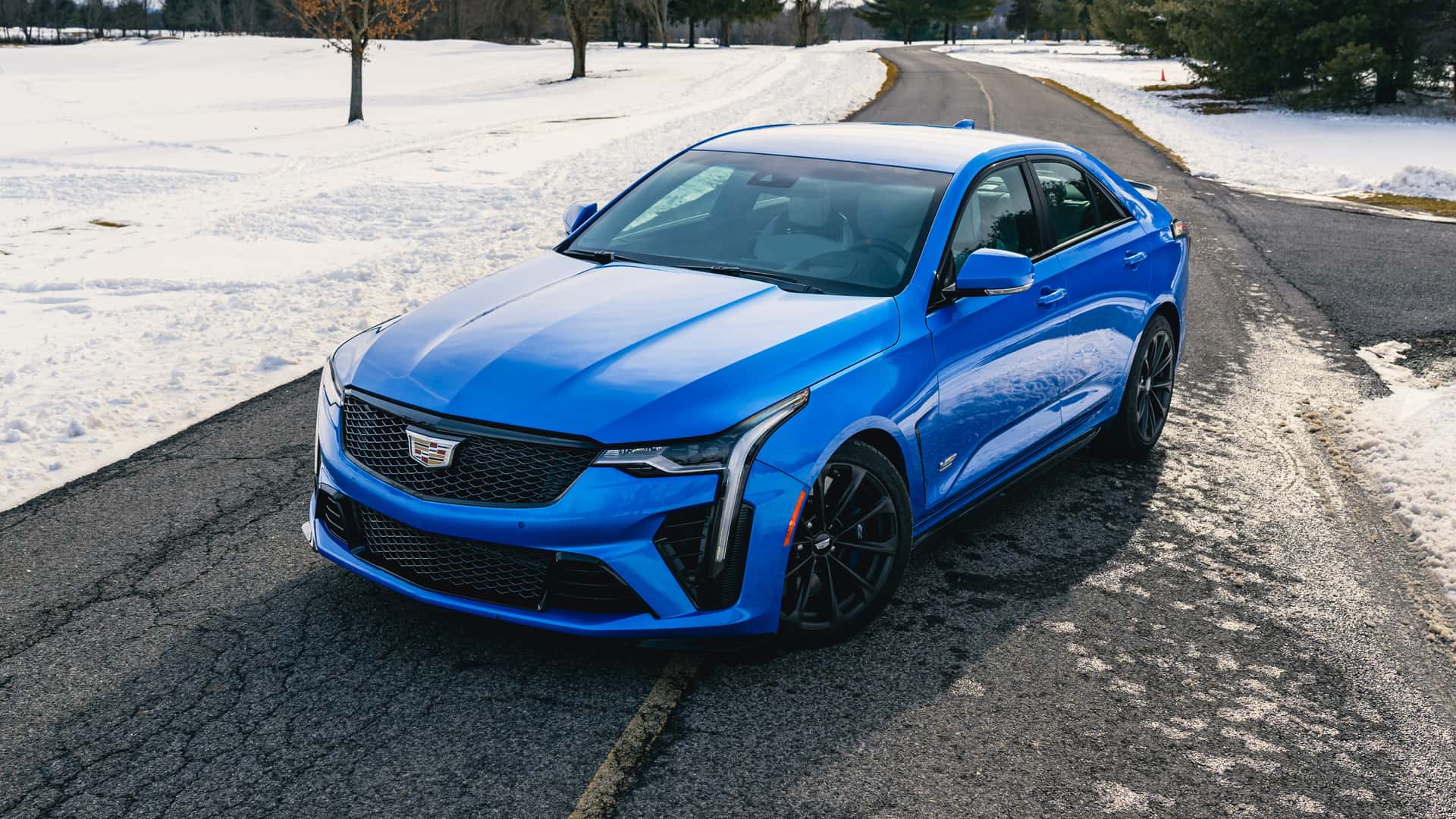
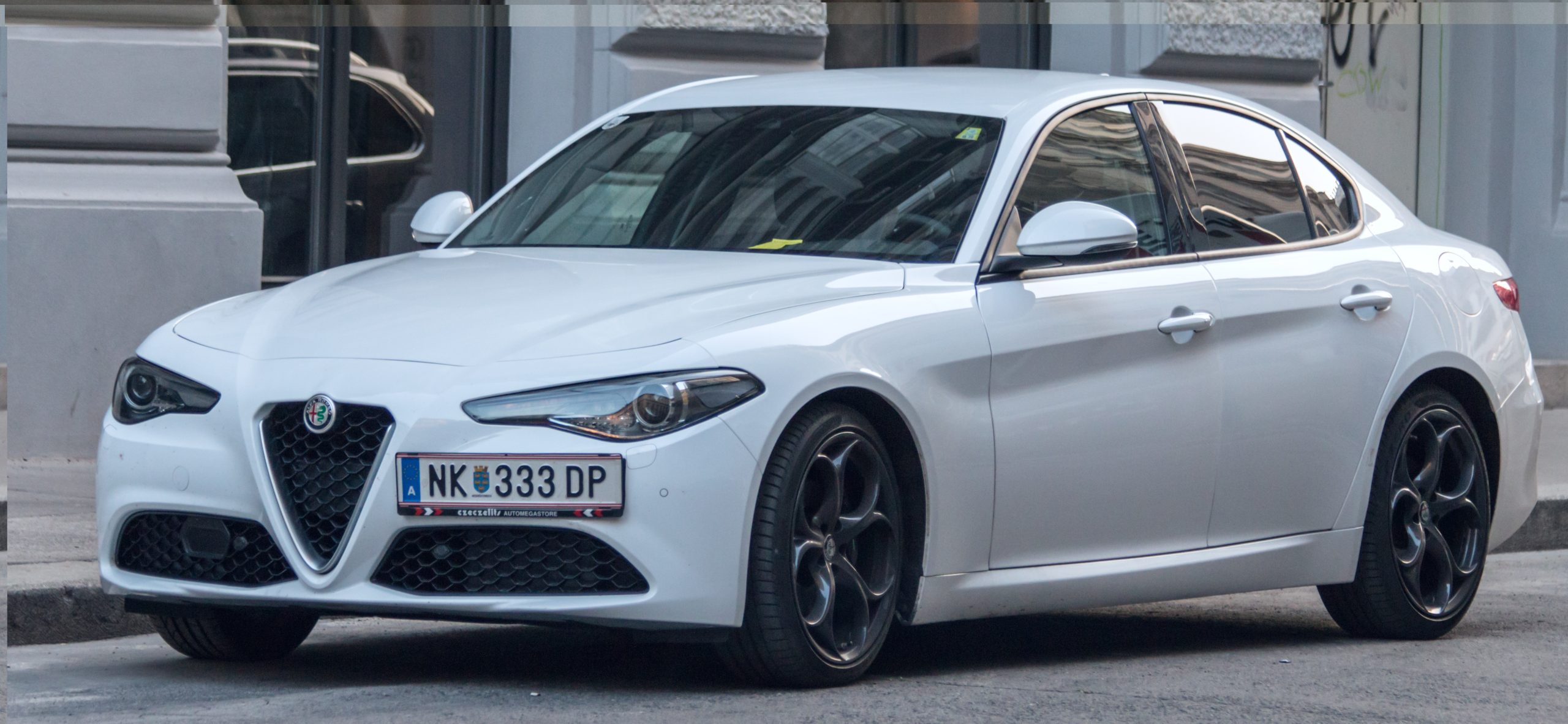
4. Alfa Romeo Giulia: Italian Elegance Meets Dynamic Performance
The Alfa Romeo Giulia, starting at $45,990, is an elegant and engaging sports sedan that blends style, agility, and personality. Known for its distinct Italian flair and driver-focused engineering, the Giulia offers a refreshing alternative to the more common German luxury sedans.
For 2025, the lineup has been simplified to include the base model and the Tributo Italiano edition, both powered by a 280-horsepower turbocharged four-cylinder engine. While the iconic Quadrifoglio V6 version has been discontinued, the Giulia still delivers a deeply rewarding drive with its responsive handling and precise steering.
The Giulia offers one of the most engaging driving experiences in its segment. During testing, the Giulia Veloce accelerated from 0 to 60 mph in 5.4 seconds, placing it among the quickest base-engine sedans on the market. The steering is light yet communicative, giving the driver excellent feedback and control.
Its handling is confident and sharp, with minimal body roll and impressive grip from its summer performance tires. However, the brakes can feel too aggressive at low speeds, making smooth stops challenging, and the automatic transmission is sometimes slow to downshift during quick acceleration. Despite these minor flaws, the Giulia remains one of the most precise and entertaining sedans to drive.
While the Giulia prioritizes sportiness, it maintains a respectable level of comfort. The front seats are supportive and highly adjustable, allowing drivers to find an ideal position. However, the thigh bolsters can feel tight for some, and the firm ride may transmit harsh impacts over rough pavement.
Engine noise becomes coarse at lower speeds, and the summer tires produce noticeable road noise on highways. The climate control system is functional but lacks strong airflow. Even so, for a performance-focused sedan, the Giulia balances agility and comfort reasonably well.
Inside, the Giulia’s cabin blends Italian craftsmanship with sporty intent. The driving position is excellent, and the metal paddle shifters mounted on the steering column add to the car’s performance appeal. However, interior ergonomics are inconsistent.
The infotainment system can be controlled through both a touchscreen and a rotary dial, but not all features are accessible through the dial, requiring frequent screen use. Entry and exit can be awkward due to narrow door openings and the forward-positioned roof pillar. Rear headroom and legroom are limited, though the driver’s space feels refined and comfortable.
The Giulia’s technology features lag behind class leaders. The voice command system struggles with simple requests and often defaults to rigid menu lists. The navigation system is clunky, and Bluetooth connectivity can be slow, occasionally blasting loud audio upon reconnection.
On the positive side, the available Harman Kardon sound system offers clear, rich audio, and driver-assistance systems such as lane-keeping assist and forward collision warning perform effectively, though they can be overly sensitive at times.
The Giulia’s 13.4-cubic-foot trunk provides more capacity than many competitors, but the high trunk lip and narrow opening make loading and unloading cumbersome. Interior storage is limited to small cubbies and bins for daily items. Installing child seats is possible, but the tight rear cabin and small doors make the process difficult.
The all-wheel-drive Giulia achieves an EPA estimate of 26 mpg combined (23 city/31 highway). During testing, it returned 25.9 mpg, close to expectations and respectable for a turbocharged performance sedan. Though not as efficient as some rivals like the BMW 330i xDrive, the Giulia’s strong acceleration and engaging drive help justify its fuel use.
The Alfa Romeo Giulia is competitively priced against luxury sedans from BMW and Mercedes-Benz, offering distinctive design and performance character. The interior materials are high-quality, with soft-touch surfaces, aluminum accents, and leather upholstery that convey a premium feel.
However, reliability concerns and minor build-quality issues, such as cabin rattles, remain drawbacks. Alfa provides a four-year/50,000-mile warranty with roadside assistance and complimentary first maintenance. For drivers seeking emotional connection and Italian artistry in a sport sedan, the Giulia stands out as a stylish and spirited choice.
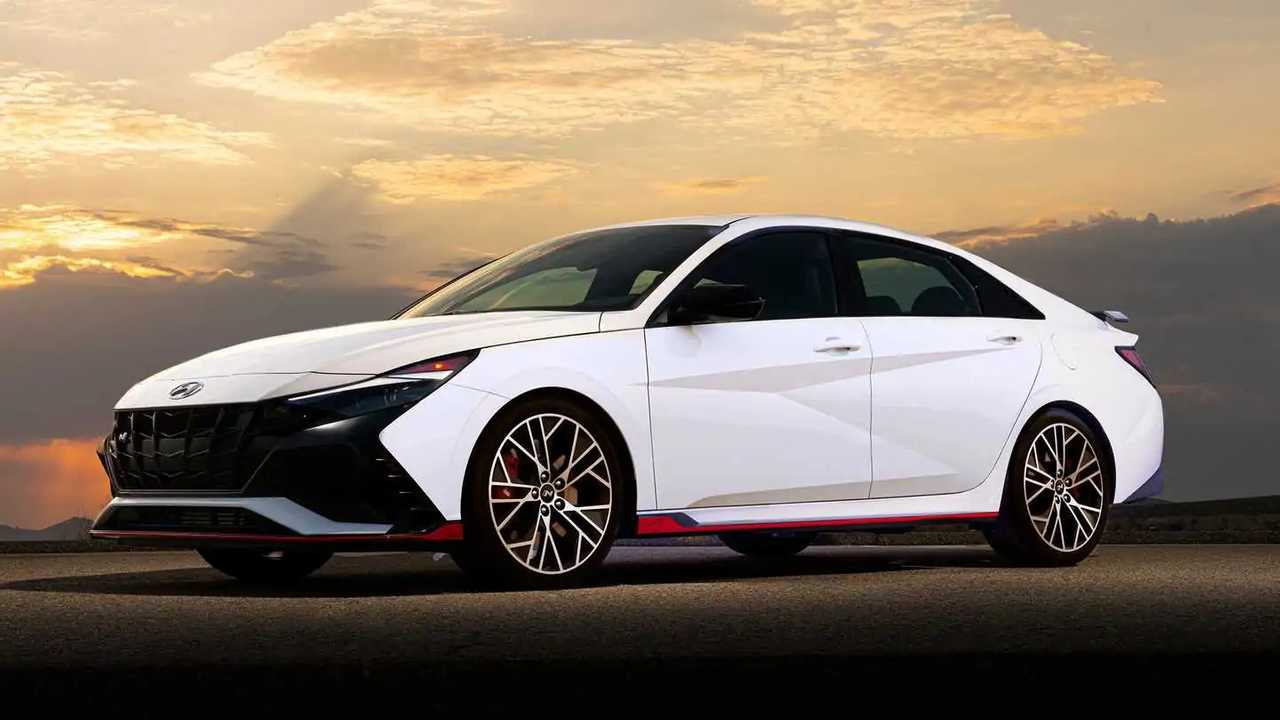
5. Hyundai Elantra N: Everyday Practicality Meets Pure Driving Fun
With a base price of $35,100, the Hyundai Elantra N shows that performance and affordability can exist in the same package. As part of Hyundai’s growing N performance lineup, this sporty sedan brings track-inspired excitement to everyday driving.
It uses a 286-horsepower turbocharged 2.0-liter four-cylinder engine that powers the front wheels through either a six-speed manual or a dual-clutch automatic transmission. Priced close to a Honda Civic Si but delivering performance similar to the Civic Type R, the Elantra N offers exceptional value and capability.
The Elantra N is one of the most engaging front-wheel-drive cars on the market. Its steering is precise, and the suspension tuning provides agility and control on winding roads. The chassis feels composed even over midcorner bumps, inspiring confidence in spirited driving.
The turbocharged engine produces strong acceleration with only mild torque steer, and it stays eager across the rev range. In testing, the manual version reached 60 mph in 6.4 seconds, while the dual-clutch automatic achieved 5.5 seconds. The six-speed gearbox is accurate and enjoyable to use, and the short gearing ensures the car feels responsive at any speed.
The Elantra N’s sport-tuned suspension brings a firmer ride than the standard model, yet it remains livable for everyday commutes. The ride can feel stiff over rough pavement, but it smooths out nicely on the highway.
The front sport seats are comfortable and supportive, offering just the right amount of bolstering for spirited driving without feeling restrictive. Wind and road noise are present, especially at higher speeds, but they never reach an unpleasant level. The climate control system is simple and efficient, allowing the cabin to reach the desired temperature quickly.
Inside, the Elantra N retains the same layout as the standard Elantra, offering generous space for passengers and an excellent driving position. The driver’s seat and steering wheel have a wide range of adjustments, and the pedal placement allows for easy heel-toe downshifting.
Entry and exit are straightforward, and visibility is clear from most angles. The use of physical buttons for many functions makes operation simple, though some labels could be clearer. Rear headroom is limited slightly by the sloping roofline, but seating comfort remains strong for a compact sedan.
The Elantra N comes standard with Apple CarPlay and Android Auto integration. The built-in navigation system is intuitive, and voice commands work well for entering addresses or adjusting climate settings. A suite of driver-assistance features is included, and each system operates smoothly without being intrusive.
One notable drawback is the lack of adaptive cruise control, which is unavailable even on models with the automatic transmission. Despite that omission, the technology setup enhances both convenience and safety while remaining easy to use.
The Elantra N provides 14.2 cubic feet of trunk space, which is competitive for a small sedan but less flexible than hatchback competitors like the Volkswagen Golf R or Honda Civic Type R. A fixed rear chassis brace improves body stiffness but limits the pass-through between the trunk and cabin.
The trunk itself is wide and deep enough for everyday items, and the rear seats can accommodate child safety seats with easily accessible anchors. Interior storage is limited, with a small center console and compact door pockets.
The Elantra N earns an EPA estimate of 24 mpg combined with the manual transmission and 23 mpg with the automatic. These ratings are reasonable for a car with this level of performance. During testing, it achieved an impressive 33.1 mpg on a mixed route, proving that it can deliver strong efficiency when driven moderately.
The Hyundai Elantra N provides an impressive blend of power, precision, and practicality at an accessible price point. The interior materials are simple but solid, with a tight fit and finish.
Hyundai’s warranty remains best in class, offering five years or 60,000 miles of basic coverage and ten years or 100,000 miles for the powertrain, plus three years or 36,000 miles of complimentary maintenance. For drivers who want an affordable sport sedan that is quick, engaging, and dependable, the Elantra N is one of the most appealing choices in its class.
Also Read: 10 Cars That Defined the American Drive in the 70s
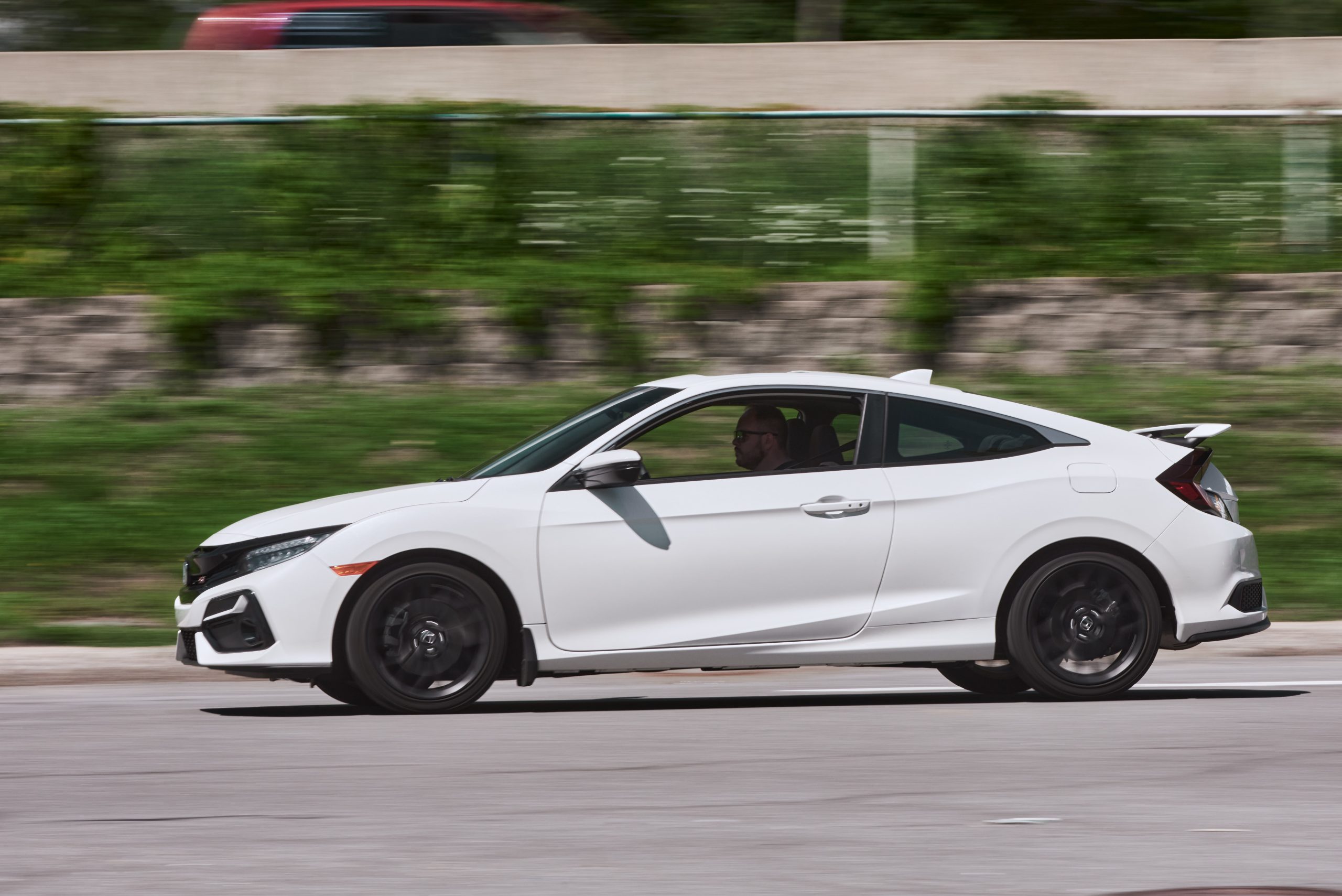
6. Honda Civic Si: Everyday Practicality with a Sporty Edge
With a base price of $31,045, the 2025 Honda Civic Si continues to prove that affordable performance sedans still exist. It offers an ideal balance of engaging handling, practical comfort, and impressive efficiency. While its 200-horsepower turbocharged engine isn’t the most powerful in the class, the Si’s true charm lies in its precise manual transmission and responsive chassis, which make every drive enjoyable.
The Civic Si delivers lively dynamics and sharp handling, traits that have long defined Honda’s sporty models. The limited-slip differential helps maximize traction, allowing the Si to make the most of its power through corners. Steering response is quick, light at low speeds, and becomes more precise as speed increases.
Though the 0–60 mph time of 7.2 seconds trails competitors such as the Volkswagen GTI, the car’s balance and agility make it entertaining to drive. The six-speed manual transmission is a standout feature, offering short, crisp shifts with perfectly tuned rev-matching.
Honda has tuned the Si’s suspension to strike a good balance between performance and comfort. It’s firmer than the standard Civic but still suitable for daily commuting. The front sport seats are supportive, breathable, and well-bolstered for spirited driving, though they lack adjustable lumbar support.
The cabin remains composed on smooth roads, though coarse pavement brings noticeable road noise. The climate control system distributes air evenly, and heated seats are now standard for 2025.
Inside, the Civic Si combines clean design with practicality. Controls are logically placed and easy to reach, and visibility is enhanced by slim roof pillars and well-positioned mirrors. The cabin feels airy, with generous space for both front and rear passengers. The materials are solid and thoughtfully arranged, adding a sense of refinement to the sporty setup.
A 9-inch touchscreen infotainment system sits prominently on the dashboard and supports both Apple CarPlay and Android Auto. The interface is responsive, though the wireless connection can occasionally drop, making a wired connection more reliable.
Honda’s safety and driver-assist features, such as adaptive cruise control and lane keeping assist, function smoothly, enhancing long-distance comfort even with the manual gearbox.
The trunk offers 14.4 cubic feet of cargo space, which is ample for a compact sedan. Storage solutions are straightforward, with large cupholders and a secure charging pad. Fuel economy is another highlight: the Civic Si earns an EPA estimate of 31 mpg combined and achieves 34.6 mpg on test routes.
The Civic Si stands out as a complete package for drivers who want fun without sacrificing practicality. It may lack the raw power of rivals, but its engaging character, excellent efficiency, and strong reliability reputation make it one of the most well-rounded sport compacts available.
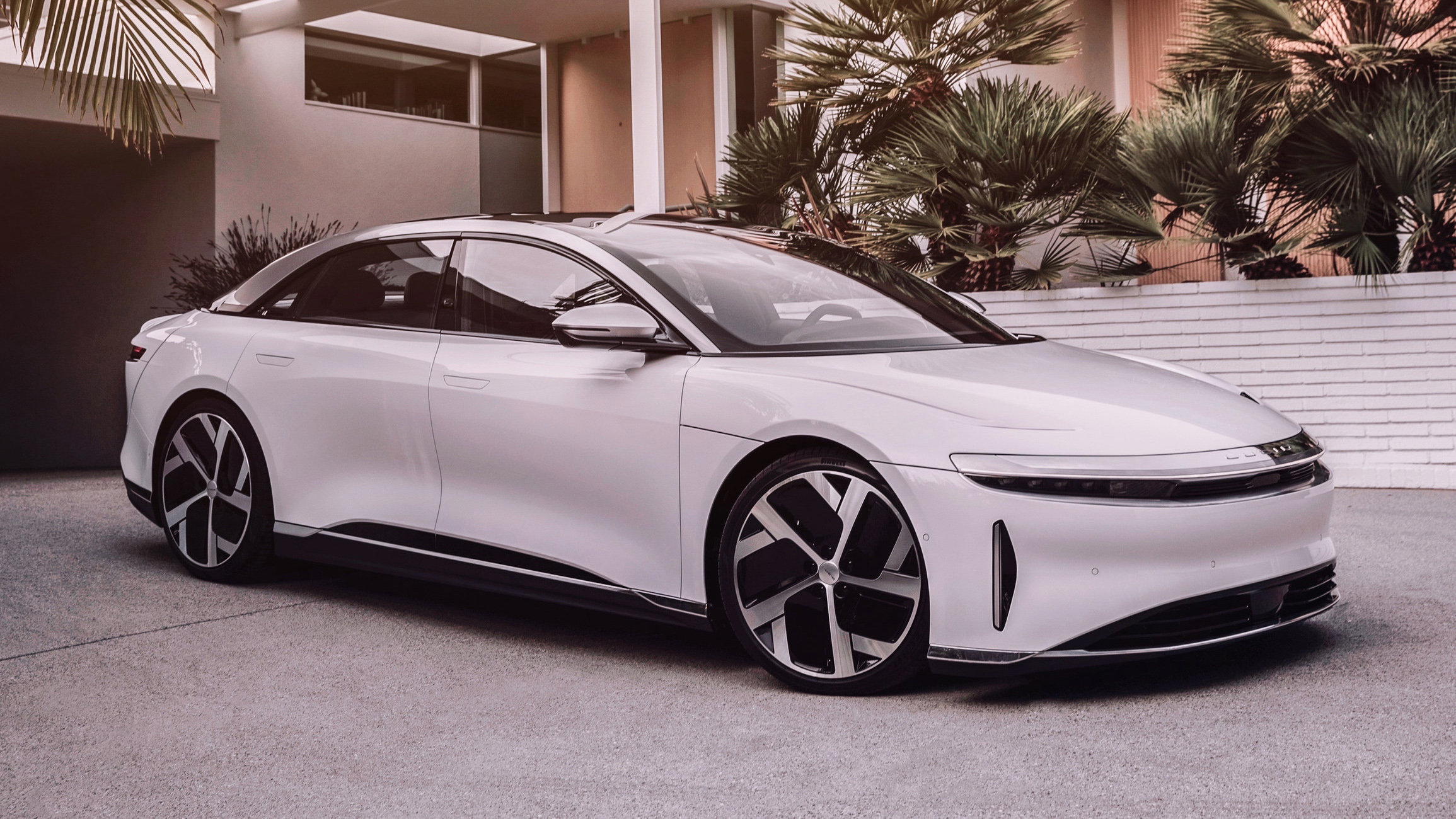
7. Lucid Air: Redefining Electric Luxury and Performance
With a starting price of $71,400, the Lucid Air sets a new benchmark for electric sport sedans by combining breathtaking performance, impressive efficiency, and refined design. Even the entry-level Pure model can reach 60 mph in about four seconds and travel up to 512 miles on a single charge.
At the other end of the lineup, the Sapphire model produces an astounding 1,234 horsepower and can reach 60 mph in just two seconds. Despite its incredible speed, the Air maintains a calm and comfortable demeanor that makes it suitable for daily driving.
The Lucid Air delivers extraordinary power and precision across all trims. The Pure version accelerates to 60 mph in 4.6 seconds, while mid-tier models accomplish the same in roughly three seconds. The Sapphire edition pushes performance even further with a 2.2-second sprint time.
Handling is sharp and responsive thanks to quick steering and well-tuned suspension. Regenerative braking is strong and customizable, allowing smooth one-pedal driving in traffic. Although its acceleration is extreme, the Air remains composed on the road, blending supercar performance with luxury sedan comfort.
The Air’s ride quality fits its luxury status. It glides smoothly over most surfaces, especially on the highway, though a few competitors do a slightly better job of absorbing minor road imperfections.
The seats provide plenty of adjustment and are generally comfortable, although more padding would enhance long-distance support. The automatic climate control system is straightforward to use, featuring physical knobs for fan speed and temperature settings. Ventilation is powerful, although the fans can get noisy when running at full strength.
The Lucid Air offers a spacious, high-tech interior that emphasizes comfort and functionality. Passengers in both rows enjoy generous legroom and headroom, while wide doors make entering and exiting easy. The touchscreen-based interface is well organized and responsive, reducing the need to navigate through excessive menus.
The system includes wireless Apple CarPlay and Android Auto, along with multiple displays for easy access to key information. Lucid’s recent software updates have improved both performance and reliability, and its driver-assist systems now operate more smoothly than before.
The Air is also one of the most practical electric luxury sedans available. It provides 26.1 cubic feet of cargo space, split between a 16.2-cubic-foot rear trunk and a 9.9-cubic-foot front trunk. Real-world driving tests show that the Air can travel between 349 and over 500 miles on a single charge, depending on configuration.
With competitive pricing, a solid warranty package, and continual software improvements, the Lucid Air offers an exceptional blend of speed, sophistication, and everyday usability.
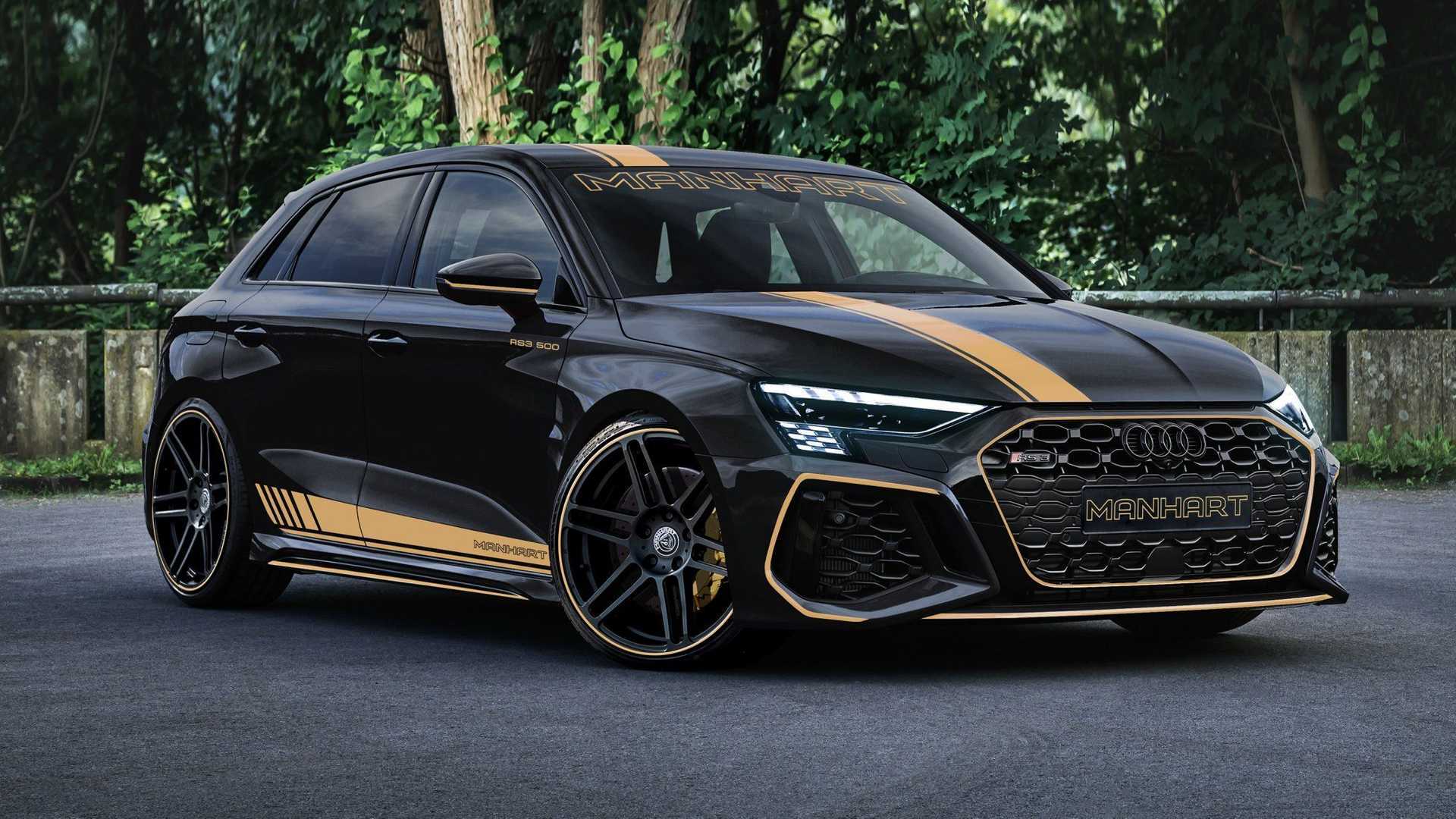
8. Audi RS3: A Compact Powerhouse with Everyday Usability
Estimated at around $65,000, the Audi RS3 stands as one of the most exciting compact performance sedans on the market. It delivers thrilling power in a refined and practical package. Under its understated exterior lies a 2.5-liter turbocharged five-cylinder engine producing 401 horsepower, sending the RS3 from 0 to 60 mph in less than 3.5 seconds.
The distinctive growl of its five-cylinder echoes Audi’s legendary rally cars of the 1980s, while its upgraded torque-vectoring all-wheel-drive system enhances agility and allows controlled drifts. The RS3 can be ferocious on the track yet composed and comfortable on the daily commute.
The 2.5-liter engine is the heart of the RS3’s appeal. It produces a unique exhaust note and delivers power with remarkable smoothness. In testing, the RS3 reached 60 mph in 3.9 seconds using standard California 91-octane fuel, but it performed even better when running on higher-octane fuel.
The all-wheel-drive system ensures exceptional traction and precise handling, giving the RS3 a nimble, responsive feel on winding roads. Its balance of performance and control makes it one of the most engaging sport sedans in its class.
Despite its high-performance credentials, the RS3 offers impressive comfort. The suspension effectively absorbs bumps, even in its firmest setting. While road noise is noticeable due to the 19-inch wheels and performance tires, the ride remains refined and composed.
The sport front seats are supportive and upholstered in soft leather, providing long-distance comfort without feeling restrictive. This combination of support and softness makes the RS3 suitable for both spirited drives and relaxed cruising.
Inside, the RS3 closely mirrors the A3 and S3, which means intuitive controls and strong ergonomics. The physical climate buttons are simple to use, and the infotainment system is straightforward and responsive. Visibility is excellent, and entry and exit are easy thanks to the compact design.
The cabin, however, doesn’t stand out much from lower trims, lacking the distinct luxury touches expected in a performance-focused model. Still, it feels well-built, and all controls operate with typical Audi precision. Wireless Apple CarPlay and Android Auto are standard, along with multiple USB ports and improved driver-assist systems, including adaptive cruise control and lane keeping assistance.
The RS3 offers practical touches like large door pockets and usable cupholders, though its trunk space is modest at 8.3 cubic feet. Split-folding rear seats help accommodate larger items. Fuel economy averages around 21 mpg, which is acceptable for its power level.
The interior materials could feel more premium for the price, but the build quality is excellent. The RS3 remains a compelling choice for drivers seeking a compact luxury sedan that blends everyday comfort with thrilling performance and unmistakable Audi character.
9. BMW 3-Series and M3: The Benchmark for Sport Sedans
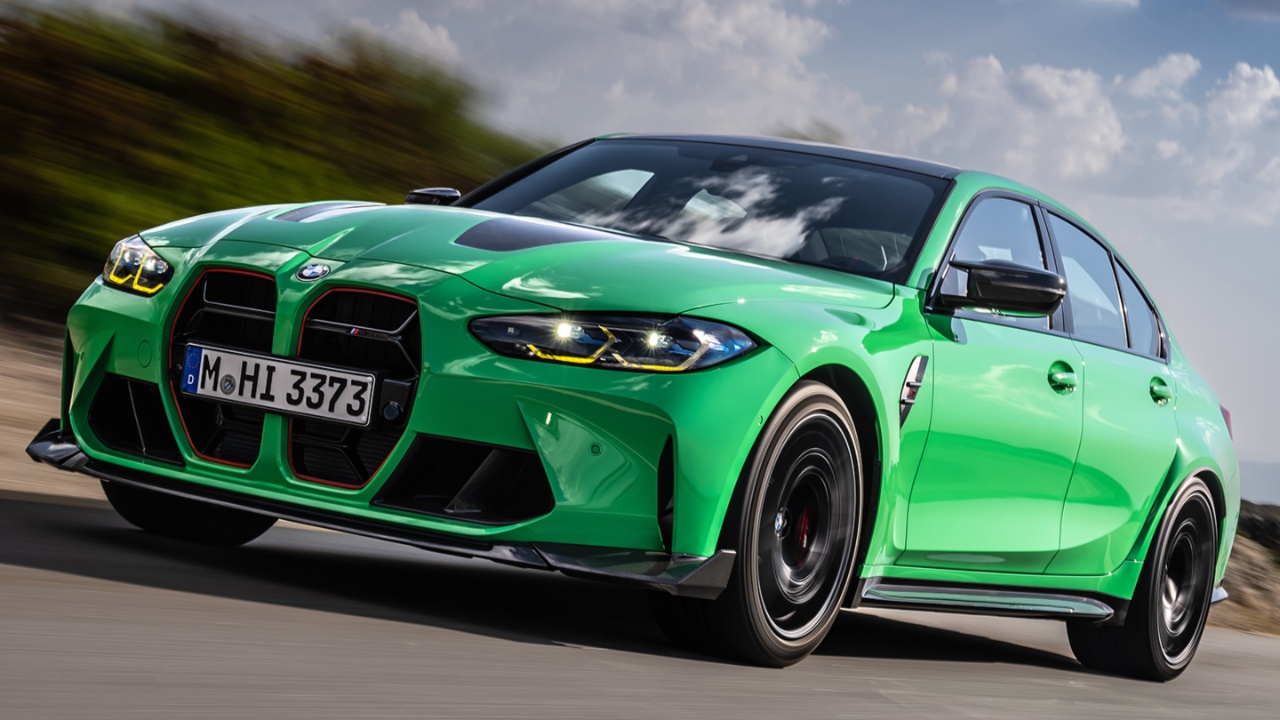
The BMW 3-Series and its high-performance sibling, the M3, continue to set the standard for sport sedans through a blend of agility, luxury, and precision engineering. Starting at $46,675 for the 3-Series and $77,175 for the M3, both models offer dynamic driving experiences tailored to different levels of enthusiasm.
The 330i delivers 255 horsepower, while the M340i raises that to 386 horsepower. For drivers seeking true performance thrills, the M3 provides up to 503 horsepower from its twin-turbo inline-six and even offers a six-speed manual transmission, something rare in today’s market.
The M3 Competition xDrive demonstrates how far BMW’s performance engineering has come. It rockets from 0 to 60 mph in just 3.2 seconds, offering supercar-level acceleration in a four-door body. Its all-wheel-drive system boosts traction and stability while allowing drivers to switch to rear-wheel drive for pure enthusiast fun.
Handling is sharp and controlled, with minimal body roll through corners. However, the steering lacks some natural feedback, particularly in Comfort mode, where effort buildup feels inconsistent. Sport mode restores a more connected feel, making it ideal for spirited driving.
The M3 strikes a balance between sportiness and everyday livability. The adaptive suspension softens road impacts effectively in Comfort mode, delivering a surprisingly compliant ride.
The optional carbon-fiber bucket seats provide strong lateral support but make entry and exit difficult, and their rigid inserts may feel uncomfortable for longer drives. Noise levels are well managed, though opinions on the exhaust note vary from thrilling to harsh. Despite its performance focus, the M3 remains practical and composed enough for daily use.
BMW’s driver-centered cabin design enhances the sense of engagement. The touchscreen and controls angle toward the driver, emphasizing the brand’s focus on functionality. Visibility is good, and interior space exceeds that of some rivals, providing generous legroom.
The infotainment system supports wireless Apple CarPlay and Android Auto, complemented by clear navigation and voice command capability. A premium Harman Kardon audio system delivers crisp sound quality. BMW’s driver assistance suite, including adaptive cruise control and blind-spot monitoring, performs smoothly without being intrusive.
With 13 cubic feet of trunk space, the M3 offers more practicality than most performance coupes, making it suitable for everyday use. Cabin storage is generous, and child-seat anchors are easily accessible. Fuel efficiency averages 18 mpg combined, with highway stretches returning around 24 mpg.
Pricing can exceed $100,000 when fully equipped, yet the M3 justifies its cost with unmatched versatility, precision, and heritage. For decades, the 3-Series and M3 have embodied the ideal balance between performance and refinement, a legacy that remains unshaken today.
10. Lexus IS 500: A V8 Farewell to Classic Performance
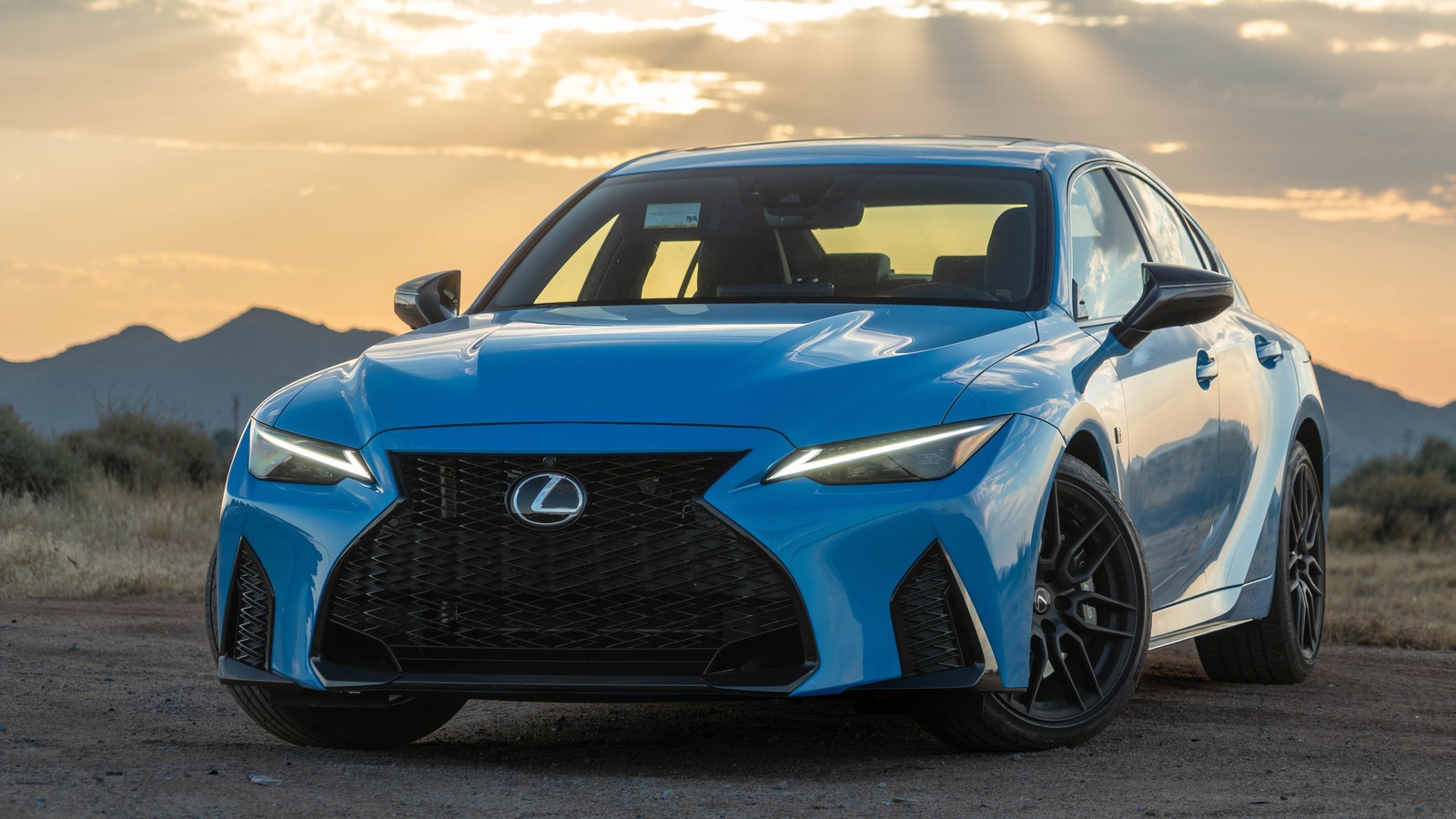
In a world increasingly dominated by turbocharged engines and hybrid systems, the Lexus IS 500 stands out as a refreshing throwback. Priced from $60,320, it celebrates traditional performance with a naturally aspirated 5.0-liter V8 that produces 472 horsepower.
While it may not be the quickest in its class, the IS 500 offers a unique blend of old-school charm, refined comfort, and modern luxury. For 2025, Lexus adds an F Sport Performance Premium trim to mark the IS’s 25th anniversary, featuring exclusive styling and a bright yellow finish.
The IS 500’s V8 engine is the star of the show. It delivers smooth, linear power and a soundtrack that recalls the golden era of high-revving performance sedans. Acceleration from 0 to 60 mph takes 4.8 seconds, which trails competitors like the BMW M340i and Mercedes-AMG C43, yet the engine’s responsiveness and character make every drive engaging.
The suspension tuning favors balance over aggression, giving the IS 500 agility on twisty roads without sacrificing composure. Steering feedback is precise, and the rear-wheel-drive setup allows for playful handling. The main drawback is the eight-speed automatic transmission, which feels sluggish and could benefit from quicker, sharper shifts.
Lexus strikes a strong balance between performance and comfort. The firmer suspension setup keeps the car planted but never harsh, providing a taut yet livable ride for daily driving. The front seats are supportive, though they lack extensive adjustability.
Heated and ventilated functions, along with an effective climate control system, enhance comfort during long drives. The cabin is well-insulated, though the optional summer tires contribute to noticeable road noise. Thankfully, the melodic exhaust note more than compensates.
The interior layout focuses on driver comfort, with intuitive controls and solid ergonomics. Visibility is good, but rear-seat space is tight, making it less ideal for passengers over six feet tall. Lexus has improved usability with a touchscreen interface that replaces the older touchpad controller.
Wireless Apple CarPlay, Android Auto, and a superb Mark Levinson sound system enhance the cabin experience. However, limited USB ports and slower driver-assist responses prevent the IS 500 from matching tech leaders in its class.
Trunk capacity is modest but functional, and folding rear seats add flexibility. Interior storage is limited, with few convenient spaces for small items. Fuel economy averages 20 mpg combined, which lags behind turbocharged rivals.
Still, the IS 500 compensates with standout reliability, a strong warranty, and the timeless appeal of its naturally aspirated V8. While not the most advanced or efficient choice, the IS 500 remains a soulful and refined send-off for the classic performance sedan.
From roaring V8s to silent electric torque, these ten sedans showcase the incredible diversity of modern performance and design. “10 Sedans That Are Way Cooler Than You Remember” is not just about nostalgia; it is about rediscovery.
The Cadillac CT4-V and CT5-V Blackwings prove that the spirit of the driver’s car is alive and well, while the Porsche Taycan and Lucid Air push the limits of electric excitement. At the same time, classics like the BMW M3 and Lexus IS 500 continue to evolve without losing their soul.
Each car on this list represents a different era, philosophy, and personality, yet they all share one trait: they make driving feel special again. In a world shifting toward SUVs and crossovers, these sedans remind us that performance, comfort, and emotion can still coexist beautifully. Before you overlook the next four-door you see, remember that it might be cooler than you think.
Also Read: 15 Cars That Remind Americans Why We Love to Drive