When people talk about thrilling cars, one factor often gets overlooked until you actually hit the accelerator torque. Unlike horsepower, which speaks to top-end power and speed, torque is what you feel the moment you press the pedal.
It’s that gut-punch, head-snapping surge that makes a car feel alive. With the rise of electric powertrains and high-output turbo engines, instant torque has become more accessible than ever, but not all vehicles deliver it equally.
In this list, we’ll explore five cars that deliver unforgettable instant torque and five that fail to live up to expectations, even with impressive numbers on paper.
From EVs that redefine performance to sports cars that promise more than they deliver, here’s how they stack up.
Cars With Instant Torque You’ll Never Forget
There’s nothing quite like the feeling of instant torque, that immediate, neck-snapping surge of power that throws you back in your seat the moment you tap the accelerator. It’s pure automotive adrenaline, the kind of force that turns an ordinary drive into an unforgettable thrill.
Whether it’s the silent punch of an electric motor or the brute strength of a finely tuned combustion engine, some cars deliver that instant jolt of power so perfectly that they stay etched in your memory long after the drive is over.
In this article, we’re taking a look at the machines that define what instant torque is all about, cars that don’t just move, they launch.
1. Tesla Model S Plaid
The Tesla Model S Plaid redefined what instant torque means for everyday drivers. With three electric motors producing over 1,020 horsepower and an absurd 0–60 mph time under 2 seconds, this luxury EV launches with almost no delay.
The torque delivery is immediate, linear, and seemingly endless a signature trait of Tesla’s advanced electric drive system.
Even more impressive is how composed the car feels doing it; there’s no wheel hop or traction drama, just a seamless surge of force that pins you to your seat. Few cars in history, electric or otherwise, make acceleration feel this otherworldly.
The 2025 Tesla Model S Plaid continues to define the pinnacle of electric performance, blending breathtaking power, long-range capability, and refined luxury into one sleek package.
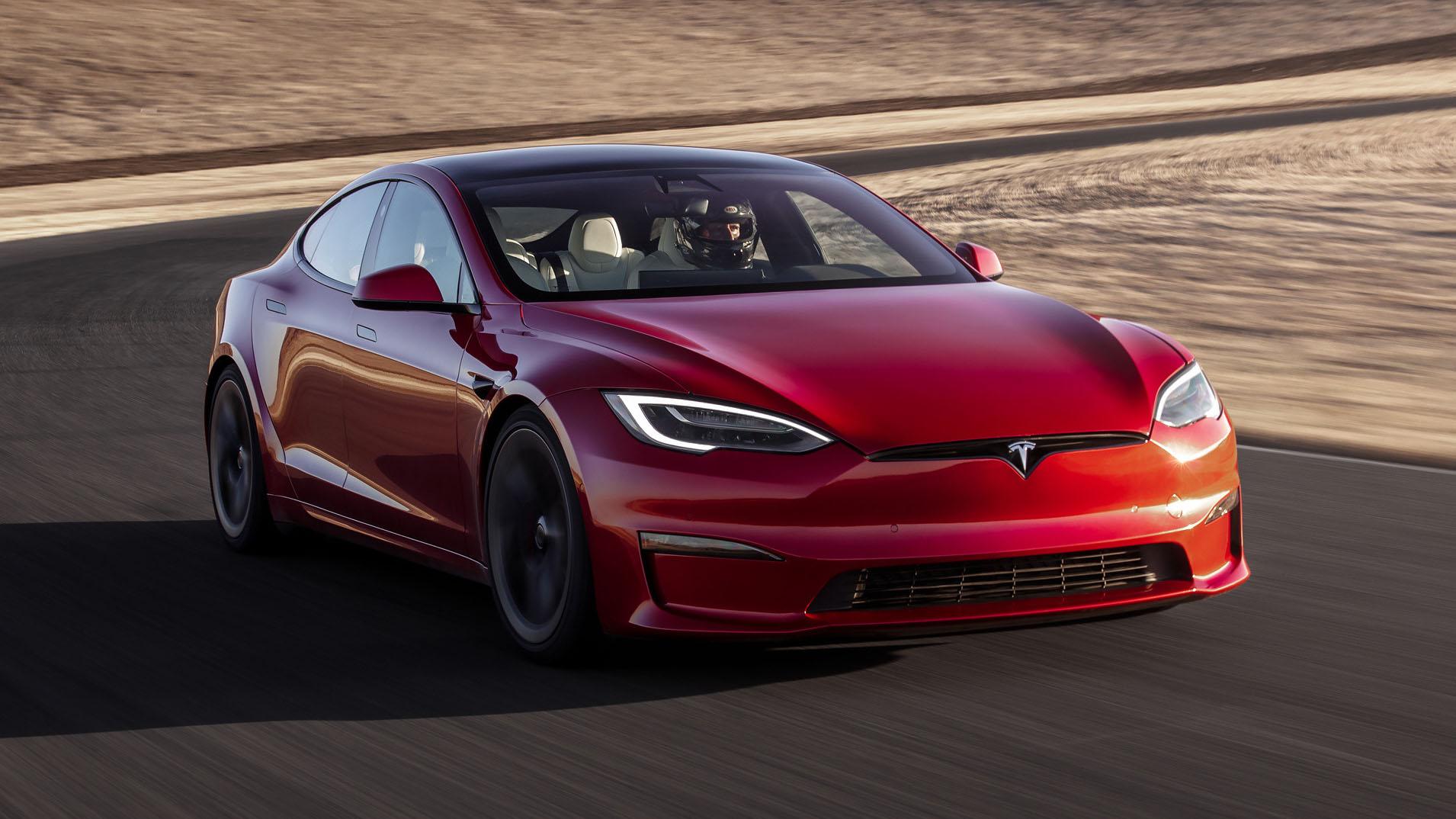
tarting at $94,990, this all-wheel-drive electric sedan delivers an impressive 1,020 horsepower through a 1-speed direct-drive transmission, allowing it to accelerate with near-instant torque and unmatched smoothness.
It offers an EPA-estimated range of 348 miles on a full charge and achieves 104 MPGe combined, making it both thrilling and efficient.
Charging at home takes around 14 hours on a 240V outlet, while the fast-charge port uses Tesla’s latest NACS standard for quick top-ups on the go.
Inside, the Model S Plaid comfortably seats five passengers and provides 28.2 cubic feet of cargo space, maintaining the practicality expected from a luxury sedan.
Assembled in the United States, it comes backed by a 4-year/50,000-mile basic warranty. With its low cost to drive, about $103 per month in electricity, the Model S Plaid remains an appealing option for those who want high performance without high fuel costs.
Between its striking acceleration, cutting-edge technology, and sophisticated design, the 2025 Tesla Model S Plaid continues to set the benchmark for electric vehicles in both speed and sophistication.
2. Porsche Taycan Turbo S
Porsche’s entry into the EV world came with skepticism could they deliver the brand’s trademark driving emotion without an engine? The Taycan Turbo S answered that question with authority.
While it’s slightly slower than the Model S Plaid in a drag race, the Taycan’s instant torque and precision are unmatched.
Its 761 horsepower and 774 lb-ft of torque hit you instantly, but the real magic lies in the car’s ability to manage it through all four wheels.
Porsche tuned its torque vectoring so effectively that launches feel like a roller coaster ride perfectly guided through corners. It’s brutal, yet elegant a balance only Porsche could achieve.
The 2025 Taycan continues Porsche’s electric revolution as the brand’s all-electric sedan, with a wagon-inspired counterpart known as the Cross Turismo.
True to its Porsche heritage, the Taycan upholds the brand’s reputation for exceptional performance, refined luxury, and premium pricing.
For the 2025 model year, it receives its most significant update since debuting in 2020, bringing fresh styling and a host of major enhancements that elevate its power, driving range, and charging speed.
The lineup also welcomes a new Turbo GT model, a blisteringly fast addition that has already been setting track records around the world.
Altogether, these evolutionary upgrades ensure that the 2025 Porsche Taycan remains one of the most desirable electric vehicles available today.
According to Edmunds’ data, the Taycan Base trim delivers an EPA-estimated range of 274 miles. Considering typical EV battery degradation of 1-2% per year, that translates to an estimated 233 miles of range after eight years of ownership.
Charging utilizes the SAE Combo plug type, and a 240V home charging setup replenishes the battery in about 11.5 hours. To preserve long-term battery health, it’s best to keep the charge between 30% and 80%.
The Taycan comes with an EV battery warranty covering eight years or 100,000 miles, and data from GeoTab suggests that most Taycan batteries will outlast the vehicle’s usable life.
Although the Taycan is not eligible for the federal EV tax credit, buyers could save up to $350 through local rebates, depending on location and eligibility.
Edmunds highlights that the 2025 model brings significant improvements to the Taycan lineup. While the exterior styling changes, such as redesigned headlights and bumpers, are subtle, the real progress comes from performance and technology upgrades.
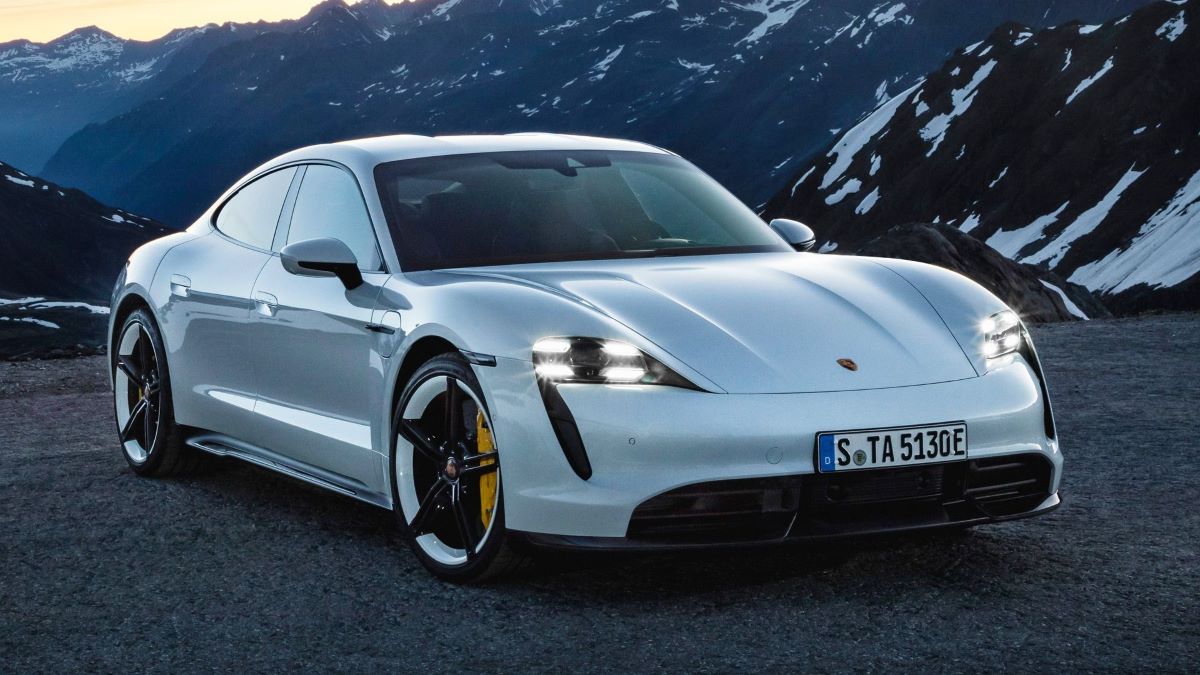
DC fast-charging speeds have increased, cutting down on time spent at charging stations. The base Taycan receives a power bump, resulting in noticeably quicker acceleration, while the newly introduced Turbo GT model delivers a staggering 1,019 horsepower.
Inside, every Taycan now comes with more standard equipment, including an upgraded Apple CarPlay interface that seamlessly integrates climate controls for a smoother in-car experience.
When it comes to rivals, the Taycan’s closest competitor is the Audi E-Tron GT, its mechanical sibling, which emphasizes comfort and grand touring appeal.
Other alternatives include the BMW i5 and i7, as well as the Mercedes-Benz EQE and EQS sedans, all of which lean more toward luxury than outright performance.
Meanwhile, the Tesla Model S continues to impress with its acceleration but still trails the Taycan in handling precision and driving feel.
For enthusiasts seeking something more distinctive, the new Maserati GranTurismo Folgore offers electric power in an elegant two-door coupe form.
3. Rivian R1T
The Rivian R1T isn’t your typical truck. With four individual motors one at each wheel it provides instant torque vectoring and nearly 830 horsepower.
What makes the R1T unforgettable isn’t just how fast it moves for a full-size pickup, but how immediately it delivers torque, even off-road.
Whether you’re rock crawling or launching from a stoplight, the truck feels responsive in a way no gas-powered pickup ever could. It’s the kind of vehicle that redefines expectations for what a truck can be both rugged and ridiculously quick.
The Rivian R1T is an all-electric pickup truck developed by the innovative U.S.-based startup Rivian.
It holds the distinction of being the first electric pickup to reach the market, launching ahead of major competitors like Ford’s F-150 Lightning and the Chevrolet Silverado EV.
Beyond its historical first, the R1T stands out for its forward-thinking design, impressive on-road and off-road performance, and its clear focus on utility and adventure.
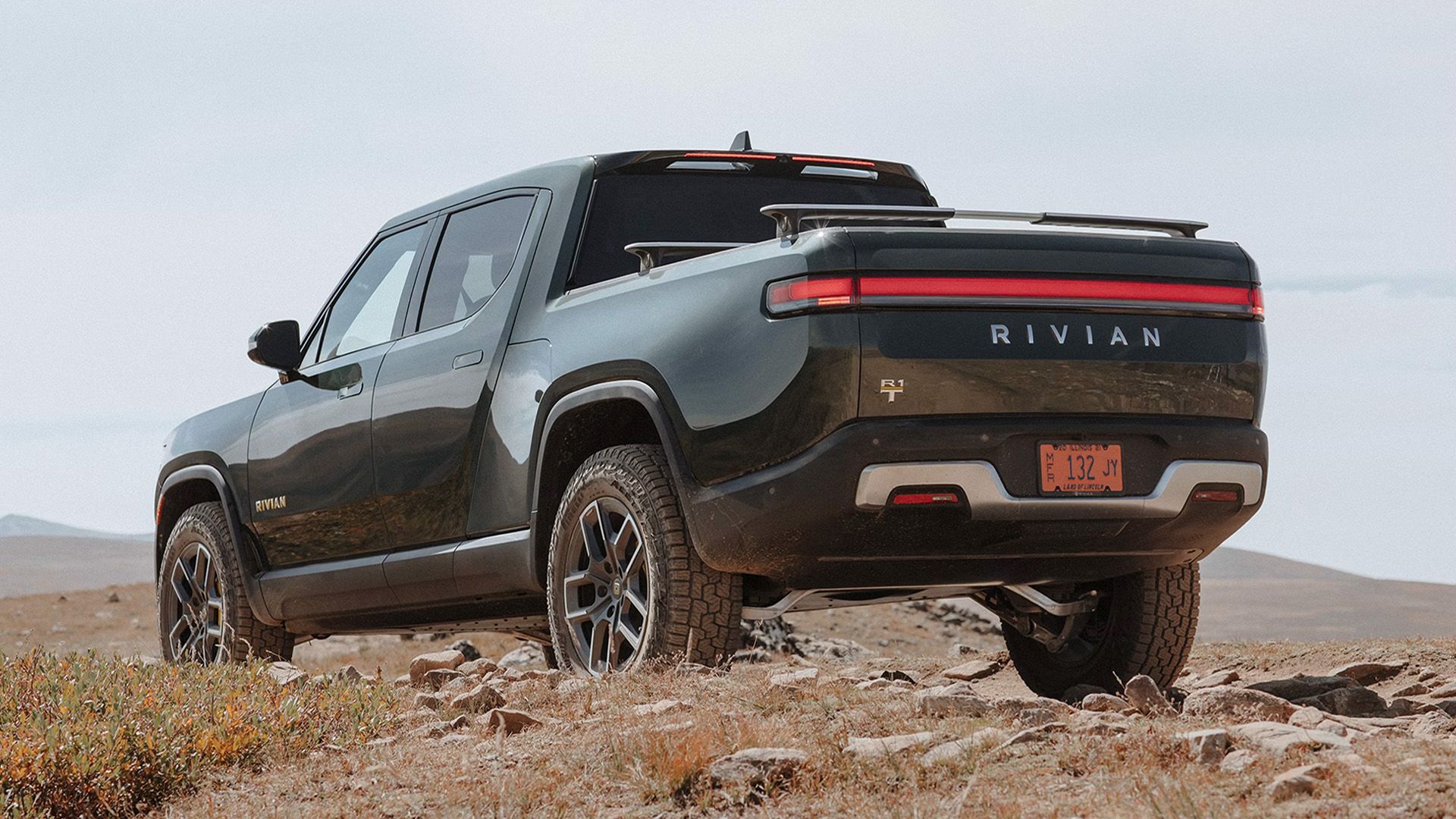
In terms of size, the R1T doesn’t quite fit into traditional pickup categories. It’s smaller than a typical full-size crew cab truck but larger than most midsize pickups, striking a balance between agility and capability.
It’s offered in a single body configuration that includes a 4.5-foot cargo bed, shorter than what you’d find on most gasoline-powered midsize trucks, but what it lacks in bed length, it makes up for in creative storage solutions.
Among its unique features are a spacious front trunk and an innovative gear tunnel, a trapezoidal enclosed storage area located between the rear seats and the cargo bed.
This tunnel is particularly useful for carrying long, narrow items such as golf bags, folding chairs, or strollers, gear that typically doesn’t fit neatly into a conventional pickup bed.
When it comes to competitors, the Ford F-150 Lightning is currently the R1T’s primary rival in the electric pickup space.
While the Lightning isn’t as powerful or as capable off-road as the Rivian, it’s more affordable and offers a more familiar driving experience for traditional truck buyers.
Still, for those who value innovation, design ingenuity, and adventure-ready performance, the Rivian R1T delivers a more distinctive take on what an electric truck can be.
Over the course of a year, they plan to put at least 20,000 miles on it, evaluating everything from reliability and comfort to range and practicality.
Through real-world testing, they aim to uncover both the highlights and shortcomings of living with Rivian’s groundbreaking electric pickup.
4. Chevrolet Corvette E-Ray
The Corvette E-Ray, Chevy’s first electrified Vette, combines a 6.2-liter LT2 V8 with a front-mounted electric motor for a total of 655 horsepower. What’s fascinating is how the hybrid setup enhances torque delivery.
The electric motor provides instant front-wheel power, eliminating the traditional lag you’d feel in naturally aspirated V8s.
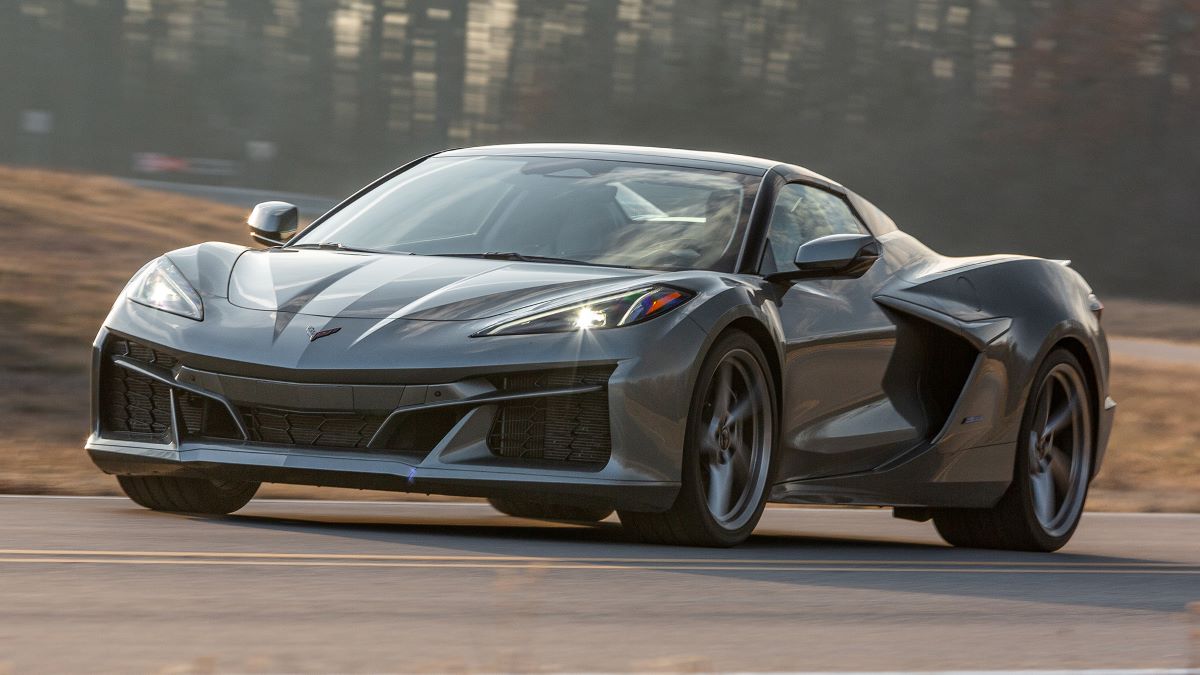
The result? A Corvette that launches harder than ever, with seamless transitions between electric and combustion power. It’s a clever evolution of muscle car performance raw, yet smartly engineered for the modern era.
5. Lucid Air Sapphire
The Lucid Air Sapphire is currently the closest rival to the Tesla Model S Plaid in terms of sheer instant torque. With 1,234 horsepower and a tri-motor setup, it pushes EV performance into hypercar territory.
But it’s not just the numbers that matter it’s how gracefully it deploys them. The throttle response is instantaneous but controlled, giving the driver full confidence in using every bit of torque available.
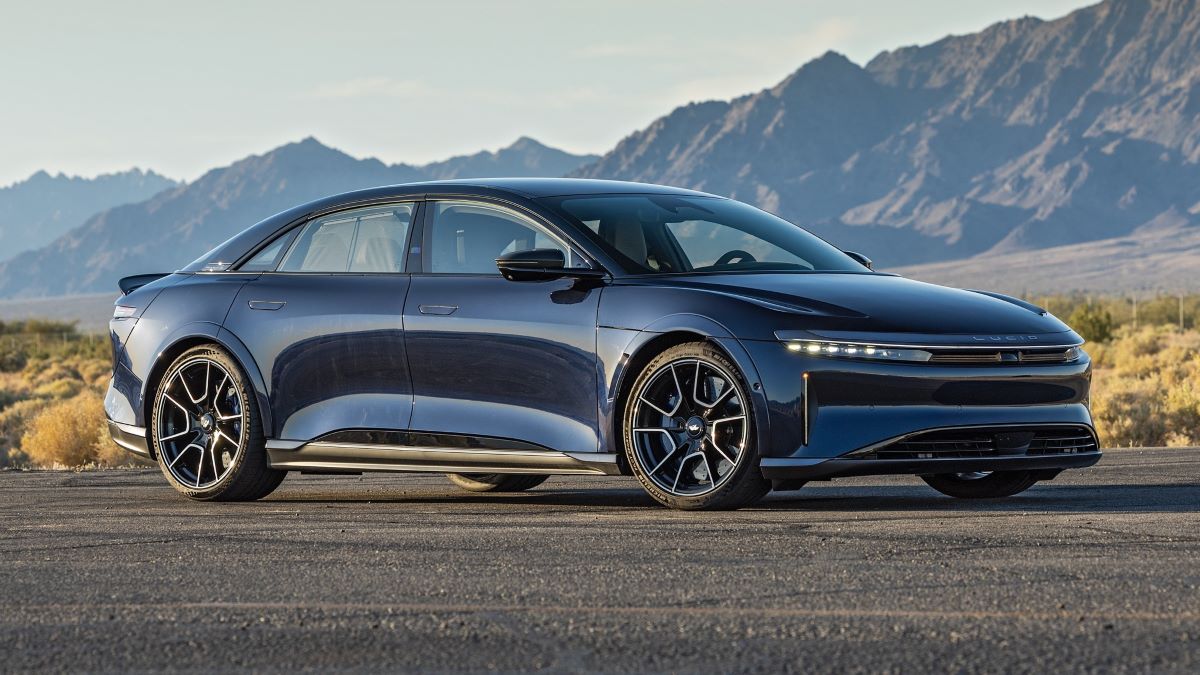
It’s smooth, refined, and vicious all at once, showing that instant torque doesn’t have to feel chaotic. For many enthusiasts, this is what true high-performance electrification feels like.
Cars That Fall Short on Instant Torque
Not every car delivers that thrilling rush of power the moment you hit the accelerator. Some vehicles, despite impressive horsepower numbers or sleek designs, simply lack the immediacy that makes driving truly exhilarating.
Whether it’s due to turbo lag, transmission tuning, or an engine that takes its time to build momentum, these cars remind us that performance isn’t just about power, it’s about how that power arrives.
In this article, we’ll look at the cars that miss the mark when it comes to instant torque, proving that not all speed feels the same behind the wheel.
1. Toyota Supra (A90)
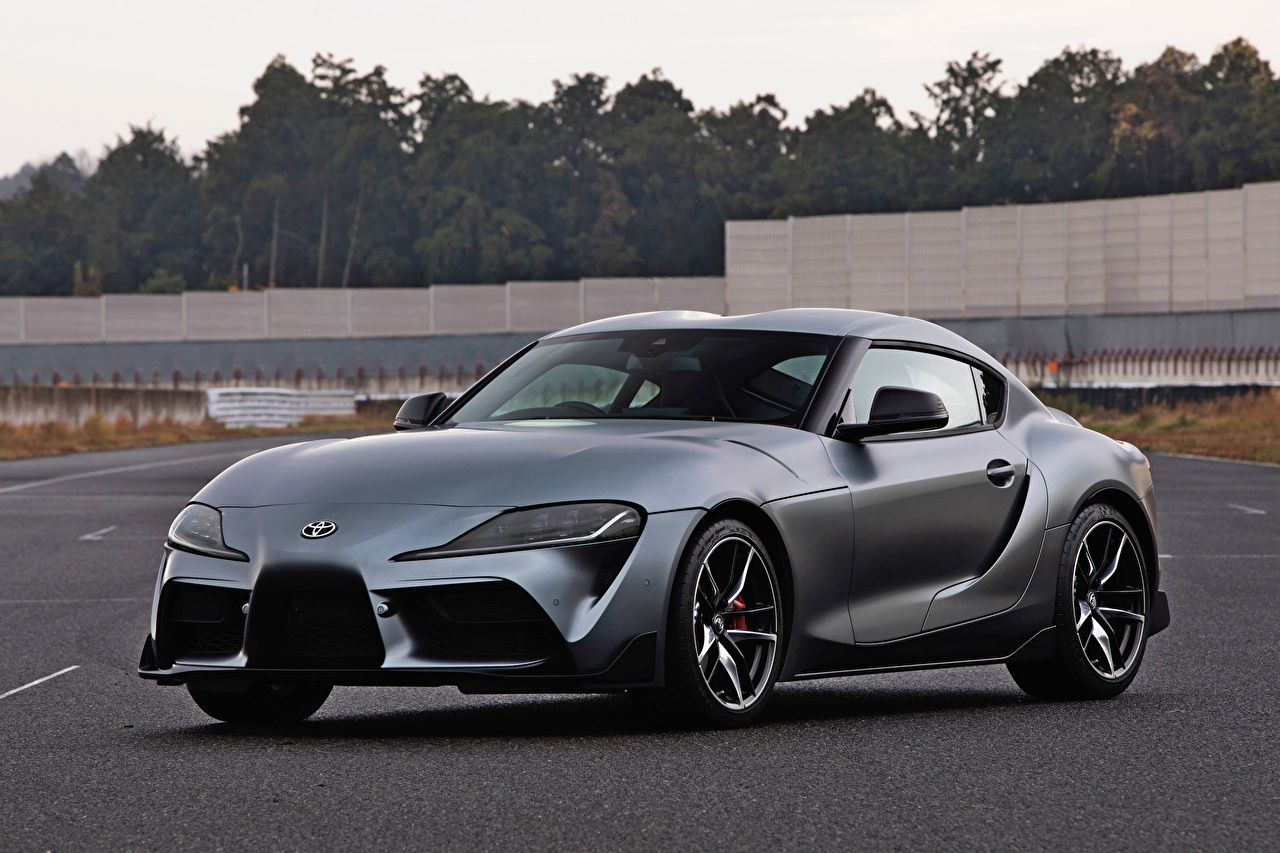
The reborn Toyota Supra is a blast to drive, but when it comes to instant torque, it falls just short. Its 3.0-liter turbocharged inline-six, sourced from BMW, offers 382 horsepower and 368 lb-ft of torque, yet there’s a noticeable lag before the turbo spools.
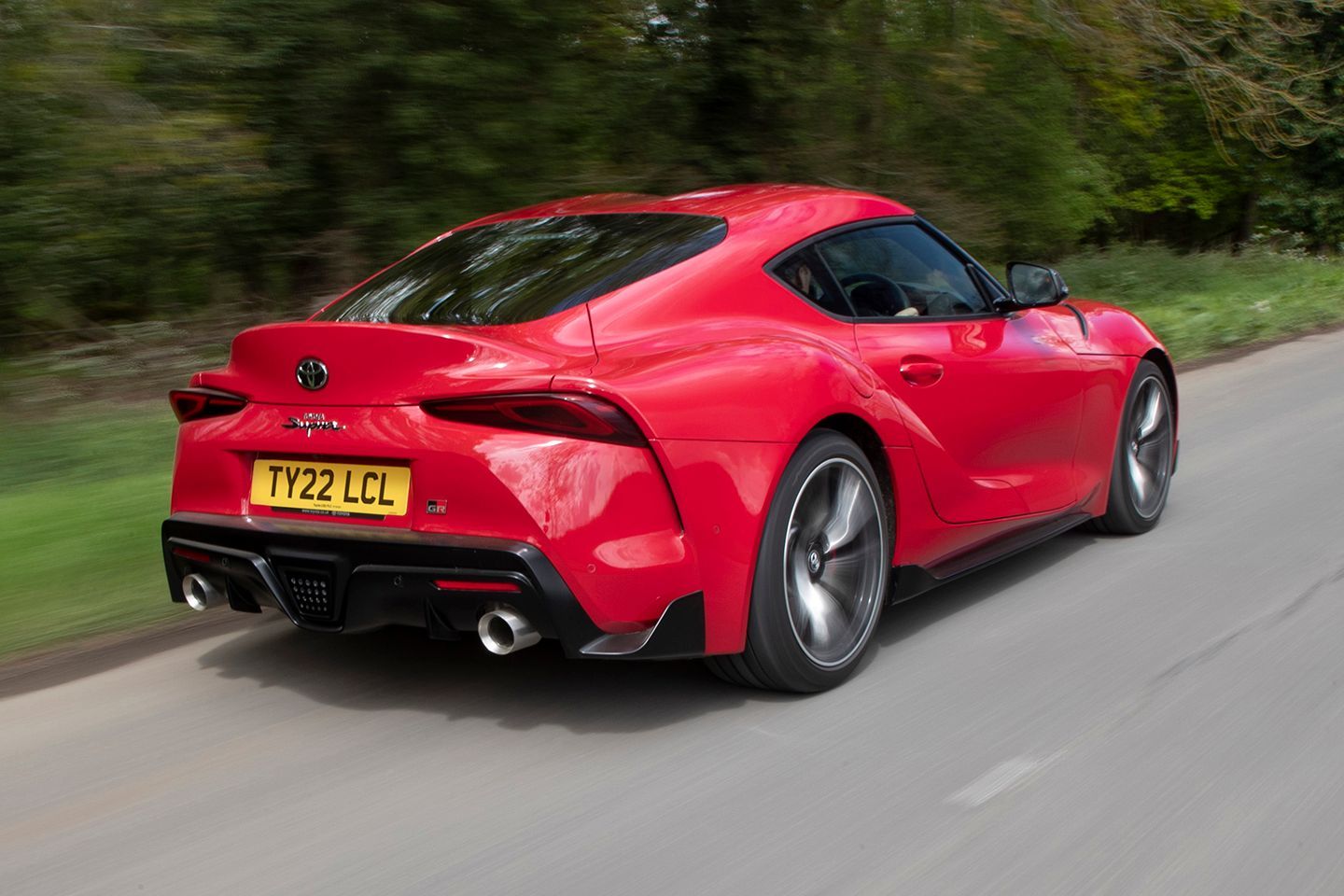
It’s not a dealbreaker the Supra remains quick but compared to electric or even hybrid-assisted rivals, that momentary pause robs it of immediacy. Drivers looking for instant throttle response may find it a touch too restrained for the legend it’s supposed to be.
Though the Toyota GR Supra has only been around for six years, it feels as if it’s been part of the automotive landscape for much longer.
Talks of a modern successor to the iconic Supra nameplate date back to the early 2000s, accompanied by various concept cars that eventually paved the way for what became the GR Supra.
We still recall the excitement surrounding the FT-1 concept when it made its debut at the 2014 Detroit Auto Show. Fresh out of its display case, the FT-1 instantly captured attention with its bold design and aggressive stance.
The collective reaction from enthusiasts was a resounding “please make this,” and Toyota, to its credit, largely did just that.
When the production GR Supra finally hit the streets, it retained the concept’s signature curves and distinctive front fascia, solidifying itself as a tuner favorite and a go-to choice for drift enthusiasts.
It quickly became a new-generation poster car, embodying both style and performance.
However, before excitement builds too high, it’s worth noting that the highly anticipated A90 Final Edition packing nearly 100 extra horsepower is exclusive to Europe and Japan.
The version available in the U.S. is a bit more reserved—more like a polished “final draft” rather than the ultimate rendition fans might have hoped for. While that realization might sting a little, Toyota hasn’t left enthusiasts empty-handed.
In keeping with the brand’s kaizen philosophy of continuous improvement, the GR Supra Final Edition refines the standard formula rather than overhauling it.
Power still comes from the tried-and-true turbocharged 3.0-liter inline-six engine, delivering 382 horsepower and 368 lb-ft of torque.
Drivers can choose between an eight-speed automatic or a six-speed manual transmission with rev-matching on downshifts. According to Toyota, the automatic version rockets from 0 to 60 mph in 3.9 seconds, while the manual takes a respectable 4.2 seconds.
Beyond the powertrain, Toyota has enhanced the car’s dynamics with larger Brembo brake discs, increased chassis rigidity, revised suspension components, and adjusted camber angles for improved handling.
For those craving an even bolder look, the Final Edition also offers a Supra GT4-inspired package modeled after the GR Supra GT4 EVO2 race car.
This package features matte color options, “white burnout” and “black undercover” graphics packs, red mirror caps, a carbon duckbill spoiler, and other sporty details that add flair to Toyota’s final salute to the GR Supra legacy.
2. Ford Mustang Mach 1
While the Mustang Mach 1 delivers a classic muscle experience, it doesn’t offer the snap-your-neck torque of today’s performance benchmarks. Its 5.0-liter V8 sounds glorious and revs high, but peak torque doesn’t arrive until you climb the RPM range.
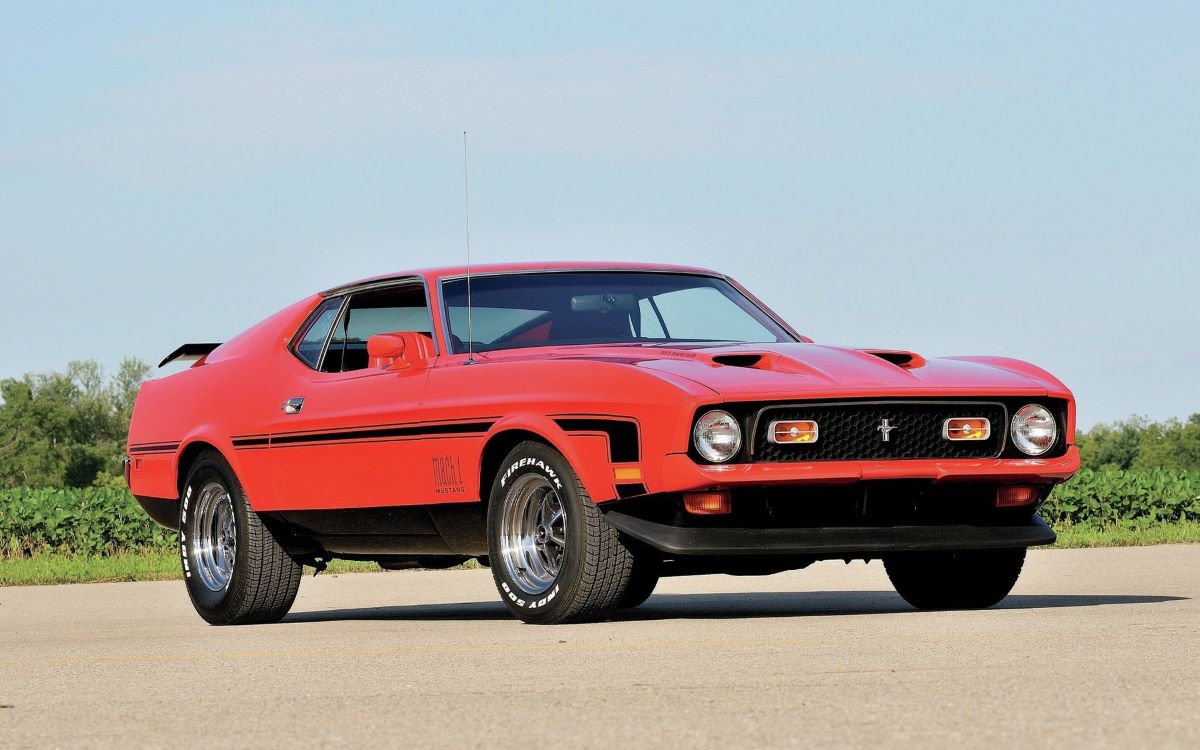
There’s no instant hit just a gradual buildup of power that feels traditional but slightly dated. In a world where even pickups and EVs deliver instantaneous torque, the Mach 1 can feel a step behind despite its performance credentials.
3. Nissan Z (2023)
The new Nissan Z promised a return to form for affordable sports cars, but its 3.0-liter twin-turbo V6 struggles with throttle lag. With 400 horsepower and 350 lb-ft of torque, the specs are impressive, yet the real-world experience tells another story.
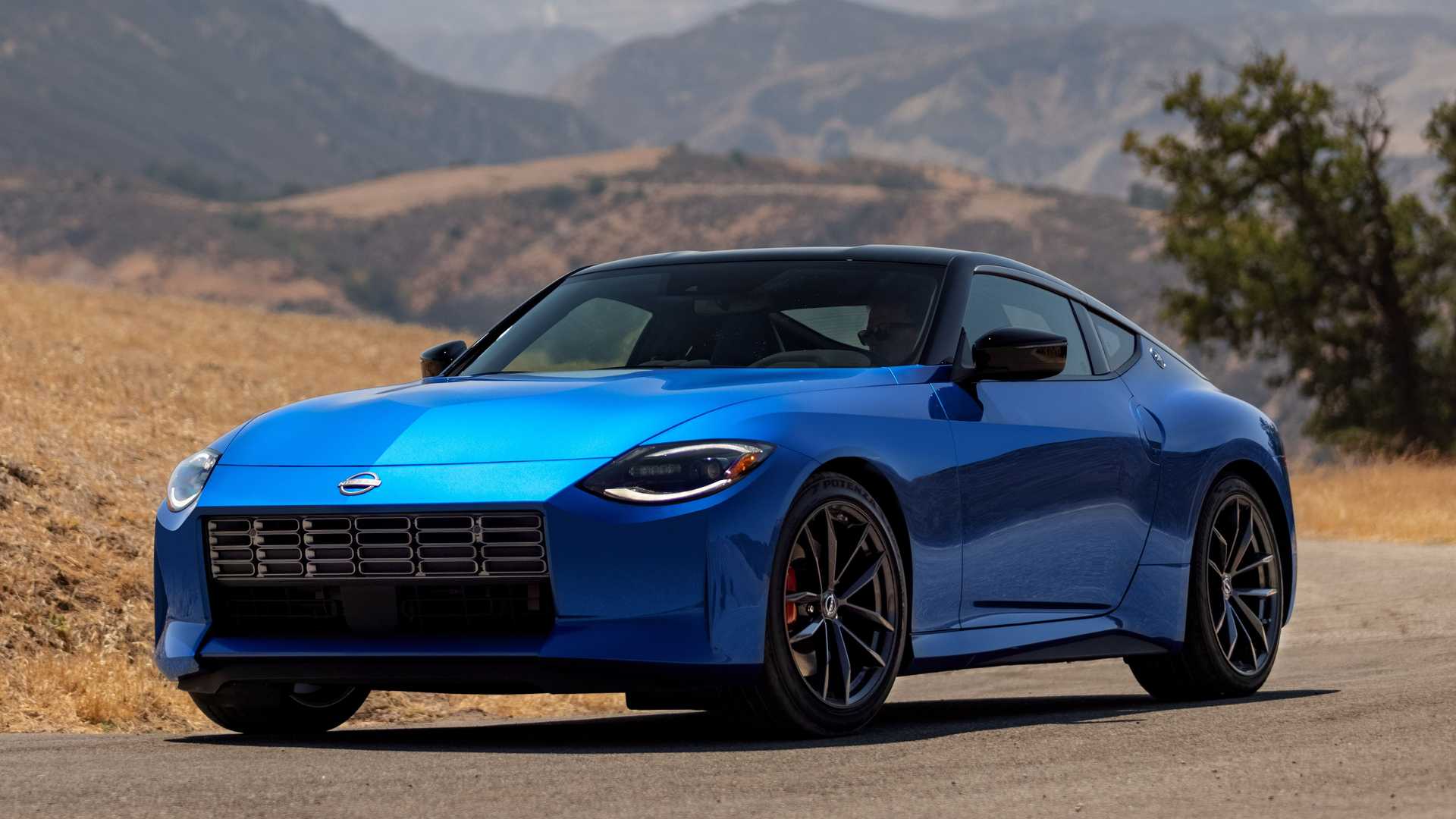
The turbo setup takes a second to breathe before unleashing power, creating a hesitation that dulls the excitement. For a car meant to be raw and engaging, that lack of immediacy takes away from the driving thrill.
4. Audi RS5
On paper, the Audi RS5 should deliver the instant thrust you’d expect from a twin-turbo V6 and all-wheel drive. However, in practice, it feels oddly muted at launch. Audi’s torque management system and conservative tuning make the car feel composed almost too composed.
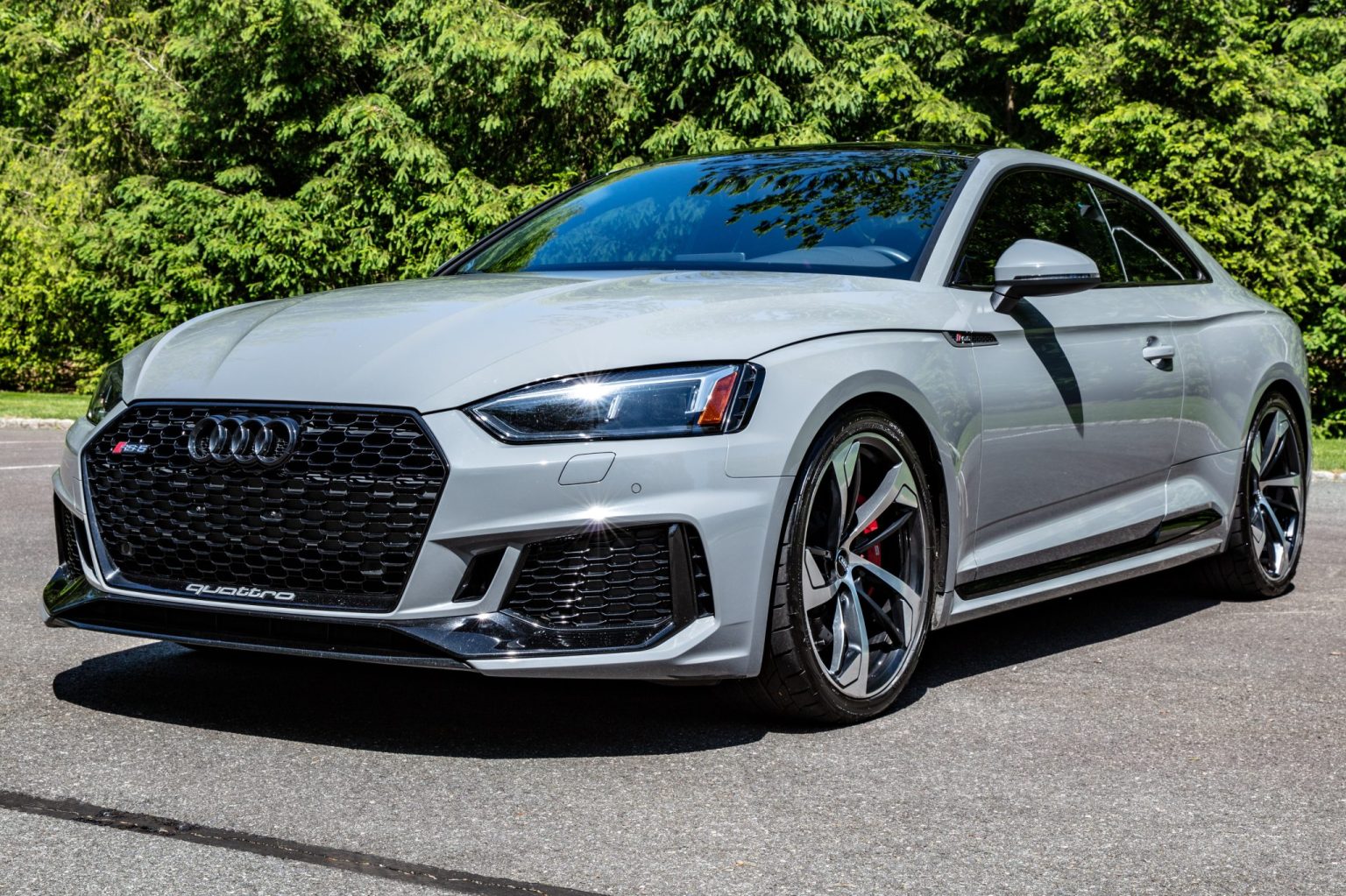
The 2.9-liter V6 produces strong mid-range torque, but there’s a slight delay between pedal input and response. While it’s a superb grand tourer, it lacks that punchy immediacy that defines true performance icons.
Audi reserves its coveted RS badge for only the highest-performance versions of its models, and the A5 is no exception. With the RennSport transformation, the elegant A5 fastback evolves into the exhilarating and powerful RS5.
While it retains the A5’s luxurious amenities and cutting-edge technology, the RS5 sets itself apart with its emphasis on speed, agility, and driving excitement.
For 2025, Audi has simplified the lineup by discontinuing the coupe version, leaving only the four-door Sportback model as this generation of the A5 and RS5 nears the end of its run.
Competing directly with performance heavyweights like the BMW M3, Hyundai Ioniq 5 N, and Ford Mustang Dark Horse, the RS5 continues to hold its own as a refined yet thrilling sport sedan.
For 2025, the RS5 brings a few updates, including the discontinuation of the coupe and the addition of integrated garage door opener buttons in the rearview mirror.
The RS5’s twin-turbocharged engine delivers blistering acceleration, and its large brakes ensure confident stopping power.
A performance-tuned version of Audi’s legendary Quattro all-wheel-drive system gives the RS5 exceptional grip and stability, making it both precise and visceral on the road. It’s a car that can thrill on winding roads yet remain composed and comfortable in everyday use.
In many ways, the 2025 Audi RS5 Sportback is the ideal single-car solution for drivers who want one vehicle capable of doing it all, luxury, practicality, and exhilarating performance in one sleek package.
Under the hood, the RS5 sets itself apart from the standard S5. While the S5 uses a turbocharged 3.0-liter V6 producing 349 horsepower and 369 lb-ft of torque, the RS5 features a smaller but more potent 2.9-liter twin-turbocharged V6 generating 444 horsepower and 442 lb-ft of torque.
Power is sent through an eight-speed automatic transmission to the sport-tuned Quattro AWD system, ensuring remarkable traction, balance, and responsiveness.
The result is a sport sedan that embodies Audi’s mastery of performance engineering while maintaining the refinement and comfort expected of a true luxury vehicle.
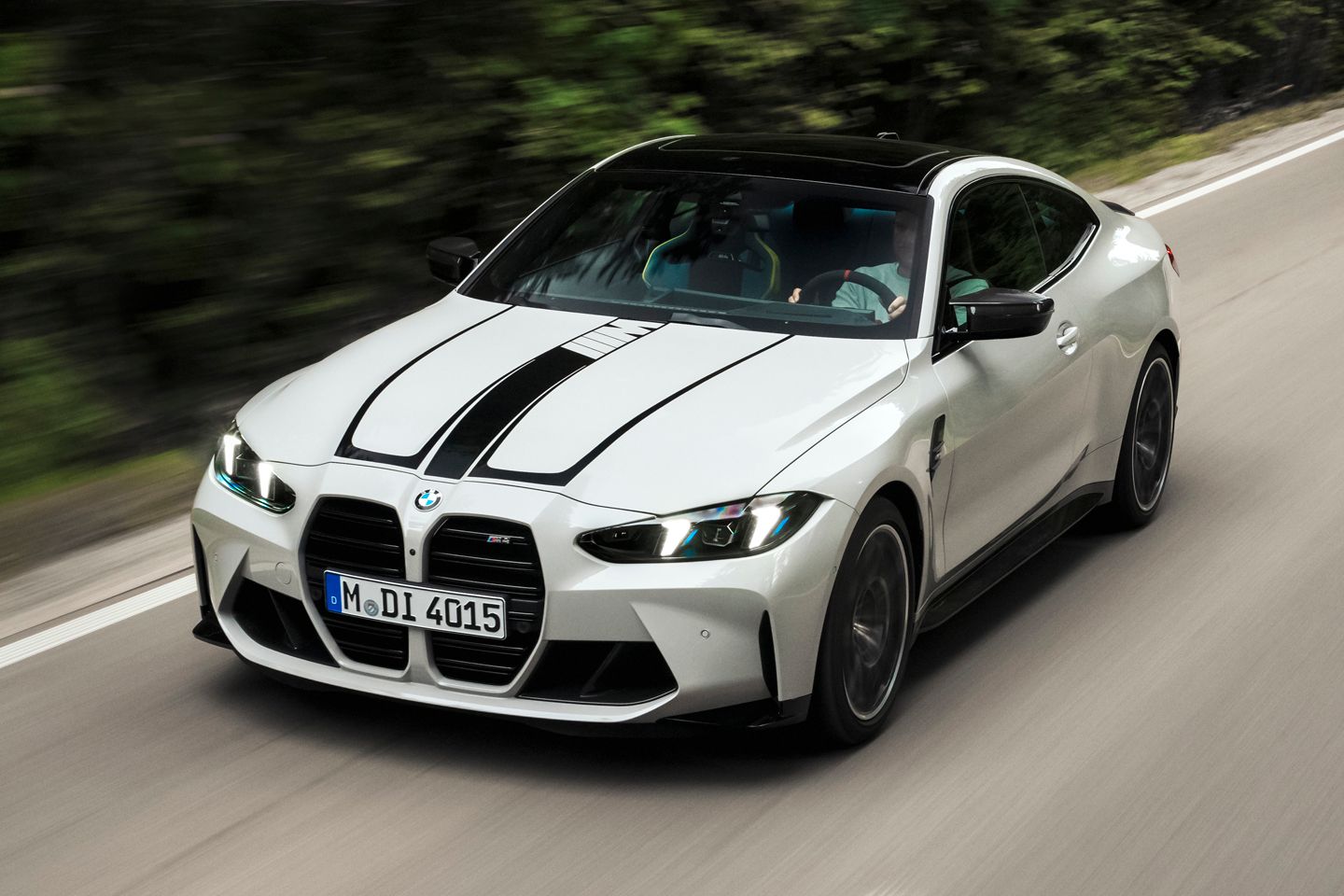
5. BMW M4 Competition
The BMW M4 Competition is brutally fast once it gets going, but it doesn’t deliver the kind of instant torque hit that its looks and price suggest.
Its 3.0-liter twin-turbo inline-six puts down 503 horsepower, yet turbo lag remains noticeable. BMW’s engineers have fine-tuned power delivery for predictability rather than shock value, which makes the M4 more controllable but less memorable.
In the age of instant electric torque, it feels like a car built for a different era of performance philosophy.
Instant torque isn’t just a gimmick it’s reshaping how we experience performance. Electric and hybrid systems have fundamentally changed the rules, delivering acceleration that internal combustion simply can’t match in immediacy.
Cars like the Tesla Model S Plaid, Porsche Taycan Turbo S, and Lucid Air Sapphire prove that performance and technology can coexist without compromise.
Meanwhile, traditional sports cars like the Supra and M4 Competition remind us that while their engines still sound glorious, the lack of instant torque can make them feel a step behind in the modern performance race.
As the automotive world continues its shift toward electrification, the difference between these two camps will only grow more obvious.
The cars that get instant torque right aren’t just faster they redefine what performance feels like. And once you experience that lightning-fast response, it’s hard to forget.