Electric vehicles (EVs) have long been praised for their eco-friendly nature and lower operating costs, but in recent years, they’ve also become synonymous with jaw-dropping performance.
The instant torque of an electric motor has completely changed the way we think about acceleration. From affordable compacts to hyper-expensive luxury rockets, EVs have proven that speed and sustainability can coexist.
For American drivers who value quick launches, the following 10 electric vehicles deliver shockingly good acceleration that can rival or even surpass traditional performance cars.
1. Tesla Model S Plaid
When it comes to straight-line speed, few vehicles can compete with the Tesla Model S Plaid.
This all-wheel-drive electric sedan is equipped with a tri-motor setup producing over 1,000 horsepower, enabling it to rocket from 0 to 60 mph in just under 2 seconds a number once reserved for hypercars costing millions.
Beyond the raw acceleration, it’s still a practical luxury sedan with seating for five, a large trunk, and cutting-edge tech like Tesla’s Autopilot and massive infotainment display.
For drivers in the U.S. looking to own a car that can humiliate Ferraris while still doing grocery runs, the Model S Plaid is a mind-bending option.
The 2025 Tesla Model S Plaid continues to push the boundaries of all-electric performance, luxury, and cutting-edge technology. With a starting MSRP of $94,990, this high-performance sedan offers an all-wheel-drive system powered by a fully electric drivetrain.
Equipped with a tri-motor setup, the Model S Plaid produces an astounding 1,020 horsepower and 1,050 lb-ft of torque, delivering instant acceleration and remarkable responsiveness. Its automatic transmission ensures seamless power delivery, making every drive smooth yet exhilarating.
The Model S Plaid features a 100 kWh lithium-ion battery, offering an impressive all-electric range of up to 320 miles on a single charge. Thanks to its fast-charging capabilities, it can recharge in just 0.8 hours, providing exceptional convenience for long-distance travel.
Efficiency remains a hallmark of Tesla’s design, with an EPA-equivalent fuel economy rating of 108 MPGe in the city, 99 MPGe on the highway, and a combined 104 MPGe.
When it comes to exterior dimensions, the Model S Plaid measures 197.7 inches in length, 78.2 inches in width, and 56.3 inches in height, with a wheelbase of 116.5 inches.
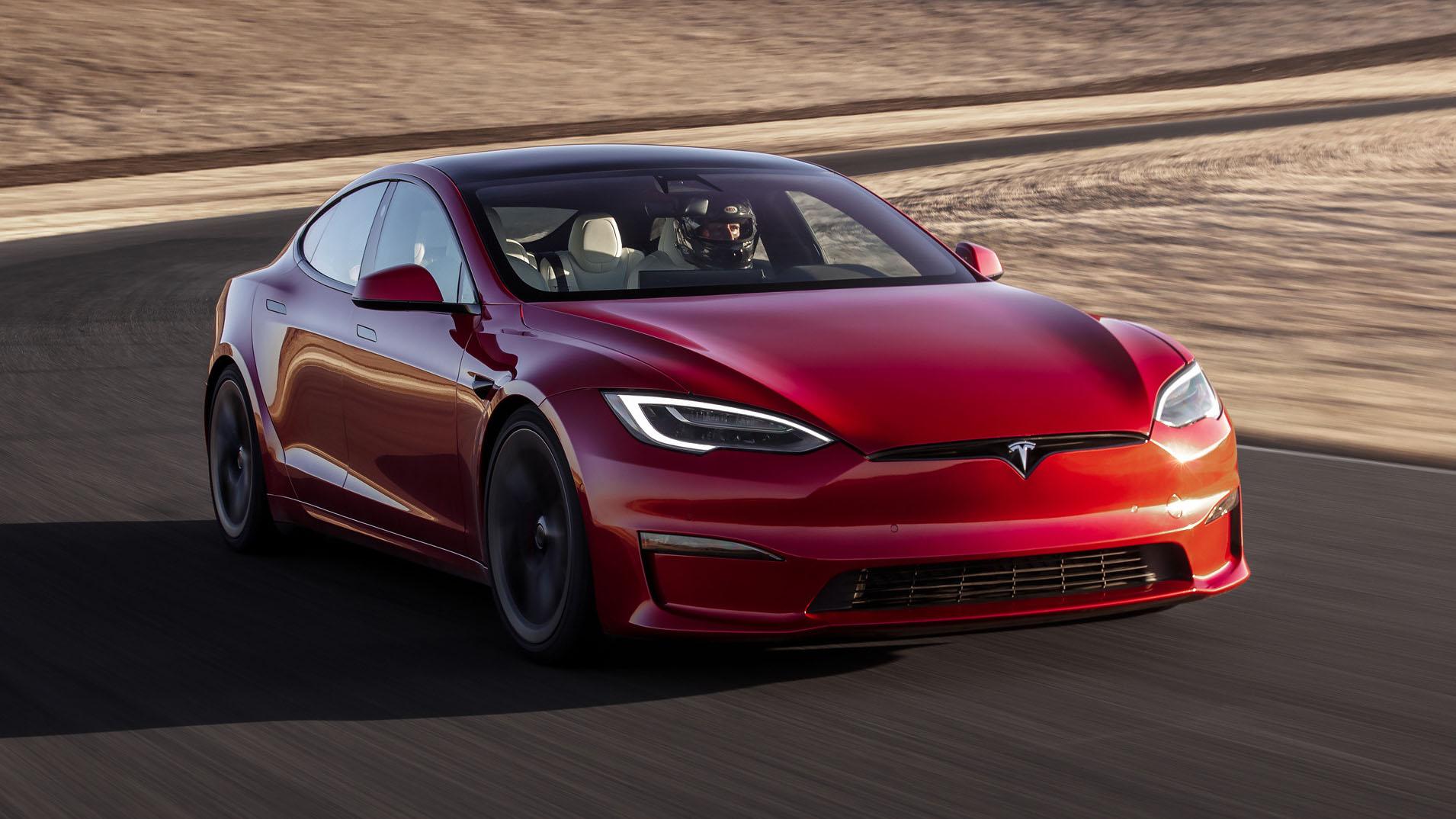
The ground clearance ranges between 4.6 inches and 6.2 inches, while the car’s curb weight stands at 4,776 pounds. Its sleek aerodynamic shape not only enhances performance but also contributes to its refined appearance. The trunk offers 25 cubic feet of cargo space, balancing practicality with its sporty nature.
Inside, the cabin comfortably seats five passengers, offering ample space and premium comfort. Front passengers enjoy 39.7 inches of headroom, 58.4 inches of shoulder room, 54.8 inches of hip room, and 42.4 inches of legroom.
Rear passengers benefit from 38.1 inches of headroom, 55.1 inches of shoulder room, 50.3 inches of hip room, and 35.5 inches of legroom. Both the front and rear seats are upholstered in high-quality leatherette, with heating available for all seats and cooling functionality for the front seats.
The 2025 Tesla Model S Plaid comes equipped with 19 x 9.5-inch front and 19 x 10.5-inch rear gray aluminum wheels, adding to its bold and athletic stance.
Tesla backs the Model S Plaid with comprehensive warranty coverage, including a 48-month/50,000-mile basic warranty, a 96-month/unlimited powertrain warranty, a 144-month/unlimited corrosion perforation warranty, and roadside assistance for 48 months or 50,000 miles.
The traction battery is protected under a separate 96-month/150,000-mile warranty. With its blend of thrilling performance, luxury comfort, and advanced technology, the 2025 Tesla Model S Plaid stands as a benchmark for electric performance sedans.
Also Read: 12 Cars That Shock Drivers With Unstoppable Reliability
2. Lucid Air Sapphire
The Lucid Air Sapphire represents America’s most ambitious EV challenger to Tesla’s performance crown. With three motors delivering a staggering 1,234 horsepower, this luxury sedan can sprint from 0 to 60 mph in 1.89 seconds and reach the quarter-mile in under 9 seconds.
While the numbers sound outrageous, what’s equally impressive is how refined and composed the Sapphire feels at speed.
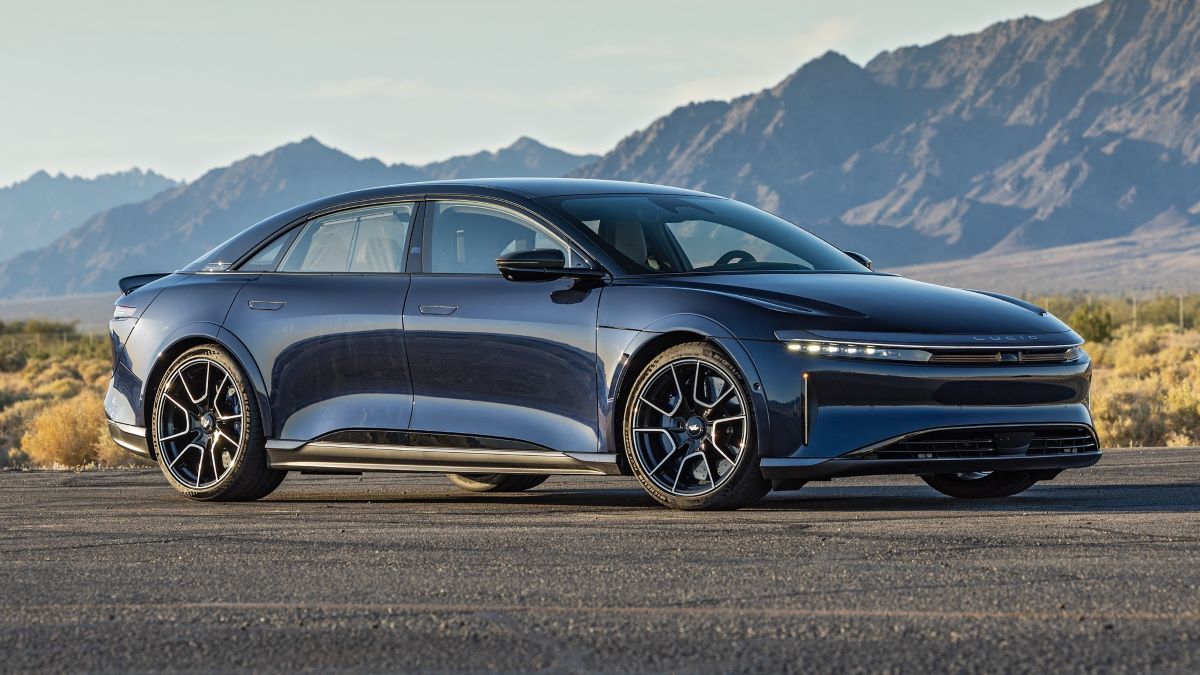
Lucid engineered it to deliver power without drama its acceleration is brutally smooth and controlled.
The Air Sapphire combines hypercar performance with an ultra-luxurious interior, pushing the boundaries of what American EV engineering can achieve.
3. Porsche Taycan Turbo S
Porsche may be known for its gas-powered 911, but the Taycan Turbo S proves that the brand’s electric future is just as exciting.
This sleek, four-door sports EV hits 60 mph in 2.4 seconds, delivering a gut-punch of acceleration that feels endless thanks to Porsche’s innovative two-speed rear transmission. It’s not just about the numbers, though.
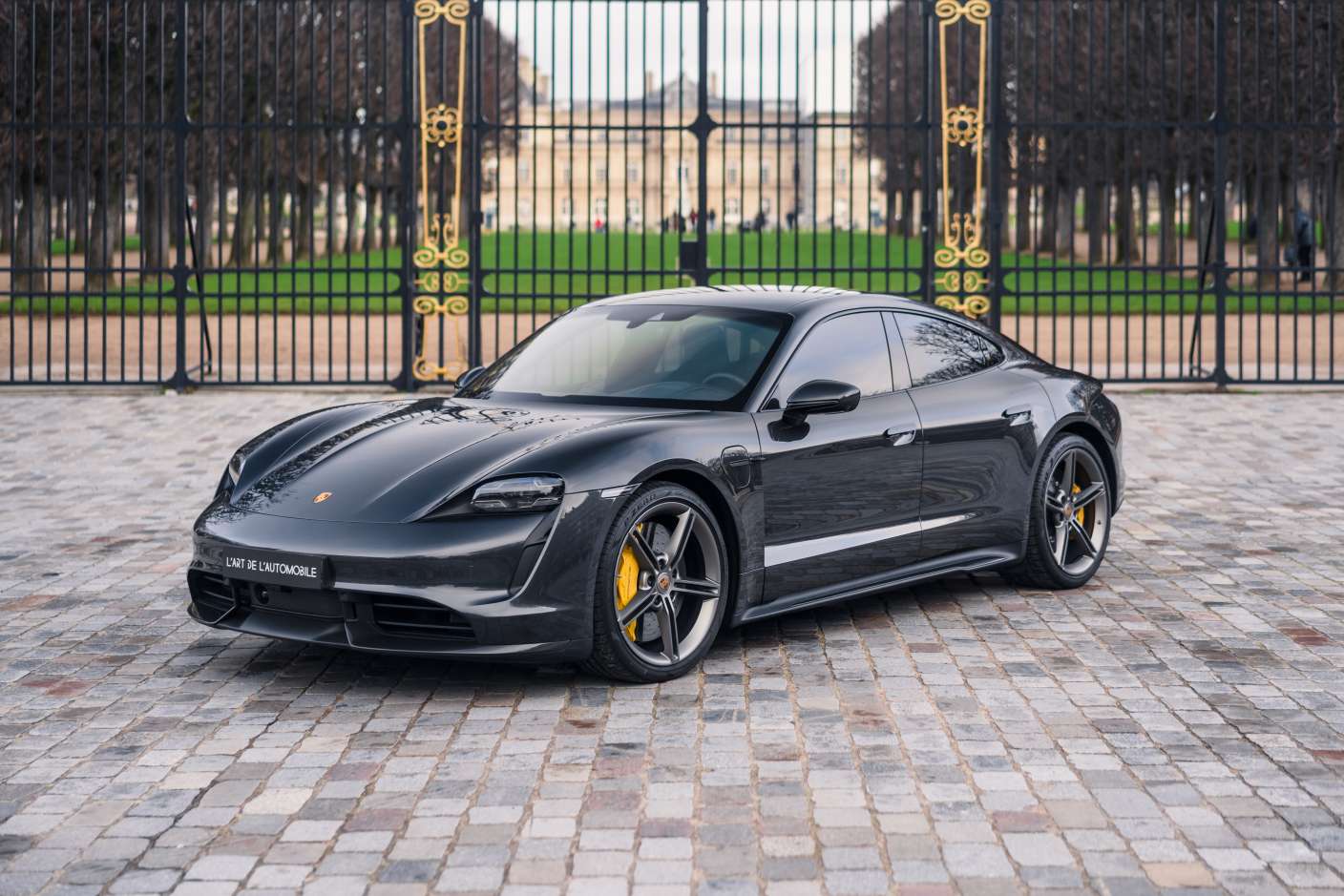
The Taycan’s handling, steering precision, and driving engagement make it one of the most rewarding EVs to drive.
For U.S. buyers who want a driver’s car that also happens to outrun nearly anything on the highway, the Taycan Turbo S fits the bill perfectly.
4. Tesla Model 3 Performance
The Model 3 Performance might not grab headlines like its big brother, the Model S Plaid, but its acceleration is still nothing short of shocking for a compact sedan.
With dual motors and all-wheel drive, it can go from 0 to 60 mph in 3.1 seconds. What makes the Model 3 Performance so special is its accessibility it delivers supercar-level performance at a relatively affordable price compared to European rivals.
Combined with Tesla’s Supercharger network and a minimalist but tech-packed interior, it remains one of the best performance bargains in the EV world.
The 2025 Tesla Model 3 Performance delivers thrilling acceleration, though its official power ratings vary slightly depending on the market. In Europe, Tesla lists the dual-motor Performance at 460bhp, while in the U.S., the same hardware is rated at 510bhp.
Regardless of the exact figure, the result is blistering acceleration, with 0-62 mph taking just 3.1 seconds. While this doesn’t quite reach the extremes of the Model S Plaid, it’s enough to embarrass many conventional sports cars.
Powering the Model 3 Performance is a 78 kWh battery, offering a WLTP-rated driving range of 328 miles, a strong figure considering the car’s potent performance.
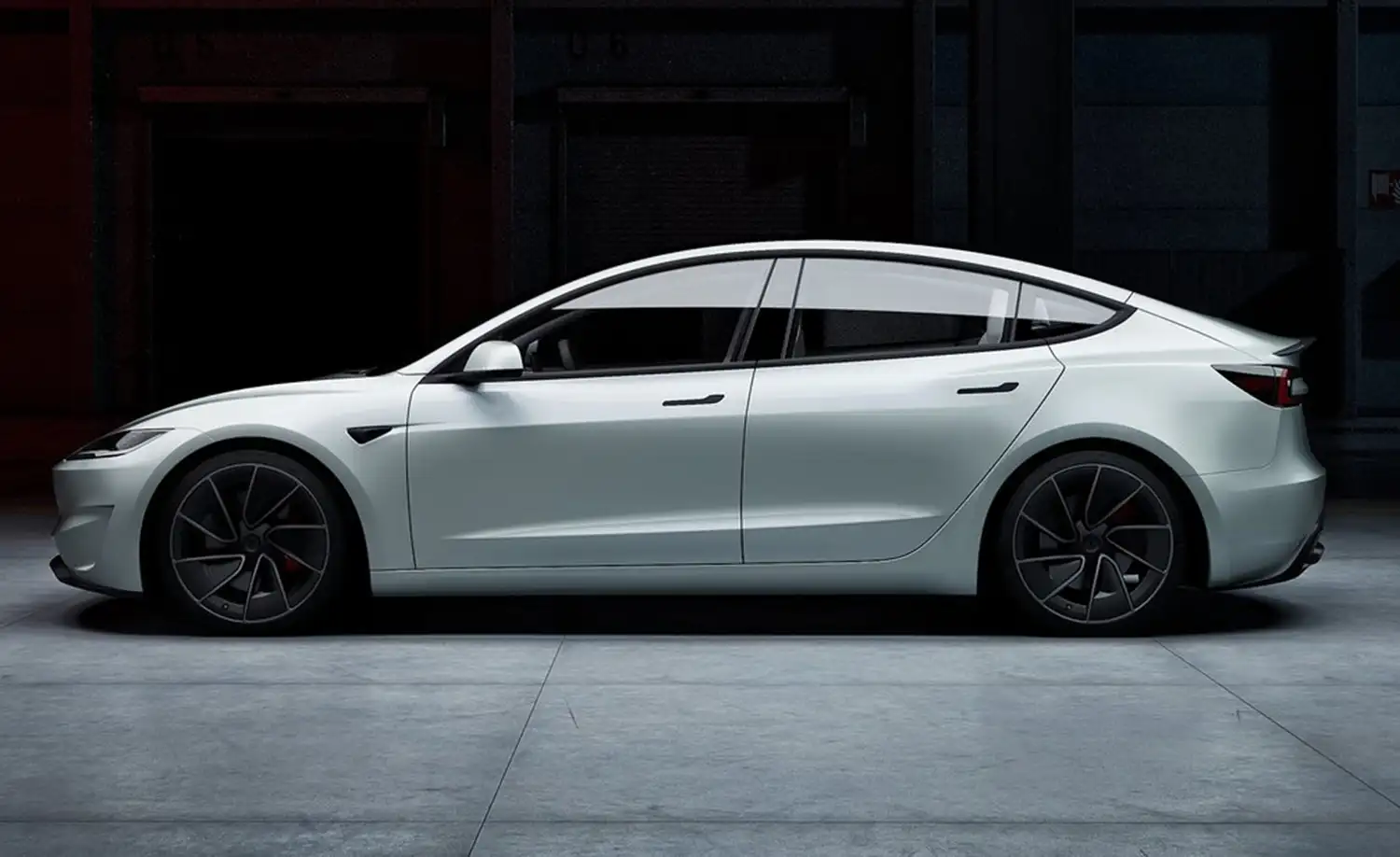
Despite weighing in at 1,851 kg, the car feels surprisingly nimble in a straight line, providing a sense of eagerness and responsiveness typical of Tesla’s performance models.
Inside, the cabin maintains Tesla’s minimalist approach, with a single central touchscreen controlling nearly every function. Updates to the 2025 model include a revised nose, improved sound insulation, and higher-quality cabin materials, making the interior far more refined and comfortable than pre-facelift versions.
On the road, the Model 3 Performance shines in acceleration, its true standout trait. Even in the more subdued Chill mode, the car is quick, but switching to Insane mode unleashes near-instant, neck-snapping force.
The novelty for 2025, however, is how the car handles more dynamic driving situations. Adaptive dampers help smooth out bumpy roads, and Sport mode tightens body control noticeably, while staggered tire widths improve front-end grip.
Still, when pushed hard on tight, winding roads, the car exhibits a hint of nervousness, and the steering, though fast, lacks depth and progressive feedback.
Braking remains an area of concern. The Tesla delivers ample stopping power, but the pedal feel can be inconsistent and slightly springy, which undermines driver confidence when approaching corners or driving at speed.
Overall, the 2025 Model 3 Performance combines mind-bending straight-line speed with a refined cabin, but some handling and braking quirks mean it doesn’t fully match the engagement of traditional performance sedans.
5. Kia EV6 GT
Kia has transformed its brand image over the last decade, and the EV6 GT is proof that Korean engineering can go toe-to-toe with the best. Packing 576 horsepower from dual electric motors, this all-electric crossover blasts from 0 to 60 mph in 3.4 seconds.
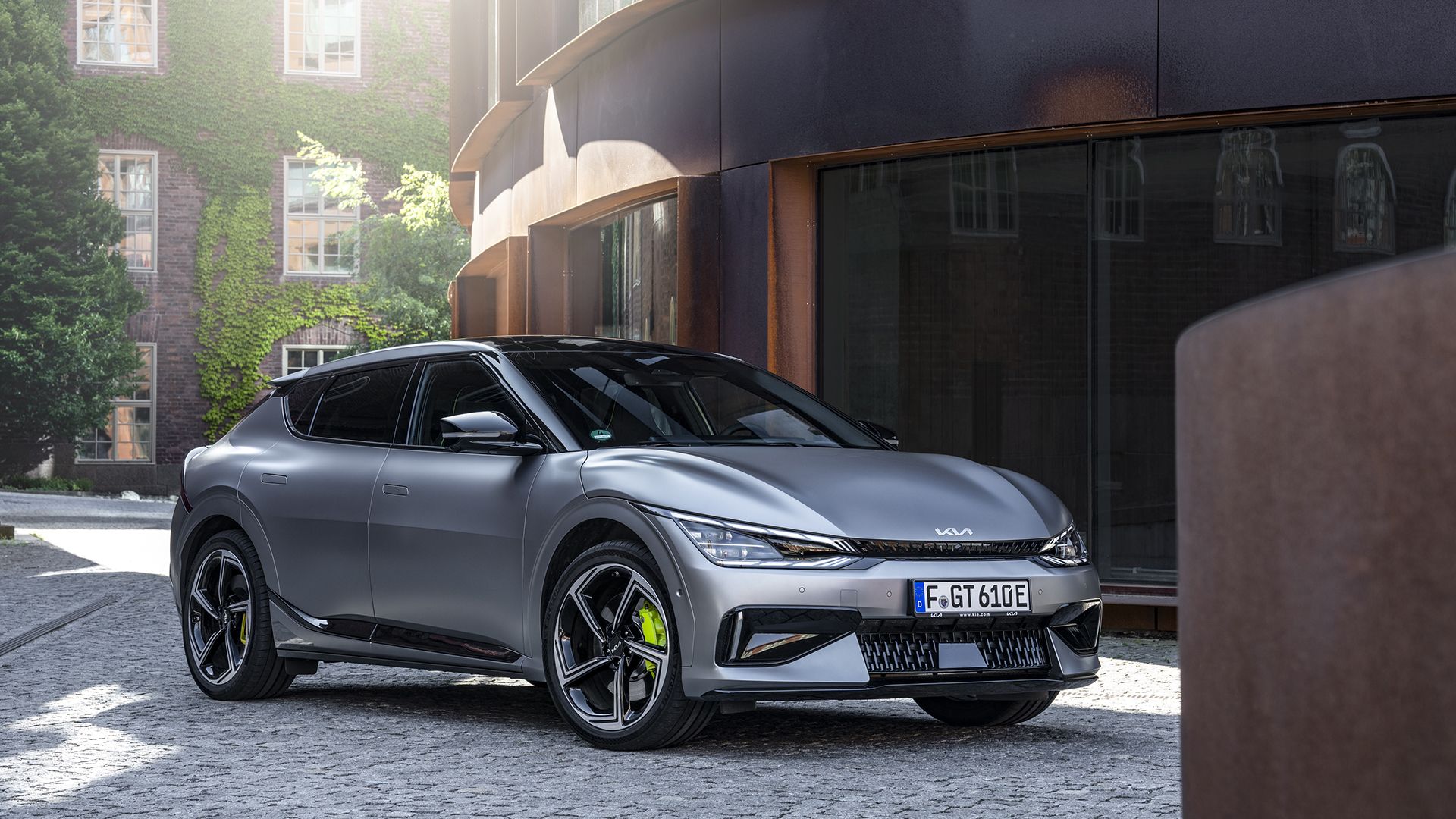
The EV6 GT doesn’t just rely on raw speed it also offers a thrilling driving experience, with adaptive suspension, rear-biased power delivery, and even a dedicated “Drift Mode.”
For American enthusiasts who want a family-friendly EV with serious performance, the EV6 GT hits a sweet spot between practicality and exhilaration.
6. Rivian R1T
Pickup trucks and quick acceleration rarely go hand in hand, but the Rivian R1T changes that completely.
This all-electric truck from an American startup packs up to 835 horsepower, allowing it to hit 60 mph in 3 seconds flat astonishing for a vehicle that weighs over 7,000 pounds.

Beyond its incredible speed, the R1T offers rugged off-road capability, clever storage solutions like the gear tunnel, and adventure-ready features such as adjustable air suspension and a camp kitchen option.
The R1T redefines what a truck can be: fast, capable, and eco-conscious all at once.
7. Audi RS e-tron GT
The Audi RS e-tron GT shares its platform with the Porsche Taycan, but it brings its own unique flavor to electric performance. Its dual-motor setup produces 637 horsepower, enabling a 0–60 mph time of 3.1 seconds.
The RS e-tron GT combines traditional Audi refinement with futuristic design and exhilarating power. Inside, the car feels like a high-end luxury cruiser, but a press of the accelerator transforms it into a missile.
For those who want both blistering acceleration and a touch of German sophistication, the RS e-tron GT offers an ideal blend.
The 2025 Audi RS E-Tron GT shares much of its underpinnings with the Porsche Taycan, though Audi doesn’t advertise the connection as prominently. Both EVs are built on the same platform and share key mechanicals, including an innovative active suspension system available on this latest model.
The setup pairs two-chamber, two-valve air springs with hydraulically managed dampers, eliminating the need for traditional anti-roll bars. This system allows the RS E-Tron GT to enter what lead engineer Stephan Reil calls “helicopter mode,” where the car leans forward onto its front tires under acceleration and shifts back on its haunches when braking, mimicking the motions of a helicopter while providing dramatic visual cues.
The suspension also minimizes body roll in corners, maintains a flat stance through tight turns, and can raise the body several inches to ease ingress and egress from the low-slung seats.
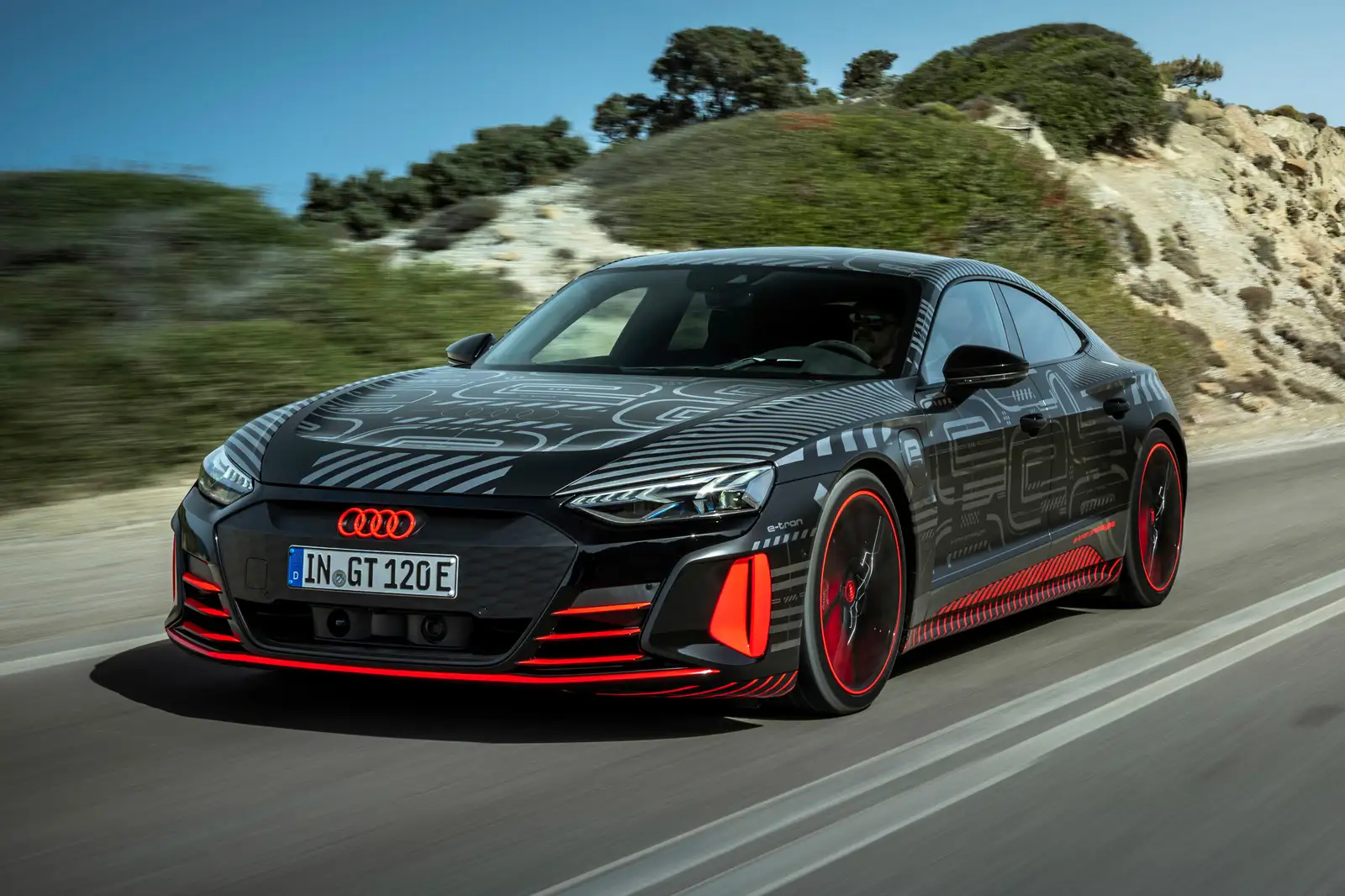
Beyond the suspension, the 2025 RS E-Tron GT represents a significant mechanical evolution for Audi, positioning itself as the brand’s most powerful and fastest-accelerating vehicle to date.
While the body, interior, chassis, and much of the sheetmetal carry over, substantial updates, including a redesigned nose and tail, a new rear motor, the active suspension system, and a revised two-chamber, two-valve air suspension replacing the previous three-chamber setup, make this effectively a new-generation car.
Additional improvements include a revised steering ratio, enhancements to the front electric motor, and a larger, more efficient battery. Peak horsepower in Launch Control mode now hits 912 hp, up from 637 hp, while gross battery capacity increases from 93.4 kWh to 105 kWh (94 kWh net).
Maximum DC charging speeds rise by 50 kW to 320 kW, and range improves by 29 miles to 278 miles. The standard S E-Tron GT sees similar enhancements, with peak power rising to 670 hp and range extending to 300 miles.
There are caveats to these figures, of course. Outside of Launch Control, the RS E-Tron GT delivers a still-impressive 818 hp. A new push-to-pass button provides a temporary 94 hp boost for 10 seconds, bringing the total to 912 hp, though it follows a different acceleration map than Launch Control mode.
While the headline numbers grab attention, many of the most meaningful updates improve day-to-day usability. Thanks to revised battery chemistry, a more efficient cooling circuit, and upgraded motors, the 2025 RS E-Tron GT can sustain higher charging rates for longer durations, reducing the 10–80 percent DC fast-charge time to a claimed 18 minutes.
Energy delivery is also optimized, supporting performance under extreme acceleration, while peak regenerative braking increases by 110 kW to 400 kW, recapturing more energy during normal driving and further enhancing range.
8. Ford Mustang Mach-E GT Performance Edition
Ford’s Mustang Mach-E GT Performance Edition might have drawn skepticism from purists, but it earns its Mustang badge through sheer performance.
Delivering 480 horsepower and 634 lb-ft of torque, it can hit 60 mph in 3.5 seconds, making it faster than many traditional V8 Mustangs.
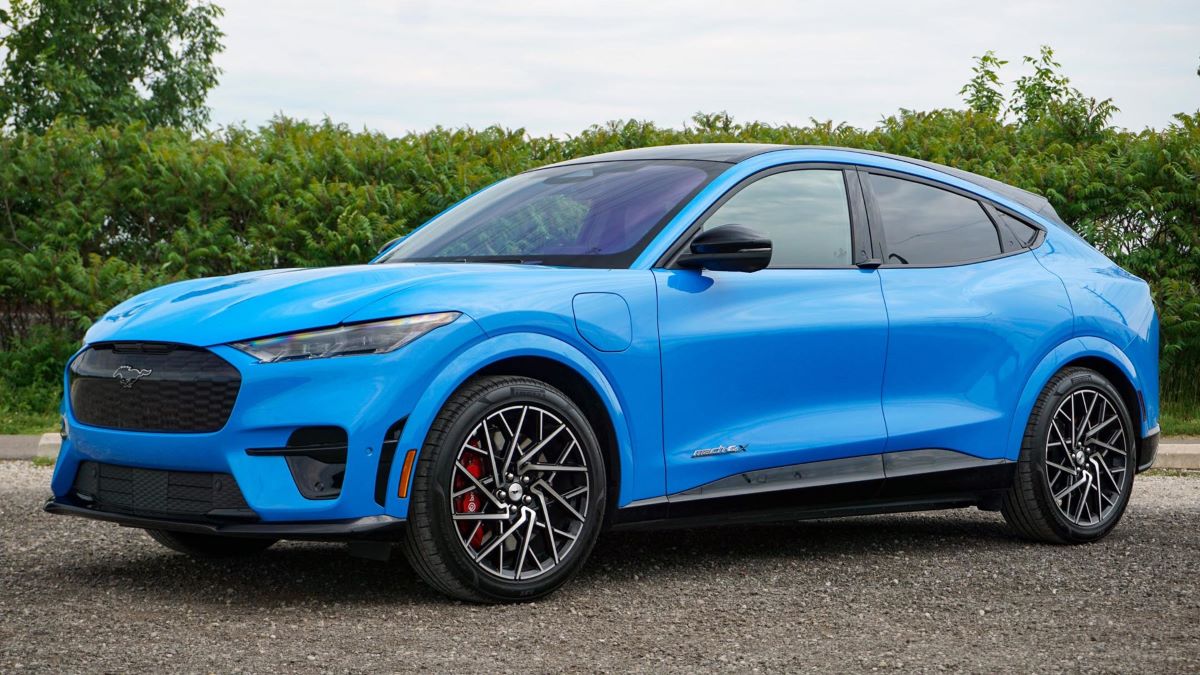
The Mach-E GT also comes with upgraded brakes, sportier suspension tuning, and an available MagneRide damping system for precise control. It’s a statement from Ford that electric doesn’t mean boring and that American muscle can evolve without losing its bite.
9. BMW i4 M50
The BMW i4 M50 is proof that the German automaker’s M division knows how to handle electrification. This sporty sedan uses dual motors to deliver 536 horsepower and a 0–60 mph time of 3.7 seconds.
What sets the i4 M50 apart is how natural it feels to drive BMW has preserved much of the brand’s trademark steering feedback and chassis balance.
It’s also one of the most refined EVs in its class, offering a quiet, comfortable ride for daily use while still being brutally quick when you want it to be.
When it comes to discussions about the electric vehicle transition, we often cover climate, energy, infrastructure, manufacturing jobs, the battery supply chain, and more.
But sometimes, it’s refreshing to step away from all that Serious Business and focus on an EV that simply excels. The BMW i4 M50 is one such car, a stellar example of the electric sports sedan segment. Alongside the i5 and iX, it demonstrates that while not every automaker may thrive in the electrified era, BMW is well-positioned to do so.
Officially called the BMW i4 Gran Coupe, the i4 M50 is essentially an all-electric 3 Series. Its main distinction from the 4 Series Gran Coupe lies in the hatchback body and minor dimensional changes.
Built on BMW’s Cluster Architecture (CLAR) platform, which underpins the 3 Series and various gasoline and hybrid BMWs, the i4 integrates batteries into the floor, proving that a great EV doesn’t necessarily require a dedicated EV platform.
The i4 comes in several variants: the i4 eDrive40 with 335 hp, rear-wheel drive, and up to 318 miles of range; the dual-motor i4 xDrive40 with 396 hp and up to 287 miles; and the range-topping i4 M50, with dual-motor all-wheel drive producing 536 hp. A fourth variant, the entry-level i4 eDrive35, is expected in the future.
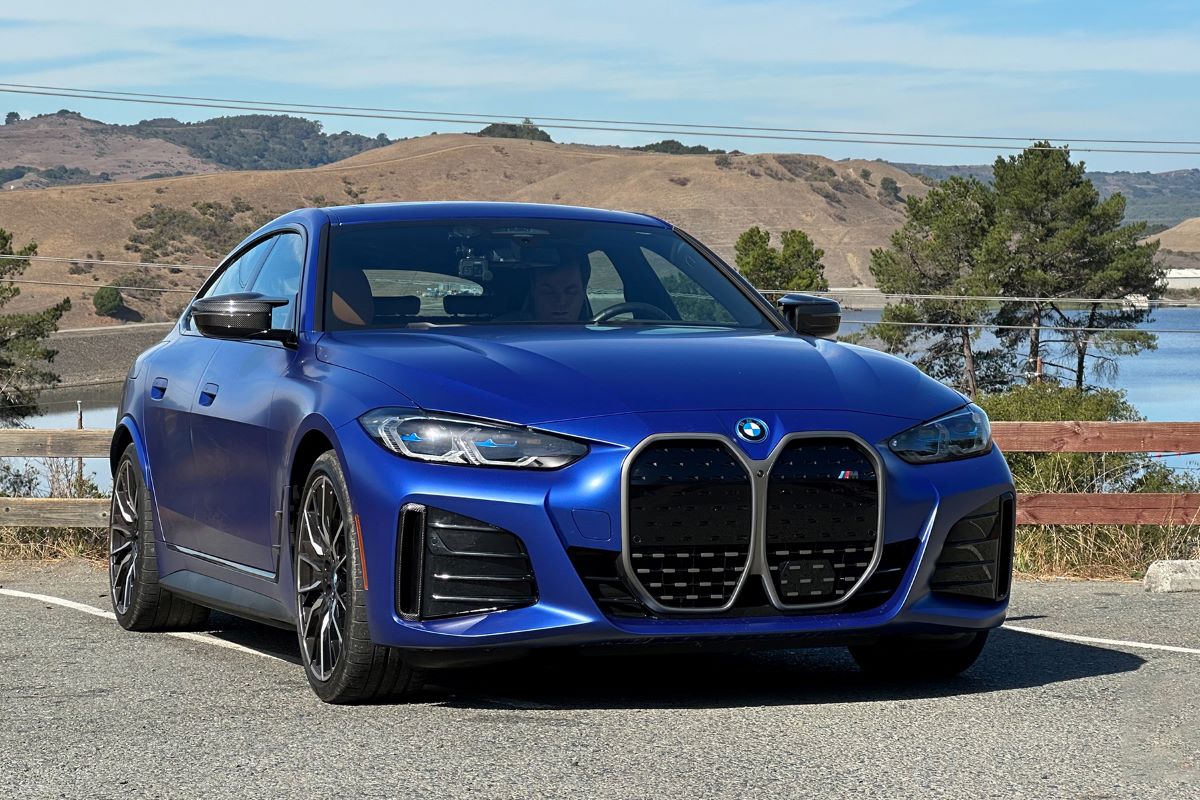
While the base i4 uses a 68.7-kWh battery, the higher-end models, including the M50, feature an 81-kWh unit. Wheel size affects range, and my 20-inch M50 tester delivered up to 245 miles per full charge, slightly exceeding the 227-mile EPA estimate.
Performance is where the i4 M50 shines. It accelerates from 0 to 60 mph in just 3.7 seconds, putting it in near-M3 territory, and makes a strong case for EVs’ superior efficiency and acceleration. During testing, the Tesla Model 3 Performance came to mind; though less powerful and cheaper, it is, on paper, slightly quicker, highlighting the competitive EV landscape.
Beyond sheer speed, the i4 M50 is an absolute blast to drive. Its handling is sharp, steering feedback is more precise than in most EVs, and it remains composed despite a curb weight near 5,000 pounds.
Sport Mode unleashes the full 536 hp, providing an addictive, exhilarating experience. Even on Comfort mode, the i4 delivers a smooth, balanced, and comfortable ride, blending sports car dynamics with the practicality of a sedan. Its lower center of gravity keeps the drive engaging, and the car never feels as heavy as its weight suggests.
Technology in the i4 is equally impressive. Voice-based controls work well, route planning is efficient, and the wide panoramic display is intuitive. The interface, despite being packed with advanced features, remains accessible thanks to a Google-like search function.
All i4 models, except the base variant, support up to 205 kW DC fast charging. During testing at a 250 kW Tesla Supercharger Magic Dock, the M50 went from 35% to 80%, adding roughly 100 miles of range, in 27 minutes, enough time to handle a quick errand and return to the road. The BMW i4 M50 proves that an EV can be fast, practical, and a joy to drive, cementing BMW’s strength in the electric era.
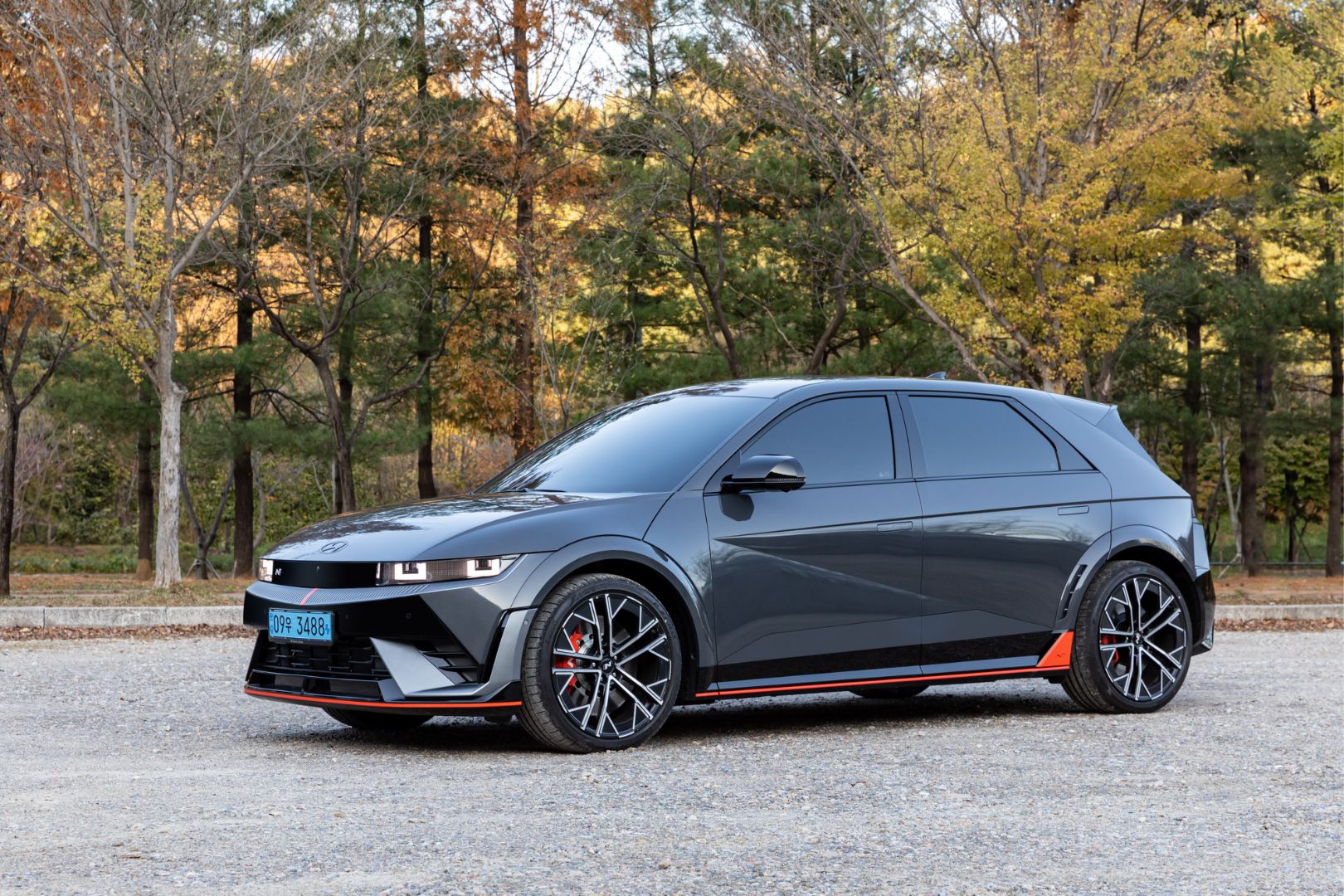
10. Hyundai Ioniq 5 N
The Hyundai Ioniq 5 N is a game-changer in the performance EV world. With 641 horsepower and an advanced dual-motor system, it can rocket to 60 mph in 3.2 seconds when “N Grin Boost” mode is engaged.
What’s remarkable about the Ioniq 5 N is how it channels the spirit of a rally car Hyundai’s engineers have tuned it for playfulness and control, with simulated gear shifts, active sound design, and drift-friendly handling.
It’s proof that electrification doesn’t have to mean losing character. For American drivers who love hot hatches and track days, the Ioniq 5 N is one of the most exciting EVs available.
Electric cars have shattered the notion that performance requires gasoline. Thanks to instant torque, sophisticated traction systems, and cutting-edge battery technology, today’s EVs can out-accelerate some of the world’s best sports cars all while offering silent operation and zero tailpipe emissions.
All Hyundai Ioniq 5 N models come equipped with a dual-motor, all-wheel-drive setup that delivers 601 horsepower under normal conditions. When the N Grin Boost feature is activated, the system can temporarily push output to 641 horsepower
The AWD configuration allows drivers to strategically distribute power between the front and rear wheels, and there’s even a dedicated drift mode for confident, controlled slides.
The car offers four primary drive modes, Eco, Normal, Sport, and N, which adjust steering weight, damping, and throttle responsiveness. Additionally, Endurance and Sprint modes let drivers either conserve battery life or unleash full performance, ideal for drag racing or qualifying runs.
To emulate the feel of a traditional high-performance car with a multi-speed automatic, Hyundai has incorporated a simulated gearshift feature. When using the steering-wheel-mounted paddles, the system mimics the sensation of shifting gears, though this feature can be toggled on or off.
During initial testing on a racing circuit in South Korea, the Ioniq 5 N demonstrated impressive straight-line stability during full-throttle launches and maintained composure under aggressive ABS engagement on mixed-traction surfaces.
Its handling remains balanced and predictable when needed, while drift mode enables controlled oversteer for more spirited driving. On regular roads, the Ioniq 5 N can feel as comfortable and composed as a standard Ioniq 5, but when dialed into its sportiest settings, it transforms into a sharp, corner-conquering machine.
For U.S. buyers, the choice has never been broader, whether you want a sleek luxury sedan, a sporty crossover, or even a lightning-fast pickup.
As battery tech continues to evolve, we’re entering an era where 0–60 mph times under three seconds might become the norm rather than the exception. The only real challenge for drivers will be keeping their foot off the accelerator long enough to enjoy the ride.