Driving and parking in busy cities can often be a stressful experience, with crowded streets and limited space making even short trips challenging. Luckily, carmakers have created compact, agile, and often electric vehicles that make city life easier.
From stylish retro-inspired models to quirky two-seaters and versatile mini crossovers, today’s urban cars are designed to simplify city driving. In this guide, we highlight 8 cars that make parking in big cities easy, featuring the Honda e with its tight turning circle, the Renault Twizy with its playful compact size, and the Fiat 500 with its city-friendly footprint.
These cars combine clever design, smart technology, and easy maneuverability to make everyday commutes less stressful and more enjoyable. Whether you want efficiency, style, or just a fun city ride, these models offer practical solutions for urban living.
1. Honda e: The Compact Electric Marvel for Urban Living
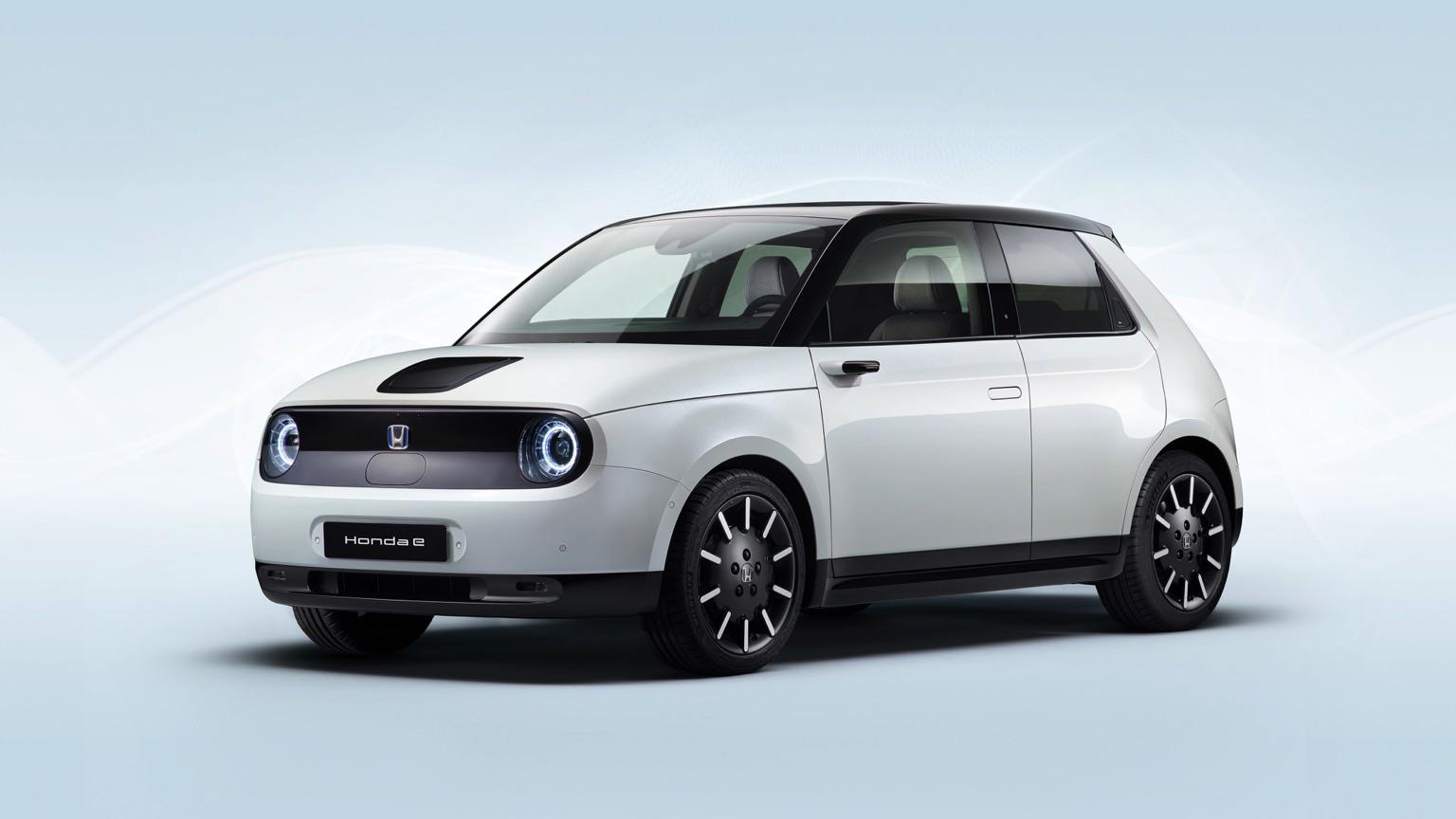
The Honda e stands as a remarkable example of compact innovation in the electric vehicle (EV) world. Inspired by the Urban EV Concept, this all-electric hatchback combines nostalgic design with modern technology.
With its exceptional agility, featuring a 4.3-metre turning circle that is tighter than a London black cab, it is perfectly suited for busy city streets. Honda created the e not as a long-range Tesla rival but as a stylish and efficient city companion designed for short commutes and easy maneuverability.
The Honda e blends retro aesthetics with forward-thinking design. Its styling takes inspiration from classic cars while incorporating modern features.
The car’s proportions are compact, similar to a slightly larger Fiat 500, making it ideal for use in crowded urban environments. Instead of traditional wing mirrors, the Honda e uses side cameras that reduce width and improve aerodynamics, giving it a sleek, contemporary appearance.
Inside, the car feels practical yet sophisticated. The luggage space measures 185 litres, which expands to 975 litres when the rear seats are folded. The minimalist interior design features a wide dual-screen dashboard that delivers a futuristic experience while maintaining warmth and simplicity.
Honda’s engineering expertise is evident in the e’s performance and handling. It comes in two versions: a 134bhp base model and a 152bhp Advance version. Both offer quick acceleration, especially up to 30mph, thanks to instant electric torque.
While the 137-mile range might appear modest, this was an intentional design choice. Honda focused on balance, responsiveness, and technology rather than maximizing battery capacity. The 35.5kWh battery keeps the car light, enhancing agility and making it perfect for short trips and city driving.
The steering precision and compact size make parking and U-turns effortless. Honda’s careful attention to suspension and chassis tuning gives the e a composed and enjoyable driving experience that feels more engaging than most urban EVs.
Despite its small size, the Honda e is filled with cutting-edge technology. Standard features include cameras for side and rear views, parking sensors, and 100kW DC rapid charging capability, which allows an 80 percent charge in around 30 minutes. The companion smartphone app enables remote monitoring, charging control, and climate pre-conditioning.
Safety and driver assistance systems are extensive, including automatic emergency braking, adaptive cruise control, lane keeping assist, and automatic high-beam headlights. The dashboard’s dual widescreen display creates a modern digital environment, complemented by soft textures and natural colors that enhance comfort and sophistication.
The Honda e is priced at approximately $32,000 for the base model and around $35,000 for the higher-spec Advance version, based on the current exchange rate.
While these figures may seem steep compared to larger competitors like the Volkswagen ID.3 and Peugeot e-208, Honda justifies the premium through the e’s high-quality materials, distinctive design, and advanced technology. Rather than appealing solely to buyers seeking practicality, the Honda e targets those who value innovation, quality, and individuality in a compact urban vehicle.
The Honda e represents Honda’s bold approach to the EV market, prioritizing emotional appeal over maximum efficiency. It’s limited 137-mile range and relatively high price may deter some, but for many drivers, its design and engineering excellence make it irresistible. A Honda engineer summed it up perfectly by saying, “If you want to make an iPhone, why design an iPad just to fit a bigger battery?”
Ultimately, the Honda e is not about long-distance travel or the lowest running costs. It is about reimagining what a small electric car can be. Stylish, beautifully engineered, and full of character, the Honda e proves that innovation and charm can be just as important as range and practicality.
2. Renault Twizy: A Tiny, Fun Urban EV
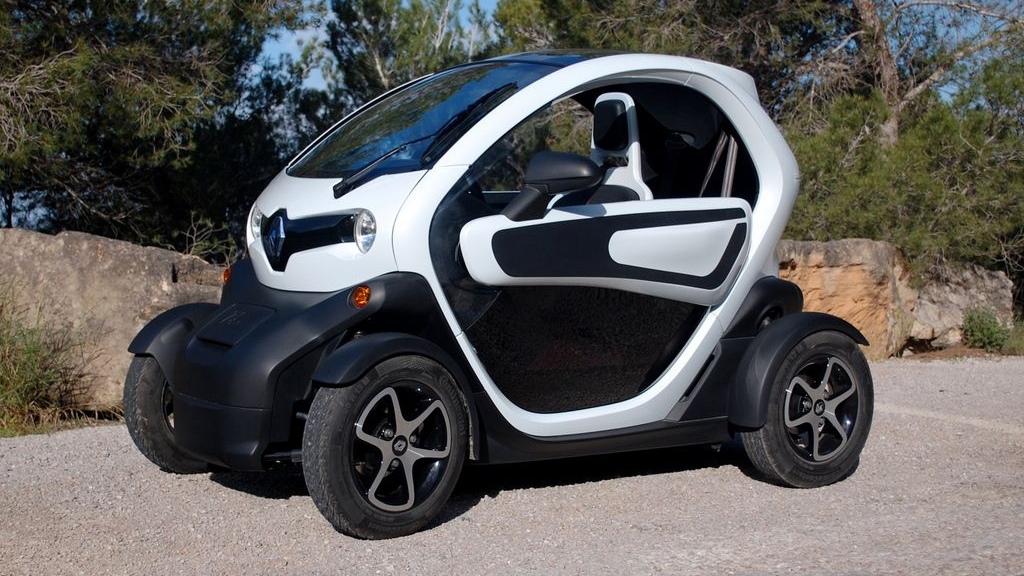
The Renault Twizy is a playful and compact electric vehicle designed for short city trips rather than extended travel. Measuring just 2.34 meters in length and 1.39 meters in width, the Twizy offers exceptional maneuverability, with a turning circle of only 6.8 meters.
Its tiny dimensions allow drivers to fit into parking spaces that larger vehicles must bypass. The upward-hinged doors remove concerns about door clearance, and its minimal 31-litre luggage space under the rear seat emphasizes its city-focused practicality.
The Twizy’s design is quirky and distinctive, resembling a futuristic, double-decker bus in miniature form. Its cabin is not fully enclosed, so occupants may feel the wind at higher speeds. Optional scissor-style doors, priced around $712, provide some protection but do not fully shield the interior from drafts or grime.
A tiny windshield wiper helps with light rain, but the vehicle is best suited for dry urban environments. Its firm suspension is necessary to handle body roll from its narrow stance, and while it handles well on grippy surfaces, caution is advised on uneven roads.
Inside, the controls are simple and car-like, featuring two pedals, a digital speedometer, a push-button gear selector, and a traditional steering wheel. The handbrake is somewhat tricky to operate, requiring a firm squeeze combined with pressing the brake pedal.
Seating is tandem-style, with the front seat sliding fore and aft and the rear passenger sitting closely behind, which can feel cramped and exposed to wind and exhaust fumes.
Despite its size, the Twizy is surprisingly fun to drive. It is powered by a 17bhp, 13kWh electric motor with a 6.1kWh lithium-ion battery, enabling it to reach a top speed of 50 mph and accelerate quickly to 30 mph, making it suitable for city traffic.
The vehicle stops efficiently in stop-start conditions, enhancing urban safety. Its 45- to 60-mile range is sufficient for short commutes, and charging is simple, taking less than three hours from a standard household outlet.
The Twizy comes in three trim levels: Urban ($10,666), Colour ($11,318), and Technic ($12,081). Basic trims include steel wheels, while higher trims offer 13-inch alloys and optional features like a sunroof, Bluetooth hands-free system, and parking sensors.
However, buyers must also lease the battery, which costs $58 to $87 per month. The compact design limits storage, with only small cubbies in the dashboard and a tricky-to-access compartment behind the rear seat.
The Renault Twizy excels as a fun, affordable, and nimble urban EV. Its low speed, limited range, and minimal storage make it unsuitable as a family car or for long trips, but it is perfect for solo city commutes or short errands.
The driving experience is engaging, with good pedal response and handling, though rear passengers may find it uncomfortable. The Twizy opens the door to electric vehicle ownership for a new generation of urban commuters, offering efficiency, excitement, and compact convenience, though with clear trade-offs in comfort and versatility.
3. Smart EQ Fortwo: Tiny, Electric, and City-Ready
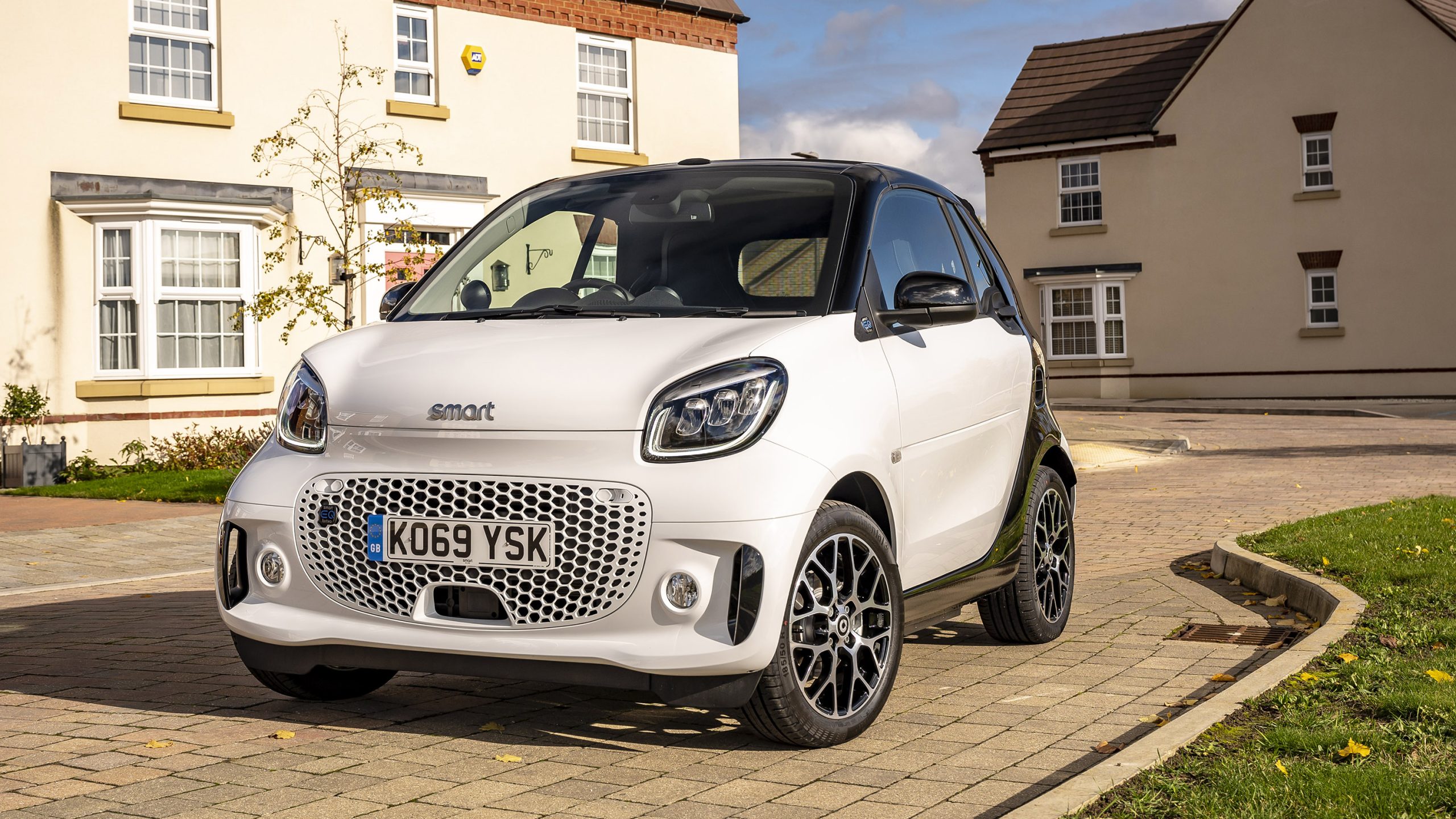
The Smart EQ Fortwo has long been a familiar sight in urban areas, and its transition to a fully electric vehicle makes it a strong contender for city driving. Available as a coupe or cabriolet, this two-seater offers an 80-mile range, ideal for short commutes. Its compact dimensions and tiny 6.95-metre turning circle make it easy to park in tight spaces while providing a fun, zero-emissions driving experience.
The Fortwo’s lightweight design, paired with the electric motor’s instant torque, delivers a peppy acceleration experience at low speeds. While its agility and responsiveness make city driving enjoyable, the car loses momentum above 40 mph, and handling at higher speeds is limited. Despite this, the Fortwo remains a lively and entertaining option for urban streets, emphasizing efficiency over performance.
Seat comfort is adequate, with decent padding, but lateral and lumbar support are minimal. The Fortwo’s short wheelbase and stiff suspension create a bumpy ride on uneven roads, which can feel tiring over longer journeys. Noise is well-controlled within the cabin, though the flat front nose generates noticeable wind sound outside, especially in the cabriolet version.
The Fortwo’s interior cleverly maximizes its small footprint. Generous legroom and headroom give the impression of space, although the cabin is narrow, particularly for two tall passengers. Visibility is generally good forward, aided by thin front pillars and a large windshield, though rear blind spots are significant. Cost-saving hard plastics are used throughout, yet the playful, modern design helps the cabin feel less austere.
Access is straightforward, thanks to wide door openings and a low step-in height, although the long doors can be awkward in tight parking spots. The cabriolet features a convertible roof that opens or closes in roughly 12 seconds with some manual adjustments required for full deployment.
Storage is limited, but the Fortwo makes the most of its space. A pull-out drawer in the center console, door pockets, and seatback nets provide options for small items.
The passenger seat folds flat to extend cargo capacity, though the trunk remains modest at 9.2 cubic feet in the coupe and 8.9 cubic feet in the cabriolet (6.7 cubic feet with the top down). These spaces are sufficient for light errands and city errands, but are not suited for larger cargo.
The Fortwo comes with a 7-inch touchscreen and supports the Smart Cross Connect app, which turns a smartphone into a controller for audio and navigation functions. While basic, the system integrates well with the car’s limited infotainment setup, enhancing usability for drivers on the go. Climate controls and the stereo are intuitive and straightforward, maintaining the Smart EQ’s focus on simplicity and practicality.
The Smart EQ Fortwo is designed for city life, prioritizing compact size, ease of parking, and zero-emissions driving. Its electric powertrain provides a fun, agile driving experience, though comfort is compromised by stiff suspension and minimal support. Interior space feels surprisingly generous but remains narrow for two adults.
Storage is modest, technology is simple but functional, and the cabriolet version adds a playful convertible option. Ideal for urban commuters or those seeking a small, efficient electric car, the Smart EQ Fortwo balances practicality with charm in a compact, city-ready package.
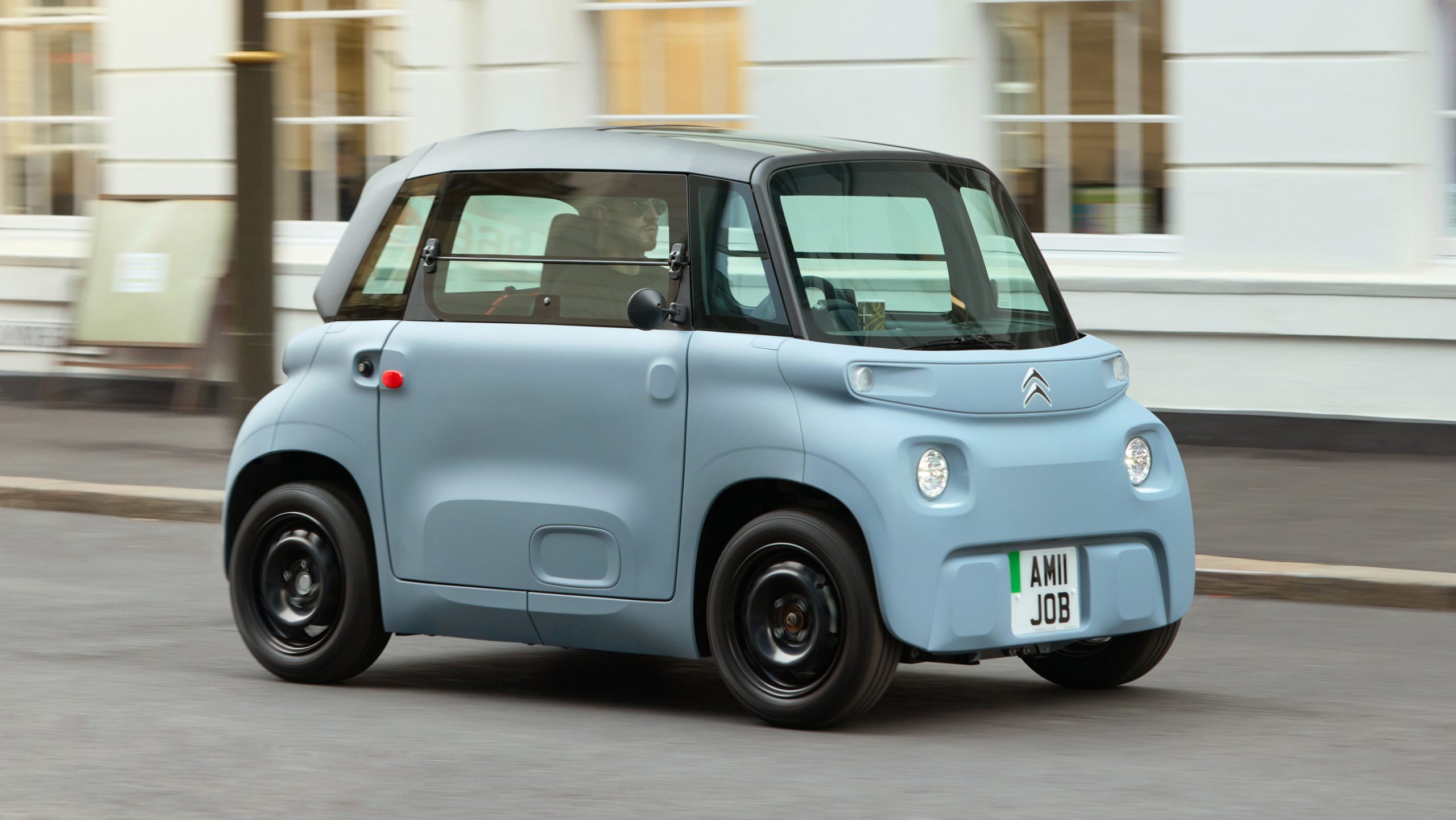
4. Citroen Ami: Quirky, Tiny, and Urban-Only Mobility
The Citroen Ami is a distinctive, ultra-compact electric vehicle designed for short city journeys. Measuring just 2.41 meters long and 1.39 meters wide, it is slightly larger than the Renault Twizy but maintains a similarly tight 7.2-metre turning circle.
Already common on Parisian streets, the Ami has expanded to the UK, with deliveries starting in spring 2022. Despite looking like a small car, the Ami is technically classified as a quadricycle, allowing it to bypass many regulations that apply to traditional cars.
The Ami’s design is minimalistic and highly functional. It weighs only 458 kg, including the battery, and can seat two passengers in modest comfort. The body is made from unpainted, durable “Blue Ami” plastic panels that are largely interchangeable, lowering production costs.
The doors are unique: the driver’s door is rear-hinged while the passenger side opens conventionally. With a tiny footprint, it can easily maneuver through crowded streets, park in tight spots, and serve as a practical urban mobility module.
Under the bonnet, the Ami is equipped with an 8bhp motor and a 5.5kWh battery, providing a top speed of 28 mph and a 47-mile range. Acceleration to its maximum speed takes roughly 10 seconds, depending on the weight of the occupants.
It is clearly designed for low-speed city travel and is not suitable for highways or fast roads. The limited speed and lightweight construction emphasize safety and efficiency for short, urban commutes rather than performance or long-distance driving.
Driving the Ami is a simple and joyful experience within its intended environment. Its compact size and low speed make it ideal for short intra-city trips, replacing bicycles, e-bikes, or public transport for practical urban mobility.
Citroen also offers a Cargo version, which replaces the passenger seat with extra storage space for deliveries, catering to urban logistics needs. The Ami is accessible to young drivers in the UK from age 16 with a moped licence, highlighting its role as an entry-level, city-friendly vehicle.
The Citroen Ami starts at £7,695 (approximately $12,600), significantly cheaper than the next cheapest vehicle on the UK market. Flexible finance options allow buyers to pay as little as £99 per month with a deposit. Its affordability and simplicity target a younger generation or urban residents seeking convenient, low-cost personal transport without the complexities of a traditional car.
The Ami is not a car in the conventional sense, nor is it designed for long journeys or high speeds. Instead, it offers a lightweight, playful, and practical solution for urban commuting.
While it may not be fun to drive in the traditional sense, it is undeniably fun to use, providing a safe and convenient alternative to bikes, scooters, or public transport. Its unique design, low cost, and simplicity make it an attractive option for short city trips, rentals, or car-sharing schemes, even if it is unlikely to replace a family car for everyday use.
5. Smart EQ ForFour: A Practical Urban EV for Four
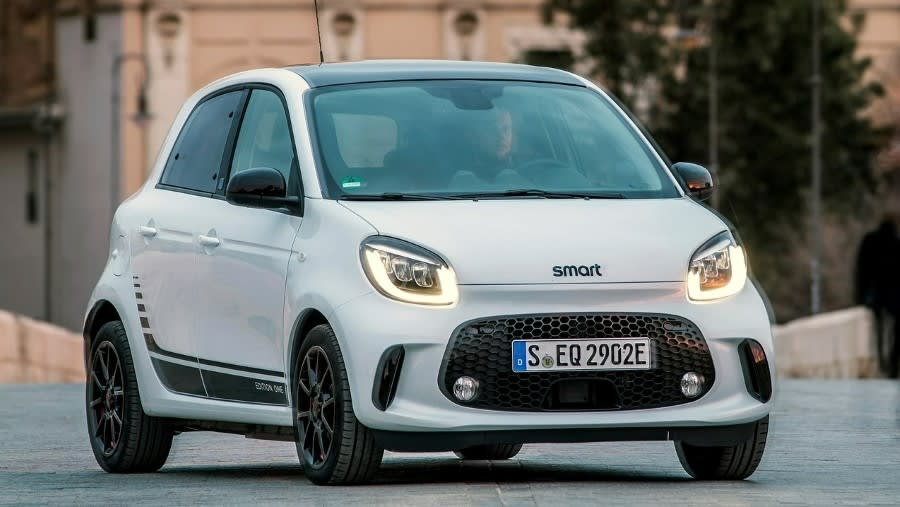
The Smart EQ ForFour is the larger sibling of the Smart EQ Fortwo, now available exclusively as a fully electric vehicle. Offering seating for four, it provides more practicality than the Fortwo while maintaining excellent urban manoeuvrability with an 8.65-metre turning circle.
Its range of 78 miles is modest but suitable for city commutes, and the car can charge up to 80 percent in just 40 minutes via a rapid charger, or in about three hours and 18 minutes using a home wallbox. Luggage space is 185 litres, expanding to 975 litres with the rear seats folded, making it reasonably versatile for short trips.
Powered by a 17kWh battery and an electric motor delivering 81hp, the ForFour accelerates from 0-62 mph in 12.7 seconds. While its top-end speed is limited, the car feels responsive up to 40 mph, making it ideal for stop-start city traffic.
Its lightweight construction and tight turning circle enhance manoeuvrability, though the suspension is firm, which transmits bumps and irregularities in the road more noticeably than some competitors. On motorways, the light steering and bumpy ride make it less comfortable and reduce driving enjoyment during high-speed cornering.
Inside, the Smart EQ ForFour has a playful and modern dashboard design, though quality varies. Upper plastics feel solid, while lower surfaces and switches can seem cheap. The infotainment system’s built-in sat-nav is slow and basic, but Apple CarPlay and Android Auto allow smartphone mirroring for smoother functionality.
Front seating is reasonably comfortable, but high seat positions and limited wheel adjustment may not suit all drivers. Rear seats are extremely tight, suitable mainly for children or short trips. Storage space is minimal, with limited interior cubbies and a small boot.
Charging costs are low, with a full home charge costing less than £3, significantly cheaper than petrol for the same distance. The ForFour’s compact size makes it ideal for city driving, tight streets, and parking, while the limited range reinforces its role as a purely urban vehicle. It offers personalization through alloy wheel and color choices, adding some appeal for those who value style in a small EV.
The Smart EQ ForFour excels in cities where its nimbleness, quick urban acceleration, and electric efficiency shine. However, its firm ride, tight rear seats, and small boot limit its versatility. While alternatives like the VW e-Up or Skoda Citigo-e offer more space and comfort, the ForFour remains an appealing choice for drivers prioritizing style, agility, and zero-emission urban mobility.
6. Suzuki Ignis: The Quirky City Crossover
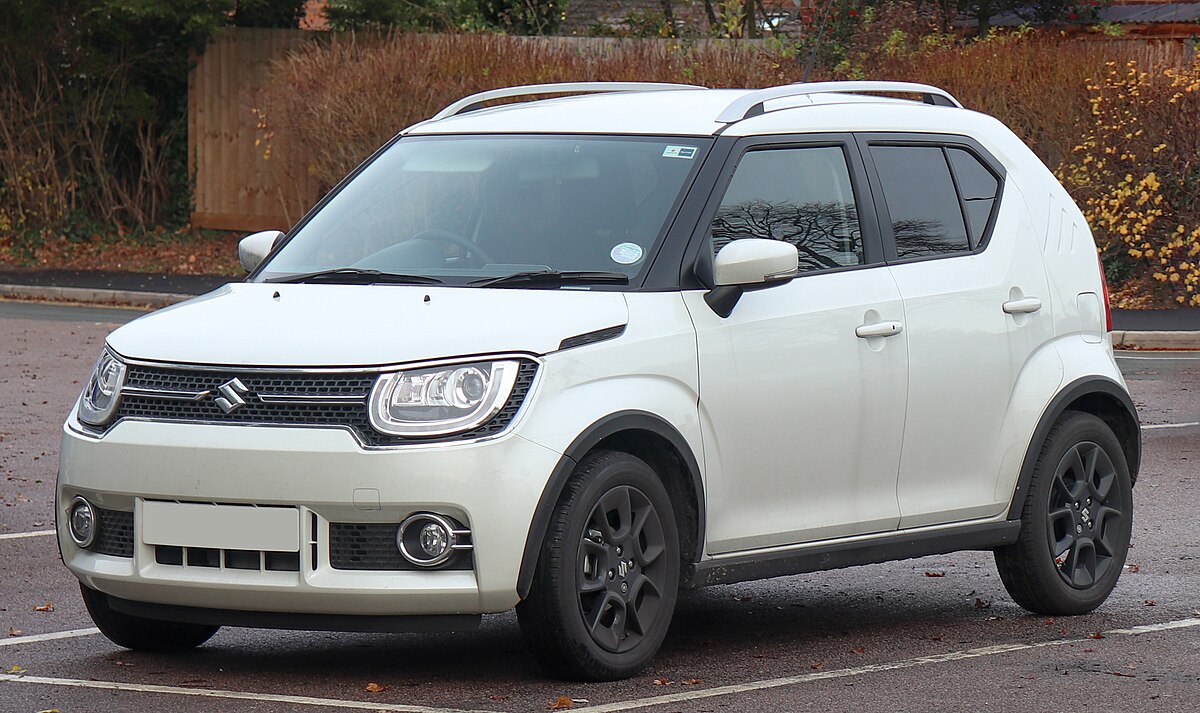
The Suzuki Ignis is a compact yet surprisingly spacious mini urban crossover that combines practicality with personality. It sits among the more affordable options in its segment, offering a hybrid petrol engine capable of up to 55.7 mpg and CO2 emissions as low as 114 g/km.
Buyers can personalize the Ignis extensively, with options including an automatic gearbox and four-wheel drive, making it adept at light off-roading or handling adverse weather.
With a turning circle of just 9.4 m and light steering, the Ignis is ideal for city driving while still offering enough space for weekend adventures. Its 267-litre boot expands to 501 litres with the rear seats folded, giving it a practical edge over many small cars. While it competes with city cars like the Volkswagen Up, Hyundai i10, Toyota Aygo, and even Dacia Duster, the Ignis uniquely blends city convenience with crossover versatility.
The Ignis’s design is both retro and contemporary, drawing inspiration from the 1970s Suzuki Whizzkid with subtle roof pillar dimples. Despite its throwback styling, the car is built on a new platform with new engines and interior innovations. Weighing under 900 kg, it’s remarkably light, yet constructed with high-strength steel to ensure durability without unnecessary bulk. Its weight contributes to both fuel efficiency and nimble handling.
Recent updates to the Ignis include a refreshed grille, improved sound insulation, and upgraded interior details. Suzuki has also implemented a 12 V mild-hybrid system across the range, slightly reducing power from 89 bhp to 82 bhp, though performance remains largely unchanged with a 0-62 mph time of 12.7 seconds.
The small 7 kg battery sits under the rear seats, maintaining a low center of gravity and preserving boot space. The hybrid system enhances city driving by smoothing stop-start operations without requiring external charging.
Real-world fuel economy typically exceeds 50 mpg, approaching the official 55.7 mpg figure, with the hybrid system largely invisible in daily use. Drivers can choose between a five-speed manual, praised for its light and precise shifts, or an automatic gearbox.
The optional AllGrip all-wheel-drive system gives the Ignis light off-road ability, echoing the versatility of the Fiat Panda 4×4 or Dacia Duster, though it is not meant for serious mud-plugging.
The Suzuki Ignis starts at $21,694 for the base SZ-T and rises to $23,008 for the SZ5, with AWD available only on the SZ5. Automatic gearboxes cost an additional $1,335. While slightly more expensive than rivals like the Fiat 500, the Ignis offers unique versatility, hybrid efficiency, and charming character that justify its price.
The Suzuki Ignis is an underrated city car that combines fun driving dynamics, spacious practicality, hybrid efficiency, and light off-road capability. Its endearing design and character make it one of the most compelling small cars available, with AWD variants filling the gap left by the Suzuki Jimny while offering superior fuel economy and road manners. It truly is an unsung hero in the compact car segment.
7. Kia Picanto: The Charming and Practical City Car
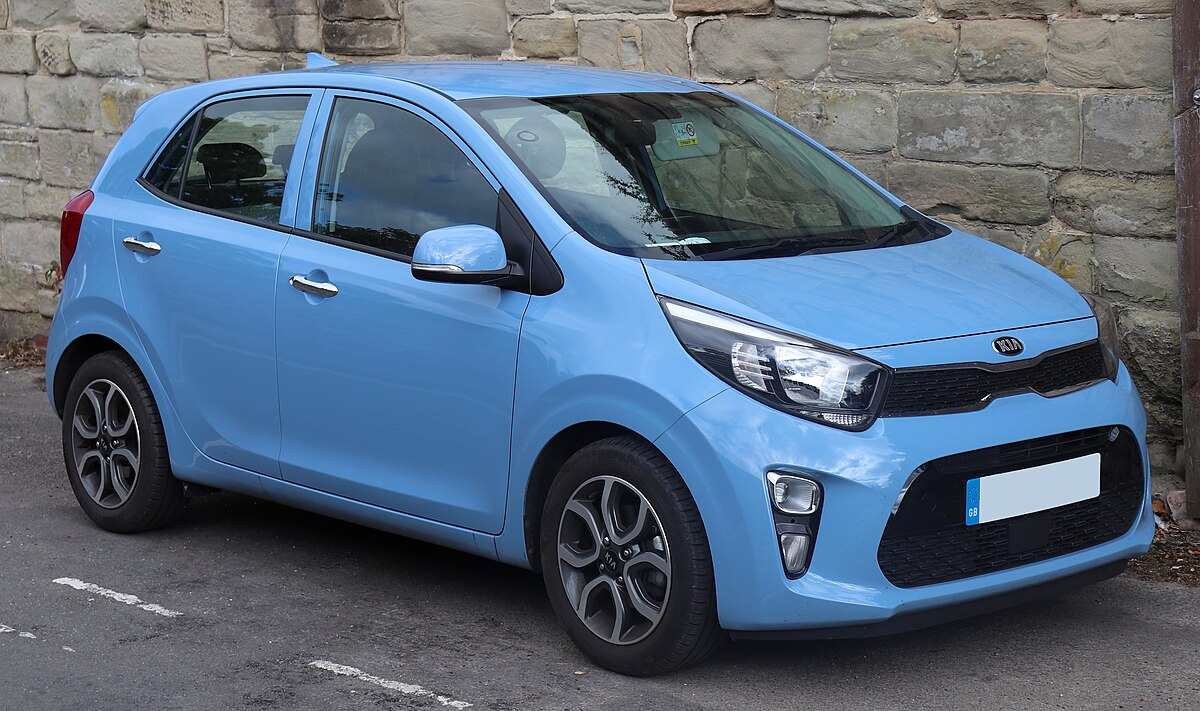
The Kia Picanto is a standout in the increasingly rare city car segment, offering a blend of charm, practicality, and efficiency. Compact and nimble, it is perfectly suited for tight urban streets while remaining fun to drive.
Its small 1.0-litre petrol engine delivers impressive fuel economy of up to 55.4mpg, and CO2 emissions are as low as 117g/km, making it an eco-friendly choice for city dwellers. Low insurance costs and Kia’s generous seven-year warranty further enhance its appeal, making the Picanto one of the best small car packages currently available.
Parking sensors and a rear-view camera are available, though only on higher-spec models, and luggage space is 255 litres, expanding to 1,010 litres with the rear seats folded. Despite being Kia’s smallest model, the Picanto has carved out a niche as one of the last remaining traditional city cars, combining simplicity and frugality with a cheerful driving experience.
The Picanto’s design evolution reflects Kia’s growing design credibility. Launched in 2003, the first-generation car was bland but affordable and well-equipped. The second generation, introduced in 2011, benefitted from Peter Schreyer’s design influence, including the iconic ‘tiger nose’ grille, which gave the car a distinct European flair.
The third-generation Picanto, presented at the 2017 Geneva Motor Show, received a minor update, with more significant improvements arriving in 2024. The facelift brought refreshed front and rear styling and interior upgrades, although the sporty X-Line variant was discontinued.
On the road, the Picanto offers peppy performance and enjoyable handling, especially in city environments. While it may lack long-distance comfort and high-end dynamics, it remains a capable, practical, and cheerful runabout. The affordability of the vehicle has experienced a modest increase in recent updates.
The entry-level model is priced at approximately $21,400, while the top-spec GT-Line S with an automatic gearbox is available for around $26,150. All models include essential features such as electric windows, air conditioning, an 8-inch touchscreen infotainment system with satnav, Apple CarPlay and Android Auto, a digital instrument panel, and rear parking assistance.
Higher trims offer additional luxuries like heated seats, LED headlights, keyless entry, auto air conditioning, wireless charging, and sportier alloy wheels.
Engine options include a 1.0-litre 3-cylinder unit producing 62bhp and a 1.2-litre 4-cylinder variant generating 77bhp.
Acceleration is modest, with the smaller engine taking 15.4 seconds to reach 62mph (or 18.2 seconds with an automatic) and the larger engine reaching the same speed in 13.1 seconds (16.5 seconds for the auto). Despite modest performance, fuel economy remains around 50mpg, making the Picanto efficient for daily use.
While the city car segment has shrunk, rivals such as the Hyundai i10, Toyota Aygo X, and Dacia Sandero remain viable alternatives, along with electric options like the Fiat 500 and Dacia Spring. However, the Picanto stands out for its combination of affordability, practicality, and fun.
For anyone seeking a first car or a compact runabout, the Kia Picanto delivers a cheerful and frugal driving experience. Its appealing character, efficiency, and strong value make it a rare gem in today’s market, demonstrating that the city car segment still has life and excitement to offer.
8. Fiat 500: Stylish and Compact Electric Mobility
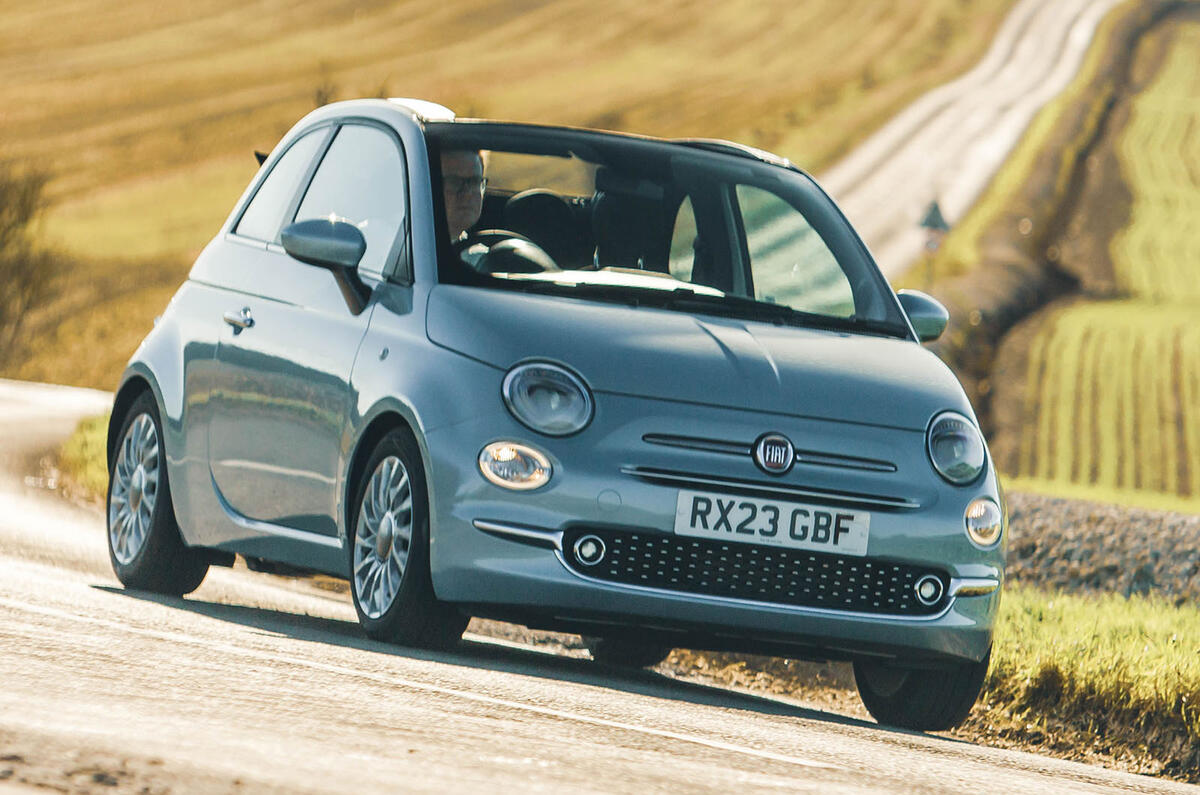
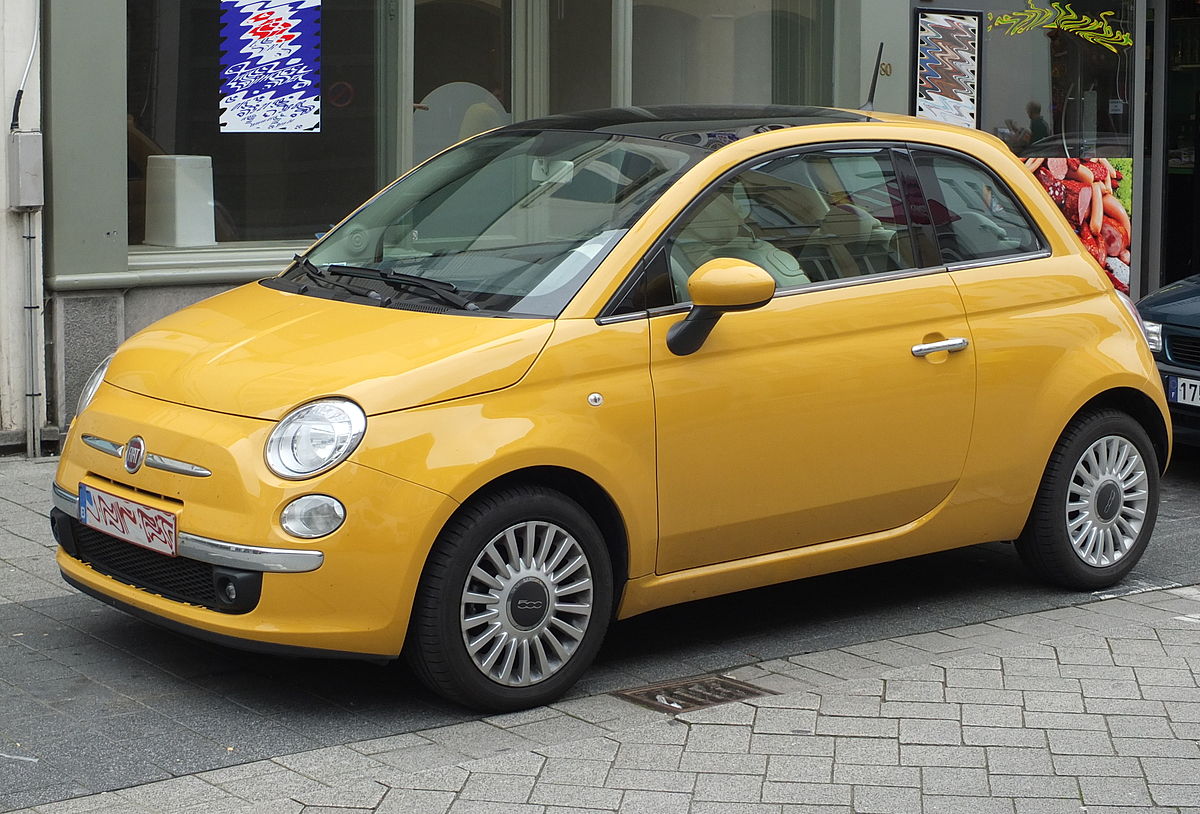
The Fiat 500 has long been one of the most recognisable cars on the road, and its latest incarnation marks a major shift as the company’s first fully electric model. Despite its small size, this electric 500 is a notable contender in the affordable EV market, offering a claimed range of up to 199 miles and retaining the charm and personality that have made the model iconic.
Retro-inspired styling, city-friendly dimensions, and a compact turning circle of 9.7 meters make it ideal for urban use, while luggage space stands at 185 litres, expanding to 550 litres with the rear seats folded.
The 2020 electric version is entirely new, with no shared components from previous petrol models. It features a redesigned interior, chassis, and body, while keeping the familiar look that makes the 500 instantly recognisable.
The car is slightly larger than before, measuring 61mm longer, 56mm wider, and 29mm taller than the petrol version, giving it a more balanced and confident stance. Fiat has also diversified the colour palette, offering vibrant options that highlight the 500’s stylish design. A convertible version is available, retaining the canvas roof concept with metal side rails to maintain chassis rigidity.
Under the hood, the electric 500 offers two battery options. The smaller 24kWh unit pairs with a 94bhp motor, delivering an official range of 118 miles. The larger 42kWh battery comes with a 117bhp motor, rated for 199 miles.
Real-world figures vary depending on driving conditions, with the smaller battery suited primarily as a second car for city use. Charging is reasonably fast, with the 42kWh battery capable of 85kW rapid charging, adding roughly 100 miles in about 15 minutes, although most UK rapid chargers operate at 50kW, which also suits the smaller battery model.
Despite being fully electric, the 500 retains front-wheel drive and an accelerator calibration similar to petrol cars, providing a familiar driving experience. The layout and controls, including the charge port on the right-rear wing, maintain continuity with previous models.
Handling is competent, and the car proves efficient across a mixture of city, suburban, and short motorway driving, although its modest performance means it is not a long-distance cruiser.
The Fiat 500 Electric is priced from approximately $33,370 USD, placing it in direct competition with rivals such as the Dacia Spring, Citroën ë-C3, Renault 5, Fiat Grande Panda, MG4, and Renault 4. While the 500 excels in style, brand recognition, and quality feel, some rivals offer better range, larger size, or lower prices, making careful consideration essential for buyers.
The top-spec 42kWh La Prima version costs around $41,250 USD, offering the best combination of performance and usability within the range.
The Fiat 500 remains a solid and stylish choice for those seeking a compact, well-equipped electric car. Its charm, retro-inspired design, and urban practicality make it appealing to first-time EV buyers or those looking for a fashionable, city-ready vehicle. However, with increasing competition in the small electric segment, buyers must weigh its premium against rivals offering longer range or greater practicality.
The electric Fiat 500 proves that small cars can still be desirable and fun while embracing modern, emission-free technology, making it an attractive option for city dwellers who value style, heritage, and efficiency.
City driving does not have to mean compromise on convenience or style. The eight cars featured here show that small size can still deliver personality, performance, and comfort.
From the Honda e’s modern electric design to the Citroen Ami’s quirky charm and the Suzuki Ignis’s practical versatility, each vehicle offers unique advantages for urban life. Compact turning circles, easy parking, and smart features make city commutes simpler and more enjoyable.
Choosing one of these city-friendly cars allows drivers to embrace efficiency, sustainability, and fun while handling crowded streets with confidence. Parking in a big city can become a smooth and even enjoyable part of everyday driving.
Also Read: 5 Cars That Are Great for Road Trips vs 5 That Make Them Miserable