
As the electric vehicle revolution accelerates, range anxiety remains a key consideration for buyers. Gone are the days when EVs struggled to cover more than a couple of hundred miles; today, automakers are pushing boundaries, delivering long-range performance, efficiency, and comfort in one package.
From compact crossovers to flagship sedans, the latest generation of electric cars blends innovative battery technology, aerodynamic design, and intelligent software to maximize real-world driving distance.
Whether you prioritize practicality, luxury, or outright performance, there are models capable of meeting every need. In this guide, we explore twelve electric vehicles that deliver the longest real-world range, highlighting their standout features, capabilities, and pricing.
From the practical Vauxhall Grandland Electric to the hyper-performance Lucid Air, each car represents a different approach to conquering distance while maintaining the refinement, technology, and style expected from modern EVs.
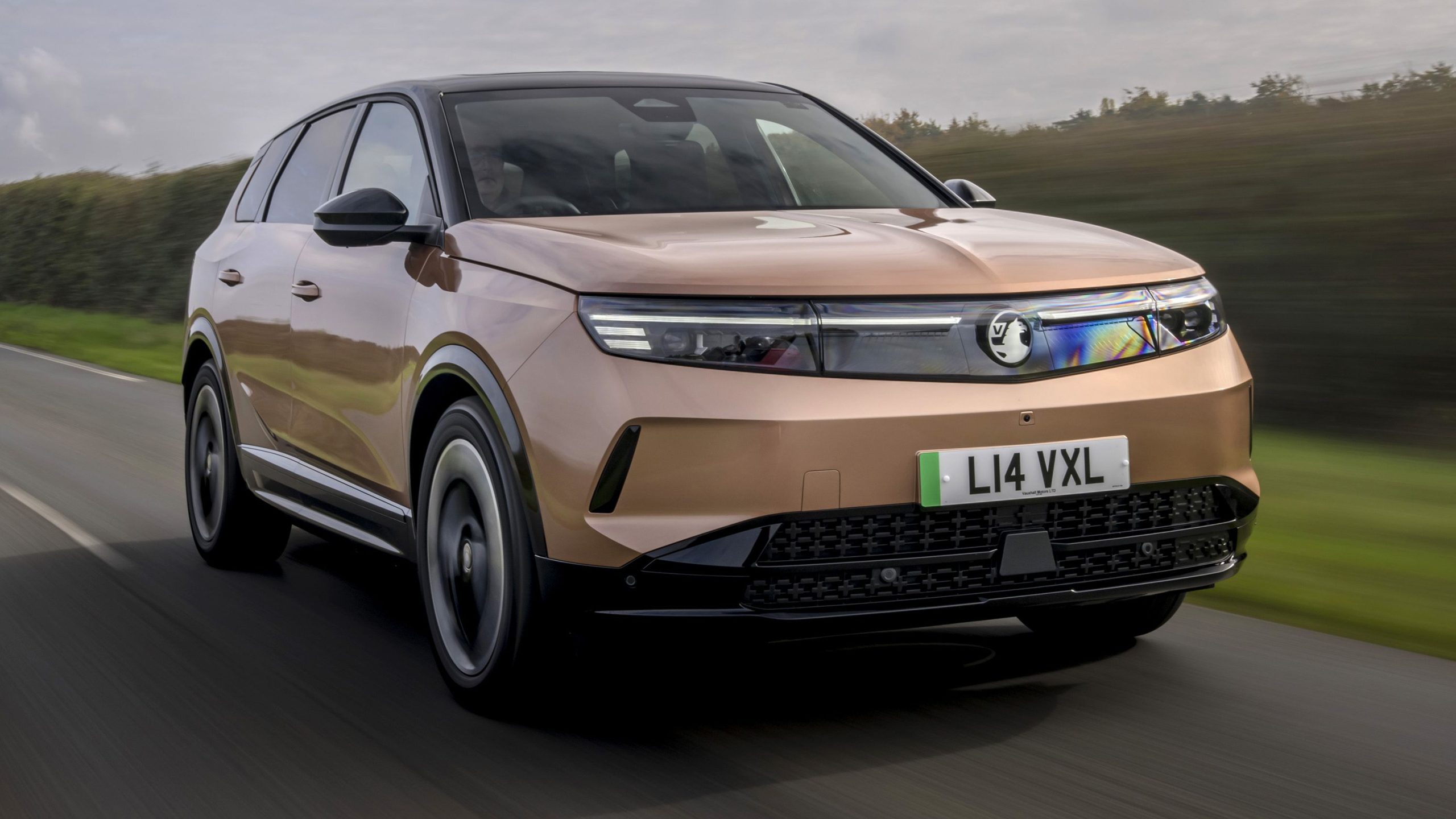
1. Vauxhall Grandland Electric: Compact Crossover
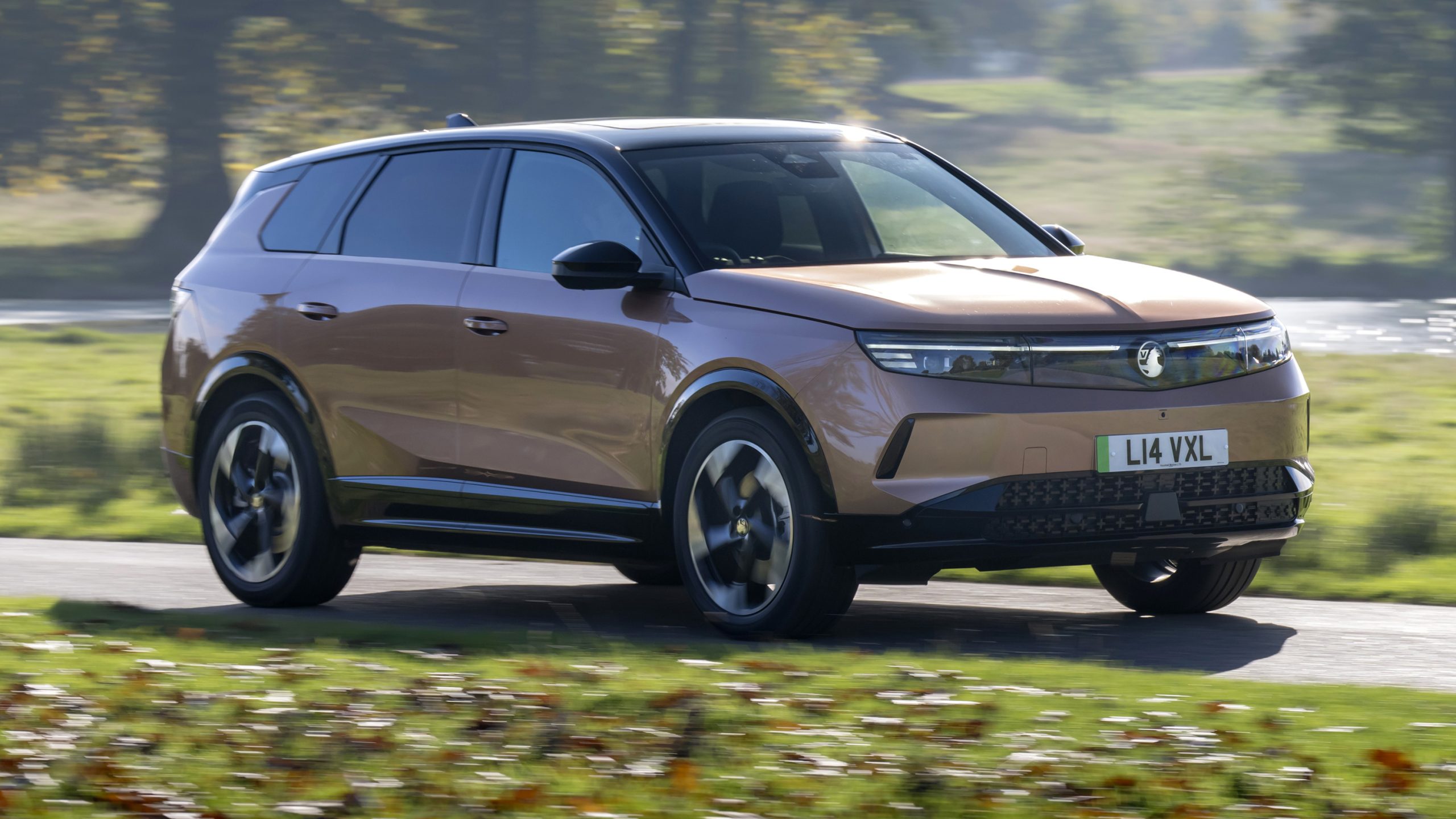
The second-generation Vauxhall Grandland is available for the first time with an all-electric powertrain, alongside mild-hybrid petrol options. It retains Vauxhall’s signature 3D Vizor front end, now with a light bar, illuminated logo, and Intelli-Lux HD headlights with over 25,000 pixels per side. The rear Vauxhall lettering lights up as well. The body has grown in all directions, giving more rear passenger space and a larger boot.
The Grandland Electric comes with a single 210hp front motor. It accelerates from 0–60mph in 9.0 seconds and reaches a top speed of 106mph. The standard 73kWh battery offers a WLTP range of 325 miles, though real-world winter driving saw closer to 200 miles.
A 98kWh battery is planned, promising up to 435 miles in laboratory tests. Fast charging at 160kW allows 20–80 percent in under 30 minutes, with an 11kW onboard AC charger also included.
The driving experience is a bit wooden, and the ride is firm, but it fits the car’s practical and easygoing character.
The cabin is smart and well-equipped, though not as futuristic as some rivals like the Peugeot e-3008. Features include a 10-inch digital instrument panel, 10- or 16-inch infotainment display, proper climate control buttons, AGR-certified seats, and extra rear leg and boot space. The interior is functional, comfortable, and practical rather than flashy.
Prices start at around $45,000, slightly higher than the hybrid model but significantly lower than comparable rivals such as the Peugeot e-3008, Skoda Enyaq, or VW ID.4. The Grandland Electric undercuts most similarly sized electric SUVs, making it a value-focused option.
The Grandland Electric is sensible for buyers who prioritize practicality over flair. It is comfortable, well-equipped, and efficient, though it does not excel in any single area. The driving experience is bland but adequate, and it delivers exactly what you pay for. This is a car for those who wear sensible shoes rather than flashy ones.
2. Mercedes-Benz EQE: The Electric Heart of the Brand’s Future
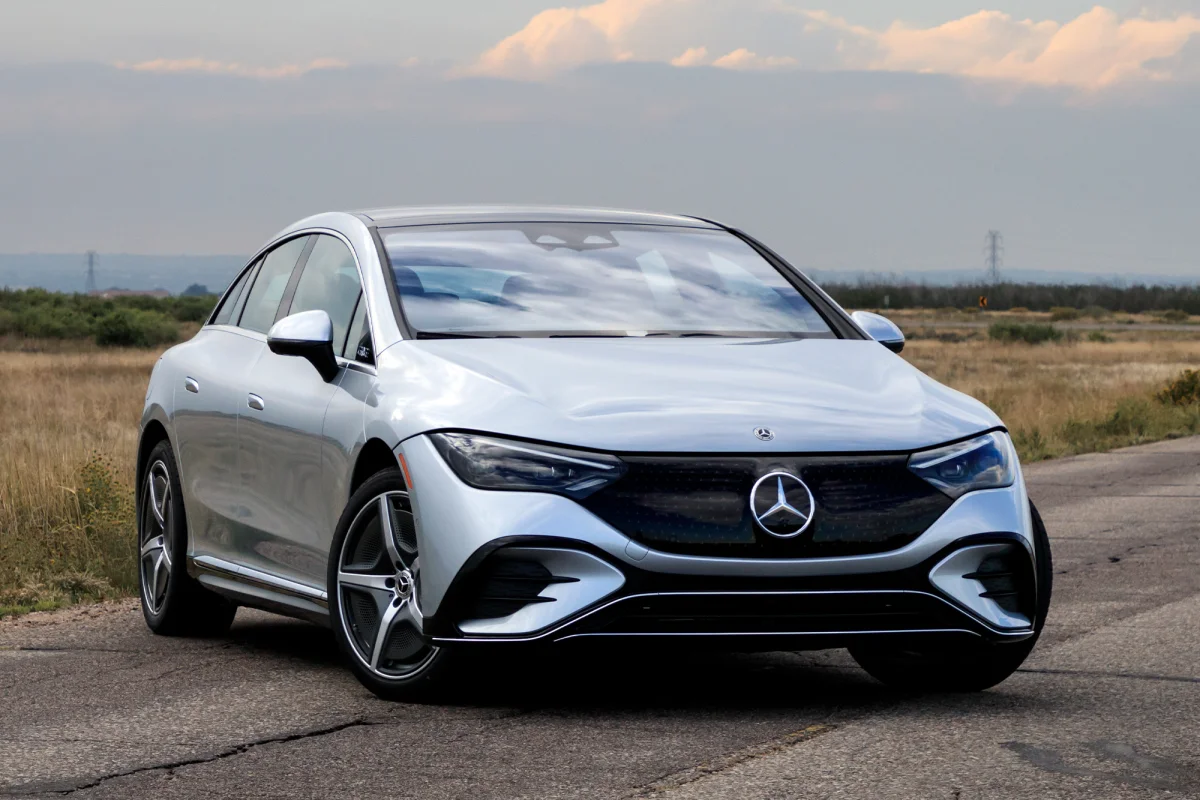
The Mercedes-Benz EQE is a medium-sized electric saloon that plays a key role in Mercedes’ electric vehicle strategy. Positioned below the flagship EQS, the EQE represents the brand’s effort to combine luxury and practicality while advancing toward a fully electric future.
Mercedes divides its EV lineup between models adapted from combustion cars, such as the EQA and EQB, and purpose-built EVs like the EQS and EQE. The EQE benefits from a dedicated electric platform designed to optimize battery placement, interior space, and efficiency. However, its design has received mixed reactions.
Sharing its aerodynamic shape with the EQS, the EQE’s smooth, rounded profile enhances range but lacks traditional Mercedes presence. Some critics note that without badges, it is difficult to identify as a Benz. While efficient, its amorphous silhouette may not appeal to buyers seeking the stately look of Mercedes’ classic sedans.
The EQE is 90 millimeters shorter than the EQS and comes with either an 89 or 90 kWh battery, depending on the model. The entry-level EQE 300 produces 241 horsepower and 406 pound-feet of torque, reaching 62 mph in 7.3 seconds and offering a range of up to 380 miles.
The EQE 350 increases power to 288 horsepower and shortens the sprint to 6.4 seconds. For performance enthusiasts, the AMG EQE 53 delivers 626 horsepower through a twin-motor setup, while other global variants include the EQE 500 and AMG EQE 43.
Inside, the EQE provides five seats and a luxurious interior inspired by the S-Class. A 12.8-inch central touchscreen comes standard, while the optional “Hyperscreen” stretches across the dashboard for an additional cost of about $8,500.
Models in the United Kingdom can be equipped with Airmatic air suspension for improved ride comfort, though they lack rear-wheel steering, resulting in a larger turning circle.
The EQE is produced in Germany for global markets and also locally in China, underscoring Mercedes’ commitment to its worldwide EV expansion. An SUV version is also available, allowing Mercedes to maximize profits and recoup its heavy investment in the EQ family.
In the luxury electric sedan market, the EQE competes with the BMW i5, Porsche Taycan, Polestar 2, and Tesla Model S. Pricing starts at approximately $88,000 for the EQE 300 and $99,000 for the EQE 350.
The EQE successfully translates Mercedes’ luxury DNA into the electric era. It is quiet, refined, and comfortable, though its abundance of technology can at times overwhelm. While it may not drive as dynamically as the BMW i5, the EQE stands as a polished, sophisticated choice that defines the next generation of Mercedes electric vehicles.
3. Peugeot e-3008: Evolution of a Game-Changer
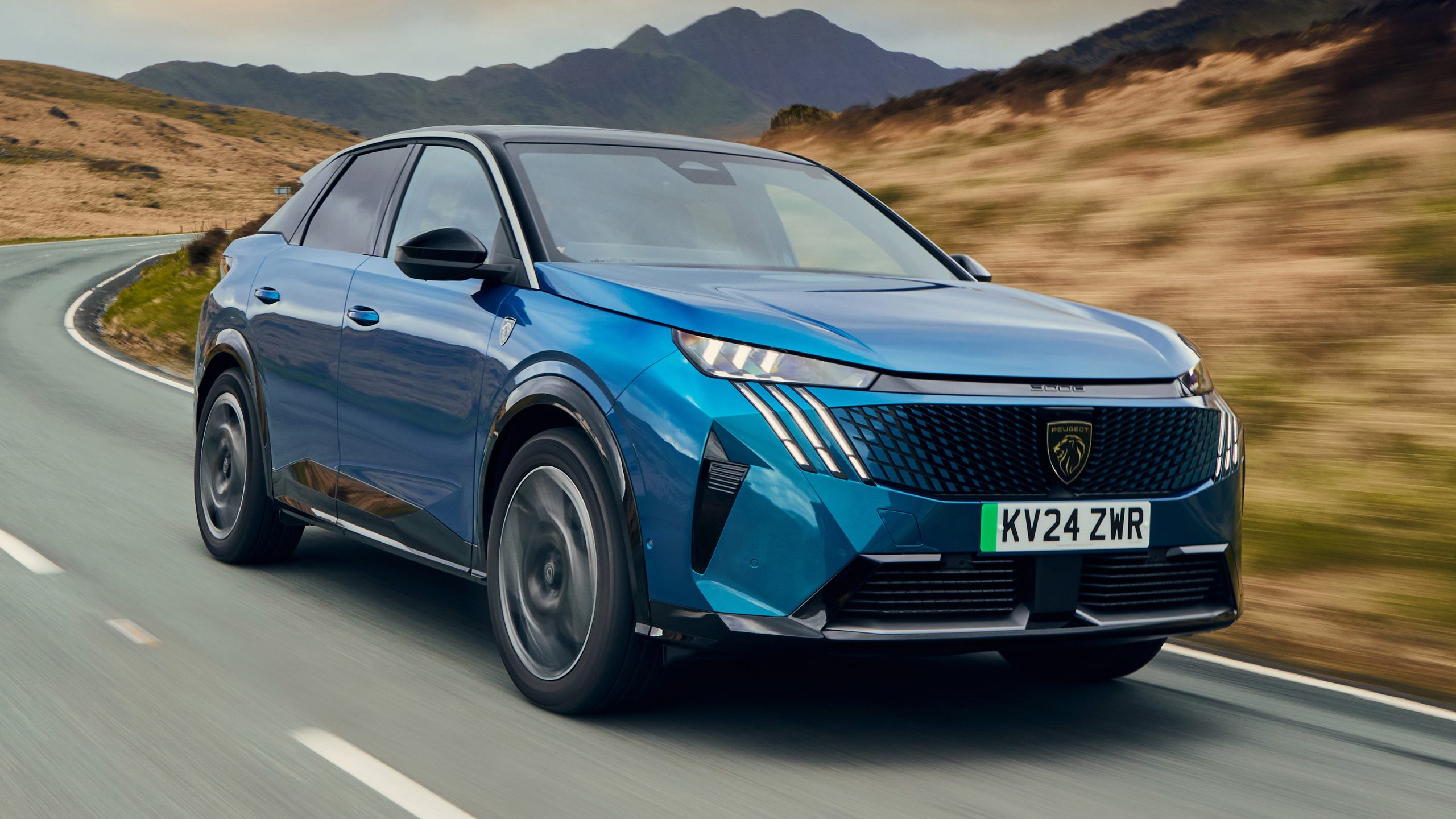
The Peugeot e-3008 replaces the model that turned the brand’s fortunes around. The previous 3008 was admired for its striking design, plush interior, and enjoyable drive, and the new version carries these traits forward while embracing full electrification. It is available as an all-electric vehicle, with a mild-hybrid petrol version now on sale and a plug-in hybrid arriving soon.
The e-3008 faces a highly competitive electric SUV market that includes the Tesla Model Y, Volvo EX40, VW ID.4 and ID.5, Renault Scenic, Hyundai Ioniq 5 and Kona Electric, Kia EV6 and Niro EV, Nissan Ariya, Toyota bZ4X, Ford Mustang Mach-E, and BMW iX1.
Two battery options are offered: a 73 kWh pack providing up to 326 miles of range (WLTP), and a larger 98 kWh version offering up to 422 miles. Charging peaks at 160 kW, enabling a 20–80 percent top-up in about 30 minutes when using a high-speed charger. The smaller battery suits most families, while the larger pack caters to long-distance drivers.
The e-3008 is completely new from the ground up, featuring a fresh platform, chassis, and digital interior. Despite the redesign, Peugeot retained visual continuity with the previous model, emphasizing familiarity and brand identity.
The biggest stylistic shift is its sleek fastback tail, improving aerodynamics and efficiency. The platform is part of Stellantis’ new generation of architectures that will underpin vehicles across multiple brands, from the Vauxhall Grandland and Peugeot 5008 to future DS, Alfa Romeo, and Jeep models.
Interestingly, Peugeot developed separate underpinnings for the EV, internal combustion, and plug-in hybrid variants. They share only the suspension and front crash structure, allowing the electric version to perform efficiently without excessive compromise.
Despite its modern packaging, the e-3008 maintains similar exterior dimensions to its predecessor. This means interior space, particularly rear legroom, is somewhat limited compared with rivals like the Renault Scenic.
However, boot space remains generous. The cabin showcases Peugeot’s latest i-Cockpit system with a curved 21-inch screen that is intuitive and customizable. Build quality and materials are excellent, creating a high-end feel.
On the road, the e-3008 feels composed and confident, with accurate steering and solid stability. However, its weight of over 2,100 kg dampens agility and responsiveness.
The car’s steering is heavily assisted, and while acceleration is smooth, it is not especially brisk. The strong, durable suspension, designed to support larger and off-road variants, adds to its mass. Still, aerodynamics and efficiency are commendable, helping deliver strong real-world range.
Pricing for the e-3008 starts at around $57,000 for the 73 kWh version, approximately $13,500 more than the petrol model. The larger battery model will be more expensive when released.
The Peugeot e-3008 feels like a thoughtful evolution rather than a radical reinvention. It offers stylish design, a refined interior, an impressive range, and strong efficiency.
While it is not the most dynamic or spacious option in its class, it provides a quiet, comfortable, and high-quality experience that makes long drives genuinely relaxing. For many families, this well-rounded electric SUV will hit the sweet spot of practicality and modern appeal.
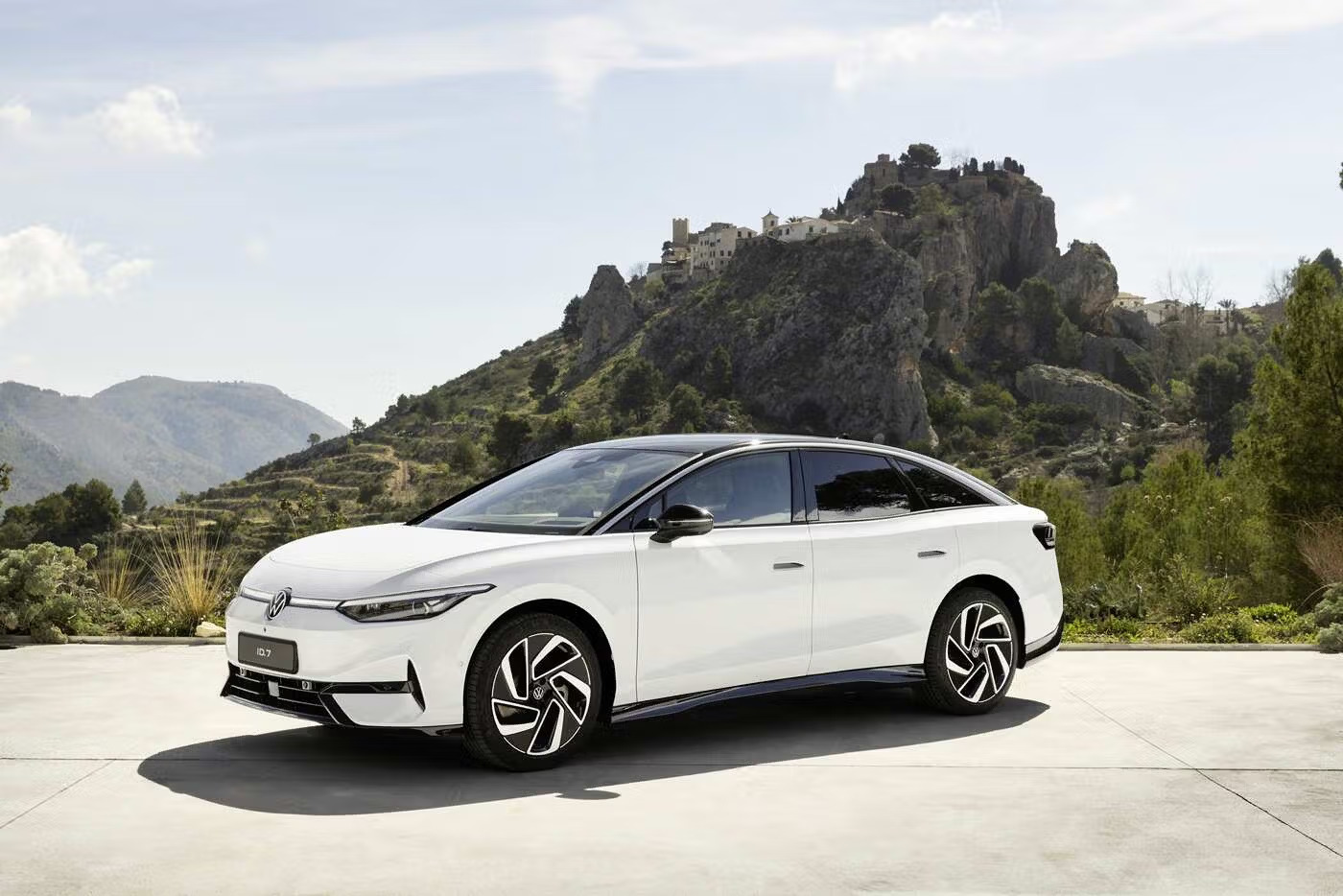
4. Volkswagen ID.7: The Electric Executive That Gets It Right
The Volkswagen ID.7 is the brand’s largest all-electric hatchback and is also offered as an estate called the Tourer. At nearly five meters long, it serves as Volkswagen’s answer to premium electric sedans such as the Hyundai Ioniq 6, BYD Seal, Polestar 2, BMW i4, and Tesla Model 3. With its generous interior and luggage space, it even rivals the larger BMW i5 and its Touring version for practicality.
The ID.7 continues Volkswagen’s restrained design philosophy with smooth, minimalist styling. Although earlier ID models aimed to look futuristic, the ID.7 is more mature, emphasizing aerodynamics and efficiency over flair.
Its sleek silhouette achieves a drag coefficient of 0.23 for the hatchback and 0.25 for the Tourer, which helps maximize range. The car’s long body ensures impressive cabin space, while 19- and 20-inch wheels underline its size and road presence without appearing oversized.
Built on Volkswagen’s MEB electric platform, the ID.7 offers two battery options. The standard 77 kWh unit delivers a range of up to 384 miles, while the larger 86 kWh Pro S battery increases that to 435 miles for the hatchback and 424 miles for the Tourer.
A GTX version with dual motors and all-wheel drive provides stronger acceleration, reaching 62 mph in 5.4 seconds, though with a shorter range. Every version uses Volkswagen’s latest APP550 rear-mounted electric motor producing 282 horsepower and 402 pound-feet of torque, combining smooth power delivery with strong efficiency.
The cabin of the ID.7 represents a major improvement over earlier ID models. The new infotainment system is faster, clearer, and easier to use, featuring illuminated touch controls for better nighttime operation. Standard features include a large central display, a smaller screen for the driver, and an augmented-reality head-up display.
High-quality materials, supportive seats, and a spacious layout create a comfortable and modern environment. The optional panoramic roof and motorized air vents add a touch of luxury, though some users may find the latter unnecessarily complicated.
On the road, the ID.7 feels stable, quiet, and refined. It is more composed and responsive than the heavier ID.4, offering well-controlled suspension and smooth ride quality. The car tracks confidently at highway speeds and handles British B-roads with comfort and precision.
Pricing starts at about $64,000 for the 77 kWh model, with the Pro S battery costing around $4,200 more. The high-performance GTX version is close to $75,000, while the Tourer estate adds roughly $1,000.
The Volkswagen ID.7 succeeds by focusing on what matters most to buyers: space, comfort, range, and usability. It delivers a refined and practical electric driving experience that feels well-balanced and thoroughly modern.
5. Tesla Model 3: The EV That Set the Benchmark
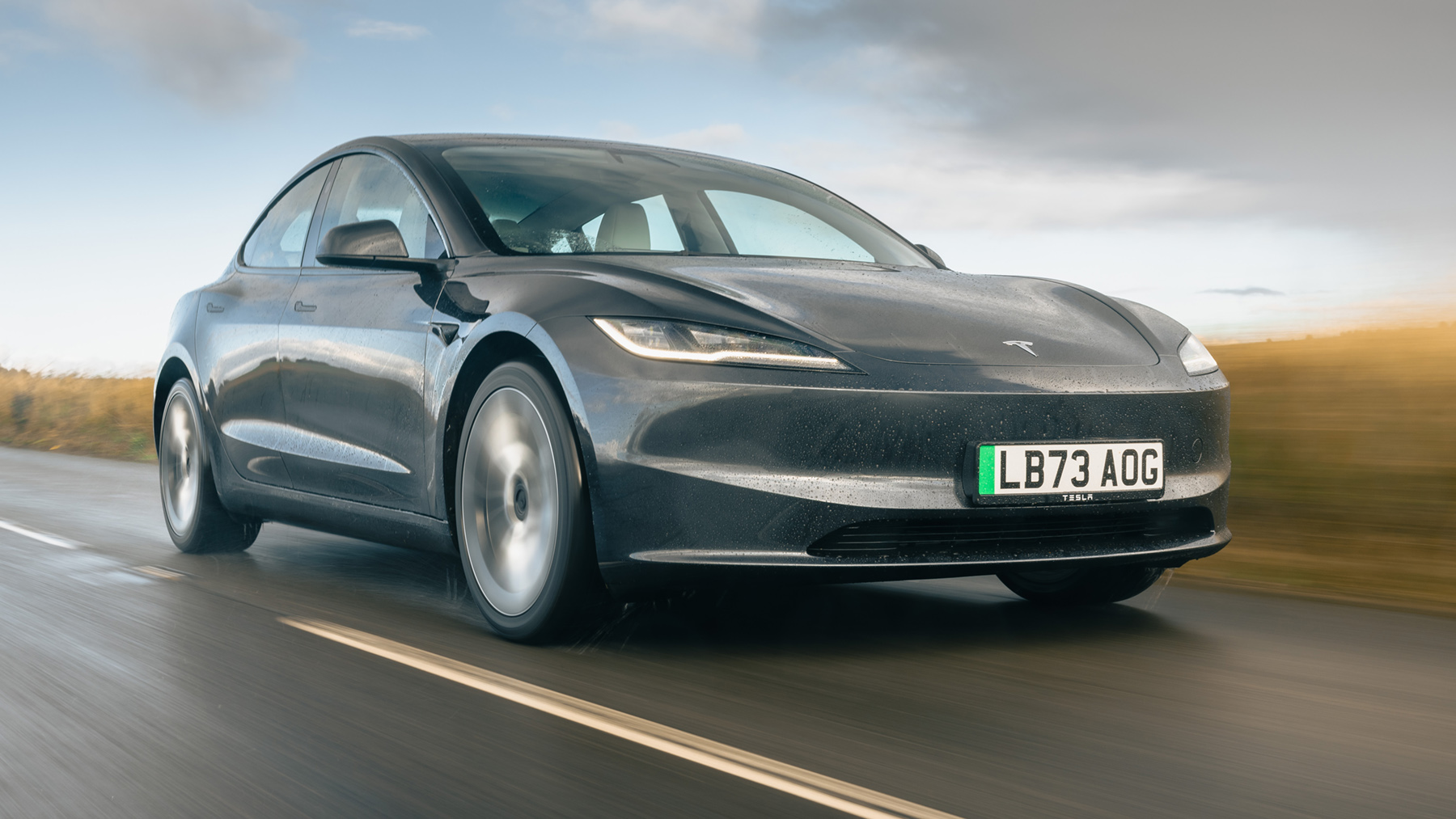
The Tesla Model 3 is the brand’s entry-level electric saloon and remains one of the most influential EVs on the market. Originally launched in 2017, it received a facelift in 2023 that refreshed its look and improved efficiency without changing the car’s core appeal.
Along with the Model Y, it is the only Tesla currently sold in the UK. The Model 3 has helped Tesla transition from a disruptor to a benchmark for the electric vehicle industry, influencing both design and technology expectations.
The refreshed Model 3 looks sleeker than the original, with a subtle front nose update, sharper headlights, and minor rear tweaks. These adjustments improve aerodynamics, helping the entry-level rear-wheel-drive car achieve 318 miles of WLTP range, while the Long Range rear-wheel-drive reaches 436 miles.
The Long Range all-wheel-drive and Performance models achieve 390 miles and 328 miles, respectively. Top speed is capped at 125 mph for most models, with the Performance variant reaching 163 mph. The facelift keeps the design sophisticated and modern while retaining the car’s characteristic minimalist Tesla styling.
The Model 3 offers four powertrain options. The base rear-wheel-drive model has 279 horsepower, the Long Range RWD 315 horsepower, Long Range AWD 491 horsepower, and the Performance AWD 510 horsepower.
Acceleration ranges from 6.1 seconds for the entry car to 3.2 seconds for the Performance model. Tesla’s permanent-magnet electric motors provide smooth and responsive power delivery, making the Model 3 efficient and enjoyable for daily driving as well as spirited runs.
Inside, the cabin is largely unchanged but benefits from higher-quality materials and the familiar minimalist design. Tesla’s touchscreen controls most functions, and the 2023 facelift includes updated hardware.
Notable changes include indicators integrated into the steering wheel, no stalks, and the car’s ability to receive over-the-air software updates. The system is intuitive once learned, though some features, such as automatic wipers, can struggle in British weather. The seats, while visually striking, are practical and resilient.
On the road, the Model 3 is refined, quiet, and efficient. Handling is engaging for a mid-sized saloon, although tight UK town streets expose the limitations of its minimalist design.
Despite these quirks, the car feels stable and comfortable on highways and longer journeys. The Tesla Supercharger network enhances usability, providing fast, convenient, and reliable charging that is integrated seamlessly into the driving experience.
Prices start at around $51,000 for the base model, rising to just under $76,000 for the Performance AWD. The Model 3 combines efficiency, range, usability, and affordability in a package that remains compelling despite its age.
It has set a global standard for EVs, redefining expectations for technology, driving experience, and infrastructure integration. The Tesla Model 3 continues to be one of the most interesting and influential electric cars in the world.
6. Polestar 3: The Swedish-Scandi Electric SUV
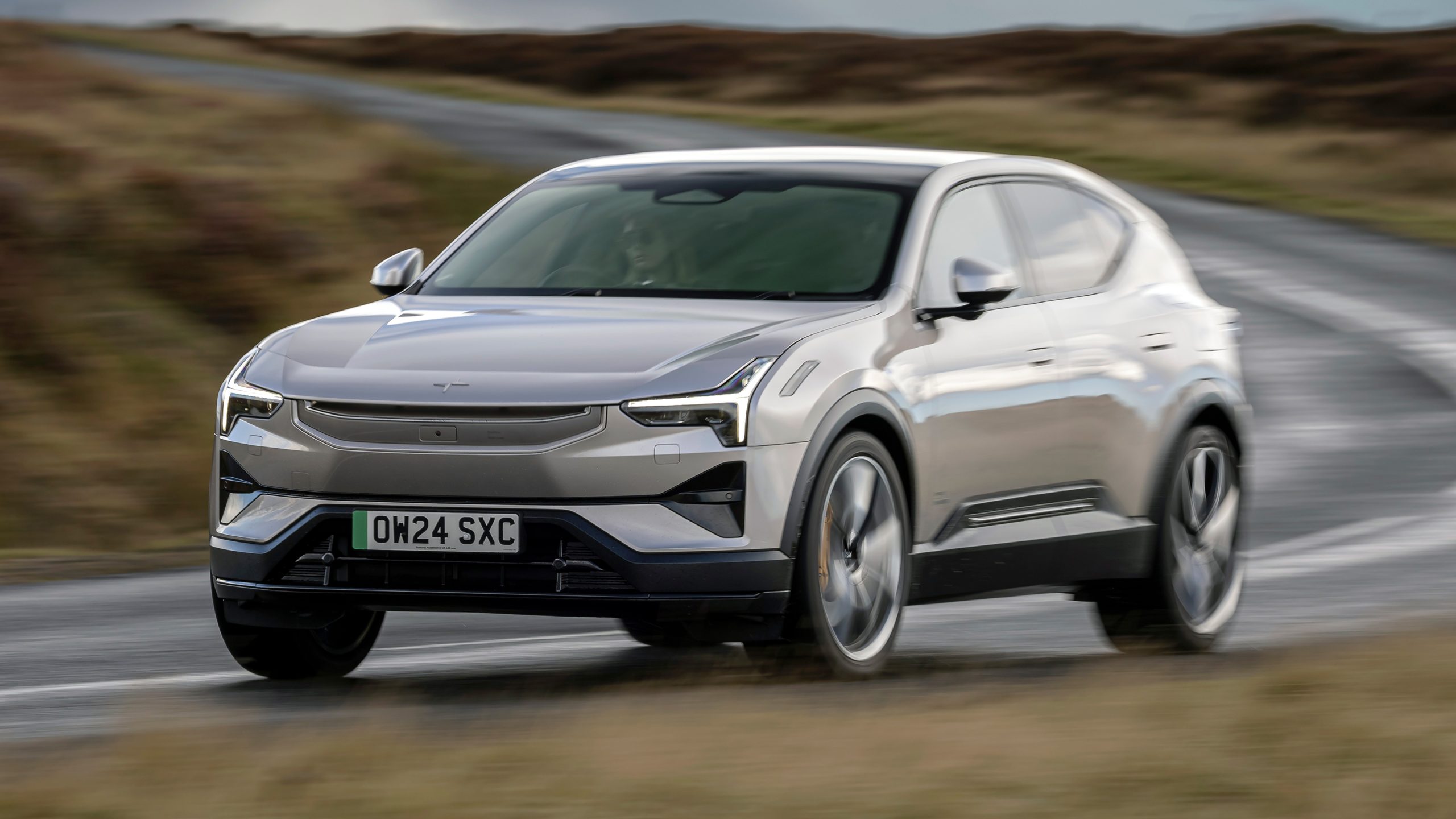
The Polestar 3 is a full-size, five-seat electric SUV that combines Scandinavian design with Chinese manufacturing under the Geely Group. Positioned against vehicles such as the BMW iX and Jaguar I-Pace, it delivers a premium feel with expressive yet restrained styling.
The low roofline, clean surfaces, and minimalist interior distinguish it from conventional, aggressive petrol SUVs, while a subtle S-duct in the bonnet and low-drag profile enhance aerodynamic efficiency.
The launch edition comes with dual-motor all-wheel drive and a 107 kWh usable battery. Two versions are available at launch: the Long Range Dual Motor, offering 390 miles WLTP range and a calm yet rapid drive, and the Long Range Dual Motor Performance Pack, providing slightly higher power, torque, and styling enhancements, with a 348-mile range.
A single-motor version will be offered later at a lower price. Both launch models accelerate to 62 mph in under five seconds, impressive for a 2.6-tonne SUV.
Built on Volvo’s SPA2 scalable product architecture, the Polestar 3 shares its underpinnings with the EX90 but is only a five-seater. The interior is spacious, tech-focused, and largely composed of recycled materials.
Advanced features include torque-vectoring, air suspension with adaptive damping, and numerous driver assistance systems. The cabin feels premium without being ostentatious, emphasizing comfort and usability.
On the road, the Polestar 3 feels lighter and more agile than most large SUVs. Torque vectoring ensures confident cornering, and acceleration is brisk without sacrificing composure. The air suspension provides a firm but controlled ride, balancing sporty handling with comfort. Its calm authority and smooth performance make it a capable vehicle for long journeys while still allowing spirited driving when desired.
Polestar emphasizes environmental responsibility, publishing audited CO2 figures for the 3. With a manufacturing footprint under 25 tonnes CO2-equivalent, the SUV repays its production emissions faster than equivalent petrol models when driven on UK electricity. The exterior is calm and considered, appealing to buyers seeking a sophisticated alternative to traditional SUV styling.
The Polestar 3 represents a natural evolution from the Polestar 2. It delivers premium build quality, thoughtful manufacturing, and a driving experience that combines authority, comfort, and performance.
While the interface may challenge those who frequently adjust vehicle settings, the Polestar 3 is a strong, fresh option in the electric SUV market, ideal for buyers looking for a refined, understated, and capable alternative to mainstream brands.
Also Read: 5 Cars With Perfect Proportions vs 5 That Miss the Mark
7. Mercedes GLC: The New Face of the Best-Selling SUV
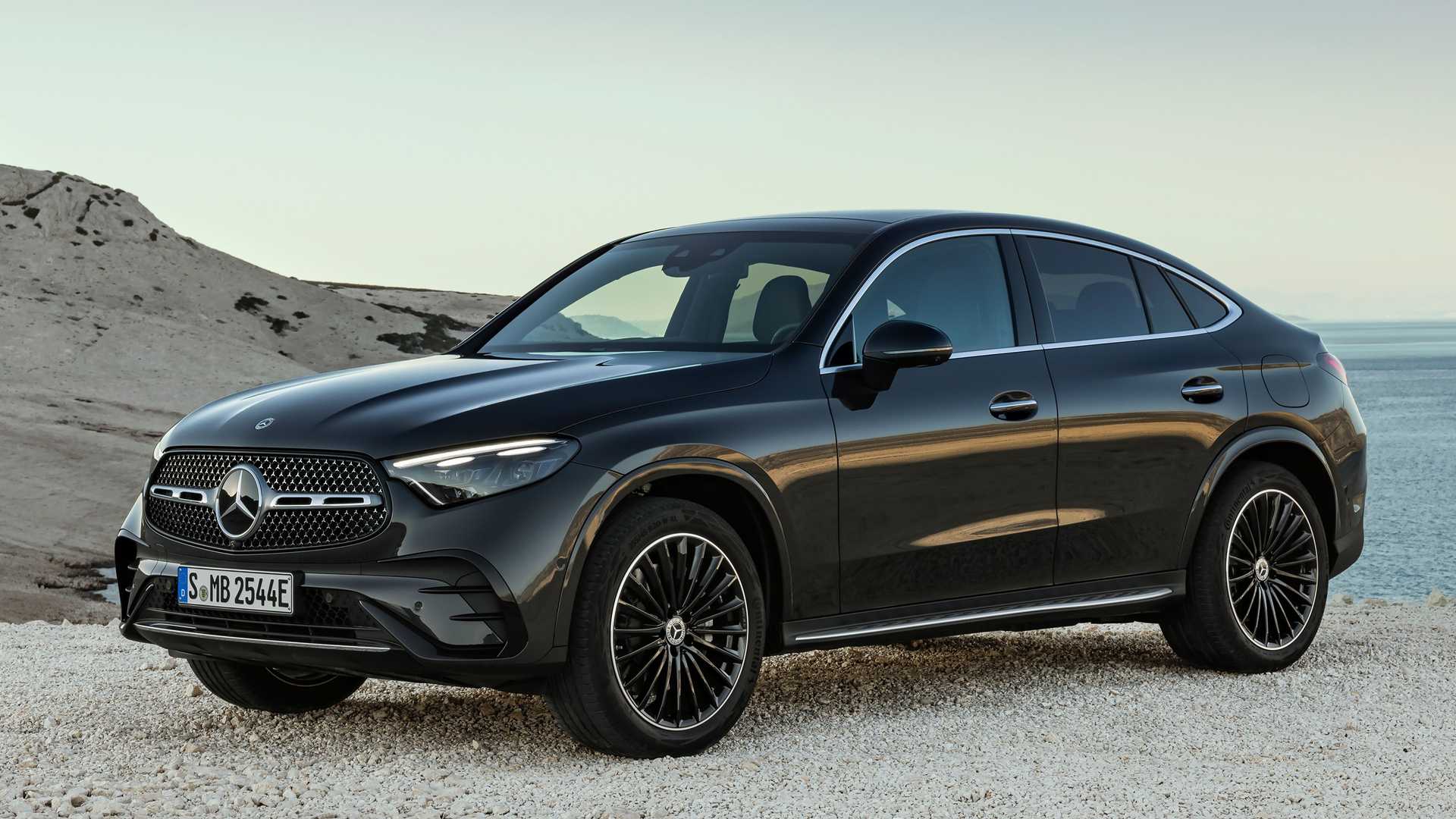
The new Mercedes GLC has been fully revealed, showcasing a bold new grille that dominates the front end. The illuminated grille features 942 dots that can animate to greet and bid farewell to the driver, while the three-pointed star also lights up.
Mercedes says the design draws on classic models like the 600 Pullman, W108, and W126, moving away from the swoopy EQC styling. This design language is expected to spread across the brand’s lineup.
At launch, the GLC comes as an all-electric GLC 400 4Matic. It has two electric motors producing 483 horsepower and all-wheel drive, with the front motor disconnecting when not needed to improve efficiency. A two-speed gearbox at the rear further enhances performance.
The 94 kWh usable lithium-ion battery offers a WLTP range of 443 miles, making it one of the longest-range electric SUVs on sale, though slightly behind the BMW iX3. The 800-volt system enables rapid charging at 330 kW, adding 186 miles of range in just 10 minutes. Mercedes’ own charging parks allow drivers to reserve a plug.
Optional air suspension uses Google Maps data to keep the car low for efficiency, while optional rear-wheel steering reduces the turning circle to 11.2 meters. The GLC can tow up to 2.4 tonnes.
Braking features up to 300 kW of regenerative power, with over 99 percent of slowing done via recuperation. A standard heat pump prepares the car for winter driving, and despite the large grille, the GLC maintains a drag coefficient of 0.26 Cd.
The wheelbase is 84 mm longer, providing more legroom and headroom. Boot space is 570 liters, with an additional 128 liters in the frunk. The top-spec model features a seamless 39.1-inch Hyperscreen with matrix-backlight technology, 11 selectable display styles, and ambient lighting integration.
A panoramic roof is standard, with optional switchable glass displaying 162 illuminated stars. Mercedes also offers a fully vegan interior certified by The Vegan Society. Physical buttons have been partially reintroduced alongside haptic controls.
The GLC uses AI systems from Microsoft and Google, allowing the MBUX Virtual Assistant to respond conversationally. The cabin balances futuristic tech with practicality, making the GLC a flagship example of Mercedes’ electric-first strategy. The new GLC blends high-tech features, range, and luxury while preparing the model line for multiple powertrains, including hybrids and petrol versions in some markets.
The Audi A6 e-tron is a new all-electric executive car available as a Sportback or Avant (estate), combining aerodynamic efficiency with a stylish, modern design. The Sportback boasts a drag coefficient of 0.21 Cd with optional camera mirrors replacing traditional wing mirrors, while the Avant achieves 0.24 Cd.
Both versions feature a flush grille, air curtains, and body-colored trim for aerodynamic optimization, alongside expressive lighting and a nine-panel panoramic roof that can switch from translucent to transparent.
The A6 e-tron is built on Audi’s PPE platform, shared with the Q6 e-tron and future Macan EV. The architecture includes an 800-volt system for rapid charging up to 278 kW. Battery options include 75.8 kWh for entry-level models and 94.9 kWh for Performance and Quattro versions.
The base Sportback delivers 322 horsepower and 383 miles of WLTP range, while the Avant manages 361 miles. The Performance single-motor rear-wheel-drive version produces 375 horsepower, extending range to 463 miles for the Sportback and 437 miles for the Avant. The Quattro twin-motor AWD model develops 456 horsepower with 438/417 miles of range, depending on body style.
Rear-wheel-drive models provide responsive handling and a clear sense of rear-drive dynamics. Acceleration varies from 6.0 seconds for the base model to 4.5 seconds for the Quattro AWD, with all versions electronically limited to 130 mph.
Torque delivery is smooth, and the car remains stable even in adverse conditions. The single-motor Performance Avant offers a strong balance of range, speed, and everyday usability, suitable for long-distance driving with ease.
The A6 e-tron carries forward Audi’s minimalist cabin design with high-quality materials, spacious seating, and advanced infotainment. Aerodynamic efficiency is complemented by functional details such as active inlet shutters and flush door handles. Lighting features include customizable daytime running lights and a rear display capable of showing warning messages to vehicles behind.
Pricing in the UK starts at approximately $80,000 for the base Sportback, with the larger battery and twin-motor models adding around $10,000 and $7,000, respectively. The Avant adds roughly $2,000.
The A6 e-tron blends executive comfort, efficiency, and practicality with cutting-edge EV technology, offering a compelling choice for buyers seeking a premium German electric vehicle in either a sleek sedan or estate configuration.
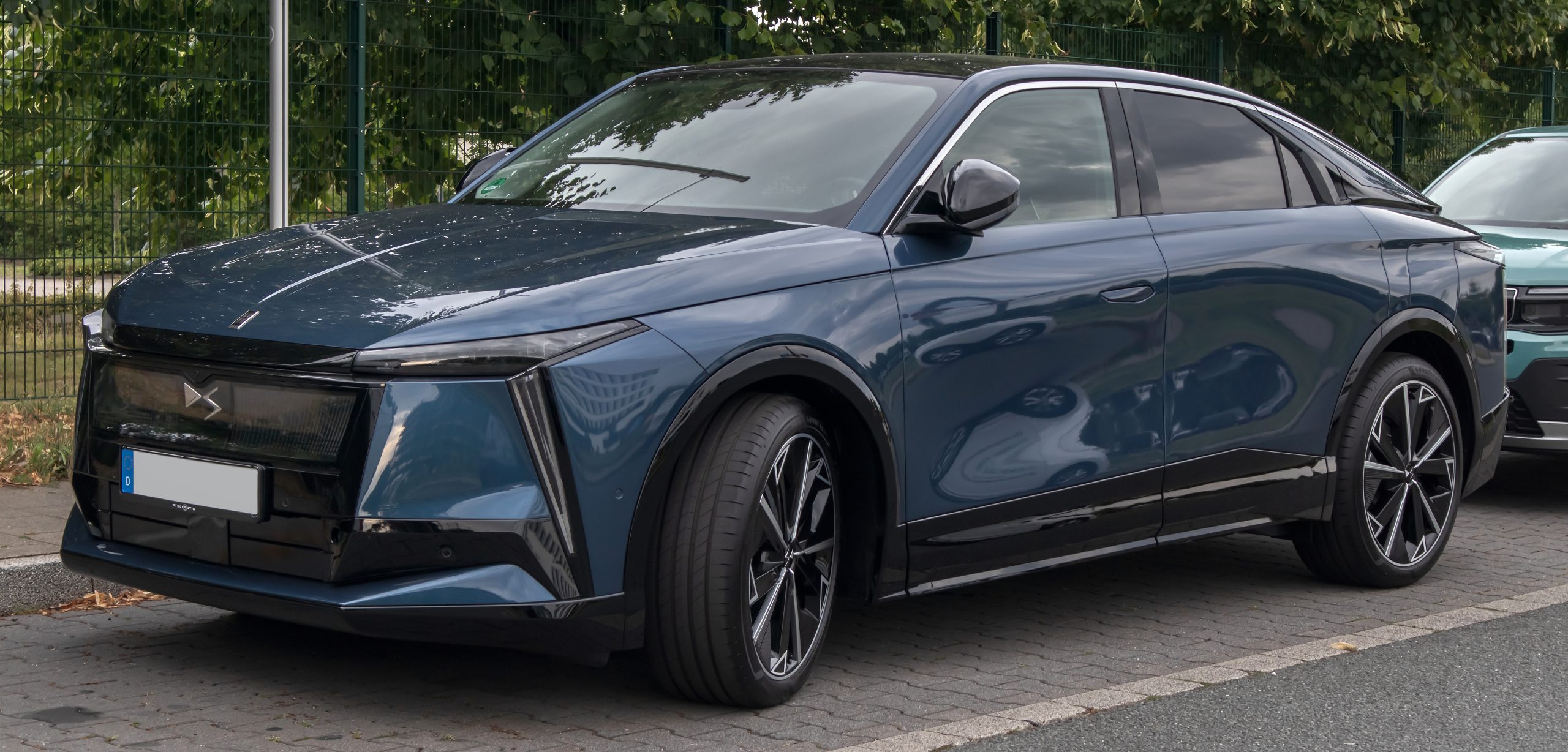
8. DS No 8: French Luxury with Electric Ambition
The DS No 8 is a five-seat electric hatch with a slightly crossover-like profile, produced by the French luxury brand DS, part of Stellantis. Its fastback tail and lower roofline reduce aerodynamic drag, contributing to a headline WLTP range of up to 466 miles.
While sharing its chassis and powertrain with the Peugeot e-3008 and Vauxhall Grandland Electric, the DS has a longer wheelbase, lower bulkhead, and more reclined rear seats, allowing the roof to sit lower without compromising passenger comfort.
DS emphasizes luxury and detail with sharp, angular surfaces, LED light blades, and 3D pixelated diamonds. Grille and badge illumination is offered on higher trims, and a two-tone paint option adds visual flair.
Aerodynamic optimization extends to flush door handles and carefully managed airflow, enhancing efficiency and high-speed range. While not conventionally beautiful, the No 8 delivers a distinct presence that stands out among competitors.
Two battery sizes are available. The 74 kWh pack powers a single front motor with 260 horsepower, reaching 62 mph in 7.7 seconds, and a WLTP range of 358 miles. The larger 97.2 kWh battery increases front-motor output to 280 horsepower but adds weight, taking 7.8 seconds to 62 mph.
Twin-motor all-wheel drive delivers 375 horsepower and accelerates to 62 mph in 5.4 seconds, while offering 429 miles of WLTP range. The car’s quiet, supple suspension supports comfort without compromising handling, giving a balanced driving experience.
The cabin emphasizes comfort and individuality, with striking materials, non-traditional color schemes, and soft, supportive seats. Ride quality is smooth and progressive, maintaining control while reducing driver fatigue. Accelerator and brake responses are harmonized, creating a sense of calm and well-being. DS prioritizes a luxurious atmosphere alongside the technological competence expected from a modern EV.
Rivals include the Polestar 2 and 4, Audi Q4 Sportback, Tesla Model 3 and Model Y, BMW i4 and iX2, and Cupra Tavascan. DS markets the No 8 as a premium, Parisian-inspired vehicle, though it is manufactured in southern Italy with French motors and batteries. The car is competitively priced for a luxury EV and excels in driving refinement, range, and comfort.
The DS No 8 delivers a quietly unusual, refined, and competent package. It glides effortlessly, calms the driver, and provides ample electric range. While sales have been modest, it represents one of the strongest French luxury offerings in the modern EV market.
9. Mercedes-Benz CLA Electric: High-Tech Saloon with Exceptional Range
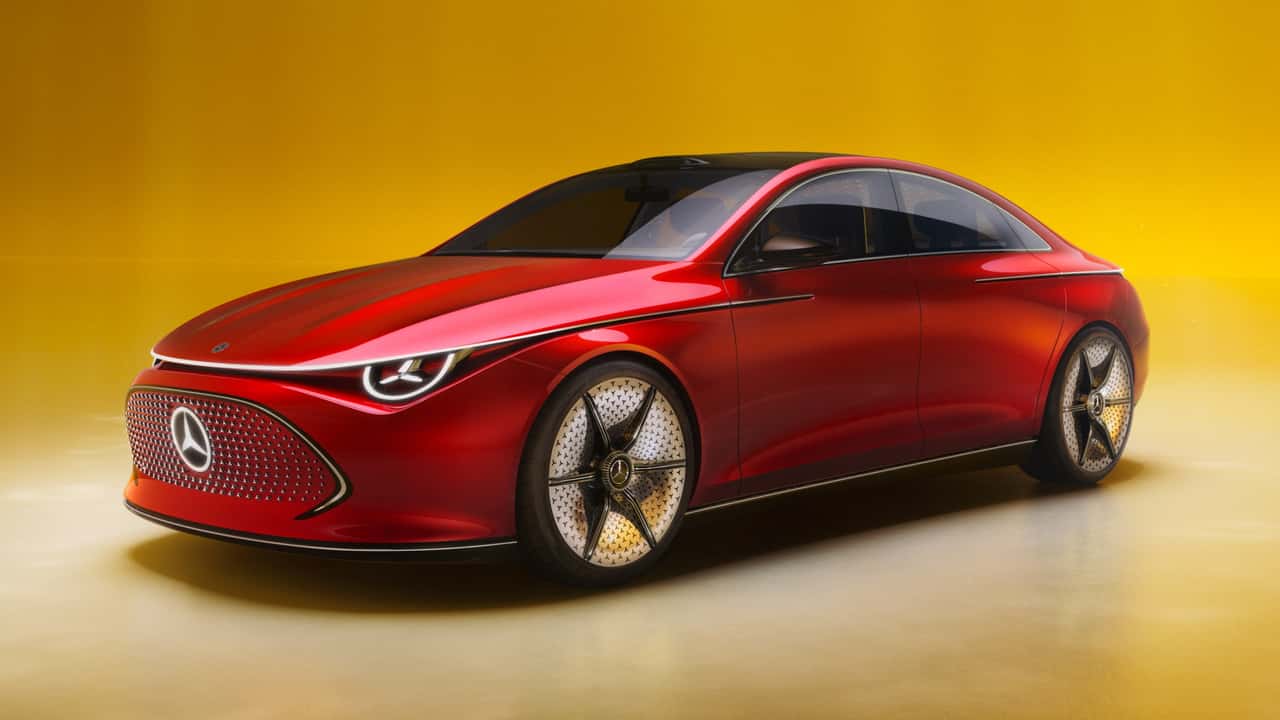
The all-electric Mercedes-Benz CLA combines advanced battery technology, artificial intelligence, and efficiency-focused design. Built around an 85kWh NMC battery, the CLA 250+ rear-wheel drive model can achieve up to 484 miles of WLTP range under ideal conditions. A smaller 58kWh LFP battery will arrive later for urban-focused drivers.
Efficiency gains come from a more energy-dense battery, a multi-source heat pump, flat underfloor, aero-optimized suspension, and a two-speed gearbox on the rear motor to keep it running at optimal rpm on motorways. Rapid charging capability allows 201 miles of range in just ten minutes and 10-80 percent charge in 22 minutes, supported by a 320kW DC system.
The CLA retains a familiar swoopier silhouette, avoiding radical changes to appeal to conservative buyers. Star motifs dominate the design, from the optional multibeam LED headlights to the animated nose stars, rear lights, and upcoming electrochromic glass roof in the Shooting Brake. While handsome without being flashy, the styling is understated, offering elegance rather than aggressive presence.
Two main trims are available at launch. The CLA 250+ uses a 268bhp rear-mounted motor, while the CLA 350+ adds a front motor for around 350bhp and all-wheel drive. Both share the 85kWh battery. The rear-drive 250+ reaches 62mph in 7.7 seconds, while the 350+ provides stronger acceleration. Performance is competent rather than thrilling, prioritizing energy efficiency and usability over aggressive sportiness.
Inside, Mercedes-Benz focuses on high-tech integration. The MB-OS system links to cloud-based AI from Google and Microsoft, allowing advanced interactions with the Virtual Assistant, which can remember user settings and adjust responses based on detected moods.
Star-studded detailing continues inside, and convenience is maximized with intelligent navigation and energy-management systems. The cabin emphasizes comfort and user-friendly tech rather than flamboyance.
The CLA competes with similarly sized electric sedans such as the Tesla Model 3, BMW i4, Polestar 2, Hyundai Ioniq 6, and VW ID.7. Pricing for the 250+ starts at $56,200, with higher trims and the 350+ AWD version to follow.
While the CLA is not a thrilling drive, it excels in range, fast-charging capability, and intelligent systems, making it a highly practical, technologically advanced electric saloon. Its convenience and sophistication make it ideal for long journeys and daily use, delivering a calm, efficient, and considered driving experience.
10. BMW iX3: Next-Generation Electric SAV
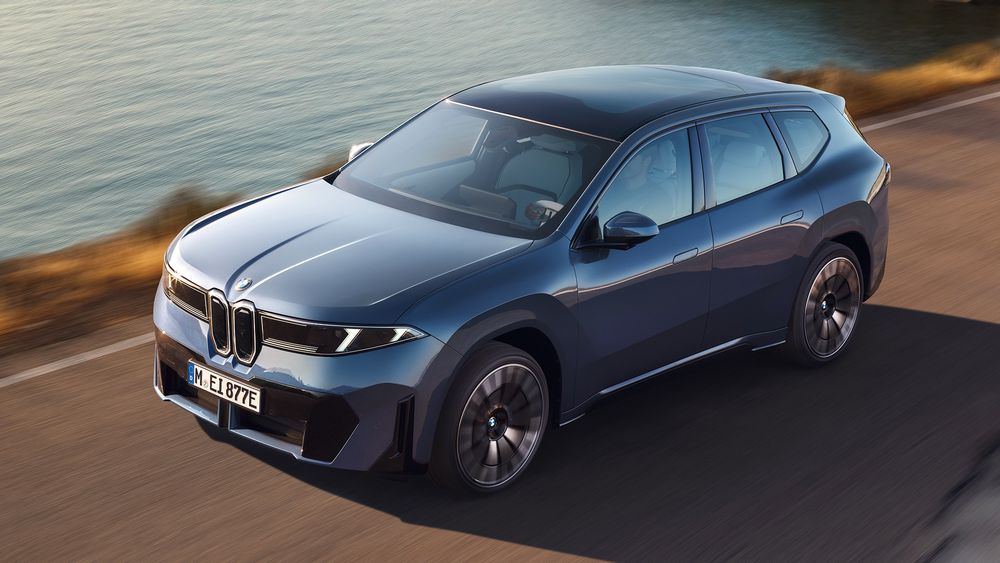
The new BMW iX3 50 xDrive marks a significant step in the brand’s Neue Klasse strategy, offering cutting-edge electric technology in a Sports Activity Vehicle format. Its dual motors deliver 463bhp and 476lb ft of torque, enabling 0-62mph in 4.9 seconds and a limited top speed of 130mph.
Power comes from a 108.7kWh usable battery with 800-volt architecture, providing up to 500 miles WLTP range. Rapid charging is supported at 400kW, allowing 231 miles to be added in just 10 minutes, representing a 30% improvement over previous BMW eDrive technology. The sixth-generation eDrive also reduces weight by 10%, energy losses by 40%, and production costs by 20%.
The iX3 features BMW’s “digital nervous system,” using four high-performance computers to control nearly every function. The Heart of Joy module manages motors, brakes, steering, and safety systems with extreme responsiveness.
Regenerative braking accounts for 98% of slowing down, and the Soft Stop function ensures smooth deceleration. This advanced electronics architecture enhances efficiency and driver confidence, while a leather-free cabin integrates the Panoramic iDrive display, 3D head-up display, and a central infotainment screen for a modern, connected experience.
BMW has reinterpreted its design language with a more aggressive stance, sharp creases, and a substantial roof spoiler. The vertical kidney grille pays homage to the 1960s Neue Klasse models, with optional illumination and animated greetings.
The drag coefficient of 0.24 helps maximize efficiency, complemented by a sleek exterior and well-proportioned Sports Activity Vehicle shape. Inside, recycled materials feature throughout the cabin, and rear legroom is noticeably increased. Boot capacity stands at 520 litres, with an additional 58 litres in the front trunk.
Sustainability is a focus, with around one-third of the iX3 constructed from secondary raw materials. The factory in Hungary operates fossil-fuel-free during normal production, and the carbon footprint of the 50 xDrive is 34% smaller than its predecessor over a full lifecycle.
UK deliveries begin 7 March 2026, starting at $72,400. Three trim levels are available: iX3, iX3 M Sport, and iX3 M Sport Pro. Standard features include 20-inch wheels, heated front seats, extensive driver assistance technology, cruise control, and an AI-enabled electric charging flap that detects user interaction.
The BMW iX3 50 xDrive combines high-range capability, rapid charging, advanced electronics, and sustainability in a refined Sports Activity Vehicle package. Its aggressive styling, futuristic interior, and efficient drivetrain position it as a technologically forward and practical electric SAV, capable of competing with long-range EVs while maintaining BMW driving characteristics.
11. Mercedes-Benz EQS: Flagship Electric Saloon
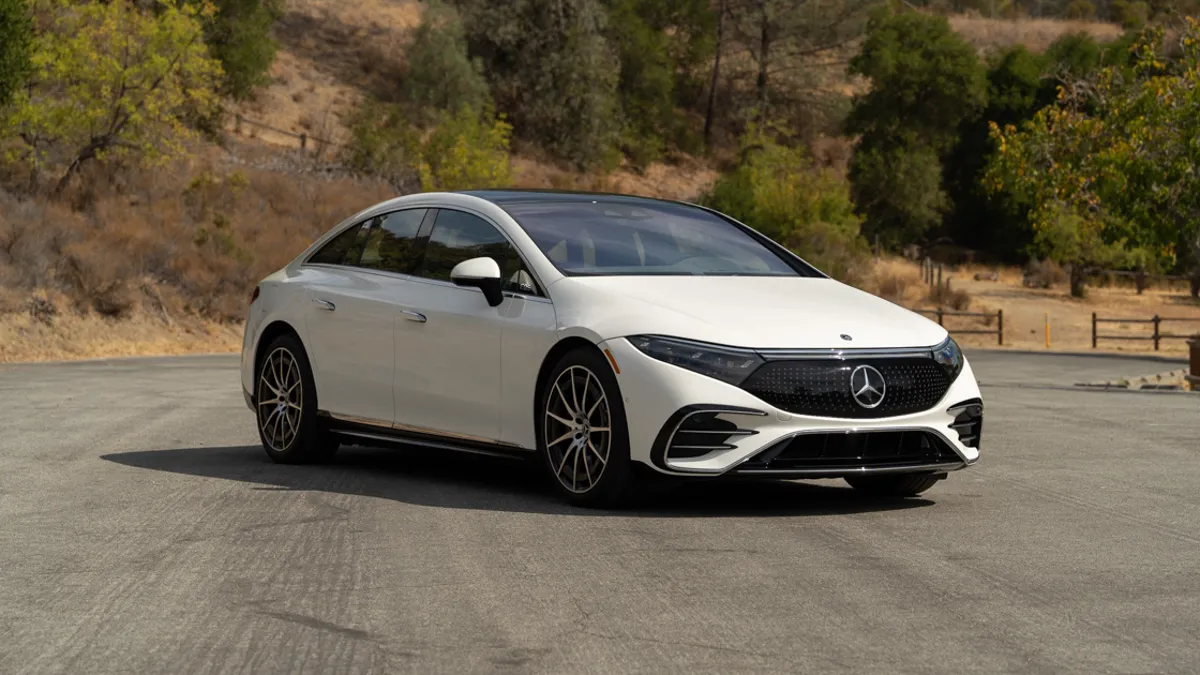
The EQS is Mercedes’ first fully bespoke electric saloon, not an electrified S-Class, and a clear statement of intent for the brand’s EV future. Built on a clean-sheet platform, it accommodates a massive 107.8kWh battery and stretches five metres long, combining flagship luxury with cutting-edge electric technology.
The range begins with the EQS 450+ featuring a single 325bhp rear motor. It hits 62mph in 6.2 seconds and has a top speed of 130mph. Stepping up to the EQS 580 4Matic with twin motors reduces range to 420 miles but cuts the 0-62mph sprint by almost two seconds.
A high-powered AMG EQS variant exceeding 700bhp will follow, targeting rivals such as the Porsche Panamera Turbo S and Tesla Model S Plaid. Up to 10 degrees of rear-wheel steering enhances manoeuvrability while air suspension adjusts to road imperfections and communicates with other Mercedes vehicles for smoother rides.
The EQS is the world’s slipperiest production car, with a drag coefficient that maximizes efficiency. Doors open and close automatically, emphasizing convenience and futuristic design. The cab-forward profile and smooth surfaces complement the minimalist aesthetic while helping achieve the car’s aerodynamic performance.
Inside, leather and tasteful, unpolished wood create a luxurious environment. The optional 55-inch Hyperscreen spans the dash, uniting three digital displays under a single glass panel and showcasing Mercedes’ ambitious interface design. The cabin combines EV smoothness with classic Mercedes refinement, offering a serene and comfortable experience whether driving or being driven.
The EQS supports up to 200kW charging, slower than some rivals, but still achieves 10 to 80 percent recharge in about 30 minutes on a 350kW rapid charger. Two-hour charging on a 50kW post is also feasible. MercedesMe Charge allows access to multiple charging networks with a single card, simplifying the user experience.
The EQS demonstrates that Mercedes now takes EVs seriously. It blends all the advantages of electric propulsion, including quiet, smooth, and effortless performance, with the polish, refinement, and attention to detail expected from a flagship saloon.
The Hyperscreen and touch-sensitive controls may challenge some users, and the real-world range can drop significantly under typical driving, but the EQS remains a complete luxury EV experience.
It signals the start of a fully electric Mercedes lineup, with smaller EQ models and e-AMGs set to follow, challenging both traditional combustion rivals and EV newcomers on all fronts.
12. Lucid Air: Luxury Performance EV
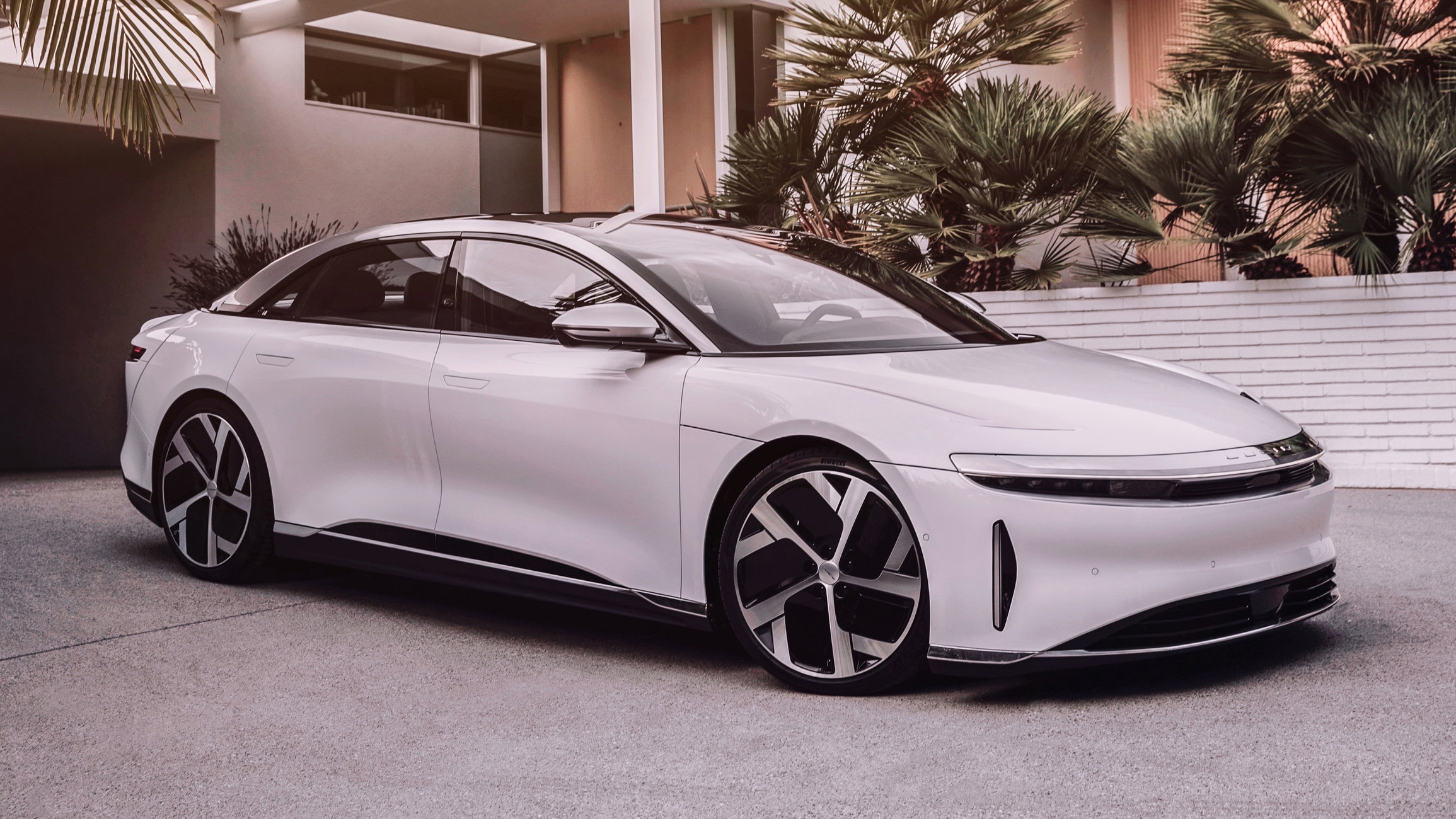
The Lucid Air is a luxury electric sedan from the relatively young automaker Lucid, which has quickly positioned itself as a serious contender to the Tesla Model S. The Gravity SUV will be the company’s second vehicle, but the Air has already captured attention with its combination of performance, range, and refinement.
At the top of the range, the tri-motor Lucid Air Sapphire produces 1,234hp and 1,430lb ft of torque. It accelerates from 0-60mph in 1.89 seconds and reaches a top speed of around 204mph. Despite this extreme performance, the Air maintains superb handling thanks to a well-engineered independent suspension and steel springs.
This setup gives the car a sharp, communicative feel that rivals high-end sports sedans like the BMW M5 and Mercedes-Benz S-Class, while providing an engaging driving experience through twisty roads.
Even the base model, the single-motor 430hp Air Pure, starts at $69,900 and delivers strong performance. While it lacks the mind-bending numbers of the Sapphire, it still showcases Lucid’s attention to ride, handling, and efficiency.
The Air employs a traditional steel-sprung suspension instead of air suspension, allowing for precise feedback and a sportier feel. Its aerodynamics are exceptional, with a drag coefficient of 0.20, matching top EVs like the Mercedes EQS.
The design balances efficiency with visual appeal, resulting in a sleek, low-slung silhouette. Lucid recruited engineers from Aston Martin, Jaguar, and Formula One aerodynamics to ensure the Air handles and flows as beautifully as it looks.
The cabin is a showcase of futuristic design with cascading digital displays that stretch from the driver’s side across the console. While visually striking, this tech-forward approach can make day-to-day adjustments, such as mirrors or drive settings, overly complex.
Custom profiles help, but the interface still demands attention. Despite this, the interior feels more comfortable and “homely” than comparable Tesla cabins, combining luxury materials with a sense of occasion.
The Lucid Air delivers sharp dynamics, impressive range, and luxurious, tech-rich interiors. From the entry-level Pure to the extreme Sapphire, it demonstrates that a new automaker can set high standards for performance EVs. It comes close to perfection in many areas, but the complex interface can distract from daily usability.
The Air establishes Lucid as a serious player in the luxury EV segment, leaving high expectations for future models, including the upcoming Gravity SUV. It is an EV that rivals should watch closely.
Choosing an electric vehicle no longer means compromising on range, comfort, or performance. The twelve cars highlighted here demonstrate how far EV technology has come, offering real-world distances that satisfy daily commutes, long road trips, and everything in between.
From budget-friendly crossovers to high-end sedans and performance beasts, these vehicles combine efficiency, innovation, and driving pleasure without sacrificing practicality.
They show that range is no longer a limitation but a feature that can enhance the ownership experience, making electric cars a genuine alternative to traditional combustion vehicles.
Whether you seek luxury, versatility, or sheer exhilaration, these long-range EVs prove there is an option for every driver ready to embrace the electric future. With advancements continuing at a rapid pace, the possibilities for long-distance, low-emission driving have never been more exciting.
Also Read: 10 Cars That Offer Thrills Without Sacrificing Practicality
