
Most cars lose value faster than ice melts in the sun. You drive a new vehicle off the dealership lot, and within three years, it’s worth half what you paid.
Then you hit 100,000 miles, and people treat your car like it’s ready for the scrapyard. But here’s what smart buyers know: some vehicles actually hold their value so well that high mileage barely matters.
Think about this for a moment. You could buy two different SUVs for the same price today. Five years later, after both have covered 100,000 miles, one might be worth $12,000 while the other still commands $28,000.
That’s a $16,000 difference in your pocket simply because you chose wisely. This isn’t luck or magic; it’s about understanding which vehicles buyers trust enough to pay top dollar for, even with serious miles showing.
Depreciation is the biggest cost of vehicle ownership, bigger than fuel, insurance, or maintenance. Yet most people obsess over monthly payments while completely ignoring how much value their car will lose. That’s backwards thinking.
A vehicle that holds its value essentially costs you less to own, even if the purchase price was higher. When you sell or trade it in, you recover more of your investment.
So which vehicles actually hold their value after crossing that psychological 100,000-mile barrier? Which ones do buyers actively seek out and pay premium prices for, even with high odometers?
We’re about to reveal ten vehicles that laugh at depreciation. These are the smart investments, the ones that won’t leave you crying when it’s time to sell. Some might surprise you, but the data doesn’t lie. Let’s get into it.
10 Depreciation-Defying Champions
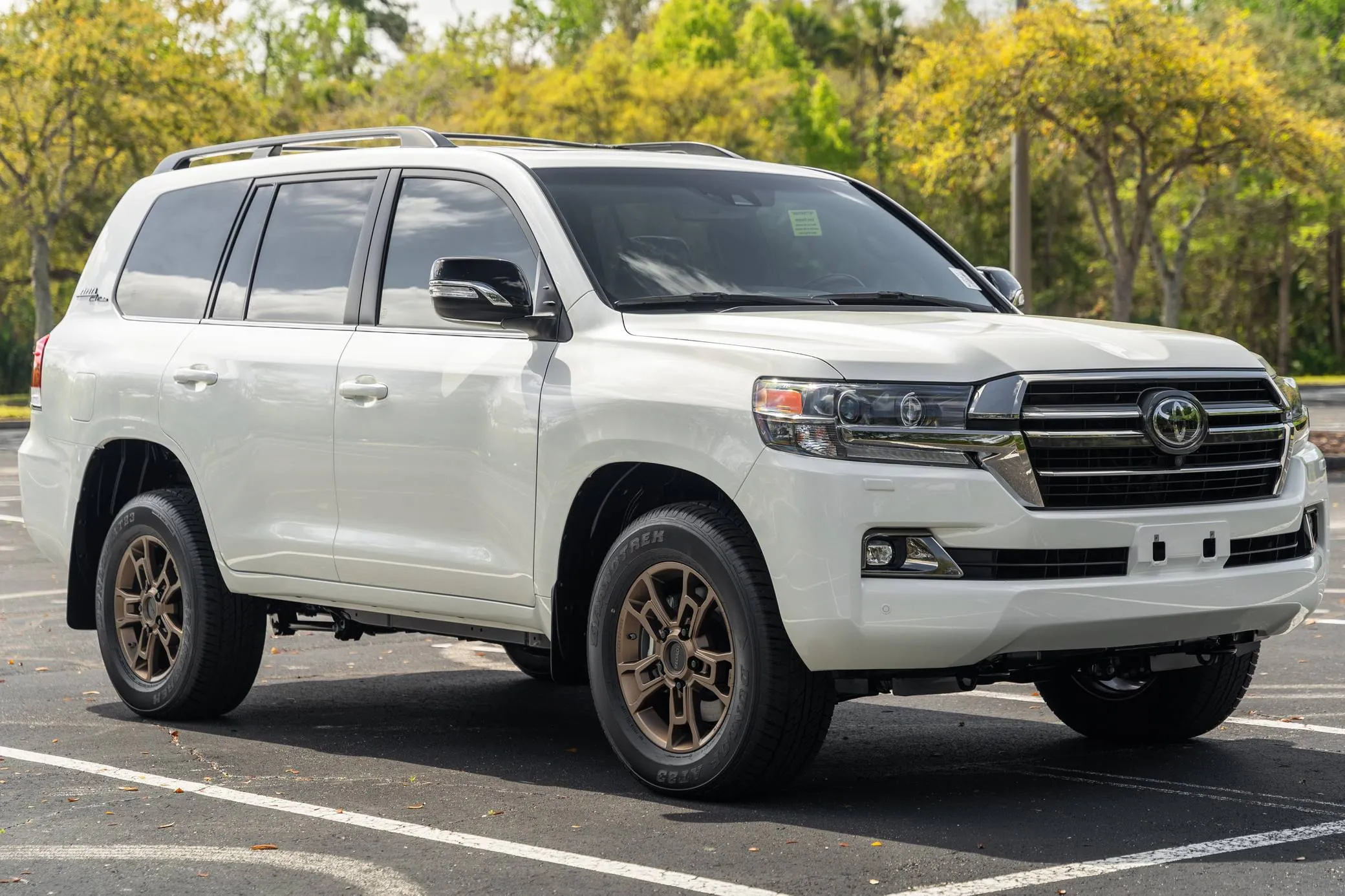
1. Toyota Land Cruiser Heritage Edition (2021)
Nothing holds value quite like a Land Cruiser, and the 2021 Heritage Edition represents the final year of this legendary SUV in North America.
Buyers recognized this immediately, and these vehicles started appreciating the moment they left dealerships. Even with 100,000 miles, clean examples sell for 85-90% of their original sticker price. That’s absolutely insane for a vehicle that’s been driven that much.
Because Land Cruisers are built to last 500,000 miles and beyond. People buying them at 100,000 miles know they’re getting a vehicle barely broken in. These SUVs work in the Australian outback, African safaris, and Middle Eastern deserts where failure means death.
That reputation for indestructibility translates directly into resale value that defies normal depreciation curves.
Production numbers were limited, creating scarcity that drives up prices. Toyota only allocated a few thousand Heritage Edition units to North America, and demand massively exceeded supply.
When you combine limited availability with legendary reliability and the fact that Toyota discontinued the model, you get a perfect storm for value retention. Collectors and enthusiasts are already treating these as future classics.
The cost of ownership actually becomes negative in some cases. Buyers who purchased Heritage Editions at MSRP and drove them 100,000 miles are now selling them for more than they paid.
Let that sink in. You could have driven this SUV for free, covered massive mileage, and still made money. That’s not a car; that’s an investment that also happens to provide transportation.
Condition matters, but even rough examples command strong prices because the mechanical components are what buyers really want.
A Land Cruiser with faded paint and worn seats but a solid drivetrain will sell quickly because buyers know they can fix cosmetic issues cheaply.
You can’t fix a questionable engine or transmission affordably, but Land Cruisers rarely have those problems. That’s why people happily pay premium prices even for high-mileage examples.
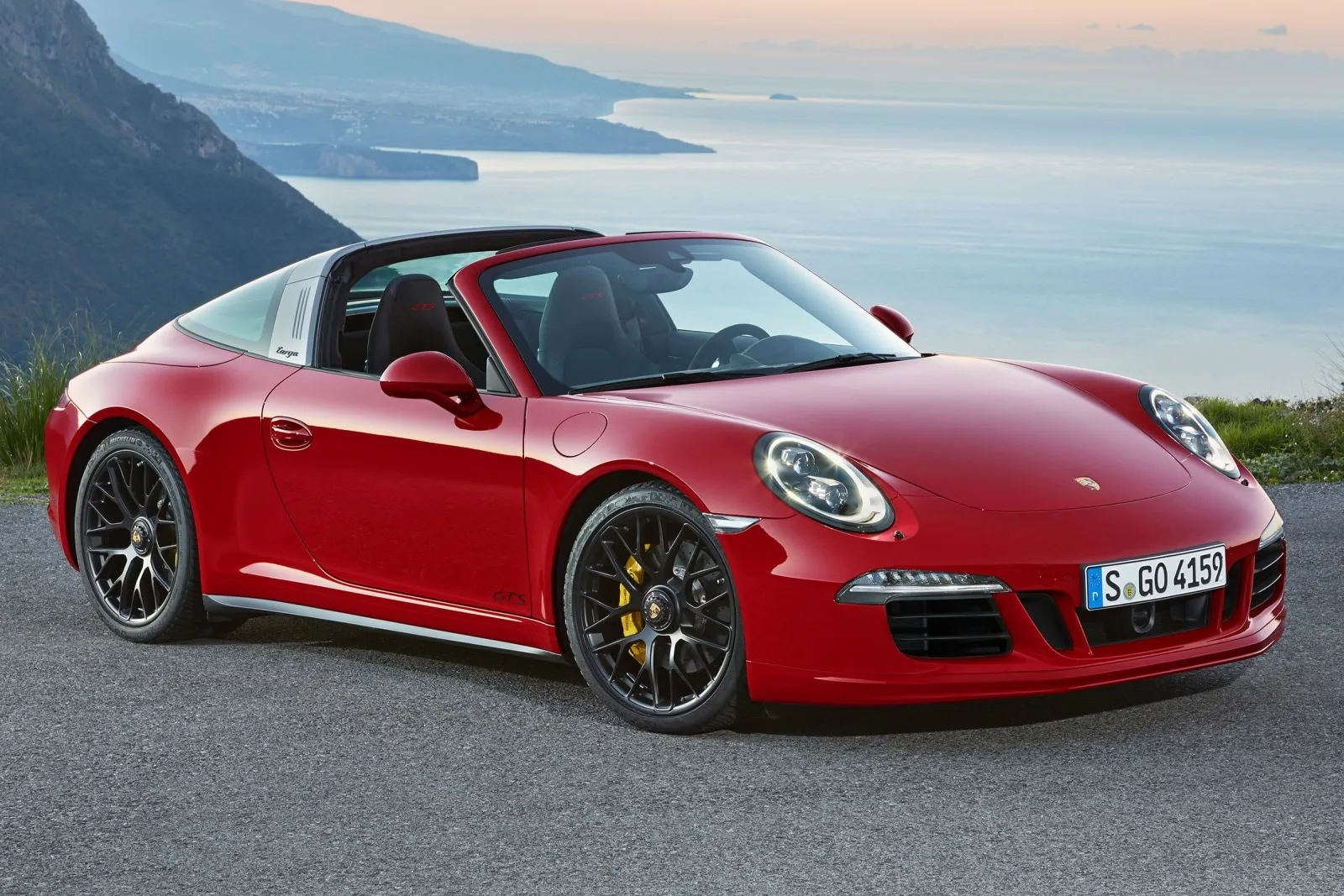
2. Porsche 911 Carrera (2016)
Sports cars usually depreciate horribly because they’re expensive to maintain and appeal to a limited buyer pool.
Not the 911. This 2016 Carrera model, after covering 100,000 miles, still retains roughly 65-70% of its original value. For a six-figure sports car, that’s remarkable. Most exotic sports cars lose 60% of their value in the first three years alone.
German engineering excellence built the 911’s reputation over decades. These cars last when properly maintained, and there’s extensive documentation of 911s with 300,000+ miles still running strong.
Buyers trust that a well-maintained high-mileage 911 will continue providing thrilling performance for many more years. That confidence translates directly into prices that stay stubbornly high.
Enthusiast demand never wavers because the 911 represents the pinnacle of driver engagement. People who want this specific driving experience can’t get it anywhere else, which means they’ll pay whatever it takes to own one.
This passionate buyer base keeps demand strong even for older, higher-mileage examples. When demand consistently exceeds supply, prices stay elevated.
Air-cooled versus water-cooled debates aside, modern 911s like this 2016 model prove that Porsche figured out how to make reliable performance cars. Early water-cooled 911s had some issues, but by 2016, Porsche had worked out the problems.
These cars run forever with proper care, and maintenance records prove everything to potential buyers. A 100,000-mile 911 with complete service history will sell for far more than one with sketchy documentation.
Timeless styling means the 911 never looks dated. A 10-year-old 911 looks modern, a 20-year-old 911 looks classic, and a 30-year-old 911 looks iconic.
This design longevity prevents the sharp depreciation that hits cars looking obviously dated after a few years. People will always want a 911 because the shape is eternally cool, and eternal cool means eternal demand means eternal value.
Also Read: 5 Vehicles That Retain Pride of Ownership vs 5 That Don’t
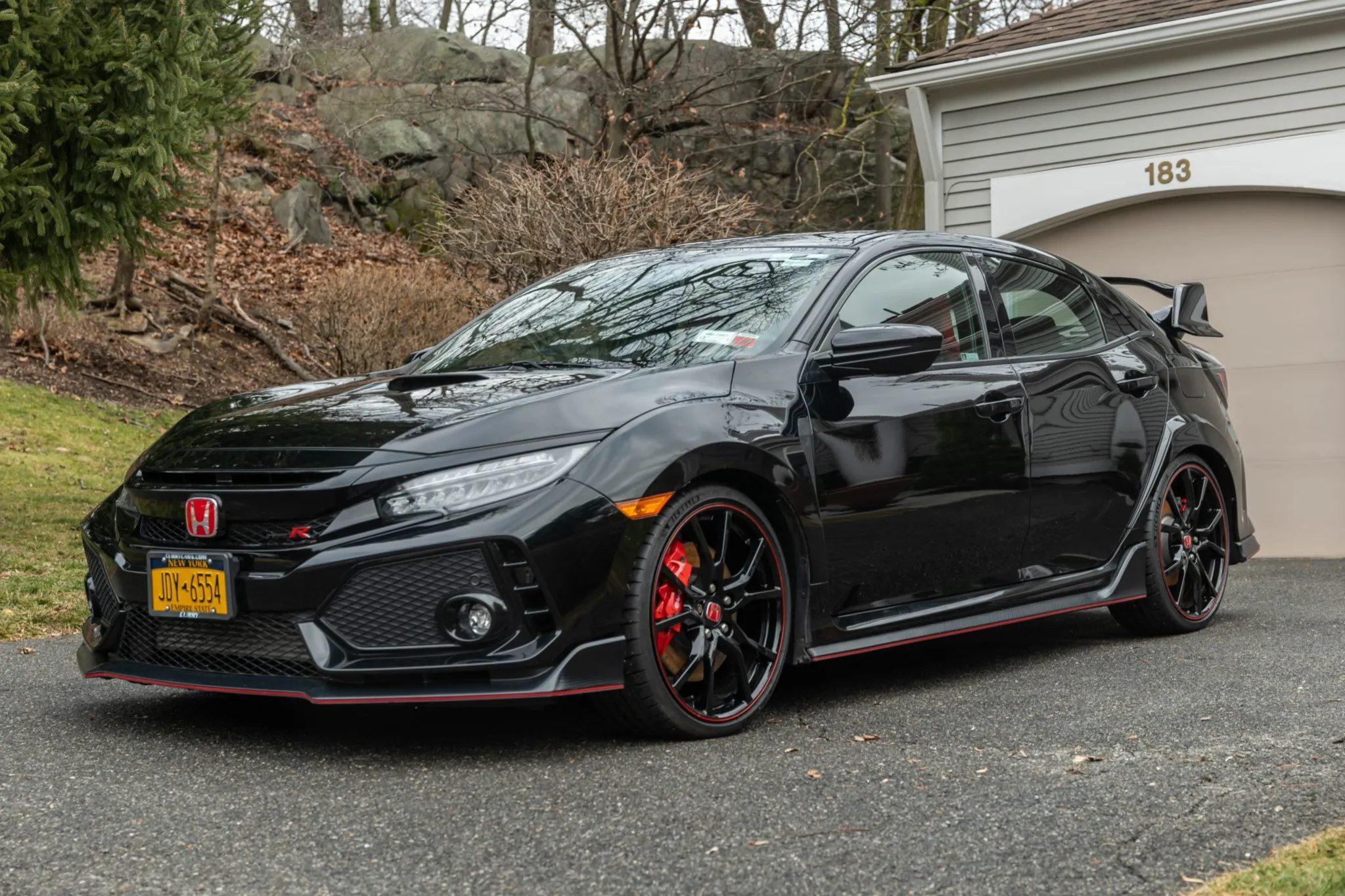
3. Honda Civic Type R Touring (2019)
Hot hatches typically depreciate like normal cars because they’re still just hatches underneath. Honda’s Civic Type R demolishes this pattern.
After 100,000 miles, these cars retain about 75-80% of their original value. That’s better than many luxury SUVs and trucks. How does a modified Civic hold value this well? Because Honda built something genuinely special.
Limited production creates scarcity that drives up prices. Honda never flooded the market with Type Rs, carefully controlling supply to maintain exclusivity. Dealers initially marked them up $10,000 or more over MSRP, and people paid because they wanted in on something rare.
That initial premium has softened, but these cars still command prices that shock people expecting normal Civic depreciation. Performance credentials are legitimate and well-documented.
This isn’t just a body kit and badges; the Type R set front-wheel-drive Nurburgring lap records and proved itself on track against cars costing twice as much.
Enthusiasts respect real performance, and they’ll pay for it even after a car has covered serious miles. Track rats want these specifically because they’re proven fast and mechanically bulletproof.
Reliability matches boring Civic models because Honda engineered the K20C1 turbo engine to last. Yes, it makes 306 horsepower, but it’ll do that reliably for hundreds of thousands of miles with proper maintenance.
Honda’s reputation for building indestructible engines applies even to its high-performance variants. Buyers trust that a 100,000-mile Type R will keep running strong, which keeps resale values high. Cult following among Honda enthusiasts creates steady demand at every price point.
People who grew up dreaming about Integra Type Rs and Civic SiRs now have the money to buy Type Rs, and they don’t care about mileage as long as the car is clean. This built-in customer base ensures these cars will always find buyers willing to pay more than you’d expect for a high-mileage hatchback.
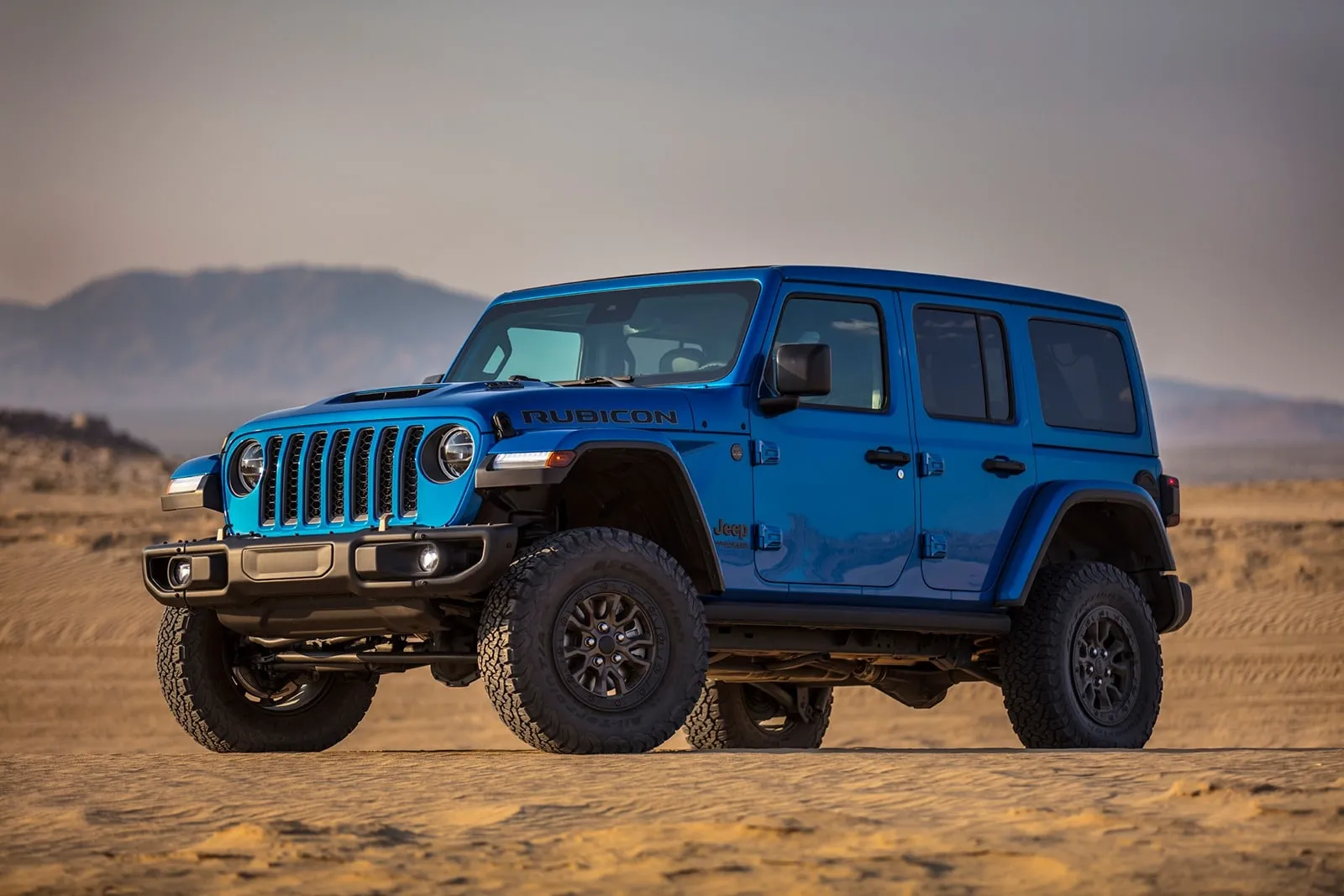
4. Jeep Wrangler Rubicon 392 (2021)
V8 power in a Wrangler body created instant demand that shows no signs of slowing. The 2021 Rubicon 392 with its 6.4-liter HEMI engine retains approximately 80-85% of its value even after 100,000 miles.
That’s pickup truck territory, and it’s unheard of for a vehicle that’s technically a convertible SUV. But Wranglers have always held value better than almost anything else.
Off-road capability gives Wranglers utility that other SUVs can’t match. Buyers purchasing high-mileage examples often want them specifically for trail use, rock crawling, or overlanding.
These activities actually benefit from a vehicle that’s already broken in and has some cosmetic wear. Nobody cries over scratching a $60,000 truck, but a $50,000 Wrangler with 100,000 miles? Scratch away, that’s what it’s for.
Modification potential attracts buyers who plan to customize anyway. Many Rubicon 392 buyers immediately start swapping parts, so buying one with miles already on it saves money versus starting with a new one.
That aftermarket scene creates demand for used examples because enthusiasts view them as blank canvases ready for personalization.
Fun factor never gets old, which is why people happily buy high-mileage Wranglers. Driving with the top and doors off provides an experience that doesn’t diminish with age or mileage. A 100,000-mile Wrangler is just as fun as a new one, assuming major components are still healthy.
That sustained enjoyment means buyers don’t discount high-mileage examples as heavily as they would boring transportation appliances.
Production constraints limit supply even though demand is massive. Jeep can’t build these fast enough, which creates waiting lists and dealer markups.
When new ones are hard to get, used examples with some miles become attractive alternatives for buyers who don’t want to wait. This dynamic keeps used prices inflated because they’re still cheaper and more available than ordering a new one.
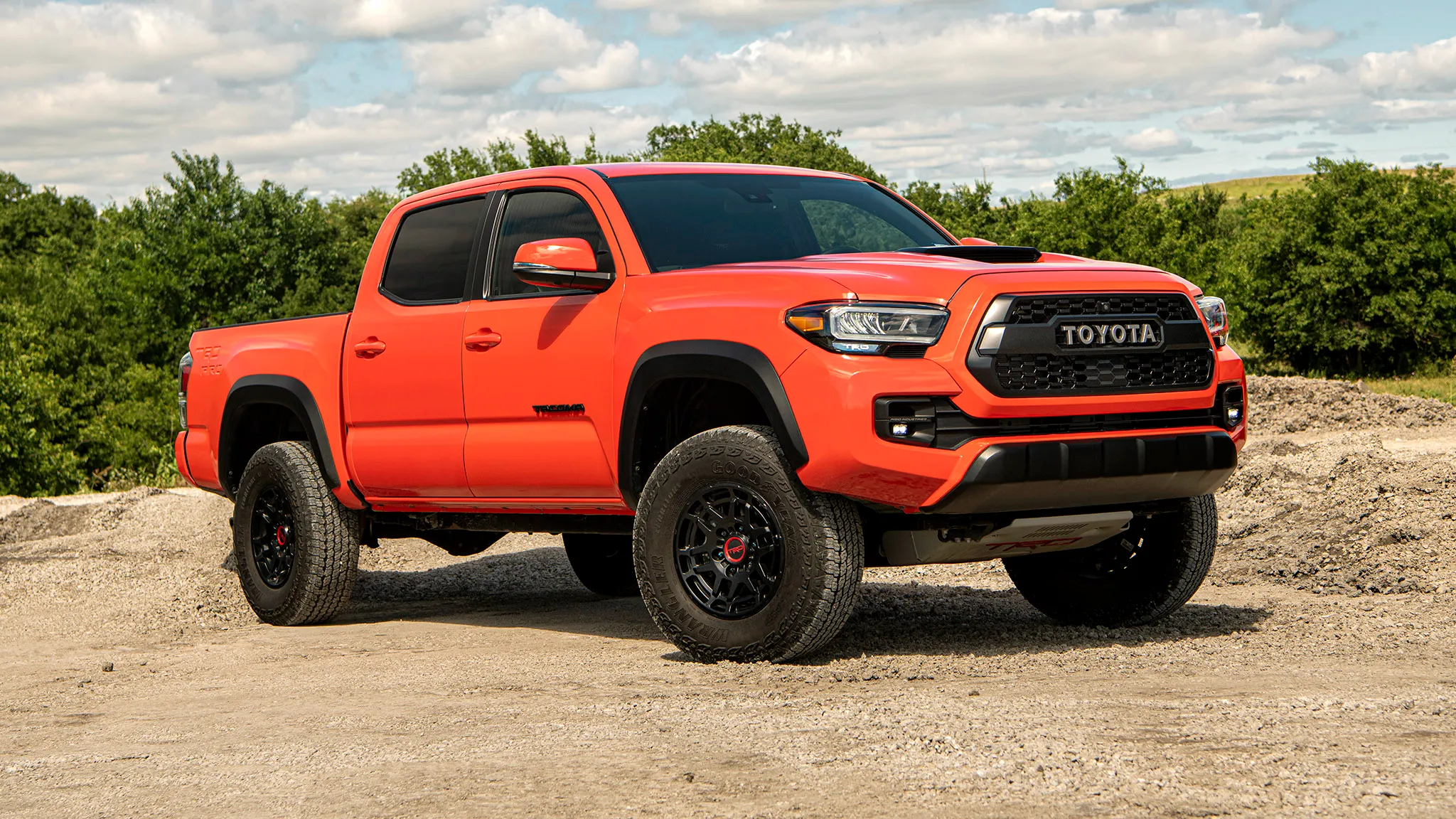
5. Toyota Tacoma TRD Pro (2020)
Mid-size trucks aren’t supposed to hold value like this, but the 2020 Tacoma TRD Pro laughs at conventional wisdom.
After 100,000 miles, these trucks still sell for 75-80% of their original MSRP. That’s better value retention than most luxury cars, sports cars, or full-size trucks. Toyota’s reputation for reliability combines with off-road capability to create a truck that buyers trust completely.
Desert racing heritage from Baja 1000 victories gives the TRD Pro serious credibility. These aren’t mall crawlers with fake off-road parts; they’re legitimate trail machines that can handle serious abuse.
Buyers know this, which is why they’re willing to pay premium prices even for trucks that have clearly been used hard. A muddy, scratched TRD Pro with 100,000 miles tells a story, and buyers want to continue that adventure.
Parts availability and dealer support make ownership easy, even for high-mileage examples. Toyota dealers stock everything needed to keep Tacomas running, and independent shops have decades of experience working on them.
This accessibility reduces the risk of buying a used truck because you know repairs won’t be complicated or impossible. Buyers pay more when they’re confident they can keep their truck running affordably.
Manual transmission availability sets the TRD Pro apart in a market where manual trucks have basically disappeared.
Enthusiasts seeking that engagement will pay extra for the privilege, and they don’t care about mileage as long as the clutch isn’t toast. This creates a passionate buyer segment willing to pay well above market rates for manual TRD Pros specifically.
Resale demand stays consistently strong because Toyota intentionally limits TRD Pro production. You can’t walk into a dealer and buy one; you usually wait months or pay a markup.
This scarcity at the new level filters down to the used market, where high-mileage examples still command prices that would be considered excellent for most vehicles with half the mileage. Supply and demand work perfectly in Tacoma’s favor.
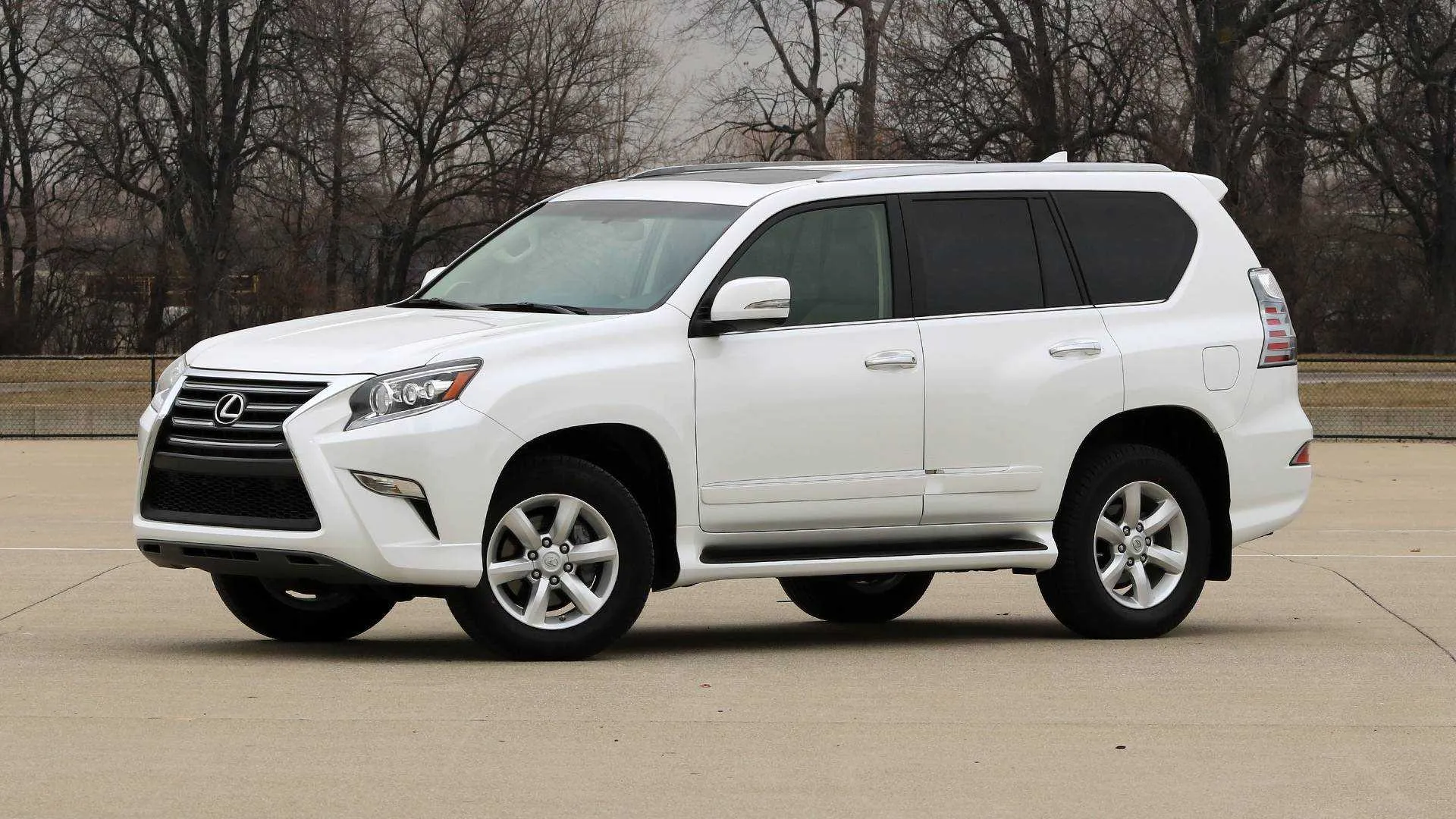
6. Lexus GX 460 Premium (2018)
Luxury SUVs depreciate viciously, except when they’re actually Land Cruisers wearing Lexus badges. The 2018 GX 460 Premium retains about 70-75% of its value after 100,000 miles because buyers recognize it’s built on the proven Land Cruiser Prado platform.
That mechanical foundation provides reliability that luxury European SUVs can’t match, which directly translates into higher resale values.
Body-on-frame construction means this SUV can handle abuse that would destroy unibody crossovers. Buyers wanting a luxury vehicle that can also tow, go off-road, and survive rough conditions gravitate toward the GX specifically because it’s overbuilt compared to competitors.
That capability ensures demand from buyers seeking substance along with luxury, and those buyers pay accordingly.
V8 power from the bulletproof 4.6-liter engine eliminates concerns about reliability. This motor has proven itself in millions of vehicles, rarely failing even when neglected.
Buyers know a 100,000-mile GX 460 with proper maintenance will easily reach 300,000 miles, which makes high-mileage examples less risky than low-mileage European alternatives that might explode any day.
Interior quality holds up better than most luxury vehicles. Lexus uses materials and construction methods that last, so a 100,000-mile GX often looks nearly as good inside as a new one.
This visual quality helps resale values because buyers don’t feel like they’re buying a worn-out vehicle. If it looks good and drives well, the odometer reading becomes less relevant.
Family buyers seeking safe, reliable transportation for kids and gear choose the GX because it’ll last through multiple children’s entire childhoods.
That long-term ownership mentality creates demand for used examples from families wanting the same attributes at lower prices. These buyers specifically seek high-mileage GXs that are broken in but still have plenty of life left, keeping demand and prices elevated.
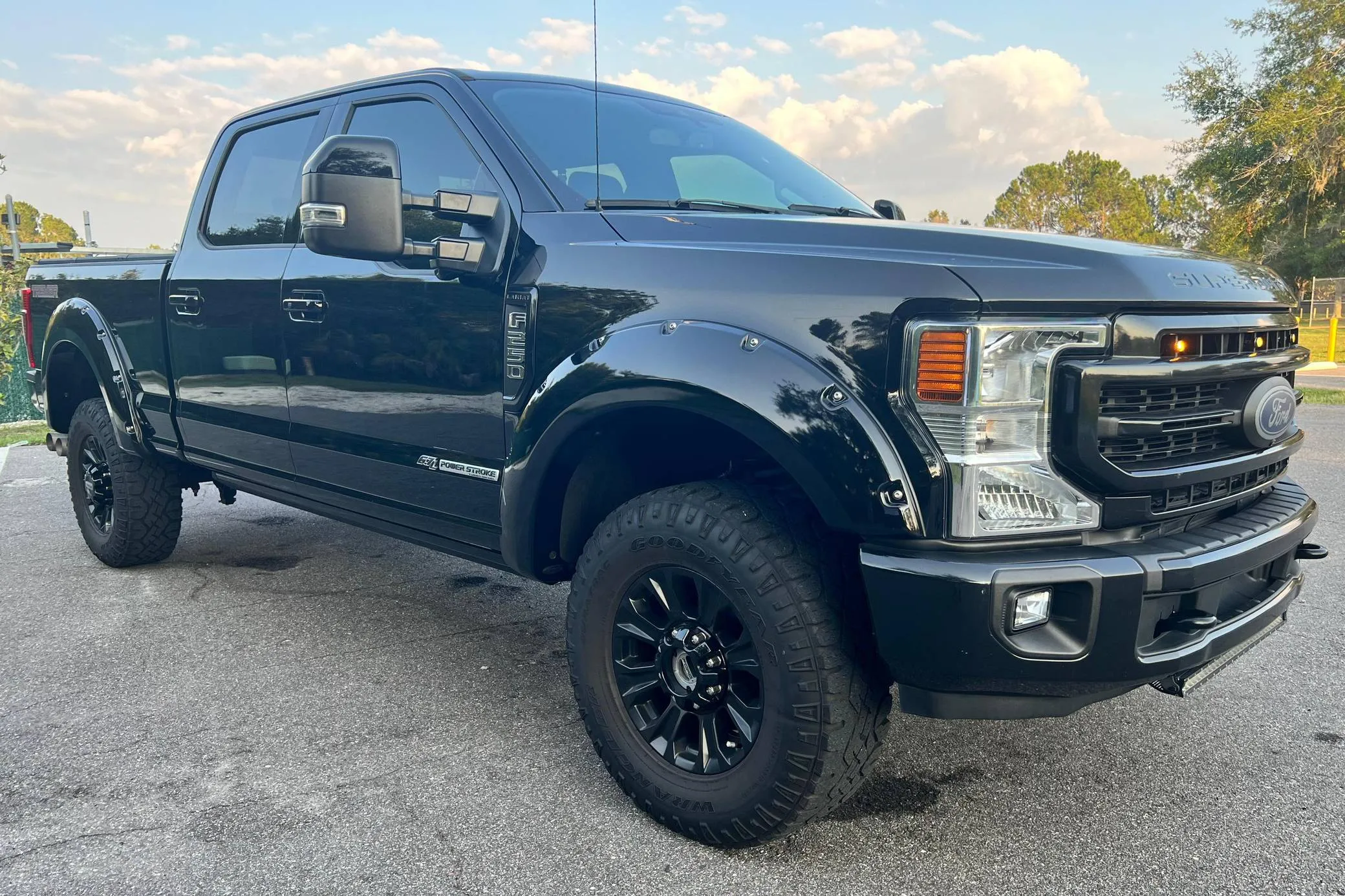
7. Ford F-250 Super Duty Lariat Tremor (2020)
Heavy-duty pickup trucks hold value better than almost any vehicle category, and the 2020 F-250 Lariat Tremor proves this brilliantly. After 100,000 miles, these trucks retain approximately 70-75% of their value.
That’s better than most luxury sedans retain after just three years and 30,000 miles. Working trucks don’t depreciate the same way passenger vehicles do because 100,000 miles is barely broken in for a diesel truck.
Commercial buyers need reliable trucks that can work every day, and they’ll pay premium prices for proven models. A 100,000-mile F-250 diesel has proven it can handle the work, which actually makes it more valuable to some buyers than an untested new truck.
That’s backwards from passenger car thinking, but it makes perfect sense in the commercial vehicle world, where downtime costs money.
Towing capability doesn’t diminish with mileage as long as maintenance is proper. A well-maintained 100,000-mile F-250 can still tow its rated 15,000+ pounds safely, which is what buyers care about.
They need a truck that works, not one that’s pristine. This focus on capability rather than cosmetics means high-mileage work trucks command strong prices.
Tremor package adds off-road capability that contractors and outdoor enthusiasts value highly. These features don’t wear out like interior trim; they’re mechanical components that last.
A Tremor with 100,000 miles still has all the off-road gear that made it special when new, which means buyers get those features at a discount without losing functionality.
Diesel engine longevity is well-documented, with many examples exceeding 500,000 miles. Buyers understand this, which is why they’ll pay seemingly crazy prices for “high-mileage” diesel trucks.
What’s high mileage for a gas car is nothing for a diesel truck. This knowledge gap between casual observers and actual truck buyers keeps prices elevated on examples that outsiders would consider worthless.
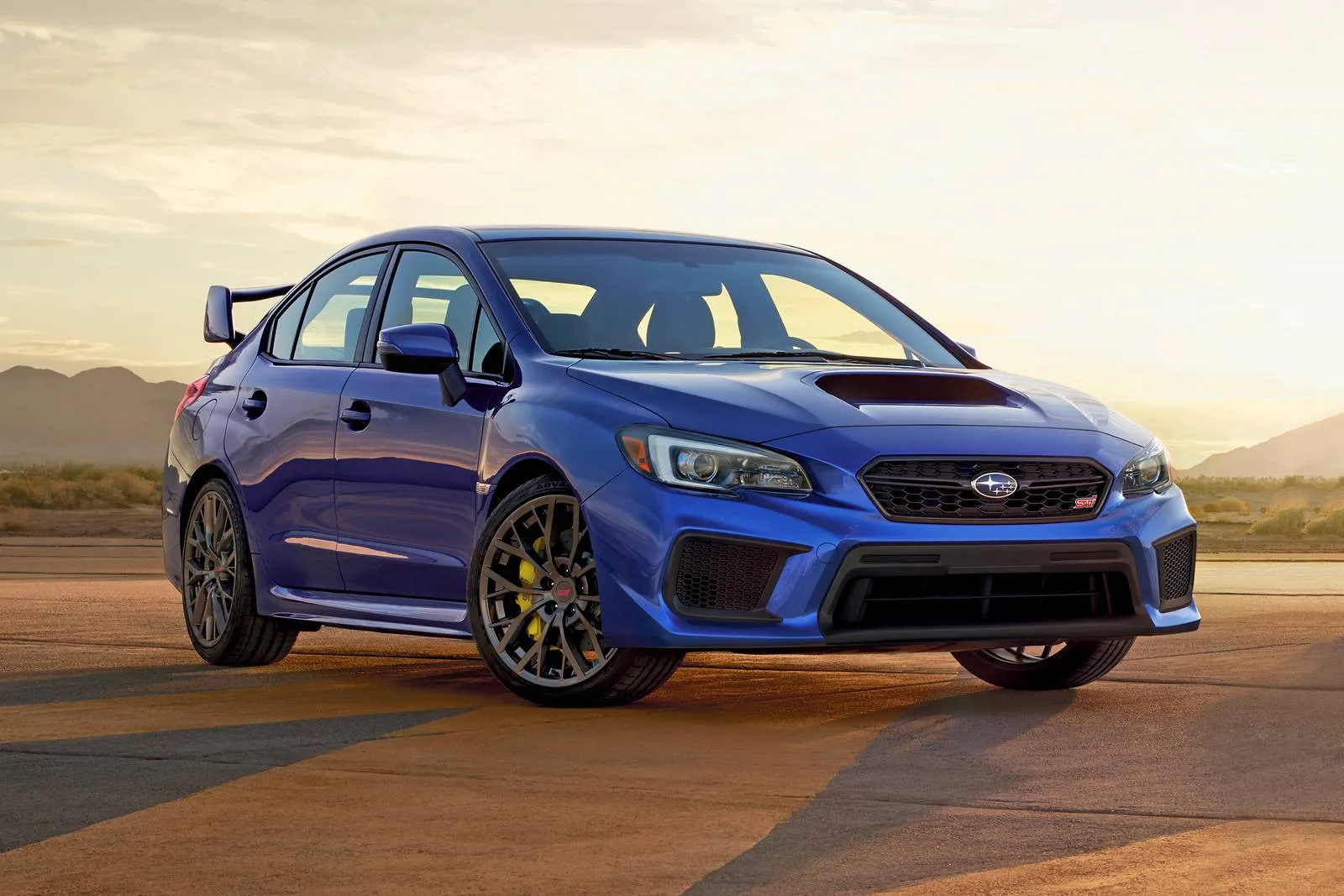
8. Subaru WRX STI Limited (2019)
Performance sedans usually depreciate hard because they’re expensive to maintain and appeal to a narrow audience.
Subaru’s 2019 WRX STI Limited breaks this pattern, retaining roughly 70-75% of its value even after 100,000 miles. Rally heritage and all-wheel-drive capability create demand that stays strong regardless of odometer readings.
Tuner culture ensures there’s always someone wanting an STI for their next project. These buyers specifically seek higher-mileage examples they can purchase for less, then modify extensively.
This creates a price floor that prevents STIs from depreciating below a certain point because project car buyers will snap them up before prices drop too far.
All-weather capability makes the STI practical year-round, unlike rear-wheel-drive performance cars that become garage queens in winter.
Buyers in snowy climates need something fun that won’t kill them in bad weather, and the STI fits perfectly. This expanded buyer pool, compared to other performance cars, keeps demand steady and prices elevated.
Manual transmission is standard, which thrills enthusiasts but also limits the buyer pool. However, those who want the manual specifically will pay extra for it, creating passionate demand from a dedicated group.
These buyers overlook high mileage if the car was maintained properly and the clutch isn’t shot. They’re buying the experience, not transportation.
Community support through forums, clubs, and aftermarket companies means owning an STI is easy, even at high mileage. Every possible problem has been documented and solved by the community.
Parts are readily available, and knowledge is freely shared. This ecosystem reduces ownership risk, which allows buyers to confidently purchase high-mileage examples knowing they can fix anything that breaks.
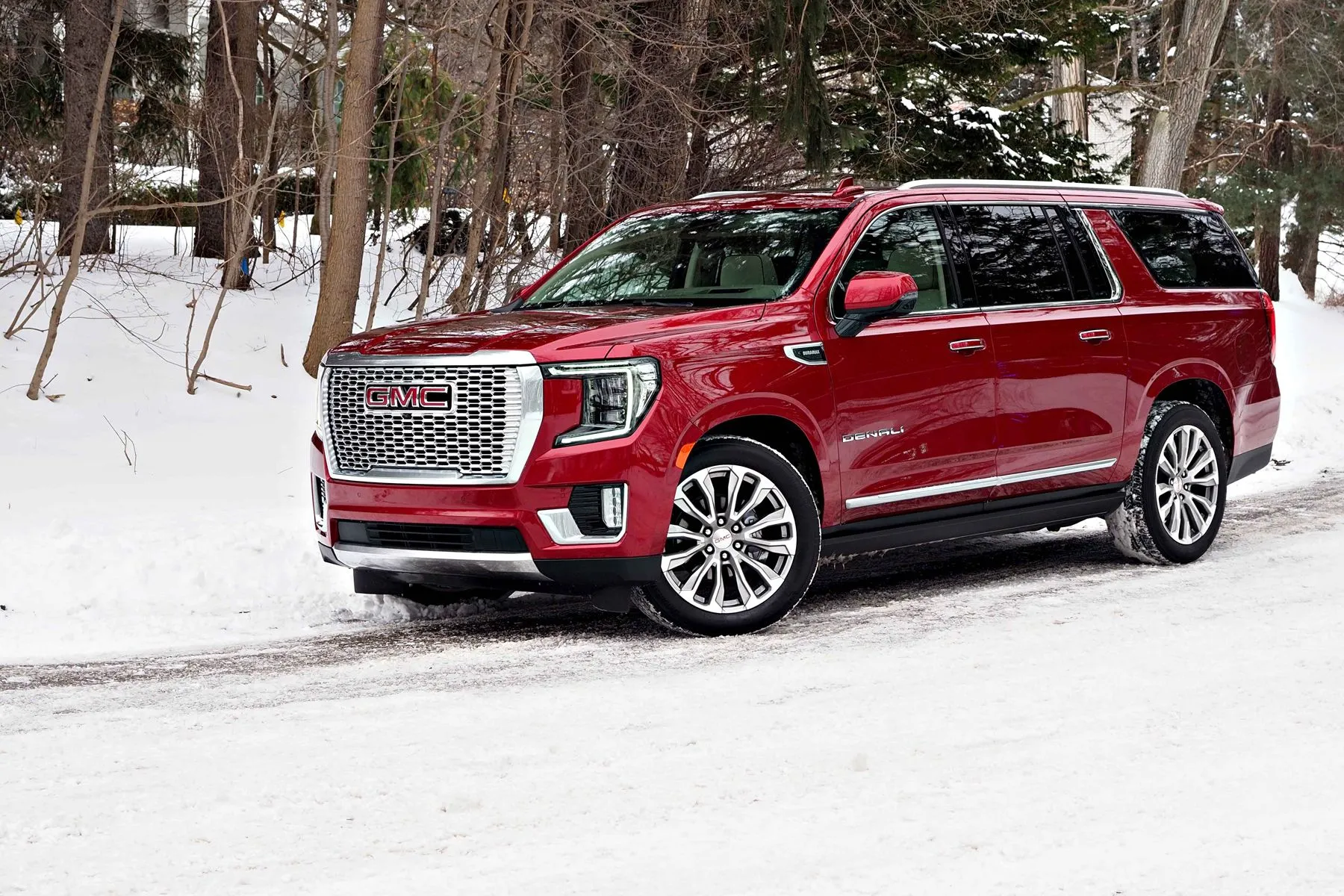
9. GMC Yukon Denali XL (2021)
Full-size luxury SUVs that can seat nine people and tow 8,000 pounds are rare, which is why the 2021 Yukon Denali XL retains about 70-75% of its value after 100,000 miles.
Families needing maximum space and capability have limited options, and the Yukon XL sits at the top of that short list. When alternatives are scarce, prices stay high.
Build quality from GM’s premium division means these SUVs last when properly maintained. That 6.2-liter V8 and 10-speed transmission can easily handle 200,000+ miles, and the interior materials hold up better than cheaper GM products.
Buyers recognize that a well-maintained Denali will continue serving family duty for years, which justifies premium pricing even at high mileage.
Third-row space is actually usable for adults, unlike most three-row SUVs, where the third row is punishment. This practicality matters to buyers who need to transport multiple adults regularly.
A minivan might have more interior room, but it doesn’t have the Denali’s towing capacity, luxury, or social acceptability. That unique combination keeps demand strong.
Towing capacity allows families to bring toys along, whether that’s a boat, camper, or off-road vehicles. This versatility means the Yukon works for both daily family duties and weekend adventures.
Vehicles that do multiple jobs well stay in demand because buyers don’t need to own multiple vehicles to cover different needs.
Magnetic Ride Control and available Super Cruise make these SUVs comfortable and advanced even by current standards. Technology that was cutting-edge in 2021 remains impressive today, which means high-mileage Denalis don’t feel outdated. When a vehicle still feels modern, buyers don’t discount it as heavily for age and mileage.
Also Read: 5 Vehicles Built for Adventure vs 5 That Are Built for Show
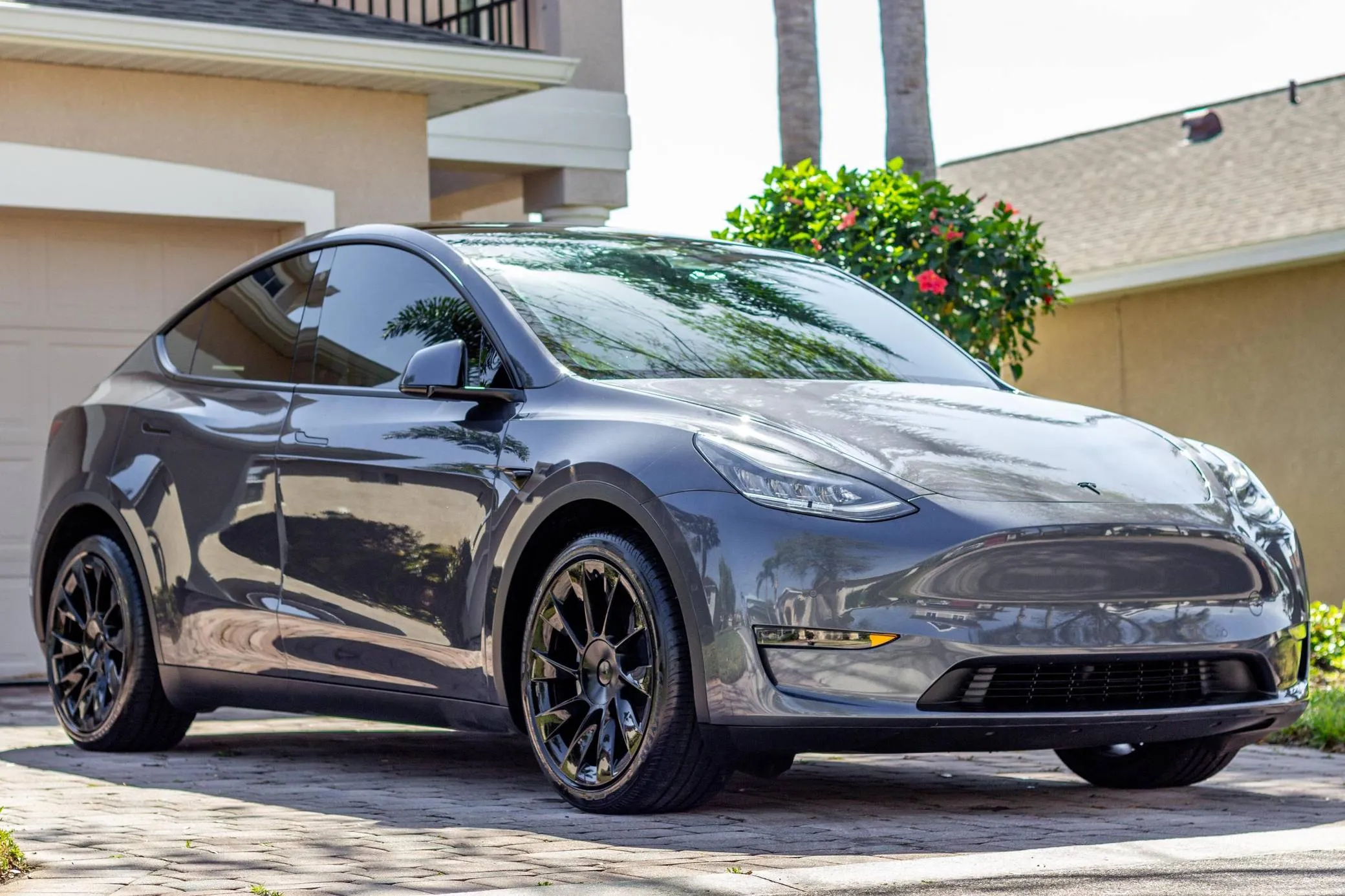
10. Tesla Model Y Long Range (2021)
Electric vehicles depreciate differently from gas cars, and the 2021 Model Y Long Range proves this.
After 100,000 miles, these retain approximately 65-70% of their value, which is remarkable considering the rapid changes in EV technology. Most EVs depreciate horribly, but Teslas hold value because they’re actually good and buyers trust them.
Battery degradation fears are largely overblown. Data from thousands of high-mileage Teslas shows batteries retaining 90%+ of their capacity at 100,000 miles.
Buyers are learning this, which reduces the discount they apply to high-mileage examples. A Model Y with 100,000 miles still has 280+ miles of range, which is plenty for most people’s daily needs.
Supercharger network gives Teslas advantages that other EVs don’t have. This infrastructure means a high-mileage Model Y remains practical for road trips, while other EVs become increasingly limited as their batteries age.
That continued functionality keeps resale values higher than competitors because buyers know they’re not purchasing a vehicle with limited utility.
Over-the-air updates mean a 2021 Model Y with 100,000 miles has newer software than it launched with. This is backwards from traditional cars that become increasingly outdated.
Tesla’s ability to improve vehicles after purchase reduces the penalty for buying used because the car continues getting better. That’s a powerful value proposition that keeps prices elevated.
Production volume and demand balance keep values stable. Tesla produces enough Model Ys to meet most demand, but not so many that the market gets flooded.
This careful balance prevents the value crashes that happen when manufacturers overproduce and flood the market with used inventory. As long as Tesla manages this balance, their vehicles should continue holding value better than traditional automakers’ EVs.
