Electric vehicles are often associated with advanced technology, impressive range, and quiet, emission-free driving, but few people realize how affordable they can be to maintain. As EV technology evolves, the perception of high maintenance costs is quickly disappearing.
Modern electric drivetrains contain far fewer moving parts than traditional gasoline engines, which eliminates oil changes, timing belts, and exhaust system repairs. This mechanical simplicity results in lower long-term upkeep, even for performance or luxury models.
The 2025 model year offers a diverse lineup of EVs that combine practicality with low ownership costs. From Tesla’s high-performing vehicles to well-balanced models from Ford, Kia, and Toyota, many electric options now compete directly with gas-powered cars in both price and dependability.
Each of the eight vehicles featured here delivers a distinct mix of performance, comfort, and technology while keeping maintenance costs impressively low. Whether you prefer a budget-friendly commuter such as the Nissan Leaf, a family SUV like the Model Y, or a luxury sedan like the Model S, these vehicles prove that driving electric is not only efficient but also financially sensible.
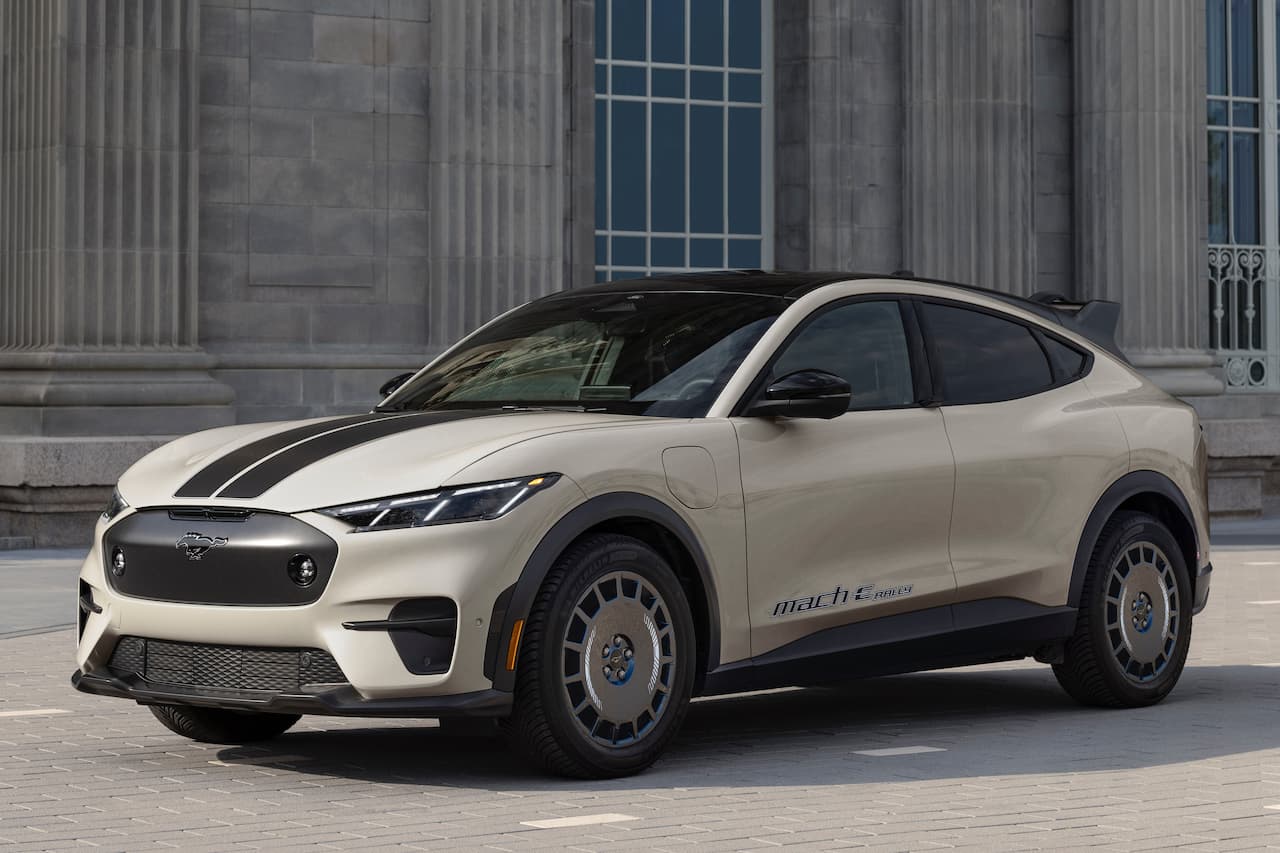
1. 2025 Ford Mustang Mach-E: Performance Meets Efficiency
The 2025 Ford Mustang Mach-E combines the iconic Mustang name with the benefits of electric mobility. Over five years, the Mach-E’s maintenance costs are estimated at $3,762, slightly lower than the gas-powered Mustang at $3,902, making it an affordable EV choice for daily driving.
With 264 horsepower and 387 lb-ft of torque, it delivers solid performance through a responsive rear-wheel-drive drivetrain, while achieving an EPA-estimated range of 230–320 miles depending on configuration. Its energy consumption of 31 kWh per 100 miles is efficient compared with larger EVs like the F-150 Lightning.
The Mach-E drives with the agility and speed expected from a Mustang. In testing, the rear-wheel-drive model accelerates from 0–60 mph in 6.5 seconds, while the dual-motor all-wheel-drive version achieves it in 5.2 seconds. Although some competitors are faster, the Mach-E offers a satisfying blend of performance and everyday usability.
Regenerative braking supports one-pedal driving, enhancing efficiency and convenience. The ride is generally smooth, though slightly stiff over rough surfaces, and body lean is noticeable during spirited cornering. Advanced driver aids, including Ford’s BlueCruise hands-free system, adaptive cruise control, and a full suite of safety features, provide confidence and ease on highways.
Inside, the Mach-E features a modern, Scandinavian-inspired cabin. The climate control system is powerful, and heated and ventilated seats are available on higher trims. Front seats offer good support, although a thigh cushion extender could improve comfort for taller drivers.
Rear-seat space is ample, with decent visibility despite the fastback roofline. Child seat anchor points are present, though slightly less accessible than European Isofix anchors. Highway insulation is effective, keeping cabin noise minimal.
Technology in the Mach-E is competitive, featuring a 15.5-inch touchscreen with navigation, wireless Apple CarPlay and Android Auto, and a wireless charging pad. Multiple USB-A and USB-C ports ensure fast device charging, and over-the-air updates reduce the need for dealership visits.
The hatchback design maximizes cargo space, offering 29 cubic feet behind the rear seats. While not as generous as competitors like the Tesla Model Y, the rear cargo cover is flexible and removable. The front trunk is smaller but includes a drain for use as a cooler. Front cabin storage is practical with a two-tiered console and door pockets, though the wireless charging pad can accommodate only one phone comfortably.
The Mach-E delivers solid build quality and upscale cabin materials. Even base models include advanced safety features, a 360-degree camera, and hands-free BlueCruise. Warranty coverage includes three years/36,000 miles bumper-to-bumper, five years/60,000 miles powertrain, and eight years/100,000 miles for electric components.
EPA-estimated range varies by trim, with the tested all-wheel-drive Premium model achieving 307 miles in real-world testing. Energy consumption averages 32.7 kWh per 100 miles, slightly higher than some competitors. DC fast charging, however, is slower than many rivals, which may impact long-distance convenience.
The Mustang Mach-E stands out with sporty styling and personality, especially in the GT trim. Unlike some EVs that appear bland, it maintains a unique, recognizable presence on the road while offering a blend of performance, technology, and comfort.
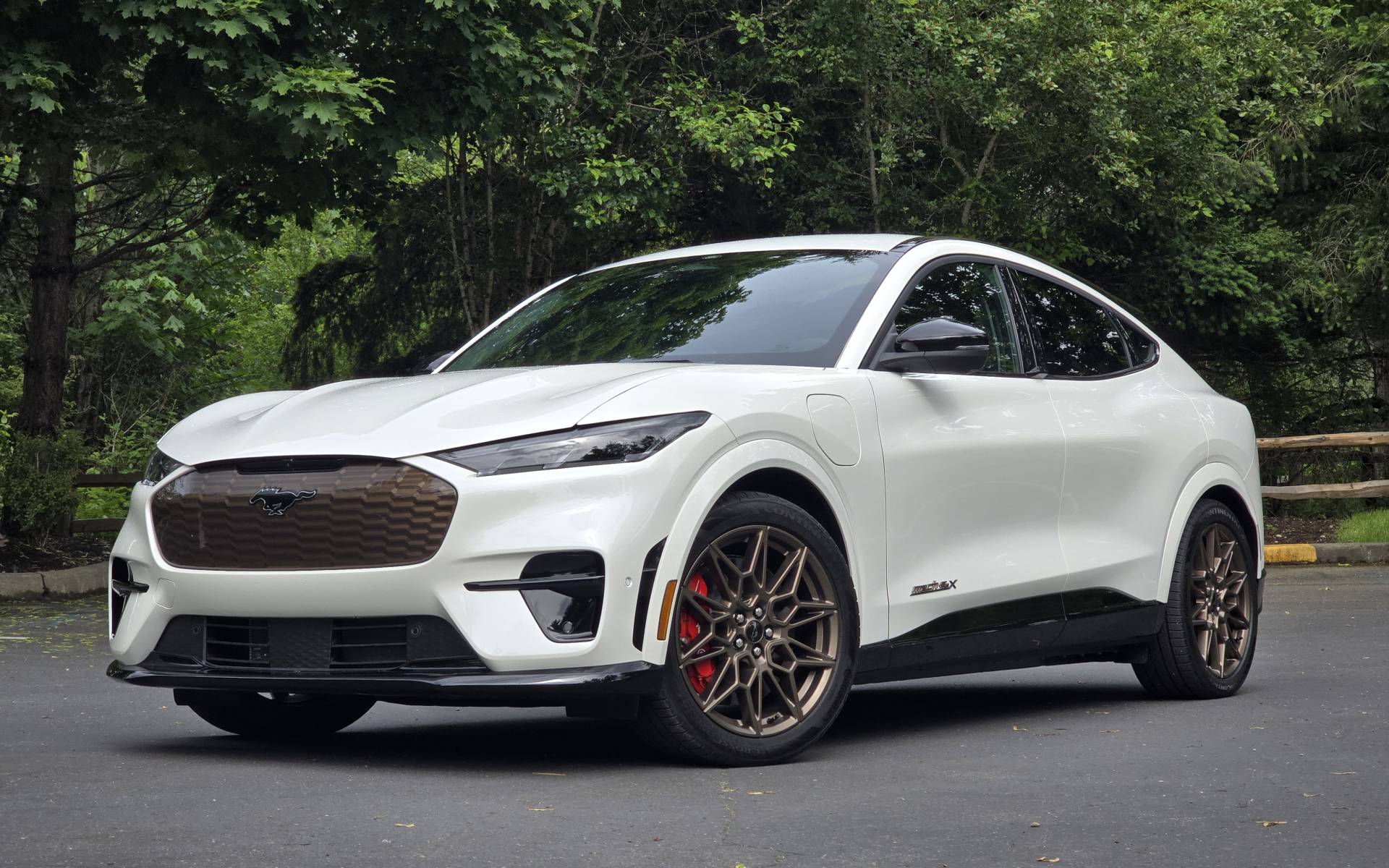
2. 2025 Kia Niro EV: Practical, Efficient, and Comfortable
The 2025 Kia Niro EV offers a practical electric alternative within the Niro lineup, which also includes gasoline and plug-in hybrid versions. With a five-year maintenance cost of $3,716, it sits in the midrange for long-term ownership expenses, slightly higher than the gas-powered Niro at $3,678. Despite this, it provides a cost-effective and low-maintenance EV option.
The Niro EV features a front-wheel-drive electric motor producing 201 horsepower and 188 lb-ft of torque, paired with a base EPA-estimated range of 253 miles. Its combination of efficiency, moderate power, and versatility makes it appealing for drivers seeking a reliable, everyday electric vehicle.
The Niro EV delivers a smooth and composed ride rather than sporty excitement. In testing, it accelerates from 0 to 60 mph in 7.1 seconds, which is average for its class. The accelerator is responsive without being overly sensitive, and the regenerative braking system allows one-pedal driving for enhanced efficiency. While suspension tuning prioritizes comfort, it limits cornering grip and sporty handling.
The vehicle remains stable and composed on highways and city streets. Standard driver-assistance features include adaptive cruise control and blind-spot monitoring, while optional upgrades, such as navigation-assisted adaptive cruise control and parking sensors, work reliably without false alerts.
The Niro EV’s cabin is quiet and well-insulated from road and wind noise. Front seats are supportive, though slightly firm, and rear seats share similar padding characteristics. Heated front seats are standard, with optional heated rear seats, a heated steering wheel, and ventilated front seats available on higher trims.
Dual-zone automatic climate control is effective and easy to operate, with well-placed vents for rear passengers. Child seat anchor points are accessible, though the rear space and door openings may make installation of larger seats slightly challenging.
Kia equips the Niro EV with a range of standard tech, including Apple CarPlay and Android Auto (wired), navigation, and a Harman Kardon audio system. Higher trims offer a head-up display and a power outlet capable of drawing energy from the EV battery to run small electronics. While the infotainment interface may appear slightly dated, it is intuitive and user-friendly.
Cargo capacity is generous for a compact EV, with a hatchback design and an adjustable rear load floor enhancing flexibility. Rear seats fold 60/40 to expand space, and the flat floor allows easier placement of larger items. Interior storage is adequate but not exceptional, with modest door pockets, an armrest bin, and a cupholder layout that is functional but limited.
The Niro EV is competitively priced below premium EVs like the Kia EV6 or Hyundai Ioniq 5, offering strong standard equipment and solid build quality. Kia provides one of the most generous warranties in the industry: 10 years/100,000 miles for the powertrain and battery, five years/60,000 miles for basic coverage, and roadside assistance for five years/60,000 miles.
EPA-estimated range stands at 253 miles, but testing shows the Niro EV can reach 280 miles per charge. Energy consumption is efficient at 25.6 kWh per 100 miles, making it one of the more frugal EVs. DC fast-charging is rated at 85 kW, reaching 10–80% in about 45 minutes, adequate for daily use, though slower than rivals like the EV6 or VW ID.4.
The Niro EV offers a distinctive, stylish design that sets it apart from monochrome EV options, though it is not as sporty as the EV6. It excels in practicality, efficiency, and comfort, but it may feel less engaging to drive for those seeking a fun, dynamic EV experience.
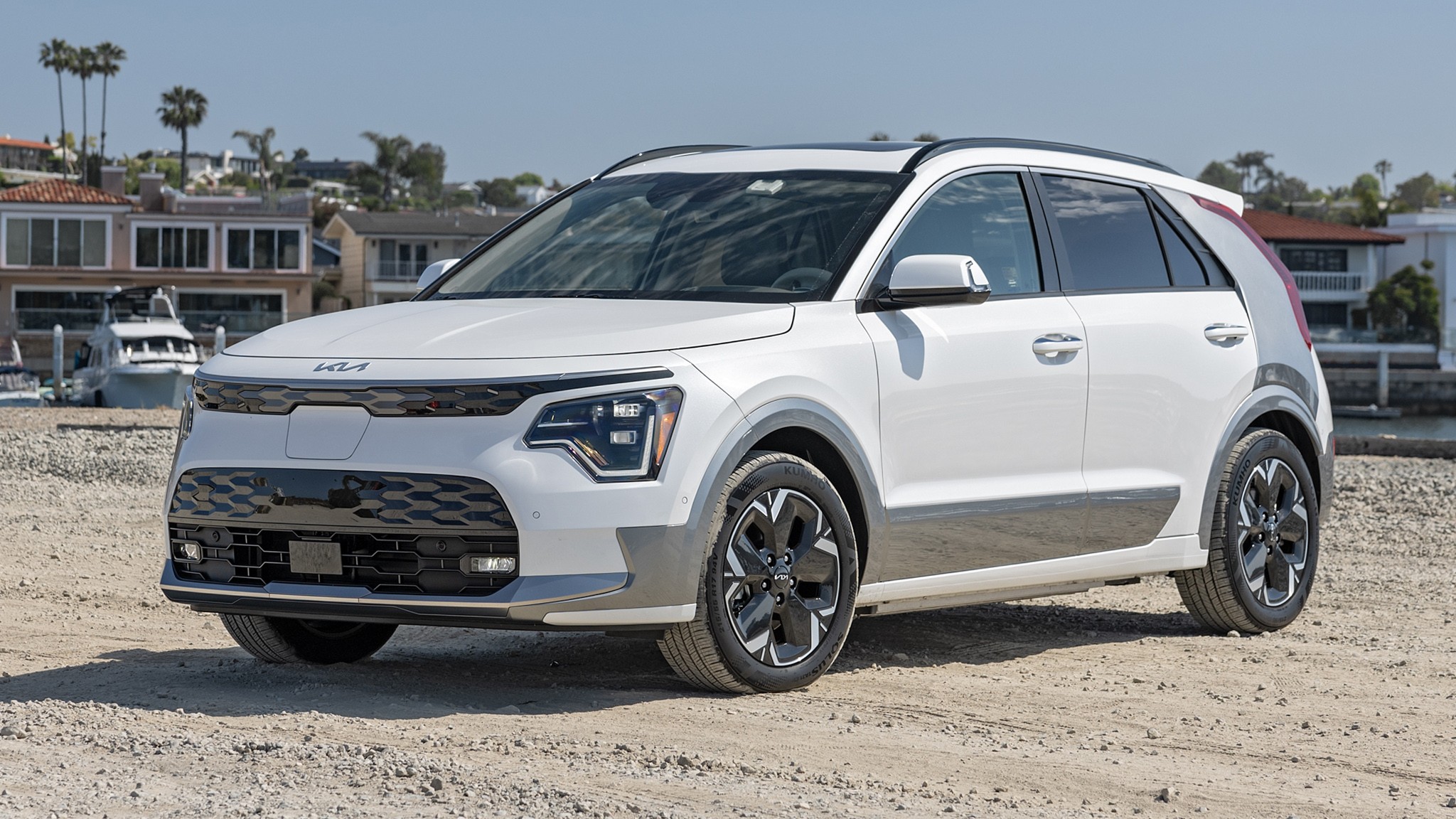
3. 2025 Volkswagen ID.4: Practical, Comfortable, and Cost-Effective
The 2025 Volkswagen ID.4 remains one of the most practical and affordable electric crossovers on the market. With a five-year maintenance cost of just $3,263, it is among the lower-cost EVs to own, particularly given its size, features, and performance.
The base trim delivers 282 horsepower and 402 lb-ft of torque to the rear wheels, paired with an EPA-estimated range of 291 miles and energy consumption of 33 kWh per 100 miles. While it may lack the nostalgic appeal of VW’s ID.Buzz, the ID.4 emphasizes everyday usability, comfort, and long-term value.
The ID.4 accelerates briskly for a single-motor SUV, reaching 0–60 mph in 6.1 seconds, while the dual-motor version accomplishes the same in 4.9 seconds. Though quick off the line, the ID.4 prioritizes comfort over sporty handling, with rivals like the Ford Mustang Mach-E and Kia EV6 offering more engaging dynamics.
Regenerative braking is functional, though a full stop requires traditional braking. Its tight turning radius makes parking easy, and highway driving is smooth, though larger bumps can create noticeable vertical motion. Visibility is excellent thanks to large windows, and standard driver aids, including adaptive cruise control, lane-keeping assistance, and automatic parking, work reliably.
The ID.4’s cabin offers a quiet and comfortable ride. Front seats are cushioned but could benefit from more support and adjustment for long drives. Climate control operates mainly through the touchscreen, featuring convenient commands like “warm feet” or “fresh air.” Rear seats are spacious, making the ID.4 family-friendly, with easy-to-access anchors for child safety seats.
Volkswagen equips the ID.4 with a 12.9-inch center touchscreen, intuitive navigation, and responsive voice controls. Wireless Apple CarPlay and Android Auto are standard, along with multiple USB ports. While the standard stereo system is modest in quality, higher trims include upgraded audio features.
Cargo space is competitive, offering 30.3 cubic feet behind the rear seats and expanding to 64.2 cubic feet with seats folded. A flat 60/40-split rear seat floor maximizes versatility, though the load floor sits a bit high.
Additional interior storage is available via a configurable center console with removable cupholders and partitions. The ID.4 can tow up to 2,700 pounds, depending on the drivetrain, though this is modest compared to some competitors.
The ID.4’s interior materials are generally appealing, with leather-wrapped steering wheels and well-finished surfaces, though some plastics feel cheap. It qualifies for the full $7,500 federal EV tax credit until September 30, 2025, enhancing its affordability.
Volkswagen provides a four-year/50,000-mile bumper-to-bumper and powertrain warranty, with an eight-year/100,000-mile battery warranty. Complimentary fast charging through Electrify America is included for three years/30-minute sessions.
The single-motor rear-wheel-drive ID.4 achieves 299 miles in real-world testing, slightly above the EPA estimate. Energy consumption measures 29.8 kWh per 100 miles, aligning with class norms. Public DC fast-charging adds roughly 100 miles in just over 17 minutes, which is slightly below average among small electric SUVs.
The ID.4 prioritizes comfort, utility, and everyday practicality over sporty performance or standout styling. While it may not turn heads like the Mustang Mach-E, Kia EV6, or Tesla Model Y, its combination of range, efficiency, family-friendly interior, and cost-effectiveness makes it a compelling choice for buyers seeking a dependable and functional EV.
4. 2025 Toyota bZ4X: Affordable, Practical, and Reliable
The 2025 Toyota bZ4X marks Toyota’s first full-production electric vehicle, bringing the brand’s reputation for reliability and low-cost ownership to the EV segment. With a five-year maintenance cost of just $3,228, the bZ4X ranks among the most affordable EVs to maintain.
Its base front-wheel-drive model delivers 201 horsepower and 196 lb-ft of torque, paired with an EPA-estimated range of 252 miles and energy consumption of 28 kWh per 100 miles. The vehicle is designed to appeal to buyers seeking a practical, familiar driving experience while transitioning from gasoline to electric power.
The bZ4X drives like a conventional SUV, similar to the Toyota RAV4, rather than a sportier EV. Acceleration is adequate but slower than rivals such as the Ford Mustang Mach-E. Steering is light and easy for parking, but lacks road feel, and the soft suspension limits engagement on twisty roads.
Brakes provide sufficient stopping power, though the pedal feels soft and inconsistent. Unlike many modern EVs, the bZ4X does not offer full one-pedal driving, meaning regenerative braking only slows the vehicle rather than bringing it to a full stop. Toyota’s advanced driver-assistance systems, including adaptive cruise control and parking sensors, work reliably, although the parking sensors can be overly sensitive.
The bZ4X offers a quiet and comfortable cabin. Front seats are well-padded and supportive, while rear seats provide adequate comfort for passengers. The climate control system is easy to operate, with the added convenience of remote activation via the key fob.
Heated and ventilated front seats are effective, but wind and road noise are more noticeable than in some competitors. Some driver aids can be intrusive, as warning beeps trigger early and cannot be disabled.
Technology in the bZ4X is straightforward and functional. The navigation system is responsive and uses Google-sourced information for points of interest. Over-the-air updates keep the software current, and voice commands can adjust navigation, climate, and audio settings.
The premium JBL audio system, while present, is underwhelming. Multiple USB-C and USB-A ports, wireless charging, and Apple CarPlay and Android Auto integration provide connectivity and convenience.
Cargo space is 27.7 cubic feet behind the rear seats (slightly reduced with premium audio), which is average for the class. A wide cargo area with a lowerable load floor helps accommodate taller items, though there is no front trunk. Interior storage is limited, with a small center console and shallow compartments under the shifter. Door pockets are usable, but the lack of a glovebox limits enclosed storage.
The bZ4X starts under $40,000, offering Toyota’s trademark reliability but lacking the premium feel and range of competitors such as the Ford Mustang Mach-E, Hyundai Ioniq 5, or Kia EV6.
Warranty coverage includes three years/36,000 miles basic, five years/50,000 miles powertrain, and eight years for the battery, with two years/50,000 miles of roadside assistance and scheduled maintenance. A notable perk is one year of free charging at EVgo stations.
The bZ4X’s real-world range, tested at 227 miles, falls short of the EPA estimate of 242 miles. Energy consumption measured 28.5 kWh per 100 miles, slightly higher than the official 26 kWh/100 miles. DC fast charging reaches up to 150 kW for the FWD model, reducing charging times significantly, though the AWD model is limited to 100 kW.
The bZ4X offers conservative styling and practical functionality, but lacks the driving excitement and distinctive character of EV rivals. It is ideal for buyers who value reliability, affordability, and Toyota’s reputation for low-cost ownership over sporty performance or flashy design.
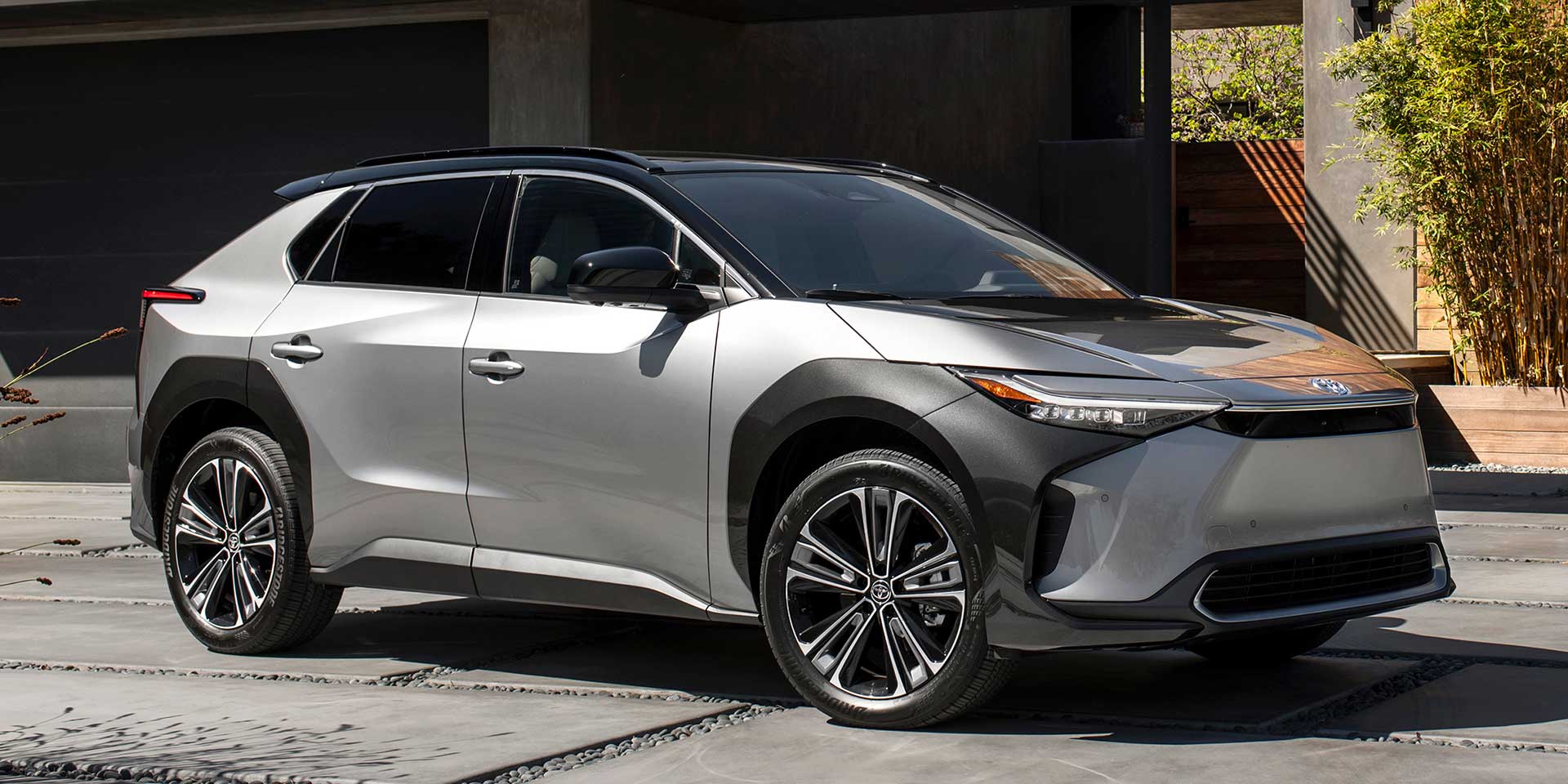
5. 2025 Tesla Model S: Luxury, Performance, and Efficiency
The 2025 Tesla Model S blends supercar-level performance with surprisingly low maintenance costs, making it a standout in the luxury EV segment. With a five-year maintenance estimate of just $2,771, it offsets part of its $84,990 starting price.
The base Model S delivers 670 horsepower, 723 lb-ft of torque, and comes standard with all-wheel drive (AWD). Recent updates include refreshed styling and an EPA-estimated range of 410 miles, one of the longest among current EVs. Its mature powertrain and minimal service requirements reinforce Tesla’s reputation for efficiency and long-term reliability.
The Model S Plaid represents the highest performance variant. It accelerates from 0 to 60 mph in just 2.3 seconds and completes the quarter-mile in 9.4 seconds at 150 mph, matching vehicles like the Lucid Air Sapphire and Porsche Taycan Turbo GT.
The Track package adds high-performance Goodyear Eagle F1 SuperCar 3R tires and carbon-ceramic brakes, enhancing cornering and braking performance. Track mode allows adjustments to handling balance and tri-motor torque vectoring, making the Plaid feel lively around corners. Daily driving benefits from the AWD system’s traction and stability.
The Model S Plaid maintains a comfortable ride with standard adaptive air suspension. Seat heaters and ventilation function effectively, and the tri-zone climate control keeps cabin temperatures well-regulated.
Front seats provide decent cushioning, though lateral support is limited during aggressive driving. Rear seats are upright with a slightly high floor, which reduces legroom. The cabin is quiet thanks to the lack of a gasoline engine, though some wind and road noise is noticeable at higher speeds.
Tesla equips the Model S with a 17-inch touchscreen that includes Google Maps navigation, over-the-air software updates, and voice controls for climate, audio, and navigation. The Plaid trim adds a 22-speaker sound system, four wireless charging pads, and multiple USB ports.
Apple CarPlay and Android Auto are not supported. Autopilot delivers advanced driver-assistance features, functioning well in stop-and-go traffic but occasionally struggling on poorly marked roads or near roadside obstacles.
The Model S has a hatchback design, providing ample rear cargo space and a front trunk for added utility. Rear seats fold flat for longer items, and retractable compartments in the cabin improve storage options. Door pockets and center console compartments help organize personal items, though cupholders lack an anti-tip design. Child seat installation is straightforward, with wide-opening doors easing access.
The 2025 Model S Plaid achieves a real-world range of up to 345 miles on a single charge, with electricity consumption ranging from 32.1–36 kWh per 100 miles. DC fast-charging adds up to 523 miles of range per hour under optimal conditions, making it one of the fastest-charging EVs in its class.
The Model S offers unmatched acceleration, long-range capability, and low-maintenance costs in a luxury sedan package. Its understated design, exceptional speed, and high-tech features make it both a practical daily driver and a thrilling high-performance EV. The Tesla Model S Plaid delivers a rare combination of power, technology, and efficiency that few vehicles can match.
Also Read: 10 Cars That Outsell Competitors Despite Weak Marketing
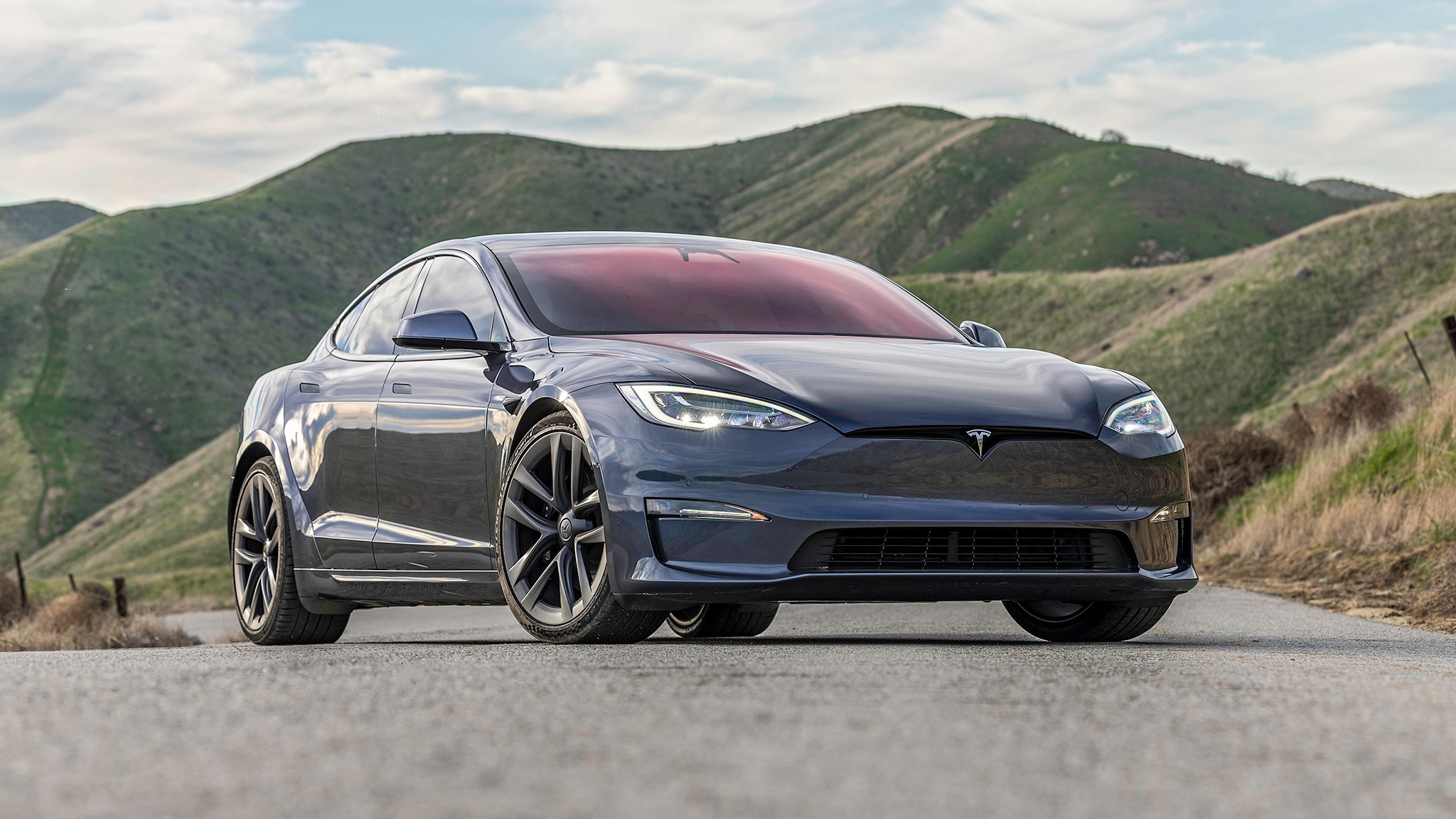
6. 2025 Nissan Leaf: Affordable and Practical Urban EV
The 2025 Nissan Leaf is one of the most budget-friendly electric vehicles available. With a five-year maintenance cost of just $2,640, it ranks among the least expensive EVs to own. The Leaf’s simple, proven platform appeals to commuters and city drivers who want minimal upkeep without compromising reliability.
Its front-wheel-drive system produces 147 horsepower and 236 lb-ft of torque, providing sufficient power for city streets and short commutes. The base model has a range of 149 miles, which limits long-distance driving but is enough for daily errands and in-town routines.
The Nissan Leaf delivers a smooth and easy driving experience. The standard Leaf accelerates from 0 to 60 mph in 7.8 seconds, while the Leaf Plus trims improve the time to 7.0 seconds, slightly slower than competitors such as the Hyundai Kona or Kia Niro EV.
The e-Pedal mode allows drivers to slow the car by lifting off the accelerator, which adds control and a bit of fun for everyday driving. Its low-slung battery pack enhances stability, giving the Leaf a confident feel when taking corners. Braking is smooth, and the absence of gear shifts makes the car simple to drive, especially for new EV owners.
The Leaf provides solid comfort for its size. Front seats are supportive with adequate padding, and the rear bench accommodates passengers with reasonable space. The ride quality absorbs small and large bumps without feeling too rigid or too soft.
Cabin noise is minimal thanks to the electric powertrain, with wind and road noise being the primary sources of sound. Visibility is enhanced by large windows and a low cowl, although the rear roof pillars create modest blind spots. Some drivers may find the high-mounted driver’s seat position less than ideal.
The Leaf includes an intuitive touchscreen system with Apple CarPlay and Android Auto integration. Upgrading to the SV Plus trim adds ProPilot Assist, which combines adaptive cruise control and lane-keeping assistance. These features make highway driving easier and increase driver confidence on longer trips.
Cargo space is generous with rear seats in place, although folding the seats does not create a flat surface, which limits maximum cargo capacity. Small-item storage in the cabin is modest, with a small center console and an average glove compartment.
Wide-opening doors and a near-horizontal roofline make installing child seats straightforward. Rear seat anchors are accessible, but the lower anchors are recessed slightly, which can make installation more difficult.
The Leaf Plus SL has an EPA-rated range of 212 miles and consumes 31 kWh per 100 miles. Real-world testing slightly exceeded expectations, reaching 237 miles on a full charge at 27.1 kWh per 100 miles. While its efficiency is not the highest in its class, the Leaf provides dependable performance for short to medium-range trips, making it ideal for city commuting.
The Nissan Leaf is a strong value for buyers focused on affordability and simplicity. Its low maintenance costs, straightforward design, and reliable technology make it a practical choice for daily driving. The SV Plus trim adds more range and flexibility while remaining cost-effective compared with other mainstream EVs.
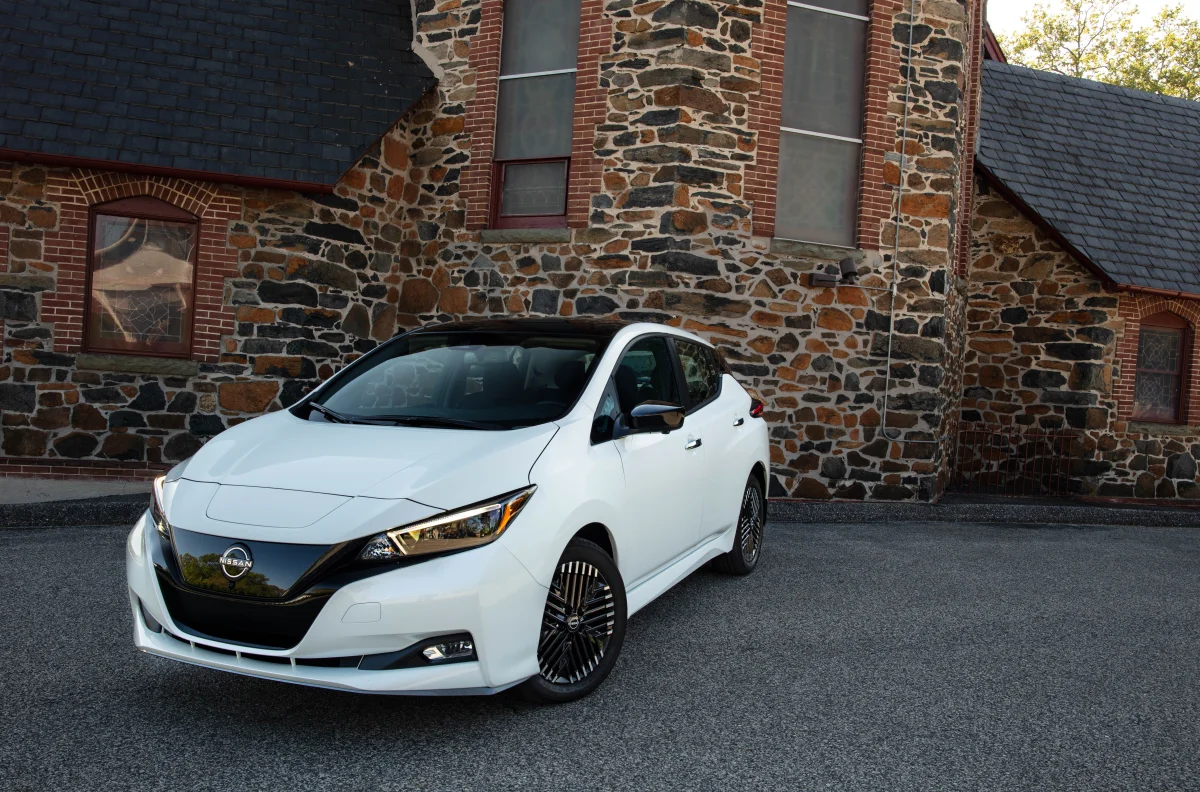
7. 2025 Tesla Model Y: Leading the Electric SUV Segment
The 2025 Tesla Model Y continues to dominate the electric SUV market, offering a strong combination of range, performance, and cargo capacity. With a five-year maintenance cost of just $2,478, it is one of the most cost-efficient electric SUVs to own.
Tesla updated the Model Y earlier this year with the Juniper refresh, which introduced revised exterior styling, upgraded interior materials, and the new Long Range RWD trim. This version delivers up to 357 miles of range at a lower price than the original Launch Edition. The Model Y provides ample horsepower and torque along with 76.0 cubic feet of cargo space, making it a practical choice for families and commuters.
The Model Y excels in acceleration. In Edmunds’ testing, the Long Range All-Wheel Drive reached 60 mph in 4.8 seconds, while the Performance trim achieved 3.5 seconds. Ride quality varies depending on the trim, with the standard Model Y offering a comfortable ride and the Performance trim feeling noticeably firmer.
Steering and handling are responsive, giving drivers a confident feel through corners with minimal body roll. The SUV is particularly easy to drive in town, thanks to strong regenerative braking and one-pedal driving mode that allows slowing the car primarily with the accelerator.
Advanced driver aids perform well in stop-and-go traffic, although they can be less reliable at highway speeds or on roads with parked cars. The Full Self-Driving option enables hands-free, navigation-based driving on many roads, but it is not perfect in complex traffic situations.
The Model Y’s seats are well-padded and supportive, with seat heaters that warm quickly. The cabin offers generous headroom and legroom for all passengers, and wide-opening doors, a tall roof, and a low step-in height make entry and exit convenient.
The synthetic leather upholstery can feel hot in sunny conditions, and the large touchscreen is the sole interface for most controls, which requires a learning curve and can be distracting while driving. The climate system is touchscreen-operated and can efficiently heat or cool the cabin, with the option to precondition remotely. Child seat installation is straightforward, though the anchors and tethers can be difficult to access.
The Model Y features a large, crisp center screen with Google-based navigation. It does not support Apple CarPlay or Android Auto, instead relying on Bluetooth and Tesla’s apps for media and phone integration. The system works well for media playback and navigation, but spotty service can affect updates. An internet browser allows streaming services such as Netflix or YouTube when the car is parked.
The Model Y offers substantial cargo space. Rear seats do not fold completely flat, but the wide opening and low load height facilitate easy loading. A removable cargo floor provides extra storage underneath, and the front trunk is generous for a small electric SUV. The center console includes a sliding bin cover and spaces for smartphone charging.
The Model Y Long Range delivers speed, space, and practicality at a lower price than the Performance trim. Interior design and comfort features are not as impressive as some luxury rivals, but the vehicle excels in range, technology, and cargo versatility.
Warranty coverage includes four years or 50,000 miles bumper-to-bumper, and an eight-year, 120,000-mile battery warranty with 70 percent retention of battery life, providing reassurance for long-term ownership.
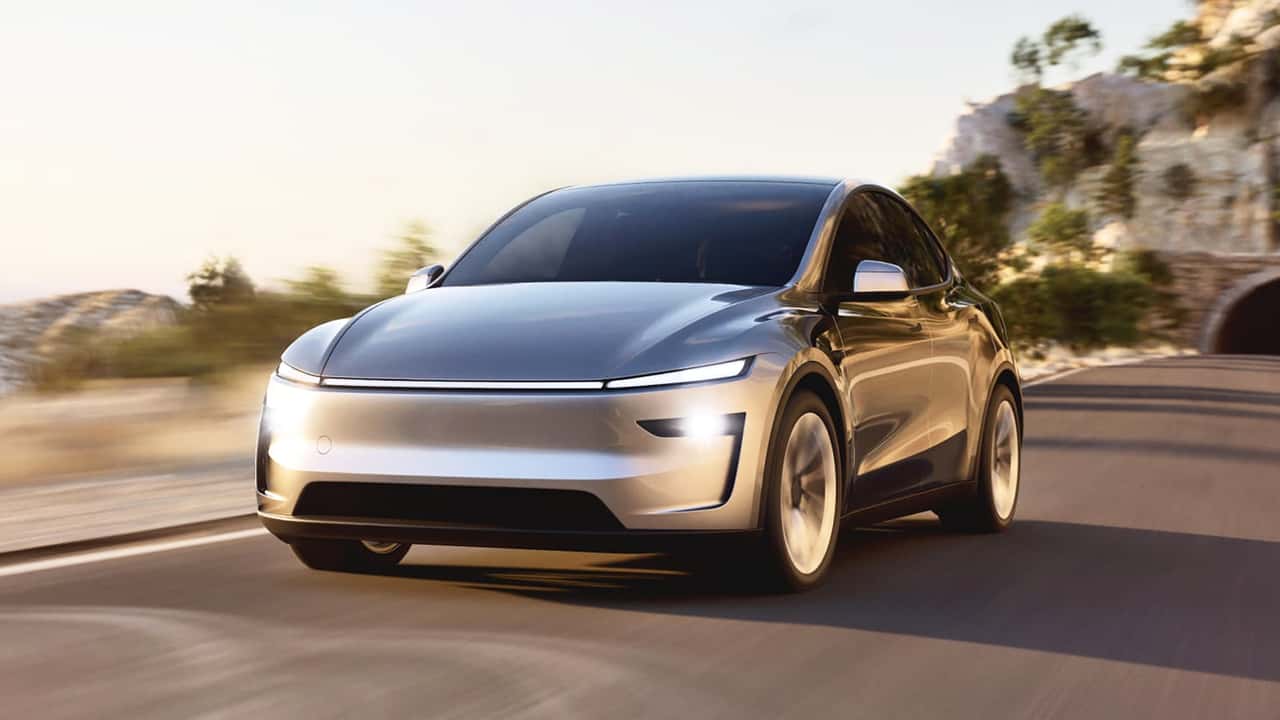
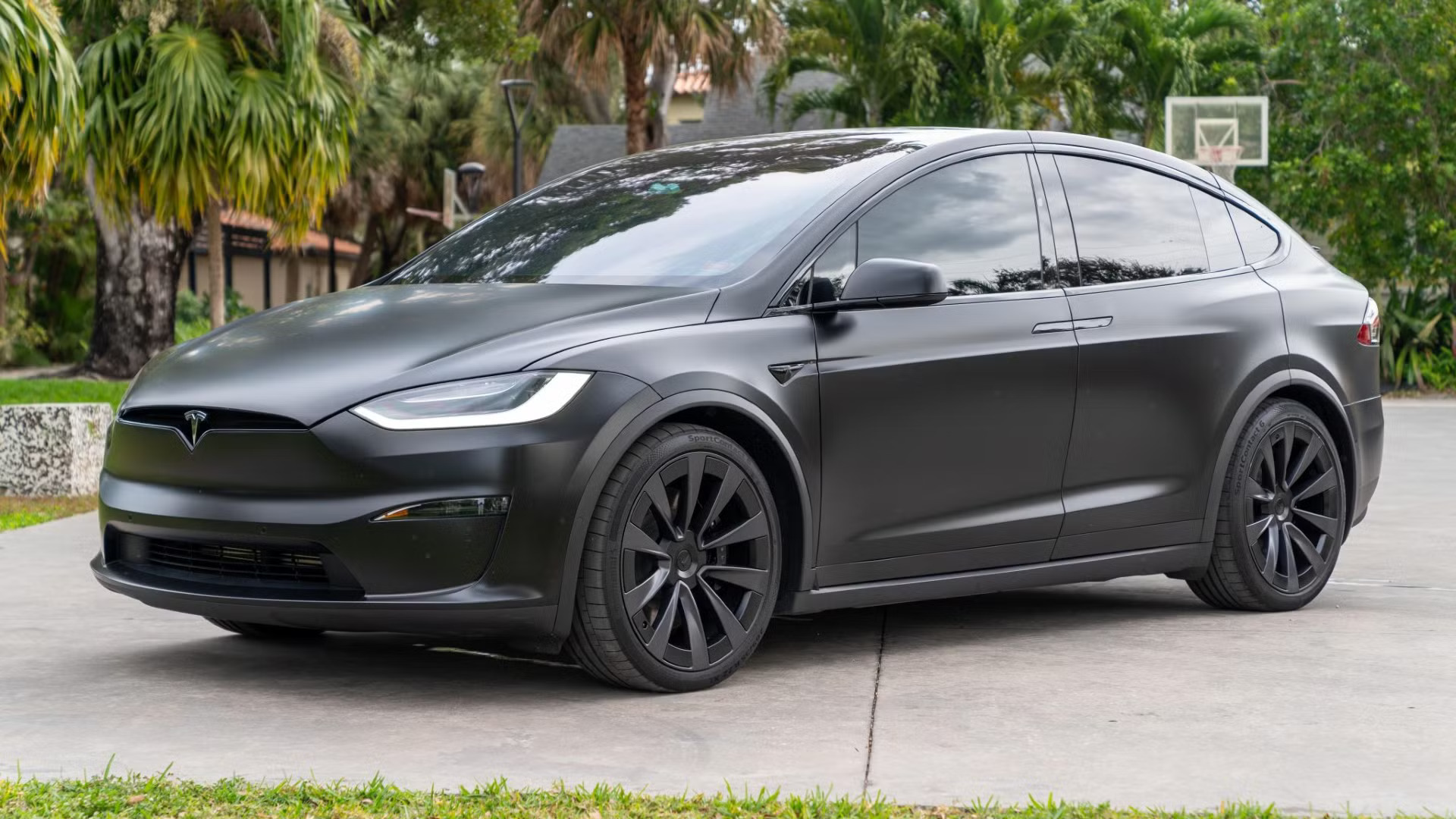
8. 2025 Tesla Model X: High Performance with Low Maintenance
The 2025 Tesla Model X, Tesla’s largest and most expensive SUV, stands out for combining extreme performance with remarkably low maintenance costs. At just $2,474 over five years, it ranks as one of the cheapest EVs to maintain, second only to the Model Y.
Despite its size and powerful hardware, the Model X delivers 670 horsepower and 713 pound-feet of torque in its base form, with an all-wheel-drive system providing 352 miles of range. The Plaid version ramps power beyond 1,000 horsepower, making it one of the fastest SUVs ever built. Its efficient drivetrain, advanced hardware, and minimal servicing requirements make it a surprisingly practical option for long-term ownership.
The Model X is built for performance and precision. The standard model accelerates quickly, while the Plaid version delivers nearly supercar-level thrust. Brakes provide confidence in both daily driving and emergency stops. Regenerative braking allows drivers to slow down using the accelerator for routine driving.
Quick steering, adaptive suspension, and a low center of gravity keep the SUV feeling agile despite its size. Ground clearance can reach 8.9 inches, enhancing comfort over rough roads. Tesla’s advanced camera system and Full Self-Driving (Supervised) capability assist in city streets, handling stops, turns, lane changes, and traffic with impressive autonomy while keeping the driver alert.
Ride comfort is enhanced by adaptive air suspension, which absorbs bumps and minimizes body motions. The cabin is well-insulated against outside noise. Seats are cushioned, adjustable, and equipped with heat and ventilation. Tri-zone climate control is managed through front and rear touchscreens, offering a clean, minimalist interface.
Large falcon-wing doors simplify car seat access and provide ample room for rear-facing seats. Some seat anchors are difficult to reach, and fixed headrests make tether installation less convenient, but space and adjustability ensure a generally comfortable interior.
The Model X features a Google-based touchscreen navigation system with crisp visuals. While it lacks Apple CarPlay and Android Auto, built-in apps like Spotify, Apple Music, Tidal, and Audible provide entertainment. Dual wireless chargers and a rear touchscreen add convenience for passengers.
Tesla’s integrated system allows real-time updates, though connectivity issues can temporarily affect navigation. The 22-speaker audio system delivers high-quality sound throughout the cabin.
The Model X offers generous storage, including a spacious rear cargo area with underfloor compartments and a 6.5-cubic-foot front trunk. Towing capacity reaches 5,000 pounds, and in-cabin storage includes configurable drawers and sliding covers for small items. While the layout may not be the most efficient, it provides ample practical space for everyday use and family needs.
The Model X competes well among midsize luxury EVs, offering long-range performance and a rich feature set. Build quality has improved but remains slightly behind some rivals.
Warranty coverage includes four years or 50,000 miles basic, and eight years or 150,000 miles for the powertrain and battery, with a guarantee of 70 percent battery retention over that period. Tesla’s extensive Supercharger network and fast-charging options make long-distance travel feasible and convenient.
The Model X impresses with its speed, panoramic windshield, and Falcon-wing doors. Its low-mounted battery and immediate power delivery create an engaging driving experience that makes it feel more like a high-performance car than a typical SUV. The combination of style, technology, and capability sets the Model X apart in the luxury EV segment.
The rapid shift toward electrification has redefined what it means to own a car. The eight vehicles discussed here demonstrate that electric cars can offer long-term reliability with minimal maintenance costs. From the practical Nissan Leaf to the high-speed Tesla Model X Plaid, these EVs serve a wide variety of needs while keeping upkeep simple and affordable.
Electric powertrains experience less mechanical wear, regenerative braking reduces strain on components, and over-the-air updates handle many software issues that once required a service visit. These innovations translate to fewer maintenance concerns and more time spent enjoying smooth, efficient driving.
The 2025 EV lineup showcases how far the industry has progressed in both performance and value. Drivers no longer have to choose between sustainability and financial practicality. Whether you prioritize comfort, technology, or range, these models prove that switching to electric power is a smart long-term decision.
For many buyers, the transition to an EV brings not only environmental benefits but also a lower cost of ownership that makes electric mobility a wise and rewarding investment.
Also Read: 10 Cars That Offer the Most Features for the Dollar