

When shopping for used cars, the 100,000-mile mark often scares buyers off but it really shouldn’t. Today’s vehicles are engineered with tighter tolerances, better materials, and improved reliability standards compared to those from even a decade ago.
Many cars now hit 200,000 miles with proper maintenance, meaning a 100,000-mile model could still have half its life left at a steep discount.
However, not all vehicles age gracefully. Some look like bargains but are financial traps that keep their owners tied to the repair shop.
For used car shoppers, especially first-time buyers or those on a budget, understanding which cars remain strong beyond six figures and which ones crumble under wear can make or break the deal.
Here are five first-owner bargains that hold up beautifully past 100,000 miles, followed by five cars to avoid no matter how tempting the price.
5 First-Owner Bargains at 100,000 Miles
Buying a used car can be a smart way to save money, but finding a vehicle that’s both reliable and affordable after 100,000 miles can feel like hunting for a needle in a haystack.
First-owner cars often hold up better than those with multiple previous owners, offering a clearer maintenance history and generally less wear and tear.
In this article, we highlight five first-owner vehicles that deliver excellent value at the 100,000-mile mark, cars that prove longevity doesn’t have to come at a premium and that smart buyers can still score a bargain without sacrificing dependability.
1. Toyota Camry (2012–2017)
The Toyota Camry has long been a benchmark for longevity, but the 2012–2017 models strike the perfect balance between simplicity and refinement.
These cars feature Toyota’s near-bulletproof 2.5-liter four-cylinder engine paired with a conventional six-speed automatic that can easily handle 200,000 miles or more.
At 100,000 miles, a first-owner Camry that’s been regularly serviced is just hitting its stride.

Common replacement parts like brakes, suspension components, and belts are inexpensive, and Toyota’s nationwide service network ensures you won’t struggle to find parts.
The ride quality remains comfortable, cabin materials hold up well, and the fuel economy still averages an impressive 30 mpg combined.
If you’re looking for a reliable daily commuter that won’t surprise you with costly repairs, the Camry remains the poster child for stress-free ownership.
The 2023 Toyota Camry brings head-turning style this year, allowing many of the standout elements from the TRD model to filter down through the midsize sedan’s wide trim lineup.
While we appreciate the bolder sheetmetal, the current-generation Camry has often lived in the shadow of the Honda Accord, which also debuted for the 2018 model year. The Accord has consistently earned MotorTrend’s favor over the past few years, yet the Camry still has notable strengths.
Many Camry models continue to deliver excellent long-term value, performing well in IntelliChoice tests that evaluate five-year ownership costs. Visual differentiation across the lineup is also impressive, ranging from the base Camry LE to the upscale XLE, and the sportier XSE with its optional dual-color paint schemes.
Toyota’s continued emphasis on safety deserves praise as well; the 2023 Camry is likely to maintain top safety ratings and offers a comprehensive set of standard active safety technologies across all trims.
We’ll admit: the Camry TRD isn’t our favorite, but its performance-inspired 19-inch wheels are a highlight. Applying a similar design to a more affordable model is a welcome move.
On the 2023 Camry Nightshade Edition, 19-inch matte bronze wheels are prominent and one inch larger than last year’s version. They pair beautifully with the new Reservoir Blue exterior, with white and black also available. Additional TRD touches include a Sport Mesh grille insert.
Toyota continues to offer three engine options on the Camry. For 2023, the base is a 2.5-liter naturally aspirated inline four-cylinder producing 203 hp in most trims, though some variants register 202, 205, or 206 hp.
This reflects the wide variety of 2023 Camry configurations, including AWD. All trims equipped with the 2.5-liter engine, LE, XLE, SE, SE Nightshade, and XSE, can be paired with AWD.
Also Read: 5 Cars With Dependable Start-Stop Systems and 5 That Annoy Owners
2. Honda CR-V (2014–2018)
Honda’s compact SUV is one of the best used buys in the country, and for good reason. The 2014–2018 CR-V blends practicality, comfort, and exceptional reliability in a family-friendly package.
Its naturally aspirated 2.4-liter engine is known for running well beyond 250,000 miles with only routine maintenance.
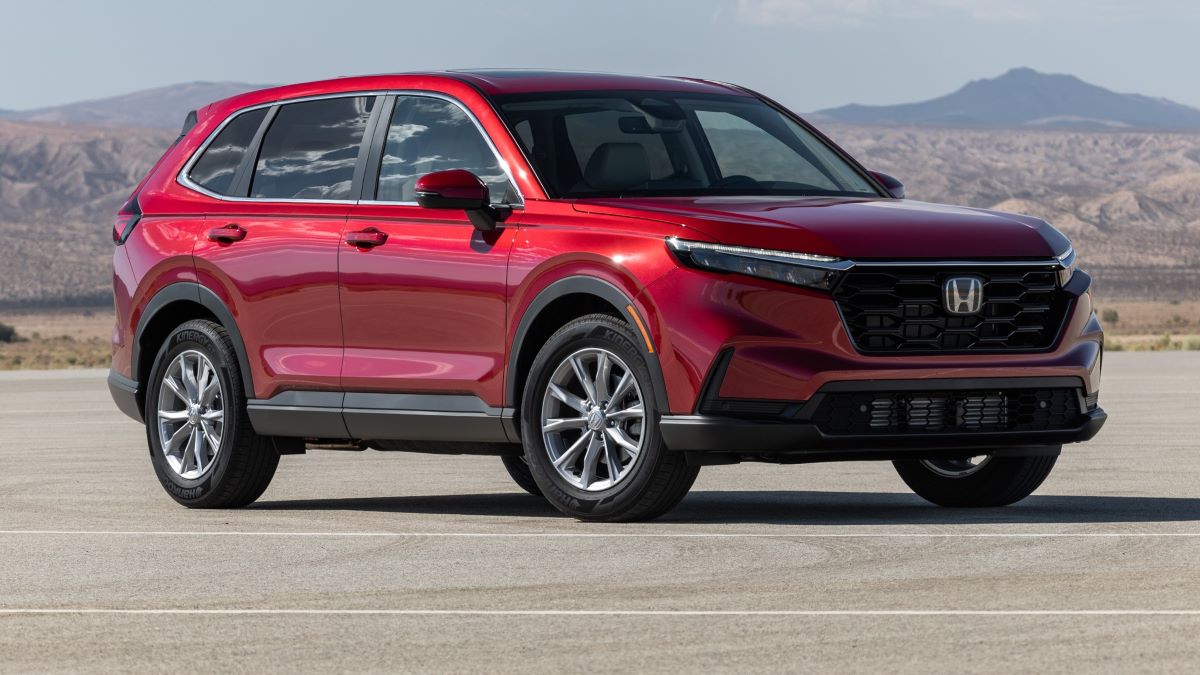
CR-V owners routinely praise the vehicle’s sturdy interior, excellent resale value, and dependable all-wheel-drive system. At 100,000 miles, most models only require preventive maintenance like fluid changes or minor suspension work.
What makes the CR-V stand out is its predictability. It doesn’t have exotic tech that can fail, and its simple mechanical setup means you can rely on independent mechanics instead of dealership-only service.
It’s evident that the Honda CR-V has hit the right notes, as the Japanese crossover was the best-selling compact SUV in 2012, leaving major competitors like the Ford Escape and Chevrolet Equinox far behind.
With its well-known blend of practicality, efficiency, and a generous feature set, it’s no surprise that the CR-V remains a top choice for small families.
The 2014 Honda CR-V is available in three trim levels, each offered with front- or all-wheel drive. Power comes exclusively from a 2.4-liter inline-four engine producing 185 hp and 163 lb-ft of torque, paired with a five-speed automatic transmission.
The base LX trim is well-equipped, featuring automatic headlights, keyless entry, a rearview camera, Bluetooth, Pandora interface, power doors and windows, cruise control, and a tilt-and-telescoping steering wheel.
Stepping up, the LX adds fog lights and a sunroof, while the top-tier EX-L adds roof rails, dual-zone automatic climate control, and leather seats with heated front seats. Optional extras include a navigation system and a rear-seat entertainment system.
In terms of fuel efficiency, the 2014 CR-V achieves 23/31 mpg city/highway with front-wheel drive, while all-wheel-drive models drop 1 mpg in both city and highway ratings. These figures are comparable to the front-wheel-drive Ford Escape, though the Escape slightly edges out the CR-V with 1 mpg higher on the highway.
3. Lexus RX 350 (2010–2015)
If you want a luxury SUV without luxury headaches, few options beat a well-kept Lexus RX 350. Sharing its DNA with Toyota’s proven V6 engines, the RX delivers the plushness of a premium crossover while maintaining Toyota-like reliability.
A 2010–2015 RX with 100,000 miles can often be found for under $15,000, and these vehicles easily reach 250,000 miles with proper care. The cabin is quiet and refined, and the build quality is impeccable door seals, electronics, and trim pieces age gracefully.

Unlike many European luxury SUVs that start bleeding money after 80,000 miles, the RX keeps maintenance simple and parts costs reasonable.
It’s the smart buy for someone who wants a comfortable, upmarket feel without unpredictable ownership costs.
4. Subaru Outback (2015–2019)
For drivers who prioritize versatility and safety, the Subaru Outback is one of the few all-wheel-drive wagons that truly lasts. The 2.5-liter four-cylinder engine is durable, and the car’s symmetrical AWD system gives it an edge in harsh climates.
The 2015–2019 generation fixed many issues from earlier models, including oil consumption and transmission quirks. With proper maintenance, a 100,000-mile Outback is still ready for adventure, whether on mountain roads or snowy commutes.

Its interior materials and build quality are also solid, and the vehicle’s high ground clearance makes it more capable than most crossovers. The Outback remains a great buy for those who value practicality over flash.
5. Toyota Tacoma (2011–2016)
Pickup trucks that last beyond 200,000 miles aren’t rare, but few do it as effortlessly as the Toyota Tacoma. The 2011–2016 generation is beloved for its ruggedness, resale value, and legendary dependability.
Whether you opt for the 2.7-liter four-cylinder or the 4.0-liter V6, these engines can handle hard use with minimal issues.

Even with 100,000 miles on the clock, Tacomas tend to feel solid. Their frames resist corrosion well (especially in southern states), and transmissions are known for their durability. Maintenance is straightforward, and aftermarket support is massive.
If you’re buying a used truck to actually use hauling, camping, or light off-roading a Tacoma from this era is still one of the best long-term investments you can make.
Power for the Tacoma comes from two engines: a 2.7-liter inline-four producing 159 horsepower, paired with either a five-speed manual or four-speed automatic; or a 4.0-liter V-6 generating 236 horsepower, mated to a six-speed manual or five-speed automatic.
Alongside these standard options, which offer rear- or four-wheel drive, Toyota also offers the Tacoma X-Runner and PreRunner trims, an Off-Road Package, and a TRD supercharger.
The Tacoma X-Runner is an Access Cab equipped with the V-6 and six-speed manual transmission. Its suspension is lowered, and the frame reinforced to improve torsional rigidity. In addition to standard safety equipment, some models come with hill-start assist and downhill assist control.
All 2011 Regular Cab Tacomas now include air conditioning. Double Cab models can be equipped with a Convenience Extra Value Package, which adds cruise control, a sliding rear window, keyless entry, and audio controls on the steering wheel.
Grille designs have also been updated: standard models feature a metallic surround with a gray bar, SR5 and Off-Road models use a chrome surround with a black bar, and the Tacoma X-Runner gets a body-color surround with a matching bar.
The current Tacoma’s body has more curves and angles than ever before. Buyers can choose a higher ground clearance with off-road capability, a standard height, or a lowered street-truck appearance. The largest available wheel size is 18 inches.
Seating capacity varies by cab: Regular Cab seats three, Access Cab seats four, and Double Cab seats five. Standard cab features include a tilt-and-telescoping steering wheel, air conditioning, and power ports. Optional features include cruise control and rear heater ducts.
In terms of handling, the sporty Tacoma X-Runner achieved 0.89 g on the skidpad and completed the slalom at 65 mph.
Acceleration varies by model: the Tacoma Double Cab runs 0-60 mph in 8.7 seconds, while the PreRunner reaches 60 mph in 6.8 seconds. Stopping distances are similarly impressive, with the Double Cab needing 126 feet from 60 mph and the PreRunner only 122 feet.
Also Read: Top 12 Longest-Lasting Pickups Ever Built
5 Vehicles to Avoid at Any Mileage
When shopping for a used vehicle, some cars are better left alone, regardless of mileage. Even models that look appealing on the surface can carry hidden flaws, chronic reliability issues, or costly maintenance nightmares that make them a poor investment.
In this article, we highlight five vehicles that drivers should avoid at any mileage. These cars have earned a reputation for persistent problems, expensive repairs, or disappointing performance that can outweigh any potential savings. Knowing which models to steer clear of can save you frustration, money, and time down the road.
1. Fiat 500L (2014–2019)
The Fiat 500L is one of those cars that seems like a great deal until it isn’t. While the design and European flair might draw you in, the reliability and build quality are well below American standards.
Electrical issues, faulty transmissions, and interior components that fail prematurely are all too common.
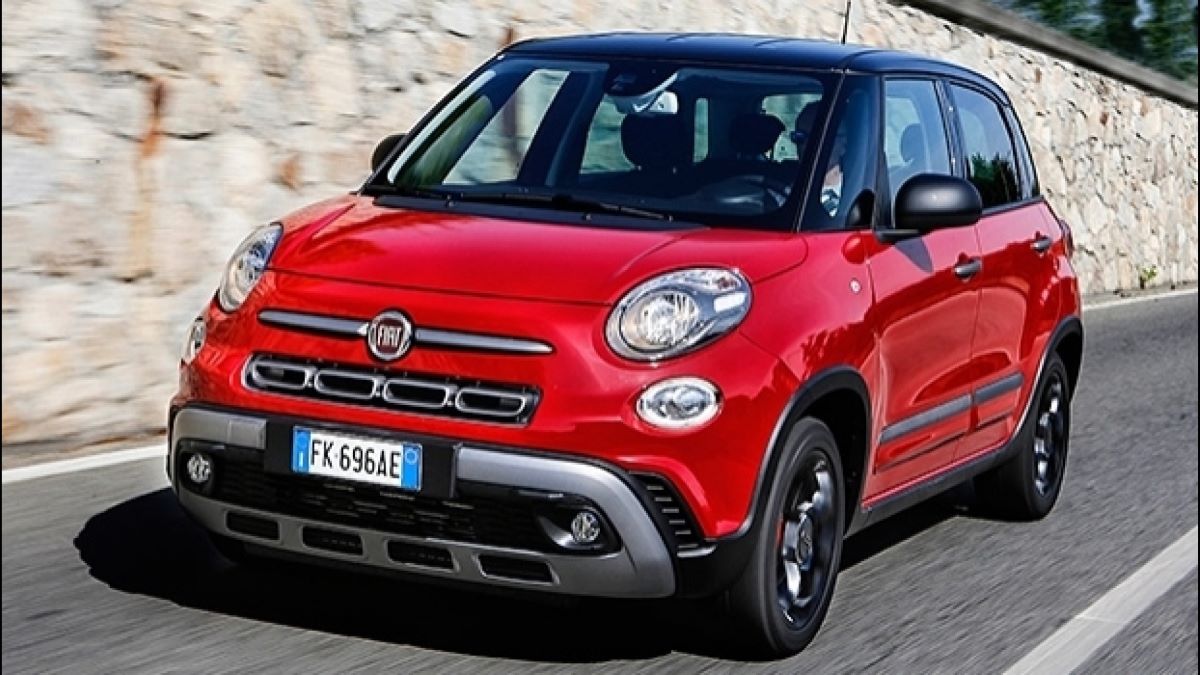
Even low-mileage examples can develop frustrating problems that require expensive parts and specialized labor. The resale value is also poor, meaning you’ll likely lose money the moment you drive it home.
When Fiat returned to the U.S. in 2011, it was almost certain that the ultracompact 500 hatchback would appeal to only a small audience. The 500’s roots are European, where narrow streets and short distances make tiny cars practical and desirable.
Fiat always planned to expand the 500 lineup with a larger, more versatile model for North American drivers, resulting in the 2014 Fiat 500L.
With two extra doors, over two feet of added length, and interior space comparable to many full-size cars, the 2014 500L is a completely different vehicle from the standard Fiat 500 hatchback.
Essentially a compact wagon nearing the size of a small crossover, it offers high-mounted front seats that provide a commanding view of the road, along with rear headroom and legroom that are surprisingly generous.
The 500L is also wider than the hatchback, providing increased shoulder and hip room that allows three children to sit comfortably in the back. Its cargo capacity is similarly impressive, with 23.1 cubic feet behind the rear seats versus just 9.5 in the standard 500, making trips to the grocery store much easier.
Powering the larger 500L is a 160-horsepower turbocharged four-cylinder engine. While adequate for city driving, acceleration slows noticeably when the car is fully loaded for longer trips, especially when paired with the automated manual transmission.
This transmission diminishes the 500L’s responsiveness and tends to shift into top gear too quickly, sapping the car of energy.
While it blends the personality of the 500 hatchback with the interior space of a crossover, the 500L’s subpar transmission, brakes, suspension tuning, interior materials, and cargo layout hold it back from being truly competent.
In terms of rivals, the 2014 Kia Soul is similar in size and quirkiness but excels in nearly every category. A top-trim Soul with its stronger engine and conventional automatic transmission costs about the same as a base 500L with a manual, making the Fiat a hard sell.
The larger, pricier 2014 Mini Cooper Countryman offers a more refined driving experience, sportier handling, and available all-wheel drive. Other alternatives include the Nissan Juke and compact crossovers like the Kia Sportage.
All 2014 Fiat 500L models are front-wheel drive and powered by a turbocharged 1.4-liter four-cylinder engine producing 160 hp and 180 lb-ft of torque.
A six-speed manual transmission is standard on all but the top-trim Lounge, while a six-speed automated manual replaces a conventional automatic.
2. BMW X5 (2011–2016)
BMW’s mid-size SUV offers luxury and performance, but long-term ownership is not for the faint of heart. The X5’s complex electronics, turbocharged engines, and air suspension systems are prone to costly failures.

Owners report frequent problems with oil leaks, cooling systems, and drivetrain components all of which can add up to thousands in repairs. Unless you have deep pockets and a trustworthy European mechanic, an out-of-warranty X5 can easily become a financial burden.
3. Jeep Cherokee (2014–2018)
The modern Jeep Cherokee had potential, but its nine-speed automatic transmission and inconsistent build quality made it infamous for reliability issues.
Numerous recalls plagued this generation, and drivers often report transmission hesitation, software bugs, and electrical faults.

Even though Jeeps are marketed as adventure-ready, the Cherokee often spends more time in the shop than on the trail. When buying used, it’s better to opt for a simpler, more proven SUV rather than rolling the dice on one of Jeep’s least dependable efforts.
The 2014 Jeep Cherokee serves well as both a daily driver and a capable off-roader. Its cabin is comfortable and inviting, providing a pleasant environment for passengers, while the ride quality is smooth and composed. Safety is another strong point, as the Cherokee performs well in crash tests.
Cargo space, however, is somewhat limited—but even that isn’t the SUV’s most significant drawback. The real issue lies in reliability. While the Cherokee is a solid compact SUV, other models in its class tend to hold up better over time.
Under the hood, the 2014 Cherokee comes standard with a 184-horsepower four-cylinder engine, while a 271-horsepower V6 is available. Both engines are paired with a nine-speed automatic transmission and front-wheel drive, with four-wheel drive offered as an option.
The four-cylinder engine delivers adequate acceleration and good fuel economy (21 mpg city / 30 mpg highway), though it can feel strained on the highway. The V6 improves performance without a large efficiency penalty, offering 19 mpg city and 28 mpg highway.
On the road, the Cherokee rides comfortably, and its off-road capabilities are strong. Models equipped with the Active Drive II system, including the Trailhawk, feature both high- and low-range gearing for serious off-road use.
Properly equipped Cherokee V6 models are also capable of towing up to 4,500 pounds, making them a versatile choice for drivers who need both daily usability and rugged capability.
4. Volkswagen Passat (2012–2017, 1.8T Models)
The Volkswagen Passat has a comfortable ride and a refined interior, but the 1.8-liter turbocharged engine from this era is notorious for oil consumption and timing chain issues. While newer versions improved somewhat, the long-term cost of ownership remains high.

German parts and labor rates can make even simple maintenance feel like luxury-brand pricing.
Combine that with below-average reliability scores and it becomes clear: a used Passat is best avoided unless you’re buying one with impeccable service history and extended warranty coverage.
If you’ve always dreamed of driving a refined European sedan but felt obligated to stick with an American-made vehicle, the 2012 Volkswagen Passat may finally resolve that conflict.
This all-new midsize sedan blends the qualities that typically attract buyers to German cars, elegant styling, composed handling, and a more engaging driving experience, while also being the first model built at VW’s new Chattanooga, Tennessee assembly plant.
Unlike the previous Passat, which continues to be sold abroad, this U.S.-made version is tailored to American tastes with a roomier cabin, a fresh selection of engines, and, perhaps most importantly, a significantly lower price.
The engine lineup has changed from the previous year, as the 2.0-liter turbocharged unit is no longer available. Buyers now choose from three engines: a 2.5-liter inline-5 carried over from the Jetta, a 2.0-liter inline-4 diesel TDI..
Some longtime VW Passat owners may lament the shift in direction, as the model used to occupy a niche between mainstream family sedans and entry-level luxury vehicles.
However, the U.S.-built Passat now better suits the majority of consumers. It offers competitive pricing, drives well, comfortably accommodates a family of five, and retains its German engineering pedigree.
There are minor drawbacks, such as the absence of certain common features, including a rearview camera and an eight-way power driver’s seat.
Given the competitive midsize segment, buyers should compare it directly with top rivals like the Ford Fusion, Honda Accord, Hyundai Sonata, and Kia Optima. Nevertheless, the 2012 Volkswagen Passat occupies a unique spot in the market, giving drivers the opportunity to enjoy European flair with American manufacturing.
5. Land Rover Discovery Sport (2015–2019)
Land Rover’s Discovery Sport looks like a sophisticated SUV bargain at first glance, but reality sets in quickly. Reliability reports consistently rank it near the bottom of its class, with frequent engine, transmission, and electrical issues.
Even under warranty, owners complain about downtime and expensive repair bills once coverage ends. The high maintenance costs and poor dependability make it one of the riskiest luxury SUV purchases on the used market.
No matter how affordable one seems, it’s a gamble that rarely pays off.

Buying a used car with 100,000 miles isn’t about playing it safe it’s about being smart. Vehicles like the Camry, CR-V, and Tacoma prove that proper maintenance and solid engineering can stretch a car’s life well past what used to be considered the end of the road.
On the other hand, cars like the Fiat 500L or Land Rover Discovery Sport remind us that not every vehicle ages gracefully. Flash and features can’t make up for poor reliability or sky-high repair costs.
For U.S. buyers, the best move is to look beyond the odometer and focus on build quality, repair history, and reputation. Do that, and a 100,000-mile car can be one of the best bargains you’ll ever own.
