
For years, many enthusiasts believed that electric cars could not match the excitement of traditional performance vehicles. The lack of engine noise and mechanical feedback was thought to remove the emotional connection between driver and machine.
However, a new generation of electric vehicles is proving that idea wrong. The models featured in “10 Electric Cars That Offer True Driving Fun” show that electrification can deliver thrilling performance, precise handling, and genuine driving satisfaction.
From the sharp responsiveness of the 2025 Porsche Taycan to the surprising versatility of the Rivian R1T, these vehicles represent the evolution of modern performance motoring.
They accelerate faster than most supercars, corner with remarkable balance, and combine technology with comfort in ways that enhance the driving experience. Whether in the form of a sleek sedan, a sporty crossover, or a rugged pickup, each vehicle proves that the passion for driving continues to thrive in the electric era.
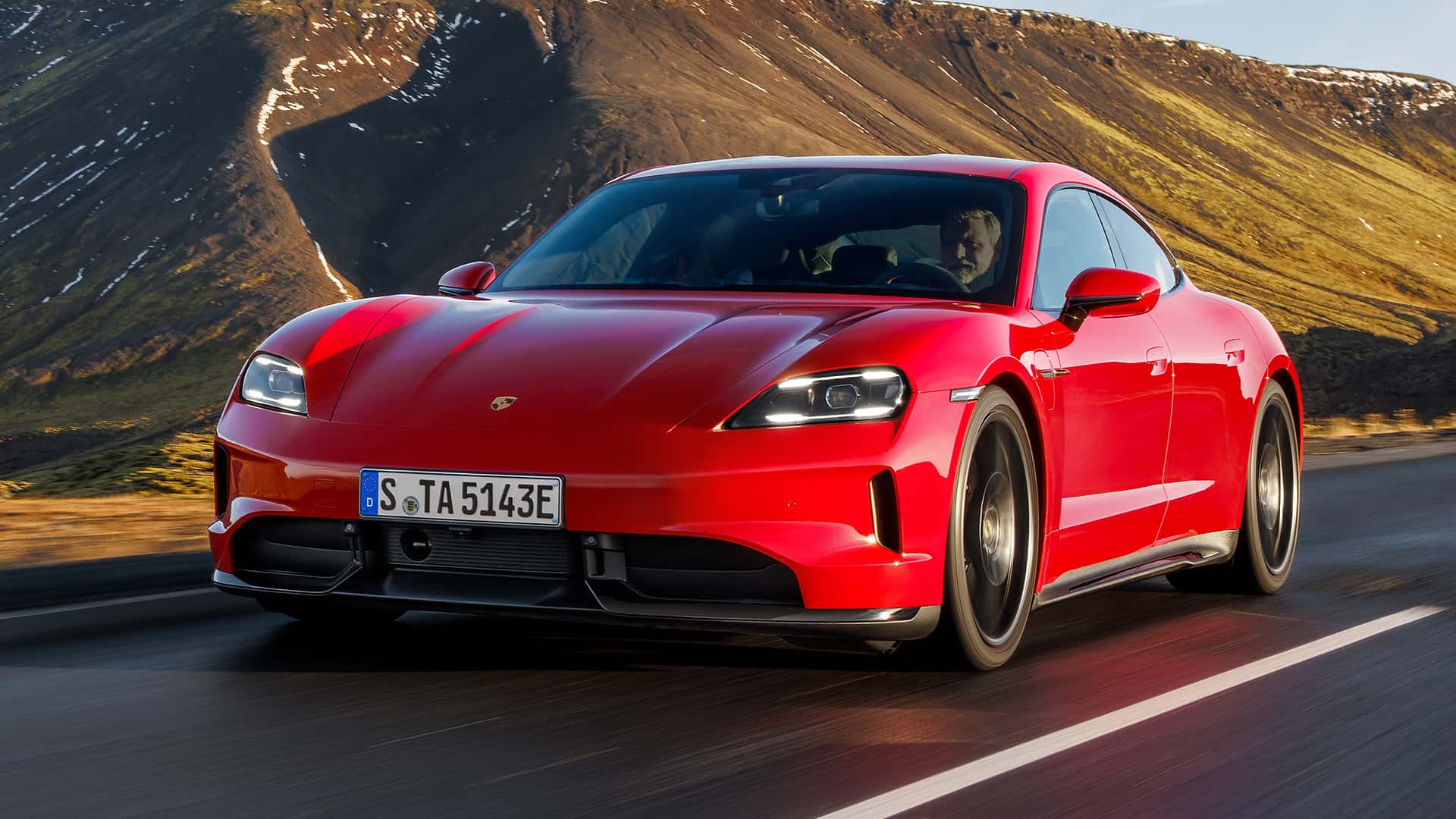
1. 2025 Porsche Taycan: Performance Meets Precision
The 2025 Porsche Taycan continues to dominate as a top-performing electric vehicle, earning the title of Performance EV of the Year for the second consecutive year. Starting at $101,395, the Taycan blends Porsche’s signature sports-car handling with electric performance.
For those seeking ultimate power, the Taycan Turbo GT is priced at $231,995, delivering a staggering 1019 hp and accelerating from 0 to 60 mph in just 1.9 seconds. Across all trims, the Taycan offers brisk acceleration, agile handling, and an engaging driving experience.
The Taycan remains one of the quickest EVs on the market, although new competitors have narrowed its advantage. The Taycan 4S with the Performance Battery accelerates from 0 to 60 mph in 3.4 seconds and completes the quarter mile in 11.5 seconds at 115 mph, outperforming its previous generation and rival models from Mercedes, Lucid, and BMW.
While raw speed is exceptional, testing revealed average skidpad grip (0.89 g) and handling that may not feel fully balanced without optional upgrades like torque vectoring, active suspension, or the Sport Chrono package. On the street, the Taycan delivers smooth, predictable, and enjoyable driving, though one-pedal driving is still absent.
Despite its sporty nature, the Taycan offers a comfortable ride with adaptive air suspension and well-padded, supportive seats. Long drives are fatigue-free, and the cabin effectively minimizes wind and road noise. Climate controls, however, can be cumbersome, requiring touchscreen navigation for vent adjustments.
Interior space is tight compared to rivals such as the Tesla Model S or Lucid Air, particularly in the rear seats, where headroom and legroom are limited. Front seats are highly adjustable, and the air suspension eases entry and exit. Visibility is average, aided by an available surround-view camera.
The Taycan includes updated tech features such as wireless Apple CarPlay, Android Auto, and a wireless charging pad. Navigation integrates well with charging station information.
However, standard driver-assistance features are limited, requiring extra options to match competitor offerings. Storage is modest, with small front and rear trunks and limited interior compartments. Rear seats fold 40/20/40, but larger items may be difficult to accommodate.
The 2025 Taycan benefits from new batteries and motors, improving range and efficiency. The Taycan 4S with the performance battery offers an EPA-rated 252 miles, with real-world range reaching 307 miles.
Energy consumption is measured at 31 kWh/100 miles, and charging has been upgraded to 320 kW peak, compatible with 350-kW DC fast chargers. While expensive, the Taycan delivers Porsche-level driving precision and luxury. Warranty coverage includes four years/50,000 miles for basic and powertrain and eight years/100,000 miles for the battery.
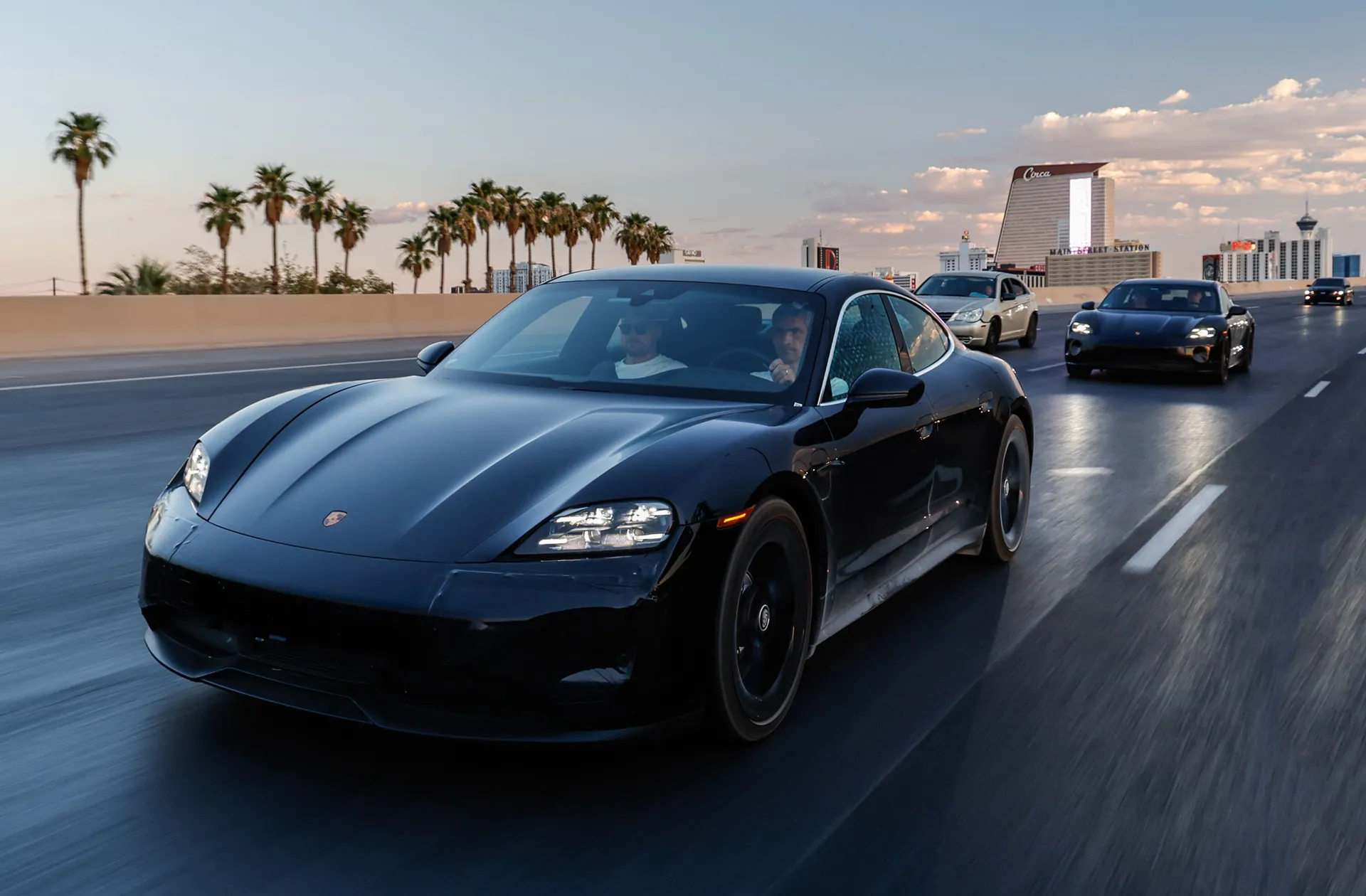
2. 2025 Hyundai Ioniq 5 N: The Electric Hot Hatch That Redefines Performance
The 2025 Hyundai Ioniq 5 N shows that electric vehicles can be thrilling to drive while remaining practical. Starting at $67,575, this high-performance version of Hyundai’s electric crossover has earned accolades such as “Performance EV of the Year” in the under-$100,000 category and even beat the BMW M3 in comparison testing.
It combines incredible speed, precision handling, and versatility in a package that can satisfy both track enthusiasts and daily commuters.
The Ioniq 5 N delivers explosive acceleration with 641 horsepower and can sprint from 0 to 60 mph in just 3.3 seconds. It also completes the quarter mile in 11.2 seconds at 122.2 mph.
Despite its weight, it changes direction with immediacy and can be driven with either precision or aggression, depending on the driver’s preference. Its large brakes resist fading even under demanding use, as proven during Hyundai’s Nürburgring testing.
What truly sets the Ioniq 5 N apart is its customizability. Drivers can tailor the all-wheel-drive system to send up to 80 percent of the power to the rear wheels, adjust regenerative braking, or even activate synthetic engine sounds and simulated gearshifts to mimic a traditional sports car.
The ride is compliant in Comfort mode but can stiffen considerably for track use. While the thick rear pillars limit visibility, the car compensates with cameras and a surround-view system. Hyundai’s driver aids reduce fatigue and enhance safety, though they are not flawless in execution.
Inside, the Ioniq 5 N combines performance-oriented design with comfort. The front seats are sporty, supportive, and both heated and ventilated, though they lack power adjustment. Rear seats are flatter but still offer generous space for adults. When synthetic propulsion sounds are off, the cabin remains nearly as quiet as the standard Ioniq 5, though wider tires introduce some road noise.
The interior layout mirrors that of the standard model, featuring a dual-screen setup and intuitive controls. However, the extensive range of performance settings may take time to master. Drivers can store their favorite setups in two preset modes for quick access. Rear passengers benefit from sliding and reclining seats, which also make installing child seats easy.
A 12.3-inch touchscreen provides access to navigation, Apple CarPlay, Android Auto, and Hyundai’s Bluelink app for remote vehicle management. An eight-speaker Bose system offers clear, punchy sound. Cargo space measures 26.1 cubic feet behind the rear seats, with a wide load floor and fold-flat capability for longer items.
Although priced higher than the standard model, the Ioniq 5 N delivers performance comparable to or better than gasoline rivals like the BMW M2 and Ford Mustang Dark Horse. Backed by Hyundai’s 10-year/100,000-mile powertrain warranty and 5-year/60,000-mile bumper-to-bumper coverage, it represents one of the best values among performance EVs today.
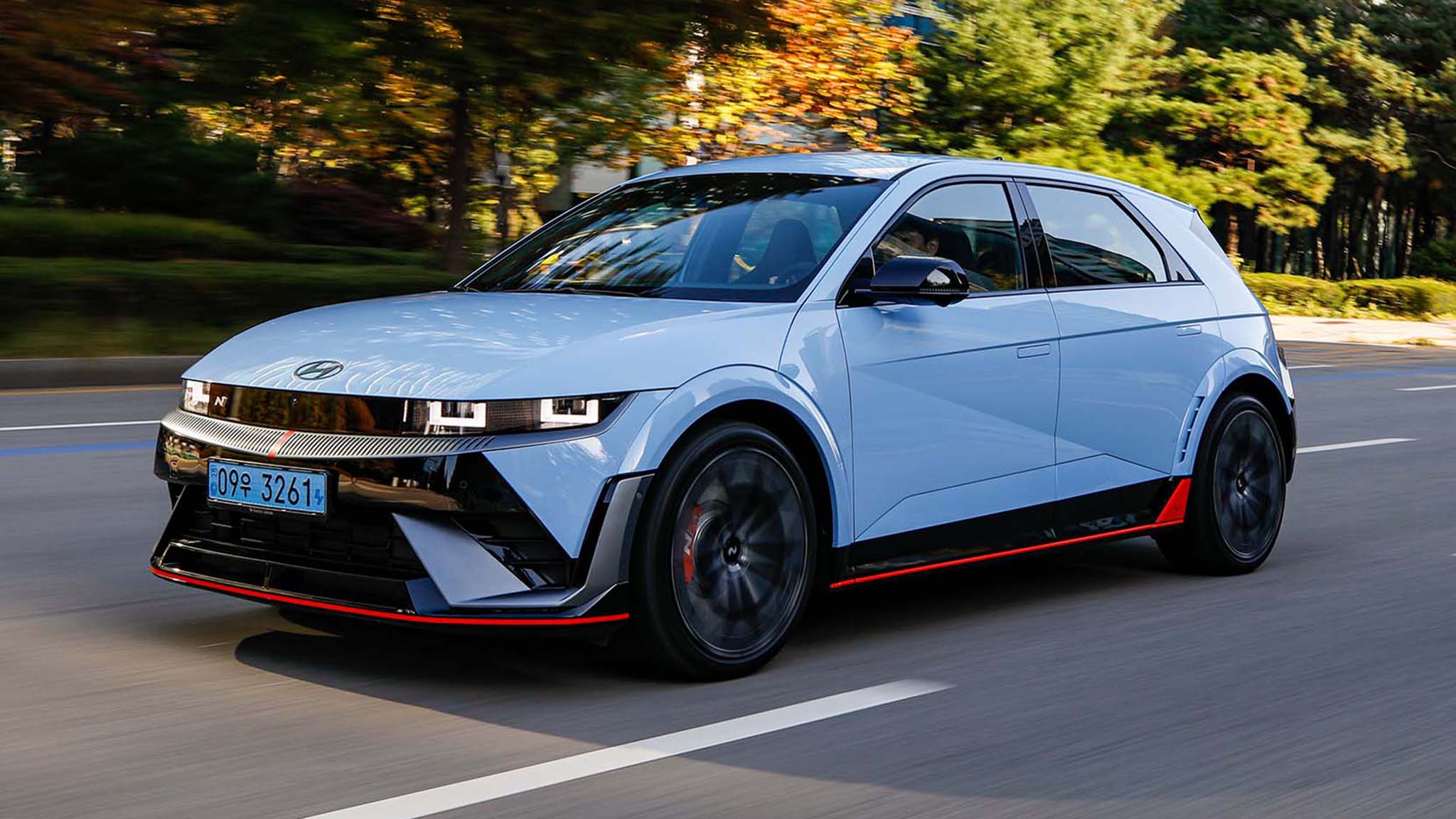
3. 2025 Porsche Macan EV: Porsche’s Electric SUV Triumph
The 2025 Porsche Macan EV marks Porsche’s highly anticipated entry into the electric SUV market. Starting at $77,295, the Macan EV shares nothing mechanically with its gasoline-powered counterpart, sitting on a completely new EV platform that surpasses even the Taycan in sophistication.
Designed for driver engagement, the Macan EV delivers sharp handling, responsive steering, and sporty dynamics, making it one of the most thrilling electric SUVs available.
The Turbo model accelerates to 60 mph in just 3.1 seconds with its 630-hp powertrain, while mid-level trims balance performance with a practical range exceeding 300 miles. An 800-volt architecture enables rapid DC charging, taking just over 20 minutes to charge from 10 to 80 percent.
The Macan EV lineup offers a spectrum of performance capabilities. The Macan 4 accelerates to 60 mph in 4.8 seconds, while the Turbo delivers nearly supercar-level performance. Both variants are easy to drive in city traffic, though the EV lacks full one-pedal driving.
Handling and braking are impressive, with the Turbo model achieving 1.01 g on the skidpad, demonstrating its ability to tackle winding roads with sports-car agility. Optional high-performance tires enhance cornering grip, providing a dynamic driving experience uncommon in most SUVs. Advanced driver aids are available but can be overly sensitive, with forward collision warnings sometimes triggered unnecessarily.
The Macan EV emphasizes a quiet, refined cabin. Optional insulated windows and the absence of a synthetic EV soundtrack create a serene environment. Front seats are comfortable, with easy ingress and egress, while rear legroom is limited, making the back seats more suitable for children.
Climate controls are straightforward, with manually adjustable vents and available four-zone climate management. The Eco mode struggles to cool the cabin on hot days, but the system effectively maintains comfort under most conditions.
The Macan EV features Porsche’s latest infotainment system, including wireless Apple CarPlay and Android Auto, multiple USB-C ports, wireless charging, and an optional head-up display for navigation. Storage is moderate, with 19.1 cubic feet in the rear hatch and 3 cubic feet in the frunk.
Interior compartments are abundant but mostly exposed. While the Macan can tow up to 4,409 pounds, it provides slightly less cargo capacity than rivals such as the Tesla Model Y and Genesis GV70 Electrified.
The Macan 4 achieves an EPA-estimated range of 308 miles, with the Turbo rated at 288 miles. Real-world testing exceeded expectations, with the Macan 4 reaching 351.7 miles and the Turbo reaching 301 miles.
Energy efficiency is strong, measured at 29 kWh/100 miles for the Macan 4 and 33 kWh/100 miles for the Turbo. Fast-charging capabilities are notable, with peak charging rates up to 285 kW, replenishing 100 miles of range in under 10 minutes.
The Macan EV combines daily usability with exhilarating performance. Its compact size, responsive handling, and long-range capabilities make it versatile for city and highway driving alike. While the price is high, Porsche delivers top-notch fit and finish, extensive customization options, and a well-rounded driving experience.
With standard four-year/50,000-mile coverage and an eight-year/100,000-mile battery warranty, the Macan EV offers both luxury and practicality, appealing to new EV buyers and loyal Porsche enthusiasts alike.
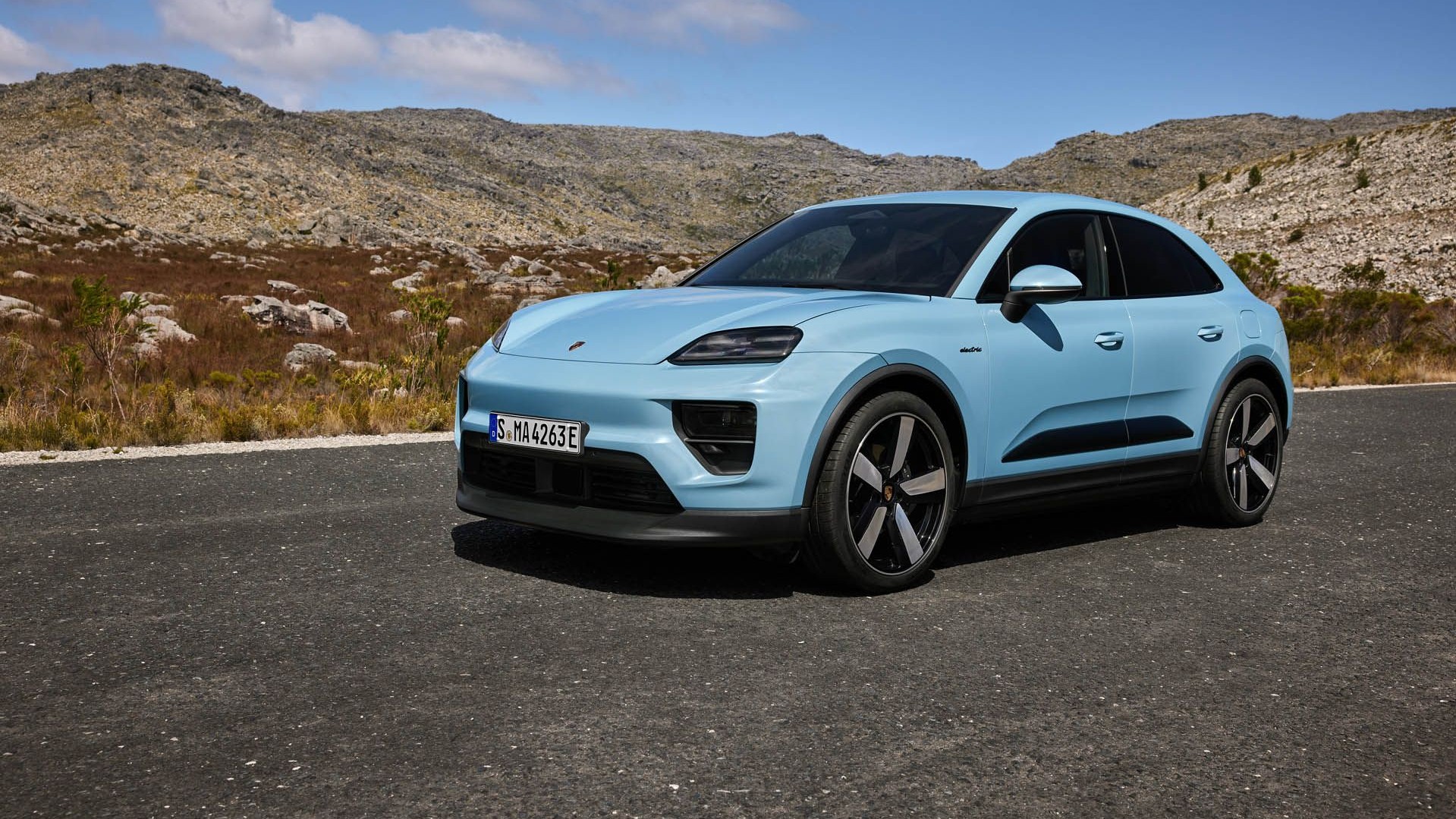
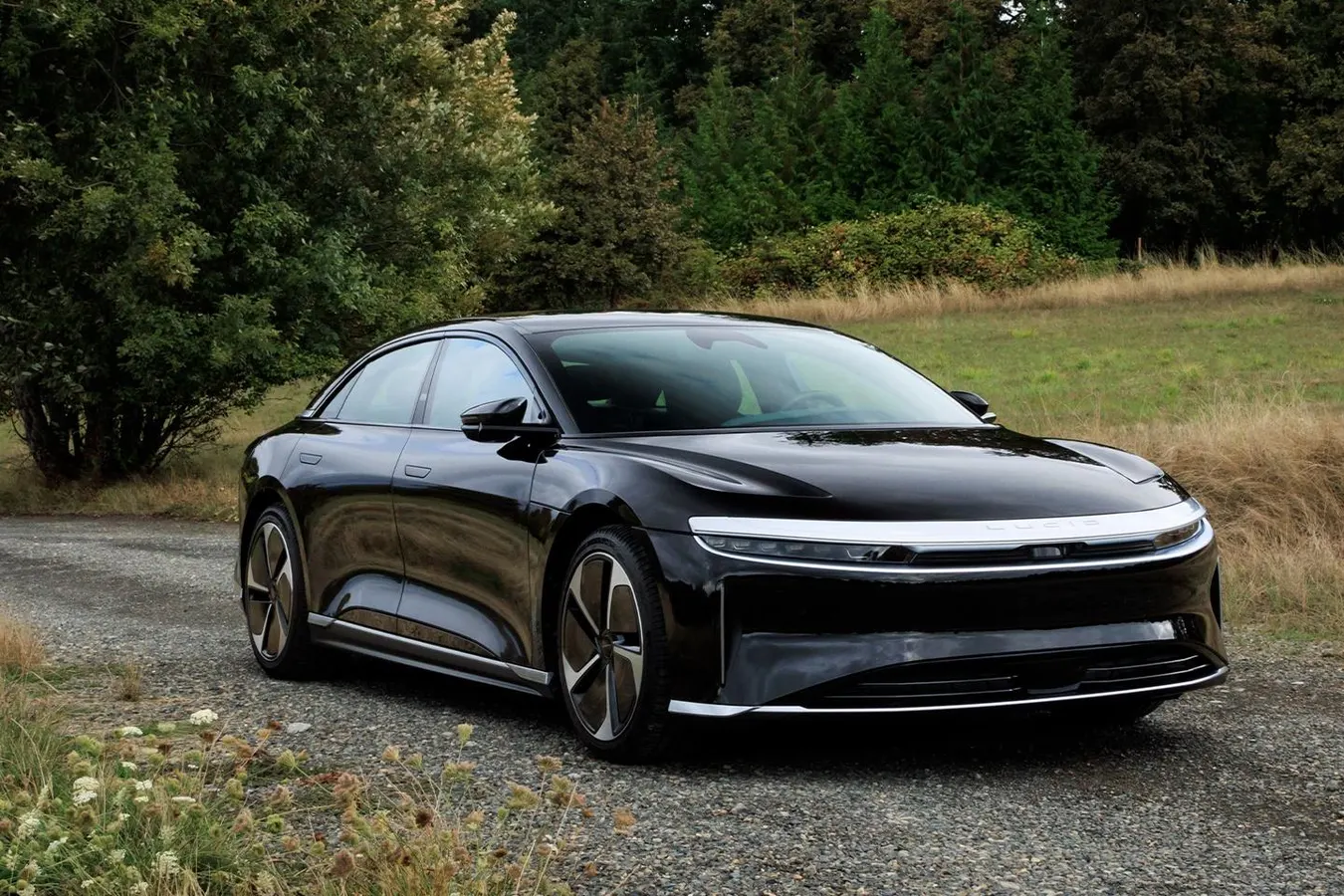
4. 2025 Lucid Air: Luxury, Range, and Performance
The 2025 Lucid Air redefines what a large luxury EV sedan can be, combining blistering acceleration with extraordinary electric range. Starting at $71,400, the base Pure model accelerates to 60 mph in just 4.0 seconds and delivers up to 512 miles on a full charge.
At the top end, the Lucid Air Sapphire produces 1234 hp, reaching 60 mph in a staggering 2.0 seconds. With sleek styling and a spacious, well-trimmed interior, the Air projects an upscale presence while delivering sports-sedan-like handling on twisty roads.
The Lucid Air excels in both straight-line speed and handling. In testing, the base Pure trim hit 60 mph in 4.6 seconds, while higher trims achieve similar speeds in roughly 3 seconds. The Sapphire trim reaches 60 mph in just 2.2 seconds. Despite the immense power, the Air remains smooth and composed in everyday driving.
Braking is strong and reliable, and handling is lively and precise. Steering is responsive, making the Air agile on winding roads and easy to maneuver in tight spaces. Adjustable regenerative braking can bring the car to a full stop without using the brake pedal.
Ride quality is compliant and smooth, particularly on highways, though some rivals offer softer city-road performance. Seats provide ample adjustment and comfort, though lateral support could be better.
The cabin is spacious, offering generous headroom, legroom, and shoulder room for both front and rear passengers. Big doors and a low ride height facilitate entry, while multiple touchscreens provide intuitive control over vehicle functions. Visibility is good, aided by large windows and cameras, and touchscreen controls are easy to navigate.
Lucid has improved the Air’s infotainment and driver-assistance systems, with fast, responsive interfaces. Wireless Apple CarPlay and Android Auto are standard, with USB-C charging in both rows. A unique feature allows the Air to charge other EVs using a special cable. Advanced driver aids, such as adaptive cruise control, function reliably with minimal false alerts.
The Air provides 26.1 cubic feet of cargo space, split between a 16.2-cubic-foot rear trunk and a 9.9-cubic-foot front trunk. The rear trunk is deep with a wide opening, while interior storage includes large door pockets, a center console, and a hidden compartment behind the retractable lower screen. Rear-facing car seats fit easily, with accessible anchors.
In real-world testing, the Lucid Air delivers impressive range, even if slightly below EPA estimates. The Air Pure achieved 349 miles, while higher trims surpass 400 miles, with the Dream Range Edition exceeding 500 miles.
Energy consumption ranges from 23 to 30 kWh/100 miles, making it highly efficient. Pricing is competitive for a luxury EV, with the Pure trim offering strong value. Warranty coverage includes four years/50,000 miles basic, eight years/100,000 miles for the powertrain, and four years/50,000 miles for roadside assistance.
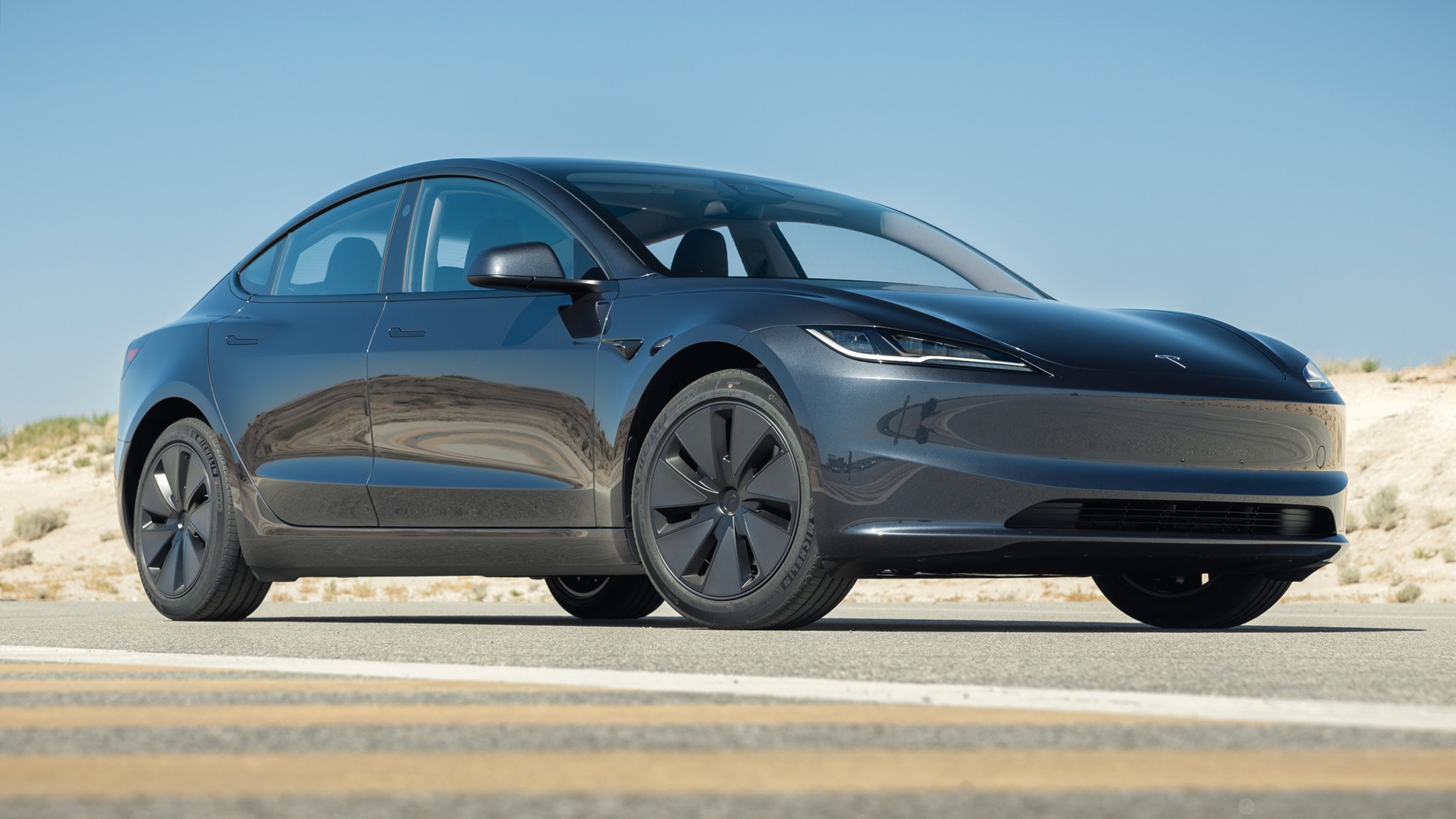
5. 2025 Tesla Model 3 Performance: Blending Speed, Efficiency, and Everyday Usability
The 2025 Tesla Model 3 Performance is an exceptionally quick electric sedan that delivers supercar-level acceleration at a much lower price. It reaches 60 mph in just 3.0 seconds, matching cars such as the Porsche 911 Carrera 4 GTS and the Lamborghini Huracán STO.
Power delivery is immediate and smooth, allowing the car to complete the quarter mile in 11 seconds flat. Braking performance is strong, stopping from 60 mph in 109 feet, although the brakes can overheat during extended track driving.
When driven on winding roads, the Model 3 shows some body roll as weight shifts, but its handling remains stable and easy to control. With stronger tire grip and tighter handling, it could become one of the finest sport sedans in its class.
Inside, the Model 3 Performance combines supportive seating with a practical layout. The front seats feature additional side bolstering to hold passengers during spirited driving and include standard heating and ventilation.
More lateral support would improve comfort during fast cornering. Rear seats are spacious but positioned low, which may leave taller passengers with their knees raised. The adaptive suspension leans toward firmness but still manages road imperfections effectively, making the car livable for everyday use.
The climate system works well, though the lack of multiple temperature zones is noticeable. Adjusting air vents through the touchscreen can also be distracting when driving.
Tesla’s minimalist cabin is centered around a 15.4-inch touchscreen that controls nearly every function. Tech-oriented drivers will appreciate the layout, but those who prefer traditional buttons may find it less intuitive. The new touchscreen-based gear selector is simple to use, though the steering wheel’s turn signal buttons require some adjustment. Visibility is excellent, and the driving position can be fine-tuned easily.
The infotainment system features a crisp Google-based navigation interface and a premium 17-speaker audio system that provides clear, immersive sound. However, the lack of Apple CarPlay and Android Auto limits connectivity.
Rear passengers now have a second screen for entertainment, offering access to streaming and games. The voice control system performs well for basic tasks such as setting the temperature or navigation.
Tesla’s Autopilot system includes adaptive cruise control, lane centering, and optional Full Self-Driving functions. While useful, it can sometimes react too abruptly with braking or acceleration.
The Model 3 provides 24.1 cubic feet of combined trunk and frunk space, and the rear seats fold nearly flat for added practicality. Its EPA-estimated range is 303 miles, with real-world tests showing slightly higher results at 306 miles.
With four years or 50,000 miles of basic coverage and eight years or 120,000 miles for the battery and drive unit, the Model 3 Performance delivers strong value as a fast, efficient, and practical performance EV.
Also Read: 10 Cars That Outsell Competitors Despite Weak Marketing
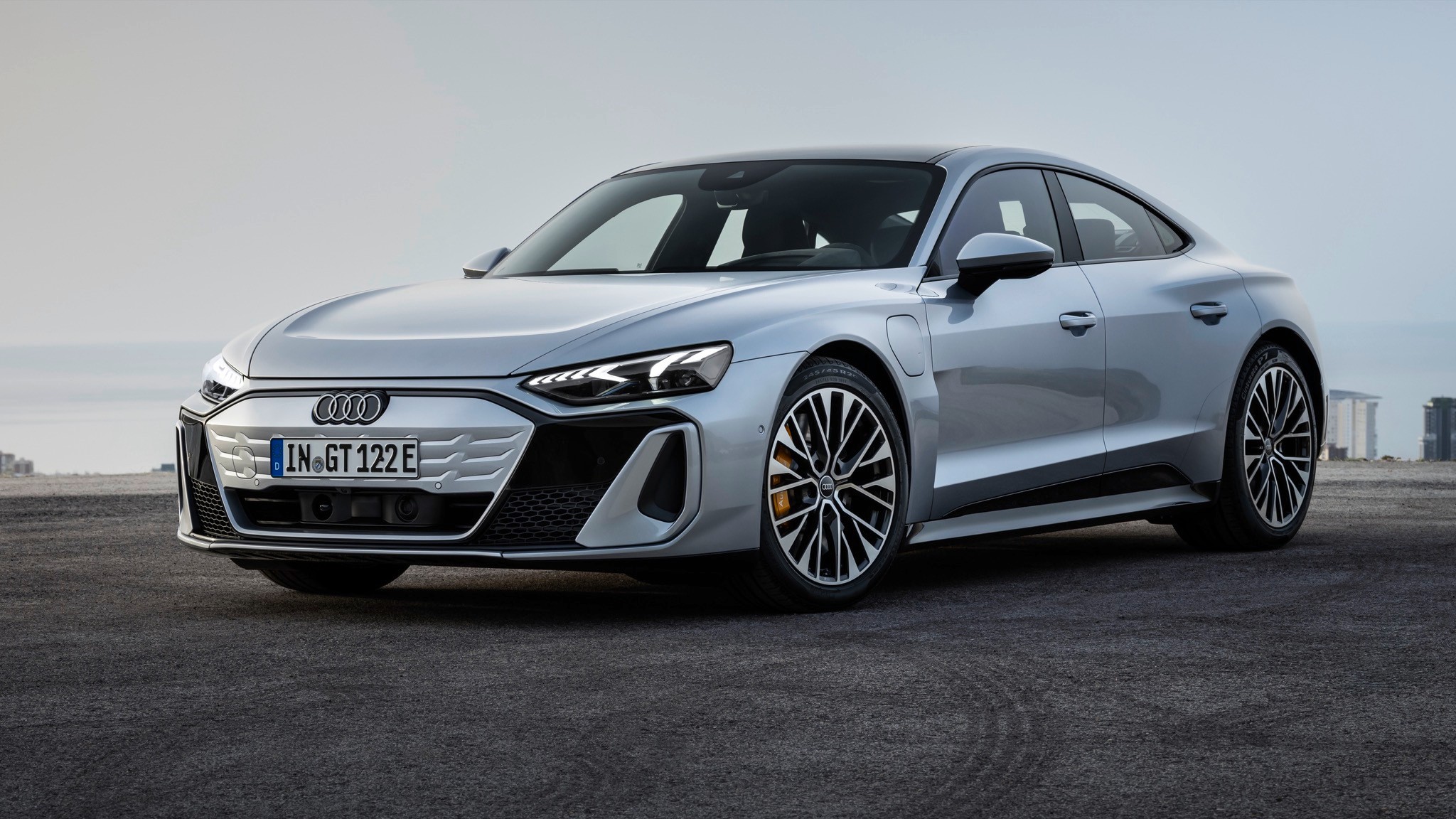
6. 2025 Audi e-tron GT: Power, Precision, and Luxury in Electric Form
The 2025 Audi e-tron GT stands as one of the most refined and exhilarating electric sedans on the market. Sharing its platform and technology with the Porsche Taycan, the e-tron GT blends German engineering excellence with Audi’s signature sophistication.
With a starting price of $126,795, this four-door EV offers blistering performance, advanced technology, and a lavish interior suited for both daily driving and spirited adventures.
The e-tron GT’s foundation lies in its dual-motor setup, creating an electric version of Audi’s famed Quattro all-wheel-drive system. The base model produces 670 horsepower, while the RS e-tron GT Performance tops the lineup with an astonishing 912 horsepower.
This immense power is managed through a two-speed rear transmission that optimizes both acceleration and efficiency. The RS model sprints from 0 to 60 mph in just 2.1 seconds, faster than the Porsche Taycan Turbo Cross Turismo.
Audi has tuned the e-tron GT for dynamic handling, featuring all-wheel steering, adaptive air suspension, and wheel sizes ranging from 19 to 21 inches. The steering feels light yet precise, and the suspension balances agility with comfort.
A sophisticated cooling system helps the battery withstand repeated high-speed runs without overheating. Unlike many EVs, the e-tron GT avoids full one-pedal driving to maintain a natural braking feel, supported by powerful carbon-ceramic brakes.
All 2025 e-tron GT models come equipped with a larger 97.0-kWh lithium-ion battery, boosting range and performance. The S model offers up to 300 miles of driving range with 20-inch wheels, while the RS model achieves 280 miles in real-world testing.
Charging is equally impressive, with the ability to replenish the battery from 10 to 80 percent in only 18 minutes using a 320-kW DC fast charger. The EPA estimates the S model’s efficiency at 91 MPGe city and 88 MPGe highway, though these figures drop slightly with larger wheels.
Inside, the e-tron GT showcases Audi’s hallmark craftsmanship. The cabin combines futuristic design with premium materials, including optional leather-free upholstery made from recycled components.
Features such as ambient lighting, a head-up display, and heated and ventilated seats with massage functions emphasize comfort. The low seating position enhances the sporty driving feel, while the rear offers generous legroom but limited headroom. Cargo space is split between a rear compartment and a small front trunk.
A 10.1-inch touchscreen anchors the infotainment system, complemented by steering-wheel controls, voice recognition, wireless charging, and a 16-speaker Bang & Olufsen sound system. Safety technologies include adaptive cruise control, blind-spot monitoring, lane-keeping assist, and remote self-parking.
Audi backs the e-tron GT with a four-year/50,000-mile limited warranty and an eight-year/100,000-mile powertrain coverage. With its perfect blend of speed, luxury, and innovation, the 2025 Audi e-tron GT delivers a driving experience that feels both futuristic and unmistakably Audi.
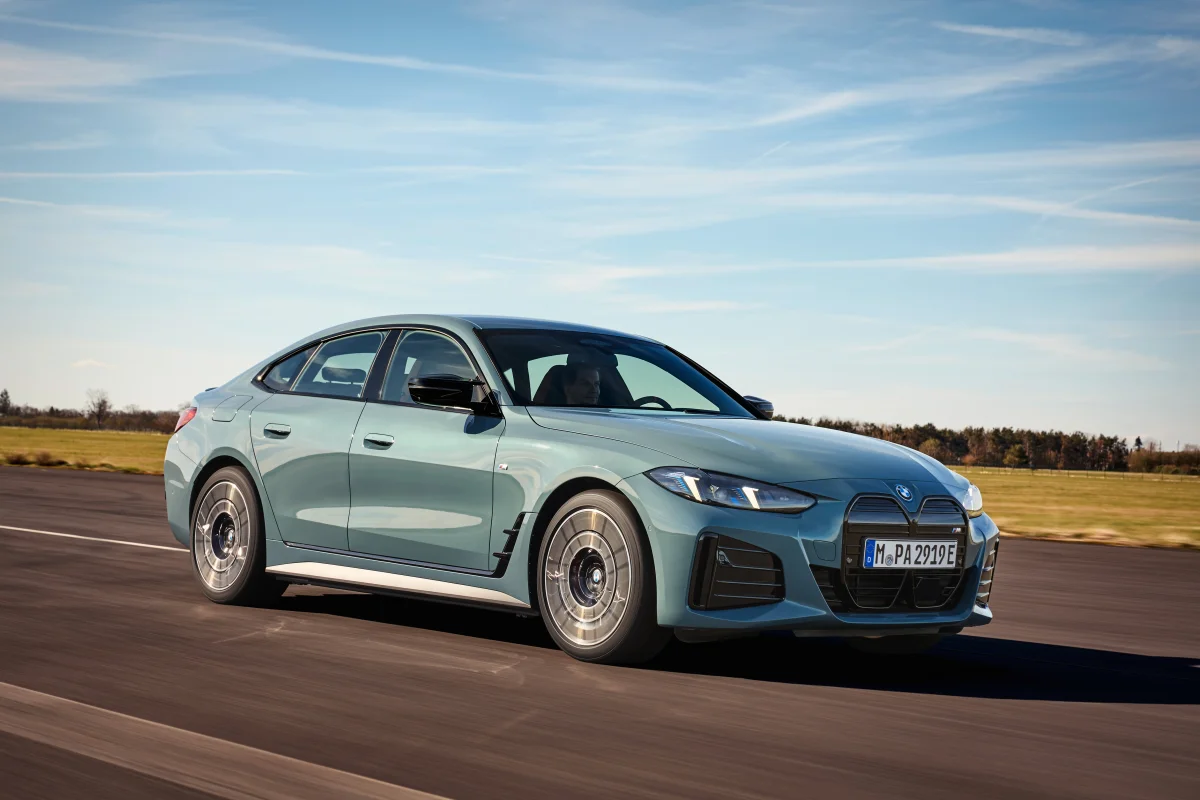
7. 2025 BMW i4: The Electric Gran Coupe with Classic BMW Spirit
The 2025 BMW i4 blends the brand’s hallmark driving dynamics with the refinement and efficiency of an electric powertrain. Starting at $53,975, it captures the essence of BMW’s 4 Series Gran Coupe while ushering it into the EV era. The result is a sleek and capable electric sedan that balances sporty handling, comfort, and premium craftsmanship.
The i4 lineup offers several configurations ranging from the 282-hp base model to the 536-hp M50 variant. The mid-level xDrive40 produces nearly 400 hp, offering a compelling mix of power and practicality with a driving range exceeding 300 miles. The M50, on the other hand, accelerates from 0 to 60 mph in just over 3 seconds, making it one of the quickest cars in its class, though its range drops to about 245 miles.
At the test track, the single-motor i4 eDrive40 reached 60 mph in 5.3 seconds, providing lively yet composed performance. Its steering is light and responsive, making it easy to maneuver in urban traffic. The suspension balances agility with comfort, absorbing road imperfections with ease.
BMW’s available driver-assistance features, including a hands-free mode for slow-speed traffic, enhance convenience without becoming intrusive. The i4 doesn’t deliver the sharpness of a dedicated sports car, but it captures the smooth confidence expected from a modern BMW.
Inside, the i4’s cabin reflects meticulous craftsmanship and attention to detail. The front seats offer firm, supportive cushioning with multiple adjustments, while rear seats provide adequate space though installing rear-facing child seats can limit front legroom.
Entry can be awkward due to slow-responding door handles, and climate controls rely entirely on the touchscreen, which makes simple adjustments less intuitive. Cooling performance could also be more efficient, with fans running louder than ideal.
Despite these quirks, the interior feels premium, highlighted by high-quality materials and BMW’s signature minimalist design. The hatchback-style trunk adds versatility, providing 10 cubic feet of space that expands with split-folding rear seats, making it surprisingly practical for its size.
BMW has refined the i4’s infotainment system with a larger navigation display, clearer graphics, and a more user-friendly layout. The combination of touchscreen and physical controls provides flexibility, and wireless Apple CarPlay, Android Auto, and an optional Harman Kardon sound system enhance the experience.
While the i4’s pricing is higher than rivals like the Tesla Model 3 and Hyundai Ioniq 6, its upscale materials, build quality, and balanced driving character justify the cost. Fast charging capability up to 200 kW allows for a 90-mile boost in just 10 minutes, and real-world range exceeds 300 miles in optimal conditions.
The 2025 BMW i4 succeeds in bringing the brand’s traditional driving enjoyment into the electric age. It’s comfortable, quick, and refined, proving that electrification hasn’t dulled BMW’s signature charm it has simply redefined it.
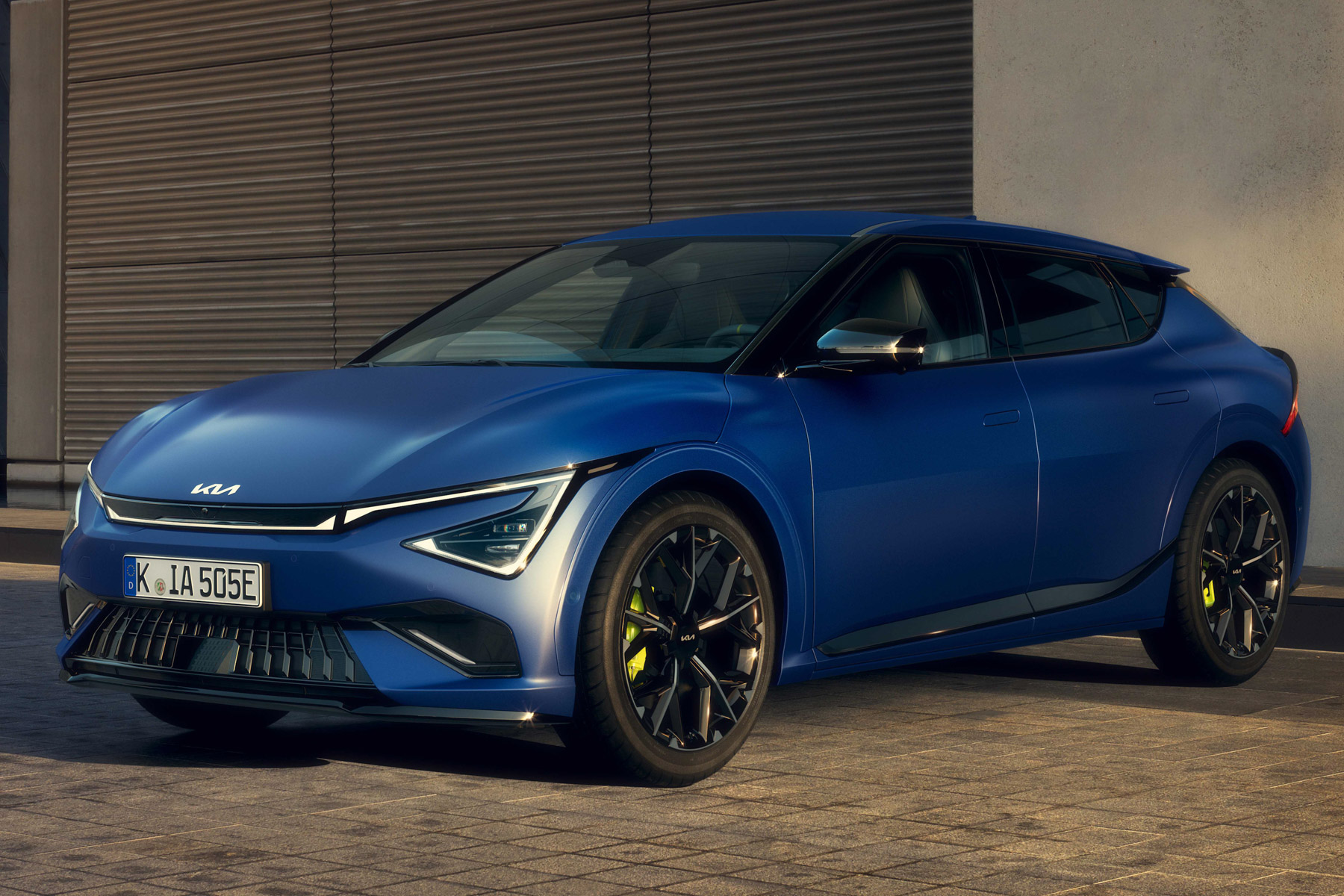
8. 2025 Kia EV6 GT: Electrified Power with Everyday Practicality
The 2025 Kia EV6 GT is the brand’s most performance-focused electric vehicle, combining speed, refinement, and usability. With an estimated starting price of $63,000, it sits at the top of Kia’s EV lineup.
Sharing its chassis and 800-volt charging system with the Hyundai Ioniq 5 N, the EV6 GT now produces 641 horsepower, placing it among the most powerful electric crossovers available. Multiple drive modes allow extensive customization, letting drivers adjust steering, throttle response, and sound settings to suit different preferences and road conditions.
The EV6 GT is engineered for those who appreciate spirited driving. Its electronic rear limited-slip differential and Drift mode make controlled slides possible, adding to the car’s fun factor. The chassis is firm and balanced, while the large brakes deliver strong stopping performance. Although its range is slightly shorter than other EV6 trims due to its power output, the performance more than compensates.
During testing, the EV6 GT-Line with 320 horsepower reached 60 mph in 4.9 seconds, a time that surpasses many sporty hatchbacks but trails the Tesla Model Y Long Range. The one-pedal driving mode feels natural, providing smooth regenerative braking that minimizes the need for the brake pedal in most situations.
The suspension absorbs bumps and rough roads effectively, keeping passengers comfortable. Visibility from the front is excellent, but the thick rear pillars and sloping roofline create blind spots. Kia’s 360-degree camera and driver-assistance systems such as adaptive cruise control and lane keeping help reduce this issue.
Inside, the EV6 GT emphasizes practicality and sophistication. The front seats are supportive and highly adjustable, and the rear seats offer generous legroom with reclining options.
The sloping roof slightly limits rear headroom and makes entry and exit more difficult, but space remains comfortable once seated. The cabin is quiet at highway speeds, and Kia’s choice to retain physical buttons for key controls makes operation simple and distraction-free.
The touch-sensitive panel for adjusting climate and vehicle settings can be inconvenient while driving, as it requires switching between functions. Despite this drawback, the design and material quality reflect Kia’s commitment to a premium, driver-focused environment.
The infotainment system features sharp graphics, quick responses, and standard wireless Apple CarPlay and Android Auto. Other highlights include a digital key, wireless charging pad, and remote monitoring through Kia’s mobile app.
The EV6 GT-Line achieved 295 miles in testing, exceeding its EPA estimate of 270 miles. Its 800-volt charging setup allows it to regain 100 miles of range in about 10 minutes, putting it ahead of many competitors.
The 2025 Kia EV6 GT blends exhilarating performance with practical usability. It offers exceptional power, rapid charging, and a refined interior, proving that electric vehicles can be both thrilling and versatile.
9. 2025 Maserati GranTurismo Folgore: Italian Elegance Meets Electric Power
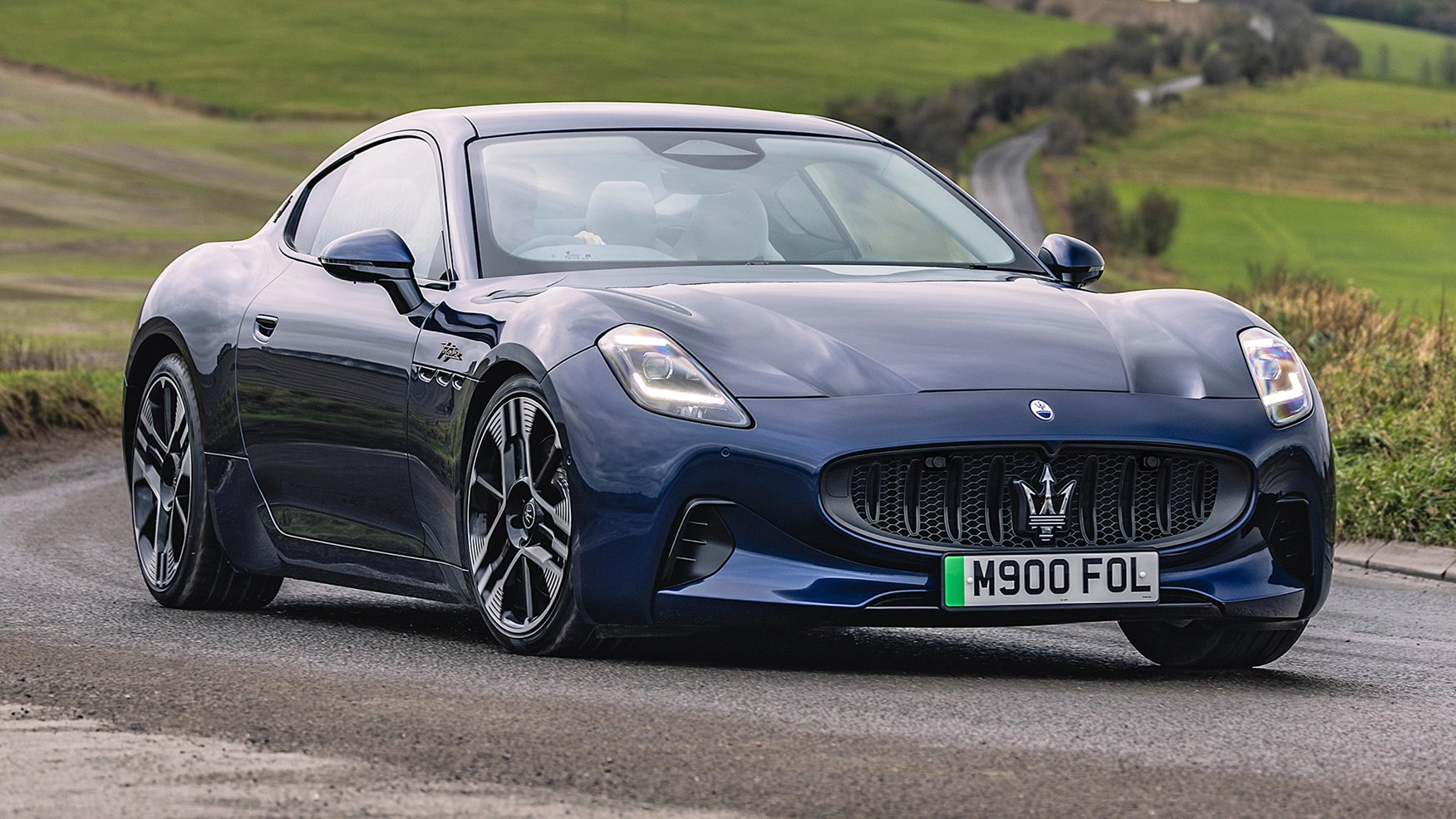
The 2025 Maserati GranTurismo Folgore marks a bold step for the Italian automaker as it transitions into the electric era. Priced at $193,995, it merges timeless Maserati design with advanced EV performance.
Built on the same foundation as the gas-powered GranTurismo, the Folgore retains its graceful proportions and sculpted bodywork, replacing the traditional V-8 with a silent yet forceful electric powertrain that redefines what a grand tourer can be.
The Folgore features three electric motors producing a combined 818 horsepower, channeling power to both axles for precise all-wheel drive control. This setup allows rapid acceleration and sharp handling, putting it in the same league as high-end sports cars.
Activating Corsa mode transforms the Folgore into a driver’s machine, sharpening steering response and firming the suspension for confident cornering. For more relaxed driving, the adjustable air suspension softens the ride in Comfort mode, maintaining composure even on rougher roads.
Though Maserati has not yet released exact test numbers for the Folgore, the gasoline-powered Trofeo version already achieves 60 mph in 3.2 seconds with 542 horsepower. The electric version’s higher output suggests even quicker acceleration. Range, however, remains modest at around 240 miles per charge, a reminder of its performance-first focus.
Inside, the GranTurismo Folgore showcases Maserati’s signature craftsmanship. The cabin blends rich materials, refined detailing, and a driver-oriented layout.
The front seats offer excellent support for long journeys, while the rear seats, though improved from the previous model, are better suited for short trips or smaller passengers. The trunk is practical enough for weekend travel, maintaining functionality without compromising luxury.
The Folgore’s cabin insulation ensures a serene driving experience. Even without the growl of a combustion engine, the interior remains distinctly Maserati, exuding an air of sophistication and comfort. The design balances elegance and usability, making daily drives as pleasant as long-distance trips.
Maserati’s latest Google-based infotainment system anchors the dashboard with a 12.3-inch touchscreen complemented by an 8.8-inch lower display for climate and lighting controls. Wireless Apple CarPlay and Android Auto are standard, while the Sonus Faber sound system with 19 speakers delivers an immersive audio experience. A head-up display keeps navigation and key data easily visible.
The Folgore includes standard driver-assistance systems such as automated emergency braking, with optional packages adding lane-keeping assist and adaptive cruise control. Maserati’s warranty covers four years or 50,000 miles, aligning with luxury-class expectations.
The 2025 Maserati GranTurismo Folgore demonstrates that electric power can coexist with Italian style and performance. It offers thrilling speed, impeccable craftsmanship, and refined comfort for those seeking a luxury EV that stays true to Maserati’s grand touring heritage.
10. 2025 Rivian R1T: Power, Playfulness, and Purpose
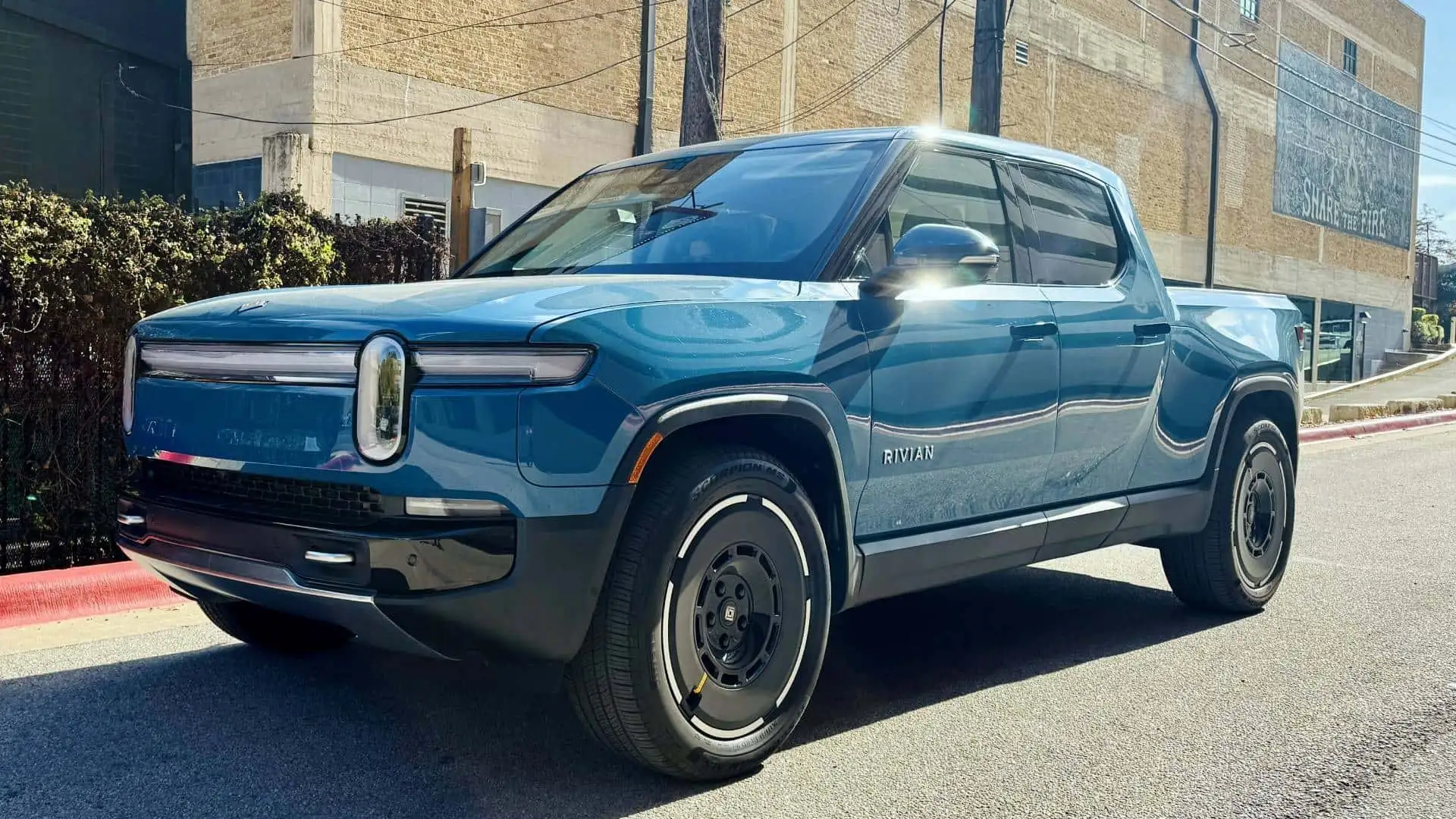
The 2025 Rivian R1T proves that electric trucks can blend rugged utility with exhilarating performance. Starting at $71,700, this electric pickup is more than a workhorse; it’s a performance machine capable of rivaling sports cars while retaining the off-road grit expected of a serious truck.
With up to 1050 horsepower and 1198 pound-feet of torque in its Quad Motor configuration, the R1T delivers astonishing straight-line speed and confident all-terrain capability.
The R1T comes in dual, tri, and quad-motor setups, allowing buyers to balance range and power. The dual-motor model hits 60 mph in 3.6 seconds, while the Quad Motor rockets there in a staggering 3.0 seconds. Despite this supercar-level acceleration, the R1T maintains composure on and off the pavement.
Its adaptive air suspension smooths out bumps yet keeps the truck agile, while steering remains precise and light for city driving. Off-road, short overhangs and generous ground clearance allow the R1T to handle rocky trails with ease.
Braking is equally impressive, with fade-resistant performance and a natural feel, whether using the pedal or the one-pedal driving feature. The Rally mode enhances playfulness, letting the truck drift and slide with control. Advanced driver assistance systems, including adaptive cruise control and hands-free highway driving, operate reliably, though the latter can disengage unexpectedly.
The R1T’s cabin balances premium design with practicality. While the rear seats are tighter than those in larger electric trucks, the front seats offer heating, ventilation, and solid support. The ride height can be lowered for easier entry, a handy feature for daily use. Noise levels are lower than traditional pickups, though some wind and road sounds persist.
Controls are mostly touchscreen-based, including the climate system and mirror adjustments, which can feel cumbersome at times. The panoramic glass roof brightens the cabin but can make it warm under direct sunlight. Despite that, materials and finishes feel upscale, reflecting the truck’s price and positioning.
Rivian’s large central touchscreen features an intuitive layout, crisp graphics, and quick response times. Built-in navigation includes EV-specific data and charging station locations. Alexa voice controls manage settings hands-free, though the absence of Apple CarPlay and Android Auto may disappoint some drivers.
Storage is another highlight. The R1T includes clever spaces like the gear tunnel, a large front trunk, and under-bed storage. The truck tows up to 11,000 pounds, matching or surpassing some rivals, though towing reduces range. Depending on configuration, range varies from 270 to 420 miles, with the Max battery achieving around 390 miles in testing. Fast charging restores 100 miles of range in about 18 minutes.
The 2025 Rivian R1T blends thrilling speed, genuine off-road ability, and thoughtful design, proving that an electric pickup can be both adventurous and refined.
Electric vehicles have evolved from quiet efficiency machines into some of the most engaging and powerful vehicles available today. The ten models in this collection highlight how innovation can blend sustainability with true performance.
From the Porsche Taycan’s track-ready dynamics to the Hyundai Ioniq 5 N’s playful personality and the Maserati GranTurismo Folgore’s refined strength, each one showcases a different way that electric power can excite and inspire.
Beyond sheer speed, these cars redefine what it means to be connected to the road. Instant torque, advanced suspension systems, and carefully tuned steering create a sense of control and precision that rivals or surpasses many gasoline-powered sports cars. The quiet nature of electric power also enhances awareness of every motion, every corner, and every moment behind the wheel.
“10 Electric Cars That Offer True Driving Fun” is more than a celebration of technology. It is a reminder that the essence of driving joy remains strong in the electric age. The future of performance may be powered by batteries, but it still speaks to the same spirit of excitement and passion that has always defined great cars.
Also read: 15 Cars That Are Cheap to Fix Even When They Break
