
The electric vehicle revolution is no longer a far-off future; it’s happening right now in driveways across America. For years, the biggest barrier to entry has been cost, with premium EVs easily cresting $60,000, $80,000, or even more. But the landscape is shifting dramatically.
A growing number of automakers are now offering new EVs with a starting MSRP under $35,000, a magic number that puts them in direct competition with popular gasoline-powered compact SUVs and sedans.
However, not all budget-friendly EVs are created equal. Some represent an incredible value, offering a compelling blend of range, features, and driving enjoyment.
Others demand such significant compromises that they feel like a punishment, potentially souring a new buyer on electric ownership entirely. To guide you through this critical purchase, we’ve split the field into two distinct categories: the ones worth your money, and the ones that simply aren’t worth the compromise.
5 EVs That Deliver on the Promise
These vehicles prove that you don’t need to spend a fortune to get a capable, satisfying, and truly usable electric car. They excel in the areas that matter most for daily life.
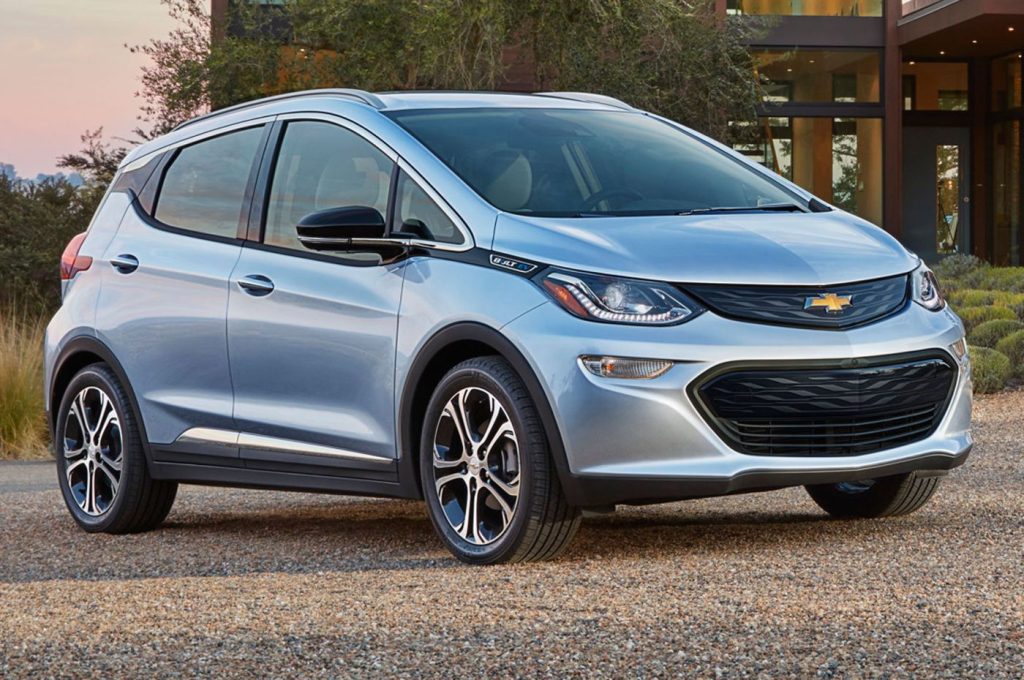
1. Chevrolet Bolt EV
The Chevrolet Bolt twins are, without exaggeration, the undisputed champions of the affordable EV segment. While they are currently phasing out production, their availability and massive dealer discounts make them an unparalleled value.
For under $30,000, and often far less with incentives, you get a staggering 259 miles of EPA-estimated range. This single figure demolishes the competition in this price bracket.
The Bolt EV is a peppy, practical hatchback, while the Bolt EUV offers a slightly more SUV-like stance and available features like Super Cruise, a groundbreaking hands-free driver-assistance system, on certain trims.
The interior, while using harder plastics, is smartly laid out and features a great 10.2-inch infotainment screen. The primary compromise is DC fast-charging speed, which maxes out at a slow 55kW, making it poorly suited for frequent, long-distance road trips.
But as a commuter, errand-runner, and family’s second car, its combination of range, space, and price is simply unbeatable.
2. Hyundai Kona Electric
The newly redesigned Hyundai Kona Electric is a masterclass in refinement and packaging. Starting around $34,000, it feels like a vehicle from a more premium segment. It offers a very respectable 260 miles of range in its standard-range form, with a long-range version available for a bit more money.
Where the Kona Electric truly shines is in its execution. The interior is modern, quiet, and well-built, a stark contrast to the econobox feel of some rivals. It comes generously equipped with two 12.3-inch screens, a suite of advanced safety tech (Hyundai SmartSense), and a surprisingly spacious and comfortable cabin for its compact dimensions.
Its handling is sharp and engaging, making it genuinely fun to drive. The Kona Electric doesn’t have one standout “hero” stat like the Bolt’s range; instead, it delivers a thoroughly competent, polished, and complete ownership experience with no glaring weaknesses.
The Hyundai Kona Electric places a greater emphasis on ride comfort than on spirited driving dynamics. It delivers a plush ride quality, with its soft suspension effectively absorbing imperfections in the road to minimize the transmission of bumps and jolts into the cabin.
While the steering feedback is somewhat isolated, and the body exhibits a predictable degree of lean when navigating turns with vigor, the vehicle maintains a composed and steady demeanor through corners.
This electric model is equipped with a standard 133-horsepower electric motor. For trims above the entry-level, a more powerful configuration is available, featuring a larger battery and 201 horsepower.
Regardless of which powertrain is selected, the acceleration is immediate, providing confident and brisk off-the-line response. It may not deliver overwhelming, neck-snapping force, but it offers more than sufficient power that continues to build steadily as you reach highway velocities.
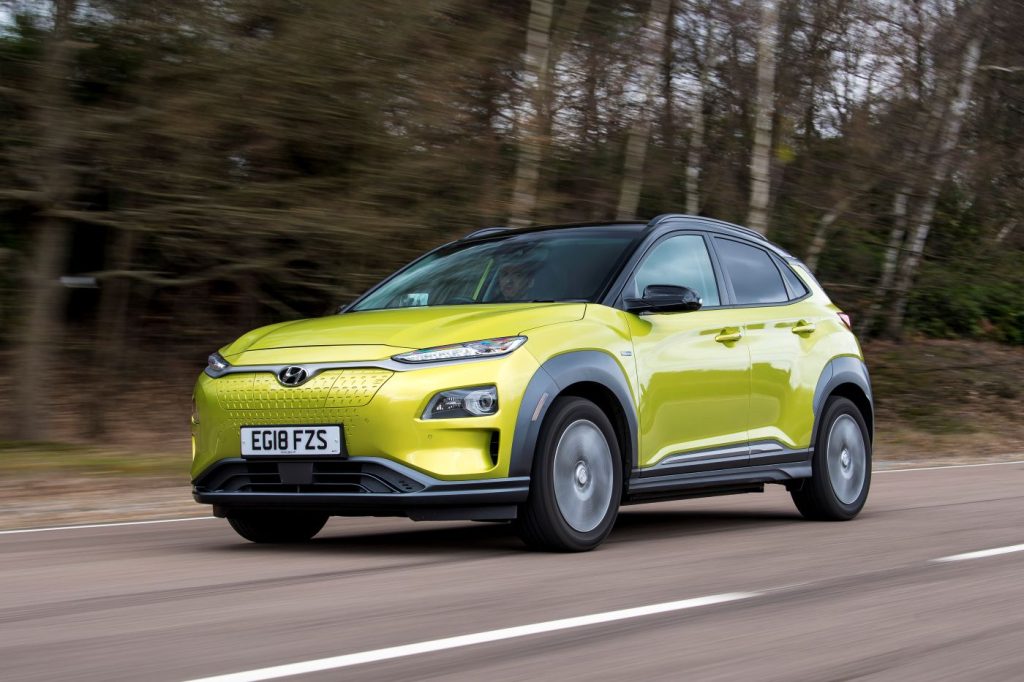
The 2025 Kona Electric stands as one of the most energy-efficient electric SUVs available, with its MPGe ratings proving competitive within the broader EV market.
The driving range of the Kona Electric varies significantly by trim. The base SE trim has an estimated range of 200 miles, a figure that falls short of current expectations for a modern electric vehicle.
The N Line trim offers a 230-mile range, while the better-equipped SEL and Limited models provide a more substantial 261 miles of range.
In terms of charging, Hyundai states that using a Level 3 DC fast-charger can replenish the battery from 10% to 80% in approximately 43 minutes. When using a public Level 2 charger or a 240-volt home charging station, a full charge from 10% will take between 5 to 6 hours, depending on the specific trim level.
3. Nissan Leaf
The Nissan Leaf is the veteran of the mass-market EV world, and its key advantage is simplicity and accessibility. With a starting price often dipping below $30,000, the base Leaf S offers a straightforward, no-fuss EV experience. Its 149-mile range is sufficient for most daily needs, and its cabin is intuitive for anyone transitioning from a gasoline car.
The Leaf’s trump card, however, is its widespread availability and heavy dealer incentives. Nissan frequently offers significant cash rebates, making the effective purchase price incredibly low.
Furthermore, the Leaf remains the only EV in its class to offer vehicle-to-load (V2L) capability on the SV Plus trim, allowing you to power small appliances and electronics from the car’s battery
While its CHAdeMO fast-charging standard is becoming outdated and its design is conservative, its role as a cheap, simple, and effective urban runabout is still valid.
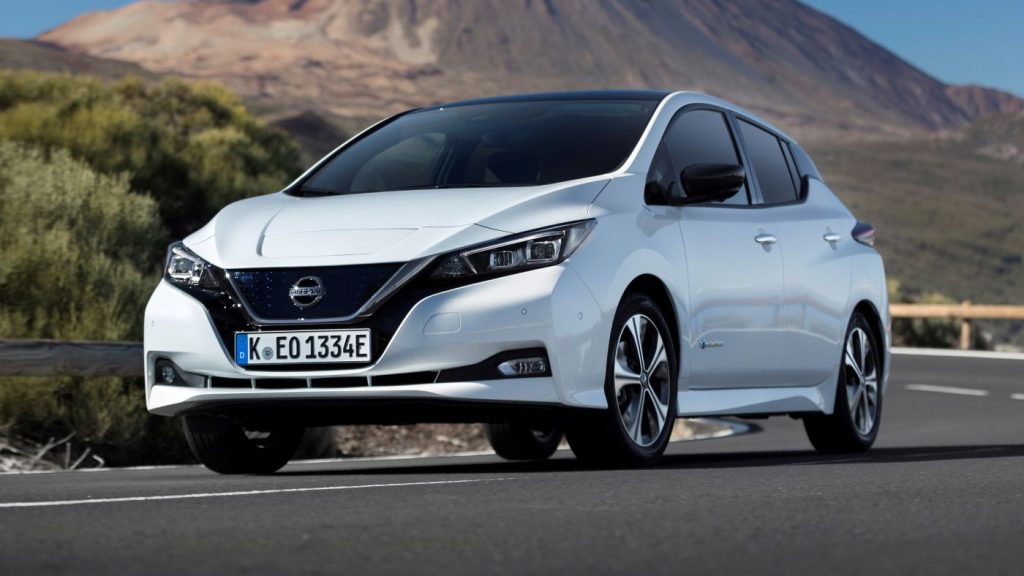
The standard 2020 Leaf models are equipped with a 110-kW electric motor that delivers 147 horsepower to the front wheels, drawing its energy from a 40-kWh battery pack. For those seeking more power, the Leaf Plus models feature a more robust, 214-horsepower electric motor paired with a larger 62-kWh battery.
During testing at our track, the standard version achieved a zero-to-60-mph time of 7.4 seconds; however, the driving experience feels more energetic than this figure implies due to the immediate torque and power delivery inherent to its electric motor.
This performance result positions the standard Leaf as quicker than the Volkswagen e-Golf, though it is outpaced by the Bolt EV, the BMW i3s, and the Model 3. Opting for the more potent Plus models yields noticeably quicker acceleration, with the specific car we tested achieving a zero-to-60-mph time of 6.8 seconds.
A notable feature of the Leaf is its e-Pedal system, which provides the driver with the ability to switch between different regenerative braking modes.
One setting permits the vehicle to coast freely when the driver lifts off the accelerator, while a more aggressive setting significantly slows the car and simultaneously harnesses that kinetic energy to replenish the battery.
4. Tesla Model 3
The Tesla Model 3’s starting MSRP is above $35,000, but it absolutely belongs on this list because after the $7,500 federal tax credit (for which it is eligible), its effective cost plunges squarely into the mid-$30k range.
For that money, you are getting a product that redefined the entire industry. You get access to Tesla’s vast and reliable Supercharger network, a massive advantage for road trips.
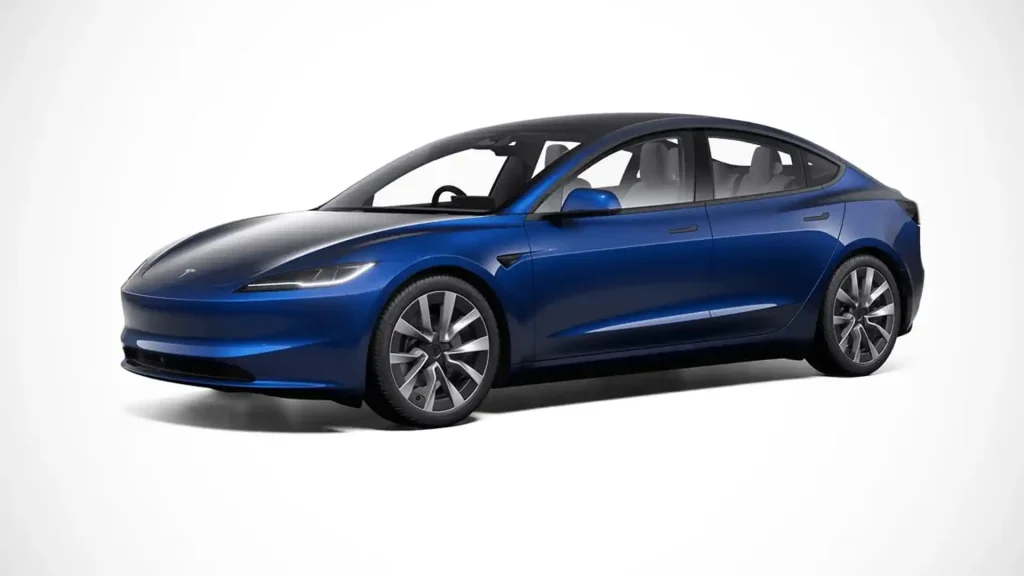
You get a minimalist, tech-forward interior centered around a brilliant infotainment system and over-the-air updates that continually improve the car.
You get sharp handling, blistering acceleration even in the base model, and a range of 272 miles that is both real-world accurate and highly efficient. The Model 3 makes EV ownership feel seamless and futuristic in a way its competitors are still struggling to match.
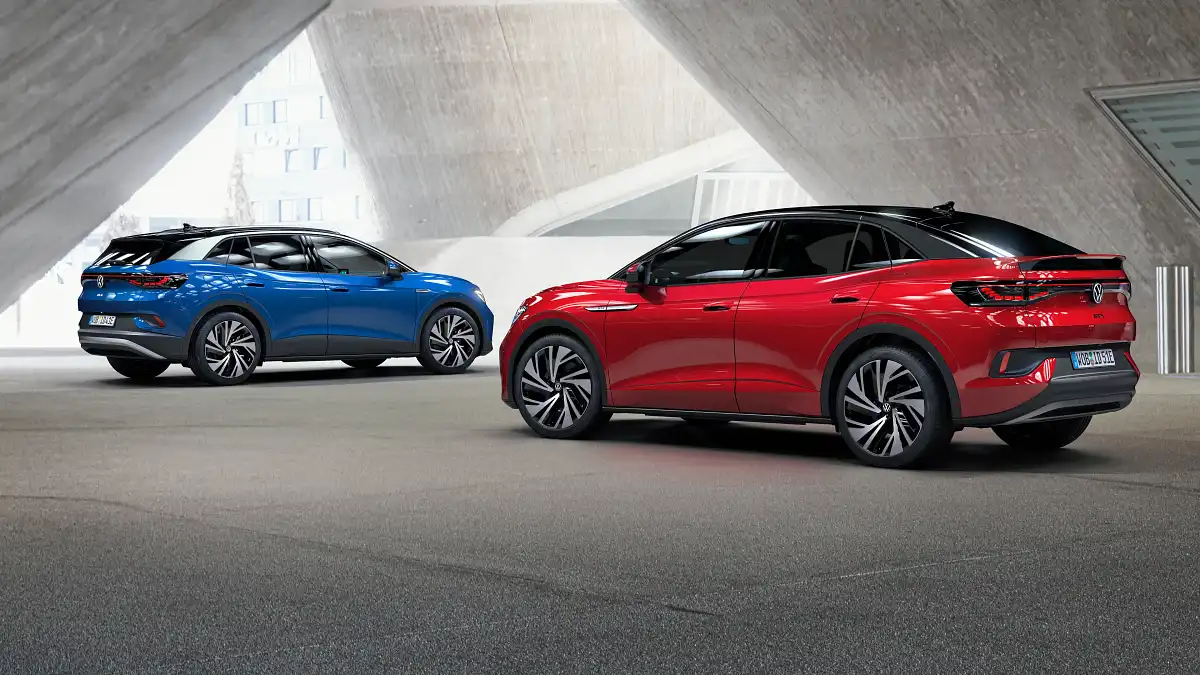
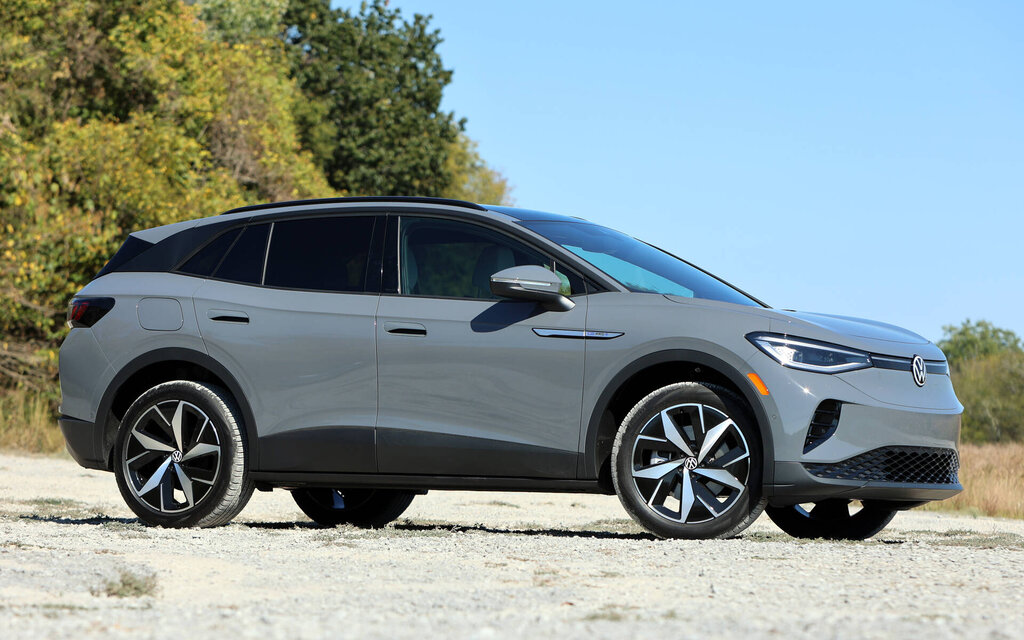
5. Volkswagen ID.4 Standard
Much like the Tesla, the Volkswagen ID.4 Standard’s sticker price is just over our threshold, but after the federal tax credit, it becomes a compelling value proposition for a different reason: it’s a proper, purpose-built family SUV.
The ID.4 offers a spacious, airy cabin with a massive glass roof and a ride quality tuned for comfort, not sportiness. It provides a usable 209 miles of range and uses the modern CCS fast-charging standard.
Where it wins is in its packaging; it feels much larger and more substantial inside than its rivals, with a flat floor and generous rear legroom and cargo space.
For a family needing a comfortable, practical, and zero-emission daily driver that can handle Costco runs and weekend getaways with ease, the post-incentive ID.4 is a top-tier choice.
The Volkswagen ID.4 is offered with different powertrain configurations. The version with a single, rear-mounted motor generates 201 horsepower, while the dual-motor, all-wheel-drive model significantly increases output to 295 horsepower. This SUV also boasts a respectable towing capacity of 2700 pounds.
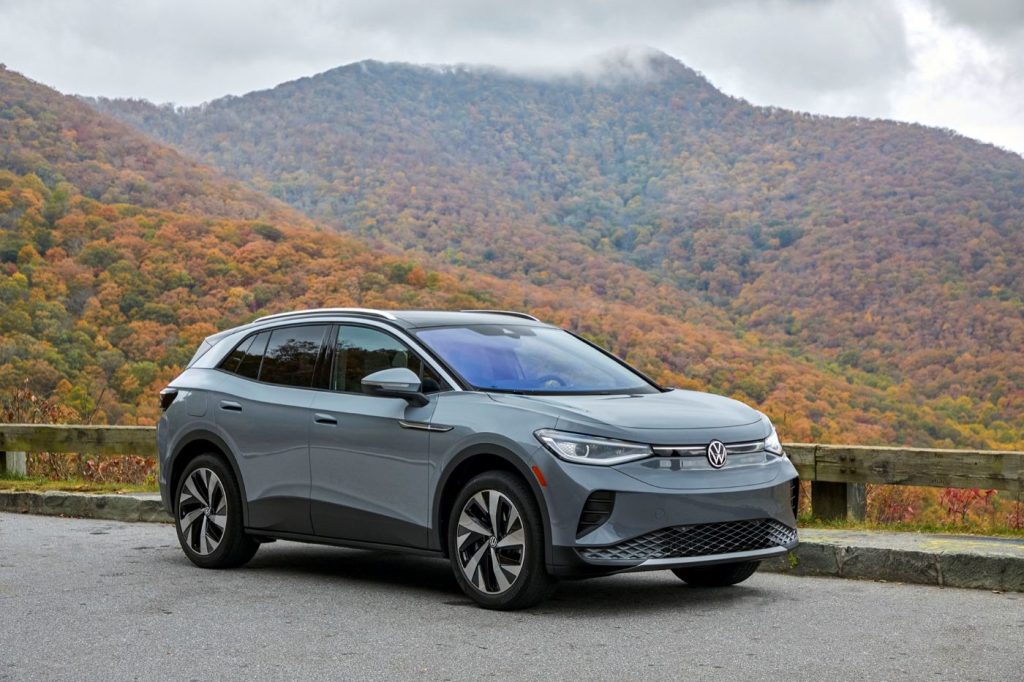
The vehicle utilizes regenerative braking to help recover energy during deceleration; however, it largely lacks the familiar one-pedal driving experience that many EV drivers have come to appreciate, even when its most aggressive regenerative mode is selected. Also absent is the characteristic, immediate surge of acceleration that electric vehicles are often known for.
While the rear-wheel-drive ID.4 is not considered slow when judged by conventional compact-crossover standards, its measured 7.6-second run to 60 mph in our testing confirms that its character is far more relaxed and laid back compared to quicker EV rivals.
Opting for the more powerful all-wheel-drive model notably improves the ID.4’s accelerative performance, a fact clearly demonstrated by its much swifter 5.4-second jump to 60 mph at our test track.
In terms of handling, the ID.4 feels less sharp and agile than some other electric vehicles on the market, but we find its smooth, refined ride quality and its quiet cabin to be commendable attributes.
5 EVs That Fall Short
These vehicles, while hitting the price point, ask you to give up too much in core areas, making them difficult to recommend to the average American driver.
1. Nissan Leaf S (40 kWh)
The primary issue is its 149-mile range. In an era where 250+ miles is becoming the expected standard, 149 miles feels limiting, especially when factoring in real-world variables like cold weather, highway speeds, and climate control use.
This creates “range anxiety” for even moderate commutes or spontaneous day trips. For a similar price, a used or discounted longer-range EV offers significantly more peace of mind and usability.
The 2025 Nissan LEAF S is an electric vehicle with a starting MSRP of $28,140, though it may be eligible for tax credits and rebates of up to $1,850 based on income.
This front-wheel drive hatchback seats five and offers an electric range of 149 miles. When charging at home using a 240V outlet, the LEAF S requires approximately 8.0 hours for a full charge.
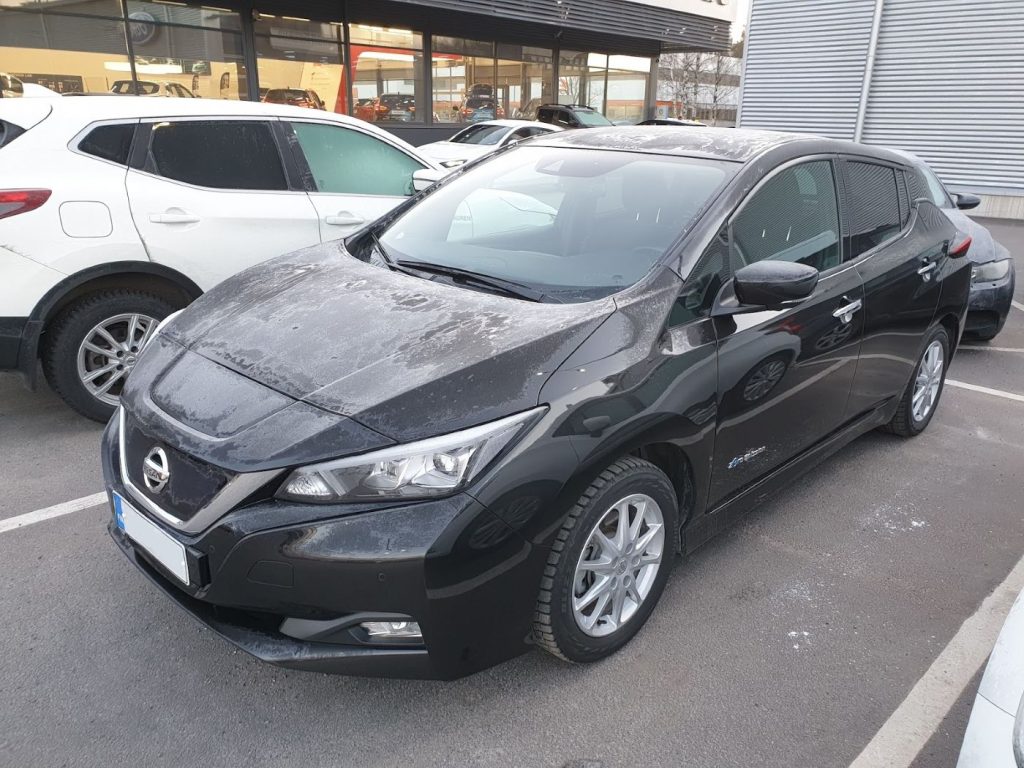
It provides a cargo capacity of 23.6 cubic feet and has a curb weight of 3,509 pounds. The vehicle comes with a basic warranty of 3 years or 36,000 miles and is assembled in the United States.
In terms of its battery and range, the cost to drive is estimated at $94 per month. As an electric vehicle, it achieves an EPA-estimated efficiency of 123 MPGe in the city and 99 MPGe on the highway.
The powertrain features an electric motor producing 147 horsepower at 3,283 rpm and 236 lb-ft of torque available immediately from 0 rpm.
The LEAF S has a maximum payload capacity of 999 pounds. Power is delivered through a 1-speed direct drive transmission to the front wheels. The suspension system includes a standard front independent suspension and both front and rear stabilizer bars.
2. Mini Cooper SE
The Mini Cooper SE is an absolute blast to drive. It’s quick, nimble, and bursting with personality. However, its fatal flaw is an EPA-estimated range of just 114 miles.
This transforms the car from a primary vehicle into a very expensive, very niche toy. Its usability is strictly confined to urban environments with reliable charging at both ends of a journey.
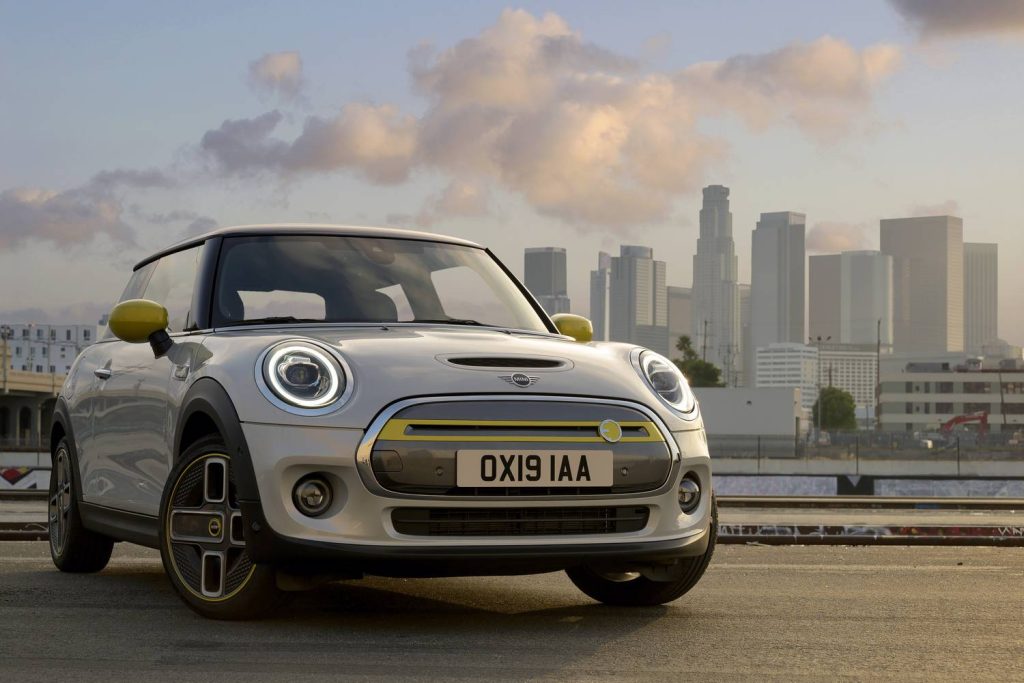
For any American driver whose life occasionally involves a trip to the next town over, a visit to relatives, or simply a day of running multiple errands across a suburban sprawl, the Mini’s range is a deal-breaking compromise that overshadows its fun factor.
3. Mazda MX-30
The Mazda MX-30 is a perplexing entry into the EV market. From a company known for crafting driver-focused cars, the MX-30 feels like a half-hearted compliance vehicle. Its most significant drawback is an almost unbelievably short 100-mile range.
To make matters worse, it was only sold in limited numbers, exclusively in California, and has already been discontinued.
This combination of cripplingly low range and nonexistent long-term support makes it a terrible investment. You’re purchasing a vehicle with the practicality of a first-generation Nissan Leaf from over a decade ago, with none of the community or parts support of an established model.
An EV with as limited a driving range as the 2023 Mazda MX-30 hasn’t been common since the first-generation Nissan Leaf was on sale, and it significantly limits this little stylish crossover’s appeal.
When compared to its rivals, nearly all of which offer 200 or more miles per charge and often feature superior acceleration, the MX-30 faces stiff competition.
The Mazda’s primary redeeming qualities are its eco-friendly interior, its sharp coupe-like styling, and its low starting price, which undercuts rivals such as the Kia Niro EV and the Volkswagen ID.4 by about $5000.
However, the MX-30 was sold exclusively in California and in small numbers. While we could see the Mazda being a decent choice for drivers who rarely venture far from home, it’s obvious to see why the MX-30 didn’t last long in the growing market of more competitive EVs.
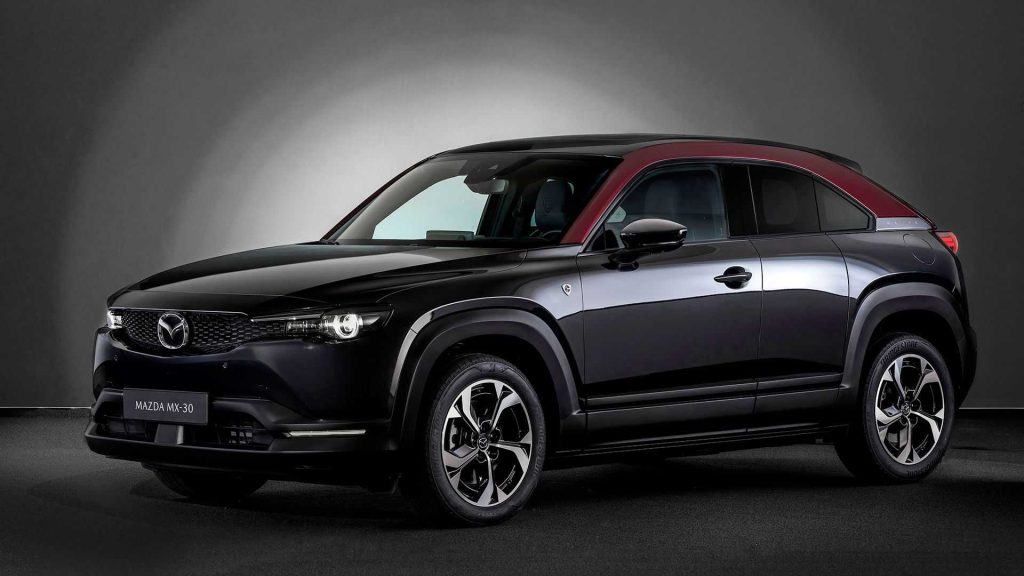
For the 2023 model year, nothing has changed for the MX-30 EV, as Mazda has announced this year marks the end of its production. The CX-30 will live on globally with an R-EV range-extender version that uses a rotary engine to recharge the battery.
Regarding pricing, the 2023 Mazda MX-30 starts at $35,485, with the price going up to $38,495 depending on the trim and options.
Under the hood, or more accurately, in its powertrain, the all-electric MX-30 came with a single 143-horsepower electric motor that drives the front wheels; all-wheel drive was not an available configuration.
However, it was announced that a plug-in-hybrid version would launch later, pairing an electric motor with a rotary gasoline engine, leaving open the possibility for all-wheel drive. As its low horsepower rating suggests, the MX-30’s acceleration wasn’t up to par with more powerful rivals, requiring 8.7 seconds to reach 60 mph in our testing.
Despite this, the chassis is playful and the steering is sharp, which aligns with what we expect from a modern Mazda. This eager handling is what earns this SUV the “MX” in its name, a prefix it shares exclusively with the brand’s iconic MX-5 Miata sports car.
4. Chevrolet Bolt EUV
Again, context is crucial. While the Bolt is a top-tier value for most, it lands on this list for a specific type of buyer: the frequent road-tripper.
The Bolt’s 55kW maximum DC fast-charging speed means adding a meaningful amount of range can take 45 minutes to an hour or more.
On a long journey, this turns a 6-hour gasoline-powered drive into an 8 or 9-hour electric one. If your lifestyle or job requires regular long-distance travel, the Bolt’s charging compromise becomes a significant daily burden, making it not worth the initial savings.
The Chevrolet Bolt EUV represents the SUV evolution of the regular Bolt hatchback, which was one of the first mainstream electric vehicles sold in the USA. Upgrading it to a more practical, higher-riding vehicle was a natural step, as this body style is among the most popular on the market, trailing only behind pickup trucks.
The sacrifice in overall range is a minor one, and in exchange, you benefit from improved passenger space as well as a smoother ride quality. The fact that it retains the same 200-horsepower motor setup as its predecessor is slightly disappointing, but this output remains sufficient to compete with rivals like the Hyundai Kona EV and Volkswagen ID.4.
However, Chevrolet has been shifting its focus toward more advanced electric vehicles, including its popular truck models, and consequently, this marks the final model year for the Bolt EUV, leaving potential buyers to wonder if it will conclude its production run with a notable success or a quiet departure.
Regarding its pricing, thanks to a significant discount, the 2023 Chevrolet Bolt EUV starts at $27,800 for the base LT trim and rises to $32,300 for the Premiere trim.
Adding the bold Redline Edition package incurs an additional cost of $500. These figures represent the manufacturer’s suggested retail price and do not include the $995 destination charge or any applicable licensing fees.
Underpinning its performance, the 2023 Bolt EUV utilizes the same skateboard platform as the hatchback model, which results in excellent balance and stability despite its larger and heavier build.
While it may not possess an abundance of power, the instant torque delivery provides a perceptively sporty feel in urban driving, and its light, precise steering contributes to agile handling.
The regenerative braking system is a notable highlight once drivers become accustomed to its operation, often reducing the need for conventional friction brakes. Ride comfort is decent, though not exceptionally plush, and the absence of engine noise means some road noise is perceptible within the cabin.
In delivering a final verdict on the 2023 Chevrolet Bolt EUV, there is a natural inclination to offer a positive send-off for this departing model, but this sentiment is firmly grounded in its proven merits.
The electric crossover has consistently demonstrated its competence as an efficient city cruiser, offering surprisingly engaging handling dynamics and a competitively sufficient driving range.
Although Chevrolet is progressing toward larger and more advanced electric models, the Bolt EUV has firmly established the brand as a serious contender in the growing EV market
While other manufacturers have since adopted and refined this formula, Chevrolet can rightfully claim a pioneering role.
5. 2025 Volkswagen ID.4 Standard
This final entry highlights the critical importance of incentives. At its full MSRP of over $38,000, the base ID.4 Standard is a tough sell. Without the $7,500 credit, you’re paying near-$40k for an EV with a relatively modest 209 miles of range and a interior that, while spacious, uses some underwhelming, hard-touch materials.
At that price, it starts to feel expensive for what it is, especially when compared to more refined or longer-range options that might be available for a similar out-the-door cost after their own incentives. Its value proposition is fundamentally tied to the tax credit.
The sub-$35,000 EV market is finally maturing, offering real choices for American consumers. The key takeaway is to look beyond the sticker price. The truly “worth it” EVs, like the range-champion Bolt, the polished Kona, or the post-incentive Model 3 and ID.4, deliver a holistic and uncompromised ownership experience for the price.
The ones “not worth it” typically fail on a single, critical axis: usable range. Before signing on the dotted line, be brutally honest about your driving needs. That charming city car with 110 miles of range might be a dream until the day you need to drive to the next city, and that’s a compromise no one should have to make.
