When shopping for a family SUV, the availability of a third row often becomes a key deciding factor. However, not all three-row SUVs are created equal, especially when it comes to accommodating adults comfortably. Some SUVs claim three-row seating but offer cramped spaces that are only practical for children or short trips.
In this guide, we separate the truly family-friendly SUVs from the pretenders, highlighting models where adults can actually sit in the third row without sacrificing comfort.
Vehicles like the 2025 Kia Telluride, Toyota Grand Highlander, Hyundai Palisade, Lexus GX, and Kia Sorento combine thoughtful interior design, generous legroom, and practical cargo space, ensuring that long drives with full families remain enjoyable.
These SUVs prove that space, comfort, and functionality can coexist with performance, technology, and style, making them reliable choices for modern families who need a versatile and capable vehicle.
5 Family SUVs with Third Rows Adults Can Use
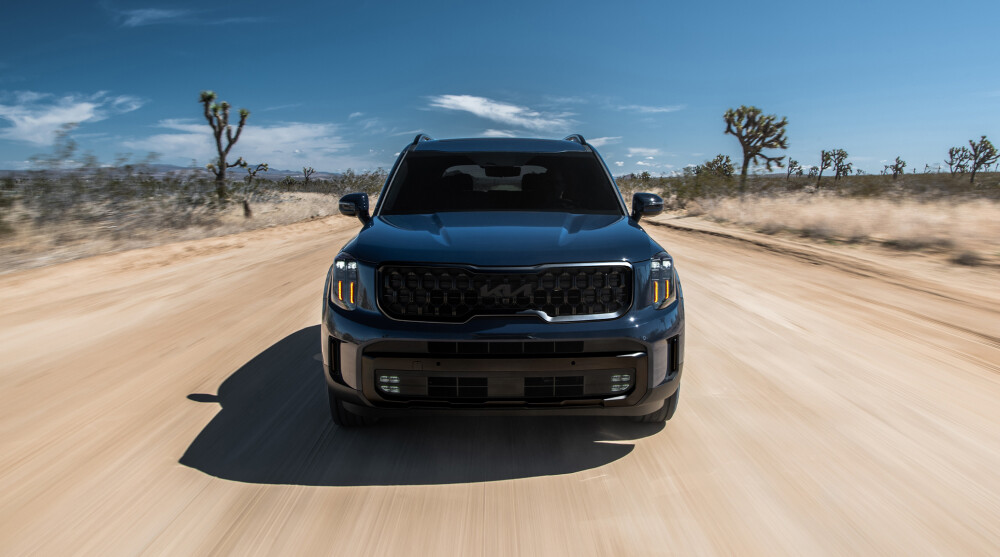
1. 2025 Kia Telluride: The Benchmark Three-Row SUV
The 2025 Kia Telluride continues to dominate the three-row SUV segment with a combination of premium build quality, refined comfort, and confident performance. First introduced in 2020, it has quickly become a standout choice among family SUVs, easily rivaling the Toyota Highlander and Honda Pilot.
The Telluride’s appeal lies in its durability, elegant design, and impressive value for money, making it a top pick for families seeking both luxury and practicality.
The 2025 Telluride is powered by a 3.8-liter naturally aspirated V6 engine that delivers 291 horsepower and 262 lb-ft of torque through an eight-speed automatic transmission. Buyers can choose between front-wheel drive (FWD) and all-wheel drive (AWD) configurations. Acceleration is typical for its class, but the Telluride’s powertrain feels refined and capable.
The suspension is well-tuned to balance comfort and control, even on rough roads. The X-Line and X-Pro trims, which are designed for light off-road use, retain the same composed ride as other versions. Steering is light at lower speeds and becomes naturally heavier when turning, providing a reassuring sense of stability.
While the transmission can occasionally hesitate under strong acceleration or uphill driving, these moments are minor compared to the SUV’s smooth and confident road manners. Visibility is excellent, supported by an available 360-degree camera system and adaptive cruise control that can perform automatic lane changes when requested.
The interior of the Telluride is one of its most impressive features. Starting at $37,755 MSRP, the SUV feels far more premium than its price suggests. Every surface and panel feels solid, and cabin noise is kept to a minimum even at highway speeds. The seats are well contoured with soft headrests that enhance comfort during long trips.
Accessing the cabin is easy thanks to wide-opening doors and a low step-in height. The second-row captain’s chairs slide and fold easily to allow access to the third row. Interior space is generous, making the Telluride family-friendly and practical for car seats and luggage alike.
The climate control system distributes air effectively across all three rows and includes heated and ventilated seats for both the front and second rows. The physical buttons and knobs make it simple to adjust settings without distraction, a feature that many drivers appreciate in an era of touchscreen-heavy dashboards.
While the infotainment system is not the newest in Kia’s lineup, it remains highly functional and easy to use. The Telluride’s touchscreen interface is clear and responsive, though it lacks wireless Apple CarPlay and Android Auto. The system still relies on a USB-A port for data connections, with several USB-C ports available for charging.
Higher trim levels feature up to six USB ports and a wireless charging pad, ensuring that all passengers can keep their devices powered. The technology package is simple yet effective, offering all the essentials while waiting for the next-generation upgrade.
The Telluride provides 21 cubic feet of cargo space behind the third row and 87 cubic feet with the second and third rows folded. The wide tailgate opening and underfloor storage compartment make it easy to load large items.
With a towing capacity of 5,500 pounds, the Telluride is capable of hauling trailers or small boats. While cargo capacity is excellent, interior storage for smaller personal items is somewhat limited compared to other large SUVs.
Value is one of Telluride’s strongest qualities. The combination of premium materials, advanced safety features, and refined driving dynamics makes it a standout choice at every trim level. Kia’s five-year/60,000-mile basic warranty and 10-year/100,000-mile powertrain warranty further enhance its appeal.
Fuel economy is decent for a vehicle of its size. The AWD version achieves an EPA-estimated 20 mpg combined, and real-world testing shows it can reach around 23 mpg. The V6 engine runs smoothly on regular unleaded fuel, which helps keep operating costs manageable.
The 2025 Kia Telluride remains a symbol of affordable sophistication in the SUV market. Its blend of high-quality construction, comfortable interior, and family-friendly functionality places it at the top of its class.
The Telluride captures the spirit of a “baby Land Rover” while maintaining Kia’s reputation for reliability and value. With its refined design, spacious cabin, and smooth driving experience, it continues to set the standard for what a modern three-row SUV should be.
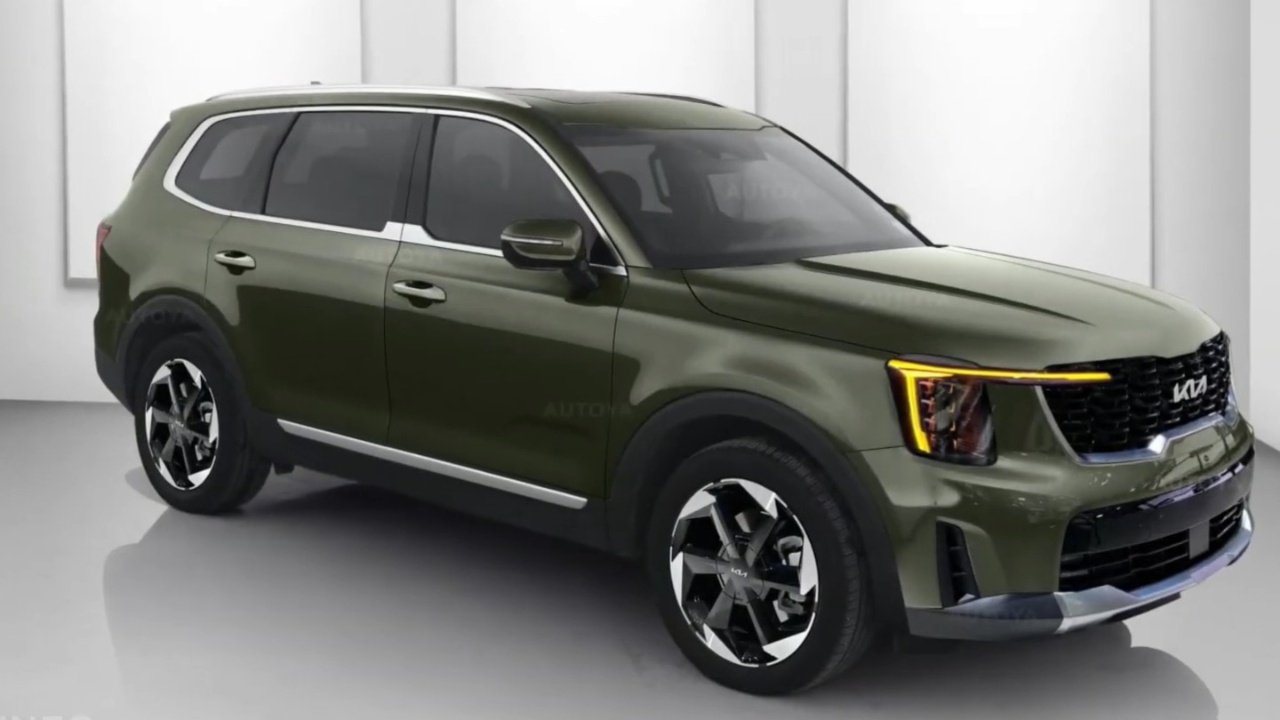
2. 2025 Toyota Grand Highlander: Spacious, Comfortable, and Family-Friendly
The 2025 Toyota Grand Highlander addresses one of the main limitations of the regular Highlander by offering significantly more interior space.
With a longer and wider body, the Grand Highlander accommodates adults in the third row and provides increased cargo capacity, making it a strong choice for families and those who need to transport both passengers and gear. Starting at $42,310 MSRP, it positions itself as a premium option within the Highlander lineup.
The Grand Highlander offers two engine options. The 2.5-liter four-cylinder provides efficiency, while the 2.4-liter turbocharged four-cylinder delivers between 245 and 362 horsepower and up to 400 lb-ft of torque. Both engines use an eCVT transmission, and buyers can select either front-wheel drive (FWD) or all-wheel drive (AWD).
The four-cylinder engine is adequate for city driving but can feel strained at highway speeds or when fully loaded. In testing, the AWD Grand Highlander reached 60 mph in about 8 seconds, which is slower than most V6-powered three-row SUVs.
The suspension is compliant, smoothing out road imperfections without creating a floaty feeling. Steering is light and precise, making it easy to maneuver a large SUV in urban and suburban settings. Braking performance is confident, and outward visibility benefits from thin front pillars and available technology such as a camera-based rearview mirror.
Standard Toyota Safety Sense 3.0 includes adaptive cruise control, lane keeping assistance, and automatic emergency braking, all of which function smoothly and enhance daily driving.
The Grand Highlander excels at passenger comfort. The third row now offers enough legroom for adults, and the higher seating position improves visibility. Front seats are comfortable for long drives, and second-row captain’s chairs slide generously forward and backward. Taller drivers may find additional thigh support and a longer telescoping steering wheel desirable.
The tri-zone climate control system effectively maintains comfort across all rows. Road and ambient noise are present but not intrusive, and the engine is quiet during normal cruising.
Cabin materials feel solid and well-padded, although the fake wood trim detracts from the premium feel. Car seat installation is straightforward, with easily accessible LATCH anchors in the second and third rows and ample space for large rear-facing car seats.
The Grand Highlander comes with either an 8-inch touchscreen or an optional 12.3-inch display. The larger screen delivers sharp graphics and responsive inputs, though glare can make it difficult to use in bright sunlight.
Toyota’s voice recognition system is highly capable, allowing natural-language commands for navigation, weather, and general questions. Wireless Apple CarPlay and Android Auto are standard, and multiple USB ports with an optional wireless charging pad ensure that devices remain powered.
Cargo capacity is one of the Grand Highlander’s strongest features. Behind the third row, the SUV offers 20.6 cubic feet of space, expanding to 57.9 cubic feet behind the second row and 97.5 cubic feet with all rear seats folded.
Storage for small items is well planned, with deep door pockets, generous cupholders, and a removable center storage bin in the second row. The third row includes two cupholders per side and small storage spaces for phones or other personal items.
The Grand Highlander provides strong value with a premium-feeling cabin, improved space, and thoughtful features. Warranty coverage includes three years/36,000 miles bumper-to-bumper and five years/60,000 miles powertrain, plus two years of complimentary maintenance.
Fuel economy is competitive, with AWD models rated at 22 mpg combined, FWD models at 24 mpg combined, and the hybrid variant achieving 36 mpg combined according to the EPA.
The exterior styling is conservative. Slab-sided panels and a textbook front and rear end result in a subdued appearance. While it does not stand out visually, the Grand Highlander delivers on functionality, comfort, and space, making it a practical and reliable choice for families seeking a versatile three-row SUV.
The 2025 Toyota Grand Highlander succeeds in creating a spacious, comfortable, and feature-rich SUV that addresses the limitations of the standard Highlander while maintaining Toyota’s reputation for reliability and practicality.
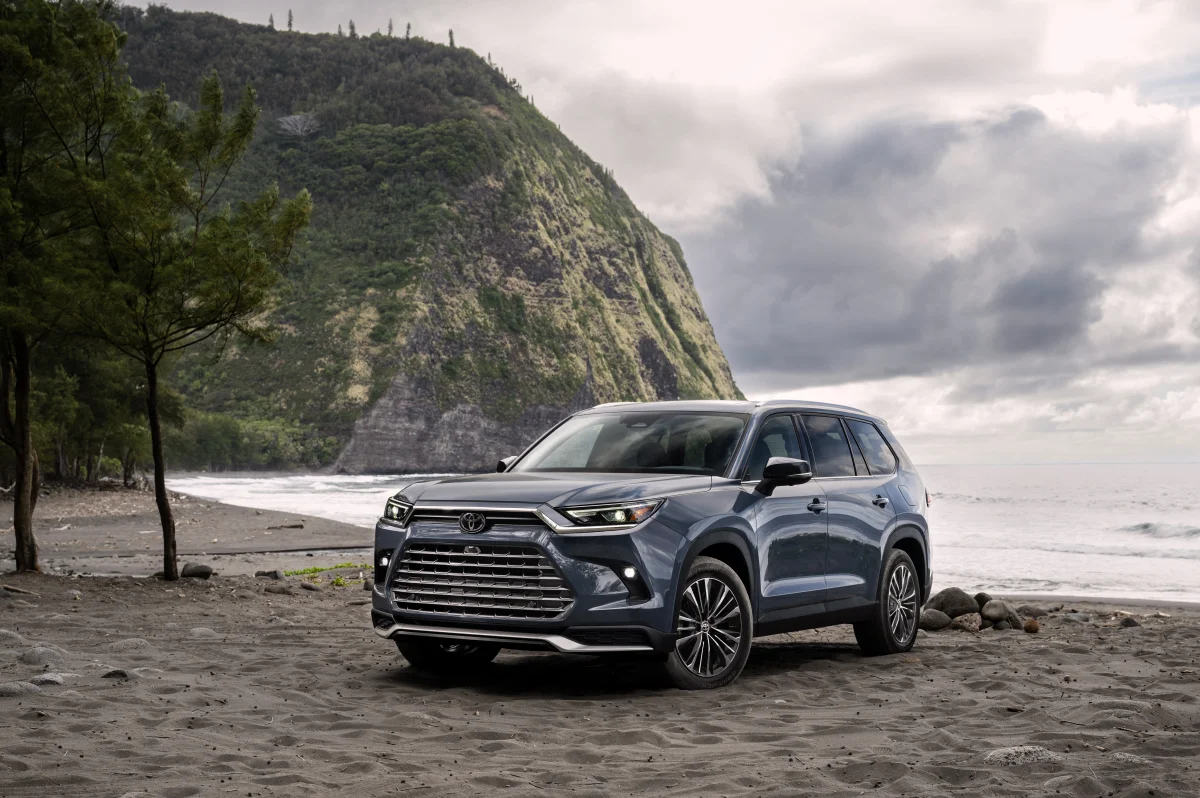
3. 2025 Hyundai Palisade: Spacious, Feature-Rich, and Family-Friendly
The 2025 Hyundai Palisade continues to impress as a three-row SUV with a redesign that keeps it feeling current. With seating for up to eight passengers and a well-proportioned cabin, the Palisade competes strongly with rivals like the Kia Telluride and Toyota Grand Highlander.
Its combination of comfort, technology, and thoughtful features makes it a compelling choice for families seeking a reliable and stylish SUV. Pricing starts at $38,675 MSRP, placing it in line with other midsize competitors while offering a generous level of standard equipment.
The Palisade is powered by a 3.8-liter V6 engine, producing 291 horsepower and 262 lb-ft of torque, paired with an eight-speed automatic transmission. Both front-wheel drive (FWD) and all-wheel drive (AWD) options are available.
Acceleration from 0 to 60 mph takes approximately 7.6 seconds, which is average for the class. The engine delivers smooth power for highway driving and confident passing, though it does not stand out as particularly sporty.
The transmission provides seamless upshifts and downshifts, making the Palisade easy to drive in daily situations. Steering and handling are competent, and the SUV rarely feels unstable through corners.
Braking is less precise, with a soft initial pedal feel that requires extra pressure. For relaxed driving, adaptive cruise control and lane centering assistance are standard on most trims, while Highway Driving Assist II enhances the experience on long trips. A hands-free driving system is not offered.
The Palisade prioritizes comfort and usability for families. Front seats offer excellent support and comfort for long drives, while optional second-row captain’s chairs are spacious and well-padded.
The third row accommodates adults for short trips, with contoured seat cushions that improve comfort in a smaller space. Legroom in the first two rows is generous, making the SUV one of the more passenger-friendly options in its class.
The cabin is quiet at low speeds, and the climate control system effectively maintains temperature throughout the three rows. Ventilated second-row seats are a rare feature in this segment, and the Palisade also offers heated third-row seats. Entering and exiting the third row can be challenging for adults, but the wide doors and sliding second-row seats facilitate access.
The infotainment system is functional and easy to navigate, though it is not the most modern or visually striking. The navigation maps are clear, but some lag is noticeable when scrolling. Wireless Apple CarPlay and Android Auto are available, though a wired connection is required to access these features.
Each row has multiple USB ports, and a digital key enhances convenience. Large touchscreens, along with additional driver aids, contribute to a tech-friendly and family-oriented cabin.
Cargo capacity is strong, with 18 cubic feet behind the third row and 87 cubic feet with the rear rows folded. A wide hatch opening and underfloor storage add practicality.
Small-item storage is excellent, with a large center bin, semi-hidden compartments, and 14 cupholders distributed throughout the cabin. While competitors like the Volkswagen Atlas and Toyota Grand Highlander offer slightly more cargo room, the Palisade makes smart use of its space.
Starting just under $40,000, the Palisade provides high value through features that are often optional or unavailable in rival SUVs. Premium interior trims, ventilated second-row seats, heated third-row seats, and a massaging driver’s seat contribute to a near-luxury experience in a mainstream package.
Hyundai offers one of the strongest warranties in the industry. Fuel economy for AWD models is 21 mpg combined, with FWD slightly higher at 23-24 mpg, and the V6 runs on regular fuel.
The 2025 Hyundai Palisade continues to feel special and well-equipped despite being five years into its lifecycle. Its spacious cabin, family-friendly features, and upscale interior design blur the line between mainstream and luxury.
It does not offer an off-road variant or particularly exciting driving dynamics, but it delivers effortless comfort and convenience, making it a standout choice for families who value space, refinement, and technology.

4. 2025 Lexus GX: Luxury Meets Serious Off-Road Capability
The 2025 Lexus GX stands out as a luxury SUV that combines premium comfort with genuine off-road prowess. Unlike most three-row SUVs, the GX is built to tackle challenging terrain while carrying passengers and cargo in confidence.
Interiors feature high-quality leather, soft-touch materials, and top-tier technology, including Lexus’ exceptional audio system. Its blend of luxury and capability makes it unique among both mainstream and premium midsize SUVs. Pricing starts at $65,285 for the 550 Premium, with the off-road-oriented Overtrail trim at $72,930, offering specialized features such as off-road tires and multiple locking differentials.
The 2025 GX is powered by a turbocharged 3.4-liter V6 engine, producing 349 horsepower and 479 lb-ft of torque, paired with a 10-speed automatic transmission and standard all-wheel drive (AWD). The GX Overtrail trim adds additional off-road hardware, including enhanced suspension and locking differentials, enabling the SUV to handle technical trails and large obstacles with ease.
On paved roads, the GX delivers a competent and composed driving experience. Acceleration is brisk for a three-row luxury SUV, and the 10-speed automatic provides smooth gear changes. Steering is precise for a vehicle of its size, and the suspension effectively absorbs bumps and road imperfections, delivering a controlled ride.
The GX excels in braking performance, maintaining stability and confidence in demanding conditions. Standard driver aids include adaptive cruise control and lane-keeping assistance, providing additional comfort on highways and long drives.
The GX interior reflects Lexus’ dedication to refinement. Front seats are supportive and adjustable for long drives, while second-row seating accommodates passengers comfortably in captain’s chairs or a bench configuration. The third row is practical for adults and children alike, providing sufficient legroom and cushioning for shorter trips.
Cabin noise is well-controlled for a large SUV, and the climate control system efficiently heats or cools all three rows. Premium materials, leather upholstery, and attention to detail in trim and finishes create a near-luxury atmosphere. In the Overtrail trim, durable interior materials are balanced with upscale design elements, allowing the GX to perform off-road without sacrificing refinement.
The Lexus GX features a robust infotainment system with large, responsive touchscreens and a comprehensive suite of connectivity options. Standard technology includes multiple USB ports, wireless device charging, and integration with Apple CarPlay and Android Auto.
Advanced driver-assistance systems complement the vehicle’s off-road abilities, including navigation, adaptive cruise, and automated braking systems, all designed to enhance convenience and safety.
Cargo space is sufficient for family trips and off-road gear. With the third row up, storage is functional, and folding down the rear seats creates expanded capacity for larger items. Thoughtful small-item storage is included throughout the cabin, with compartments, cupholders, and cubbies strategically placed for passenger convenience.
The Lexus GX carries a premium price, reflecting its combination of luxury, technology, and off-road capability. Fuel economy is modest, which is typical for an AWD luxury SUV with significant towing and terrain-handling ability.
Despite the higher cost, the GX delivers a unique value proposition by blending features not commonly available in other three-row SUVs, including serious off-road performance, a refined interior, and a suite of safety and comfort technologies.
The 2025 Lexus GX is exceptional for those seeking a luxury SUV that can venture off the beaten path. Its combination of refined cabin materials, advanced tech, and true off-road capabilities distinguishes it from the competition.
It is not the fastest or most fuel-efficient vehicle in its class, nor is it designed for extreme sporty handling, but for buyers who value effortless comfort, premium appointments, and the ability to tackle challenging terrain with confidence, the GX is unmatched.

5. 2025 Kia Sorento: Affordable Versatility with a Premium Touch
The 2025 Kia Sorento stands out as a practical and refined midsize SUV that delivers strong value for families. Positioned below the larger Telluride, it offers a more affordable alternative without sacrificing quality or comfort.
Starting at $33,405, the Sorento is available with several powertrains, including hybrid and plug-in hybrid versions. The hybrid achieves 34 mpg combined, while the plug-in hybrid returns 72 MPGe, making it one of the most efficient three-row SUVs in its class.
The Sorento’s turbocharged 1.6-liter four-cylinder engine pairs with a permanent-magnet electric motor to produce 227 horsepower and 258 lb-ft of torque, sent through a 6-speed automatic transmission to either front-wheel drive or all-wheel drive. For those wanting more punch, the optional 2.5-liter turbocharged engine provides faster acceleration, reaching 60 mph in 6.7 seconds.
The eight-speed automatic transmission shifts smoothly and at the right times, making the Sorento responsive and easy to drive. Braking performance is impressive, stopping from 60 mph in 121 feet, which is better than average for its class. Steering could be a bit sharper, but handling feels confident and secure on most roads.
Ride quality is mixed at low speeds, especially with the 20-inch wheels, though it smooths out nicely on the highway. The large windows and available surround-view camera system enhance visibility, while Kia’s advanced driver-assistance features, such as adaptive cruise control and automatic lane changing, perform reliably and add peace of mind.
Inside, the Sorento offers comfort and practicality despite being smaller than some rivals. The front seats provide heating, ventilation, and ample adjustment. The second-row captain’s chairs are firm yet supportive, and the third row is surprisingly usable for adults on short trips. Dual-zone climate control works efficiently, though the touch-sensitive controls are less intuitive than physical buttons.
The cabin materials feel upscale for the price, and the interior layout is designed for ease of use. The Sorento provides generous second-row legroom, even compared with two-row SUVs like the Toyota RAV4 and Honda CR-V. Entry and exit are easy thanks to wide door openings, and the thoughtful design makes the space inviting and practical for both drivers and passengers.
The Sorento’s infotainment system features a 12.3-inch touchscreen that is crisp, fast, and easy to navigate. Wireless Apple CarPlay and Android Auto are standard, and every row includes USB-C ports for charging. A wireless phone charger is available on higher trims. The optional Bose audio system offers decent clarity but lacks richness at higher volumes.
Cargo space is competitive for a smaller three-row SUV. With the third row up, capacity measures 12.6 cubic feet, enough for a few bags. Folding the third row expands storage to between 38.5 and 45 cubic feet, depending on seat configuration.
The Sorento includes clever interior storage compartments throughout, providing plenty of space for small items. When equipped with the turbo engine, towing capacity reaches 3,500 pounds, while the X-Pro trim increases that to 4,500 pounds, setting it apart from most competitors in its size category.
Kia continues to build its reputation for offering feature-rich vehicles at a fair price, and the Sorento is no exception. Even base trims come well equipped, while higher models add upscale materials and design touches.
The build quality is solid, and the cabin feels more premium than its price would suggest. Kia’s industry-leading five-year/60,000-mile bumper-to-bumper warranty and 10-year/100,000-mile powertrain warranty enhance its long-term appeal.
Fuel economy is strong for an SUV of this size. The all-wheel-drive turbocharged model delivers an EPA-estimated 24 mpg combined, and real-world testing showed 25.2 mpg. The Sorento also runs on regular gasoline, reducing ownership costs compared to rivals that require premium fuel.
The 2025 Kia Sorento blends performance, comfort, and technology into an attractive, family-friendly package. The 2.5-liter turbo engine offers satisfying acceleration, while the X-Pro trim brings added personality and capability.
Though not as large as the Telluride, the Sorento captures much of its appeal in a more compact and efficient design, making it one of the most versatile and well-balanced options in the midsize SUV segment.
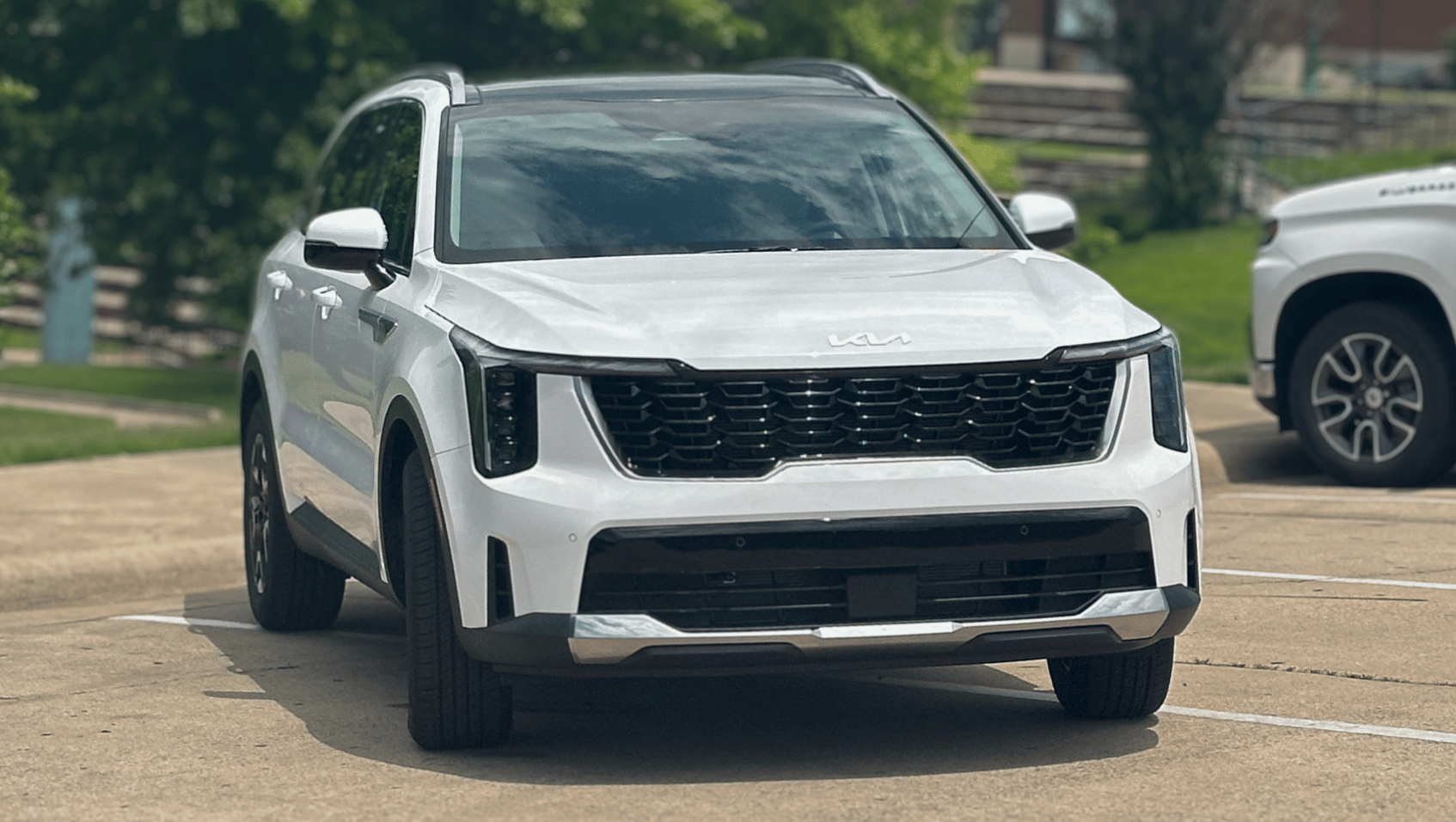
5 Pretenders
1. 2025 Hyundai Santa Fe: Practical Family SUV with a Compact Third Row
The 2025 Hyundai Santa Fe delivers a family-friendly SUV experience while embracing a rugged, boxy design. Available with a fuel-efficient hybrid powertrain or a 277-horsepower gas engine, the Santa Fe balances performance with practicality, offering solid fuel economy for its class.
Its interior has been upgraded with high-quality materials, advanced safety features, and a well-thought-out cabin layout that emphasizes comfort and convenience for everyday family use. Cargo space is generous, with 79.6 cubic feet available with the rear rows folded, and flexible seating configurations make it easier to adapt the cabin for passengers or gear.
Despite these strengths, the third row is best suited for children rather than adults. With only 30 inches of legroom, adults may find the space cramped, particularly on longer trips. The compact third row also reduces cargo capacity when in use, limiting storage for luggage or other items.
Hyundai intentionally designed this row for occasional use, prioritizing flexibility and a smaller footprint rather than full-size SUV spaciousness. Families needing regular adult seating in the third row should consider larger SUVs like the Hyundai Palisade. The Santa Fe is ideal for those seeking versatility, efficiency, and comfort in a mid-size package without the bulk of a larger SUV.

2. 2025 Tesla Model Y: Electric Efficiency with Limited Third-Row Utility
The 2025 Tesla Model Y is a fully electric SUV that offers impressive range, performance, and technology, making it ideal for families seeking sustainable driving without sacrificing capability. With a body length of 187 inches, it is slightly smaller than traditional three-row SUVs but provides a spacious second row that comfortably accommodates adults.
The third row, however, is best suited for children or very short trips due to the limited legroom of 27 inches, headroom of 34.6 inches, and a low seat cushion that forces passengers into a cramped position.
Cargo space is practical but modest compared to larger SUVs, offering 12.8 cubic feet behind the third row, 26.6 cubic feet behind the second row, and 67.9 cubic feet with both rear rows folded. The minimalist interior emphasizes technology, with a large touchscreen that controls most vehicle functions, alongside Tesla’s advanced driver-assistance features.
The Model Y’s electric powertrain provides over 300 miles of range and rapid acceleration, distinguishing it from other SUVs in its class. While the third row is limited for adults, the Model Y excels as a two-row SUV with optional third-row flexibility for occasional use, blending efficiency, performance, and cutting-edge technology for modern families.

3. 2025 Mitsubishi Outlander: Affordable Compact SUV with Occasional Third-Row Seating
The 2025 Mitsubishi Outlander is a practical and budget-friendly compact SUV offering three rows of seating for up to seven passengers. With a body length of 185.4 inches, it fits comfortably in urban and suburban environments while providing a modern design and a well-built interior with soft-touch materials.
Families will find the available Triple-Zone Climate Control and optional power memory driver’s seat enhance comfort, and the cabin includes ample tech features and user-friendly driving dynamics.
The third row is extremely limited, with only 18.7 inches of legroom, making it suitable for small children, pets, or emergency use. The compact SUV design forces a trade-off between passenger space and cargo capacity, and the second-row seats must be moved forward to allow any third-row seating, reducing comfort for those in the middle row.
Cargo space behind the third row measures 10.9 cubic feet, expanding to 30.6 cubic feet behind the second row and 64.3 cubic feet with both rear rows folded.
While the Outlander’s third row is not practical for adults on longer trips, it provides occasional flexibility for families needing extra seating in a compact and affordable package. Strong safety ratings and efficient design make the Outlander a sensible choice for those seeking budget-friendly versatility in a modern SUV.

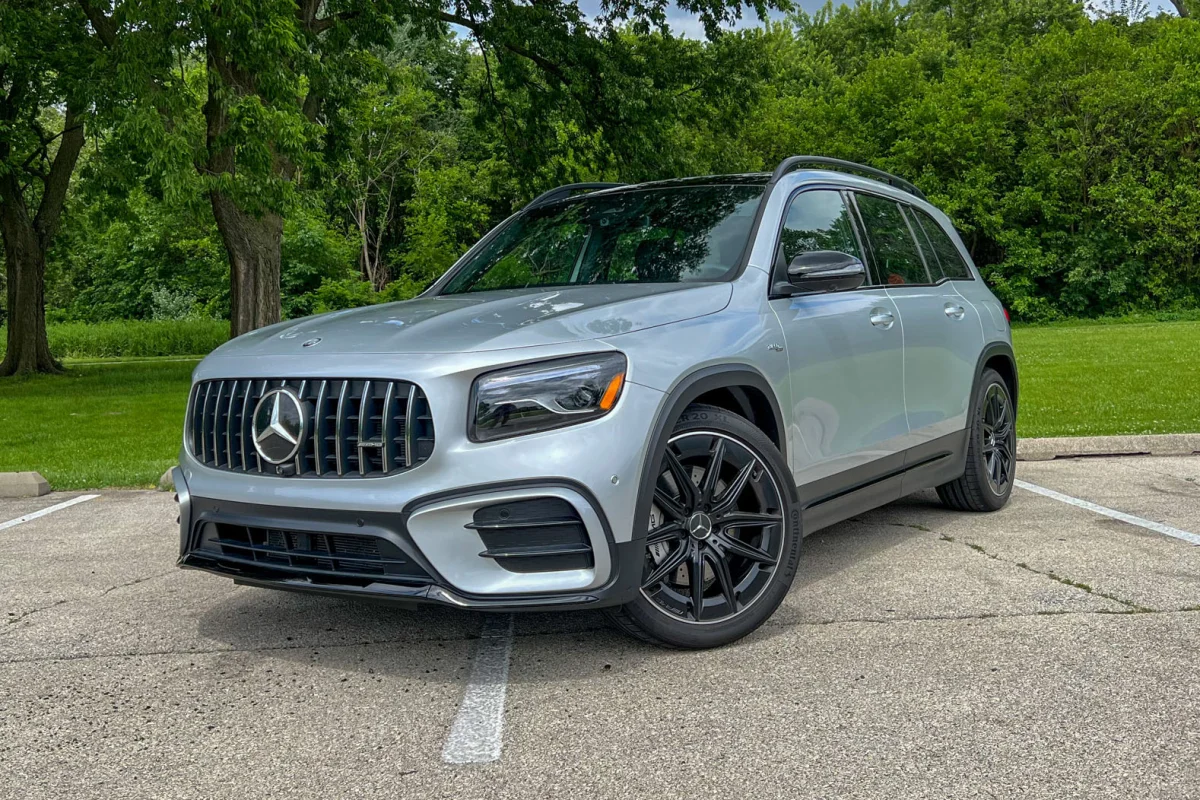
4. 2025 Mercedes-Benz GLB-Class: Compact Luxury with Optional Third-Row
The 2025 Mercedes-Benz GLB-Class combines luxury, practicality, and compact design in a small 3-row SUV. Measuring 182.4 inches in length, it offers a unique third-row option in the subcompact luxury segment, making it appealing for families who occasionally need extra seating.
The boxy exterior design maximizes interior space, while the tech-rich cabin features dual digital displays that are customizable and user-friendly. The second row provides ample legroom, ensuring comfort for adult passengers, while the third row is best suited for children or very short trips, with 29.1 inches of legroom and limited headroom.
Cargo capacity is modest due to the compact size, offering 12.4 cubic feet behind the third row, 20.0 cubic feet behind the second row, and 62.0 cubic feet with both rows folded. Using the third row reduces cargo space significantly, making it less practical for carrying luggage on long trips.
The GLB-Class is ideal for buyers seeking a luxurious, tech-forward compact SUV with occasional third-row flexibility. It delivers Mercedes-Benz comfort, advanced features, and versatility, but the third row is not suitable for regular adult use. Families needing more practical adult seating may consider larger SUVs like the Mercedes-Benz GLS, which offer additional space without sacrificing comfort.
5. 2025 Land Rover Discovery Sport: Compact Luxury with Occasional Third-Row Seating
The 2025 Land Rover Discovery Sport is the smallest SUV on this list, offering three-row seating, with a body length of 180.9 inches. It delivers a premium combination of off-road capability, urban practicality, and luxury finishes. The cabin features high-quality materials and an intuitive infotainment system, reflecting Land Rover’s focus on a refined driving experience.
The third row is compact, with just 25.7 inches of legroom, making it most suitable for children or short trips. Adults may find the space cramped, with limited legroom and headroom, and knees often pressed against the second-row seats.
Cargo space behind the third row is 6.8 cubic feet, expanding to 32.2 cubic feet behind the second row and 60.0 cubic feet with both rows folded flat. Using the third row reduces cargo capacity significantly, highlighting the trade-off between passenger flexibility and storage.
Fold-flat second and third rows enhance versatility, allowing families to adjust seating and cargo space as needed. The Discovery Sport is ideal for buyers who value a luxurious, compact SUV with optional third-row seating for occasional use. For more comfortable adult third-row accommodations, larger SUVs like the standard Land Rover Discovery or other full-size models are recommended.

Selecting a three-row SUV is about more than fitting extra seats; it is about ensuring that all passengers, including adults, travel in comfort. The five standout SUVs demonstrate that it is possible to balance interior space, usability, and family-oriented features without compromise.
From the Telluride’s roomy and premium cabin to the Sorento’s efficient and well-designed interior, these models show that a third row can be functional for adults on long trips.
By contrast, many compact and mid-size SUVs, while offering third rows, fall short when it comes to legroom, headroom, and practical cargo capacity, proving to be more of a marketing feature than a usable option.
Families should prioritize models that provide accessible seating, thoughtful ergonomics, and versatile interiors to ensure all trips are safe, comfortable, and convenient. Choosing wisely separates SUVs that truly accommodate adults from those that merely pretend to.
Also read: 10 Cars That Rarely Need Alignment After Pothole Seasons