The 1990s were a golden decade for the automotive world a time when analog driving feel met modern reliability, and when engineers still built cars for passion rather than algorithms.
The Japanese tuner scene exploded, European automakers blended performance with luxury like never before, and American icons began their comeback stories.
Today, the cars of the 1990s are no longer just used vehicles they’re bona fide vintage collectibles.
Whether you grew up watching them on VHS or saw them dominate race circuits, these ten cars from the ‘90s represent the best mix of performance, innovation, and nostalgia the decade had to offer.
1. Toyota Supra Mk4 (1993–2002)
If there’s one car that defines 1990s performance culture, it’s the Mk4 Toyota Supra. Introduced in 1993, this Japanese legend packed the now-mythical 2JZ-GTE engine a 3.0-liter twin-turbo inline-six capable of immense tuning potential.
Stock figures hovered around 320 horsepower, but enthusiasts quickly discovered that the block could handle over 800 horsepower with minimal reinforcement.
The Supra was more than a straight-line monster, though; its balanced chassis, rear-wheel drive layout, and bulletproof reliability made it a genuine sports car for daily use.
The fourth-generation Toyota Supra, known as the A80, was first sold in America in June 1993. It was a powerful and appealing sports car. Its design was a major improvement over the older, more dated-looking model. The car’s sleek shape is very famous and easy to recognize.
The base model Supra used a smooth inline-six engine called the 2JZ-GE. This was a naturally aspirated engine. It produced 220 horsepower, which was strong for a sports car in the 1990s. The more desirable version was the twin-turbocharged model, called the 2JZ-GTE.
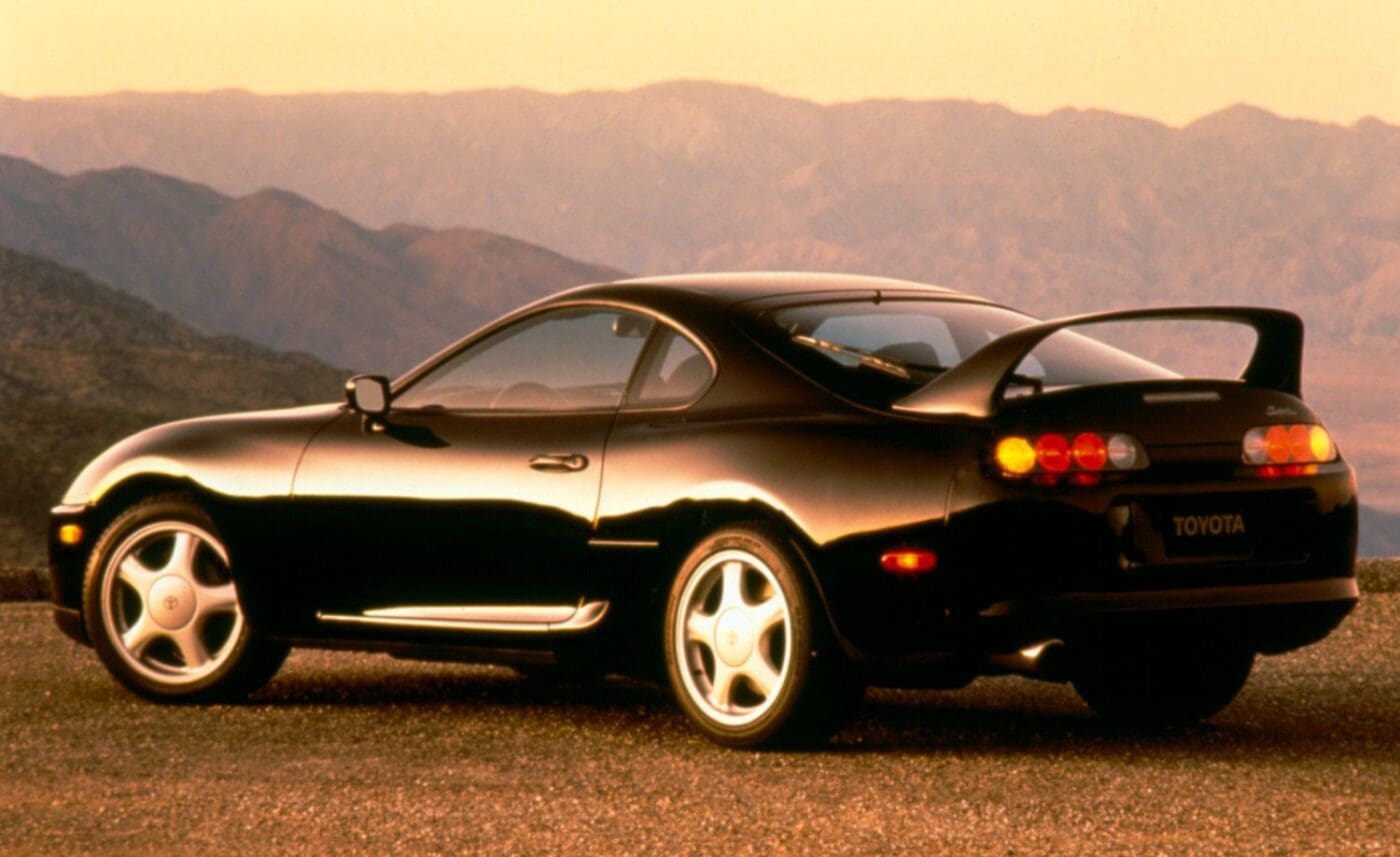
This twin-turbo engine made 320 horsepower. You could get it with a four-speed automatic or a six-speed manual transmission. The high-performance twin-turbo model became very famous with car tuners. It was featured in the Fast & Furious movie series.
For a 1990s sports car, the turbocharged Supra was surprisingly fuel-efficient. The 1994 manual turbo model had an EPA-rated fuel economy of 18 mpg combined.
Toyota used turbochargers to make the car powerful without needing a bigger, less efficient engine. The 2JZ engine is also known for being very reliable. Many of these engines have driven over 100,000 miles. This is true for both unmodified cars and ones that have been tuned for more power.
2. Mazda RX-7 FD (1992–2002)
Few cars capture the lightweight, driver-focused spirit of the 1990s better than the Mazda RX-7 FD. Its sleek, curvy design and perfect weight distribution made it a favorite among purists and racers alike.
Under the hood sat a 1.3-liter twin-rotor Wankel engine producing around 276 horsepower, though the real charm lay in its responsiveness and handling.
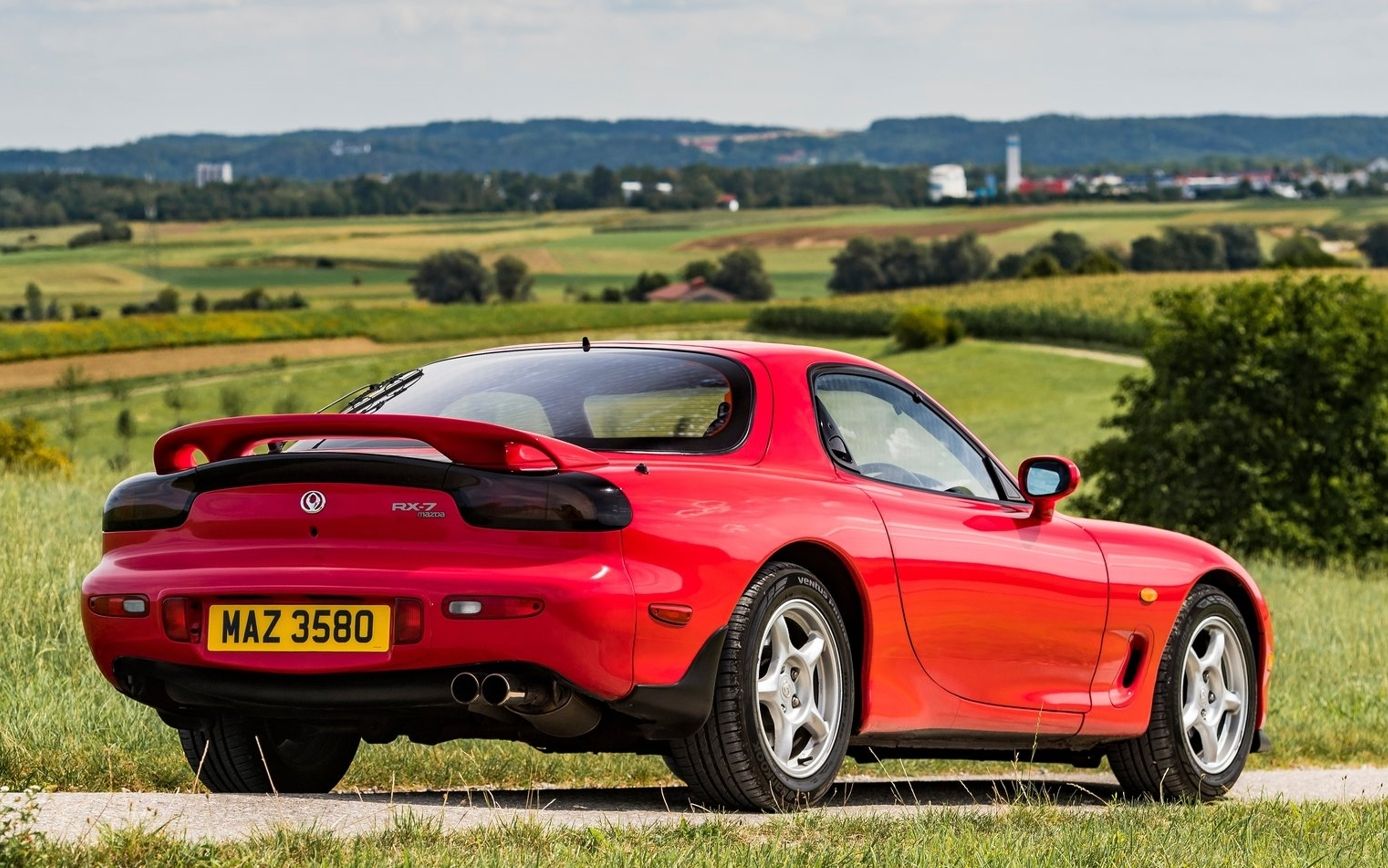
The FD’s combination of low curb weight, rear-wheel drive, and impeccable balance gave it supercar-level driving thrills at a fraction of the price.
However, its rotary engine required meticulous care, meaning well-maintained examples are now rare and highly prized among collectors.
Also Read: 5 Cheap Cars That Offer Top-Tier Build Quality vs 5 That Don’t Work
3. Acura NSX (1990–2005)
When Honda launched the NSX under its Acura badge in the U.S., it redefined what a supercar could be.
Built with input from Formula 1 legend Ayrton Senna, the NSX featured an all-aluminum body, mid-engine layout, and a 3.0-liter V6 with VTEC producing up to 290 horsepower.
What made the NSX so groundbreaking wasn’t raw speed but accessibility; it offered exotic-level performance with Honda reliability and comfort.
It forced European marques to rethink their designs and ushered in a new era of driver-focused engineering. Today, early NSXs are revered as precision instruments of the analog age, fetching premium prices among enthusiasts.
The Acura NSX aims to occupy a highly specialized and scarcely populated niche in the automotive world, yet for the discerning driver who desires a supercar suitable for daily use, and one that boasts hybrid credentials, no less, this vehicle stands as the definitive choice.
The first-generation NSX, which concluded its production run in 2005, was celebrated for offering exceptional day-to-day usability alongside its exotic styling, breathtaking performance, compliant ride quality, and comfortable accommodation for two adults plus a reasonable amount of luggage.
With the exception of the original model’s more generous cargo capacity, the resurrected NSX successfully fulfills all these same criteria and elevates the experience by providing above-average fuel economy, a benefit derived directly from its advanced hybrid powertrain and its capability for electric-only driving.
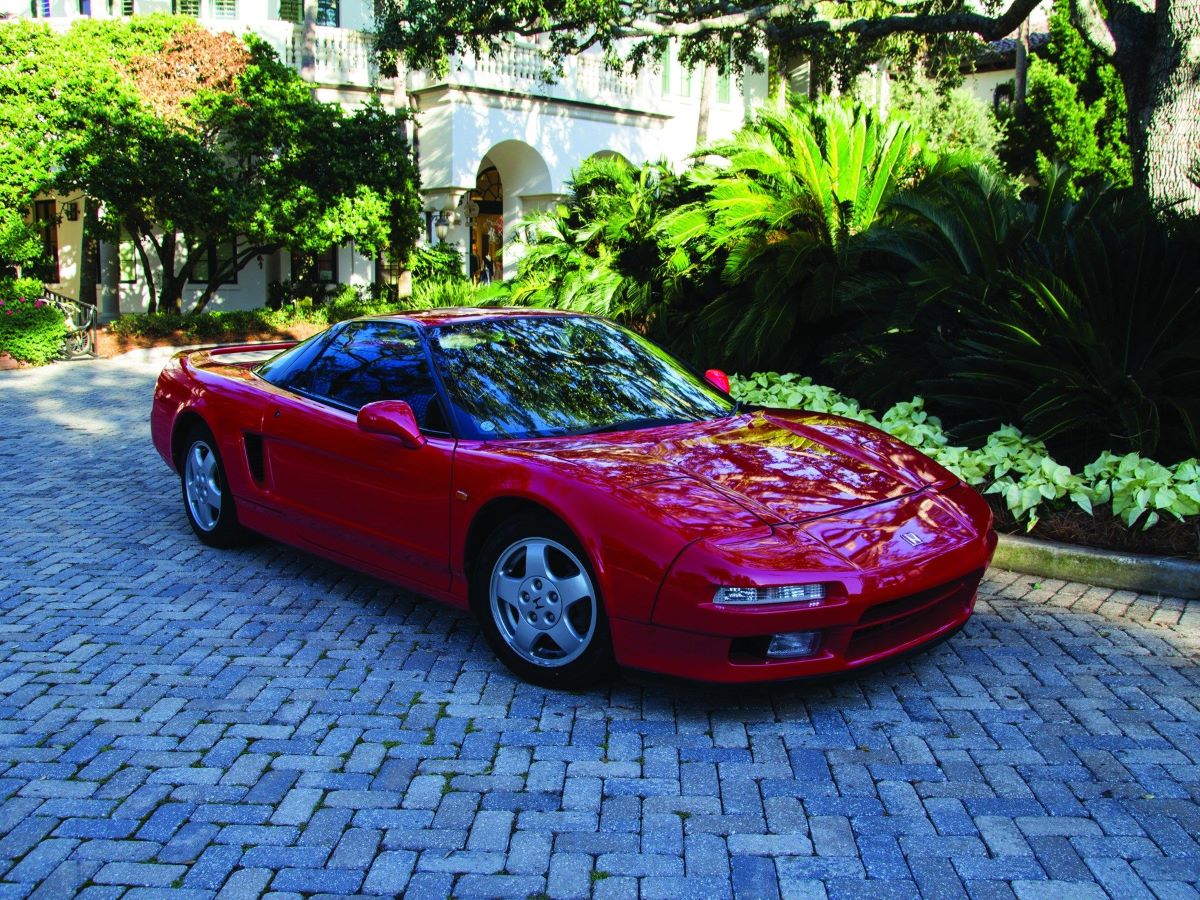
Its exterior styling unquestionably embodies the supercar aesthetic, although the interior does not fully achieve the same level of exoticism, as the visible use of components shared with more mainstream Acura models introduces a perceptibly downmarket element.
While the NSX’s performance is more than capable of satisfying a desire for speed, it does not out-accelerate some of its key competitors. The NSX’s sophisticated hybrid-electric powertrain integrates a twin-turbocharged 3.5-liter V-6 engine with three electric motors to generate combined maximum outputs of 573 horsepower and 476 lb-ft of torque.
The V-6 engine, the nine-speed dual-clutch automatic transmission, and one of the electric motors operate in concert to drive the rear wheels. The remaining two electric motors function independently to power the front wheels, which effectively gives the NSX an all-wheel-drive system.
With a claimed acceleration time from zero to 60 mph of just 3.1 seconds and a zero-to-100-mph time of 7.0 seconds, the NSX is undoubtedly a very fast car. However, within the supercar segment, it is not as rapid as non-hybrid rivals such as the McLaren 570S, nor is it as fuel-efficient as the BMW i8.
When configured in its Quiet and Sport modes, the steering is precise and direct, yet it feels notably light in effort, a characteristic we interpret as an engineering choice to enhance the car’s maneuverability for everyday use.
This particular steering calibration, however, seems somewhat mismatched with the vehicle’s high-performance nature. In the more aggressive Sport Plus and Track modes, the electric power-steering system introduces significantly more heft, which feels far more appropriate for spirited driving.
Across all driving modes, the steering response is sharp and the car reacts intelligently to minor steering inputs. Razor-sharp handling is a fundamental expectation for any supercar, and the NSX delivers on this promise while also providing a ride quality that is more compliant and comfortable than some of its rivals.
Its adaptive dampers and adjustable electric power steering enable a wide spectrum of driving modes to suit various conditions, and its powerful, fade-resistant brakes instill confidence whether on a public road or a race track.
4. Nissan Skyline GT-R R32 (1989–1994)
Nicknamed “Godzilla” for its track dominance, the R32 Skyline GT-R remains one of Japan’s most celebrated cars.
With its RB26DETT twin-turbo straight-six and advanced ATTESA E-TS all-wheel-drive system, the R32 could out-corner and out-accelerate supercars costing twice as much.
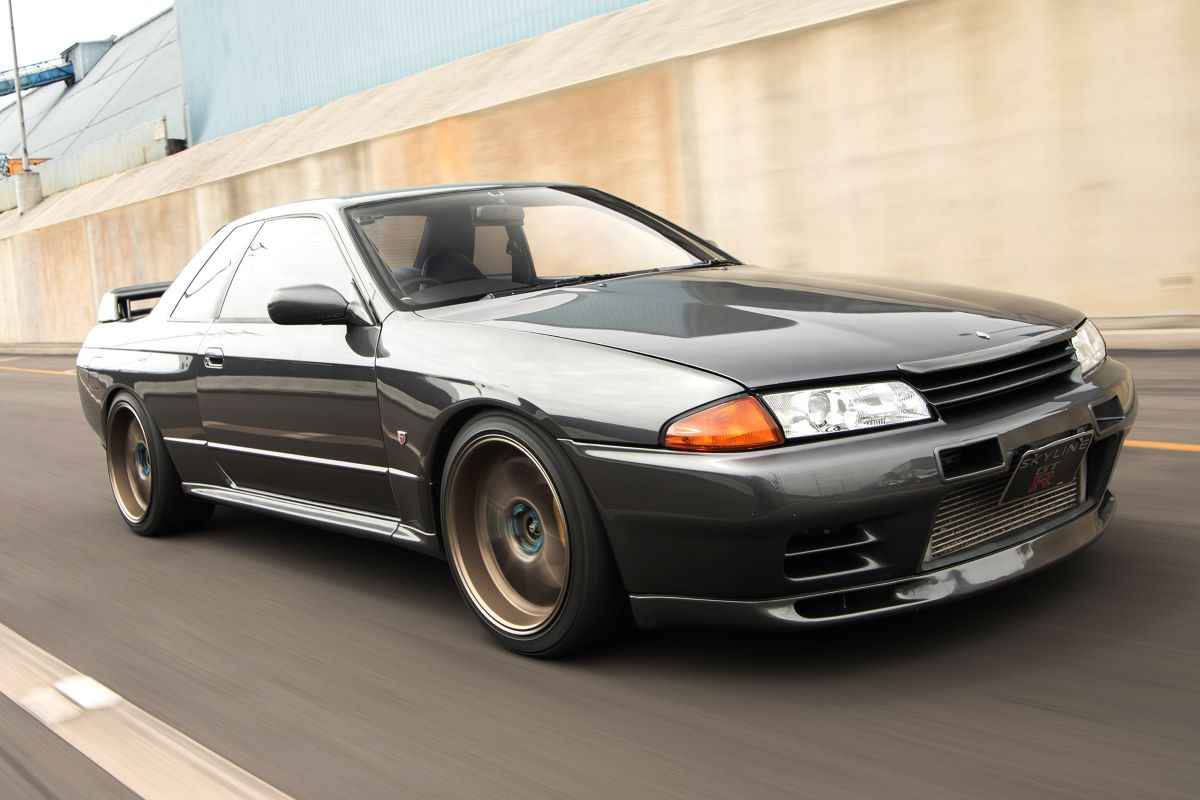
In Group A racing, it became an unstoppable force, winning 29 consecutive races in Japan’s touring car series.
Although not officially sold in the U.S. during the 1990s, import laws now allow many R32s to enter the American market legally, turning it into one of the most sought-after JDM legends of all time.
Also Read: 5 Street-Legal Track Monsters and 5 That Aren’t Street Friendly
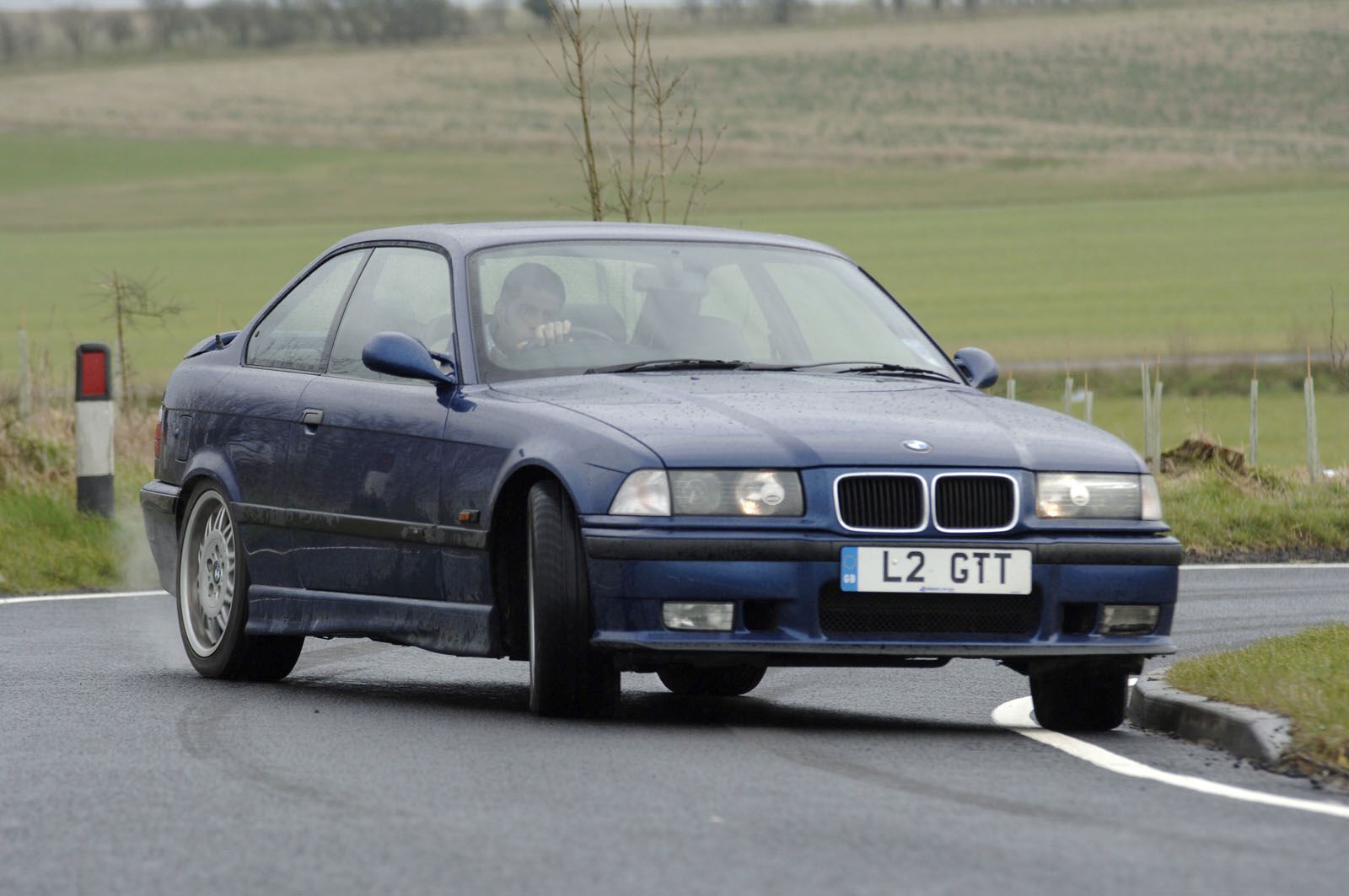
5. BMW E36 M3 (1992–1999)
For European car fans, the 1990s BMW M3 defined driving purity.
The E36 generation replaced the raw aggression of the E30 with more refinement, but it didn’t sacrifice performance. U.S. models came with a 3.0-liter (later 3.2-liter) inline-six producing up to 240 horsepower, while European versions enjoyed even more powerful engines.
The chassis balance, precise steering, and smooth inline-six soundtrack made it one of the most rewarding sports coupes of its era.
Today, clean, unmodified E36 M3s are increasingly rare and values are climbing fast as enthusiasts rediscover their blend of analog feedback and everyday usability.
The E36 BMW M3 occupies a uniquely cherished position among BMW enthusiasts and automotive connoisseurs.
While it was not the inaugural model to bear the M3 name, it represented the first iteration to deliver a comprehensive expression of the M Division’s engineering philosophy, establishing it as an exceptionally enticing option for contemporary buyers seeking a classic M3 experience.
Nevertheless, prospective purchasers must approach this opportunity with a clear and informed perspective, acknowledging the potential challenges that can accompany its attractive initial purchase price.
The E36 M3 was initially launched in the European market in 1992, with its subsequent introduction to the United States occurring in 1995.
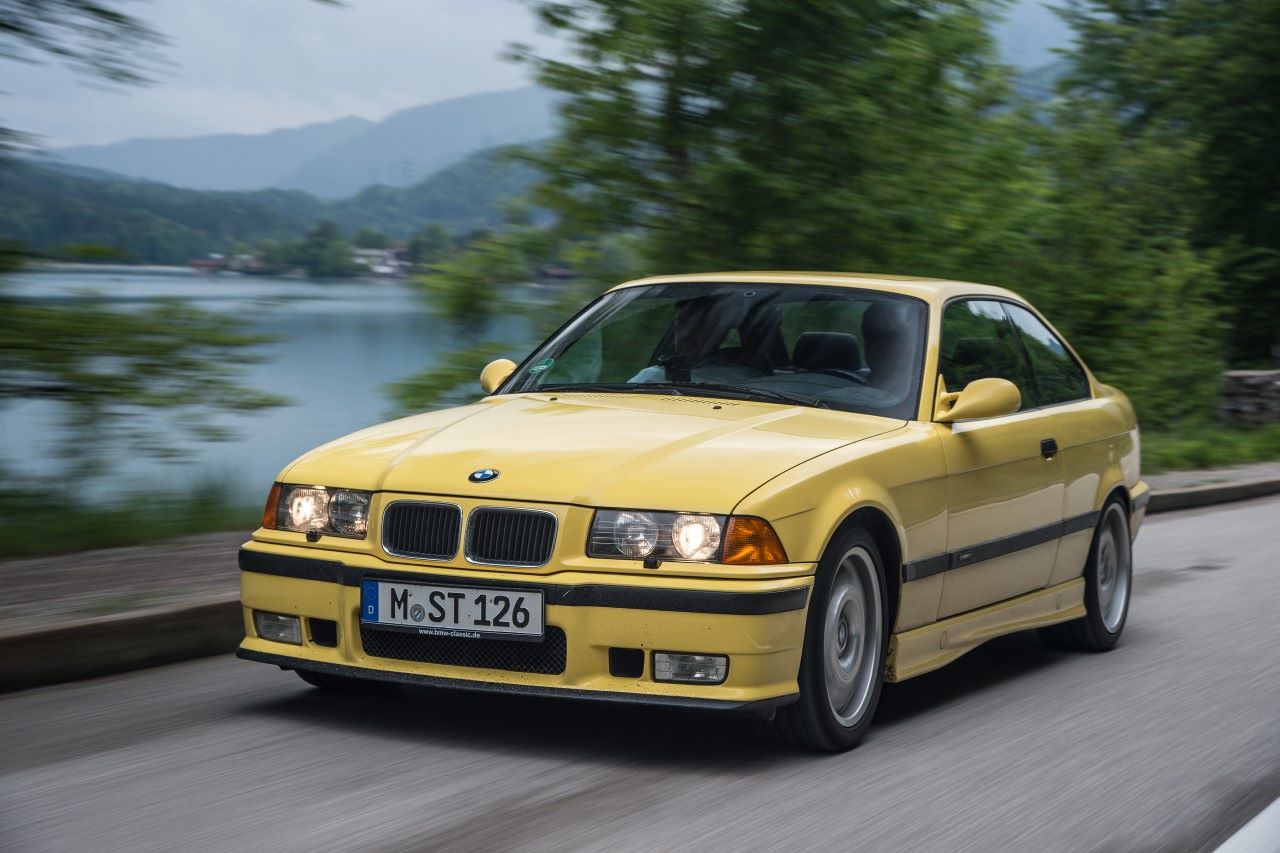
In contrast to its predecessor, the E30 M3, this vehicle was not primarily developed to satisfy homologation regulations or strict motorsport priorities. Instead, BMW’s engineers focused on infusing genuine race-inspired dynamics into a practical and refined performance car for daily use.
The E36 chassis was equipped with a powerful yet smooth six-cylinder engine and an exceptionally precise multi-link suspension system, and it was offered in coupe, sedan, and convertible body styles. Its design featured clean, aerodynamic lines, and global production exceeded 70,000 units before manufacturing concluded in 1999.
Vehicles of this age frequently conceal significant rust issues beneath their surfaces. Previous ownership histories may have included periods of inattentive maintenance, meaning that worn mechanical components could foreshadow expensive future repairs.
The interiors of some cars may exhibit fading or deterioration, and the potential for electrical system anomalies cannot be dismissed. Therefore, without a comprehensive and meticulous pre-purchase inspection, major underlying problems have the potential to rapidly transform an apparent bargain into a costly financial burden.
6. Chevrolet Corvette C4 ZR-1 (1990–1995)
The Corvette ZR-1 was America’s answer to European exotics in the early ‘90s. With its revolutionary LT5 5.7-liter V8 developed in collaboration with Lotus, the ZR-1 produced 375 horsepower (later bumped to 405), making it one of the fastest cars of its day.
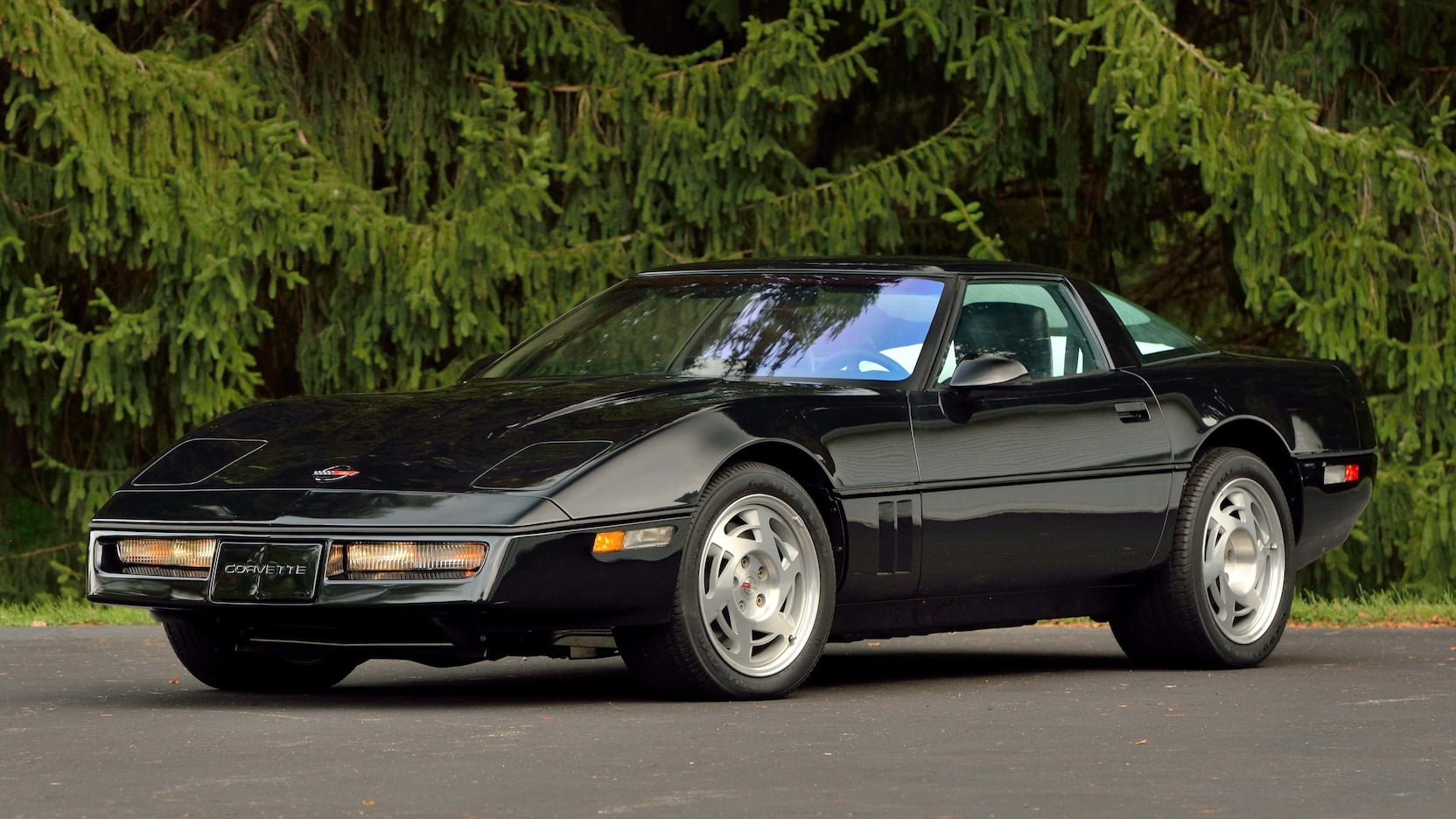
It could hit 180 mph and sprint to 60 in just over four seconds impressive numbers for a time when most muscle cars barely touched 250 horsepower.
Combined with its advanced suspension and sleek design, the C4 ZR-1 proved that American performance could compete globally. Today, it’s a bargain for collectors seeking supercar performance without the six-figure price tag.
7. Mitsubishi 3000GT VR-4 (1990–2001)
The Mitsubishi 3000GT VR-4 was one of the most technologically advanced cars of the decade. With twin turbos, all-wheel drive, active aerodynamics, and four-wheel steering, it was packed with features that were decades ahead of their time.
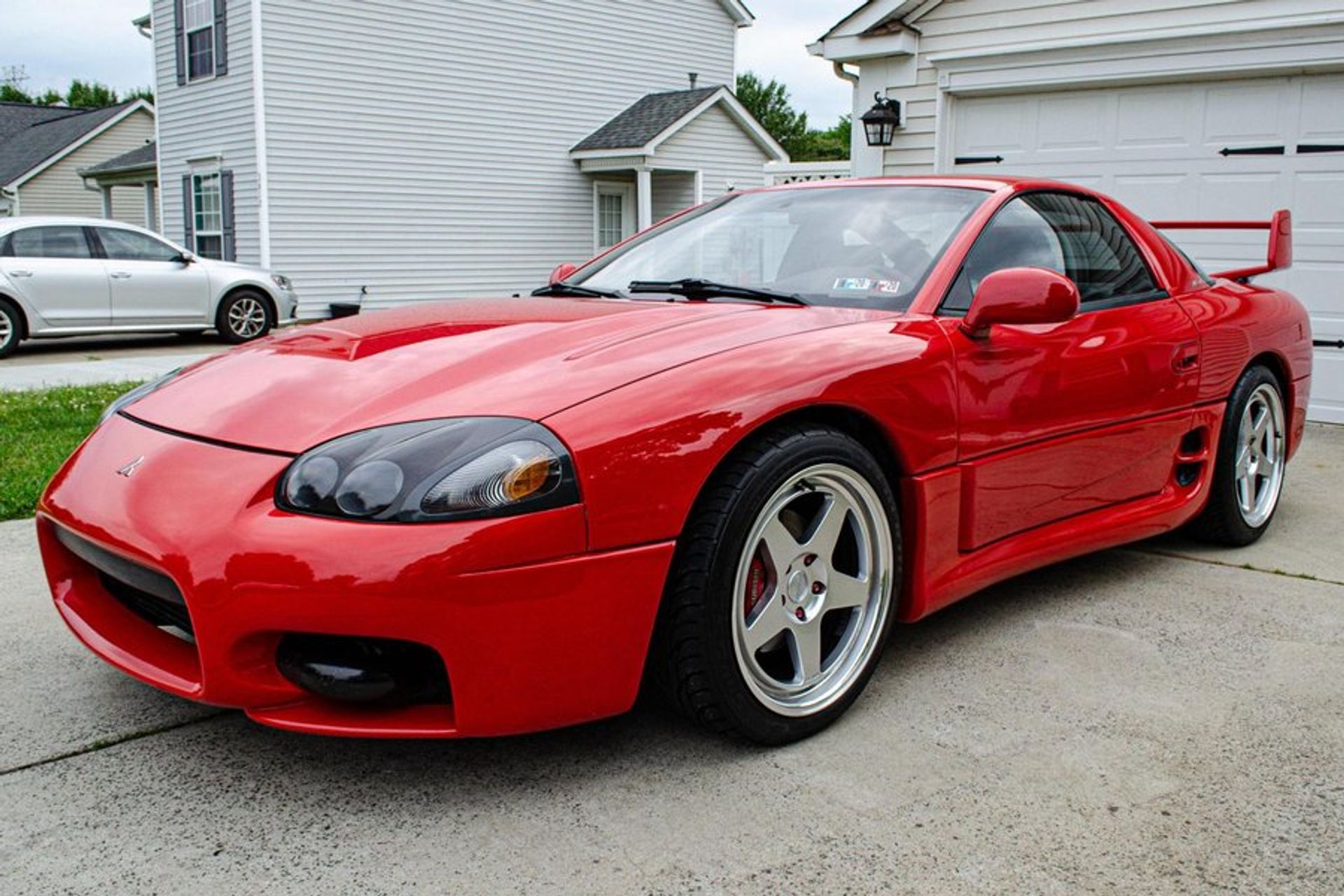
Its 3.0-liter twin-turbo V6 delivered 320 horsepower, and paired with a manual transmission, the VR-4 could embarrass many European performance cars.
Though its complexity made maintenance costly, the 3000GT remains an engineering marvel that represented Mitsubishi at its peak. As nostalgia for the ‘90s rises, so does the car’s collector appeal.
When reflecting on what many consider the Golden Age of JDM sports cars, a select few models immediately spring to mind. The formidable Toyota Supra, the uniquely rotary-powered Mazda RX-7, and the Z32-generation Nissan 300ZX traditionally complete the celebrated twin-turbo podium of the 1990s.
However, one particular automobile, the Mitsubishi 3000GT VR-4, along with its mechanically identical counterpart, the Dodge Stealth R/T, arrived on the scene with a performance and technology package that was entirely distinct from its rivals.
The VR-4 was engineered more as a grand tourer, characterized by a heavier curb weight and outfitted with luxurious leather seats and an abundance of advanced technology.
The 3000GT VR-4 provided a level of refinement and timeless aesthetic appeal that was not fully recognized during its own era. With the benefit of hindsight, this ultimate version of the 3000GT can, and indeed should, be reassessed for its unique place in automotive history.
The Mitsubishi 3000GT VR-4 was first revealed to the global public at the 1989 Tokyo Motor Show in the form of the HSX Concept, a vehicle that closely previewed the design of what would later be sold as the GTO in Japan, the 3000GT in other markets, and the Dodge Stealth.
The concept received such widespread acclaim that it was approved for production merely two years afterward. The premier, high-performance VR-4 trim of the 3000GT (and the equivalent Stealth R/T) was manufactured across three distinct generations from 1991 to 1999, as detailed below:
The initial generation of the VR-4, spanning the 1991 to 1993 model years, delivered 300 horsepower, was equipped with a five-speed manual transmission, featured pop-up headlights, and, starting in 1992, offered a removable roof panel.
For the second generation (1994–1996), the pop-up headlights were discontinued and replaced with a fixed headlamp design. Engine output was increased by 20 horsepower and 8 lb-ft of torque.
The transmission was also upgraded, gaining an additional gear to become a six-speed manual. The Active Aero system was discontinued following the 1996 model year. This second generation also marked the introduction of the Spyder convertible variant.
The third-generation VR-4 models (1997–1999) incorporated a hoop-style spoiler and a redesigned front bumper for the 1997 and 1998 vehicles, while the final 1999 model year received a prominent “combat” rear spoiler and a different front bumper design.
8. Ford Mustang SVT Cobra (1993–1998)
The 1990s were a transitional period for the Mustang, but the SVT Cobra brought serious credibility back to Ford’s muscle car lineup.
Built by Ford’s Special Vehicle Team, the Cobra featured a hand-built 5.0-liter (later 4.6-liter DOHC) V8 and performance upgrades that made it more refined than the standard GT.
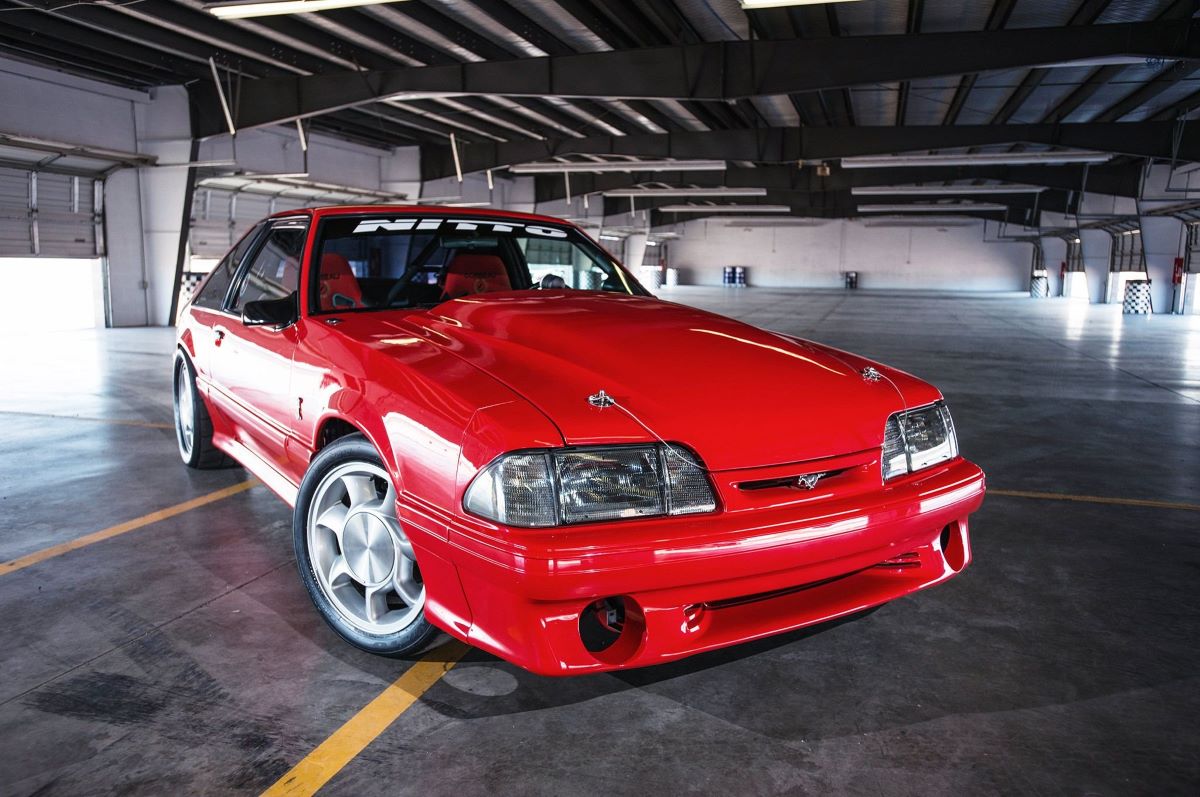
The Cobra R variants, built in extremely limited numbers, were stripped-down track specials that delivered pure American power with minimal frills.
Today, these Cobras are recognized as some of the most collectible Mustangs of the modern era, representing the bridge between old-school muscle and modern engineering.
The Ford Mustang had been in production for 34 years at the time of this writing. Following a significant and dramatic redesign in 1994 and the introduction of the 4.6-liter modular V8 in 1996, the team responsible for the Mustang’s design had been diligently working behind the scenes to prepare a refresh for the 1999 model year.
The activities of the SVT (Special Vehicle Team) had also been considerable; given that the Cobra variant had received a hand-assembled, four-cam engine producing 305 horsepower just two years prior, it consequently remains mechanically unchanged for the current model year.
In our view, it is a prudent decision for Ford to refrain from making alterations to its compact performance car for a year. Considering the extensive changes being implemented across the rest of the Ford lineup, some of which have not met with favorable reception, adhering to the principle of “if it isn’t broken, don’t fix it” appears to be a very sound strategy.
That said, we would appreciate the availability of a traction control system on the Cobra model. While the car is equipped with Ford’s “Traction-Lok” limited-slip differential, it remains remarkably easy to cause the rear of the vehicle to slide out of line.
We believe that incorporating a traction control system would significantly enhance the car’s usability and safety during poor weather conditions.
On the subject of user-friendliness, we are quite fond of the Mustang’s cabin and consider it to be the primary factor behind the ‘Stang’s sales figures, which exceed those of the Camaro and Firebird combined. The seating position is relatively elevated, affording the driver an excellent command of the road ahead.
The dashboard features an attractive two-toned, double-bubble design with a pleasing textural quality, while all gauges and controls are straightforward to read and operate.
The front bucket seats also provide excellent support during cornering. We will not spend excessive time discussing the rear seats, as it is generally understood that one does not purchase a sports car with the priority of rear passenger comfort.
As you have likely gathered from this review, the Mustang Cobra is an exceptionally accommodating car for the driver, offering substantial power while remaining very manageable for urban commuting and providing a reasonably comfortable and compliant ride on the highway.
We appreciate its playful rear-end character, though this trait can be somewhat unsettling when driving on winding, two-lane roads. For a prospective buyer whose primary intent is aggressive driving on mountain passes, a vehicle like the Chevrolet Camaro Z28 might prove more satisfying.
However, in the final assessment, the Cobra possesses the essential qualities that the majority of driving enthusiasts desire, a powerful V8 engine with a magnificent exhaust soundtrack, a well-appointed interior, supportive seating, aggressive aesthetics, and entertaining performance, all at a competitive price point.
It has long been Ford’s successful formula to produce automobiles that appeal to a broad spectrum of customers, and any individual seeking a rapid, enjoyable, and practical daily driver should certainly consider the Cobra.
9. Porsche 911 (993) (1995–1998)
The 993 generation of the Porsche 911 is widely regarded as the pinnacle of the air-cooled era. It combined the timeless design of classic 911s with modern refinements like improved suspension and better ergonomics.
Its 3.6-liter flat-six engine produced between 272 and 400 horsepower (depending on the variant), delivering that distinctive air-cooled roar enthusiasts love.
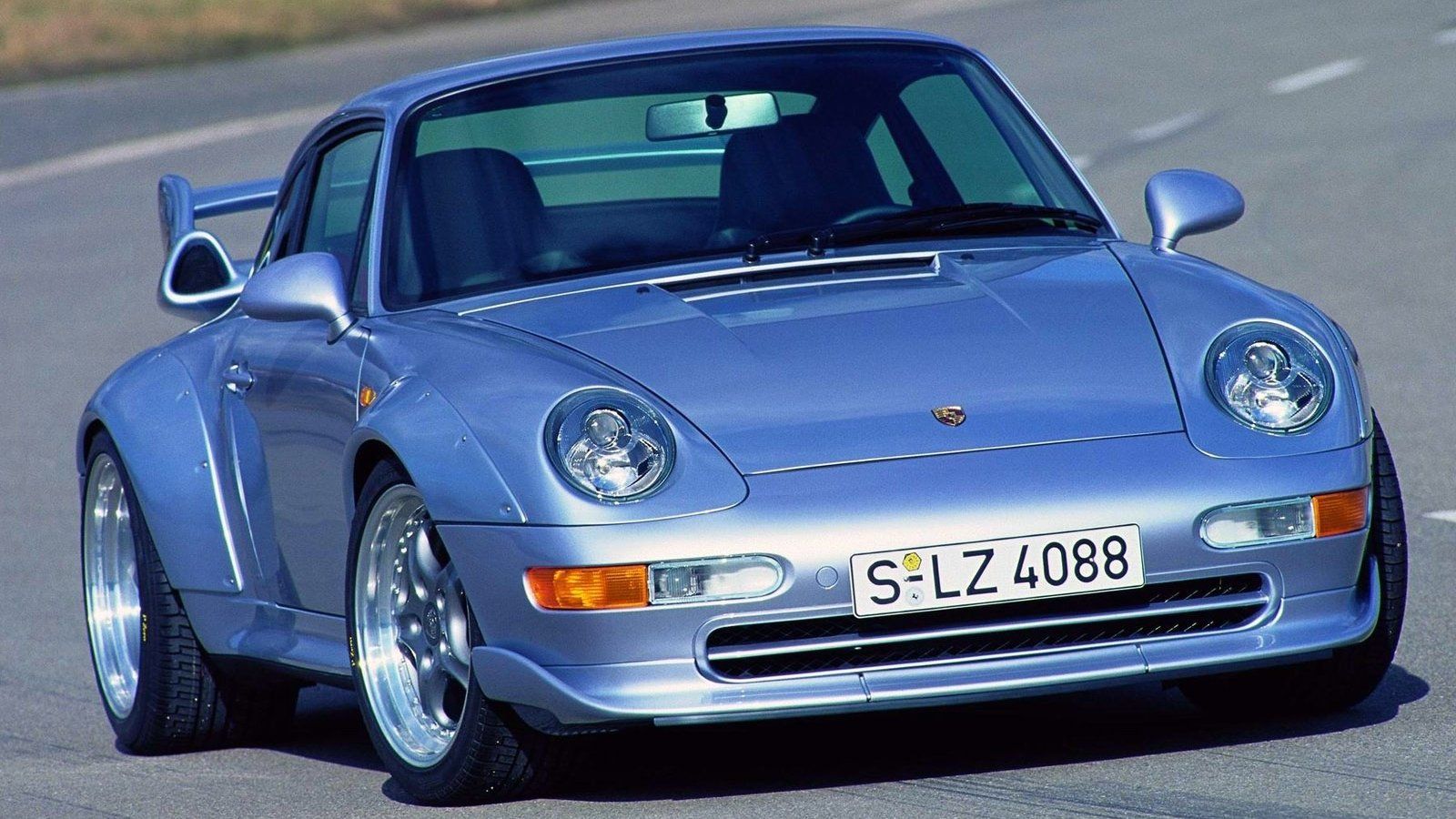
The 993 Turbo, in particular, introduced twin turbos and all-wheel drive, making it one of the fastest cars of the decade. Collectors consider the 993 the sweet spot the perfect blend of classic Porsche feel and modern reliability.
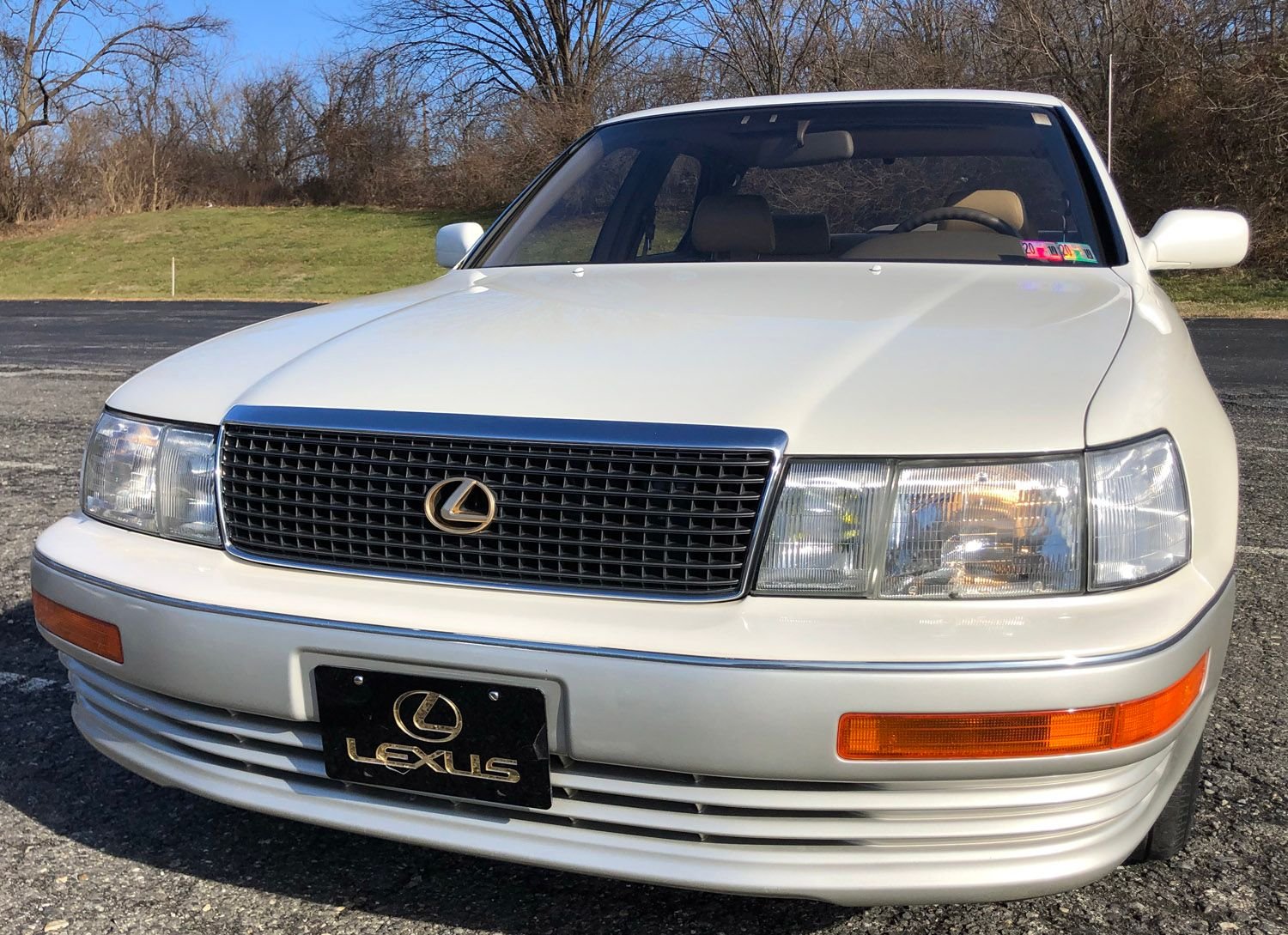
10. Lexus LS400 (1990–1994)
While not a sports car, the Lexus LS400 deserves its spot as a 1990s icon for redefining luxury. When Toyota launched Lexus in the U.S., the LS400 stunned established German brands with its near-silent V8, flawless build quality, and remarkable reliability.
It offered the refinement of a Mercedes S-Class for far less money, forcing rivals to raise their standards. Decades later, many LS400s are still running smoothly, a testament to Toyota’s engineering discipline.
It’s not flashy, but its legacy as the car that changed the luxury game makes it one of the most important vehicles of the decade.
The 1990s were a defining era for car culture, bridging the gap between the mechanical purity of earlier decades and the electronic sophistication that followed.
Whether it was Japan’s technological overachievement, Europe’s precision engineering, or America’s horsepower revival, the decade produced some of the most beloved cars ever built.
Today, these machines aren’t just modes of transport they’re cultural artifacts, each representing a moment when the automotive world still prioritized emotion over automation.
For enthusiasts and collectors in the U.S., the 1990s remain an era worth revisiting, one car at a time.