
For decades, trucks have been marketed as “ready for adventure” and “built for the rough stuff,” but the reality under the chassis often tells a different story.
Many trucks sold in the US today boast off-road-inspired trims and aggressive styling, yet some rely on nothing more than thin plastic panels or token metal shields to protect vital components underneath.
Real skid plates made from steel or aluminum are what separate true off-road machines from mall-crawling pretenders.
In this article, we’ll look at five trucks that come stock with legitimate skid plates, right from the factory, ready to take a beating, and five others that look the part but rely on plastic underbody shields that wouldn’t last a mile on a rocky trail.
Trucks With Real Skid Plates (Stock)
When it comes to off-roading, not all trucks are created equal. While many full-size and midsize pickups advertise rugged capabilities, very few come equipped from the factory with real skid plates, those essential armor pieces that protect vital components like the engine, transmission, and fuel tank from rocks, debris, and rough terrain.
For enthusiasts who like to venture off the beaten path without adding expensive aftermarket modifications, a truck with factory-installed skid plates can make all the difference.
In this article, we’re highlighting trucks that come ready for serious off-road abuse right out of the showroom, with skid plates and other protective features that let you tackle trails with confidence.
Whether you’re climbing rocky inclines, fording streams, or just exploring the backcountry, these trucks offer peace of mind and the durability to handle whatever nature throws their way.
1. Toyota Tacoma TRD Off-Road and TRD Pro
The Toyota Tacoma has long been the gold standard for midsize off-roaders in the US, and its TRD Off-Road and TRD Pro trims come fully armored underneath.
The TRD Off-Road includes serious steel skid plates covering the engine and front suspension components, while the TRD Pro goes further with additional protection for the transmission and fuel tank.
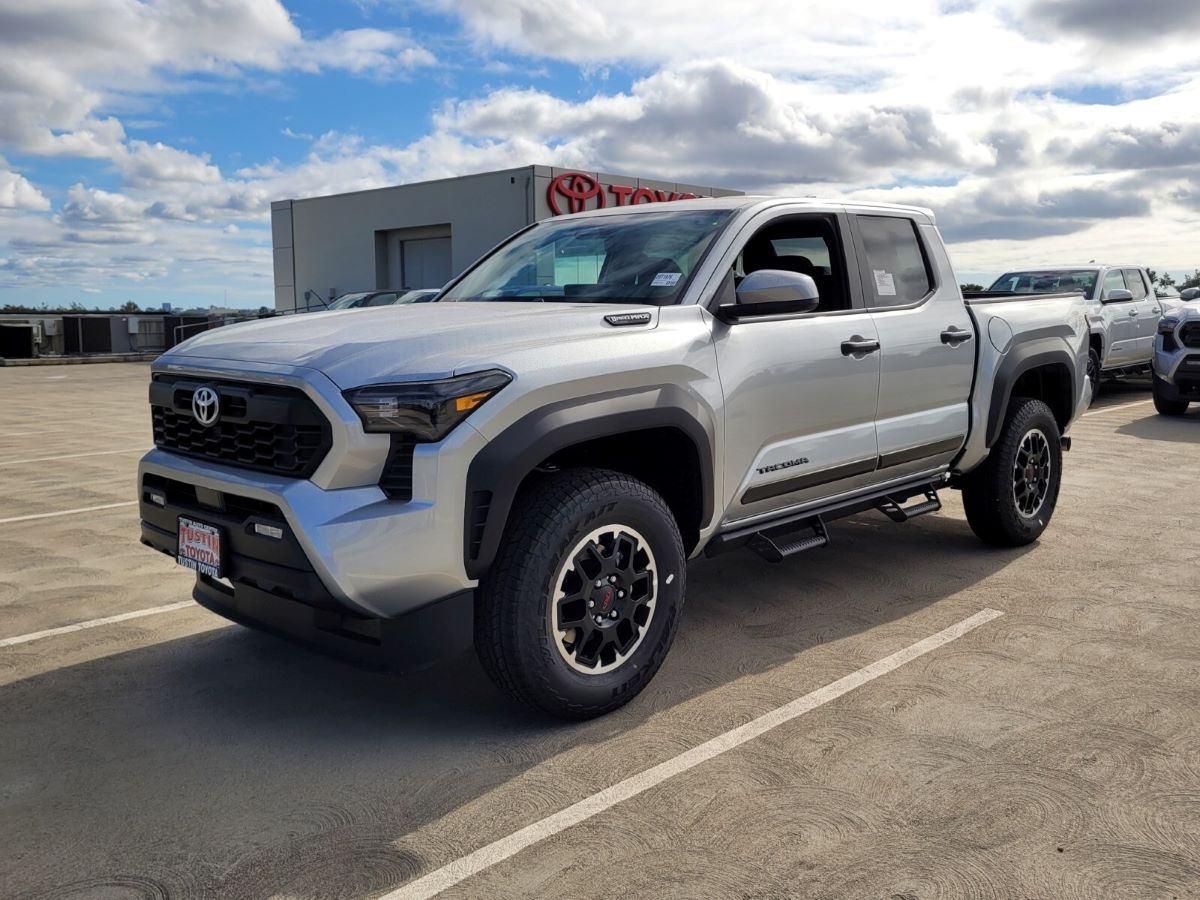
Unlike many competitors that use thin aluminum, Toyota employs thick stamped steel an old-school but proven material that can take direct hits.
These skid plates are not just for show; they’re designed to handle desert trails, mud ruts, and rocky climbs without deforming.
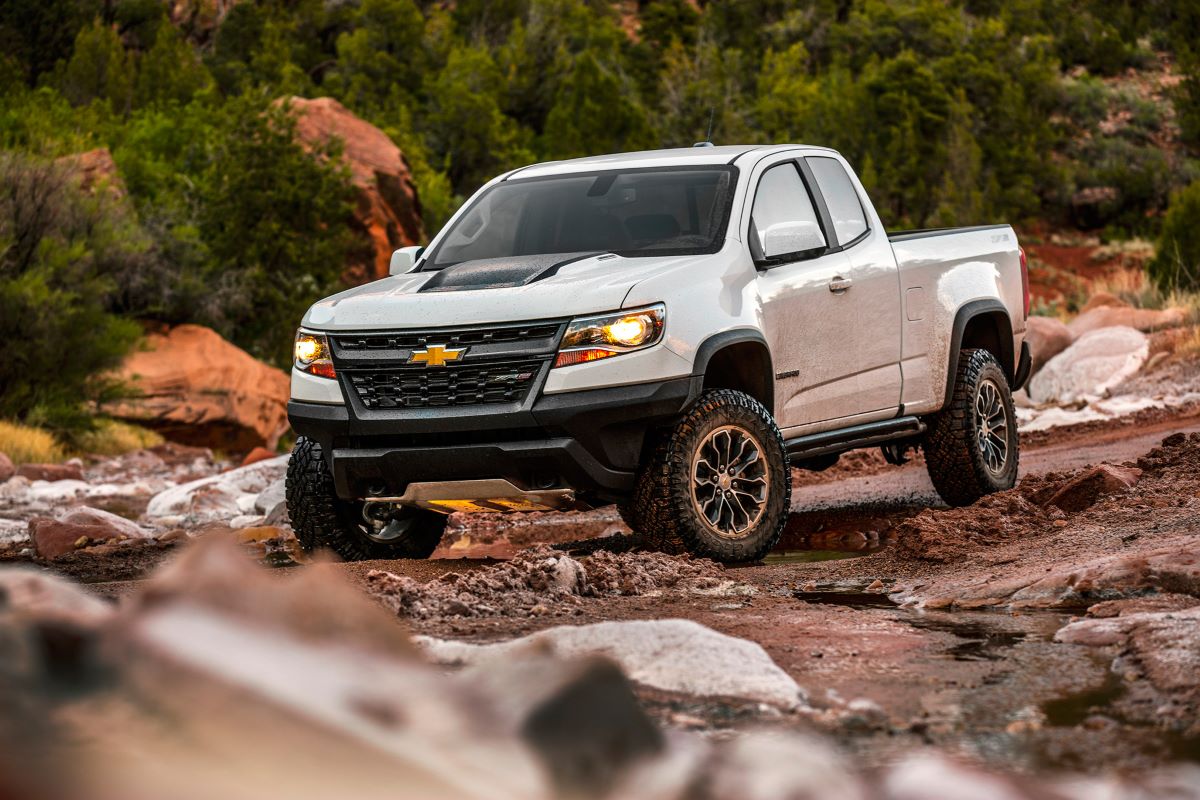
2. Chevrolet Colorado ZR2
The Chevy Colorado ZR2 is another factory-built warrior. It features full underbody protection using high-strength steel skid plates and rock sliders not decorative ones, but functional armor capable of supporting the truck’s weight.
The ZR2’s skid plate setup shields the oil pan, front differential, and transfer case, which is essential for the type of boulder crawling and trail work the truck was designed for.
Combined with its DSSV spool-valve shocks and wider track, the ZR2’s metal armor completes one of the most capable midsize truck packages you can buy straight off the lot.
A few weeks back, a 2019 ZR2 crew cab joined our fleet, arriving just in time to help me haul away some home-renovation debris. The Colorado ZR2 rolled into our El Segundo HQ finished in the striking Kinetic Blue Metallic ($395) and paired with the 2.8-liter Duramax four-cylinder diesel engine ($3,500); no additional options were fitted.
Naturally, the ZR2 package also comes with locking front and rear differentials, a beefed-up rear axle, stronger front control arms, and extensive underbody protection. It rides on aggressive 31-inch Goodyear Wrangler Duratrac tires. With all that gear, you might assume it’s too rough for everyday driving, but that isn’t the case.
For starters, the Colorado hits a sweet spot in size for daily use. Every time I backed the ZR2 into my driveway, the simplicity of parking this midsize truck put a smile on my face.
Accelerating the diesel ZR2 up to highway speeds can feel a bit sluggish, it only makes 186 horsepower but a hefty 369 lb-ft of torque, yet I thoroughly enjoyed driving it, especially on a trip to the landfill, where I had to resist, with great effort, the temptation to fully explore its off-road prowess and tear up the piles of scrap.
The diesel is, in fact, the ideal engine for the ZR2, offering a lively launch that compensates for its more deliberate feel at higher speeds. Simply put, it feels faster than it actually is.
3. Ford F-150 Raptor
Ford’s F-150 Raptor is a truck that’s made to eat dunes for breakfast and that’s reflected in its factory underbody protection.
The Raptor comes standard with thick aluminum and steel skid plates guarding the front, engine, transmission, and transfer case.
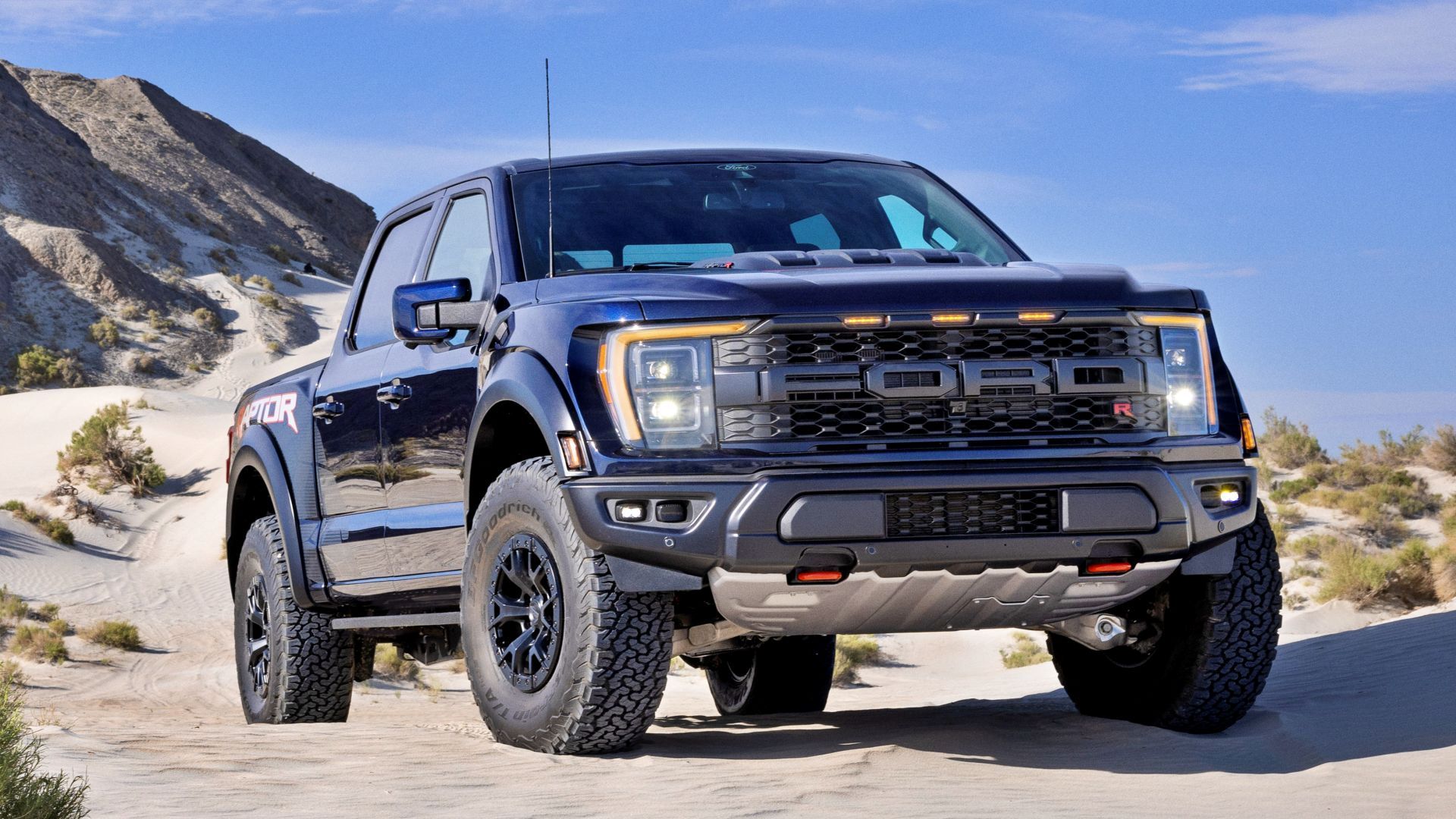
The choice of lightweight aluminum allows Ford to balance weight and protection, essential for the Raptor’s high-speed off-road driving.
Unlike lesser F-150 trims, the Raptor’s skid plates are reinforced and braced to handle repeated hits without bending or puncturing. The setup proves that Ford didn’t just make the Raptor look tough it engineered it to survive genuine abuse.
The 2025 Ford F-150 Raptor carries a base MSRP of $78,905 and comes equipped with a 3.5L EcoBoost V6 ICE engine paired with a 10-speed automatic transmission, delivering 450 horsepower at 5,850 RPM and 510 lb.-ft. of torque at 3,500 RPM.
This four-wheel-drive truck offers a fuel economy of 15/18/16 MPG city/highway/combined and runs on a 36.0-gallon fuel tank, supported by a heavy-duty lead acid battery.
On the exterior, the Raptor features a minimum ground clearance of 12 inches, a standard payload capacity of 1,425 lbs., and a curb weight of 5,863 lbs. Its wheelbase measures 145 inches, with a width and height both at 79.8 inches, and an overall length of 232.6 inches.
The interior seats five passengers comfortably, providing 40.8 inches of front headroom, 66.6 inches of front shoulder room, 62.5 inches of front hip room, and 43.9 inches of front legroom. Rear passengers enjoy 40.4 inches of headroom, 65.8 inches of shoulder room, 62.6 inches of hip room, and 43.6 inches of legroom.
The Raptor offers 52.8 cubic feet of cargo space and a maximum towing capacity of 8,200 lbs., making it a capable hauler for both work and recreation. It rides on 17 x 8.5-inch silver aluminum wheels at both the front and rear, emphasizing its rugged, off-road-ready design.
Also Read: 5 Cars With Stellar Brakes vs 5 With Long Stopping Distances
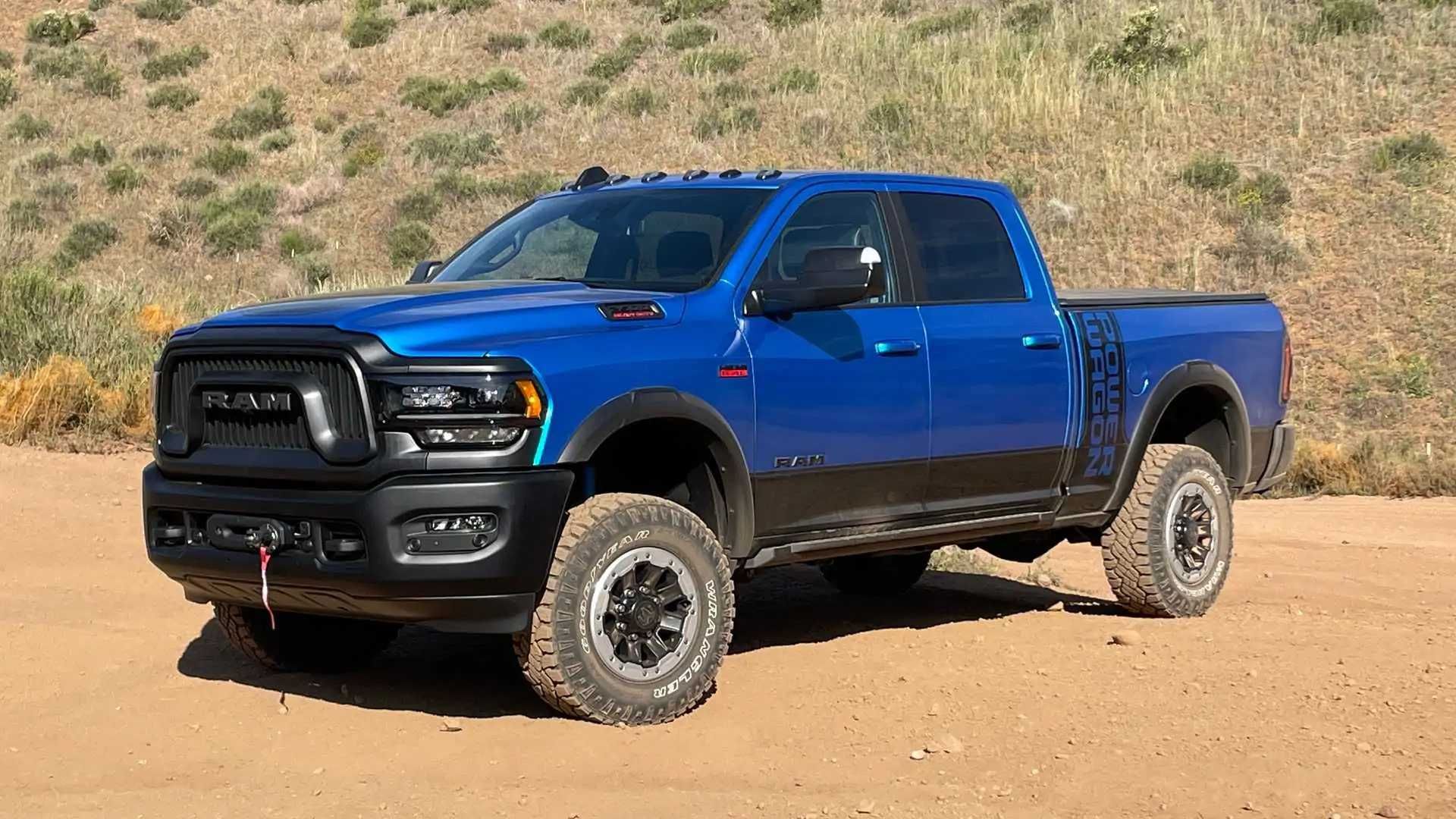
4. Ram 2500 Power Wagon
The Ram Power Wagon is a heavy-duty truck that doesn’t play around. It comes straight from the factory with skid plates protecting its transfer case and fuel tank.
These are not plastic guards but actual steel units capable of deflecting rocks, stumps, and debris. Ram also designed the Power Wagon’s skid plates to work with its unique suspension and winch setup, ensuring no interference with its off-road functionality.
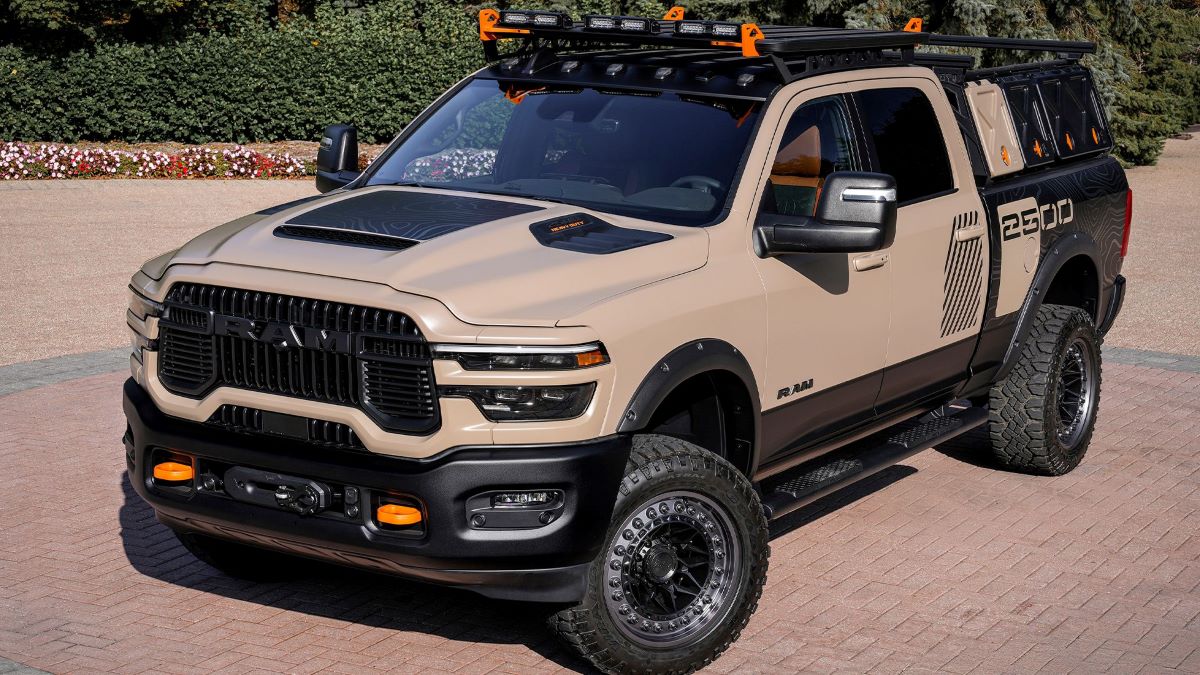
This makes the Power Wagon one of the few full-size HD trucks in America with real off-road armor straight off the dealer lot a nod to its lineage as a purpose-built workhorse.
5. Nissan Frontier Pro-4X
Nissan’s Frontier Pro-4X is a hidden gem in the off-road world. The latest generation builds on its rugged reputation with legitimate underbody protection.
From the factory, it includes steel skid plates covering the oil pan, transfer case, and fuel tank. These aren’t afterthoughts but part of a carefully designed off-road system that pairs with Bilstein shocks and an electronic locking rear differential.
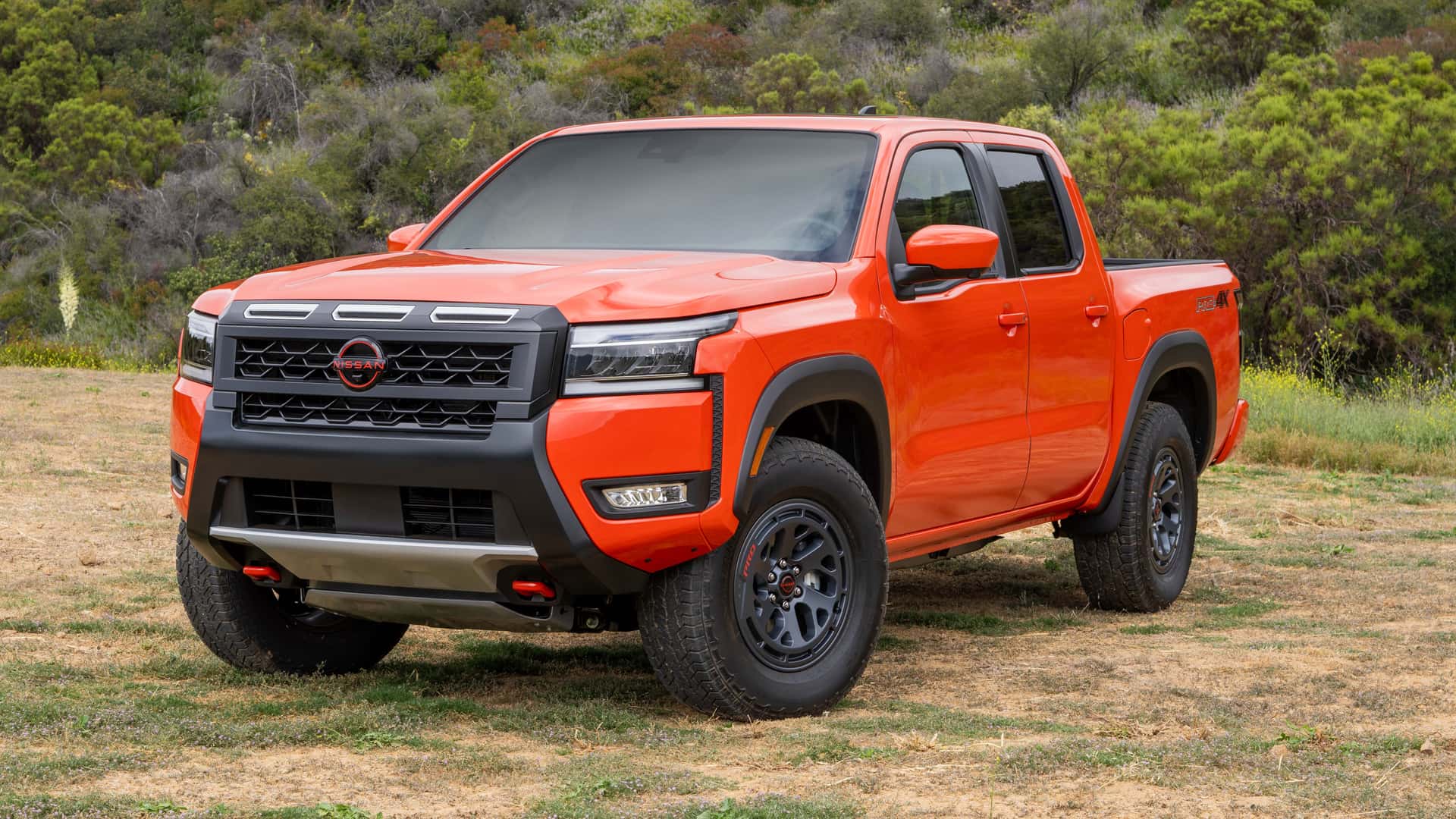
The Pro-4X’s armor may not be as thick as what you find on a full-size Raptor, but it’s far superior to the flimsy composite shields seen on competitors like the Tacoma SR5 or Colorado LT trims.
The Nissan Frontier is a midsize truck available in two cab sizes and two bed lengths, with either rear- or four-wheel drive. It comes with a single powertrain option: a 3.8-liter V6 paired with a nine-speed automatic transmission.
While the Frontier was completely redesigned in 2022, it initially lagged behind some of its primary competitors in certain areas. However, Nissan has steadily improved the truck, making several meaningful updates for 2025.
One of the longstanding issues since the 2022 redesign was the difficulty of finding a comfortable driving position, largely due to the absence of a telescoping steering column. For 2025, Nissan has addressed this concern, equipping all trim levels with the feature.
The dashboard has also been redesigned to accommodate a 12.3-inch touchscreen on SV and higher trims. Towing capacity has been increased to 7,150 pounds, placing the Frontier roughly in the middle of its class.
Perhaps the most notable update is the addition of a crew-cab/long-bed configuration for the three upper trims, a setup that was previously limited to a single trim level.
When it comes to competitors, the Frontier has a solid roster to contend with. The newest rivals include the Toyota Tacoma and Ford Ranger, both redesigned in 2024, and the Chevy Colorado and GMC Canyon twins, which were updated in 2023.
These trucks offer multiple engine outputs, various cab and bed configurations, and dedicated off-road trims. For those prioritizing comfort, interior space, and practical storage, the Honda Ridgeline is worth considering, it also stands out as the best-handling truck among the group.
Trucks With Plastic Shields (Stock)
Not all trucks are built alike when it comes to underbody protection. While off-road enthusiasts often seek out heavy-duty skid plates, many stock trucks rely on plastic shields to guard critical components from debris, rocks, and rough terrain.
These plastic panels may not offer the same ruggedness as metal, but they serve an important purpose: protecting the drivetrain, fuel tank, and other vulnerable parts while keeping the truck lightweight and efficient.
In this article, we take a closer look at trucks that come from the factory with plastic underbody shields, exploring how they balance everyday usability with essential protection.
1. Toyota Tundra SR5 and Limited
While the Tundra’s TRD Pro trim gets legitimate skid plates, the mainstream SR5 and Limited models make do with thin plastic underbody panels.
These shields are designed primarily to improve aerodynamics and protect against small debris not to withstand trail impacts.
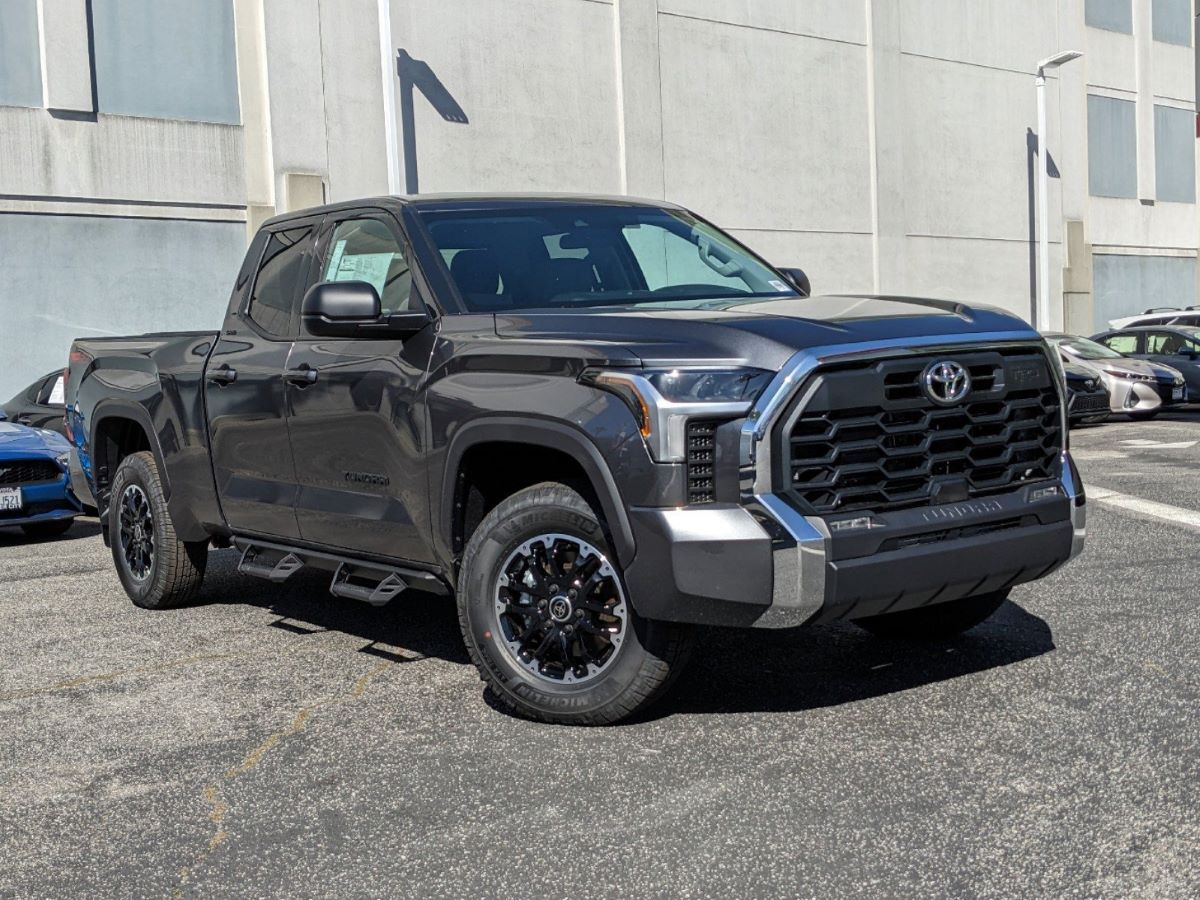
It’s a surprising compromise given the truck’s rugged image, and owners who plan to leave the pavement often replace them with aftermarket steel alternatives. For light-duty use, they’re fine; for real off-roading, they’re more decoration than defense.
Also Read: 8 Underrated SUVs That Are Better Than Popular Models
2. Ford Ranger XLT and Lariat
The Ranger may have off-road roots, but in its mainstream US trims (XLT and Lariat), the protection underneath is mostly cosmetic.
The thin plastic splash guards under the engine and transmission are meant for airflow and light deflection, not impact absorption.
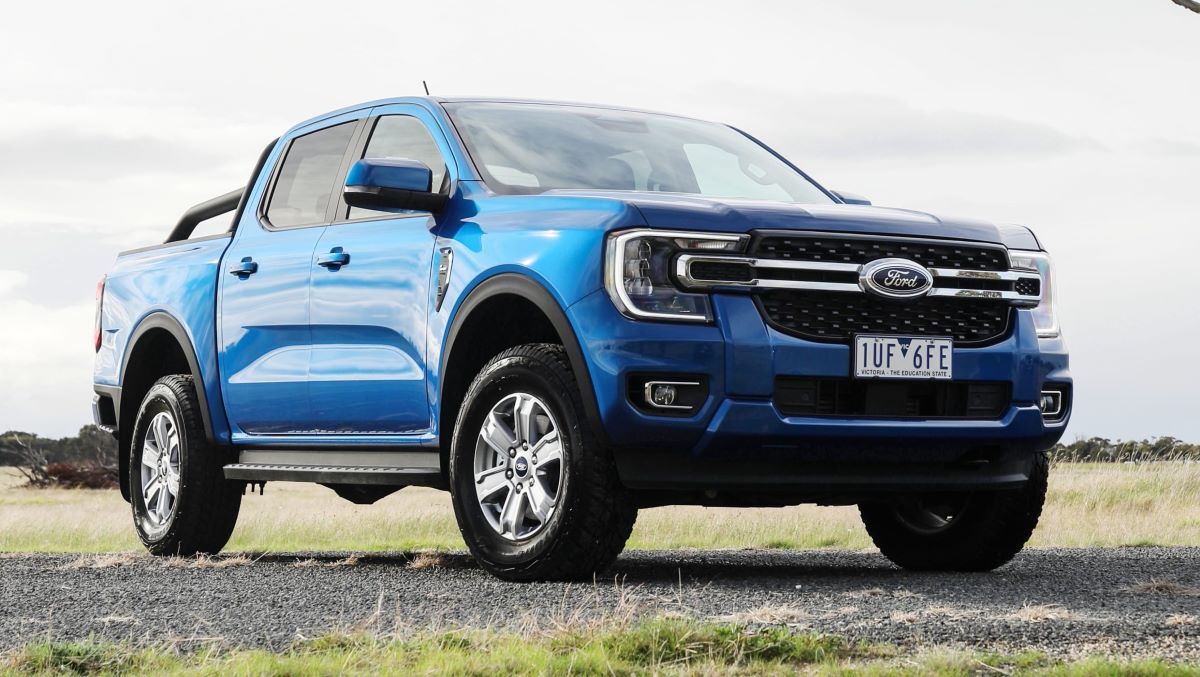
Only the Tremor package adds real skid plates a key upgrade for buyers who expect their truck to live up to its adventurous marketing. Without those plates, even a small rock could spell trouble for the oil pan or transfer case.
The 2025 Ford Ranger XLT 4WD SuperCrew with a 5-foot box is powered by a 2.3L EcoBoost engine paired with an electronic 10-speed automatic transmission, producing 270 horsepower at 5,500 RPM and 310 lb.-ft. of torque at 3,000 RPM.
This four-wheel-drive truck has a maximum towing capacity of 7,500 pounds and a fuel tank capacity of approximately 18 gallons. The EPA estimates fuel economy at 20 MPG in the city and 24 MPG on the highway, resulting in a combined rating of 22 MPG.
Designed to seat five passengers, the Ranger XLT balances capability and comfort, offering a solid drivetrain and towing performance suitable for work and recreational use.
Its 2.3L EcoBoost engine delivers responsive power both on and off the road, while the electronic 10-speed automatic transmission ensures smooth shifts and efficient performance across varying driving conditions.
3. Chevrolet Silverado 1500 LTZ
The Silverado 1500 LTZ may look imposing, but underneath it’s more suburban than rugged. Chevy outfits this trim level with large molded plastic panels that double as aero shields.
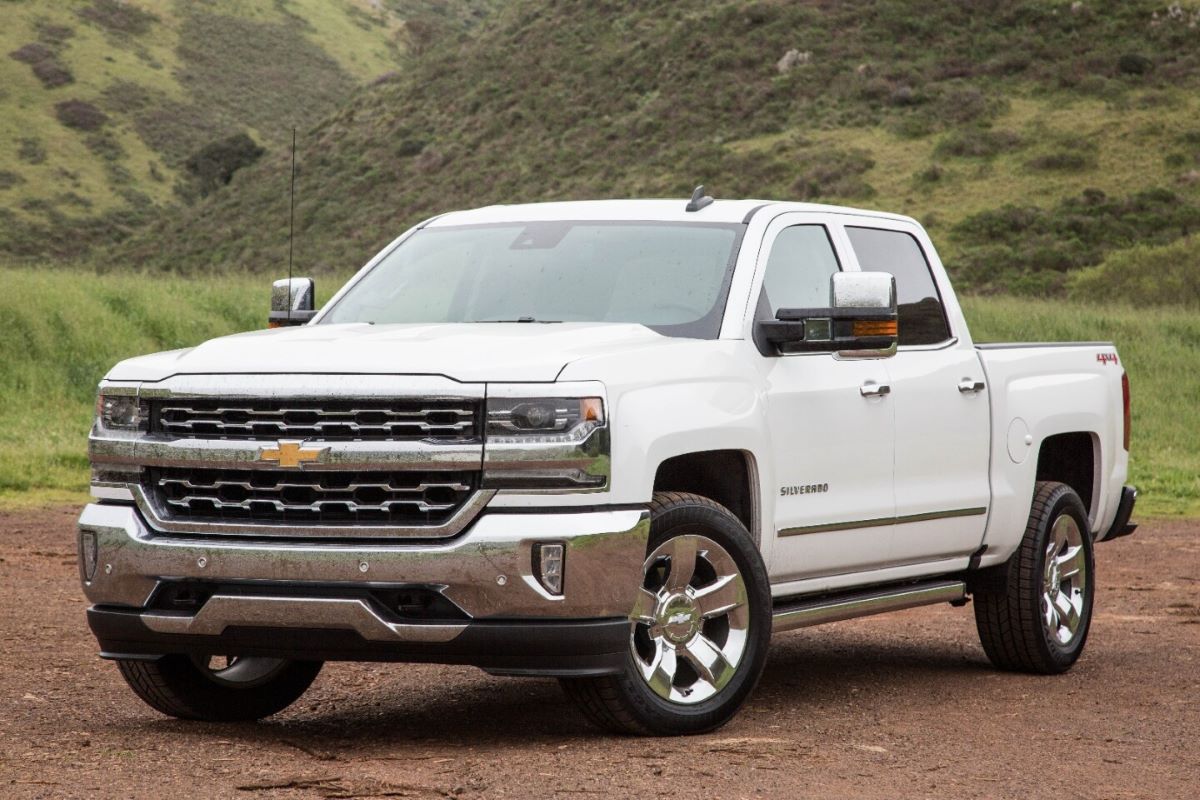
These are fine for highway driving, helping improve fuel economy, but they offer little protection when off-road.
Owners who take their LTZ trucks onto trails often discover quickly how fragile these shields are they can crack, warp, or even detach when exposed to heat and rough terrain. Only the Silverado Trail Boss and ZR2 get genuine metal armor.
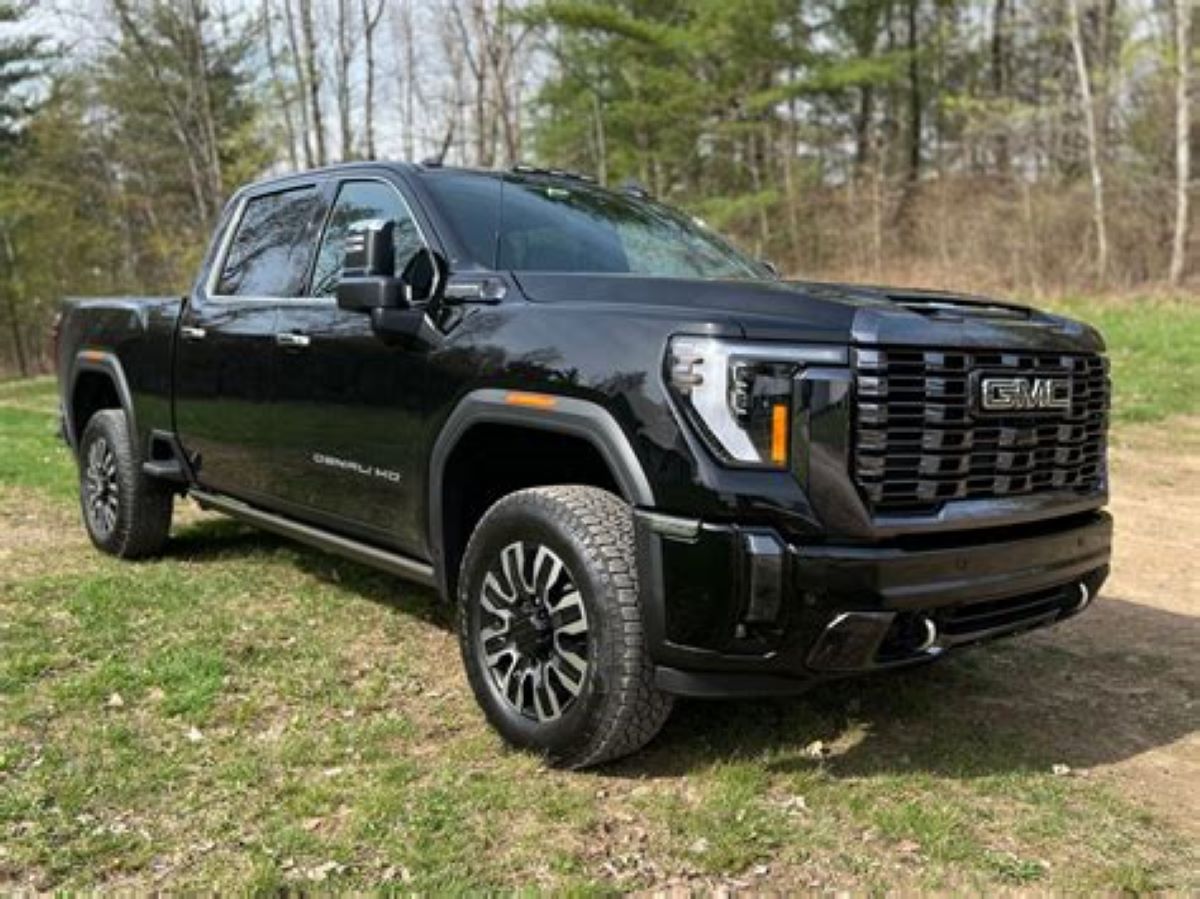
4. GMC Sierra Denali
The Sierra Denali sells on luxury and presence, not durability underneath. The Denali’s underbody protection consists mainly of thin composite covers excellent for road noise reduction, but poor for impact protection.
GMC’s choice reflects the Denali’s mission: to be an upscale, daily drivable truck rather than a weekend rock crawler.
Still, it’s a reminder that not all trucks wearing off-road-style bumpers are built for actual trail use. If you plan to take a Denali beyond gravel roads, aftermarket skid plates are a must.
Luxury trucks are no longer an oxymoron. For years, automakers like GMC, Ford, Chevrolet, and Ram have catered to buyers who want the capability of a truck paired with the premium feel of a luxury sedan, and the segment has only grown more competitive over time.
At the forefront is the 2025 GMC Sierra 1500 Denali, a staple in GMC’s lineup for over two decades. For 2025, the Denali lineup continues with two models: the Sierra 1500 Denali and the Sierra 1500 Denali Ultimate.
One of the key updates for 2025 is that the Sierra Denali Ultimate now comes standard with Super Cruise, GM’s hands-free highway driving system, a welcome addition to the flagship trim.
Last year, the available diesel engine received a power boost, and retractable footsteps were added to both Denali trims, along with the option of an active exhaust.
Competition in the luxury-truck segment is fierce, but buyers willing to compare the GMC Denali trims with high-end models from Ram and Ford are the real winners.
The Denali’s interior impresses with open-pore wood featuring a topographical laser-etched design, and the available saddle-brown interior color gives the cabin a cozy, log-cabin-like feel in the Ultimate trim.
The 12.3-inch driver display pairs with a 13.4-inch touchscreen, offering plenty of screen space while retaining some physical controls, a feature increasingly rare in modern trucks.
Leather surfaces feel premium, if not as soft as a luxury sedan, and the cabin remains quiet. Super Cruise, now standard on the 2025 Sierra Denali Ultimate, continues to be a standout feature.
The 2025 Sierra Denali offers multiple powertrain options depending on trim: a 5.3-liter V-8, a 6.2-liter V-8, or a 3.0-liter turbodiesel six-cylinder. The diesel is particularly appealing, providing strong performance and extended range.
However, the Denali falters slightly in rear-seat comfort, and top-end trims are most rewarding for buyers already invested in the Chevy/GMC family. Competitors like the Ram 1500 Tungsten offer comparable luxury and an impressively efficient inline six-cylinder engine.
In terms of performance and efficiency, GMC maintains its tried-and-true V-8s while also offering the diesel for those seeking an alternative to traditional gas engines. The 3.0-liter turbodiesel six-cylinder delivers 305 hp and 495 lb-ft of torque, paired with a 10-speed automatic transmission.
The standard 5.3-liter V-8 produces 355 hp and 383 lb-ft, though it is not available on the Denali Ultimate, which comes with either the 6.2-liter V-8, producing 420 hp and 460 lb-ft, or the diesel.
With four-wheel drive, the diesel Sierra Denali achieves 22/26 mpg city/highway, while the V-8s rate 15/19 mpg. Rear-wheel-drive configurations with the diesel achieve 23/29 mpg, and the 5.3-liter V-8 manages 16/21 mpg.
5. Honda Ridgeline
The Honda Ridgeline often gets called a “truck for people who don’t like trucks,” and its underbody confirms that impression.
Instead of real skid plates, it uses molded plastic guards that serve aerodynamic and splash-protection purposes.
They work fine for light-duty driving, construction site visits, and mild dirt roads but the Ridgeline’s unibody design and plastic shielding make it ill-suited for serious off-road use.
Honda positions the Ridgeline as a lifestyle pickup, and its construction reflects that: more crossover than crawler.
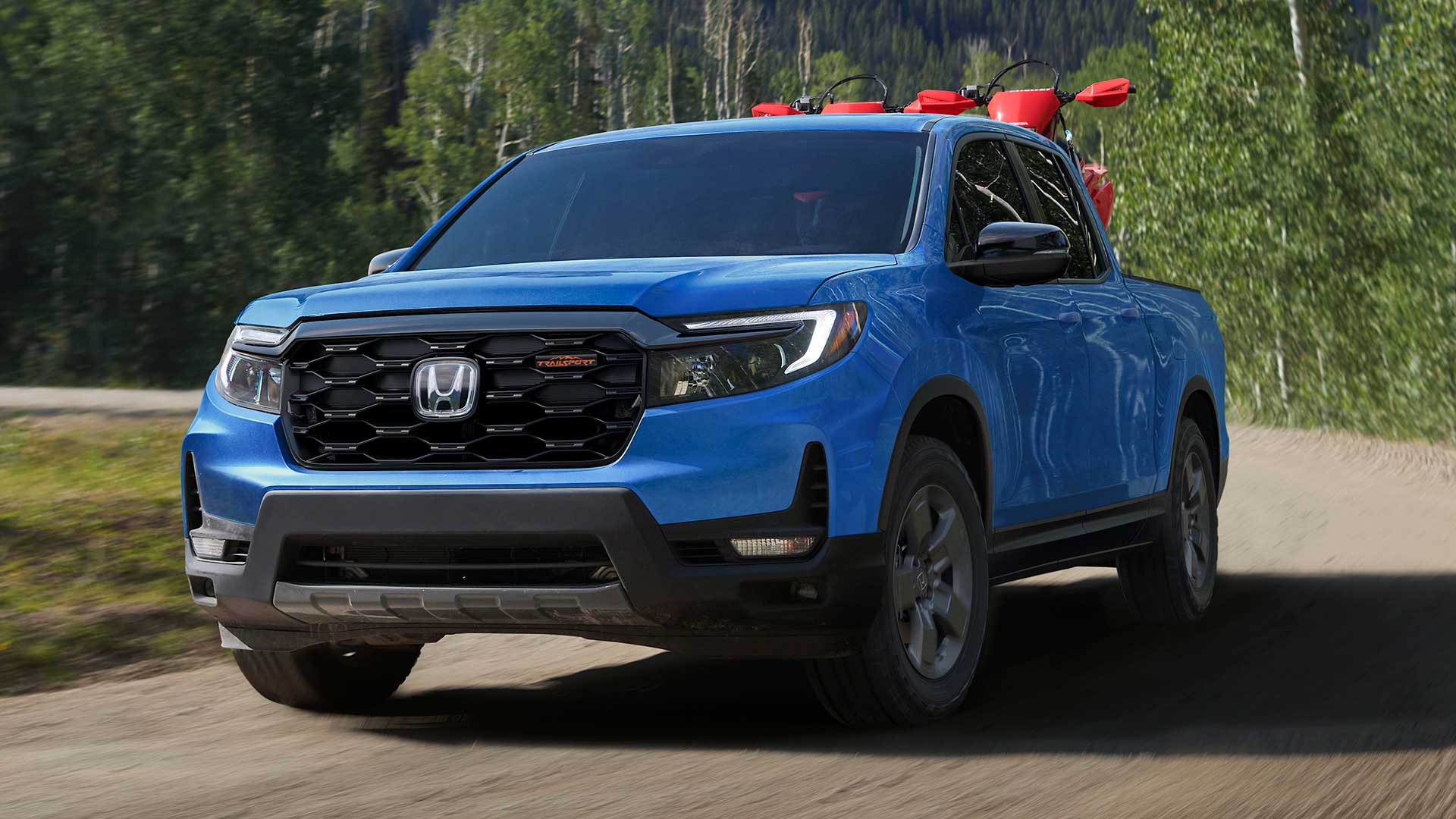
In today’s truck market, it’s easy to assume that a rugged look and big tires automatically mean trail capability. But the truth lies underneath.
The 2020 Honda Ridgeline stands out in the midsize pickup truck segment for offering the most car-like driving experience, thanks largely to its unibody construction.
This design gives the Ridgeline superior noise isolation, ride comfort, and interior space compared with traditional body-on-frame rivals. Honda also includes clever storage solutions unique to the Ridgeline, such as a lockable in-bed trunk and a two-way tailgate, adding both utility and convenience.
Honda continues to offer a single engine option for 2020: a smooth-spinning 3.5-liter V6 producing 280 horsepower and 262 lb-ft of torque, now paired with a standard nine-speed automatic transmission.
This replaces the previous six-speed unit and delivers modest improvements in both acceleration and fuel economy. Trim levels have been slightly revised, with greater availability of the larger touchscreen, complete with Apple CarPlay and Android Auto integration, enhancing the tech experience.
Where the Ridgeline diverges from its competitors is in off-road capability. Unlike trucks such as the Chevrolet Colorado, Jeep Gladiator, or Toyota Tacoma, the Ridgeline lacks rugged off-road attributes, including high ground clearance, wheel articulation, and low-range gearing.
Yet, its unibody chassis, fully independent suspension, and torque-vectoring AWD system provide excellent stability on all surfaces, making it behave more like a crossover SUV.
The independent rear suspension also improves ride quality over washboard dirt roads, giving the Ridgeline a smoother, more composed feel than solid-axle competitors.
Comfort is a key strength of the Ridgeline. Its four-wheel independent suspension handles bumps with minimal jostling or head toss, and the front seats are supportive and well-shaped for long-distance comfort.
Technology features are well-integrated, including Apple CarPlay and Android Auto, though the 8-inch touchscreen has some quirks, and Honda’s forward collision warning can be overly sensitive. Voice commands are functional, with native and phone-linked interfaces, though some commands require strict phrasing.
The Ridgeline excels in towing and storage. Its crew cab features a longer, dent-resistant bed and a lockable in-bed trunk. The two-way tailgate and low bed sides make loading easy, and the bed can accommodate 4-by-8 sheets flat between the wheel wells.
Payload capacity is strong, while towing tops out at 5,000 pounds for AWD models. Fuel economy is respectable, with AWD versions rated at 21 mpg combined and FWD at 22 mpg combined, figures that align well with real-world performance.
Honda’s no-option pricing strategy keeps pricing straightforward and competitive. While it lacks the tough-truck image some buyers desire, it is highly practical and logical, delivering comfort and capability for those who prioritize function over off-road bravado.
The 2020 Ridgeline is offered in four trims: Sport, RTL, RTL-E, and Black Edition. Front-wheel drive is standard on the Sport and RTL, with AWD optional, while higher trims come standard with AWD.
Real off-road trucks like the Tacoma TRD Pro, Colorado ZR2, F-150 Raptor, Power Wagon, and Frontier Pro-4X back up their marketing with genuine steel or aluminum skid plates designed to protect vital parts when the going gets rough.
Meanwhile, models like the Tundra SR5, Ranger XLT, Silverado LTZ, Sierra Denali, and Ridgeline show that many “off-road-looking” trucks are built for image and comfort rather than adventure.
For anyone planning to hit trails or explore rough backroads, it’s worth checking under the truck before buying because that thin piece of plastic might be the only thing between your oil pan and a very expensive mistake.
