
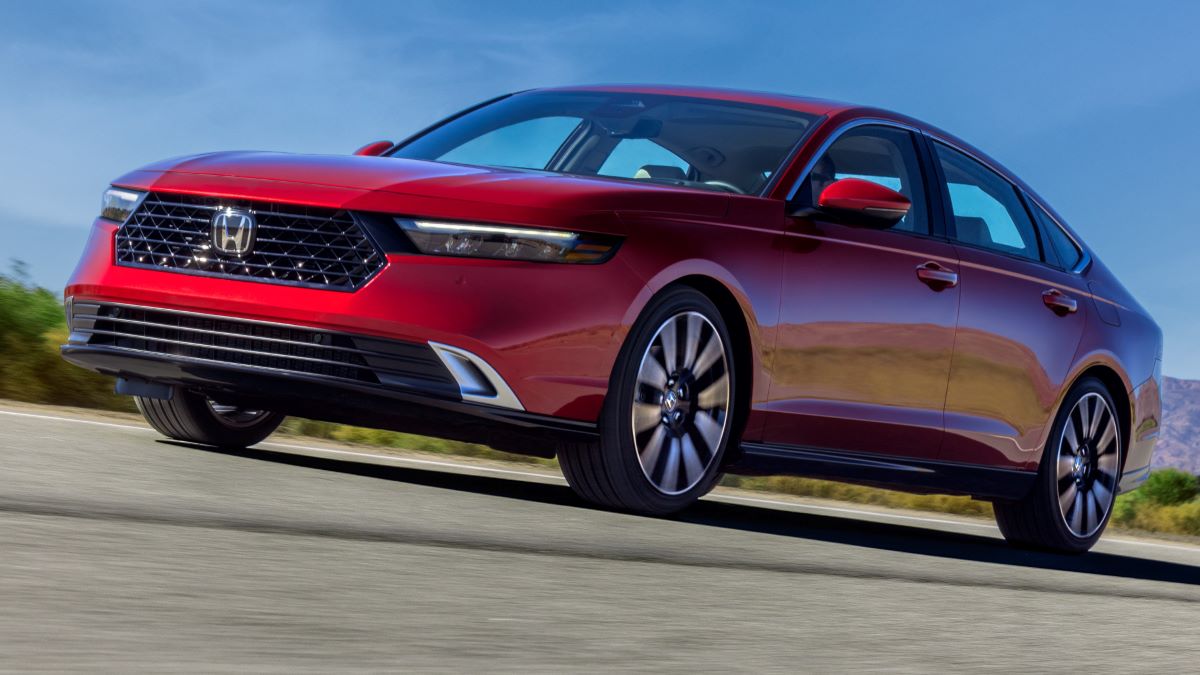
Traffic congestion is a reality for millions of drivers in the United States, especially in major metro areas like Los Angeles, New York City, Atlanta, and Houston.
While hybrid vehicles are often marketed as fuel-efficient solutions, real-world traffic conditions reveal that not all hybrids live up to the hype.
Stop-and-go traffic is a tough environment for fuel economy, and the way a hybrid system manages the interplay between its electric motor and internal combustion engine makes a huge difference.
In this article, we’ll break down five hybrids that genuinely save fuel in traffic versus five that often disappoint in real-life driving conditions.
Hybrids That Save Fuel in Traffic
Stop-and-go traffic is the ultimate fuel guzzler for conventional vehicles, where engines idle, brake frequently, and waste energy at every red light. Hybrids, however, shine in these conditions, using clever combinations of electric motors and gasoline engines to maximize efficiency when the road slows down.
From capturing braking energy to automatically switching between power sources, these vehicles stretch every gallon further, making city commutes far less punishing on the wallet and the environment. In this roundup, we highlight the hybrids that truly excel in traffic, delivering impressive fuel savings without sacrificing everyday practicality or comfort.
1. Toyota Prius
The Toyota Prius remains the poster child for hybrid efficiency, and for good reason. Its full hybrid system intelligently switches between the gas engine and electric motor, allowing the car to run primarily on electricity in low-speed traffic.
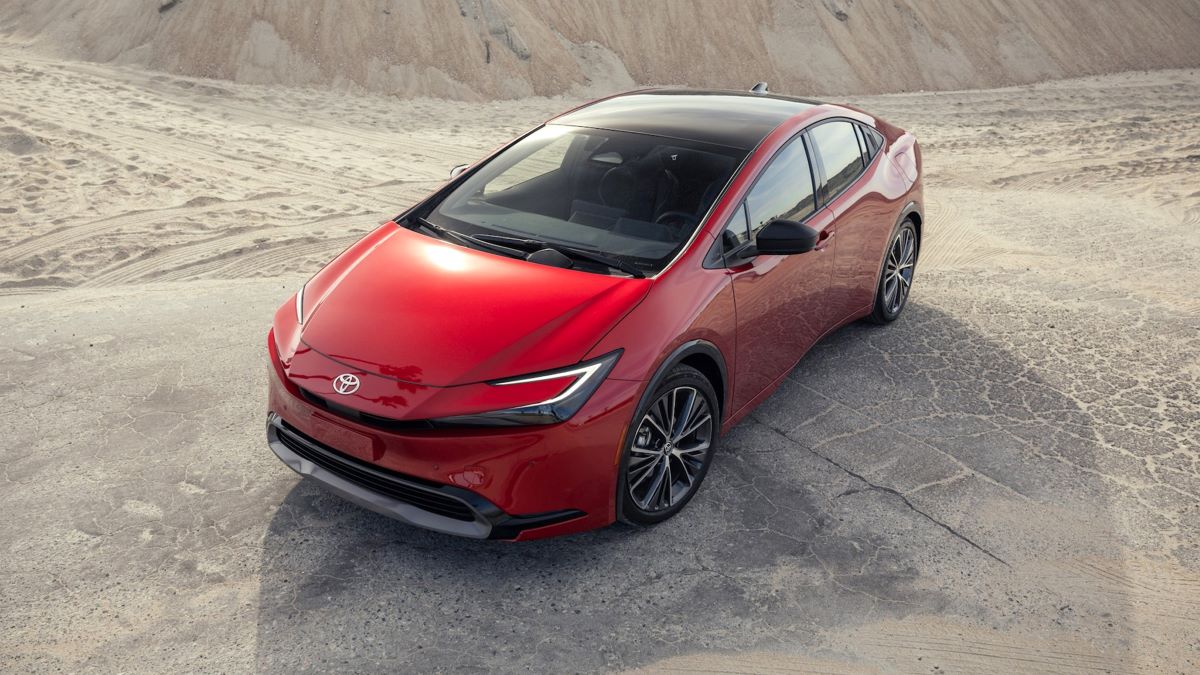
In real-world urban driving, Prius owners often report fuel economy exceeding EPA estimates, thanks to regenerative braking that recaptures energy every time the car slows down.
Its aerodynamics and lightweight design further enhance efficiency, making it a standout in congested traffic.
2. Honda Accord Hybrid
The Honda Accord Hybrid uses a two-motor system that is highly adept at city driving. The electric motor handles most of the low-speed movement, while the gasoline engine kicks in seamlessly when more power is needed.
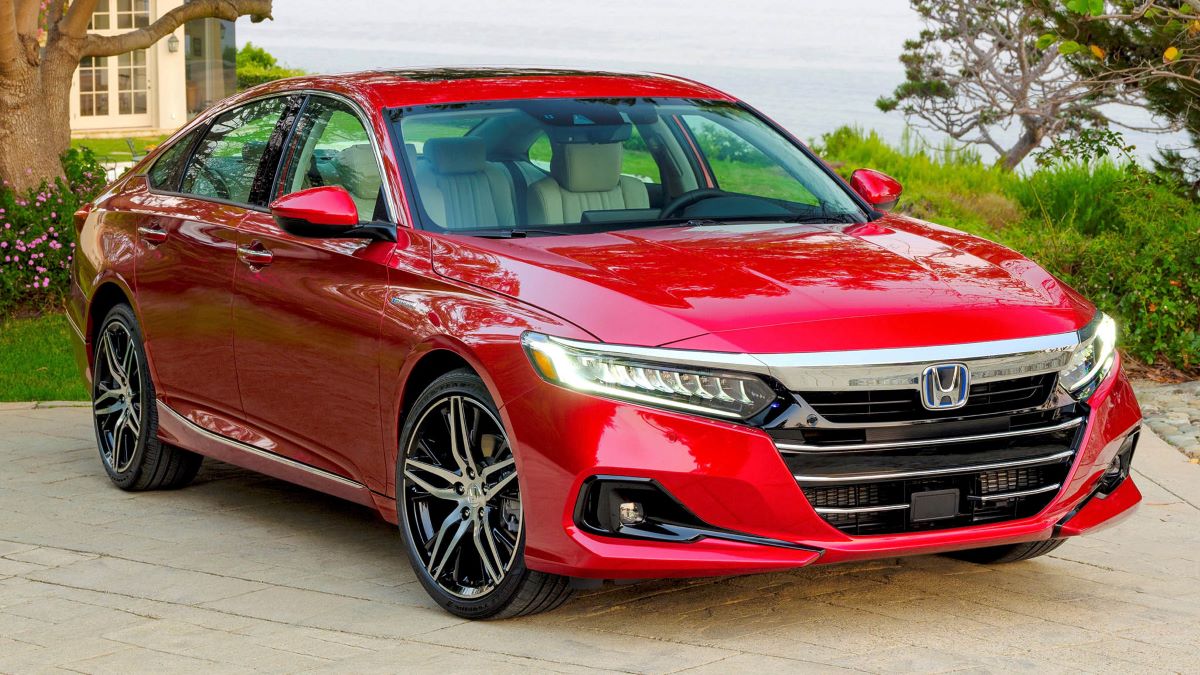
Unlike some hybrids that struggle to operate efficiently in stop-and-go conditions, the Accord Hybrid consistently achieves impressive fuel economy in urban environments.
Its comfortable interior and smooth handling make it ideal for commuters who spend hours in traffic every week.
The Honda Accord may not hold the sales dominance it once did, but it remains a compelling choice in the mid-size sedan segment. While its popularity has been eclipsed by crossovers like the CR-V, HR-V, and Pilot, as well as the compact Civic, the Accord continues to appeal to those who value a low, sporty seating position paired with a spacious, comfortable interior.
Among its buyers, the gas-electric hybrid variant has proven especially popular, offering a blend of performance and efficiency that keeps the model relevant.
The 2025 Honda Accord Hybrid, starting at $33,655, sits atop the Accord lineup and delivers quicker acceleration alongside improved fuel economy
. Our week-long test of the 2025 Accord Hybrid revealed a spacious, enjoyable-to-drive, and economical mid-size sedan. For those considering an upgrade, the extra cost over the base gas-only model, roughly $3,000, buys not only better gas mileage but also an additional 12 horsepower and 55 lb-ft of torque.
The Accord Hybrid pairs a 2.0-liter gasoline engine with an electric motor, which recharges a small battery to power the electric assist. The sedan can run on electric power alone for short distances during gentle acceleration, either automatically or via an “E” button on the center console for extended all-electric operation.
Standard features on the base Hybrid Sport include a moonroof, a 10-way power driver’s seat, heated front seats, a 12.3-inch infotainment touchscreen, an eight-speaker stereo, and a full suite of advanced safety and driver-assistance technologies, including adaptive cruise control and blind-spot monitoring.
Upgrading trims offers further amenities: the EX-L ($34,940) adds leather upholstery; the Sport-L ($35,375) introduces subtle sporty design cues; and the Touring trim, like our test vehicle ($39,300), includes ventilated front seats, heated rear seats, a heated steering wheel, a head-up display, rain-sensing wipers, and an upgraded infotainment system.
Also Read: 12 Toyota Models That Regularly Reach 400,000 Miles
3. Toyota Camry Hybrid
Another Toyota success story, the Camry Hybrid combines a strong gasoline engine with an efficient electric motor. In city traffic, the hybrid system often allows the car to run exclusively on electricity at speeds under 35 mph.
Drivers benefit from smooth transitions between gas and electric modes, and regenerative braking helps maintain battery charge while also reducing wear on brake components.
For those who need a midsize sedan that doesn’t guzzle gas in traffic, the Camry Hybrid is a reliable choice.
The 2021 Toyota Camry Hybrid is a midsize sedan that combines an efficient gasoline-hybrid powertrain with a modest price premium to deliver both greater power and better fuel economy than a standard Camry.
While the Camry Hybrid once faced a crowded field of competitors, the 2021 model year sees fewer rivals due to shifts in consumer preference toward SUVs and the discontinuation of the Ford Fusion Hybrid and Kia Optima Hybrid. Its main competitors are now the Honda Accord Hybrid and Hyundai Sonata Hybrid, both of which offer strong alternatives in the segment.
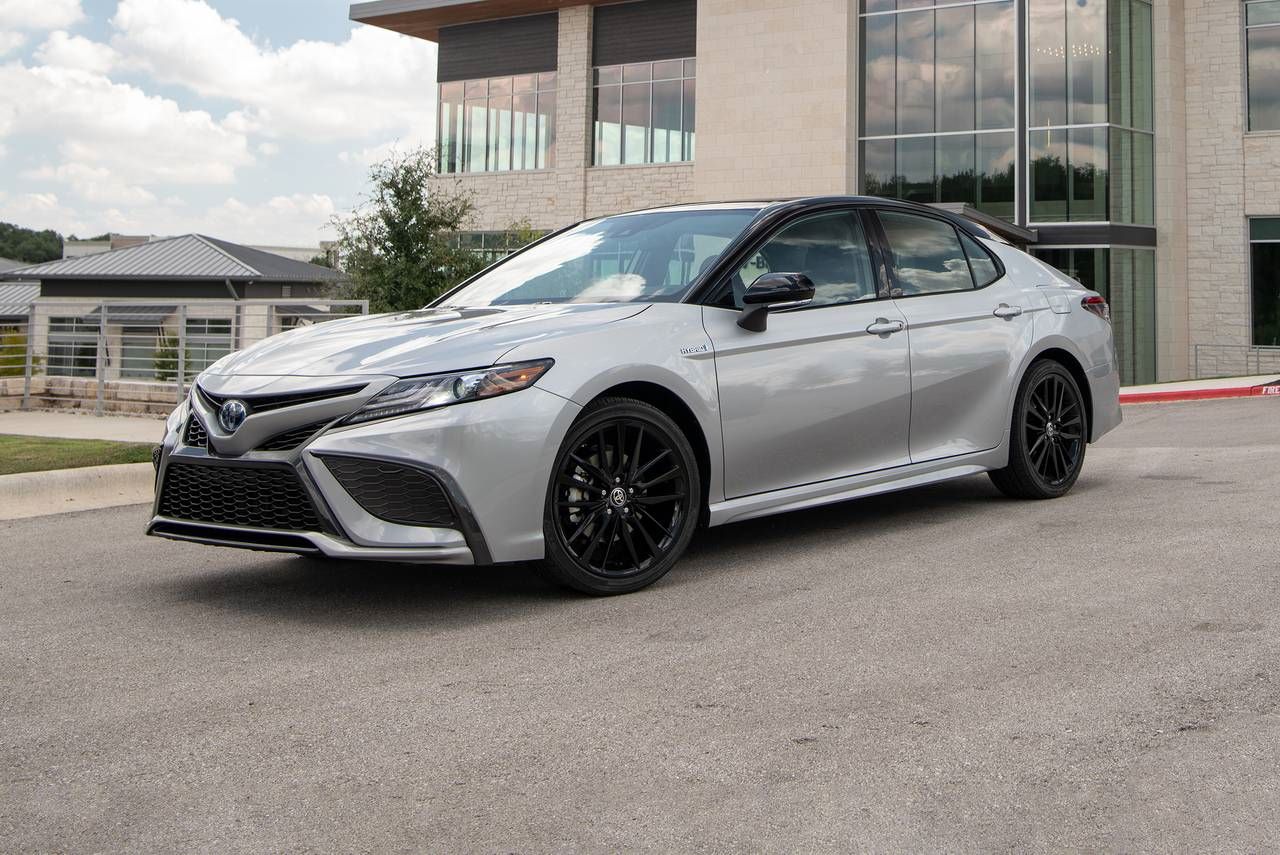
For 2021, Toyota expanded the Camry Hybrid lineup with the new XSE trim, which adds sportier styling, larger wheels, and a sport-tuned suspension for slightly more responsive handling.
Across all trims, the Camry Hybrid benefits from refreshed exterior styling, a larger optional infotainment touchscreen, and enhanced driver-assistance systems.
Inside, the Camry Hybrid offers a roomy, user-friendly cabin with adaptable driving positions, generous interior space for front and rear passengers, and excellent visibility.
Practicality remains a strong suit for the Camry Hybrid, with a full-size trunk unaffected by the hybrid battery, totaling 15.1 cubic feet, and ample interior storage for small items. Fuel economy is impressive, with the XLE trim rated at 46 mpg combined and the base LE reaching up to 52 mpg.
Value is also a highlight: Toyota’s strong build quality, nice interior materials, and comprehensive safety suite make the Camry Hybrid a cost-effective option in its class. While it may not be thrilling to drive, the Camry Hybrid excels at providing comfort, efficiency, and reliability for those prioritizing economy and a smooth driving experience.
For buyers focused on maximum efficiency, the base LE trim is recommended, offering the lowest price and highest fuel savings. Those who want a sportier look and feel without prioritizing efficiency might prefer the SE trim, while the XLE and XSE trims add comfort and upscale features for a slightly higher cost.
4. Hyundai Sonata Hybrid
Hyundai has made significant strides in hybrid technology, and the Sonata Hybrid is proof of that. Its smart multi-mode hybrid system adapts to traffic conditions, frequently relying on electric propulsion at low speeds.
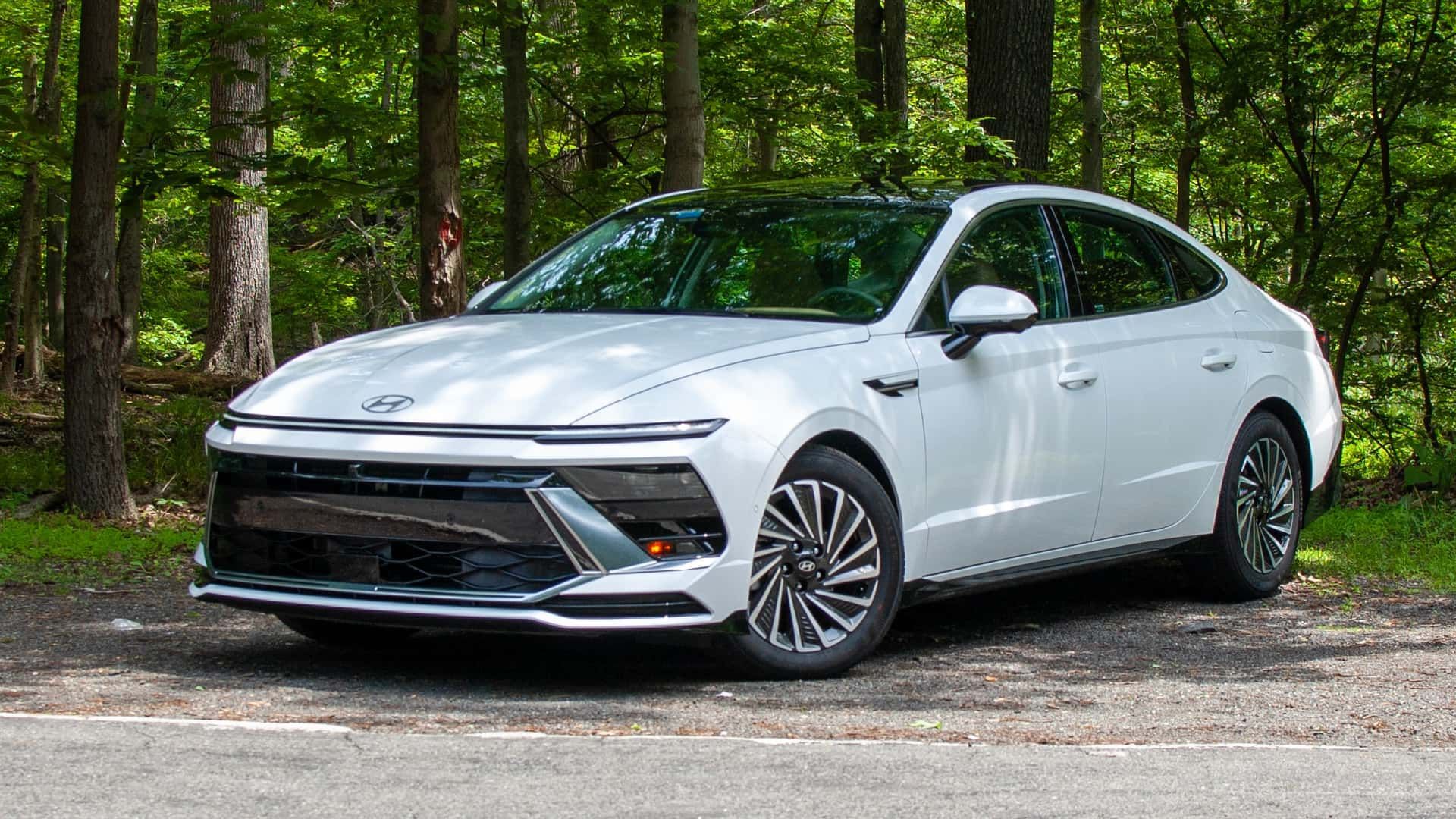
Drivers often notice that the car feels more responsive in stop-and-go situations compared to some competitors. Coupled with a stylish interior and advanced safety features, the Sonata Hybrid is a practical option for urban commuters.
Also Read: 10 Crossovers That Actually Deserve Their Popularity
5. Lexus ES 300h
Luxury doesn’t have to mean inefficient, and the Lexus ES 300h demonstrates this perfectly. Its hybrid system is tuned for city driving, allowing for extensive electric-only operation at low speeds.
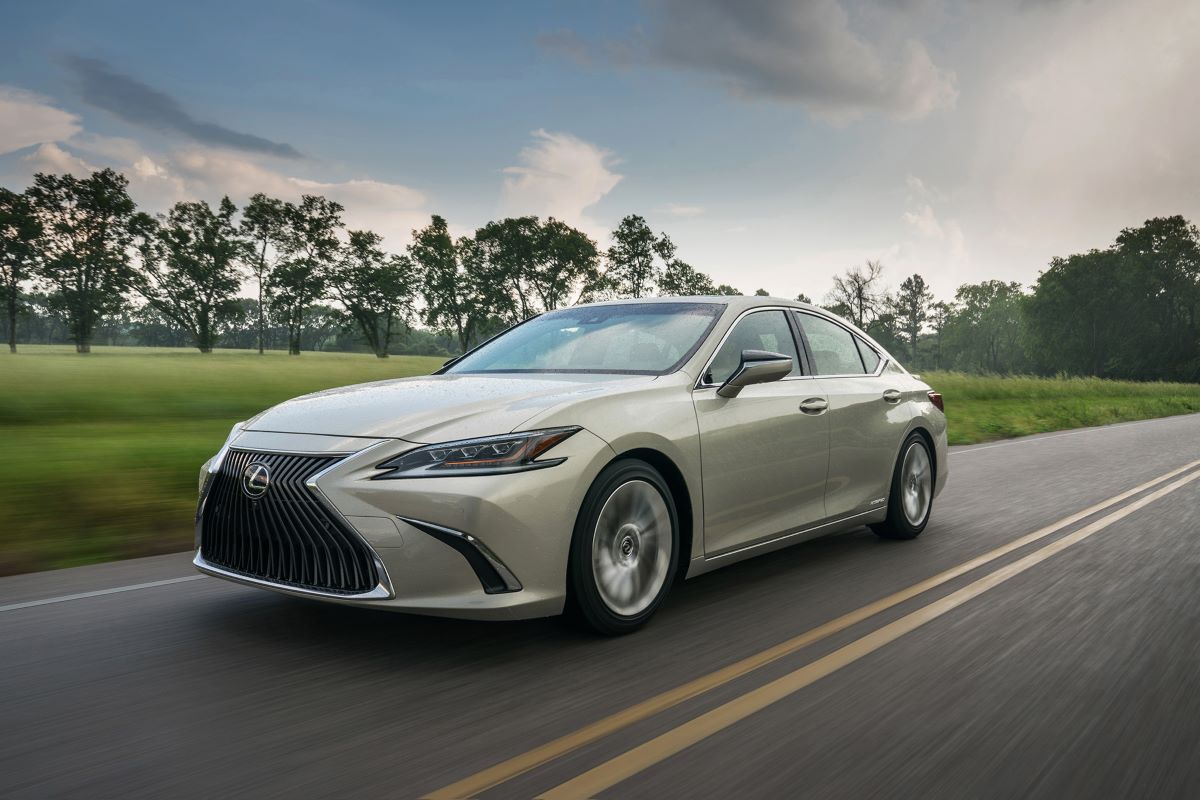
Traffic jams have minimal impact on fuel economy, and the ride remains quiet and refined. For drivers who want a premium sedan that saves fuel in real-world traffic, the ES 300h is a compelling choice.
The seventh-generation Lexus ES has been around for a few years, and for 2021, the lineup expands with the four-cylinder-powered ES 250 joining the V6 ES 350 and the ES 300h hybrid.
While the ES 250’s 203-horsepower four-cylinder engine falls short of the ES 350’s 302 hp, it comes with nearly all the same luxury features at a lower price point, and offers something no other ES model can claim: standard all-wheel drive.
The ES 250 maintains the comfortable and well-appointed nature of its V6 and hybrid siblings, making it a compelling choice for buyers prioritizing AWD traction and a value-oriented luxury experience.
Performance-wise, the ES 250 is competent but not sporty. The non-turbocharged four-cylinder borrowed from the Toyota Camry delivers a 0-60 mph time of 8.8 seconds, which is underwhelming for a luxury sedan.
Steering is light and somewhat uncommunicative, though accurate, and the transmission shifts smoothly with predictable brakes. For drivers seeking more dynamic performance, the V6-powered ES 350 remains the better option.
Comfort is a strong suit for the ES 250, with firm, supportive front seats and roomy rear accommodations that allow long stretches behind the wheel without fatigue. The sedan absorbs bumps well, isolating occupants from road imperfections, though engine noise is notably intrusive during acceleration.
Inside, the ES 250 is spacious and user-friendly, with low seat cushions, wide door openings, and generous legroom front and rear. Tall occupants may find the sunroof and sloping roofline limit headroom, but most drivers can easily find a comfortable position.
Lexus keeps many controls accessible, though seat heating and cooling buttons are positioned away from the climate controls. The 12.3-inch infotainment display is visually impressive, but the touchpad controller can be cumbersome in motion, with voice commands providing a useful alternative.
Storage is generous for a midsize luxury sedan, with a 13.9-cubic-foot trunk, abundant interior cubbies, and easy access for child safety seats. The ES 250 achieves an estimated 28 mpg combined (25 city/34 highway), slightly better than other AWD four-cylinder midsize luxury sedans, though with less power.
Value is strong, with high-quality materials, detailed craftsmanship, and a well-finished cabin, though the engine’s underwhelming performance slightly detracts from the overall experience.
The 2021 ES 250 comes in four trims: Base, F Sport, Luxury, and Ultra Luxury, all equipped with the 2.5-liter four-cylinder and eight-speed automatic transmission, with standard all-wheel drive.
Those seeking a truly sporty Lexus are better served by the IS 300 or 350, as the ES 250’s four-cylinder powertrain prioritizes comfort and efficiency over driving excitement.
Hybrids That Don’t Save Fuel in Traffic
Not all hybrids live up to their eco-friendly promise, especially in stop-and-go traffic where you’d expect them to shine. Some models, despite wearing the hybrid badge, struggle to improve fuel efficiency when engines idle and brakes are frequently applied.
Instead of reclaiming energy and maximizing efficiency, these vehicles often rely heavily on their gasoline engines, leaving drivers with disappointing mileage in city conditions. In this guide, we spotlight the hybrids that fail to deliver meaningful fuel savings in traffic, helping you avoid models that underperform when it matters most.
1. Ford Fusion Hybrid
While the Ford Fusion Hybrid performs well on highways, its fuel economy suffers in stop-and-go traffic. The hybrid system is not as aggressive in electric-only operation at low speeds, meaning the gasoline engine engages more frequently than necessary.
Drivers report noticeable drops in MPG during city commutes, making it less ideal for urban drivers who face daily congestion.
The Ford Fusion Hybrid and Plug-In Hybrid have offered efficient midsize sedan options since their introduction in 2013. Unlike some hybrids that prioritize fuel economy above all else, the Fusion models combine attractive exterior styling, ample power, and solid efficiency in a well-rounded package.
The Fusion Plug-In’s larger lithium-ion battery, however, comes at the cost of trunk space, reducing it to 8.2 cubic feet compared with 12.0 cubic feet in the standard hybrid and 16.0 cubic feet in other Fusion trims.
For 2020, a notable update is the inclusion of a six-way power front passenger seat as standard.
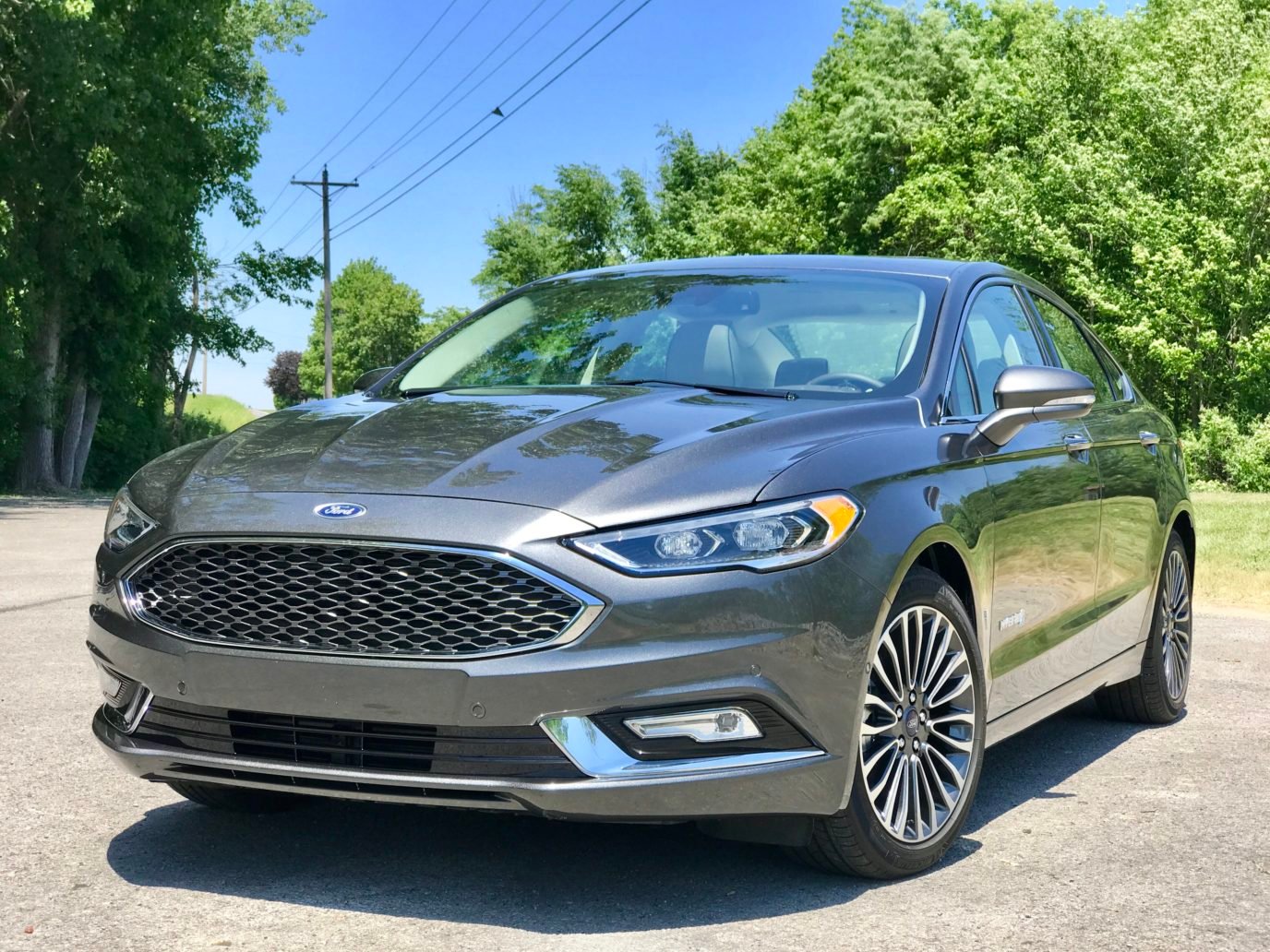
Despite the added weight from the larger battery, about 300 pounds heavier than the standard hybrid, which weighs roughly 3,675 pounds, the Fusion Plug-In still accelerates reasonably quickly for a plug-in hybrid. It reached 60 mph in 7.9 seconds and completed the quarter mile in 16.1 seconds at 88.5 mph.
Handling is surprisingly agile for a plug-in hybrid, with the car taking corners confidently, supported by well-weighted steering. The non-plug-in hybrid, however, will feel slightly lighter on its feet.
Braking is natural and consistent, avoiding the abrupt transitions from regenerative to mechanical brakes that some hybrids exhibit. On the downside, the gas engine produces noticeable vibrations when it starts, which can be felt through the brake pedal, and the Plug-In’s trunk is notably small due to the large battery.
Fuel efficiency remains a highlight. The 2020 Fusion Plug-In can operate in all-electric mode for up to 26 miles on a full charge, with an overall EPA-rated range of 610 miles. Its 2.0-liter inline-four engine pairs with an electric motor and a continuously variable transmission to produce 188 horsepower, the same as the standard Fusion Hybrid.
Fuel economy is rated at 43/40 mpg city/highway, compared with 43/41 mpg for the standard Fusion Hybrid. This balance of electric capability, efficiency, and practical performance makes the Fusion Plug-In a compelling midsize hybrid option, despite the compromise in cargo space.
2. Kia Niro Hybrid
Despite Kia’s reputation for efficiency, the Niro Hybrid struggles in heavy traffic. Its CVT and hybrid system often rely on the gasoline engine during frequent accelerations and decelerations, leading to lower-than-expected fuel economy.
For short city trips or rush-hour commutes, the Niro Hybrid’s real-world performance can disappoint those expecting Toyota-like efficiency.
Sport-utility vehicles have become the preferred choice for American families, offering space, elevated ride height, and versatility that sedans and hatchbacks can’t match.
Historically, that practicality came with a fuel-economy penalty, and as SUVs grew in size and capability, filling up a gas-guzzling SUV has become increasingly costly, especially when fuel prices fluctuate unpredictably. This is where hybrid technology comes in.
First introduced about 25 years ago, hybrid drivetrains were designed to help conventional engines work smarter while meeting the growing demands for passenger space and towing capability.
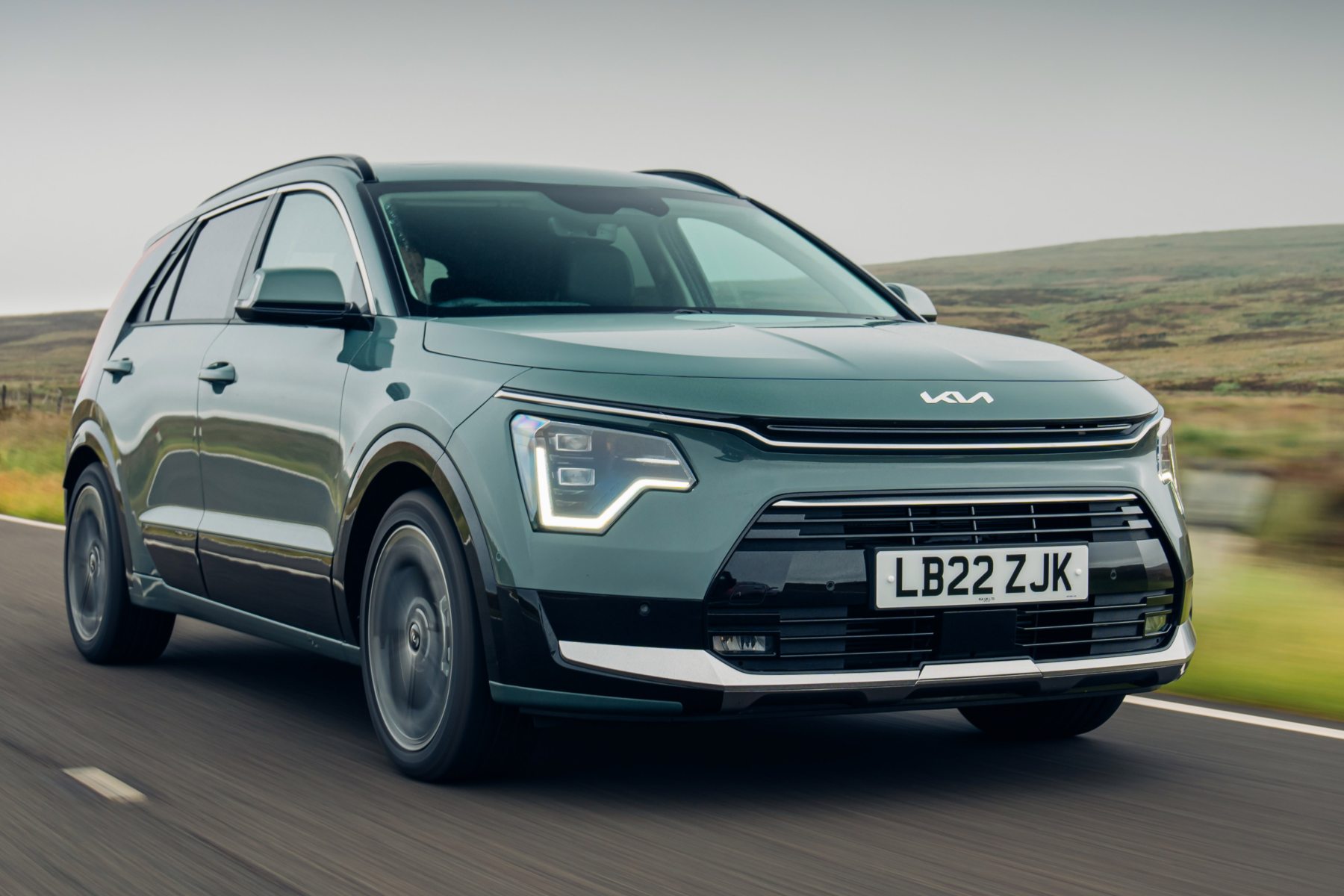
By assisting with low-speed propulsion and capturing energy typically lost during braking, hybrids achieve meaningful efficiency gains. As families prioritize affordability, utility, and cost-of-ownership, hybrid SUVs have become increasingly attractive, and their numbers continue to grow. Among the options available, the Kia Niro stands out as a top choice.
The 2025 Kia Niro, particularly in its fuel-efficiency (FE) configuration, which features smaller wheels and narrower tires, offers the best fuel-cost savings of any self-charging hybrid SUV on the market.
The EPA estimates that its owners can save up to $900 per year on fuel, translating to around $4,000 over five years. With a starting price under $30,000 and no need for external charging, the Niro demonstrates how hybrid technology can deliver efficiency, practicality, and affordability in a single, compact SUV package.
3. Chevrolet Malibu Hybrid
The Malibu Hybrid has a reasonably efficient system on paper, but in practice, it doesn’t excel in urban stop-and-go traffic.
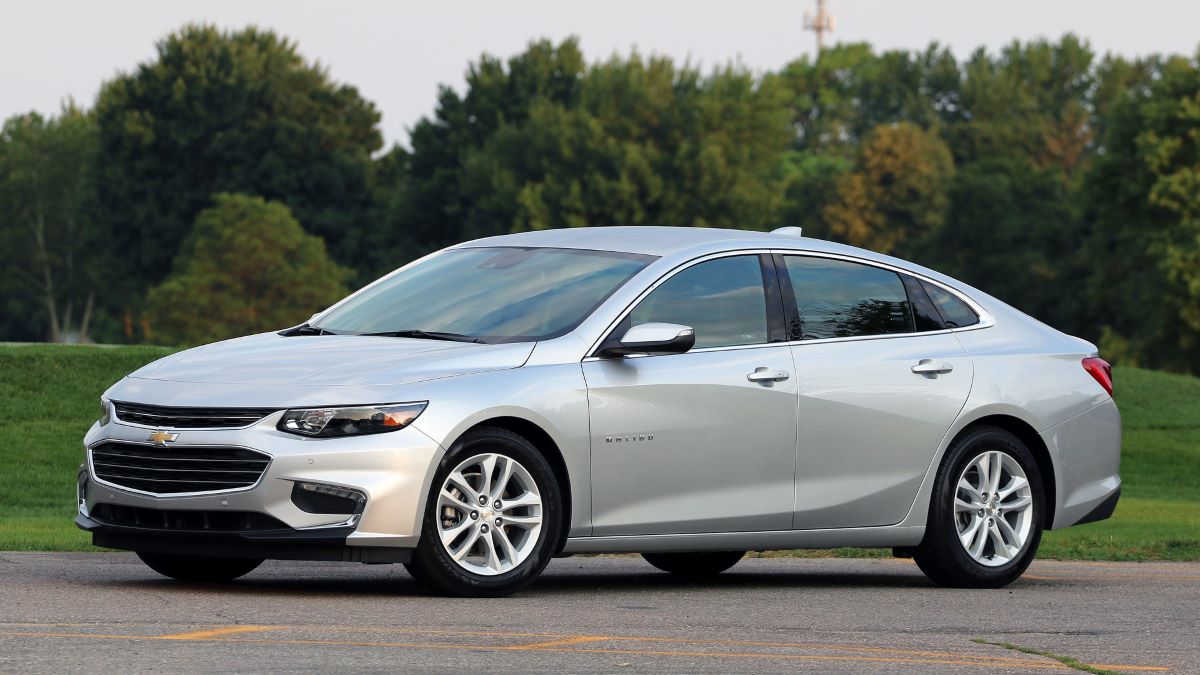
The electric motor provides only limited assistance at low speeds, and the gasoline engine frequently activates, reducing fuel savings. Drivers who primarily navigate city streets may find the Malibu Hybrid less economical than a conventional fuel-efficient sedan.
4. Honda Insight
The Honda Insight offers good highway performance, but its city fuel economy is less impressive than advertised. While it technically can operate on electric power at low speeds, real-world traffic patterns often trigger the gas engine more than expected.
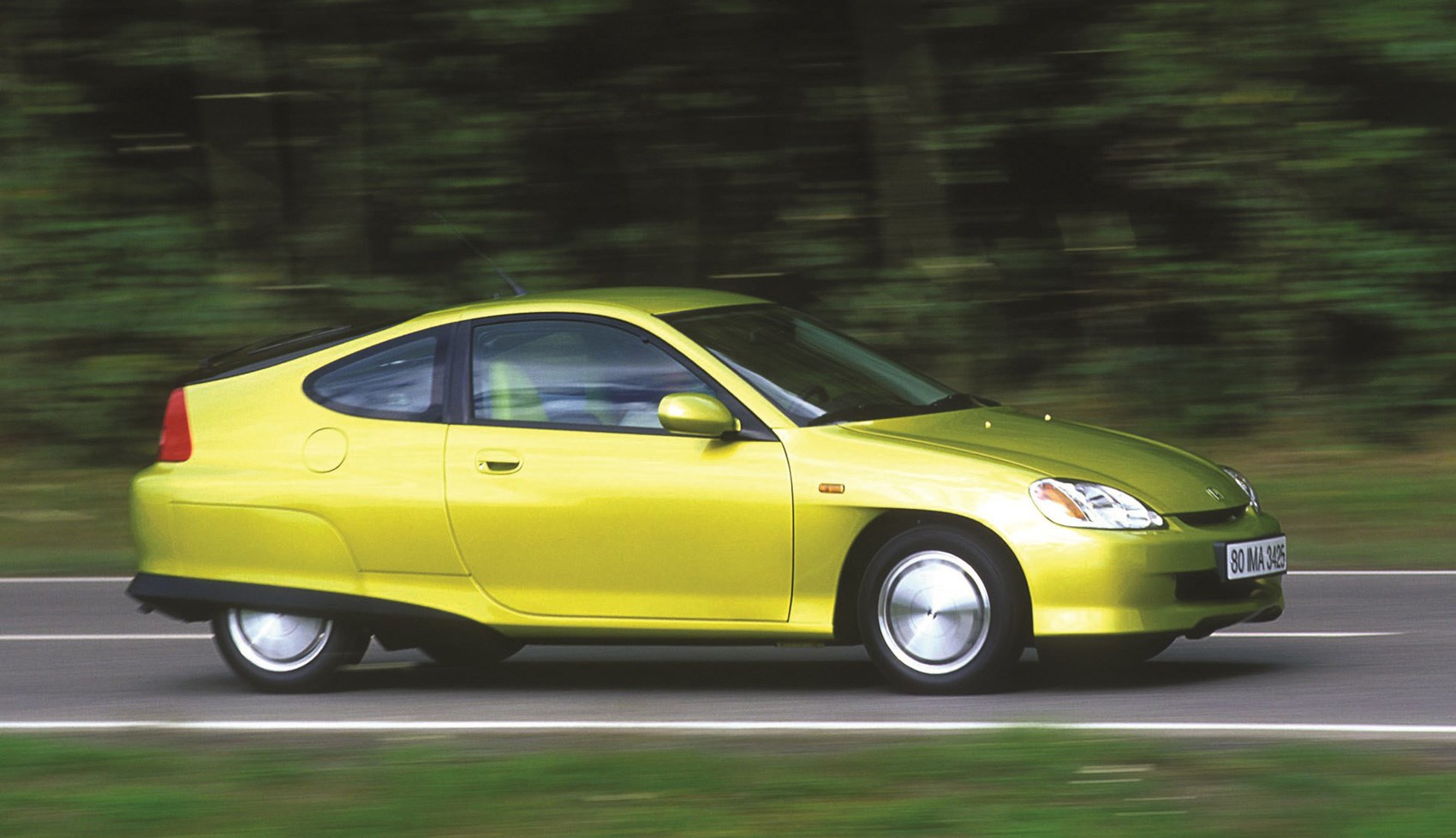
This inconsistency makes it a less reliable choice for commuters looking for maximum efficiency in heavy traffic. The 2022 Honda Insight is a solid choice on the used hybrid market, even if its sales figures suggest otherwise. Honda has tried multiple times to convince U.S. buyers of the Insight’s merits, with limited success.
This compact sedan delivers impressive fuel efficiency and relatively brisk performance for a hybrid, though the powertrain can get noisy under heavy acceleration, and taller rear-seat passengers may find themselves brushing the headliner.
Beyond those minor quibbles, the 2022 Insight offers below-average projected ownership costs for the hybrid segment, top-tier safety ratings, and a well-appointed interior with user-friendly tech and comfortable seating front and rear.
Its modest popularity largely stems from competition within Honda’s own lineup and from Toyota. The larger Honda Accord Hybrid and Toyota Camry Hybrid offer more interior space, higher power output, and strong reliability, making them more attractive to buyers seeking a roomier, more robust hybrid sedan.
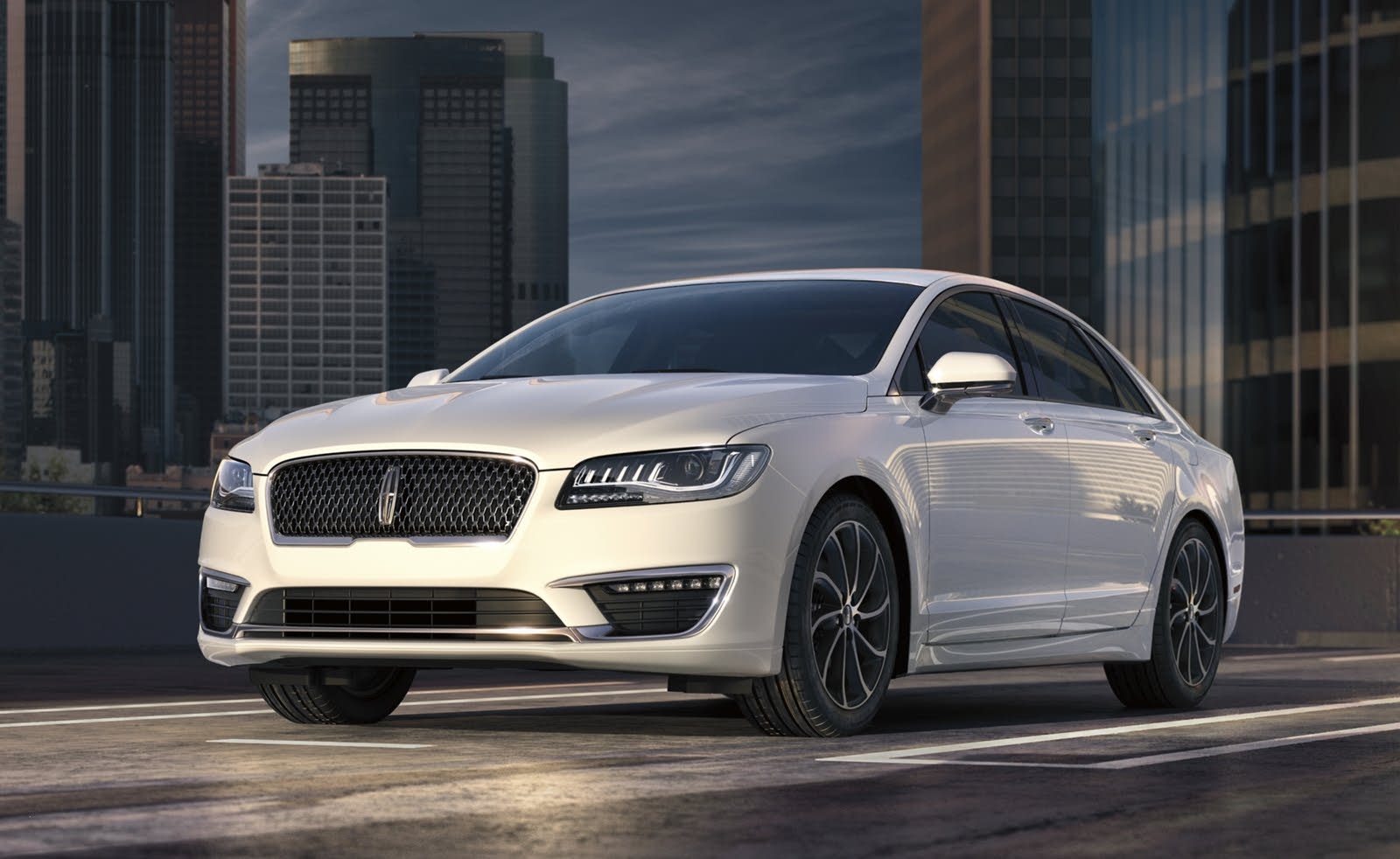
5. Lincoln MKZ Hybrid
The Lincoln MKZ Hybrid aims for luxury and style, but its fuel-saving capabilities falter in city driving. Its hybrid system tends to engage the gasoline engine frequently, and the heavier weight of the vehicle exacerbates fuel consumption in stop-and-go traffic.
While it remains a comfortable ride, drivers seeking a city-efficient hybrid will be disappointed compared to lighter, more traffic-focused models.
The Lincoln MKZ is a premium midsize sedan that debuted in 2013, replacing the Lincoln Zephyr and continuing the brand’s legacy of comfortable, upscale sedans.
Refreshed in 2017, the MKZ is offered with turbocharged gasoline engines or a hybrid drivetrain, giving buyers options for performance or efficiency. However, Lincoln has announced that the MKZ will be discontinued after the 2020 model year, leaving the Continental as the brand’s sole sedan.
The MKZ impresses with comfort and style, though some competitors deliver stronger performance without sacrificing luxury. Front-seat space is generous, and features like available massaging seats make long drives easier.
The cabin feels open thanks to an unusual button-operated shifter, and a massive moonroof adds flair. Lincoln’s Sync infotainment system is intuitive and user-friendly. Rear-seat legroom and headroom, however, can feel a bit tight.
On the road, the MKZ rides quietly and feels solid at highway speeds, but its handling and acceleration lag behind some rivals. While the twin-turbo V6 model offers brisk acceleration, the standard and hybrid variants are more leisurely, and the combination of a slow-shifting transmission and numb steering limits driving engagement.
With the MKZ’s discontinuation, buyers seeking a spacious American luxury sedan will need to turn to the Lincoln Continental. The MKZ’s departure also marks the end of Lincoln’s often-criticized “MK” naming scheme, as the market increasingly favors crossovers over traditional sedans.
For American drivers who spend a significant amount of time in traffic, choosing a hybrid is about more than the EPA ratings. Real-world efficiency depends on how the vehicle manages its hybrid system under stop-and-go conditions.
Vehicles like the Toyota Prius, Honda Accord Hybrid, and Lexus ES 300h are proven to excel in urban settings, offering genuine fuel savings.
On the other hand, models like the Ford Fusion Hybrid, Honda Insight, and Lincoln MKZ Hybrid may disappoint those expecting significant gas mileage improvements in city traffic.
When shopping for a hybrid, it’s crucial to consider both the advertised efficiency and how the vehicle performs in your typical driving environment.
Test drives during rush-hour traffic can reveal which hybrid truly lives up to its fuel-saving promise. With thoughtful selection, hybrids can still be an excellent way to reduce fuel costs, lower emissions, and make city commuting more economical.
