
Hybrid SUVs are often associated with fuel efficiency and eco-friendly commuting rather than towing capability. Yet a surprising number of modern hybrid crossovers deliver more utility than drivers might expect, combining green technology with practical hauling power.
From the compact Honda CR-V Hybrid to the robust Hyundai Tucson Hybrid, these vehicles offer the versatility to tow small trailers, watercraft, or lightweight campers without sacrificing efficiency or comfort.
Each model brings a distinct set of strengths, whether it is Toyota’s RAV4 Hybrid with its zippy acceleration, Subaru’s Forester Hybrid with off-road readiness, or Mazda’s CX-50 Hybrid emphasizing engaging handling and premium design.
While their towing capacities do not rival full-size trucks, they provide a compelling balance for daily commuting, weekend adventures, and family needs. These seven hybrids prove that eco-conscious driving and light-duty towing can coexist, expanding what drivers can expect from a modern hybrid SUV.
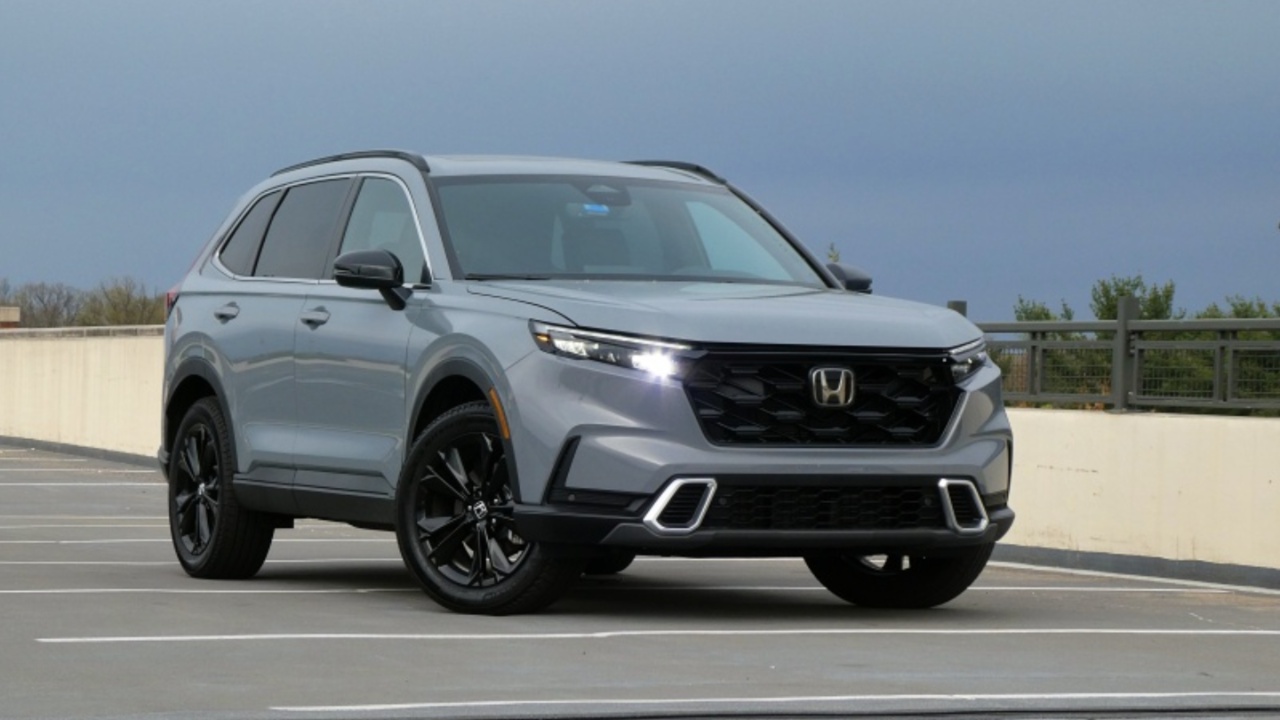
1. 2025 Honda CR-V Hybrid
The 2025 Honda CR-V Hybrid is a compact SUV designed for drivers seeking a reliable, fuel-efficient vehicle rather than heavy towing capability. Priced from $34,650, it comes with a 2.0L I4 hybrid engine paired with an electronic continuously variable transmission (e-CVT) and front-wheel drive as standard.
All-wheel drive is available as an option. With 204 horsepower and a maximum towing capacity of just 1,000 pounds, the CR-V Hybrid is best suited for light hauling such as utility trailers, bicycles, or small cargo boxes, rather than campers or boats.
The CR-V Hybrid offers a balanced and composed driving experience. It accelerates from 0 to 60 mph in approximately 8.0 seconds, a typical performance metric for small SUVs. The hybrid system operates smoothly, simulating gear shifts for a seamless ride.
Braking is responsive and predictable, and steering provides adequate feedback for confidence on winding roads. Ride quality is a standout feature, delivering a smooth, comfortable experience. While the CR-V handles corners well, long mountain climbs may require more throttle due to its moderate torque. Visibility is generally good up front but limited at the rear, though parking cameras help mitigate blind spots.
The CR-V’s interior is spacious and practical, offering ample room in both the front and rear rows. Large windows create a sense of openness, while front seats provide excellent comfort and adjustability. Rear seats feature above-average legroom and are ideal for car seat installation.
Wide door openings and thoughtfully positioned seating make entry and exit easy. Vehicle controls are straightforward and accessible, with physical climate controls that can be operated without looking, enhancing usability for everyday driving.
Inside, the CR-V Hybrid features a standard 7-inch touchscreen and an optional 9-inch unit, providing an intuitive operating system that responds well to touch. Wireless Apple CarPlay and Android Auto are standard with the larger screen, while higher trims offer integrated navigation with basic map graphics. Although functional, the tech is slightly behind competitors offering larger or more advanced displays. Multiple USB ports and storage areas ensure convenience for all passengers.
Cargo capacity is above average for a small SUV, although the hybrid’s battery slightly reduces available space compared to gas-only models. The rear area is wide and tall, accommodating bulky items. Interior storage remains functional with ample phone holders, cupholders, door pockets, and a sizable center console bin. The absence of a spare tire may be a minor inconvenience for some owners.
The hybrid CR-V achieves an EPA-estimated 40 mpg with front-wheel drive and 37 mpg with all-wheel drive. Real-world highway testing averaged 33.3 mpg, reflecting the demands of mixed driving conditions. In city driving, the hybrid system excels, providing noticeable fuel savings over non-hybrid variants, which top out at about 30 mpg combined.
The CR-V Hybrid’s strengths include reliability, a spacious interior, solid ride quality, and good resale value. Weaknesses are its below-average towing capacity, somewhat conservative styling, and interior tech that lags behind rivals.
Pricing is slightly higher than some competitors, but the robust construction and long-term dependability justify the cost. The CR-V Hybrid is a practical, efficient, and well-rounded compact SUV ideal for families and commuters who prioritize fuel economy and comfort over heavy-duty hauling.
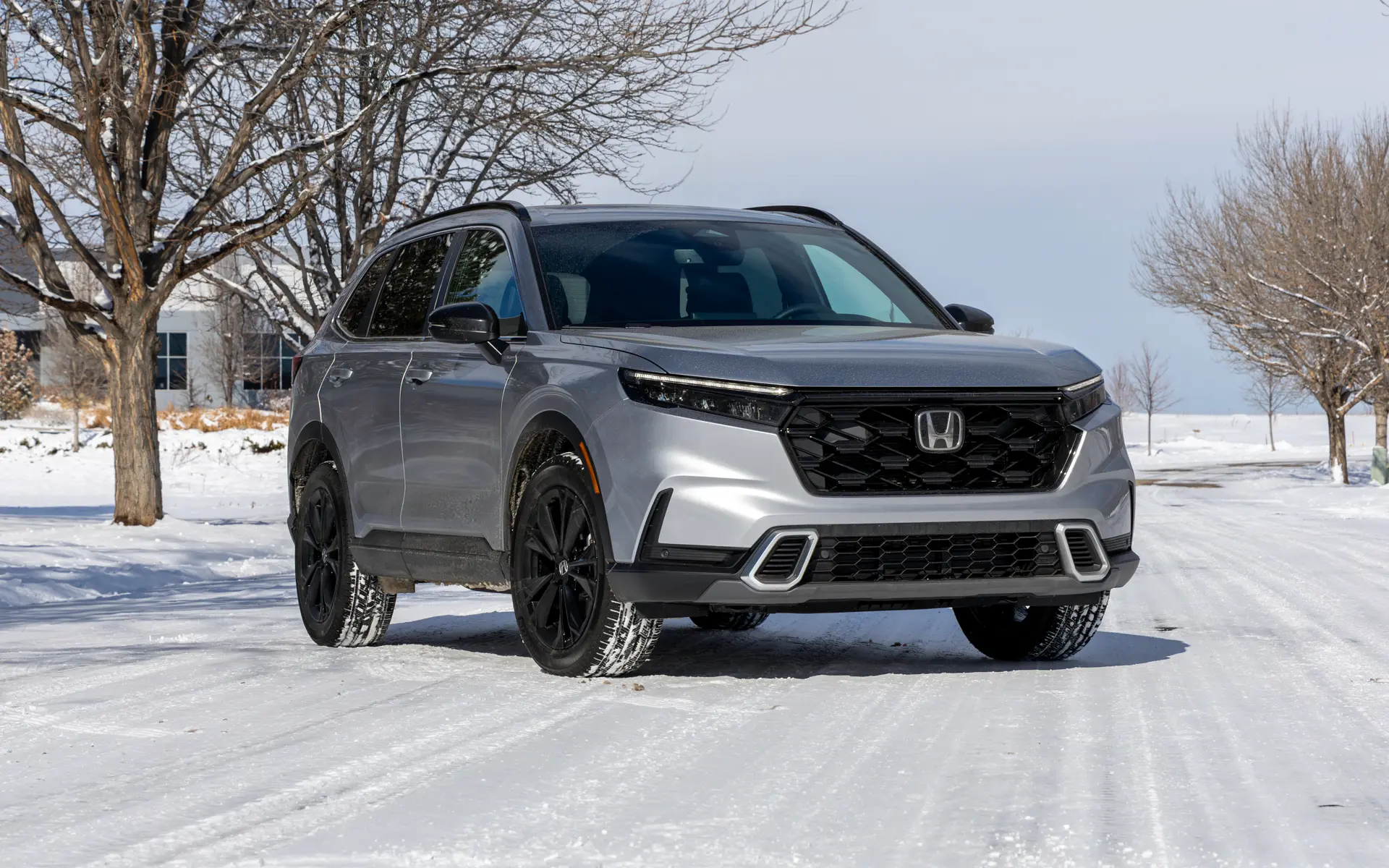
2. 2025 Subaru Forester Hybrid
The 2025 Subaru Forester Hybrid is a compact SUV built for drivers who value off-road capability, practicality, and improved fuel efficiency. Base pricing starts at $29,810, with the hybrid trim adding roughly $6,000 over the standard gas model.
Powered by a 2.5L H4 internal combustion engine paired with an 8-speed CVT and standard all-wheel drive, the Forester Hybrid delivers 180 horsepower and 178 lb.-ft. of torque. Its maximum towing capacity is 1,500 pounds, enough for small trailers, compact watercraft, or teardrop campers, but it’s far from a replacement for larger trucks.
The Forester Hybrid improves on the standard model with a smoother and slightly more responsive powertrain. Acceleration from 0 to 60 mph occurs in 8.8 seconds, just marginally faster than the non-hybrid variant. City driving reveals the hybrid’s refined throttle response and quieter operation.
Ride quality is enhanced over the gas-only model, delivering comfort without excessive floatiness on highways. Handling is competent but not sporty, comparable to rivals like the Honda CR-V and Hyundai Tucson.
Brakes provide reliable and smooth stopping power. The standard all-wheel drive, coupled with higher ground clearance, makes the Forester more capable on dirt trails and uneven terrain. Visibility is excellent, although some driver assistance systems, such as adaptive cruise control and lane centering, are slower or less precise than competitors.
The Forester Hybrid’s interior is practical and comfortable, particularly for front-seat occupants. Wide door openings, suitable seat heights, and well-padded seats ensure easy entry and a pleasant ride for a variety of body types.
Rear passenger space is typical for the segment, with generous headroom. Noise, vibration, and harshness are well controlled thanks to the hybrid powertrain. The interior’s design is functional, though not luxurious, with extensive use of plastic surfaces.
The cabin features an 11.6-inch portrait-style touchscreen that is easy to read and operate, though graphics and responsiveness feel dated compared to rivals. Wireless Apple CarPlay and Android Auto are available, along with optional USB-C/A ports and a wireless charging pad. The available Harman Kardon audio system is a notable upgrade. While the infotainment is intuitive, it lacks the modern polish and sophistication found in other hybrid SUVs.
Rear cargo space matches the non-hybrid Forester, though there is no spare tire in the hybrid model. Small-item storage is limited: the center console, door pockets, and cupholders are modest, and the wireless phone charger lacks grip. Still, the cabin remains practical for outdoors-oriented users, and roof rails in higher trims expand utility for sporting or camping gear.
The EPA rates the Forester Hybrid at 35 mpg combined, a substantial improvement over the standard gas model but slightly behind class leaders like the Toyota RAV4 Hybrid and Kia Sportage Hybrid. Real-world testing confirmed this rating, making the hybrid a worthwhile choice for drivers seeking fuel savings on daily commutes and weekend adventures.
The Forester Hybrid excels in off-road capability, ride comfort, and practicality, with a rugged design suited for outdoorsy lifestyles. Weaknesses include a dated infotainment system, modest interior storage, and relatively average fuel economy for a hybrid SUV.
Warranty coverage is standard: three years/36,000 miles bumper-to-bumper and five years/60,000 miles powertrain. Despite the price premium over the standard Forester, the hybrid delivers enhanced comfort, efficiency, and capability for buyers who value reliability and adventure-readiness over flash or luxury.
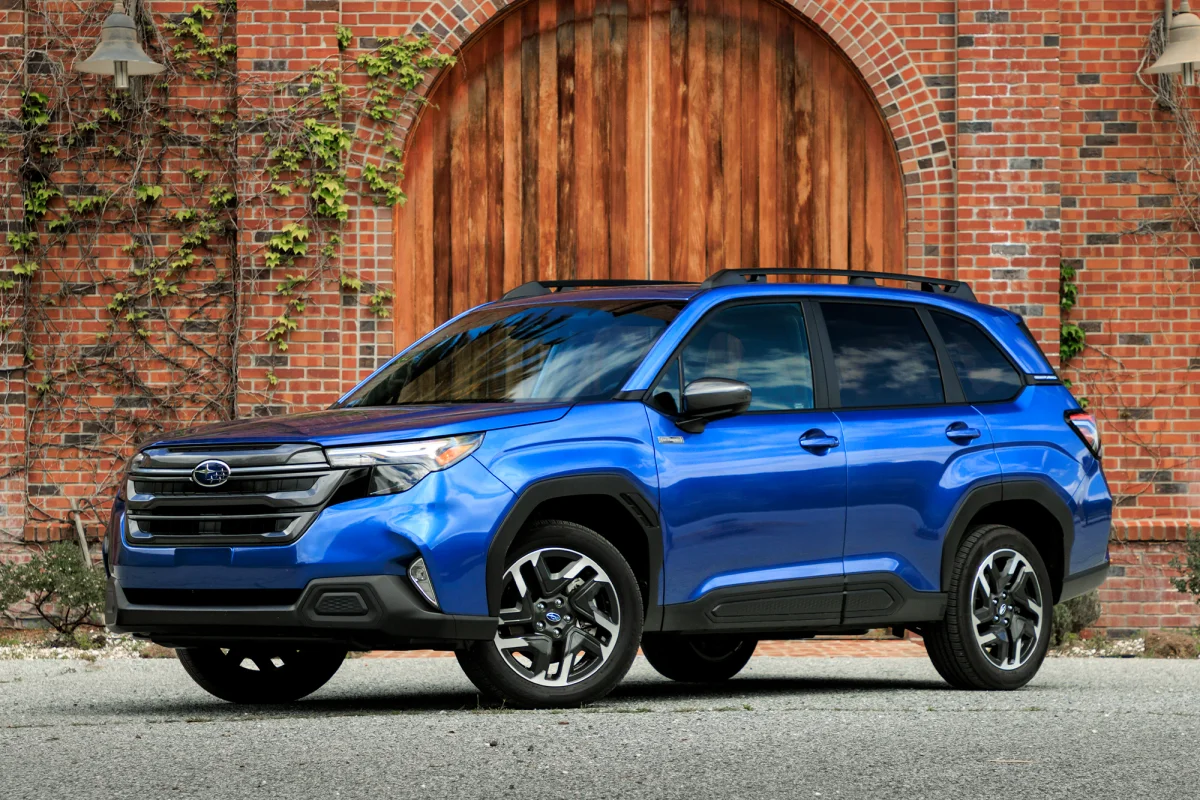
3. 2025 Toyota Corolla Cross Hybrid
The 2025 Toyota Corolla Cross Hybrid is a subcompact SUV built for efficiency, practicality, and everyday versatility. Starting at $28,495, it is powered by a 2.0L Dynamic Force I4 hybrid engine paired with a 10-speed automatic/CVT and standard all-wheel drive.
The powertrain produces 150 horsepower and 139 lb.-ft. of torque, delivering smooth and fuel-efficient performance. Its maximum towing capacity is 1,500 pounds, enough for small utility trailers, jet skis, or weekend landscaping hauls, but it is not suited for heavy-duty towing.
The Corolla Cross Hybrid emphasizes ease of use and comfort rather than sporty dynamics. It accelerates from 0 to 60 mph in 7.9 seconds, significantly quicker than the gas-only version, with the electric motor providing an instant boost from a stop.
The ride absorbs most bumps, though the suspension can feel soft over uneven roads. Handling is predictable but lacks aggressive grip, making it a composed but unexciting drive.
Visibility is good, assisting in daily driving, while driver-assistance systems function as expected, though adaptive cruise control can feel overly cautious in heavy traffic. The hybrid delivers a smooth, dependable driving experience suitable for commuting and errands.
The Corolla Cross Hybrid provides a practical, accessible interior. Front seats are comfortable and well-padded, with easy entry thanks to minimal doorline slope and reasonable seat height.
Rear legroom is limited compared to competitors, making large child seat installation slightly challenging. The cabin layout is intuitive, with physical climate controls that are simple to operate. Materials are modest but durable, creating a functional space for everyday use.
Technology in the Corolla Cross Hybrid is practical and straightforward. Features include an 8-inch touchscreen, wireless Apple CarPlay and Android Auto, four USB-C ports, and wireless charging (except on base trims).
The infotainment system is simple to navigate, though the display can be slow and lacks high-end graphics. A larger 10.25-inch screen will become available in 2026, improving clarity and responsiveness. Optional upgrades like a premium audio system enhance the cabin experience.
Cargo capacity is slightly smaller in the hybrid version, offering 21.5 cubic feet behind the rear seats compared to 25 cubic feet in the gas-only model. The boxy design maximizes usable space, making it suitable for groceries, luggage, or small gear. Interior storage includes adequately sized cupholders, door pockets, and a deep center console for phones and personal items.
Fuel efficiency is a major strength. The EPA rates the Corolla Cross Hybrid at 42 mpg combined, while real-world testing achieved 45.6 mpg. This makes it one of the most fuel-efficient subcompact SUVs available, helping reduce both running costs and environmental impact.
The Corolla Cross Hybrid excels in reliability, low entry price, fuel efficiency, and practical interior design. Its weaknesses include a bland exterior, limited rear legroom, uninspiring handling, and modest interior materials.
Toyota’s warranty is standard for the segment, with three years/36,000 miles bumper-to-bumper and five years/60,000 miles powertrain coverage, along with a complimentary two-year maintenance plan. The Corolla Cross Hybrid is a fuel-conscious, dependable choice for buyers seeking a compact SUV that balances economy, comfort, and practicality.
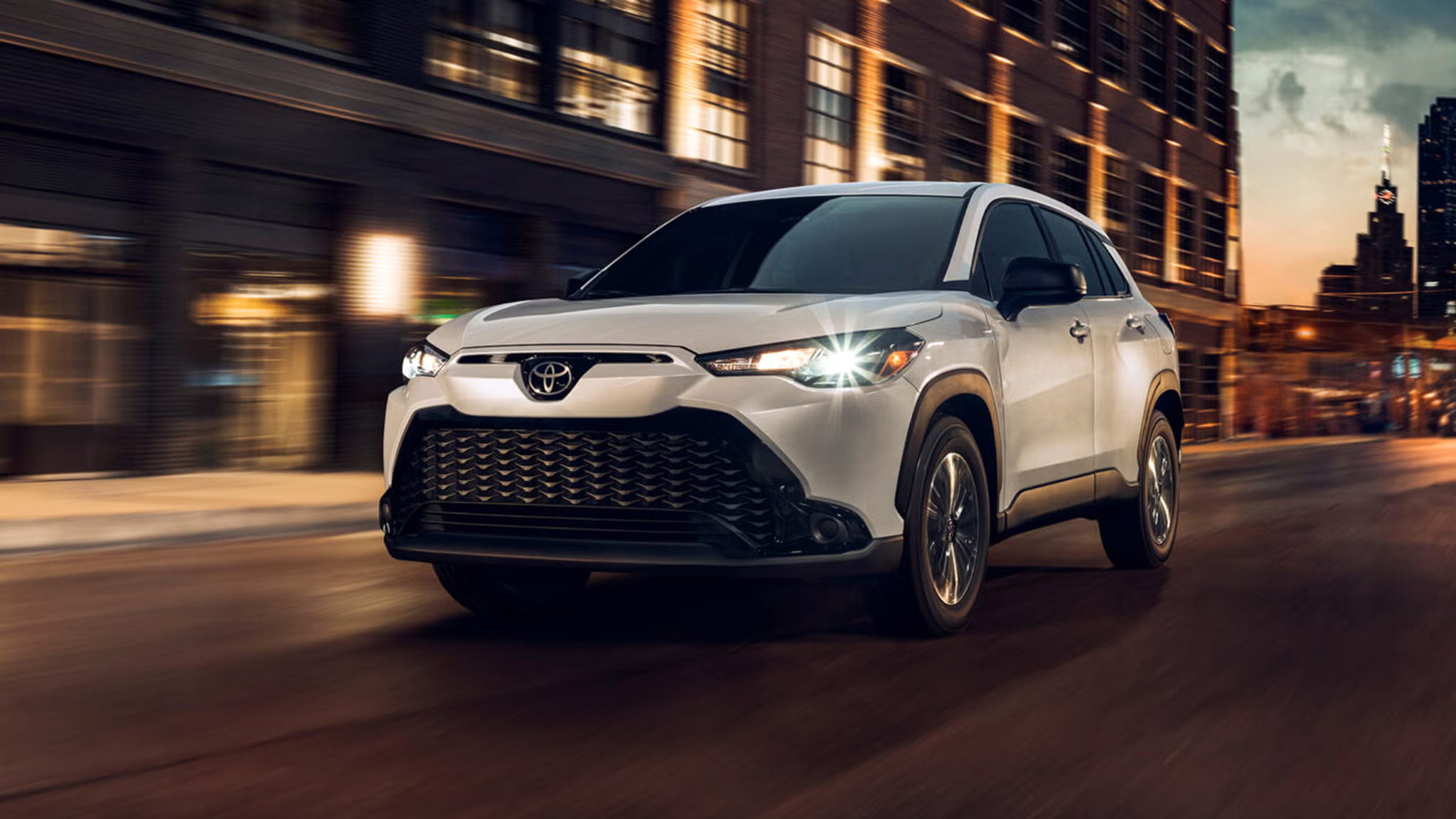
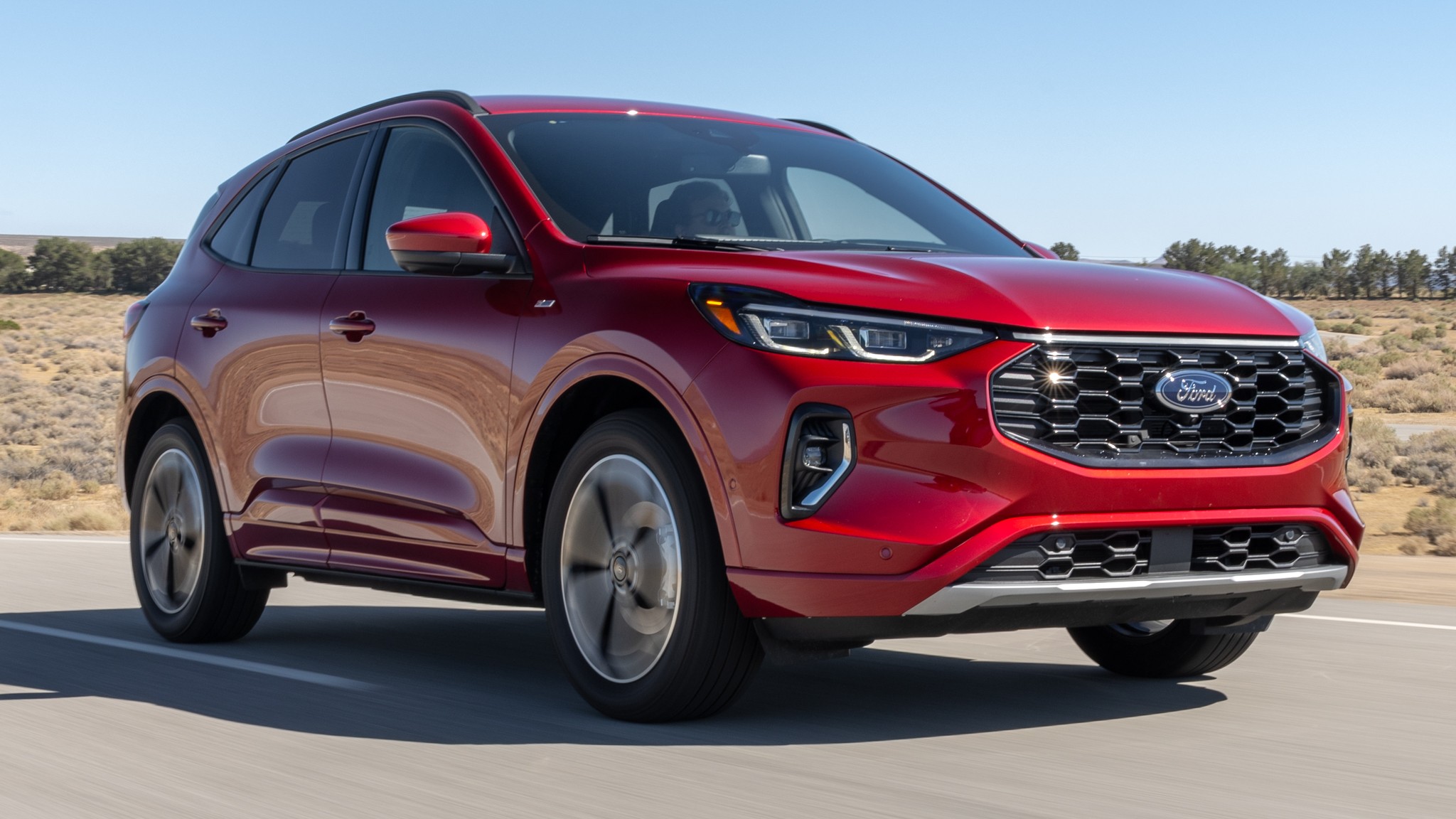
4. 2025 Ford Escape Hybrid
The 2025 Ford Escape Hybrid is a compact SUV built for fuel efficiency and daily versatility. Base pricing starts at $33,340, with the hybrid powered by a 2.5L inline-4 engine paired with a continuously variable automatic transmission (CVT) and front-wheel drive, producing 192 horsepower and 155 lb.-ft. of torque.
The Escape Hybrid has a maximum towing capacity of 1,500 pounds, which is suitable for light trailers or small watercraft but significantly lower than the 3,500-pound capability of the gas-only model.
Acceleration in the Escape Hybrid is competent but not sporty, reaching 0 to 60 mph in 8.5 seconds, comparable to the Honda CR-V Hybrid and Toyota RAV4 Hybrid. The CVT is smooth and blends well with regenerative braking, though engine response in Sport mode feels limited.
Ride quality is relaxed and comfortable, handling midcorner bumps adequately, and the hybrid proves more composed in turns than the standard Escape.
Advanced driver-assistance systems are nearly all standard, with lane-centering technology performing well on highways without the “ping-ponging” effect seen in other SUVs. The Escape Hybrid offers a balanced driving experience that favors comfort and usability over aggressive performance.
The Escape Hybrid provides comfortable seating for both front and rear passengers. Front seats are well-shaped with adequate cushioning, and rear seats offer sufficient thigh support. The cabin is fairly quiet at highway speeds, with road noise as the main intrusion.
Dual-zone climate control is optional, while ventilated front seats and heated rear seats are unavailable. LATCH anchors are easy to access, and rear-facing child seats can be installed with minimal effort. Entry and exit are straightforward, making the SUV family-friendly.
The infotainment system is a highlight, featuring an intuitive navigation setup, a standard six-speaker audio system, and an optional 10-speaker B&O system. Wireless Apple CarPlay and Android Auto are standard, and multiple power outlets are available throughout the cabin.
While some directional information in navigation is less detailed than previous versions, the system remains quick, responsive, and user-friendly, contributing to a positive in-cabin experience.
Cargo space is slightly smaller than many competitors, but a low floor and high seatbacks provide vertical storage advantages. Rear seats do not fold flat, but seat belt designs minimize obstruction during loading. Interior storage is strong, with large front cubbies, roomy door pockets, and anti-tip cupholders. The combination of cargo and storage solutions supports a variety of practical daily and weekend uses.
Fuel efficiency is a key strength of the Escape Hybrid. The all-wheel-drive model is rated at 39 mpg combined, and real-world testing averaged 38.4 mpg. These figures place it among the more efficient compact SUV hybrids, making it ideal for drivers seeking reduced fuel costs without sacrificing daily usability.
The Escape Hybrid excels with strong fuel economy, user-friendly infotainment, and a comfortable, composed ride. Weaknesses include moderate acceleration, occasional CVT jerkiness, average exterior design, and some cheap-feeling interior materials.
Warranty coverage is standard: three years/36,000 miles bumper-to-bumper and five years/60,000 miles for powertrain and roadside assistance. The Escape Hybrid is a practical, efficient, and dependable choice for buyers who prioritize daily drivability, comfort, and technology in a small SUV package.
Also read: 10 Cars With Factory Roof Rails That Actually Help
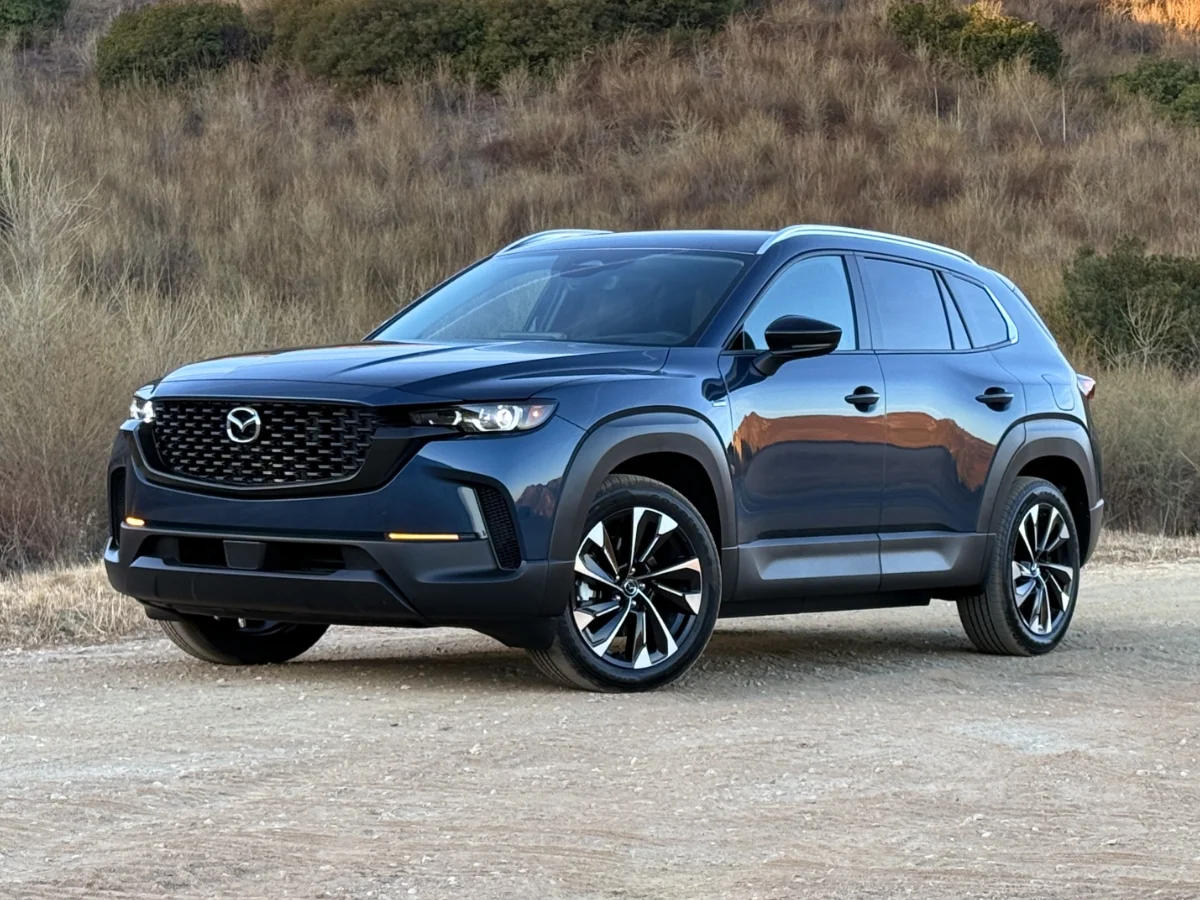
5. 2025 Mazda CX-50 Hybrid
The 2025 Mazda CX-50 Hybrid is a small SUV that emphasizes driving engagement, premium design, and fuel efficiency. Starting at $30,300, it is powered by a 2.5L SKYACTIV-G I4 engine paired with a hybrid system and a 6-speed automatic transmission. All-wheel drive is standard.
The powertrain produces 187 horsepower and 185 lb.-ft. of torque, delivering competent performance while achieving an EPA-estimated 38 mpg combined. Maximum towing capacity is 1,500 pounds, suitable for light trailers, small motorcycles, or rowboats.
The CX-50 Hybrid retains Mazda’s focus on precise steering and secure handling, although the hybrid system reduces some of the “zoom-zoom” driving excitement of the gas-only CX-50. Acceleration from 0 to 60 mph takes 8.2 seconds, offering capable but not thrilling performance.
Braking distances are slightly longer due to the added hybrid weight. The SUV feels stable around corners, and the steering remains responsive, though low-speed maneuvering requires more effort than some competitors.
The ride is firmer than many rivals, transmitting road texture more directly without becoming uncomfortable. Visibility is good, enhanced by an optional surround-view camera. Standard driver-assistance features include blind-spot monitoring and adaptive cruise control, both of which perform reliably.
The cabin is well-designed, with sporty and supportive front seats that allow easy entry and exit. Rear seating is slightly less cushioned, but offers sufficient space for passengers, and Isofix anchors are accessible for child seats.
The driver and front passenger have adjustable seating positions and steering wheel height for a comfortable driving posture. Cabin noise is modest at highway speeds, though the hybrid can be a bit louder at full throttle. Physical knobs and buttons control the climate system, making adjustments straightforward compared to touchscreen-only setups.
The CX-50 Hybrid features a dial-controlled infotainment system along with wireless Apple CarPlay and Android Auto. The built-in navigation system is clear and responsive, with voice command support. Four USB-C ports and an optional wireless charging pad provide convenient device connectivity. Premium trims offer a Bose audio system that delivers detailed sound and punchy bass, enhancing the in-cabin experience.
Cargo capacity measures 29.2 cubic feet behind the rear seats and 56.3 cubic feet with the 60/40-split seats folded. While not class-leading, the space is functional for luggage or outdoor gear. Interior storage is generous, including a deep center console, sizable door pockets, and thoughtful compartments for smaller items.
The CX-50 Hybrid has a higher starting price than many competitors but includes standard all-wheel drive, premium materials, and a refined design. Fuel efficiency is a strong point, with the hybrid system delivering 38 mpg combined. Standard warranties include three years/36,000 miles basic coverage and five years/60,000 miles powertrain coverage, along with three years/36,000 miles of roadside assistance.
The CX-50 Hybrid is notable for engaging steering, upscale interior design, and fuel efficiency. Its weaknesses include limited rear-seat space, higher pricing, and a slightly less dynamic driving experience compared to the non-hybrid CX-50. With a rugged yet refined exterior and a well-finished cabin, the CX-50 Hybrid appeals to buyers seeking a small SUV that balances premium feel, efficiency, and light towing capability.
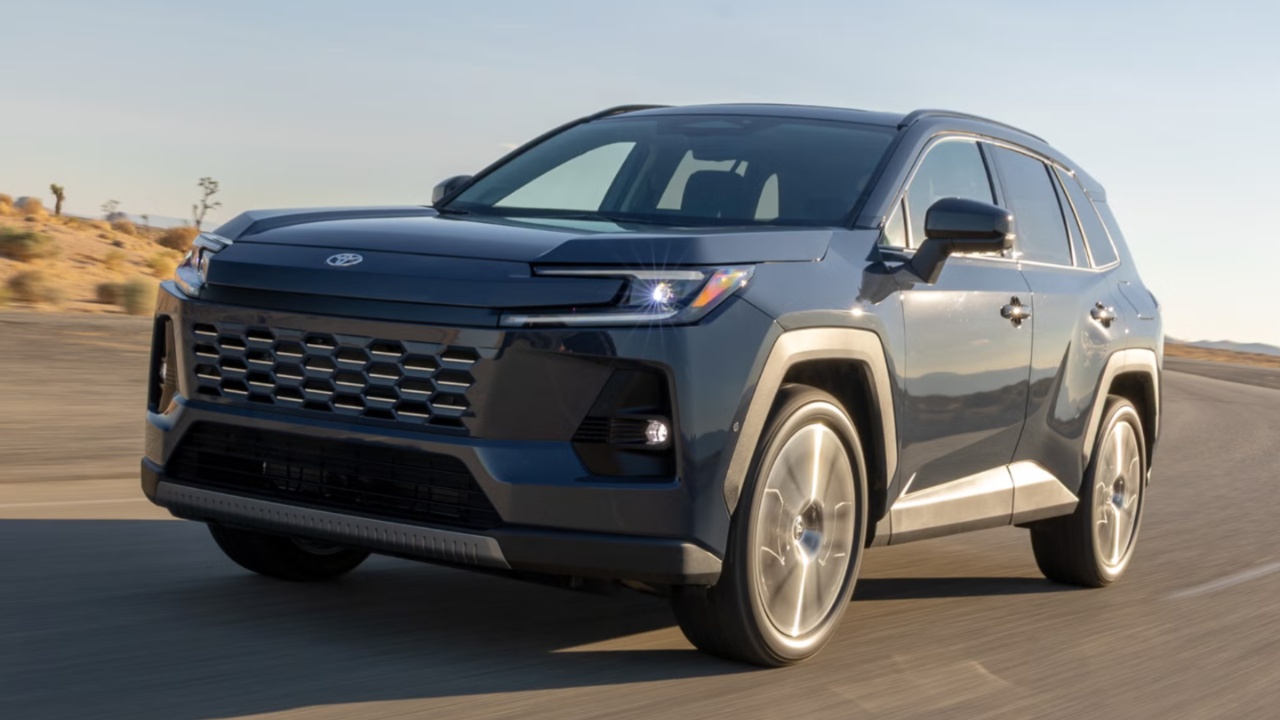
6. 2025 Toyota RAV4 Hybrid
The 2025 Toyota RAV4 Hybrid is a compact SUV designed for fuel efficiency, versatility, and light towing. Base pricing starts at $32,300, with a hybrid powertrain that combines Toyota’s Dynamic Force engine with a CVT and all-wheel drive.
The system produces 176 horsepower and 163 lb.-ft. of torque while delivering an EPA-estimated 39 mpg combined. Maximum towing capacity is 1,750 pounds, allowing the RAV4 Hybrid to handle small boat trailers or ATVs, surpassing the 1,500-pound limit of gas-only entry-level trims. Off-road-focused trims can tow up to 3,500 pounds.
Acceleration is a highlight for the RAV4 Hybrid, with the SUV reaching 0-60 mph in 7.8 seconds, over a second quicker than the standard gas model. Power delivery is smooth, providing confident merges and overtakes. Braking, however, feels soft, and steering lacks sharp feedback. The hybrid’s handling is stable but not particularly engaging, with sport-tuned XSE trims offering better cornering stability.
All-wheel drive enhances traction on wet or icy roads, though the system is not designed for serious off-roading. The ride is comfortable, absorbing bumps and uneven surfaces without feeling harsh, while driver-assistance features such as adaptive cruise control and lane-keeping aid in highway driving effectively.
The RAV4 Hybrid provides easy entry and exit for both front and rear passengers. The cabin offers sufficient space for four adults, though front seat adjustments on some trims are limited, and seat bottoms can feel flat during long trips. Rear seats sit low, which may challenge taller passengers.
Parents benefit from accessible lower anchors for child seats and adequate room for forward-facing and booster seats. Cabin noise is minimal at steady speeds but becomes noticeable under rapid acceleration. The climate control system distributes air evenly, maintaining cabin comfort.
Standard technology includes an 8-inch touchscreen, with an optional 10.5-inch display available. Infotainment performance is average, with slow processing and dated graphics.
Smartphone integration via Apple CarPlay and Android Auto is available, while audio quality depends on the chosen system; the upgraded JBL system is recommended for better sound. A small center console, storage nooks, and a rubberized dash tray provide functional spots for personal items.
Cargo capacity measures 37.5 cubic feet behind the rear seats, identical to the gas RAV4. The low-load floor simplifies loading, and the hybrid battery does not intrude on storage. Additional storage for small items is scattered throughout the cabin, including door pockets, cupholders, and a central console.
The RAV4 Hybrid provides good value with fuel savings, extra power, and practical features relative to the non-hybrid model. The hybrid components are covered for eight years or 100,000 miles, while standard warranties include three years/36,000 miles bumper-to-bumper coverage.
Two years or 25,000 miles of complimentary maintenance adds to the value proposition. Real-world fuel economy averages 35.2 mpg, though careful city driving can approach the EPA estimate of 39 mpg combined.
Strengths of the RAV4 Hybrid include strong fuel efficiency, quick acceleration, reliable all-wheel drive, and Toyota’s reputation for long-term durability. Weaknesses include soft brakes, less engaging steering, and modest cabin refinement on some trims.
Its combination of zippy throttle response, light towing capability, and comfortable ride makes the RAV4 Hybrid a practical choice for buyers seeking an efficient, versatile compact SUV.
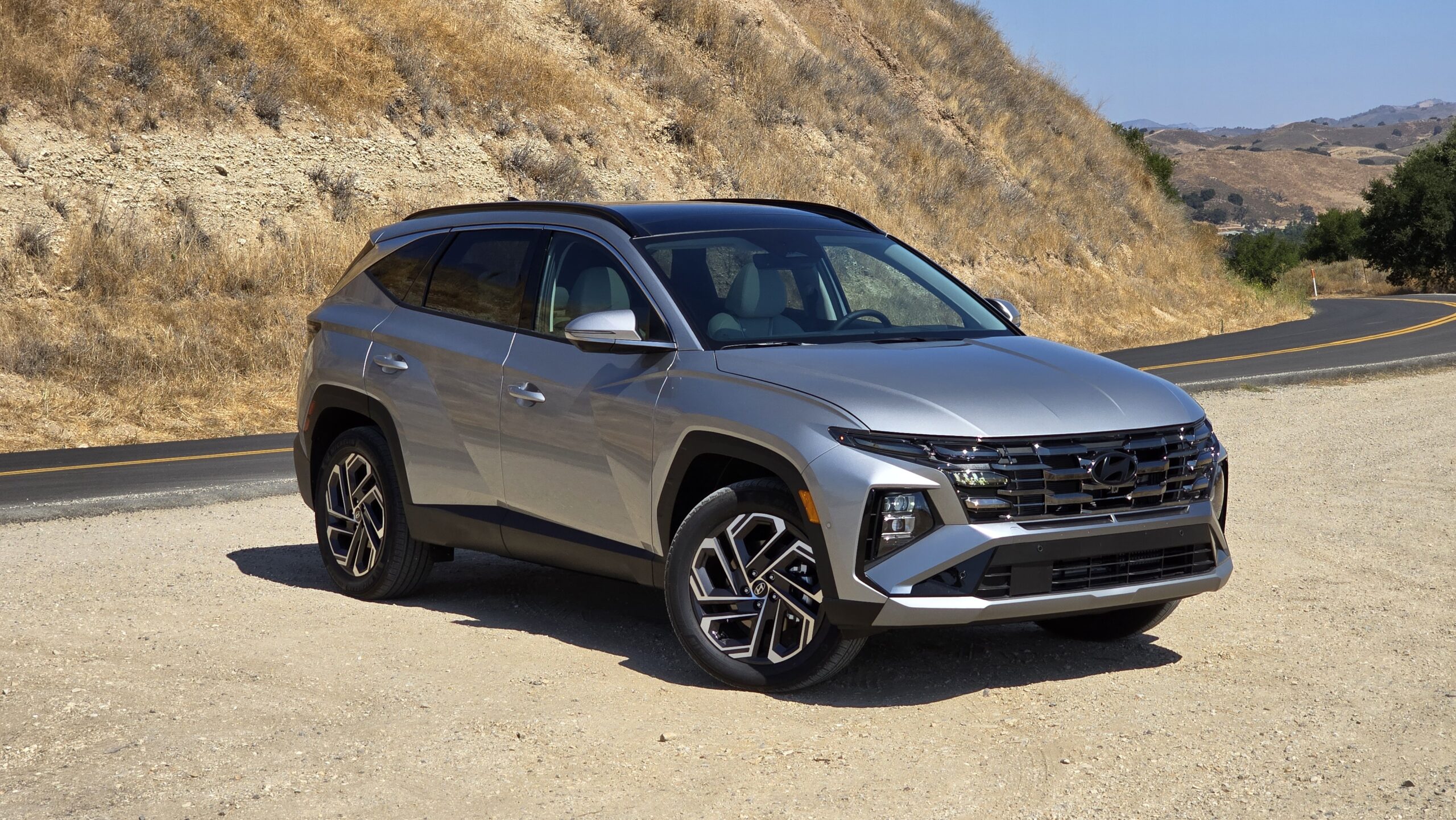
7. 2025 Hyundai Tucson Hybrid
The 2025 Hyundai Tucson Hybrid is a compact SUV that combines efficiency, power, and practical utility. Starting at $33,465, it features a hybrid powertrain producing 226 horsepower while returning up to 38 mpg combined.
Maximum towing capacity reaches 2,000 pounds, allowing owners to haul small watercraft, pop-up campers, or U-Haul trailers. Its angular exterior and modern interior give the Tucson Hybrid a premium feel above its class, while a minimalist dashboard and digital instrument cluster enhance the futuristic aesthetic.
The Tucson Hybrid delivers strong performance for a hybrid SUV. In testing, it accelerated from 0 to 60 mph in 7.6 seconds, making it one of the fastest in its class. Steering is responsive, and the vehicle remains composed through corners, offering stable handling.
The hybrid system blends electric and gasoline power smoothly, with the automatic transmission providing prompt downshifts when extra acceleration is needed. Braking is strong, and the ride is remarkably smooth, approaching the comfort of luxury SUVs.
Adaptive cruise control works well, though the lane-keeping system can feel intrusive at times. Visibility is good, supplemented by helpful camera angles for parking and low-speed maneuvering.
The Tucson Hybrid provides ample passenger space and easy access through large door openings. Front seats are supportive with generous lateral and lumbar support, while rear passengers benefit from reclining seatbacks and enough legroom for taller occupants.
Cabin noise is generally well controlled, with some wind noise at higher speeds. Climate control heats and cools the cabin efficiently. Parents will appreciate the spacious backseat for infant and child seats, with easily accessible anchors.
The Tucson Hybrid features an advanced tech suite, including a responsive touchscreen with clear navigation maps, wireless Apple CarPlay and Android Auto, multiple high-power USB-C ports, and an available wireless charging pad. Infotainment is straightforward to operate, and the cabin includes well-placed storage for small items, large water bottles, and daily essentials.
Cargo capacity measures 38.7 cubic feet behind the second row, with a low liftover height and flat floor for easy loading. Second-row seats fold flat using convenient levers, expanding storage for larger items. Interior storage is thoughtful, with a central armrest bin, a dash shelf, and sizable cupholders.
The Tucson Hybrid offers competitive value with its combination of power, comfort, technology, and interior quality. Fuel economy is EPA-rated at 35 mpg combined, with real-world performance reaching 34–39 mpg depending on driving conditions.
Hyundai provides industry-leading warranties: five years/60,000 miles basic, 10 years/100,000 miles powertrain, plus rust coverage, roadside assistance, and three years of complimentary maintenance.
Strengths include a refined ride, engaging handling, a spacious cabin, and comprehensive technology. Weaknesses include slightly lower fuel efficiency compared to segment rivals and a polarizing exterior design. The Tucson Hybrid delivers a smooth, comfortable, and practical hybrid SUV experience, making it a strong contender for buyers seeking utility, performance, and efficiency in one package.
The 2025 lineup of hybrid SUVs demonstrates that towing capability and fuel efficiency are no longer mutually exclusive. Vehicles like the Toyota Corolla Cross Hybrid and Ford Escape Hybrid show that even smaller crossovers can handle light trailers, while models such as the Hyundai Tucson Hybrid and RAV4 Hybrid push the limits of compact SUV versatility.
Beyond towing, these hybrids deliver refined rides, spacious interiors, and advanced technology, showing that practicality and efficiency can go hand in hand. While none replace a dedicated truck for heavy-duty hauling, they provide surprising utility for active lifestyles, weekend getaways, and family adventures.
For drivers seeking an environmentally friendly SUV without compromising functionality, these seven hybrids redefine expectations. They offer a mix of performance, comfort, and light towing capability, highlighting how far hybrid technology has come in combining sustainability with real-world practicality.
Also Read: 5 Cars Cheap To Keep Past 150k Vs 5 That Get Pricey After Warranty
