
When Americans gear up for a long-distance road trip whether it’s driving from Phoenix to Flagstaff for skiing, running I-95 from Virginia to Florida with the family, or tackling summer vacations across the Rockies roof boxes become essential.
They free up cabin space, keep gear organized, and make any road trip feel a little more manageable. But attaching a bulky box on top of a vehicle doesn’t affect all cars equally.
Some vehicles stay planted and confident even with 60 extra pounds on top and highway crosswinds tossing them around, while others suddenly feel vague, top-heavy, or downright twitchy.
For U.S. drivers who routinely pack camping gear, skis, kids’ strollers, or beach equipment, choosing a vehicle that maintains its composure with a roof box is an underrated but important factor.
Cars with wide tracks, stiff suspensions, stable wheelbases, and balanced aerodynamics tend to stay comfortable and surefooted. Others often the light, tall, or softly sprung options can become unsettled once extra height is added.
Below are five cars that excel at staying stable with a roof box, followed by five that tend to wobble more than most. The picks combine real-world owner experiences, engineering common sense, and road-trip logic for American drivers.
Cars That Feel Steady With a Roof Box
Packing a roof box can turn any vehicle into a rolling wind tunnel, but some cars handle the added weight and drag with surprising composure.
From crossovers to station wagons, certain models remain steady, predictable, and confidence‑inspiring even with cargo perched on top. This guide highlights the cars that make rooftop storage feel effortless, and which ones can turn a simple trip into a sway-filled challenge.
1. Subaru Outback
The Subaru Outback has long been a favorite for families, outdoorsy travelers, and anyone who values utility without needing a massive SUV.
What makes it particularly stable with a roof box is its low center of gravity, courtesy of Subaru’s flat-four engine layout.
Even though the Outback has SUV-like ground clearance, the horizontally opposed engine keeps weight close to the ground, reducing body roll when crosswinds or passing trucks push against a roof box.
The built-in roof rails are strong, widely spaced, and designed with accessories in mind, making the box feel integrated rather than an afterthought.
Whether you’re driving through Wyoming gusts or navigating tight mountain curves in Colorado, the Outback tends to resist wobble better than most in its class.
Subaru’s winning formula with the 2021 Outback station wagon has been copied by several rivals, yet none have matched its success. Its appeal comes from an adventure-ready aesthetic, standard all-wheel drive, and a cabin designed for cargo versatility.
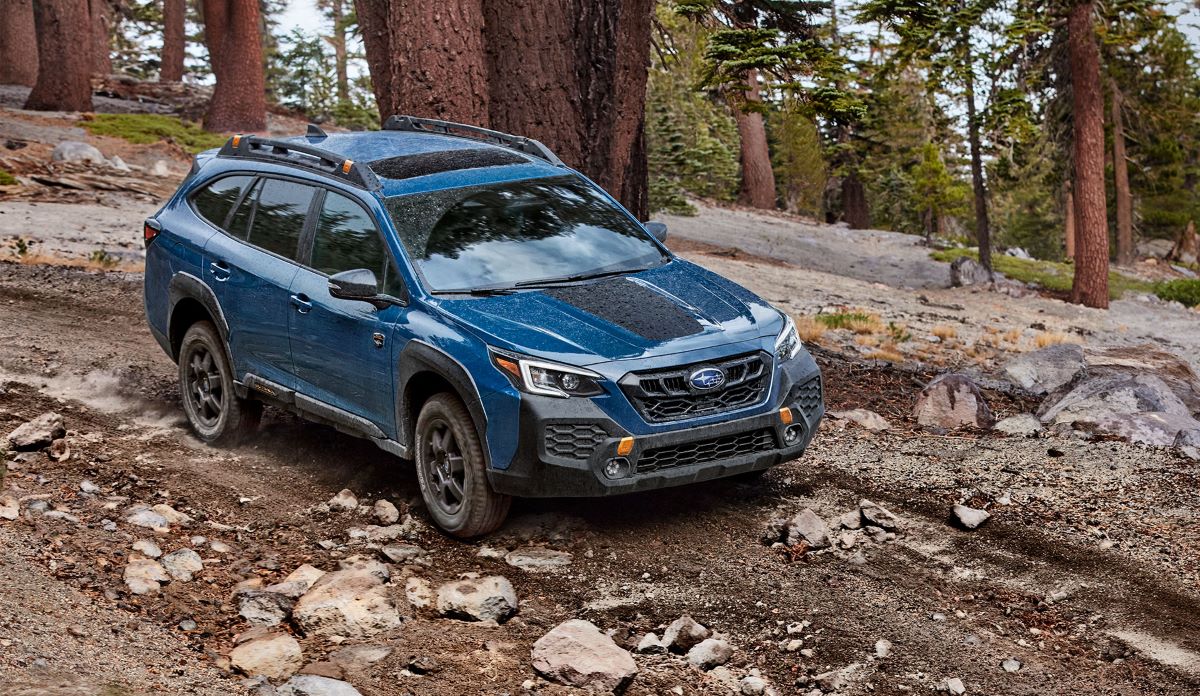
Buyers can choose between two flat-four engines: a nonturbo 2.5-liter and a more spirited turbocharged 2.4-liter. While the Outback’s handling isn’t likely to excite a driving enthusiast, its smooth and quiet ride combined with a spacious interior makes it ideal for families and adventure seekers heading to their next destination.
The Outback lineup is powered by a pair of flat-four engines: a 182-hp 2.5-liter is standard, while a 260-hp turbocharged 2.4-liter is optional. Both are paired with a continuously variable automatic transmission (CVT) that emulates an eight-speed gearbox to reduce engine drone.
All Outbacks come standard with Subaru’s hallmark all-wheel drive, a feature present in nearly every model except the rear-drive BRZ sports coupe. The base powertrain delivers modest performance; the Outback we tested had unremarkable acceleration and a sluggish transmission. The turbocharged model was noticeably quicker, though it suffered from the same hesitant CVT behavior.
Most Outback buyers prioritize ride comfort and off-road capability over outright speed. With 8.7 inches of ground clearance and reliable all-wheel drive, the wagon can handle challenging weather and rough, rutted roads. The suspension offers a composed, comfortable ride, and the steering is precise and manageable on the highway.
However, neither engine version provides athletic handling, which may surprise WRX fans moving up to the more practical Outback. The standard 2.5-liter can tow up to 2,700 pounds, while the turbocharged 2.4-liter increases towing capacity to 3,500 pounds.
2. Volvo XC70 (and Modern XC60/XC90 Equivalents)
Although discontinued, the XC70 remains one of the best roof-box haulers ever sold in the U.S., and Volvo’s current SUVs inherit the same stability DNA.
Volvo engineers have long tuned their suspensions to prioritize stability on Europe’s high-speed highways, which translates beautifully to American interstate travel.
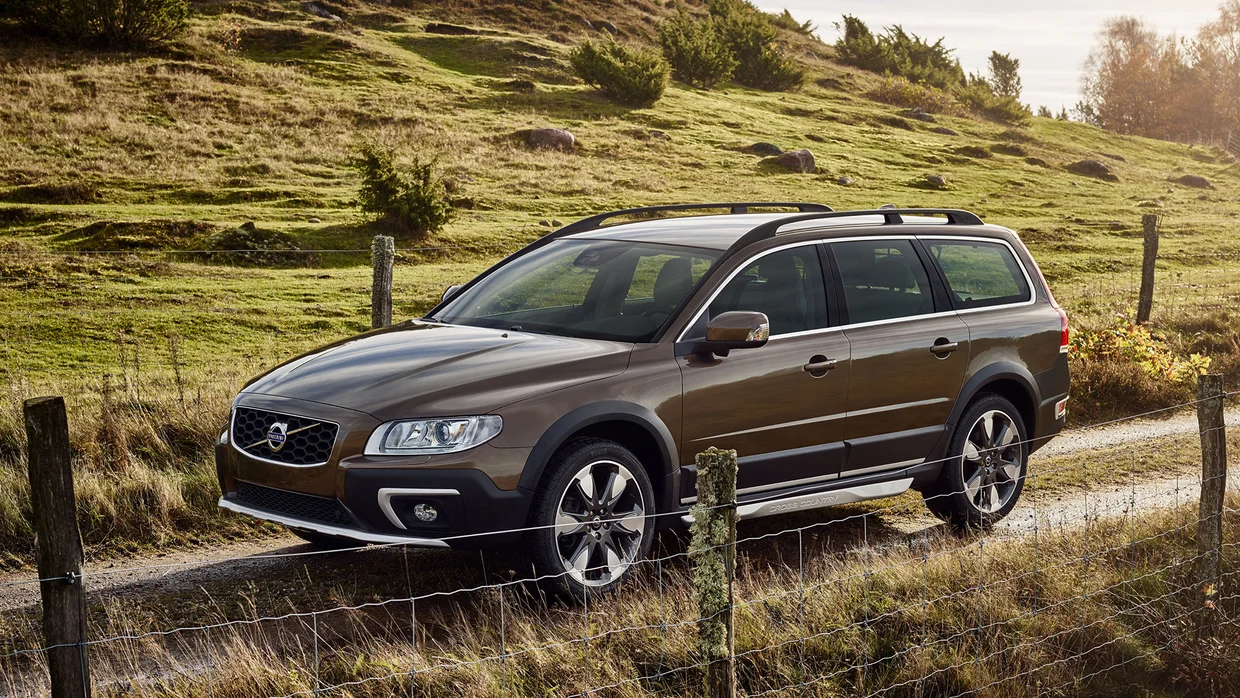
The XC60 and XC90 feature firm yet compliant suspensions, long wheelbases, and a weight balance that remains confident even when extra drag is added.
Roof boxes barely ruffle the steering feel, and the car remains planted in gusty areas like the Columbia River Gorge or the plains of Kansas. Families who travel long distances often note that these Volvos feel “built for roof cargo,” and it shows.
3. Toyota Highlander
For American families, the Toyota Highlander is a proven do-everything SUV, and it handles a roof box with surprising calmness.
The vehicle’s somewhat conservative suspension tuning firmer than many midsize SUVs but still comfortable keeps the body settled.
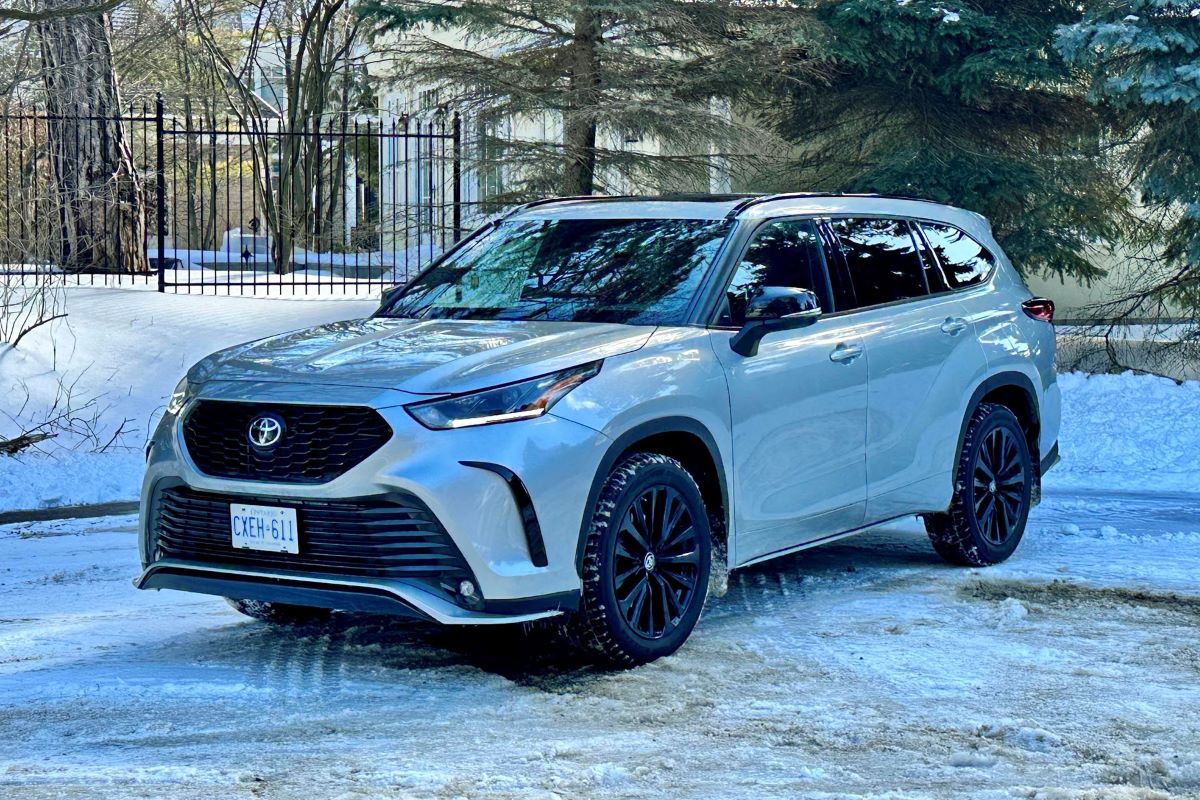
Its long wheelbase and planted stance help it track straight when a big cargo box tries to act like a sail at 75 mph.
Many Highlander owners report the biggest difference they notice with a roof box is slightly reduced fuel economy, not instability. Whether commuting on I-80 or taking a long haul to Yosemite, the Highlander remains controlled and trustworthy.
4. Audi Allroad (A4/A6)
Audi’s Allroad wagons sit lower than SUVs but offer SUV-like practicality, making them nearly perfect carriers for rooftop cargo.
The Quattro all-wheel-drive system keeps traction evenly distributed, and the vehicle’s relatively stiff chassis prevents the top-heavy feel some roof boxes introduce.
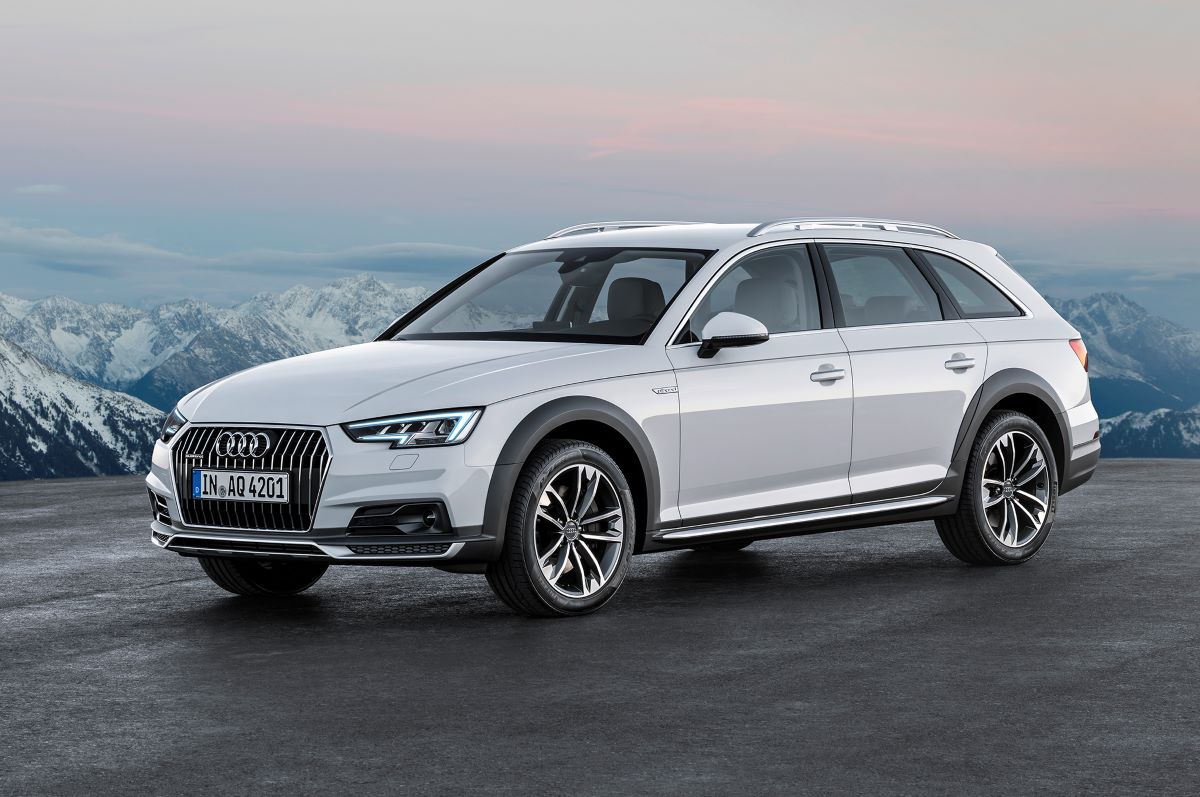
Compared with taller SUVs, the Allroad’s low-slung body allows the roof box to sit lower to the ground, reducing leverage and sway. This creates a noticeably more stable highway experience, especially when dealing with the buffeting effect of tractor-trailers.
For drivers who prefer car-like handling but need cargo flexibility, the Allroad with a roof box remains one of the best long-distance road-trip pairings you can find.
The 2021 Audi A6 Allroad is equipped with a turbocharged 3.0-liter V-6 engine that delivers 335 horsepower and 369 lb-ft of torque. Power is sent through a seven-speed automatic transmission and Audi’s Quattro all-wheel-drive system, both of which come standard.
On our test track, the A6 Allroad was slightly slower than the A6 sedan equipped with the same powertrain, yet it still achieved an impressive 0-to-60-mph time of 5.2 seconds.
The A6 Allroad features an adjustable air suspension that provides a plush and comfortable ride on pavement. Off-road, the system enhances control further with a mode that raises the vehicle by an additional 1.2 inches, allowing it to tackle rougher terrain with confidence.
5. Honda Pilot (Newer Generations)
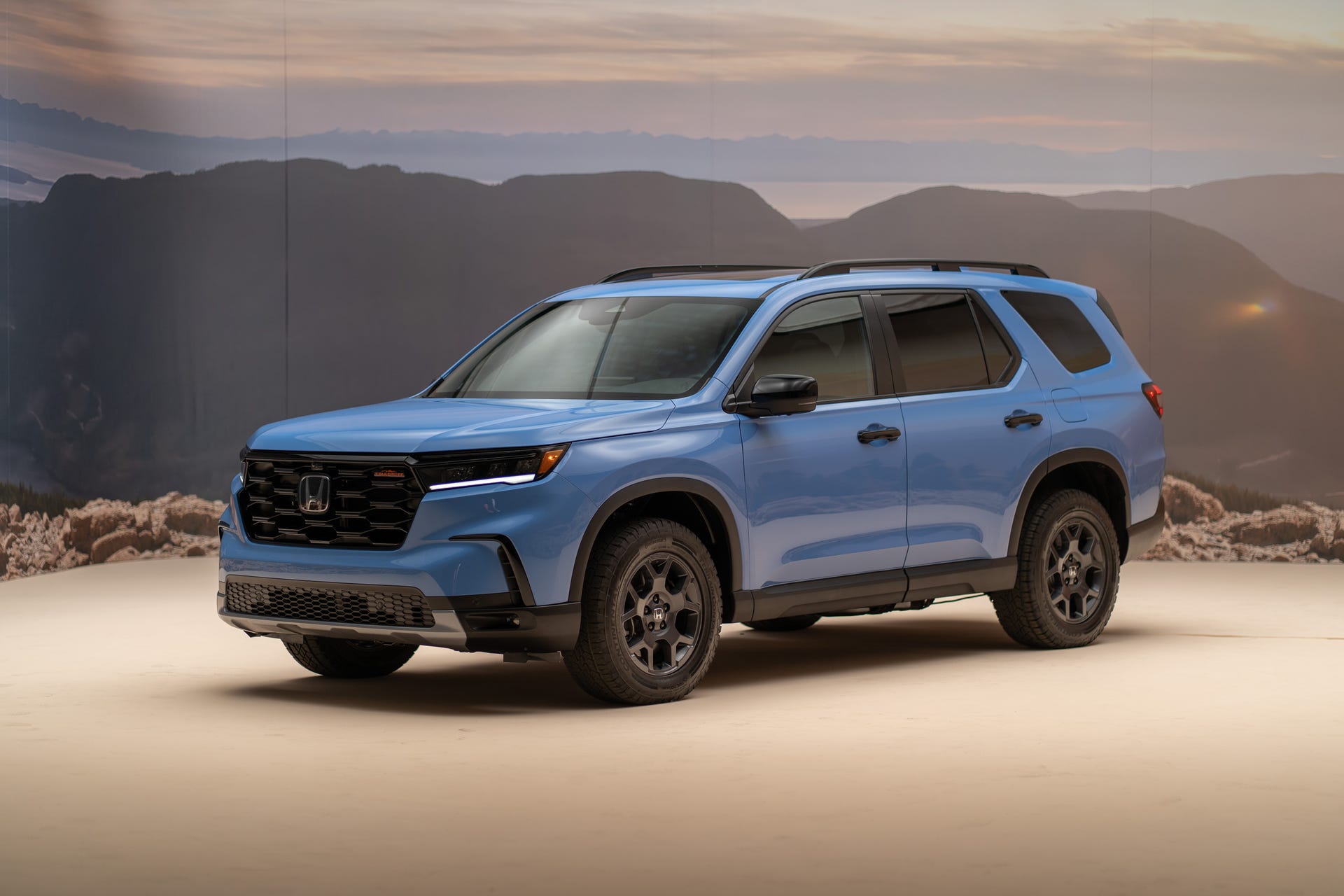
The newer Honda Pilot especially post-2016 redesign strikes an excellent balance between comfort and structural stability. Honda stiffened the chassis, tuned the suspension for more composed handling, and widened the stance.
As a result, the Pilot handles a rooftop box far better than earlier models. Even with a fully loaded Thule or Yakima sitting on top, the steering stays precise, body motion remains controlled, and highway gusts feel manageable.
It’s a great pick for families heading from the Midwest to the coasts, especially when loading sports gear, luggage, or camping supplies.
The 2021 Honda Pilot offers a modern alternative to a minivan, though its third row isn’t particularly spacious, and it’s hardly more stylish than a traditional family hauler. Still, the SUV provides an available all-wheel-drive system, elevated seating position, and generous ground clearance, features that appeal to many crossover buyers.
Under the hood, a responsive and fuel-efficient V-6 powertrain delivers satisfying performance. However, drivers seeking a more engaging experience may want to consider other options.
The Pilot compensates with a roomy cabin, abundant cargo space, and practical small-item storage. Its suite of standard driver-assist technologies and popular infotainment features help it compete with rivals such as the Volkswagen Atlas and Toyota Highlander.
The Pilot’s V-6 produces a sporty exhaust note and ample power, and we appreciate the unobtrusive operation of the nine-speed automatic transmission.
While the Pilot isn’t the heaviest three-row crossover to drive, its size can make it feel cumbersome when navigating corners. Upper trims equipped with 20-inch wheels see a slight decline in ride quality, though the larger wheels improve the SUV’s otherwise plain styling.
When fully loaded with passengers and cargo, the Pilot maintains a relatively smooth ride. Its limited body control can make the SUV feel disconnected from the road at times, and the light steering, while helpful for parking-lot maneuvering, also contributes to a somewhat detached feel at highway speeds.
Cars That Wobble With a Roof Box
Adding a roof box can be a game-changer for storage, but not every car handles the extra weight gracefully. Some models become twitchy, prone to sway, or feel less planted on the road, making even short trips stressful.
This guide highlights the cars that struggle with rooftop cargo, so you know which rides might turn a simple outing into a nerve-wracking experience.
1. Jeep Wrangler (Two-Door)
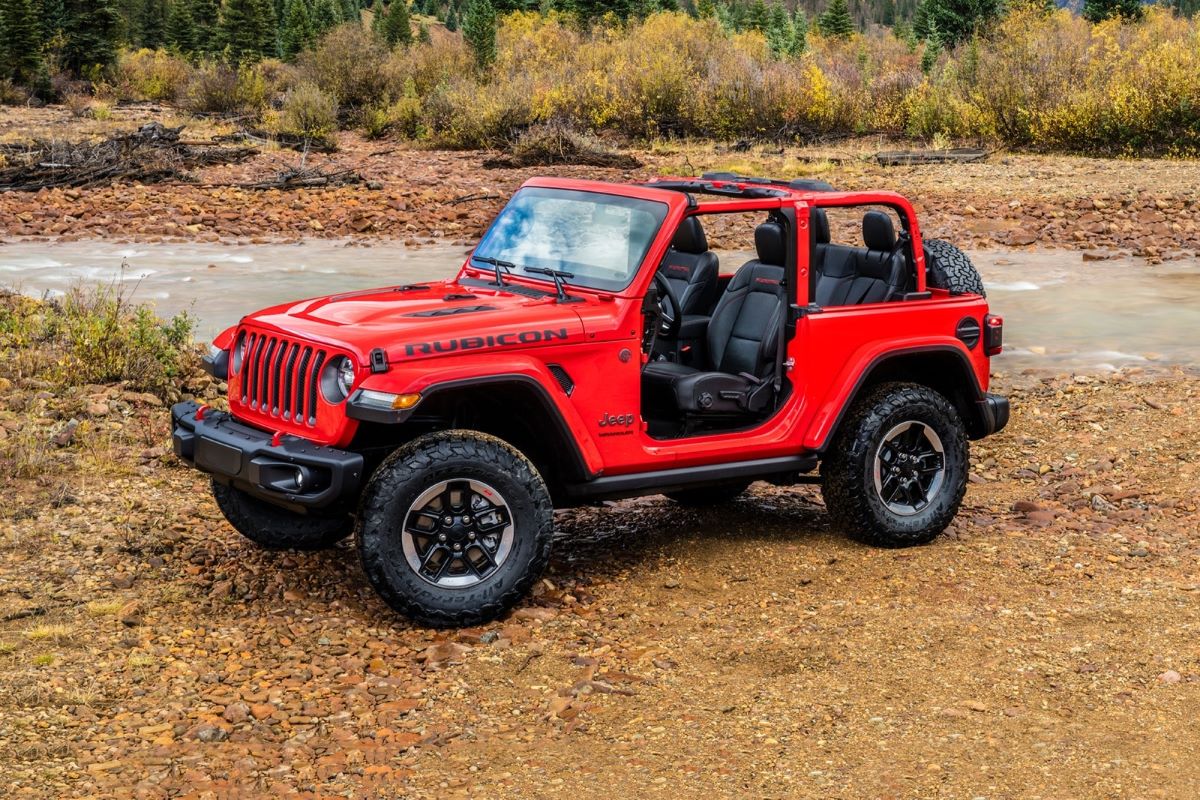
Few vehicles change personality as dramatically with a roof box as the two-door Jeep Wrangler. Already tall, narrow, and softly sprung, the Wrangler becomes top-heavy quickly once extra height is added.
Crosswinds on interstates like I-10 or I-40 can push the vehicle enough to make drivers ease off the throttle.
The upright windshield and blocky aerodynamics create additional turbulence that shakes the box and the vehicle.
The four-door Wrangler does slightly better, but the short-wheelbase model is notoriously sensitive, making it one of the least stable roof-box carriers in America.
The Jeep Wrangler is designed with off-road capability in mind, which is a major reason for its enduring popularity. This prowess is especially evident in the Rubicon trim.
Our test Wrangler came equipped with the optional Xtreme off-road package, featuring massive 37-inch tires and additional ground clearance. Whether navigating rocky trails or conquering sand dunes, there’s very little this SUV can’t tackle.
On the road, however, the experience differs. The Wrangler’s suspension and tires do a good job of absorbing ruts, bumps, and potholes, resulting in a firm but manageable ride that allows you to cruise around town with minimal concern for road imperfections.
That said, the steering feels vague and often requires constant corrections on the highway to maintain lane position. Acceleration with the V6 engine is leisurely, and stopping distances in emergencies are longer than ideal.
The Wrangler’s suite of advanced driver-assist features generally works as intended, helping to simplify driving. The drawback is that Jeep offers only the basics, like blind-spot warning and adaptive cruise control, and makes them optional across nearly all trim levels.
Daily driving comfort is not a Wrangler strong suit. The front seats are flat and firm, offering limited support, and long trips can become tiring due to the vehicle’s notorious wind noise and tire roar.
The Wrangler’s elevated ride height can make entry challenging for shorter drivers, who may need to use the pillar-mounted grab handle. Inside, the cabin feels narrow, with a windshield positioned close to the driver and passenger. By contrast, the Ford Bronco provides a noticeably roomier interior.
Despite that, the Wrangler delivers a commanding driving position and intuitive controls. Fitting child safety seats in the four-door Unlimited is straightforward as long as they’re not oversized, you may need to move the front seat forward to accommodate a rear-facing seat.
2. Toyota RAV4 (Older Generations)
The modern RAV4 is more refined, but older generations particularly pre-2018 models are known for light steering, narrow body proportions, and a bit of body roll at higher speeds.
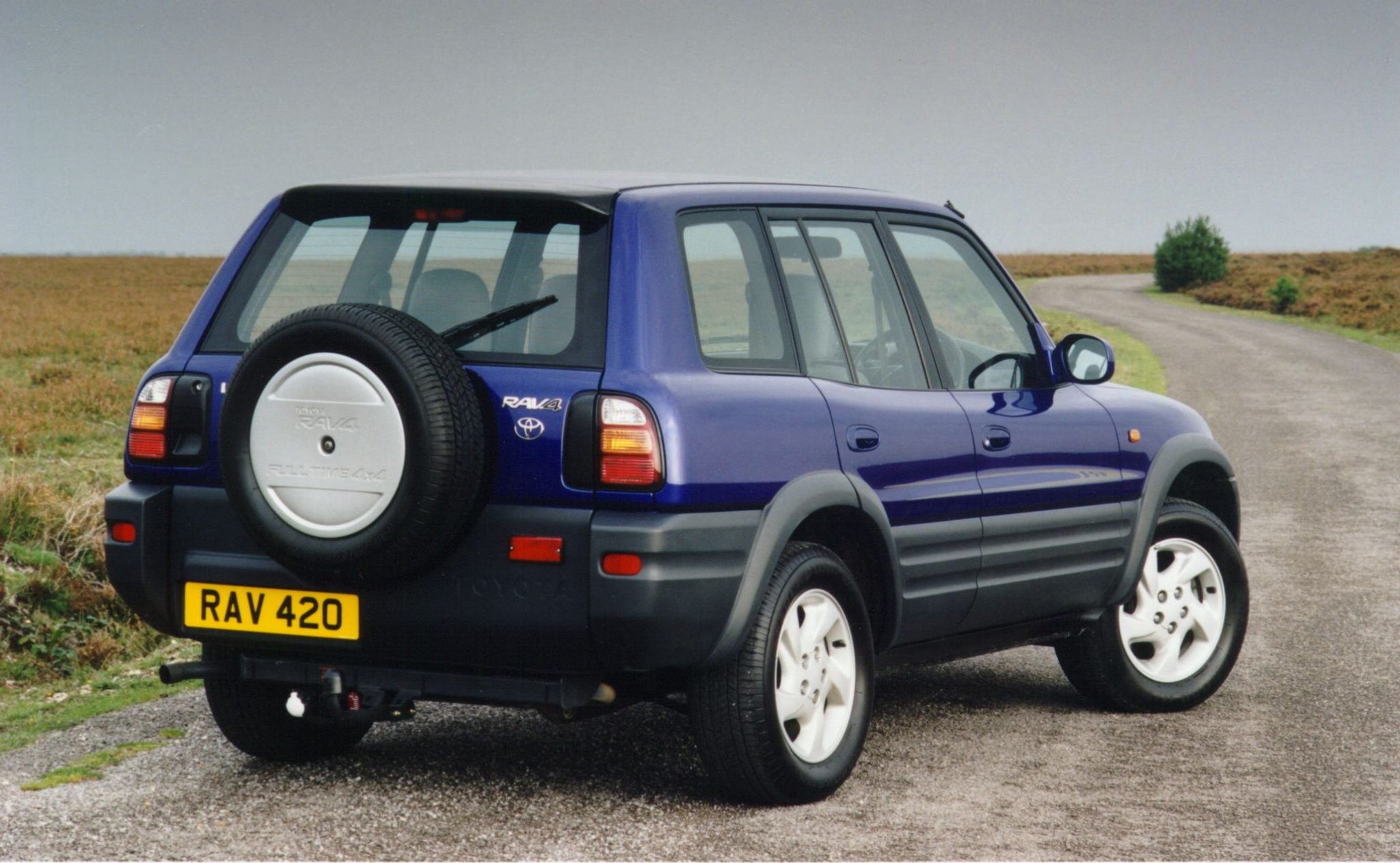
Add a roof box, especially a long one, and those characteristics amplify. Many owners report the vehicle feeling nervous in crosswinds or when passing trucks on open highways.
The newer RAV4 performs better, but older models still make the list for their tendency to wobble when additional top weight is involved.
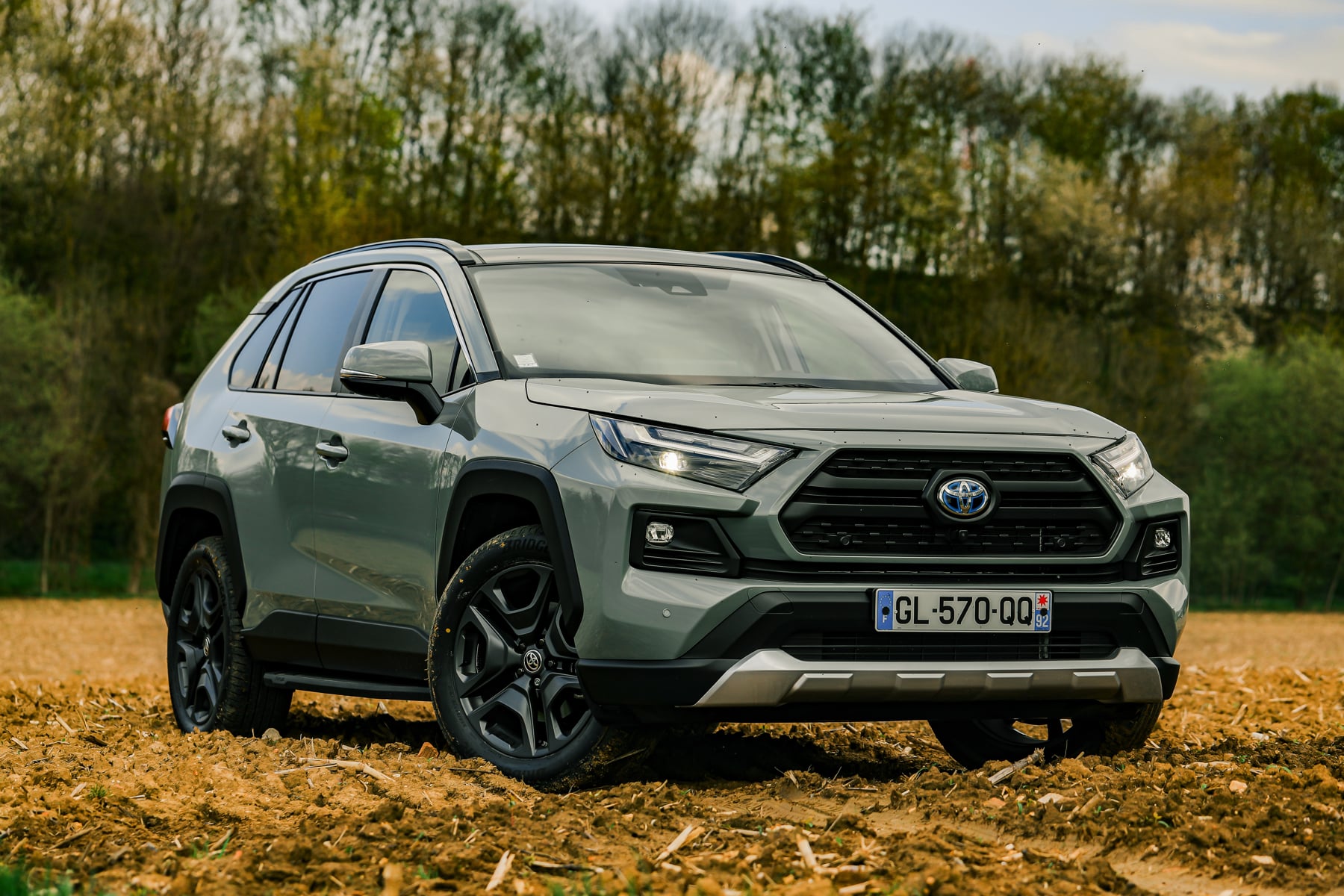
The Toyota RAV4 stands out in the compact SUV segment thanks to its rugged styling, although much of that distinction is cosmetic, especially now that the Adventure and TRD Off-Road trims, along with their torque-vectoring all-wheel-drive systems, are no longer available.
Still, the RAV4 is a capable and pleasant compact SUV that fits seamlessly into the daily lives of most drivers, whose routines are primarily on paved roads rather than off the beaten path.
It offers generous space for passengers and cargo, a long list of driver-assistance features, and easy-to-use technology. The driving experience prioritizes comfort over engagement, a point reinforced by a 203-hp 2.5-liter four-cylinder engine that is reasonably efficient but far from thrilling.
The RAV4’s 2.5-liter four-cylinder produces 203 horsepower and 184 lb-ft of torque and is paired with an eight-speed automatic transmission. Front-wheel drive is standard across the lineup, while all-wheel drive is optional.
The practical four-cylinder can feel a bit coarse, particularly during highway passing maneuvers, and the transmission on our test vehicle sometimes hesitated when called upon for a downshift.
Handling is similarly workaday: the compact crossover is solid and stable on the interstate and competent in twisty sections, yet it doesn’t inspire the same confidence or driver engagement as the Mazda CX-50.
3. Nissan Rogue (Pre-2021 Models)
The Rogue gained popularity for its comfort and fuel economy, but handling stability has never been its strongest trait. Older Rogues have soft suspensions and light steering feedback, creating a floating sensation even without roof cargo.
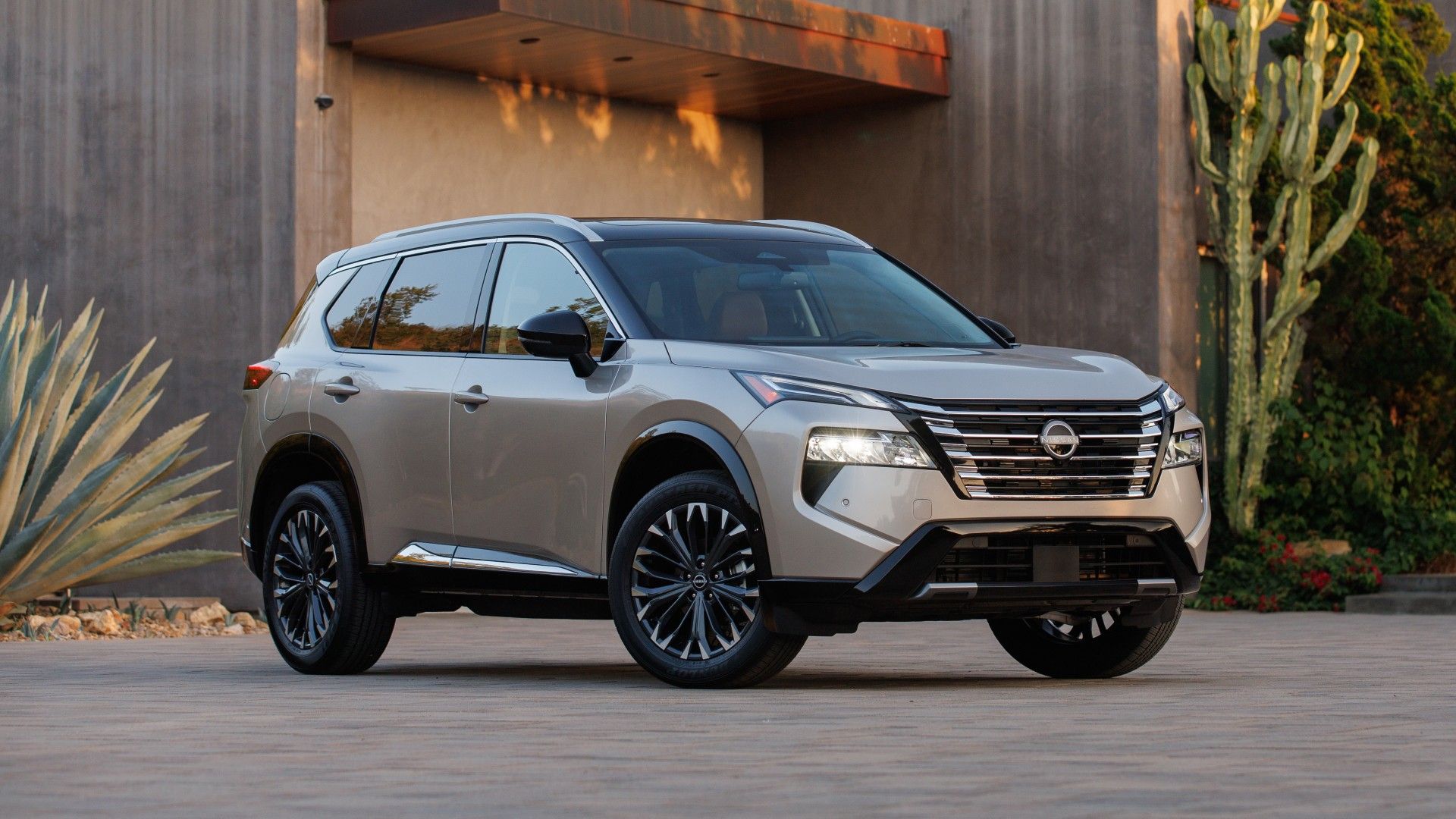
Once a roof box goes on, the vehicle can feel unsettled, especially at highway speeds with lateral winds.
Drivers often compensate with a tighter grip on the wheel, which becomes tiring on long drives from state to state. While fine for local trips, the pre-2021 Rogue is not the best companion for long, rooftop-loaded journeys.
4. Kia Soul
The Kia Soul is a fun, affordable, practical box on wheels but it doesn’t love having another box stacked on top. Its tall, upright shape already makes it susceptible to crosswind sway, and adding a roof box effectively makes it even more top-heavy.
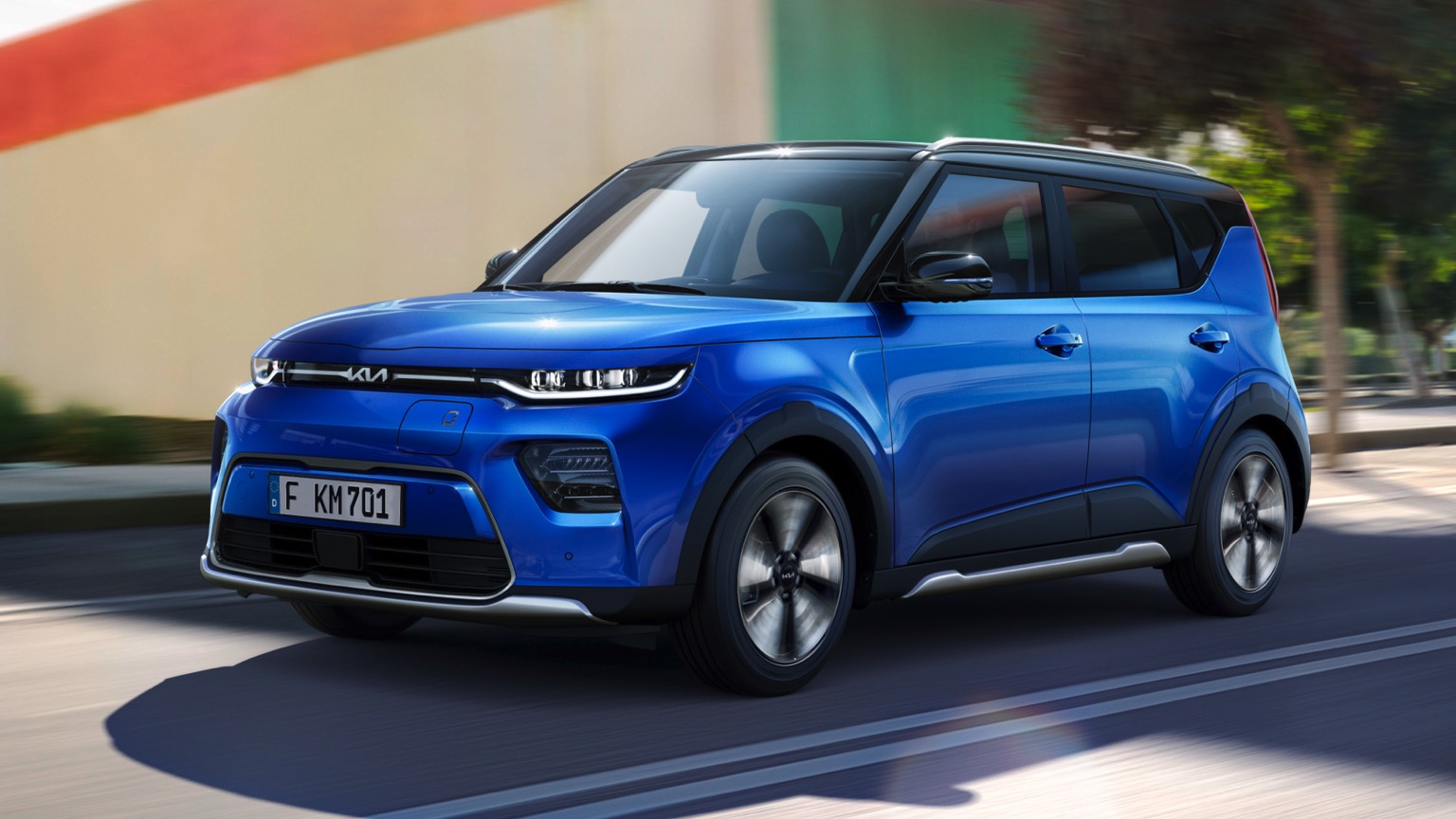
At 65–75 mph, the Soul can feel twitchy, requiring small steering corrections. This isn’t a deal-breaker for city or suburban use, but for lengthy highway driving across windy regions like West Texas or the Dakotas, the wobble becomes noticeable.
The Soul’s short wheelbase also reduces high-speed stability, further compounding the issue.
The 2021 Kia Soul blends fun and functionality with its unmistakably boxy design and surprisingly spacious cabin. While it faces corporate competition from the new Kia Seltos and Hyundai Kona, the Soul remains significantly more affordable.
Buyers can choose between two gas-powered four-cylinder engines, including a spirited 201-hp turbocharged option. Alternatively, an all-electric model is on the horizon.
Although Kia markets the Soul as an SUV, its lack of all-wheel drive and modest ground clearance make it feel more like an oversized hatchback. That said, it delivers engaging driving manners that suit its quirky personality. Fuel efficiency isn’t a strong suit, and the base model lacks driver-assistance features.
The Soul’s engine lineup starts with a 147-hp 2.0-liter four-cylinder, available with either a six-speed manual or a continuously variable automatic transmission (CVT). At our test track, a Soul X-Line equipped with the CVT completed the 0-to-60-mph sprint in 8.0 seconds, though it doesn’t feel underpowered during everyday driving.
The base engine is peppy around town, and the CVT responds willingly with lower gear ratios for extra passing power. The top-spec Turbo model pairs a 201-hp turbocharged 1.6-liter four-cylinder with a seven-speed automatic transmission, achieving a brisk 6.4-second 0-to-60-mph time at our test track.
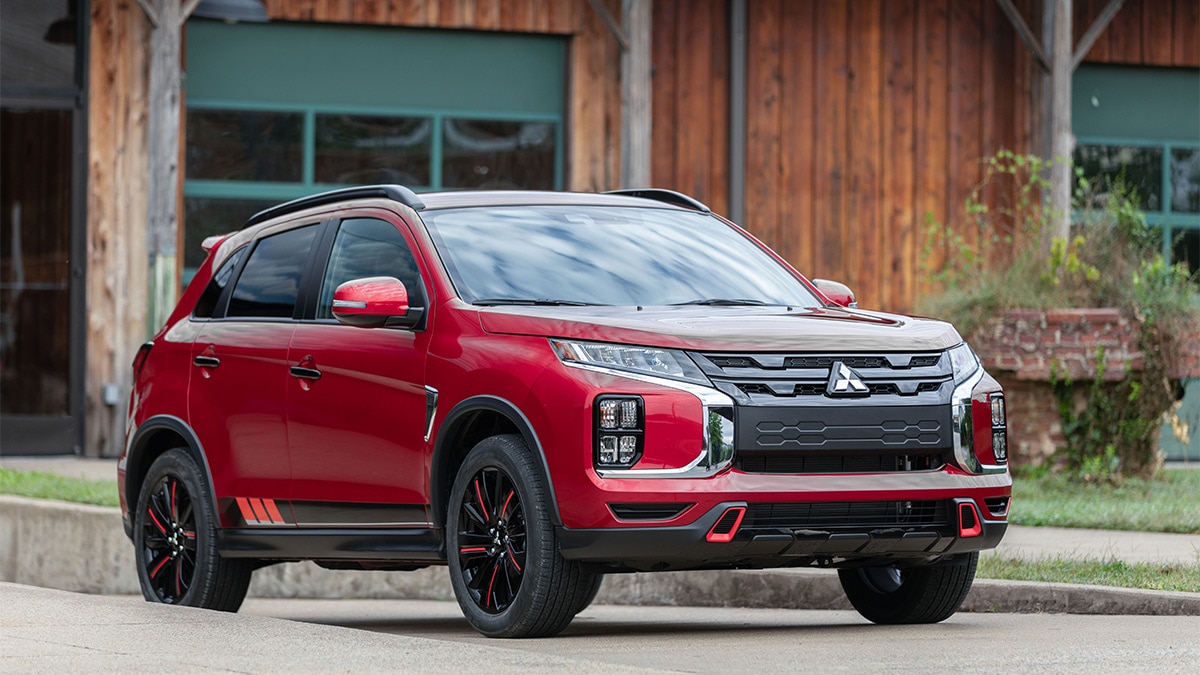
5. Mitsubishi Outlander Sport
The Outlander Sport sits on the lighter, narrower side of the compact SUV category. Its suspension is comfort-oriented but soft, which means that when a roof box adds height and wind resistance, the vehicle leans more in corners and becomes twitchier on straights.
The steering doesn’t offer much feedback, so drivers can feel like they’re making constant corrections on windy days. Even with a good-quality roof box properly mounted, the Outlander Sport never feels as settled as more robust rivals.
Roof boxes are invaluable for road trips, outdoor adventures, and family vacations across the United States. But because roof-mounted cargo changes a vehicle’s aerodynamics, center of gravity, and stability, the type of car you pair it with matters more than many drivers realize.
The “Sport” in Outlander Sport is something of a misnomer. The engine feels underpowered, the continuously variable automatic transmission (CVT) performs poorly, and the handling and suspension tuning are unrefined.
Driving this SUV is a rather dreary experience. Acceleration is jumpy from a standstill but eventually settles into an 8.5-second 0-to-60-mph sprint. Under heavy braking, we observed both pronounced nosedive and side-to-side wiggle, neither of which inspires confidence.
Steering feel is minimal, leaving the driver to constantly tend to the Outlander Sport’s direction, with inputs met by a delayed reaction from the SUV. Stiff shocks make the vehicle skittish, particularly on bumpy corners, and do little to control the considerable body roll.
For buyers who prioritize cost above all else, the Outlander Sport delivers the basics expected of a compact SUV. Our test vehicle came in a few thousand dollars below direct competitors, making it an economical choice.
However, paying more elsewhere will get you better performance, additional connectivity features, and driver-assistance systems that the Outlander Sport simply does not offer.
The SUV’s styling is dated, but it feels solidly assembled despite subpar material quality. On the upside, Mitsubishi provides an exceptionally strong warranty and a roadside assistance program comparable to those of premium vehicles, adding a measure of peace of mind that enhances the Outlander Sport’s overall value proposition.
Vehicles with wide tracks, firmer chassis, and lower-slung bodies tend to handle the extra height without drama, keeping long drives calm and predictable.
On the other hand, lightweight, tall, or softly sprung models often feel less confident once you add rooftop storage.
Whether you’re planning cross-country trips from Chicago to Yellowstone, beach vacations down to Florida, or ski runs across the Rockies, choosing a vehicle that remains stable with extra cargo on top can make all the difference reducing fatigue, improving safety, and making every road trip more enjoyable.
