
When expanding your family or carpooling with multiple young children, finding an SUV that can accommodate three car seats across a single row becomes a critical consideration.
The difference between a spacious, family-friendly vehicle and one that leaves you struggling with buckles and cramped installations can dramatically impact your daily life.
This comprehensive guide examines ten popular SUVs, splitting them into two distinct categories: those that pass the three-car-seat test with flying colors and those that fall short.
The ability to fit three car seats isn’t just about raw width it involves factors like seat belt buckle placement, seat contour design, the presence of LATCH anchors, and cabin architecture.
Some manufacturers prioritize this configuration, understanding that modern families often need to transport multiple young children safely. Others focus on different priorities, resulting in second rows that simply can’t accommodate three standard car seats side-by-side.
In this detailed analysis, we’ll explore five SUVs specifically engineered to handle three car seats comfortably, followed by five popular models that struggle with this configuration.
Whether you’re expecting multiples, have closely-spaced children, or frequently transport neighborhood kids to soccer practice, understanding which vehicles meet your needs can save you from costly mistakes and daily frustration.
Each vehicle profile includes specific dimensions, features, and real-world considerations to help you make an informed decision for your growing family’s transportation needs.
5 SUVs That FIT Three Car Seats
These exceptionally practical vehicles feature genuinely wide second-row benches and minimal wheel-well intrusion that accommodate three full-size car seats across without impossible installation struggles, providing real family utility through thoughtfully dimensioned seating areas and accessible LATCH anchor spacing.
Their sensible engineering includes flat-bottom cushions and generous hip room that resist the narrow center position and protruding wheel wells typically found in supposedly family-focused SUVs where three-across installation becomes physically impossible despite advertised seating capacity.
From infant carrier bases requiring substantial width to convertible seats with wide side wings, these remarkable interiors continue accommodating growing families without the daily buckle-reach gymnastics or door-opening limitations found in poorly proportioned alternatives.
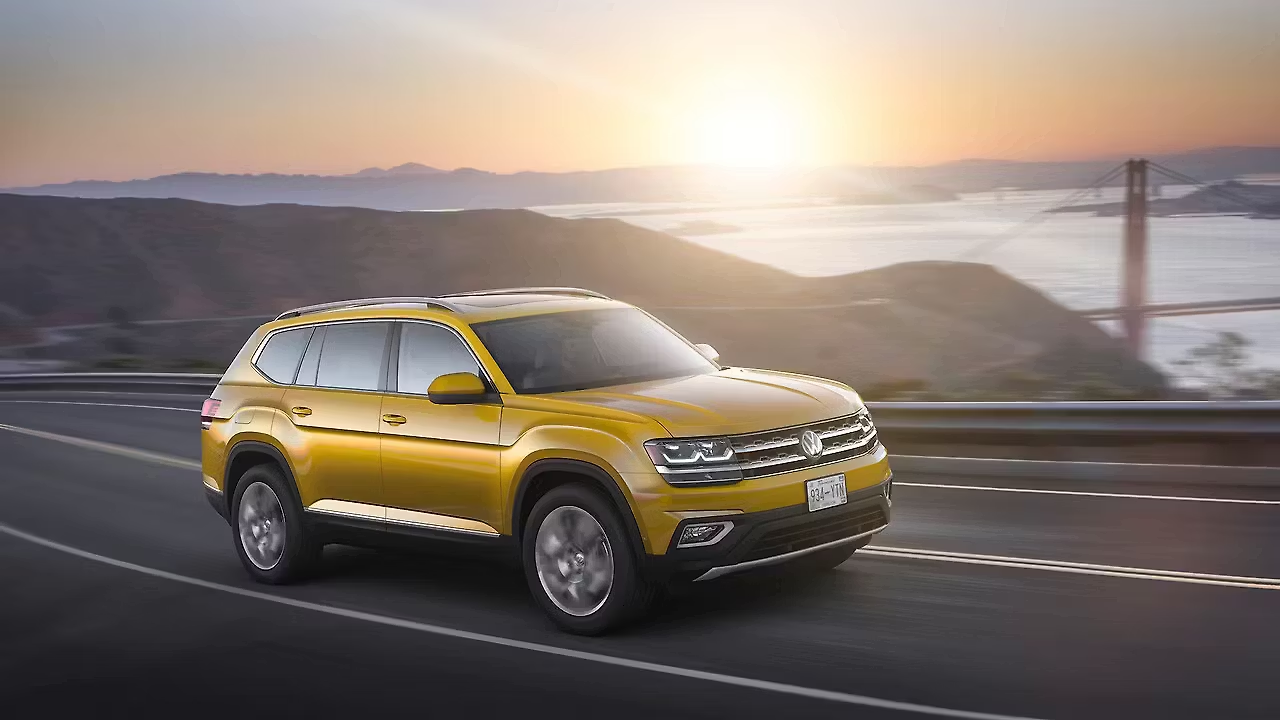
1. Volkswagen Atlas
The Volkswagen Atlas stands as a champion for families needing three-car-seat capability, specifically designed with American family needs in mind.
This three-row SUV offers an exceptionally wide second row measuring approximately 66 inches across, providing ample space for three car seats without the typical squeeze that parents dread during installation.
What sets the Atlas apart is its thoughtful engineering beyond just width. The second-row seats feature a relatively flat bench design that eliminates the pronounced side bolstering found in sportier SUVs, which often interferes with car seat bases.
The seat belt buckles are positioned intelligently to remain accessible even when car seats are installed, and the generous door openings make the installation process significantly easier than in many competitors.
The Atlas provides standard LATCH anchors for the outboard positions, and while the center position relies on seat belt installation (as is typical), the belt path is straightforward and doesn’t require contortionist skills to secure properly.
Parents particularly appreciate that once car seats are installed, there’s still reasonable space to access the third row, though this does become tighter with larger convertible seats.
Beyond car seat accommodation, the Atlas offers practical family features including a substantial cargo area even with all three rows in use, multiple USB charging ports, easy-to-clean interior materials, and available captain’s chairs in the second row for families who need that configuration as children grow.
The infotainment system is intuitive enough that you won’t be fumbling through menus while dealing with children, and the available digital cockpit provides clear information at a glance.
Safety ratings are strong across the board, which is paramount when transporting precious cargo. The Atlas includes standard forward collision warning and automatic emergency braking, with available adaptive cruise control and blind-spot monitoring that prove invaluable when you’re managing a vehicle full of children and all the distractions that entails.
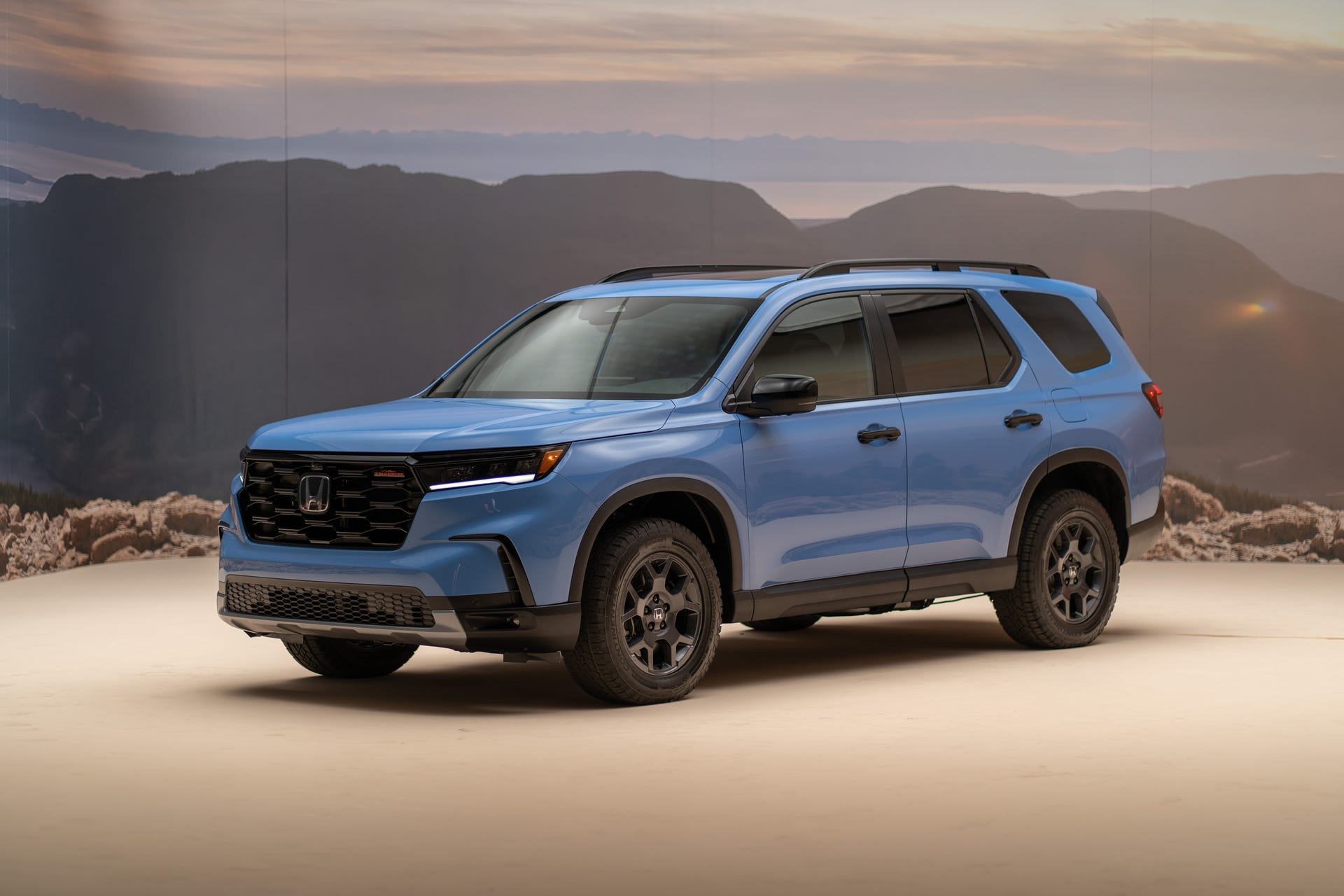
2. Honda Pilot
The Honda Pilot has built a reputation as one of the most family-friendly SUVs available, and its three-car-seat capability is a significant reason why.
With second-row width similar to the Atlas, the Pilot provides approximately 65 inches of space across the bench seat, allowing three car seats to fit with reasonable comfort and without requiring specialized slim-profile seats in most cases.
Honda’s engineering team clearly prioritized family functionality when designing the Pilot’s interior. The second-row bench features a nearly flat cushion profile that accommodates car seat bases exceptionally well, and the seat belt buckles are mounted on flexible stalks that remain reachable even when wedged between car seats.
This seemingly minor detail makes daily use dramatically more convenient when you’re buckling and unbuckling multiple children. The Pilot’s doors open wide nearly 90 degrees creating generous access for installing and adjusting car seats without the awkward angles that plague some competitors.
This becomes especially appreciated during rain or snow when you’re trying to work quickly, or when dealing with rear-facing convertible seats that require more space during installation.
The grab handles are positioned thoughtfully for older children climbing into the third row, and the second-row seats can slide forward easily even with car seats installed, though rear-facing seats do limit this functionality.
LATCH anchor accessibility in the Pilot is above average, with clearly marked anchor points that don’t require excessive force to engage.
The center position, while seat-belt-only, features a buckle design that’s easier to latch than in many vehicles. Honda includes handy storage solutions throughout the cabin, including a deep center console, door pockets sized for sippy cups and snack containers, and underfloor storage in the cargo area for storing strollers and diaper bags out of sight.
The Pilot’s reliability reputation gives parents peace of mind for the long ownership periods typical of family vehicles. With strong resale values and lower-than-average maintenance costs, it represents a smart long-term investment for growing families.
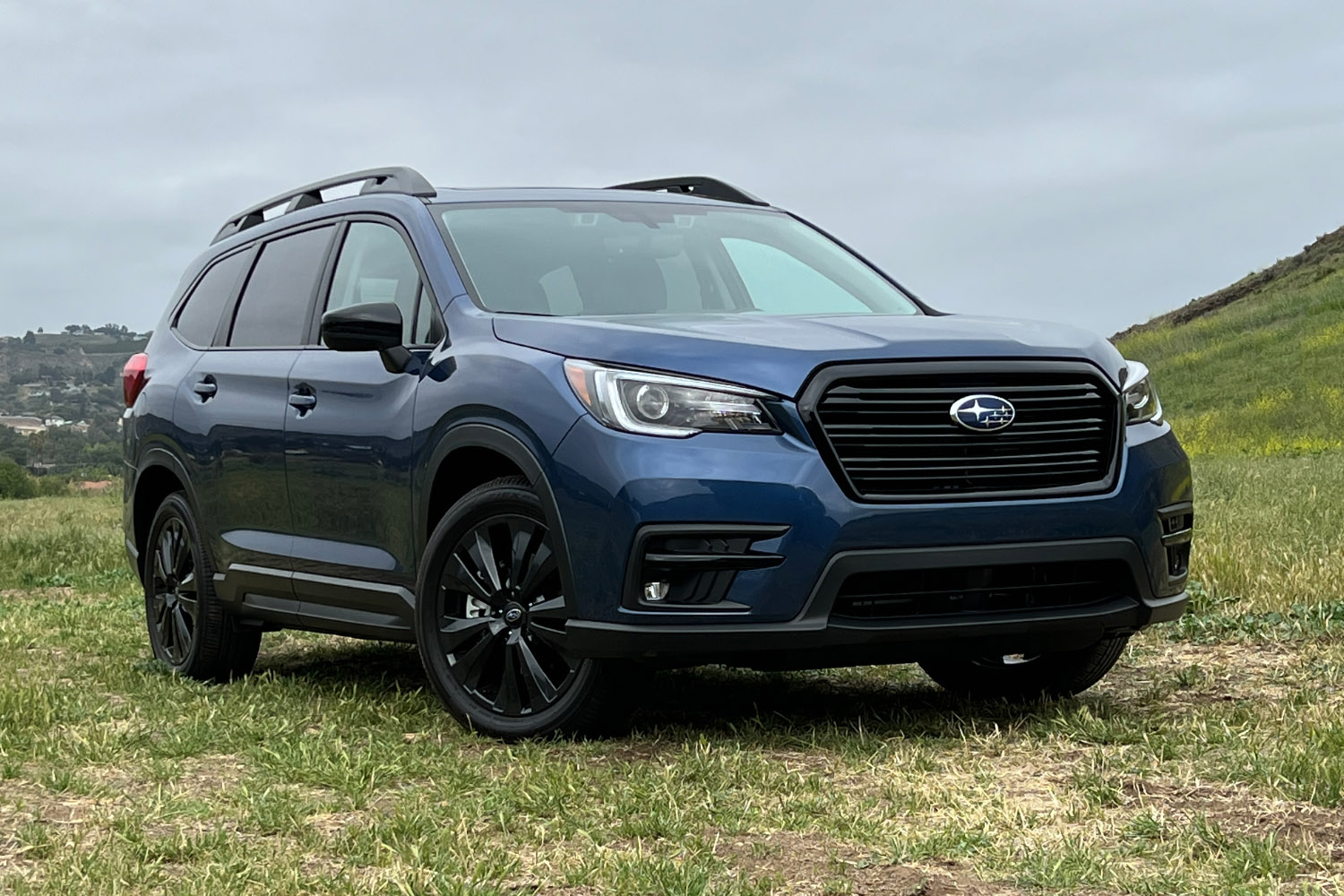
3. Subaru Ascent
The Subaru Ascent enters the three-row SUV market with family needs as a primary focus, and its three-car-seat accommodation reflects this priority.
Measuring approximately 64 inches across the second-row bench, the Ascent provides sufficient width for three car seats, though installation requires more precision than in the slightly wider Atlas or Pilot.
Where the Ascent particularly shines is in the quality of its LATCH system and the ease of car seat installation. The LATCH anchors are easily accessible and clearly marked with bright tags, and they engage smoothly without the excessive force required in some vehicles.
The seat belt system features a smooth-locking mechanism that helps achieve tight car seat installations without struggle, which is crucial for proper safety performance.
Subaru’s standard all-wheel-drive system provides exceptional capability in adverse weather conditions, offering peace of mind for families in snow-prone regions or those who enjoy outdoor adventures.
The higher ground clearance than typical crossovers means you can go through the rougher terrain without worrying about ground clearance when heading to camping trips or remote soccer fields.
This outdoor-oriented design extends to thoughtful features like the water-resistant seat materials and easy-clean surfaces throughout the cabin.
The Ascent includes numerous family-friendly features as standard equipment rather than expensive options. Even base models include multiple USB ports, tri-zone climate control, and Subaru’s EyeSight driver assistance technology, which provides adaptive cruise control, lane-keeping assistance, and automatic emergency braking.
The built-in window shades for the second row are particularly appreciated by parents of young children sensitive to sun exposure. Cargo capacity is generous, and the power liftgate includes a memory function so you can set the maximum opening height useful in garages with limited clearance or for shorter family members who struggle with reaching to close a fully open liftgate.
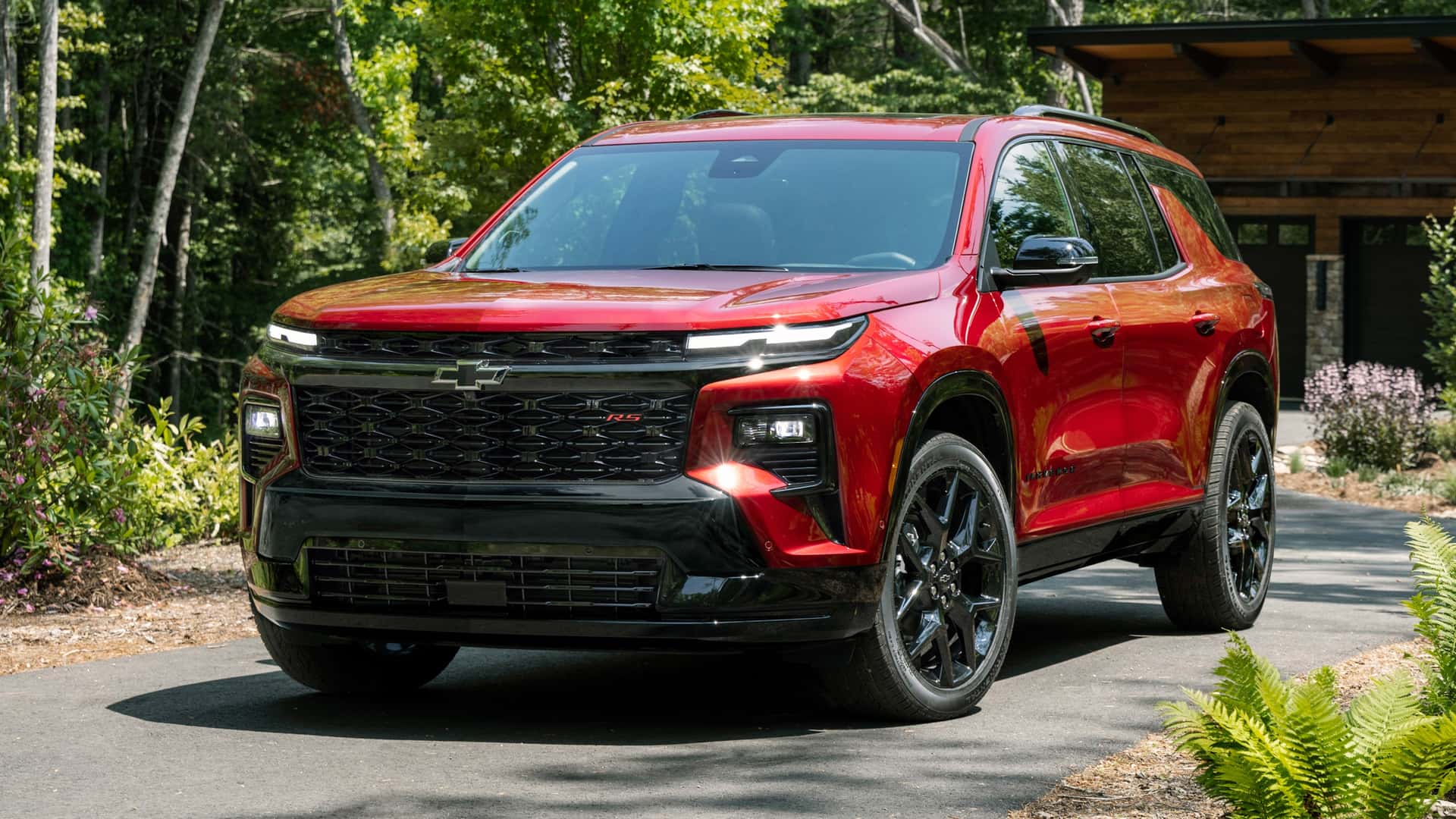
4. Chevrolet Traverse
The Chevrolet Traverse represents American SUV design at its most spacious, and families needing three-car-seat capability will appreciate its generous proportions.
With a second-row bench width exceeding 65 inches, the Traverse provides comfortable accommodation for three car seats without requiring specialty narrow models in most situations.
General Motors designed the Traverse with flexible seating configurations that serve families throughout different life stages. The available second-row captain’s chairs can be swapped for the bench configuration when you need three-across capability, providing versatility that some competitors lack.
When installed, the second-row bench features a relatively flat profile that doesn’t have the pronounced contouring that interferes with car seat bases in sportier models.
One standout feature of the Traverse is its exceptional cargo space among the largest in the segment. Even with all three rows in use, there’s meaningful cargo room for groceries, sports equipment, or a stroller.
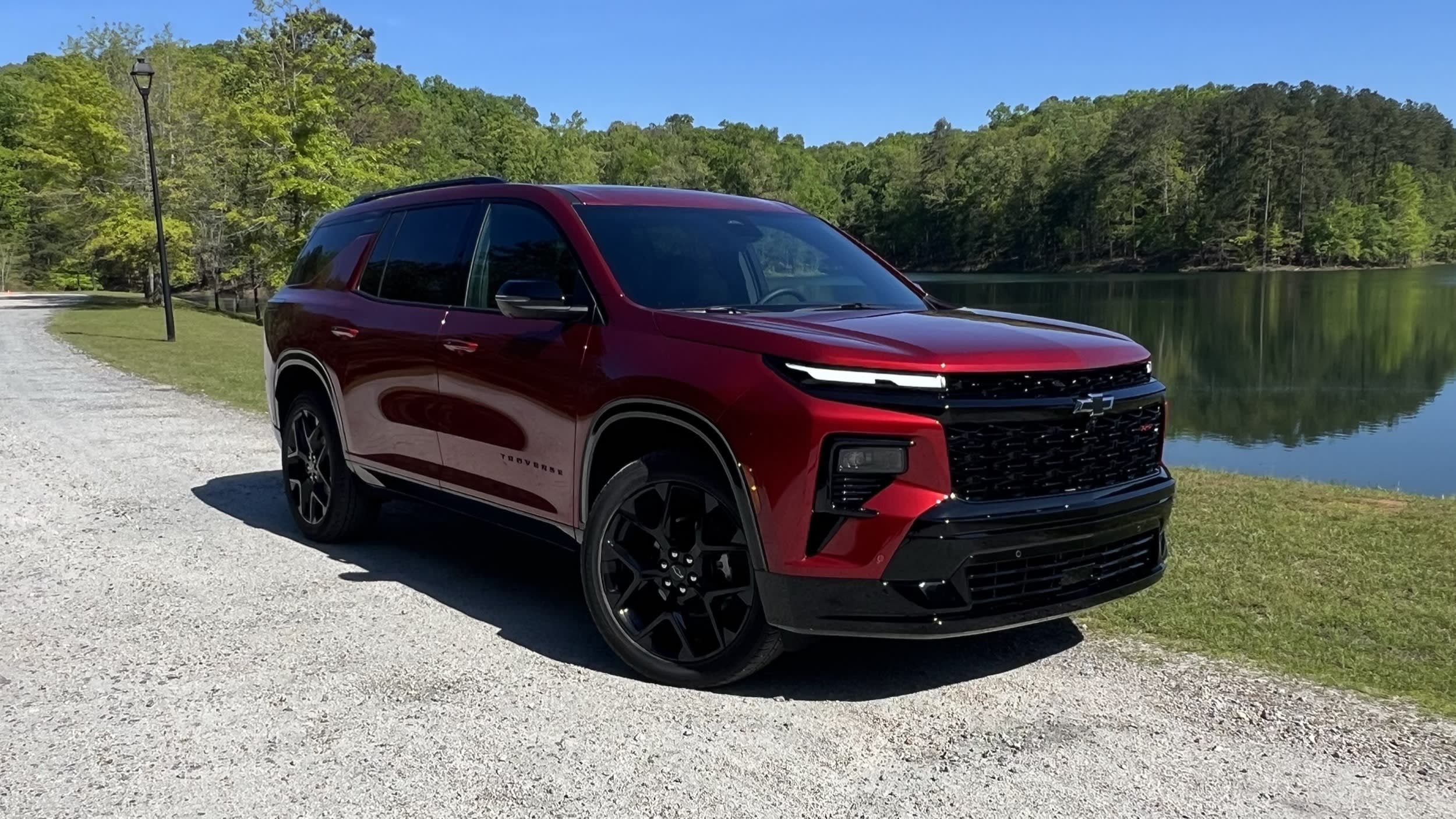
Fold the third row, and you have a cavernous space that rivals many minivans. This practical capacity matters when you’re managing the gear that comes with multiple children, from diaper bags to baseball equipment.
The Traverse’s infotainment system includes available rear-seat entertainment, which can be a sanity-saver on long road trips with multiple children.
The system includes wireless headphone connectivity, multiple inputs for devices, and easy-to-use controls that older children can operate independently. The available 4G LTE Wi-Fi hotspot keeps devices connected without draining your phone’s data plan during extended travels.
Technology features include available surround-view cameras that make parking this large SUV easier, and the rear camera washer helps maintain visibility even in muddy or snowy conditions a practical feature for family vehicles that actually get used. The blind-spot monitoring system extends to trailer coverage, useful for families who tow boats or campers for vacation adventures.
Also Read: 6 Cars You Can Trust on Late-Night Drives vs. 6 You Can’t
5. Nissan Pathfinder
The redesigned Nissan Pathfinder has emerged as a strong contender for families needing three-car-seat capability, combining width with smart interior design.
The second-row bench measures approximately 64 inches across, providing adequate space for three car seats when carefully selected and positioned. While slightly tighter than the Atlas or Traverse, most families report successful installations with standard car seats.
Nissan’s engineering team made several smart decisions regarding the second-row design. The bench seat features minimal side bolstering and a relatively flat cushion that accommodates various car seat bases well.
The seat belt buckles, while not on stalks like the Pilot, are positioned to remain accessible with some maneuvering. The LATCH anchors are clearly marked and reasonably easy to access, though they do require some effort to engage initially they loosen up with use.
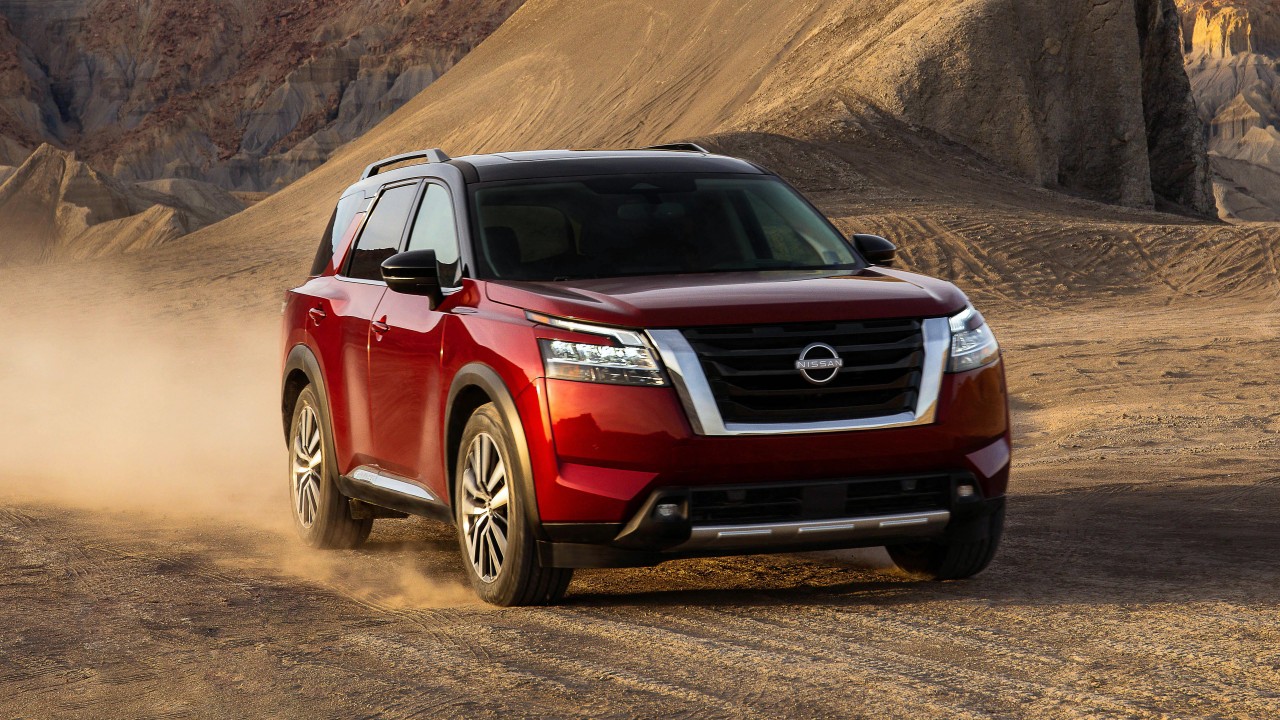
The Pathfinder’s second row offers substantial legroom up to 38 inches which becomes important when installing rear-facing car seats.
This generous space means that front passengers don’t need to sacrifice comfort even with bulky rear-facing convertible seats behind them, a common complaint in smaller vehicles. The seats also slide and recline, allowing customization for comfort once car seats are removed as children grow.
Interior quality in the new Pathfinder represents a significant upgrade from previous generations, with soft-touch materials, attractive design, and thoughtful storage solutions throughout.
The center console is sized to hold a large handbag or diaper bag, door pockets are generous, and there are numerous cup holders and small-item storage bins scattered throughout the cabin essential for managing the chaos that comes with multiple children.
The Pathfinder includes Nissan’s Safety Shield 360 as standard equipment, providing automatic emergency braking, blind-spot warning, rear cross-traffic alert, lane departure warning, and high beam assist.
These features provide extra protection and peace of mind when you’re managing a vehicle full of children and all the distractions that accompany family travel.
5 SUVs That WON’T Fit Three Car Seats
These deceptively marketed vehicles suffer from narrow second-row benches and intrusive wheel-well bulges that make advertised five-passenger capacity completely unrealistic when actual car seats are installed, forcing impossibly tight squeezes that render center buckles unreachable.
Their problematic design includes inadequate LATCH anchor spacing and protruding center floor tunnels that cannot accommodate three modern car seats despite marketing claims and supposed family SUV positioning creating false purchase expectations.
Despite spacious exterior dimensions and three-row configurations, these SUVs fail real-world family tests through their too-narrow second rows where car seat bases physically contact each other, making secure installation impossible without extreme-angle positioning compromising safety.
1. Mazda CX-9
The Mazda CX-9 positions itself as a premium three-row SUV with an emphasis on driving dynamics and upscale interior design, but these priorities come at a cost for families needing three-car-seat capability.
The second-row bench measures approximately 61 inches across, several inches narrower than the Atlas or Pilot, and this difference proves critical when attempting to install three car seats.
Beyond raw width, the CX-9’s second-row seats feature pronounced side bolstering designed to hold occupants securely during spirited driving.
While this bolstering serves its intended purpose well for older children and adults, it significantly interferes with car seat bases, effectively reducing the usable width even further.
The contoured seat cushions create an uneven surface that makes it difficult to achieve the stable, level installation that car seat manufacturers recommend for optimal safety performance.
Parents who have attempted three-car-seat installations in the CX-9 report that while it might be technically possible with three extremely narrow car seats, the installation is so tight that accessing seat belt buckles becomes nearly impossible without removing adjacent seats.
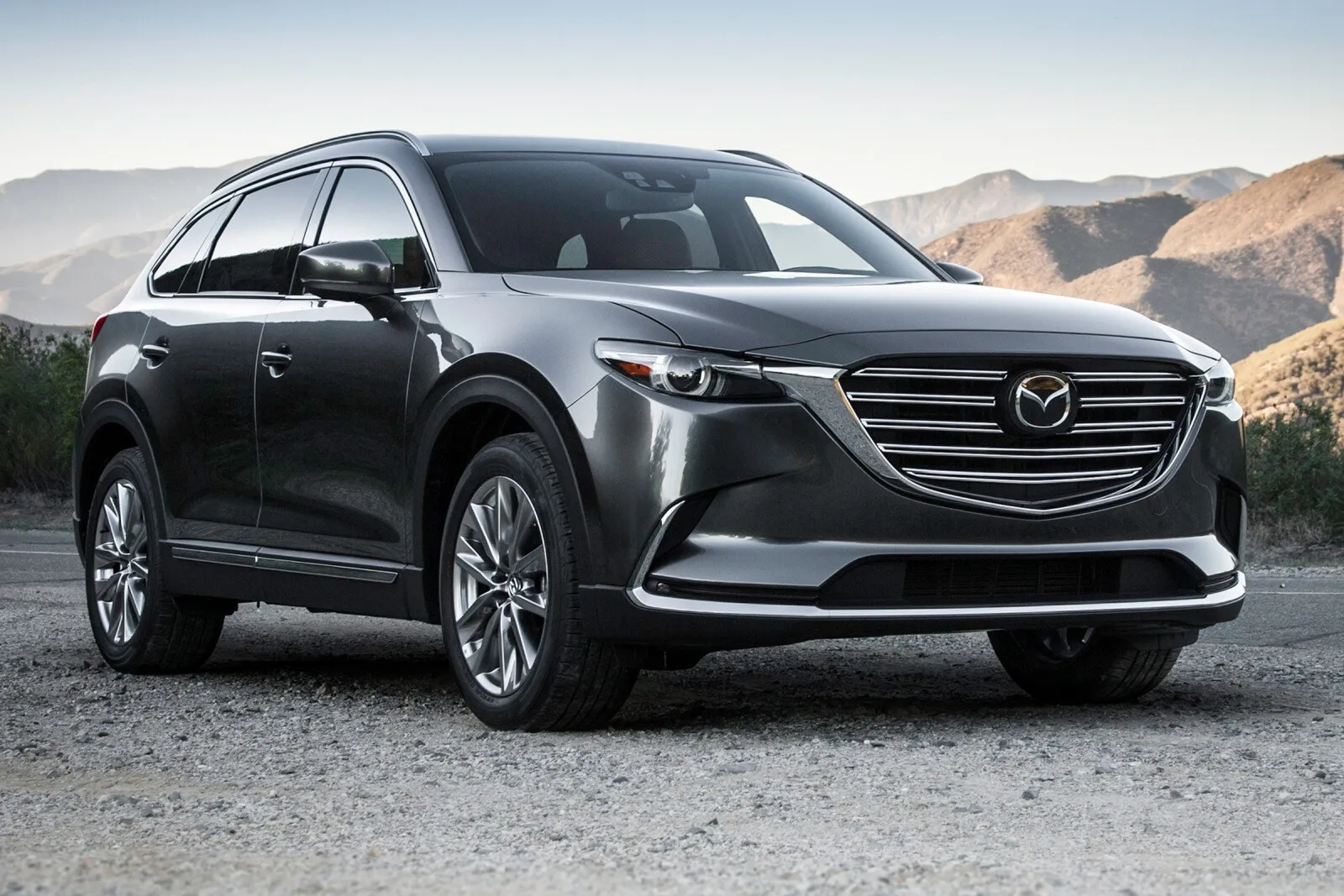
This impracticality makes it unsuitable for daily use with three car seats, even if you can initially force them into position. The LATCH anchors, while of good quality, are spaced in a way that creates conflicts when trying to fit three seats across.
The CX-9 excels in many other areas it offers a refined driving experience, upscale interior materials, and strong safety ratings. The available second-row captain’s chairs are excellent for families with two children, providing generous space, armrests, and comfort.
The interior design is genuinely premium, with materials and build quality that rival luxury brands. However, for families specifically needing three-across car seat capability, these strengths don’t overcome the fundamental width limitation.
It’s worth noting that the CX-9 does fit three booster seats more comfortably than infant or convertible seats, as boosters are narrower and don’t have the wide bases of harnessed seats.
Families with older children who have transitioned to boosters may find the CX-9 workable, but for infants and toddlers, the space simply isn’t adequate for practical daily use.
2. Hyundai Palisade
The Hyundai Palisade has received widespread acclaim for its value proposition, featuring luxury-level amenities at a mainstream price point, but potential buyers needing three-car-seat capability should approach with caution.
Despite being a three-row midsize SUV, the Palisade’s second-row bench measures approximately 62 inches across wider than the CX-9 but still insufficient for comfortable three-car-seat installation in most cases.
The primary issue with the Palisade isn’t just the moderate width but the seat design itself. Hyundai focused on comfort and luxury, resulting in second-row seats with substantial cushioning and side bolsters that, while comfortable for older passengers, create obstacles for car seat installation.
The cushions are deeply contoured, making it challenging to achieve a level, stable installation for car seats. The seat belt buckles are also positioned in a way that becomes very difficult to access when car seats are installed side-by-side.
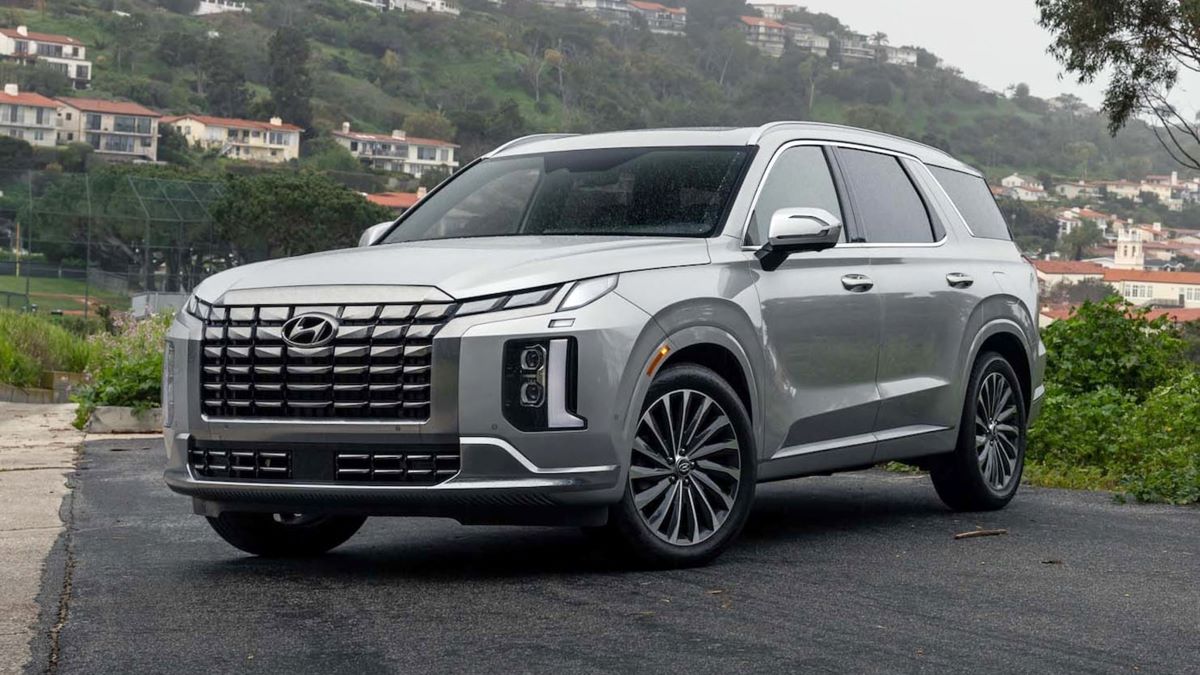
Many Palisade owners report that while you might successfully install three narrow car seats initially, the practical challenges of daily use make this configuration frustrating.
Buckling and unbuckling children becomes a workout, and adjusting straps or checking that car seats remain tight requires partially removing adjacent seats.
This impracticality means that while the Palisade might technically “fit” three car seats in emergency situations, it’s not a viable solution for families who need this configuration regularly.
The Palisade does offer exceptional value in nearly every other regard. The list of standard features is extensive, including multiple USB ports, tri-zone climate control, and a comprehensive suite of driver assistance technologies.
The available second-row captain’s chairs are genuinely luxurious with ventilation, heating, leg rests, and wide armrests. The interior materials rival those of luxury brands, and the infotainment system is intuitive and feature-rich.
For families with two children or those whose children have aged beyond harnessed seats into boosters, the Palisade remains an excellent choice offering tremendous value and capability.
3. Ford Explorer
The Ford Explorer holds iconic status in the SUV segment and offers strong capabilities in many areas, but three-car-seat accommodation isn’t among its strengths.
The second-row bench width measures approximately 61-62 inches, and when combined with the seat contours and bolstering, practical three-across car seat installation becomes extremely difficult for most families.
Ford designed the current-generation Explorer with a more athletic character than previous versions, featuring sculpted seats with defined bolsters to enhance the driving experience.
These design choices, while successful for their intended purpose, create significant challenges for car seat installation. The seat cushions aren’t flat, and the side bolsters intrude on the space available for car seat bases.
Additionally, the seat belt buckles are recessed into the seat cushions in a way that makes them very difficult to access when car seats are installed adjacent to each other.
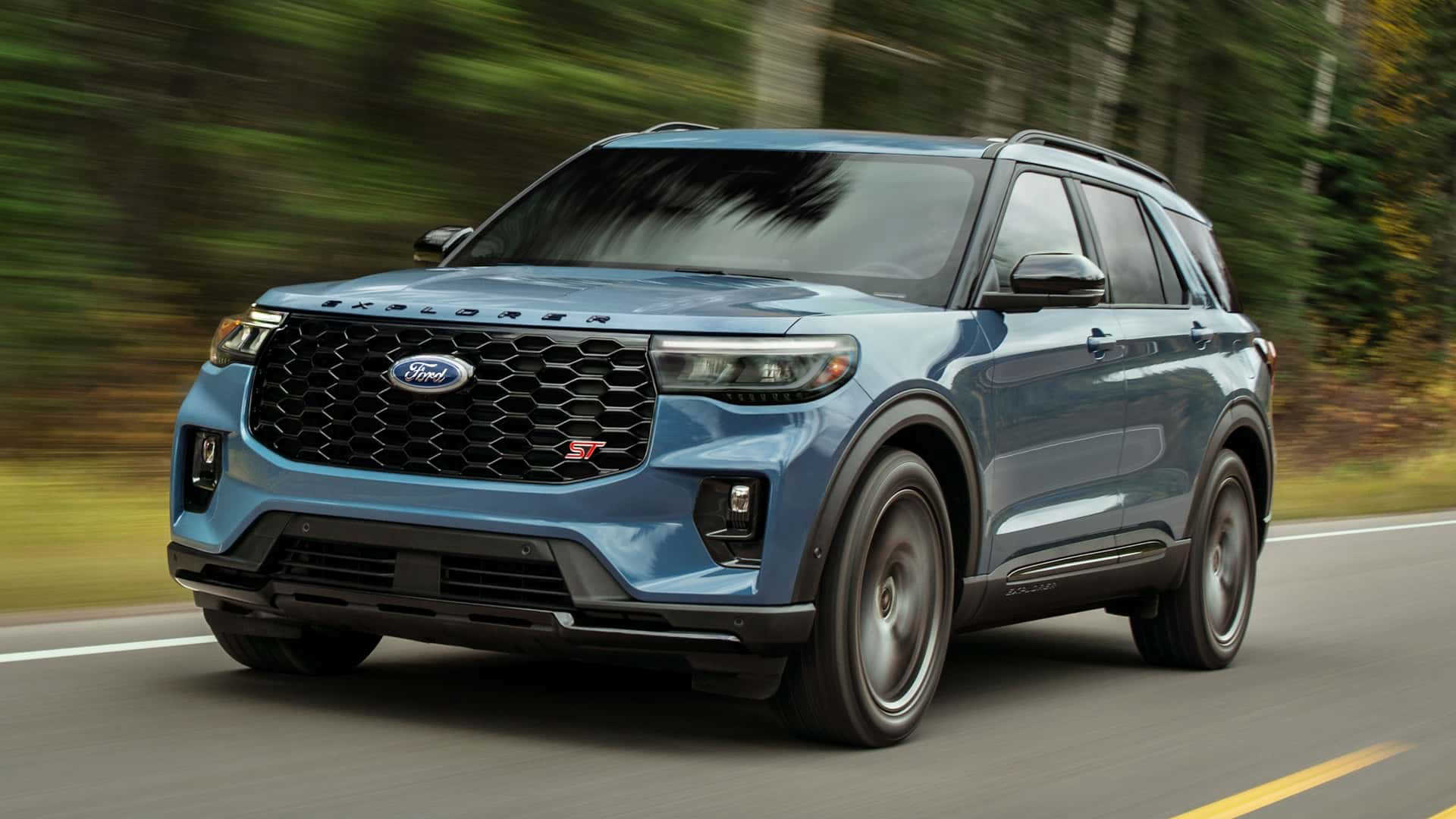
Parents who have attempted three-car-seat installations in the Explorer consistently report that even when using the narrowest car seats available, the fit is so tight that buckling and unbuckling becomes impractical for daily use.
The center seat position is particularly problematic, with the buckle positioned in a location that becomes almost completely inaccessible when car seats flank it.
Some families report success with three booster seats, but for harnessed infant or convertible seats, the Explorer simply doesn’t provide adequate practical space.
The Explorer does offer many positive attributes for families who don’t require three-across car seat capability. The available hybrid powertrain provides impressive fuel economy for a vehicle of this size, and the driving dynamics are engaging without sacrificing comfort.
The technology features are comprehensive, including available productivity screens that can display navigation and entertainment simultaneously, wireless charging, and an excellent sound system.
The third-row space in the Explorer is also noteworthy it’s more accommodating than in many competitors, making it a good choice for families with older children who have outgrown car seats.
4. Jeep Grand Cherokee L
The three-row Jeep Grand Cherokee L (the L designation distinguishes it from the two-row Grand Cherokee) brings Jeep’s rugged capability to the three-row SUV segment, but families specifically needing three-car-seat capability will likely be disappointed.
The second-row bench width measures approximately 61 inches, and the seat design prioritizes comfort and support over car seat accommodation.
Jeep designed the Grand Cherokee L with premium materials and comfort as priorities, resulting in well-bolstered, contoured seats that work beautifully for older children and adults but create obstacles for car seat installation.
The seat cushions have pronounced sculpting that prevents car seat bases from sitting flat and level, which can affect both the security of the installation and the proper functioning of the car seat.
The center position is raised slightly compared to the outboard positions, further complicating three-across installations. The LATCH anchor spacing in the Grand Cherokee L also presents challenges.
While the anchors themselves are of good quality, their positioning makes it difficult to install three car seats without some overlap that can compromise installation security.
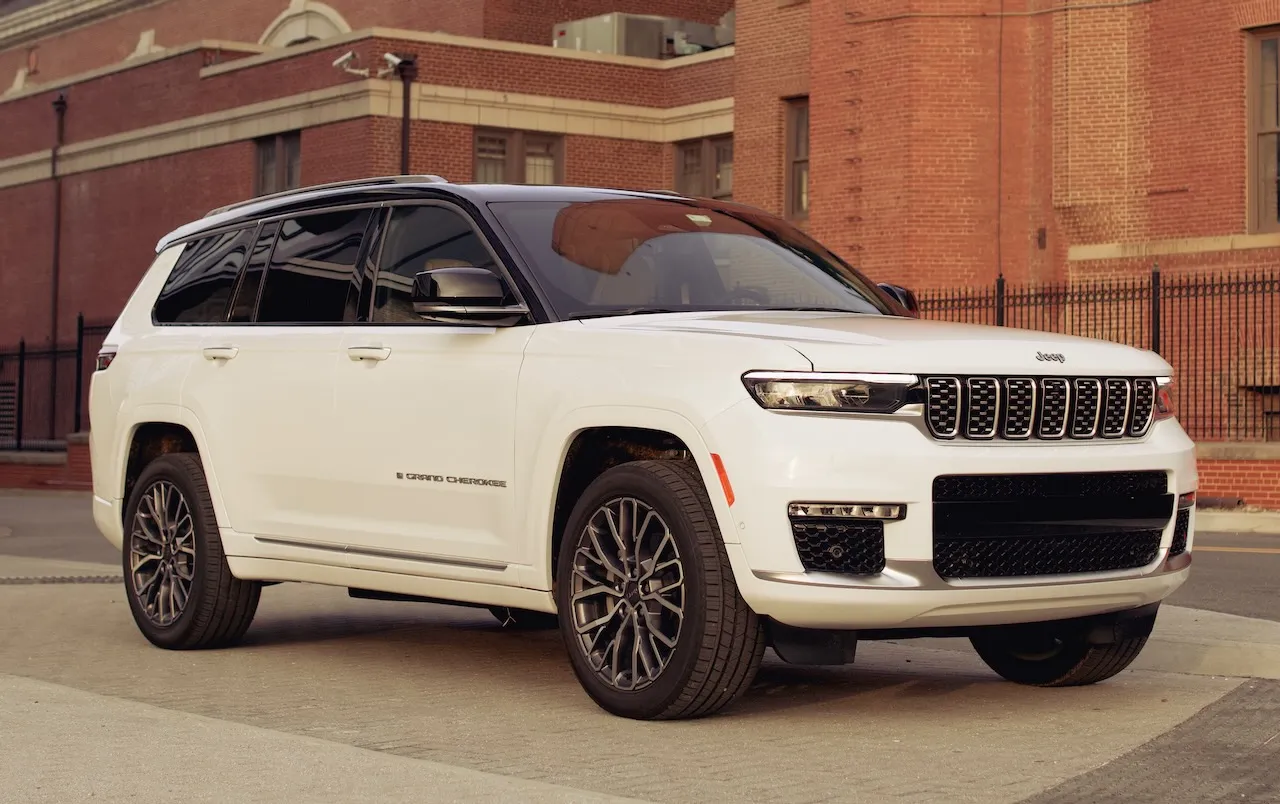
The seat belt buckles, while robust and easy to use with normal passengers, become nearly impossible to access when car seats occupy adjacent positions.
Multiple owners have reported that they were able to force three narrow car seats into the Grand Cherokee L initially, but found that adjusting straps, checking installations, or unbuckling children required removing one or more car seats clearly not practical for daily family life.
The Grand Cherokee L excels in other areas that matter to families. The available Quadra-Lift air suspension provides excellent ride quality and can raise the vehicle for additional ground clearance when adventuring off-road, then lower it for easier entry for small children.
The interior is genuinely upscale with premium materials throughout, and the available McIntosh audio system is exceptional. The off-road capability is substantial for a family SUV, making it an excellent choice for outdoor-oriented families.
For families with two children or those whose children use booster seats rather than harnessed seats, the Grand Cherokee L offers an appealing combination of luxury, capability, and style.
5. Acura MDX
The Acura MDX represents Honda’s luxury brand entry in the three-row SUV segment, offering refinement, technology, and strong reliability credentials, but its second-row dimensions limit three-car-seat capability.
The second-row bench measures approximately 61 inches across, similar to the Mazda CX-9, and the premium seat design further reduces practical car seat space.
Acura positioned the MDX as a premium alternative to mainstream three-row SUVs, and the interior reflects this positioning with high-quality materials, excellent build quality, and sophisticated design.
The second-row seats feature substantial bolstering and contouring designed to provide excellent support and comfort for adult passengers and older children.
However, these same design elements create significant challenges for car seat installation, as the bolsters and contours don’t accommodate the flat, wide bases typical of infant and convertible car seats.
The seat cushions in the MDX are also quite firm a positive attribute for long-distance adult comfort but problematic for achieving stable car seat installations.
Car seats tend to sit on top of rather than settling into the seat cushions, which can make achieving appropriately tight installations more difficult.
The seat belt geometry, while excellent for protecting adult occupants, creates awkward angles for car seat installation, particularly in the center position.
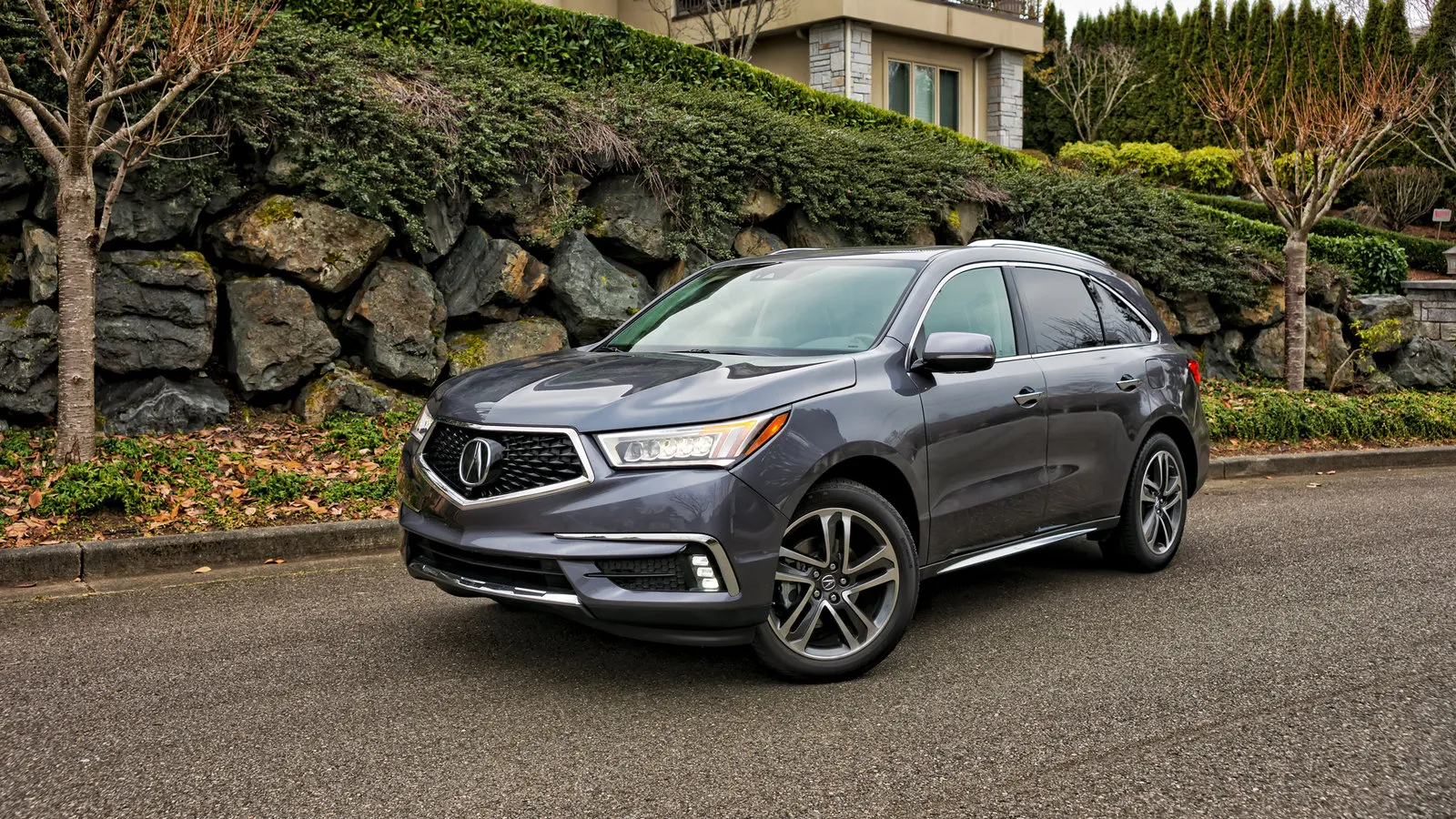
Parents who have attempted three-car-seat installations in the MDX report similar experiences to other vehicles in this category—technically possible with extremely narrow car seats, but impractical for daily use due to inaccessible buckles and insufficient space to check or adjust installations properly.
The center seat position is particularly problematic, as the buckle becomes almost completely inaccessible when flanked by car seats. Some families have found success using the center seat only for an older child in a booster while using the outboard positions for harnessed seats, but true three-across capability with infant or convertible seats remains elusive.
The MDX offers numerous strengths that make it appealing to families who don’t require three-across car seat capability. The available Super Handling All-Wheel Drive provides exceptional handling dynamics while maintaining impressive all-weather traction.
The technology suite is comprehensive, including a premium audio system, wireless connectivity, and advanced driver assistance features. Acura’s reliability reputation and strong safety ratings provide peace of mind for the long ownership periods typical of family vehicles.
For families with two children or those whose children have transitioned to boosters, the MDX remains an excellent choice offering luxury-brand quality with Honda’s legendary reliability.
Also Read: 5 Rides That Feel Planted in Rain vs. 5 That Slip Early
