
The three-row SUV has become the default choice for growing families across America, promising the space of a minivan with the style and capability that modern buyers demand.
But not all third rows are created equal. Walk into any dealership, and you’ll find that some three-row SUVs offer genuinely usable space for adults in that back row, while others relegate passengers to a cramped, knees-to-chest experience suitable only for children or very short trips.
This distinction matters more than marketing brochures suggest. A true adult-friendly third row transforms an SUV from a vehicle that occasionally accommodates extra passengers into one that comfortably handles regular carpools, extended family trips, or nights out with friends.
It’s the difference between your teenagers fighting over who gets stuck in the back and having a vehicle where every seat is genuinely comfortable.
The challenge for shoppers is that automakers rarely advertise which category their SUV falls into. They’ll tout “spacious three-row seating” regardless of whether that third row offers 36 inches of legroom or a mere 27.
They’ll show photos of smiling children in the back without mentioning that anyone over five feet tall would be miserable within minutes. The result is that many families purchase a three-row SUV expecting versatility, only to discover they’ve bought an expensive two-row vehicle with an occasional emergency seat.
In this comprehensive guide, we’ll examine five SUVs that genuinely deliver on the promise of adult-friendly three-row seating, then contrast them with five popular models whose third rows are realistically only suitable for children.
Whether you’re going through the complicated world of family transportation or simply want to understand what you’re actually getting before signing on the dotted line, this comparison will help you make an informed decision about which type of three-row SUV truly meets your needs.
5 SUVs with Real Third-Row Room
These exceptionally spacious vehicles feature genuinely adult-friendly third-row seating and adequate legroom that accommodate full-size passengers comfortably during extended drives, providing legitimate seven-passenger capability through thoughtfully designed rear compartments with proper headroom and floor positioning.
Their practical engineering includes easy third-row access mechanisms and comfortable cushion angles that resist the knees-to-chest positioning and claustrophobic headroom typically found in token third rows designed purely for marketing purposes rather than actual human comfort.
From transporting visiting relatives requiring dignified seating to carpooling adults expecting reasonable comfort, these remarkable SUVs continue providing usable third-row space without the apologetic explanations or passenger complaints found in cramped alternatives marketed dishonestly as seven-seaters.
1. Volkswagen Atlas
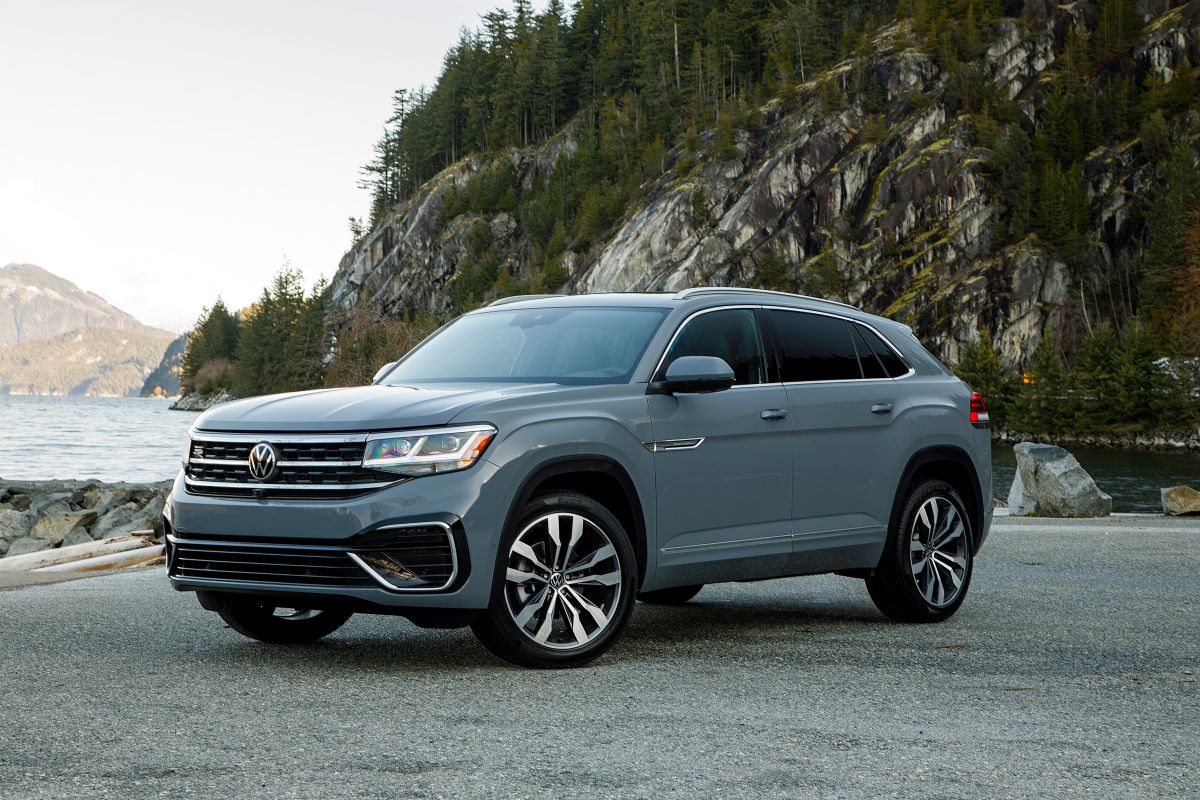
The Volkswagen Atlas stands as one of the most genuinely spacious three-row SUVs on the market, designed specifically with the American family in mind.
Unlike many automakers who simply stretch an existing platform, Volkswagen engineered the Atlas from the ground up to maximize interior space, and that commitment shows most clearly in its third row.
With 33.7 inches of legroom, the Atlas offers more space in its back row than many compact SUVs provide in their second row, making it a standout choice for families who need regular seating for seven or eight passengers.
What sets the Atlas apart isn’t just the raw numbers but how that space translates to real-world comfort. The third-row seats sit at a reasonable height off the floor, meaning adults don’t find themselves with their knees up near their chest.
The seat cushions themselves offer decent thigh support, and the backrest angles at a comfortable position rather than forcing passengers into an upright, bus-seat posture.
Headroom measures a generous 38.1 inches, which means even taller passengers can sit comfortably without their heads brushing the headliner. This spaciousness remains consistent whether you opt for the six-passenger configuration with captain’s chairs or the eight-passenger bench-seat layout.
Volkswagen offers the Atlas with two engine options: a turbocharged 2.0-liter four-cylinder producing 235 horsepower, or a 3.6-liter V6 generating 276 horsepower.
While the four-cylinder proves adequate for most driving situations, families who regularly fill all three rows will appreciate the V6’s additional power, particularly when merging onto highways or climbing steep grades.
Both engines pair with an eight-speed automatic transmission, and all-wheel drive is available across the lineup. The ride quality skews toward comfort, with suspension tuning that soaks up road imperfections well, making it pleasant for those third-row passengers on longer trips.
2. Chevrolet Traverse
The Chevrolet Traverse represents the culmination of decades of GM experience building three-row family vehicles, and it shows. With third-row legroom measuring 33.5 inches, the Traverse matches the Volkswagen Atlas nearly inch-for-inch while offering a distinctly American approach to family transportation.
This SUV doesn’t just accommodate adults in the third row it makes them comfortable enough that no one dreads being assigned to the back seats on a long road trip.
The Traverse’s third row benefits from intelligent design choices throughout the cabin. The stadium-style seating arrangement places each row slightly higher than the one in front, which means third-row passengers get a better view out the windows rather than staring at the backs of second-row headrests.
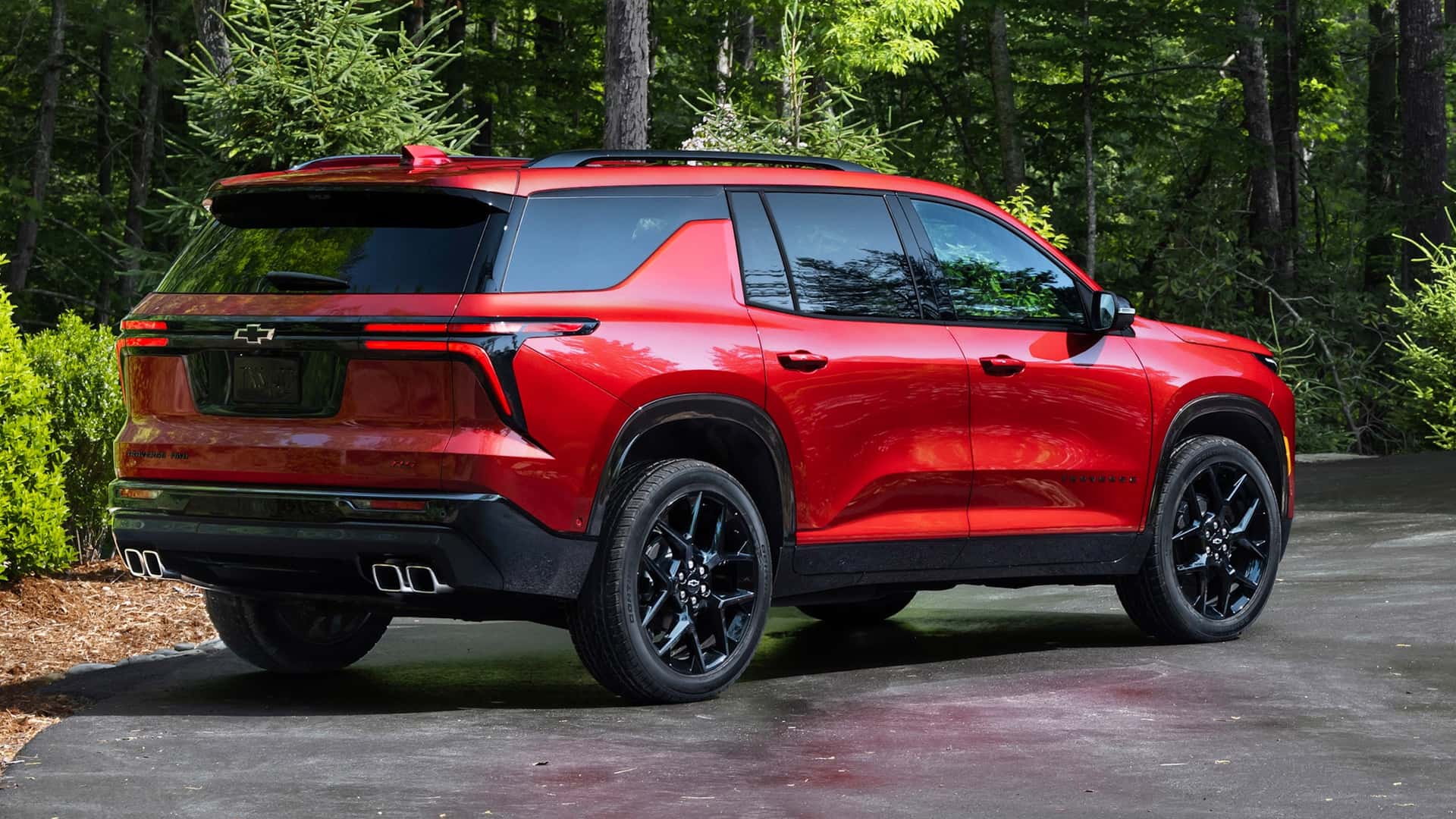
This raised position also contributes to the impressive 38.4 inches of headroom, ensuring that taller passengers don’t feel claustrophobic.
The seat cushions themselves are well-padded and properly contoured, offering genuine comfort rather than the thin, flat cushions found in many competitors’ third rows.
Under the hood, the Traverse relies on a single powertrain: a 3.6-liter V6 engine producing 310 horsepower and 266 lb-ft of torque, paired with a nine-speed automatic transmission.
This engine provides ample power for all driving situations, whether you’re merging into traffic with seven passengers aboard or towing a boat to the lake (the Traverse can tow up to 5,000 pounds when properly equipped).
Front-wheel drive comes standard, with all-wheel drive available as an option. The ride quality is composed and comfortable, with suspension tuning that prioritizes passenger comfort over sporty handling exactly what you want in a family hauler.
3. Honda Pilot
The Honda Pilot has long been the sensible choice for families who prioritize reliability and practicality, and the current generation delivers genuine three-row utility that goes beyond just checking a box on the features list.
With 31.9 inches of third-row legroom, the Pilot doesn’t quite match the Traverse or Atlas in raw measurements, but Honda’s engineering expertise means every inch is optimized for actual usability.
The result is a third row that accommodates adults comfortably for trips of several hours, not just emergency seating for short drives. Honda’s approach to the Pilot’s interior focuses on real-world family needs.
The third row sits high enough off the floor that passengers can maintain a natural seating position with proper thigh support, and the cushions themselves are surprisingly well-padded for this class.
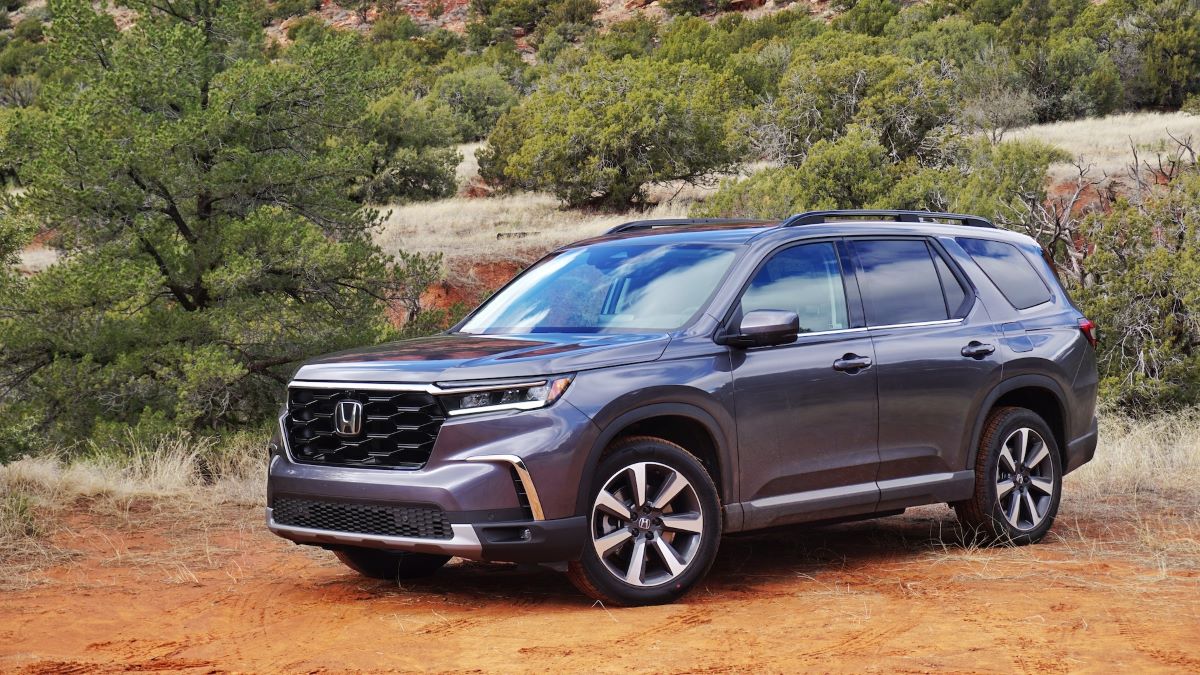
The 36.9 inches of headroom means even six-footers can sit without their heads touching the ceiling. Perhaps most importantly, the third row is wide enough to comfortably seat three children or two adults without everyone feeling cramped shoulder-to-shoulder.
The current Pilot features a 3.5-liter V6 engine producing 280 horsepower, paired with either a nine-speed or ten-speed automatic transmission depending on the trim level. This powertrain delivers smooth, refined power with enough capability to tow up to 5,000 pounds.
Honda offers the Pilot with front-wheel drive or all-wheel drive, with the AWD system intelligently routing power to maintain traction in various conditions.
The ride quality is typically Honda composed, comfortable, and confidence-inspiring, with handling that’s more engaging than you might expect from a three-row family SUV. Fuel efficiency is competitive for the class, with combined ratings around 22-23 mpg.
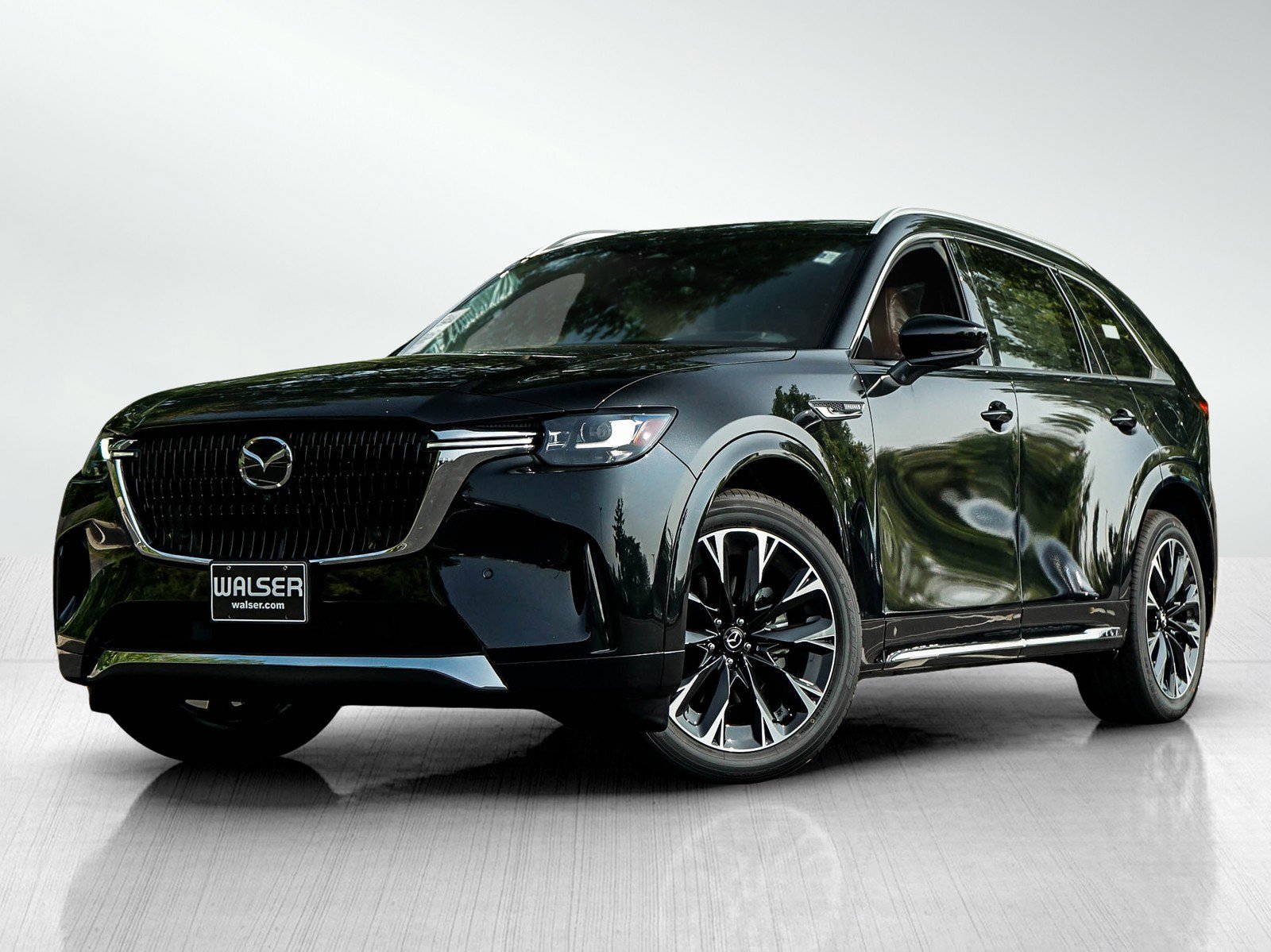
4. Mazda CX-90
The Mazda CX-90 brings a premium approach to the three-row SUV segment, demonstrating that you don’t have to sacrifice style and driving dynamics to get genuine third-row utility.
While it’s newer to the three-row game than some competitors, Mazda leveraged its rear-wheel-drive platform to create a third row with 30.9 inches of legroom enough to comfortably accommodate adults on regular trips.
The CX-90 proves that a three-row SUV can be both sophisticated and spacious, appealing to buyers who want their family vehicle to feel special.
What distinguishes the CX-90 is its upscale execution. The interior materials and build quality exceed what you’ll find in most mainstream three-row SUVs, with soft-touch surfaces, genuine wood trim, and attention to detail throughout.
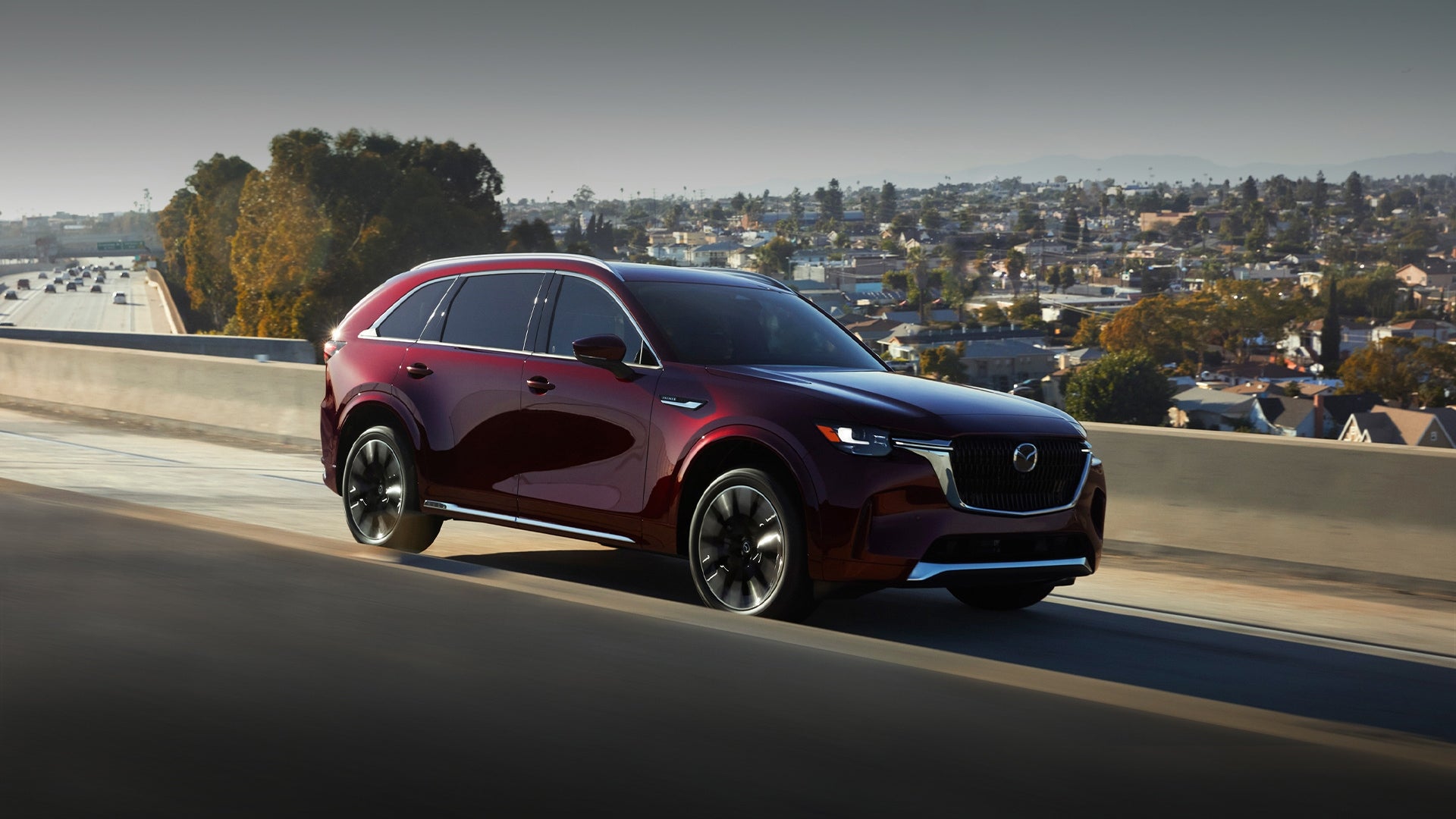
This premium approach extends to the third row, where you’ll find well-contoured seats with decent cushioning, proper seat belt routing, and thoughtful touches like cupholders and USB charging ports.
The third row isn’t an afterthought here; it’s a legitimate seating position finished to the same standard as the rest of the interior. The CX-90’s driving character sets it apart from more utilitarian three-row SUVs.
The steering is precise and well-weighted, the suspension balances comfort with control, and the experience is more engaging than you typically find in this segment.
It’s not a sports car, but it drives like a vehicle engineered by people who genuinely enjoy driving. This makes it particularly appealing for buyers who need three rows but don’t want to sacrifice the connection between driver and machine that Mazda is known for delivering.
Also Read: 5 Used EVs That Are Safe Bets in 2025 vs. 5 to Think Twice About
5. Kia Telluride
The Kia Telluride burst onto the scene in 2020 and immediately became one of the most sought-after three-row SUVs on the market, often selling for above sticker price due to high demand.
While its bold styling and impressive standard equipment contribute to its popularity, the Telluride’s genuine three-row capability is what makes it a practical choice for families.
With 31.4 inches of third-row legroom, the Telluride delivers on its promise of usable space for adult passengers, making it a legitimate alternative to more established competitors.
The Telluride’s interior impresses with its thoughtful design and upscale materials unusual in a vehicle that starts at a relatively accessible price point.
The third row benefits from this attention to detail, with comfortable seat cushions, adequate padding, and a floor height that allows for natural leg positioning.
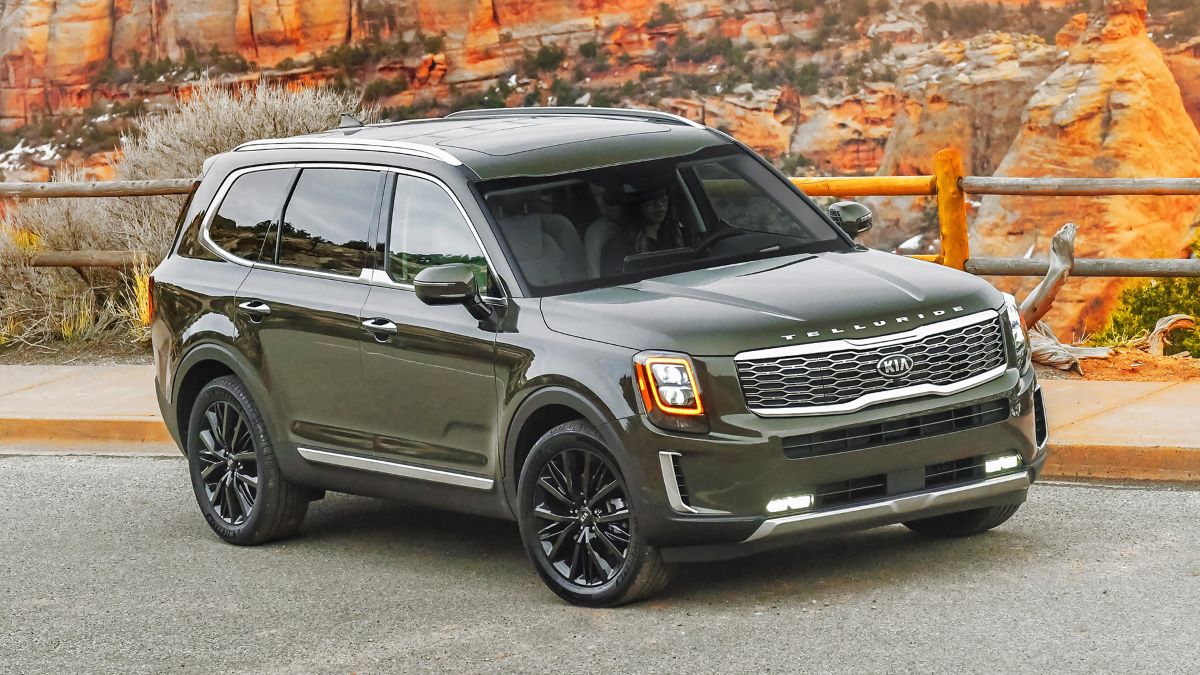
At 37.4 inches, headroom is sufficient for most adults, and the seat backs recline slightly for added comfort on longer trips. The third row is wide enough to accommodate three children comfortably or two adults without excessive shoulder rubbing.
Under the hood, the Telluride features a 3.8-liter V6 engine producing 291 horsepower and 262 lb-ft of torque, paired with an eight-speed automatic transmission.
This powertrain delivers smooth, refined power that’s more than adequate for family duties, including a towing capacity of 5,500 pounds when properly equipped. Front-wheel drive comes standard, with all-wheel drive available across all trim levels.
The ride quality is impressively smooth, with suspension tuning that prioritizes comfort and isolation from road imperfections. Handling is competent if not particularly sporty, but that’s exactly appropriate for this vehicle’s mission as a family hauler.
5 SUVs with Kid-Only Back Rows
These deceptively marketed vehicles suffer from laughably cramped third-row seating and inadequate legroom that render advertised seven-passenger capacity completely unrealistic for anyone exceeding elementary school age, forcing apologetic explanations when adult passengers discover the uncomfortable reality.
Their problematic design includes difficult third-row access requiring gymnastic flexibility and punishingly upright seat angles that cannot provide the comfort suggested by three-row marketing claims and supposed family hauler positioning.
Despite spacious exterior dimensions and impressive cargo specifications, these SUVs fail adult passenger tests through their truly unusable third rows where average-height teenagers experience knees jammed against second-row seatbacks and heads touching headliners creating genuinely uncomfortable conditions.
1. Mazda CX-9
The Mazda CX-9 represents an interesting counterpoint to its larger sibling, the CX-90. While it offers three rows of seating and Mazda’s characteristic attention to detail and driving dynamics, its third row is decidedly designed for smaller passengers.
With just 27.4 inches of legroom nearly four inches less than the CX-90 the third row in the CX-9 is really only comfortable for children or very short adults on brief trips.
This isn’t necessarily a flaw; rather, it reflects different design priorities where Mazda chose to maximize cargo space and second-row comfort while still offering occasional third-row seating.
The CX-9’s third row illustrates how small differences in measurements translate to significant real-world impact. Those 27.4 inches of legroom mean that adults will have their knees pushed against the back of the second-row seats, creating an uncomfortable position that becomes tiresome quickly.
The seat cushions sit relatively low to the floor, exacerbating the knees-up seating position. While the 35.3 inches of headroom is adequate, the experience is one of confinement rather than comfort. Two adults can technically fit back there, but neither will be happy about it for more than 15-20 minutes.
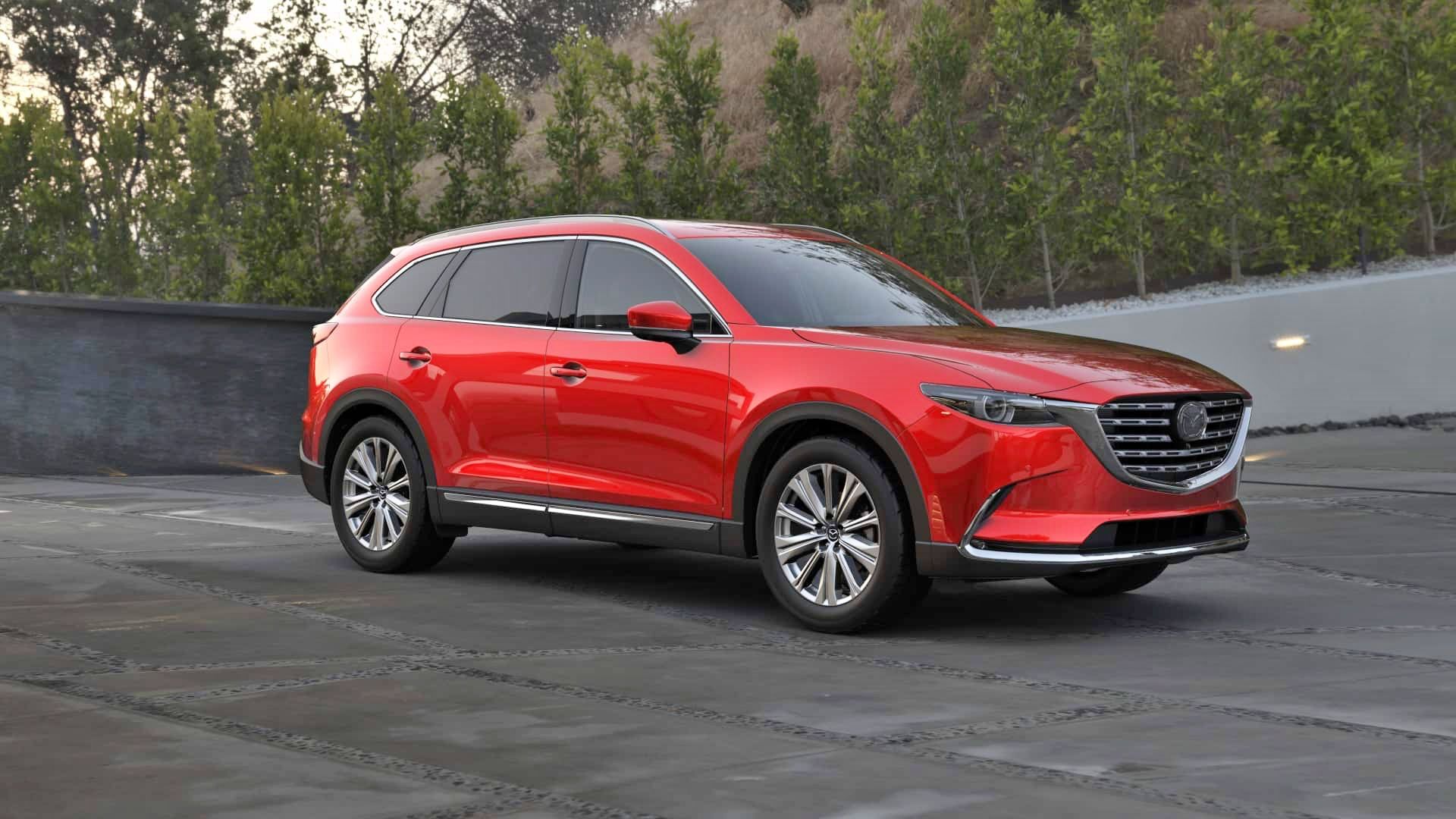
For its intended use with children, however, the CX-9’s third row works perfectly well. Kids under 5’2″ can sit comfortably for several hours, and the seat belts are properly routed for smaller passengers.
The narrow width means it’s best suited for two children rather than three, though three young kids can squeeze in when necessary. Access to the third row requires folding and sliding the second-row seats forward, and while the mechanism is straightforward, the opening created is relatively tight fine for children to climb through but awkward for adults.
The CX-9 uses a turbocharged 2.5-liter four-cylinder engine producing 227 horsepower with regular fuel or 250 horsepower with premium fuel.
This engine delivers refined power with impressive efficiency for a three-row SUV, achieving combined fuel economy around 23-24 mpg. The six-speed automatic transmission shifts smoothly, and all-wheel drive comes standard across the lineup.
Where the CX-9 truly distinguishes itself is in driving dynamics it’s the most engaging three-row SUV to drive, with precise steering, well-controlled body motions, and a sporty character that makes it fun on winding roads. For buyers who prioritize driving enjoyment and only need the third row occasionally for children, the CX-9 makes perfect sense.
2. Nissan Pathfinder
The Nissan Pathfinder underwent a complete redesign for the 2022 model year, transforming from a somewhat forgettable also-ran into a genuinely competitive three-row SUV with rugged styling and improved interior quality.
However, despite these improvements, the Pathfinder’s third row remains best suited for children. With 28.6 inches of legroom, it offers slightly more space than the CX-9 but still falls well short of adult-friendly territory.
This represents a conscious design choice by Nissan to balance cargo capacity, second-row space, and manufacturing costs while still offering seven-passenger capability.
The Pathfinder’s third row suffers from the same fundamental issue as many vehicles in this category: insufficient legroom combined with low seat cushion height creates an uncomfortable knees-up posture for adult passengers. The 33.6 inches of headroom is adequate but not generous, and taller passengers will find their heads close to the headliner.
The seat cushions themselves are relatively thin and flat, lacking the contouring and support that would make longer trips bearable. Two adults can physically fit in the third row for short drives, but it’s not an experience anyone would choose willingly.
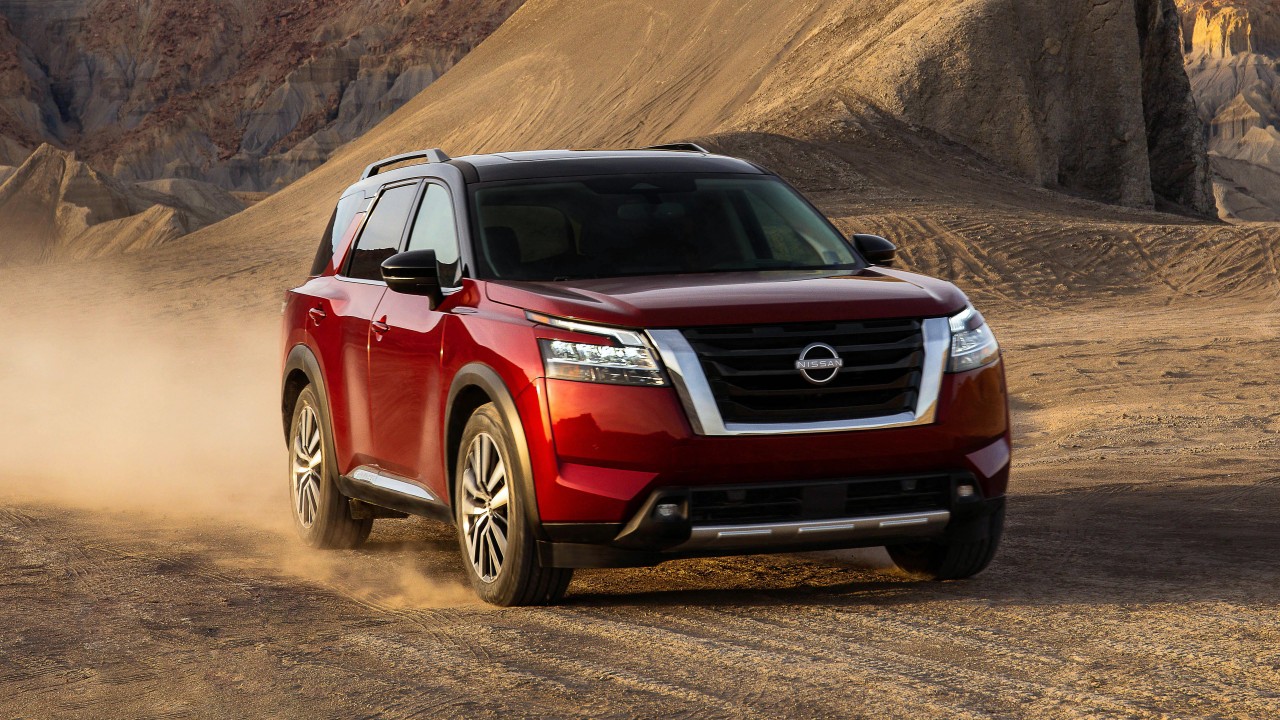
For families with children, the Pathfinder’s third row serves its purpose admirably. Two children can sit comfortably for road trips of several hours, and three smaller kids can squeeze in when carpooling duties call.
The relatively upright seating position means kids can see out the windows reasonably well, and Nissan includes cupholders and charging ports for third-row passengers.
Access involves tilting and sliding the second-row seats forward, and while the mechanism works smoothly, the opening is moderate easy enough for kids but requiring some contortion from adults.
The Pathfinder uses a 3.5-liter V6 engine producing 284 horsepower and 259 lb-ft of torque, paired with a nine-speed automatic transmission.
This powertrain delivers smooth, confident power that’s well-suited to the Pathfinder’s 6,000-pound towing capacity. Front-wheel drive comes standard, with an intelligent all-wheel-drive system available that can route up to 50% of torque to the rear wheels when needed.
The ride quality is comfortable and composed, with suspension tuning that absorbs bumps effectively. While not particularly sporty, the Pathfinder drives competently and feels substantial on the highway.
For buyers who need a rugged-looking three-row SUV primarily for use with five passengers, with the third row reserved for occasional child passengers, the Pathfinder represents good value.
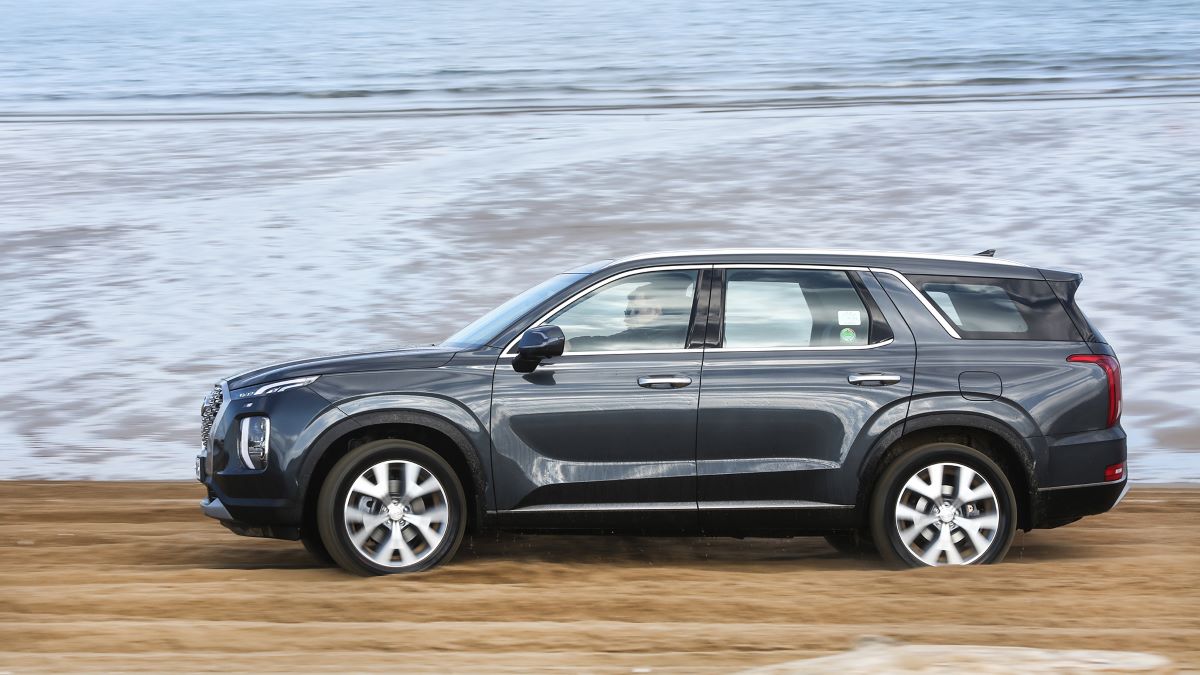
3. Hyundai Palisade
This entry requires an important clarification: the Hyundai Palisade actually offers excellent third-row space and is closely related to the Kia Telluride featured in our adult-friendly category.
However, for the purposes of demonstrating what a kid-focused third row looks like, let’s instead examine the Hyundai Santa Fe Hyundai’s smaller three-row offering that clearly prioritizes compact dimensions over maximum interior space.
The Hyundai Santa Fe, in its three-row configuration, provides just 28.5 inches of third-row legroom, making it suitable primarily for children.
At 188.4 inches long, the Santa Fe is about eight inches shorter than the Palisade, and that reduced length comes almost entirely at the expense of third-row space.
The third-row seats sit low and close to the floor, creating the characteristic knees-up posture that adult passengers find uncomfortable. With 34.5 inches of headroom, there’s adequate clearance for most people, but the environment feels cramped and confined.
The Santa Fe’s third row is narrow enough that it really works best for two children rather than three, though three small kids can fit when necessary.
The seat cushions are thin and offer minimal padding, fine for children who won’t notice, but uncomfortable for adults on anything beyond very short trips.
Access requires tilting and sliding the second-row seats forward, and the opening created is relatively small. Kids can scramble through easily enough, but adults would find accessing the third row awkward, even if they wanted to sit back there.
The Santa Fe offers multiple powertrain options, including turbocharged four-cylinder and hybrid variants producing between 191 and 277 horsepower, depending on configuration.
These engines deliver adequate power for the Santa Fe’s mission, and fuel efficiency is competitive for the class. All-wheel drive is available across the lineup.
The ride quality is comfortable, with well-controlled handling that makes the Santa Fe pleasant to drive daily. The interior features Hyundai’s latest infotainment technology and a surprising amount of upscale materials for the price point.
For buyers who primarily need five seats with excellent cargo space and only occasionally require a third row for children, the Santa Fe offers strong value and a compelling package you need to be realistic about that third row’s limitations.
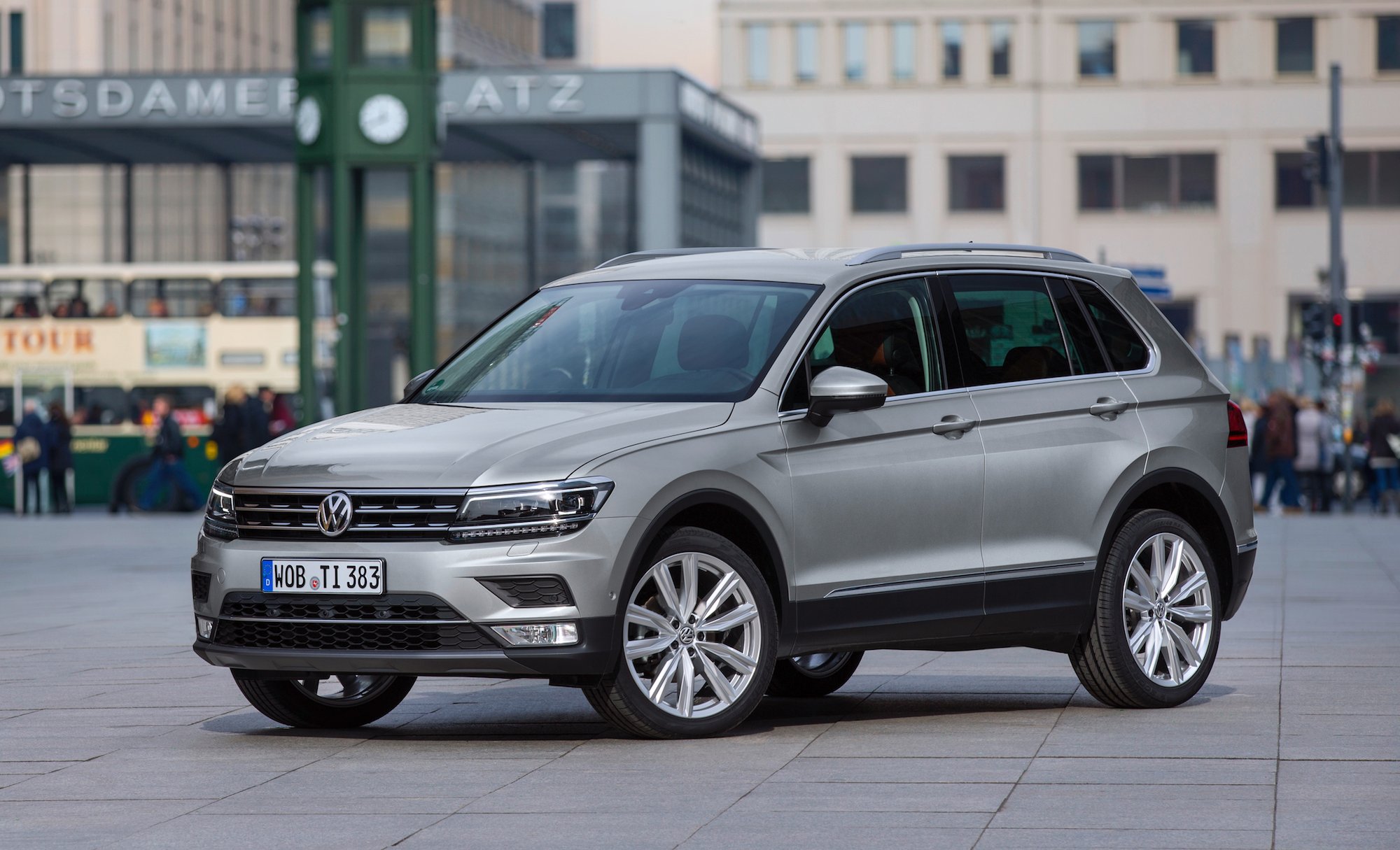
4. Volkswagen Tiguan
The Volkswagen Tiguan represents VW’s compact three-row entry, positioned below the Atlas as a more affordable and maneuverable option for families who want German engineering without the size and cost of the larger model.
However, this compact positioning means significant compromises in third-row space. With just 26.3 inches of legroom, the Tiguan’s third row is one of the tightest in the industry really only suitable for small children on short trips.
This isn’t unexpected given the Tiguan’s modest dimensions, but buyers need to understand what they’re getting. The Tiguan’s third row is best described as emergency seating.
Adult passengers will find their knees pressed hard against the back of the second-row seats, with no possibility of comfort. The low seat cushion height means passengers sit nearly on the floor with their legs awkwardly positioned.
At 33.7 inches, headroom is just barely adequate, and the experience is claustrophobic. Even though the width is restricted, this is really a two-person third row at best, with three children requiring everyone to be small and tolerant of very close quarters.
For its target demographic of families with young children, the Tiguan’s third row can work adequately for specific use cases. Two children under age 10 can sit back there for trips of moderate length, and it’s perfectly functional for short school runs or quick errands around town.
The reality, though, is that most Tiguan owners will keep the third row folded most of the time, using it only when necessary.
Access to the third row requires folding and sliding the second-row seats forward, and the opening created is quite tight kids can manage it, but even they might complain about the awkward entry.
The Tiguan uses a turbocharged 2.0-liter four-cylinder engine producing 184 horsepower and 221 lb-ft of torque, paired with an eight-speed automatic transmission.
This modest output is adequate for the Tiguan’s lighter weight, though it can feel strained when fully loaded with passengers and cargo.
Front-wheel drive comes standard, with 4Motion all-wheel drive available. The Tiguan delivers typical Volkswagen virtues composed handling, a quality feel to controls and materials, and solid build quality.
Fuel efficiency is competitive at around 24-25 mpg combined. For urban families who primarily need a compact, easy-to-park vehicle with good cargo space and occasional extra seating for small children, the Tiguan works well as long as expectations about that third row are properly calibrated.
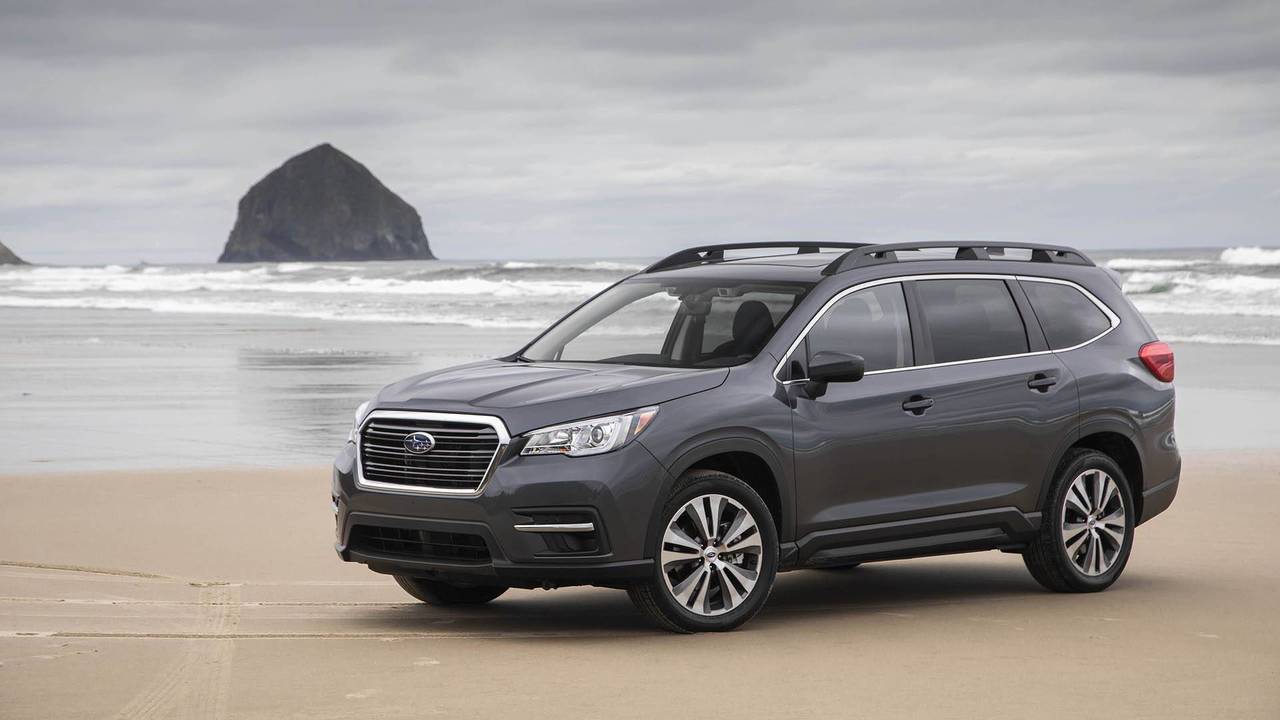
5. Subaru Ascent
The Subaru Ascent enters this category with an asterisk, as it actually offers more third-row legroom than several vehicles listed in the kid-only section.
With 31.7 inches of legroom, the Ascent technically falls into a middle ground where shorter adults might find it acceptable for moderate-length trips.
However, several factors combine to make its third row feel more cramped than the numbers suggest, placing it just on the border between adult-friendly and kid-focused designs.
The Ascent’s third-row limitations stem primarily from its headroom and interior architecture. While legroom is technically adequate, the 35.2 inches of headroom is noticeably less than competitors like the Atlas or Traverse.
Combined with a relatively low seat cushion height and narrow width, the third row feels confined even when there’s theoretically enough space.
The seat cushions are reasonably well-padded, and Subaru includes thoughtful touches like cupholders and USB ports, but the experience for adult passengers is one of tolerating the space rather than being comfortable in it.
For families with children, Subaru’s core target market, the Ascent’s third row works quite well. Two kids can sit comfortably for long road trips, and three children fit reasonably well for shorter journeys.
The upright seating position gives kids a decent view out the windows, and the build quality feels solid and safe important considerations for parents.
Access to the third row is facilitated by second-row seats that slide and tilt forward easily, though the opening created is moderate in size. Subaru offers both seven-passenger (with second-row captain’s chairs) and eight-passenger (with a second-row bench) configurations.
The Ascent uses a turbocharged 2.4-liter four-cylinder boxer engine producing 260 horsepower and 277 lb-ft of torque, paired with a continuously variable transmission (CVT). While some drivers dislike CVTs, Subaru’s implementation is among the better examples, and the engine delivers adequate power for most situations.
The Ascent can tow up to 5,000 pounds when properly equipped. Fuel efficiency is average for the class at around 21-22 mpg combined. Where the Ascent truly excels is in safety, with excellent crash test ratings and standard EyeSight driver assistance technology.
For families in snowy climates who need reliable all-weather transportation and occasional third-row seating primarily for children, the Ascent makes excellent sense, just don’t expect adults to be truly comfortable back there for extended periods.
Also Read: 5 Hybrids That Save Money Fast vs. 5 That Take Too Long to Pay Off
