
Families and travelers often notice that comfort in an SUV is not only about cargo space or legroom. Shoulder width and the ability to place three people in the second row matter just as much. Parents trying to secure three child seats side by side know how challenging it is to find a vehicle that truly supports that layout.
Even without child seats, adults need enough personal space to avoid bumping elbows or leaning awkwardly during longer drives. When an SUV can genuinely fit three across the back row, trips feel easier, more organized, and less stressful for everyone.
Some SUVs are designed with thoughtful width, flat seat cushions, and well positioned buckles. These details make seating arrangements flexible and comfortable for groups of five.
They provide an advantage for families growing in size or driving with visiting relatives or friends. Buyers often praise these supportive configurations because they reduce the need to move someone to the third row or take a second vehicle.
On the other hand, some SUVs appear large from the outside but narrow inside the second row. Seats may be sculpted too aggressively, pushing passengers toward the middle. Bulky door trim, cupholders, or raised bolsters can limit usable hip room.
Even if the specifications claim enough shoulder width on paper, real world comfort may still fall short. Struggling to secure booster seats or squeezing adults during road trips can quickly lead to frustration.
This comparison highlights models that succeed in making the second row a practical space for three people and others that do not provide the flexibility families need.
Knowing these strengths and weaknesses before visiting a dealership helps shoppers avoid trial-and-error surprises. With clear expectations, it becomes simpler to choose an SUV that supports daily life and future needs.
Also Read: 5 Sedans With Knee Banger Back Seat Vs 5 Alternatives
5 SUVs That Fit Three Across In Back
When shopping for an SUV meant to carry five people regularly, the rear seat becomes a main concern. The difference between a comfortable three across setup and a cramped situation often depends on careful design decisions.
Some automakers give extra attention to the middle seat, keeping it wide enough and properly cushioned so a passenger does not feel punished for sitting there. Flat bench shapes help place child seats in a secure and balanced arrangement.
Seat belt anchors and latch points are often positioned with families in mind, helping parents install safety equipment without struggling.
These models are chosen because they truly accommodate three across the second row without forcing compromises that affect comfort or safety. They allow each rider to sit naturally without twisting or leaning.
Trips to school, family outings, and highway vacations feel more pleasant when everyone has room to settle in comfortably. It also limits arguments among kids when they are not pressed tightly against each other.
These vehicles offer something valuable for both growing families and anyone needing flexibility. Whether the passengers are adults, teens, or children in car seats, the seating space remains useful.
The cabin width, door opening size, and even the angle of seat cushions contribute to the experience. These SUVs show that practicality and comfort can work together when engineers focus on making the entire back row good for people rather than treating the center seat as an afterthought.
The following five choices deserve recognition for meeting a need that many buyers mention as a top deciding factor.
Each stands out because the second row supports three across comfortably, making life easier on busy mornings or while traveling with a full house. These selections prove that a smart seating layout matters every day, not just occasionally.
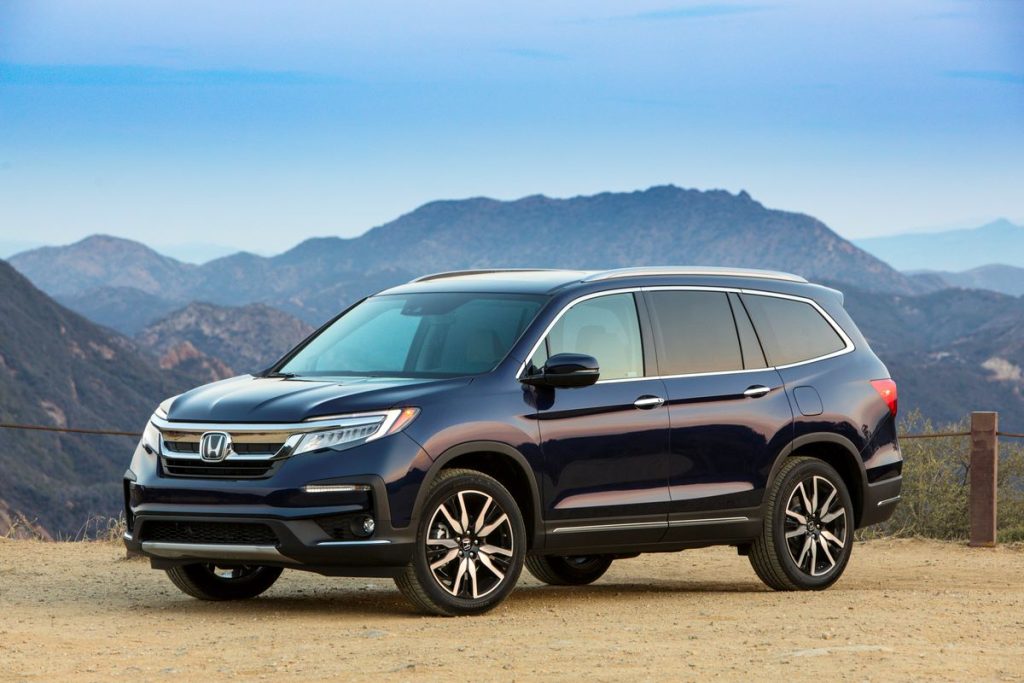
1. Honda Pilot
The Honda Pilot has earned strong praise from families who frequently need to seat five people without forcing anyone into the third row. The second row bench offers generous shoulder width and a flatter cushion design than many competitors.
This makes it easier to place an adult in the center without feeling squeezed from both sides. Door openings are wide, helping with entry, especially when loading child seats or helping younger kids into position.
Another major benefit is the thoughtful placement of latch points for car seats. Parents can install two large child seats on the outer positions and still have enough space to place a booster in the middle.
The middle seat belt anchor sits in a comfortable position instead of pressing into the passenger. Even taller adults find that the cushion height supports natural leg placement for longer trips.
The Pilot earns a place on this list because it combines generous cabin width with flexible interior design. Many families choose it after finding tighter conditions in competing models.
Whether using it for school carpools or vacation travel, the vehicle maintains enough breathing room so that conversations remain friendly and everyone arrives feeling comfortable rather than irritated by constant elbow contact.
The Pilot also gives an option for a third row if needed, but the strength lies in the second row not being dependent on it. When five seats are used, the arrangement still feels natural and balanced.
At the same time, the cargo space behind the third row remains useful, giving even more practical benefit to those who often fill all passenger positions.
The Pilot is included here because comfort in the back row does not come at the cost of practicality or ride quality. It supports real family needs and does so without forcing constant rearrangement of passengers or equipment.
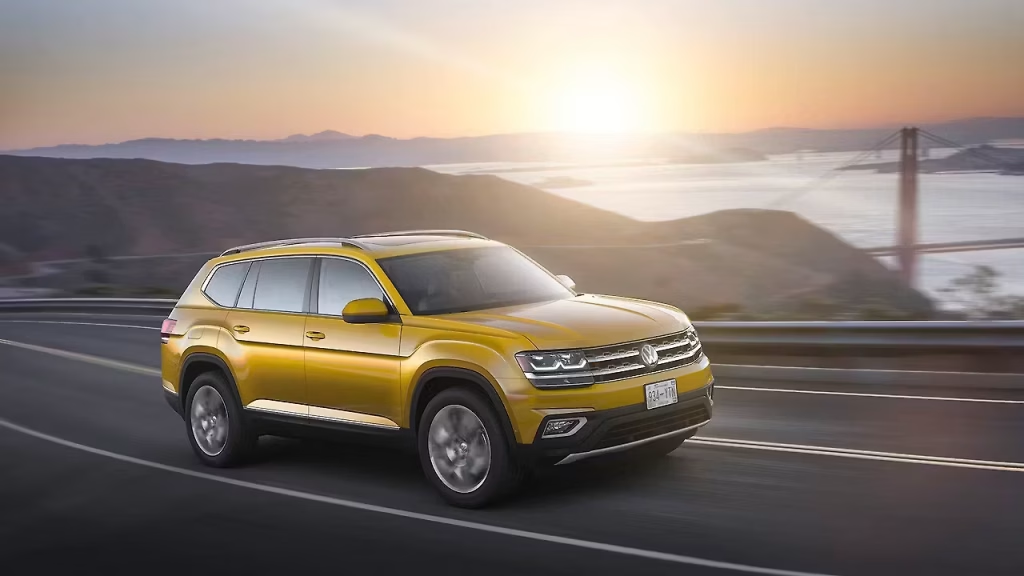
2. Volkswagen Atlas
The Volkswagen Atlas stands out for translating its broad exterior dimensions into usable interior space, particularly in the second row. Unlike many SUVs where the middle position feels penalized, the Atlas offers a wide flat bench that genuinely supports three people.
The cushion is level and long enough that thigh support is adequate across the seat, and the center area lacks intrusive bolsters that push middle passengers into awkward positions. Shoulder room is generous, so adults seated side-by-side do not immediately elbow each other, and children in boosters or car seats fit without overlap.
Accessibility is another strong point. Rear doors open wide and the floor is low, making it easier to secure child seats and help youngsters climb in. The ready visibility and accessible anchors help parents install multiple seats efficiently, which is vital for busy mornings.
VW designers also placed cupholders and small-item storage primarily toward the outboard sections so the center remains free for a passenger.
The Atlas prioritizes a straightforward interior geometry that works for real life instead of compromising the middle seat for individual comfort. With nearly flat load floor when seats are folded, the cabin also aids loading bulky items without intruding on passenger space.
Even with three passengers across the second row, overall comfort remains high because the cabin does not squeeze any single occupant to prioritize the others.
This SUV was chosen because reviews and owner feedback consistently praise its second-row practicality. Families who need space for three across will find the Atlas a compelling option, offering a balance of interior breadth and sensible ergonomics that make daily use simpler and far less contentious than many competitors.
3. Kia Telluride
The Kia Telluride quickly became known for blending style with family-focused practicality, and its second-row seating is a key reason. The Telluride’s bench provides substantial width and a flat seat cushion that allows three occupants to sit side-by-side without drastically compromising comfort.
The middle seat is not a token position; it can host an adult for medium-length drives and handles two child seats plus a booster with room to spare. The seat belt anchors are easy to reach and the LATCH anchors are placed at sensible intervals, aiding swift and secure installations.
Door openings are ample, and the entry step is not tall, which helps when fitting car seats and assisting children. Interior trim in the middle section avoids excessive protrusions so that buckle stowage and passenger hips are not forced into awkward positions.
The Telluride’s cabin width and seat engineering yield a comfortable shoulder spread, so even adults seated three across do not quickly feel crowded.
Comfort extends into support: the cushions provide adequate thigh support while avoiding a high ridge in the center that often penalizes the person sitting there. Climate vents reach the middle occupant well, avoiding the classic complaint that the center feels colder or hotter than the sides.
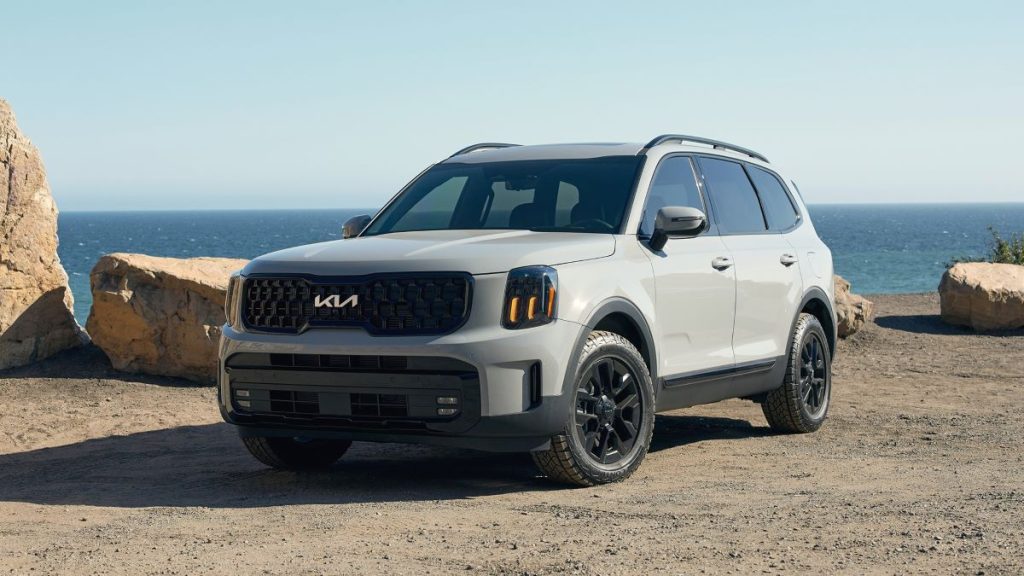
Telluride’s inclusion is based on repeated owner reports that three-across seating is not merely possible but practical.
Whether the back row carries three children in car seats or a trio of adults on a long road trip, the Telluride handles the load without turning the middle passenger into an afterthought. It proves that a family SUV can be stylish and comfortable without compromising usable seating.
4. Chevrolet Traverse
The Chevrolet Traverse is designed with genuine family transport in mind, and its second-row bench reflects that priority. With a wide cabin and a lengthy cushion, the Traverse allows three passengers to sit across without the severe side bolsters or raised humps that make center seats difficult in many rivals.
The middle seat integrates a comfortable cushion and an accessible seat belt arrangement, which helps when placing a child seat between two others.
Large door openings and a low floor height make installation tasks simpler, particularly when parents juggle multiple boosters and infant carriers.
The Traverse places LATCH anchors in clearly marked positions, reducing the fiddly adjustments that can make multi-seat setups time-consuming. Storage pockets and cupholders are positioned so the center seat remains unobstructed, aiding both comfort and practicality.
The cabin also benefits from attentive climate distribution and headroom, preventing the center rider from feeling boxed in.
On highways, a steady ride and well-tuned suspension help maintain upright seating and minimize passengers leaning into one another. The long wheelbase contributes to ample knee room, so a middle passenger’s legs do not have to tuck awkwardly.
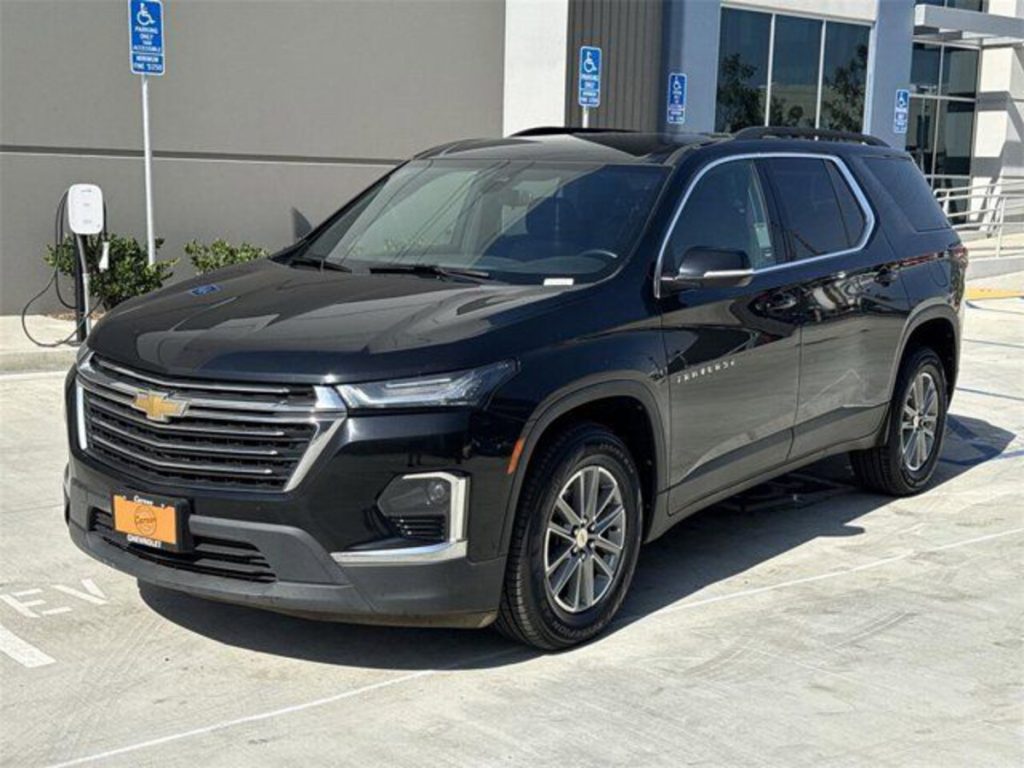
Owners who need to transport three across frequently report that the Traverse performs reliably in everyday use. Cargo flexibility remains good even with the second row occupied by three people, so family trips do not demand constant reconfiguration.
This combination of usable width, thoughtful anchor placement, and easy access earns the Traverse a spot here for anyone prioritizing functional second-row seating.
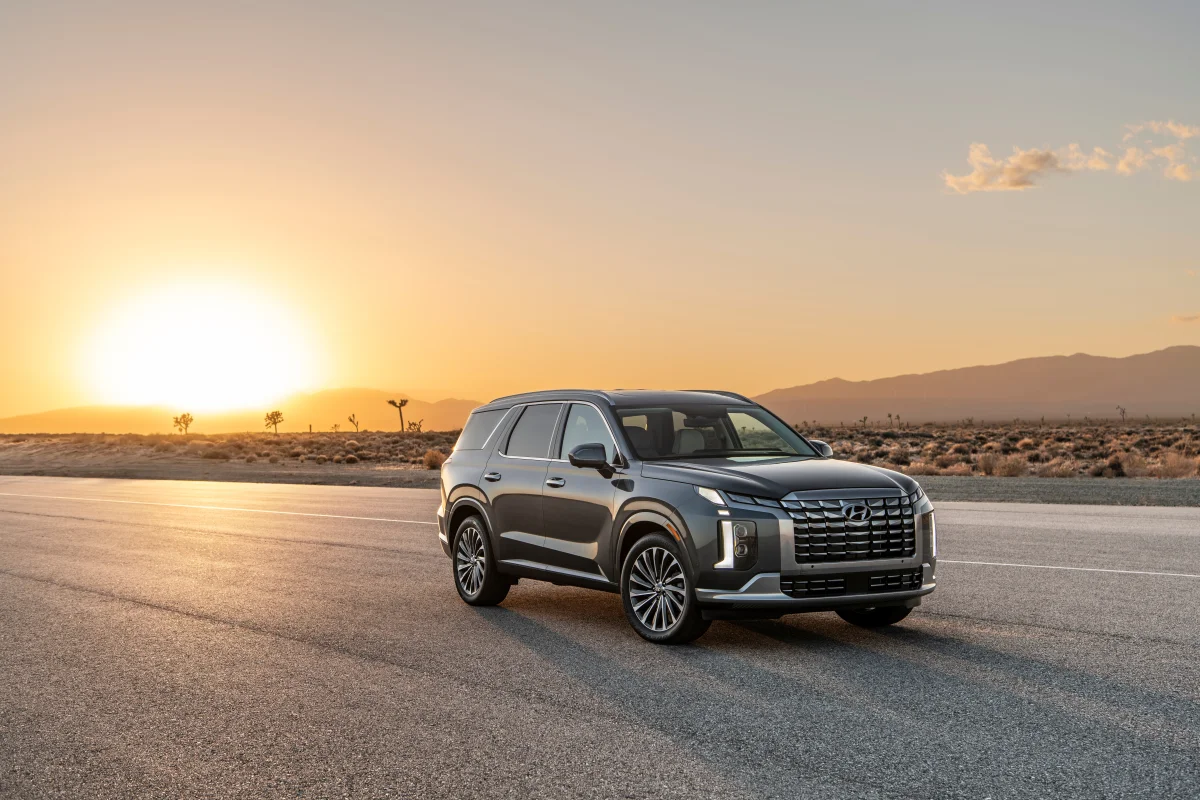
5. Hyundai Palisade
The Hyundai Palisade shares many strengths with its close relative but maintains its own identity with a second-row that supports three-across practicality.
Its bench offers a balance between supportive bolstering and a flat center area, allowing a middle passenger to sit without terrible compromise. The Palisade places emphasis on accessible LATCH points and usable buckles, making the task of fitting multiple child seats far less aggravating than in narrower cabins.
Rear door openings are generous and the seat cushion depth supports longer legs, reducing the sense that the middle passenger is merely tolerated.
Climate controls and vents are positioned to cover the center spot well, which is valuable in both hot summers and cold winters so that all three riders share a comfortable environment.
The Palisade also keeps center storage minimal so that the person in the middle does not feel boxed in by obstacles.
On the road, the Palisade’s suspension and cabin quietness help maintain a stable seating posture, which keeps three-across seating comfortable for extended trips.
The vehicle’s long interior dimensions translate into real usability: knee room and shoulder room are both sufficient so that even taller adults can sit side-by-side without immediate complaints.
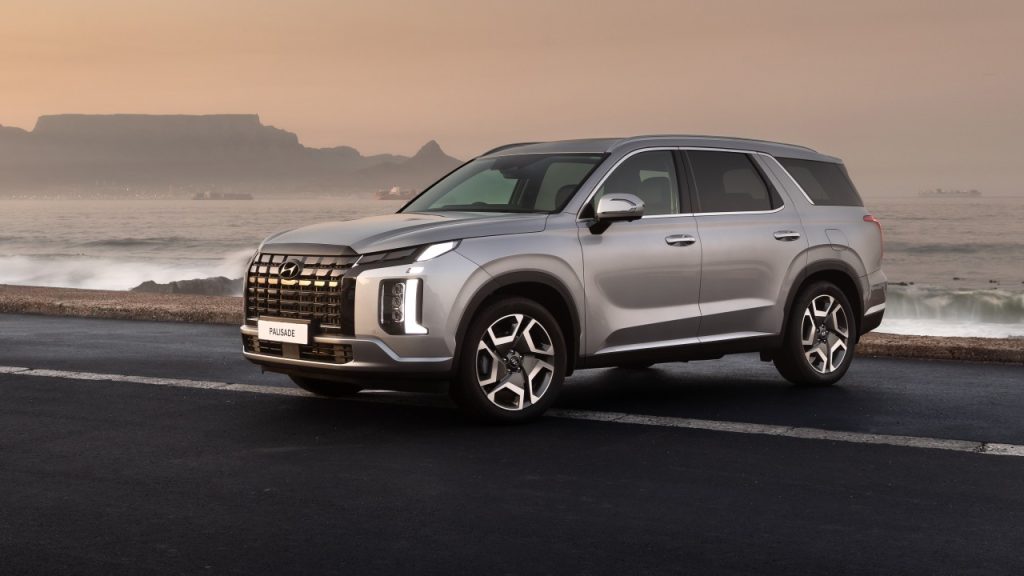
This model is chosen because it consistently appears in owner feedback as a family-friendly vehicle that treats the second row as a primary living space rather than an afterthought.
For buyers who frequently carry three across the back whether for carpools, family life, or occasional guests the Palisade provides an agreeable blend of comfort, access, and practicality.
5 SUVs That Don’t Fit Three Across
Not every SUV lives up to exterior impressions when it comes to usable second-row seating. A cabin can look roomy in photos yet hide design decisions that make the center seat awkward: exaggerated side bolsters, a tall center tunnel, or crowded armrest assemblies reduce usable width.
Other times, cupholders and seatbelt buckles sit atop the cushion or in hard-to-reach pockets, making installation of multiple car seats time-consuming and uncomfortable.
Some vehicles prioritize a sculpted feel for outboard passengers, favoring two comfortable thrones instead of a flat bench. While that approach improves individual side comfort, it often leaves the center position cramped and impractical for regular use.
Compact crossovers compound the issue with narrower overall cabins; even modest shoulder widths matter when three passengers must share the bench.
This section highlights five SUVs where real-world use often reveals limitations in three-across seating. The intent is to help buyers recognize which design features lead to compromise so they can test accordingly during a do-it-yourself assessment.
Look for intrusive bolsters, raised center humps, inaccessible LATCH anchors, or center seat belts that are awkward to reach.
By understanding the specific design choices that hinder a true three-across arrangement, shoppers can avoid frustration later. If your life requires carrying three passengers regularly, choose a vehicle with a deliberate flat bench and clear anchor accessibility.
The SUVs below are not poor vehicles overall, but their second-row layouts often make three-across usage less practical than buyers might expect from outside measurements.
1. Jeep Wrangler
The Jeep Wrangler is an iconic off-road machine, but its second-row practicality for three across is limited by design choices focused on open-air capability and ruggedness. The removable doors and roof panels require flexible seals and mounts that reduce opportunities for tight, precise interior finishes.
As a result, cabin width and seat geometry favor rugged function over a usable middle seat. The bench cushion tends to be narrower with pronounced bolsters, which push passengers inward and make side-by-side seating feel cramped.
Additionally, the Wrangler’s upright windshield and boxy shape cause higher levels of wind and road noise when traveling at speed, which can make longer journeys with three passengers more fatiguing.
LATCH anchors are present but often require more dexterity to access due to seat and trim shapes. Door openings are somewhat narrow compared with more family-oriented SUVs, complicating the task of fitting bulky car seats.
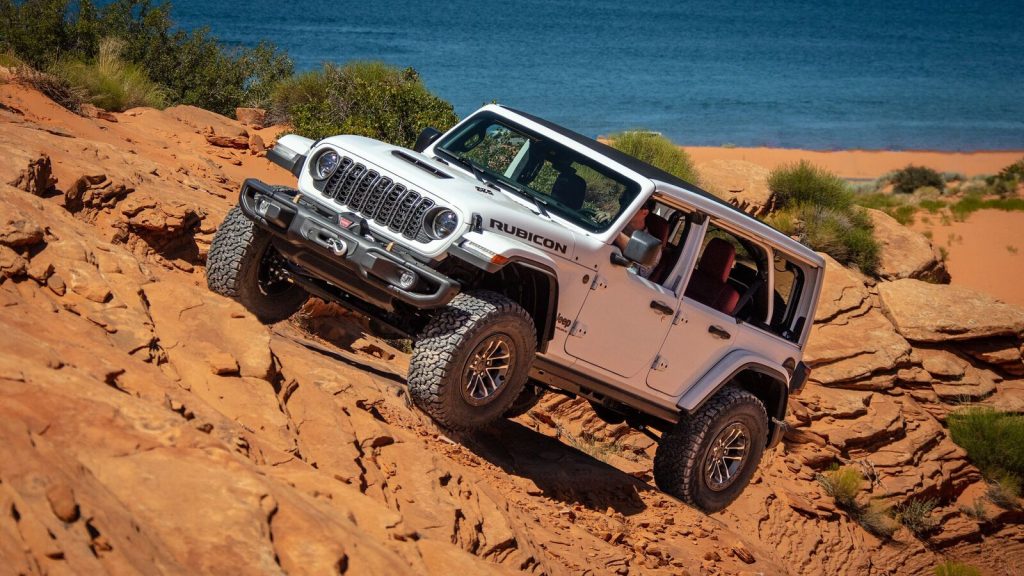
The center seating position in the Wrangler can feel elevated or constrained, in part because the vehicle’s architecture prioritizes off-road geometry and durability.
While the Wrangler excels in trail performance, removable panel storage, and community appeal, its interior compromises make it less suitable for families who rely on carrying three across the back regularly.
This model is included to emphasize that off-road capability and camper-style freedom sometimes trade off against everyday seating practicality.
Buyers who value open-air experiences and rugged utility will love the Wrangler, but those requiring three-across functionality for daily family use should carefully test the center seat before deciding.
2. Toyota RAV4
The Toyota RAV4 is a strong all-around compact SUV but tends to fall short when it comes to comfortably seating three across in the rear. Its second-row seat is often sculpted to favor the two outboard positions, offering bolstered cushions and pronounced contours that provide lateral support but reduce usable center width.
The middle seat cushion can feel narrow and the center seatbelt anchor sometimes sits in a less accessible spot, complicating the installation of a child seat between two others.
Compact exterior dimensions translate into limited shoulder room inside the cabin. Even modest differences in outer trim or seat bolstering can make the center feel like a tight squeeze.
Additionally, the center seat often offers less thigh support, which affects comfort on longer rides. Door openings and seat height are fine for single passengers but do not improve the ergonomics for three-abreast use.
The RAV4’s strengths efficiency, reliability, and agile handling remain valuable, but buyers expecting roomy three-across seating may feel let down.
For families who occasionally need a third rear occupant, the RAV4 works, but for more frequent three-person rear occupancy, a larger or more deliberately designed interior is preferable.
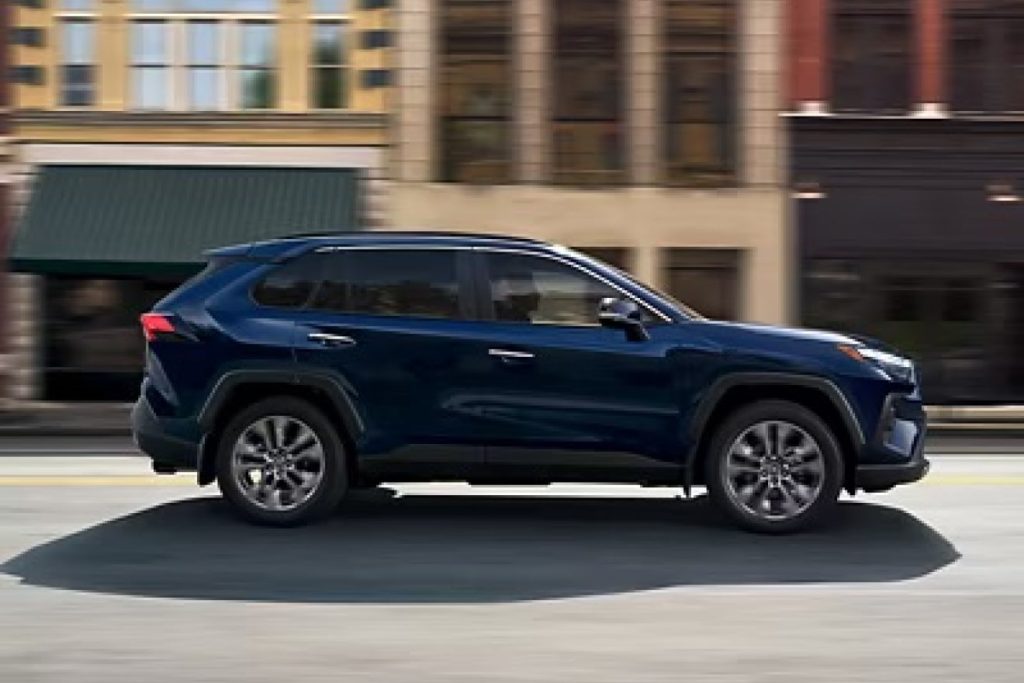
Inclusion here is not a dismissal of the RAV4’s virtues but a caution: popular compact crossovers rarely provide the same practical center seat room found in wider three-row models. If three-across use is a priority, a test with real passengers or car seats will reveal whether the RAV4’s shape meets your needs.
3. Mazda CX-5
The Mazda CX-5 is praised for driving dynamics and a premium-feeling cabin, but those refinements come with sculpted seating that favors outboard comfort over middle-seat usability.
The second-row bench is contoured for two adults, with side bolsters that press inward and leave the center position feeling cramped. In practical terms, fitting three adults side-by-side results in a crowded experience, especially on longer trips.
The interior also opts for a narrower overall profile compared with larger crossovers, which reduces shoulder room in the back.
LATCH anchors exist, but accessing them between contoured cushions can be fiddly, making the installation of multiple child seats more laborious. The center seatbelt often has a different routing that requires reaching behind or beneath the cushion, adding to the hassle.
Mazda emphasizes style and driver engagement, which is excellent for many buyers, but it is not ideal for families needing a functional three-across bench. For occasional middle-seat use, it is manageable, but expect tighter quarters and less comfort for an adult than in larger, more utilitarian SUVs.
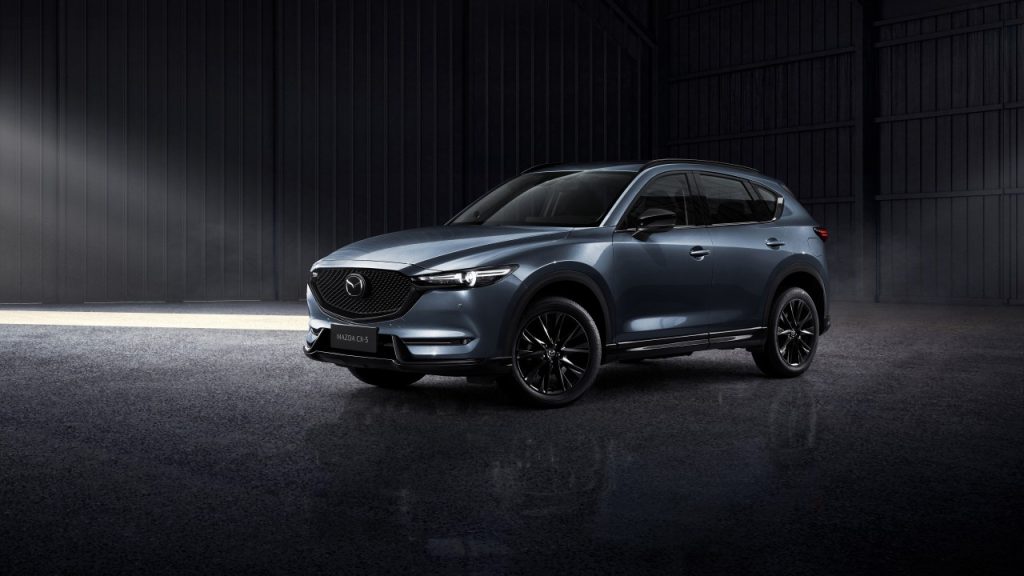
This model is listed to help buyers weigh the trade-offs: if you prefer a sporty, refined cabin but rarely carry three in the rear, the CX-5 is a great choice. If your everyday life needs that third rear occupant to be comfortable regularly, considering a wider SUV would likely be wiser.
4. Ford Bronco Sport
The Ford Bronco Sport channels rugged styling into a compact package, but its interior dimensions and seat design make three-across rear seating impractical for regular use.
The second-row cushion is relatively narrow and features significant side bolstering to support off-road movement, which reduces the practical center width.
The overall cabin is compact when compared with family-focused crossovers, and shoulder room is noticeably limited when three adults attempt to share the bench.
LATCH anchor placement may be adequate for one or two child seats, but fitting three child restraints would be a major challenge.
Door openings and rear-seat ingress are narrower than those found on larger SUVs, making the task of buckling in children or adjusting boosters more time consuming. The floor also has packaging features that can lift toward the center, leaving less clear foot space for the middle passenger.
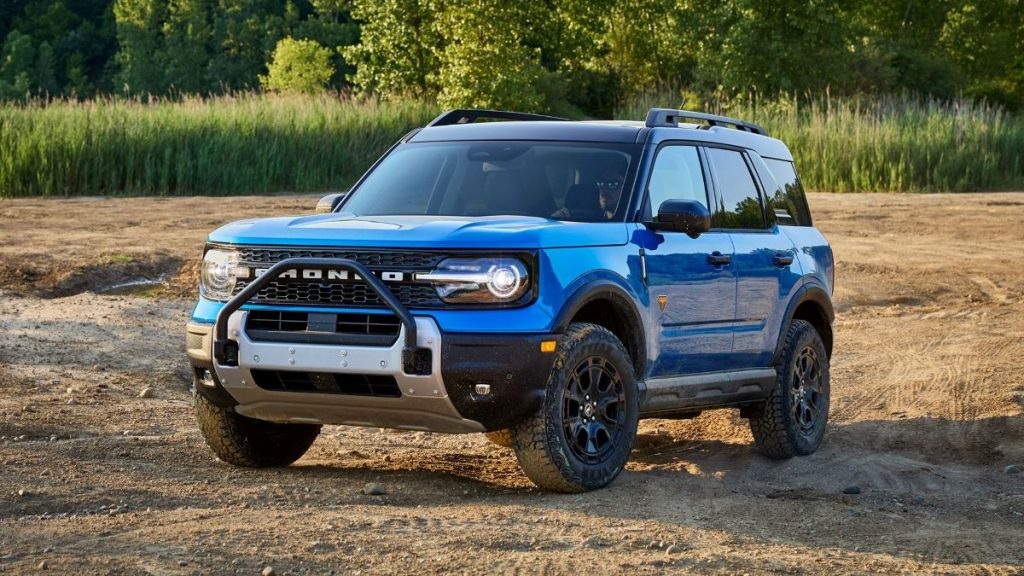
The Bronco Sport is an engaging and capable compact for outdoor activities and narrow trails, but for families who need practical three-across seating often, it is not the best match. This model is included here to highlight how compact off-road-oriented crossovers sometimes sacrifice third-seat usability in pursuit of ruggedness and styling.
If three-across capability is essential, choosing a wider platform with intentional bench design will save time and frustration in daily life.
5. BMW X3
The BMW X3 offers an upscale cabin and dynamic handling, yet its second-row layout does not favor three-across seating. The seats prioritize individual support and refinement, resulting in a center position that feels narrower and less padded than the outboard spots.
The center seat cushion has less depth, and bolstering from the outboard seats encroaches on the middle space, which reduces comfort for a full-size adult.
Interior width and shoulder room in the X3 are optimized for two rear passengers rather than three. LATCH anchors are present, but the tighter spacing makes simultaneous installation of multiple car seats cumbersome. The cabin’s design emphasizes a premium and sporty feel, but that comes at the cost of raw usable breadth.
Door apertures and the vehicle’s smaller footprint are advantages around urban parking and maneuverability, but they are less helpful when daily life requires ferrying three passengers in the back.
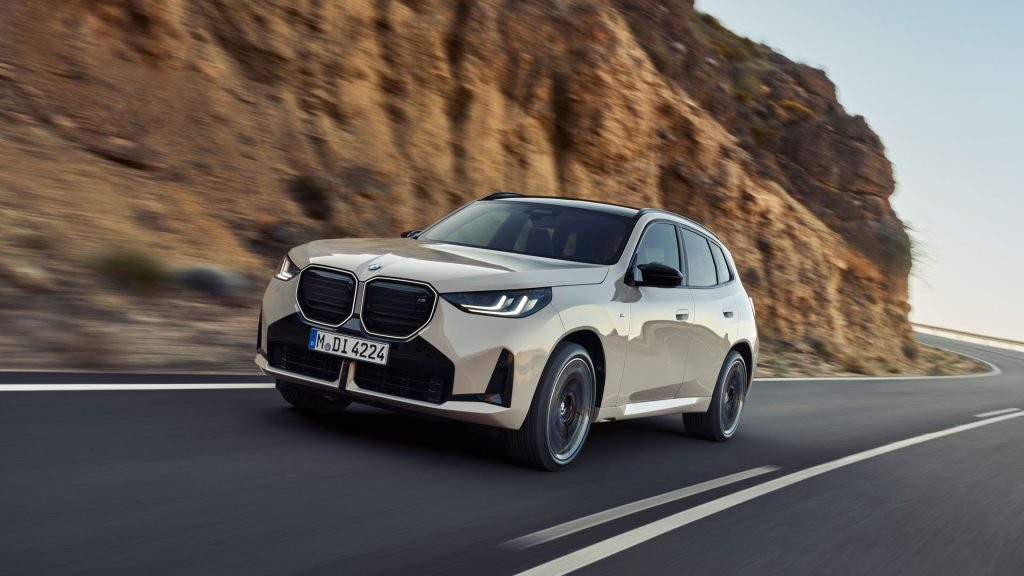
For couples or small families who seldom seat three abreast, the X3’s ride and refinement may outweigh this limitation. For those who frequently rely on three rear occupants, however, a wider SUV is a more practical solution.
Including the X3 is intended to remind buyers that premium finish and driving enjoyment do not always equal family practicality. Always perform a three-across test with real passengers to ensure a selected SUV supports your everyday needs before finalizing a purchase.
When three-across seating matters, prioritize bench flatness, clear LATCH access, and measured shoulder width over marketing slogans. Take realistic tests: bring car seats or adult friends, open rear doors fully, and sit in the center for a highway stretch to judge thigh support and belt access.
Remember that bolstered outboard seats, high center humps, or hidden buckles often mean the middle is only occasional seating.
If daily three-passenger use is required, choose a model designed for usability rather than styling. Real-life verification will save time and make family travel comfortable and far less stressful.
Also Read: 5 Cars With Sunroofs That Remain Functional VS 5 Squeak And Rattle
