
When most car enthusiasts think about performance cars, diesel engines rarely come to mind. Diesels are typically associated with fuel efficiency, durability, and utility vehicles, not high-speed thrills or sporty handling.
Yet, over the past two decades, a small but impressive group of automakers has proven that diesel power can do much more than just sip fuel.
With advances in turbocharging, intercooling, and modern engine management, diesel engines have evolved into serious performance powerhouses capable of delivering breathtaking acceleration, immense torque, and surprisingly nimble handling.
What makes high-performance diesels so fascinating is their ability to combine practicality with speed. Unlike traditional gasoline sports cars that often demand attention, these diesel-powered machines operate under the radar.
Sleek sedans, understated coupes, and even wagons can quietly outpace many supercars, thanks to the torquey nature of diesel engines.
Their performance may not always be accompanied by ear-splitting exhaust notes or flamboyant styling, but on the road, they offer a unique blend of power, efficiency, and reliability.
Germany has been the epicenter of this quiet revolution. Brands like BMW, Audi, and Porsche have pushed the limits of diesel technology, delivering cars that are at once fast, luxurious, and surprisingly versatile.
These vehicles aren’t just about straight-line speed; they demonstrate that diesels can provide engaging driving dynamics, high-speed stability, and comfort for daily commuting or long-distance cruising.
From turbocharged inline-sixes to quad-turbo V8s, these engines produce torque and horsepower figures that would have been unthinkable a few decades ago, making them true sleepers on the performance landscape.
10. BMW M440d xDrive
0-60 MPH: 4.6 Seconds
The BMW M440d xDrive is an underrated gem currently available in showrooms. It features a 3.0-liter twin-turbo B57 diesel engine delivering around 335 hp and 516 lb-ft of torque.
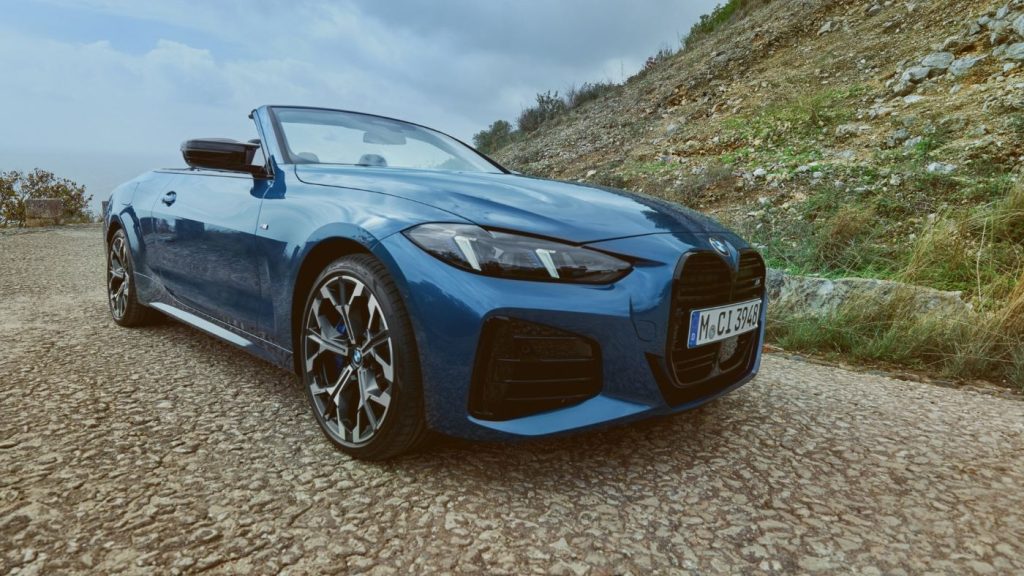
This allows the car to hit 60 mph in just 4.6 seconds, with an electronically limited top speed of 155 mph. Its combination of performance and everyday usability has earned it a reputation as a surprising sleeper within BMW’s lineup.
9. Alpina D3 Biturbo
0-60 MPH: 4.6 Seconds
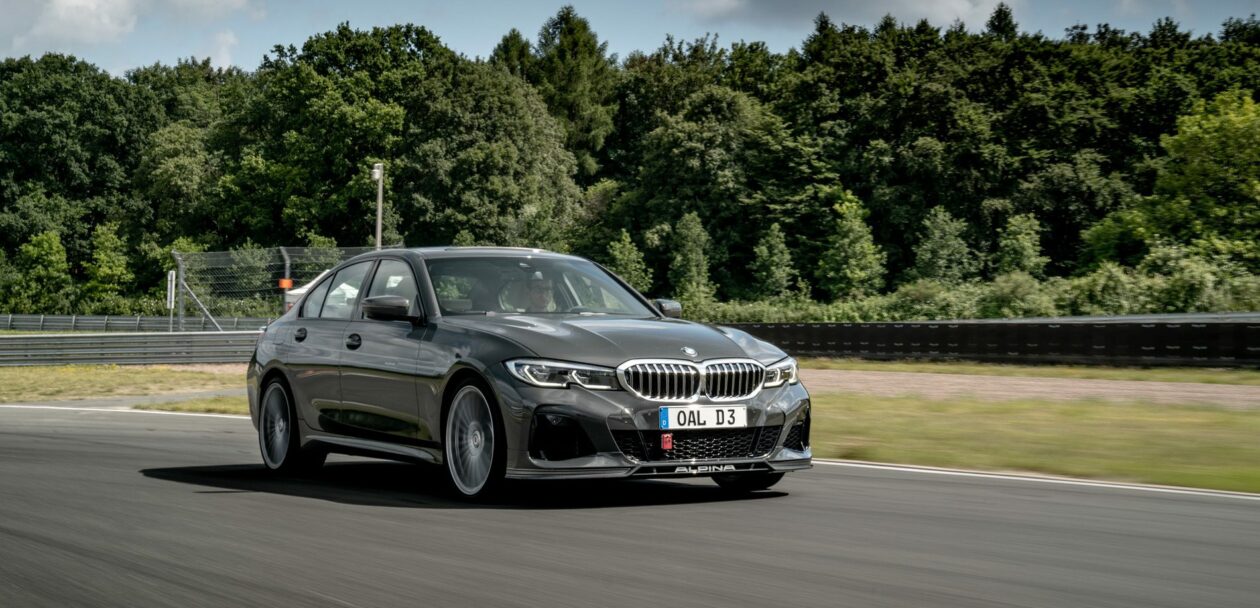
The Alpina D3, based on the F30/F31 BMW 3 Series, exemplifies how little-known Alpina models can rival BMW’s M cars.
Its modified 3.0-liter inline-six turbodiesel produces 345 hp and 516 lb-ft of torque, achieving a 0-60 time of 4.6 seconds and a top speed of 173 mph.
Available as a wagon, it combines performance with practicality, often flying under the radar for those unfamiliar with the Alpina brand.
The Alpina D3 Biturbo is the successor to the much-loved first-generation D3, which was based on the ‘E90’ BMW 3-Series, and, according to Alpina, was the fastest diesel-powered production car in the world.
The D3 Biturbo produces 345 bhp and a staggering 516 lb-ft of torque, with a saloon starting price of £46,950.
While the previous D3 used a tuned version of BMW’s four-cylinder diesel, the new Biturbo moves up a class, adopting BMW’s 3.0-liter twin-turbo straight-six.
The engine benefits from new manifolds, a large-volume intercooler, and an Akrapovic-designed exhaust system, paired with a new ECU.
As with the 335d on which it is based, the only transmission option is BMW’s eight-speed torque converter automatic. Alpina has also recalibrated the software for the gearbox, stability control, switchable dampers, and electric power steering.
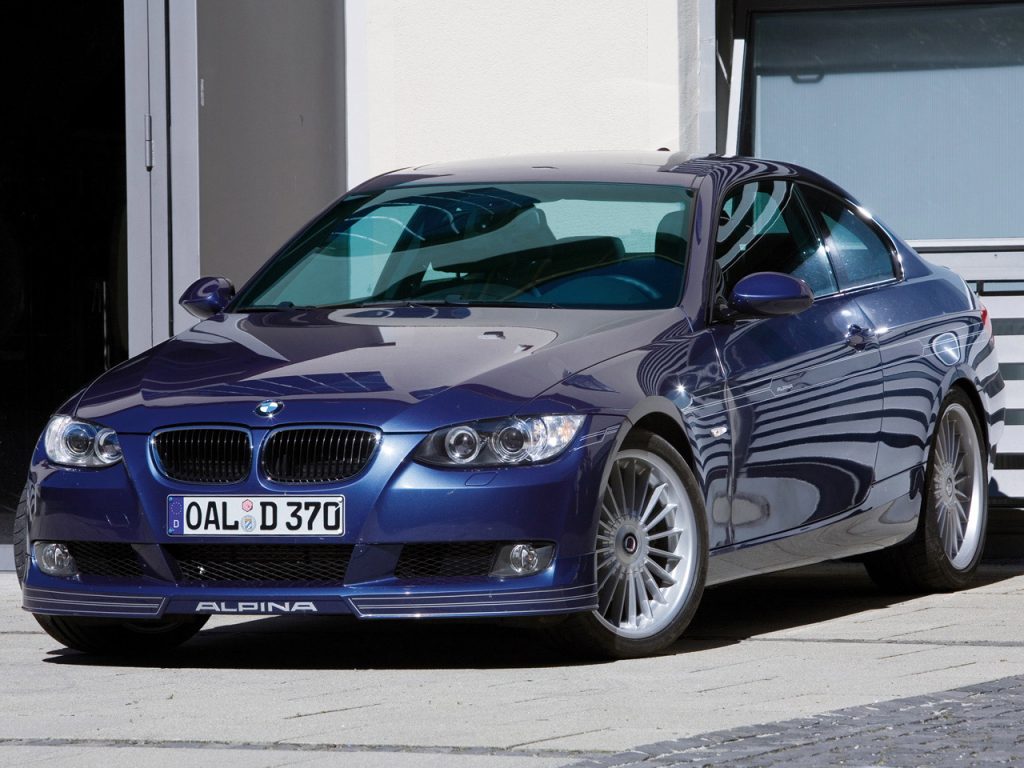
Other changes are subtle but effective. Alpina has always excelled at fine-tuning, and the D3’s springs are 40 percent stiffer than the standard 3-Series. It rides on 20-inch alloys, and the switchable dampers are recalibrated to be softer in compression but firmer in rebound.
In ‘comfort’ mode, the suspension is actually softer than a standard 335d. Bushes and anti-roll bars are new, geometry has been revised, and a brace stiffens the front end further.
The D3 Biturbo is deeply impressive on the road. Alpina has a near-magical ability to make cars ride well on oversized wheels, and the Biturbo is no exception.
It handles British roads far better than its tire profile would suggest, tackling rough tarmac with more composure than even an M-Sport 3-Series.
The steering demonstrates Alpina’s skill in incremental transformation. While the basic rack and electrical assistance are shared with the 3-Series, the firmer front end and revised geometry give the driver a more connected feel and clearer feedback from the front wheels.
The engine unmistakably remains a diesel, with peak torque available from just 1,500 rpm, yet its response is nearly instantaneous. The Akrapovic exhaust provides a pleasant sound inside the cabin.
There’s little reason to rev it past 4,000 rpm, as performance tapers beyond that point; the engine automatically upshifts at the 4,800 rpm redline regardless of transmission mode.
The gearbox shifts smoothly when left in ‘Drive,’ and the D3 is content to hold ratios longer than the standard 335d, which tends to kick down too readily.
In ‘manual’ mode, gear changes are quick, though the abundance of ratios makes it feel like you’re constantly swapping gears.
Alpina also employs unconventional gearchange buttons mounted on the back of the steering wheel, rather than the more familiar paddle shifters.
Also Read: 10 Least Reliable Cars With CVT Transmissions To Avoid
8. Alpina D4 Biturbo
0-60 MPH: 4.6 Seconds
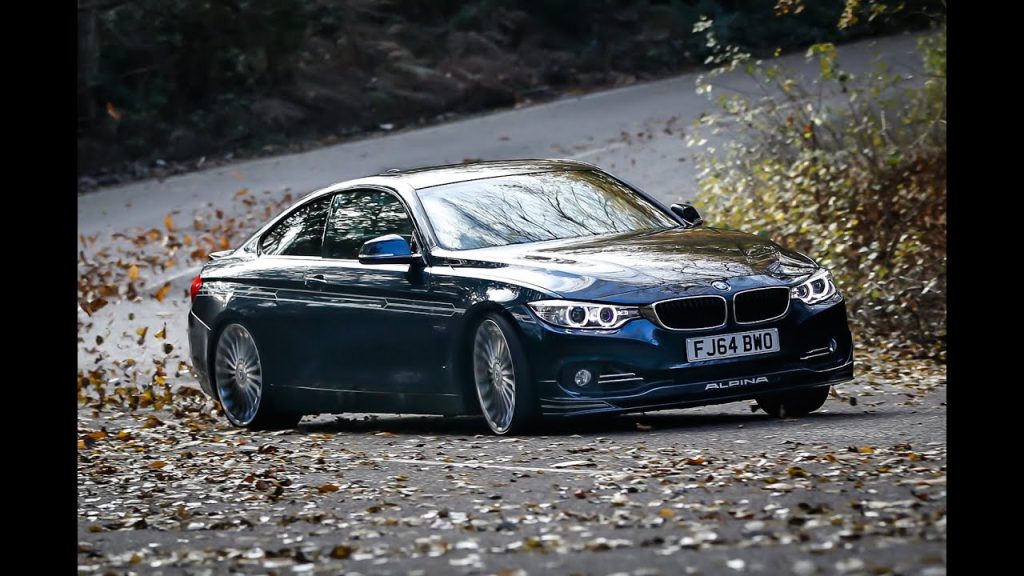
Following in the footsteps of the D3, the Alpina D4 is based on the F32/F33 BMW 4 Series, sharing the same engine and performance figures. It also reaches 60 mph in 4.6 seconds, with a top speed between 171 mph (convertible) and 173 mph (coupe).
Like the D3, its low profile and diesel power make it a compelling choice for enthusiasts seeking a practical performance car at a potential bargain price.
The Alpina D4 Biturbo coupé and convertible are the two-door counterparts to the exceptional all-rounders in the form of the D3 saloon and touring models. That alone suggests the D4 should be spectacular.
Beneath its sleeker, more streamlined body, the D4 shares the same twin-turbo six-cylinder diesel engine as the D3, along with the same chassis and suspension layout, eight-speed automatic transmission, and identical steering and braking systems.
The differences from the D3 Biturbo are minimal: it has two fewer doors, a slightly lower-slung driving position, a retractable metal roof, and a price around four thousand pounds higher.
Mechanically, the D4 mirrors the D3. It’s powered by a 3.0-liter straight-six producing 345 bhp and 516 lb-ft of torque, paired with ZF’s excellent eight-speed automatic transmission.
This allows the 1,585 kg D4 coupé to accelerate from 0–60 mph in 4.6 seconds, reach 100 mph in about 10 seconds, and achieve a top speed of 173 mph.
Remarkably, the convertible manages similar performance despite its added weight. And remember, this is a diesel, not a fire-breathing mid-engined exotic.
Where the D4 really shines is in combining such explosive performance with impressive efficiency, achieving over 40 mpg in real-world driving and offering a touring range of nearly 500 miles.
Push it hard, and fuel economy may drop to 35–36 mpg, but that’s still significantly better than a comparably driven BMW M4, which would likely be 10–15 mpg thirstier.
In practice, the D4 drives much like the sharp-handling, smooth-riding, and incredibly rapid D3 Biturbo, though with a few subtle differences. For instance, the ride in our D4 test car wasn’t quite as supple as in the long-term D3, likely due to the 20-inch wheels and tires.
While they look more aggressive than the standard 19-inch set, they do compromise refinement to a degree. Yet, the oozing sense of sophistication remains a defining characteristic of the D3/D4 family.
The driving position in the D4, though theoretically sportier, doesn’t feel quite as natural as in the D3. And while the two-door design adds visual appeal, it also reduces practicality compared with the four-door D3.
On the positive side, rear-seat and boot space remain generous for a coupé or convertible, where other cars in this class often demand compromises.
On the downside, the styling upgrade over the already smart D3 is subtle, and the inability to access rear seats via separate doors may be a more meaningful limitation.
Overall, the Alpina D4 is a welcome, and almost inevitable, addition to the D3 family. Diesel-engined coupes may seem unusual, but the combination of blistering pace and tidy fuel economy makes a compelling case.
Together with the D3, and considering the convertible D4 alongside the D3 Touring, Alpina’s range of models presents a complete and highly attractive lineup.
7. Alpina D4 S Gran Coupe
0-60 MPH: 4.6 Seconds
The D4 S Gran Coupe represents Alpina’s latest take on high-performance diesel. This 4-door mild hybrid produces 355 hp and 538.4 lb-ft of torque from a 3.0-liter inline-six turbodiesel.
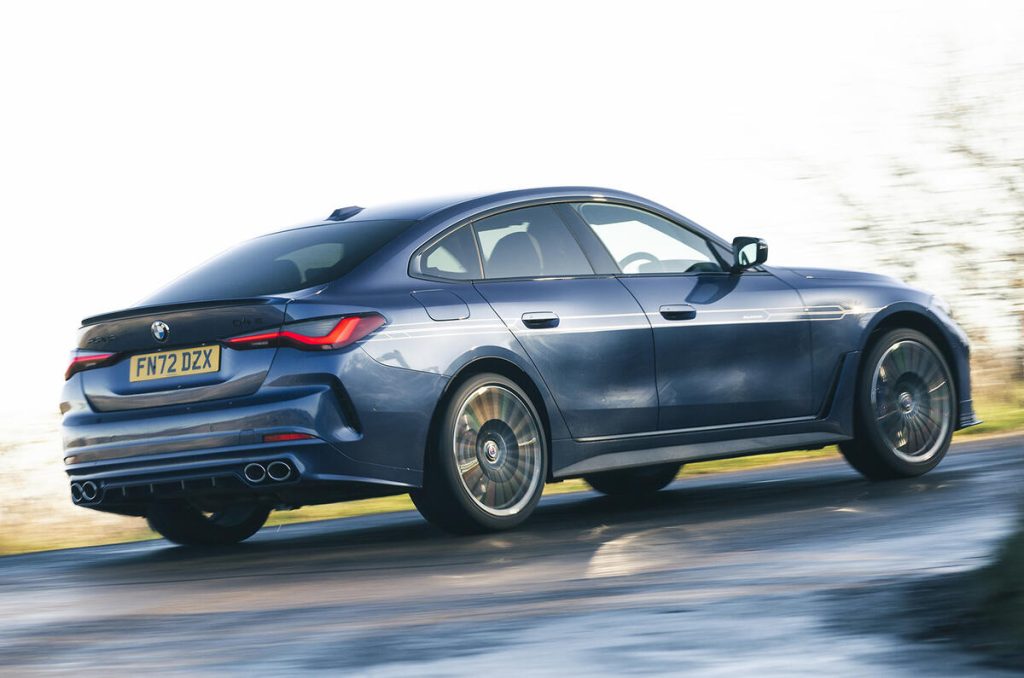
It achieves 0-60 in 4.6 seconds, with a top speed around 167 mph. Practical yet fast, it remains one of the most enjoyable diesel daily drivers on the market for those who can afford it.
Also Read: 5 Jeep Grand Cherokee Years That Run Forever vs 5 That Don’t
6. Audi A8 4.2 TDI Quattro
0-60 MPH: 4.6 Seconds
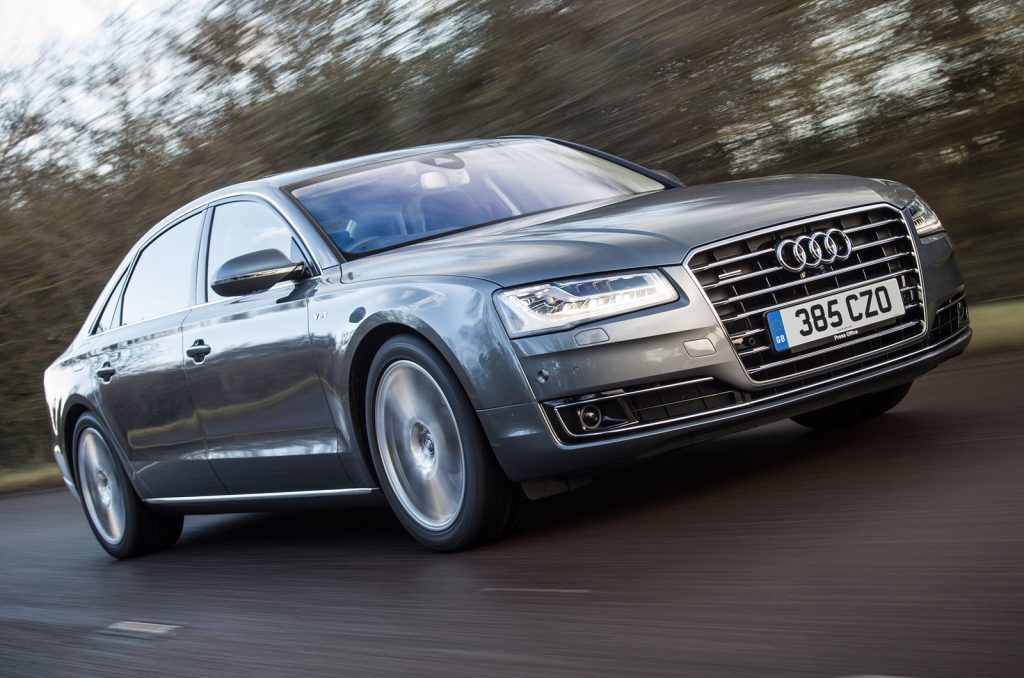
The Audi A8’s reputation for strong diesel options continues with its 4.2-liter turbocharged V8 in the D4 generation.
Producing 345 bhp and 590 lb-ft of torque, it hits 60 mph in 4.6 seconds and reaches a top speed of 155 mph. While S8 or W12 variants might seem more appealing, the diesel A8 offers a mix of power, efficiency, and long-distance cruising comfort.
The 4.2-liter V8 TDI diesel engine is an evolution of Audi’s 4.0-liter V8 TDI. Audi first introduced the V8 TDI in 1999 with a 3.3-liter version installed in the A8, and the 4.2-liter unit represents the final generation of the V8 TDI series.
The engine features a cast-iron cylinder block, maintaining the same 90 mm bore spacing and 90-degree V configuration as the 4.0-liter version. A forged steel crankshaft adds strength and durability.
The cylinder heads borrow design elements from the 3.0-liter V6 TDI, constructed from aluminum alloy with four valves per cylinder, two camshafts, and hydraulic tappets or lifters. Single-row timing chains are mounted at the rear of the engine, which makes replacement a challenging task.
Fuel delivery is handled via a Common Rail system, which improves efficiency and lowers emissions. To boost power, the 4.2-liter V8 TDI is equipped with two advanced Garrett GT17 turbochargers, one per cylinder bank, operating at roughly 2.5 bars of boost pressure.
5. Alpina D3 S
0-60 MPH: 4.5 Seconds
The D3 S builds on the D3 Biturbo’s foundation with the same 355 hp 3.0-liter mild hybrid inline-six turbodiesel as the D4 S. It mirrors the D4 S in performance but adds practicality, including the availability of a wagon body.
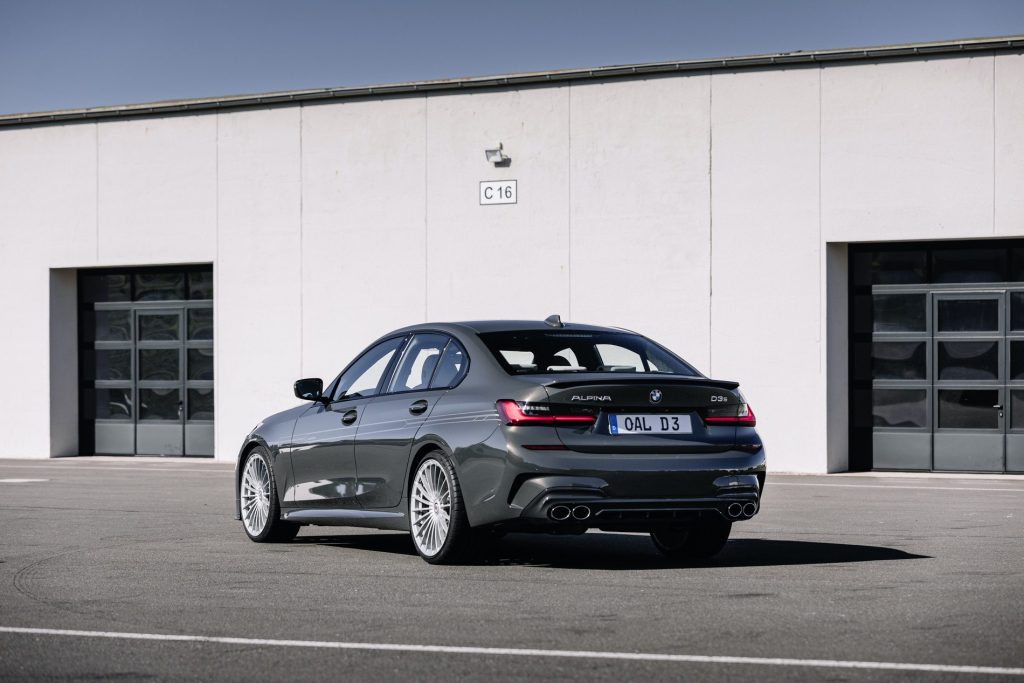
Its combination of speed, usability, and diesel efficiency makes it a top choice for those seeking a high-performance, everyday vehicle.
4. BMW M550d xDrive
0-60 MPH: 4.4 Seconds
The M550d xDrive is widely regarded as one of the ultimate sleeper cars. Its N57S 3.0-liter quad-turbo inline-six produces 394 hp and 561 lb-ft of torque, accelerating to 60 mph in 4.4 seconds with a top speed limited to 155 mph.
No longer available brand-new, it remains a sought-after used option, blending practicality with astonishing performance, quad-turbocharged, no less.
The new BMW M550d xDrive is both a practical family saloon or ideally a wagon, and a quad-turbocharged, M5-challenging powerhouse. It manages to be an economical, understated daily driver while simultaneously capable of 155 mph on the autobahn.
And yes, we did say quad-turbocharged. The previous M550d, along with its X5 and X6 siblings, used a triple-turbo six-cylinder diesel. Few drivers ever described those cars as sluggish; in fact, “overkill” was the more common reaction.
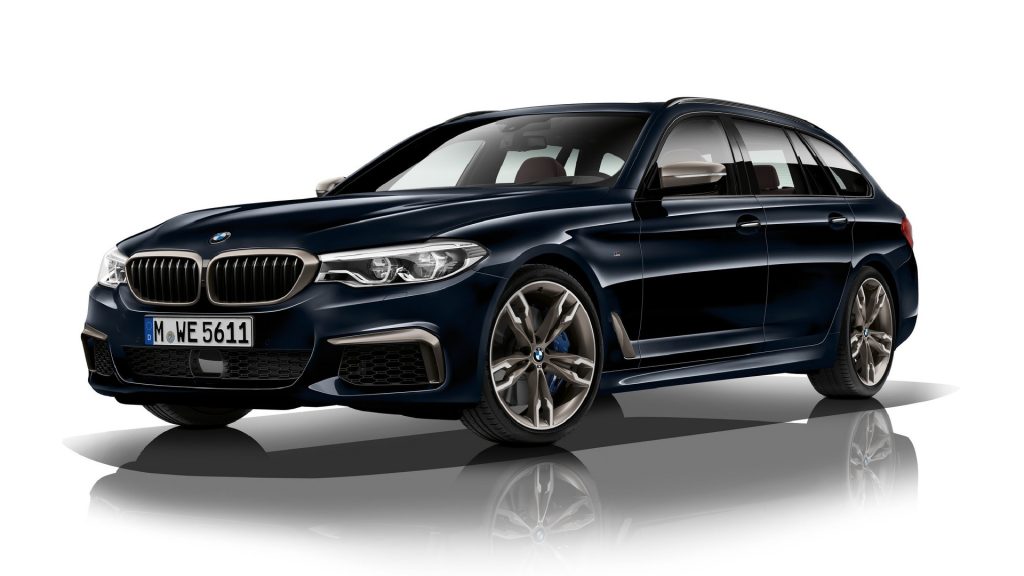
Unfazed, BMW’s engineers have added a fourth turbo. The new system uses two low-pressure turbos to get you moving, with a pair of high-pressure units kicking in as exhaust flow builds, much like the setup in a Bugatti Chiron. The turbos are smaller overall, improving response, and the results are impressively forceful.
At just 1,000 rpm, 332 lb-ft of torque is already available at all four wheels through the robust eight-speed automatic transmission.
By 2,000 rpm, torque climbs to 561 lb-ft and remains there up to 3,000 rpm. Peak power, a Mercedes-AMG E43-matching 394 bhp, arrives at 4,400 rpm, though by that point the car is already moving at a substantial pace.
Claimed performance is in line with the outgoing M5: 0–62 mph takes just 4.4 seconds for the saloon, or 4.6 seconds in the M550d Touring, with top speed electronically limited to 155 mph.
Autobahn dominance is unquestioned. The only diesel that significantly outperforms it is the tri-turbo 4.0-liter V8 in the Audi SQ7, Porsche Panamera, and Bentley Bentayga, but those engines have two extra cylinders to lean on.
With six cylinders, the BMW manages 47.8 mpg on the NEDC cycle and emits 154 g/km of CO₂, comparable to a Golf GTI on paper.
M Performance trim brings upgraded brakes (essential), lower-drag aerodynamics, and active steering and suspension to harness the engine’s prodigious cornering pace.
BMW has yet to confirm whether the M550d xDrive will reach the UK market. Its predecessor didn’t, but given the strong demand for high-performance SUVs, the engine did make it to Britain in the X5 and M50d variants.
3. Alpina D5 S
0-60 MPH: 4.4 Seconds
The Alpina D5 S triples the turbos on its B57 3.0-liter inline-six, delivering 378 hp and 590 lb-ft of torque.
With a 0-60 time of 4.4 seconds and a top speed of 178 mph, it is both fast and usable. Its understated looks and overlooked status on the used market make it a potential performance bargain.
Diesel isn’t exactly considered sexy right now, but if anyone can imbue it with desirability, it’s Alpina.
And by desirability, we don’t mean sheer excitement. When it comes to crafting super-saloons, Alpina has always excelled at balancing apparent contradictions to deliver extraordinary breadth.
The new D5 Sportdiesel is a perfect example of that duality. Its signature Alpina-logoed chin skirt and ducktail spoiler present a bold persona, yet inside, the interior is luxurious and refined.
The seats are aggressively bolstered yet soft, the quartet of exhaust tips suggests drama, but the 3.0-liter sequentially turbocharged diesel remains impeccably polite.
The leather-covered Switch-Tronic gearshift buttons on the steering wheel hint at a chassis ready to be driven, but not with overly aggressive inputs.
Alpina has also refined the suspension geometry, increasing negative camber on the front axle and fitting stiffer, shorter springs. Yet the adaptive dampers feature a Comfort Plus mode that is softer than the standard G30 5 Series.
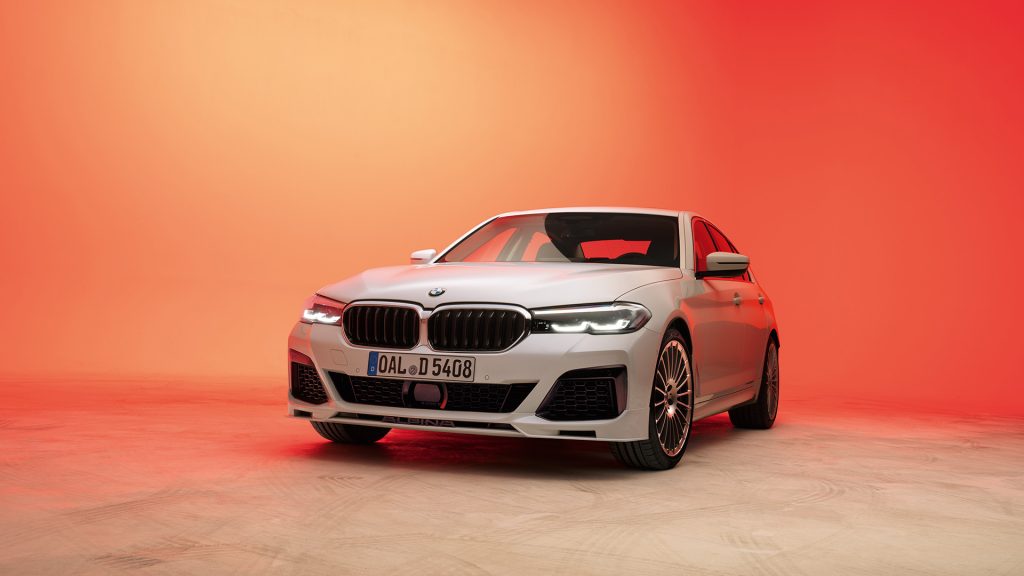
Performance is impressive: 0–62 mph comes in under five seconds, while motorway cruising still returns around 45 mpg. The 20-inch multi-spoke alloys are classic Alpina style, providing both visual flair and composure.
The D5 S interior is exceptional, with enough detail to engage you before even starting the engine.
The 5 Series’ digital instrument display has been reskinned in Alpina colors, adapting to each driving mode. A plaque on the transmission tunnel reads ‘Allrad,’ a nod to the all-wheel-drive system.
With 322 bhp, this massaged straight-six outperforms its 260 bhp BMW 530d xDrive M Sport cousin. Torque peaks at 516 lb-ft from just 1,750 rpm, making acceleration effortless, even for a car weighing nearly 1.9 tonnes.
UK-spec models fall slightly short of the 383 bhp and 590 lb-ft enjoyed elsewhere, due to the absence of BMW’s tri-turbo diesel engine, which isn’t offered in the UK.
Despite this, Alpina’s hallmark ride quality remains, gliding over most roads with remarkable composure. Wheel travel is controlled so effectively that the driver regains some confidence lost due to the inevitably light steering feel.
The less powerful engine does affect dynamics beyond straight-line performance. This is the first diesel Alpina with driveshafts front and rear, and the blend of grip and adjustability leans slightly toward grip.
Alpina-specific dynamic traction control exaggerates the rear-biased torque split, which works well on damp roads but isn’t a cure-all.
For those prioritizing smooth, secure progress, the D5 S delivers seamlessly. Its eight-speed ZF torque-converter automatic gearbox is quick and smooth, and body control is astonishing, more akin to a focused 3 Series than any standard 5 Series, save perhaps the M5.
The D5 S occupies a niche largely unrivaled. Residual values for Alpina diesels remain uncertain due to the unique powertrain.
Around 1,600 cars arrive at Alpina each year in raw form and leave as bespoke machines, most of them diesel.
While the current market may be uncomfortable for diesel, the D5 S demonstrates that Alpina can still deliver a phenomenally broad, capable, and desirable vehicle, even if it isn’t quite as explosive as its petrol sibling, the B5 Biturbo.
2. Audi A8 60 TDI
0-60 MPH: 4.4 Seconds
Although diesel demand in luxury sedans has waned, the A8 60 TDI demonstrates why diesels were worth considering.
Its 4.0-liter twin-turbo mild hybrid produces 429 bhp and 664 lb-ft of torque, reaching 60 mph in 4.4 seconds with a limited top speed of 155 mph. It combines performance, refinement, and fuel efficiency for long-distance driving.
Now, the company has applied that expertise to its largest sedan, delivering the fuel efficiency of a smaller car without compromising the luxury and amenities expected from a vehicle costing enough to buy three family sedans.
The A8L, Audi’s flagship long-wheelbase four-door, now offers a 3.0-liter turbo-diesel option.
Positioned just above the $79,695 A8L 3.0T in the lineup, adding options like the $6,300 Bang & Olufsen sound system quickly pushes the price toward $100,000. Our test car rang in at $99,445.
The 3.0 turbo-diesel generates substantial torque, though if your goal is pavement-scorching acceleration, this may not be the ideal choice.
Nevertheless, it overcomes inertia effortlessly, reaching 60 mph in 6.4 seconds for a vehicle weighing 4,585 pounds. The aluminum-intensive construction helps keep weight in check.
For comparison, an A8L with the 3.0-liter gas turbo V6 (333 hp, 325 lb-ft) is about a second quicker, while the S8 and A8L 4.0T deliver 3.6 and 3.9-second 0–60 times, respectively. So those seeking speed can still satisfy their cravings.
Diesel’s real appeal is efficiency rather than outright speed. On this front, the TDI excels. EPA estimates are 24 mpg city and 36 mpg highway, compared with 18/28 for the 3.0T gas engine. In testing, the TDI delivered 32 mpg versus 21 mpg for the 3.0T.
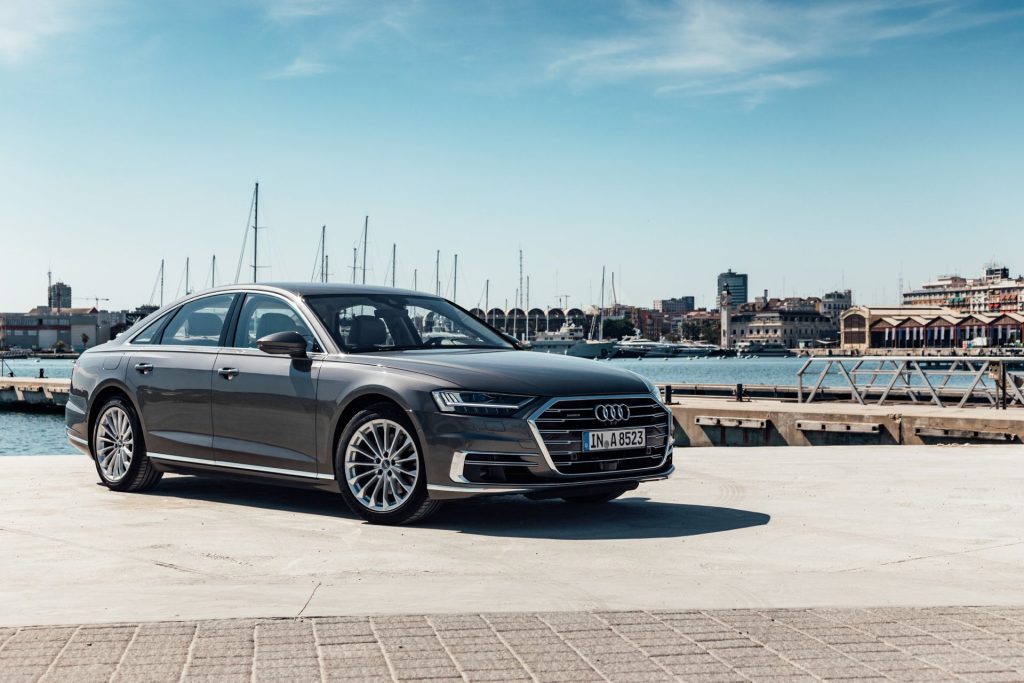
For most luxury buyers, fuel economy may be secondary, but the TDI’s torque is a welcome companion in daily driving.
Paired with the smooth eight-speed Tiptronic automatic, the A8L TDI responds eagerly, especially in Sport mode, where the paddle shifters are suitably responsive. Handling is confident for a vehicle of this size, though tempered by its mass.
Braking is another highlight: stopping from 70 mph in 149 feet is sports-car territory, and repeated stops are accomplished without fade.
The one minor drawback is the traditional hydraulic power steering, which becomes heavy during vigorous low-speed cornering, though few owners are likely to encounter this scenario often.
The A8L TDI satisfies like its long-wheelbase siblings: it is spacious, elegant, and luxuriously appointed, with ample rear-seat room for passengers.
In addition, it brings exceptional fuel economy, demonstrating Audi’s ability to translate motorsport know-how into practical road-going performance.
The A8L TDI is a compelling demonstration of Audi’s ability to combine diesel efficiency, luxury, and performance in a flagship sedan, proving that a big car can be both refined and economical without compromising on the essentials of handling and comfort.
1. Porsche Panamera 4S Diesel
0-60 MPH: 4.3 Seconds
Topping the list is the Porsche Panamera 4S Diesel, surprisingly making it the fastest diesel production car on the market.
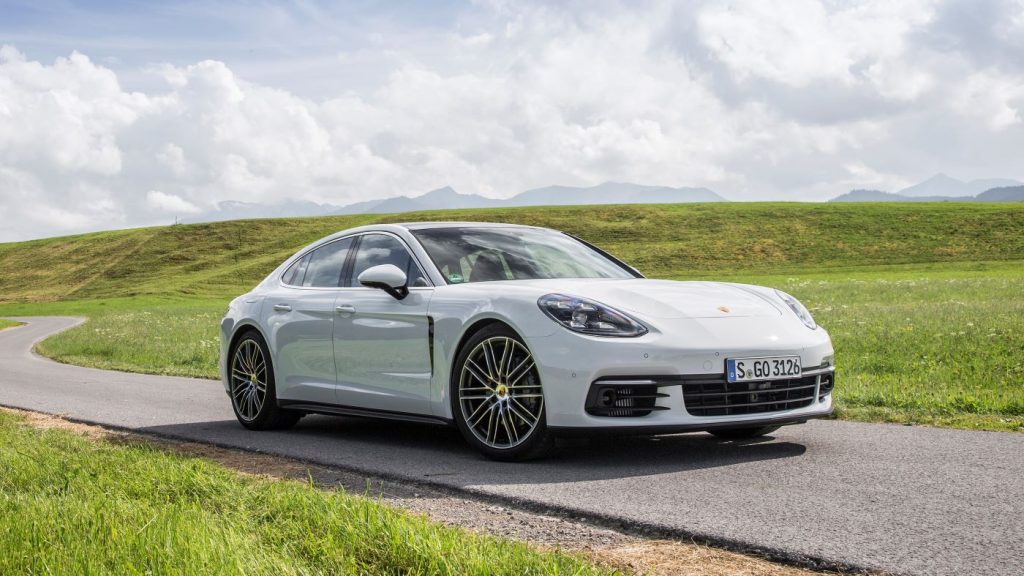
Its 4.0-liter twin-turbo V8 generates 422 hp and 627 lb-ft of torque, achieving 0-60 in 4.3 seconds and a top speed of 179 mph.
Once rare and highly sought-after, this diesel Panamera remains a luxurious, high-speed highway cruiser for those seeking both power and refinement.
