
Interstate driving in the United States exposes a vehicle’s steering to conditions that city roads simply don’t.
Long, straight stretches at 65–80 mph, passing semi-trucks in crosswinds, lane changes at speed, and fatigue that creeps up after hours behind the wheel all of these amplify the importance of steering stability.
American drivers often talk about road-trip comfort in terms of cushy seats or soft suspensions, but the often-overlooked ingredient is how a car’s steering behaves at highway speeds.
Calm, centered steering reduces mental load, minimizes overcorrection, and helps the driver feel planted even when the pavement isn’t perfect.
On the other hand, a sedan with nervous, hyper-quick, or overly boosted steering can make long interstate runs feel tiring, jumpy, and unpredictable.
In recent model years, sedans have swung in two opposite directions. Some prioritize relaxed, confident tracking with mild on-center feel and stable lane-holding characteristics.
Others, especially those tuned for sporty reflexes around town, can feel too sensitive at 70 mph, requiring constant micro-adjustments. The difference becomes obvious only when you spend real time between mile markers.
Below are five sedans known for calm interstate steering, followed by five alternatives that often feel twitchier, especially on uneven pavement or in crosswinds.
These impressions draw from how these models typically behave and the philosophies behind their steering setups, not owner bias or brand loyalty.
Sedans With Calm, Confident Interstate Steering
Not all sedans are built for long stretches of highway driving. Some feel twitchy, floaty, or uncertain when you push them at speed, leaving the driver constantly adjusting and second-guessing.
The sedans in this roundup, however, deliver calm, confident steering on the interstate. They inspire trust behind the wheel, maintain composure through lane changes and curves, and make highway miles feel effortless.
Whether you’re commuting, running errands, or heading out on a road trip, these models provide the kind of stability and poise that makes driving stress-free.
1. Toyota Avalon/2025 Toyota Crown
The Toyota Avalon has long been the benchmark for highway serenity, thanks to its relaxed steering ratio, predictable on-center feel, and emphasis on straight-line stability rather than sporty dartiness.
Even though the Avalon has been discontinued, the 2025 Toyota Crown fills the same niche with a slightly elevated stance and an updated steering system designed for long-distance calm.
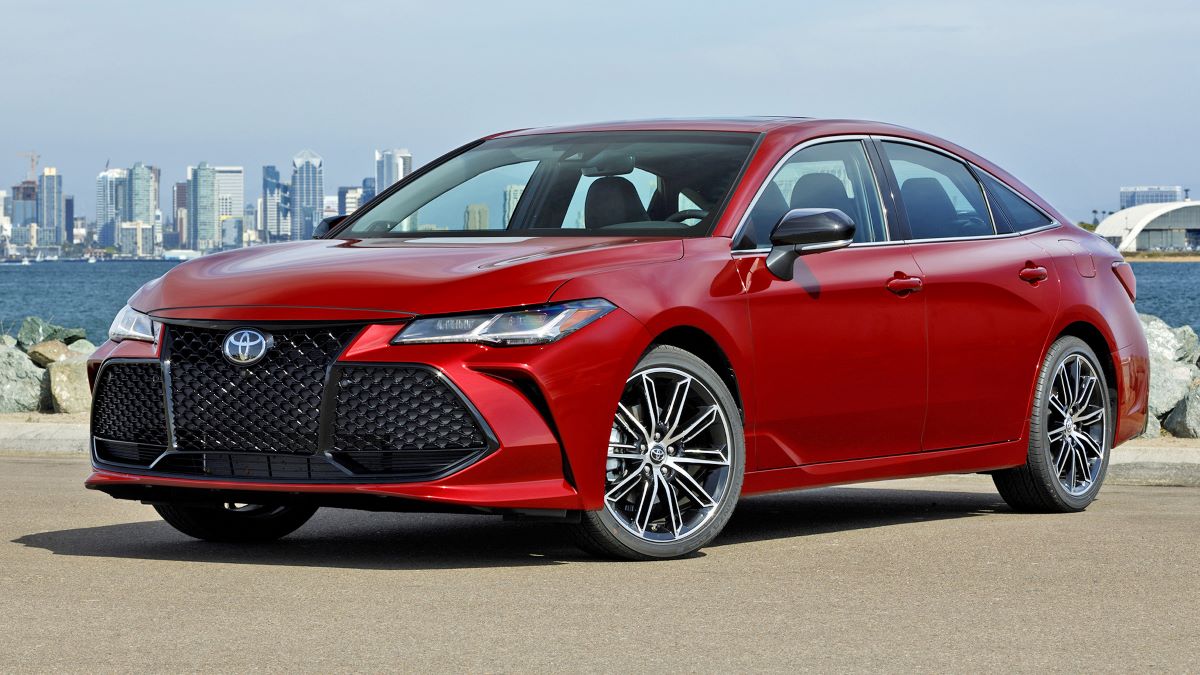
Toyota engineers typically tune the steering to reduce mid-corner twitch and limit unnecessary movement from minor road imperfections.
On the interstate, this results in a car that doesn’t wander or ask for constant corrections. Crosswinds barely disturb it, and lane changes feel fluid instead of abrupt.
2. Buick LaCrosse
Buick has spent the last decade carving out a reputation for smooth-riding, quiet sedans, and the LaCrosse remains a standout for steering calmness.
The model focuses on a luxury-style approach: slow initial response, stable tracking, and an isolated feel from the front wheels.
Drivers who log hours on I-40 or I-75 appreciate that the wheel doesn’t react dramatically to grooves or patches. Even the electric power steering software emphasizes filtered feedback rather than sharp communication.
If imports make the LaCrosse available to American customers again, expect it to remain one of the most tranquil highway handlers in the segment.
The longer wheelbase improves both exterior proportions and interior space. The front-engine, front- and all-wheel-drive five-passenger sedan features a roomy interior with a new by-wire shifter that enables a floating center console with storage accessible from both sides.
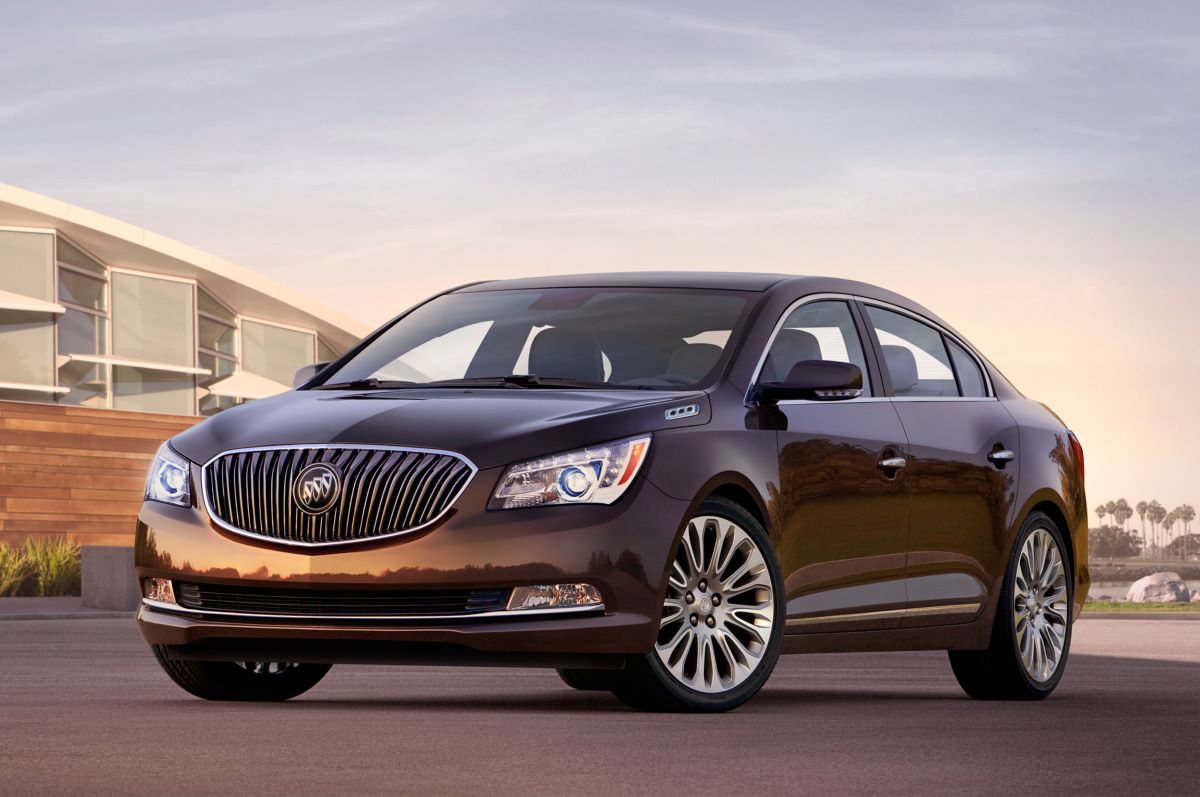
Cargo space is also increased. Up front, an 8-inch Apple CarPlay/Android Auto-ready touchscreen with a fingerprint-resistant surface pairs with a second screen in the instrument cluster and an optional head-up display.
Power comes from GM’s second-generation 3.6-liter V-6, which includes cylinder deactivation and automatic engine stop-start. It produces 310 hp and 282 lb-ft of torque, paired with an eight-speed automatic transmission.
Paddle shifters are standard on all trims, as are HID headlights, a rearview camera with rear parking sensors, the 8-inch touchscreen, and 18-inch alloy wheels. Noise-reduction measures mean little compromise even when opting for the available 20-inch wheels.
Higher trims offer features like rear cross-traffic alert to prevent collisions in parking lots, as well as active safety systems including lane-keeping assist and automatic emergency braking. The 2016 LaCrosse performed well in IIHS testing, and the 2017 model is expected to improve upon that performance.
Shedding approximately 300 pounds and moving to a new platform contributes to a quieter ride and improved driving experience. Buick sets the LaCrosse apart by offering all-wheel drive on the highest trim level. While the lineup offers value, prices climb quickly for amenities such as heated front seats.
Also Read: 5 Cars That Stay Popular for Years vs 5 That Fade Quickly
3. Lexus ES 350
The Lexus ES is practically engineered for effortless interstate miles. Its steering is weighted light but not vague, and more importantly, it holds a straight line without wandering.
Lexus purposely avoids hyper-quick ratios in the ES because owners prioritize comfort over racetrack agility. On long-distance drives, this translates to fewer adjustments to keep the sedan centered in its lane.
The ES also resists tramlining a big advantage on aging pavement where grooves can pull other sedans off course. Road-trip drivers consistently praise how the ES feels “easy to keep straight,” making it a benchmark for calm highway manners.
The 2023 Lexus ES mid-size luxury sedan excels at comfort while offering a significantly lower starting price than rivals like the Audi A6 and Mercedes-Benz E-Class. Built on a Toyota Camry platform, the ES features sleeker styling and a more upscale interior, though performance and driving dynamics remain underwhelming.
In testing, we called it a “rolling Xanax pill,” a backhanded compliment for how well it insulates occupants from bumps, road noise, and harsh impacts. The cabin is quiet and comfortable, the powertrains are smooth and refined, and the ride is exceptionally composed.
While it may not satisfy drivers who crave sporty engagement, the ES makes a strong case for those prioritizing comfort and efficiency, the 300h hybrid returned 45 mpg on our 75-mph highway test.
The 2023 Lexus ES starts at $43,090 and tops out at $53,280, depending on trim and options. While mid-level trims offer good value, the ES350 with Ultra Luxury equipment aligns best with the sedan’s luxury mission.
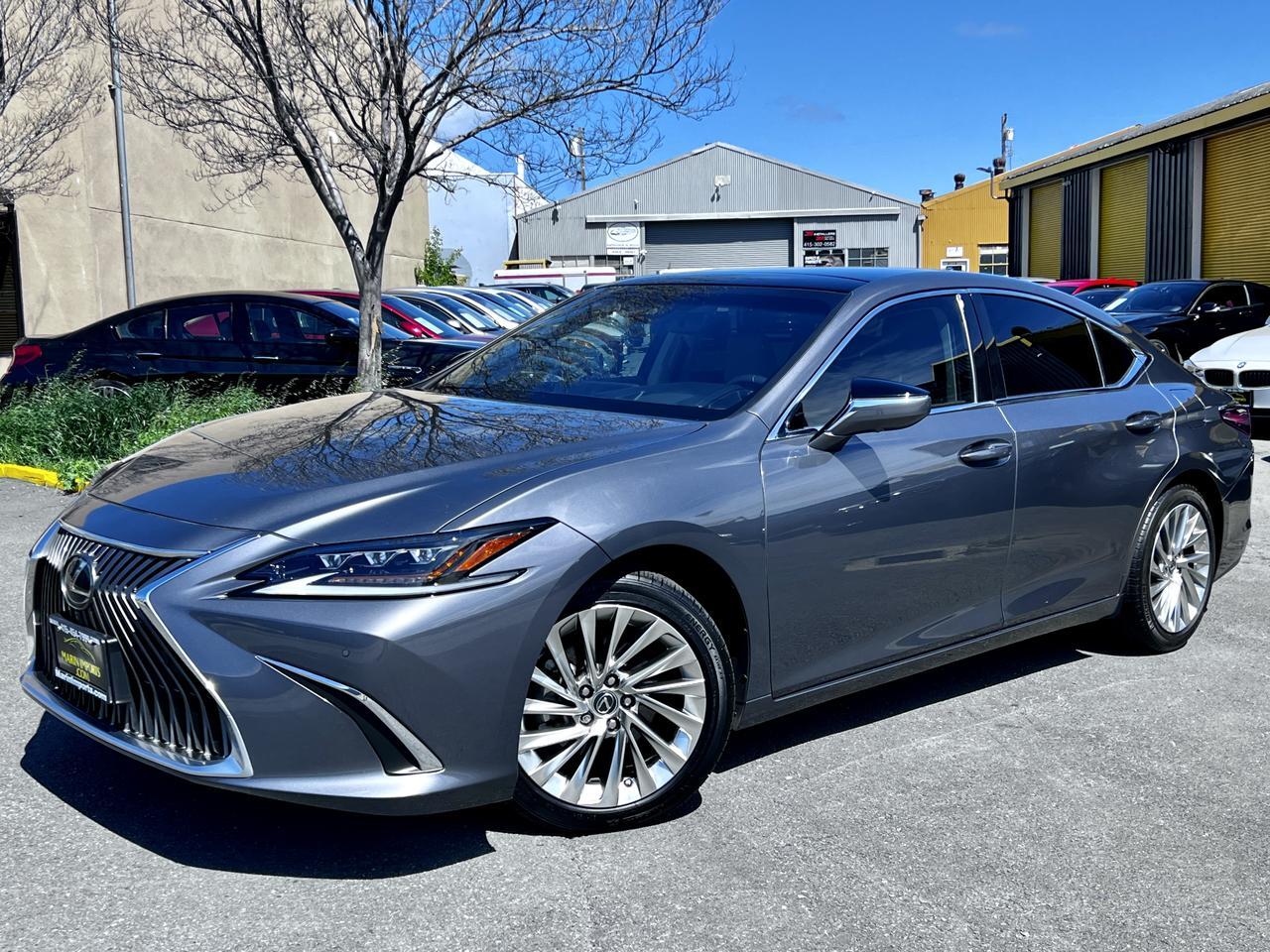
The Ultra Luxury trim adds 18-inch wheels, quilted semi-aniline leather upholstery, a hands-free power trunk, power rear sunshade, and a wood-and-leather steering wheel.
The ES offers three powertrains. The ES250 uses a 203-hp 2.5-liter four-cylinder engine with standard all-wheel drive. ES350 trims come with a 3.5-liter V-6 producing 302 hp and mated to an eight-speed automatic, driving the front wheels. The ES350h hybrid delivers 215 hp via a CVT and front-wheel drive.
At our test track, the ES350 sprinted to 60 mph in 6.1 seconds. The ES250 AWD and ES300h hybrids were slower, achieving 8.1 and 8.3 seconds, respectively. Handling is composed and ride quality forgiving, making the ES a comfortable choice for luxury buyers.
The F Sport trim adds larger wheels and sportier suspension tuning but remains far less athletic than competitors like the BMW 5-Series, the ES400h F Sport we tested reached 60 mph in 7.9 seconds, offering only a modest performance boost.
4. Honda Accord (non-sport trims)
Honda tends to design quick, responsive steering for its cars, but the non-sport trims of the Accord strike a sweet spot between agility and straight-line composure.
Unlike the Sport or Touring trims, which use more aggressive steering software to enhance cornering enthusiasm, the lower and mid-level versions maintain steadier behavior at 70–80 mph.
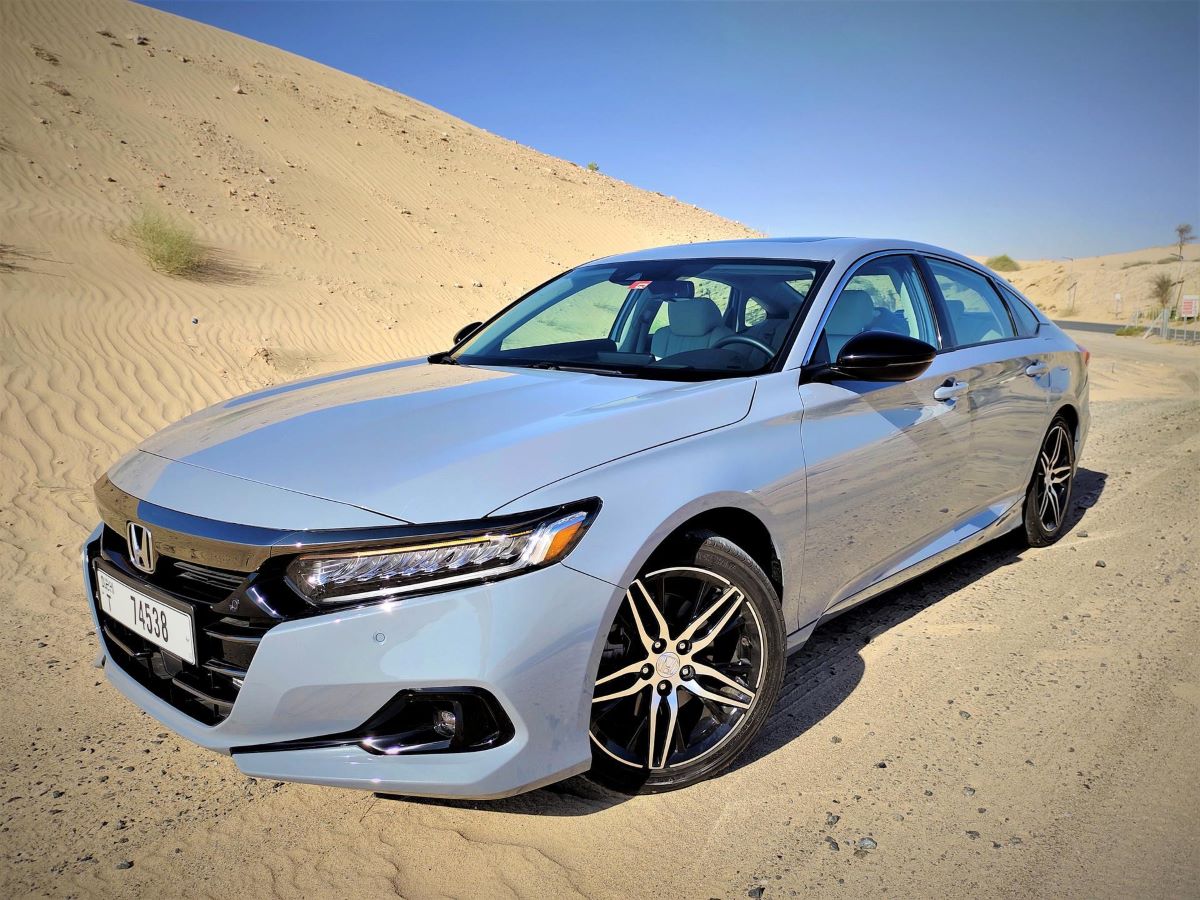
The steering effort builds smoothly off-center, preventing that “nervous hands” feeling common in lightweight sedans.
The Accord’s longer wheelbase also helps it stay planted across expansion joints and passing zones making the base and EX trims surprisingly relaxed interstate cruisers, even if they’re not marketed as luxury models.
5. Chrysler 300 (final 2023–2024 models)
Before Chrysler sunsetted the 300, it offered one of the most stable and relaxed steering setups on the market.
The hydraulic power steering (on older variants) and well-tuned electric setups (on more recent years) give it a calm, weighty feel that’s rare in modern sedans.
The car’s size and rear-wheel-drive layout contribute to outstanding highway stability, reducing the twitchiness sometimes seen in lighter FWD-based sedans.
Many American drivers who spend hours on I-10 or I-95 love the way the 300 settles into a lane and simply holds course. While no longer in production, its final-year models remain a favorite for long-distance comfort.
The 2023 model year marks the final chapter for the long-running Chrysler 300 full-size sedan. Introduced in its current form back in 2011, the 300 is well into its golden years but still manages to feel spry. Its familiar silhouette continues to project a bold, commanding presence, while the interior remains roomy and comfortable.
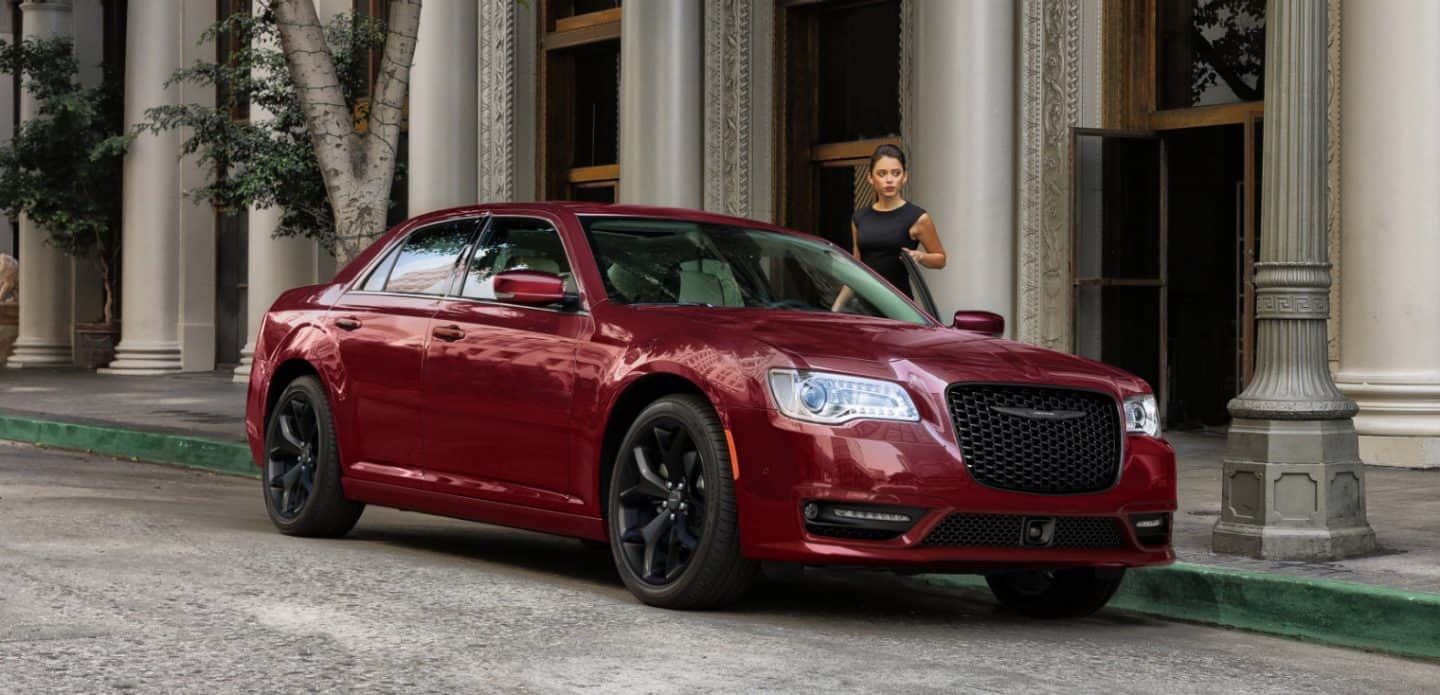
Though it lags behind some competitors in fuel efficiency and equipment, the 300 remains a reasonable choice for buyers in a shrinking full-size sedan segment.
The reliable Pentastar V6 continues as the standard engine, available with either rear- or all-wheel drive, while the two available V-8s are restricted to rear-wheel-drive configurations. For its swan song, the 300 also gets a shot of adrenaline with the return of a powerful 300C performance model.
The Chrysler 300 stands out in the large-car segment with its rear-wheel-drive layout and optional Hemi V-8s. All-wheel drive is only available with the standard 292-hp 3.6-liter V-6.
In testing, a rear-wheel-drive V-6 300S reached 60 mph in 6.3 seconds, modest for the class but reasonably brisk. A 5.7-liter V-8 model previously achieved 5.3 seconds in similar testing, while the 485-hp 6.4-liter V-8 300C clocked an impressive 4.4 seconds to 60 mph.
Handling is respectable for a car of its size. The steering isn’t overly communicative, but body roll is well managed and the chassis feels willing, provided you don’t push it too hard.
The stiffer suspension and 20-inch wheels on the 300S can make for a slightly rougher ride, which may feel at odds with the 300’s near-luxury character. Buyers seeking comfort should stick with the Touring or Touring L trims.
Also Read: 10 Sedans With Back Seats That Don’t Pinch Knees
Sedans That Tend to Feel Twitchy or Nervous on the Interstate
Not every sedan inspires confidence when you’re cruising at highway speeds. Some can feel jittery, twitchy, or unsettled as you merge, change lanes, or hit gusty crosswinds.
Whether it’s overly sensitive steering, a soft or unpredictable suspension, or a chassis that doesn’t inspire trust, these sedans make long stretches on the interstate a bit more stressful than they should be. In this roundup, we highlight the models that tend to feel nervous on the freeway, so you know which cars might leave you wishing for a calmer, more composed ride.
1. Tesla Model 3
The Model 3’s steering is engineered for quick reflexes and sharp precision a great benefit on winding roads or in busy urban environments. However, those same traits can make it feel hyper-sensitive on the interstate.
Small hand movements translate into noticeable directional changes, which can require constant attention on long drives.
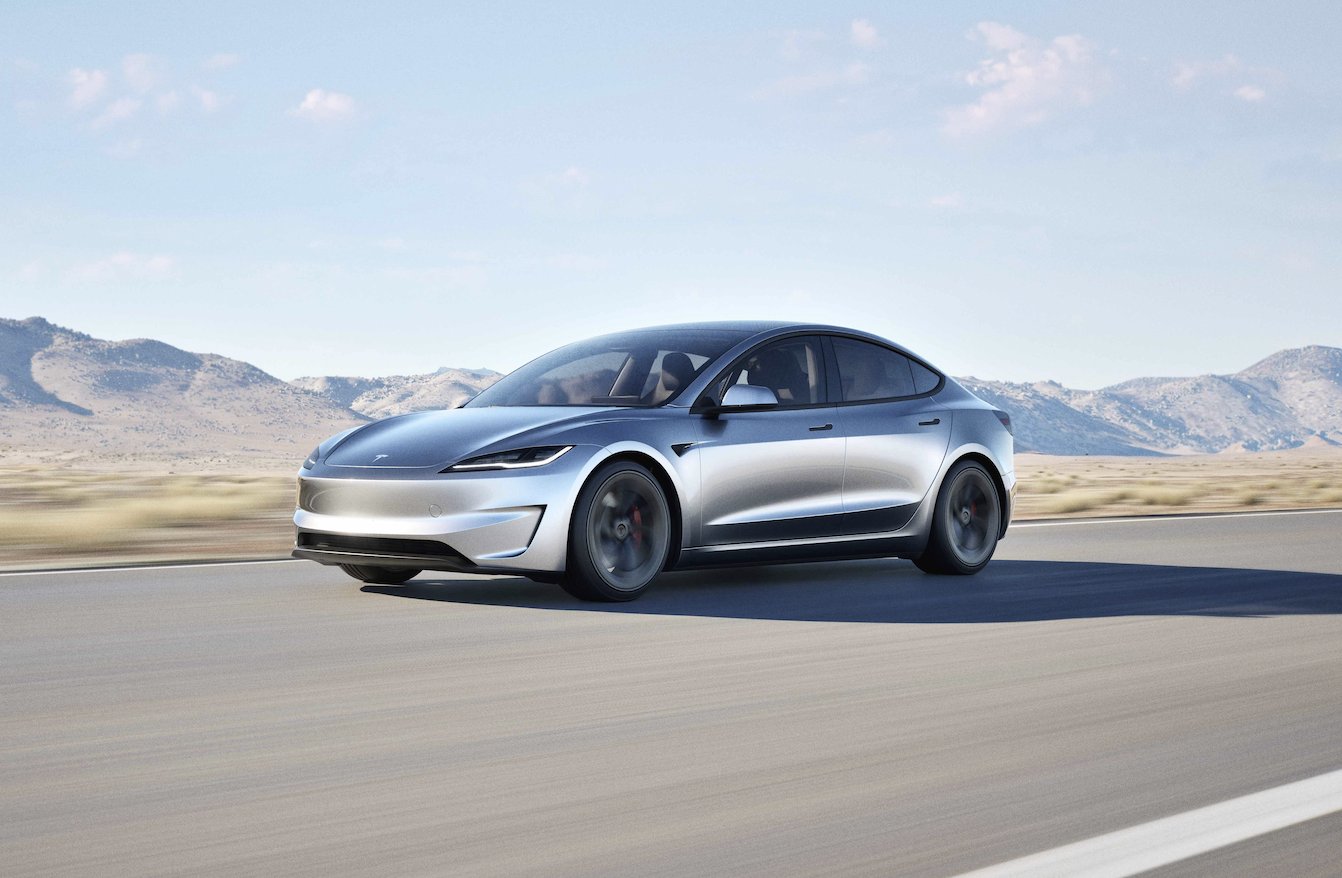
The electric assist also reacts quickly to driver input, magnifying even minor corrections. After long stints on straight roads, some drivers report fatigue from having to maintain ultra-steady hands.
Later-year software updates have softened things slightly, but the twitchiness remains part of the Model 3’s personality.
2. Hyundai Elantra N
Designed to be a performance bargain, the Elantra N uses extremely quick steering ratios and firm front-end tuning. This helps it carve corners like a much more expensive sport sedan, but it becomes a double-edged sword on the highway.
At 70–80 mph, the Elantra N’s steering reacts so immediately that it can feel nervous over bumps, requiring frequent micro-adjustments to keep the nose steady.
The N’s stiff suspension exaggerates this twitchiness, as rough patches transfer more motion to the steering wheel. It’s thrilling on backroads but not always relaxing on long interstate stretches.
The steering is precise and communicative, which makes the Elantra N feel agile and responsive. It handles midcorner bumps and road imperfections effortlessly while providing abundant grip through turns.
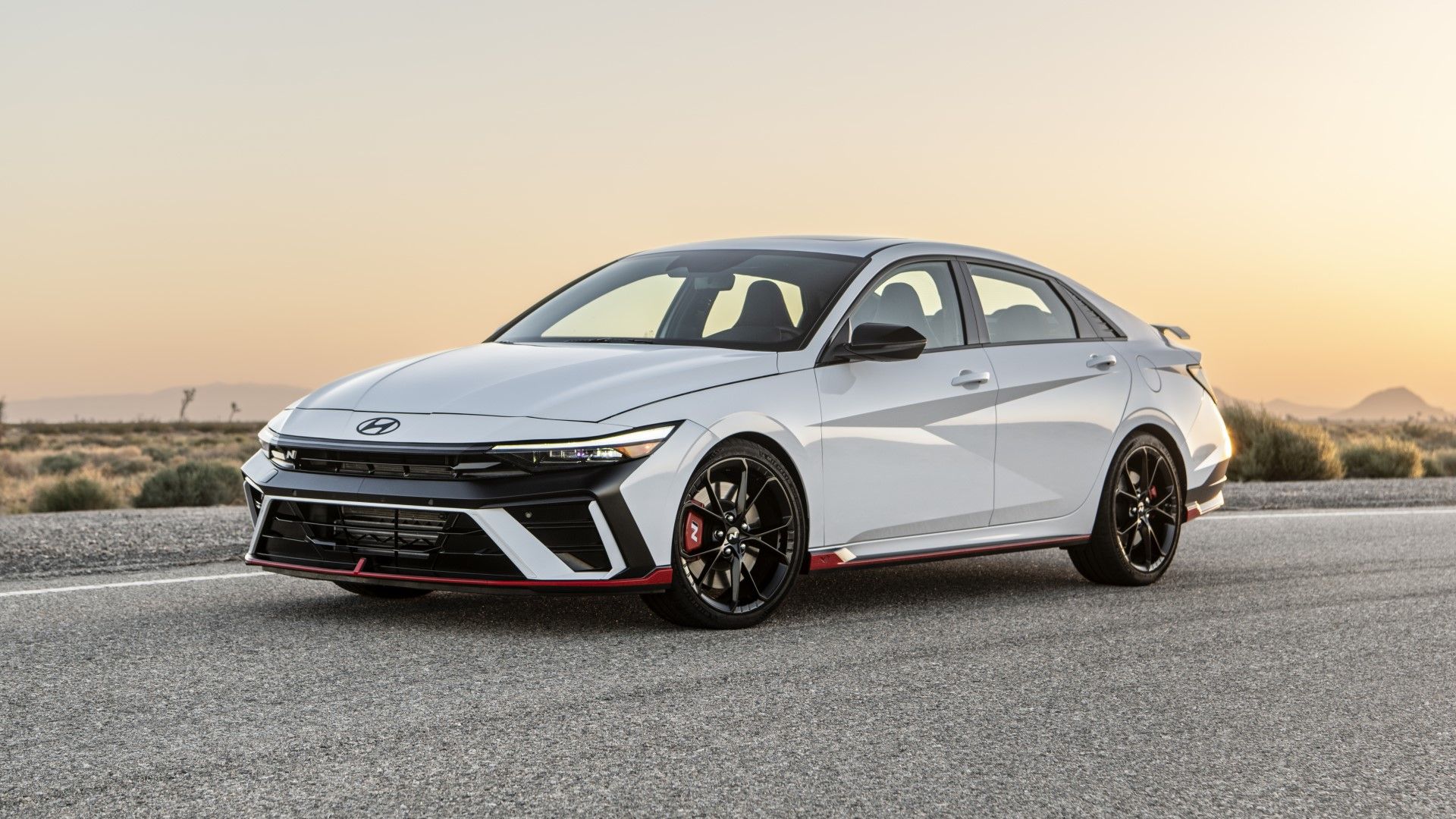
The turbocharged 2.0-liter engine delivers strong performance with only a slight amount of torque steer at full throttle. It offers plenty of low- and midrange power, and the short gearing keeps the car feeling lively, even when passing on the highway.
We tested both transmissions: a manual-equipped Elantra N accelerated from 0 to 60 mph in 6.4 seconds, while the dual-clutch automatic version completed the same sprint in 5.5 seconds. The six-speed manual’s shifter isn’t the quickest we’ve tried, but it’s precise enough that we never missed a gear.
The Elantra N occupies an unusual spot in the market. It may not reach the performance heights of the Civic Type R or VW Golf R, yet it comes at a much lower price. Overall, it represents excellent value for its performance and cost.
Build quality is solid, though a bit plain, with extensive use of hard black plastics in the cabin. There are no rattles or misaligned panels, but it doesn’t feel as refined as some competitors.
3. Mazda6
Mazda is known for sporty, communicative steering, and while that’s great for everyday driving, the Mazda6’s setup can feel a little too eager on the highway, especially in the later model years before discontinuation.
The quick ratio means small steering inputs immediately move the car, which keeps drivers alert but reduces long-haul relaxation.
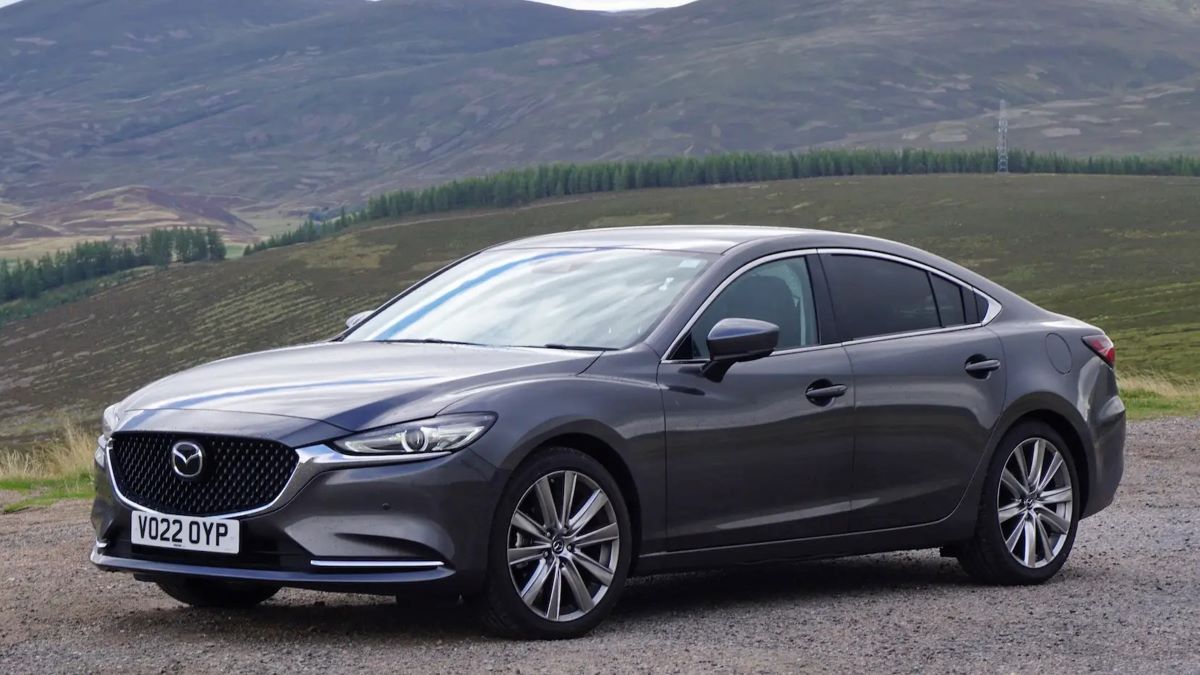
It’s not unsafe, nor is it unstable, but compared to calmer competitors, the 6 simply requires more hand discipline and intentional control at higher speeds. The result: a sedan that’s agile but a bit tiring for multi-hour interstate runs.
The 2021 Mazda 6 isn’t just the most visually appealing family sedan, it’s also more engaging to drive and ride in than most of its competitors.
While it may not be as flawless as the Honda Accord or as fresh as the Hyundai Sonata, it delivers a more upscale experience than either of those alternatives. Neither the standard 2.5-liter four-cylinder nor the more powerful turbocharged engine is particularly groundbreaking, and there’s currently no hybrid option.
Still, the 6 blends athleticism with refinement, broadening its appeal. We wish Mazda offered the car’s top-tier features across more trims, but even the lower-end models include a solid array of standard driver-assistance technologies and popular tech.
Every Mazda 6 now comes with Apple CarPlay and Android Auto, and trims above Touring offer wireless CarPlay. The turbocharged engine was also retuned, adding 10 pound-feet of torque for a total of 320, though premium 93-octane fuel is required.
The Signature model gains rear automated emergency braking and a driver-attention monitor. Mazda has announced that the 6 won’t return for 2022, though rumors suggest a potential new generation with rear-wheel drive and an inline-six engine.
Unlike many mid-size sedans, the Mazda 6 doesn’t offer a hybrid option but does provide two responsive 2.5-liter four-cylinder engines.
The standard engine produces 187 horsepower, while the turbocharged version generates up to 250 horsepower and 320 pound-feet of torque with premium fuel. Both engines are paired with a capable six-speed automatic transmission that smoothly finds the right gear, whether downshifting for power or upshifting for cruising.
The Mazda 6 delivers above-average driving satisfaction for a family sedan, with fluid handling and controls that make it a joy to drive without sacrificing refinement or ride quality.
In our testing, the top-tier Signature model had slightly less grip and longer braking distances than the 2016 model, partly due to new tires aimed at reducing road noise. Still, the Mazda 6 remains exceptionally fun to drive, with a quiet and refined cabin that underscores its appeal.
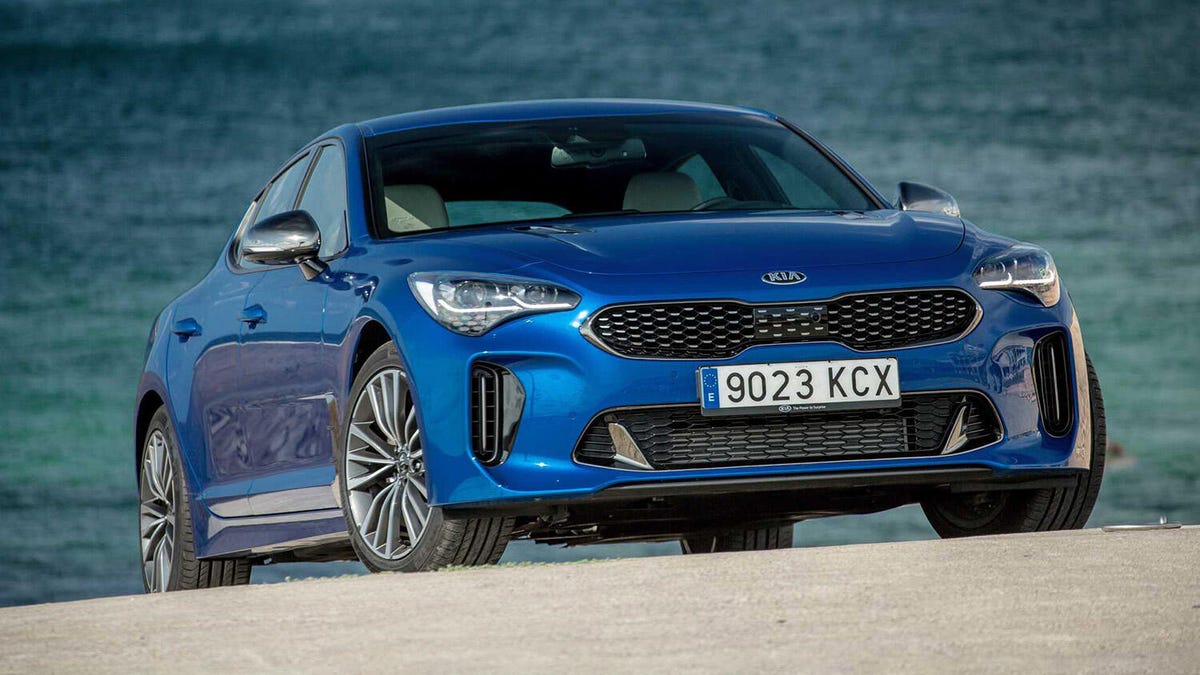
4. Kia Stinger (base 2.0T trims)
Surprisingly, the more powerful V6 Stinger GT models feel more stable than the lighter 2.0T versions, which have a tendency toward front-end nervousness at highway speeds.
The base version’s steering is tuned lighter and quicker, and with less weight over the front axle, it occasionally feels susceptible to wind buffeting or uneven pavement.
Drivers who frequently cross wide-open states like Kansas or Nebraska may notice they’re making more tiny corrections than expected. The Stinger remains a fun and capable sedan, but the twitchiness in its entry-level models is worth noting.
The 2022 Stinger comes with two turbocharged engine options: a new 300-hp 2.5-liter turbo-four and a 368-hp twin-turbo 3.3-liter V-6.
While we haven’t tested the new four-cylinder yet, the V-6 delivers exhilarating performance that gets the pulse racing. Both engines are paired with an eight-speed automatic transmission, which performs smooth and quick shifts when left in automatic mode. We do wish the paddle shifters responded a bit more sharply to driver inputs.
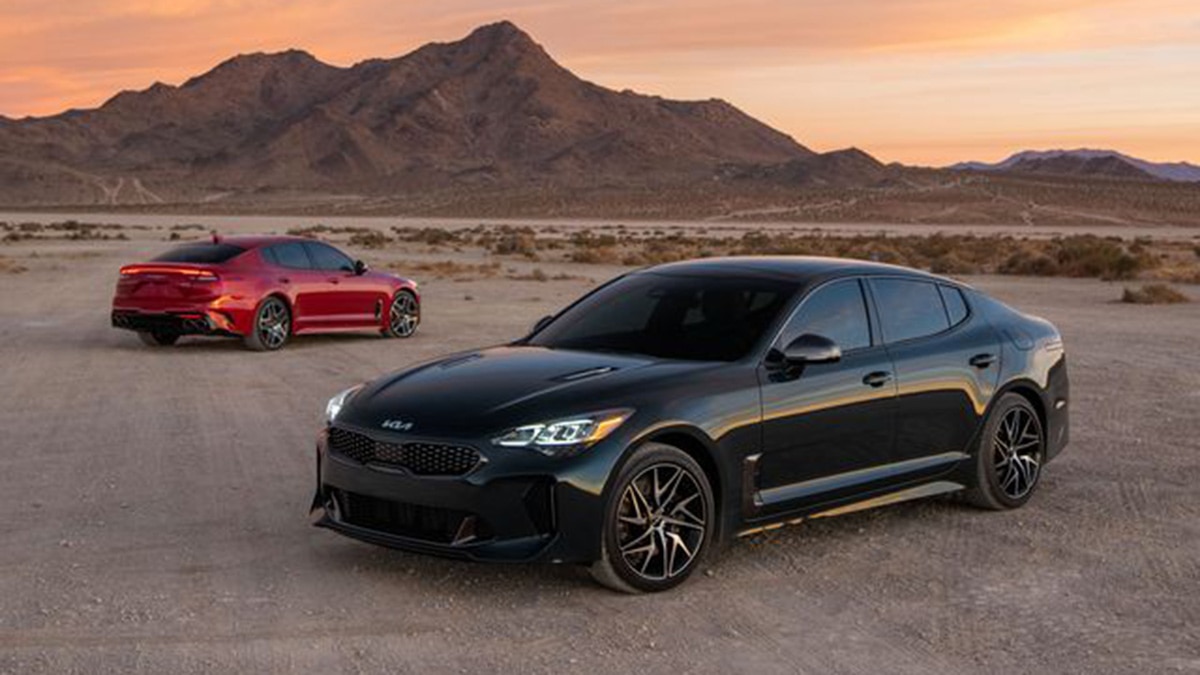
For those focused on straight-line performance, the V-6–powered Stinger GT does not disappoint. During our track testing, it sprinted to 60 mph in just 4.6 seconds, showcasing its mastery of acceleration. In everyday driving, the Stinger handles well, but when pushed to the limits, it falls slightly short of the composure shown by more established rivals.
We noticed some rear-suspension protestations, an unsettling side step when cornering aggressively over bumpy pavement, along with fore-and-aft pitching during full-throttle acceleration and hard braking.
All Stinger GT models come equipped with powerful Brembo brakes, delivering rapid and confident stops that are well suited for a high-performance sedan.
Without the Brembos, and especially when equipped with less grippy all-season tires, the Stinger’s performance feels less remarkable, both in this segment and compared with the broader market of performance sedans.
5. Subaru WRX (sedan-based performance model)
While not a traditional family sedan, the WRX occupies the same footprint and price bracket, so it deserves mention. Subaru designed the WRX to respond instantly on rally-style roads, and that shows in its fast steering rack and aggressive front-end bite.
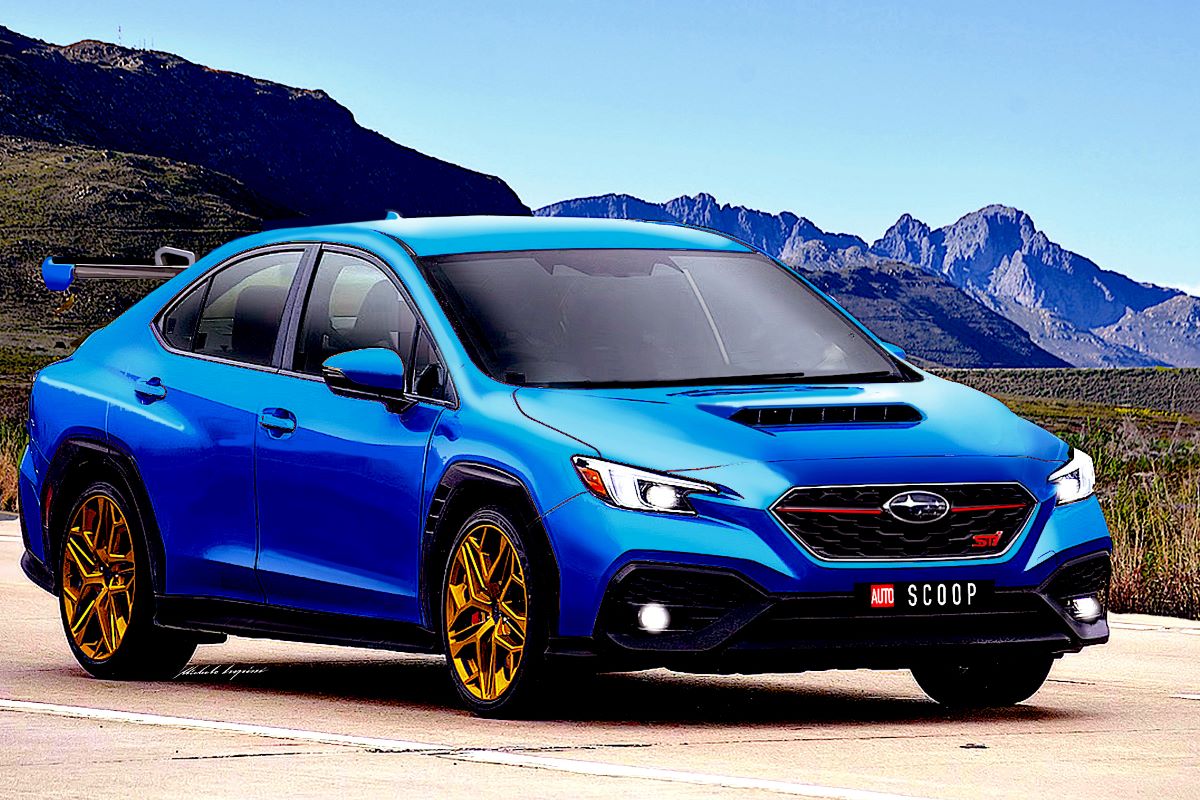
At interstate speeds, though, these traits can become overly sensitive. The WRX tracks well enough, but every small correction happens quickly, which some drivers interpret as nervous or darty.
Combine that with the car’s stiffer suspension and lighter feel, and the WRX becomes more engaging than restful on long highway slogs.
Choosing the right sedan depends on how and where you drive. Many American motorists spend a significant portion of their driving time on wide, high-speed interstates where steering calmness matters far more than quick reflexes.
A sedan that holds its lane with minimal effort reduces fatigue, boosts confidence, and makes long trips far more enjoyable whether you’re running between cities, taking a family road trip, or commuting across state lines.
The five calm-steering sedans above excel because they prioritize stability over sharpness, making them ideal partners for long-haul driving.
The twitchier alternatives aren’t bad cars most are actually great fun on twisty roads but for drivers who value a relaxed, planted feel at 70–80 mph, steering tuning matters just as much as ride quality or engine choice.
Understanding these distinctions helps shoppers make smarter decisions tailored to how they truly use their sedans, not just how they perform in short, low-speed test drives.
